

In this article
The 4/0 treble hook was buried past the barb in the web of my thumb, the bass still thrashing at the end of the fishing line. Blood pooled in my palm, and the nearest clinic was three hours away by truck and boat. In that moment, I stopped being an angler and became my own first responder—ready to remove fish hook from skin using nothing but my tackle box.
After twenty years guiding anglers fishing Gulf Coast waters, I’ve seen this exact situation play out more times than I can count. Young fishermen wide-eyed with panic, seasoned veterans making the classic mistake of yanking straight back against the fish hook barb. The good news? With the right knowledge and the gear already sitting in your tackle box, you can handle most fishhook injuries without cutting your trip short. Consider this your step-by-step field guide to fish hook removal—and more importantly, when to put the pliers down and head for the ER.
⚡ Quick Answer: Most fish hook injuries can be safely treated in the field using the string yank method: loop heavy braided line around the hook bend, press the eye firmly down to disengage barb, and snap sharply parallel to the skin. For deep embedded hooks, the advance and cut method works when the point is tenting the skin. Never attempt removal if the hook is in the eye, striking bone, or causing arterial bleeding—those are go to ER scenarios requiring immediate evacuation for emergency first aid.
The “Stop and Go” Matrix: When to Abort
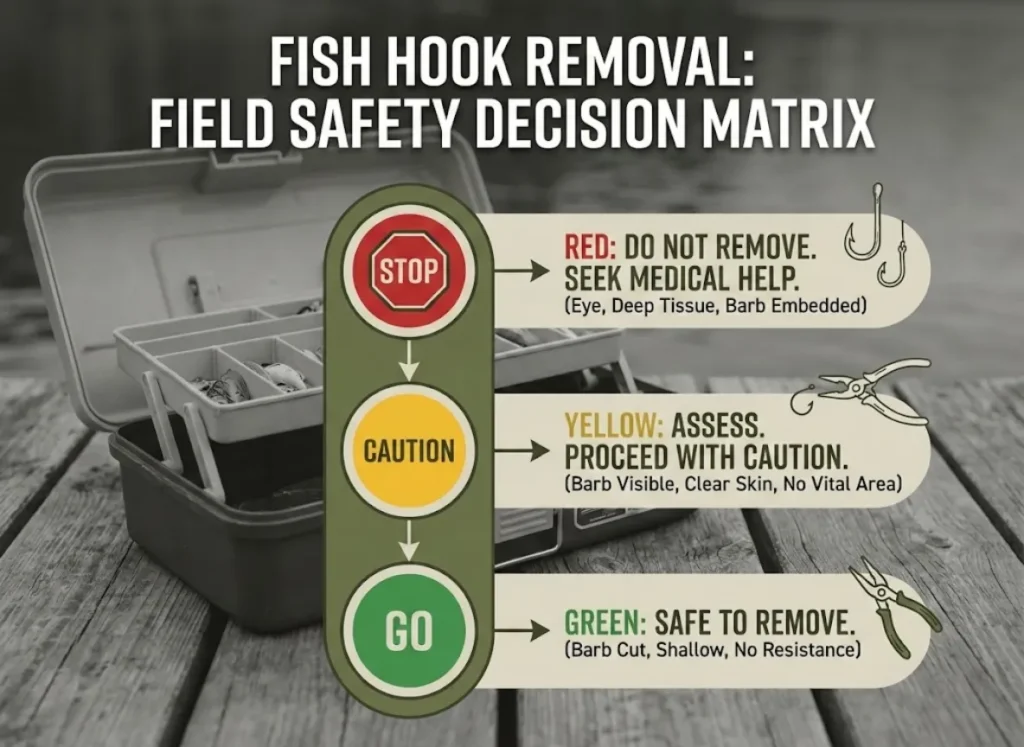
Before you touch those pliers, take ten seconds to assess. Fish hook removal is not always the right call. This stop/go safety table approach helps you triage the wound before any removal attempts. Certain anatomical locations carry risks of blindness or permanent deformity, and no fishing trip is worth losing an eye.
The Golden Rule: If a fishhook is embedded in the globe of the eye or the eyelid, stop immediately. Do not touch it. Any manipulation can cause vitreous fluid leak and permanent vision loss. Tape a cup over the eye to shield it and get to the nearest hospital. Eye injuries from fishing hooks are not field-treatable—period.
Hooks in the nose or ear cartilage present a yellow flag situation. Cartilage has poor blood supply, which means rough removal often leads to infection and permanent deformity. If you see pulsing bright red blood, you’ve hit an artery. Arterial bleeding will “uncork” the vessel and cause uncontrolled hemorrhage. Apply direct pressure and evacuate.
Bone embedment is another absolute stop condition. If the hook has struck bone and feels welded in place, forceful removal can break the tip inside, leading to osteomyelitis. Adrenaline often masks the depth of the wound, so wiggle the hook gently. If it won’t budge, put the pliers down and recognize this as one of those go to ER scenarios.
Pro-Tip: Numbness or tingling around the wound signals nerve impingement. Movement risks severing the nerve, causing permanent loss of sensation. When in doubt, err on the side of caution and follow proper fishing safety protocols that emphasize knowing your limits.
Once you’ve confirmed the injury falls into the “green light” category—hands, arms, legs, away from vital structures—you’re cleared for field treatment using these proven removal techniques.
Tackle Box Mapping: Translating Medical Tools to Fishing Gear
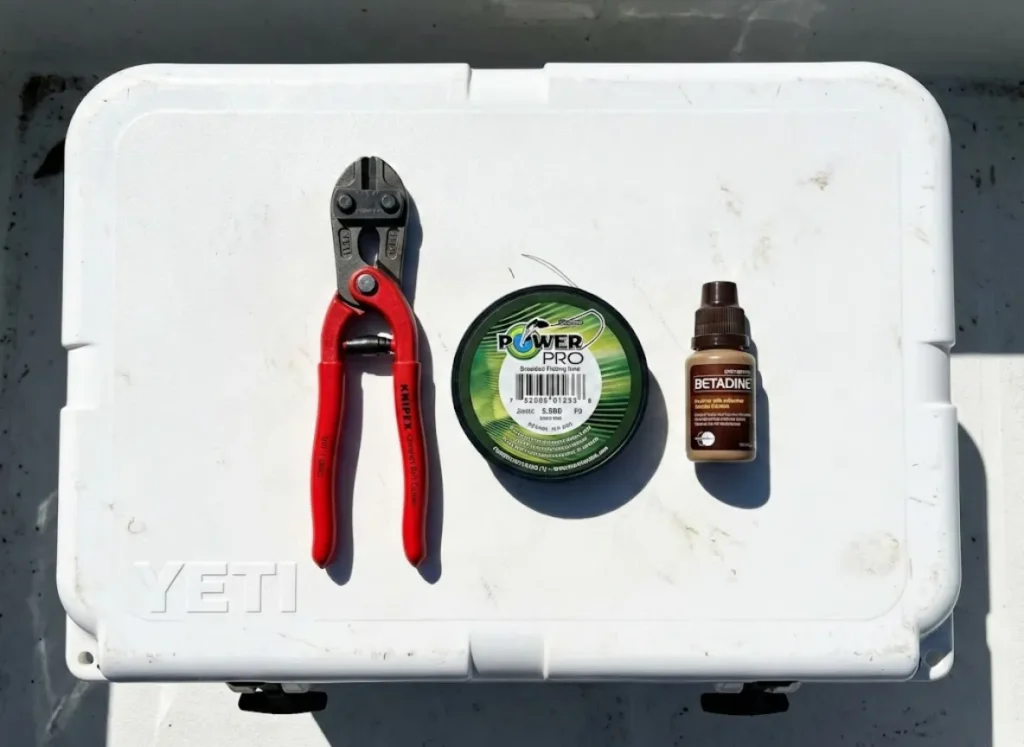
Medical guides assume you have sterile hemostats, silk sutures, and lidocaine for anesthesia. You don’t. You have braided line and rusty pliers. This section bridges that gap with practical tackle box mapping that turns your fishing gear into a legitimate waterside first aid kit for wilderness medicine.
The Suture Substitute: Heavy braided fishing line (50lb or higher) is your most critical tool for fish-hook removal. Monofilament stretches, which dampens the energy needed for a clean extraction. For the removal loop, a heavy zero-stretch braided line is the absolute best tool in your box. Some anglers keep a Rapala knife handy too, but the braid does the heavy lifting.
The Cutter Crisis: Here’s where most anglers get stuck. Standard aluminum fishing pliers often fail against hardened steel hooks. High-end hooks from Mustad, Owner, and Gamakatsu are forged from high-carbon steel. Attempting to cut a saltwater treble hook with aluminum jaws often twists the hook in the wound, causing agony.
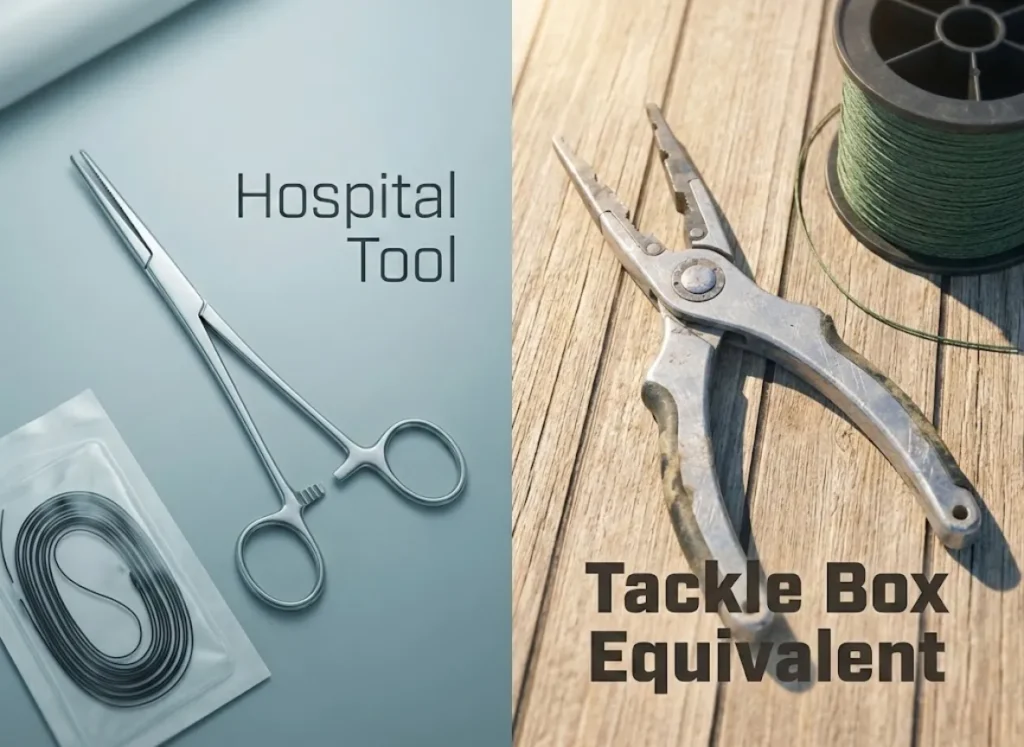
If you need to cut a heavy fish hook shank, standard aluminum pliers will torque the wound—you need specialized high-leverage cutters like the Knipex CoBolt. A hook file can reshape damaged hooks, but for actual hooks embedded in tissue, only bolt cutters will do. This is the difference between a clean cut and a botched on-the-water removal methods attempt.
Field Anesthesia: You don’t have lidocaine, but numbing with ice from the cooler works. Hold a cold aluminum can or ice pack against the site for two minutes before attempting removal. This numbs the area enough to dampen the initial pain and helps with infection prevention through vasoconstriction.
Pro-Tip: Most guides suggest using an 18-gauge needle to sheath the barb for retrograde removal. In reality, this needle cover method is nearly impossible on a rocking boat with shaking hands. Stick with the string-yank or advance and cut methods—they’re proven and practical for uncomplicated fishhook removal.
Method 1: The String-Yank Technique (The “Snatch”)
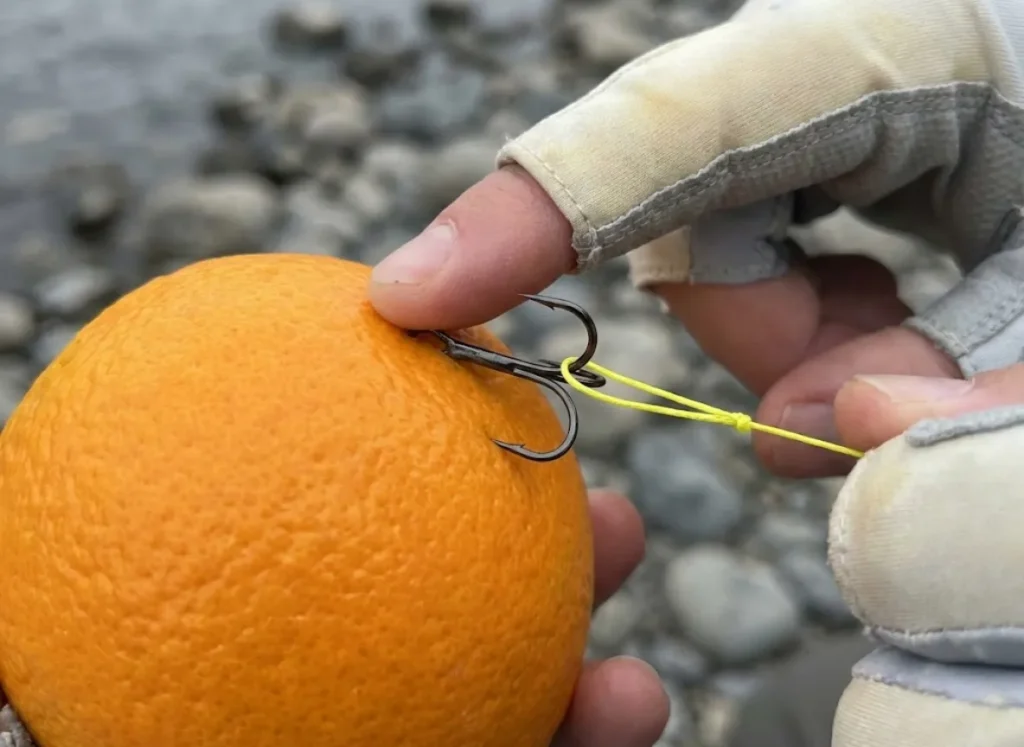
The string yank method is the most celebrated removal technique for good reason. When performed correctly, it’s virtually painless and causes minimal tissue trauma. When performed incorrectly, it rips flesh. Understanding the mechanics makes the difference between success and agony—whether you’re doing partner removal or working solo.
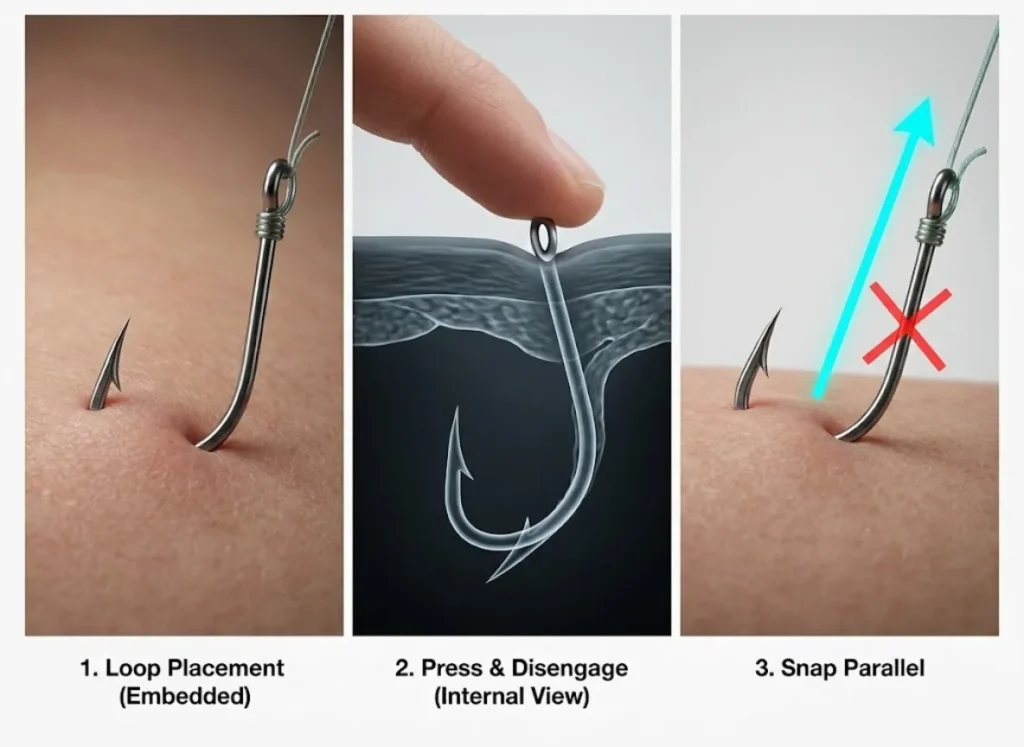
Success depends on two opposing movements working together. The depression pushes the fish hook eye down against the skin, rotating the fish hook shank and disengaging the barb from tissue. The extraction snaps the hook out parallel to the skin surface. Miss the depression step, and the barb stays engaged. Pull upward instead of parallel, and the hook tents the skin without exiting.
The validated String-Yank Technique research confirms this jerk method produces lower tissue trauma than the push-through method.
Step 1: The Setup
Remove the fish hook from the lure first. Cut the line or open the split ring to detach any attached bait/line/lures. Never leave a heavy lure attached—the swinging weight causes secondary tearing every time the patient flinches. This applies to all hook types: j-hooks, dry-fly hooks, and especially treble hooks with extra hooks that can snag.
Construct a loop using doubled-over heavy braided line (65lb test or higher). Warning: thin braid acts like cheese wire on the operator’s hand. Wrap it around your fingers or use gloves to protect your skin.
Step 2: Vector Alignment
Slide the loop over the fish hook shank until it sits at the fish hook bend. Press the hook eye firmly down against the skin—this is the critical action that makes or breaks the technique.
The shank must be parallel to the surface. Align the string loop at a zero-degree angle to the skin, inline with the shank direction. Stabilize the hook with steady downward pressure before the first hook movement.
Step 3: The Snatch
Leave a tiny amount of slack in the line to allow for acceleration. With a sharp, confident motion, jerk the line parallel to the skin. Do not pull up. Follow through like throwing a punch—hesitation causes pain. This jerk method works on most hook types, whether it’s a first hook stuck shallow or a second hook from a treble that’s embedded deeper.
Pro-Tip: Don’t count to three. Yank on two. The anticipation causes the patient to flinch, which ruins the angle and botches the jerk method completely.
Safety Warning: The hook exits at projectile velocity. Everyone involved—patient and operator—must wear eye protection. Sunglasses count. This prevents the catastrophic secondary injury of a hook stuck in the eye.
Method 2: The Advance and Cut Technique
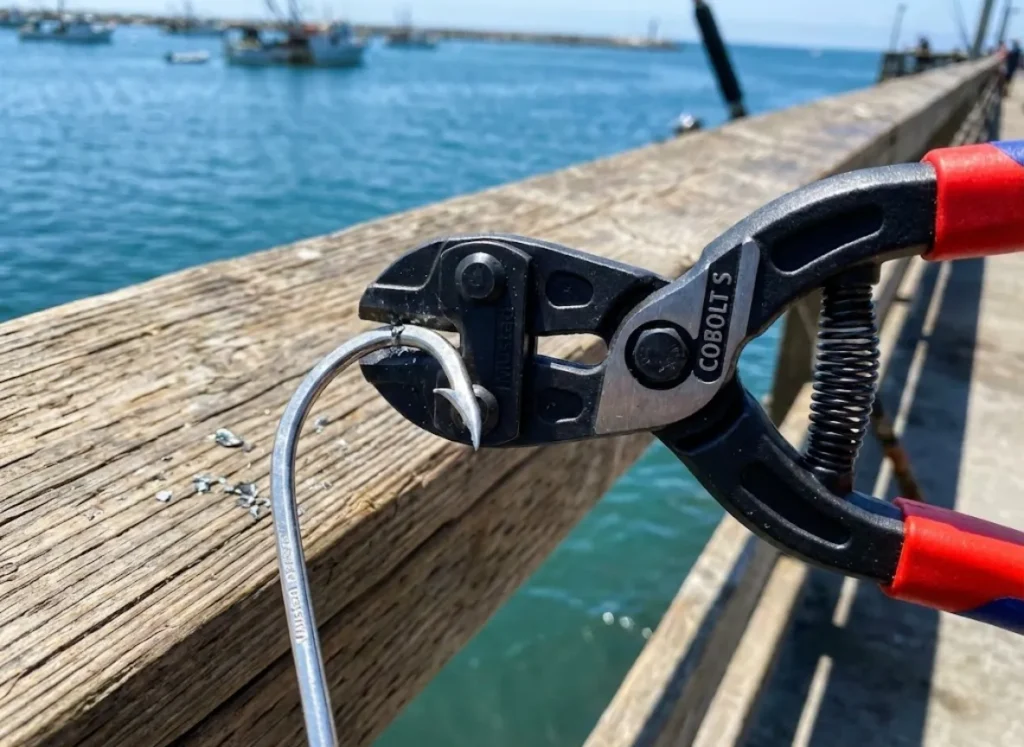
When the string-yank won’t work—deep embedded hooks, multiple barbed treble hooks, or when the point is already tenting the skin from inside—the advance and cut method is your backup. This push-through method is more painful but highly effective in the right situations.
Best applications include hooks in loose skin like the webbing between fingers, or shallow embedded hooks where the point is already visible just beneath the surface. The advance and cut technique case report literature supports its efficacy in these presentations.
Step 1: Field Anesthesia. Use the ice-can trick right before pushing the point through. Two minutes of cold numbing makes the difference between a difficult procedure and an excruciating one. No scalpel needed—just patience and proper numbing with ice.
Step 2: Advance. Grasp the hook shank with heavy-duty pliers. Rotate the hook forward, following its natural curvature, until the barb pierces through the opposite side of the skin. The entire fish hook barb must be exposed outside the skin before you cut.
Step 3: Cut. Use bolt cutters or side cutters capable of shearing hardened steel hooks to clip the barb off. The Knipex CoBolt handles this where aluminum pliers fail. Alternative: if the barb won’t cut, cut the hook eye instead and pull the barbless shank through the exit wound.
Step 4: Retract. Back the now-barbless hook out through the original entry wound using the retrograde removal method.
This technique proves why mini bolt cutters are a mandatory part of any essential tool kit. Without them, you’re stuck with a hook injury that could have been resolved in minutes.
Solo Removal: The Boat Cleat Anchor Method
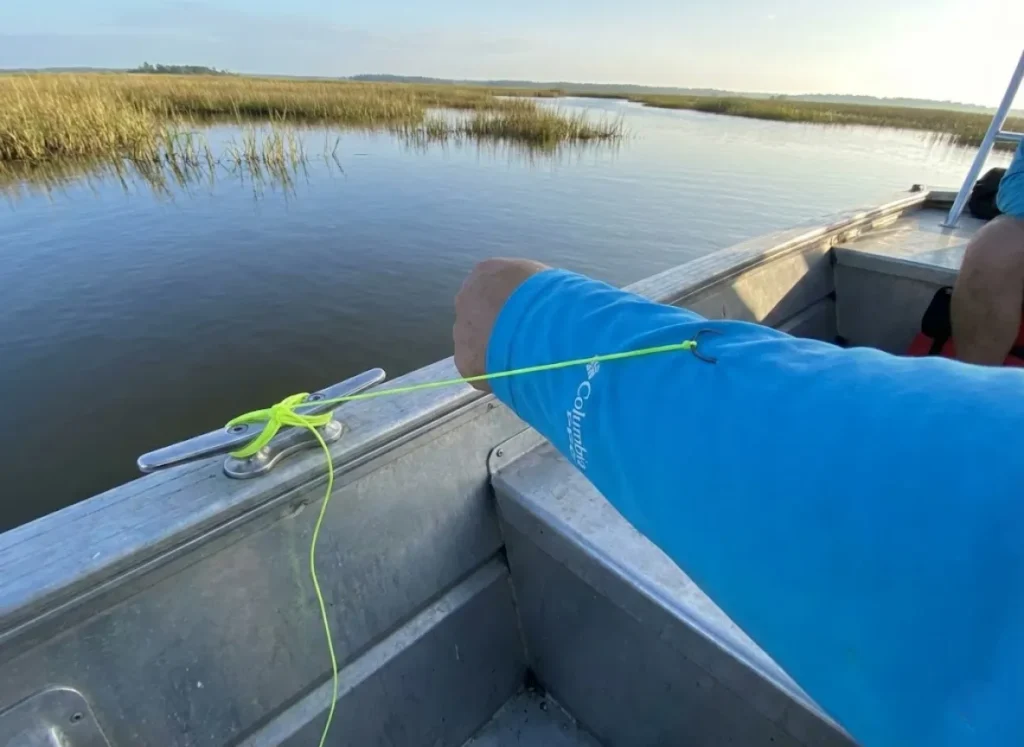
Here’s the scenario most guides ignore: you’re fishing alone, and a hook buries itself in your left hand. How exactly do you perform a string-yank on yourself when you can’t press the hook eye down and pull the string simultaneously?
Your brain inhibits the self-harm reflex. Even when you know the technique, even when you’ve done it on others, yanking a hook from your own flesh triggers psychological resistance that makes fine motor coordination nearly impossible. This is where self-rescue skills become essential for the solo angler.
Enter the boat cleat anchor method—a solo removal technique that uses the environment to generate the snatch force while freeing your uninjured hand for stabilization. It’s the cornerstone of true angler self-reliance.
The Setup: Tie your braided loop securely to a fixed object. A boat cleat works perfectly. Railings, trolling motor mounts, or even a tree branch onshore will do. Place the loop over the hook bend exactly as you would for a partner removal.
The Mechanics: Use your uninjured hand to press down firmly on the fish hook eye, engaging the downward pressure. This is the critical stabilization step—stabilize the hook before any extraction attempt.
The Body Snatch: Instead of pulling the string, jerk your entire body away from the anchor point. Your injured hand snaps backward from the fixed loop, generating the extraction force. Watch the solo treble hook removal demonstration from pro angler Shaw Grigsby for proof this works on even nasty treble hook wounds.
The psychology matters here. Using gross body movement often overrides the hesitation to hurt yourself better than trying to execute a fine motor pull with your opposite hand. It feels more like flinching away from danger than deliberately causing pain.
Post-Removal Field Care: Infection Control
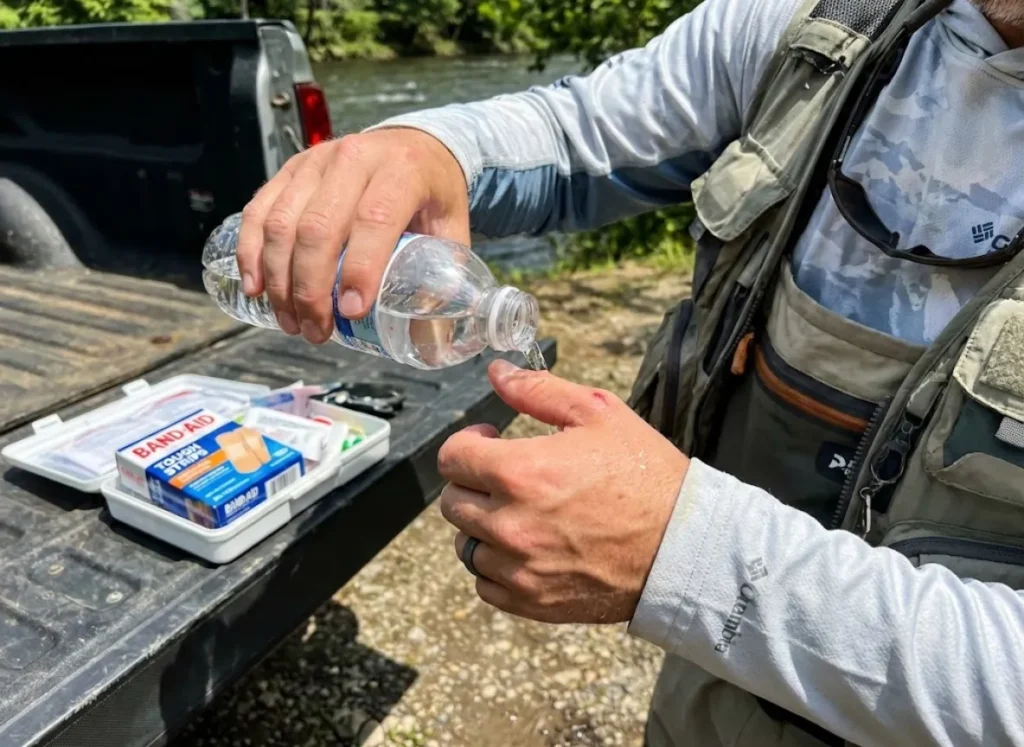
The hook is out. Now the battle against infection begins. A fish hook is not a sterile surgical instrument—it’s a highway for bacteria from lake sediment, fish skin slime, bait residue, and rust. Post removal care determines whether this becomes a minor incident or a serious fishing injury requiring extended medical treatment.
The Tetanus Reality: Tetanus comes from anaerobic bacteria in soil and sediment, not rust itself. But dirty tackle is a prime vector for dirty wounds. If it’s been more than ten years since your TDaP booster, you need a tetanus vaccination immediately after any puncture wound. Medical attention guidelines for fish hook injuries recommend prophylaxis in over 50% of hook injury cases presenting to emergency departments.
The Saltwater Threat: In warm saltwater above 68°F, Vibrio vulnificus is a flesh-eating bacterium that enters through punctures. The Vibrio vulnificus infection risks are significantly higher for anglers with liver conditions. For those with chronic liver disease or compromised immune systems, a hook injury in warm Gulf waters is a medical emergency requiring immediate antibiotics.
Irrigation Protocol: The solution to pollution is dilution. Flush the wound aggressively with bottled water. Lake water contains Aeromonas and other pathogens—avoid using it for cleaning if possible. Betadine or isopropyl alcohol provides proper sanitation and antiseptic protection. Allow the wound to bleed briefly; this helps flush bacteria the dirty hook introduced.
Immediately treat the puncture using supplies from your waterproof first aid kit. Apply antiseptic, then proper bandaging, and watch for expanding redness or red streaks over the next 24 hours. All this is basic infection prevention for any fishing injuries.
Pro-Tip: Keep a small bottle of Betadine and a few adhesive bandages in a waterproof pouch inside your tackle box. When you need them, you won’t have time to dig through a first aid kit on shore. Your fishing friends will thank you when they’re the ones bleeding.
The Prevention Imperative: The Barbless Revolution
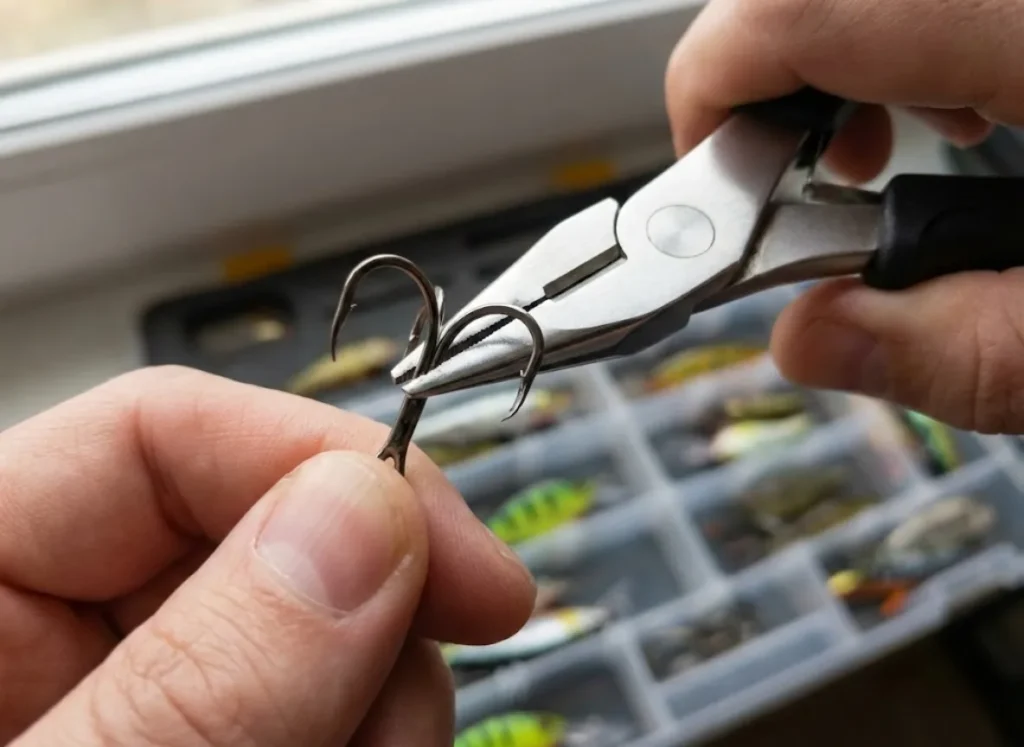
The most effective fish hook removal technique is preventing the problem in the first place. The trend toward barbless hooks isn’t just a conservation ethic for protecting fish—it’s a safety protocol for the angler and a cornerstone of angler self-reliance.
The mechanics are simple: the fish hook barb is a wedge designed to prevent retraction. By crushing it flat with heavy pliers before casting, you remove the mechanical lock that makes removal difficult. A barbless hook can be backed out with zero pain or damage using the simple retrograde removal method. No string-yank needed. No bolt cutters required. Barb-less hooks reduce tissue trauma for both you and the fish.
The “Lost Fish” Fallacy: Critics argue barb-less hooks lose more fish. The reality? Contrary to myth, the physics of barbless hooks actually allow for deeper, faster penetration with less force. The barb’s resistance is removed, often leading to more secure hooksets in the jaw bone.
For catch-and-release anglers, the trade-off favors barbless for both fish survival and angler safety. Keep a pair of heavy pliers on your belt. Crush the barbs on every treble hook, circle hook, worm hook, and single hook before the first cast—whether you’re throwing swimbaits, topwater, or fishing with bait.
It takes five seconds and transforms a potential surgical emergency into a trivial non-event. The science of catch and release supports this practice for fish welfare—and now you know it protects you too. Do a proper gear check before every trip, and include barb crushing as part of your routine. Any serious angler makes this standard practice.
Conclusion
Self-reliance on the water means knowing exactly when to act and when to stop. This step-by-step field guide covered everything from triage to removal to post removal care. Here are the three takeaways that matter:
Triage First. Always assess for red flags—eye injuries, bone embedment, arterial bleeding—before touching the hook. Some injuries require professional wilderness medicine and emergency first aid beyond what your tackle box can provide.
Master the Mechanics. The string yank method relies on proper technique: press the fish hook eye down to disengage the barb, then snatch parallel to the skin. Get this right, and most soft-tissue hooks come out clean using standard removal techniques.
Equip for Reality. Your safety depends on carrying heavy braided line and bolt cutters capable of shearing hardened steel hooks. Standard fishing pliers aren’t enough for real emergency first aid. Keep your gear check routine tight.
Before your next trip, take five minutes to audit your tackle. Test your cutters against a spare hook. Crush your barbs on every treble hook, circle hook, and j-hook in your box. It’s the single most effective step toward angler self-reliance—ensuring a hook in the hand stays a minor inconvenience rather than a trip-ending emergency that sends you and your fishing friends scrambling for the nearest ER.
FAQ
Does the string trick work for deep fish hooks?
Yes. The string yank method is specifically designed for hooks embedded past the barb in soft tissue. However, if you have a deep embedded hook that has reached muscle or sits near vital structures, or if you cannot depress the hook eye enough to disengage barb, seek professional care for proper fishhook removal.
Do I need a tetanus shot for a fish hook injury?
Likely yes. Clostridium tetani bacteria thrive in the anaerobic sediment found on lake bottoms and dirty tackle. If it has been more than five to ten years since your last TDaP booster, medical guidelines recommend updating your tetanus vaccination immediately after any puncture wound from a fishhook injury.
Can you remove a treble hook the same way as a single hook?
Treble hooks are more complex because the free points and extra hooks can snag during extraction and cause secondary hook injury. Before using the string-yank or advance and cut method, clip off the exposed hooks with a cutter or tape them flat to prevent secondary injury to the patient or operator.
What is the best tool to cut a fish hook?
Standard aluminum fishing pliers often fail on hardened high-carbon steel hooks like those from Rapala, Owner, and Gamakatsu. High-leverage mini bolt cutters—specifically the Knipex CoBolt—are the gold standard for reliably shearing through heavy-gauge hooks without twisting the wound. Just take your needle-nose pliers or forceps for stabilization, but bring real bolt cutters for the cut.
How do you remove a fish hook from your finger by yourself?
Use the boat cleat method for solo removal. Tie a loop of heavy braid to a fixed anchor point, place it over the hook bend, use your uninjured hand to depress the hook eye to stabilize the hook, and sharply pull your injured hand away from the anchor. This generates the snatch force needed when you’re fishing alone and need self-rescue.
Risk Disclaimer: Fishing, boating, and all related outdoor activities involve inherent risks that
can lead to injury. The information provided on Master Fishing Mag is for educational and informational purposes
only. While we strive for accuracy, the information, techniques, and advice on gear and safety are not a substitute
for your own best judgment, local knowledge, and adherence to official regulations. Fishing regulations, including
seasons, size limits, and species restrictions, change frequently and vary by location. Always consult the latest
official regulations from your local fish and wildlife agency before heading out. Proper handling of hooks, knives,
and other sharp equipment is essential for safety. Furthermore, be aware of local fish consumption advisories. By
using this website, you agree that you are solely responsible for your own safety and for complying with all
applicable laws. Any reliance you place on our content is strictly at your own risk. Master Fishing Mag and its
authors will not be held liable for any injury, damage, or loss sustained in connection with the use of the
information herein.
Affiliate Disclosure: We are a participant in the Amazon Services LLC Associates Program, an
affiliate advertising program designed to provide a means for us to earn advertising fees by advertising and linking
to Amazon.com. As an Amazon Associate, we earn from qualifying purchases. We also participate in other affiliate
programs and may receive a commission on products purchased through our links, at no extra cost to you. Additional
terms are found in the terms of service.