
In this article
The hookset just landed and the fish is still thrashing boatside, but the shot everyone wants lives behind a zipper you can’t work with a wet thumb. That fumble is the real problem no gear roundup solves, because a case and a mount aren’t two separate buys. They’re one decision, and the right pick depends entirely on whether you’re wading a bank, paddling a kayak, or running a console. Sort it that way first and the specs stop being a guessing game, from what the IP ratings actually promise down to which mount survives a salt season. Here’s how the option types stack up before we get into the honest picks and where each one fits how you fish.
| Option Type | Best For | Waterproof Rating | Watch Out For |
|---|---|---|---|
| Soft pouch + lanyard | Bank & wade anglers | IP68 or declared IPX8 | Bulk won’t fit a tight mount |
| Slim hard case | Kayak, mount-ready | IP68, model-specific | No float, buy for your model |
| Floating case | Loss-prone open water | IPX8, buoyant build | Bulkier, slower photo access |
| Track or rail mount | Kayak & boat hands-free | Pair with a rated case | Salt seizes cheap hardware |
What “Waterproof” Really Means for a Fishing Phone
Every listing shouts IP68 like it’s a lifetime promise. It isn’t. A rating is a lab result measured on a brand-new seal, and the water on your next trip doesn’t read spec sheets. Understanding what the numbers actually cover is the difference between trusting a case and testing it.
What IPX7, IPX8, and IP68 Actually Promise
IPX7 is a fixed standard: one meter of water for thirty minutes, no more. IPX8 sounds tougher, and it can be, but it has no fixed depth or time. The maker declares whatever they tested, so two cases both labeled IPX8 can mean very different real protection. Check the claimed depth figure, not just the letter.
That X matters too. It means solid-particle protection was never tested, so an IPX8 case makes no promise about dust or sand. Grit working into a zipper track is a separate failure mode the rating ignores entirely. A true IP68 case covers both: the 6 means dust-tight, the 8 means submersion past one meter, though under IEC 60529 the manufacturer still sets the exact depth and duration. That gap is where water-resistant and truly waterproof part ways, since water-resistant shrugs off splash and rain while waterproof survives going under, and only the declared rating tells you which one you actually bought. The same IP-rating logic separates a splashproof headlamp from a truly submersible one, which is why the night fishing headlamps worth trusting on the water get judged on the same scale.
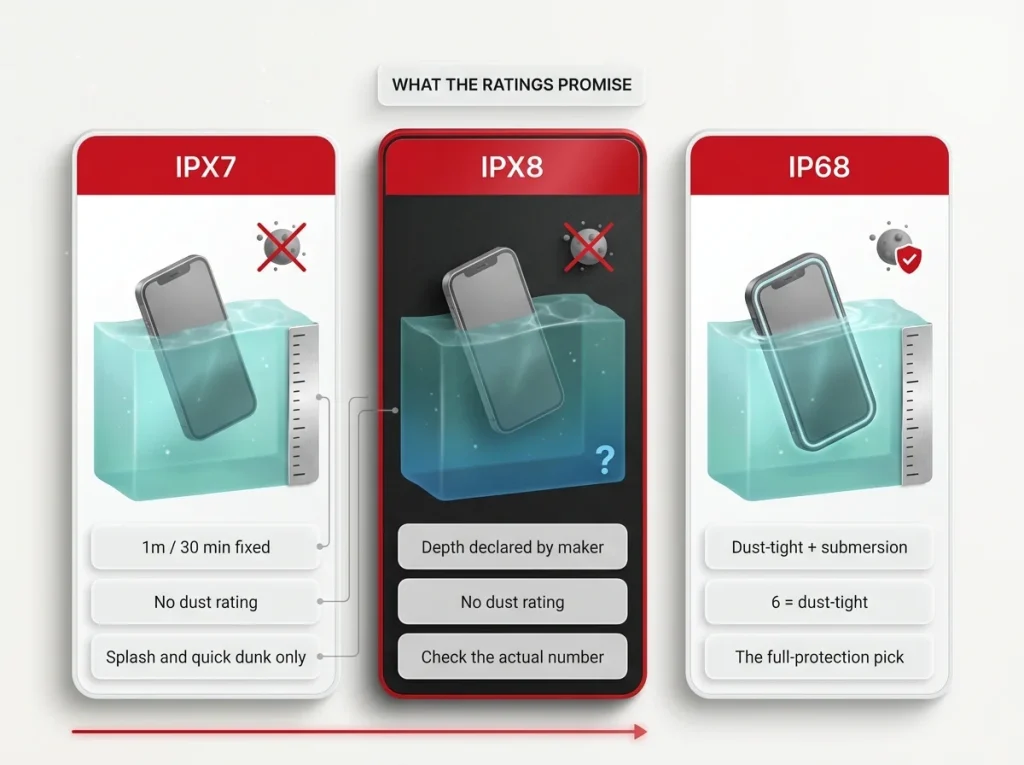
Why the rating fades before the case looks worn
Here’s the part the marketing skips. That rating was true the day the case left the factory. Repeated wet and dry cycling, sand ground into the roll-top, and a summer of dashboard heat all degrade the seal long before the case looks beat up. The failure is almost never dramatic. It’s a slow loss of grip in the gasket that lets the first teaspoon of water in on a hot August afternoon.
The tissue-paper leak test (do it before you trust it)
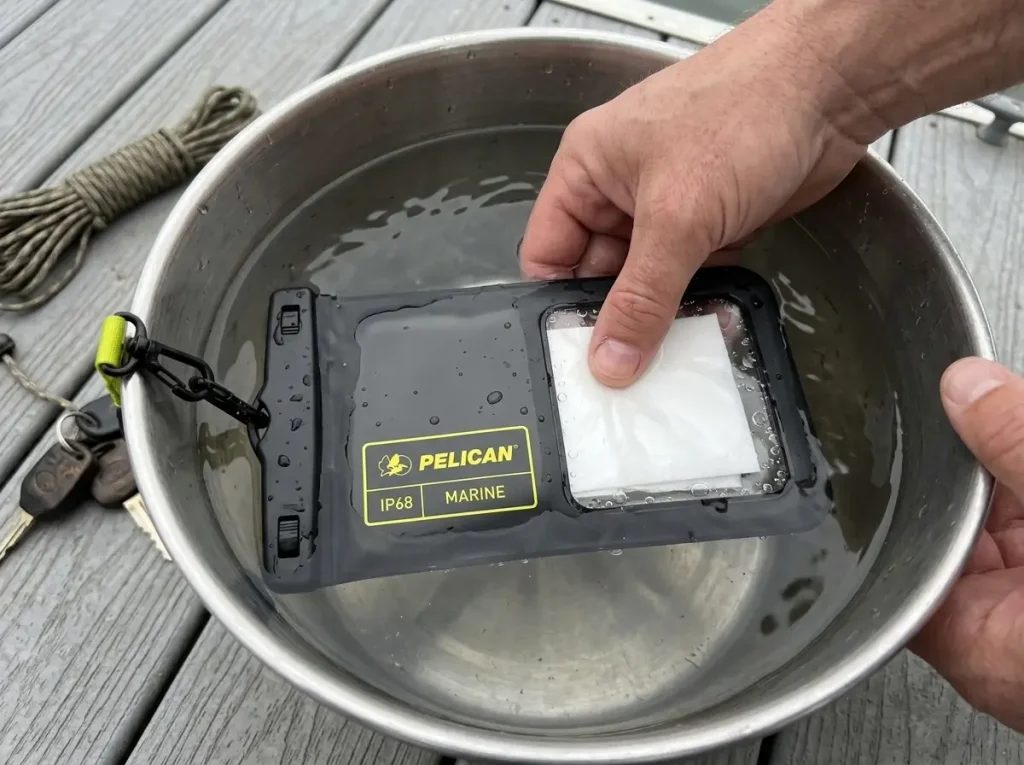
Ask anyone who’s drowned a phone and they’ll tell you the same thing: test the empty case first. Seal a folded tissue inside, hold the empty case underwater for a full thirty minutes, then pull it out and check the tissue. Dry means the seal is honest today. Damp means you just saved your phone from finding out the hard way.
Run the tissue test again at the start of every season, not just when the case is new. The gasket that passed last June has had six months of heat cycles since, and that’s exactly when a seal quietly gives up.
Soft Pouch vs Hard Case for How You Fish
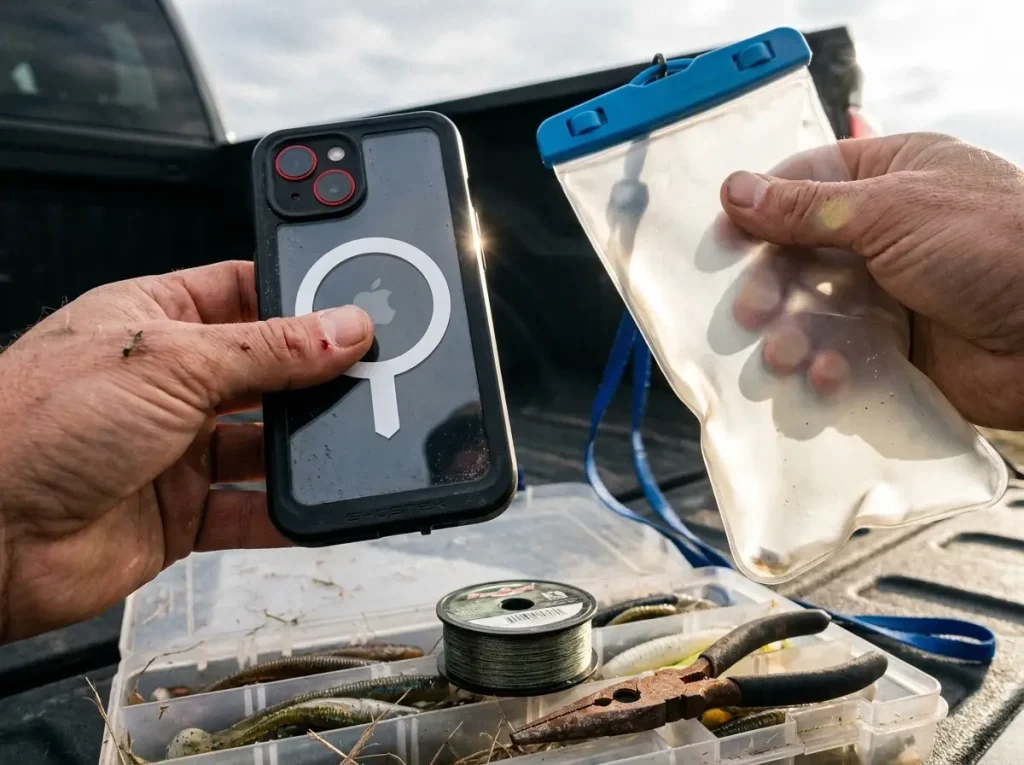
This is the first real fork in the road. A soft pouch protects best and floats. A hard case is slim enough to actually live on a mount. You’re not picking a winner, you’re picking which compromise you can live with on the water.
The Soft Pouch Trades Quick Access for Protection
A soft pouch wins on three counts: it fits almost any phone, most designs float, and they nearly all include a lanyard eyelet. The trade is access. You either shoot photos through a clear TPU window or pull the phone out entirely, and neither is fast. For an angler who mostly wants the phone dry and reachable, that’s a fair deal.
The Hard Case Is Slim and Mount-Ready but Won’t Float
A hard case flips the math. You get a model-specific fit, the best drop protection, and a slim profile that still closes into a clamp mount. The catch is real: almost none of them float, and there’s no universal sizing, so you buy for your exact phone. This is the case for someone whose phone rides a mount every trip.
The wet-hands fumble no roundup warns you about
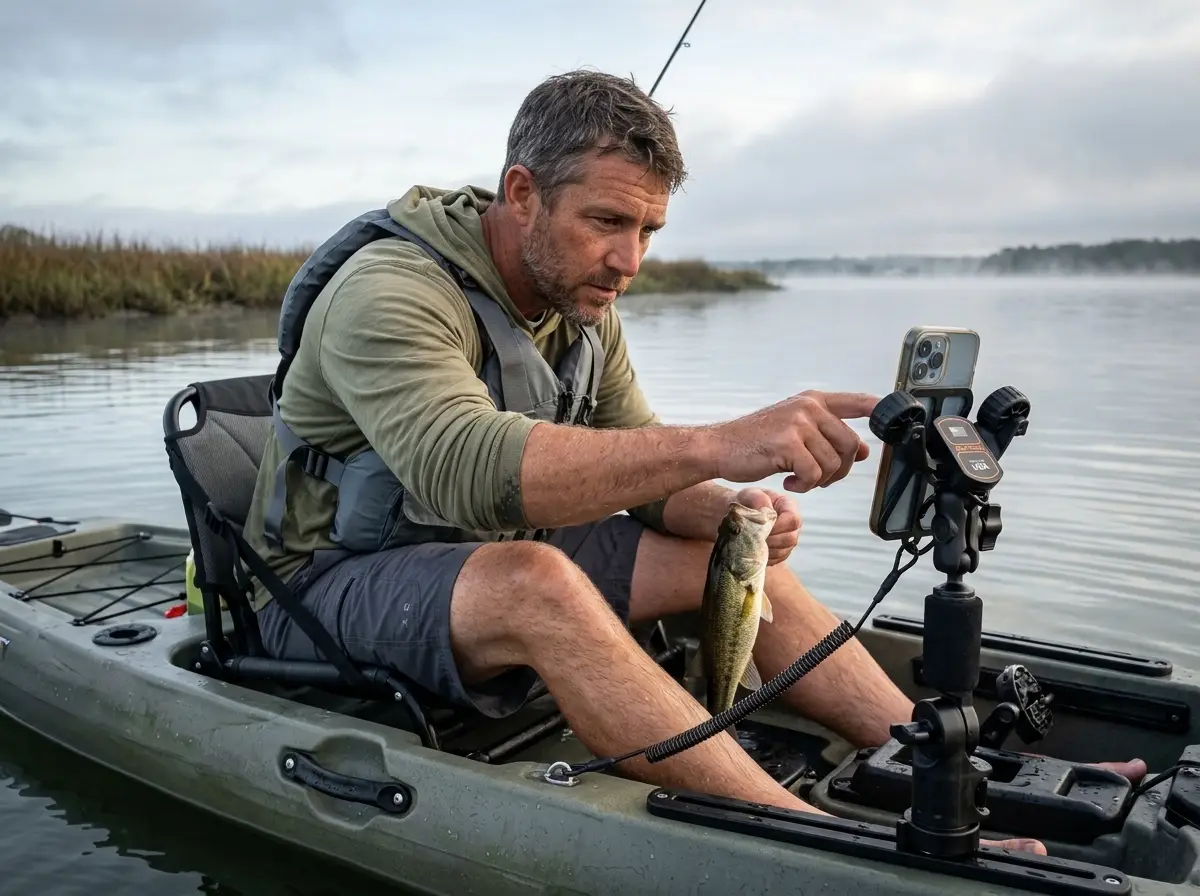
Nobody writes about the actual failure point. Fish still on, wet hands, adrenaline up, and you’re trying to one-hand a sealed pouch open before the moment’s gone. Half the time you miss the hero shot. The other half you nearly send the phone over the side in the scramble. A pouch you have to peel open is the slowest possible answer to a fish that’s about to be released, and it’s the single best argument for a mount that keeps the phone visible and reachable without opening anything at all.
The Case-and-Mount Compatibility Trap
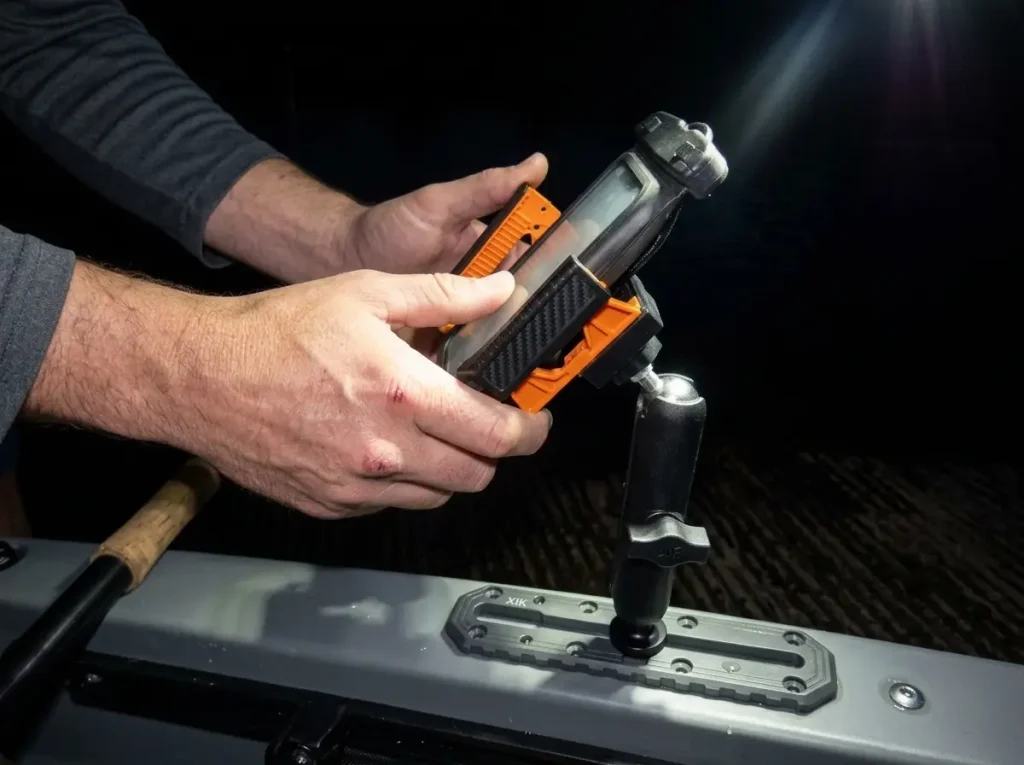
This is the whole reason this article exists. People buy the case, buy the mount, and find out on the water that the cased phone won’t seat in the cradle. The two purchases were never checked against each other, and the bulk of a waterproof pouch is exactly what breaks the fit.
Why a cased phone won’t fit a bare-phone mount
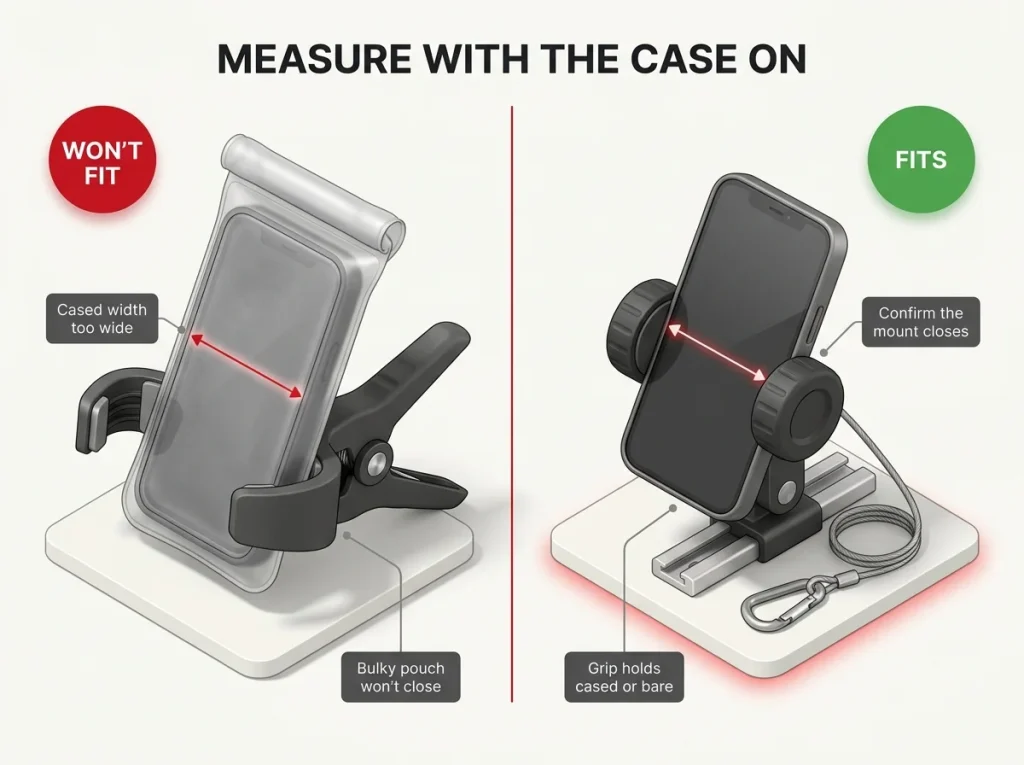
Most clamp mounts list a narrow phone-width range, and that number is measured for a bare phone. Wrap that same phone in a padded waterproof pouch and you’ve added real thickness on every side, and now the spring arms won’t close around it. The mount isn’t defective. It was measured for a spec you changed the moment you sealed the phone up.
Grip-Style Mounts vs Snug Cradles as the Fix
The fix is a mount that grips the phone itself instead of hugging a fixed cradle. Adjustable rubber-wheel systems clamp onto whatever you put between them, so they hold the phone bare or sealed in a case. The YakAttack RotoGrip is built exactly for this, rated to hold a phone with or without a case. On the case side, a slim model-specific hard shell like the Ghostek Nautical Slim is designed to stay thin enough for a clamp rather than bulk past it. Either path solves the conflict, as long as you pick the case and the mount as one decision. The same T-track and rail hardware that anchors a fish finder is what most of these grip mounts bolt to, so the kayak fish finder mount systems worth rigging share a mounting standard with your phone holder.
How to check the fit before you buy both
Measure your phone with the case on, not off. Take that cased width and confirm the mount closes on that number. If a mount only lists a bare-phone range and you run a bulky pouch, assume it won’t fit and choose a grip-style holder instead. Five minutes with a tape measure beats a dockside surprise.
Floatation and Lanyards Save the Phone
A dropped phone that floats is a wet phone you get back. One that sinks is a story you tell at the ramp. Buoyancy and a tether are the two features this whole category actually turns on, and they cost almost nothing to add.
The rice-drying trick is folklore, not a fix. The story that keeps coming up is the same every time: phone goes in the water, hours of the rice-bag ritual on the drive home, and the phone never comes back to life anyway. The decision that matters happens before the dunk, not after. A floating case keeps the phone on the surface where you can grab it, and a lanyard clipped to your PFD or a rail means it never gets the chance to sink in the first place. Clip the tether to the boat, not just the phone, the same way the wading tool retractor systems that stop pliers from feeding the river keep your other gear attached.
For the angler who wants dedicated float insurance, the pick below is built around four-sided buoyancy and comes two to a pack, so a fishing buddy gets covered too.
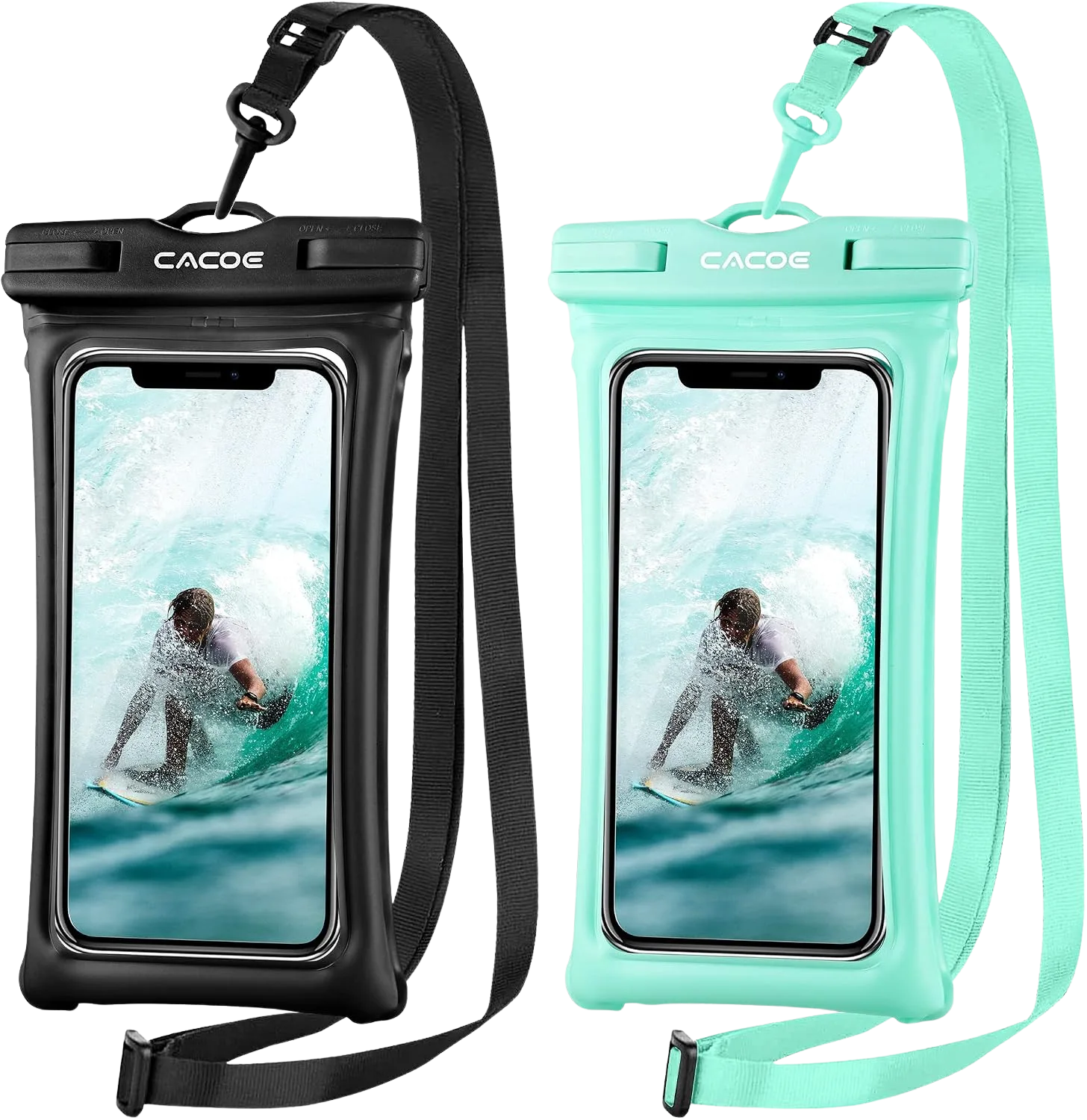
A floating case earns its keep the first time you knock it off a gunwale. The airbag edges add a little bulk, which is the honest trade, but a phone that bobs beside the kayak instead of sinking is worth the extra thickness in your pocket.
Best Cases for Bank and Wade Anglers
No kayak track, no console rail. You just need the phone dry, floating, and reachable for a quick pic. This is the simplest lane and the cheapest, so a pouch plus a lanyard is all the setup you need. Protection comes first here, and quick access second, because you’re not mounting anything.
Best Overall Pouch: Pelican Marine Series IP68 (XL)
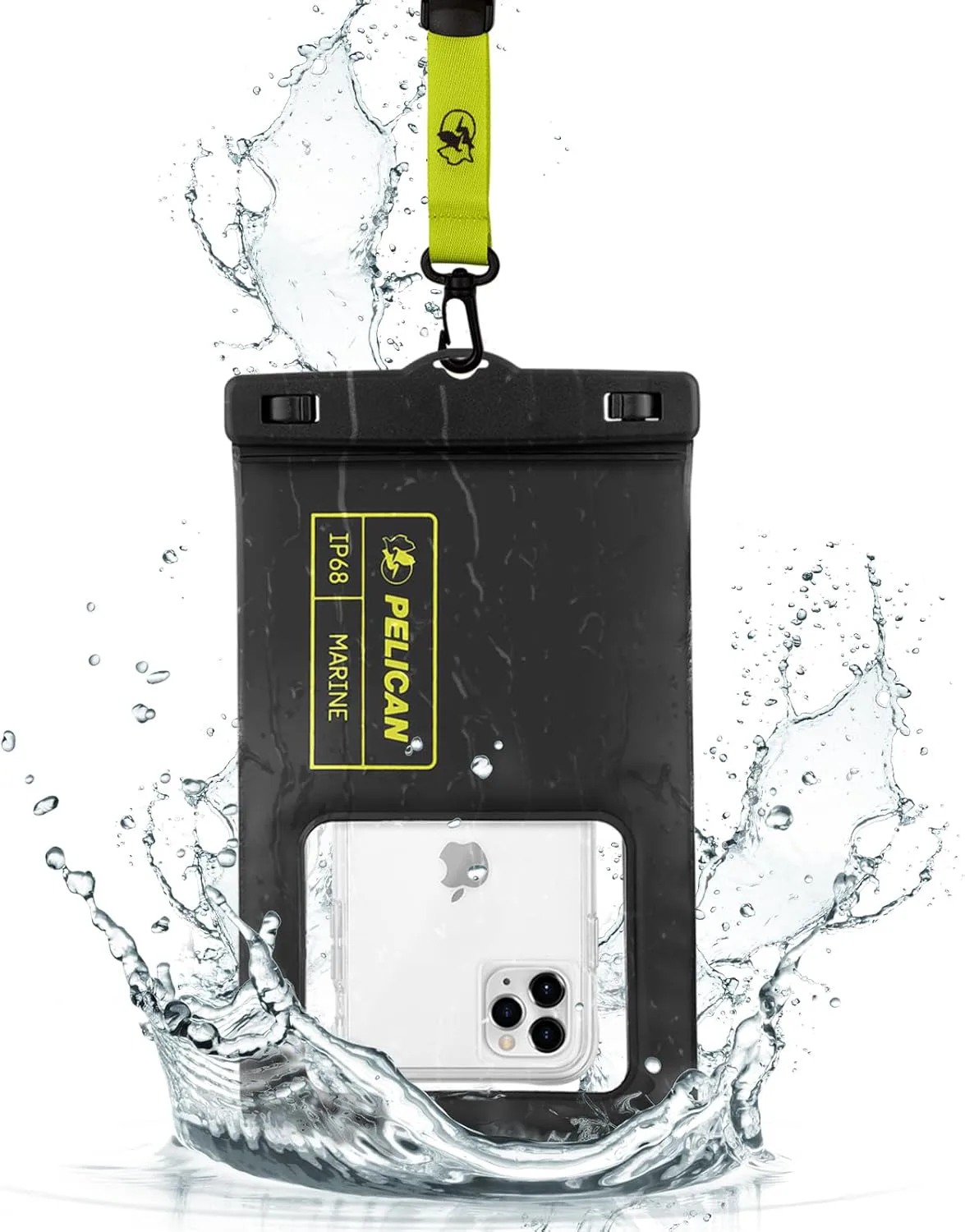
The Pelican is the pouch to buy if you want one that just works and don’t want to think about the seal every trip. It runs a touch premium for a pouch, but the trust factor is real, and the clear window is noticeably sharper than the bargain-bin competition when you’re taking a quick photo through it.
Best Budget Pouch: JOTO Universal Waterproof Case
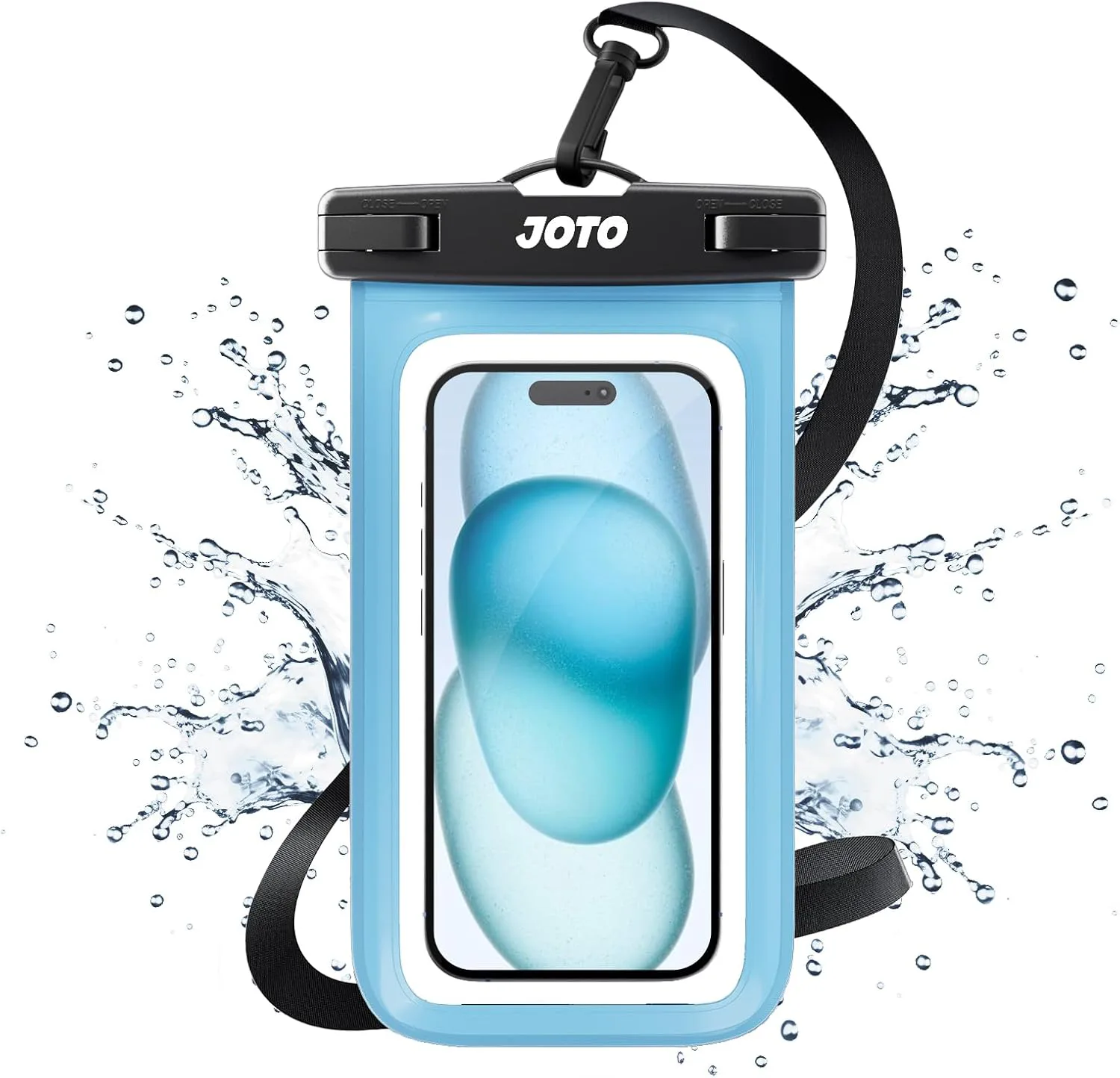
There’s no shame in the cheap pouch when the cheap pouch works, and for an occasional bank angler the JOTO is genuinely enough. Run the tissue test on it like any other case, and remember its seal degrades on the same timeline as the pricier ones, so the same seal-longevity problem that eventually takes out a waterproof gear bag before the salt gets in applies to a budget pouch too.
When you’re wading, run the lanyard around your neck and clip it to a vest loop. A single attachment point is exactly how phones still end up in the current when the cord slips off one shoulder mid-cast.
Best Setups for Kayak Anglers
The kayak angler shoots one-handed photos, runs a fish-finder app, and needs the phone locked down but grabbable. This is where the case-and-mount-as-one-decision really bites, because you’re mounting the phone and sealing it at the same time. Match the tier to your habits: a rail mount rewards frequent photographers, a pouch covers protection-first paddlers, and a simple harness splits the difference.
Best Slim Hard Case: Ghostek Nautical Slim
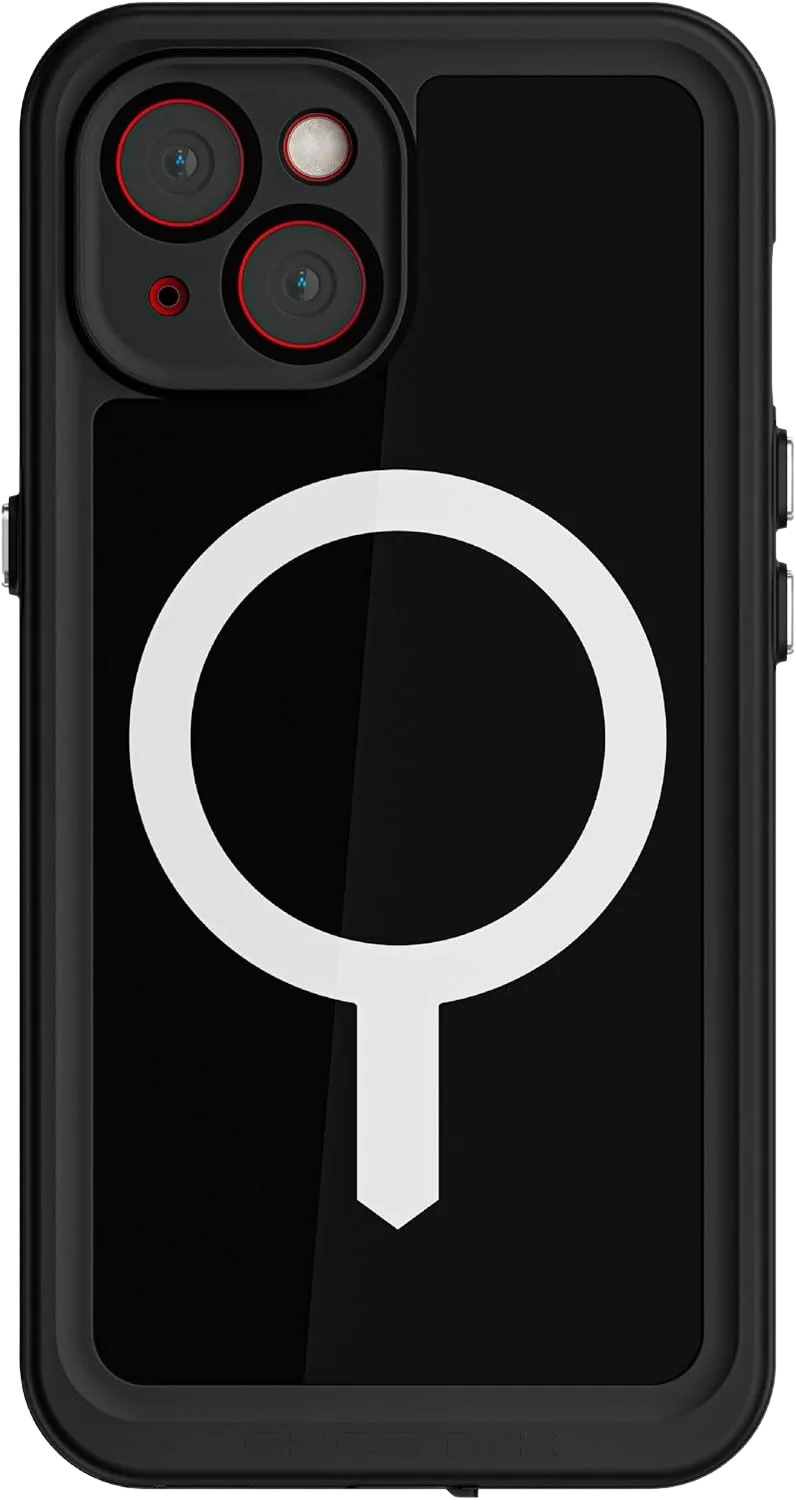
The one caveat is model lock-in: you buy it for your exact phone, and it won’t float on its own, so pair it with a tether. But if your phone lives on a mount, a slim hard case is the setup that stops fighting the cradle.
Best Kayak Mount: YakAttack RotoGrip Phone Holder Pro
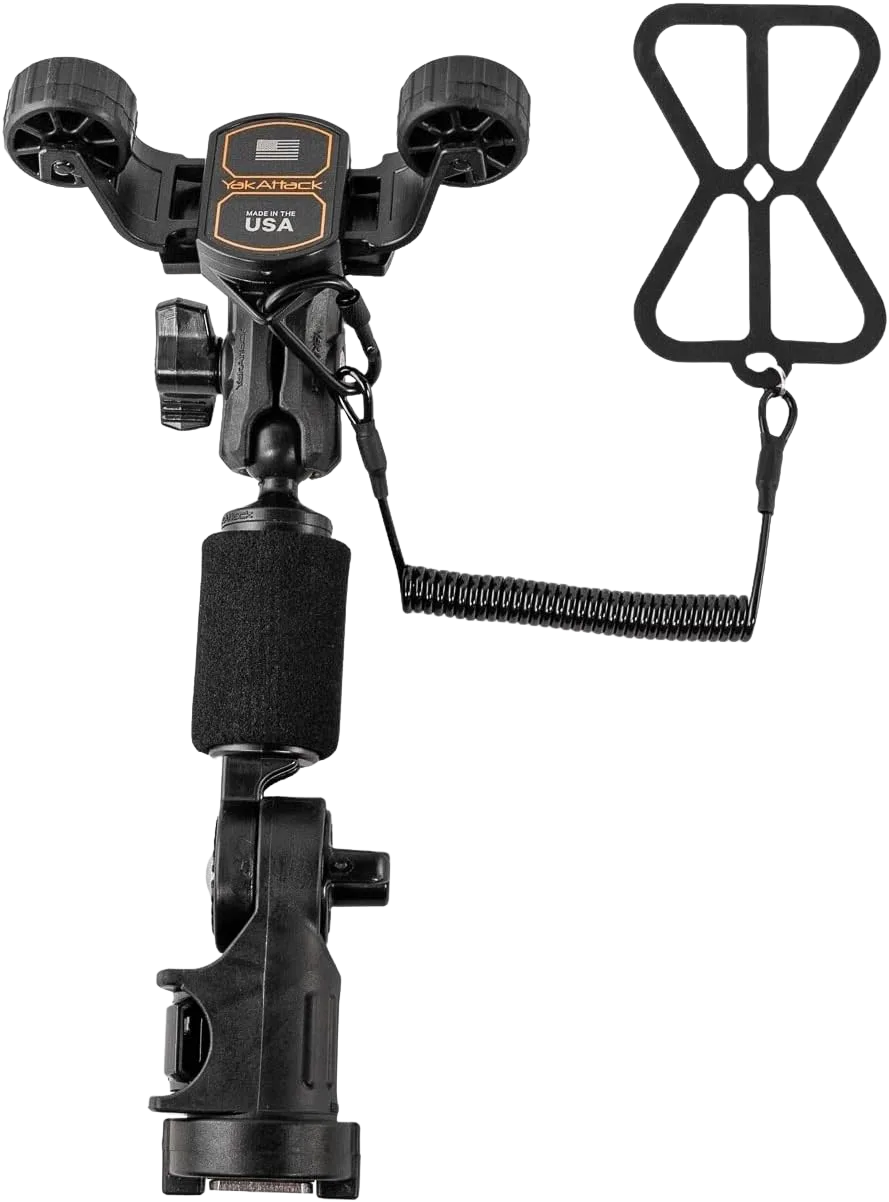
It’s the premium pick, and it earns it. If you shoot a lot of one-handed photos or run navigation apps, the RotoGrip is the mount that stops the case-versus-cradle argument for good. If you rarely stop to shoot, that’s money you don’t need to spend, and the budget option below covers you. Either way, the fish-finder and tide apps that are the whole reason to mount a phone are a lot more usable locked to a rail than juggled loose.
Best Budget Mount: xik Kayak Phone Holder
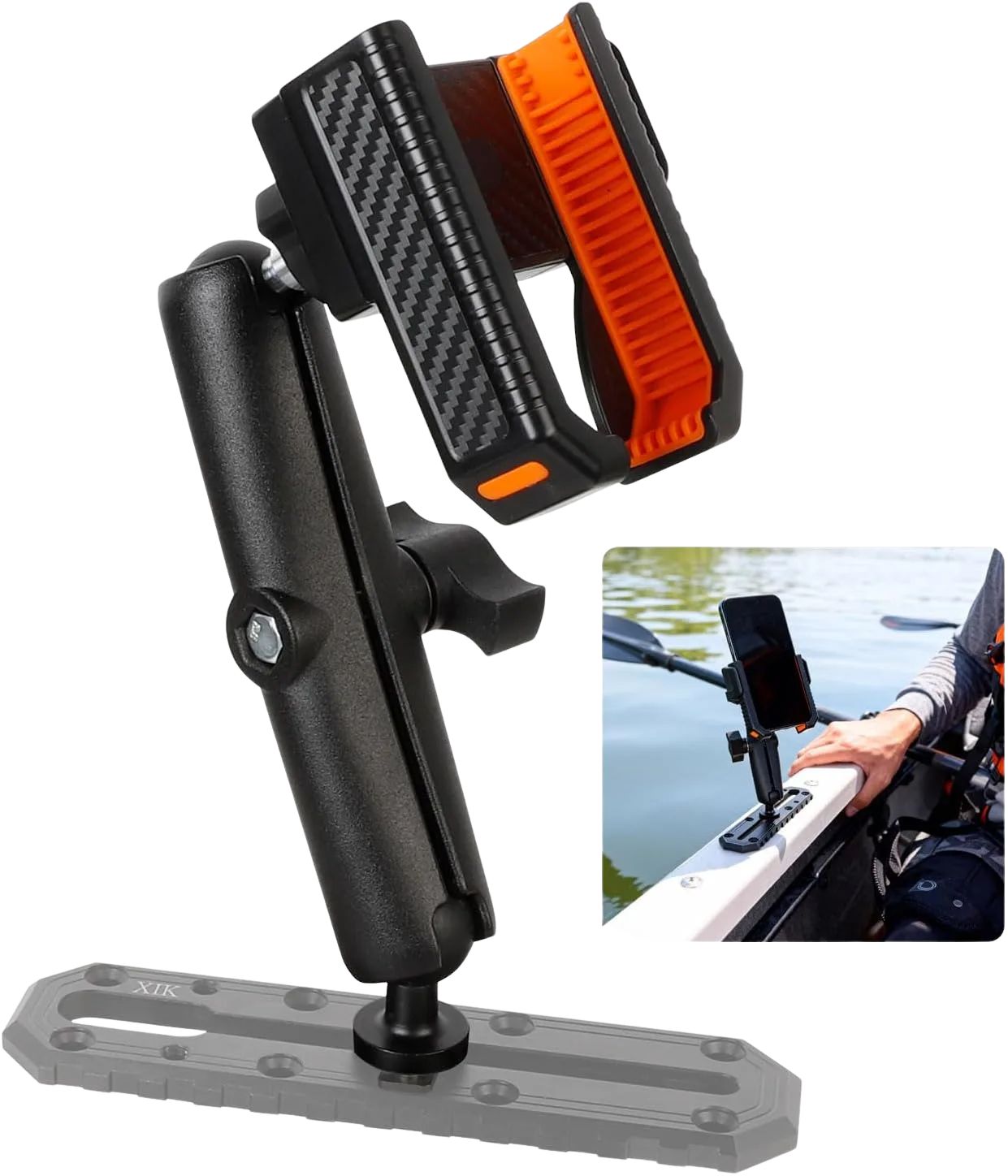
One safety note that outranks all the gear: a phone has close to zero signal a mile offshore, so treat it as backup, never your primary emergency plan. A PFD (life jacket) comes first, and a VHF marine radio second, because Channel 16 reaches the Coast Guard and other vessels from the same spot your phone shows no bars. The U.S. Coast Guard’s guidance on VHF Channel 16 as the maritime distress frequency spells out why, and the rest of the kayak-fishing safety picture beyond the phone is worth reading before you launch.
Best Mounts for Boat and Console Anglers
On a console you want a mount that survives spray, holds through chop, and doesn’t seize after a salt season. A repurposed car-dash mount won’t cut it. The listing might say waterproof, but automotive-grade hardware corrodes at the spring and hinge after one coastal summer, and then you’ve got a phone holder that won’t hold.
Best Boat Mount: Scotty 0139 Phone Holder
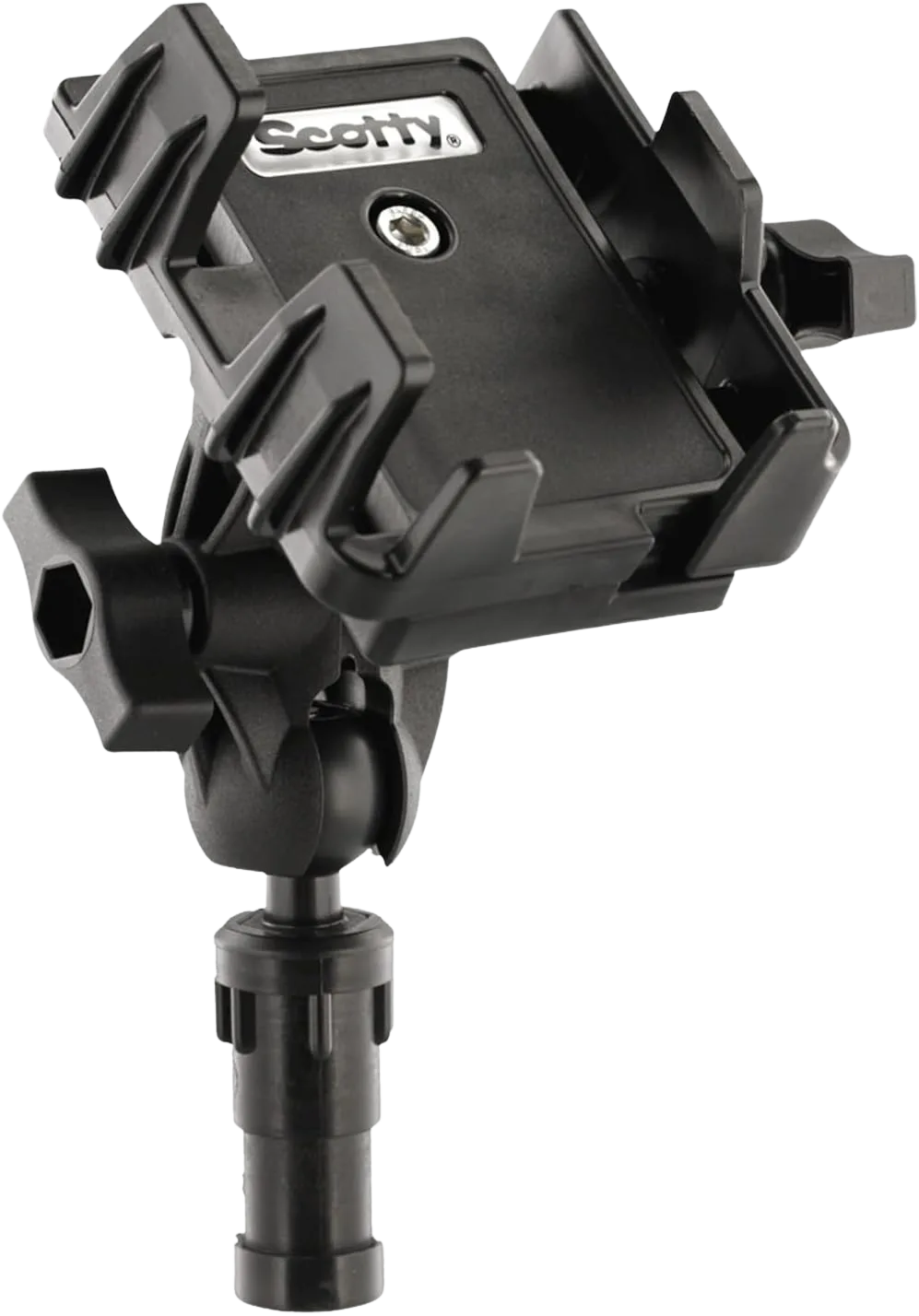
If you already run Scotty rod holders, the mounting hardware likely matches what’s on your boat, which makes this an easy add. The dual ball-joints let you angle the screen out of the sun, and the marine materials are the reason it’ll still swivel freely two seasons from now.
Best Budget Boat Mount: Bracketron Griplox
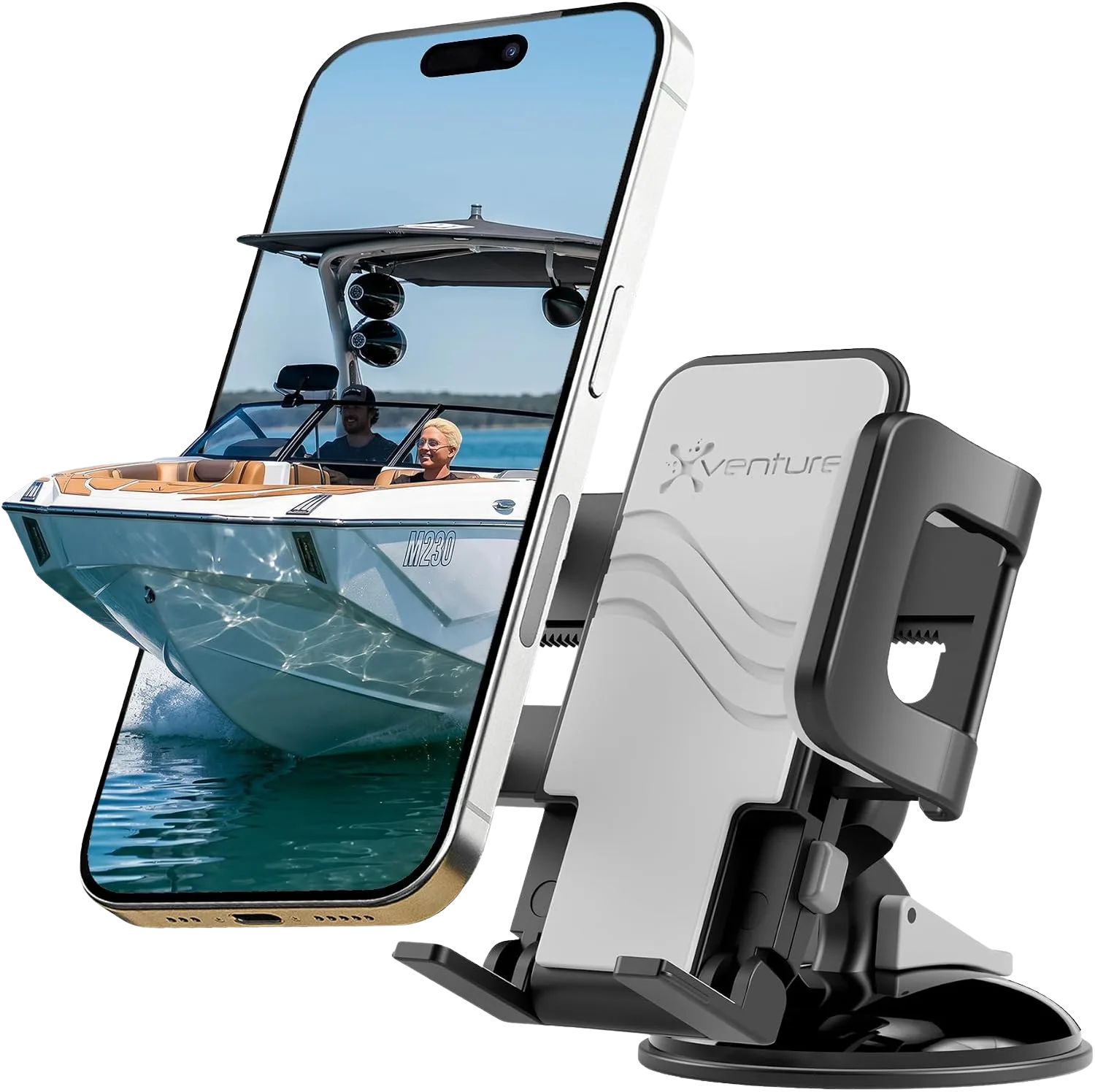
It won’t match the Scotty’s longevity in hard salt use, but for freshwater boats and occasional coastal trips the Griplox is a sensible spend. Rinse it after salt days and it’ll hold up fine. If your phone is pulling heavy navigation duty, though, a dedicated marine GPS unit takes that load off the phone entirely. Boats sixteen feet and over also carry their own safety requirements, and the BoatUS Foundation’s rundown of required onboard communication gear is the quick reference worth knowing.
What Corrodes First on a Saltwater Mount
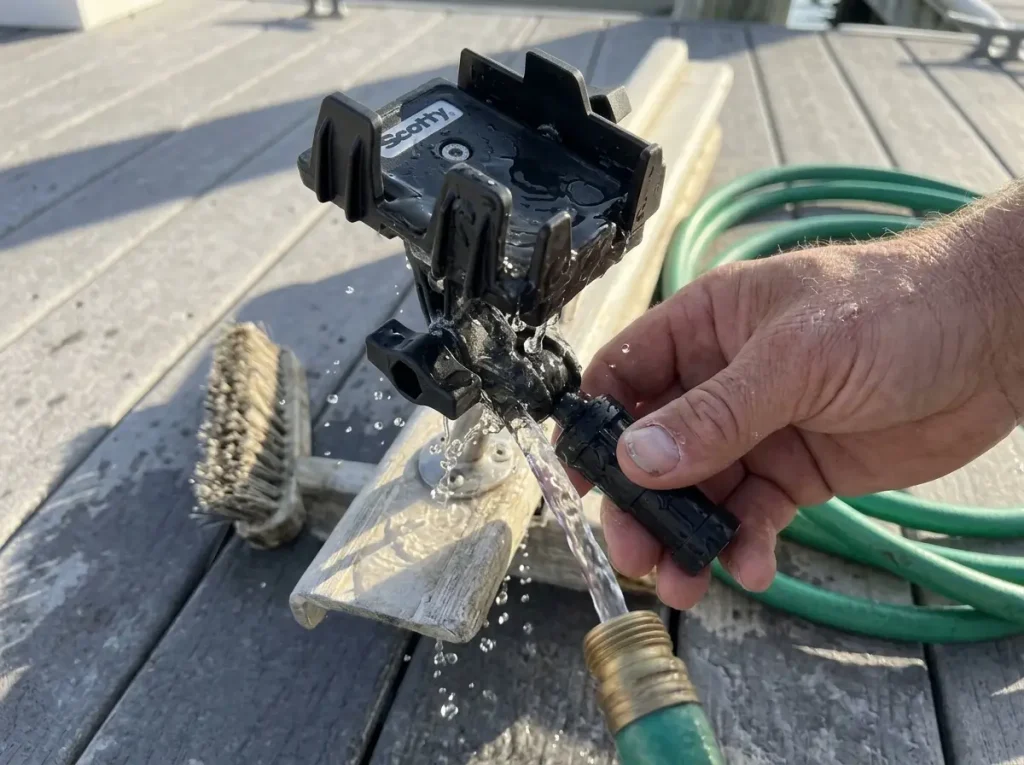
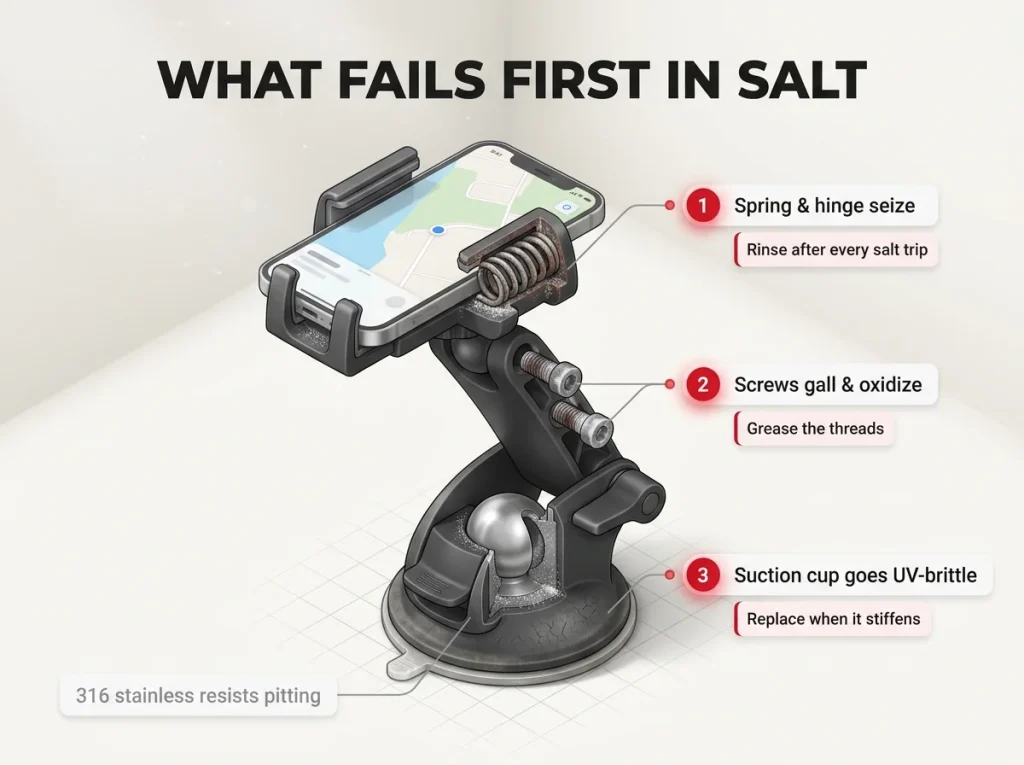
“Corrosion-resistant” is on every listing. Nobody tells you what actually fails, and it isn’t the shiny part you can see. The spring seizes first, the screws gall, and the suction cup quits from heat before the metal ever pits. Knowing the order tells you exactly what to rinse and grease.
The parts that seize before the metal pits
Moving parts trap salt where you can’t rinse it. The spring in a clamp, the threads under a screw head, the pivot of a ball-joint all collect brine and grit, and that’s where a mount locks up. The material spec that matters here is 316-grade stainless steel, which resists chloride pitting because of its molybdenum content. Ordinary automotive-grade hardware isn’t built for that, which is the same salt-at-the-pivot failure that seizes cheap fishing pliers at the hinge after a season.
Why the suction cup quits before anything corrodes
Suction mounts don’t usually fail from salt at all. They fail from heat and sun. A summer of deck or dashboard UV bakes the rubber brittle, and a cup that held fine in June pops loose by August. Water penetration takes years to break down that kind of adhesive bond, but UV does it in a single season. If you run a suction mount, treat it as a consumable and check the cup’s flexibility every few trips.
The two-minute rinse that doubles a mount’s life
The fix is boring and it works. Freshwater rinse the moving parts after every salt trip, and every so often work a drop of marine grease into the ball-joint. That’s it. The mounts that die early are the ones that never got a rinse, not the ones that were cheap to begin with.
Mount the phone within arm’s reach of the helm but out of the spray cone that comes off the bow. That’s the difference between a screen you can actually read and one crusted in salt haze by the second run.
The Budget and DIY Truth
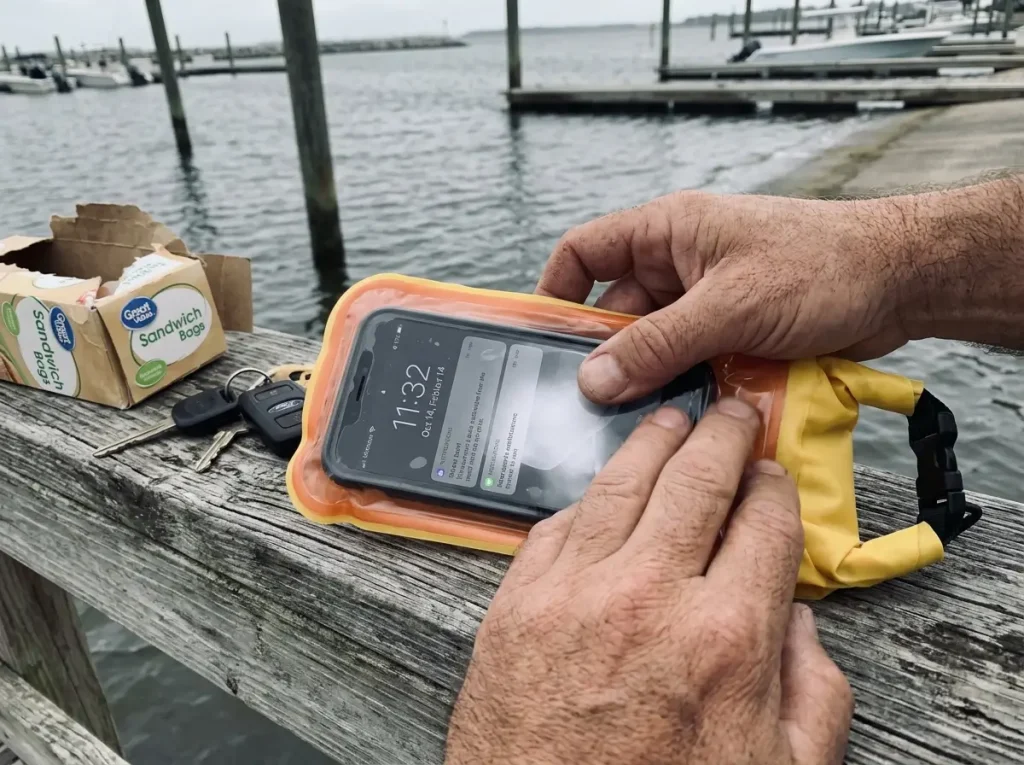
Not everyone needs a full case-and-mount setup. If you fish twice a summer off a dock, a doubled dry bag with the air squeezed out is a real answer, not a joke, and it’s worth being honest about that instead of dismissing it in one line.
When a dry bag or Ziploc is actually enough
A roll-top dry bag or a doubled sandwich bag with the air pressed out keeps splash off the phone and traps enough air to float. For the occasional angler, that covers the actual need. Fold it carefully, roll out the air, and you’ve got a stopgap that costs nothing and lives in a tackle tray.
Where the DIY route stops working
The honesty cuts both ways. A dry bag isn’t submersion-rated, the seal is only as good as your fold, and touchscreen response through two layers of plastic is rough. It’s fine as a backup or for a light-use dock angler. It is not the answer for daily kayak duty or a phone you rely on for navigation, where a rated case earns its keep.
Matching the spend to how often you really fish
The line is simple. Occasional bank angler, fishing a handful of times a year: a cheap pouch or a dry bag is genuinely enough. Every-weekend kayak or boat angler with the phone out constantly: buy the dedicated case and the proper mount, sorted by how you fish. Spend where the water time justifies it, and not a dollar more. The same logic that governs what electronics rules are worth knowing before you fly with gear applies at home, protect the phone in proportion to how much you use it.
Whatever you carry, check the seal before every single trip. The failure is almost never the case itself. It’s the one afternoon you didn’t fully zip it and never noticed until the screen went dark.
Conclusion
Three things carry the whole decision. Buy the case and the mount as one choice sorted by how you fish, because a pouch that won’t seat in a cradle is two purchases that wasted each other. Treat every IP rating as a fresh-seal lab number, test it with a tissue, and re-check that seal each season. And float it and tether it, because the dunk is the exact moment those two features pay for themselves.
Before your next trip, do the five-minute version: measure your phone with the case on, confirm your mount closes on that number, and dunk-test the empty case in the sink. That’s the difference between a phone that comes home and a story you tell at the ramp, and it fits inside the broader kit of fishing tools and accessories worth getting right.
Frequently Asked Questions
01Do waterproof phone pouches actually work?
Yes, a quality pouch keeps a phone dry through splash and brief submersion, but only with an intact seal. Run the tissue-paper dunk test on the empty pouch first, and re-check the seal before every trip.
02What IP rating do you need for a fishing phone case?
Look for IP68 or a clearly declared IPX8 depth for real submersion protection. Remember IPX8 has no fixed depth, so check the maker’s actual claimed number, not just the letters.
03Can you use the camera and touchscreen through a waterproof case?
Through a clear TPU pouch window, yes, photos and taps both work, though clarity and sensitivity drop slightly. Hard cases keep near-full responsiveness, while thick or fogged pouch windows are the usual complaint.
04Will a waterproof case still fit in a phone mount?
Not always. A bulky pouch often won’t close into a mount sized for a bare phone. Measure your cased phone’s width and confirm the mount closes on that number, or pick a grip-style mount that holds the phone with or without a case.
05How do you mount a phone on a kayak without a track system?
Use a clamp or suction mount rated for your rail or gunwale, or a grip holder with an adjustable base. Always add a tether, because a mount is not a substitute for a lanyard clipped to the boat.
Risk Disclaimer: Fishing, boating, and all related outdoor activities involve inherent risks that
can lead to injury. The information provided on Master Fishing Mag is for educational and informational purposes
only. While we strive for accuracy, the information, techniques, and advice on gear and safety are not a substitute
for your own best judgment, local knowledge, and adherence to official regulations. Fishing regulations, including
seasons, size limits, and species restrictions, change frequently and vary by location. Always consult the latest
official regulations from your local fish and wildlife agency before heading out. Proper handling of hooks, knives,
and other sharp equipment is essential for safety. Furthermore, be aware of local fish consumption advisories. By
using this website, you agree that you are solely responsible for your own safety and for complying with all
applicable laws. Any reliance you place on our content is strictly at your own risk. Master Fishing Mag and its
authors will not be held liable for any injury, damage, or loss sustained in connection with the use of the
information herein.
Affiliate Disclosure: We are a participant in the Amazon Services LLC Associates Program, an
affiliate advertising program designed to provide a means for us to earn advertising fees by advertising and linking
to Amazon.com. As an Amazon Associate, we earn from qualifying purchases. We also participate in other affiliate
programs and may receive a commission on products purchased through our links, at no extra cost to you. Additional
terms are found in the terms of service.