
In this article
The angler who rolls up with the brightest headlamp on the shelf and lights the bank like a parking lot is usually the first one to stop catching. It feels backwards, but ask anyone who fishes after dark regularly and you get the same story: the guy running a modest red light in short bursts out-fishes the one blasting 1,000 lumens across the water all night. The light matters, but how you use it matters more. This guide sorts the picks by how you actually fish, from the bank to the kayak to the surf, covers the lumens and waterproof rating that count, and lays out the habits that keep the bite alive after sundown.
How Many Lumens You Actually Need for Night Fishing
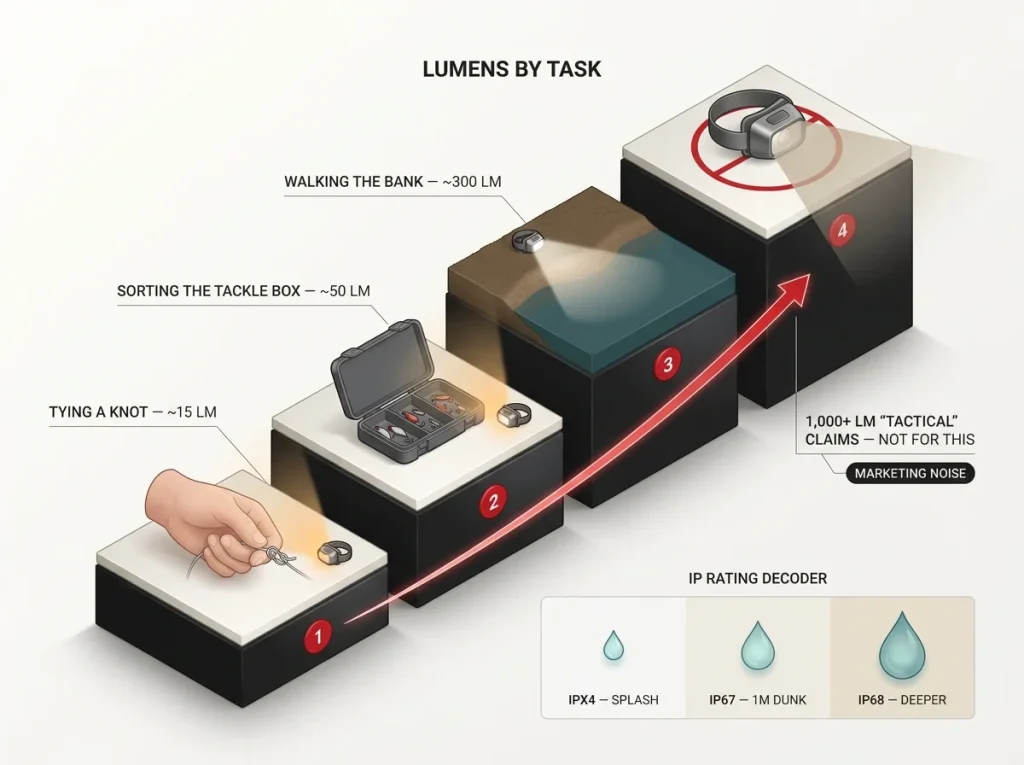
Walk into any tackle shop conversation about night lights and someone will try to sell you on a four-digit lumen number. Ignore it. The task in front of you at 2 a.m. is tying a knot, baiting a hook, and walking a bank without turning an ankle. None of that needs the output of a car headlight.
The 300-Lumen Sweet Spot (and Why More Is Usually Worse)
Roughly 300 lumens on the top setting covers everything a night angler does on the move: reading the water’s edge, navigating the bank fishing approach, and area lighting when you need it. The catch is that you’ll spend the vast majority of the trip on a much lower setting, often down in the single or low double digits. A headlamp that dims deep matters far more than one that peaks high, and a housing with a real tilt angle to aim the beam at your feet or your hands beats a fixed one. Beam shape counts too: a wide flood beam covers close work, while a tighter spot beam throws light down the bank. The “6,000-lumen” listings are marketing noise for a job that rarely calls for more than 300, and running that much light near the water works against you every time.
Red Light, and Why It Saves Both Your Night Vision and the Bite
The single most important spec on a fishing light isn’t brightness. It’s a red light mode that engages straight to red without cycling through white light first. One white flash, even for a second, resets your night vision and forces a 20 to 30 minute readjustment. Red is the longest visible wavelength, it penetrates water the least of any color, and most gamefish barely register it in low light. That’s the actual reason red preserves the bite, not a gimmick printed on the package. When you shop, test this in the store: if the lamp blinks white before it lands on red, it fails the one filter that counts.
Waterproof Ratings Decoded, IPX4 vs IP67
The IP rating tells you how much water the light survives, and the gap between numbers is bigger than it looks. IPX4 through IPX6 handles rain and splash, which is plenty for a lit dock or a stationary bank spot. IP67 and IP68 mean the light survives full submersion in one to two meters of water, which is the difference between a working light and a dead one twenty minutes into a kayak fishing trip. It’s the same waterproofing logic you’d apply to a phone in a case near the water: match the protection to how wet the gear will actually get. A headlamp is one piece of a well-sorted night fishing kit, and the rating you need depends entirely on where you fish it.
Running Dark, the Habit That Outfishes the Brightest Lamp
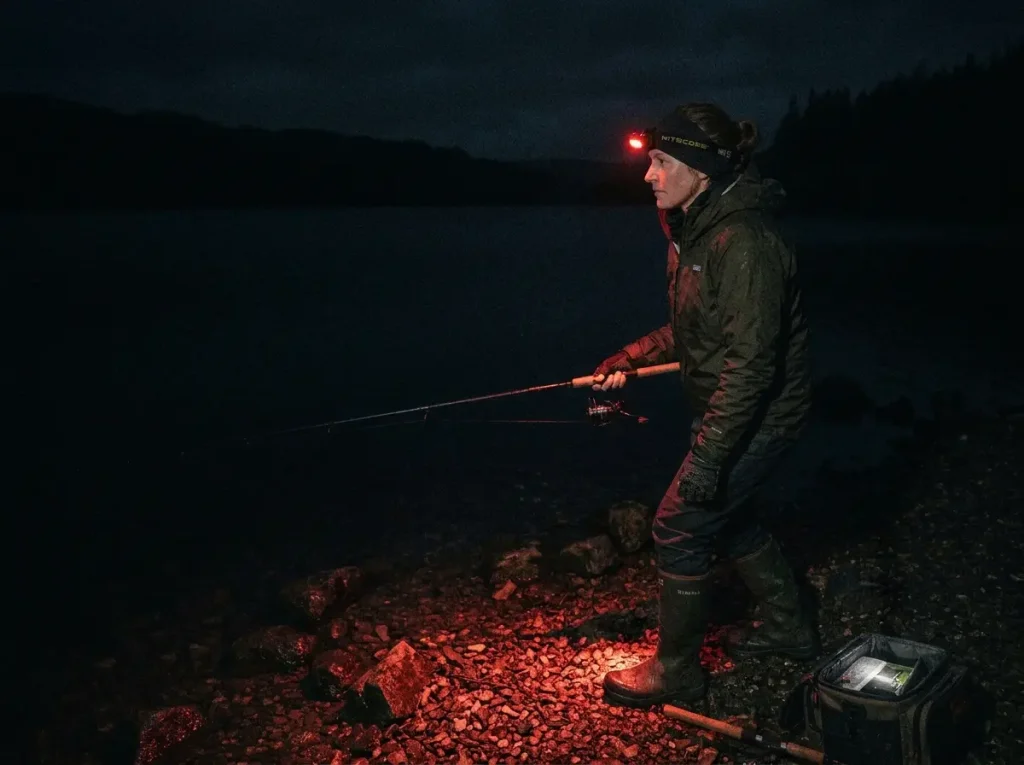
Here’s where people go wrong, and it has nothing to do with which light they bought. The most common mistake on the water is treating a headlamp like a thing you leave burning. Experienced night anglers treat it like a tool they touch for ten seconds at a time. This is the part of the broader playbook for fishing after dark that nobody puts in a buyer’s guide, and it’s the reason two anglers with identical gear catch very different numbers.
The Sweep, the One Move That Costs You More Bites Than Brightness
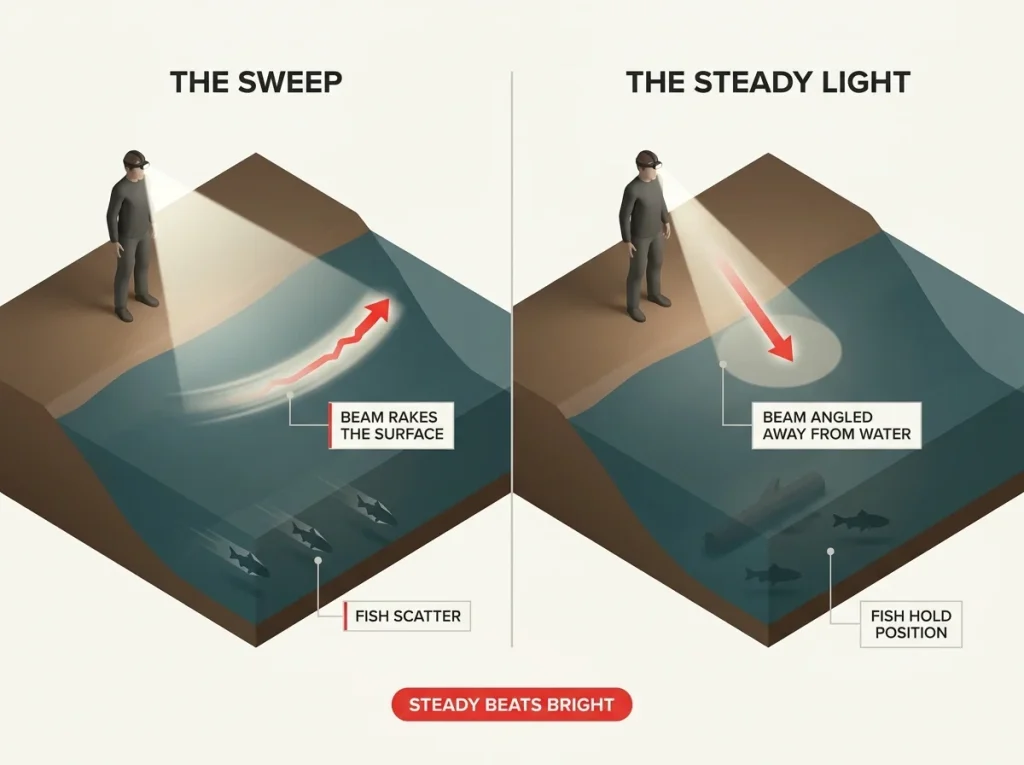
The rookie habit that ruins nights is what the community calls “the sweep,” scanning a light beam back and forth across open water out of nervous habit, checking the line, watching for a take. Stop doing it. A steady light angled away from the surface is fine. A dock light that burns in one spot for hours actually pulls baitfish in. The problem is the sudden movement of a beam raking the surface, which reads to a fish as a threat rather than a fixture. Nocturnal fish are built to detect motion and silhouette, not color or fine detail, which is exactly why research on how nocturnal fish eyes are wired for motion over color explains an erratic beam alarming them far more than a steady glow ever does. It’s the same stealth logic catfish anglers lean on after dark.
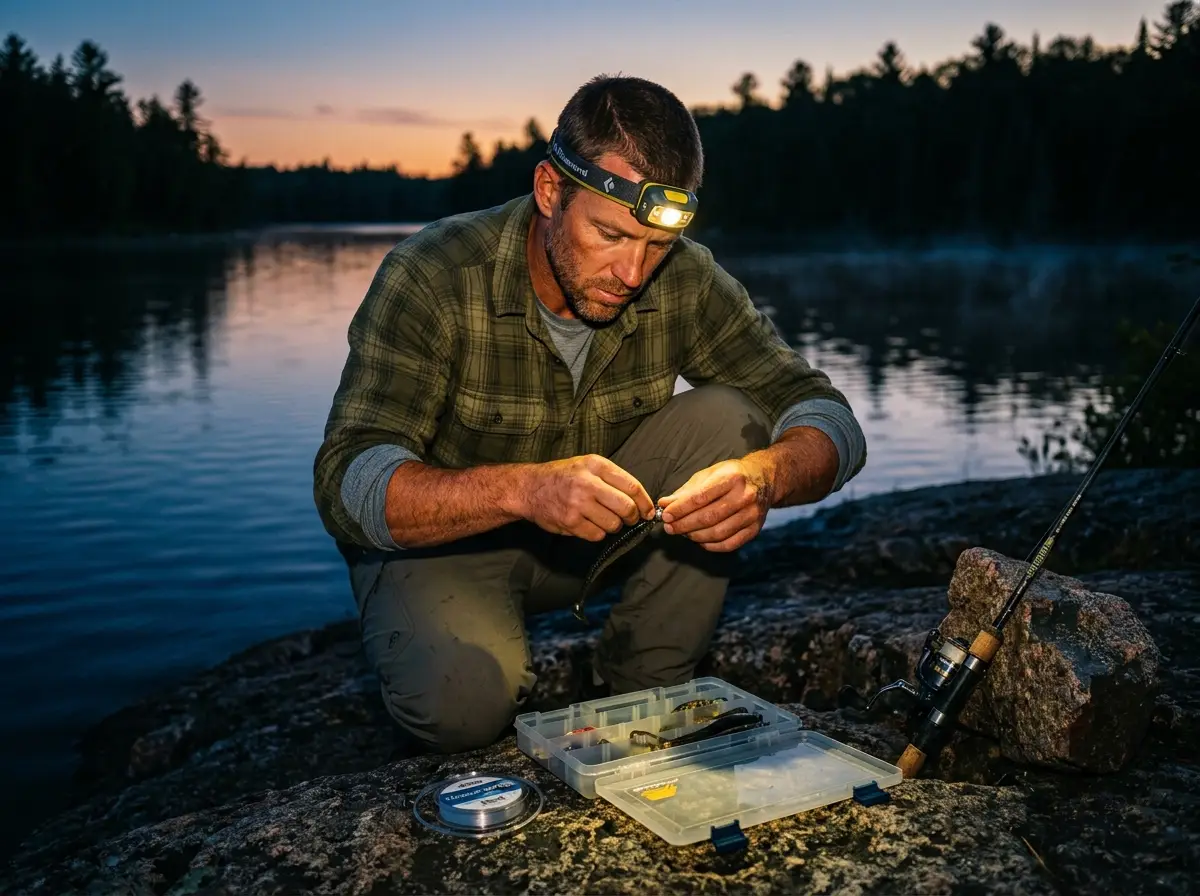
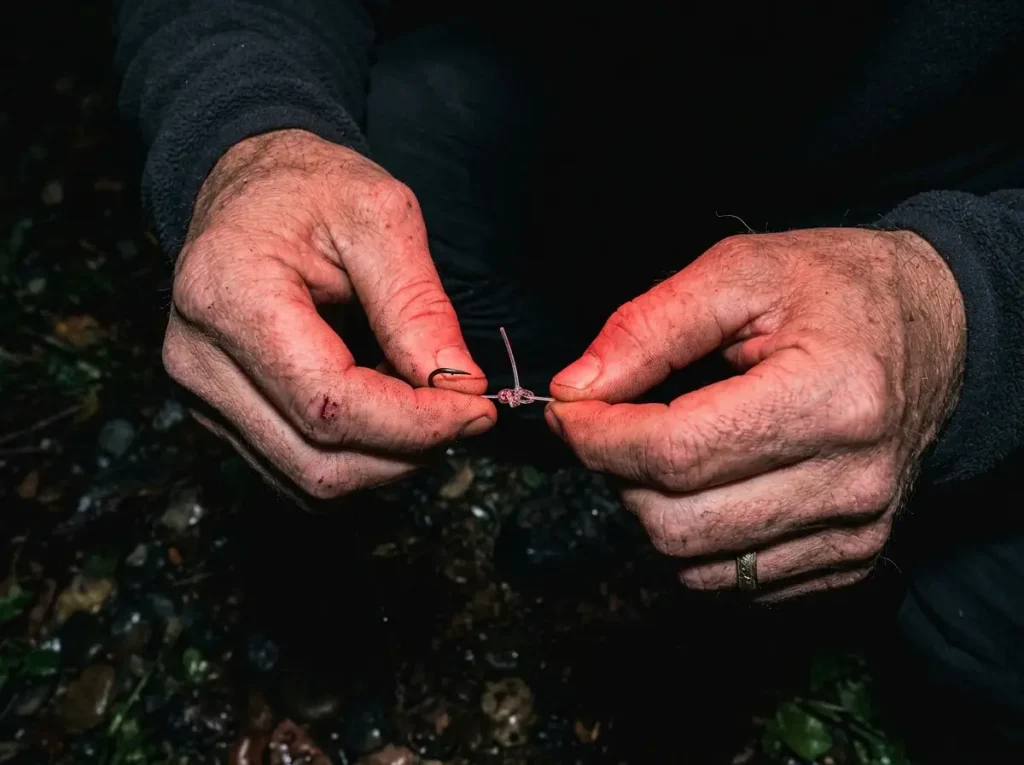
Get fully set up before dark, under red light only. Rig your tackle, sort the box, tie your leaders, then let your eyes adapt once and go dark. From there you work by feel and touch the red light only for the ten seconds a knot or a hook removal actually needs. That one habit separates the anglers who catch from the ones who wonder where the fish went.
Task Light vs Area Light, Two Jobs Not One
Veteran night anglers carry two lights because they’re solving two problems. Area lighting is the brighter beam for walking, navigating, and finding your way to a spot. Task lighting is a dim, dedicated red for close work: tying on, unhooking a fish, digging through the tray. If you use one bright headlamp for both, you end up blasting full output for a thirty-second job and blowing your night vision every time. A small handheld or a low red mode you can hit instantly keeps the bright light off when you don’t need it, which is most of the night.
Bugs, Green Light, and What Actually Keeps Them Off You
There’s a persistent belief that the right light color keeps bugs away. Partly true, mostly not. A green light mode draws fewer insects than white or blue, and it reads as brighter to the human eye than red at the same output, so it’s a fair compromise on a buggy summer night. But mosquitoes don’t track light color at all. They home in on carbon dioxide, warmth, and scent, so no headlamp color will cut down bites. Green helps with the moths and gnats swarming the beam itself. For the mosquitoes, that’s a repellent problem, not a lighting one, and it’s worth knowing before you buy a light expecting it to do a job it can’t.
Matching the Light to How You Fish
A bank catfisherman, a kayak angler working the flats for snook and redfish, and a surfcaster after striped bass are solving three different lighting problems. The gear that’s perfect for one is wrong for another, and the safety stakes climb fast as you leave dry land. Match the light to the water you actually fish.
Bank and Shore, the Simplest Setup
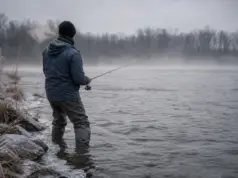
Bank and shore anglers have the easiest job. You’re stationary, so you can angle a beam away from the water and leave it there, and you don’t need submersion-grade waterproofing for a spot ten feet up a gravel bank. A 300 to 400 lumen area light plus a dim red for tackle work covers it. The real risk here is footing: wet rock, mud, and unseen roots in low visibility put more anglers on the ground than anything in the water does. A light you can tilt down to your feet on the walk in earns its keep before you ever make a cast.
Kayak and Small Boat, Where Waterproofing and the Law Both Bite
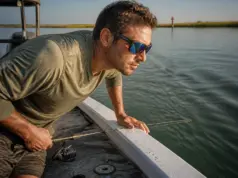
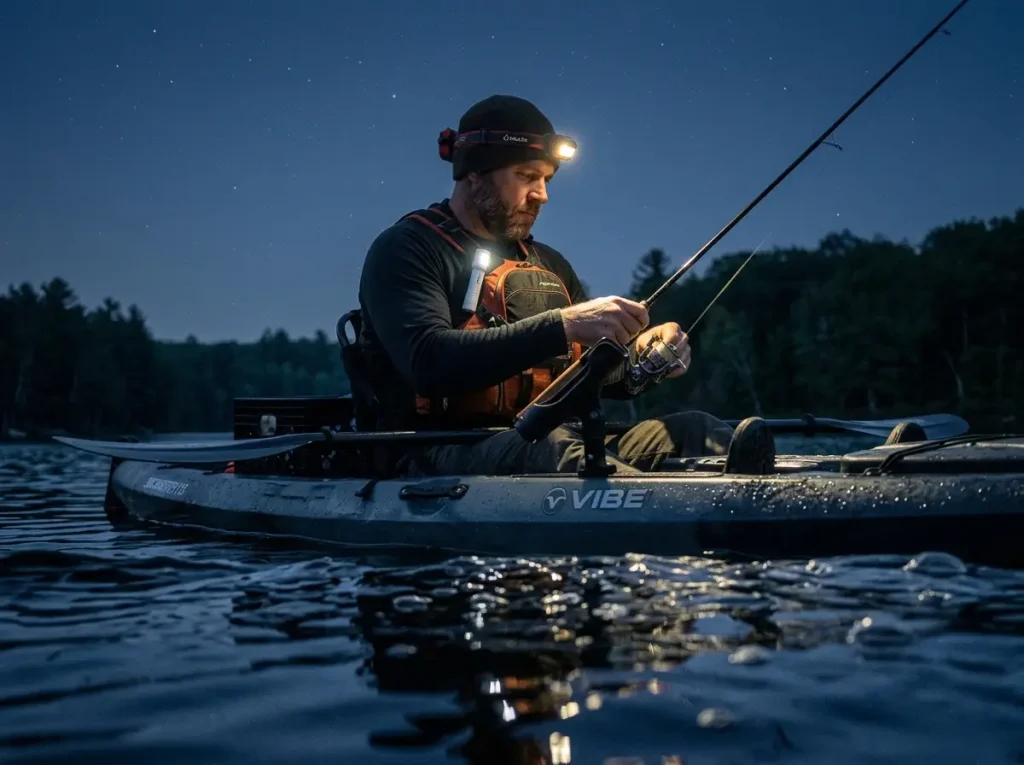
On a kayak, a dunk isn’t an accident, it’s a matter of when. This is where IP67 or better stops being overkill and becomes the whole point, because a light that dies on first contact with water ends the trip. It’s also where most anglers get blindsided by the rules. Under the U.S. Coast Guard’s navigation rules for vessels under oars, a kayak or canoe has to show sailing lights, an all-round white light visible for two miles, or at minimum keep a handheld light ready to display in time to prevent a collision. That’s a federal requirement, not a suggestion, and a headlamp pointed down at your tackle box does nothing for a center-console idling toward you in the dark. Rig the rest of your nighttime kayak safety checklist around that reality.
On a kayak, keep a spare handheld white light clipped to your PFD and ready regardless of what’s on your head. Battery deaths happen at the worst time, and the law wants a light at hand, not just one installed. A five-dollar spare in a dry pocket is cheap insurance against both a dead main light and a boat that never saw you.
Surf and Wading, Beam Throw and Sure Footing
Surf and wading anglers are the one group that genuinely benefits from real output. You need beam distance to read incoming wave sets, spot structure, and pick a safe line across uneven, moving ground. This is the scenario where a 700 to 900 lumen light with true throw pays off, paired with the same discipline as everywhere else: point it where you’re walking, not out over the trough where fish are holding. Slip risk in the wash is real, and a light that reaches only a few feet leaves you guessing at footing you can’t afford to guess at. Understanding how a nocturnal predator actually sees and hunts in the dark reinforces why you keep even a strong beam off the water: the fish that feed at night are wired to bolt at movement.
Best Overall Headlamp for Night Fishing
If a buddy texted asking for one light that does everything without overthinking it, this is the answer. The all-rounder covers bank, boat, and kayak use without a glaring weakness, which is exactly what most anglers actually need.
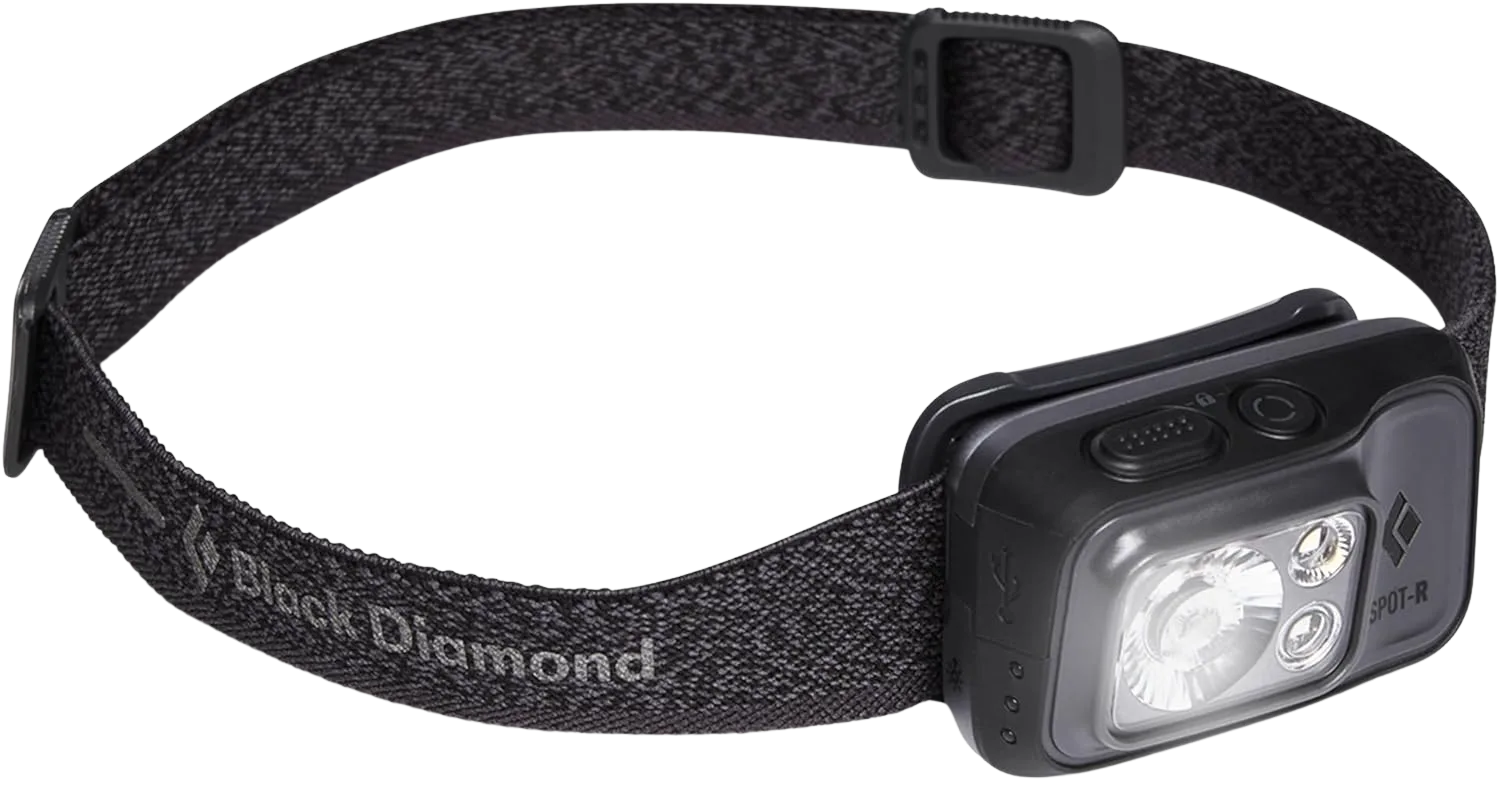
What Makes It the All-Rounder
The 400 lumen ceiling is right in the practical band for night fishing, bright enough to navigate a bank or light a boat deck without being overkill. The red mode engages cleanly, which is the filter that eliminates most cheaper lights, and the IP67 rating means a kayak dunk won’t faze it. USB-C charging is the quiet convenience that matters over a season: no scrambling for spare AAAs at midnight. You can pick up the Black Diamond Spot 400-R here if you want one light to stop shopping.
Where It Fits Best (and Who Should Size Up or Down)
This is the pick for the angler who fishes a bit of everything and doesn’t want to think about it. If you fish almost exclusively from a kayak and dunk gear constantly, the Nitecore below buys you more submersion confidence and runtime. If you barely fish at night, the Petzl budget pick covers you for less. For everyone in the middle, the Spot 400-R is the one to beat.
Best Headlamp for Kayak and Boat Anglers
Kayak and small-boat anglers need one thing above all others: a light that shrugs off water. Everything else is secondary to knowing your light still works after it goes under, because on the water that’s a when, not an if.
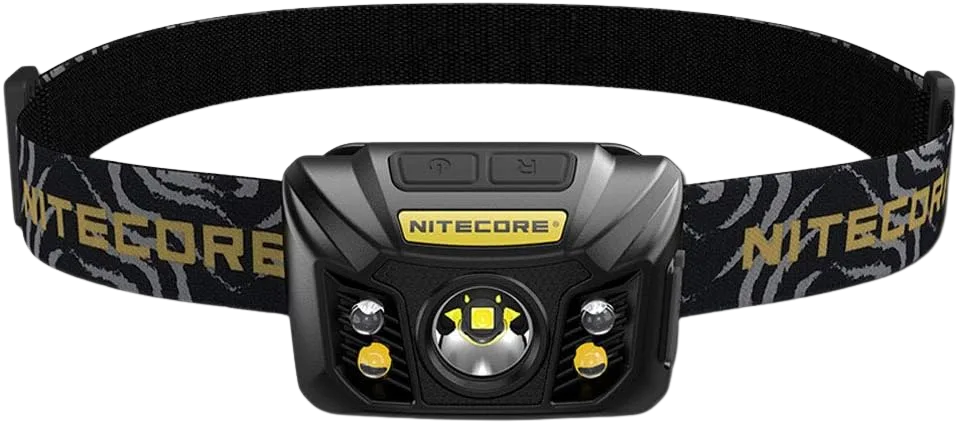
Built to Survive the Dunk
The NU32’s headline is its IP67 rating, submersible to two meters, which is the spec that actually matters when your gear rides inches from the waterline. The 550 lumen turbo gives you area lighting when you need to spot a marker or find the ramp, but the more useful number is the runtime way down at the low end, which stretches into the hundreds of hours and covers a dusk-to-dawn sit without a thought. The dedicated red LED means real night-vision protection, not a filtered afterthought. If you fish the water more than the bank, the Nitecore NU32 is the durability upgrade.
Who It’s Best For
This is the light for the committed kayak and small-boat angler, the one who’s out weekly and treats a soaking as routine. If you fish mostly dry from a dock or bank, you’re paying for submersion durability you’ll never test. But for anyone who’s watched a cheaper light flicker and die after a splash, the NU32 is the fix.
Brightest Pick for Surf and Big Water
Most anglers don’t need a lot of light. Surfcasters and big-water bank anglers do, and this is the one section where more output genuinely earns its place. When you’re reading waves or crossing rough ground in the dark, reach matters.
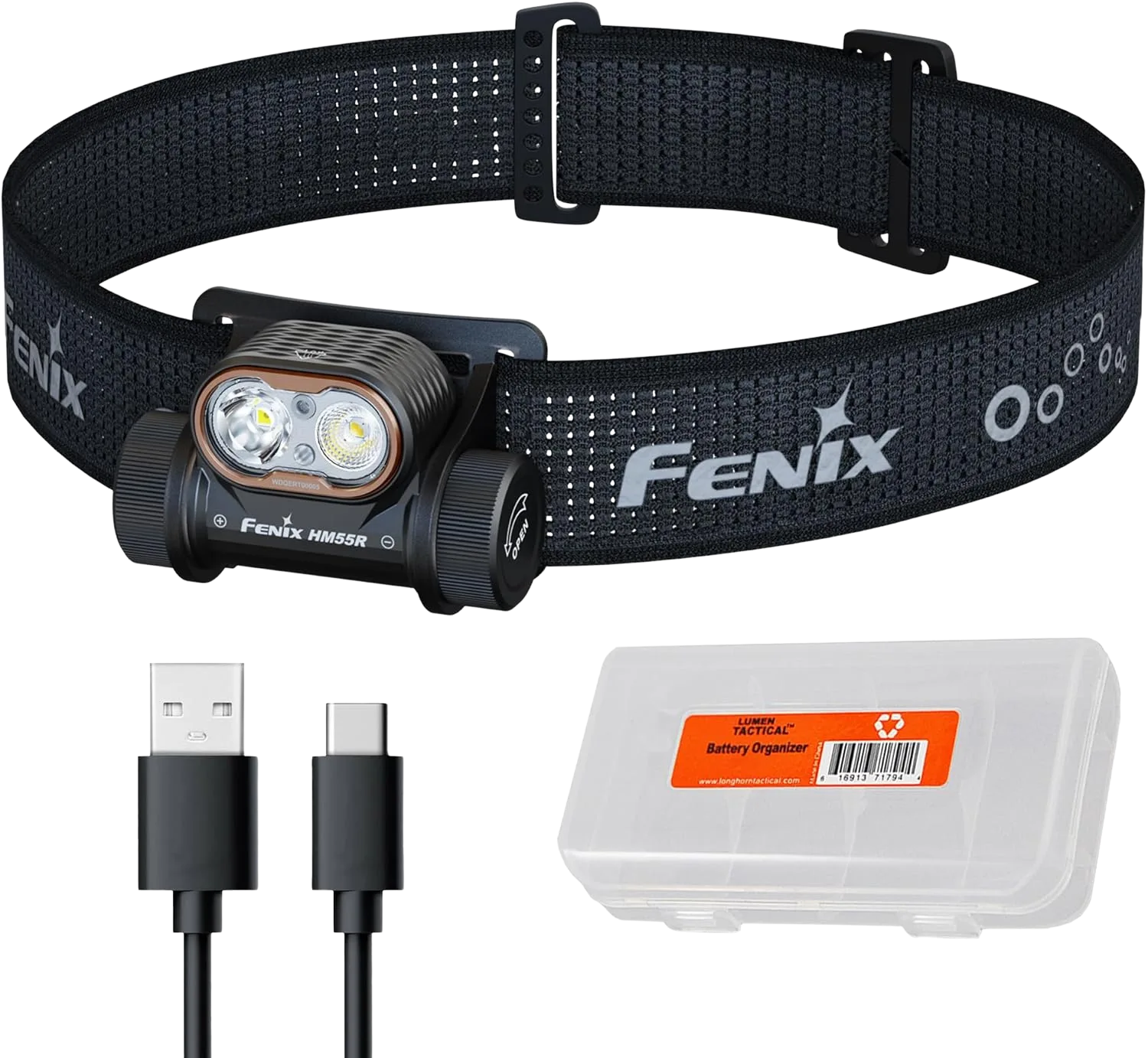
Real Beam Throw with a True Red
The Renegade’s 900 lumen peak and its beam distance are what set it apart, giving surf and big-water anglers the reach to read an incoming set or spot structure well off the sand. The standout detail is the two independent LEDs: because the red light comes from its own emitter instead of a filter, there’s no white flash before it lands on red, which is the cleanest execution of the one spec that matters most. The IP68 rating handles the wettest conditions you’ll fish. If you need genuine throw, the Fenix HM55R Renegade delivers it.
Who Actually Needs This Much Light
Be honest with yourself here. If you fish a calm bank or a lit dock, this is more light than the job calls for, and the Spot 400-R will serve you better for less. The Renegade is for the surfcaster, the rocky-shoreline angler, and anyone crossing real terrain in the dark where beam reach is a safety feature, not a luxury.
Most Comfortable for All-Night Sessions
Nobody thinks about headlamp comfort until hour four, when a front-heavy lamp starts dragging on your forehead and your neck. For dusk-to-dawn sits, how the light wears matters as much as how it performs.
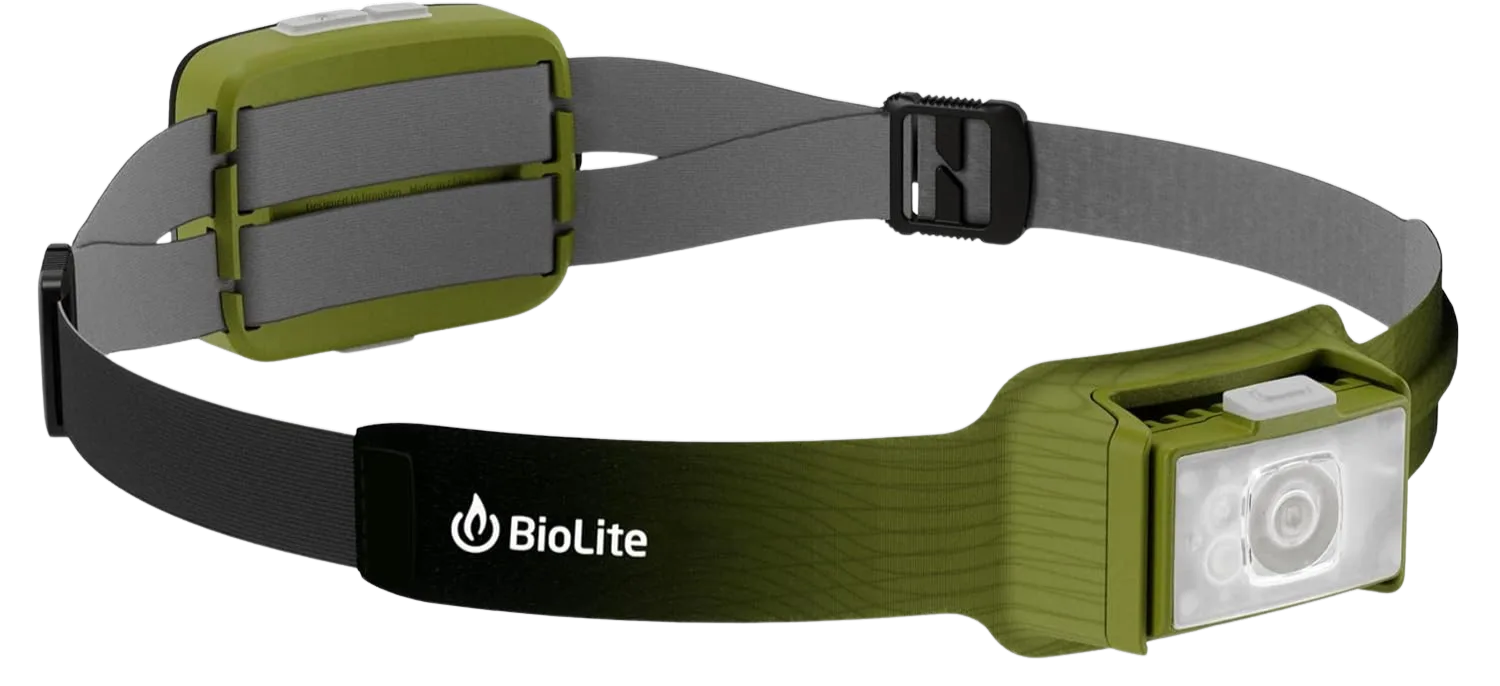
Balanced Weight for the Long Haul
The 750’s design choice is the whole pitch: moving the battery pack to the back of the band offsets the lamp up front, so the weight sits balanced instead of tugging at your brow. On a two-hour trip you won’t notice. On an eight-hour catfish or striper sit, it’s the reason your neck isn’t aching by sunrise. The 750 lumen output covers area lighting, and the red mode handles close work. Anglers who pull all-nighters can grab the BioLite HeadLamp 750 here.
Who It’s Best For
This is the pick for the dedicated night angler who logs long, stationary sessions and wants to forget the light is on their head. If your trips are short, the comfort edge matters less and the budget Petzl below will do the job for a fraction of the outlay.
Best Budget Headlamp
Here’s the anti-sell moment. If you fish at night a handful of times a summer off a lit dock, you do not need to spend premium money. This is the light that’s genuinely enough, plus a straight answer on where the extra cash actually buys something and where it doesn’t.
What You Get for the Lower Price
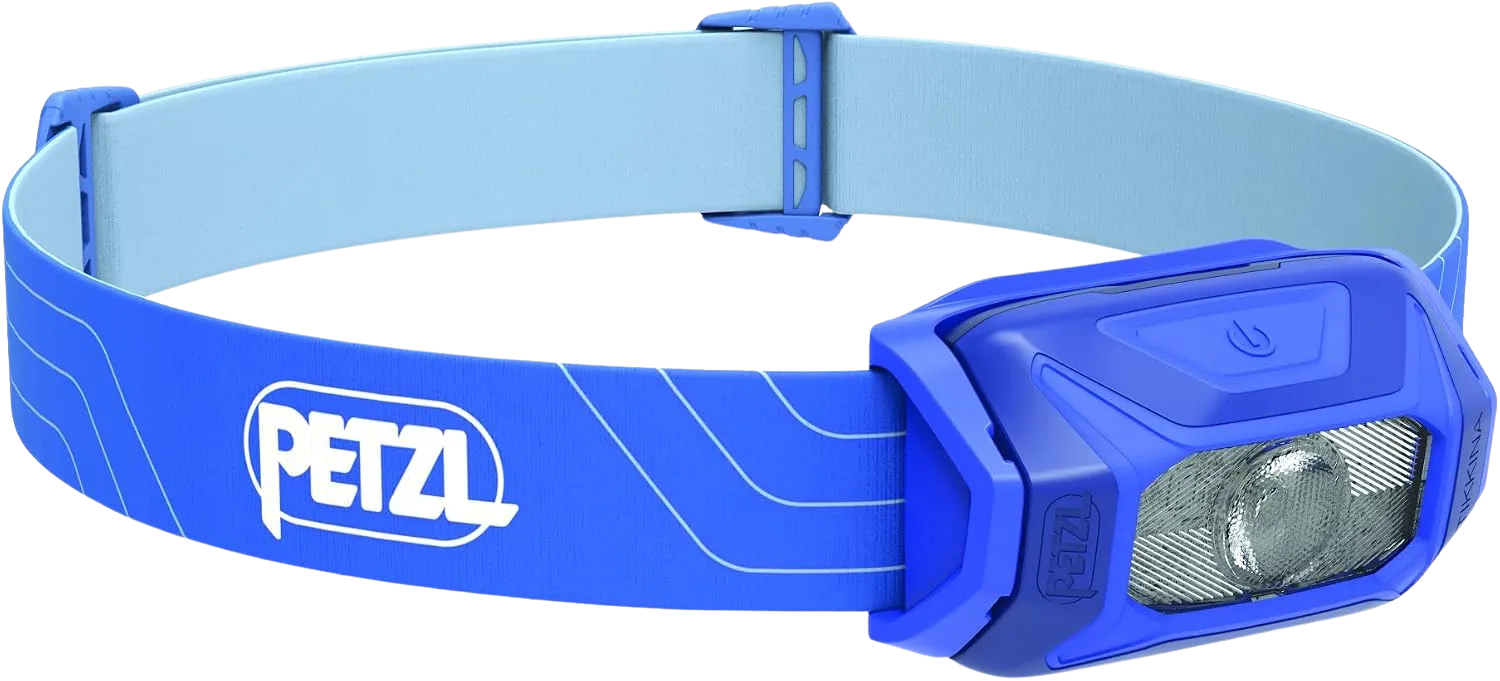
The Tikkina delivers the two things that actually matter, a usable 300 lumens and a proper red light mode, at a price that undercuts every other pick here. It runs on AAA batteries, which some anglers prefer since you can swap in fresh cells anywhere instead of hunting for a charger. Its IPX4 rating handles rain and splash, which is all a dry-land bank or dock angler ever asks of a light. For occasional nights, the Petzl Tikkina is honestly enough.
Where the Extra Money Actually Buys Something
Here’s the honest breakdown. Stepping up to a Nitecore NU32 or Fenix HM55R buys you two things and only two things: submersion-grade waterproof rating and multi-hour-per-week durability. If you fish from a kayak, wade deep, or log long weekly sessions, that spend pays for itself the first time a cheaper light would have died. If you fish from a lit dock twice a summer, it buys you nothing you’ll ever use. Don’t pay for IP67 you’ll never dunk. That’s the whole calculus, and most anglers land on the budget side of it.
The Two Lights That Ride in the Tackle Box
Ask a veteran what’s in the box and you’ll find more than one light. There’s the main headlamp, sure, but also a dim handheld for close work and a cheap spare for the night the main light quits at 2 a.m. These two round out the kit.
Coast FL13, Task Lighting Done Right
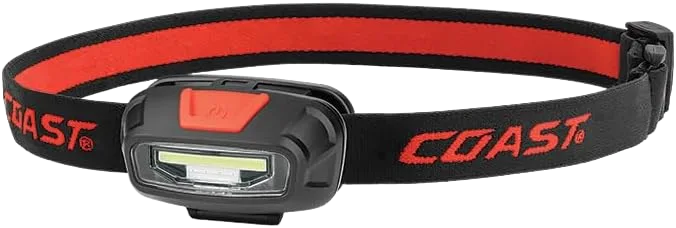
A handheld gives you something a headlamp can’t: aimed control for the exact spot you’re working, without swinging your whole head around. The FL13’s red mode is the one you’ll use most, keeping close work dim and your eyes adapted, and it’s small enough to live in a shirt pocket or a tray slot. Keep it clipped and tethered so it’s never lost in the dark, the same way you’d rig any tool you reach for by feel. Pair it with a good set of pliers for unhooking a fish by touch and a dim red glow and your close-work kit is set. You can add the Coast FL13 here.
Princeton Tec Bot, the Backup You Hope You Never Need
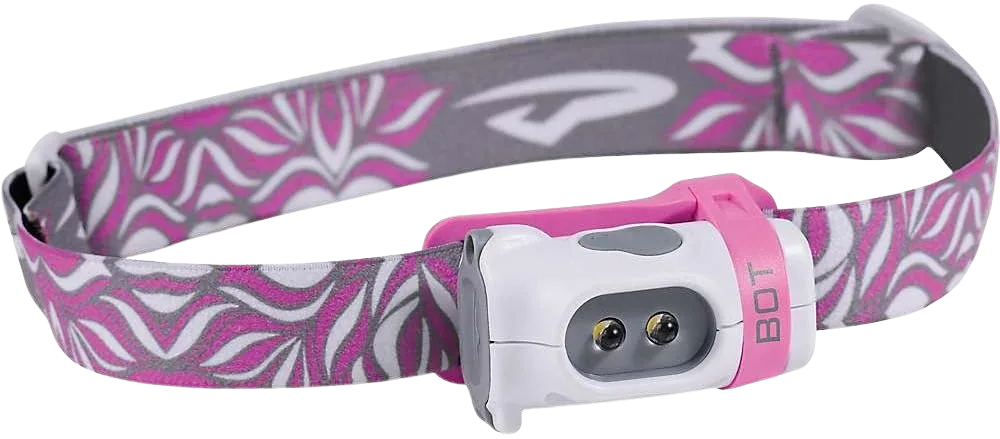
At around 15 lumens, the Bot isn’t a primary light and doesn’t pretend to be. It’s enough to find your way back, work a knot, and signal your position if the main light quits, which is the entire job of a backup. The AAA power is deliberate: when a rechargeable dies with no charger for miles, a spare with swappable cells is the one that saves the night. On a kayak it doubles as the handheld white light the Coast Guard rule wants you carrying anyway. Keep the Princeton Tec Bot in the box and forget about it until the night you’re glad it’s there.
Standardize your batteries. If your backup and your task light both run AAAs, one spare four-pack covers your whole kit and you’re never stuck with dead cells and the wrong replacements. Anglers who mix rechargeables and three different battery sizes are the ones fumbling in the dark when something quits.
Final Word
Three things carry more weight than any spec sheet. First, around 300 lumens with a clean red light beats raw brightness every time, so stop chasing the biggest number. Second, how you use the light out-fishes which one you own, so run dark, cut the sweep, and touch the beam only when a task demands it. Third, match the light and the backup to where you actually fish, because a bank angler, a kayaker, and a surfcaster are not solving the same problem.
On your next night out, set up under red, then go dark and fish by feel for an hour before you reach for the light again. Watch how much longer the bite holds once you stop lighting up the water. That habit costs nothing, and it’ll teach you more than any headlamp on this list.
Frequently Asked Questions
01Why is red light so important for night fishing?
Red light preserves your night-adapted vision and is far less likely to spook fish, because it is the longest visible wavelength, penetrates water the least, and most gamefish barely register it in low light. A single white flash resets your eyes for 20 to 30 minutes.
02How many lumens do I need for a fishing headlamp?
Around 300 lumens on the top mode is the real sweet spot for navigating and rigging, with a dim low or red mode for close work. The 6,000-lumen listings are marketing noise for a task that rarely needs more than 300.
03Does a headlamp really spook fish at night?
A steady light angled away from the water is fine; it is the sudden sweep of a beam across the surface that alarms fish. Nocturnal fish are built to detect movement, so a raking beam reads as a threat more than brightness alone does.
04Rechargeable or battery-powered, which is better for night fishing?
USB-C rechargeable is the better default for cost and runtime if you fish often, and most premium picks use it. Keep a battery-powered backup with AAA cells regardless, because a dead rechargeable with no spare ends the trip.
05Do I need a light on my kayak or boat at night?
Yes. The U.S. Coast Guard requires a vessel under oars to show navigation lights or keep a handheld white light ready to display in time to prevent a collision. A spare handheld light in the kayak is a legal requirement, not just a good idea.
Risk Disclaimer: Fishing, boating, and all related outdoor activities involve inherent risks that
can lead to injury. The information provided on Master Fishing Mag is for educational and informational purposes
only. While we strive for accuracy, the information, techniques, and advice on gear and safety are not a substitute
for your own best judgment, local knowledge, and adherence to official regulations. Fishing regulations, including
seasons, size limits, and species restrictions, change frequently and vary by location. Always consult the latest
official regulations from your local fish and wildlife agency before heading out. Proper handling of hooks, knives,
and other sharp equipment is essential for safety. Furthermore, be aware of local fish consumption advisories. By
using this website, you agree that you are solely responsible for your own safety and for complying with all
applicable laws. Any reliance you place on our content is strictly at your own risk. Master Fishing Mag and its
authors will not be held liable for any injury, damage, or loss sustained in connection with the use of the
information herein.
Affiliate Disclosure: We are a participant in the Amazon Services LLC Associates Program, an
affiliate advertising program designed to provide a means for us to earn advertising fees by advertising and linking
to Amazon.com. As an Amazon Associate, we earn from qualifying purchases. We also participate in other affiliate
programs and may receive a commission on products purchased through our links, at no extra cost to you. Additional
terms are found in the terms of service.