
In this article
You’ve been casting to that same dock for twenty minutes. Same angle, same speed, same spot. Nothing. You reel in, cast again — straight out, same as before. Meanwhile, the angler thirty yards down the bank just caught a third bass. Same water. Same lure. Different angle.
Most bank anglers never think about casting angle. They walk up, bomb a cast toward the middle, and wonder why nothing bites. I spent years doing exactly that before a guide friend watched me fish from shore and said five words that changed everything: “You’re casting past the fish.”
Here’s how to fix the five most common shore casting angle mistakes — and why angle matters more than distance every single time.
Quick Answer: The five shore casting angle mistakes that cost the most fish are:
- Casting straight out instead of parallel to structure
- Ignoring current direction when choosing your angle
- Working only one angle on multi-sided structure
- Forgetting that sun angle moves fish position
- Approaching structure too close before your first cast
Why Your Casting Angle Matters More Than Distance
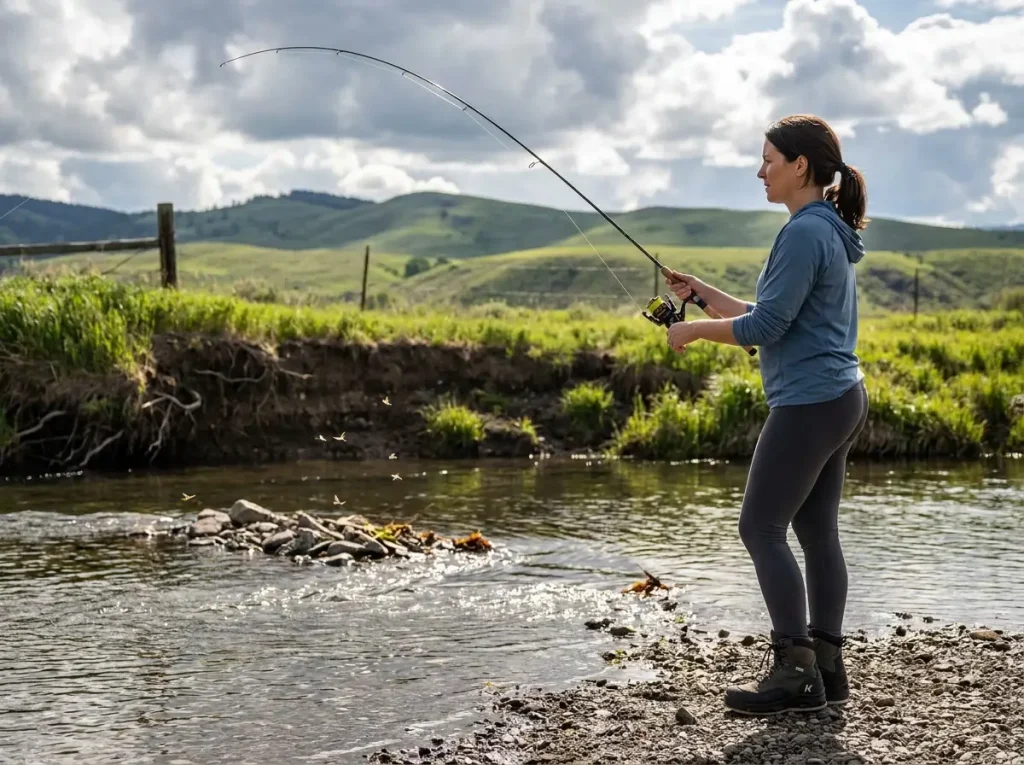
Every bank angler has watched someone launch a cast so far it almost hits the opposite shore. Impressive arm. Zero fish. The problem isn’t the distance — it’s the geometry.
Time in the Zone vs Distance to the Cast
When you cast straight out from shore, your lure crosses the strike zone — that narrow band where fish actually sit — in about two seconds. A perpendicular retrieve gives fish almost no time to react. But when you cast parallel to structure, your lure tracks through that same zone for the entire retrieve. That’s the difference between offering a fish a two-second window and a thirty-second buffet.
Think about a weedline running along the bank. Cast straight out and your lure crosses it once on the way back. Cast parallel and your lure rides that edge the whole way home. Same lure, same speed — ten times more time in front of fish. This isn’t theory. You’ll feel the difference the first time you try it.
The 20-Yard Reality Check
Here’s the part that takes some ego adjustment. Most shore-accessible fish hold within 20 to 40 yards of the bank. That’s not a guess — it’s where the food is. Baitfish hug shoreline structure because that’s where insects fall in, where crawdads hide in riprap, and where shade creates ambush cover.
If you’ve been working on maximizing your spinning reel casting distance, that skill still matters — but for reaching specific structure at range, not for blindly bombing the middle. The fish you’re trying to reach are probably closer than your first cast landed.
What Edges Actually Look Like From Shore
Edges are where everything happens. A weedline meeting open water. A drop-off where a shallow flat falls into deeper water. A sand-to-rock bottom transition. The shadow line under a dock. A current seam where fast water meets slow.
From shore, you can actually see most of these edges better than a boat angler can. Polarized glasses and a bank angle give you a top-down view that’s hard to beat. The trick is casting along those edges, not across them.
Pro tip: Before you make a single cast, spend thirty seconds reading the water with polarized glasses. Find the edges first. Then figure out which angle lets your lure track the longest path along that edge. That’s your cast.
Mistake 1 — Casting Straight Out Instead of Parallel
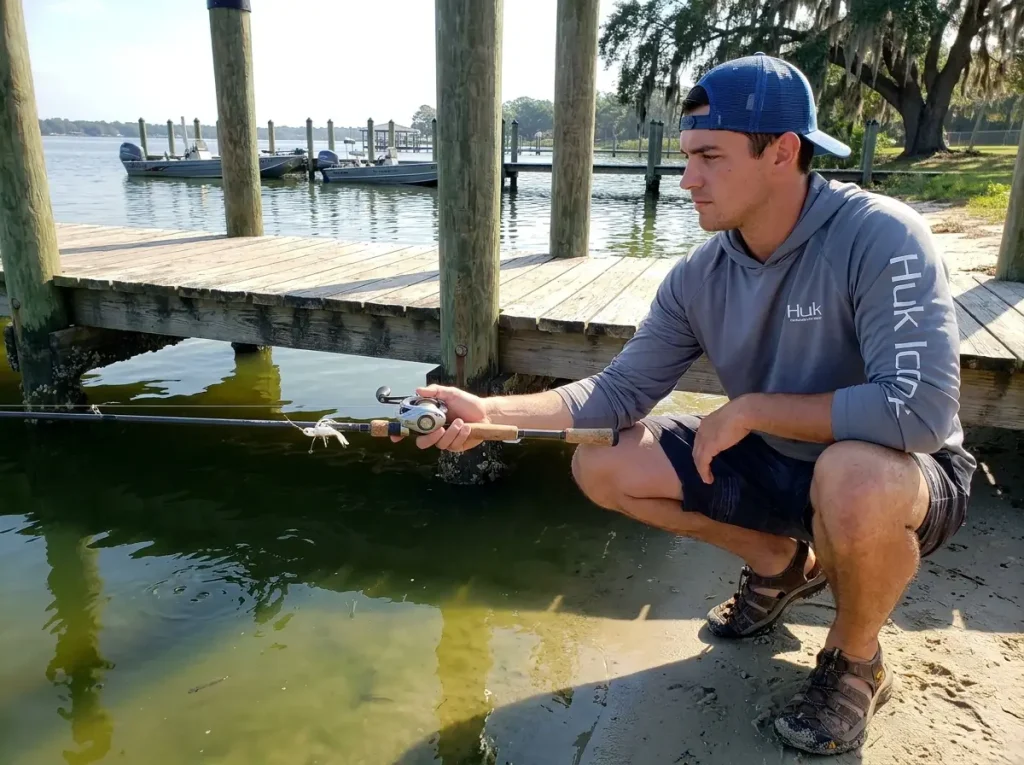
This is the one that costs more fish than any other mistake from shore. And almost every bank angler does it on every cast for their first few years.
The Parallel Retrieve Advantage
When you retrieve a lure parallel to a dock, a fallen tree, or a seawall, your bait stays in the productive water for the entire retrieve. Fish holding along that structure see your lure coming from a distance, track it, and have time to commit. A parallel cast also keeps your lure at a consistent depth along the structure edge — no sudden depth changes from pulling it out toward open water.
The difference is dramatic. I’ve sat on the same bank and caught nothing throwing perpendicular casts for an hour, then tripled my bites in twenty minutes just by repositioning to throw parallel to a laydown log. Same lure. Same everything. The fish were there the whole time — I was just pulling my bait away from them too fast.
When Perpendicular Casts Actually Work
Perpendicular isn’t always wrong. When you’re trying to find fish along a featureless bank, a series of straight-out casts at different distances maps the bottom quickly. And when fish are schooling in open water chasing bait — visible surface activity or birds working — cast straight to the commotion.
But the moment you’re targeting structure or cover, switch to angles that keep your bait alongside it.
Side-Arm and Skip Casts for Tight Spots
Some structure demands a low trajectory. Docks with low clearance, overhanging willows, bridge pilings — you can’t lob an overhand cast into these without snagging. A sidearm cast at hip height sends your lure on a flat line under overhangs and into the pockets where fish hide.
The skip cast works even tighter. Snap a sidearm cast with a little extra wrist and let the lure skip across the water surface like a flat stone, sliding back under a dock or into a gap between pilings. Takes practice, but once you dial it in, you can put a bait where nobody else can reach from shore. If you’ve been losing lures to snags in tight cover, check out how to prevent crankbait snags from shore — the angles are similar.
Pro tip: When side-casting under a dock, dip your rod tip into the water immediately after the cast. This pulls the line below any protruding bolts or crossbeams and lets the lure glide further underneath without snagging.
Mistake 2 — Ignoring Current Direction When You Pick Your Angle
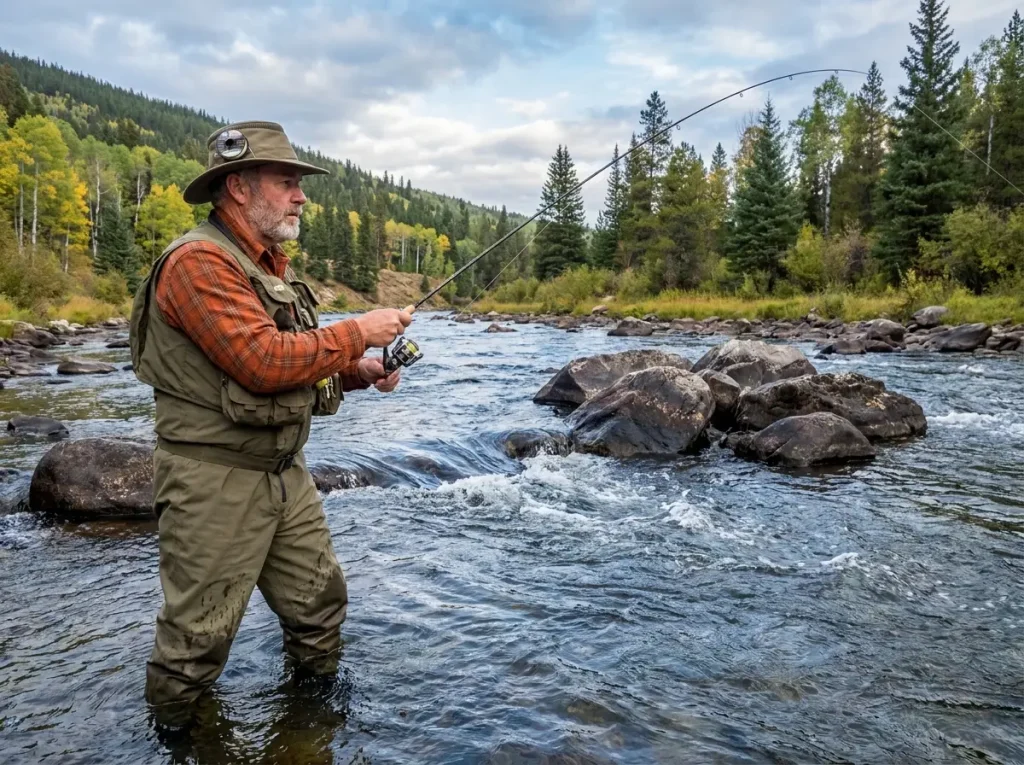
This mistake turns good casts into wasted retrieves. In any water with current — rivers, tidal flats, dam outflows, even wind-driven lake current — the direction of flow determines which angles produce bites and which produce snags.
Why Upstream Angles Outfish Downstream Retrieves
Fish face into current. That’s how they breathe — water flows over their gills front to back. So a baitfish getting swept downstream looks natural. A lure being pulled upstream against the current does not. Fish notice.
Cast upstream of structure and let the current carry your bait toward the strike zone naturally. This puts your lure in the same drift path as real food. You can even slow your retrieve and let the flow do the work — a dead drift past a boulder or bridge piling is one of the most effective presentations from shore. It’s the same principle behind matching drift speed to current that produces hookups in rivers.
Downstream retrieves aren’t just less effective — they actively work against you. Your lure fights the current, moves unnaturally, and fish sitting on the calm side of structure watch it swim the wrong direction. Worse, pulling line downstream across a rock pile is the fastest way to snag and lose tackle.
Reading Current Seams From the Bank
A current seam is the line where fast water meets slow water. You can see it — a visible crease on the surface where smooth water sits beside rippled water. Fish park on the slow side and wait for food to wash past on the fast side.
From shore, current seams are easier to read than from a boat because you have a stable viewing angle. Look for foam lines, debris accumulation, and that characteristic color change where turbulent water meets calm. The Massachusetts Division of Marine Fisheries angling techniques guide describes drift fishing these seams as one of the most effective shore techniques — and it starts with casting upstream and quartering your angle across the seam.
Tidal Shifts Mean Angle Shifts
If you fish tidal water, the optimal casting angle literally reverses every six hours. What was an upstream presentation at high tide becomes a downstream drag on the outgoing. Anglers who nail their approach at dawn wonder why the same angle produces nothing by noon.
Check the tidal flow direction before you commit to an approach angle. On incoming tide, cast toward the shoreline from deeper water — bait washes in. On outgoing, cast along drainage channels and points where water funnels out — that’s where fish stack up to intercept prey getting pulled seaward. If you fish tidal patterns, understanding how tides move water and fish changes your angle decisions for every session.
Pro tip: On rivers, stand where you can see the current direction reflected in surface debris movement. Cast your lure so it enters the water upstream of any structure, then keep a semi-tight line and let the current swing your bait into the calm pocket behind the structure. That swing is when most strikes happen.
Mistake 3 — Working One Angle When Structure Demands Three
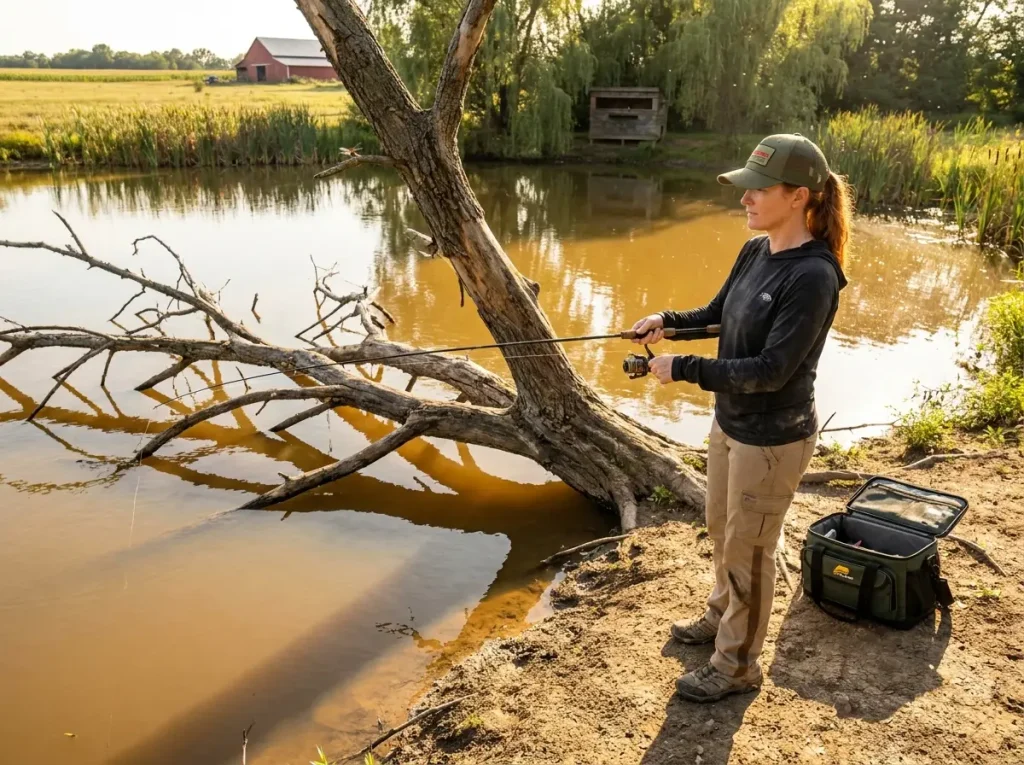
You found a great-looking fallen tree. You throw five casts at it. Nothing. You move on. But you only hit it from one side — and the fish were sitting on the angle you never tried.
The Fan Cast System From Shore
Fan casting is the fix. It’s a systematic approach: cast in 15 to 20 degree increments across a 180-degree arc in front of you. Start with short casts closest to shore — fish right at your feet first — then extend the distance with each sweep. After you’ve covered the full arc, move 15 to 20 feet down the bank and repeat.
This does two things. First, it prevents you from skipping productive water between random casts. Second, it reveals where fish are actually holding — the exact distance and depth — so you can focus subsequent casts on that zone.
The key is discipline. Most anglers skip the close water and start bombing long casts immediately. That spooks anything within 15 feet of the bank, which is often the best water. Work close first. Always.
Three Angles Every Structure Deserves
Any piece of structure or cover has at least three productive sides. Take a laydown tree: the upstream root ball, the parallel trunk, and the downstream branch tips each hold fish differently depending on current, light, and time of day.
Minimum, hit three angles: cast past the far end and retrieve along the length, cast to the upstream side and let current sweep your bait alongside it, then cast to the downstream pocket where fish sit waiting for food to wash through. If you’re only throwing at the obvious side facing you, you’re leaving fish untouched. This is the same multi-angle approach behind fishing structure points effectively — points and laydowns both reward anglers who cover every side.
Pro tip: After catching a fish on a piece of structure, don’t cast back to the same spot immediately. Rest it for five minutes, move to a different angle, and cast to a different side of the same structure. Often there are multiple fish holding on different sides, and the commotion from the first catch pushes the remaining fish tighter to cover on the opposite angle.
Mistake 4 — Forgetting That Sun Angle Moves the Fish
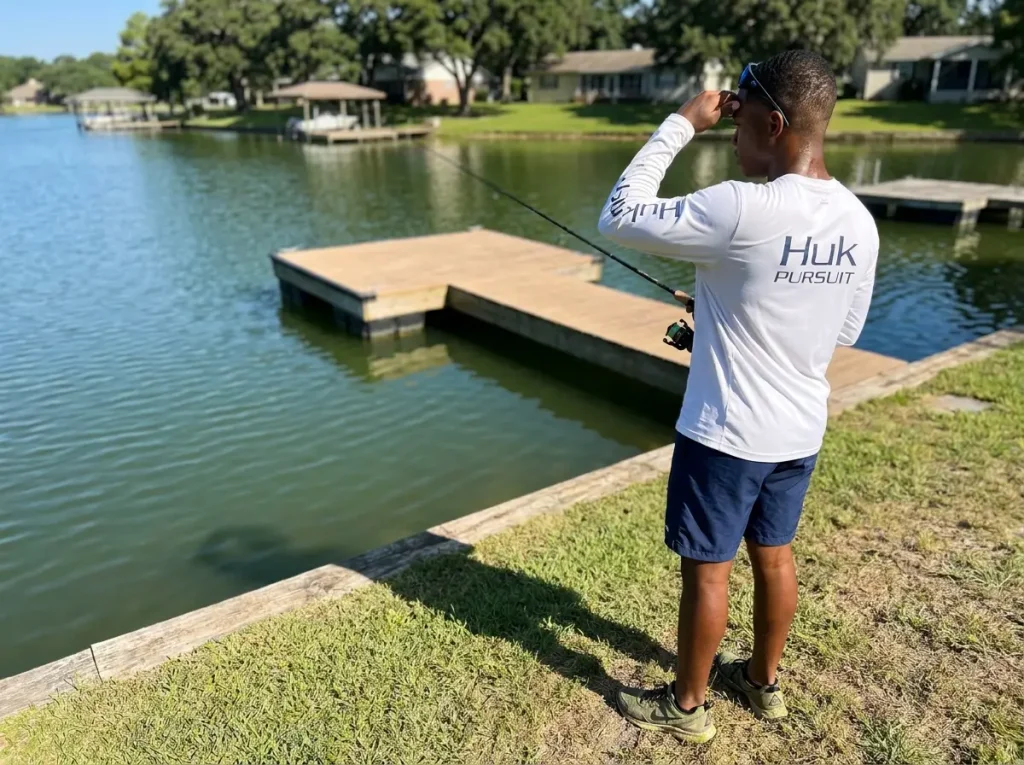
Same dock, same Tuesday, same lure. Caught three fish at 7 AM last week. Today at noon — nothing. The dock didn’t move. The fish did. Because the sun did.
How Shade Lines Shift Through the Day
Fish use shade for two reasons: it breaks their silhouette from predators above, and it reduces their visibility to prey swimming by. Structure that casts a shadow creates a visual ambush point, and fish stack on the shadow side.
The position of that shadow changes all day. At dawn, vertical structure like docks and bridge pilings cast long shadows to the west. Fish hold on the western face. By noon, the shadow shrinks to directly underneath. By late afternoon, the shadow stretches east and the fish shift with it.
This matters for your casting angle because the productive side of the structure rotates with the clock. Your morning approach angle that dropped a lure right into the shadow is useless by afternoon. Understanding how fish respond to light and environment helps predict exactly where on a piece of structure fish will sit at any given hour.
Adjusting Your Approach Angle to the Light
Match your casting angle to the shadow, not to what’s convenient from where you’re standing. If the shadow falls to the east, get to a position where you can cast into or along the east side of that structure. Sometimes that means walking past the spot and casting back toward it from a different bank position.
There’s a stealth element here too. In bright conditions, fish are more aware of movement and shadows above the water. Approach from the sunny side when possible — that way your silhouette stays behind you relative to the fish, not projected onto the water in front of them.
The deepest shade holds the biggest fish. Midday might seem like dead time, but fish stacked directly under a dock at noon can still be caught if you get a lure underneath with a skip cast or pitch cast from the right angle. You just have to work harder for a tighter window.
Mistake 5 — Approaching Structure Too Close Before Your First Cast
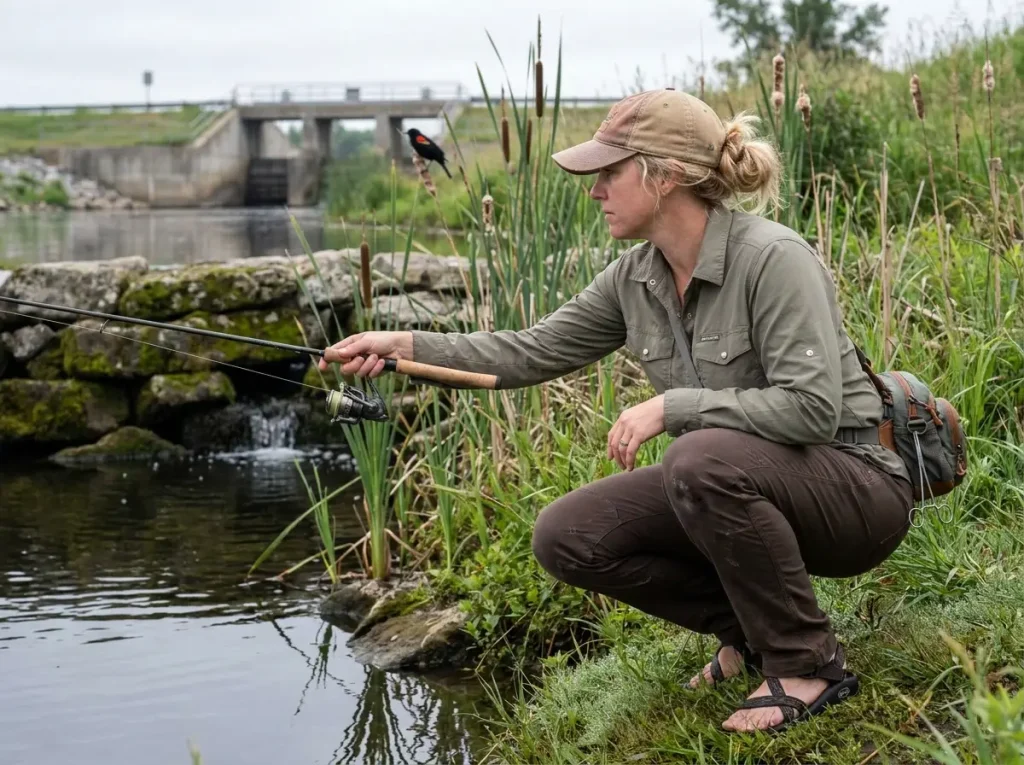
Your first cast is your best cast. It hits water that hasn’t been disturbed by your footsteps, your shadow, or the vibration of you walking the bank. And most bank anglers throw that advantage away by walking right up to the water’s edge before they pick up the rod.
Scout Before You Cast
Walk the bank slowly before you start fishing. Not to find the perfect spot — to map all the spots. Note where structure sits, where edges run, where current breaks form. Plan which angles you’ll use for each piece of cover and which direction you’ll work the bank.
This sounds like overkill until you realize that the first angler to put a bait near unpressured structure almost always catches more fish than the one who shows up and starts casting randomly. The U.S. Fish & Wildlife Service guide to fishing recommends this same approach for beginners — and it works just as well for experienced anglers who rush past it. For finding overlooked shoreline access, see our guide to finding bank fishing spots most anglers walk past.
The Inside-Out Approach
Start your casts at close range and work outward. Cast parallel to the bank at your feet first — five to ten feet from shore. Then extend to fifteen, twenty, thirty feet. Each cast covers water that hasn’t been spooked by a closer splash.
Most anglers do the opposite. They immediately launch a long cast that splashes into the middle, sending a pressure wave through the shallow water right in front of them. Every fish within 20 feet of shore just got a warning signal. The close water — which often holds the best fish on pressured banks — is now dead for the next fifteen minutes.
Shadow and Vibration Control
Sound travels faster and farther in water than in air. Heavy footsteps on a soft bank send vibrations through the substrate directly into the shallows. Fish feel that. In clear, shallow water, a single heavy step can push fish off a piece of structure for several minutes.
Stay back from the edge. Keep your profile low — crouch or kneel if the bank is exposed. And never let your shadow fall across the water you’re about to cast to. Position yourself so the sun is at your face, not at your back, when approaching a target. The discipline of stopping ten feet short and making a controlled cast pays for itself in fish that never knew you were there.
Pro tip: I make my first three casts before I take my last three steps to the water. That near-bank zone is the most overlooked water from shore, and it only gets one chance before you spook it by walking up.
Conclusion
Casting angle controls how long your lure stays in front of fish, how natural it looks in the current, and whether you spook your target before you even make a cast. Distance is secondary.
Three things to take to the bank on your next trip. First, default to parallel casts along structure edges — reserve perpendicular casts for searching open water. Second, work at least three angles on every piece of cover before you move on, starting with the close water and expanding outward. Third, read the sun and the current before you commit to an approach — both shift where fish sit and which angle puts your bait in the right spot.
Next time you walk up to your favorite bank spot, stop ten feet back. Make your first cast before you take your last step. The fish will tell you the rest.
Q1 What is the best casting angle for shore fishing?
The best default angle is parallel to structure, casting alongside docks, weedlines, fallen trees, or shoreline edges. This keeps your lure in the strike zone for the entire retrieve instead of crossing it in a few seconds. Adjust based on current direction and sun position for each specific spot.
Q2 Should you cast parallel or perpendicular to structure?
Parallel in most situations. A parallel retrieve tracks your lure along the edge where fish hold, giving them maximum time to see and strike it. Perpendicular casts work for searching featureless water or targeting fish schooling in open areas, but they waste potential when structure is present.
Q3 How far should you cast when shore fishing?
Most shore-accessible fish hold within 20 to 40 yards of the bank. Casting farther isn’t better if you’re overshooting the productive zone. Focus on accuracy and angle rather than distance, and always fish the near-bank water first before extending range.
Q4 How do you approach fish from shore without spooking them?
Stay back from the water’s edge and keep a low profile so your shadow doesn’t fall on the water. Make your first casts from 10 to 15 feet back, targeting close water before moving in. Soft footsteps matter — vibrations travel through the bank into the shallows.
Q5 What is the best way to fish structure from the bank?
Hit every piece of structure from at least three angles — far side parallel, near side parallel, and through any current break or shade line. Use a fan casting pattern at 15 to 20 degree increments to cover all sides before moving down the bank.
Risk Disclaimer: Fishing, boating, and all related outdoor activities involve inherent risks that
can lead to injury. The information provided on Master Fishing Mag is for educational and informational purposes
only. While we strive for accuracy, the information, techniques, and advice on gear and safety are not a substitute
for your own best judgment, local knowledge, and adherence to official regulations. Fishing regulations, including
seasons, size limits, and species restrictions, change frequently and vary by location. Always consult the latest
official regulations from your local fish and wildlife agency before heading out. Proper handling of hooks, knives,
and other sharp equipment is essential for safety. Furthermore, be aware of local fish consumption advisories. By
using this website, you agree that you are solely responsible for your own safety and for complying with all
applicable laws. Any reliance you place on our content is strictly at your own risk. Master Fishing Mag and its
authors will not be held liable for any injury, damage, or loss sustained in connection with the use of the
information herein.
Affiliate Disclosure: We are a participant in the Amazon Services LLC Associates Program, an
affiliate advertising program designed to provide a means for us to earn advertising fees by advertising and linking
to Amazon.com. As an Amazon Associate, we earn from qualifying purchases. We also participate in other affiliate
programs and may receive a commission on products purchased through our links, at no extra cost to you. Additional
terms are found in the terms of service.