
In this article
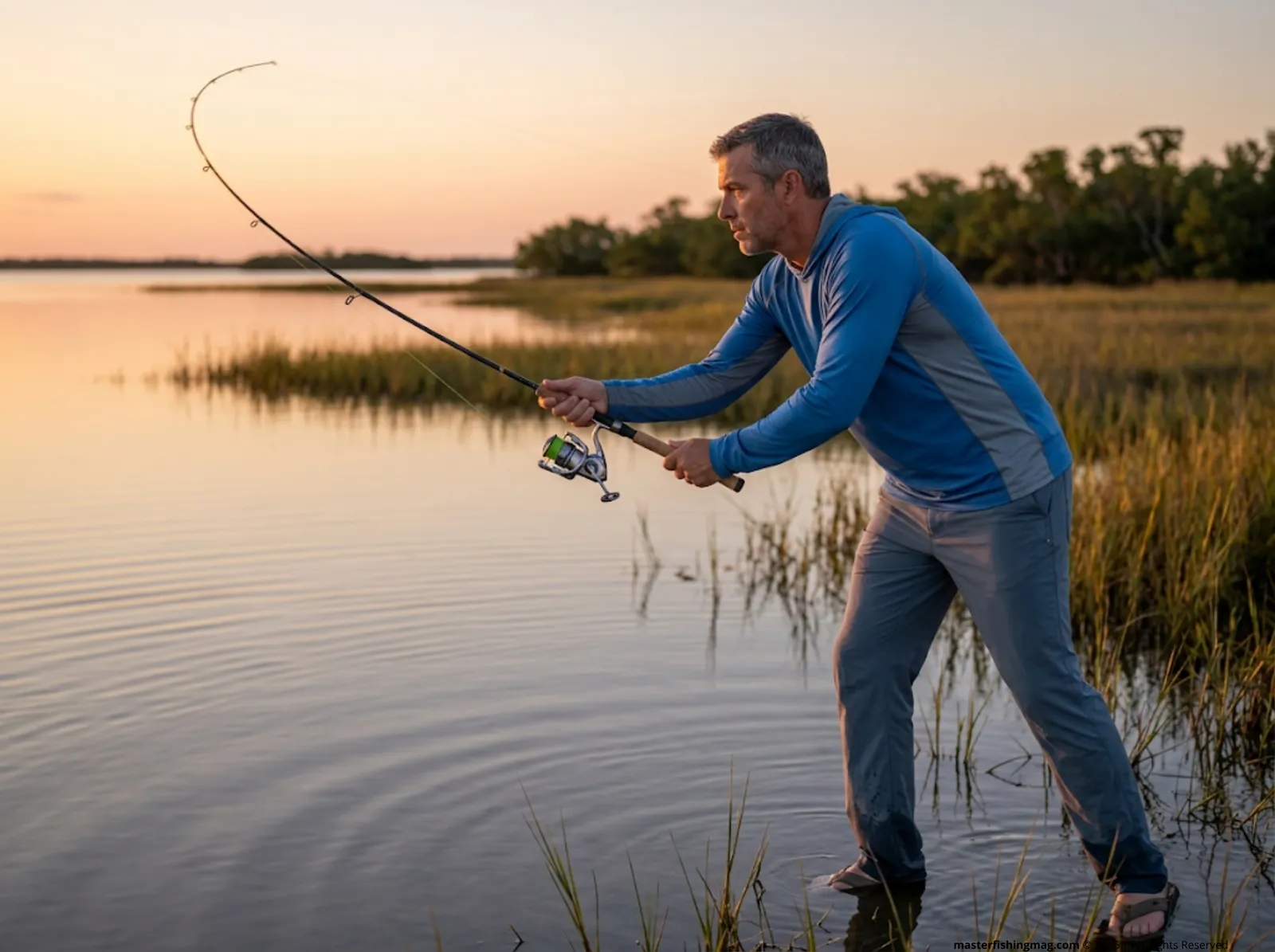
The pod of redfish was right there—tailing in the shallows maybe 80 feet out—and my lure splashed down 15 feet short. Again. I watched them scatter while I reeled in slack, frustrated and soaked to my knees on those inshore flats. That 15-foot gap cost me six fish that morning.
After two decades of guiding surf fishing sessions and inshore charters, I’ve watched hundreds of anglers make the exact same discovery I made that day: the problem isn’t your arm. It’s your setup. Three adjustments to my spinning reel and rod—not my casting technique—would have closed that distance before breakfast.
This guide breaks down where every lost foot is going. From spool lip friction to line diameter to rod loading mechanics, you’ll walk away with a systematic audit you can run on your own gear in five minutes. No guesswork, no folklore—just the marginal gains that actually move the needle toward total system optimization.
⚡ Quick Answer: To cast a spinning reel farther, focus on three things: fill your spool to within 1/16″ of the lip (an underfilled spool can cost you 15–20% of your distance), switch to a thin 8-carrier braid like 10lb PowerPro (thinner line means less friction and air resistance at every contact point), and learn to load the blank with a two-handed grip instead of throwing the lure with one arm. These three fixes, combined with a slim FG knot and basic line conditioner, can add 20+ feet to every cast.
The Friction Landscape — Why Your Reel Fights Every Cast
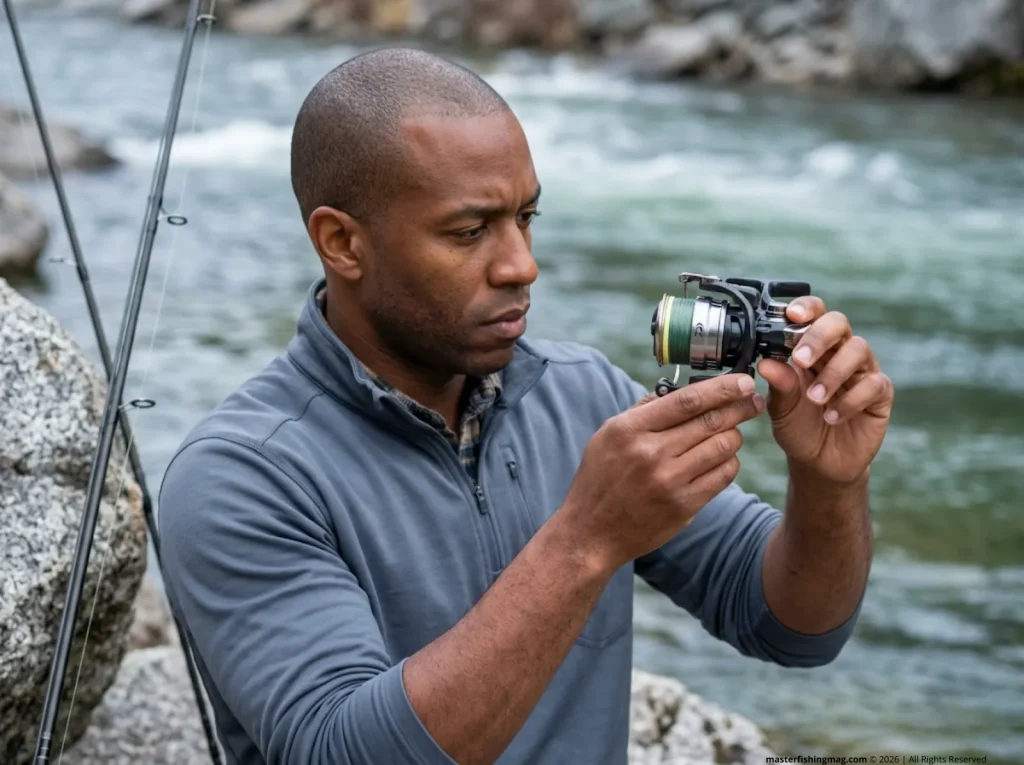
Every time you cast a spinning reel, you’re fighting two invisible enemies: sliding friction (your line dragging across the spool lip and through every rod guide) and fluid drag (air resistance grabbing your line and lure mid-flight). Understanding where energy leaks happen is the first step to plugging them.
The Capstan Effect at the Spool Lip
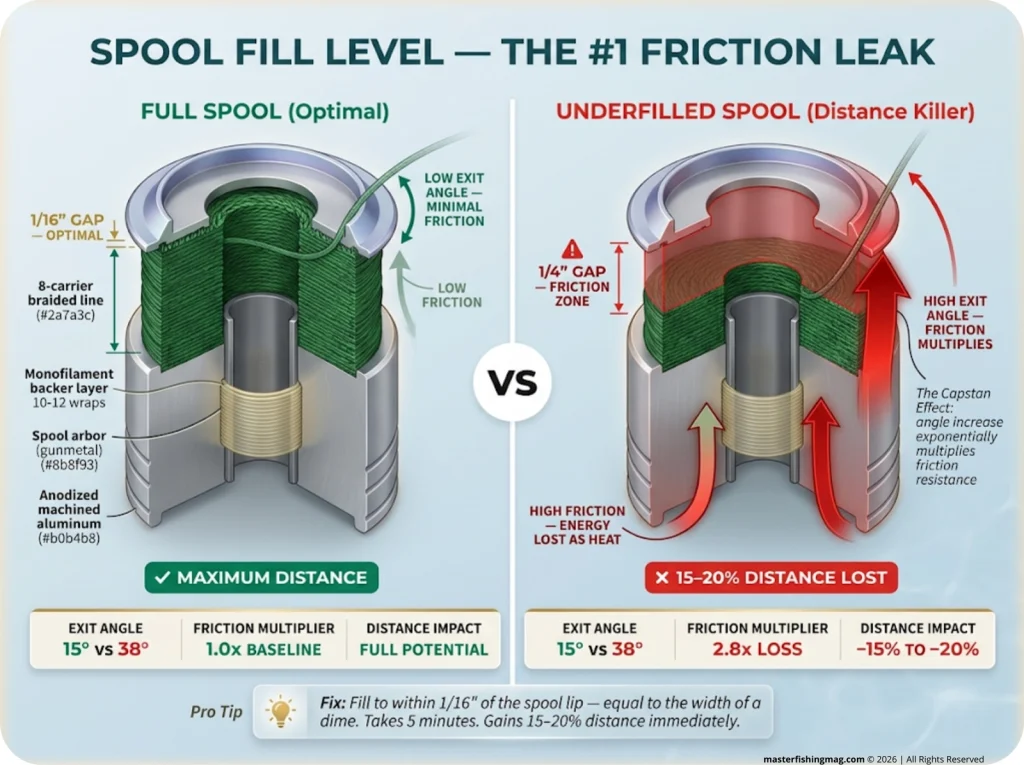
The spool lip is the single biggest friction point in your entire spinning setup. Here’s why: line peels off the spool in a spiral. The angle that spiral makes as it contacts the lip edge determines how much friction fights you—and that relationship isn’t gradual. It ramps up fast.
A spool filled only a quarter-inch below the lip can cost you 15–20% of your potential distance. There’s an engineering principle behind this called the Capstan Equation, but you don’t need to remember that name. Just remember this: the bigger the gap between your line and the lip, the harder your line has to work to escape. The fix is dead simple—maximize your spool filling level to within 1/16″ of the lip. That’s about the width of a dime.
Pro tip: Before you worry about fill level, use a monofilament backer. Braid has zero grip on a bare metal spool arbor, and if it slips, you’ve got ghost drag—your whole spool of braid spinning uselessly during a hookset. Ten wraps of mono, secured with a uni knot, solves this permanently.
Manufacturers know this matters. Shimano’s AR-C spool lip and Daiwa’s ABS design both reduce the diameter of the spiral coils leaving the spool, minimizing spool lip friction. If you’re shopping for a reel built for distance, understanding the causes of line twist on spinning reels will show you how spool design connects to twist prevention.
Guide Slap and Spiral Damping
Line leaves a spinning reel in wide, chaotic loops. The stripper guide—that big first ring closest to your reel—has to choke those spirals down into a tight stream. If it’s too small or mounted too close to the reel seat, your line “slaps” the frame on every pass. That slap converts casting distance into heat and noise—energy leaving your system that should be pushing the lure forward.
High-end Fuji K-Series rod guides use a tangle-free tilt design to let those spirals flow through with less impact, minimizing parasitic guide friction. But the most common mistake I see? Anglers pairing a spinning reel with a casting rod because “it fits.” The guide spacing and size on a casting rod are designed for a completely different loop pattern. That mismatch can silently steal 10% of your distance.
Fluid Drag — Air Resistance You Can’t See
Most anglers only think about the launch. But air resistance does its heaviest damage during the descent—that back half of the casting stroke where your lure is losing speed and your line’s surface area is dragging through the air like a sail.
Lure aerodynamics matter more than people think. Compact baits like lipless crankbaits hold their trajectory in wind. Wide-profile jerkbaits catch crosswinds and drift off course. And thicker monofilament amplifies the sail effect at every pound test compared to braid. If you’re serious about distance casting in crosswinds, thinner line and a compact lure profile are your best friends.
Line Architecture — The 4 vs. 8 Strand Reality
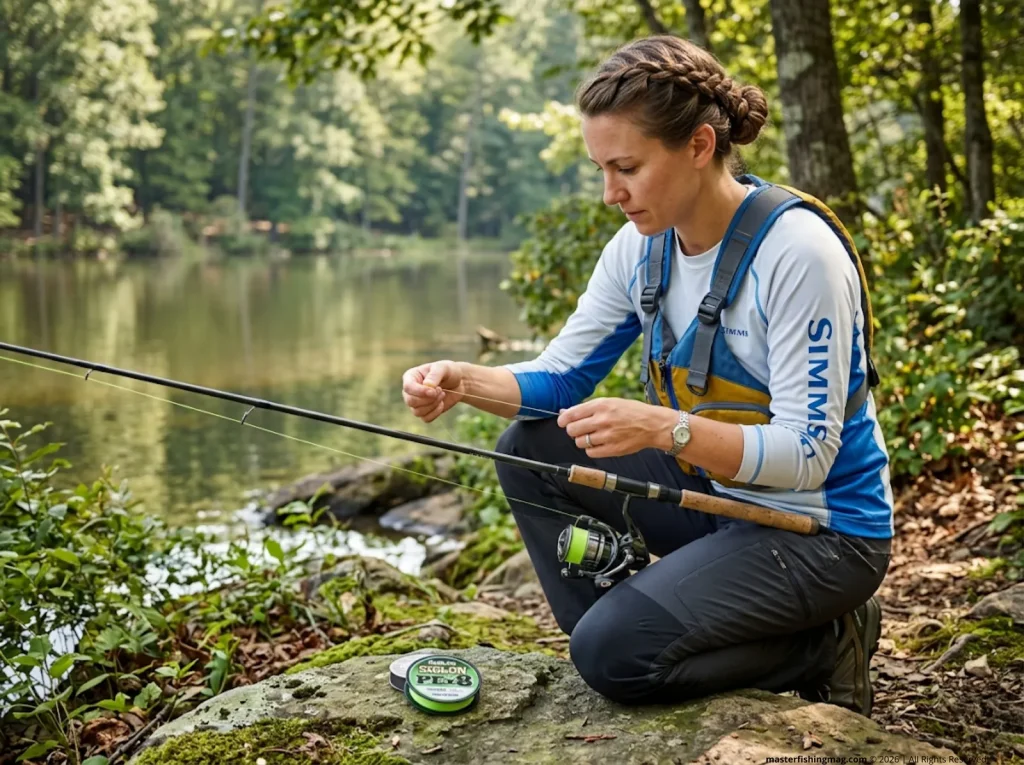
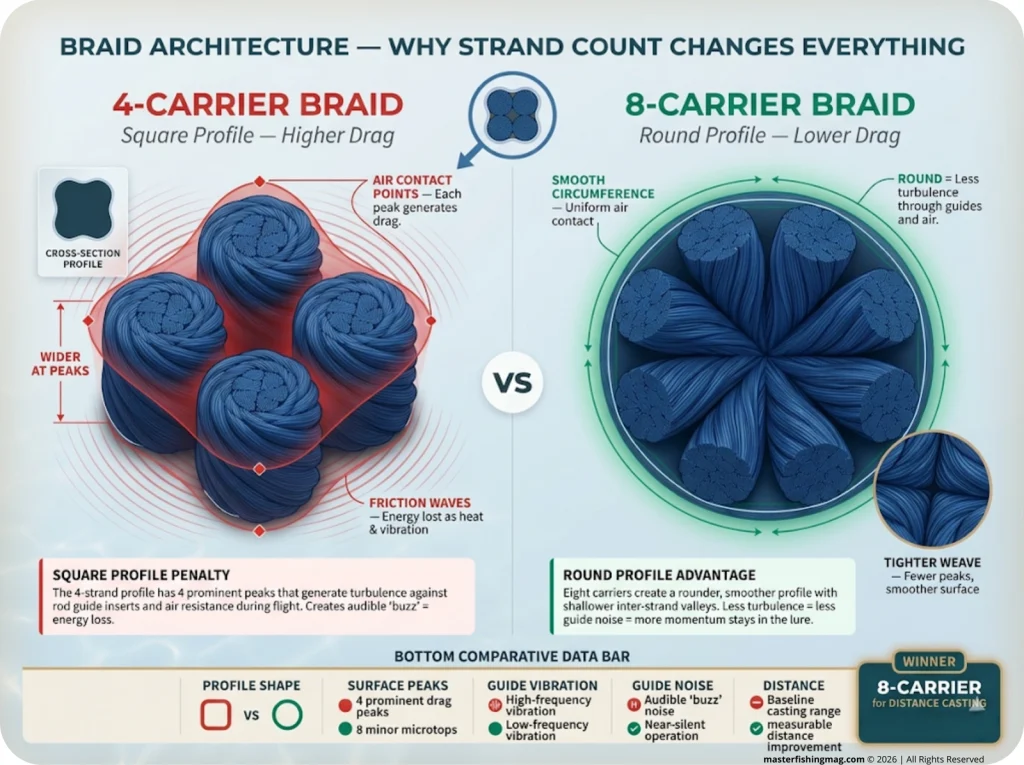
“Use braid” is the advice everyone gives. But which braid? The difference between 4-carrier braid and 8-carrier braid is the difference between a square and a circle—and it directly affects how far your lure flies.
Surface Area and Cross-Section Physics
An 8-carrier braid is rounder. A 4-strand is essentially square. That square profile has more surface area for the same volume, which means more air resistance and more guide friction every time it passes through a ring. According to Sunline America’s research, 8-carrier braided line provides smoother, rounder profiles that cast measurably further than 4-carrier braids.
Line diameter is the single most impactful variable after spool filling level. Dropping from 20lb monofilament to 10lb braid can add 20+ feet to your cast—same rod, same lure, same arm. That’s the simple reality of braid vs mono for distance.
Acoustic Friction — The “Buzz” Is Energy Leaving Your System
Here’s something nobody talks about: that audible buzz you hear in the rod guides during a long cast? That’s energy leaving your system as vibration. 8-strand braid is quieter because it has fewer peaks and valleys in its weave. Fewer peaks means less vibration, and less vibration means more momentum stays in your lure instead of warming up your guide inserts.
This is what weave count friction really means. The buzz you hear in the guides translates directly into wasted energy and shorter casts. Four-strand braid’s coarser texture does “saw” through vegetation better, which makes it a better choice for punching heavy cover. But for pure casting distance? Eight-strand wins every time.
Line Memory and the Monofilament Penalty
Monofilament and fluorocarbon retain the coiled shape of the spool—that’s line memory. Each stored coil slaps against the guide rings during a cast, adding friction at every contact point. Braid has zero memory. It leaves the spool in a smoother, more controlled spiral with better line lay consistency.
Cold water makes this worse. A 40°F morning can stiffen mono enough to cost you 10–15 feet per cast from increased coil rigidity alone. If you’re fishing in cold conditions, understanding what causes fishing line memory and how cold water affects line performance will explain exactly what’s happening to your setup.
Rod Loading and the Kinetic Chain
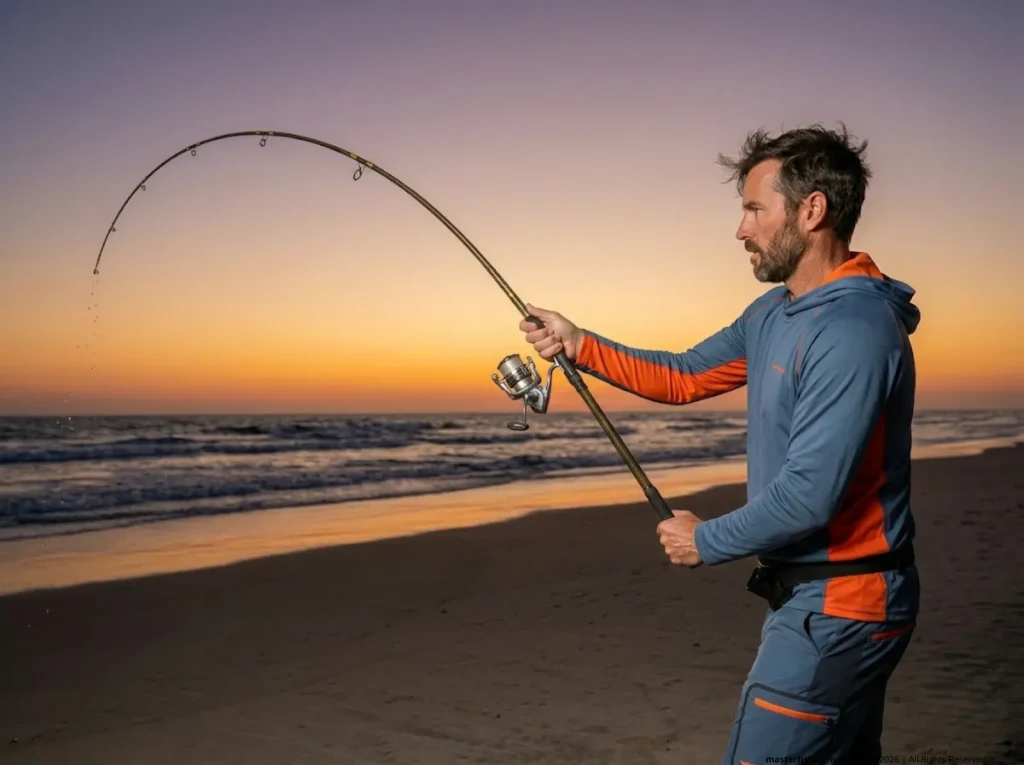
Your rod is a spring. The cast is what happens when you load the blank and let it snap. Most anglers throw their lure with arm strength. The real gains come from rod loading—using the rod blank itself to store and release energy.
The Physics of Rod Loading
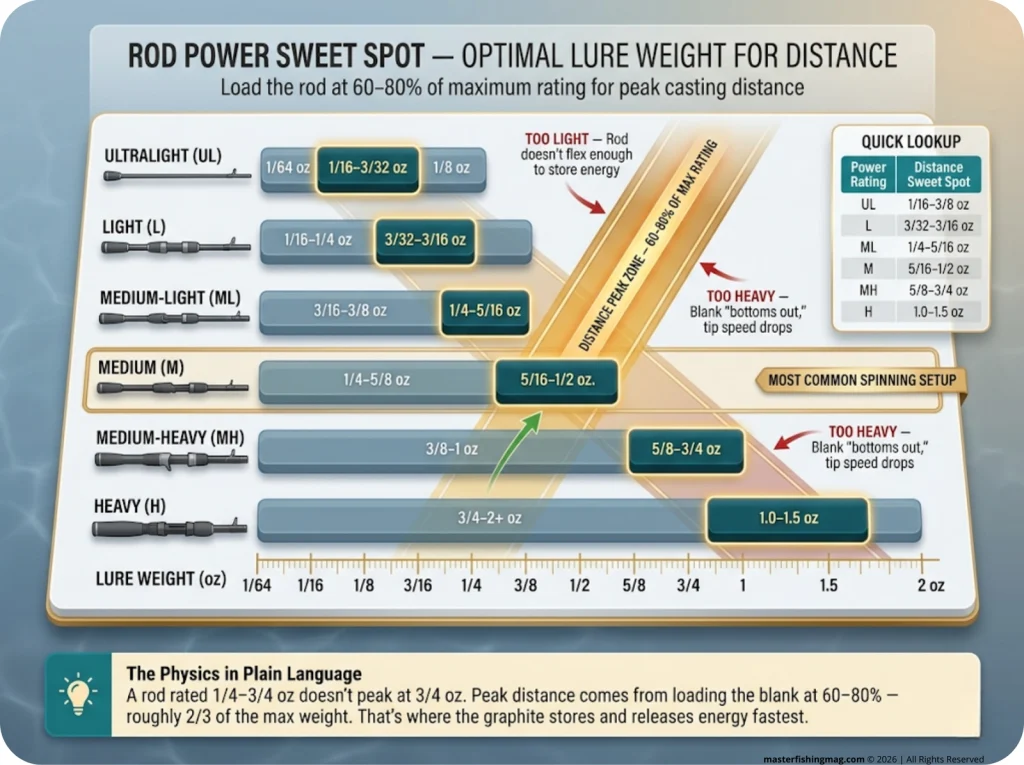
Rod loading is the process of bending the rod during your back-cast to store energy in the graphite fibers. When you stop the rod sharply, that stored energy transfers forward into the lure. The key insight most people miss is the “sweet spot” for lure weight. A rod rated 1/4–3/4 oz doesn’t peak at 3/4 oz. The distance sweet spot sits around 1/2–5/8 oz—roughly 60–80% of the rod’s maximum rating.
Too light, and the rod doesn’t flex enough to store energy. Too heavy, and the blank “bottoms out”—it can’t recover fast enough, and your tip speed drops. Optimizing this lure weight matching to your rod power is one of the cheapest distance gains you’ll ever find. If you’ve never checked your rod’s specs, take a minute to learn how to read the power and action specs on your rod before your next trip.
Rod Length as a Lever
A longer rod is a longer lever. At the same swing speed, a 7’6″ spinning rod generates faster tip speed than a 6′ rod—and tip speed is what launches the lure. For pure distance casting, 7 to 10 feet is the recommended rod length range.
But there’s a ceiling. Rods over 8 feet become fatiguing during an all-day session, and accuracy drops as the lever gets longer. The blank’s stiffness matters too—a higher-modulus graphite recovers faster after the flex, translating more stored energy into the cast. For help dialing in how to pick the right rod length for your situation, match your rod to your primary fishing scenario, not your biggest casting fantasy.
The Two-Handed Grip and Lever Mechanics
This is where most anglers leave the biggest marginal gains in casting distance on the table. The two-handed grip—pushing the reel seat forward with your dominant hand while pulling the rod butt back with your other hand—creates a fulcrum that accelerates the tip far faster than a single-handed throw.
This is the spinning gear adaptation of the double haul from fly fishing. Luke Simonds from Salt Strong puts it best: “The double haul technique pulled from fly fishing can help save a ton of energy when spin fishing while also allowing for increased distance and accuracy.”
The abrupt stop at the end of the arc is critical. That’s “the snap“—the moment all stored energy releases from the blank into the lure. Release timing makes the difference between a good cast and a bomb. You’re not throwing. You’re launching.
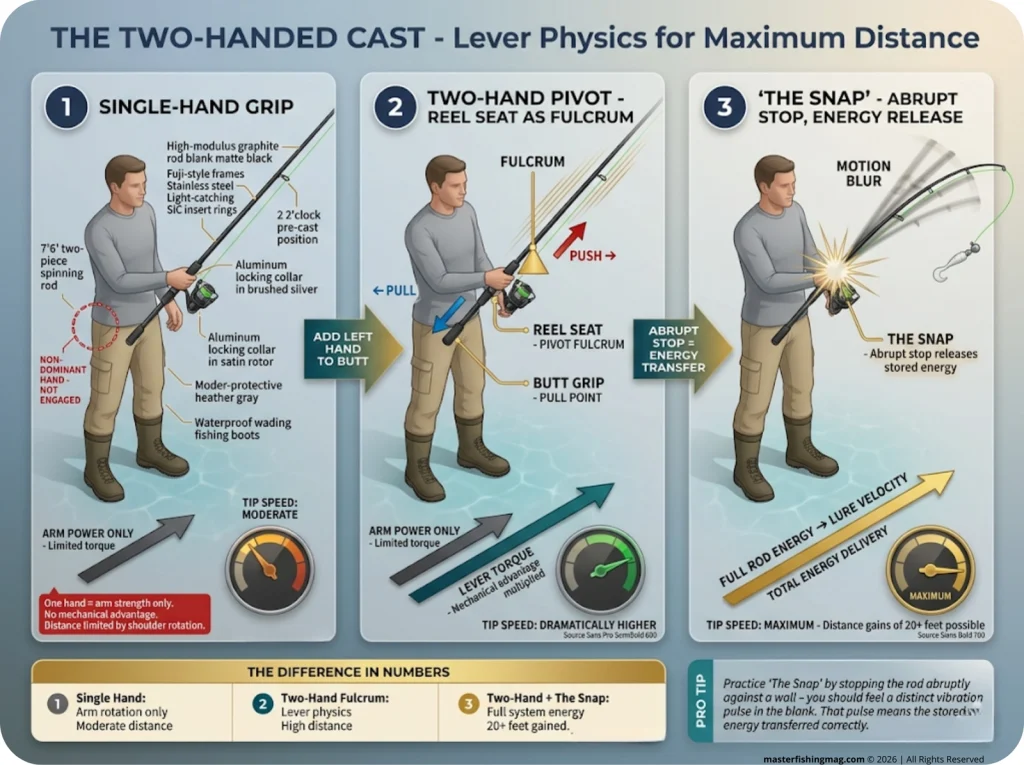
For more on how this lever mechanics system works, the physics of rod levers and fulcrum points explains the mechanics in full.
The Braid-to-Leader Connection — Your Hidden Speed Bump
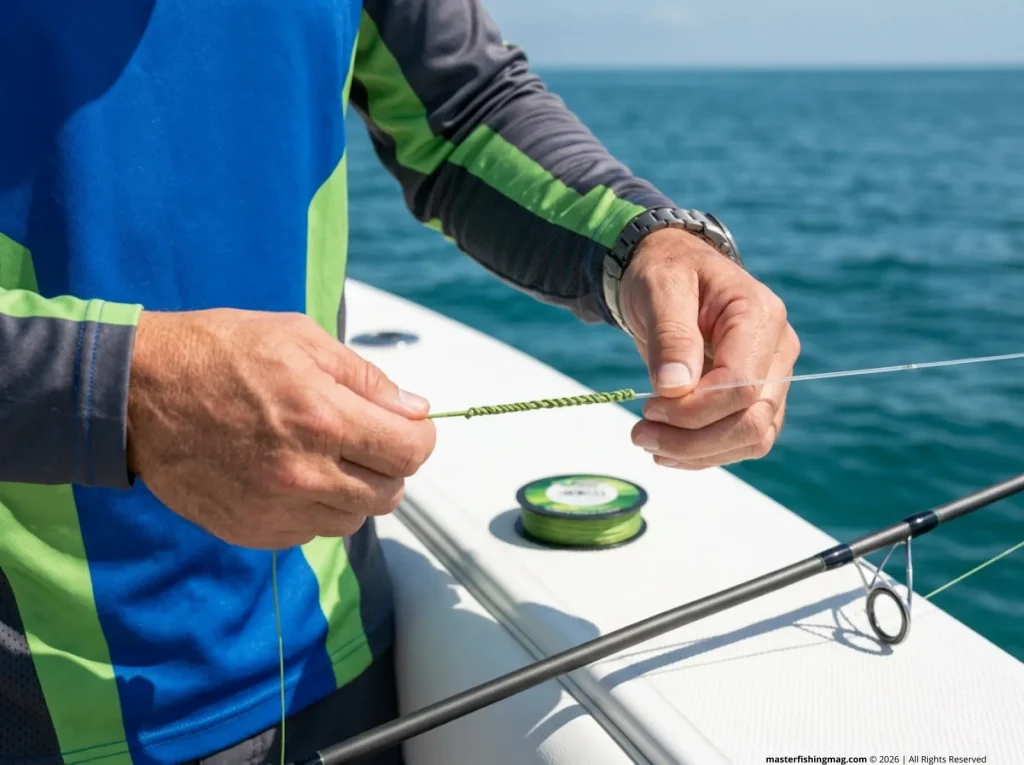
If you can hear your knot “clacking the guides” on every cast, you’re losing distance. That bump is a speed bump—literally.
Why Knot Profile Matters
A bulky Double Uni creates a “speed bump” every time it passes through a guide. The tip-top guide—the smallest ring in the system—is where the damage is worst. The energy loss isn’t just friction. When the knot impacts the ring, it causes micro-bounces that destabilize your lure’s trajectory mid-flight.
The FG Knot as the Distance Knot
The FG knot is the slimmest braid-to-leader connection available. Its flat, tapered profile effectively disappears through a Fuji SiC guide ring. In practice, this means zero “speed bump.” No clack, no bounce, no wasted energy.
The tradeoff is real: the FG knot is harder to tie than a Double Uni, and nearly impossible in high wind without practice.
Pro tip: Practice tying the FG knot 50 times at your kitchen table before you ever attempt it on the water. In 20 mph wind with cold fingers, muscle memory is the only thing that’ll save you.
For a side-by-side comparison of your options, our guide to field-tested line-to-leader connection methods breaks down the FG, Double Uni, and Loop-to-Loop with real-world test results.
Monofilament Backer — Preventing Ghost Drag
Braided line has zero grip on a bare metal spool arbor. Without a monofilament backer, the entire mass of braid can slip during a hard hookset—that’s ghost drag. It doesn’t just cost fights. It wrecks your spool filling level, instantly creating the underfilled, high-friction condition we covered in the first section.
Ten to fifteen wraps of mono backing, secured to the arbor with a simple uni knot, gives your braid a friction surface to bite into. It takes two minutes and saves you from the most frustrating failure mode in spinning gear.
Maintenance as Performance — The Gains Nobody Talks About
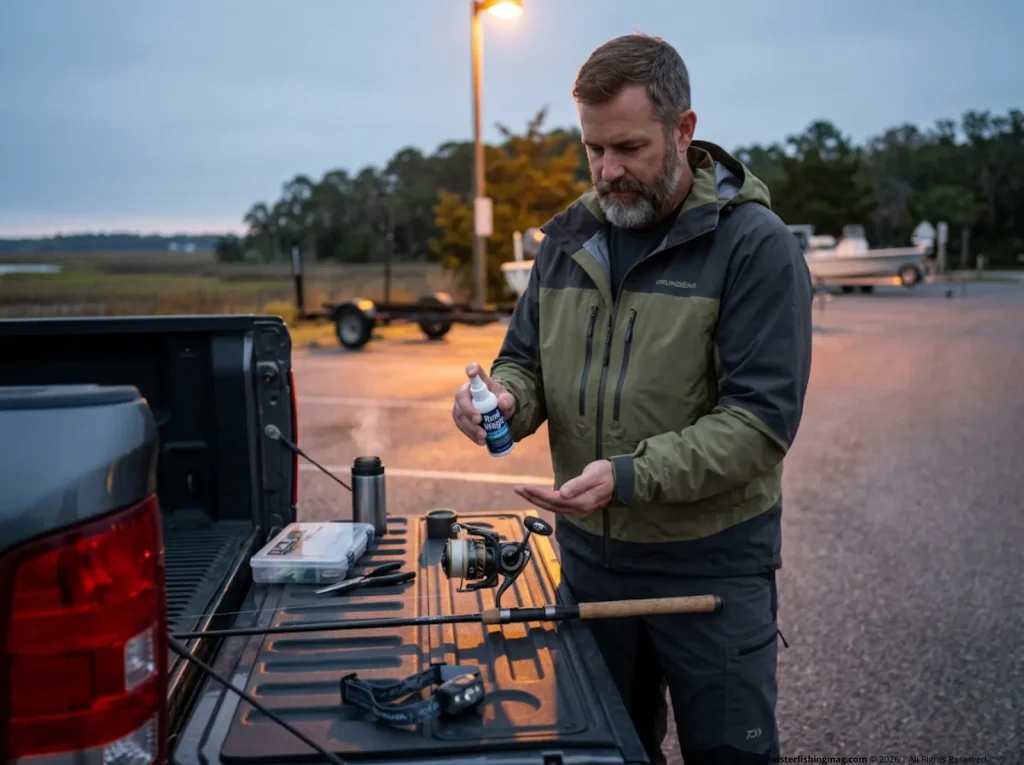
You don’t need to buy anything new to cast farther. Some of the most measurable gains come from maintaining what you already own. These are the marginal gains that separate a dedicated angler from a frustrated one.
Line Conditioners and Hydrophobic Buffering
Water is heavy. Braid absorbs it. A waterlogged 10lb braided line can weigh as much as a dry 20lb braid, doubling the pull needed to get line moving off the spool. Line conditioners—sacrificial polymers like silicone spray—repel that water, keeping your line light and slick throughout a full session.
The gain is real: 5–10 extra feet per cast with conditioned line. Pro angler Mike Iaconelli confirms it: “Once I’ve treated my line… it really helps with casting distance and accuracy. The easier you can throw a bait, the more accurately you can throw a bait.” Research from the University of Minnesota on polymer friction reduction backs this up—polymer coatings measurably reduce friction on filament surfaces.
Line Twist Removal — The Boat Drag Method
Twisted line holds stored energy that wants to uncoil. During a cast, that energy releases as wind knots—tangles that form when slack loops fold over themselves mid-flight. The “boat drag” method is the only 100% effective reset: let out all your line behind a slow-moving boat or kayak, reel it back under light tension, and the water’s resistance untwists everything.
⚠️ Safety Warning: Never reel against a slipping drag. This is the number one cause of line twist and gear failure on spinning reels.
If you’re dealing with chronic twist issues, the full guide to spinning reel line twist prevention covers every diagnostic and fix.
Wet Your Braid Before the First Cast
Wet braid casts significantly further than dry, stiff braid. Water reduces the friction between fibers within the weave itself, giving you a smoother release off the spool.
Pro tip: Dunk your spool in a bucket of water before the first cast of the day. It takes ten seconds and adds real distance. And close the bail manually with your hand—not by turning the handle. That first loose loop from a handle-closed bail is what starts the wind knot cascade.
For the full maintenance picture, including internal reel care, our reel lubrication and maintenance guide connects these external gains to internal friction reduction.
The Distance Audit Checklist — Diagnose Your Setup in 5 Minutes
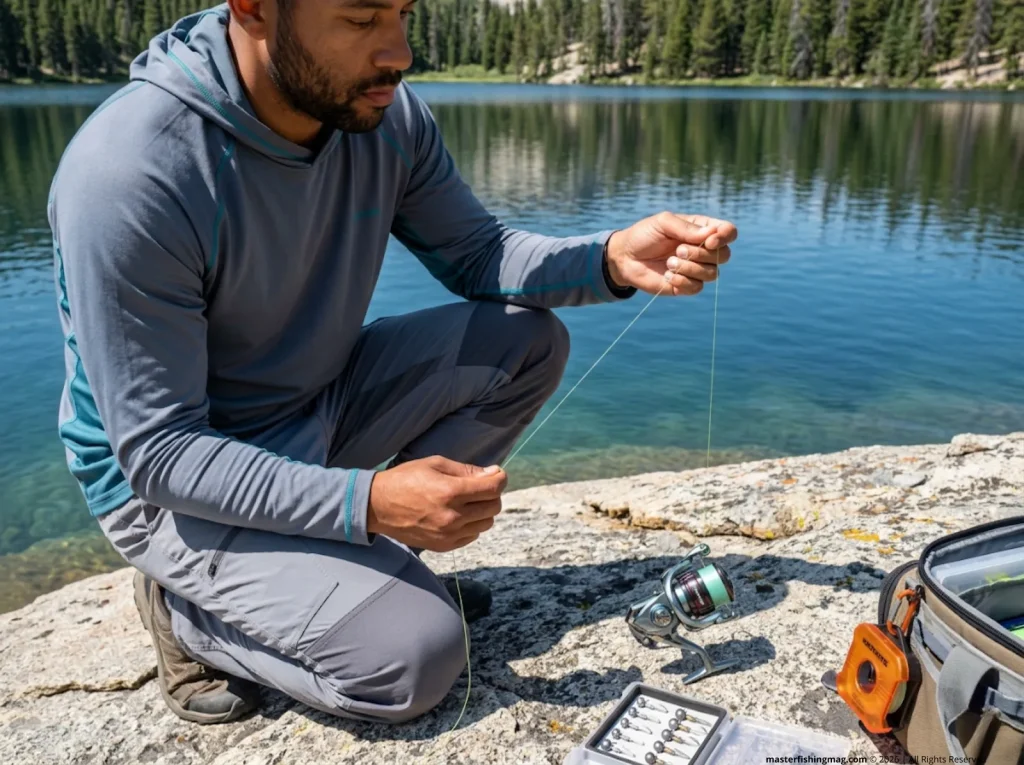
No competitor provides a systematic diagnostic for casting distance. This is the casting distance audit checklist—an eight-step protocol you can run on any spinning setup in five minutes to find every friction leak. Think of it as a casting troubleshooting flowchart for your entire rig.
The Spool Check (Fill Level + Backing)
Hold the spool at eye level. Is the line within 1/16″ of the lip? If you can see a visible “shelf,” you’re losing 15% or more of your potential distance. That’s Step 1. Step 2: pull the line firmly at the spool under load. If the braid slips, you’ve got ghost drag. Add a mono backer.
The Line Check (Diameter + Condition + Twist)
Step 3: check your line diameter against your target. For pure distance, 10lb 8-carrier braid is the baseline. Step 4: run line through your fingers for 20 feet—feel for nicks, fraying, or stiffness. Stiff line means too much memory or UV degradation. If your line fails this test, it may be time to review when to replace your fishing line.
Step 5: let 50 feet of slack pool on a flat surface. Does it coil on itself? That’s line twist, and it means wind knot risk. Run the boat drag method.
The Hardware Check (Rod + Guides + Knot)
Step 6: verify your lure weight sits in the middle-to-upper zone of your rod power rating—not at the ceiling. Step 7: inspect every guide for grooves, cracks, or corrosion. Even a hairline groove in one guide insert can shred braid and kill distance over time. For a deep breakdown of guide materials, our rod guide materials and their impact on line friction comparison covers SiC, Alconite, and Torzite.
Step 8: check your braid-to-leader connection. If it’s audible passing through guides, switch to the FG knot.
Conclusion
Three things matter most. Fill the spool to 1/16″ of the lip. This single fix closes the biggest friction leak in most setups—it’s free, takes five minutes, and the distance gain is immediate. Switch to 8-carrier braid and tie an FG knot. You’re eliminating two friction sources at once: line surface drag and knot speed bumps. Think in systems, not tips. Every variable—spool filling level, line architecture, rod loading, lure weight, knot profile, maintenance—is connected. Optimizing one while ignoring the rest leaves distance on the table.
Run the friction audit on your spinning setup before your next trip. Bring a tape measure. Mark your first cast. Make the adjustments, then cast again from the same spot. Measure the difference. The physics don’t lie—and neither does the tape.
FAQ
Does braided line cast farther than mono?
Yes—and it’s not close. Braid’s thinner diameter at any given pound test creates less air resistance and zero line memory, which means less friction from spool to lure. On average, switching from 20lb mono to 10lb braid adds 15–25 feet per cast.
How much line should be on a spinning reel?
Fill to within 1/16 of the spool lip for maximum distance. Any lower and friction at the lip increases sharply. Any higher and you risk wind knots from loose loops jumping the edge.
What is the best rod length for distance?
For pure distance casting, 7’6 to 8’6 covers most anglers. Longer rods generate faster tip speed, but anything past 9 feet brings fatigue and accuracy penalties that offset the gains.
Why is my spinning reel not casting far?
Run the friction audit. Check spool filling level first—it’s the number one culprit. Then line diameter, then line twist. If all three pass, the issue is likely your rod loading technique. You’re throwing the lure instead of letting the rod launch it.
Does line conditioner actually help casting distance?
Yes. Line conditioners add a hydrophobic polymer coat that repels water weight and reduces spool lip surface tension. Field tests show 5–10 extra feet per cast. It won’t transform a bad setup, but on an optimized system it’s measurable free distance.
Risk Disclaimer: Fishing, boating, and all related outdoor activities involve inherent risks that
can lead to injury. The information provided on Master Fishing Mag is for educational and informational purposes
only. While we strive for accuracy, the information, techniques, and advice on gear and safety are not a substitute
for your own best judgment, local knowledge, and adherence to official regulations. Fishing regulations, including
seasons, size limits, and species restrictions, change frequently and vary by location. Always consult the latest
official regulations from your local fish and wildlife agency before heading out. Proper handling of hooks, knives,
and other sharp equipment is essential for safety. Furthermore, be aware of local fish consumption advisories. By
using this website, you agree that you are solely responsible for your own safety and for complying with all
applicable laws. Any reliance you place on our content is strictly at your own risk. Master Fishing Mag and its
authors will not be held liable for any injury, damage, or loss sustained in connection with the use of the
information herein.
Affiliate Disclosure: We are a participant in the Amazon Services LLC Associates Program, an
affiliate advertising program designed to provide a means for us to earn advertising fees by advertising and linking
to Amazon.com. As an Amazon Associate, we earn from qualifying purchases. We also participate in other affiliate
programs and may receive a commission on products purchased through our links, at no extra cost to you. Additional
terms are found in the terms of service.