

In this article
Saltwater intrusion doesn’t wait for a breakdown. It begins the moment the spray hits the deck, silently wicking into the tolerance between the pinion gear and the main gear. To the untrained eye, a spinning reel or baitcaster is just a spool for holding line. To those of us who have spent decades fixing them, it is a precision instrument of heat dissipation and torque conversion.
I have seen too many trophy fish lost not because of a broken line, but because a seized drive gear bearing couldn’t handle the sudden heat of a run. A reel demands more than a casual rinse with a hose to wash away freshwater sediment or salt crust.
This guide transforms the anxiety of deep disassembly into a disciplined ritual. We aren’t just cleaning; we are performing preventive mechanical care to ensure your machinery performs when the drag starts screaming.
Here is how we turn the theoretical physics of friction into a smooth, reliable retrieve on your next fishing trip.
What is the “Tribology of Angling” and Why Does Viscosity Matter?
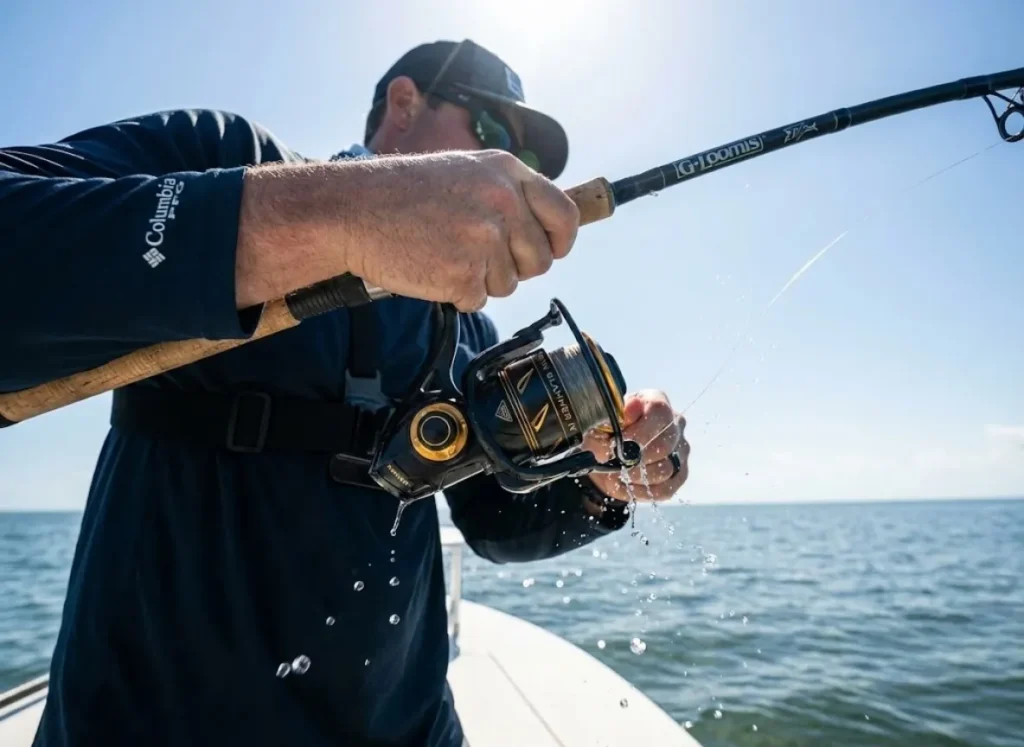
Tribology is the science of wear, friction, and lubrication. In fishing reels, ignoring these physics leads to failure. The fundamental rule is simple: high-speed parts require low viscosity (oil), and high-load parts require high viscosity (grease). They are not interchangeable.
How do friction dynamics dictate the choice between oil and grease?
Mechanically, your reel deals with two types of friction. Rolling friction occurs in your external bearings. These components need to spin at incredibly high RPMs during a cast. Thick reel grease here acts like mud, slowing the rotation and killing your casting distance.
Sliding friction, on the other hand, happens in the internal gears. Here, metal surfaces slide against each other under heavy load. Without a thick cushion of grease providing thermal resistance, these surfaces grind, leading to rapid wear and a gritty feeling on the retrieve.
This balance is determined by the “Viscosity Spectrum.” Viscosity is a fluid’s resistance to flow. If you are ice fishing in temperatures below 40°F, a standard NLGI 2 grease becomes waxy and stiff. This causes “Ice Lock,” rendering the reel useless. Conversely, that same light synthetic oil used for ice fishing would shear away instantly under the heat of a tuna run in the tropics.
Pro-Tip: For winter steelhead or ice fishing, I always switch to an NLGI 0 grease or a “Winter Mix” (a drop of oil mixed into light grease). This prevents the handle from feeling like it’s stuck in molasses when the temperature drops.
We must also consider shear stability. When a fish runs, the gears churn the grease violently. Poor quality grease thins out and runs away, leaving metal exposed. This is why understanding how drag systems convert kinetic energy into heat helps us appreciate why we need lubricants that stay put under pressure.
However, more is not better. Packing a gearbox full of grease creates hydrodynamic drag. The gears have to push through the fluid, making the reel feel heavy and sluggish. According to engineering principles from MIT on Tribology and Lubrication Regimes, we are aiming for a boundary layer—a thin film that separates metal—rather than a bath.
Where Exactly Does the Lube Go? (The Visual Map)
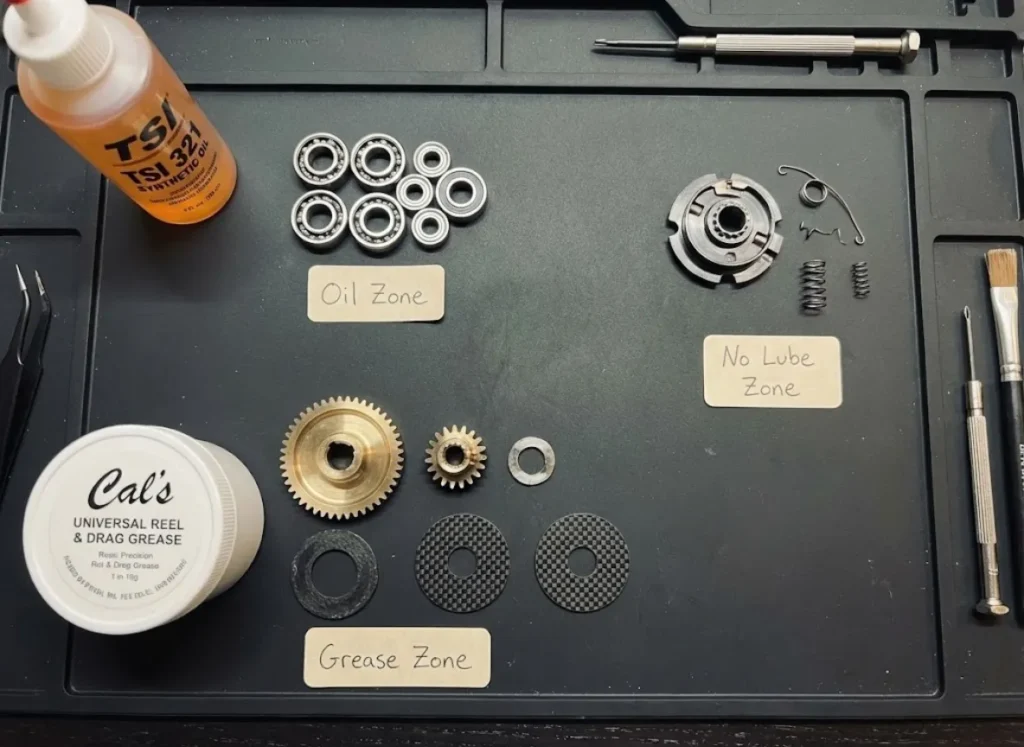
Now that we understand the physics, we need to map the geography of the reel. Think of your reel as having distinct zones, each with a specific climate requirement.
Which zones are the “High-Speed Flight Deck” and which are the “Power Plant”?
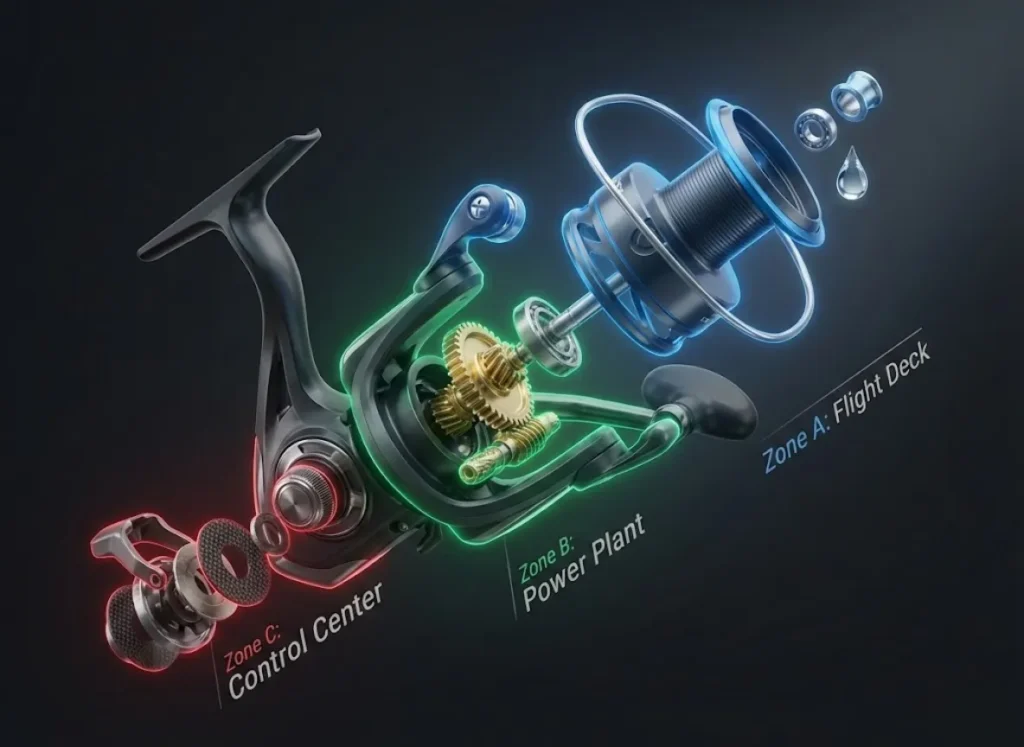
Zone A is the Flight Deck. This includes the spool shaft, bail arm pivot, and the line roller. These are high-speed zones. They require Low-Viscosity reel oil (ISO VG 10-22). The goal here is freedom of movement.
We follow the “One Drop” Rule: apply a single drop of oil using a needle applicator to the bearing. Any more than that will spin off due to centrifugal force, potentially contaminating your drag washers.
Zone B is the Power Plant. This consists of the main gear, pinion gear, and worm gear. These are the workhorses. They require the cushioning of a Calcium Sulfonate or marine grease (NLGI 2). When the handle turns under the weight of a fish, this grease prevents the brass or aluminum teeth from destroying each other.
Zone C is the Control Center. This is your drag stack. If you use “Dry” carbon fiber washers (Carbontex), apply only a whisper of Cal’s drag grease—just enough to leave a fingerprint, looking like a wet countertop. If you use felt washers (common in freshwater reels), they must be saturated with a specific lubricant like Shimano DG01.
You must also consider the materials you are working with. Brass gears are hardy and take multi-purpose marine grease well. However, when selecting durable saltwater spinning reels, you often encounter Shimano Hagane gear or Penn CNC gear sets. These often utilize aluminum alloys that require synthetic grease to provide oxidation resistance.
You must also prioritize strategies for preventing galvanic corrosion when lubricating dissimilar metals, like a spindle running through an aluminum housing.
Pro-Tip: If your reel has an external worm shaft (the part that moves the line guide back and forth), use oil for freshwater applications to prevent grit accumulation. For saltwater, use a light brush of grease to protect against corrosion, even if it collects a bit more dust.
The ASTM standard for cone penetration helps us define the thickness of these greases, ensuring we don’t accidentally put gear grease in a bearing.
What are the “Red Zones” and the “MagSeal” Black Box?

Knowing where not to lubricate is just as vital as knowing where to apply it. Some areas of a reel rely on friction or specialized chemistry to function, and mistakes here can ruin fishing days.
What are the “Red Zones” and the “MagSeal” Black Box?
The Anti-Reverse Clutch (The Roller Bearing) is the primary Red Zone. This cylinder contains rollers that wedge against a sleeve to stop the handle from spinning backward. If you pack this with spray grease, the rollers will slide instead of wedge.
This leads to the “Knuckle-Buster” failure: you set the hook, the handle spins backward, and hits your knuckles with violent force. This is especially common in cold weather. This part should be run dry or with a specialized, ultra-thin oil designed for one-way bearings.
Mag-Seals Restricted Areas are found in modern high-end reels (like Daiwa). These areas, often around the rotor nut and mag-sealed roller, use a magnetic fluid—oil infused with magnetic nanoparticles—held in place by a magnet. This creates a frictionless, waterproof seal.
Never spray degreaser near a mag-sealed component. The solvent destroys the magnetic suspension, causing the fluid to leak out. Once that seal is broken, water enters the body.
Do not add standard oil to these zones. The surface tension of standard oil disrupts the magnetic alignment. Ferrofluids rely on colloidal stability, and introducing foreign chemistry ruins the suspension. If you see dark fluid leaking from under the rotor, the seal has failed and requires professional service.
How Do I Execute the “Paintbrush Protocol” Correctly?
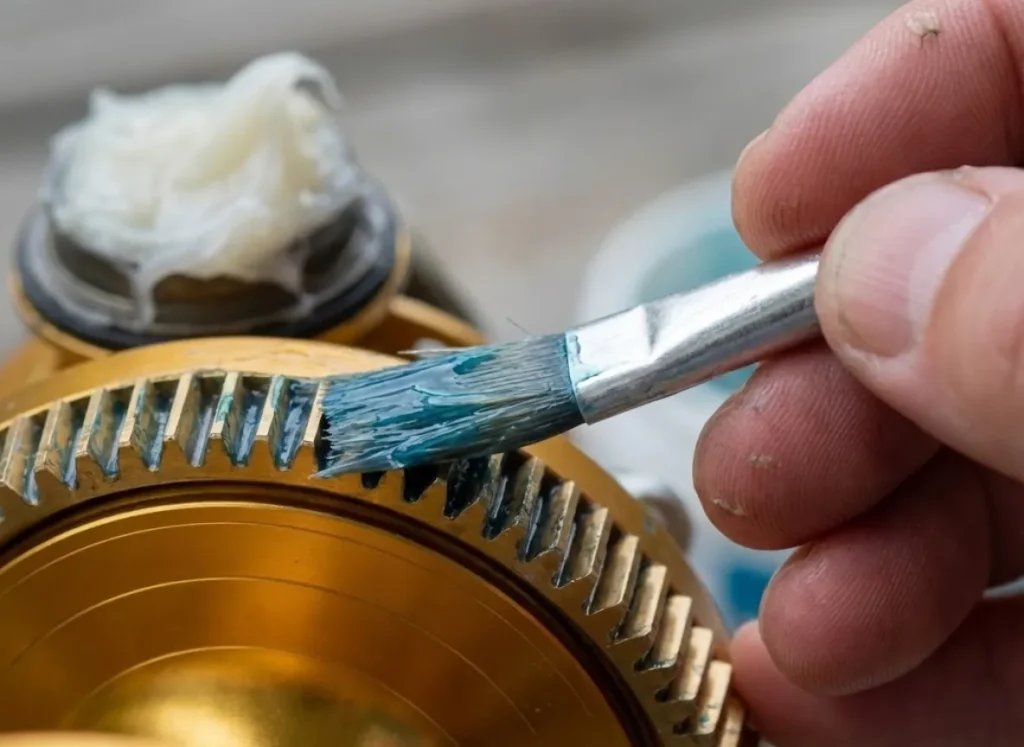
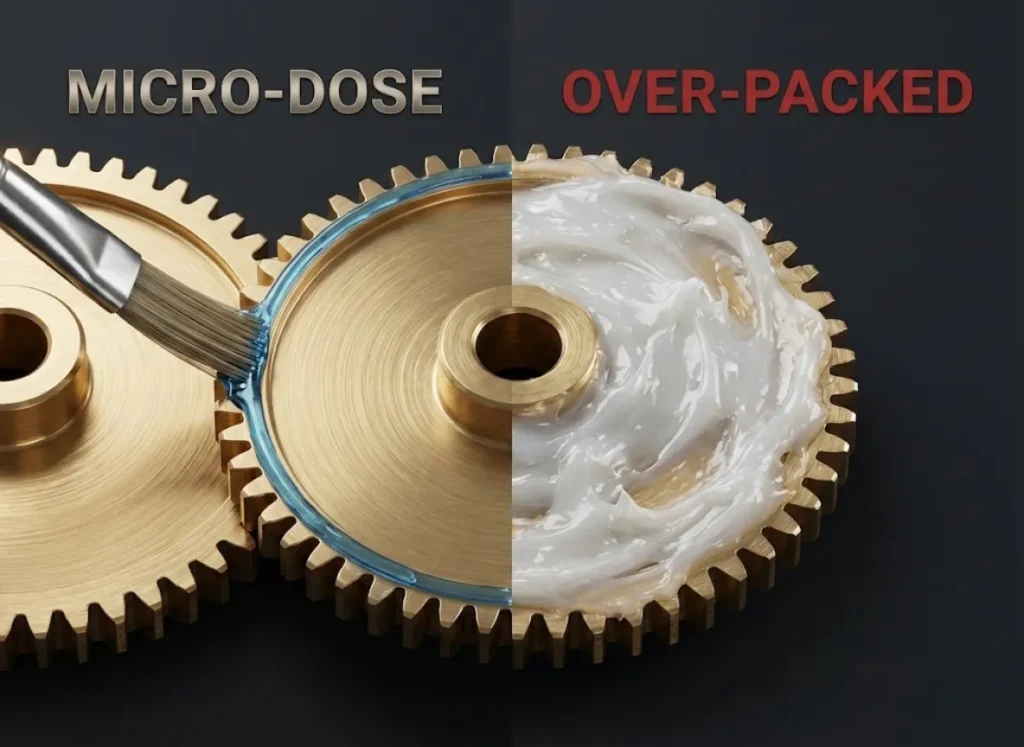
Over-lubrication is the most common mistake fishermen make. They open the side plate, see gears, and fill the empty space with blue grease. This is wrong.
Why is the “Micro-Dose” technique superior to packing the housing?
I use the “Paintbrush Protocol” for greasing fishing reels. Take a cheap acid brush (the small metal-handled ones) and cut the bristles down to half their length. This makes the brush stiffer and allows for precision.
Dip the brush in your grease and “paint” the teeth of the main gear. You want a translucent film that fills the valleys of the teeth, not a glob that sits on top. When you reassemble and turn the handle, the excess will push out anyway.
Beware of the “Forbidden Mix.” Never “top up” old grease with new grease unless you are certain they are identical. Mixing a Lithium-based grease with a Polyurea-based grease can result in a chemical reaction that hardens into a clay-like substance or turns into a runny soup.
According to the NLGI, incompatible thickeners ruin lubricity. Always degrease fully, perhaps using an old toothbrush to scrub the gears, before applying new product like Ardent Reel Butter or similar synthetics.
Use your ears for diagnostics. A “Screech” usually indicates a dry bearing. A “Growl” usually indicates dry gear mesh. After lubrication, perform the “Spin Test.” A properly lubed reel might feel slightly “tighter” or more viscous initially compared to a dry reel, but it will be buttery smooth under load. This attention to detail is part of a broader approach to sustainable fishing gear maintenance, ensuring your tools last a lifetime.
How Can We Maintain Gear Sustainably? (Stewardship)
As anglers, we are stewards of the water. The chemicals we use to maintain our fishing gear eventually interact with the environment we love.
What are the protocols for Bio-Lubes and Hazardous Waste?
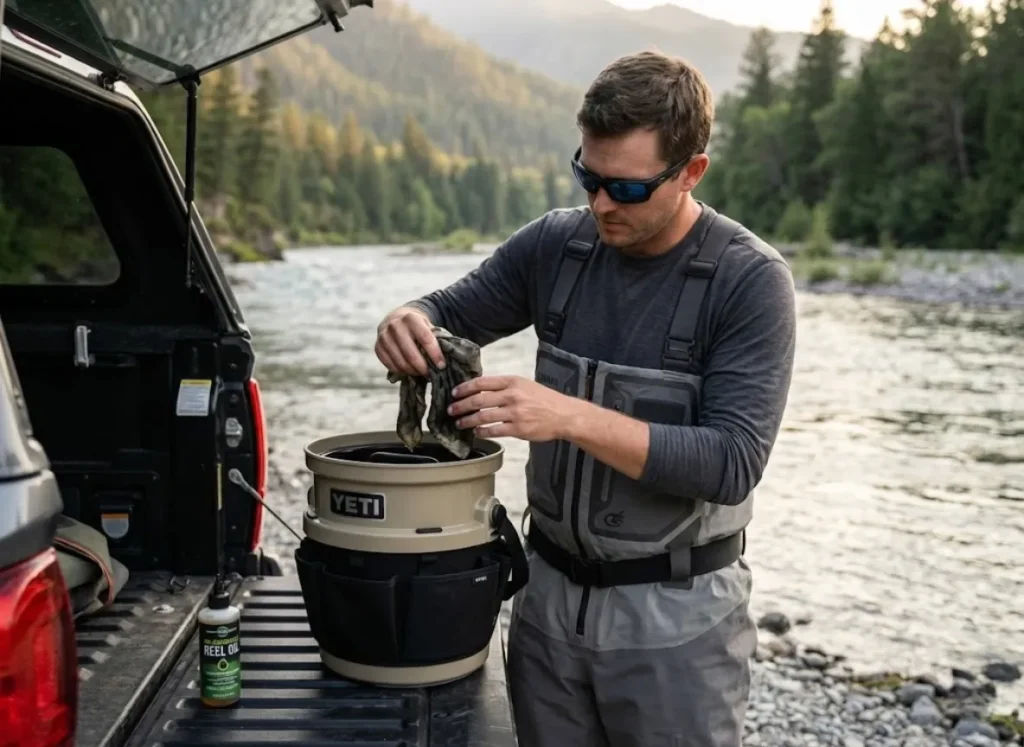
When cleaning reels, you generate waste: dirty solvent, old grease, and oil-soaked rags. The “Oily Rag” Danger is real. Piled rags soaked in certain oils and solvents can oxidize and spontaneously combust.
Use the “Bucket Method”: store used rags in a metal bucket with a lid, soaked in water, until they can be disposed of at a hazardous waste facility.
Never pour used degreaser or sludge down the sink. This introduces heavy metals and non-biodegradable greases into the water treatment system. Check your local regulations, similar to Massachusetts’ guide on disposing of oily rags, for proper disposal sites.
Finally, validate your lubricants. Look for modern bio-synthetics. These aren’t the gummy vegetable oils of the past. They are high-performance synthetics that resist oxidation but are metabolizable by aquatic bacteria. This aligns with the seasonal ritual of winterizing fishing gear storage, where deep cleaning provides the perfect opportunity to switch to eco-friendly solvents.
Final Thoughts
True competence isn’t just about reading the water; it’s about knowing the machinery in your hands.
Remember the pillars of this guide:
- Viscosity is King: High speed needs reel oil; high load needs reel grease.
- The Red Zone: Keep the anti-reverse clutch clean and dry to prevent failure.
- Chemistry Matters: Stick to one grease base and avoid the forbidden mix.
- Less is More: Use the Paintbrush Protocol to create films, not blobs.
Before your next trip, perform the ‘Sound Check’ diagnostic on your primary reel. Share your results or questions in the comments below to help build our community’s maintenance knowledge base.
FAQ – Frequently Asked Questions
Can I use WD-40 to lubricate my fishing reel?
No. WD-40 is primarily a solvent and degreaser, not a lubricant. It will strip away existing grease and leave internal parts unprotected against corrosion. Use it only for cleaning removed parts, then fully wash it away before applying proper reel oil or grease.
What is the difference between reel oil and reel grease?
Reel oil has low viscosity and is used for high-speed, low-load parts like spool bearings and handle knobs to maximize rotation. Reel grease has high viscosity and tackiness, used for high-load, low-speed parts like main gears and drag washers to provide cushioning and stay in place under pressure.
How often should I grease my fishing reel?
Adhere to a strict maintenance schedule. Perform a Light Service (one drop of oil on bearings and line roller) every 3-5 trips or after any saltwater submersion. Perform a Deep Service (full degrease and gear regreasing) once per year, or twice a year if you fish heavily in saltwater.
Why does my reel feel stiff in cold weather?
The grease inside has likely thickened due to the cold, or you may have accidentally greased the anti-reverse. For winter fishing, switch to a lighter Winter Mix (NLGI 0) or synthetic oil to maintain smooth operation.
Risk Disclaimer: Fishing, boating, and all related outdoor activities involve inherent risks that
can lead to injury. The information provided on Master Fishing Mag is for educational and informational purposes
only. While we strive for accuracy, the information, techniques, and advice on gear and safety are not a substitute
for your own best judgment, local knowledge, and adherence to official regulations. Fishing regulations, including
seasons, size limits, and species restrictions, change frequently and vary by location. Always consult the latest
official regulations from your local fish and wildlife agency before heading out. Proper handling of hooks, knives,
and other sharp equipment is essential for safety. Furthermore, be aware of local fish consumption advisories. By
using this website, you agree that you are solely responsible for your own safety and for complying with all
applicable laws. Any reliance you place on our content is strictly at your own risk. Master Fishing Mag and its
authors will not be held liable for any injury, damage, or loss sustained in connection with the use of the
information herein.
Affiliate Disclosure: We are a participant in the Amazon Services LLC Associates Program, an
affiliate advertising program designed to provide a means for us to earn advertising fees by advertising and linking
to Amazon.com. As an Amazon Associate, we earn from qualifying purchases. We also participate in other affiliate
programs and may receive a commission on products purchased through our links, at no extra cost to you. Additional
terms are found in the terms of service.