
In this article
The dock had been producing all fall — three fish in four trips, all between 24 and 29 inches, pushing bait against the pilings right before the tide changed. Then the water dropped six degrees in two days, the way it does in December when a cold front stalls over the Gulf. I fished the same dock, same tide, same lure. Nothing. Not a follow, not a tap. The snook hadn’t left the county — they had relocated for a specific biological reason, and knowing that reason is what tells you exactly where they went.
Snook are one of the most rewarding inshore targets precisely because their behavior is so tightly connected to temperature, structure, and tidal timing. The fish that feels random to a new angler is running a predictable program. This guide covers the biology that drives that program — the thermal tolerances, the seasonal rhythms, the spawning mechanics, the tidal logic — so you can start fishing toward the fish rather than hoping to run into them.
⚡ Quick Answer: In winter, snook abandon shallow flats for warm-water refuges — power plant discharges, spring-fed rivers, deep canals. They return when water tops 65°F, typically February on Florida’s west coast. Every seasonal shift follows the same thermal logic. The biology behind it — including why the biggest fish you catch are always female — explains snook behavior from January through December.
What Makes Snook Different From Other Inshore Fish
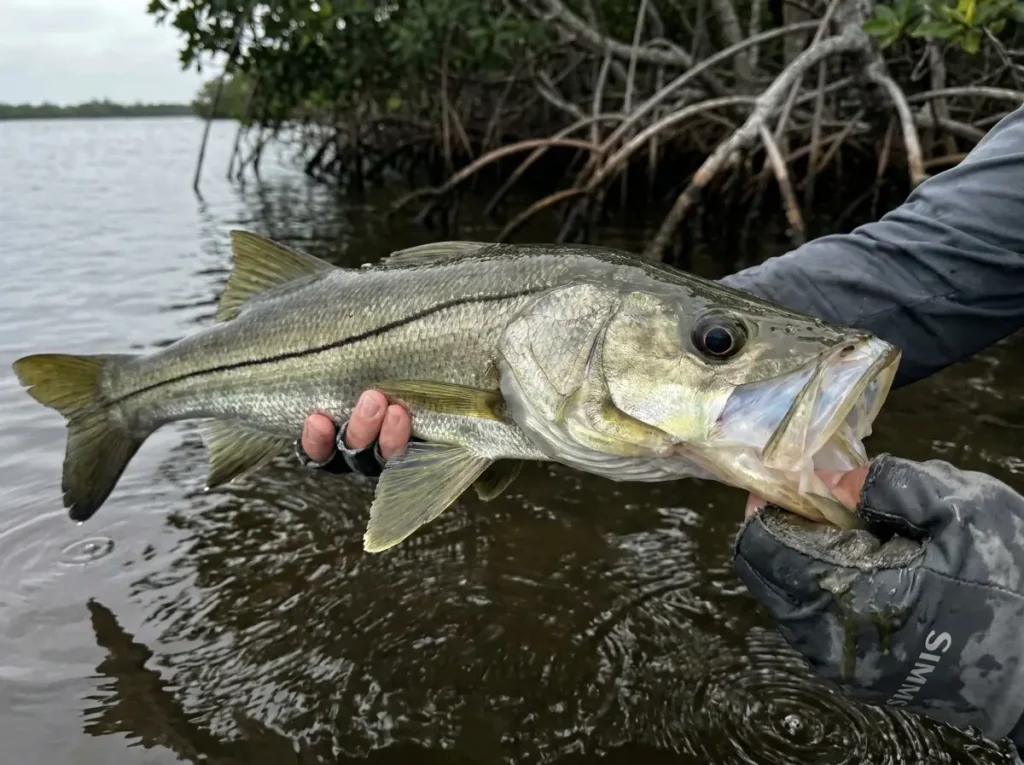
The anatomy that signals ambush
Common snook (Centropomus undecimalis) are immediately identifiable by the bold lateral black stripe running from the gill plate to the tail — a visual signature that shows up clearly in the water. But the anatomy that matters for fishing is below the stripe: a large, concave bucket mouth that opens wide enough to inhale prey whole, set into an underslung jaw that faces upward. That mouth is designed for one tactic — position below or behind prey, surge, and vacuum it in. Everything about snook habitat selection connects back to that feeding strategy.
Snook are a subtropical to tropical species. Their primary US range is Florida, with populations extending along both coasts — the Gulf side concentrated from the Ten Thousand Islands north through Tampa Bay and up to the Big Bend, the Atlantic side from Miami through the Indian River Lagoon and up to Jacksonville in warm years. They don’t migrate offshore and they don’t travel far latitudinally — their range boundary is set by temperature, not distance.
Protandrous hermaphrodites — the trophy fish are always female
Here is a fact that changes how you think about every snook you catch: all common snook are born male. At some point between ages one and seven — typically when they’re between 12 and 35 inches in length — a portion of the male population undergoes sex reversal and becomes female. The science on this is published in peer-reviewed literature and tracked by NOAA Fisheries: snook are protandrous hermaphrodites, meaning they start male and some transition female.
What this means practically: females grow faster than males post-transition and reach larger sizes. The 34-inch fish you’re after is a female. The 22-inch fish is almost certainly still male. The slot limit system in Florida isn’t arbitrary — it’s designed in part around protecting fish at the age and size when they’re most likely to be transitioning or to produce the most eggs. The largest, oldest female snook are the most reproductively valuable fish in the population.
Pro tip: A snook over 30 inches is almost certainly a female and a significant contributor to spawning output. That’s the biological reason catch-and-release is the dominant ethic in serious snook fishing — not sentiment, but reproductive math.
The Temperature Window That Controls All Snook Behavior
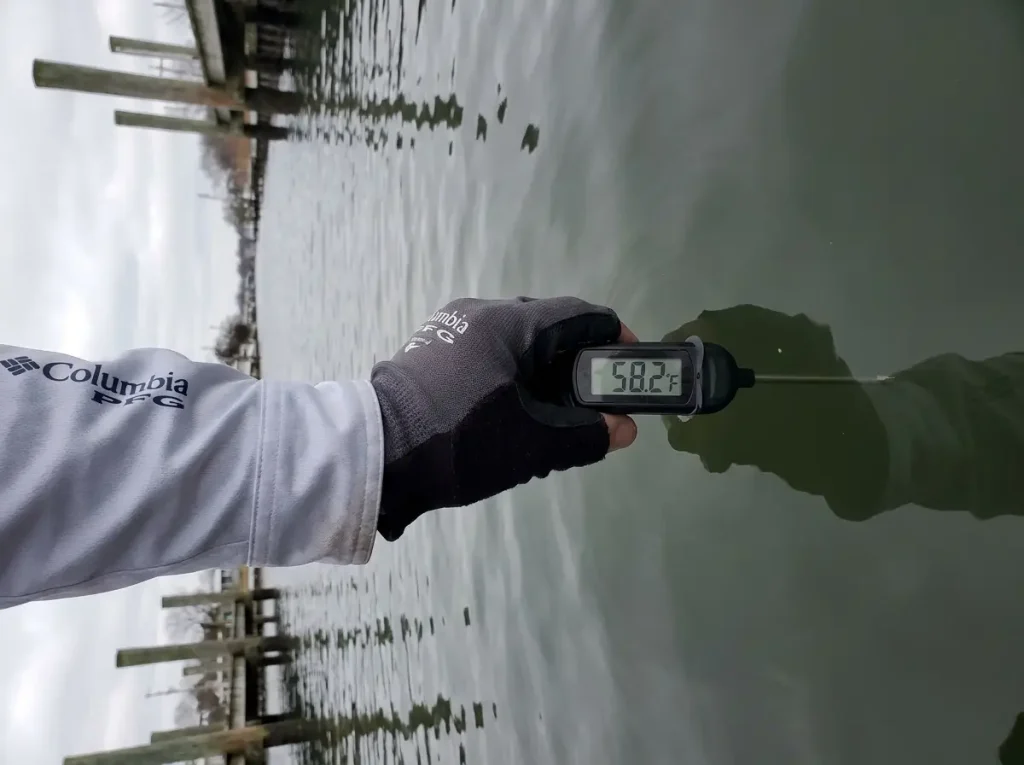
The 68 to 78°F metabolic sweet spot
Snook are cold-blooded. Their metabolism runs at the speed of the water around them. The practical comfort range is 68 to 78°F — within that window, snook feed actively, hold predictable structure positions, and respond to lures presented at normal retrieve speeds. Below 65°F, feeding activity drops off meaningfully. Below 60°F, snook become noticeably sluggish and lethargic.
The implications for daily fishing are significant. In fall, when water is in the ideal range and snook are in post-spawn feeding mode, an angler can cover water confidently. In midsummer, when shallow flat temperatures can push into the mid-80s, snook shift toward deeper, cooler water or into the shadow of structure. In winter, the thermal equation drives a full relocations — not just behavioral sluggishness but actual movement to warmer microhabitats.
Cold stun events and the 2010 lesson
Snook become cold-stunned when water temperatures drop below roughly 54°F (12.5°C). At those temperatures, neurological function degrades to the point where fish can no longer swim normally. A cold-stunned snook floats near the surface, unable to dive, and is highly vulnerable to bacterial infection through the slime coat. Many fish that survive the cold event die within weeks from secondary infection.
In January 2010, a prolonged cold front held water temperatures across South Florida below lethal thresholds for nearly two weeks. The result was one of the worst snook die-offs in recorded Florida history — millions of fish lost across both coasts. Research published following the event found that snook in deeper Everglades channels, where water temperatures remained a few degrees warmer than adjacent shallow flats, survived while surface-dwelling fish in open bays did not. In February 2026, a similar cold snap triggered comparable concerns, with FWC and conservation organizations monitoring shallow-water snook populations closely.
The lesson for anglers: in cold weather, depth is thermal refuge. Snook aren’t randomly distributed in canals and rivers during winter — they’re selecting the deepest, most thermally stable water they can find.
Snook Seasonal Movements From Spring Through Winter
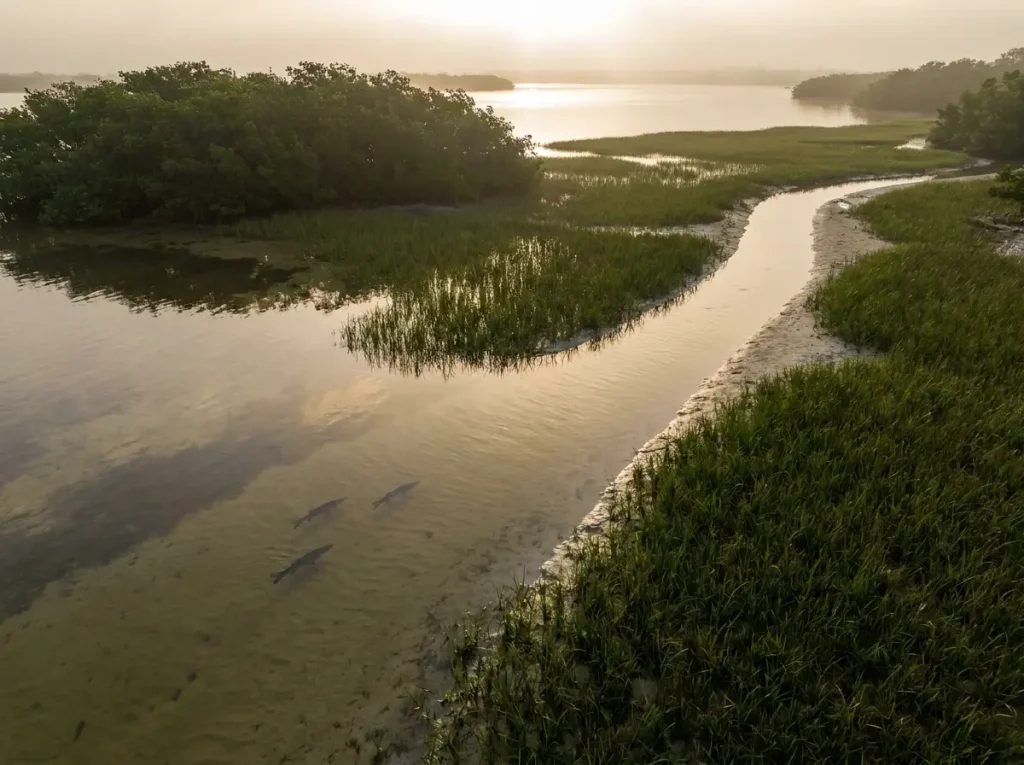
Spring — warming flats and the feeding window
As water temperatures climb back through the 65°F threshold in late winter and early spring — typically February through March on Florida’s west coast, slightly later on the Atlantic side — snook leave their winter refuges and begin moving onto shallow grass flats and mangrove edges. This movement isn’t gradual; it tracks the temperature line closely. A week of warmth in February can pull fish from canal systems back onto productive flats, then a cold front pushes them back to depth. Early spring fishing can be feast-or-famine for this reason.
Once temperatures stabilize in the 68-72°F range, snook feed aggressively. They’ve been slow and barely eating for two to four months. The metabolism is revving back up. This is one of the best windows to target snook on artificial lures — the fish are positioned on transitional structure (points, channel edges, mangrove shorelines) and willing to chase. Our guide on snook fishing inshore tactics and seasonal patterns covers the specific lure and presentation strategies for this window.
Summer — the pass migration
In late spring and continuing through summer, mature snook migrate from inshore flats toward the passes, inlets, and beaches where they spawn. Tidal inlets, jetties, and beach troughs adjacent to passes concentrate snook in numbers that can be stunning if you hit the timing right. For Florida’s east coast, the peak spawning season runs roughly April through October, with the heaviest activity in July and August. The west coast pattern is similar, slightly compressed by latitude.
The practical effect: snook that were spread across miles of inshore habitat in April begin stacking at a handful of productive pass and inlet locations by June. The flats and backwater creeks lose fish. The passes gain them. Anglers who don’t adjust for this migration spend summer confused about why their reliable spring spots have gone cold.
Fishing the saltwater flats ecosystems through summer requires targeting the deep edges of the flats rather than the shallow interior — fish that haven’t fully committed to the pass migration hold in deeper structure during warm midday periods.
Fall — the best season
September and October represent the year’s most productive window for most snook anglers. Spawning is winding down, water temperatures are dropping back into the comfort zone from summer highs, and snook that spent months on reduced-calorie spawning-mode behavior are actively feeding to rebuild energy reserves. The fish are aggressive, not selective.
Post-spawn snook push back into inshore habitat from the passes and begin working mangrove shorelines, grass flat edges, and dock structures in a systematic way. They’re hunting mullet, pilchards, and mojarra — and they’re doing it with the predatory focus that makes fall the season most beginning anglers have their best snook days. If you’ve been struggling all year, fish the falling water of October with a white DOA CAL jig or a live finger mullet near a mangrove shoreline at dusk. The conditions add up.
Winter — warm refuges and the survival logic
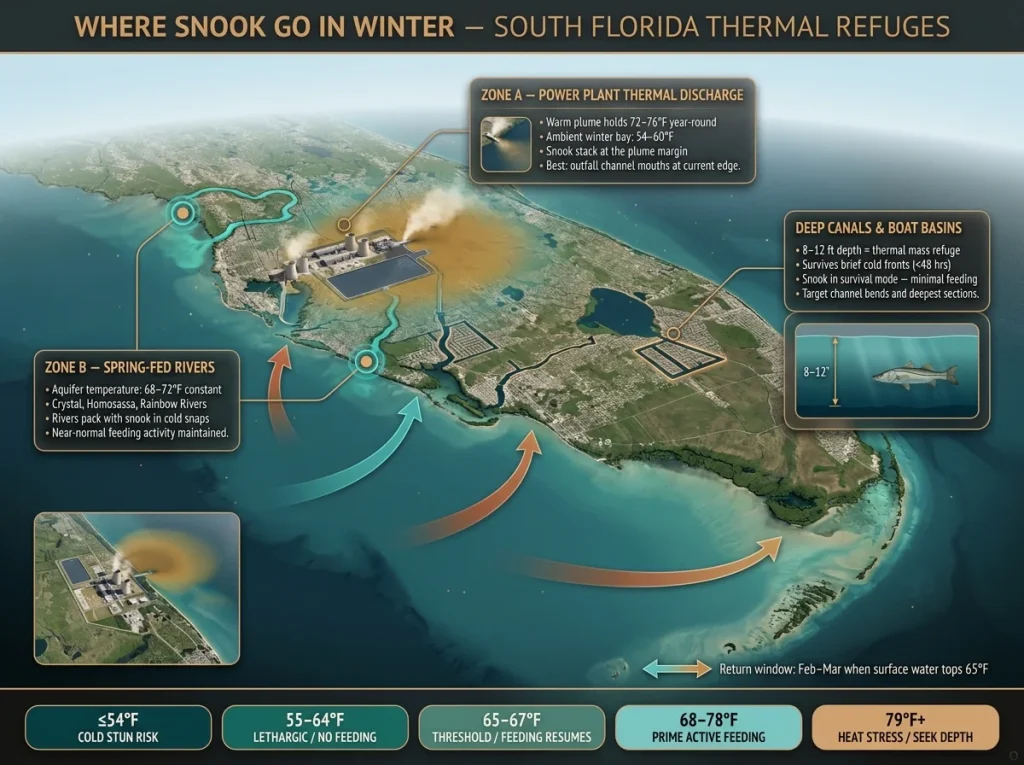
Below 65°F, snook move to the warmest available microhabitat. In approximate order of preference:
Thermal discharge zones around power plants — places like the FPL plant in Riviera Beach (east coast) or the Tampa Electric Manatee facility (west coast) — hold water several degrees warmer than ambient bays all winter. These sites concentrate not just snook but manatees and other cold-sensitive species.
Spring-fed rivers, primarily on Florida’s gulf coast — the Homosassa, Crystal, and Rainbow rivers all maintain water in the 68-72°F range year-round because the springs emerge at the Florida aquifer temperature. In cold winters, these rivers pack with snook pushed out of the surrounding bay.
Deep canals and boat basins — urban waterways and residential canals with depths of eight feet or more hold thermal mass that protects snook during brief cold snaps when shallower water becomes lethal. The snook aren’t feeding actively here, but they’re surviving.
Pro tip: In winter, check air temperature patterns more than the current forecast. If you’ve had two weeks of mild weather above 65°F surface temps, snook are back on the flats and feeding. A single cold front prediction of 35°F lows should push you toward canal and discharge-zone fishing rather than open-bay structure.
Spawning Aggregations and the Summer Biology Every Angler Should Know
Batch spawning, moon cycles, and larval dispersal
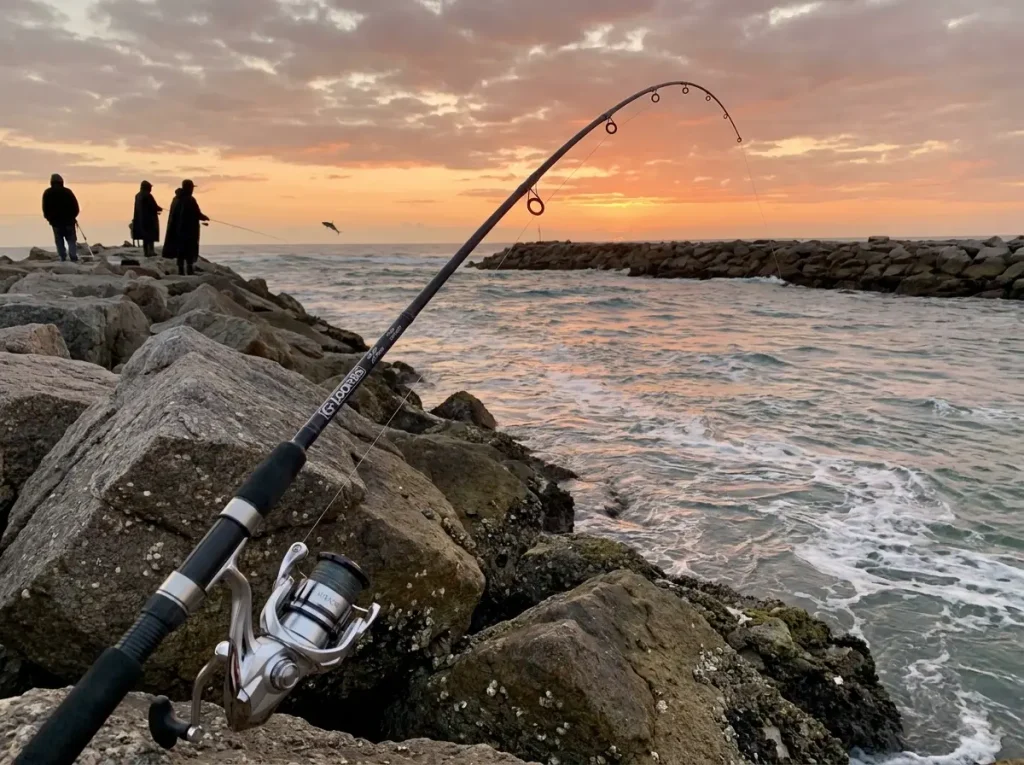
Common snook are batch spawners — a single female doesn’t release all her eggs at once but spawns in multiple batches across the season, as frequently as every two weeks. Spawning activity peaks around full and new moon phases, when the strongest tidal currents sweep larvae offshore where they develop in the higher-salinity coastal ocean before eventually returning to estuarine nursery habitat as juveniles.
The timing within each day matters too. Most snook spawning activity occurs in the late afternoon and evening, coordinated with the tidal cycles that best position larvae for offshore transport. This is one reason evening fishing at passes during spawn season can be dramatically productive — large fish that have been holding deep or in shadow all day move up and become active near the surface at sunset.
Where aggregations form and how to recognize them
The physical requirements for spawning concentrations are specific: high-salinity water (20 ppt or higher), access to outgoing tidal current to disperse larvae, and enough depth to hold numbers of large fish. This combination typically exists at inlets and tidal passes — where bay water meets the open coast through a constricted channel.
On Florida’s Atlantic coast, the Sebastian Inlet, Lake Worth Inlet, and Jupiter Inlet are historically productive spawning aggregation sites. On the Gulf, passes like Boca Grande, Venice Inlet, and John’s Pass see significant summer concentrations. The fish stack on the down-current side of structure — the tips of jetties, the deep scour behind channel markers — facing into the current that will carry their larvae offshore.
An aggregation that’s actively spawning can be identified by slow rolling surface behavior, fish porpoising and flashing, and an unusual density of large fish in a concentrated area. These aggregations are vulnerable to overharvest, which is exactly why most Florida spawning season timing corresponds to closure periods. See the inshore fishing Gulf of Mexico overview for regional context on how these aggregations distribute across the coast.
Pro tip: Don’t fish spawning aggregations with multiple lure casts — these fish are in a behavioral mode that makes them catchable but also fragile from the stress of handling. A single landed fish from a spawning concentration, carefully released, is worth more biologically than five caught and released under heat stress. Pick one, photograph it, put it back.
Structure, Tides, and How Snook Ambush Prey
The ambush feeding model
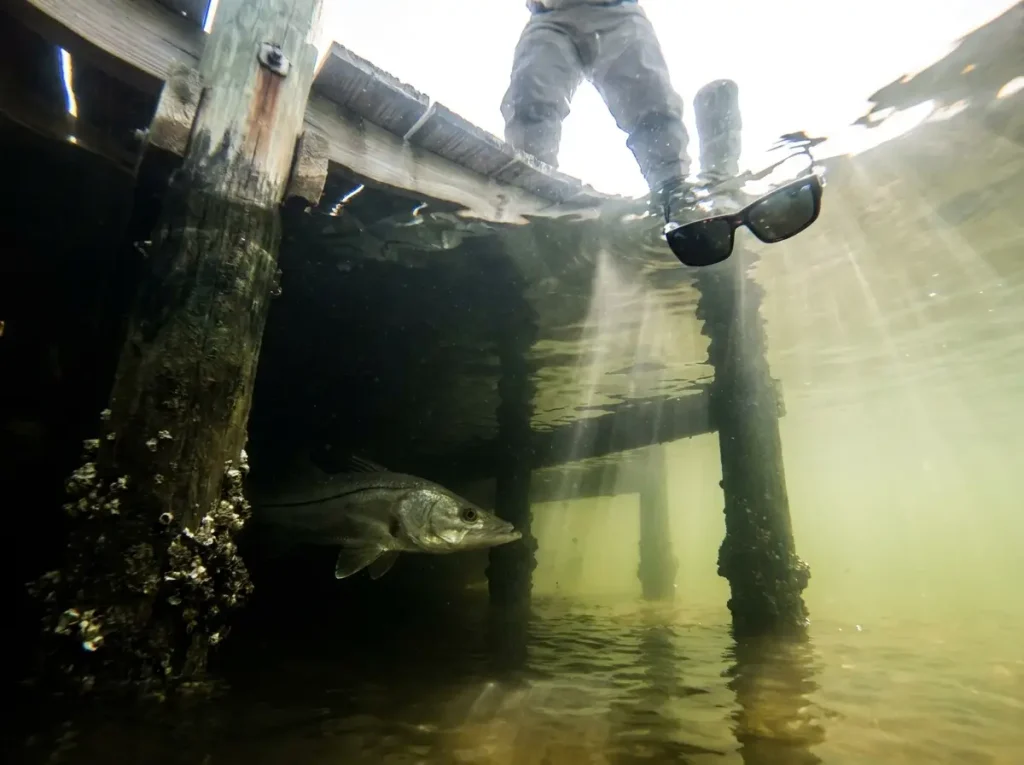
Snook don’t chase baitfish across open water. They hold a position and intercept prey that comes to them — usually at a structural edge where current concentrates baitfish, or in a shadow that conceals the predator until the moment of the strike. The bucket mouth snap-and-vacuum feeding style is adapted for this ambush approach: short surge, wide open mouth, powerful suction, done.
The practical consequence: snook are almost always found at the interface of fast and slow water, light and shadow, or structure and open water. Bridge shadow lines, dock edges, the shadow of a mangrove root ball, a rock jetty corner where current accelerates around the point — these are not incidental locations. They’re ambush positions selected for maximum interception efficiency.
Unlike redfish, which root along the bottom in grass and mud, or flounder that bury in soft bottom, snook orient vertically and horizontally to structure. You’ll often see them holding just below the surface in dock shadows, using the dock itself as a visual blind. Cast past the shadow and work the lure into the shade. The hit often comes the instant the lure crosses the shadow line.
Reading tidal cycles for consistent location
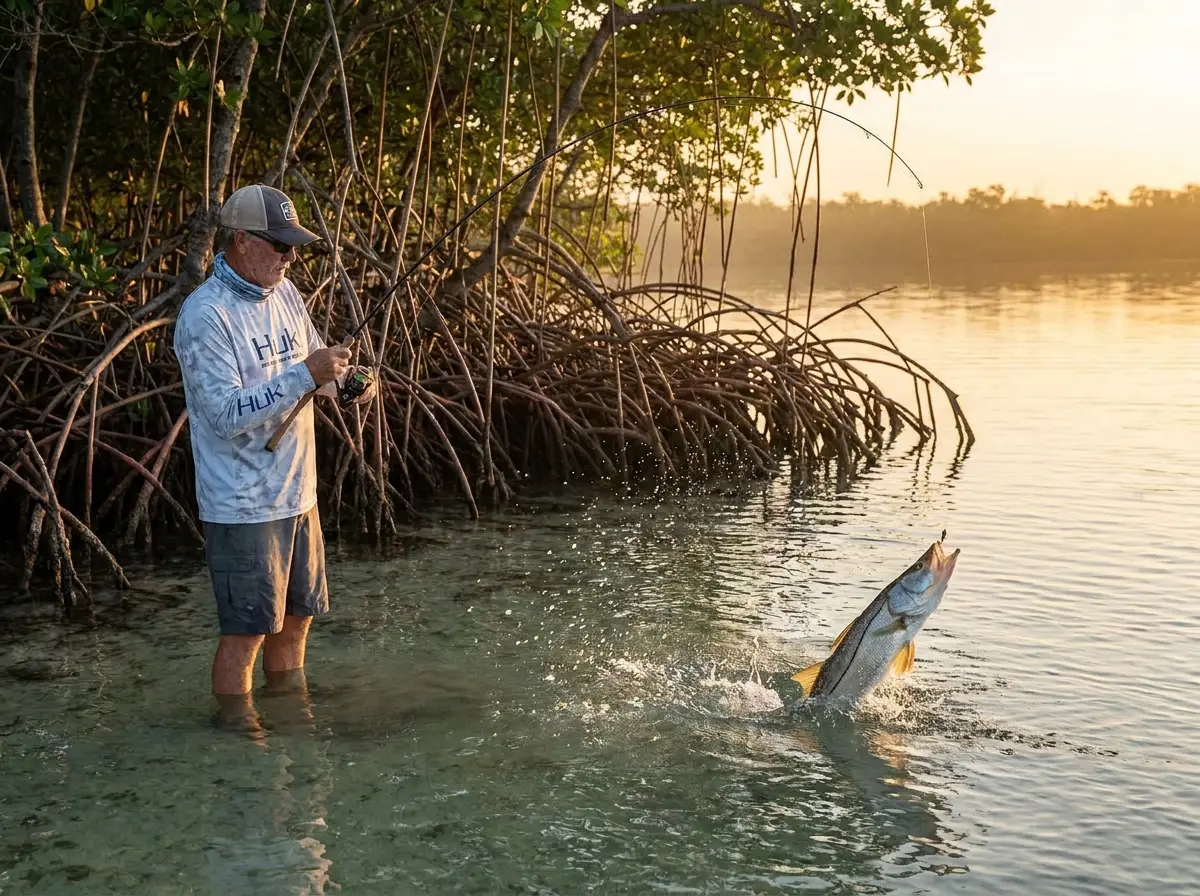
Tidal stage shifts snook positions predictably. On a rising tide, water floods the mangrove root systems and back-country flats that were dry or too shallow at low water. Snook push into this newly available habitat to intercept the crabs, shrimp, and small fish that move with the tide into the roots.
On a falling tide, water drains back out of those shallow areas through defined channels and creek mouths. Baitfish that were scattered across the flat get funneled through these exit points, and snook position at the mouth of the drain — waiting where the current concentrates the prey. The last 90 minutes of outgoing tide at a tidal creek mouth is consistently one of the highest-percentage snook windows in Florida inshore fishing.
The timing is exact enough to fish by: find a creek mouth that drains a productive flat, arrive 30 minutes before the strongest outgoing flow, and work the channel edge methodically. The redfish fishing tactics on grass flats are often parallel to snook tactics here — both species exploit the same tidal drain mechanism.
Florida Snook Regulations — The Biology Behind the Rules
Slot limits and why the size boundaries matter
Florida’s snook regulations are managed by region, with different slot limits and seasons for the Atlantic coast and Gulf coast. As of 2026, the slot limits are:
| Regional Slot Limits (Total Length) | |
|---|---|
| Region | Slot Limit (total length) |
| Atlantic coast (NE, Indian River Lagoon, SE) | 28–32 inches |
| Gulf coast (Panhandle, Big Bend) | 28–33 inches |
| Gulf coast (Tampa Bay, Sarasota, Charlotte Harbor, SW) | 28–33 inches |
Bag limit is one fish per person per day statewide.
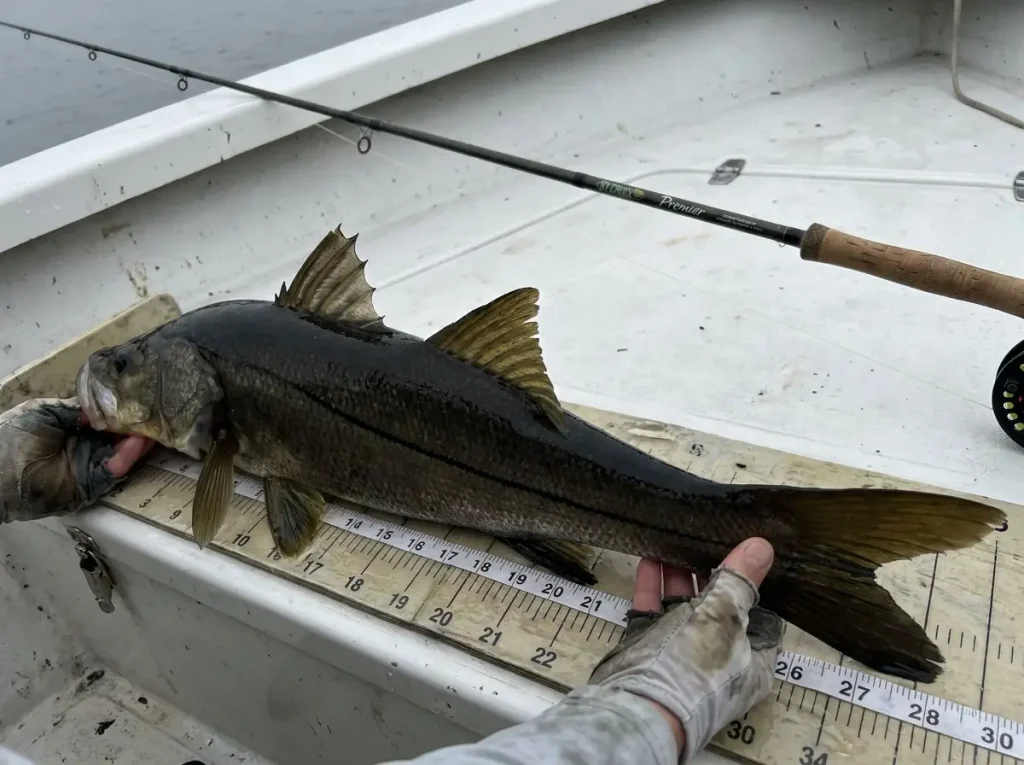
The slot — not a minimum, but a slot — is biologically intentional. The lower boundary (28 inches) protects fish that are still in or approaching the male-to-female sex transition window. Many snook are transitioning in the 12-35 inch range, and fish at the lower end of the slot are likely still recent or active transitioners. The upper boundary (32-33 inches) protects the largest, most productive females — fish capable of producing the most eggs per batch. Removing the biggest females from the population has a disproportionately negative effect on recruitment.
Seasonal closures aligned with spawning biology
Florida manages snook harvest around two annual closure windows that correspond directly to spawning season and post-spawn recovery:
Gulf coast example (Tampa Bay, Sarasota):
- Closed: May 1 – August 31 (peak spawning season)
- Open: September 1 – November 30 (post-spawn feeding)
- Closed: December 1 – last day of February (winter thermal stress period)
- Open: March 1 – April 30 (spring pre-spawn)
Atlantic coast example:
- Closed: June 1 – August 31 (peak spawning)
- Closed: December 15 – January 31 (coldest thermal period)
- Open: February 1 – May 31 and September 1 – December 14
The structure of these closures is the biology made regulatory: protect fish when they’re spawning, protect them when cold stress makes them vulnerable and harder to release successfully, and allow harvest during the feeding windows when fish are physically robust and release mortality is lowest. The full current regulations are maintained by the Florida Fish and Wildlife Conservation Commission.
Pro tip: The slot limit applies to the fish you bring to the boat — not the ones you lose at the net. If you catch a 33-inch snook on the Gulf coast and it’s outside the slot, you need to release it. Carry a measuring board. Estimating length in the water is unreliable enough to cost you a citation.
Conclusion
Snook aren’t random. They’re cold-sensitive animals running a thermal and tidal program that’s predictable once you understand the biology. Know the 68-78°F window and you understand why April, October, and November consistently produce better than August and January. Know the protandrous sex reversal and you understand why the biggest fish are all female and why the slot limit is shaped the way it is. Know the ambush model and you stop fishing open water and start fishing edges.
Three things to apply on your next trip: check the water temperature before you go and compare it to the 65°F threshold — below that, aim for deeper structure and thermal refuges; find the tidal creek mouths on your area map and time the last 90 minutes of outgoing tide on one of them; and in winter, think about what holds warm water in your fishing area. Every other snook problem gets easier once you solve the temperature equation.
FAQ
Where do snook go in winter?
In winter, snook seek the warmest available water — power plant thermal discharge areas, spring-fed rivers (particularly Florida’s west coast spring systems that stay near 68-72°F year-round), and deep canals or boat basins with enough depth to maintain thermal stability. They stop feeding actively and become difficult to catch until temperatures rise back above 65°F.
What temperature do snook stop feeding?
Snook feeding activity drops off noticeably below 65°F and becomes minimal below 60°F. Below approximately 54°F (12.5°C), snook begin to cold-stun — they lose normal swimming ability and become vulnerable to infection and predation. The 2010 cold event in Florida showed what happens when temperatures drop below this threshold for extended periods.
Are snook male or female?
All snook are born male. Common snook are protandrous hermaphrodites — a portion of the male population undergoes sex reversal and becomes female, typically between ages 1 and 7 or between 12 and 35 inches in length. Females grow larger than males. Any snook over 30 inches is almost certainly female.
When is the best time to fish for snook?
Fall — September through November — is the most productive window for most Florida snook anglers. Post-spawn fish are feeding aggressively, water temperatures are in the ideal range, and the fish are distributed back across inshore habitat from the summer pass migration. Spring (March–April) is the second-best window. Summer mornings and evenings at inlets and passes can produce numbers but require targeting spawning aggregations carefully.
What is the snook slot limit in Florida?
As of 2025: 28–32 inches on the Atlantic coast and 28–33 inches on the Gulf coast, with a one-fish-per-day bag limit. The slot protects both young transitional fish (lower boundary) and the most reproductively productive large females (upper boundary). Regulations vary by specific management region; check the Florida Fish and Wildlife Conservation Commission at myfwc.com for the most current rules.
Risk Disclaimer: Fishing, boating, and all related outdoor activities involve inherent risks that
can lead to injury. The information provided on Master Fishing Mag is for educational and informational purposes
only. While we strive for accuracy, the information, techniques, and advice on gear and safety are not a substitute
for your own best judgment, local knowledge, and adherence to official regulations. Fishing regulations, including
seasons, size limits, and species restrictions, change frequently and vary by location. Always consult the latest
official regulations from your local fish and wildlife agency before heading out. Proper handling of hooks, knives,
and other sharp equipment is essential for safety. Furthermore, be aware of local fish consumption advisories. By
using this website, you agree that you are solely responsible for your own safety and for complying with all
applicable laws. Any reliance you place on our content is strictly at your own risk. Master Fishing Mag and its
authors will not be held liable for any injury, damage, or loss sustained in connection with the use of the
information herein.
Affiliate Disclosure: We are a participant in the Amazon Services LLC Associates Program, an
affiliate advertising program designed to provide a means for us to earn advertising fees by advertising and linking
to Amazon.com. As an Amazon Associate, we earn from qualifying purchases. We also participate in other affiliate
programs and may receive a commission on products purchased through our links, at no extra cost to you. Additional
terms are found in the terms of service.