In this article
On the night of October 3, 2024, a sonar unit installed in the Klamath River registered the first Chinook salmon moving upstream above the site of the former Iron Gate Dam. Not a record breaking run — just one fish, working its way into water its ancestors hadn’t touched in over a century. The dam had come down. The river was free. And the fish, apparently, knew.
The Klamath project was the largest dam removal in American history, and it’s the most visible chapter in a decades-long shift in how the United States manages rivers and the fish that depend on them. If you fish for salmon, steelhead, trout, or shad — or if you just care about where fish populations are headed — this story is worth understanding. Not just the wins, but the tradeoffs.
⚡ Quick Answer: Dam removal restores fish migration, spawning habitat, and population numbers for migratory species like salmon and steelhead. The recovery can be surprisingly fast — salmon returned to the Elwha River within months of dam removal. However, removing dams also eliminates cold-water tailwater fisheries that can be excellent trout habitat. The net impact for anglers depends entirely on the specific river, species, and type of dam involved.
How Dams Harm Fish and River Ecosystems
The migration wall
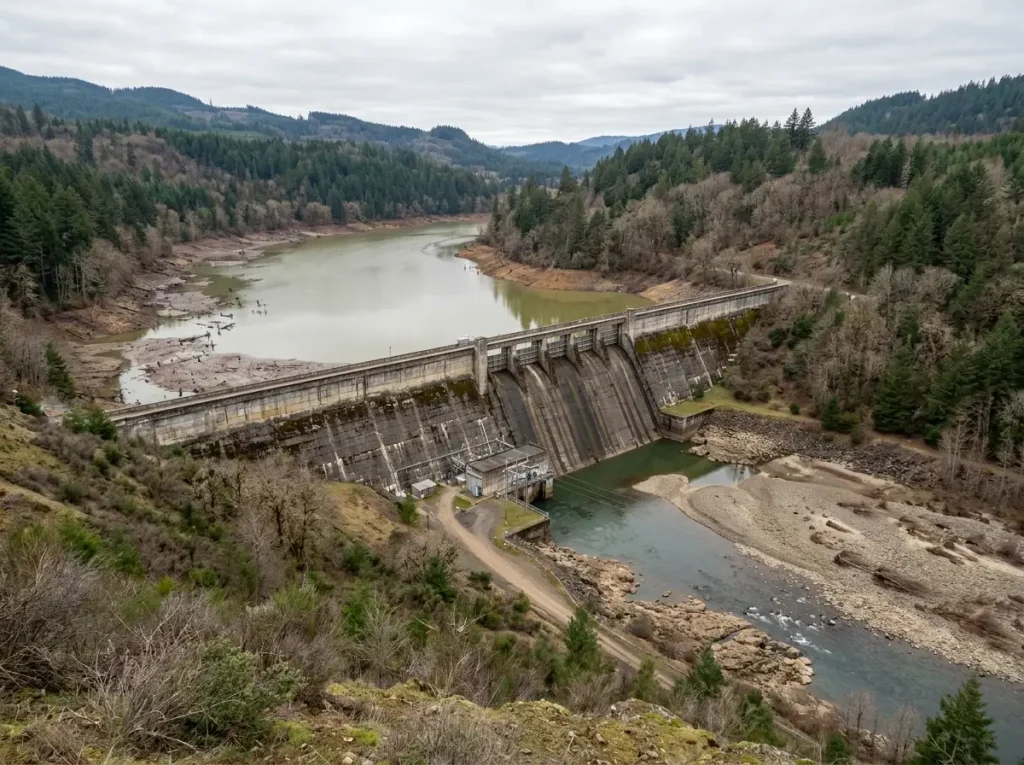
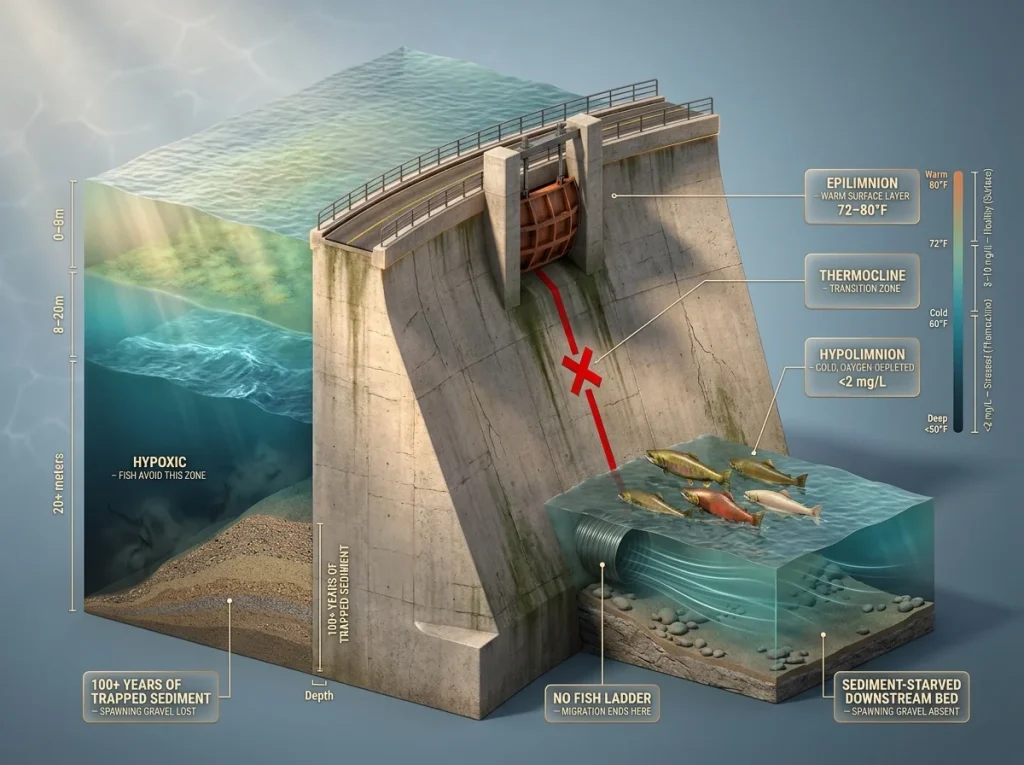
An anadromous fish — salmon, steelhead, American shad, Pacific lamprey — is born in freshwater, matures in the ocean, and must return to its birth river to spawn. This life cycle requires unrestricted upstream passage. A dam without a fish ladder is a concrete wall that ends the life cycle entirely. The fish cannot pass, cannot spawn, and the river’s population of that species crashes — sometimes to extinction — within a generation.
Even dams with fish ladders often fail the fish. Adult salmon can struggle to find and ascend ladders, especially in warm weather when the bypass channels provide inadequate flow. Juvenile fish making their first migration to the sea face the gauntlet in reverse — spinning turbines, predator-stacked forebays, and the disorienting thermal and chemical environment of a reservoir that bears no resemblance to the river they evolved to navigate.
What happens above and below
The harm isn’t only to migrating fish. Dams trap sediment — the gravel and cobble that rivers naturally carry downstream to maintain spawning beds. Behind a dam, sediment accumulates in the reservoir. Below it, the riverbed is sediment-starved, subject to erosion, and often stripped of the clean spawning gravel that juvenile fish need for nursery habitat.
Reservoir water also changes temperature. Where a natural river runs cool in summer from shaded channels and cold groundwater inputs, a reservoir heats in the sun. Water released from the reservoir — especially from surface spillways — can be warm enough to stress or harm salmon and steelhead that evolved for cold rivers. Water released from deep outlets can be cold but oxygen-poor — hypoxic conditions that cause downstream fish to avoid the area.
Two million barriers
There are more than 2 million dams and other barriers blocking fish passage in the United States. By 2020, migratory freshwater fish populations had declined by an average of 81% from their 1970 levels, according to research published in Science Advances. On rivers with specific dam histories, the numbers are more stark: after the first dam was built on some Pacific Northwest rivers, fall Chinook salmon numbers fell by more than 90%, spring Chinook by 98%.
Not all of those 2 million barriers are large hydroelectric facilities. Most are small mill dams, road culverts, and irrigation diversion structures — many abandoned and serving no current purpose. They block fish passage just as effectively as a 200-foot hydroelectric dam.
The Numbers — How Serious the Decline Really Is
What research actually shows
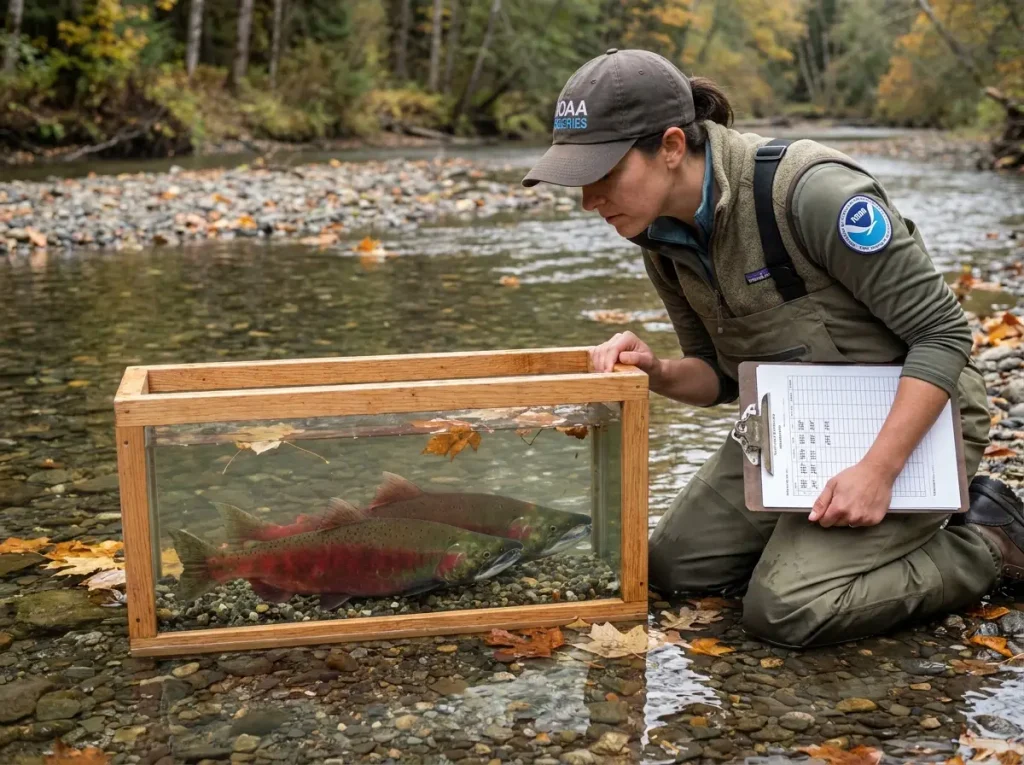
A 2024 study in Science Advances analyzed population data for migratory fish across multiple continents and found that dams trigger exponential — not linear — population declines. The mathematics are important: exponential decline means that at a certain threshold of barriers, populations collapse rapidly rather than declining gradually. Some Pacific salmon populations have crossed that threshold.
NOAA Fisheries tracks barriers to fish migration as a core part of endangered species recovery planning. Several Pacific salmon stocks are listed as threatened or endangered under the Endangered Species Act — their population status is directly tied to dam passage conditions.
The economic stakes are real too. Pacific Coast commercial and sport salmon fisheries generate billions annually in economic activity. The collapse of these fisheries affects fishing guides, boat manufacturers, coastal communities, and recreational anglers equally. When tribal fisheries collapse along with commercial ones, the cultural loss is harder to quantify but no less real.
Who bears the cost
Dam infrastructure often benefits agricultural water users, electrical utilities, and flood control agencies — constituencies with significant political and financial resources. The costs — population collapse, lost spawning habitat, fisheries closure — fall on anglers, tribes whose fishing rights are treaty-guaranteed, and aquatic ecosystems that don’t have lobbyists.
This dynamic explains why dam removal is politically complicated even when the fisheries math is clear. It also explains why many of the most significant dam removals in American history have been driven by tribal sovereignty claims and treaty fishing rights, which carry federal legal weight that recreational fishing interests don’t.
Klamath River — The Biggest Dam Removal in US History
Four dams, one century, four hundred miles
The Klamath River runs 257 miles from southern Oregon to the Pacific coast of northern California. Four hydroelectric dams — Iron Gate, Copco No. 1, Copco No. 2, and J.C. Boyle — had blocked the river’s main stem since the early 20th century, cutting off 400 miles of habitat to Chinook salmon, coho salmon, steelhead, and Pacific lamprey that once ran in historic abundance.
The dams were operated by PacifiCorp as power generation facilities. By the 2000s, the economics of relicensing the aging facilities, combined with legal pressure from tribal nations and environmental groups, and regulatory requirements to add fish passage, made the cost of keeping the dams higher than removing them. The $500 million removal project — funded through a complex mix of state, federal, and utility funds — became the largest river restoration project in American history.
What happened in 2024
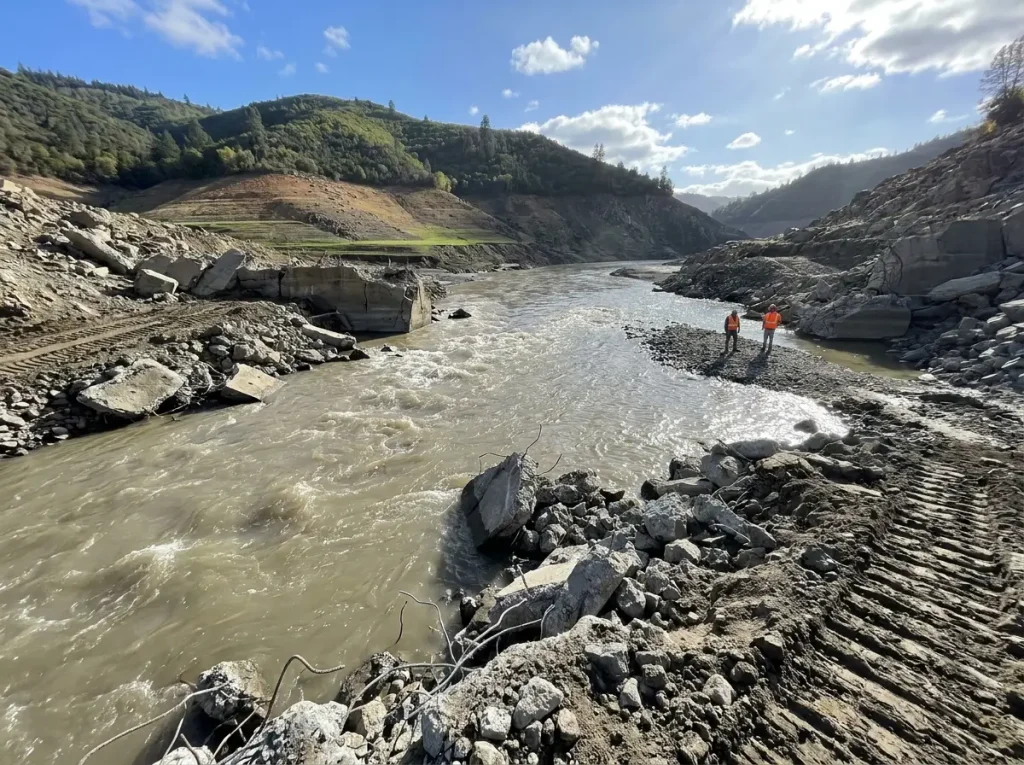
Demolition of the four dams began in earnest in 2023. The final cofferdams were breached on August 28, 2024. On October 3, 2024, sonar equipment at the former Iron Gate Dam site recorded the first Chinook salmon upstream passage. Within weeks, salmon were pushing into tributaries that had been blocked since the dams were built.
For the Karuk Tribe, the Yurok Tribe, and other Indigenous communities whose fishing rights and cultural practices were tied to the Klamath salmon run, the dam removal was the result of decades of advocacy, litigation, and negotiation. The restoration of salmon passage isn’t just ecological — it’s the restoration of a way of life. Our coverage of the Pacific Northwest salmon run has more context on the runs anglers can now access.
What recovery looks like now
River restoration on the 2,200 acres of former reservoir land is underway. Restoration crews have collected 19 billion seeds from 98 native plant species to revegetate the exposed reservoir bottoms. The turbid water released during demolition is gradually clearing as natural sediment transport normalizes. Salmon and steelhead populations need years to recover to historical levels — the fish that spawn this year produce offspring that return in three to five years — but the passage is open and the habitat work is underway.
Elwha River — What Recovery Looks Like Up Close
A decade of watching a river heal
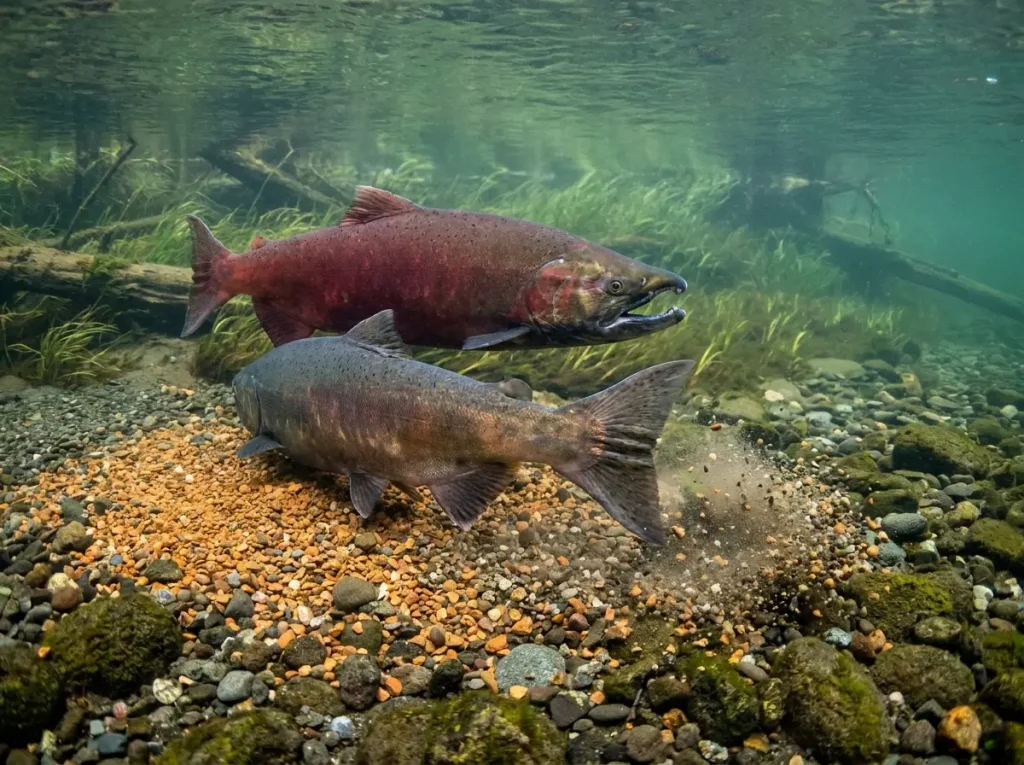
The Elwha River on Washington’s Olympic Peninsula provides the best long-term case study for dam removal recovery. Two dams — Elwha Dam and Glines Canyon Dam — were removed in 2011-2014 in what was then the largest dam removal in US history. The project released 10.5 million metric tons of accumulated sediment and reopened 70 miles of habitat.
The speed of recovery surprised scientists. Within months of the Elwha Dam removal, eight anadromous species were pushing upstream into habitat that had been blocked for nearly a century. Chinook, coho, pink, and sockeye salmon, along with winter steelhead, began using the newly accessible reaches almost immediately. They found the river changed — altered by nearly a century of sediment accumulation and vegetation growth — but accessible.
The honest status report
Recovery is real but not complete. As of the mid-2020s, Chinook remain in the earliest “Preservation” recovery phase, while winter steelhead have advanced to “Recolonization.” Neither species is anywhere near pre-dam population levels yet. A decade is a long time from a human perspective and a short time from the perspective of salmon population dynamics.
What the Elwha demonstrates is that biological response to dam removal is genuine and measurable. The fish don’t need to be invited — when passage opens, they use it. What takes longer is the full rebuilding of the food web, the sediment recharge of spawning habitat, and the accumulation of enough returning adults to sustain a population through variable ocean survival years.
In fall 2023, the Lower Elwha Klallam Tribe opened the first ceremonial and subsistence coho salmon fishery on the Elwha since the dams were built — a milestone that took 100 years and a decade of monitoring to reach. It’s a long game, and the game is being won.
The Tailwater Tradeoff — When Removing a Dam Hurts Local Fishing
Cold water from an unlikely source
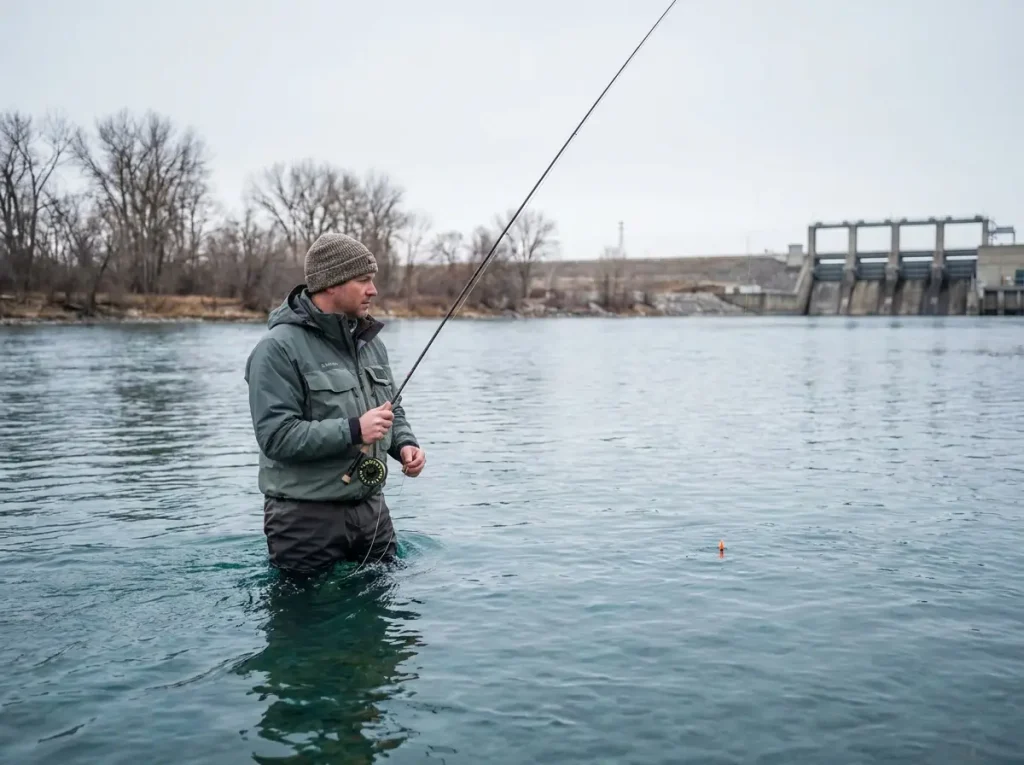
Here’s the part that rarely makes the conservation news cycle: some dams create exceptional trout fisheries in the cold water they release. When cold-water discharge from the bottom of a deep reservoir enters a river that would otherwise be too warm for trout, it creates what anglers call a tailwater — a stretch of river with consistent cold, clear, productive flows that can support world-class trout populations year-round.
The Green River in Utah below Flaming Gorge Dam, the San Juan in New Mexico below Navajo Dam, the Bighorn in Montana below Yellowtail Dam — these are among the most productive and famous trout fisheries in North America, and they exist entirely because of the dams above them. Remove those dams and the tailwater fisheries would likely disappear or dramatically diminish.
Not all dams are the same candidate for removal
This is the nuance that gets lost in broad dam removal conversations: a large hydroelectric dam on a major salmon river is a very different case from a small mill dam on a trout tributary, which is a different case from a large reservoir that created a regionally significant tailwater.
The criteria that make a dam a strong removal candidate include: no or inadequate fish passage, no significant economic value remaining (power generation ended, hydroelectric license not worth renewing), significant historical migratory fish populations blocked, and reasonable cost of removal relative to ecological benefit.
Dams that provide tailwater trout fisheries and significant cold-water flow to otherwise warm rivers are more complex cases. Trout Unlimited, one of the most active organizations in dam removal advocacy, evaluates dam cases individually and will actively oppose removal of dams that provide net benefit to coldwater fisheries. Not every dam is a target.
Pro tip: Before you form an opinion on a specific dam removal proposal, look at what the pre-dam historical fish species were and what the current fishery is. A dam that blocked Chinook salmon runs and replaced them with a tailwater rainbow fishery requires weighing different values. The spawning ethics and closures discussion is relevant here too — how we manage fish populations in transition matters as much as the infrastructure.
What This Means for Anglers and How to Get Involved
New water opening for steelhead and salmon anglers
Dam removal means new water. The Klamath River alone opens nearly 400 miles of potential salmon and steelhead habitat that hasn’t seen these fish in generations. As populations recover over the next decade, that’s a significant expansion of accessible water for Pacific Coast anglers. The fishing the Columbia for salmon and steelhead guide gives context for how complex river systems with partial dam removal work in practice.
Smaller dam removals happen every year across the US with less fanfare. On Spread Creek in Wyoming, removal of an aging diversion dam opened 50 miles of habitat to Yellowstone cutthroat trout. In Massachusetts, smaller dam removals on coastal rivers are reopening habitat to American shad and river herring that haven’t spawned there in decades. These smaller projects add up.
The advocacy piece
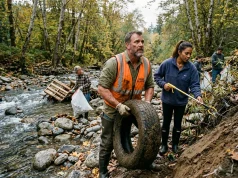
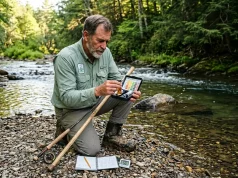
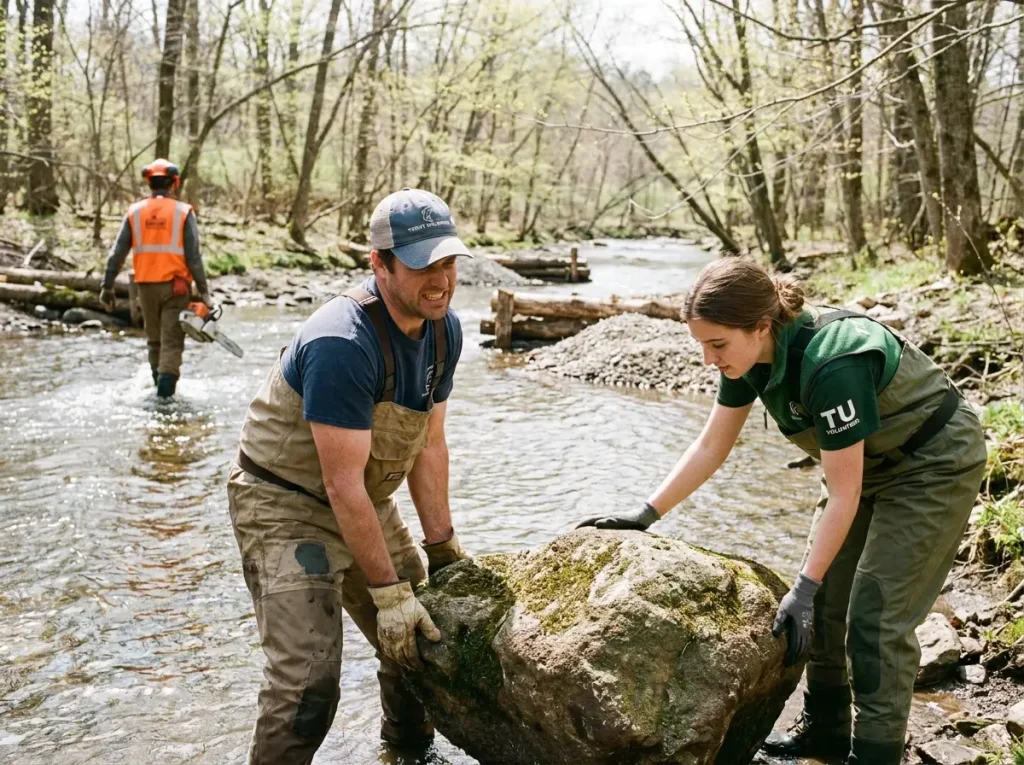
If you fish for migratory species, the organizations doing the most consequential work in dam removal and river passage are worth knowing: NOAA Fisheries, Trout Unlimited, American Rivers, and the various state fish and wildlife agencies that fund fish passage projects. Many of these organizations have volunteer programs that put anglers directly into the work — stream habitat surveys, spawner surveys, vegetation restoration.
The fisheries that anglers care about most — the ones worth driving to, planning trips around, teaching kids to fish on — don’t maintain themselves. They’re the product of water conditions, habitat integrity, and population dynamics that human decisions directly affect. Dam removal is one of the most powerful tools available, and anglers have historically been among its strongest advocates when the direct connection to fishing opportunity is clear.
As for the Klamath: the fish are passing. The river is moving. A century of blocked migration is being undone one season at a time. It’s a slow story — salmon timescales run in years and decades — but it’s moving in the right direction.
Conclusion
Dam removal is not a simple win for anglers or a simple loss — it depends entirely on which dam, which river, which species, and what the dam replaced or created. For migratory fish on Pacific and Atlantic rivers, the science is clear: dam removal restores populations, restores habitat, and restores fishing opportunity on timescales that are long but measurable. The Elwha proved that recovery happens faster than pessimists expected. The Klamath is the largest test in American history, and the first Chinook swimming upstream on October 3, 2024 was a reasonable early signal.
As anglers, the most useful thing to do is follow the specific projects in the rivers you fish, support the organizations doing the habitat work, and understand both the wins and the tradeoffs honestly. The best fishing the next generation of anglers finds will be partly a product of the choices being made on these rivers today.
FAQ
Do fish come back after dam removal?
Yes, and often faster than expected. On the Elwha River, eight salmon and steelhead species began using newly accessible habitat within months of dam removal. On the Klamath River, the first Chinook salmon was recorded upstream of the former Iron Gate Dam site within weeks of the final cofferdams being breached in August 2024. Full population recovery takes years to decades, but biological response is nearly immediate.
What species benefit most from dam removal?
Anadromous species — fish that migrate between saltwater and freshwater — benefit most dramatically: Chinook salmon, coho salmon, steelhead, Atlantic salmon, American shad, Pacific lamprey, and river herring. These species require free passage to complete their life cycle. Resident trout and warmwater species may also benefit from improved river habitat, temperature, and sediment conditions.
How long does river recovery take after dam removal?
Sediment rebalancing and physical habitat recovery begins within weeks to months. Fish recolonize accessible habitat quickly. Full population recovery for long-lived anadromous species typically takes 10-30 years, as each generation must complete its ocean migration and return. The pace is limited by ocean survival rates, tributary habitat quality, and the starting population size.
What are the negatives of dam removal for fishing?
The primary loss is tailwater fisheries — the cold, productive trout fisheries that form below large reservoirs and that exist entirely because of the dam’s regulated cold-water releases. Removing these dams ends or reduces those fisheries. Additionally, some lakes and impoundments created by smaller dams support local recreational fishing; removal returns those to river habitat but eliminates the flatwater fishery.
What is the largest dam removal in US history?
As of 2024, the Klamath River dam removal project — involving four dams on the California or Oregon border — is the largest dam removal in US history, costing approximately $500 million and restoring nearly 400 miles of salmon habitat. The Klamath dams were fully removed ahead of schedule, with the last cofferdams breached on August 28, 2024, allowing the river to flow free for the first time in over 100 years.
Risk Disclaimer: Fishing, boating, and all related outdoor activities involve inherent risks that
can lead to injury. The information provided on Master Fishing Mag is for educational and informational purposes
only. While we strive for accuracy, the information, techniques, and advice on gear and safety are not a substitute
for your own best judgment, local knowledge, and adherence to official regulations. Fishing regulations, including
seasons, size limits, and species restrictions, change frequently and vary by location. Always consult the latest
official regulations from your local fish and wildlife agency before heading out. Proper handling of hooks, knives,
and other sharp equipment is essential for safety. Furthermore, be aware of local fish consumption advisories. By
using this website, you agree that you are solely responsible for your own safety and for complying with all
applicable laws. Any reliance you place on our content is strictly at your own risk. Master Fishing Mag and its
authors will not be held liable for any injury, damage, or loss sustained in connection with the use of the
information herein.
Affiliate Disclosure: We are a participant in the Amazon Services LLC Associates Program, an
affiliate advertising program designed to provide a means for us to earn advertising fees by advertising and linking
to Amazon.com. As an Amazon Associate, we earn from qualifying purchases. We also participate in other affiliate
programs and may receive a commission on products purchased through our links, at no extra cost to you. Additional
terms are found in the terms of service.