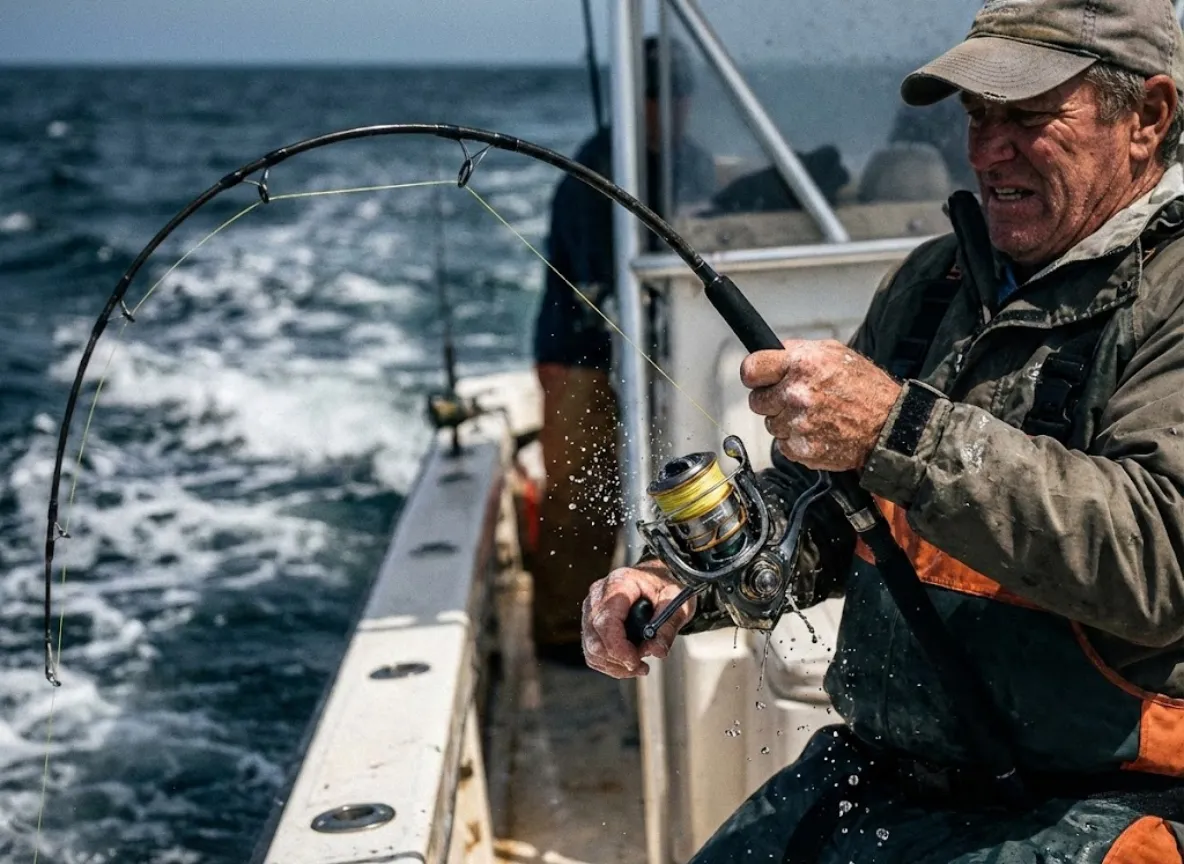
Saltwater does not forgive poor engineering. I’ve learned this the hard way, usually while standing waist-deep in a rising tide with a reel that sounds like a coffee grinder. When saltwater breaches a gearbox, the water evaporates, leaving behind cubic salt crystals. These crystals have a hardness comparable to silica, and they act as a grinding compound that destroys micron-level gear tolerances in a single season.
The 2026 field test proves that the “weight reduction” arms race is effectively over; the new standard is survival. After years of guiding and watching clients lose trophy fish to seized drag systems, I prioritize “Sealed Longevity” above all else. This commercial investigation separates the mechanical tools designed for the ocean from the shiny toys that merely look the part in the showroom. We are moving past marketing buzzwords to focus on Ingress Protection and Torsional Rigidity—the only metrics that actually matter when you are hooked into a freight train.
How to Choose the Right Saltwater Spinning Reel
Choosing a reel isn’t about matching colors; it’s about matching mechanical capability to your environment. We need to move beyond hyperbole and look at the physics of how reels fail.
What is the “Survival Rating” (Ingress Protection)?
The “Survival Rating” is effectively a reel’s Ingress Protection (IP) level, which determines its ability to block the saltwater intrusion that causes internal crystallization and gear failure. While basic gear relies on simple shields, true saltwater durability requires advanced sealing protection to prevent salt crystals from acting as a grinding compound inside your gearbox.
Understanding the difference between saltwater vs freshwater gear durability starts with the sealing tiers. At the bottom, you have basic shielded bearings (Level 1), which slow down water but don’t stop it. Level 2 involves Labyrinth seals or magnetic oils (MagSeal), which are excellent for spray but fail under pressure.
The gold standard is Level 3: Hydrostatic or IPX ratings (specifically IPX5 and IPX6 for spray, and IPX8 for submersion). Models like the Van Staal VR Series or Tsunami SaltX utilize a watertight design with rubber gaskets to make the unit submersible. However, there is a trade-off. Those tight rubber seals create “rotational heaviness,” making the reel feel stiffer to wind. It is a necessary sacrifice for longevity, a standard often referenced in ISO ingress protection guidelines.
Why Torsional Rigidity (The Torque Score) Wins Fights
Torsional Rigidity wins fights by ensuring the reel body does not flex under heavy load, keeping the internal gearing perfectly aligned to deliver maximum cranking power. If the body construction yields during a fight, the gears separate and “bind,” causing the reel to lock up right when you need to turn a fish’s head.
When you are fighting a heavy fish, the force applied to the handle creates vector forces that try to twist the reel stem. If the body material—often carbon composite or Zaion in cheaper models—flexes, the gears inside move out of alignment. This misalignment causes “binding,” where the reel feels like it is locking up under load.
We look to materials science standards to rank rigidity: Full metal body designs (like CNC machined aluminum) and Monocoque bodies offer the highest rigidity, while Ci4+ sits in the middle. A rigid reel allows you to winch fish, but it must be paired properly with your rod. If you are still decoding rod power and rod action, remember that a rigid reel on a noodle rod is wasted energy.
Our Selection Process: How We Built This Guide
We don’t trust the box. “Max Drag” numbers are often marketing nonsense that no human can physically hold for more than a few seconds. Instead, we focus on “Start-up Inertia“—how smoothly the spool releases line at the exact moment a fish surges.
Our evaluation framework for this year utilized a strict criteria list including Ingress Protection (The Survival Rating), Torsional Rigidity (The Torque Score), and Field Serviceability (The DIY Score). We combined our own marsh testing experiences with a meta-analysis of expert teardown ratings from legends like Alan Hawk, Tackle Advisors, and field logs from the Salt Strong community. We also rigorously tested contenders like the Penn Spinfisher VII, Shimano Saragosa SW, Okuma Azores, and Daiwa Saltist MQ. While excellent, they were edged out by models offering better specific utility.
Pro-Tip: Ignore the maximum drag rating on the box. Focus on the material of the drag washers (Carbon Fiber vs. Felt) and whether the drag stack is sealed with a rubber gasket.
The Best Saltwater Spinning Reels of 2026: Our Top Recommendations for Every Need
Our Top Picks for “The Pelagic Hunter” (Offshore Specialist)
Shimano Stella SW D
$$$$
The Stella SW D remains the undisputed king of refinement for the 2026 season. It integrates “Infinity Loop” technology, which dramatically improves casting distance for topwater plugs by laying line in a hyper-tight pattern. The “Heatsink” drag is not a gimmick; it actively dissipates heat during blistering runs from Tuna or GTs, preventing line failure. It offers a winding smoothness that feels hydraulic rather than mechanical. However, this precision comes at a cost beyond the price tag. The internal engineering is watch-like in complexity. If you dunk this reel and it needs service, do not attempt to open it yourself; it requires a certified technician, which can leave you without your primary tool for weeks.
If the Stella is a scalpel, the Saltiga is a sledgehammer. The Monocoque (MQ) body eliminates the need for side-plate screws, allowing Daiwa to stuff an oversized G1 Duralumin drive gear into the frame. This results in the highest Torsional Rigidity in its class. When you are jigging deep water and need to turn a fish’s head, this reel does not yield an inch. The bail trip mechanism has been robustly re-engineered for 2026, solving past durability concerns. The downside is the MagSeal technology. While effective at keeping spray out, the ferrofluid barrier cannot be serviced by the user. Once that seal is broken or dries out, the reel must go back to the factory.
Overall
Ingress Protection (Survival Rating)
Torsional Rigidity (The Torque Score)
Drag Inertia (The Control Score)
Gearing Durability (The Engine Score)
Line Management (The Casting Score)
Sealing StandardMagSealed (Ferrofluid Barrier)
Gear Ratio4.4:1 (P) to 6.2:1 (XH)
Max Drag66.1 lbs (20k/25k sizes)
Body ConstructionMonocoque (MQ) Aluminum
You Should Buy This If…
You prioritize absolute structural rigidity and winding power (jigging).
You want the largest drive gear surface area in class.
You prefer a bail trip that has been re-engineered for durability.
You Should Reconsider If…
You want to perform your own maintenance (MagSeal requires factory service).
You live in a remote area without a Daiwa service center.
The Penn Authority is the American answer to Japanese refinement: pure, verified toughness. With an **IPX8 rating**, this reel is fully submersible, making it the top choice for surf casters and kayak anglers who get wet. The **stainless steel gearing** is practically bombproof and, unlike its competitors, the mechanical seals are **user-serviceable**. You can grease this reel yourself on a tailgate. However, that protection comes with weight. It is significantly heavier than the Stella or Saltiga, and the aggressive sealing creates a noticeable “**rotational heaviness**”—you can feel the seals working against you when you wind. It lacks elegance, but it will never quit.
Overall
Ingress Protection (Survival Rating)
Torsional Rigidity (The Torque Score)
Drag Inertia (The Control Score)
Gearing Durability (The Engine Score)
Field Serviceability (The DIY Score)
Sealing StandardIPX8 (Submersible)
Gear Ratio4.2:1 to 6.2:1
Max Drag40-50 lbs (Dura-Drag)
Weight24+ oz (Heavy)
You Should Buy This If…
You require verified IPX8 waterproofing for surf or kayak fishing.
You want to be able to repair and grease the reel yourself.
You prefer the durability of Stainless Steel gearing over aluminum.
You Should Reconsider If…
You are sensitive to reel weight (it is heavy).
You dislike “rotational heaviness” (seals create friction when winding).
Our Top Picks for “The Technical Inshore Wade-Fisher”
Shimano Vanford FA
$$$$
For the angler throwing artificials thousands of times a day, the Vanford FA is a wrist-saver. The Ci4+ body and MGL Rotor create a reel that is shockingly light with near-zero start-up inertia. You feel every tick of a jig head on the bottom. It is the ultimate finesse tool for speckled trout and redfish. But do not mistake it for a winch. The composite body has limitations; if you hook a large Jack Crevalle or Bull Red near structure, you will feel the stem flex under heavy drag. It is not designed to turn big fish in current, and it is certainly not dunk-proof.
Overall
Ingress Protection (Survival Rating)
Torsional Rigidity (The Torque Score)
Drag Inertia (The Control Score)
Gearing Durability (The Engine Score)
Line Management (The Casting Score)
Sealing StandardX-Protect (Splash resistant)
Gear Ratio5.8:1 to 6.4:1
Max Drag20 lbs
Weight6.3 oz (3000 size) – Extremely Light
You Should Buy This If…
You prioritize weight reduction above all else to reduce wrist fatigue.
You fish light leaders (10-15lb) and need instant drag startup.
You are a finesse angler throwing light soft plastics.
You Should Reconsider If…
You need to winch large fish out of heavy structure (rotor flex).
We call this the “Smart Money Stella.” The Twin Power FE bridges the gap between the lightweight Vanford and the heavy-duty offshore reels. It features a metal rotor and a rigid aluminum body, solving the flex issues inherent in composite reels. This gives you the torque needed for big Snook or Stripers without the fatigue of a full offshore reel. It also inherits the “Infinity Loop” casting system. However, perfection is expensive; it sits in a price bracket that makes it a hard sell for casual anglers, and some sensitive hands might notice a tiny amount of “gear lash” tolerance compared to a blueprinted Stella.
Overall
Ingress Protection (Survival Rating)
Torsional Rigidity (The Torque Score)
Drag Inertia (The Control Score)
Gearing Durability (The Engine Score)
Line Management (The Casting Score)
Sealing StandardX-Protect / X-Shield
Gear Ratio5.1:1 to 6.2:1
Max Drag20-24 lbs
Weight7.6 oz (3000 size)
You Should Buy This If…
You want Stella-like rigidity without the $800+ price tag.
You target hard-fighting inshore species (Snook, Stripers) requiring torque.
You want the casting distance benefits of “Infinity Loop.”
You Should Reconsider If…
You are on a strict budget (it is still expensive).
You are sensitive to “gear lash” sensation (minor manufacturing tolerance reported).
The Cabo Gen 3 is the ICAST 2025 sleeper hit, democratizing IPX8 sealing for the mid-tier market. With its “Sealoq-8” technology, this is the only reel in the $250 range that you can confidently dunk while wading without fearing immediate death. It uses a rigid aluminum frame, providing a solid backbone for fighting tarpon or sharks. However, it is not a finesse tool. It is significantly heavier than the Vanford or Stradic, and Quantum’s re-entry into the premium market means long-term parts availability is still an unproven variable compared to the big two Japanese brands.
Overall
Ingress Protection (Survival Rating)
Torsional Rigidity (The Torque Score)
Drag Inertia (The Control Score)
Gearing Durability (The Engine Score)
Line Management (The Casting Score)
Sealing StandardIPX8 (Sealoq-8)
Gear Ratio6.2:1
Max Drag25-30 lbs (CFX200 Carbon)
Weight9.9 oz (2500 size)
You Should Buy This If…
You need a fully waterproof reel but cannot afford a Van Staal or Authority.
You wade deep and frequently dunk your gear.
You want a rigid aluminum frame over a composite one.
You Should Reconsider If…
You are a finesse angler (it is significantly heavier than the Vanford).
You are concerned about long-term parts availability (brand re-entry).
Our Top Picks for “The Practical Weekend Warrior” (Value/Durability)
Penn Battle IV
$$$$
The Battle IV is the blue-collar standard. If you abuse your gear, leave it in the truck bed, or forget to rinse it, this is your reel. The new “Hydro Armor” coating specifically addresses the corrosion issues that plagued the Battle III, while the Full Metal Body keeps the gears aligned even when you high-stick a stingray. It is a tank. But tanks are heavy. Casting this reel all day will tire your wrist, and the bail wire requires you to manually position the rotor before casting to avoid accidental closures. It lacks refinement, but it makes up for it in brute survivability.
Overall
Ingress Protection (Survival Rating)
Torsional Rigidity (The Torque Score)
Drag Inertia (The Control Score)
Gearing Durability (The Engine Score)
Field Serviceability (The DIY Score)
Sealing StandardHydro Armor (Sealed key areas)
Gear Ratio4.7:1 to 7.0:1
Max Drag15-40 lbs (HT-100)
Weight12.2 oz (4000 size)
You Should Buy This If…
You want the most durable full-metal reel under $160.
You want a reel that is easy to service and find parts for.
You abuse your gear and need something forgiving.
You Should Reconsider If…
You cast lures all day (heavy wrist fatigue).
You get frustrated by bail closures (requires careful rotor positioning).
The BG MQ is the benchmark for smoothness in the mid-tier. By using a Monocoque body, Daiwa eliminated the side plate and used that extra space to install a massive drive gear. The result is torque and smoothness that punches way above its price class—it feels like a $400 reel. It is sealed better than the original BG, but it has a known Achilles heel: the line roller. If you do not oil the line roller bearing regularly, it will seize. The MQ body also requires a special tool to open, making DIY internal maintenance difficult for the average angler.
Overall
Ingress Protection (Survival Rating)
Torsional Rigidity (The Torque Score)
Drag Inertia (The Control Score)
Gearing Durability (The Engine Score)
Field Serviceability (The DIY Score)
Sealing StandardRubber Seals (Not IPX rated)
Gear Ratio5.7:1 to 6.2:1
Max Drag22-26.4 lbs
Weight9.3 oz (3000 size)
You Should Buy This If…
You want the smoothest winding experience in the $200 range.
You need high winding torque for deep cranks or heavy lures.
You prioritize gear strength (Cold-forged Digigear).
You Should Reconsider If…
You neglect maintenance (Line roller seizes quickly without oil).
You want to service the reel yourself (MQ body requires special tool).
The market is flooded with options, but your choice should be dictated by your environment, not brand loyalty. If you are standing in the surf or wading deep, the IPX8 sealing of a Penn Authority or Quantum Cabo is non-negotiable—saltwater intrusion is a matter of when, not if, for lesser reels.
For those who stay dry in a boat, the trade-off shifts to Torque vs. Weight. Heavy metal bodies like the Saltiga or Battle IV prevent gear binding when fighting large fish, while lightweight composites like the Vanford reduce fatigue but lack that winching power. Finally, consider the serviceability gap. MagSealed reels are marvels of engineering, but they tether you to factory service centers. Identify your primary target species application and environment, then invest in the one specific feature—sealing, torque, or weight—that ensures your reel survives the 2026 season.
FAQ – Frequently Asked Questions
What is the difference between IPX5 and IPX8 sealing?
IPX5 denotes protection against low-pressure water jets (making a reel rinse-safe), whereas IPX8 certifies the device for complete submersion under pressure. For wade fishing or skishing, an IPX8 rating (found on reels like the Penn Authority) is required to prevent gearbox failure.
Can I service a MagSealed reel myself?
Generally, no. MagSeal utilizes a proprietary ferrofluid that is held in place by magnetism. Opening the seal or adding standard oil will disrupt this magnetic field and ruin the barrier, typically requiring the reel to be shipped to a factory service center for repair.
Why does my reel feel heavy to turn even though it is new?
High-level sealing (like IPX8) relies on tight rubber gaskets that create friction against the rotor and handle assembly. This results in rotational heaviness, which is a feature of protection rather than a defect. It contrasts sharply with the air-light feel of unsealed freshwater reels.
Is a Full Metal Body necessary for inshore fishing?
Not for small species like Trout or Flounder, where composite reels (like the Vanford) offer a significant advantage in reducing fatigue. However, for large Snook, Tarpon, or Bull Redfish, a metal body is critical to prevent the frame from flexing and the gears from misaligning under heavy drag pressure.
Risk Disclaimer: Fishing, boating, and all related outdoor activities involve inherent risks that
can lead to injury. The information provided on Master Fishing Mag is for educational and informational purposes
only. While we strive for accuracy, the information, techniques, and advice on gear and safety are not a substitute
for your own best judgment, local knowledge, and adherence to official regulations. Fishing regulations, including
seasons, size limits, and species restrictions, change frequently and vary by location. Always consult the latest
official regulations from your local fish and wildlife agency before heading out. Proper handling of hooks, knives,
and other sharp equipment is essential for safety. Furthermore, be aware of local fish consumption advisories. By
using this website, you agree that you are solely responsible for your own safety and for complying with all
applicable laws. Any reliance you place on our content is strictly at your own risk. Master Fishing Mag and its
authors will not be held liable for any injury, damage, or loss sustained in connection with the use of the
information herein.
Affiliate Disclosure: We are a participant in the Amazon Services LLC Associates Program, an
affiliate advertising program designed to provide a means for us to earn advertising fees by advertising and linking
to Amazon.com. As an Amazon Associate, we earn from qualifying purchases. We also participate in other affiliate
programs and may receive a commission on products purchased through our links, at no extra cost to you. Additional
terms are found in the terms of service.