In this article
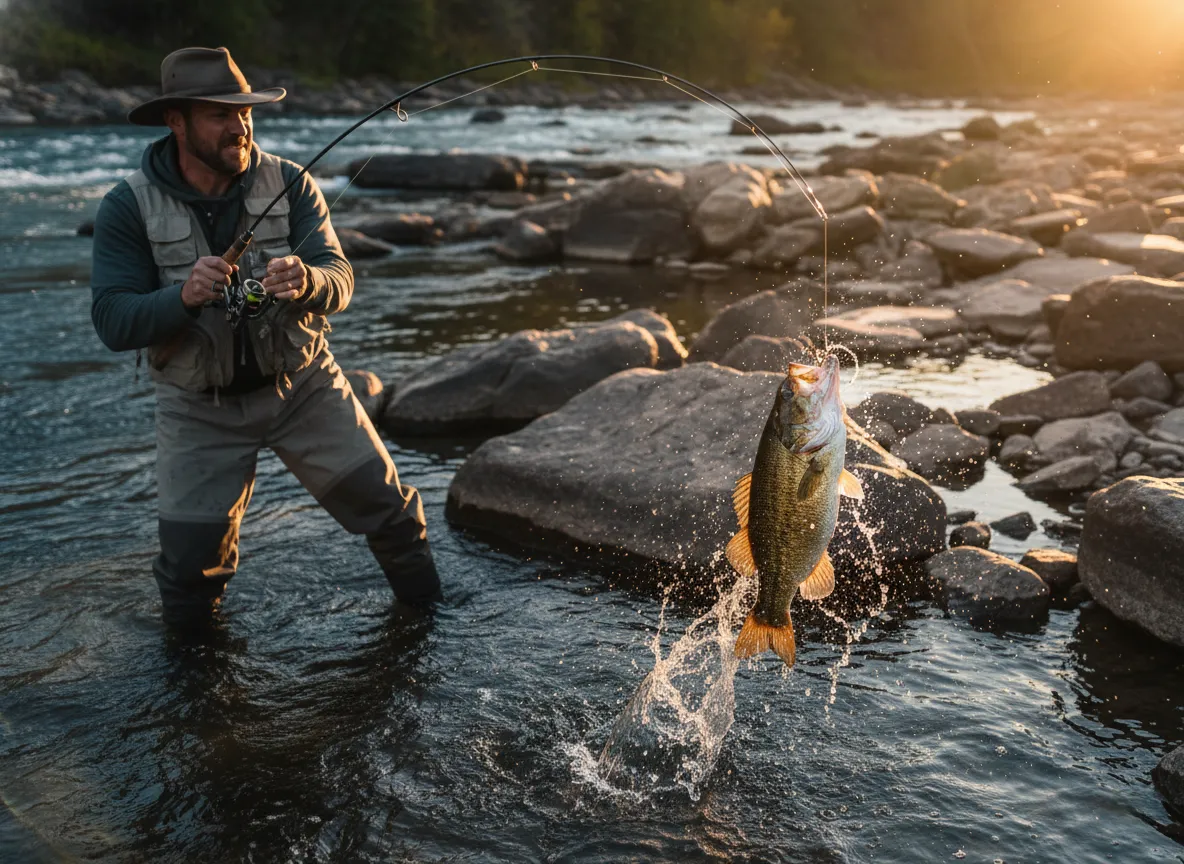
A four-pound Smallmouth Bass doesn’t just bite; it declares war on your tackle. The rod loads instantly, the drag screams against the initial run, and within seconds, a bronze flash breaks the surface, shaking its head with a violence that defies its size. This is the “pound-for-pound” fight that defines one of the most popular North American freshwater game fish.
However, consistently connecting with Micropterus dolomieu—a standout species within the Centrarchidae (sunfish) family—requires more than luck or indiscriminately casting live bait at the bank. It demands a clinical understanding of the environmental constraints—temperature, light, and current—that rule their existence.
I have spent decades tracking these sportfish from the moderate-gradient streams of the Susquehanna and Potomac Rivers to the deep glacial lakes of Canada. The difference between a skunked boat and a livewell full of trophies usually comes down to “Bio-Tactical” awareness: understanding the biological machine to predict its behavior. We are moving beyond trivia here to help you look at a body of water and mentally map the location of Smallmouth Bass based on structure and biology.
What Defines the Smallmouth Bass Biologically?
Before you can catch them, you have to know exactly what you are targeting. This section deconstructs the physical and genetic identity of the fish, establishing the baseline identification skills necessary for the angler.
How Do You Distinguish a Smallmouth from a Largemouth Bass?
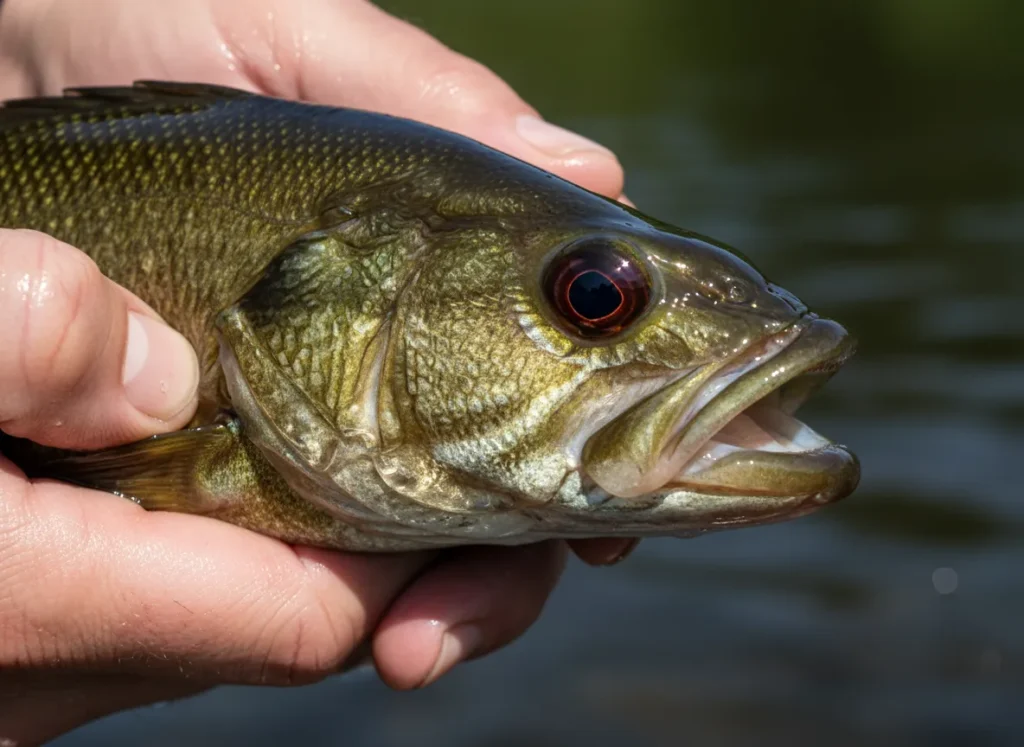
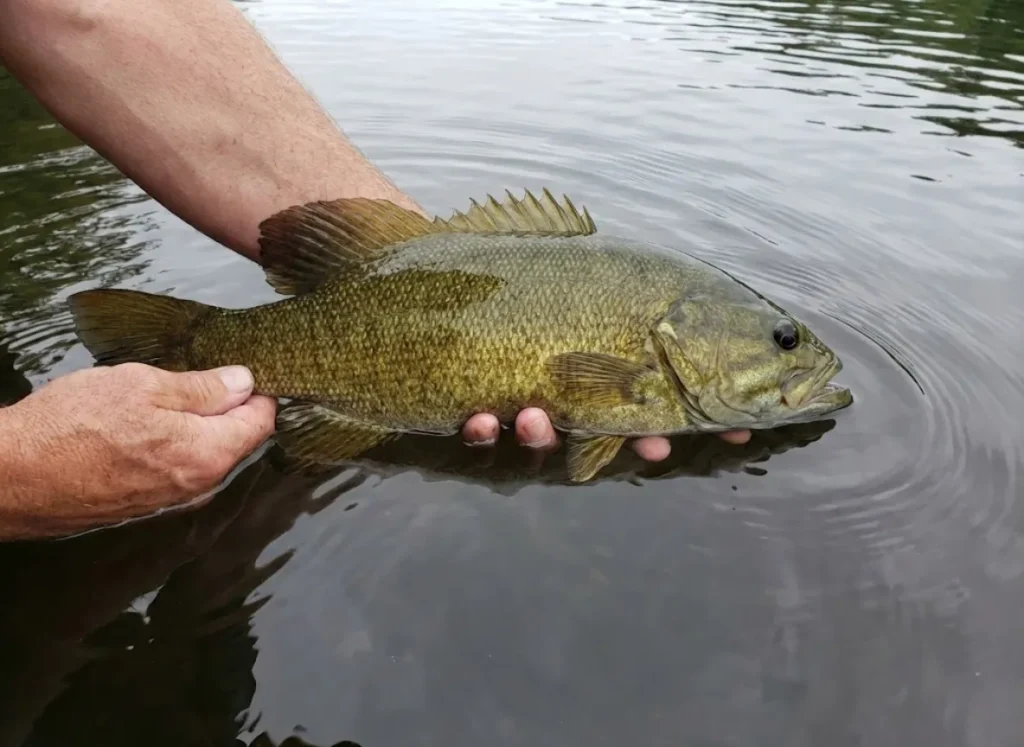
The most reliable way to identify a Smallmouth Bass is by examining the upper jaw (maxilla). When the mouth is closed, the jawbone of a Smallmouth extends only to the center of the eye pupil. In contrast, a Largemouth’s jaw extension reaches well past the rear margin of the eye.
Beyond the jaw, look at the dorsal fin structure. Smallmouth possess a joined dorsal fin where the spinous and soft-rayed portions connect with a shallow notch. Largemouth feature a deep dip that often separates the two fins entirely.
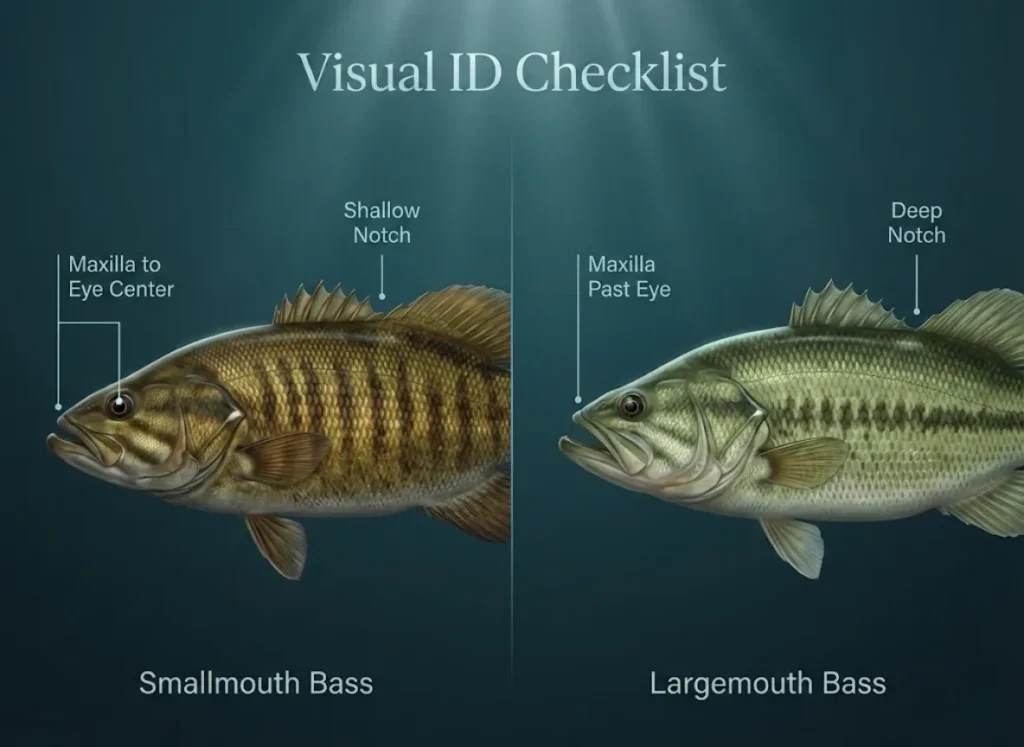
The coloration is also a dead giveaway; look for a bronze to olive-brown hue—earning them the nickname “bronzeback” or “brown bass”—with dark, vertical bars along the flanks. These vertical bars act as camouflage against broken rock and weed lines, breaking up the fish’s outline to ambush prey. Juvenile fish and fry often display a tricolored caudal fin (orange, black, and white) which fades as they mature.
You should also check the scales on the cheek. Smallmouth typically have smaller, more numerous rows of scales compared to other black bass species. Be aware of hybridization zones where the “Mean Mouth” bass exists. This hybrid of Smallmouth and Spotted or Largemouth bass often displays mixed traits and extreme aggression. Biologists and agencies like the U.S. Fish and Wildlife Service use these taxonomic identification keys for Centrachidae to make definitive distinctions in the field.
How Does Their Sensory Physiology Impact Lure Selection?
Smallmouth Bass possess dichromatic vision, meaning their retina contains cone cells sensitive to red and green, but they lack blue-sensitive cones. This biological reality dictates that they perceive colors differently than humans do, heavily influencing which lure patterns get ignored and which get destroyed.
This explains the overwhelming dominance of “Green Pumpkin” and “Watermelon” tube baits and plastics. These wavelengths remain distinct and visible across the depth ranges and water clarities the species inhabits. While we might like flashy colors, color vision capabilities in Centrarchids suggest that natural greens offer the best contrast for their specific optical hardware.
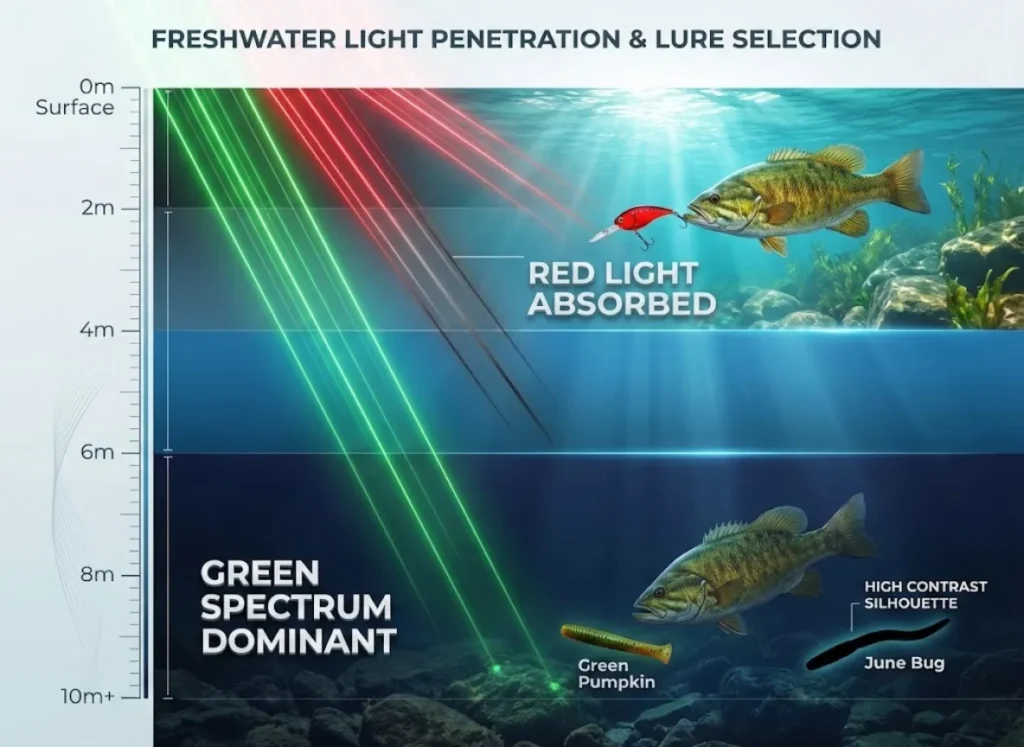
Water optics dictate that red light is absorbed quickly—often within the top 10 meters. This causes red lures to appear dark gray or black in deep water, while greens maintain their chromatic integrity. The famous “June Bug” (purple) color is effective not because the fish sees purple, but because the short wavelength creates a high-contrast silhouette against the surface light. Mastering how do fish see underwater allows you to stop guessing and start selecting colors based on physics.
Pro-Tip: In low-light or turbid conditions, the fish shifts reliance from vision to its lateral line system. This series of mechanoreceptors detects pressure changes. When the water gets dirty, switch from subtle plastics to high-vibration crankbaits, spinnerbaits, or blade baits to target their sense of touch rather than sight.
Where Do Smallmouth Bass Live and Feed?
Sensory inputs allow the predator to hunt, but the physical environment dictates where that hunt takes place. We must map the specific habitat requirements and understand the ecological shifts caused by invasive species.
Why Are They Called “Lithophiles” and How Does Substrate Matter?
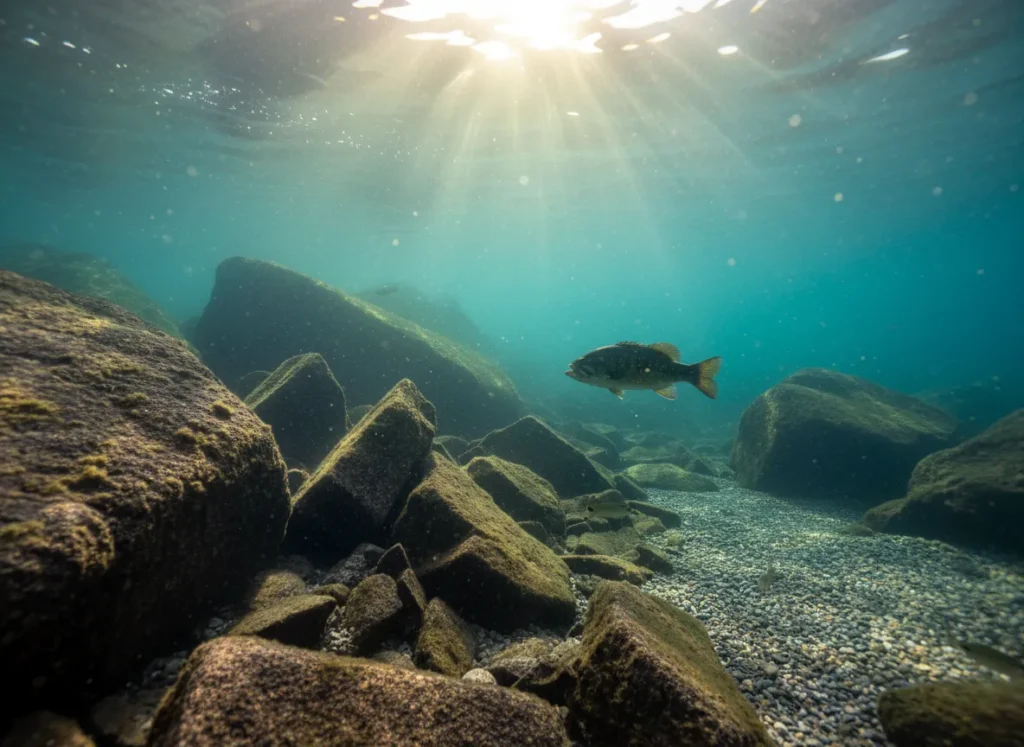
Smallmouth Bass are obligate lithophiles, which means they have a biological dependency on rock substrates like gravel, rubble, cobble, and boulders for both shelter and reproduction. If you find the rocks, you generally find the bass.
In rivers, they utilize the crevices in rock piles as current breaks. This allows them to sit in the “eddy” behind a boulder or submerged log and conserve energy while watching the fast water for passing food like hellgrammites or drifting insects. In lakes, you should identify transition zones where the bottom composition changes from sand to rock, or from pea gravel to chunk rock. These edges act as highways for bass movement.
This preference for rock is inextricably linked to their primary native forage, the crayfish, which also inhabits these crevices. During the spawn, male bass require firm substrate to build nests and will avoid silt or mud bottoms where eggs could suffocate. According to habitat suitability index models for Smallmouth Bass, locating these hard-bottom areas is the single most important factor in locating fish.
Pro-Tip: When learning how to read a fish finder, look for the “hard bottom” returns. On 2D sonar, this appears as a thick, bright yellow or red band. On side-imaging, rocks appear as bright white clusters with dark “shadows” cast behind them.
How Has the Round Goby Invasion Altered Feeding Habits?
The invasion of the Round Goby (Neogobius melanostomus) in the Great Lakes region—specifically Lake Erie, Lake St. Clair, and the St. Lawrence River—has shifted the Smallmouth diet from primarily crayfish and shad to predominantly gobies. This change in menu requires a change in presentation.
Gobies are bottom-dwellers that lack an air bladder. Consequently, they cannot swim gracefully in the water column; they move with erratic, hopping motions along the lake floor. To mimic this, anglers must adapt by using bottom-contact baits like tube baits, drop shot rigs, and Ned rigs (like the Z-Man Finesse TRD) that replicate this specific benthic profile.
This high-protein, soft-bodied forage has accelerated growth rates. We are seeing an 11-15% increase in size-at-age for younger bass, creating heavier, world-class trophy fish. However, the impact of Round Goby on Smallmouth Bass growth also notes a predation loop: gobies aggressively consume bass eggs, forcing male bass to guard nests with extreme vigilance. When selecting colors for goby-rich waters, understanding the impact of aquatic invasive species suggests using patterns with gold, purple, and green flake to match the mottled camouflage of this prey.
Conservation and Future Stewardship
The survival of the sport depends on how we handle the fish after the catch. This is especially true when targeting trophy fish in deep water.
What is Barotrauma and How Do You Treat It?
Barotrauma is a physical condition where a fish’s swim bladder expands rapidly due to pressure changes when pulled from deep water (usually 30+ feet), causing bloating and an inability to submerge.
Releasing a fish in this condition is lethal. The fish will float on the surface, unable to swim down, becoming vulnerable to gulls or exposure. The standard of care is “Fizzing,” a procedure using a hypodermic needle (16-18 gauge) to manually vent the excess gas from the swim bladder.
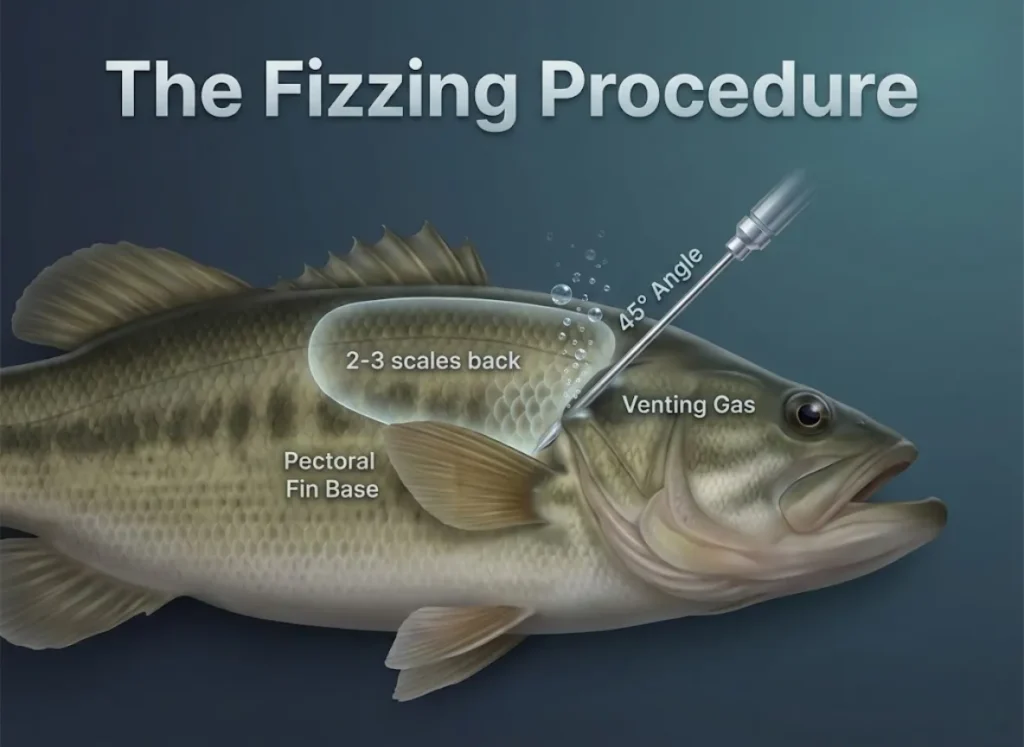
To fizz a bass, locate the insertion point by counting 2-3 scales back from the base of the pectoral fin while the fish is laid on its side on a cool, wet surface. Insert the needle at a 45-degree angle under the scale towards the head. Submerge the fish to visualize escaping gas bubbles and apply gentle pressure until neutral buoyancy is restored. Following the guidelines for treating barotrauma in fish and addressing and fixing barotrauma in fish is the price of admission for accessing deep-water fisheries like Dale Hollow or Lake Erie.
Final Thoughts
Success with Smallmouth Bass isn’t about buying the most expensive fishing rods; it’s about applying biological logic to your strategy.
- Biology: We know they are visual predators that respond best to green wavelengths.
- Habitat: We know they are “lithophiles” that require rock structures, from gravelly pools to boulder-strewn flats, for energy conservation and hunting.
- Adaptation: We know that invasive species like the Round Goby have forced a tactical shift toward bottom-contact presentations like tubes and drop shots.
- Stewardship: We accept that catching deep-water giants carries the responsibility of treating barotrauma to ensure the fishery survives.
Deepen your tactical arsenal by exploring our full library of species-specific strategies, or share your own observations on local Smallmouth behavior in the comments below.
FAQ – Frequently Asked Questions
What is the average lifespan of a Smallmouth Bass?
Smallmouth Bass are relatively long-lived, often reaching 10 to 15 years of age in the wild. Some northern specimens in colder waters like Lake Superior or Nipigon have been recorded up to 18-20 years old, as growth rates are slower in these regions compared to the south.
What is the world record Smallmouth Bass?
The All-Tackle World Record is 11 pounds, 15 ounces, caught by David Hayes in Dale Hollow Reservoir (Tennessee or Kentucky) in 1955. The record was reinstated by the IGFA in 2005 after a thorough investigation cleared up a false affidavit regarding lead weights.
Do Smallmouth Bass migrate?
Yes, particularly in river systems and large lakes. They undertake seasonal migrations of 40-50 miles between shallow summer spawning grounds and deep wintering holes. They exhibit high site fidelity, often returning to the exact same rock pile or eddy year after year.
What water temperature do Smallmouth Bass prefer?
Their optimal physiological temperature range is between 60°F and 75°F (15-24°C). This is cooler than the preference for Largemouth Bass. When surface temperatures exceed 80°F, they will seek deeper water or cool-water tributaries to maintain metabolic efficiency.
Risk Disclaimer: Fishing, boating, and all related outdoor activities involve inherent risks that
can lead to injury. The information provided on Master Fishing Mag is for educational and informational purposes
only. While we strive for accuracy, the information, techniques, and advice on gear and safety are not a substitute
for your own best judgment, local knowledge, and adherence to official regulations. Fishing regulations, including
seasons, size limits, and species restrictions, change frequently and vary by location. Always consult the latest
official regulations from your local fish and wildlife agency before heading out. Proper handling of hooks, knives,
and other sharp equipment is essential for safety. Furthermore, be aware of local fish consumption advisories. By
using this website, you agree that you are solely responsible for your own safety and for complying with all
applicable laws. Any reliance you place on our content is strictly at your own risk. Master Fishing Mag and its
authors will not be held liable for any injury, damage, or loss sustained in connection with the use of the
information herein.
Affiliate Disclosure: We are a participant in the Amazon Services LLC Associates Program, an
affiliate advertising program designed to provide a means for us to earn advertising fees by advertising and linking
to Amazon.com. As an Amazon Associate, we earn from qualifying purchases. We also participate in other affiliate
programs and may receive a commission on products purchased through our links, at no extra cost to you. Additional
terms are found in the terms of service.