In this article
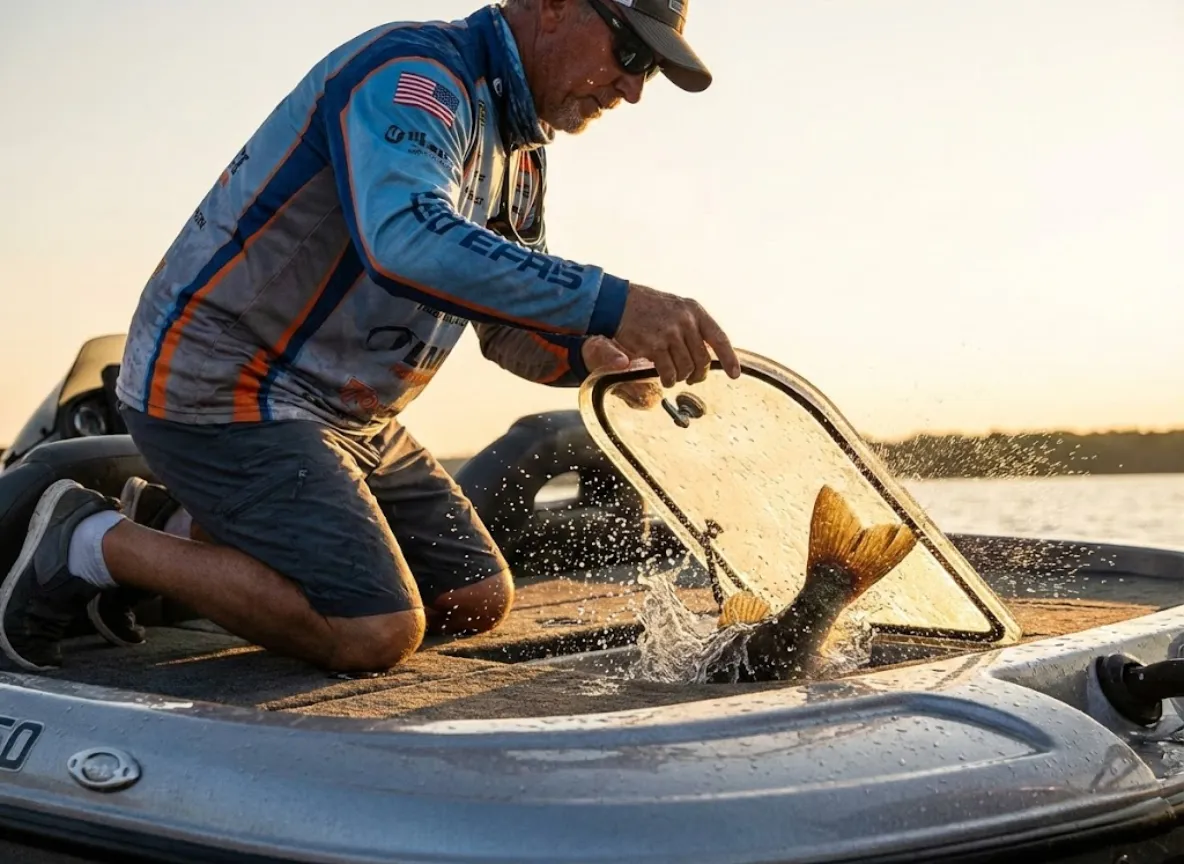
The silence of a dead livewell is heavy. You open the lid expecting the vigorous splash of a trophy bass, but instead, you find a pale, belly-up fish floating in warm, stagnant water. In tournament angling, this failure costs ounces and paychecks; in conservation terms, it costs the resource itself.
A livewell is not a bucket built into your transom; it is a portable Intensive Care Unit. Keeping a fish alive after the trauma of capture is the cornerstone of responsible catch-and-release fishing. It requires more than just water. It demands the precise management of hydrodynamics, thermodynamics, and fishery biology.
I have spent decades on the water, and I’ve learned the hard way that standard boating accessories are rarely enough to combat the heat of July. By understanding the anatomy of your livewell system and applying specific survival protocols, you can eliminate dead penalties. We will examine the critical difference between open and closed systems, the precise math for cooling water with ice, and the emergency triage necessary for deep-caught fish.
What is the Fundamental Anatomy of a Livewell System?
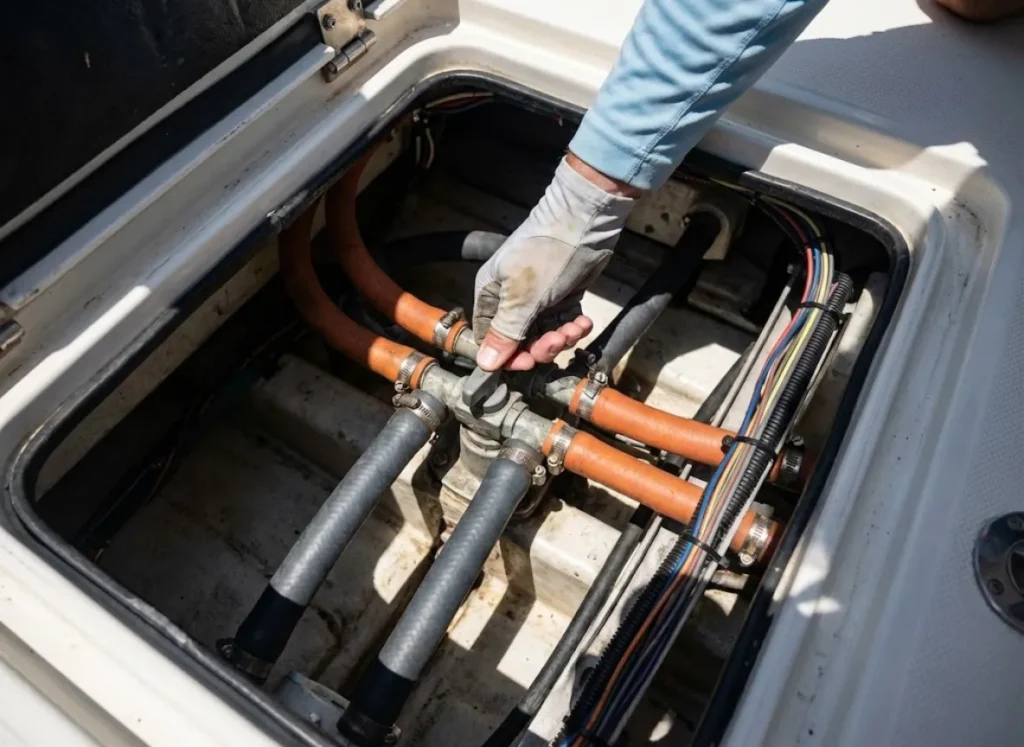
Whether you run factory-equipped livewells or a custom livewell retrofit, the system is a hydraulic circuit designed to move fluid in, out, and around a contained vessel. Understanding this hardware transforms a confusing array of toggle switches and valves into a logical schematic you can troubleshoot on the fly.
How do the Intake and Pump Systems Function?
The Intake System begins at the transom. Here, a thru-hull fitting equipped with a screened intake prevents macrophytes (weeds) and debris from entering the plumbing. A clogged screen is the primary cause of pump starvation. Once inside, the intake pump (often labeled as the fill pump or aerator) draws raw water from the lake and pushes it into the tank. This functions as an “Open Loop,” constantly replacing old water with new.
In contrast, the Recirculation Pump operates on a “Closed Loop.” It draws water from the overflow drain or lower suction port and pushes it back through a venturi or spray bar. This oxygenates existing water without introducing outside fluid. Unlike a simple bubble pump found on bait buckets, a true recirculating system moves high volumes of water to ensure total saturation.
High-Speed Pickups are scoops located on the hull bottom. They use hydrodynamic pressure to force water into the tank while the boat is on plane. This compensates for the fact that standard pumps often cavitate (suck air) at high speeds.
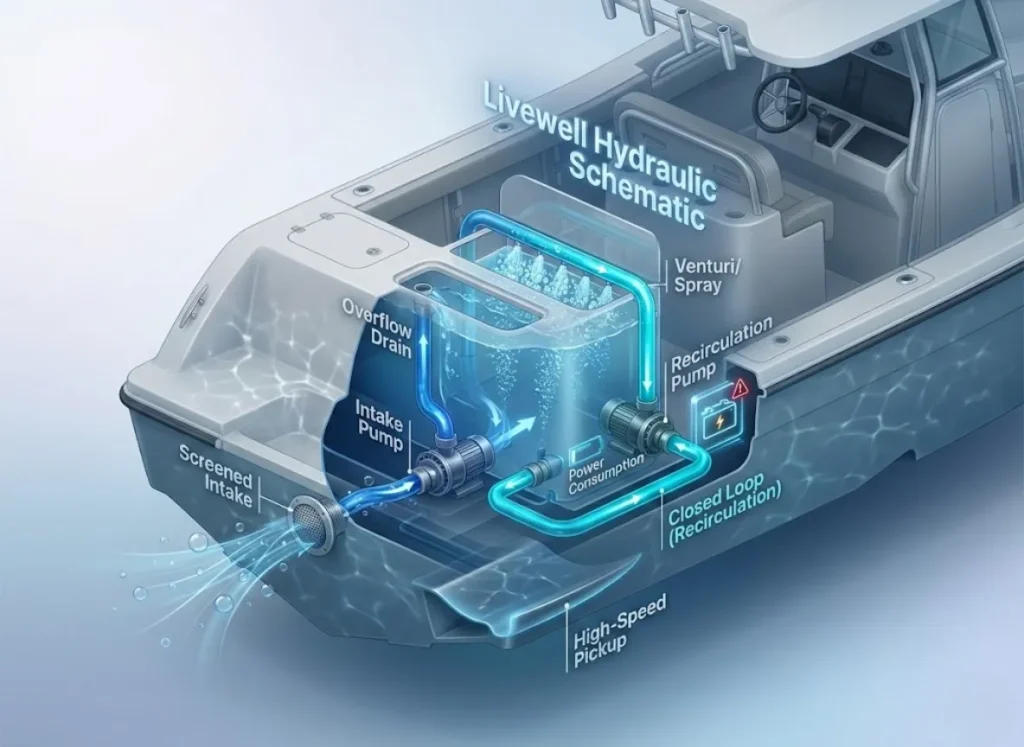
It is vital to note the power consumption here. Running both pumps continuously drains power rapidly. This necessitates selecting a top-tier battery with sufficient reserve capacity to prevent stranding yourself with a dead cranking battery. Finally, most modern pumps use replaceable cartridges (like those from Johnson or Rule). Carrying a spare allows for a 5-minute on-water repair if a pump seizes.
Pro-Tip: If your livewell keeps losing water while running on plane, check your valve selection. If you don’t have a high-speed pickup, the vacuum created behind the boat can actually suck water out of the overflow if the valve isn’t sealed.
How Does the Flow-Rite Valve Logic Actually Work?
The Flow-Rite valve system is the standard for most bass boats, utilizing a flow adjustment valve controlled by a manual switch at the console.
- AUTO: Utilizes a passive hydrodynamic flapper valve. When stationary, the flapper hangs open to allow fresh livewell intake and overflow. When the boat planes, water pressure against the transom mechanically forces the flapper shut. This prevents the vacuum effect from sucking the livewell dry.
- RECIRC: Creates a manual, watertight seal at the drain (independent of boat speed). This effectively isolates the livewell equipment and contents from the lake environment.
- EMPTY: Opens the drain completely, allowing water to evacuate by gravity or pump assistance.
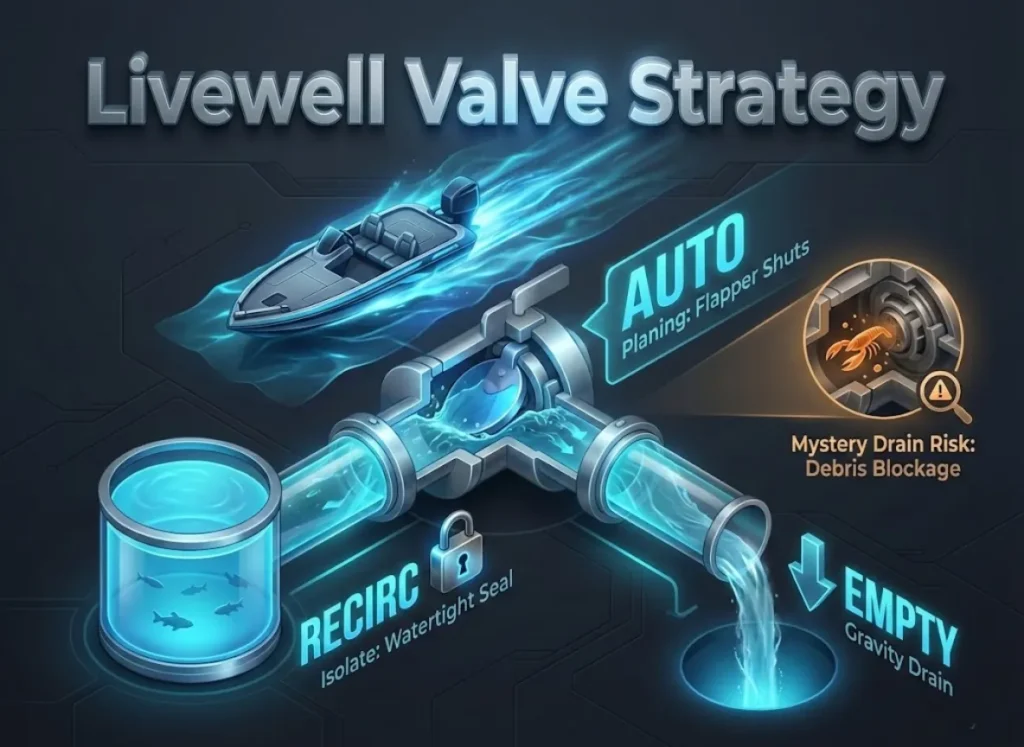
A common issue is the “Mystery Drain” Phenomenon. This occurs when debris, such as crawfish parts or plastic worm chunks, lodges in the flapper valve while in AUTO mode. This prevents a seal, allowing water to exit rapidly when the boat takes off.
It is also important to distinguish between System 3 and System 4 valves. In “System 4,” the EMPTY position allows water to flow in if the boat is backed down a ramp. This risks contaminating the tank with dirty harbor water and aids in preventing the spread of aquatic invasive species by accidentally transporting foreign water bodies.
What are the Biological Requirements for Fish Survival?
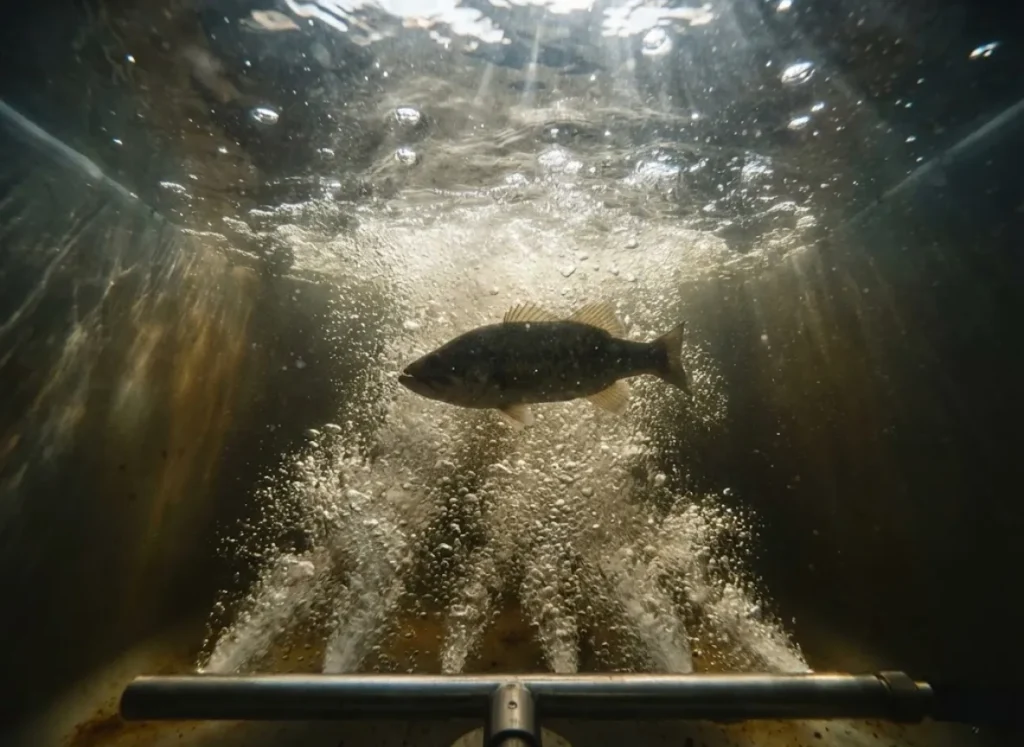
Fish die in live wells because the environment fails to support their physiology. Understanding the biology dictates the strategy, bridging the gap between mechanical operation and keeping your catch alive.
How Does Dissolved Oxygen Interact with Water Temperature?
Henry’s Law dictates an inverse relationship between temperature and gas solubility: as water temperature rises, its physical capacity to hold Dissolved Oxygen (DO) decreases. Cold water (50°F) can hold approximately 11.3 mg/L of oxygen. However, warm tournament water (90°F) struggles to hold 7.3 mg/L.
Fish are Poikilotherms (cold-blooded). This means their metabolic rate—and oxygen demand—increases alongside water temperature. This creates a “Double Whammy” scenario: the oxygen supply drops exactly when the fish’s biological demand spikes.
The Critical Threshold for bass survival is 5.0 mg/L. Levels below this induce anaerobic metabolism, causing lactic acid buildup in muscles and delayed mortality. Standard spray bars typically only maintain oxygen at equilibrium with the air. In extreme heat, mechanical aeration alone may fail to keep up with the metabolic demand of a heavy limit (20+ lbs of fish).
Auxiliary oxygen systems are often required to maintain the “Recovery Zone” of >7.0 mg/L DO. This management is part of a complete summer fishing system designed to handle high-temperature stress.
Why is the Ammonia-pH Balance Critical to Manage?
Fish excrete Ammonia primarily through their gills as metabolic waste. In a confined 20-gallon tank, concentrations can rise to lethal levels rapidly. Ammonia exists in equilibrium between two forms: Un-ionized Ammonia, which is highly toxic, and Ionized Ammonium, which is relatively harmless.
This equilibrium is pH Dependent. As pH rises (becomes more alkaline), the balance shifts toward toxic. As pH drops (acidic), it shifts toward safe. Anglers who unknowingly use alkaline non-iodized salt additives or fill their tanks with high-pH lake water can inadvertently trigger an ammonia spike that burns fish gills and destroys their slime coat. This chemical challenge is identical to the protocols found in a guide to keeping bait alive for sensitive baitfish like shiners or shrimp.
Modern livewell additives like G-Juice (or alternatives like Rejuvenade) utilize sulfonate salts to bind ammonia into a non-toxic molecule regardless of the pH level. Visual indicators of ammonia poisoning include red, inflamed gills or fish gasping at the surface despite running aerators.
The toxicity of ammonia in aquatic systems is strictly governed by temperature and pH levels.
How Should You Operate the Livewell During a Tournament Day?
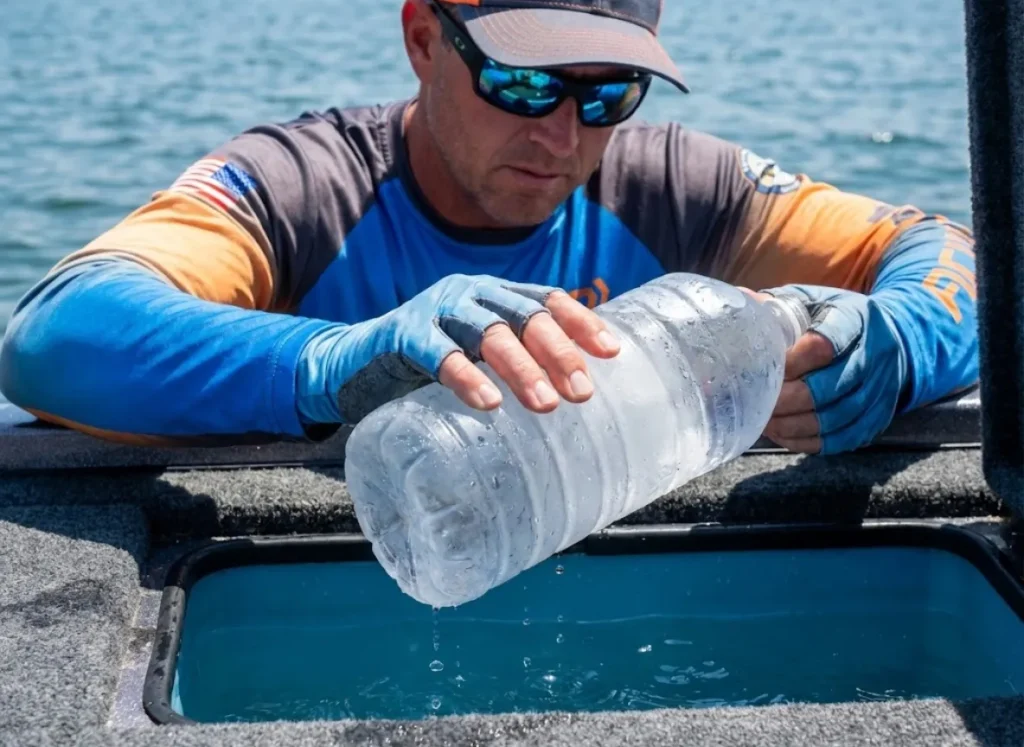
Operational instructions for a livewell are situational. You must pivot between “fair weather” protocols and “summer survival” protocols based on environmental feedback.
When Should You Pivot from Open Loop to Closed Loop?
In Spring and Fall, when water is cool (<75°F) and oxygen-rich, use the Open Loop Strategy. Run the intake pump on a timed switch (AUTO) so the pump-in flushes waste naturally. Nature provides adequate life support in these conditions.
However, when surface temps exceed 80°F, surface water is hot, low in oxygen, and often algae-laden. Pumping this into the livewell is counterproductive. This requires the Closed Loop Strategy. Early in the morning, open the valves and fill the livewell with cool lake water, then switch the valve to RECIRC to isolate the tank.
Once isolated, add a prepared livewell treatment and ice to create an artificial environment superior to the lake. In Closed Loop mode, the Recirc pump must run continuously—not on a timer—to maximize gas exchange and off-gassing CO2. If fish show signs of distress, perform a 50% water change immediately, re-treat, and re-cool. This proactive management is central to science-backed catch and release techniques.
Managing livewell water quality in summer requires specific interventions to lower metabolic rates.
How Do You Calculate and Apply Ice Correctly?
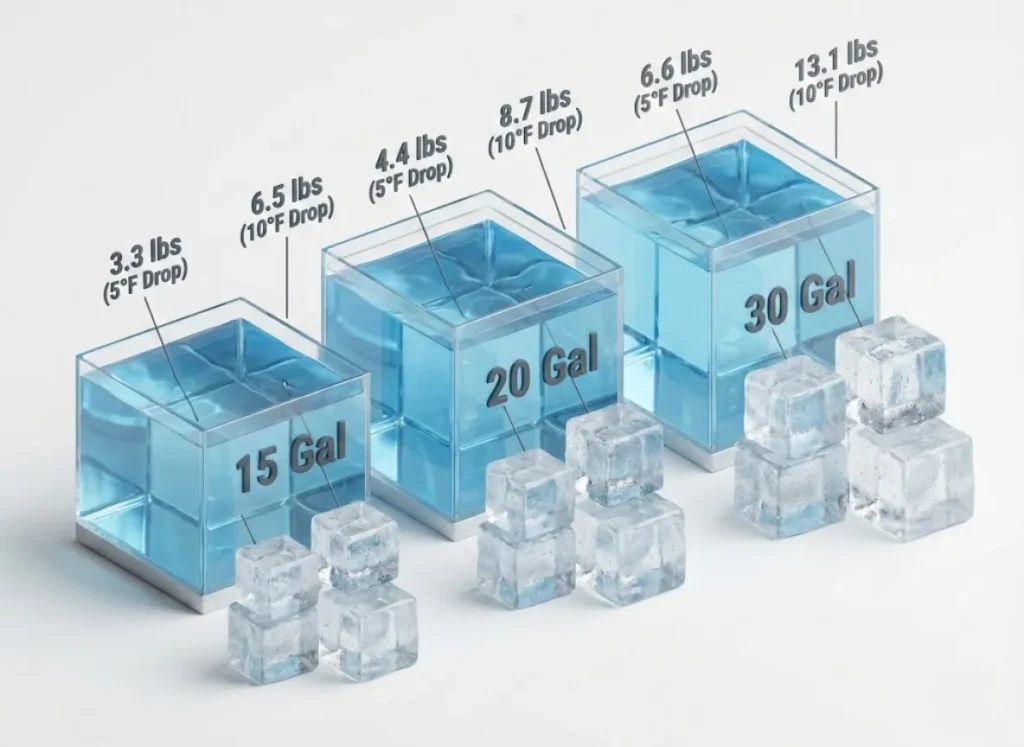
Fish are sensitive to rapid temperature changes, known as thermal shock. Never drop the livewell temperatures more than 10°F below the ambient lake temperature. This avoids shocking their immune system.
Use the standard ice-to-gallon calculator:
Lbs of Ice = (Gallons / 1000) × Desired Drop (°F) × 43.75
(Example: Cooling a 20-gallon tank by 8°F requires approximately 7 lbs of ice).
Use Block Ice (frozen water bottles) whenever possible. Blocks have less surface area than crushed ice, melting slower to provide a stable cooling effect rather than a “crash and rebound.” This stability supports the biological facts about largemouth bass metabolism.
Never dump loose convenience store ice directly into the well unless you are certain it is chlorine-free. Municipal tap water ice contains chlorine which kills fish. Instead, keep 2-liter frozen water bottles filled with lake water in your cooler. Place them in the livewell to cool via conduction without altering the water chemistry or volume. If the water gets too warm, prop lids open slightly to vent heat.
Pro-Tip: Freeze water in square Tupperware containers. They stack better in your boat cooler than round bottles and maximize space efficiency.
What are the Advanced Triage Protocols for Stressed Fish?
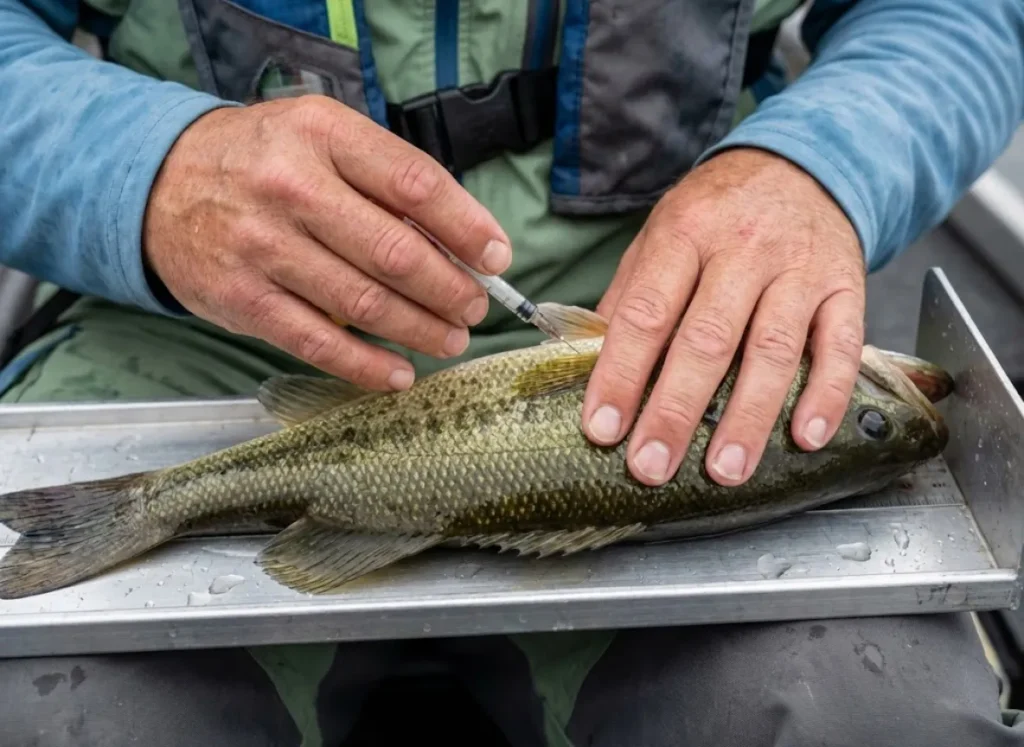
Sometimes, basic care isn’t enough. When fish suffer from barotrauma or physical injury, you must move beyond life support to field surgery.
How Do You Treat Barotrauma (Fizzing) Safely?
Barotrauma occurs in physoclistous fish (like bass and walleye) caught from depths greater than 20 feet. The swim bladder expands according to Boyle’s Law, crushing the heart and liver and causing the fish to float belly-up. A floating fish cannot regulate its position or pump water over its gills effectively; mechanical venting, or fizzing, is mandatory for relieving barotrauma.
Use the Side Method. Lay the fish on its side (submerged or on a wet board). Locate the tip of the pectoral fin, count 3-5 scales back, and insert an 18-gauge hypodermic needle at a 45-degree angle under the scale.
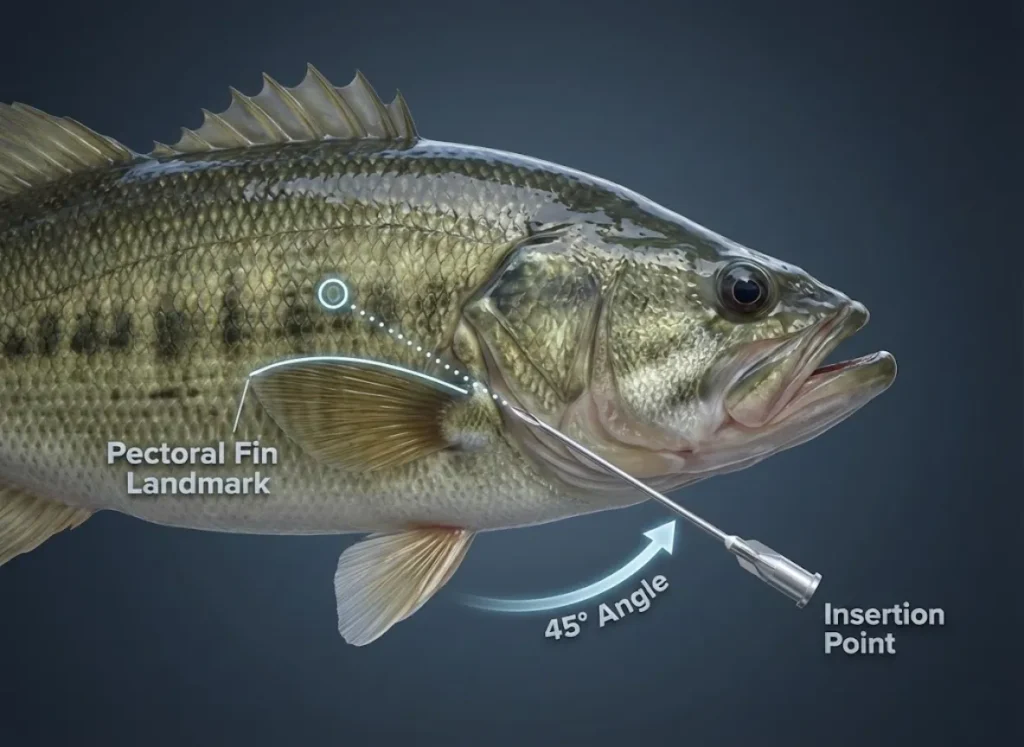
Submerge the fish and needle while venting; you should hear the hiss of escaping gas and see bubbles. Remove the needle as soon as the fish can hold itself upright. Do not squeeze the fish or attempt to force all gas out, as the bladder needs some air for neutral buoyancy. Avoid the older “Mouth Method” as it carries a high risk of puncturing the pericardium or esophagus. For a detailed breakdown, refer to a complete guide to fixing barotrauma in fish.
Studies indicate that side-venting provides significant survival benefits for bass suffering from barotrauma.
Which Additives and Culling Systems are Safe?
Never use salt-based additives (NaCl) in conjunction with an electrolytic oxygen generator (like The Oxygenator). Electrolysis converts chloride ions into Chlorine Gas, which is lethal to the entire catch. If using oxygenators, stick to additives explicitly labeled “Oxygenator Safe” (like G-Juice) which use non-chloride electrolytes.
Foam on water is a bad sign. Protein foam—a byproduct of fish waste—can seal the water surface, preventing gas exchange. Use a surfactant-based “Foam-Off” product to break surface tension.
For physical handling, replace old metal safety-pin tags with Non-Puncture Clips (e.g., Accu-Cull or Cal Coast). Piercing the lower jaw creates a wound channel for infection. Use a color-coded culling beam to make split-second weight decisions without repeatedly handling the fish. This aligns with proper techniques for holding fish correctly to minimize slime coat loss.
Additionally, many high-end boats feature blue interior walls in the livewell. This color mimics the natural open water environment, helping to reduce fish stress compared to stark white interiors. If you have a white livewell, installing a livewell partition or using a darkened livewell lid can help keep fish calm.
Proper fish handling and fizzing techniques are codified in state conservation guides.
Maintenance and Hygiene
Periodic livewell maintenance prevents cross-contamination and equipment failure. After every trip, flush the raw water system with fresh water. For deep cleaning, use a solution of white vinegar and water to remove algae and scale from inspection points and screens. Use no soap or detergents, as residue can damage fish gills. Allow ample drying time with the lids open to prevent mold growth.
Final Survival Protocols
A livewell is only as effective as the angler operating it. To ensure your catch survives to be weighed and released, remember these factual propositions:
- The Closed Loop Mandate: In water over 80°F, isolate the livewell (Recirc Mode), add ice to cool by 5-8°F, and treat with ammonia binders.
- The Oxygen Equation: Continuous recirculation frequency is non-negotiable in summer; timed aeration is insufficient for tournament loads.
- Safety First: Avoid the “Salt + Oxygenator” chemical trap to prevent fish mortality from chlorine gas.
- Intervention: Master the “Side Fizzing” technique to save deep-caught fish from barotrauma death.
Equip your boat with the right additives, needles, and knowledge today. Share your own livewell setups or troubleshooting advice in the comments below to help build a community of conservation-minded anglers.
FAQ – Frequently Asked Questions
Can I use Hydrogen Peroxide to oxygenate my livewell?
While hydrogen peroxide (H2O2) breaks down into water and oxygen, it is risky. It is best reserved for cleaning the livewell or extreme emergencies, as slight overdoses can burn fish gills.
How long should I run the recirculation pump?
In water temperatures above 75°F, run the recirculation pump continuously. Do not rely on timers, as the oxygen demand of stressed fish in hot water exceeds the passive recovery rate.
Can I put salt in a livewell with an Oxygenator?
No. Electrolysis breaks salt (NaCl) down into Chlorine Gas, which is highly toxic. Only use salt-free additives like G-Juice with these systems.
What does foam on top of the livewell water mean?
Foam indicates a buildup of dissolved organic compounds (fish waste or slime). It acts as a barrier to oxygen exchange and should be removed with a defoamer or a partial water change.
Risk Disclaimer: Fishing, boating, and all related outdoor activities involve inherent risks that
can lead to injury. The information provided on Master Fishing Mag is for educational and informational purposes
only. While we strive for accuracy, the information, techniques, and advice on gear and safety are not a substitute
for your own best judgment, local knowledge, and adherence to official regulations. Fishing regulations, including
seasons, size limits, and species restrictions, change frequently and vary by location. Always consult the latest
official regulations from your local fish and wildlife agency before heading out. Proper handling of hooks, knives,
and other sharp equipment is essential for safety. Furthermore, be aware of local fish consumption advisories. By
using this website, you agree that you are solely responsible for your own safety and for complying with all
applicable laws. Any reliance you place on our content is strictly at your own risk. Master Fishing Mag and its
authors will not be held liable for any injury, damage, or loss sustained in connection with the use of the
information herein.
Affiliate Disclosure: We are a participant in the Amazon Services LLC Associates Program, an
affiliate advertising program designed to provide a means for us to earn advertising fees by advertising and linking
to Amazon.com. As an Amazon Associate, we earn from qualifying purchases. We also participate in other affiliate
programs and may receive a commission on products purchased through our links, at no extra cost to you. Additional
terms are found in the terms of service.