
In this article
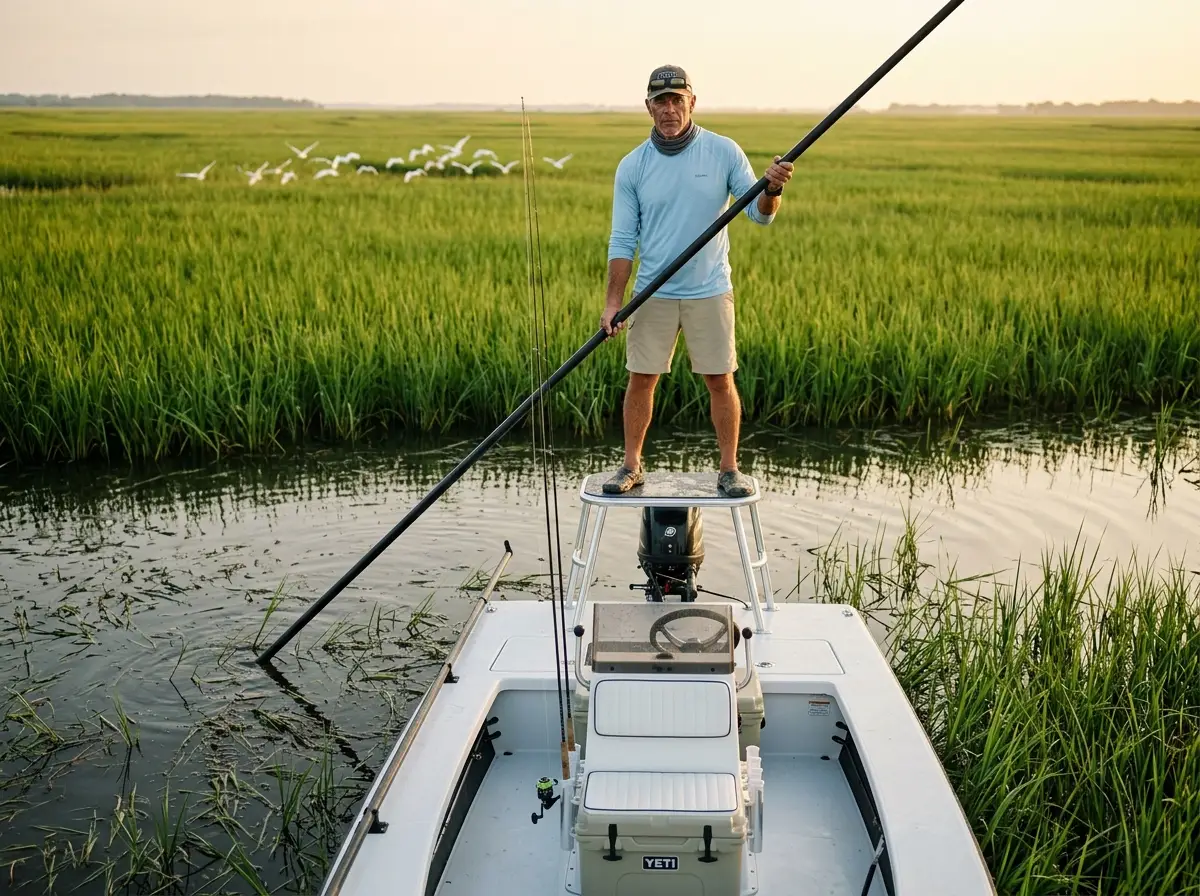
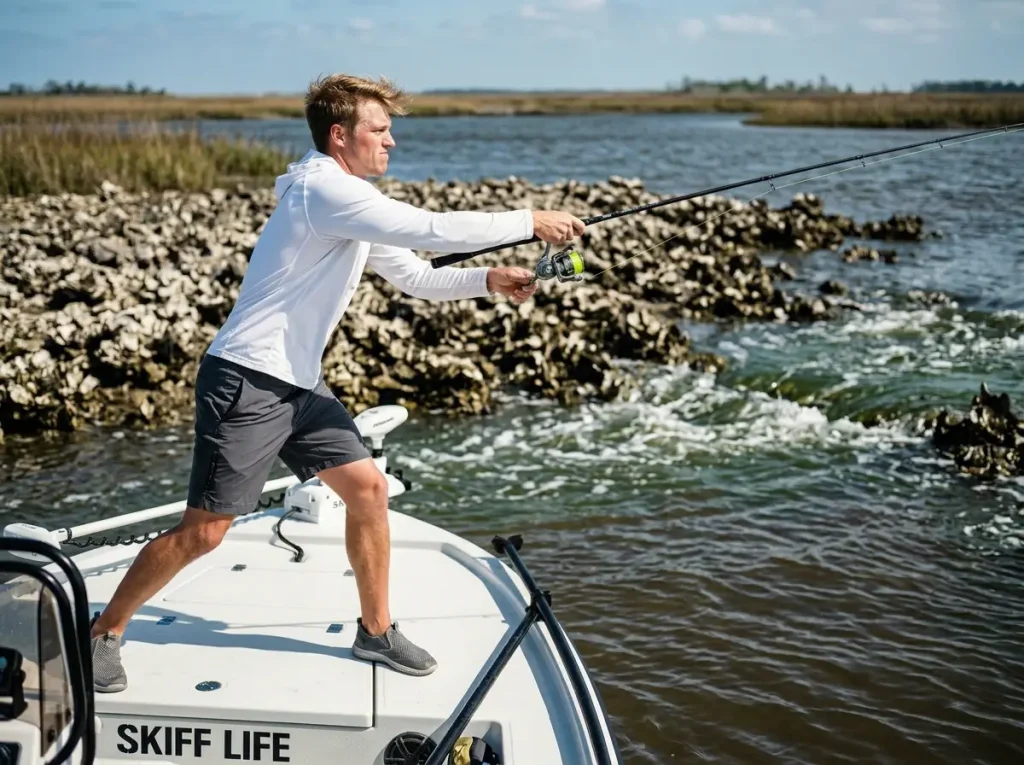
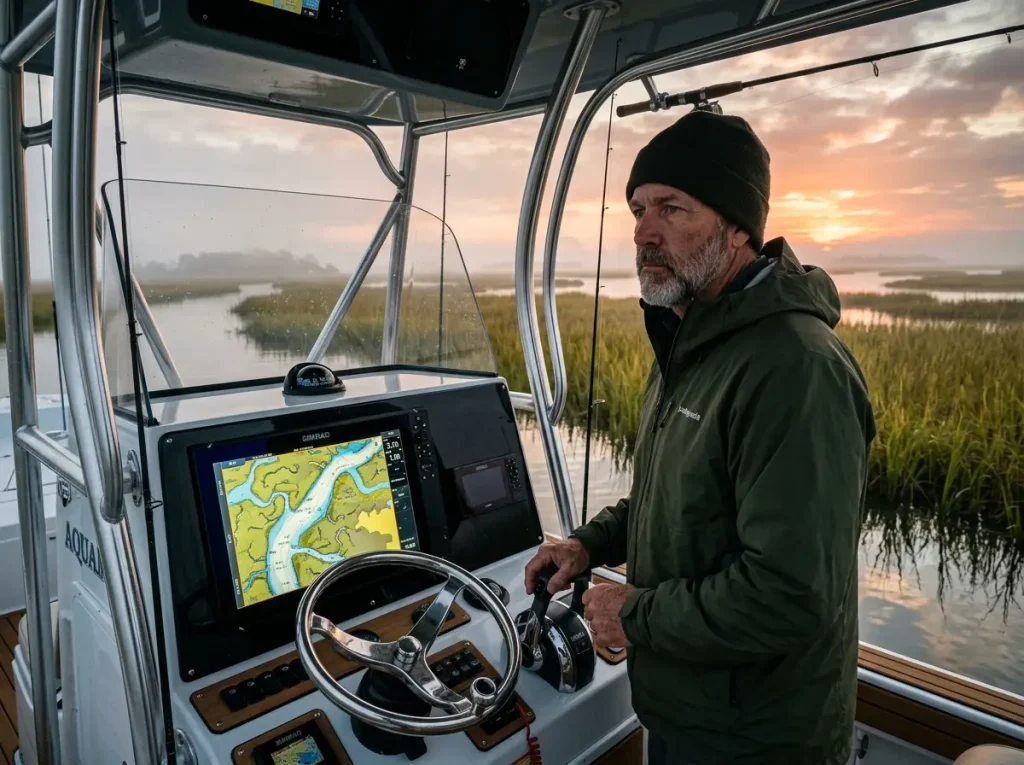
The water was gone by 7 a.m. Not low — gone. A north wind had been pushing out of the northwest for three days straight, and by the time Captain Mike Frenette idled the Hells Bay Professional to the mouth of the trenasse, the back pond behind it was ankle-deep mud. He cut the motor, grabbed the carbon fiber push pole off the rack, and didn’t say a word. He already knew where the fish were. Not because he’d checked the weather app. Because he’d run three numbers the night before that had nothing to do with what the sky looked like right now.
This is the checklist professional Louisiana marsh guides run before they ever load the truck. Louisiana marsh redfish fishing isn’t about showing up and hoping. It’s about reading a system — the hydrology, the boat draft, the optics, the regulations — before you make the first cast. The anglers who understand the physics of this marsh consistently outfish everyone else. The ones who don’t keep wondering why they blank on days that look perfect on paper.
| Louisiana Marsh Redfish — At-a-Glance Stats | |
|---|---|
| Metric | Details |
| Primary Keyword | Louisiana marsh redfish |
| Slot Limit | 18–27 inches |
| Daily Bag | 4 fish per person |
| Peak Season (Bulls) | September–November |
| Peak Season (Numbers) | March–May |
| Guide Half-Day Cost | $500–$600 |
| Guide Full-Day Cost | $700–$950 |
| Min. Boat Draft Recommended | <10 inches |
⚡ Quick Answer: In Louisiana’s inshore marsh, wind history — not current conditions — is the primary tool for predicting where redfish are. A sustained north wind for 72+ hours drains the shallow interior ponds, concentrating fish at the mouths of trenasses and bayous. To fish these spots effectively, you need a boat with less than 10 inches of draft, amber or copper polarized lenses for tannic water, and a 72-hour wind history check before you leave the dock. The 2026 slot limit is 18–27 inches, 4 fish per person, with zero retention of fish over 27 inches.
Reading the Marsh Before You Launch — The Environmental History Check
Most anglers check the wind. Good guides check the wind history. There’s a big difference.
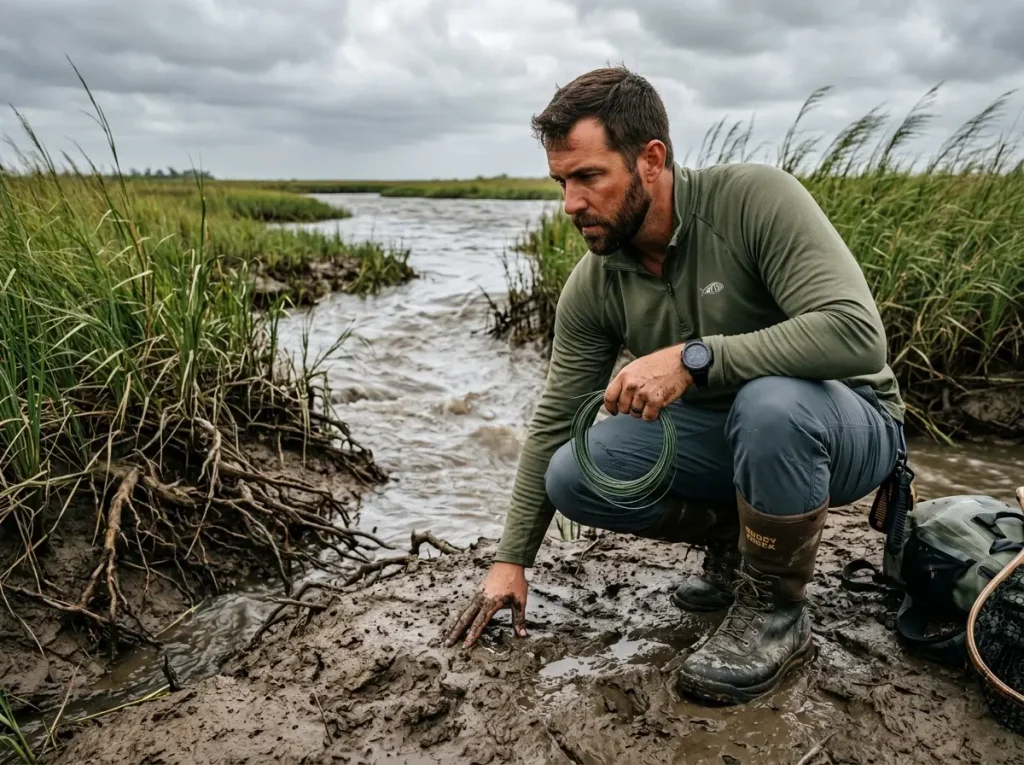
The primary driver of water levels in the Louisiana marsh isn’t the moon — it’s barometric pressure and wind direction. Lunar tides exist out here, but in the shallow interior ponds of St. Bernard Parish, Biloxi Marsh, and Delacroix, what moves water is sustained wind. A north wind blowing for 72 hours physically pushes water out of the shallow interior ponds — the marsh drain effect. Bait concentrates at the mouth of trenasses, those small natural or man-made ditches that connect back ponds to deeper bayous, and redfish follow it. Frenette positions his skiff at those mouths and looks for mud stirs. The mud turbidity is often the only cue you get.
Here’s the counterintuitive part: yesterday’s wind means nothing if the previous three days pointed north. A south wind for 72 hours stacks the marsh with high-salinity water, which opens up the northern interior ponds. A north wind for the same period does the opposite. Wind history beats wind speed every time.
Salinity matters too, and the Mississippi River runs the show. A freshwater push can drop salinity gradients from 15 ppt to 2 ppt in under 24 hours. Redfish don’t disappear when that happens — the fish are built to handle it. Red drum can maintain their internal fluid balance across water ranging from completely fresh to full-strength saltwater. They reposition into deeper holes where small pockets of saltier water remain trapped. They’re there. You just have to know where to look.
Pro tip: Check the river gauge at Carrollton, not the wind app. Salinity in Venice responds to what happened upriver four to six days ago — not what the sky looks like right now.
A barometric pressure drop preceding a cold front triggers 4–8 hours of solid pre-front feeding, followed by lock-down when the front actually passes. If you’re on the water during that window, you’ll earn it. If you’re launching after the front, look for fish tucked in the thickest grass or on the deepest available structure. They don’t leave. They just stop moving.
Watch the Louisiana Department of Wildlife and Fisheries red drum stock assessment for updates on how the Mid-Barataria Sediment Diversion is shifting salinity in the Barataria Basin — operation schedules affect fish positioning in ways that don’t show up on any app. When you add that to tidal velocity and current speed data, you start to see the marsh as a system instead of a mystery.
Manning’s n and Oyster Reefs — The Physics of Where Redfish Stand
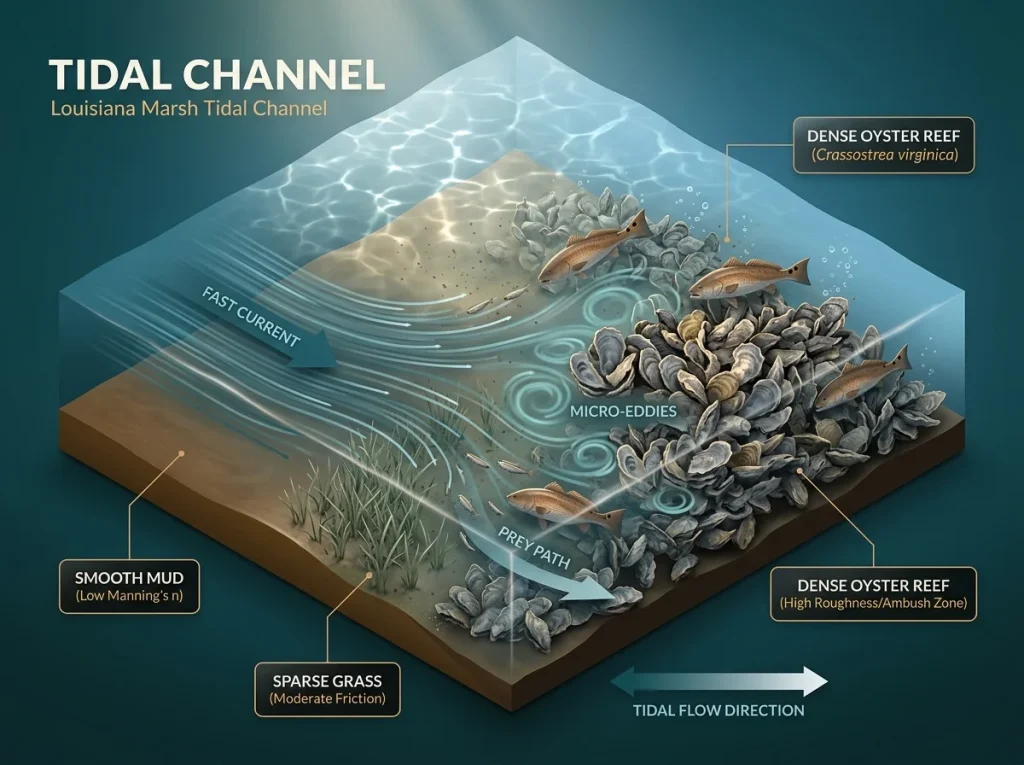
Here’s something no competitor will tell you: you can predict exactly where redfish hold on any oyster reef, any system, any tide — without local knowledge — if you understand one number.
Manning’s roughness coefficient measures how much a substrate slows water flow. Think of it as friction for water. On a smooth mud flat, friction is low — water moves fast. That’s traveling water, not holding water. Dense oyster reefs have high friction, which creates micro-eddies on the downcurrent side. Those eddies are low-energy ambush zones. Redfish park there and let the tide deliver baitfish directly to them instead of burning energy chasing food.
| Redfish Substrate and Habitat Behavior | ||
|---|---|---|
| Substrate | Roughness Level | What Redfish Do There |
| Smooth mud flat | Very low | Rapid travel, not holding |
| Sparse marsh grass | Moderate | Forage cover; slot-sized fish |
| Dense oyster reef | High | Micro-eddy ambush zones |
| Cypress roots / brush | Very high | Maximum holding; large bull reds post-front |
The practical takeaway: when the tide runs, don’t cast to the middle of the reef. Cast to the downcurrent edge — the seam where fast water meets slow. That’s where the fish sit. This pattern holds whether you’re in Hopedale, Venice, or anywhere else in the marsh. Hydraulic roughness studies in wetland vegetation confirm the same substrate values field guides have used for years.
“Mud boils” and “mud stirs” on the downcurrent side of an oyster head aren’t random turbulence. They’re a behavioral signature — a redfish actively feeding on the bottom, disturbing the substrate. If you see those, you have a tailing or feeding fish within 20 feet. Stop. Assess. Cast. Most people keep poling and blow right past the best shot of the day.
Pro tip: If a stretch of reef produces nothing on the incoming tide, flip to the opposite seam on the outgoing tide. Velocity reverses, and so does the attack angle. The fish didn’t leave — your casting position was just wrong.
Understanding how tidal flow determines predator positioning takes the guesswork out of reading unfamiliar water. The physics are the same whether you’re fishing a reef you’ve never seen or a spot you’ve worked a hundred times.
Boat Draft and the Skinny Water Equation — Why Your Hull Determines Access
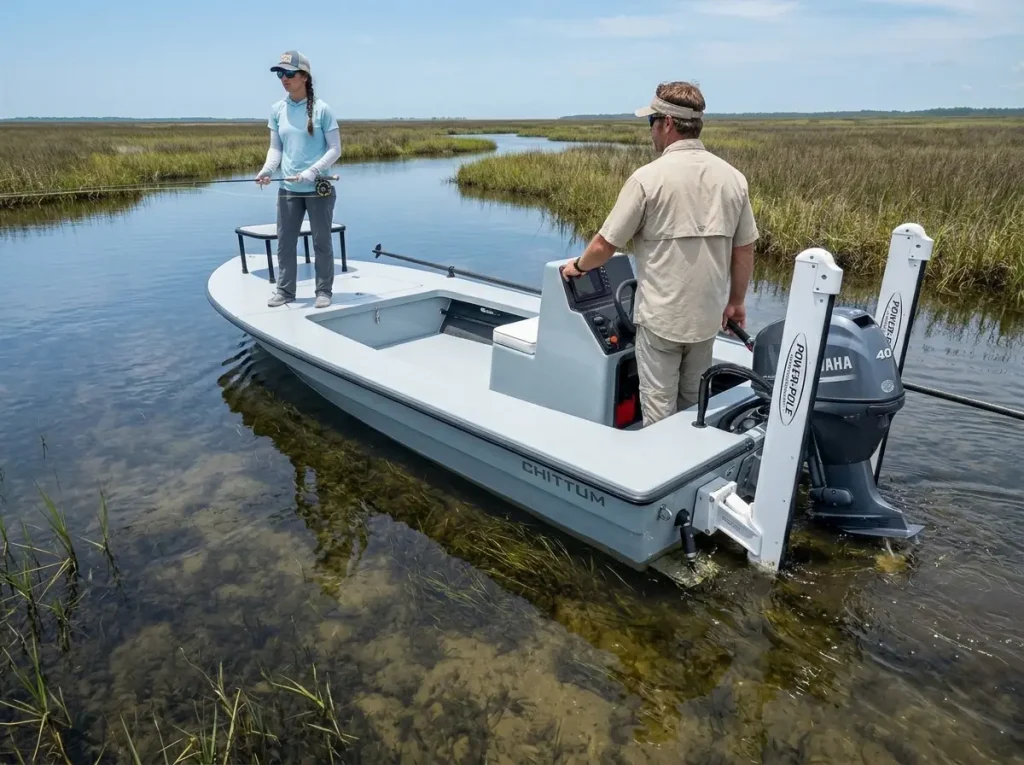
Your boat decides where you can fish. Not your skill level. Not your lure selection. Your draft.
Draft vs. Deadrise — Reading Spec Sheets Like a Pro
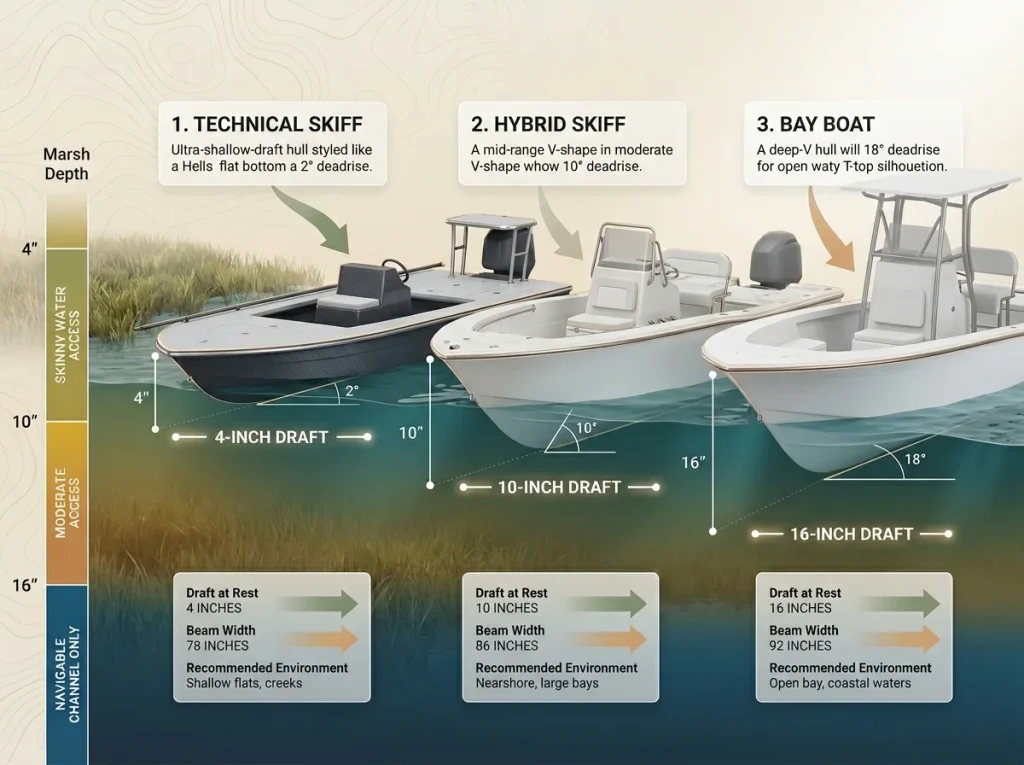
Draft is the depth of water your hull needs to float. In Louisiana’s inshore marsh, it’s the single most important spec on any boat. A technical skiff like the Hells Bay Professional draws 4.5 inches. A hybrid skiff pulls 8–11 inches. A bay boat needs 12–16 inches minimum. That difference is binary: anything over 10 inches cannot reach the unmarked interior ponds of the Biloxi Marsh, Delacroix, or the back-lake systems of St. Bernard Parish — the ponds where fish hold with zero angling pressure.
Deadrise angle is the V-angle of the hull. Flat-bottomed technical skiffs with 0°–4° deadrise get maximum skinny water access and are genuinely hazardous in Gulf chop. A V-bottom bay boat at 18°–20° deadrise handles seas fine but can’t touch the shallow interior. When evaluating a guide, the first question isn’t “what do you use?” It’s: “What’s your boat’s draft at rest?” If the answer is “bay boat,” they can’t show you the water where the unpressured fish live.
Learn more about hull geometry and habitat matching before you book any trip — understanding the tradeoffs upfront saves money and frustration.
Acoustic Stealth — What Your Hull Does to the Bite
In 12 inches of water, sound transfers through the substrate fast. Hull slap — the noise from waves hitting the hull’s chines — travels 50–75 yards and shuts down feeding redfish. Carbon fiber hulls reduce sound transmission more than fiberglass because of material density differences. That’s a real spec on technical skiffs, not marketing language.
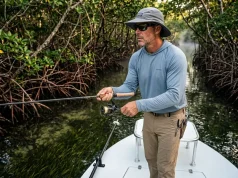
The push pole is non-negotiable. A 20-foot carbon fiber push pole eliminates electric motor hum and propeller cavitation, giving you a true silent entry into a feeding zone. A trolling motor-only guide cannot access the same water or achieve the same stealth. The poling platform matters too — elevating the guide to a 4-foot tower improves the looking angle into the water column, allowing fish detection before the fish detects you. Twin Power-Poles prevent the boat from swinging on the breeze once you’re locked on fish. These aren’t gear upgrades. They’re access requirements.
Pro Checklist — Evaluating a Guide’s Boat Before You Book
- Ask for the boat’s make and model, then look up the listed draft independently.
- Confirm push pole availability — a trolling motor-only rig cannot reach interior marsh ponds.
- Verify poling platform height (minimum 4 feet for effective sight-fishing angle).
- Request actual photos of the fishing vessel, not a water shot that hides the hull profile.
Per LSU Sea Grant redfish lifecycle and habitat factsheet, juvenile redfish use the shallow interior marsh as critical nursery habitat — accessible only to low-draft vessels. The guide who can’t get there is fishing a completely different fishery.
Seeing Redfish Before They See You — Optics in Tannic Water
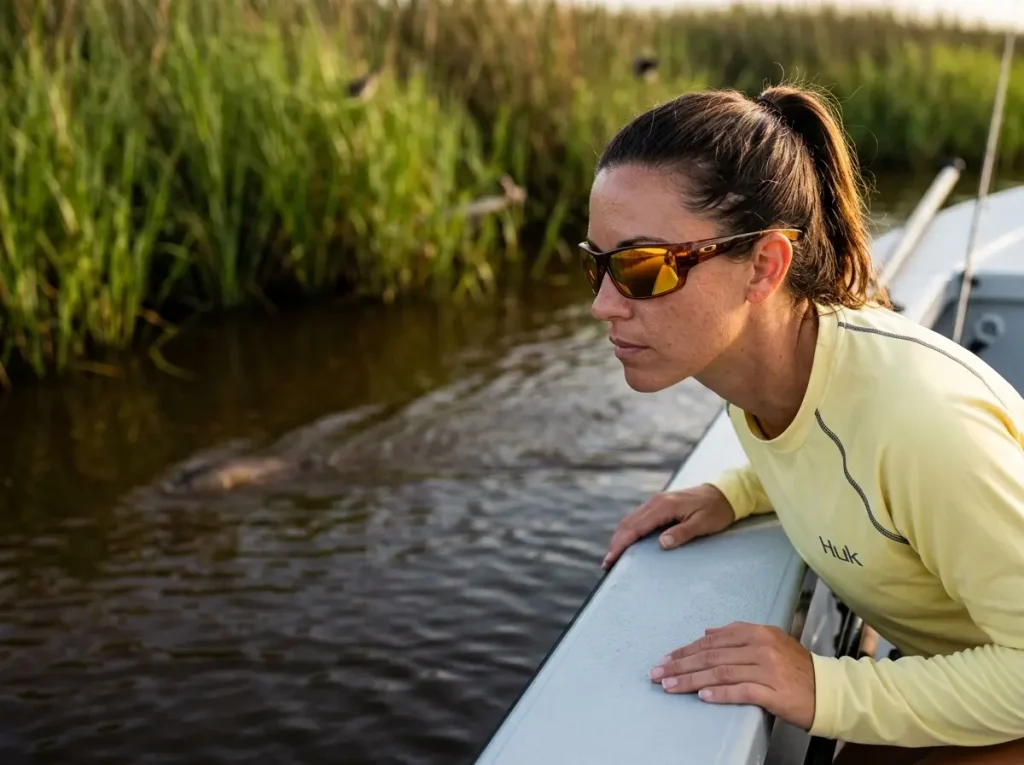
Grey lenses are a mistake in Louisiana. Most people figure this out after a full day of not seeing fish that were 30 feet away.
How Tannic Water Filters Your Vision
Louisiana marsh water is mostly tannic — tea-brown, high in organic acids. In tannic water, red and pink wavelengths absorb first. That’s why pink-and-red lures lose their visual contrast fast at depth, while black, purple, and chartreuse “lemonhead” colors hold their silhouette longer. The same wavelength physics affect anglers looking into the water: grey lenses reduce intensity uniformly, which is useful on bright saltwater flats and useless in stained conditions.
Amber or copper lenses increase contrast in stained water. They let you see the bronze-copper back of a redfish against a dark mud bottom — a distinction grey glass simply can’t make. Polarization cuts the horizontal reflected component of light and transmits the underwater image instead. Amber polarized lenses optimize both effects for Louisiana-specific conditions. In emerald water, grey lenses are fine. In the tannic interior, you’re fishing half-blind.
Pro tip: If you’re not seeing fish with grey lenses in Louisiana water, switch to amber. It’s not about light intensity — it’s about contrast against a dark substrate.
Identifying Visual Cues in the Marsh
Tailing reds in 6–12 inches of water show a caudal fin breaking the surface — most visible on calm mornings with a low sun angle. Pushing water looks like a V-shaped surface wake, subtle enough to confuse with mullet movement. Mud boils are circular or plume-shaped disturbances on a flat caused by a feeding fish — often the only visible cue in turbid conditions, and the primary thing to look for in murky drains. Nervous water is a surface agitation from a school of reds moving below — erratic, non-directional, different from wind chop. Copper flash in semi-clear water is exactly what it sounds like: an orange-gold reflection when the sun hits the fish’s lateral coloration. Most beginners see it once, don’t recognize it, and spend the next three years trying to figure out what they missed.
This video from Flats Class demonstrates the “mud in the drain” detection method — the best available demonstration of turbidity as a primary visual cue in murky Louisiana marsh conditions:
When you combine amber lenses with proper scan technique, you can practice sight-fishing with polarized equipment at a level that makes most conventional anglers look like they’re fishing blind. Which, without the right glass, they are.
Tactical Science — Popping Corks, Drag Settings, and the Terminal Strike
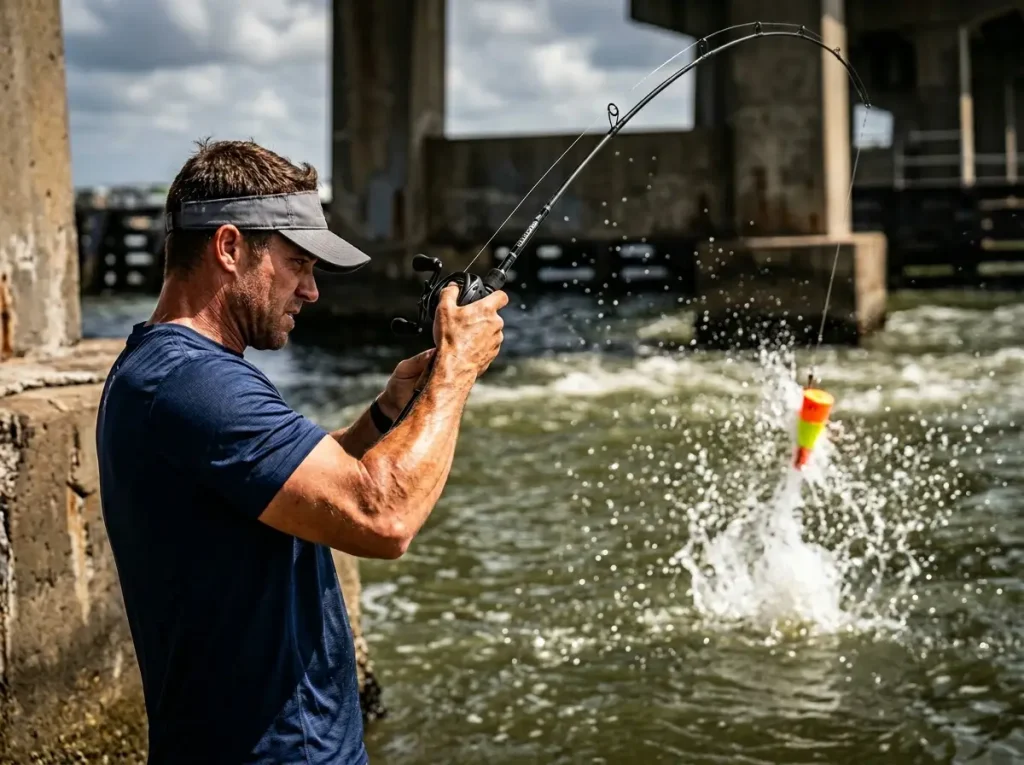
The Popping Cork — Acoustic Physics for Two Conditions
A popping cork is an acoustic lure. It mimics the sound of a snapping shrimp or a surface strike. The style you use depends on conditions, and the distinction matters.
A chugger or cupped-style cork moves more water per pop, generating a lower-frequency bloop that travels farther in murky or choppy water. It’s a calling tool — you’re pulling fish from a distance. A cigar or oval-style cork produces a subtle clacking bead sound with minimal splash. That’s for calm, clear water where you don’t want to spook fish that can already see the bait.
The pendulum effect is what actually triggers strikes. The pop lifts the lure vertically; the pause lets it flutter back down. The micro-pause between the pop and the drop — not the pop itself — is when most strikes occur. Redfish are bottom-oriented feeders. The sinking phase triggers the predatory reflex. Standard leader length below the cork: 18–24 inches in shallow water, extended to 36 inches in depths over 3 feet to keep the lure off the substrate.
Drag Settings for Structural Fishing vs. Open Flats
The 1/3 Rule isn’t optional. Set drag at one-third of your line’s breaking strength: 10 lbs for 30 lb braid, 6.5–7 lbs for 20 lb braid. When fishing oyster reefs, bridge pilings, or submerged structure, override that rule and push drag to 15–20 lbs. A redfish on 10 lbs of drag reaches the reef edge before the rod loads. At 20 lbs, you turn the fish before it gets there. Losing the fish to structure is always an operator error.
Line choice: 20–30 lb braided main line with a 20–30 lb fluorocarbon leader. Fluoro’s lower light-bending index makes it near-invisible in water — relevant in clear emerald water conditions, less critical in tannic marsh. Circle hooks self-set in the corner of the jaw on a smooth, continuous retrieve. They prevent gut-hooking and are the right choice for catch-and-release targeting of slot fish.
Lure Selection Matrix for Louisiana Water Types
| Fishing Conditions and Lure Recommendations | |||
|---|---|---|---|
| Water Type | Visual Conditions | Top Lure Colors | Technique |
| Tannic/Stained | Low visibility | Black/Purple, Chartreuse, “Lemonhead” | Popping cork, slow sink |
| Emerald/Clear | High visibility | Gold spoon, natural crab/shrimp imitation | Sight-casting, Texas rig |
| Post-front/Cold | Clear, cold | Slow-sink paddle tail, 1/8 oz jig head | Bottom crawl along oyster edge |
Understanding how water turbidity affects lure color visibility is the fastest way to eliminate guesswork in lure selection across conditions.
The 2026 Regulation Changes and the Conservation Science Behind Them
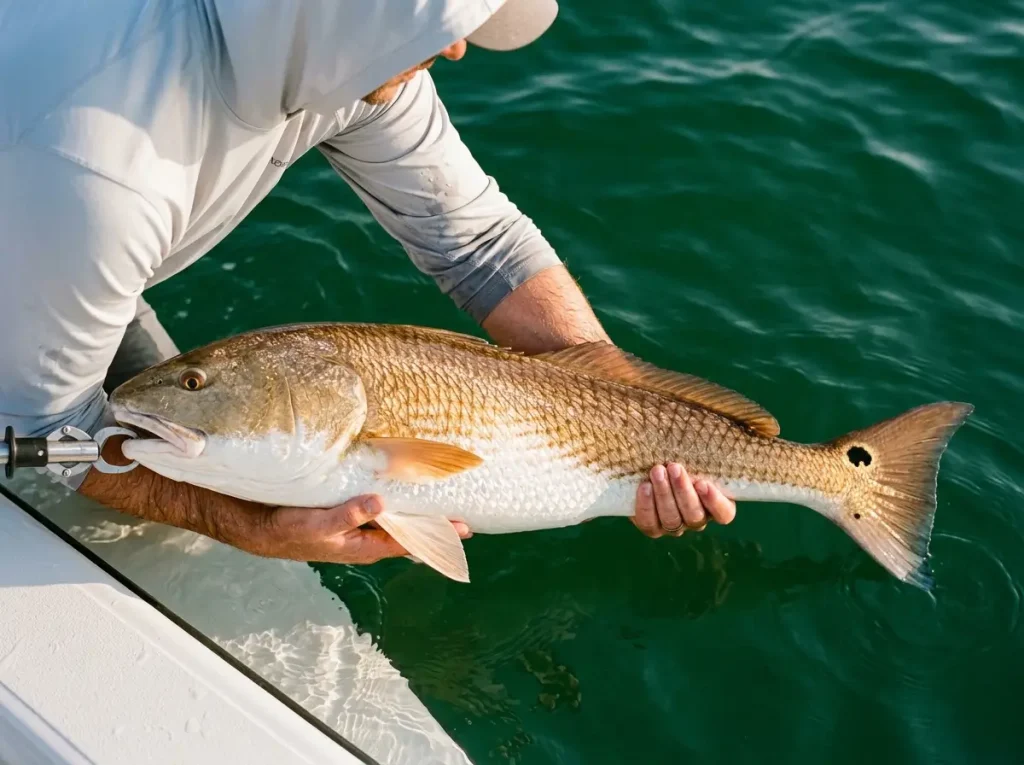
The rules didn’t change because LDWF felt like it. They changed because the data required it.
The Escapement Rate Problem — Why the Limits Dropped
Louisiana LDWF uses otolith ring-counting — the same principle as tree rings — to determine age and growth rates in redfish spawning cycles. The current escapement rate for Louisiana red drum is 20%. The management target is 30%. That 10-point gap represents the fraction of juveniles that need to survive the inshore fishery and join the offshore spawning stock but currently don’t.
The Spawning Potential Ratio sits at 20% and has been declining since 2005, according to Louisiana LDWF red drum regulation and stock assessment data. A healthy population requires that ratio above 30%. The result: starting in 2024–2026, Louisiana reduced recreational bag limits to the current 18–27 inch slot, 4 fish per person per day, with zero retention of fish over 27 inches. Those limits exist to protect the largest, most reproductively active individuals — the ones producing 1.5–2 million eggs per season. Bull redfish over 27 inches gather near high-salinity passes and barrier islands from mid-August through mid-October, at 40–70 feet depth offshore, specifically to spawn. Those fish are the leverage point for population recovery. The regulations are designed to let more of them get there.
The Marsh Loss Multiplier
Louisiana loses approximately 16 square miles of coastal marsh per year — the fastest rate of any coastal state in the US. That’s not an abstract number. Marsh loss directly reduces nursery habitat for young-of-year redfish, compressing the inshore rearing environment and increasing juvenile mortality from predation and starvation. Fewer juveniles reach slot size. Fewer anglers make their limit. This is already happening in some basins.
The Mid-Barataria Sediment Diversion will introduce Mississippi River sediment and freshwater into Barataria Basin, partially restoring the salinity gradients that juvenile redfish require for early survival. According to mississippiriverdelta.org, coastal marsh restoration is the most effective long-term strategy for maintaining the estuarine nursery systems that inshore fisheries depend on. Anglers should monitor diversion operation schedules — they shift fish positioning in ways that don’t show up anywhere else.
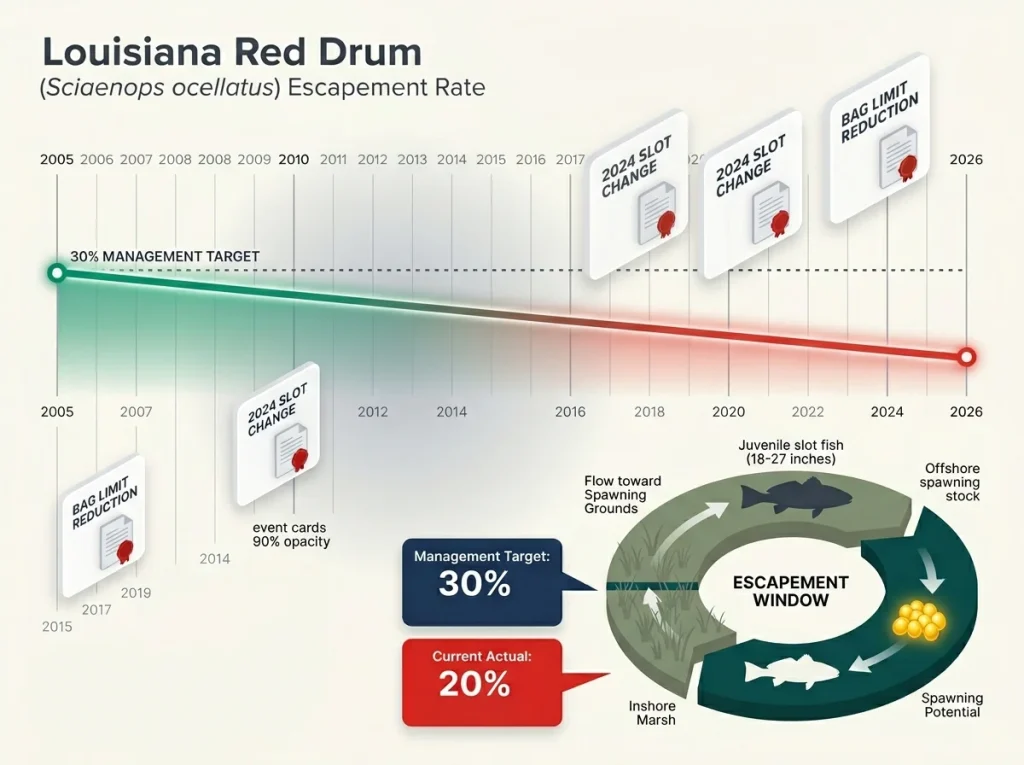
Proper Handling for Released Bull Reds
A 30-pound fish is not a 30-pound bag of groceries. Support it horizontally at the belly — the organ cavity of a bull red is not supported by the jaw structure, and jaw-hanging causes internal displacement and spinal stress. This isn’t a preference. It’s a physiology issue.
For fish caught in passes deeper than 30 feet, barotrauma — swim bladder overinflation — is a real risk. Use a weighted descending device to return the fish to depth. Needle venting introduces infection risk and is inferior to descending. Air exposure: 30 seconds maximum is the threshold before measurable gill oxygen depletion begins. Keep photographed fish in the water or above a wet surface. Follow fish handling protocols that improve post-release survival to give released bull reds the best odds of surviving the encounter.
Venice vs. Hopedale vs. Biloxi Marsh — Choosing Your Location
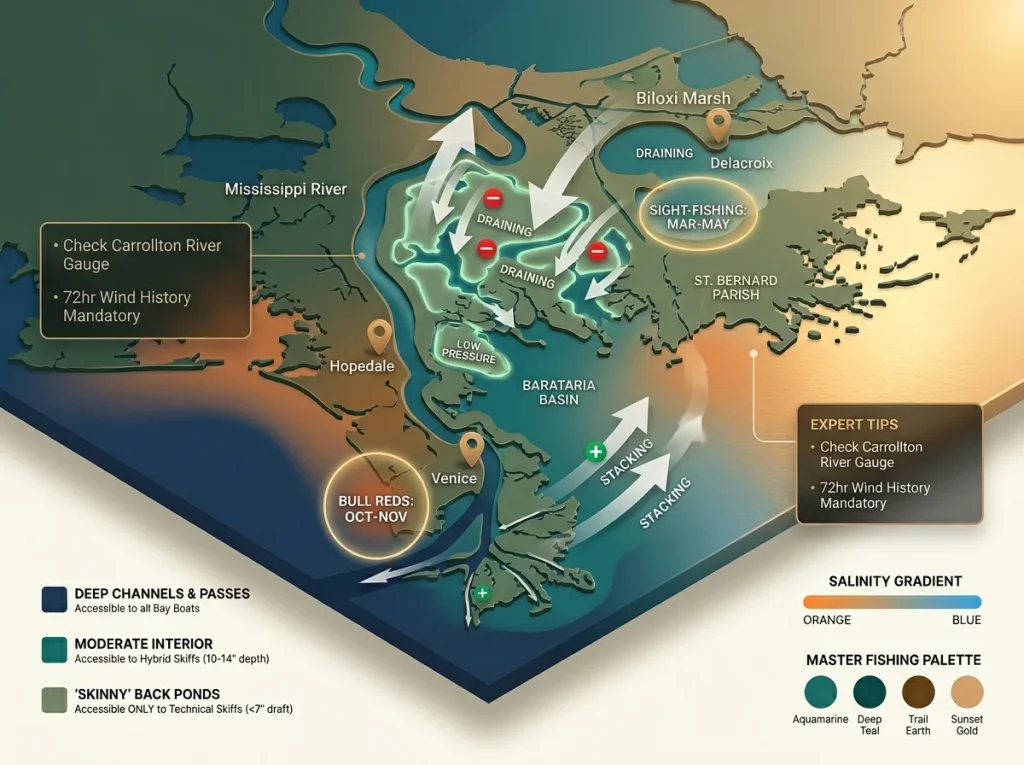
The three primary Louisiana marsh fishing regions aren’t interchangeable. They fish differently, require different equipment, and peak at different times.
Venice — The High-Salinity, High-Pressure South
Venice sits at the mouth of the Mississippi River, giving it direct Gulf access and higher average salinities. Fall bull red season — October through November — is the reason most people drive to Venice. Spawning aggregations move near the passes, bull reds are stacked, and the fishing can be exceptional. Bay boats can handle the open-water runs to the barrier island passes, but interior ponds require a hybrid or technical skiff. Pressure level: moderate-to-high. Venice is the most well-known Louisiana redfish port — guides, traffic, and recreational boats reflect that. If you want solitude, this isn’t it.
Hopedale and Delacroix — The Pressure-Free Interior
Hopedale and Delacroix in St. Bernard Parish access the interior ponds of the Biloxi Marsh — a shallow labyrinth largely inaccessible to bay boats. Average fishing depth: 6–18 inches. A technical skiff with less than 7 inches of draft is not optional here. Salinity runs brackish to low, depending on river discharge, making these areas more vulnerable to freshwater pushes than Venice. Pressure level: significantly lower. Fish in the unmarked back ponds may see zero boat traffic for days. That matters for fish behavior in ways you feel immediately when you get there.
Spring is the best window for sight-fishing schools in the interior — March through May, when water warms earlier in the shallow ponds and concentrates feeding schools in predictable locations. For fly-fishing specialization or anyone building a cast and blast duck hunting combo trip, St. Bernard Parish is the right call.
The Decision Matrix — How to Match Location to Your Goals
| Louisiana Fishing & Boating Activity Guide | |||
|---|---|---|---|
| Goal | Recommended Area | Boat Required | Season |
| Bull reds (Oct spawn run) | Venice passes | Bay boat or hybrid | Oct–Nov |
| Sight-fishing pressure-free ponds | Delacroix/Biloxi Marsh | Technical skiff (< 7″ draft) | March–May, Sept–Oct |
| Fly fishing specialization | Hopedale/Biloxi Marsh | Technical skiff with poling platform | March–May |
| “Cast and Blast” (duck combo) | St. Bernard Parish | Any hull | Oct–Jan |
LSU Sea Grant redfish habitat and lifecycle data confirms the seasonal distribution — juveniles use the shallow interior while adults move toward high-salinity passes for spawning. Understanding that lifecycle tells you where to be and when.
For anglers looking at the broader Gulf picture, Gulf of Mexico inshore fishing tactics and seasonal patterns provides the regional context for how Louisiana fits into the larger inshore ecosystem.
Conclusion
Three things you leave with.
First, wind history runs this fishery — not current wind, not a weather app, not a tide chart. Pull the 72-hour history, determine whether you’re fishing a drained marsh or a stacked one, and adjust your location accordingly before you load the truck. That single habit changes more days on the water than any gear purchase.
Second, draft is a binary filter. Anything over 10 inches eliminates access to the pressure-free interior ponds — the ones where sight-fishing vs. popping corks debates actually matter, because you’re actually on unpressured fish. If your guide runs a bay boat, you’re not fishing the same water a technical skiff reaches. Period.
Third, the 2026 regulations aren’t arbitrary. The escapement rate sits at 20% against a 30% management target, and the population has been declining since 2005. Every voluntarily released bull red above the slot limit that swims back to the offshore spawning aggregation is a direct contribution to recovery. That fish produces 1.5–2 million eggs per season. Handle it accordingly.
On your next trip to the marsh, check the river gauge at Carrollton, run the 72-hour wind history, and know your boat’s draft before you pick a location. That pre-trip checklist is what separates a guide who finds fish from an angler who hopes they’re there.
FAQ
What is the best month to fish for redfish in Louisiana?
October is the single best month — bull redfish aggregate near high-salinity passes and barrier islands for the annual spawn run while the marsh hits peak salinity after summer. November remains excellent. Spring — March through May — is the best period for high-numbers sight-fishing in shallow interior ponds, especially in the Biloxi Marsh and Delacroix.
How much does a Louisiana redfish guide cost?
A half-day inshore trip (4 hours, 1–2 anglers) runs $500–$600. A full-day with fish cleaning included runs $700–$950. Fly-specific technical skiff trips with specialist access go $800–$1,200. Price differences reflect the equipment required, not the guide’s quality — a guide running a bay boat cannot access the same water as a technical skiff operator.
What is the current redfish slot limit in Louisiana in 2026?
The slot is 18–27 inches, with a 4-fish daily bag per person. Zero retention of fish over 27 inches. These limits reflect a documented escapement rate of 20% — below the 30% management target required for sustainable population replacement.
Do I need a poling skiff to fish the Louisiana marsh effectively?
Not for all of it. Bay boats access Venice passes and open-water ledges without issues. For the interior ponds of Biloxi Marsh, Delacroix, and the back-lake systems of St. Bernard Parish, less than 10 inches of draft is effectively required. A push pole determines which fish actually see a presentation — a trolling motor alone doesn’t get you there.
What lens color works best for sight-fishing in tannic Louisiana water?
Amber or copper — not grey. Tannic water absorbs red wavelengths and creates a dark, low-contrast environment. Amber lenses increase contrast, which lets you distinguish the bronze-copper back of a redfish against a mud bottom. Grey lenses reduce intensity uniformly — useful on bright saltwater flats, counterproductive in stained Louisiana marsh conditions.
Risk Disclaimer: Fishing, boating, and all related outdoor activities involve inherent risks that
can lead to injury. The information provided on Master Fishing Mag is for educational and informational purposes
only. While we strive for accuracy, the information, techniques, and advice on gear and safety are not a substitute
for your own best judgment, local knowledge, and adherence to official regulations. Fishing regulations, including
seasons, size limits, and species restrictions, change frequently and vary by location. Always consult the latest
official regulations from your local fish and wildlife agency before heading out. Proper handling of hooks, knives,
and other sharp equipment is essential for safety. Furthermore, be aware of local fish consumption advisories. By
using this website, you agree that you are solely responsible for your own safety and for complying with all
applicable laws. Any reliance you place on our content is strictly at your own risk. Master Fishing Mag and its
authors will not be held liable for any injury, damage, or loss sustained in connection with the use of the
information herein.
Affiliate Disclosure: We are a participant in the Amazon Services LLC Associates Program, an
affiliate advertising program designed to provide a means for us to earn advertising fees by advertising and linking
to Amazon.com. As an Amazon Associate, we earn from qualifying purchases. We also participate in other affiliate
programs and may receive a commission on products purchased through our links, at no extra cost to you. Additional
terms are found in the terms of service.