
In this article
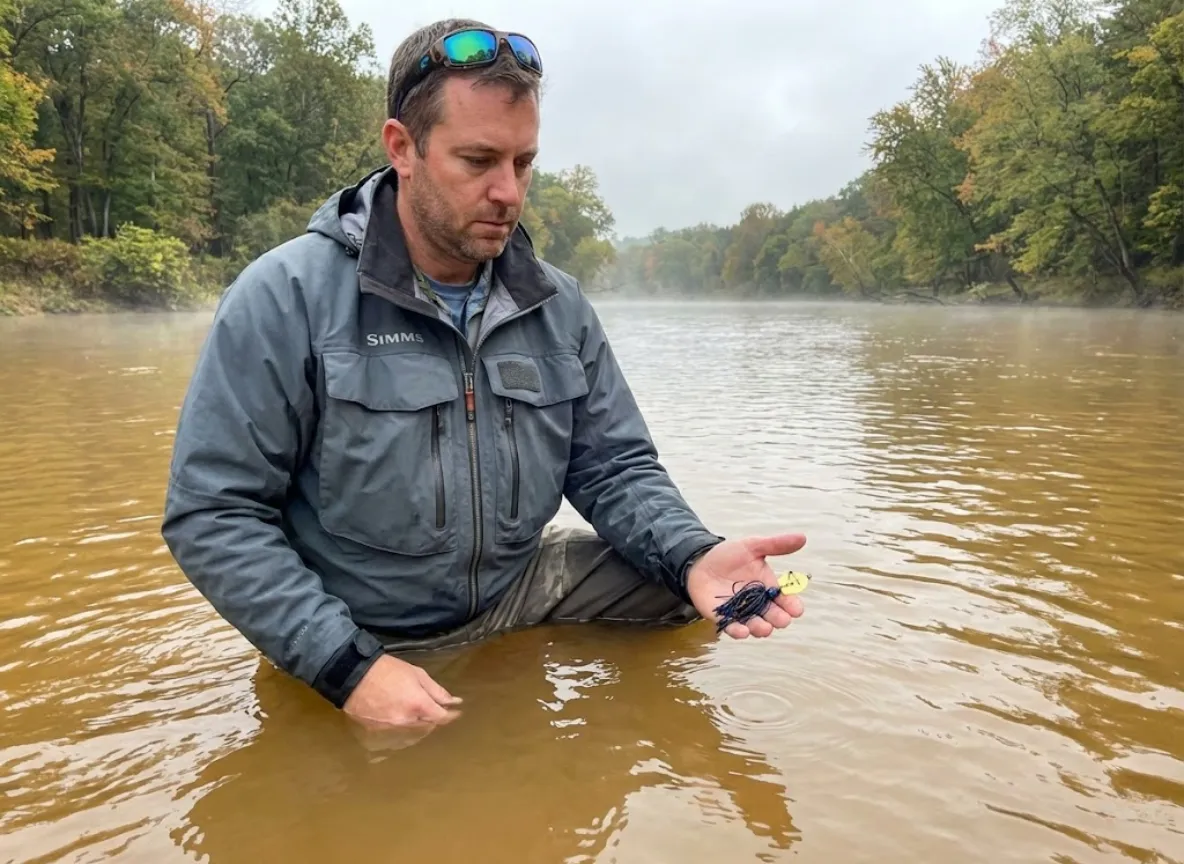
The spinnerbait was perfect—gold Colorado blade, white skirt, textbook retrieve along the riprap. But after forty-five minutes of working stained water that should have been loaded with bass, I hadn’t felt a single tick. Then the old-timer two docks down pulled in his fifth keeper on a jet-black jig. “Wrong color for the soup,” he called over, grinning.
That moment stuck with me for twenty years. I’d believed lure color was mostly about angler confidence—until I started paying attention to the physics. Now, after fishing everything from chocolate-milk river runoff to gin-clear mountain lakes, I can tell you this: water turbidity changes everything about how fish see your presentation.
Here’s exactly how light behaves underwater, why fish switch from their eyes to their lateral line when visibility drops, and which colors actually work in murky water—backed by science, not tackle-shop folklore.
⚡ Quick Answer: In turbid water, lure visibility depends on contrast, not color theory. Dark colors (black, black/blue) create silhouettes fish can see against the lighter sky above. Bright colors (chartreuse, orange, white) pop against muddy backgrounds. As water clarity drops below 3 feet, switch from natural patterns to bold, high-contrast options and add rattles or blades to trigger the fish lateral line system when vision fails.
The Physics of Light Underwater
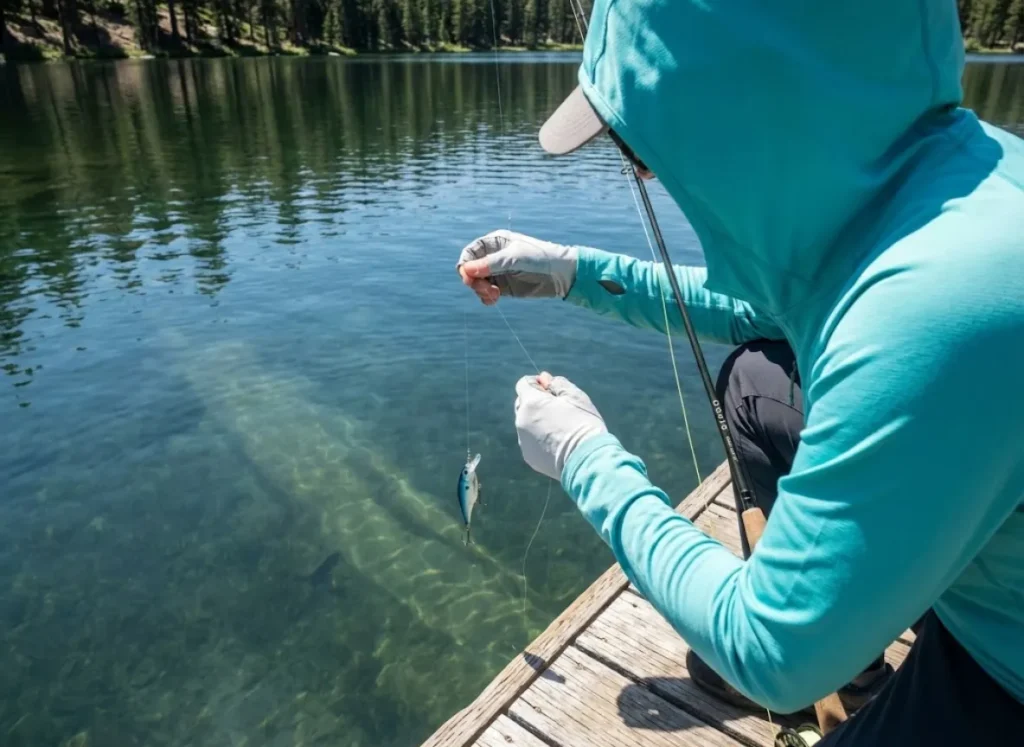
Understanding why colors disappear at depth starts with wavelength. Each color in the visible light spectrum has a different wave size, and water absorbs longer wavelengths faster than short ones.
How Wavelengths Determine Color Penetration
Red light vanishes first—absorbed within the first 15-20 feet in most freshwater conditions. This is why that cherry-red crankbait looks dull brown at depth. Orange follows around 20-30 feet, then yellow at roughly 45 feet. Green light pushes to around 65 feet, while blue and violet wavelengths can penetrate 110 feet or more in clear conditions.
This explains why deep-water trollers reach for blue and silver combinations while shallow-water bass pros pack orange and red plastics. The physics are straightforward: longer wavelengths carry less energy and get absorbed faster. That light penetration chart on the tackle shop wall isn’t decoration—it’s a roadmap for lure color selection.
Pro tip: In deep, clear lakes, swap your favorite red crankbait for blue or green patterns once you’re working structure below 20 feet. The fish literally cannot see that red anymore.
Vertical vs. Horizontal Visibility: The Hidden Factor
Here’s what most color charts miss: those penetration depths measure light traveling straight down from the surface. Horizontal visibility—the distance a fish can see your lure from the side—degrades much faster.
Suspended particles scatter sunlight in all directions, creating an underwater fog that shrinks the visual field regardless of depth. In turbid water, horizontal visibility might be measured in inches rather than feet. A bass sitting 20 feet deep in stained conditions may only detect your lure from 18 inches away.
This matters because fish are ambush predators. They don’t look directly up at prey—they approach from the side or below. When horizontal visibility drops, even “visible” colors become useless if the fish can’t see them from attack range. For a deeper understanding of how fish perceive colors underwater, the biology of fish vision adds another layer to this puzzle.
Why At-Depth Colors Surprise Anglers
Many anglers assume blue lures work best in all water because “blue penetrates deepest.” But this ignores the reality of shallow, turbid conditions. In water with 2-foot visibility, red and orange may provide better contrast within the limited light zone where fish are actually hunting.
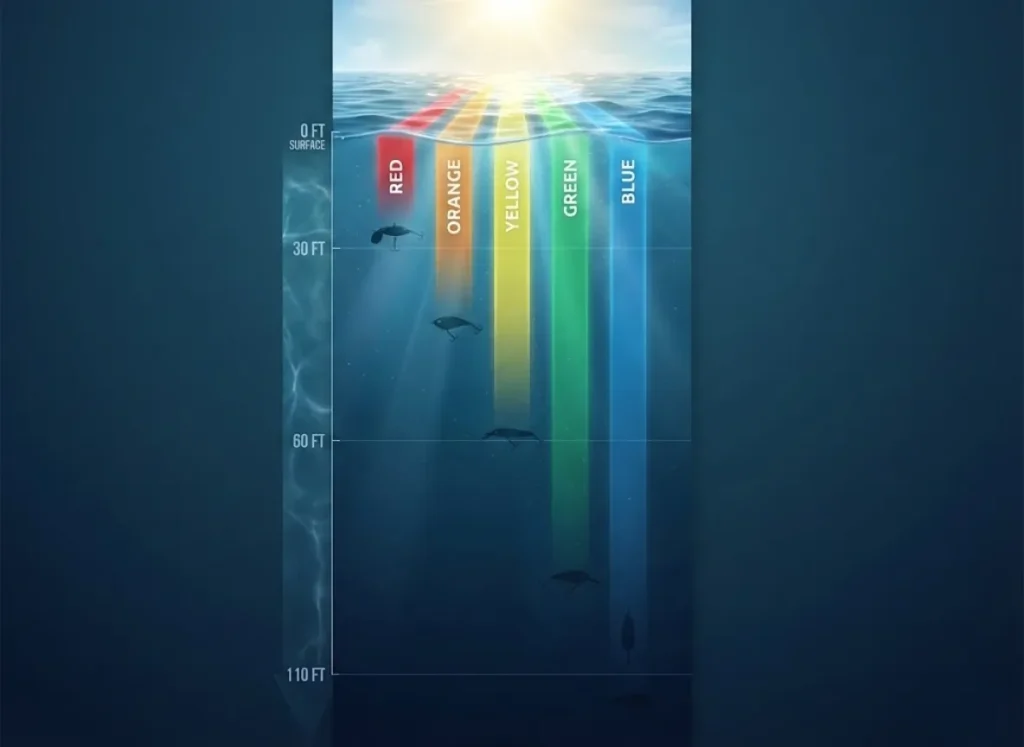
At 30 feet depth, less than 25% of surface light remains. At 300 feet, roughly 0.5% survives. But in 3-foot visibility muddy water at 5 feet deep, the entire light spectrum is compressed into that narrow zone—and suddenly red becomes fully visible while blue offers no advantage.
Understanding Turbidity: More Than “Dirty Water”
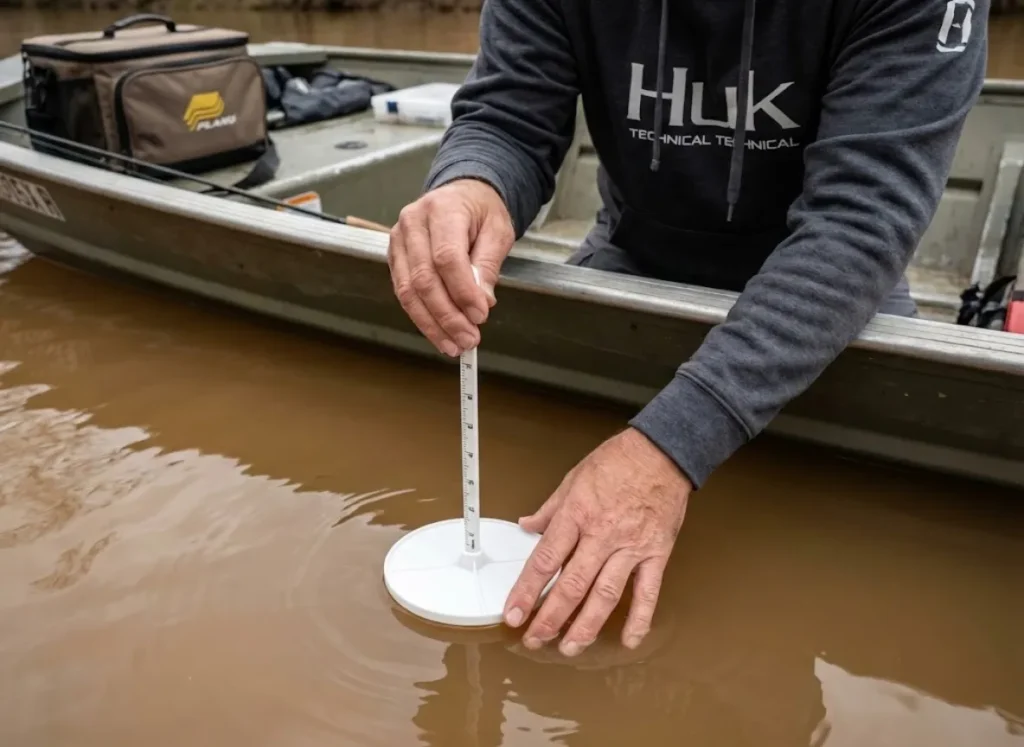
Turbidity isn’t just dirtiness—it’s a specific measurement of how suspended particles obstruct light. Different particle types affect visibility in different ways, which matters for your lure selection strategy.
What Creates Turbidity and Why It Matters
Algal turbidity comes from phytoplankton blooms and absorbs light differently than mineral sediments. Peer-reviewed fish vision research shows that fish visual detection gets compromised more severely in algal conditions compared to equivalent levels of sedimentary turbidity.
Runoff-induced turbidity mixes organic and mineral components, typically creating the year’s most challenging visibility conditions. Understanding the source helps predict behavior: algal blooms trigger different fish responses than muddy water from spring rain events.
Measuring Water Clarity: The Secchi Disk Method
A Secchi disk—an 8-inch black-and-white disk lowered into water until it disappears—provides consistent, repeatable clarity measurements. The depth at which it vanishes establishes your water clarity categories: clear (8+ feet visibility), lightly stained (4-8 feet), stained (2-4 feet), or dirty (0-2 feet).
A clarity tube offers a more portable option for wade fishermen and kayak anglers. Either way, tracking Secchi depth in your fishing log reveals patterns between clarity and catch rates that guessing never provides.
Pro tip: Keep a white coffee mug lid tied to fishing line in your tackle bag. Not as scientific as a proper Secchi disk, but it gives you a quick read on visibility within 30 seconds of launching.
How Turbidity Shifts Through the Seasons
Spring runoff creates heavy sediment loads from snowmelt and erosion. Summer brings algal blooms that absorb light through phytoplankton rather than scatter it like sediment. Fall lake turnover mixes oxygen-depleted bottom water with surface layers, temporarily spiking turbidity throughout the water column.
Wind events on shallow lakes stir bottom sediments, creating localized turbidity that moves with current patterns. Smart anglers check weather forecasts and plan arrivals accordingly—the conditions at 7 AM often differ dramatically from conditions at noon.
How Fish Adapt: The Sensory Shift
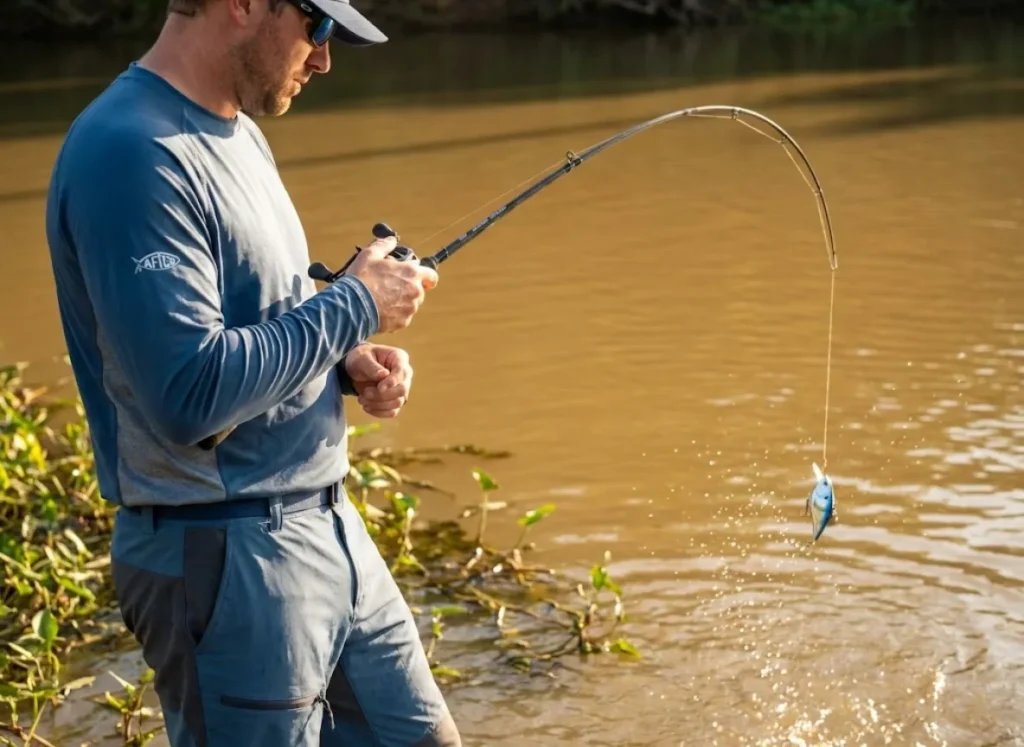
When visibility drops, fish don’t just squint harder. They shift to backup sensory systems that don’t rely on sight at all.
The Lateral Line: A Fish’s Underwater Radar
The fish lateral line system consists of neuromasts—sensory hair cells that detect water movement, pressure changes, and vibration. These mechanoreceptors allow fish to sense prey without relying on vision. In turbid water, fish transition from visual hunters to vibration trackers.
The murkier the water, the shorter the detection range. This sensory shift explains why rattling crankbaits and thumping spinnerbaits outperform finesse lures in dirty water conditions. The fish literally can’t see your 4-inch worm from far enough away to strike it.
Understanding the lateral line detection system helps explain why bulk, rattles, and water-pushing blade designs become essential as clarity drops.
Scent and Sound: Secondary Compensation Systems
Many species increase reliance on olfactory systems when visual detection fails. This explains why scented soft plastics often outperform unscented options in low visibility water. Fish are using every non-visual sense to locate prey.
Fish inner ears detect particle motion and sound, providing additional sensory input. Rattles in crankbaits create acoustic signatures fish can track from greater distances than they can see. The practical rule: as turbidity increases, add sensory elements—rattles, scent attractants for inactive fish, and water-pushing blade designs.
The Behavioral Shift: Less Selective, More Reactive
Here’s the silver lining for anglers: fish become less picky in turbid conditions. They attack slower-moving and less precise prey presentations because reduced visibility shortens decision windows. Fish must strike faster with less visual confirmation.
This behavioral shift benefits anglers using reaction baits like lipless crankbaits and chatterbaits. Don’t overthink presentation in dirty water—speed and vibration matter more than subtlety.
The Contrast Principle: Color Selection That Actually Works
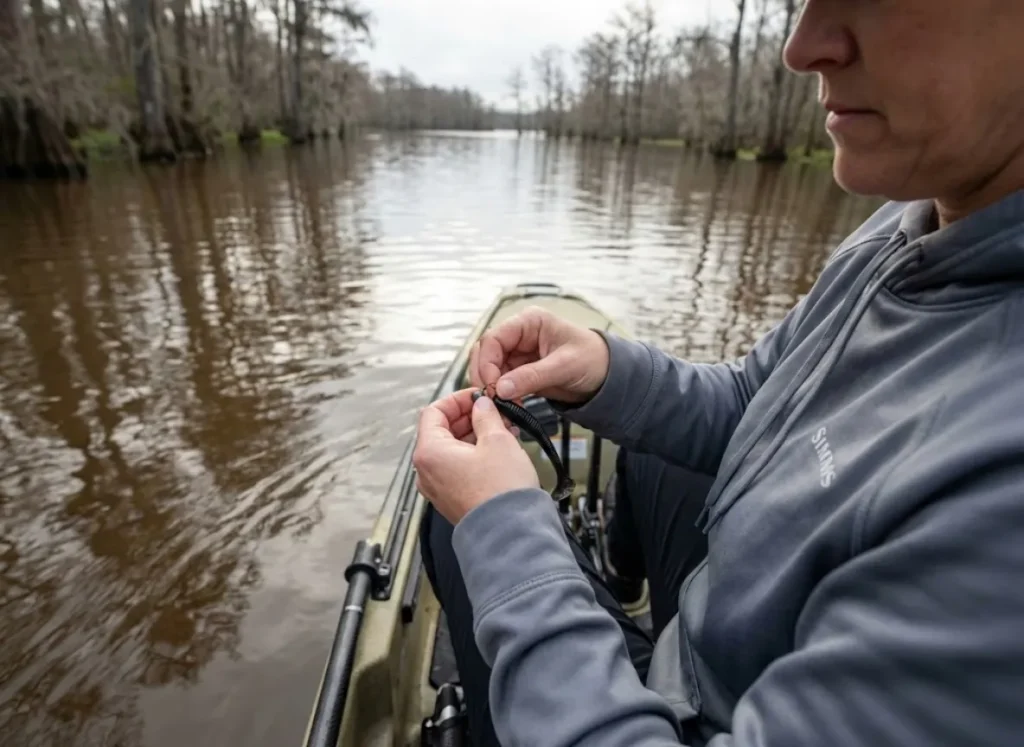
Forget universal “best colors.” The contrast principle says lure visibility depends on how well your bait stands out against its background—not what color looks prettiest in your tackle box.
Dark Colors in Dark Water: The Silhouette Effect
In highly turbid water, dark colors—black, black/blue, junebug—create stronger silhouettes against the lighter water column above. A dark lure blocks ambient light more effectively than a lighter colored bait, making the outline more visible from below.
This contradicts intuition. Many anglers reach for bright colors in muddy water when dark colors may work better. Black jigs and dark soft plastics are tournament staples in stained-to-muddy conditions because of this silhouette effect.
As one experienced angler put it: “A darker bait blocks the light better than a lighter colored bait, and is therefore more visible. In clear water you want to reflect light to the fish from the lure surface.”
Bright Colors for Visual Pop: Chartreuse, Orange, and White
High-visibility colors—chartreuse, orange, hot pink, white—provide maximum contrast against muddy brown and green backgrounds. Orange and red may outperform in shallow turbid water because they’re within the remaining light penetration zone.
White lures create strong contrast in tannin-stained water where the background is dark brown. The key is selecting colors that differ most from the water’s natural hue—not colors that “match” anything.
When discussing topwater presentations in stained water, remember that fish looking upward see your lure against the brightest part of their visual field: the sky reflection.
Why the “Blue Penetrates Deepest” Rule Misleads Anglers
The light absorption hierarchy (blue > green > yellow > orange > red) applies to vertical depth, not horizontal turbidity. In 3-foot visibility stained water at 5 feet deep, red is fully visible while blue offers no advantage.
UV light gets diminished by approximately 30% in turbid conditions, which reduces fluorescent color effectiveness. This explains why UV-reactive “hot” colors sometimes underperform in the dirty water where anglers expect them to shine.
Pro tip: In water under 4-foot visibility, throw out the color penetration charts entirely. Match your lure to the contrast principle instead—dark for silhouette, bright for pop against the water color.
Lure Selection by Water Clarity Category
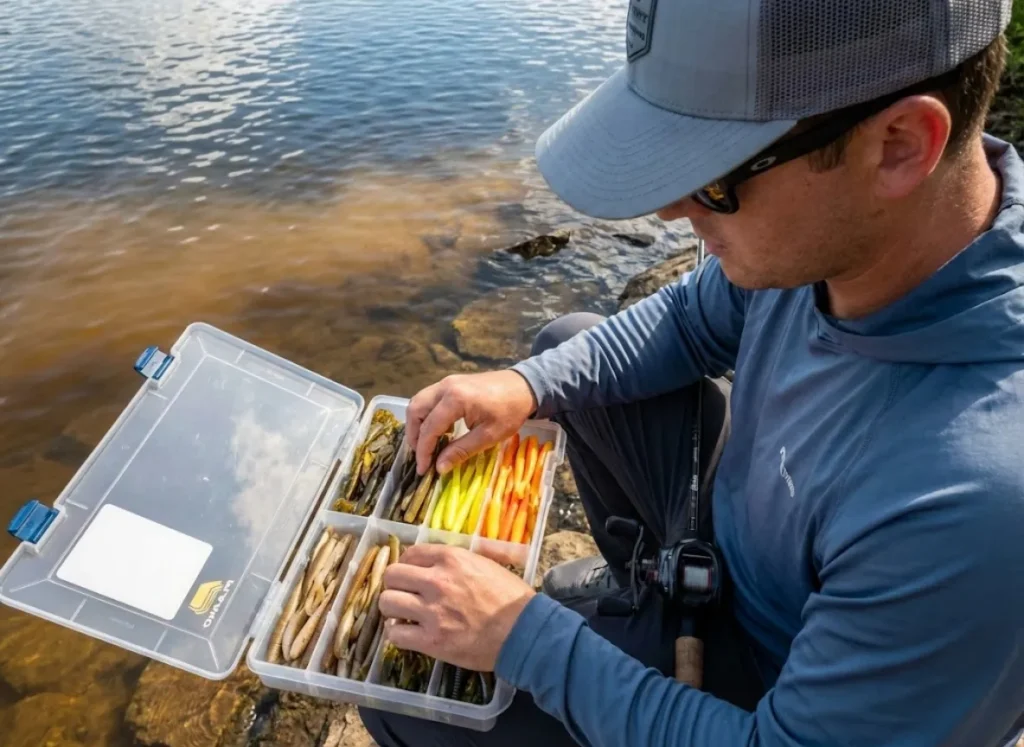
Practical application starts with identifying your conditions. Here’s how to match lure selection to various water clarity levels.
In clear water (8+ feet visibility), natural colors dominate—shad, bluegill, crawfish patterns that match local forage. Fish have time to inspect lures closely and reject fakes. Translucent and ghost colors work because fish can see through them to verify profile. Line visibility becomes critical; fluorocarbon leaders and light diameters are essential.
In lightly stained water (4-8 feet visibility), start transitioning to opaque colors. Solid whites and subtle chartreuse accents work well. Add blade flash from spinnerbaits and bladed jigs to create visual attention while maintaining somewhat natural profiles.
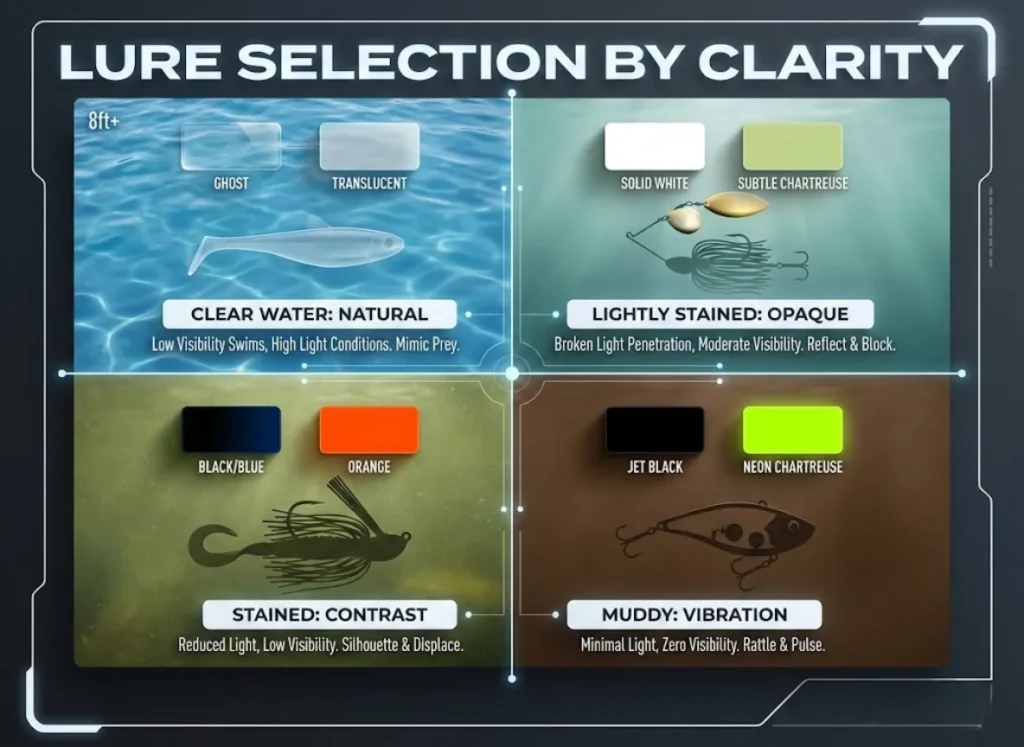
In stained water (2-4 feet visibility), contrast becomes critical. Solid, bold colors over patterns. Chartreuse, white, black/blue, and orange combinations are proven producers. Strike King’s Todd Faircloth emphasizes this is where visibility-first strategies become mandatory. Add rattles or choose lures with strong water displacement. Consider heavy cover fishing strategies as stained conditions often coincide with wood and vegetation that holds bass.
In dirty/muddy water (0-2 feet visibility), this is lateral line fishing, not sight fishing. Maximum bulk, vibration, and sound. Colorado blade spinnerbaits, rattling lipless crankbaits, and loud chatterbaits dominate. Color extremes only: jet black for silhouette, or brightest chartreuse/orange for pop. Slow presentations to give fish time to lock onto vibration signatures.
Metallic Finishes and Special Coatings
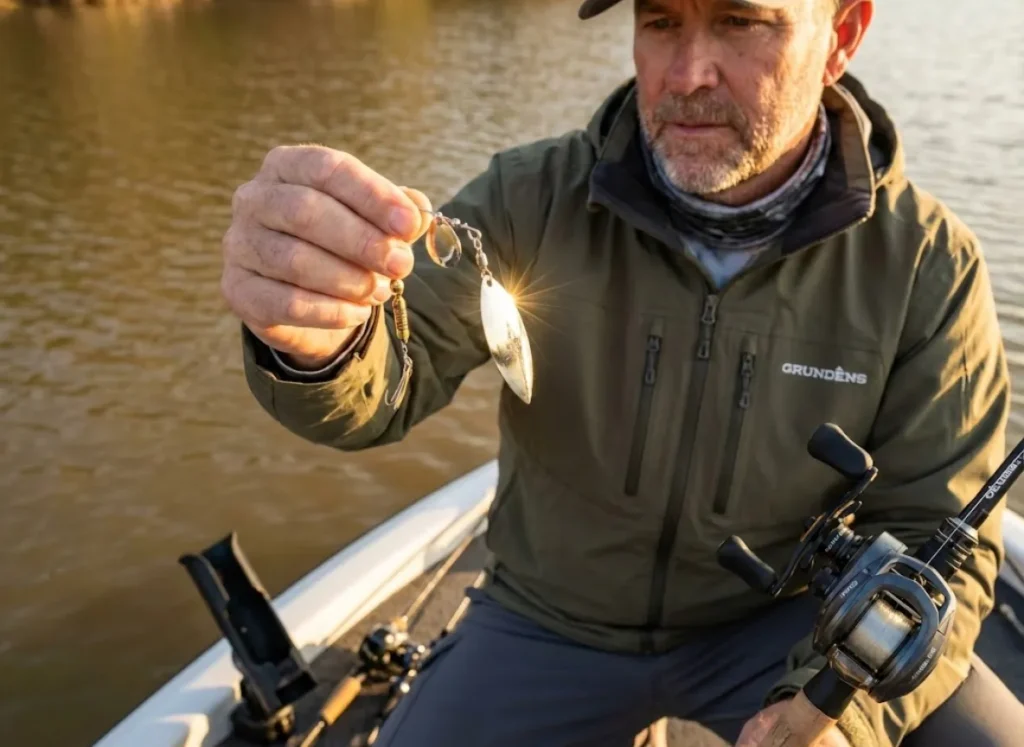
Beyond solid colors, specialty finishes create additional visibility options in varying water clarity conditions.
Silver, Gold, and Copper: Visibility Rankings
Silver finishes maintain 90%+ visibility across clarity conditions due to high reflectivity. Gold finishes rank in the mid-80s%, offering warmer tones with slightly less reflection. Copper finishes show 70-80% visibility, performing best in tannin-stained water where warmer tones match ambient light.
Mike Gnatkowski, 30-year Michigan guide featured in Great Lakes color penetration data, emphasizes matching metallic finishes to water color temperature. In turbid conditions, the flash-to-pause ratio matters—constant flash may confuse fish, but targeted flashes draw attention.
Fluorescent and UV-Reactive Coatings: When They Help (and Fail)
Fluorescent pigments convert UV light to visible light, creating glow effects even at depth. However, turbidity diminishes UV light by approximately 30%, reducing fluorescent effectiveness in murky conditions.
Luminescent finishes (glow-in-dark) require pre-charging and work primarily in very low light or night conditions. Save your UV-reactive tackle for situations where some UV penetration remains—lightly stained water where natural colors fade but fluorescents still pop.
When matching bass lure selection by conditions, finish selection adds a layer beyond base color that serious anglers shouldn’t ignore.
Conclusion
The next time you launch into coffee-colored water, remember: turbidity isn’t your enemy—misunderstanding it is. Light physics, fish sensory biology, and the contrast principle all point toward the same truth.
First, match color to clarity category, not arbitrary rules. Red works in shallow muddy water; blue’s “deeper penetration” is irrelevant in 2-foot visibility.
Second, when vision fails, fish switch to lateral line. Add rattles, blades, and bulk as turbidity increases.
Third, contrast beats “natural” in stained water. Dark silhouettes and bright colors both outperform subtle forage imitations when fish can’t see details.
Grab a Secchi disk (or a white coffee mug lid), measure your water, and let physics guide your tackle box. The fish don’t care what color the pros on TV are throwing—they care what they can actually detect.
FAQ
What color lure is best in murky water?
Either high-contrast bright colors (chartreuse, orange, white) or dark silhouette colors (black, black or blue) outperform natural tones. The key is maximum visibility against the murky background, not matching forage that fish can’t see anyway.
Does lure color matter in dirty water?
Color becomes more important, not less, in dirty water—but the right colors change completely. Fish rely on contrast and silhouette rather than realistic patterns. Bold, solid colors that stand out against turbid backgrounds produce more strikes than subtle naturals.
Why do fish bite better in dirty water?
Fish become less selective when visibility is limited. They have shorter decision windows and must react faster without visual confirmation. This favors anglers using reaction baits because fish strike based on vibration and movement rather than detailed inspection.
Should I use rattles in muddy water?
Yes. When visibility drops below 3 feet, fish rely heavily on their lateral line to detect prey. Rattling crankbaits, chatterbaits, and rattling jig heads create acoustic signatures fish can track from greater distances than they can see.
How does turbidity affect fish behavior?
Turbidity triggers a sensory shift—fish transition from visual hunters to vibration and scent trackers. They become less selective but have shorter reaction distances. Increase lure bulk, add sound elements, and focus on contrast rather than realistic coloration.
Risk Disclaimer: Fishing, boating, and all related outdoor activities involve inherent risks that
can lead to injury. The information provided on Master Fishing Mag is for educational and informational purposes
only. While we strive for accuracy, the information, techniques, and advice on gear and safety are not a substitute
for your own best judgment, local knowledge, and adherence to official regulations. Fishing regulations, including
seasons, size limits, and species restrictions, change frequently and vary by location. Always consult the latest
official regulations from your local fish and wildlife agency before heading out. Proper handling of hooks, knives,
and other sharp equipment is essential for safety. Furthermore, be aware of local fish consumption advisories. By
using this website, you agree that you are solely responsible for your own safety and for complying with all
applicable laws. Any reliance you place on our content is strictly at your own risk. Master Fishing Mag and its
authors will not be held liable for any injury, damage, or loss sustained in connection with the use of the
information herein.
Affiliate Disclosure: We are a participant in the Amazon Services LLC Associates Program, an
affiliate advertising program designed to provide a means for us to earn advertising fees by advertising and linking
to Amazon.com. As an Amazon Associate, we earn from qualifying purchases. We also participate in other affiliate
programs and may receive a commission on products purchased through our links, at no extra cost to you. Additional
terms are found in the terms of service.