

In this article
You know the feeling. A storm front just rolled through, the wind has died, and the water is slick as glass. You have the best fishing tackle & gear money can buy, and you can see fish on your electronics—big arches glued to the bottom or hovering like ghosts in the trees—but they ignore everything. You throw a fast-moving hard bait; they don’t budge. You finesse a worm right in front of their nose; they turn away.
We often call this “lockjaw,” but that term is wrong, and believing it costs us fish. When a bass, trout, or catfish shuts down after a cold front, it hasn’t lost the ability to eat. It has simply stopped chasing things to save energy. The fish is no longer a hunter reacting to movement; it is a scavenger waiting for a sure thing.
To catch these stationary ghosts, you have to stop trying to force them to react with motion. Instead, you need to convince them with chemistry using sensory lure enhancements. By using water-soluble olfactory stimulants, you can bypass the fish’s reluctance and trigger the feeding center of its brain directly.
Why Do Inactive Fish Refuse to Chase But Still Strike?
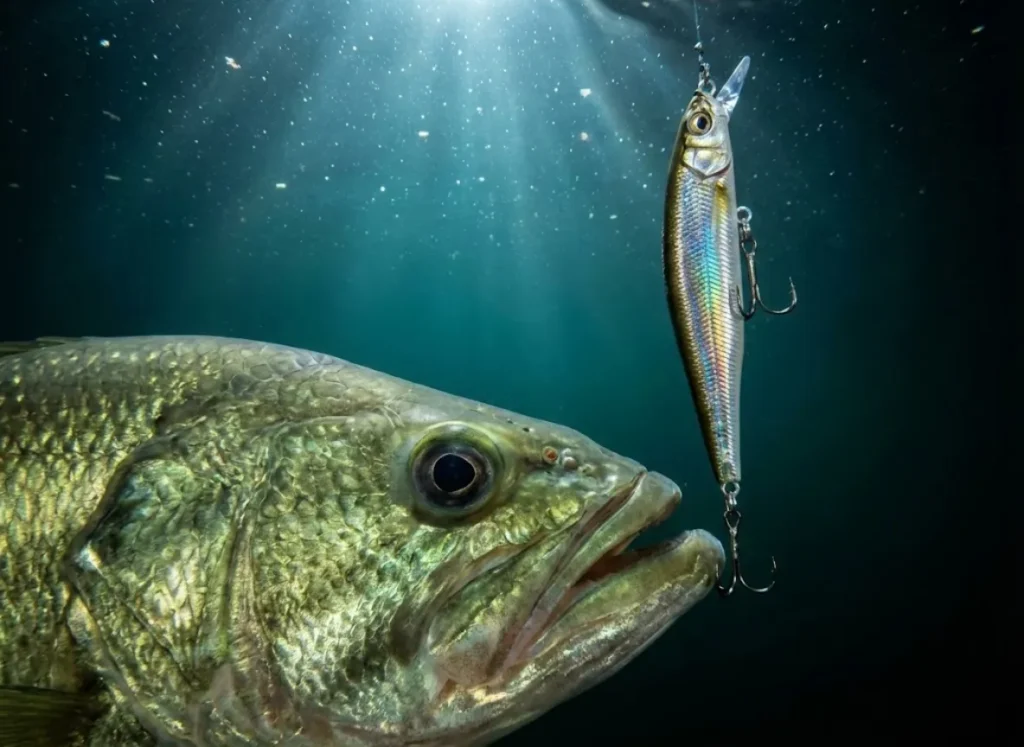
They strike because their nose can override their eyes. Their sense of smell triggers a primitive feeding response that ignores the logic of “saving energy.”
How Does the Olfactory System Bypass the “Refusal” Instinct?
Humans process smell and sight together to decide if something is food. Fish are different. Their sense of smell is completely separate from their breathing. They use a special sensor inside their nose, called the olfactory rosette (located in the nares), to constantly test the water. These sensors are incredibly powerful. They can detect tiny chemical odorants in the water that are almost impossible for us to imagine.
When a scent molecule hits these sensory inputs, the signal goes straight to the fish’s brain via the olfactory nerves and olfactory bulbs. As detailed in neurobiological research, olfactory sensory neurons project directly to the forebrain. This skips the part of the brain that worries about wasting energy.
This is why a fish that refuses to chase a spinnerbait will still inhale a scented worm. The scent triggers an automatic “eat” program before the fish even decides to hunt. Research shows that even in “sight-feeders” like smallmouth and largemouth bass, the nose stays active and sensitive even when the fish is resting. By using scent, you can trigger a reaction strike from a fish that has decided to ignore visual cues. To really get inside their head, it helps to compare this with how the science of fish vision operates.
What Is the Difference Between Drawing a Fish In and Making It Hold On?
Smell draws them in from a distance. Taste makes them hold onto the lure, increasing your holding on time.
Anglers often mix these two up, but they do different jobs. Smell (Olfaction) is long-range. It allows a fish to track a strong scent trail through the water right to your lure. Taste (Gustation) happens on contact. Taste buds on the lips and mouth tell the fish if the object is actually food, providing the final verification of efficacy.
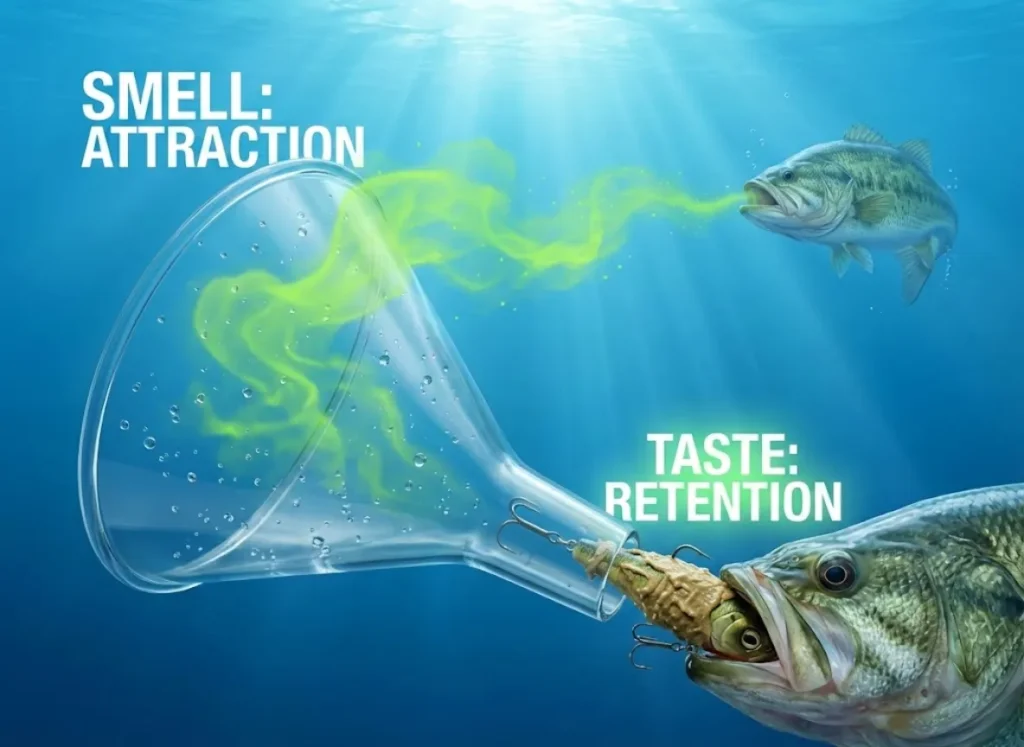
For inactive fish buried in thick cover, a lure that only tastes good is useless. If it doesn’t have a scent trail, the fish will never move close enough to bite it. You need “distance attraction” via water-soluble scents to pull the fish out of its hiding spot. Once they commit, the taste adds a confidence factor, ensuring they don’t spit the lure out. The chemical sensitivity of individual olfactory sensory neurons varies, which explains why some thick pastes make fish hold on longer, but fail to get as many bites as a dispersing spray.
Pro-Tip: If you are missing bites because you can’t feel them, your scent might have good attraction but poor taste. If you aren’t getting bites at all, your scent has poor attraction, regardless of how good it tastes.
Understanding this difference helps, especially when considering the mechanics of bass suction feeding. If they hold on longer, you have more time to set the hook.
Which Chemical Compounds Actually Trigger a Feeding Frenzy?
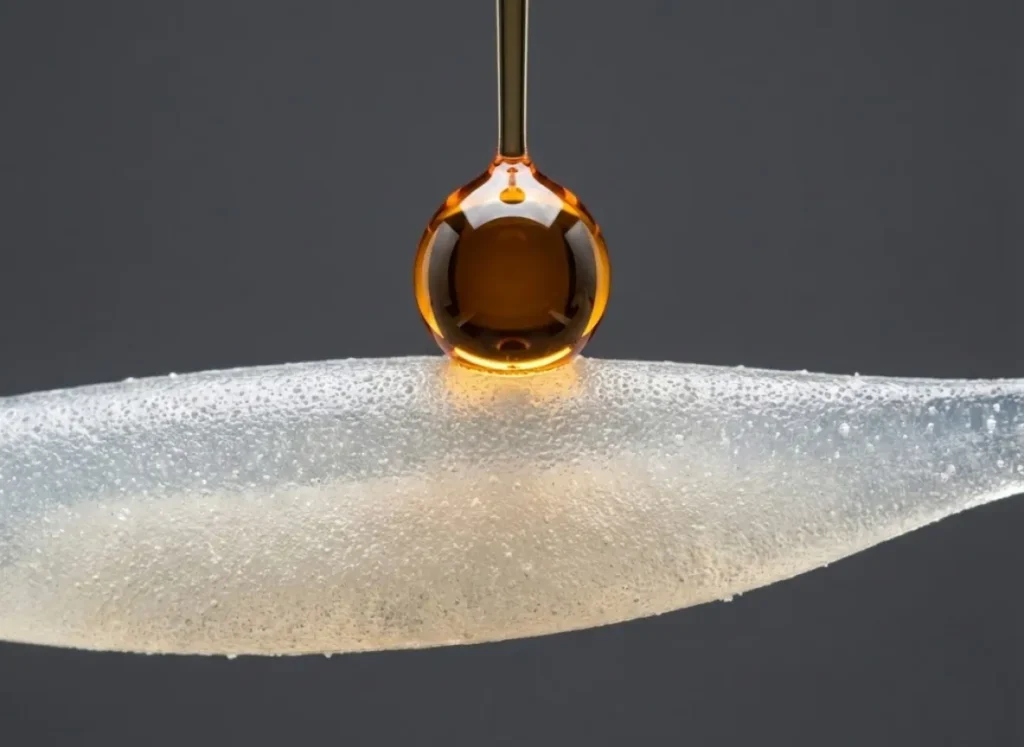
Specific proteins called amino acids act as universal hunger signals. On the other hand, “fear scents” can trigger an attack on what the fish thinks is injured prey.
Why Are Amino Acids the “Universal Language” of Hunger?
The “fishy” smell humans notice is often just oil going rancid. This can actually repel fish. The true trigger for predators is the presence of specific Free Amino Acids. L-Alanine and L-Arginine are the main feeding triggers for most fish. These signal that protein-rich food, like crawfish, shad, shrimp, or catfish bait chunks, is nearby.
Fish are picky. Their sensors only respond to the natural versions of these amino acids (called the L-isomer). Synthetic versions often don’t work. These amino acids dissolve easily in water, leaking from living or injured prey to create a trail. Commercial investigation into scents has led to products that copy this natural scent.
Ingredients like Betaine (found in shellfish) and bile acids can make the signal even stronger. Studies on metabolic state differences in olfactory responses confirm that hungry or resting fish are often extra sensitive to these specific cues. This is similar to the biochemistry of curing salmon eggs (often using Pautske BorX O Fire), where getting the amino acid profile right is the key to success.
Can the Scent of Fear (Schreckstoff) Trigger a Bite?
Many baitfish have special cells in their skin that release a chemical alarm substance, known as Schreckstoff. This only happens when their skin is cut or damaged. While this signal warns other baitfish to run away, predators listen in on this signal.
Detecting this “fear scent” tells a predator that something is eating or injuring bait nearby. This triggers an opportunistic response. An inactive fish might ignore a healthy minnow because it’s too hard to catch. However, the chemical smell of an “injured” minnow signals an easy, free meal.
This is why scents containing real, ground-up baitfish parts are so effective. The grinding process releases these alarm chemicals. The epidermal alarm substance cells of fishes are a major focus for modern scent makers. They want to trigger aggression, not just hunger. This is really effective when applied to a strategic analysis of Northern Pike, a fish that loves to hunt injured bait.
How Does Water Solubility Determine Your Scent Strategy?
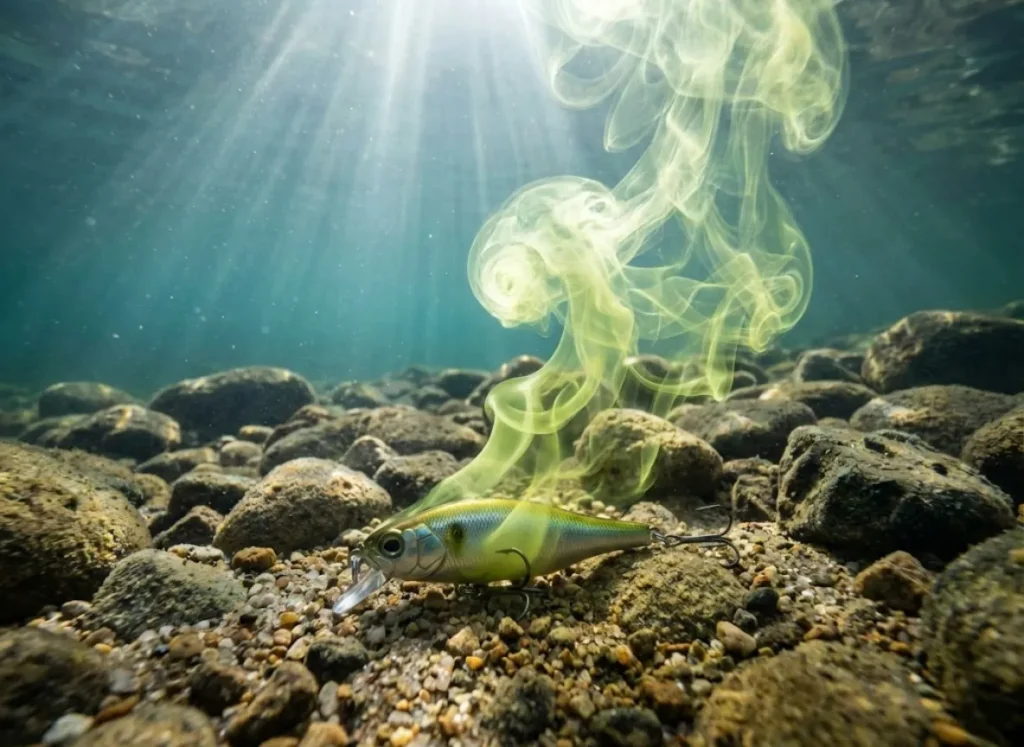
Water-soluble scents dissolve and create a trail the fish can follow. Oil-based scents often fail because they float to the surface and don’t mix with the water.
Why Do Oil-Based Scents Fail to Attract Inactive Fish?
Basic physics says that oil and water do not mix. Oil pushes water away and is usually lighter than water. When you put an oil-based scent on a lure, the droplets tend to cling to the plastic. If they do come off, they float straight up to the surface.
This creates a “negative scent trail.” The smell moves up and away from a deep-holding fish, rather than drifting down toward them. For inactive fish sitting on the bottom, an oil-based scent doesn’t work unless the fish literally bumps into the lure.
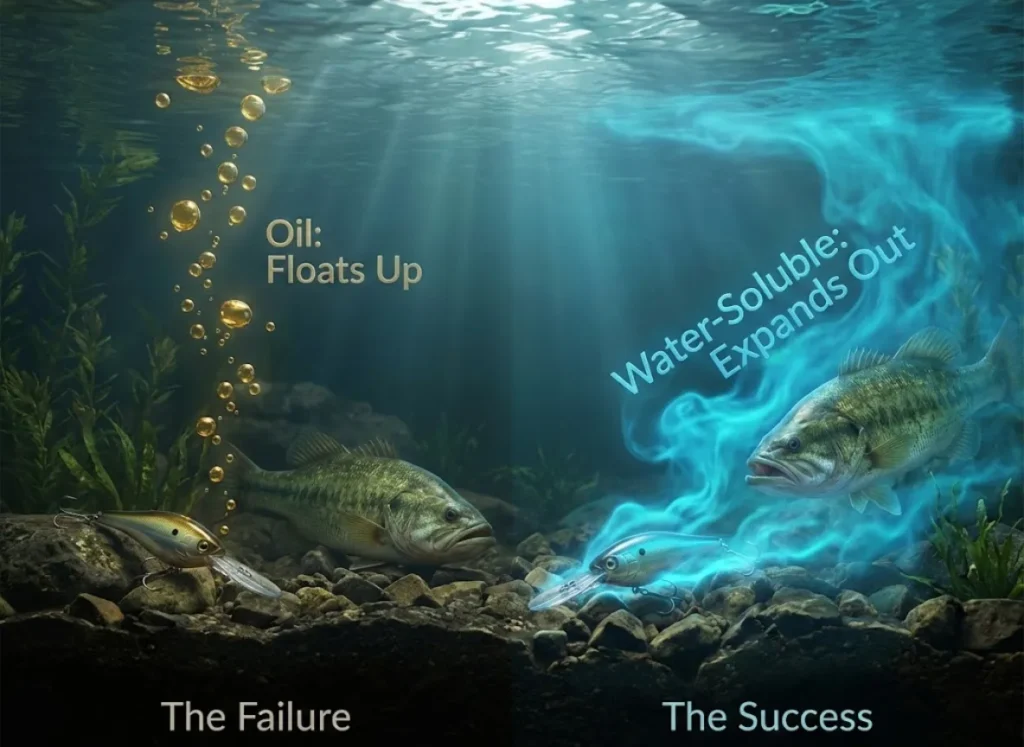
On the other hand, water-soluble bases—like alcohol or special polymers—dissolve into the water. This creates a 3D cloud. This expanding dispersal matrix allows a fish to find the lure from a distance without seeing it. Research on the unconfined nearfield spreading of a river plume shows how water-soluble particles spread out at a molecular level. This is opposite to how oil behaves. This is essential knowledge when understanding the mechanics of fishing in current.
How Do You Choose the Right Scent Architecture for Your Lure?
Water-Based Polymer Infusion (like Berkley Gulp!, Berkley MaxScent, or BaitFuel with Fish Active Scent Technology or F.A.S.T.) acts like a stiff sponge. It soaks up water-soluble scents and releases them slowly. These offer extreme scent dispersion and are best for creating distance trails in still water.
Gel and Pastes (like Pro-Cure Super Gel, MegaStrike, Liquid Mayhem, Smelly Jelly, or BioEdge) use a sticky base to hold real food particles. While they don’t create a big cloud, they have a strong scent profile and taste. These are great for hard baits or fast currents where other scents wash off too fast. Kickn’ Bass is another strong option here for garlic lovers.
Aerosols and Oils (like Bang, BaitMate, or Yum spray) are mostly lubricants. They help punch through heavy weeds and mask human smells. They are generally not great for pulling fish in from a distance in deep water.
Dyes and Markers: Products like Spike-It Dip-N-Glo or markers add vibrant color (like chartreuse or garlic dye) along with scent.
Pro-Tip: In cold water (below 50°F), avoid thick waxes or oils. They can turn hard and seal the scent inside. Stick to alcohol or liquid-based scents like Nories Aging Bass Liquid that stay fluid in the cold.
You also need to know how fast the scent washes off. Water-based scents disappear quickly, so you need to re-apply them every 15 to 20 minutes (casts per application matters). Pastes last longer but attract from a shorter range. A NOAA report on fish attraction to baits and effects of currents suggests picking your product based on the water flow. If you are fishing in thick weeds, check out fishing heavy cover strategies where getting the scent to stick is the most important thing.
What Techniques Maximize Scent Dispersion for Lethargic Predators?
The “deadsticking” technique creates a scent bubble by keeping the lure totally still. This allows water-soluble attractants to build a cloud that confirms the bait is food.
How Does “Deadsticking” Create a High-Density Scent Sphere?
Deadsticking is simple: cast a lure (like a Ned rig or drop shot) and let it sit motionless on the bottom for a long time (10 to 60 seconds). If there is no current (stagnant vs. moving water), the scent dissolves from the lure and hangs there. This builds a concentrated “flavor sphere” around the bait in the strike zone.
This technique minimizes movement that might scare a spooky fish, while maximizing the olfactory signals. A cruising fish hits this wall of scent and can pinpoint the source without needing to see it move.
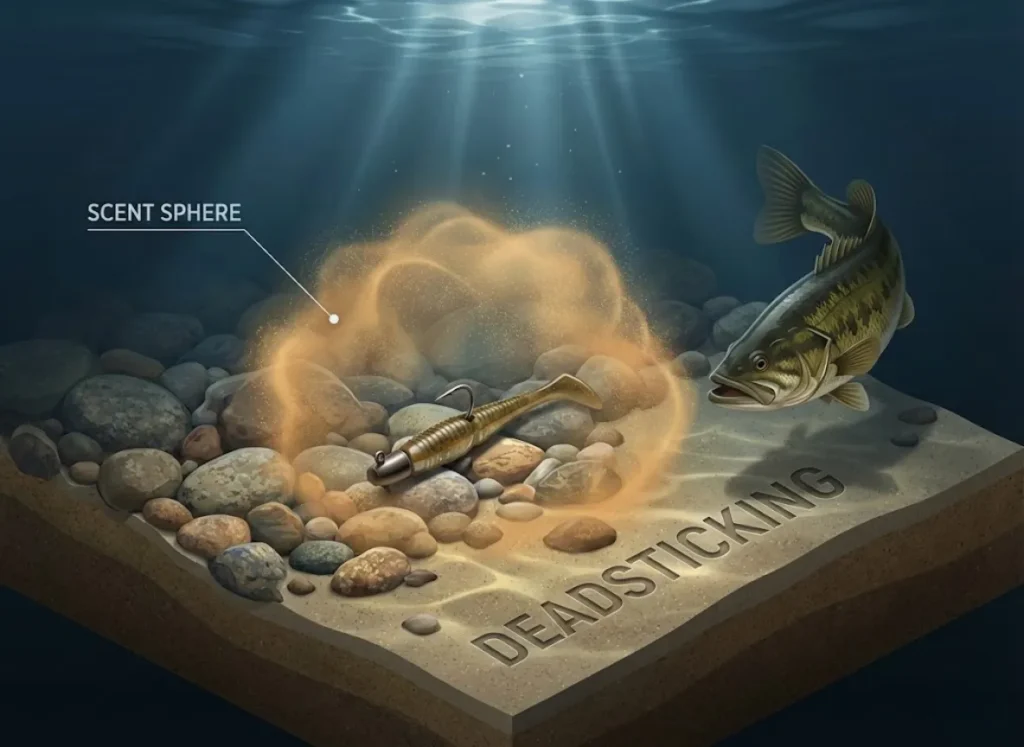
When the fish approaches, the cloud confirms the object is edible. This often leads to a gentle bite that feels like “mush” or dead weight rather than a sharp tap, which increases hookup ratio. Patience is key. If you move the bait too soon, you destroy the scent cloud and have to start over. Studies on odor plumes and animal navigation in turbulent water help explain why stationary sources are easier for fish to track. This works best when mastering the drop shot rig, which is the perfect tool for deadsticking.
Are You Accidentally Repelling Fish Before You Even Cast?
Yes. You might be transferring L-Serine (an amino acid found in human skin oil) or chemicals like sunscreen. These act like alarm bells to fish.
Research has found that L-Serine—which is in your fingerprints—repels fish like salmon, trout, and panfish. Other common products act as “chemical noise” or toxins. Sunscreen, bug spray (DEET), tobacco, and gasoline odors from fuel lines are all major offenders. A single touch can transfer enough repellent to ruin a high-quality bait.
Using scents like garlic, anise, and coffee helps provide masking ability. They create a strong signal that covers up the trace amounts of L-Serine. Hygiene is also critical. Wash your hands with unscented soap or local lake water and dirt before handling lures. Applying a clean gel scent to cover the whole lure creates a barrier, sealing human smells underneath. Pollution can also disrupt chemical social recognition, effectively blinding the fish to your bait. Instead of using chemical sunscreens that repel fish, consider using UPF clothing physics protection to solve the problem at the source.
What Are the Ethical Risks of Using High-Potency Attractants?
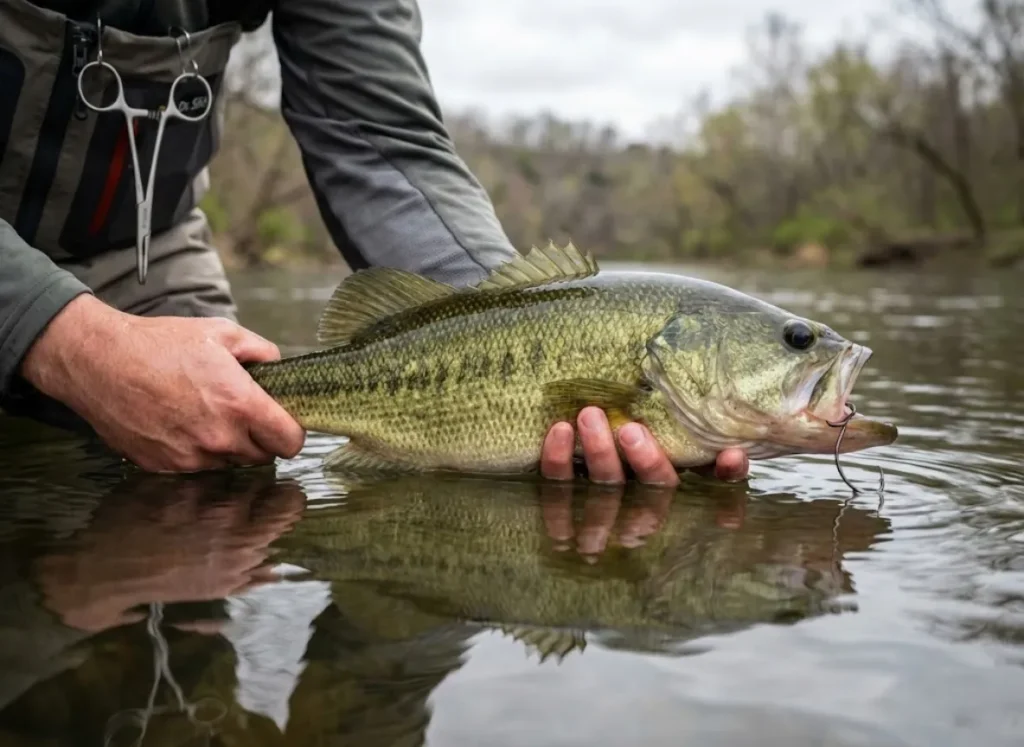
Strong scents make fish swallow the bait deeper. This increases the risk of gut hooking, which lowers survival rates if you don’t use the right hooks.
How Does Scent Affect Catch-and-Release Mortality?
Because scented baits mimics natural forage, fish swallow them deeper than they would a plain piece of plastic. This often leads to gut hooking. Studies show that gut hooking significantly lowers survival rates (around 66% survival vs. 98% for lip hooking). This is even worse in warm water where fish are already stressed.
Using scented baits means you have to change how you set the hook. The old advice of “wait and let them eat it” is dangerous here. You must set the hook the moment you feel a bite. Using circle hooks is highly recommended when deadsticking with scent. They are designed to slide out of the throat and catch the corner of the jaw.
You also need to worry about the bait itself from an eco-angle. Many soft plastics are made of PVC, which typically has low biodegradability. If a fish swallows it, it can cause a blockage. Always pick up every torn piece of plastic as part of your personal sustainability audit. For more guidelines, review techniques to reduce catch-and-release mortality to ensure you are practicing the science of catch and release correctly.
Conclusion
When the bite shuts down, the fish haven’t disappeared—they’ve just switched modes. They have moved from hunting with their eyes to scavenging with their nose. By understanding the science of amino acids and how scents spread in water, you can present a lure that overcomes their stubbornness.
Remember: water-soluble scents build trails, while oils generally float away. Use deadsticking to create a scent cloud that lethargic fish can track. But with this power comes responsibility. Use circle hooks and quick hooksets to ensure the fish you fool lives to fight another day. Next time you face a tough day on the water, don’t just change colors—change the chemistry.
FAQ – Frequently Asked Questions
Do fish attractants actually work?
Yes, but they work best for inactive fish or in dirty water. Underwater tests show that fish can detect specific amino acids in tiny amounts. This triggers them to eat even when they aren’t looking for food.
What is the best scent for bass fishing?
Bass love scents with garlic, crawfish, and shad. Garlic works because its sulfur smell mimics protein breaking down. Look for products with L-Alanine and salt, which mimics the taste of blood.
Is oil-based or water-based scent better?
Water-soluble scents are better for bringing fish in from a distance because they mix with the water to create a trail. Oil-based scents are better for making hard baits slippery or masking smells, but they tend to float up and away from the fish.
Does human skin scent really repel fish?
Yes. Research shows that L-Serine, an amino acid in human skin oil, scares fish like trout and salmon. Washing your hands with unscented soap or using a masking ability scent helps you get more bites.
Risk Disclaimer: Fishing, boating, and all related outdoor activities involve inherent risks that
can lead to injury. The information provided on Master Fishing Mag is for educational and informational purposes
only. While we strive for accuracy, the information, techniques, and advice on gear and safety are not a substitute
for your own best judgment, local knowledge, and adherence to official regulations. Fishing regulations, including
seasons, size limits, and species restrictions, change frequently and vary by location. Always consult the latest
official regulations from your local fish and wildlife agency before heading out. Proper handling of hooks, knives,
and other sharp equipment is essential for safety. Furthermore, be aware of local fish consumption advisories. By
using this website, you agree that you are solely responsible for your own safety and for complying with all
applicable laws. Any reliance you place on our content is strictly at your own risk. Master Fishing Mag and its
authors will not be held liable for any injury, damage, or loss sustained in connection with the use of the
information herein.
Affiliate Disclosure: We are a participant in the Amazon Services LLC Associates Program, an
affiliate advertising program designed to provide a means for us to earn advertising fees by advertising and linking
to Amazon.com. As an Amazon Associate, we earn from qualifying purchases. We also participate in other affiliate
programs and may receive a commission on products purchased through our links, at no extra cost to you. Additional
terms are found in the terms of service.