
In this article
The bass hit on the fall—the way they always do with a wacky rig. But this time, I watched the line jump sideways instead of down, and by the time I set the hook, the Senko was split clean in half. Another dollar-twenty fluttering to the bottom of Lake Fork. That afternoon, I burned through eight worms in ninety minutes. By evening, I’d rigged a silicone O-ring setup and landed eleven fish on a single bait.
Six months of dedicated testing later, I can tell you exactly why the physics work—and why most anglers are still throwing money into the water.
This guide breaks down everything I’ve learned: the flutter action that makes bass fishing with stick baits irresistible, the terminal tackle decisions that determine hookup ratios, and the rigging hacks that turn a $6-per-pack Gary Yamamoto from a single-use consumable into a reusable precision tool.
⚡ Quick Answer: The wacky rig works because hooking a Senko through the center creates maximum water resistance during the fall, producing an irresistible shimmy that triggers bass strikes. Use a size 1 finesse wide gap hook with a 1/4″ silicone O-ring to extend bait life 15x. Fish it on a 7-foot medium spinning rod with 10 lb braid and an 8 lb fluorocarbon leader. Let the bait fall on slack line—most bites happen in the first 30 seconds of descent.
The Physics of the Wacky Rig Flutter
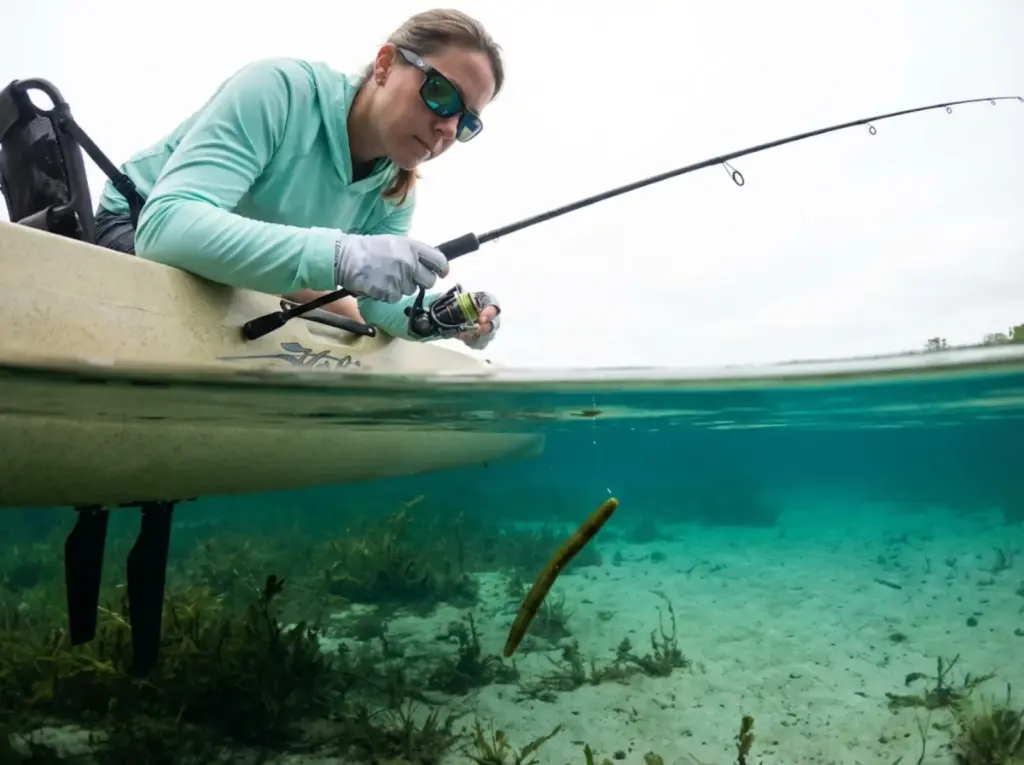
Understanding why the wacky rigging technique catches fish changes how you present it. This isn’t magic—it’s fluid dynamics working in your favor.
Fluid Drag and the Oscillatory Descent
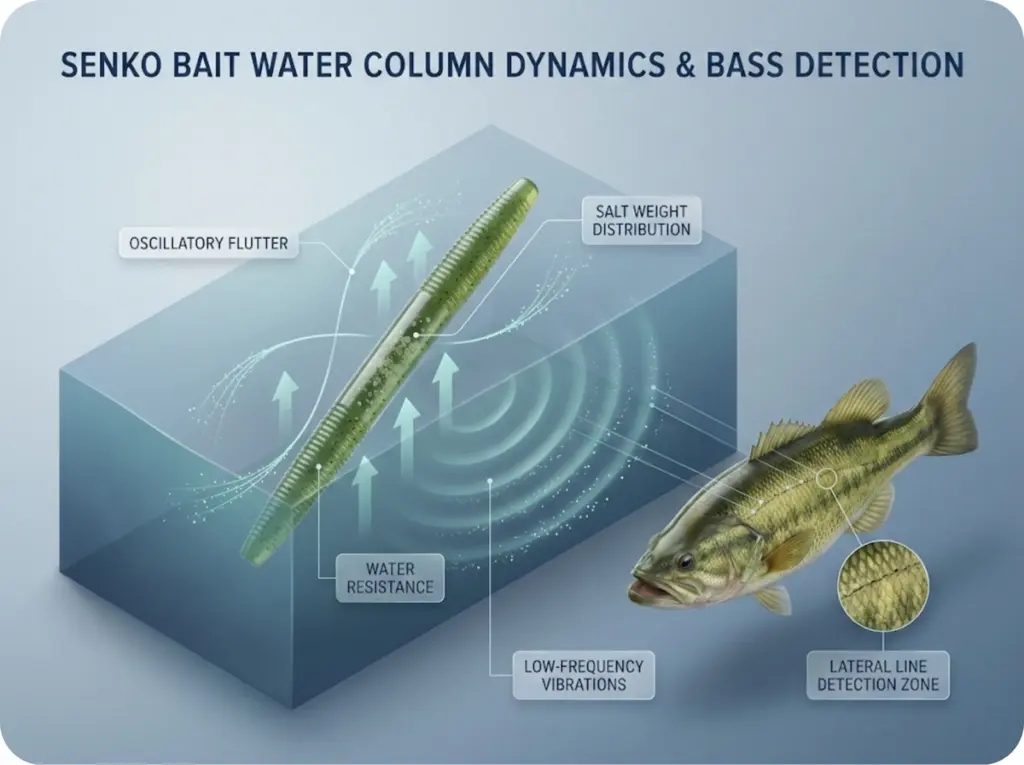
When you rig a stick bait through its center, water pressure distributes across the largest possible surface area. This creates high drag that slows the fall to around half a foot per second—agonizingly slow compared to a Texas-rigged worm, and that’s exactly the point.
The unanchored ends of the bait respond to competing forces. Water resistance pushes them upward while the salt-impregnated plastic pulls them down. This tug-of-war creates the oscillatory shimmy that largemouth bass and smallmouth bass find irresistible. Those vibrations travel through the water column, triggering how bass detect vibrations through their lateral line from remarkable distances.
The salt content in quality soft stick baits like the 5-inch Senko gives them a specific gravity higher than water. They sink without added weight while staying flexible enough to shimmy. If the plastic is too stiff, the ends won’t move. Too soft, and the bait folds in half. That sweet spot is why anglers pay premium prices for Gary Yamamoto Custom Baits.
Pro tip: Dead-stick the fall. The first 30 seconds of a wacky rig descent is when 80% of your bites happen. Every twitch you add subtracts from the shimmy.
The Japanese Crawfish Mimicry Theory
Japanese professional anglers offer a different explanation for the wacky rig’s effectiveness. When you hop the bait off the bottom, the ends fold inward like the claws of a retreating crawfish. As it settles, they undulate outward—mimicking a crustacean finding cover.
This dual identity—dying baitfish mimicry on the fall, crawfish mimicry on the bottom—matches multiple feeding triggers simultaneously. It’s why the technique works whether bass are keyed on shad or crayfish. If fish are short-striking, add a three-second pause on the bottom between hops. You’re activating the crawfish mode.
Terminal Tackle Selection—Hooks, Line, and the Rod That Absorbs Mistakes
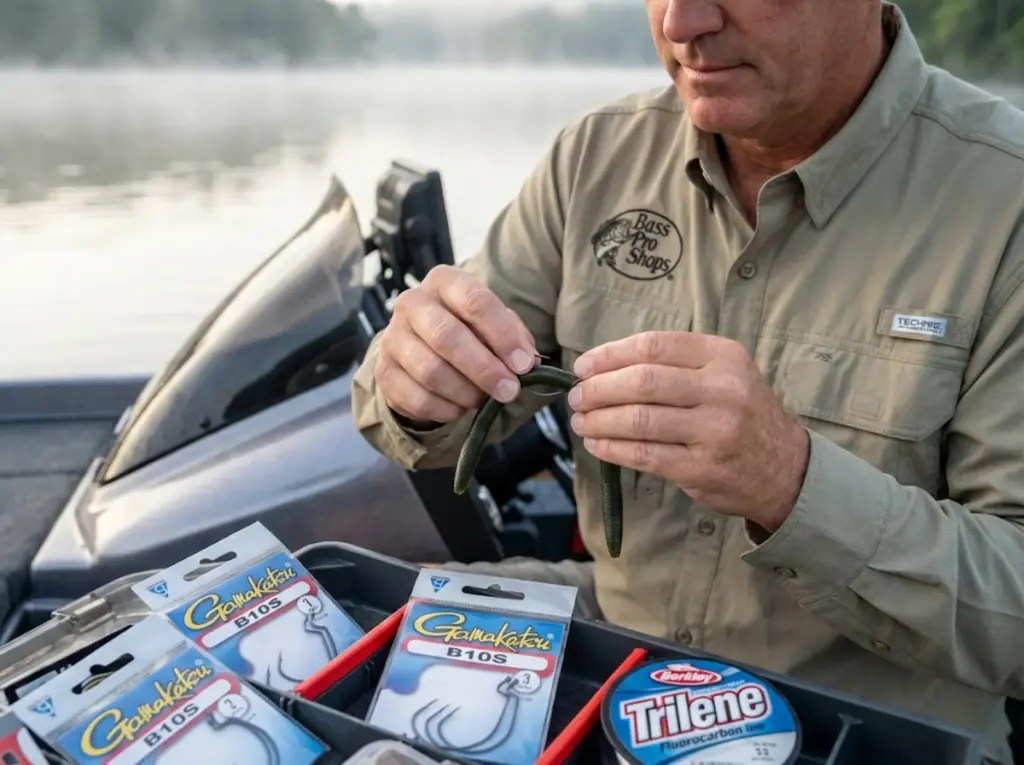
The hardware you choose determines whether that bite becomes a landed fish or a Facebook complaint about “one that got away.”
Hook Physics—The O’Shaughnessy Advantage
Brent Ehrler swears by the Gamakatsu B10S Stinger—a hook originally designed for fly-fishing salmon. The O’Shaughnessy bend angles the point back toward the shank, creating a more direct penetration path when you sweep into a fish.
The 1x strong wire matters too. Light-wire finesse hooks often straighten under pressure from a surging bass. The B10S has backbone. For wacky rigging, match your hook size to your bait—size 1 or 1/0 for a 5-inch Senko, which positions the hook in the bait’s center “egg sack” perfectly. Check our complete hook sizing guide for species-specific recommendations.
The Pull Set Paradigm—Why You’re Losing Fish
Forget the aggressive snap set you use for reaction baits. That technique tears large holes in bass mouths, and light fluorocarbon line can snap under the sudden tension.
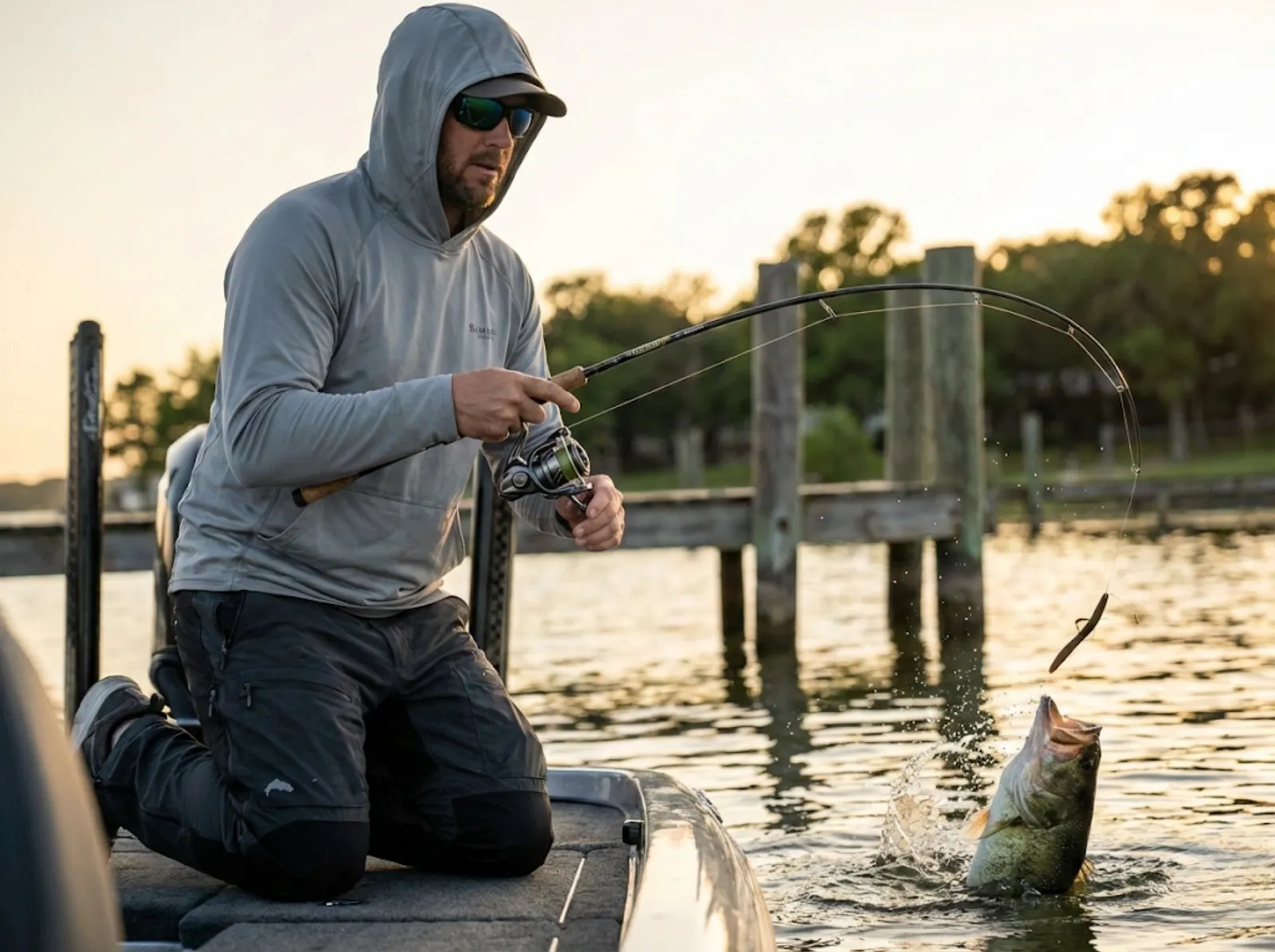
The pull set technique works differently. Reel until you feel weight, then sweep the rod sideways with steady pressure. This lets the hook point slide into position and bury past the barb without the jarring impact that leads to equipment failure. Understanding the physics of hook penetration makes this second nature.
Become a line watcher. By the time you feel the bite through the rod, the bass has often already spit it. Watch for the line twitch or lateral movement—set when you see it, not when you feel it.
Rod and Line—The Sensitivity Stack
A 7-foot medium spinning rod with a fast tip gives you the sensitivity to detect subtle bites while absorbing the headshakes that throw hooks. Pair it with a 2500-size spinning reel for quiet, skip-friendly casts around docks.
The braid-to-fluoro leader systems I’ve settled on after months of testing: 10-pound hi-vis braid for strike detection, with a 3-6 foot fluorocarbon leader in 8-pound test. The braid’s zero stretch enables solid hooksets at distance, while the fluorocarbon line provides invisibility near the bait.
The O-Ring Revolution—Why Durability Is a Fishing Skill
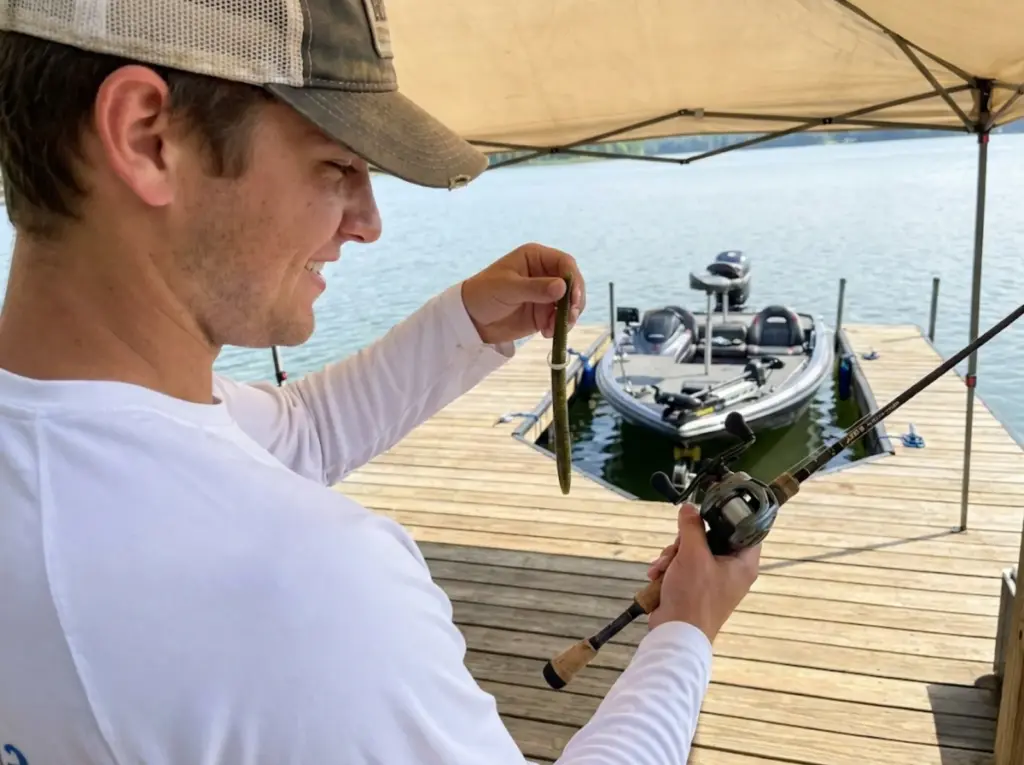
Every wacky rig angler knows the frustration: you finally dial in the bite, and you’re burning through expensive plastics faster than you can open new packages.
Silicone vs. Rubber—The Material Science
Standard rubber O-rings become brittle in sunlight and grip the plastic aggressively—sometimes cutting into the bait. They typically last 3-5 fish before failing. Silicone O-rings are the upgrade. They maintain elasticity through UV exposure, grip without cutting, and survive 10-30 fish in aggressive conditions.
Use 1/4-inch O-rings for a 5-inch Senko and 3/16-inch for smaller baits. The “X pattern” technique—two O-rings crossed—lets you position the wacky hook perpendicular to the worm, keeping the point completely clear of the bait body for clean hooksets.
Pro tip: Buy O-rings from hardware stores, not tackle shops. Same quality, one-tenth the price.
Cost-Per-Fish Economic Analysis
The math surprised me. A 10-pack of quality Senkos runs about $7.50—roughly 75 cents per bait. Without an O-ring, I was averaging one fish per bait before tearing. With silicone rings, that same bait handles 15 fish easily.
That’s a cost-per-fish drop from 75 cents to about 5 cents—a 15x improvement. A $5 wacky rig tool pays for itself on your first trip. Learn more about building a complete terminal tackle system that maximizes both durability and hookup rates.
When and Where—The Seasonal Decision Matrix
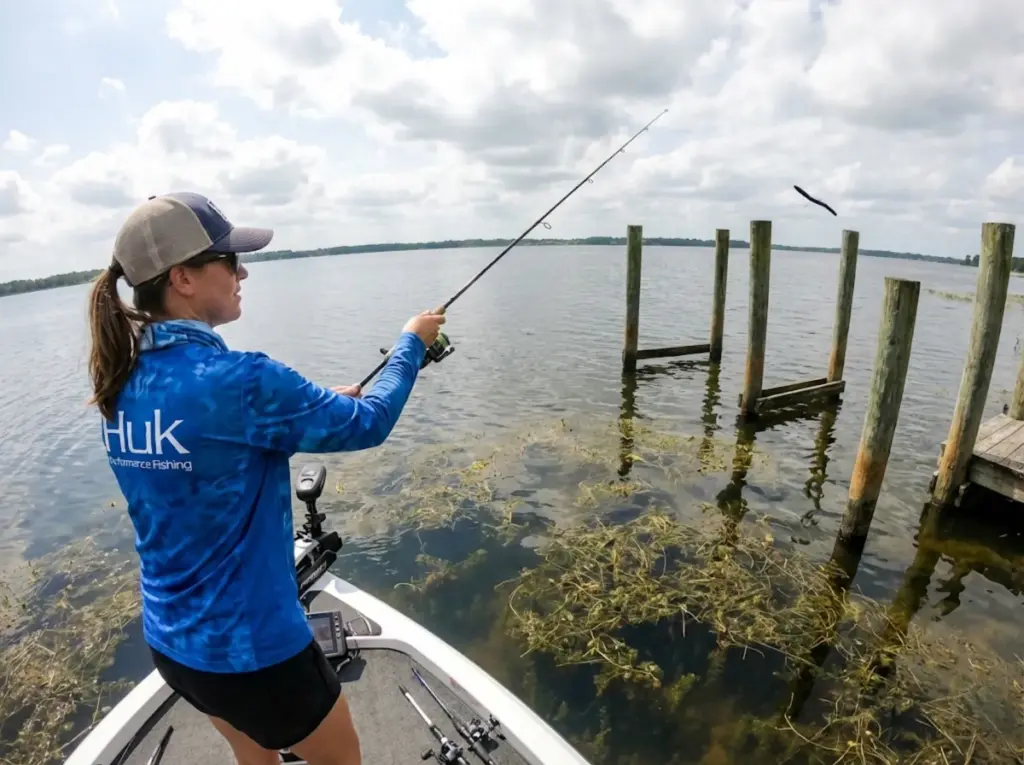
The wacky rig isn’t always the right answer. Knowing when to throw it—and when to grab the Texas rig instead—separates productive anglers from frustrated ones.
The Post-Spawn “Cheeseburger” Window
Post-spawn females are physically exhausted after the rigors of bedding. They move to the first available cover in 8-12 feet of water—dock pilings, grassline edges, isolated stumps—and they’re hungry but lethargic.
Expert Pete Robbins describes the wacky rig during this window as “the cheeseburger offered 30 minutes after a marathon.” These fish won’t chase a crankbait, but they can’t ignore a slow-drifting, wiggling worm that represents an easy, high-protein meal. This is your peak weightless wacky rig window of the year.
Cold Water Dead-Sticking vs. Warm Water Jigging
Temperature dictates cadence. Below 55°F, dead-stick. Let the bait fall on complete slack and sit motionless on bottom for up to 10 seconds. Bass metabolism runs slow in cold water—they need time to commit.
Above 65°F, add action. Three short pops on semi-slack line triggers reaction strikes from fish with elevated metabolism. Understanding how water temperature controls bass metabolism and lure cadence gives you the playbook for adjusting through the seasons.
Pro tip: Count your pauses out loud. If you’re not bored, you’re moving too fast.
Water Clarity Decision Logic
Clear water is wacky rig territory. When bass rely on sight, the subtle flutter action shines. In stained water, darker colors like black/blue flake create sharper silhouettes. Below two feet of visibility, switch to a Texas rig with a rattling weight—you need the vibration.
Advanced Wacky Rig Variations—Beyond Weightless
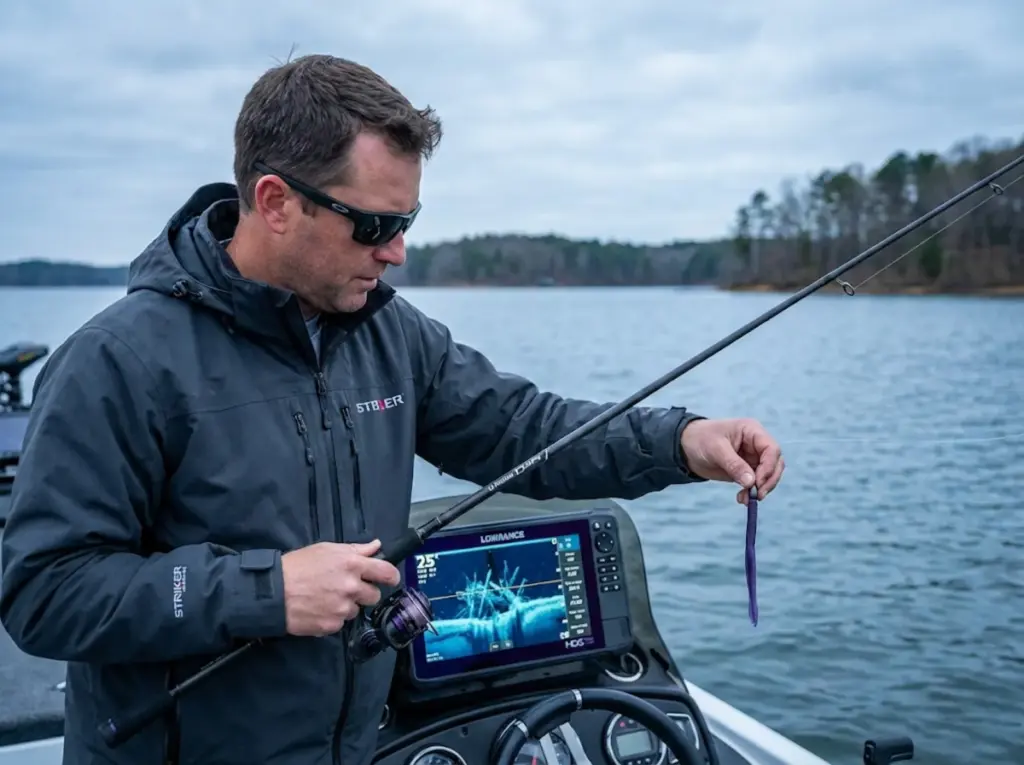
The basic wacky rig is a shallow water tool. These modifications extend its reach.
The Neko Rig—Power Finesse for Deep Water
Insert a tungsten nail weight (1/16 to 1/8 oz) into the nose of your stick bait. This creates a nose-down descent that reaches 15-30 feet quickly while preserving the horizontal flutter action of the tail. The Neko rig is “power finesse”—you can hop it aggressively near dock pilings, ledge drops, and standing timber. Unlike the passive weightless setup, this variation triggers reaction strikes. When fish mark deeper than 12 feet on electronics, Neko is your answer. Compare it with the drop shot alternative for deep structure to round out your finesse arsenal.
The “Mowack”—Carolina Rig Fusion
Rig your wacky worm behind a heavy Carolina rig weight (1/2 to 1 oz) on a 3-4 foot leader. This lets you present the technique in 20-40 feet of water—impossible with weightless setups. The heavy weight attracts attention by stirring sediment; the trailing wacky worm delivers the subtle follow-up. It’s an advanced technique for offshore suspended bass.
The Weedless Wacky Shot for Heavy Cover
The Core Tackle Weedless Wacky Shot solves the heavy-cover problem with a weighted hook and effective fiber weedguard. Skip lures under docks and through lily pads to access bass in low-pressure sanctuaries. The best wacky rig fish live where most anglers can’t throw a wacky rig. Learn to skip.
Troubleshooting Common Wacky Rig Failures
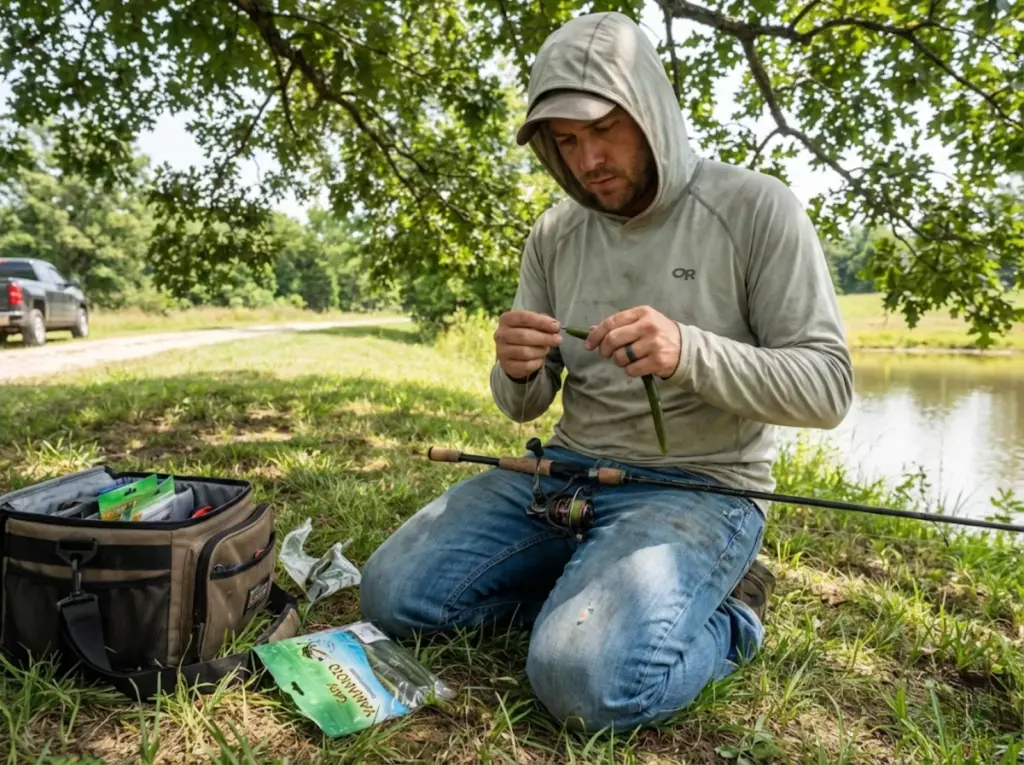
Even experienced anglers hit frustrating stretches with this technique. Here’s how to diagnose and fix the most common problems.
The “Bait Slides on Hook” Problem
If your Senko moves freely on the hook, you’re losing action and hookset efficiency. Use a properly sized silicone O-ring and insert the hook slightly into the plastic body—not just through the ring. Pinch the O-ring before each cast. If the bait shifts, re-rig before wasting another cast.
Line Twist and Spiraling Baits
When your bait spirals during retrieve, it creates compounding line twist that ruins your day by noon. The fix is precise hook placement—split the bait into exactly equal halves. If twist persists, add a small swivel to your leader. And at lunch, strip 50 yards of line behind the boat. The drag straightens most accumulated twist.
Missed Hooksets and Deep-Hooked Fish
Missing fish usually means your hook point is buried in the worm body. The X-pattern O-ring technique keeps it clear. Deep-hooking fish means you’re waiting too long—become a line watcher and set earlier. If you’re gut-hooking bass, slow down your reaction. If you’re missing entirely, speed it up. Understanding why circle hooks improve catch-and-release survival can improve your fish survival rates during tough hookset days.
Conservation and the Sustainability Angle
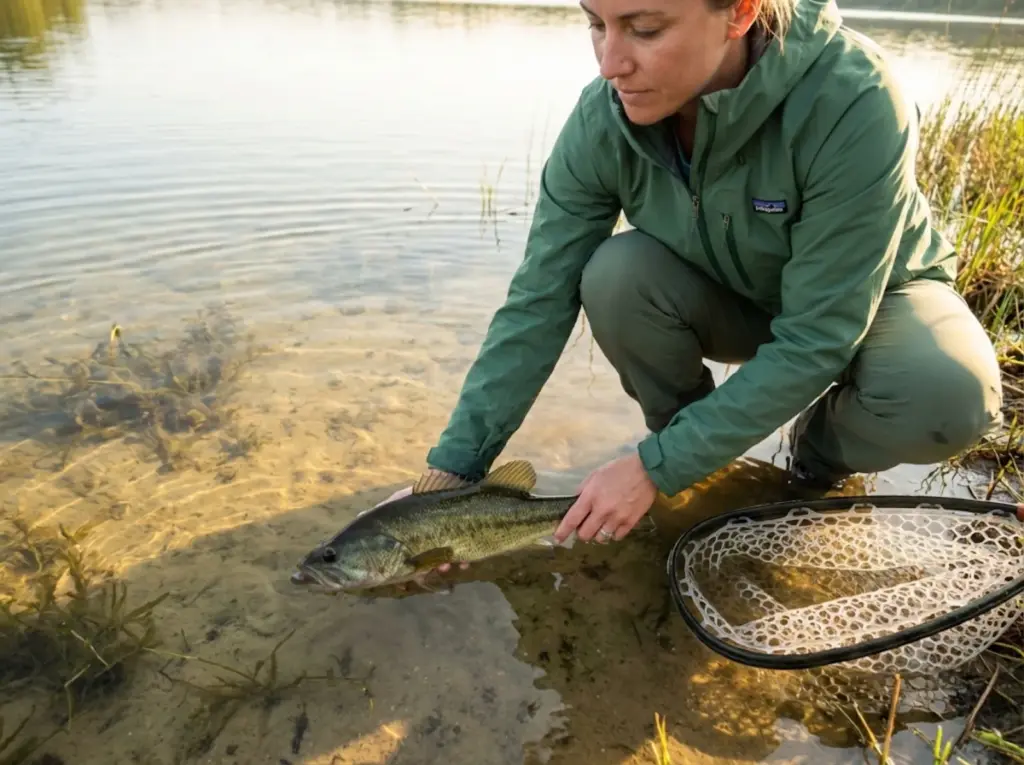
Your durability practices affect more than your wallet.
The Toxicology of Lost Soft Plastics
A University of Saskatchewan study found that over 60% of soft plastics tested leached phthalates into the water within 61 days. Some released chemicals capable of disrupting fish endocrine systems. Lost baits accumulate on the bottom for decades—they don’t biodegrade.
Every durable rigging practice reduces this load. Using O-rings, rigging correctly, and retrieving torn baits instead of leaving them on structure—these habits matter for the waters we fish.
The Conservation Case for Durability
Preventing “thrown” baits saves money AND reduces plastic entering waterways. Beyond O-rings, consider phthalate-free plastics for high-loss scenarios. Keep a small trash bag in your tackle box for torn plastics—they won’t break down, so take them with you. Connect this practice to the angler’s complete conservation toolkit for a broader stewardship approach.
Conclusion
Three takeaways after six months of wacky rig testing:
Trust the physics. The shimmy happens because of fluid dynamics, not rod work. Stop twitching and let the salt-weighted plastic do what it was designed to do.
Upgrade your durability game. Silicone O-rings transform Senkos from expensive consumables to reusable precision tools—a 15x efficiency gain with a $5 investment.
Match technique to conditions. Weightless for post-spawn shallows. Neko for deep structure. Dead-stick pauses in cold water. One rig, endless applications.
Try one change on your next trip: rig an O-ring, slow your retrieve by half, and watch the line instead of feeling for bites. The wacky rig rewards patience. Let the bait fall. Trust the shimmy. The bass will tell you when it’s time.
FAQ
What is the best hook size for wacky rigging a 5-inch Senko?
Size 1 or 1/0 finesse wide gap hooks match the Senko’s center egg sack perfectly. The Gamakatsu B10S Stinger is a top choice among tournament pros for its O’Shaughnessy bend that improves hook penetration physics.
Do you need an O-ring for wacky rigging?
Not technically, but absolutely yes for practical fishing. Without one, a Senko typically lasts 1-2 fish before tearing. With a silicone O-ring, you can land 15-30 fish on the same bait—a 15x improvement in Senko durability.
What is the difference between a Neko rig and a wacky rig?
The Neko rig adds a nail weight to the nose, creating a nose-down vertical descent. Standard wacky rigs fall horizontally with dual-end flutter. Use Neko for deeper water (15+ feet) or when you need faster bottom contact.
What color Senko is best for wacky rigging?
Match water clarity. Green pumpkin for clear and stained water, black or blue flake for muddy conditions, watermelon red flake under bright sun. Dark colors in dark water provide the sharpest silhouette against turbid backgrounds.
How do you fish a wacky rig in heavy cover?
Use a weedless wacky jig with a fiber weedguard. This lets you skip baits under docks and through vegetation where standard wacky hooks would snag immediately.
Risk Disclaimer: Fishing, boating, and all related outdoor activities involve inherent risks that
can lead to injury. The information provided on Master Fishing Mag is for educational and informational purposes
only. While we strive for accuracy, the information, techniques, and advice on gear and safety are not a substitute
for your own best judgment, local knowledge, and adherence to official regulations. Fishing regulations, including
seasons, size limits, and species restrictions, change frequently and vary by location. Always consult the latest
official regulations from your local fish and wildlife agency before heading out. Proper handling of hooks, knives,
and other sharp equipment is essential for safety. Furthermore, be aware of local fish consumption advisories. By
using this website, you agree that you are solely responsible for your own safety and for complying with all
applicable laws. Any reliance you place on our content is strictly at your own risk. Master Fishing Mag and its
authors will not be held liable for any injury, damage, or loss sustained in connection with the use of the
information herein.
Affiliate Disclosure: We are a participant in the Amazon Services LLC Associates Program, an
affiliate advertising program designed to provide a means for us to earn advertising fees by advertising and linking
to Amazon.com. As an Amazon Associate, we earn from qualifying purchases. We also participate in other affiliate
programs and may receive a commission on products purchased through our links, at no extra cost to you. Additional
terms are found in the terms of service.