In this article
You bought a five-arm Alabama rig, tied on five swimbaits, and you’re staring at this wire-and-plastic octopus wondering two things: did I put this together right, and is it going to get me a ticket. Fair questions. I’ve rigged these things on boats across a dozen states and had a game warden count my hooks on the water in Missouri — so I’ve learned the hard way that setup and legality go hand in hand. Here’s everything you need to know about Alabama rigs and umbrella rigs, from assembly to state laws, so you fish confidently and legally.
Here’s how the Alabama rig and umbrella rig compare at a glance:
| Alabama Rig vs. Traditional Umbrella Rig | ||
|---|---|---|
| Feature | Alabama Rig (A-Rig) | Traditional Umbrella Rig |
| Primary use | Casting from bass boats | Trolling for stripers/schooling fish |
| Typical arms | 5 wires, castable weight | 4–6 wires, heavier frame |
| Bait type | Soft plastic swimbaits | Bucktails, spoons, or soft plastics |
| Target species | Largemouth and spotted bass | Striped bass, bluefish, walleye |
| Weight range | 2–4+ oz rigged | 4–8+ oz rigged |
| Legality concerns | Varies wildly by state | Generally fewer restrictions (trolling) |
What Is an Alabama Rig and Where Did It Come From
The Origin Story — Paul Elias and Lake Guntersville
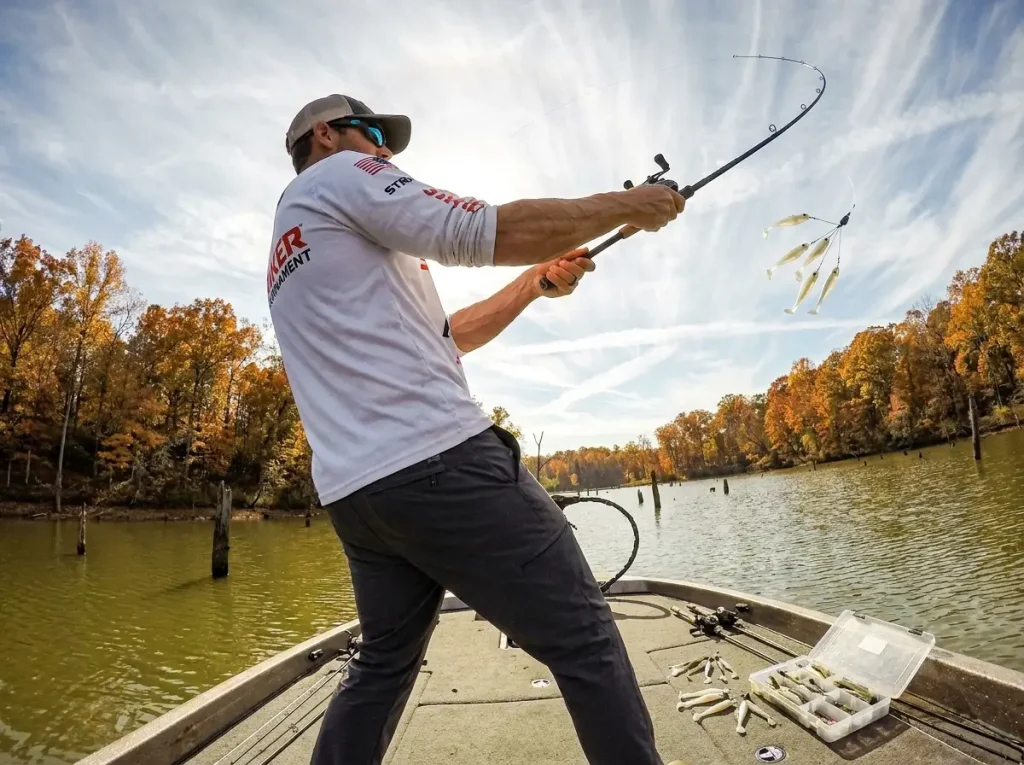
The Alabama rig didn’t exist in the bass fishing world until October 2011. That’s when Paul Elias showed up to the FLW Tour Open on Lake Guntersville with a prototype wire rig invented by a guy named Andy Poss. Elias had tested it in his backyard pond in Mississippi, been impressed, then stuck the rod in a locker and forgot about it.
At Guntersville, he fished from 6 a.m. to noon without a single bite. The bass were suspended and ignoring everything conventional. Under a bridge, out of ideas, he remembered the rig. Four casts later, he had 15 pounds in the livewell. He won the event wire-to-wire with 103 pounds total — and the bass fishing world immediately lost its mind. Major League Fishing’s coverage of the 2011 Guntersville event documented the chaos that followed.
How the A-Rig Changed Bass Fishing Overnight
Within weeks, every tackle shop in the country was sold out of anything resembling a multi-wire rig. State fish and wildlife agencies scrambled to figure out whether the thing was even legal under existing hook-count laws. Some states banned it outright. Others rewrote regulations to accommodate it. The speed of adoption — and the regulatory panic — was unlike anything the sport had seen.
Alabama Rig vs Umbrella Rig — What’s Actually Different
Here’s the confusion most people have: the umbrella rig has been used in saltwater trolling for decades. It’s a heavier frame designed to pull behind a moving boat, typically rigged with bucktails or spoons for striped bass and bluefish. The Alabama rig is a lighter, castable version of that same concept, designed to be thrown from a bass boat with a baitcasting setup.
The names get used interchangeably, but the application is different. If you’re casting for largemouth in a reservoir, you’re using an A-rig. If you’re trolling for stripers in open water, you’re using a traditional umbrella rig. The legality headaches mostly apply to the castable version. If you fish tandem rig setups or other multi-lure configurations, you already know the hook-count rules vary — the A-rig just amplifies that problem because it carries up to five hooks.
Anatomy of the Rig — Every Component Explained
The Head, Wires, and Swivels
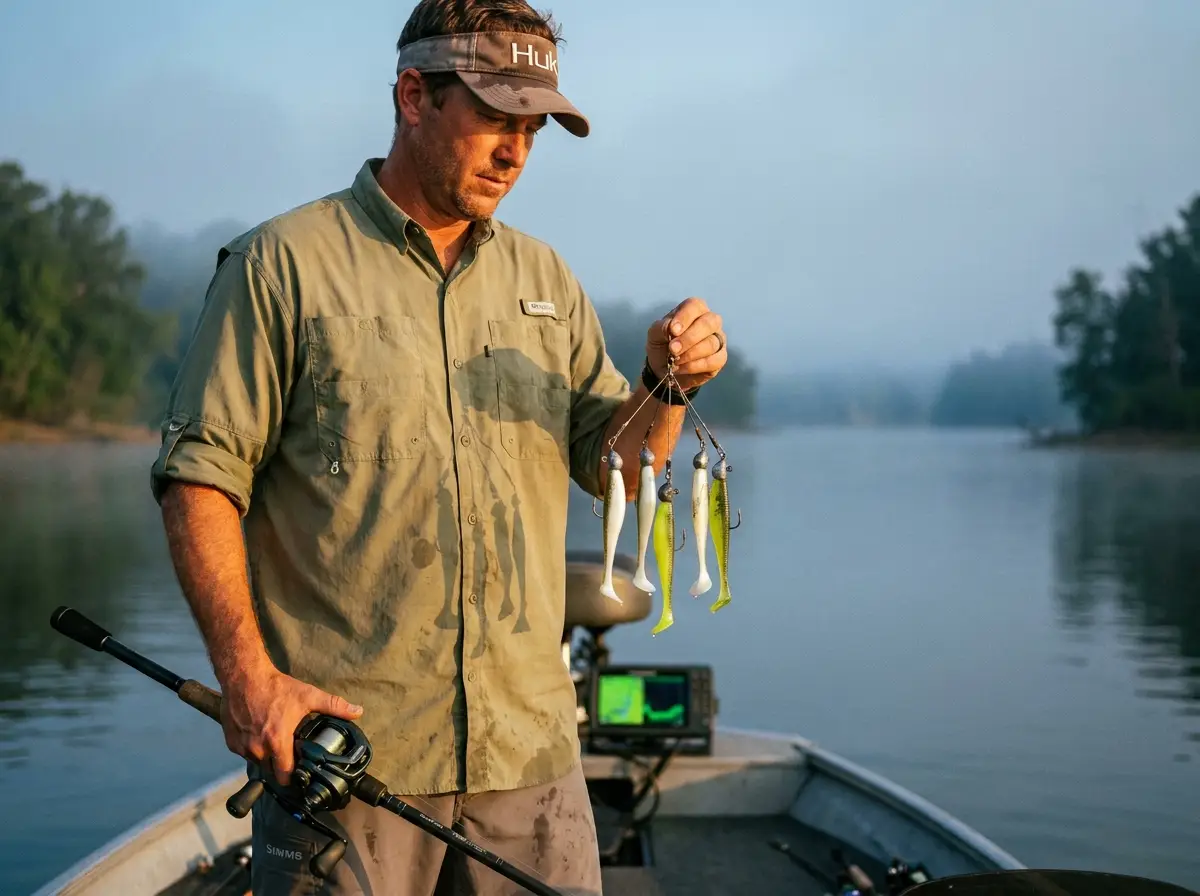
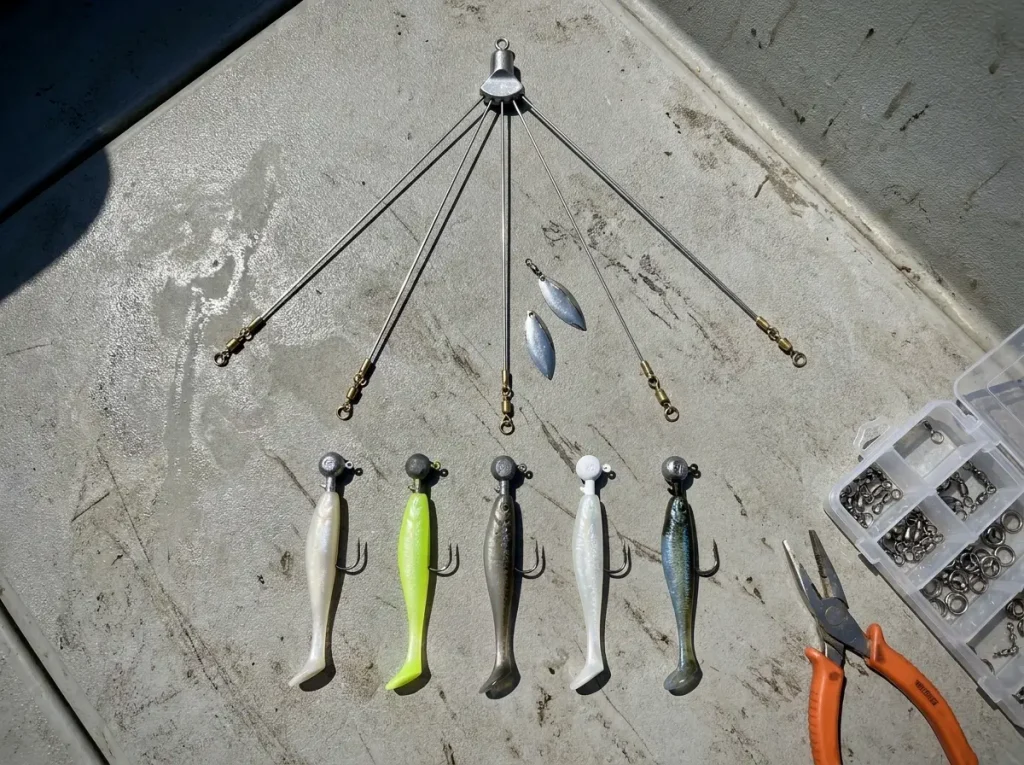
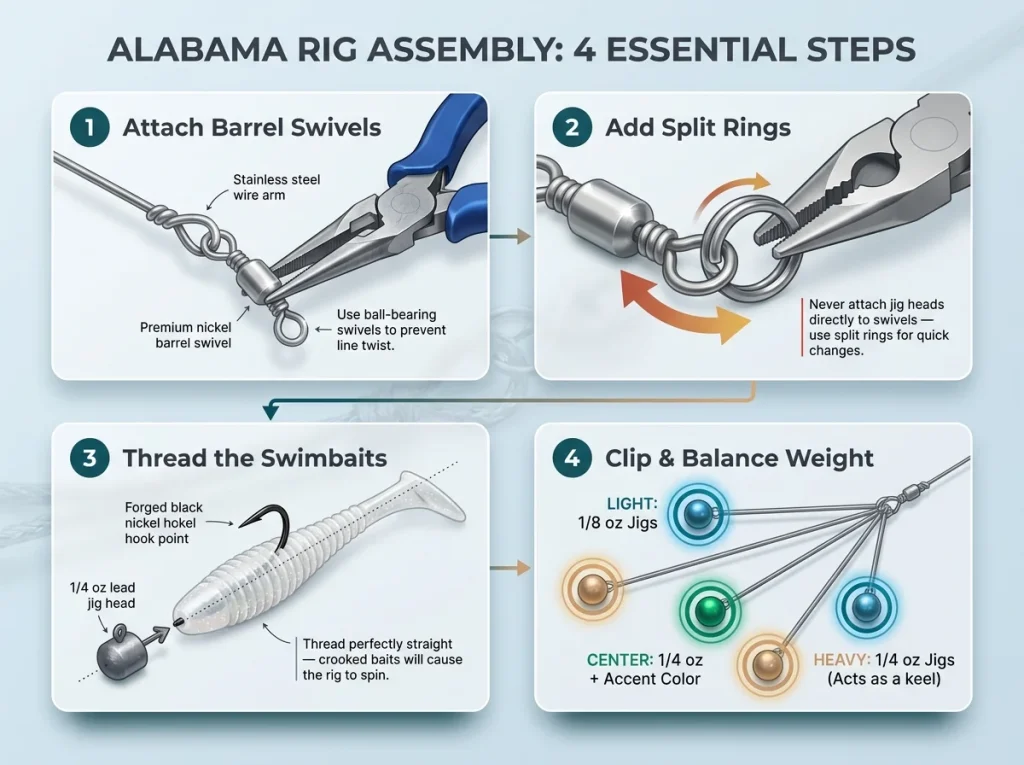
A standard A-rig starts with a molded head — usually lead or tungsten — with a line-tie eye at the front and five stainless steel wire arms radiating from the back. Four arms spread to the outside, and one center arm extends straight back as the primary trailer position. Each arm terminates in a barrel swivel that allows the attached bait to spin freely without twisting the line.
The swivels matter more than most people think. Cheap brass swivels seize up after a few trips, especially in stained or brackish water. Once a swivel locks, that arm’s bait drags sideways and ruins the school illusion. Use quality stainless or nickel-plated swivels and add split rings between the swivel and jig head for quick bait changes on the water — you don’t want to be retying in the middle of a bite window. For details on hardware sizing, check out split ring sizing and why getting it wrong costs you fish.
Jig Heads, Swimbaits, and Blades
Each arm gets a jig head threaded with a soft plastic swimbait — typically 3.5 to 5 inches depending on the forage size you’re matching. Popular choices include Keitech Swing Impacts, Zoom Swimmer models, and Strike King Rage Swimmers. Match your swimbait profile to the local shad or baitfish — pearl and chartreuse for clear water, smoky shad or bluegill patterns for stain.
Some rigs come with willow leaf blades mounted at the midpoint of each arm. These add flash and vibration that mimic additional baitfish without adding hooks. They’re optional, but in low-light or stained water, the extra flash can make the difference between a follow and a commit.
How Wire Arm Geometry Creates the School Effect
This is the part nobody explains well, and it’s why the rig works. The five-wire layout at roughly 45 degrees mimics the spatial distribution of a small bait school. In real baitfish schools, individuals maintain consistent spacing — not bunched into a clump, not spread so far apart they look like loners. The A-rig’s wire angle replicates that spacing at normal retrieve speeds.
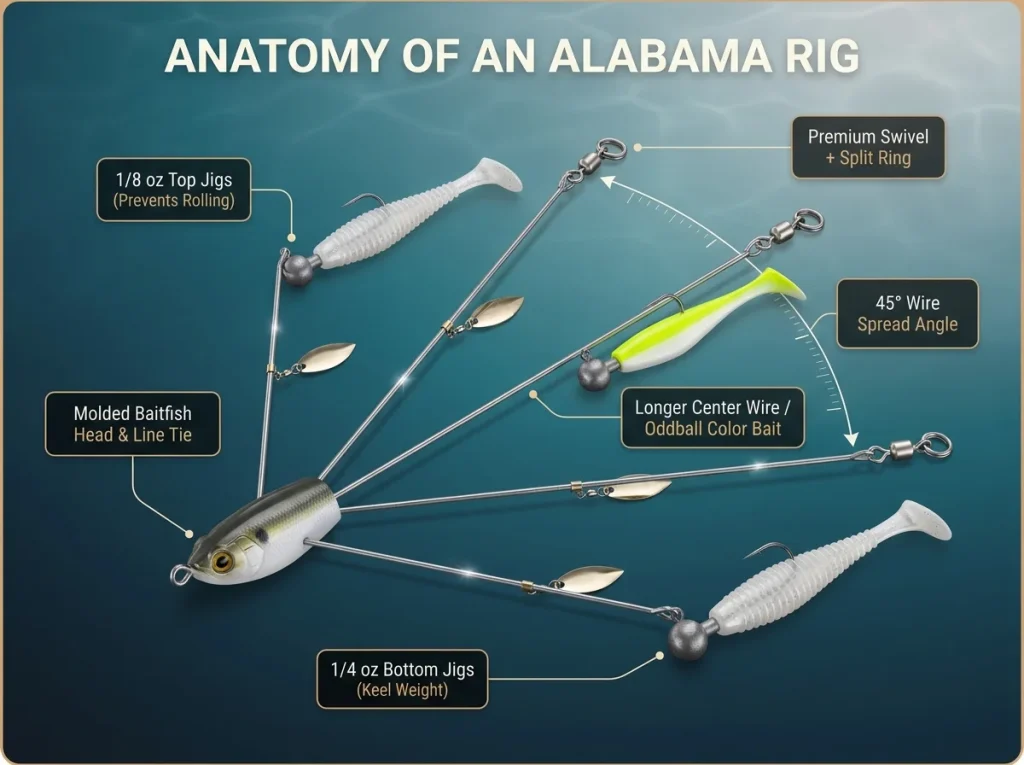
Here’s what changes with speed: retrieve faster and water resistance pushes the arms backward, tightening the school into a compact ball. Slow down and the arms spread wider, creating a looser, more natural drift pattern. That means your retrieve speed doesn’t just control depth — it controls the shape of the “school” your rig presents. Veterans use this intentionally. A tight, fast ball triggers reaction strikes from aggressive bass. A slow, spread-out drift draws in cautious fish that want to pick off a straggler.
Arm length matters too. Shorter arms (6 inches) keep the school tight and compact — better for clear water where bass can see the rig from a distance. Longer arms (8–10 inches) create more separation between baits, which works better in stained water where bass rely on their lateral line to detect movement rather than sight.
Pro tip: The center wire is typically longer than the four outer arms by about an inch. That makes the center bait trail slightly behind the school — exactly where a real straggler would be. That’s the bait that gets eaten most often.
How to Set Up an Alabama Rig Step by Step
Choosing Your Rig — Pre-Made vs DIY
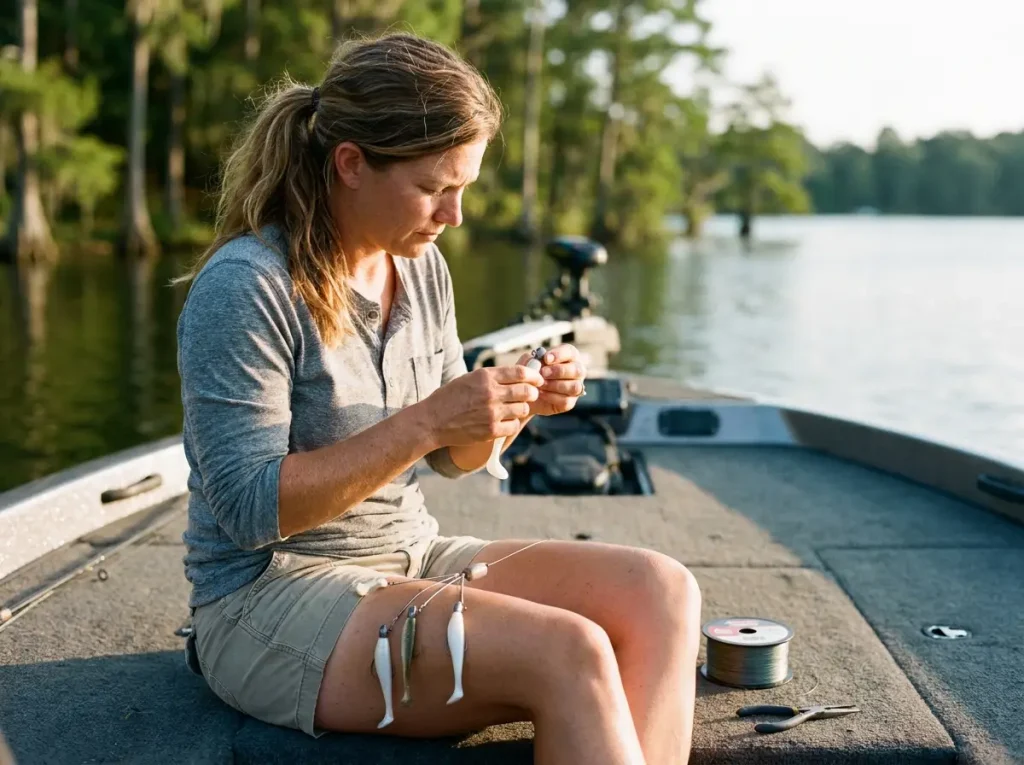
You can buy a pre-made rig from YumBrella, Picasso Lures, Damiki (Hydra Rig), or Hog Farmer Baits — or you can build your own from wire, a head mold, and individual components. Pre-made rigs run $8–$25 and are ready to fish after adding baits. DIY rigs give you control over arm length and wire gauge but require more work upfront.
For most anglers, pre-made is the move. Start with a Picasso or YumBrella rig, fish it for a season, and build your own once you know exactly what arm length and wire stiffness you prefer.
Selecting Swimbaits and Jig Head Weights
Match your swimbait size to the dominant forage. On most bass lakes, that’s threadfin shad in the 2–4 inch range, so a 3.5-inch paddle tail swimbait is the standard starting point. Choosing soft plastic colors by water clarity is the same logic here — pearl and white in clear water, chartreuse and white in stain, dark smoke in muddy conditions.
Jig head weight depends on how deep you need the rig to run. For shallow work (5–10 feet), 1/8 to 3/16 oz heads keep the rig in the upper water column. For deeper presentations, step up to 1/4 oz heads.
Rigging for Balance — Weight Distribution That Prevents Spinning
Here’s where beginners go wrong. If you put identical jig heads on all five arms, the rig rolls and spins during the retrieve. The fix is simple: heavier heads on the bottom, lighter on top.
A solid starting configuration for a five-arm rig: 1/4 oz jig heads on the two bottom arms and the center arm, 1/8 oz on the two top arms. This keeps the rig tracking straight with the heavier side down — the same way a keel keeps a boat upright.
Pro tip: Put a different colored swimbait on the center arm. Make it the oddball — a chartreuse among pearls, or a bluegill among whites. Bass focus on the one that doesn’t match. That center bait trailing behind the school looks like a weak or confused baitfish, and it’s the one that gets eaten first.
Best Rod, Reel, and Line for Alabama Rigs
Rod Power and Length — Why 7’6″ Is the Minimum
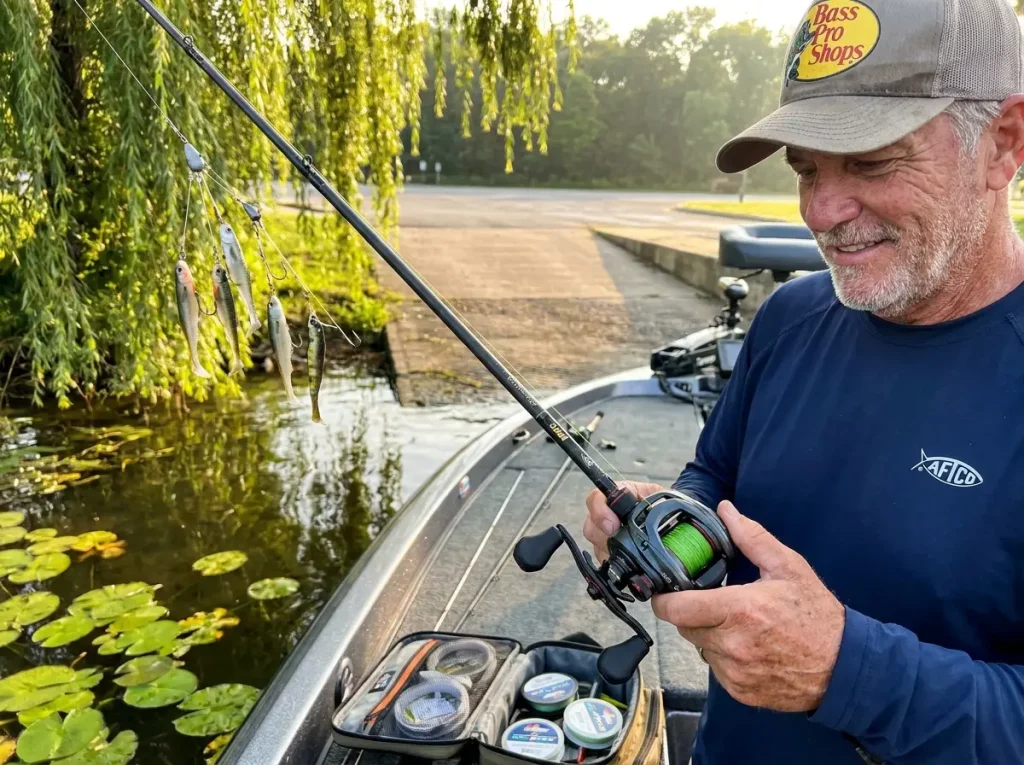
A fully rigged A-rig with five swimbaits and jig heads weighs north of 4 ounces. You cannot cast that with a medium action rod without destroying your shoulder by noon. The minimum spec is a 7-foot-6-inch rod with medium-heavy to extra-heavy power and a lure rating of at least 1 to 3 ounces.
Length matters because you need leverage for long casts — the rig is wind-resistant and heavy, so a shorter rod kills your distance. The extra-fast tip helps detect subtle bites while the stiff backbone drives the hook through the swimbait and into the fish.
If you’re building rods, the principles in how to build a custom fishing rod apply, but you’ll want a blank rated for heavy swim jig or flipping applications.
Reel Gear Ratio and Drag Requirements
You need a baitcasting reel with serious drag — at least 15 pounds of max drag, because you’ll occasionally hook two fish at once and the combined pull is no joke. Gear ratio depends on your primary technique:
A 6.4:1 ratio is ideal for slow rolling — it forces you to retrieve slowly and gives you more torque for pulling the heavy rig through the water column. A 7.1:1 ratio gives you versatility to slow roll or speed up for a burn-and-pause retrieve. For more on how baitcasting reels work under load, baitcaster reel mechanics breaks down the physics.
Braid vs Fluorocarbon — When to Use Each
Both work. The choice depends on conditions.
65-pound braided line is the standard for most A-rig fishing. It casts the heavy rig farther, has zero stretch for solid hooksets at distance, and handles the strain of multi-fish hookups without breaking. The visibility isn’t an issue because the rig itself is already a loud, multi-bait presentation — stealth isn’t the game plan.
16–20 pound fluorocarbon works better in ultra-clear water where the braided line’s visibility might spook fish before they see the rig. Fluorocarbon is also more forgiving — the stretch acts as a shock absorber when a big fish surges, reducing the chance of pulled hooks. If you go braid, add a 3-foot fluorocarbon leader in the 20-pound range for the best of both worlds.
How to Fish the Alabama Rig — Retrieve Techniques
The Slow Roll — Cold Water Money Technique
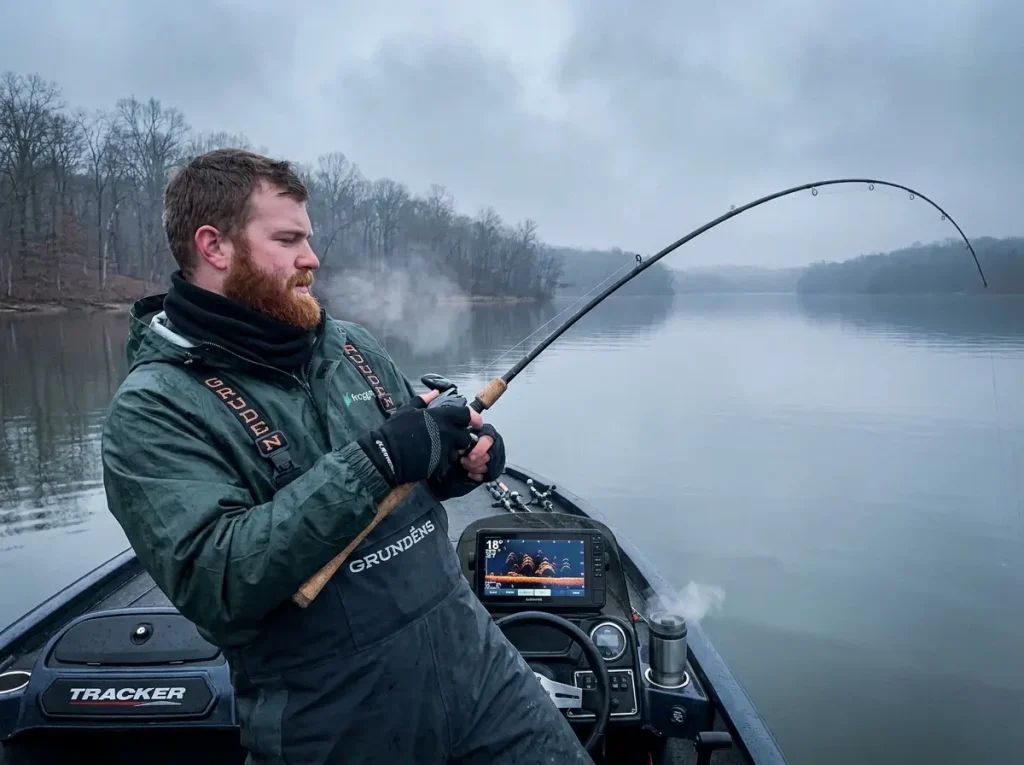
When water temperatures drop below 55°F and bass are suspended over structure, the slow roll is the A-rig’s highest-percentage technique. Cast to points, channel swings, and humps where bass school on shad, then retrieve as slowly as you can while keeping contact with the bottom.
The key word is slow. Slower than you think. The rig should tick the bottom occasionally — just enough to know your depth without snagging. At that speed, the wire arms spread wide, creating a loose, natural-looking school that drifts through the bass’s strike zone for as long as possible.
This is the technique that won the Guntersville tournament. Cold water, suspended bass, and a rig that looked more like real food than anything else in the tackle box.
Burn and Pause — When Bass Are Aggressive
When bass are actively chasing bait — you’ll see schooling activity on the surface or arches stacked on your sonar — switch to a faster retrieve with intermittent pauses. Reel fast for five to seven cranks, then stop abruptly. The baits flare outward on the pause like a bait school scattering, then regroup when you start reeling again.
That flare is what triggers commits from following fish. Bass shadow the rig waiting for an opportunity, and the sudden scatter gives them a split-second window where one bait separates from the group. That’s the bite.
Pro tip: Pop the rod tip during a steady retrieve instead of just stopping. The snap creates a sharper flare than a simple pause, and a following bass that’s been tracking the rig for 30 feet will finally eat.
When and Where to Throw It
The A-rig excels from late fall through pre-spawn — roughly October through March in most of the country — when bass group up on offshore structure and feed on schooling shad. Target water temperatures between 45°F and 60°F.
Best structure includes main lake points, humps, channel swings, standing timber, and bridge pilings — anywhere bass stack up vertically and ambush baitfish. The rig is less effective in heavy cover or shallow vegetation where the exposed wire arms snag constantly. For those conditions, stick to winter bass tactics with blade baits or single-presentation lures.
Alabama Rig Legality — State-by-State Hook Limits
States That Allow Five Hooks
The following states allow a full five-hook Alabama rig with no restrictions on hook count: Alabama, Arkansas, Connecticut, Florida, Georgia, Idaho, Kentucky, Louisiana, Michigan, Mississippi, New Mexico, New York, North Carolina, Oklahoma, Pennsylvania, South Carolina, Texas, Virginia, and West Virginia. In these states, you can rig all five arms with hooked swimbaits and fish without worrying about compliance.
That said, regulations change. Always verify with your state’s fish and wildlife agency before your first trip with an A-rig.
Three-Hook and Two-Hook States
Several states restrict hook counts per line, which directly limits how you can rig an A-rig:
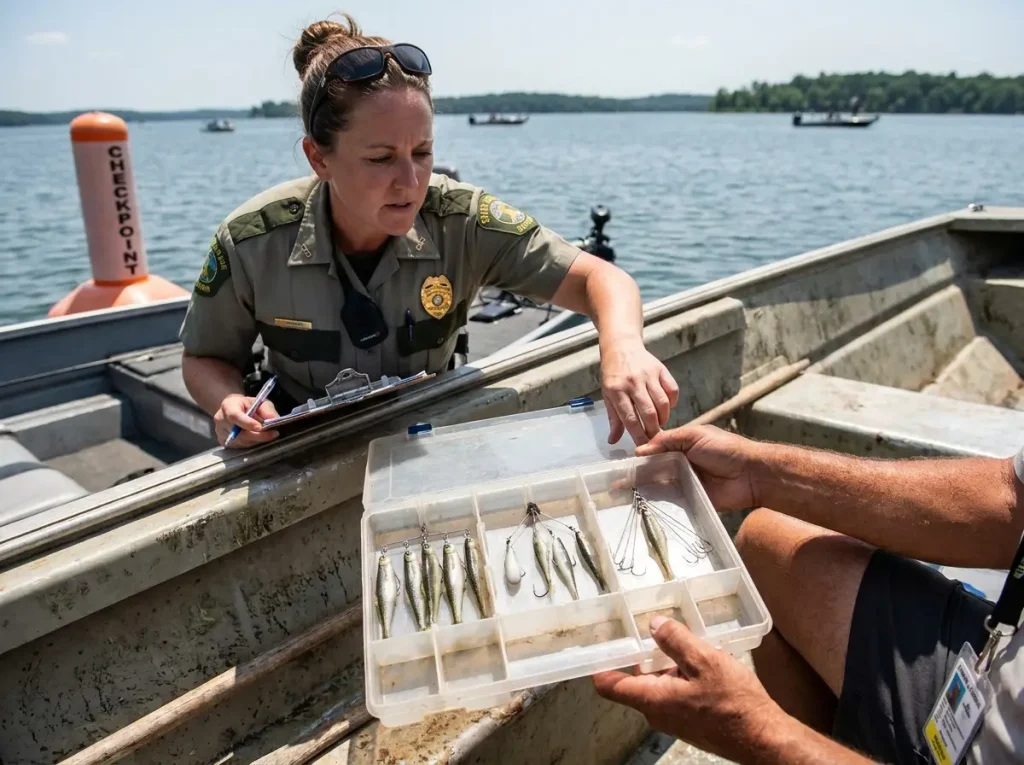
Three-hook limit states include Missouri, Colorado, Ohio, Rhode Island, Washington, California, Wisconsin, and Utah. In these states, you can still fish the full five-arm rig — you just need to rig three arms with hooked swimbaits and two arms with hookless dummy baits that serve as visual decoys.
Two-hook limit states include Arizona, Hawaii, Iowa, Kansas, Maryland, and Massachusetts. Here you’re limited to two hooked baits plus three hookless dummies — which still produces the school effect but reduces your hooking percentage.
Minnesota takes it further. Per the Minnesota DNR regulations on Alabama rigs, inland waters allow only one hook per line. You can legally fish an A-rig in Minnesota, but only one arm gets a hooked bait — the other four carry hookless spinners or plastic dummies. On border waters where two lines are allowed, using two hooks on the rig means you can’t fish any other lines simultaneously.
How to Rig Legally in Restricted States
The practical move is to own one rig and reconfigure it per state. Here’s how:
For three-hook states, put hooked jig heads on the center arm and the two bottom arms (where hooksets are most reliable), and clip unhooked swimbaits on the top two arms. The dummies still move naturally and maintain the school illusion.
For two-hook states, hook the center arm and one bottom arm. The three hookless dummies provide the visual trigger while keeping you legal.
For one-hook states like Minnesota, hook only the center arm — the trailing straggler position that gets the most bites anyway — and run four hookless dummies.
Pro tip: Carry a pair of side-cutting pliers and spare hookless jig heads in your tackle box. If you’re crossing a state line mid-trip, you can swap hooked for hookless arms in five minutes on the water. Don’t learn this lesson the hard way — wardens count hooks, not lures. Understanding fishing regulations and seasonal closures before you launch is part of being a responsible angler.
Tournament Rules — B.A.S.S., MLF, and Local Circuits
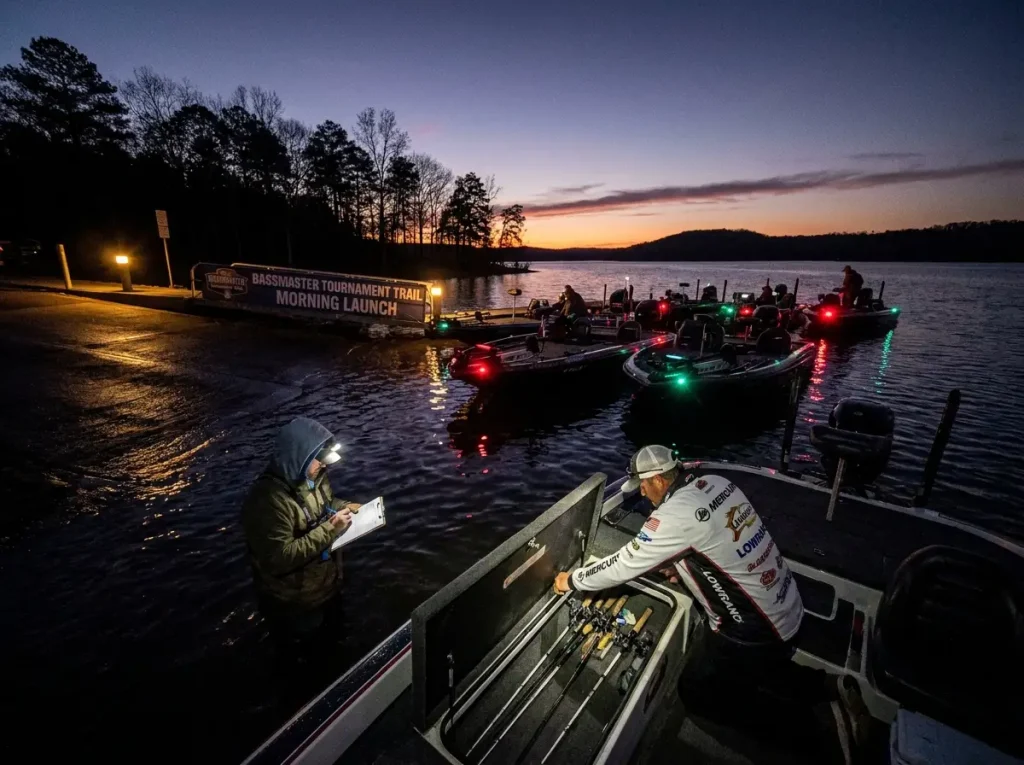
Where A-Rigs Are Banned in Competition
Recreational legality and tournament legality are two completely different animals. Confuse them and you’re disqualified before you make your first cast.
B.A.S.S. Elite Series and Bassmaster Classic — The A-rig is effectively banned under the one-lure rule. B.A.S.S. amended its tournament rules to limit anglers to a single lure during practice and competition, which prohibits multi-bait umbrella rigs by definition.
MLF Bass Pro Tour and Team Series — Umbrella-type rigs are specifically prohibited. Their rules define umbrella rigs as “any nontraditional lure or harness using wires, lines or hooks to connect multiple teasers.” Traditional double fluke and double drop-shot rigs with a maximum of two hooks are grandfathered in, but A-rigs are not.
Where They’re Still Legal — And the Fine Print
B.A.S.S. Opens, Federation Nation, and College B.A.S.S. — The one-lure rule does not apply to these circuits. You can fish A-rigs in Opens and lower-tier B.A.S.S. events, subject to state regulations on the host water.
Local circuits and Big Bass Tour events — Most local tournament trails allow A-rigs as long as you comply with state hook-count regulations for the host lake. But always read the specific tournament rules packet. Some local organizations add their own restrictions beyond state law.
The bottom line: check the rules for each specific event, not just the state law. Tournament weigh-in practices are only relevant if you don’t get disqualified for a tackle violation first.
Conclusion
The Alabama rig mimics a baitfish school more convincingly than any other presentation in bass fishing — but only if you get the wire geometry and weight distribution right. Heavier heads on the bottom, lighter on top, a different colored center bait trailing behind the pack. That’s the setup that catches fish.
State regulations vary from full five-hook freedom to single-hook-only restrictions, and they change more often than most anglers realize. Check before you fish, especially before crossing state lines with an A-rig tied on.
Tournament rules add another layer entirely. What’s legal recreationally might get you disqualified in competition — and the distinction between B.A.S.S. Elite rules and B.A.S.S. Open rules alone catches people off guard every season. Know your circuit’s rules as well as your state’s laws, and you’ll fish with confidence instead of anxiety.
Q1 What states is the Alabama rig legal in?
Most states allow Alabama rigs with varying hook count limits. States like Alabama, Texas, Florida, and Kentucky allow all five hooks. Missouri, Ohio, and California limit you to three hooks. Arizona, Iowa, and Massachusetts cap it at two. Always check your state’s current fishing regulations before rigging up.
Q2 How many hooks can you have on an Alabama rig?
The rig itself holds five, but your legal limit depends on state law. Five-hook states let you use all arms. In three-hook states, rig three hooked baits and two hookless dummy swimbaits. The dummies maintain the school effect without breaking regulations.
Q3 What is the difference between an Alabama rig and an umbrella rig?
The Alabama rig is a lightweight, castable version designed for bass fishing from a boat. The traditional umbrella rig is heavier and built for trolling, typically targeting striped bass or bluefish. The wire geometry is similar, but the weight, application, and target species are different.
Q4 Are Alabama rigs legal in bass tournaments?
It depends on the organization. B.A.S.S. Elite Series and MLF Bass Pro Tour ban them. B.A.S.S. Opens and Federation Nation events allow them. Most local circuits permit them if you comply with state hook-count laws. Always verify the specific tournament rules before competing.
Q5 What size rod do you need for an Alabama rig?
A minimum of 7 feet 6 inches with medium-heavy to extra-heavy power and a lure rating of 1–3 ounces. The rig weighs over 4 ounces fully loaded — you need a stiff backbone for casting distance and a strong hookset, plus enough length for leverage on long casts.
Risk Disclaimer: Fishing, boating, and all related outdoor activities involve inherent risks that
can lead to injury. The information provided on Master Fishing Mag is for educational and informational purposes
only. While we strive for accuracy, the information, techniques, and advice on gear and safety are not a substitute
for your own best judgment, local knowledge, and adherence to official regulations. Fishing regulations, including
seasons, size limits, and species restrictions, change frequently and vary by location. Always consult the latest
official regulations from your local fish and wildlife agency before heading out. Proper handling of hooks, knives,
and other sharp equipment is essential for safety. Furthermore, be aware of local fish consumption advisories. By
using this website, you agree that you are solely responsible for your own safety and for complying with all
applicable laws. Any reliance you place on our content is strictly at your own risk. Master Fishing Mag and its
authors will not be held liable for any injury, damage, or loss sustained in connection with the use of the
information herein.
Affiliate Disclosure: We are a participant in the Amazon Services LLC Associates Program, an
affiliate advertising program designed to provide a means for us to earn advertising fees by advertising and linking
to Amazon.com. As an Amazon Associate, we earn from qualifying purchases. We also participate in other affiliate
programs and may receive a commission on products purchased through our links, at no extra cost to you. Additional
terms are found in the terms of service.