
In this article
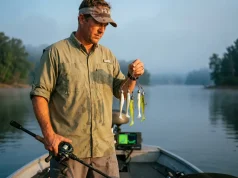
I was losing fish on a spinnerbait. The hits were happening — plenty of hits — but too many of them weren’t sticking. Short strikes: fish chasing the blades and nipping the back end of the skirt without catching the hook. I watched it happen three times in a row before somebody on the boat held up a trailer hook and said “try this.” I slid it on and the next short-striker got both jaws of the spinnerbait and the trailer. The fish that had been coming off started staying on.
A tandem rig — any setup that uses two hooks or two lures on the same line — is not a trick or a gimmick. It’s a solution to specific fishing problems. Short strikes on spinnerbaits. Bottom-fishing scenarios where two baits at different depths outperform one. Trout that take a dry fly visually but feed subsurface. Schooling bass that won’t commit to a single swimbait when a group of baitfish would be more convincing. This guide covers every practical tandem rig setup, when to use each one, and the one rule most states enforce that limits how many hooks you can legally put in the water.
⚡ Quick Answer: Tandem rigs put two lures or baits in the water simultaneously. The trailer hook converts short strikes on spinnerbaits and jigs. The high-low rig presents two baits at different depths for bottom fishing and surf. The dropper-loop tandem fly rig adds a subsurface nymph below a dry fly. The Alabama/umbrella rig mimics a baitfish school. Each solves a specific problem — choose the one that matches your current fishing situation.
What a Tandem Rig Is and Why Two Lures Work Better
The single-lure limitation
A single lure occupies one position, one depth, and presents one profile. When fish are committed to a specific forage and keyed to a specific depth, that’s often enough. But fishing situations frequently present problems that a single lure can’t solve: fish following but not committing, fish short-striking behind the lure, fish feeding at multiple depths simultaneously, or fish that need the visual context of multiple baitfish before they’ll feed.
The tandem rig is the category of solutions to those problems. It adds a second hook, a second lure, or a second bait at a different depth — extending the angler’s options without changing lines or rigs mid-presentation.
The types of tandem rigs and what each solves
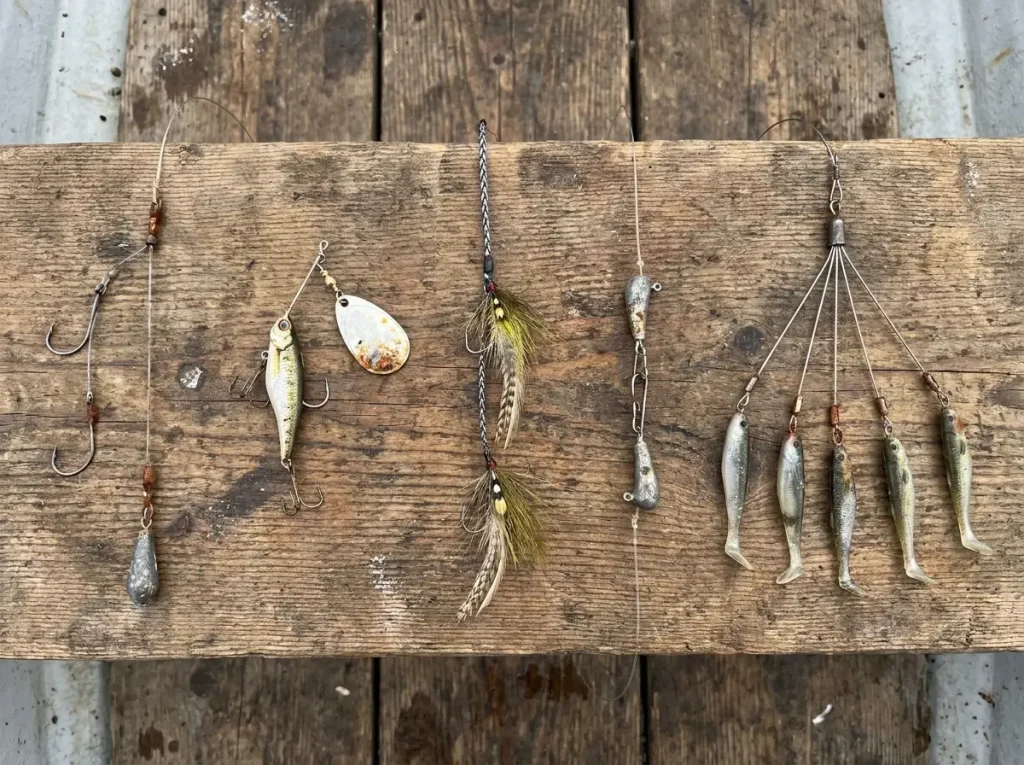
There are five distinct tandem setups worth knowing, each designed for a different fishing context:
The trailer hook adds a second hook to an existing single-hook lure — most commonly a spinnerbait, buzzbait, or swim jig. It solves short strikes by covering the back end of the lure where fish often connect without hooking up.
The high-low rig (also called a hi-lo, hi-low, or two-hook bottom rig) presents two baits at different heights above the seafloor on the same leader. It solves the “what depth are fish feeding at” problem by covering both simultaneously.
The tandem leader rig in fly fishing attaches a second fly below the first on a short dropper tippet. It solves the dry fly problem where fish feed subsurface — one fly rides the surface, one hangs below it.
The tandem jig or lure rig connects two lures in series on one leader — leader lure to small dropper lure below or behind it. It produces double hookups on schooling fish and provides a choice of profile for following fish.
The Alabama or umbrella rig runs five or more wire arms from a central head, each arm tipped with a small swimbait. It solves the schooling baitfish problem by presenting a small school as a single cast.
The High-Low Rig — Bottom Fishing With Two Baits
Construction and geometry
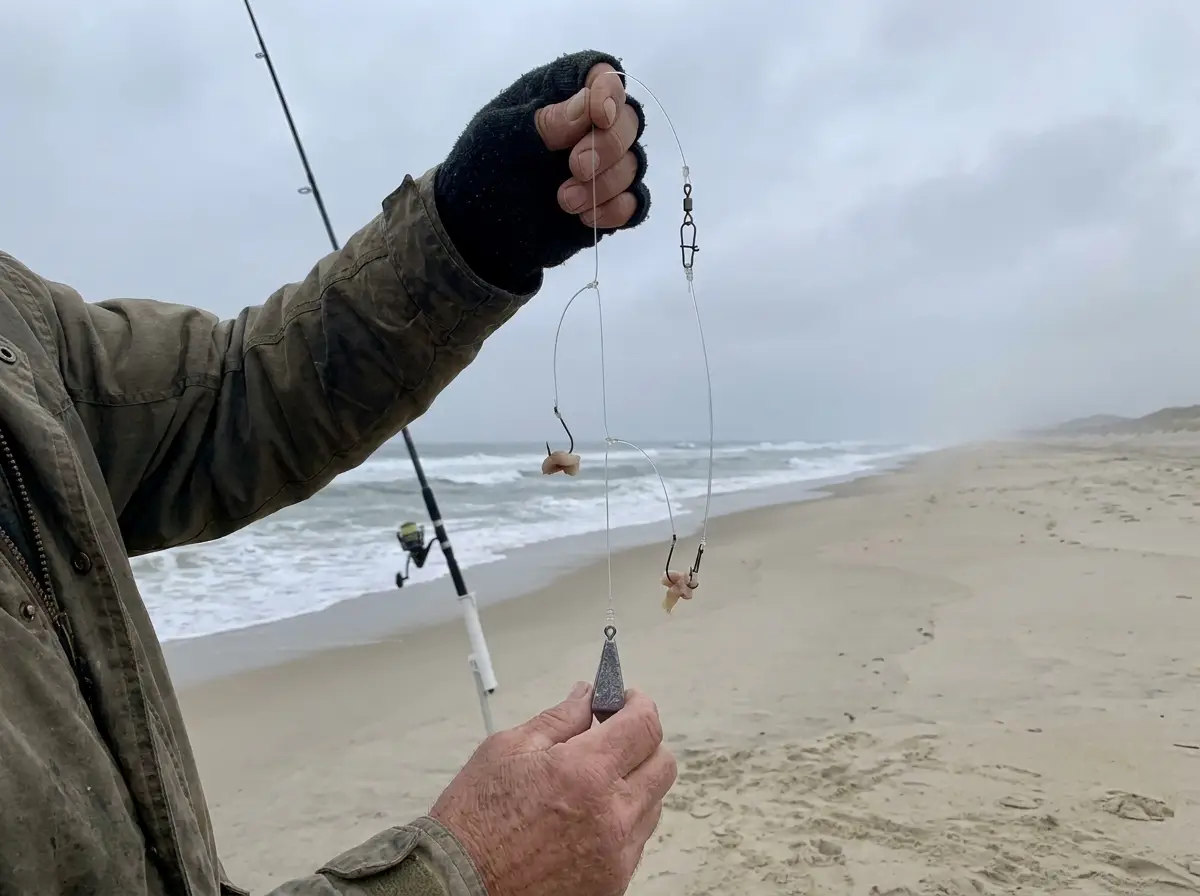
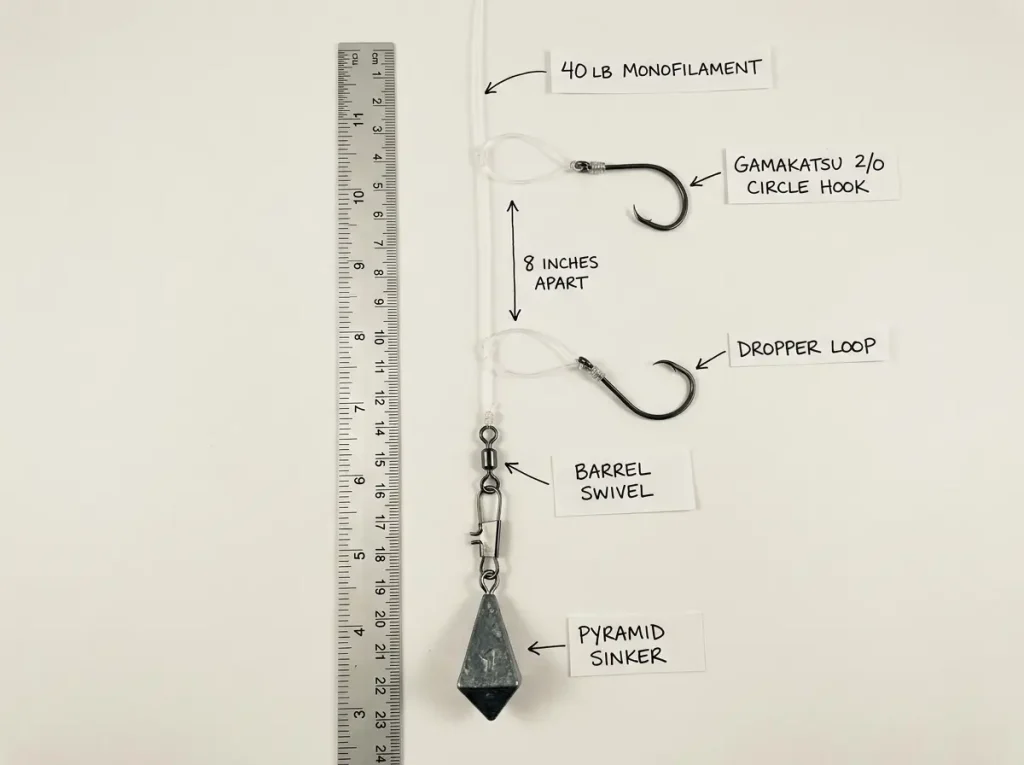
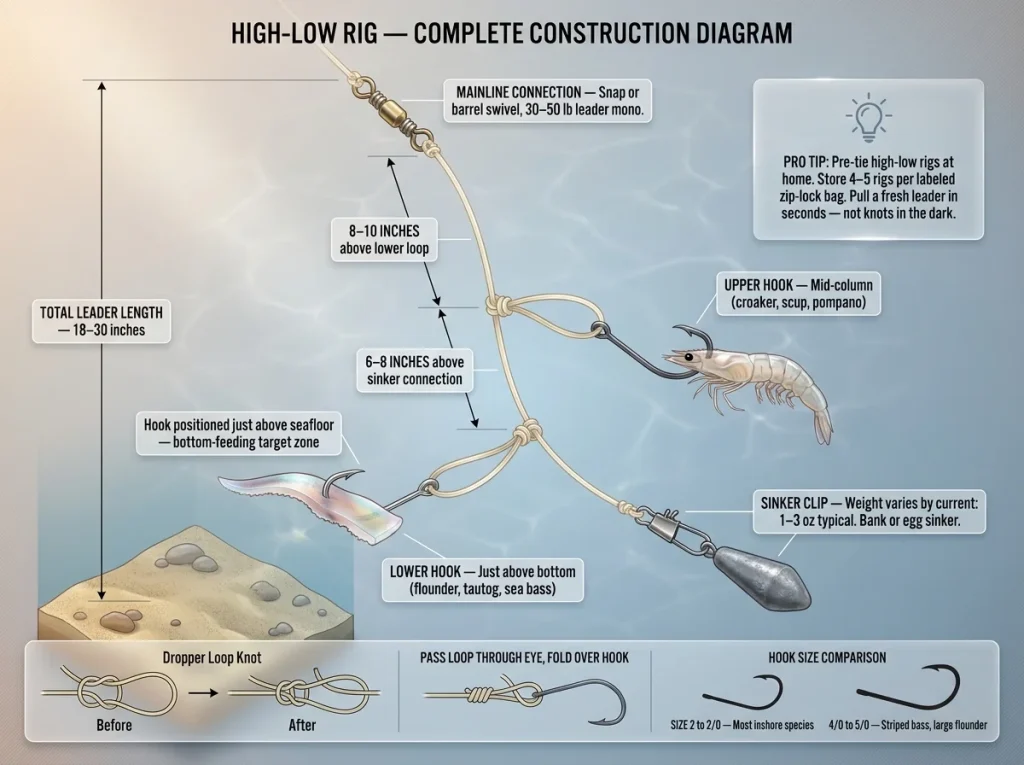
The high-low rig starts with 30-50 lb monofilament leader, typically 18-30 inches total length. Two dropper loops are tied at different heights along the leader — the lower loop sits 6-8 inches above the sinker connection, the upper loop 8-10 inches above the lower. Each loop should be long enough to extend the hook 2-3 inches clear of the leader body, preventing tangling. A snap swivel or barrel swivel at the top connects the rig to the mainline; a sinker clip or direct tie at the bottom connects the weight.
Both hooks fish simultaneously: the lower hook presents bait just above the bottom, the upper hook presents bait 8-12 inches higher in the water column. For bottom-feeding species like flounder, black sea bass, scup, tautog, and surf species — pompano, croaker, whiting — the high-low rig doubles your presentation without adding complexity.
Bait selection and hook sizing
On a high-low rig, you can fish the same bait on both hooks to maximize one presentation, or fish two different baits to identify what the fish are targeting that day. A common approach: fresh cut squid on the lower hook (bottom-hugging species tend to take this first) and a live shrimp on the upper hook (mid-column feeders). The rig tells you which bait the fish are eating within the first several casts.
Hook sizes for a high-low rig depend on the target species. Size 2 to 2/0 handles most inshore surf and bottom species effectively. For larger target species — striped bass, larger flounder — step up to 4/0 or 5/0 on heavy monofilament.
The spacing between the two dropper loops must be at least twice the loop length to prevent the hooks from tangling with each other during the cast. Loops that are too close, or too long relative to their spacing, produce a tangled rig on almost every cast.
Pro tip: Pre-tie high-low rigs at home on a rigging board, using a loop-to-loop system for easy in-field hook replacement. Carry four or five rigged leaders in a small zip-lock bag. When you lose a hook to structure or a big fish, you pull a fresh leader, not needle-nose pliers and tippet material in the dark on a cold surf beach.
The Trailer Hook Setup — Solving Short Strikes on Spinnerbaits and Jigs
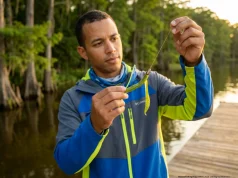
 Owner trailer hook added through the main hook bend, shown against a blurred dock and green water background” class=”wp-image-13223″/>
Why short strikes happen and what the trailer hook corrects
A spinnerbait creates its action at the head — the blades spin, the skirt pulses, the vibration originates at the front. But the hook is at the head, and a bass chasing a spinnerbait often commits from behind, engulfing the back of the skirt where the action is dispersed. The hook at the front of the skirt is sometimes outside the fish’s mouth when it closes. The result: the fish felt the lure, showed up on video, and disappeared without any hook contact.
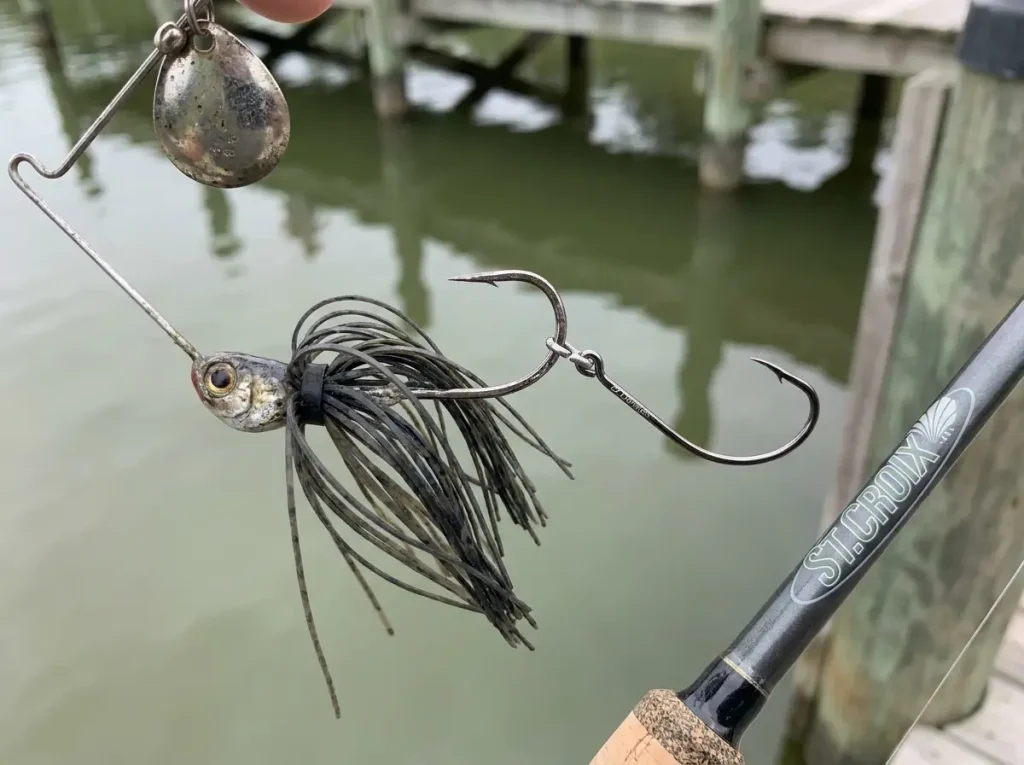
A trailer hook clips onto the bend of the main hook through a small loop eye and rides in the trailing skirt material where it stays mostly concealed. When a bass engulfs the back end of the spinnerbait, the trailer hook is already there. Short-striker becomes landed fish.
The same logic applies to swim jigs, bladed jigs (chatterbaits), and large soft plastic swimbaits where the hook exits high on the back of the lure — the trailer positions a second hook in the tail region where the lure’s body terminates.
Setting up the trailer correctly
A dedicated trailer hook has a large loop eye sized to fit over a main hook bend without requiring opening the hook gap — the loop is large enough to slide over the point without tools. Owner, Gamakatsu, and Mustad all make trailer hook models specifically sized for this application.
The trailer should rest loosely against the main hook skirt, not clipped tightly. A small piece of hook-keeper rubber (the small red or black sleeve that comes with some hooks) threaded over the main hook bend before attaching the trailer prevents the trailer from sliding off under fish pressure. Without the keeper, aggressive fish occasionally work the trailer off the hook bend during the fight.
Trailer size should match the main hook: a 3/0 or 4/0 main hook on a half-ounce spinnerbait typically takes a #2 or 1/0 trailer. Going too large on the trailer makes the spinnerbait track poorly; too small and it doesn’t cover the short-strike zone effectively.
Pro tip: Check trailer hook position after every cast. A trailer that’s twisted sideways in the skirt fibers isn’t riding in the right position and won’t hook short-striking fish. Straighten it by running your fingers along the skirt before each cast — it takes two seconds and it’s worth it.
The Tandem Leader Rig — Two Lures on One Cast
The fly fishing dry-dropper
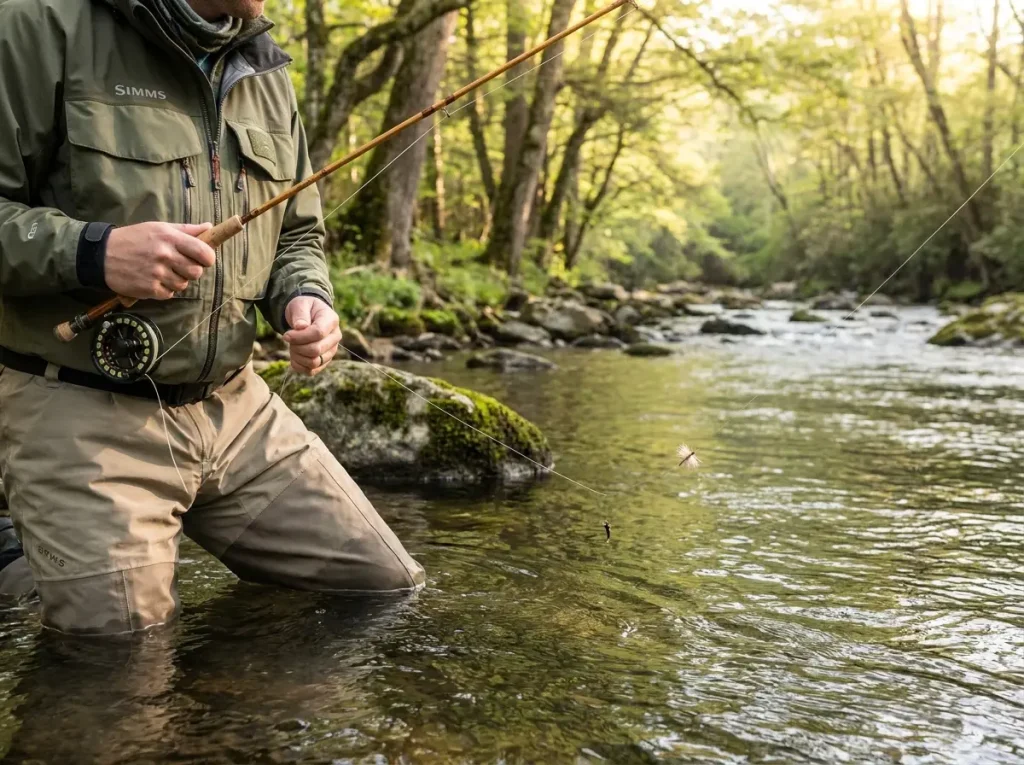
The dry-dropper is the most common tandem rig in fly fishing and one of the most productive trout setups available. A dry fly rides on the surface as both an attractor and a visual indicator; a small nymph or wet fly hangs below it on a short piece of tippet (typically 12-24 inches of 5X or 6X fluorocarbon) attached to the hook bend of the dry fly.
The rig catches fish that are rising to the surface (takes on the dry fly) and fish that are feeding subsurface on nymphs (takes on the dropper) simultaneously. In spring and fall, when both surface hatches and subsurface invertebrate activity are occurring, the dry-dropper doubles the number of feeding modes covered by a single cast.
The dropper length controls the depth of the nymph. A 12-inch dropper fishes the nymph just below the surface film — good for emerger patterns. A 24-inch dropper reaches feeding lanes 2 feet down, appropriate for nymph feeding trout in faster water.
Spinning and baitcasting tandem lure setups
In spin fishing, a tandem leader rig connects two lures in series: the main lure on the end of the leader, with a shorter dropper line (6-12 inches) tied above the main swivel using a dropper loop knot, tipped with a smaller secondary lure. The visual is a large and small lure separated by the leader length, suggesting a predator chasing a smaller baitfish.
For schooling crappie, white bass, or stripers, a 1/4 oz jig at the end paired with a 1/8 oz jig on the dropper loop 10 inches above it regularly produces double hookups when fish are aggressively feeding on schooled baitfish. Both jigs work the same depth window but present two target profiles — the following predator instinct triggers a response to the “fleeing” lead jig that the trailer jig intercepts.
Tandem setups for speckled trout in Gulf Coast bay fishing commonly use two jig-heads with plastic tails, spaced 12-18 inches apart on a 3-foot leader. The double rig doubles the hookup rate when trout are stacked under diving birds on glass minnow schools.
Alabama and Umbrella Rigs — Schooling Baitfish Simulation
The multi-arm rig and the school-mimicking principle
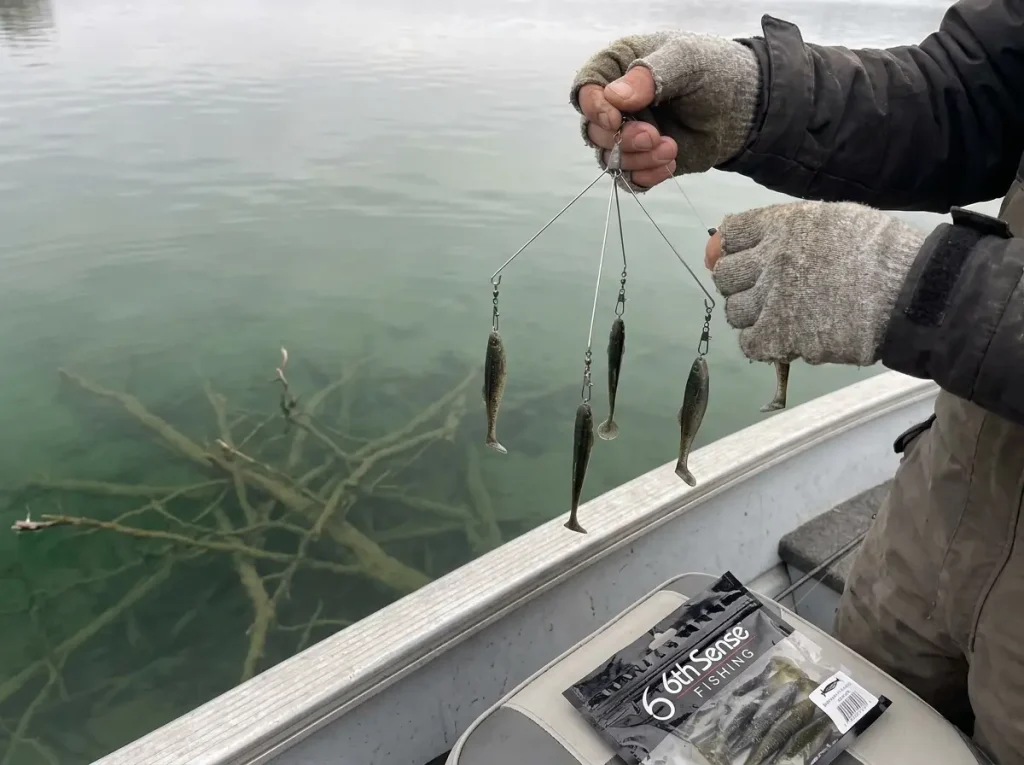
The Alabama rig (also called the umbrella rig or A-rig) presents five to seven small swimbaits on separate arms radiating from a central weighted head. Retrieved at the right speed, the rig creates the visual impression of a small school of baitfish moving together — the exact trigger for a big bass that’s been selectively hunting schools and ignoring single-lure presentations.
The Alabama rig became notorious in tournament bass fishing in 2011 when it produced winning results at the Bassmaster Elite Series, triggering a regulatory reaction from several state fishing agencies concerned about hook limits.
The technique is simple — steady retrieve at a pace that keeps the swimbaits swimming naturally — but added variations improve results: the occasional rod pump that pulses the arms, a brief slow-down that causes the swimbaits to glide together, or a stop-and-go that mimics a school changing direction.
Gear requirements and practical considerations
Alabama rigs are heavy. A typical five-arm rig with swimbaits attached runs 2-4 ounces depending on the head weight and swimbait size. This requires heavier gear than standard bass fishing: a 7’6″ to 8′ heavy-action rod, a large baitcasting reel with strong drag, and 50-65 lb braided mainline or 20-25 lb fluorocarbon straight line. The large surface area of the arms creates significant water resistance that makes the rig feel much heavier than the head weight.
Most anglers who pick up an Alabama rig for the first time are surprised by the arm of commitment it requires. Line-ties bend under load, swivel arms fatigue and break, and quality A-rigs from manufacturers like Z-Man, Terminator, and 6th Sense cost $15-30. The budget rigs twist and deform quickly. This is a technique where the quality of the hardware matters.
Rules, Regulations, and When Not to Use Tandem Rigs
Hook limits by state
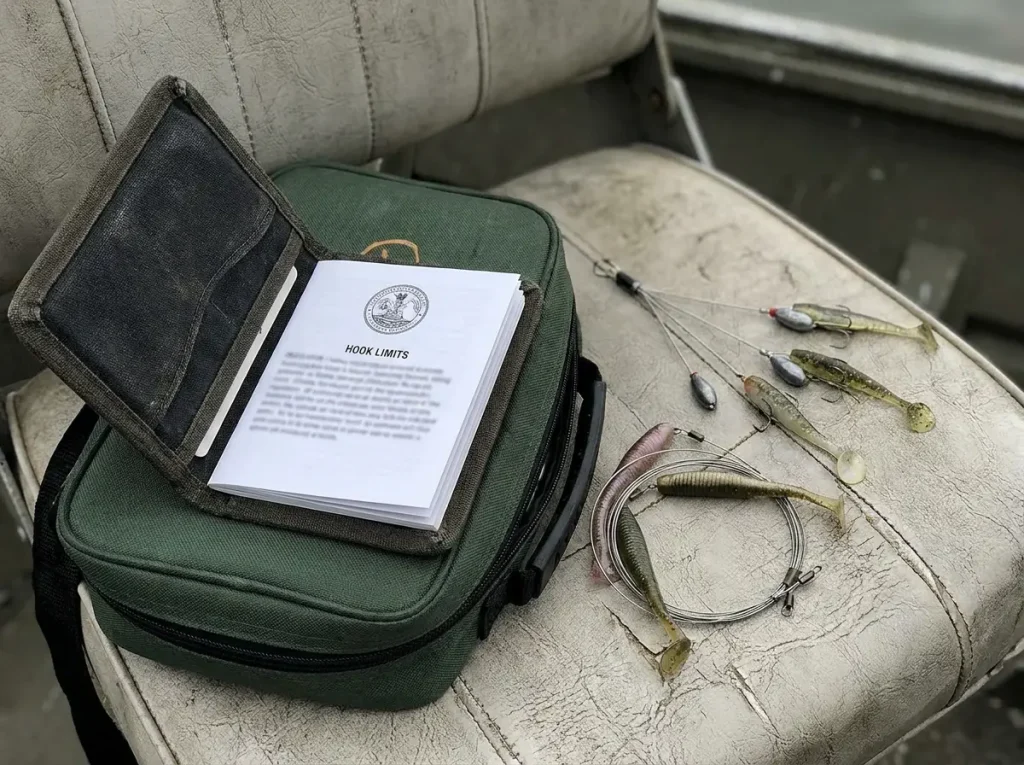
Before fishing any tandem rig, check the hook limit for your state’s specific water and species category. Hook limits vary significantly:
Most states allow three hooks on a single line. Several northeastern states restrict bass tournament fishing to a single hook. Some states specifically regulate Alabama rigs by limiting the number of armed hooks to three (requiring the other arms to carry hookless teasers). A few states have no hook-number restrictions at all.
The Alabama rig was specifically targeted by regulations in several states precisely because it was so effective — in states that restrict hook numbers, fishing a five-hook Alabama rig is a citation and potentially a fine. Know the rules for your state before rigging. The relevant regulation is typically found under “artificial lures” or “hook restrictions” in your state’s fishing regulation booklet.
When not to run a tandem
Tandem setups are not universally superior. In snag-heavy structure — dense timber, rocky substrate with crevices, heavy grass mats — two hooks produce double the snag rate. A single swimbait through a flooded timber flat that hangs up once every three casts is workable; an Alabama rig through the same timber is a rig-eating exercise.
In very clear, low-pressure water where fish are visible and selective, the mass of an Alabama rig or even a high-low rig can alarm fish. Ultra-clear spring creeks and light-pressure trophy bass lakes often call for minimalism — a single finesse presentation that doesn’t disturb the water column.
For surface lures and walk-the-dog baits, adding any tandem hook below the lure changes the balance and ruins the action. Tandem rigs are a bottom or mid-column tool. Leave topwater presentations clean.
Pro tip: When learning high-low rigs or tandem lure setups, practice the assembly at home, not at the water. A high-low rig with correctly spaced dropper loops takes about four minutes to tie well; a rushed version at the boat ramp at 5 AM with cold fingers takes twice as long and tangles on the first cast. Tie them the night before and store them in labeled bags.
Conclusion
Every tandem rig setup in this guide was invented to solve a specific fishing problem. The trailer hook solves the short-strike problem on spinnerbaits. The high-low rig solves the “what depth” problem on bottom species. The dry-dropper solves the “surface or subsurface” question in trout fishing. The Alabama rig solves the single-lure refusal from school-following bass.
The wrong application of any of them — Alabama rigs in heavy timber, high-low rigs in current, trailer hooks on topwaters — creates more problems than it solves. Match the rig to the problem it was designed for, verify your hook limits before the trip, and the second hook stops being an afterthought and starts being one of the most productive tools on the boat.
FAQ
What is a tandem rig for fishing?
A tandem rig is any setup that uses two hooks or two lures on the same line simultaneously. Common types include the trailer hook (adds a secondary hook to a spinnerbait or jig), the high-low rig (two hooks at different depths on one bottom leader), the tandem fly rig (dry fly plus dropper nymph), and the Alabama rig (multiple swimbaits on wire arms mimicking a baitfish school). Each solves a specific fishing problem.
How do you add a trailer hook to a spinnerbait?
Slide a dedicated trailer hook through its loop eye onto the bend of the spinnerbait’s main hook. The trailer rides in the trailing skirt material. Add a small hook-keeper rubber piece over the main hook bend before attaching the trailer to prevent the trailer from sliding off during the fight. Match trailer size to main hook size — typically 1 or 0 to 2 or 0 trailer for a 3 or 0 to 4 or 0 main hook.
What is a high-low rig and when do you use it?
A high-low rig (hi-low rig) presents two baited hooks at different heights above the bottom on one leader. It’s used for bottom fishing in saltwater and freshwater — surf fishing, pier fishing, and boat bottom fishing for species like flounder, black sea bass, scup, and tautog. The two-bait presentation covers more depth and lets the fish show you which position they’re feeding at.
Is the Alabama rig legal everywhere?
No. Several states restrict the number of hooks allowed on an artificial lure, which limits Alabama rigs to three armed hooks or prohibits them in certain waters. Some tournament organizations have also restricted A-rig use in competitive events. Always check your state’s current fishing regulations before fishing an Alabama rig — the hook limit section of the regulation booklet is the relevant reference.
What is a dry-dropper rig in fly fishing?
A dry-dropper rig suspends a small nymph below a dry fly on a short tippet section (12-24 inches) tied to the dry fly’s hook bend. The dry fly rides on the surface and acts as a visual strike indicator; the nymph fishes below the surface. The rig covers both surface-feeding and subsurface-feeding trout in a single presentation, making it one of the most versatile setups in trout fly fishing.
Risk Disclaimer: Fishing, boating, and all related outdoor activities involve inherent risks that
can lead to injury. The information provided on Master Fishing Mag is for educational and informational purposes
only. While we strive for accuracy, the information, techniques, and advice on gear and safety are not a substitute
for your own best judgment, local knowledge, and adherence to official regulations. Fishing regulations, including
seasons, size limits, and species restrictions, change frequently and vary by location. Always consult the latest
official regulations from your local fish and wildlife agency before heading out. Proper handling of hooks, knives,
and other sharp equipment is essential for safety. Furthermore, be aware of local fish consumption advisories. By
using this website, you agree that you are solely responsible for your own safety and for complying with all
applicable laws. Any reliance you place on our content is strictly at your own risk. Master Fishing Mag and its
authors will not be held liable for any injury, damage, or loss sustained in connection with the use of the
information herein.
Affiliate Disclosure: We are a participant in the Amazon Services LLC Associates Program, an
affiliate advertising program designed to provide a means for us to earn advertising fees by advertising and linking
to Amazon.com. As an Amazon Associate, we earn from qualifying purchases. We also participate in other affiliate
programs and may receive a commission on products purchased through our links, at no extra cost to you. Additional
terms are found in the terms of service.