
In this article
Most anglers walk into this decision already sure cork is the “premium” grip and EVA foam is the budget compromise. That belief costs some of them the right rod. The anglers who have actually rebuilt both handles, and the custom builders who choose one on purpose, do not think in terms of better. They think in terms of better for what. This is the real answer to the cork vs EVA rod handle question, and it starts with understanding how each material behaves before you look at how the handle fits into the complete fishing rod.
Here is how the two grip materials stack up across the traits that actually change a buying decision.
| Handle Trait | Cork | EVA Foam |
|---|---|---|
| Sensitivity | Transmits more vibration, feels sharper | Damps roughly 3x more, feels slightly muted |
| Durability | Chips, pits, stains, rots if unsealed | Resists cracks, water, salt, and abuse |
| Weight and warmth | Lighter, stays warm to the touch | Slightly heavier, cushions the palm |
| Maintenance | Gentle cleaning only, seal it early | Scrubs clean, still holds fish smell |
| Cost | Pricier, especially higher grades | Budget and value default |
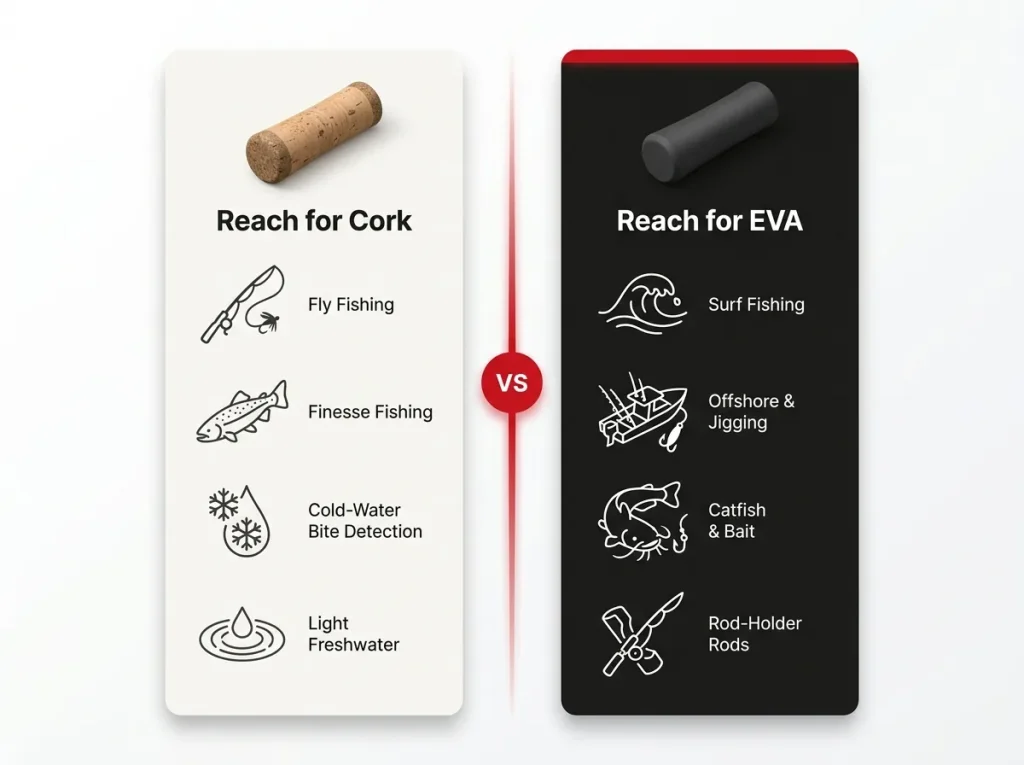
| Best for | Fly, finesse, feel-first freshwater | Saltwater, surf, catfish, rod-holder rods |
Does Cork Really Feel More Sensitive
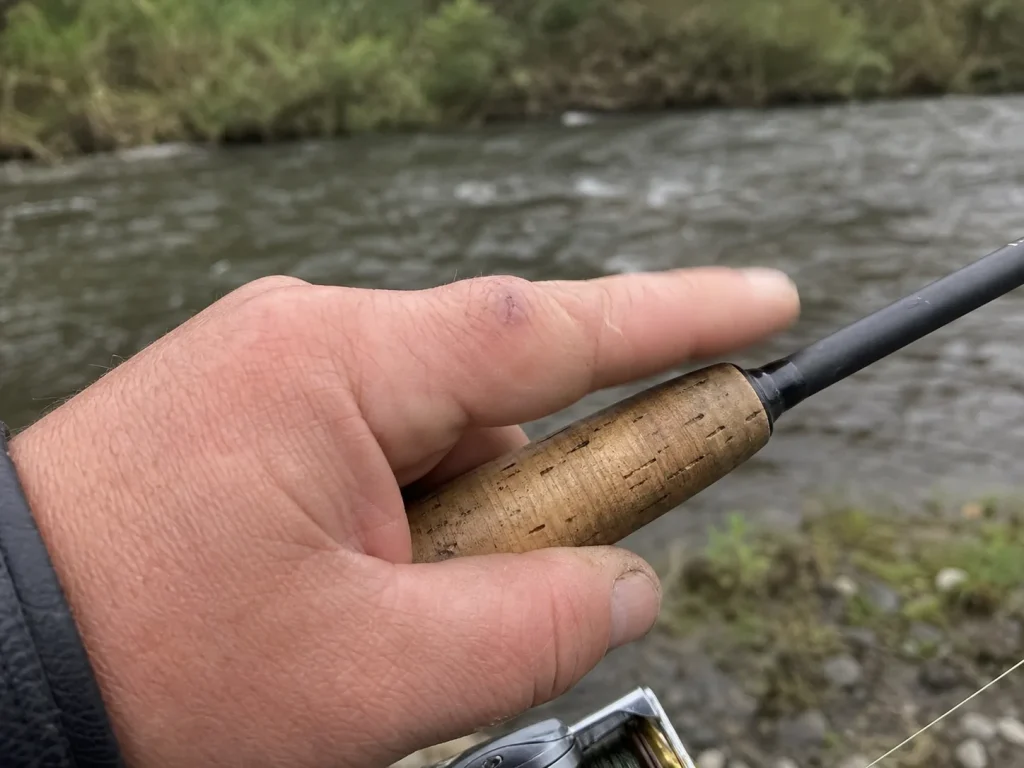
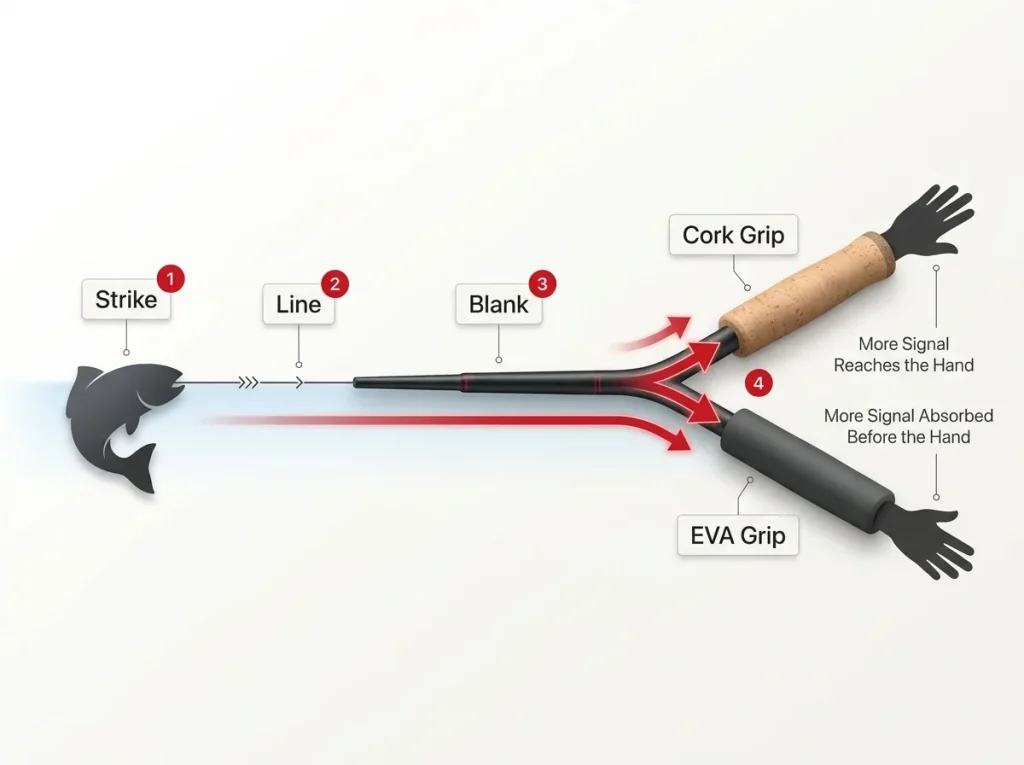
Every angler “knows” cork is more sensitive. Almost none of them know why, or that the gap comes down to vibration damping rather than anything magic about the material. Cork has a much lower damping capacity than EVA foam (ethylene vinyl acetate), which absorbs roughly three times more vibration. That is the whole reason cork “feels” sharper: it lets more of the strike reach your palm instead of soaking it up.
The reason sits in the material itself. Cork’s closed-cell, suberin-rich structure is what transmits vibration the way it does, and it is the same structure that makes cork a natural insulator. It is cell biology, not marketing copy.
Here is the part the forums oversell. The difference is real but smaller than the arguments suggest, because on a fast-action graphite blank most of your bite detection travels through the blank and the line long before the grip material matters. In practice, the blank’s carbon modulus is doing most of the sensitivity work, so if feel is your priority, the blank’s stiffness rating matters more than the grip. Where cork genuinely earns its reputation is finesse fishing, drop-shot, and light bites in cold water, where every scrap of feedback counts.
Do not buy a rod for its cork grip expecting a jump in feel. Put your money into a higher-modulus blank first. The grip fine-tunes what the blank already delivers, it does not create sensitivity that was not there.
Durability and How Each Handle Actually Fails
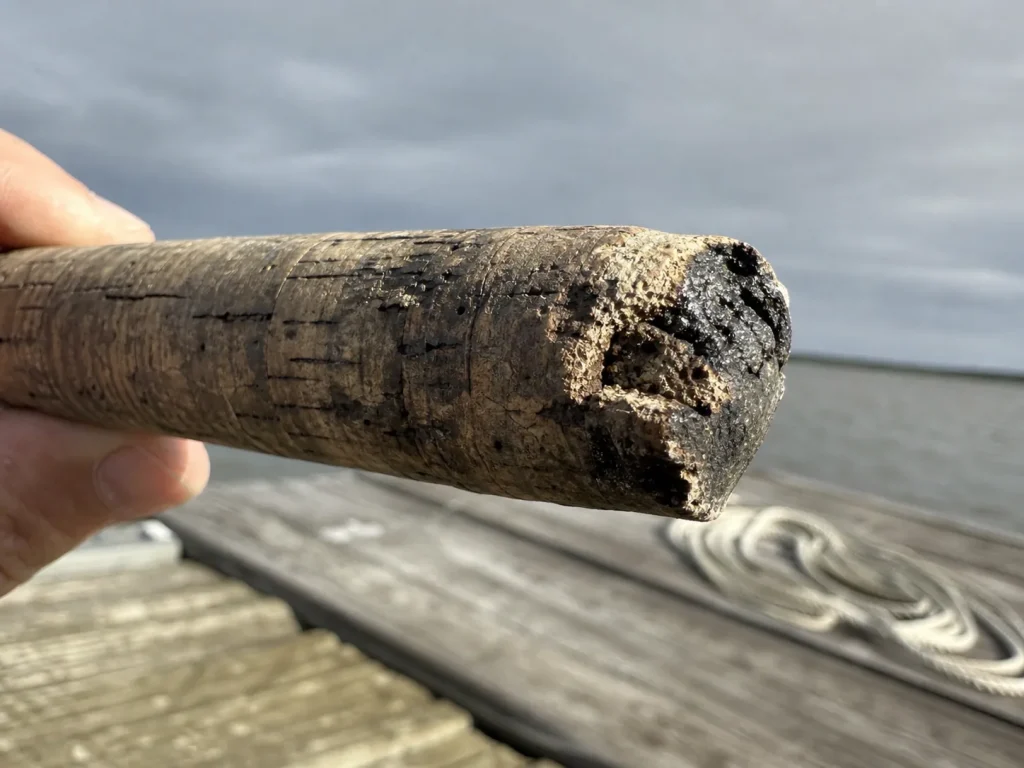
Both handles fail. They just fail differently, and knowing which failure you can live with is half the decision. Cork chips and cracks on impact, pits over time, and breaks down in saltwater. The soft black degradation anglers call cork rot sets in when a grip stays wet and salty without a seal.
EVA foam shrugs off water, salt, and the everyday abuse cork cannot handle. Its weak spots are different: cheap low-density EVA compresses and goes soft under grip pressure, and coarse EVA can leave you with grip rash on a long casting day.
There is a failure mode most comparisons skip entirely. On slow-pitch jigging and heavy standup rods, the blank flexes deep into the handle, and that repeated load can crack cork right at the grip. Builders reach for EVA on those rods for structural reasons, not just feel. It is the same impact and high-sticking damage that voids most rod warranties, so it pays to know where your grip is vulnerable. You usually feel a pit in cork before you see it, a rough spot under your thumb that was smooth last season.
Weight, Balance, and Grip Comfort

Nobody buys a rod for its handle weight. You feel it anyway, eight hours in, in your wrist rather than on the spec sheet. Cork is lighter than an equivalent EVA grip, and that saved weight sits at the butt, which shifts rod balance back toward your hand and cuts the felt tip-weight.
EVA foam compresses slightly under sustained grip pressure. Some anglers call it squishy on a long fight, but that same give cushions your palm and can be easier on the hand over a full day. Neither is automatically more comfortable. It depends on how long you hold the rod, how hard you grip, and the grip diameter your hand actually likes, since a grip too thin or too fat fatigues you faster than either material does.
The thing worth understanding is that handle weight feeds directly into overall rod balance, and a well-balanced rod fights fatigue better than a lighter one does. Chase balance, not the lowest number on a scale. All-day hand strain is the repetitive-strain side of grip comfort that catches up with anglers who fish hard. You know a rod is balanced right when the tip floats level in your palm instead of nosing toward the water.
Cleaning and Keeping a Handle Fresh
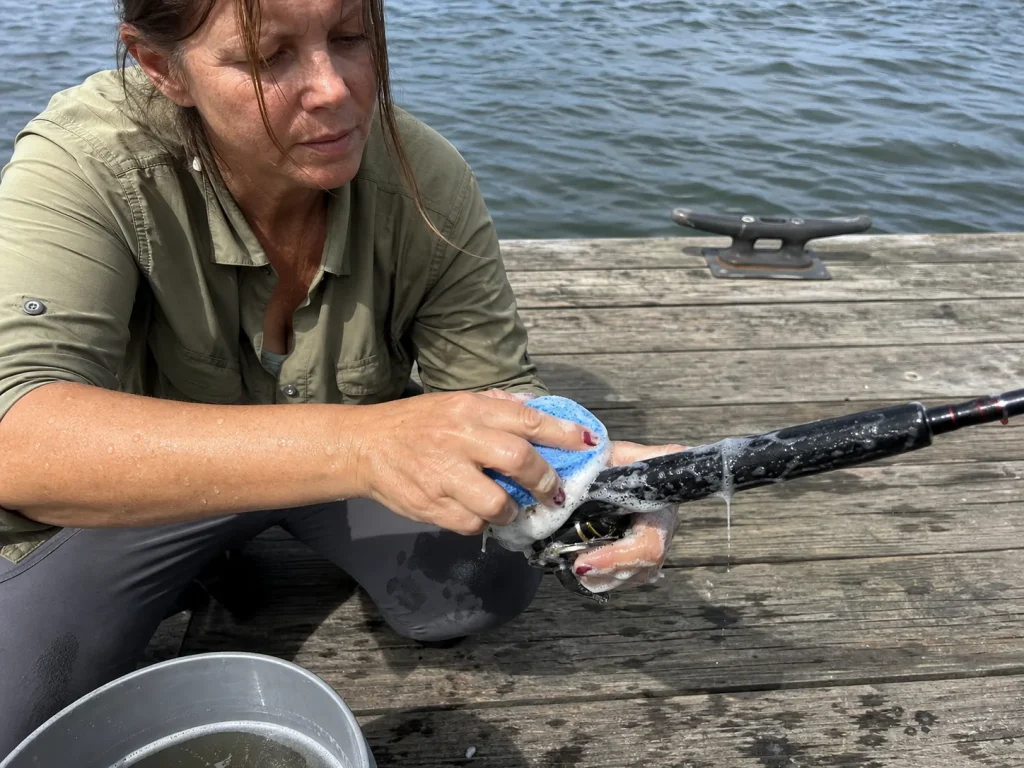
EVA gets called the clean option, and that is only half the story. EVA foam scrubs clean with detergent and tolerates aggressive scrubbing, an Ajax-and-sponge treatment or a wipe of Lemon Pledge on dried-on goo. What it does not do is stay odor-free. Wet EVA holds fish smell, and bait residue dries into a thick crust that needs real effort to remove.
Cork asks for gentler care. Dish soap, baby wipes, and no abrasive pad, because scrubbing strips the seal and speeds up pitting. Take a scouring pad to cork the way you would to EVA and you will wreck it.
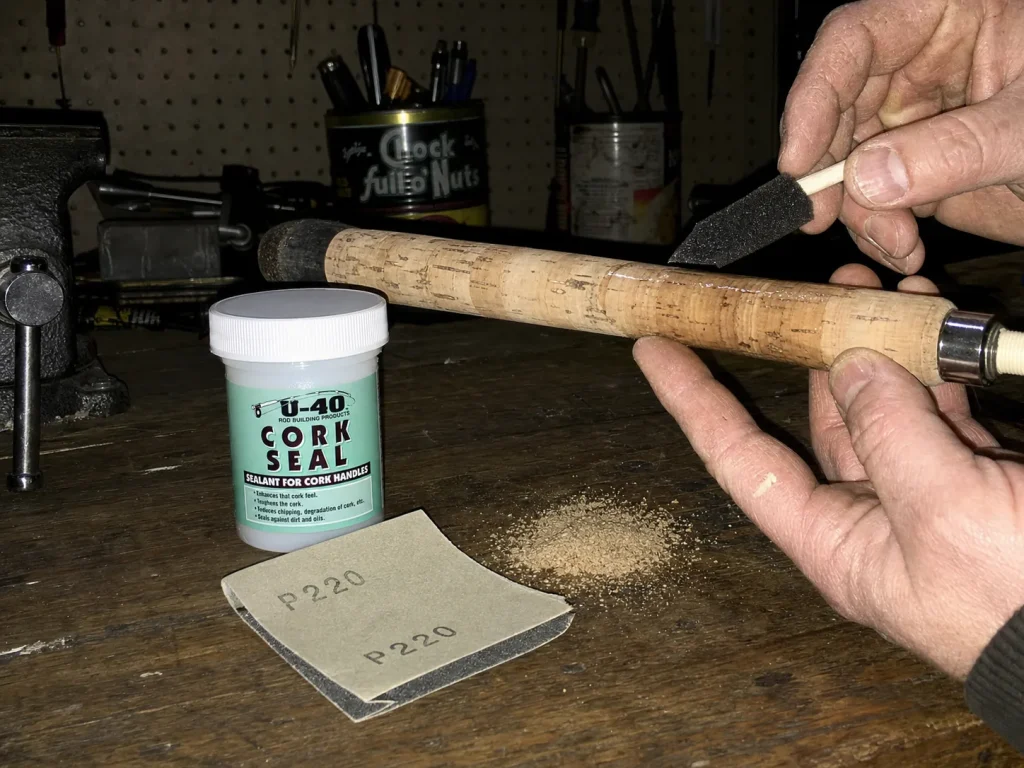
Seal a new cork handle before it ever gets used, not after it stains. A thin coat of cork sealant on day one blocks the fish oil and grime that permanently discolor cork, and it takes ten minutes at the bench. Most anglers only seal reactively, once the damage is already done.
Whichever grip you run, rinse rods with seawater at the rail to loosen residue, then give them a fresh-water rinse at the dock. It keeps the crust from setting in the first place, and it works on both materials.
What They Cost and Why
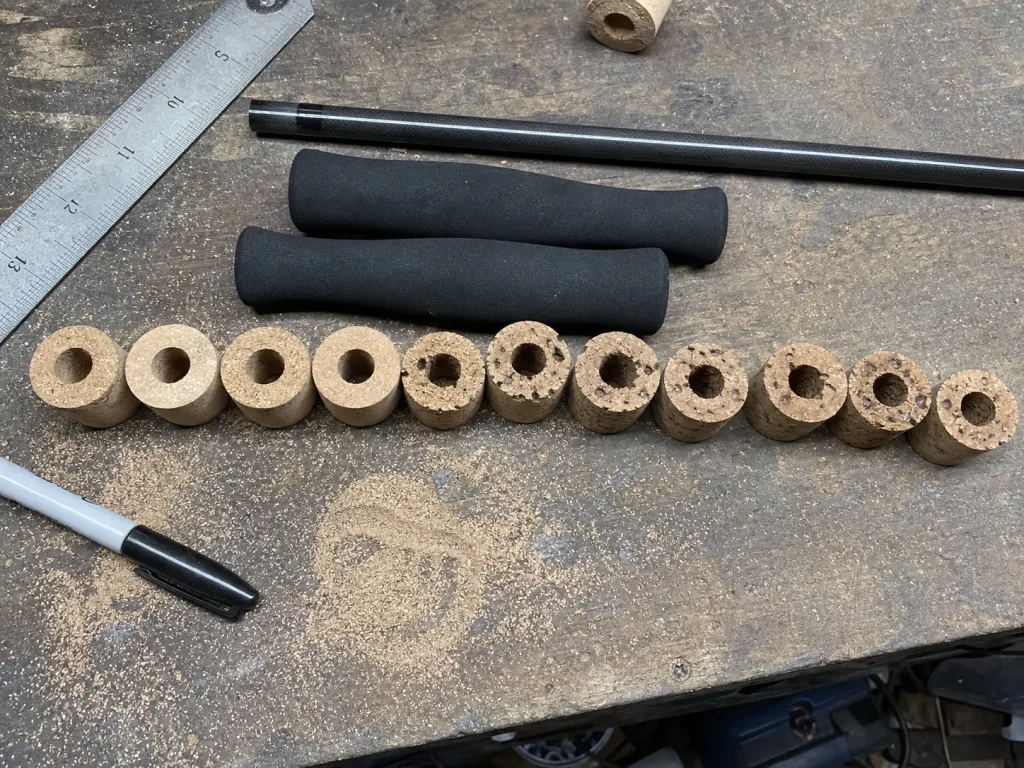
Cork runs pricier than EVA foam, especially in the higher grades, and the reason is not prestige. Cork is a graded natural material. AAA-grade rings are genuinely scarce, while EVA is a consistent synthetic that is cheap to produce, which makes it the value default on most rods.
Do not read price as quality. A pricier cork grip does not mean a better rod. Plenty of excellent-fishing rods wear EVA, and plenty of overpriced ones wear mediocre filler-cork. The grip material is one line item on a rod, not a verdict on the whole build.
There is one more angle if you weigh it. Cork oak bark is stripped every nine to twelve years without felling the tree, which makes cork a renewable material next to petroleum-based EVA. For some anglers that tips the scale, for others it never enters the decision.
Which Material Fits How You Fish

This is where “which is better” finally has an answer, and the answer is that it depends on the rod’s job. Match the grip to how you actually fish, not to a forum verdict. If you want the full picture of how this fits the rest of the rod, handle material is one of the specs on the label that decides how a rod performs.
Cork’s Home Water
Cork owns the feel-first end of the sport. Fly rods, spinning rods for finesse fishing, light freshwater presentations, anywhere weight and feedback matter most. It is why cork stays the default grip on nearly every high-end rod built for those techniques. A quality cork-handled spinning rod like the St. Croix Triumph Spinning Rod shows what a good cork grip feels like on a real mid-tier rod, light in the hand and warm on a cold morning.
EVA’s Home Water
EVA foam owns the abuse-first end. Saltwater, surf, offshore and jigging rods, catfish and bottom rigs, and anything parked in a rod holder taking a beating. When a rod is built to get punished, the surf and saltwater rods made for distance and abuse almost always wear EVA, and for good reason.
The Honest Overlap
For a lot of everyday freshwater bass fishing, either grip works fine, and the material sits far down the list behind action, power, and reel choice. The common mistake is picking cork for an offshore or rod-holder rod because it “feels nicer,” then watching it stain and crack within a season.
How to Fix a Cracked or Stained Cork Handle
A pitted, coffee-colored cork grip looks like the end of that rod. It is not. This is the section that pays for the whole article, because a cork handle you would otherwise write off is usually a twenty-minute fix at the bench.
The Repair Steps
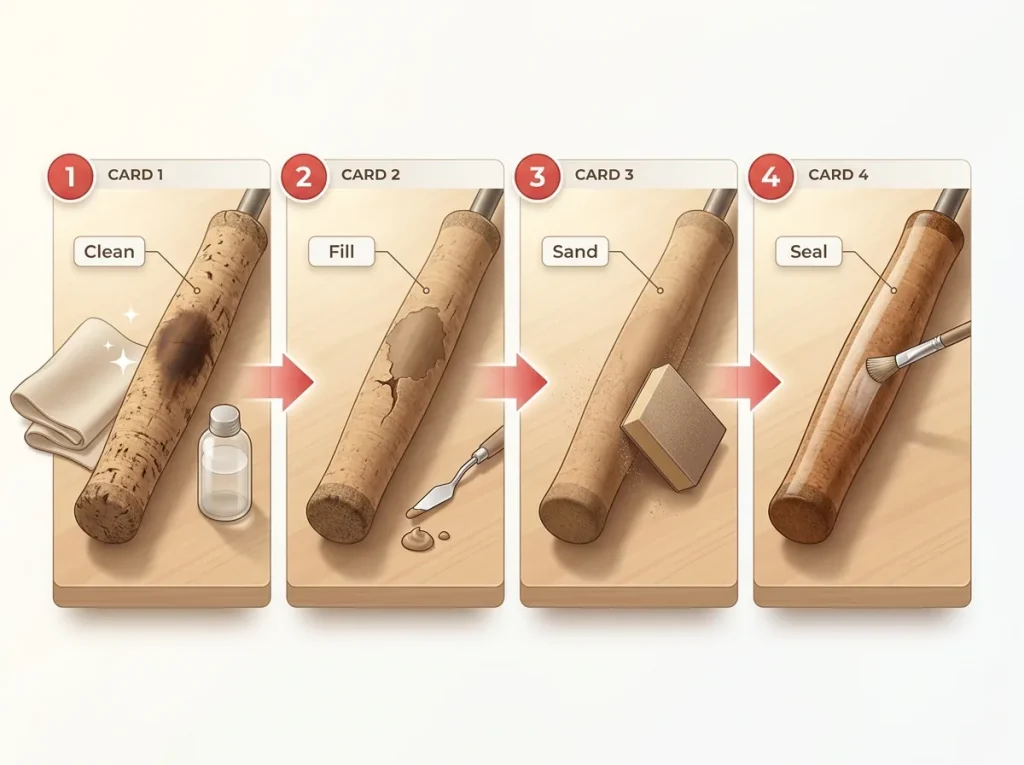
Work in order and the repair comes out clean:
- Clean the grip fully with dish soap or baby wipes, then let it dry completely.
- Fill chips and cracks with wood filler, or with cork dust mixed with wood glue for a color-matched patch.
- Sand the repair smooth at 220 to 240 grit until it blends into the surrounding grain.
- Seal the whole grip with a cork sealant or a gunstock finish to lock out grime.
The seal step is where the U-40 Cork Sealant earns its place, because it is the exact consumable this process calls for and it blocks the dirt and fish oil that cause the staining in the first place. Match your filler color with cork dust caught off a sanding block and the patch disappears into the grain.
When to Repair vs Replace
Surface pits and stains are always worth repairing. A structural crack at the reel seat, or a filler-cork grip that is actively crumbling, is the point where a re-handle makes more sense than a patch. If you enjoy the fix-it-yourself side of tackle, it runs on the same logic as the DIY approach that saves a snapped rod tip.
Never seal over dirt. Clean and dry the grip completely before the sealant goes on, or you lock the grime in under the finish and the stain becomes permanent. Five minutes of prep saves the whole repair.
Split Grip, Full Grip, and Hybrid Builds
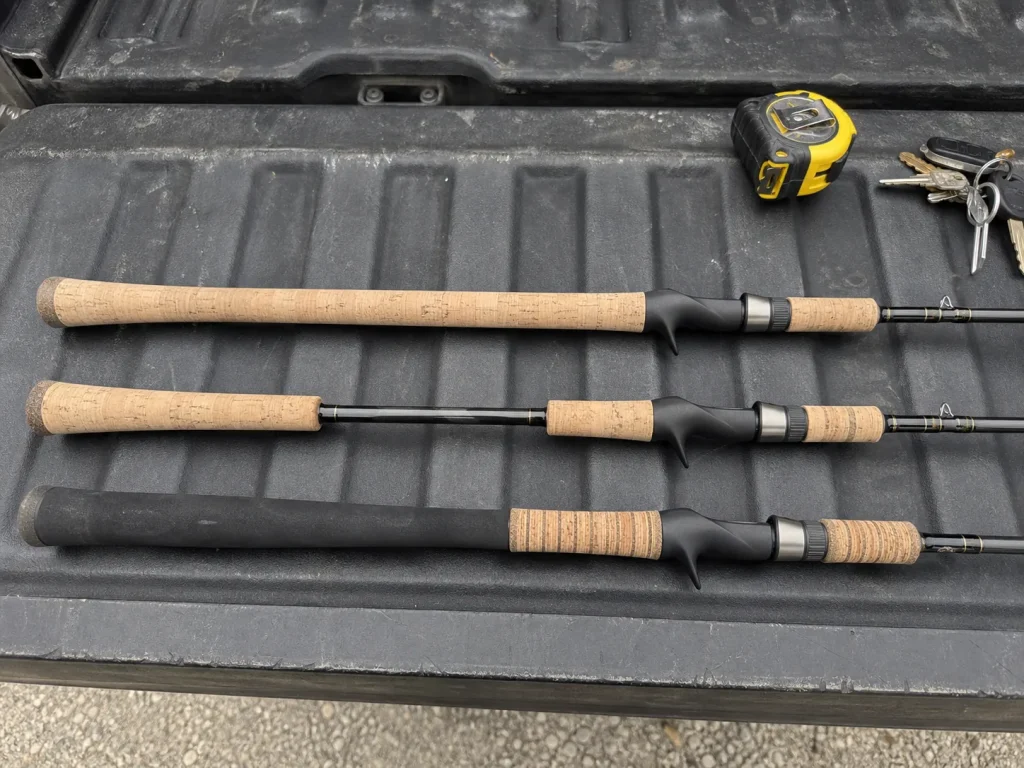
The cork-vs-EVA debate assumes two solid blocks of material. Real rods mix and cut them, and that changes everything the earlier sections said.
Split Grip vs Full Grip
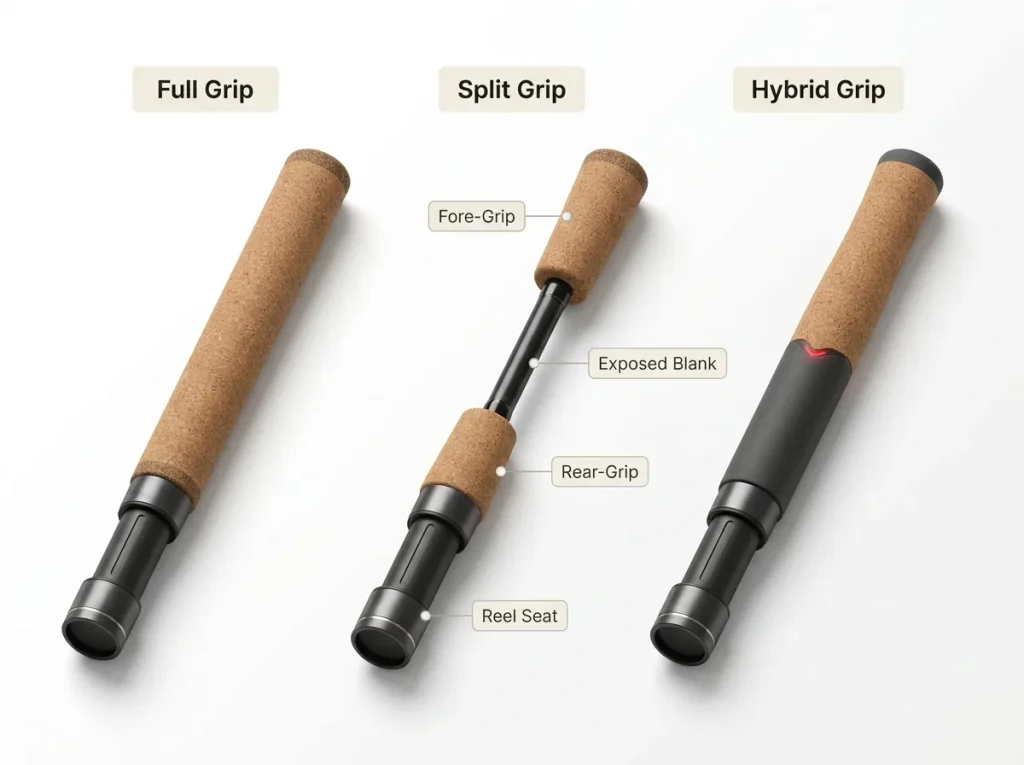
A split grip exposes bare blank between the fore-grip and rear-grip. Anglers report it feels more sensitive because the strike seems to travel straight through the blank to skin. Testing tells a quieter story: the actual gain over a full grip of the same blank is mostly perception, plus a weight saving measured in fractions of an ounce. Do not pay a premium for a split grip expecting a real jump in bite detection.
Hybrid and Composite Builds
This is where “cork” stops being one thing. In custom rod building, builders bond cork rings over a foam core, blend cork composites, use reconstituted cork, and some skip both materials for a carbon fiber grip that trades warmth for stiffness. One maker alone runs standard rings, composite rings, and reconstituted cork under the same “cork handle” label. A well-built hybrid grip can give you cork under your palm where you hold it and EVA where the rod takes abuse, the best of both if the build is honest. If that interests you, it is worth understanding how builders assemble a grip from the reel seat out.
Why Bait and Catfish Anglers Should Lean EVA

If your rods sit in holders soaking in cut bait for hours, the sensitivity debate is beside the point. You have a different problem, and cork loses it. EVA foam holds fish smell strongly when wet, and bait residue dries to a yellowish crust, but it tolerates the aggressive scrub needed to clean it. EVA is not odor-proof, it is scrub-proof, and for this crowd that is the whole game.
Cork cannot keep up here. It absorbs fish oil and protein residue and stains permanently within a season no matter how well you seal it, the old-coffee grip that starts flaking at the reel seat. Every catfish angler eventually meets the guy whose premium cork rod is the color of old coffee while a buddy’s cheap EVA rod from the same trips still wipes clean.
For catfish, bottom fishing, and any rod-holder-heavy saltwater fishing setup, default to EVA regardless of the sensitivity numbers. An EVA-gripped surf rod like the PENN Squadron III Surf Spinning Rod is built for exactly this life, salt, sand, bait, and long hours parked in a spike.
What Wet Cork and Wet EVA Feel Like All Day
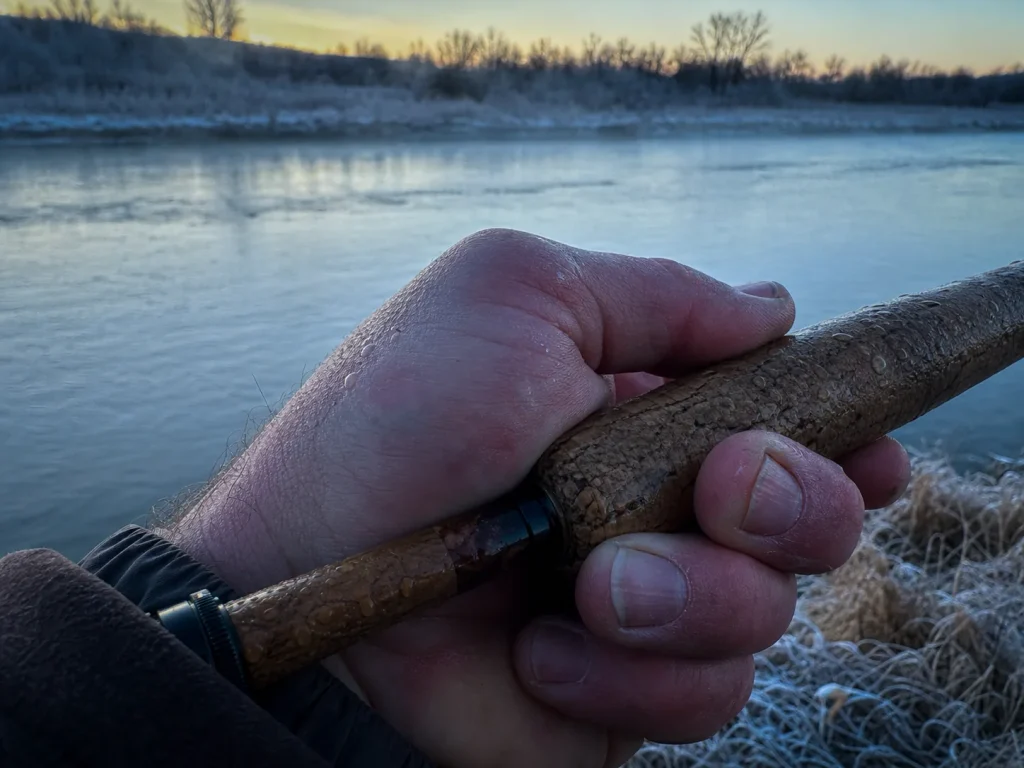
Spec sheets do not tell you how a handle feels at 5am with cold, wet hands eight hours into a trip. This is the part you only learn by fishing both. Cork’s closed-cell structure makes it a natural thermal insulator, so it does not feel cold at dawn the way the guides and reel body do. Grab a cork grip bare-handed in 40-degree air and the surprise is that it is not cold, a small comfort that never shows up on a spec sheet.
Wet changes things. Wet EVA can feel cool and slightly squishy in the rain, while wet cork keeps better traction for many anglers, though low-grade filled cork gets slick fast. This is the same material-science thinking applied to the blank, where structure decides behavior long before brand does.
Gloves rewrite the math entirely. Once you are fishing gloved on a cold offshore trip, you lose most of cork’s sensitivity edge anyway, so EVA’s durability wins outright. The common mistake is judging grip feel in a warm, dry shop, where the two materials feel closer than they ever will on cold, wet water.
The Quality Trap Inside Each Material
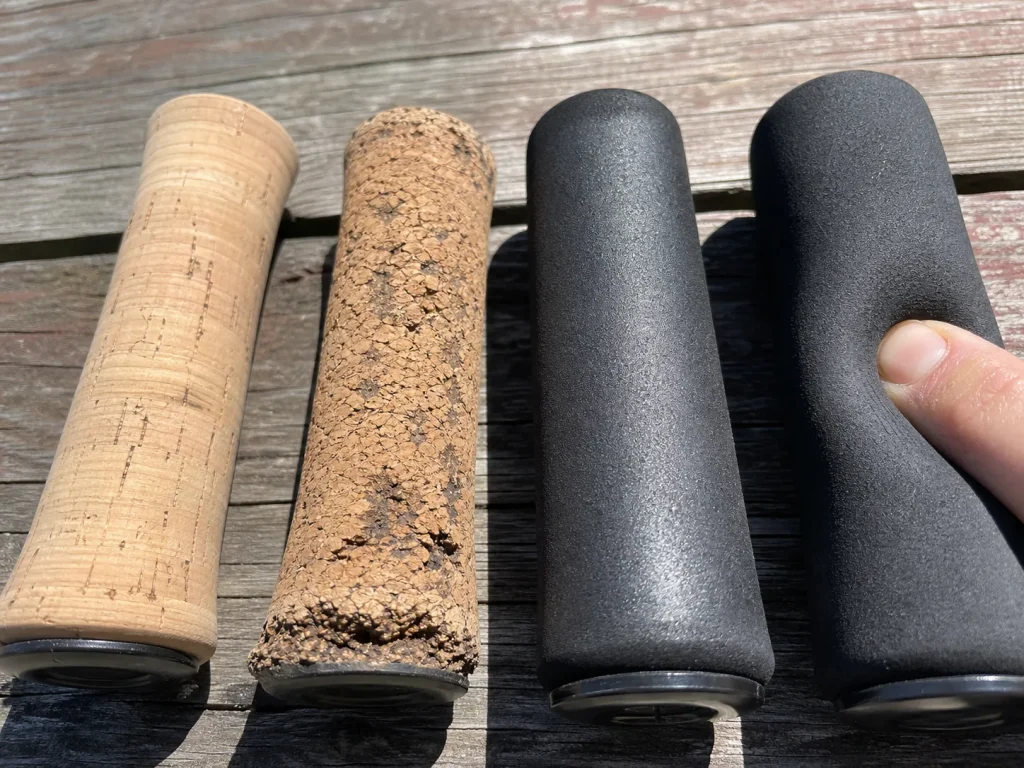
The label on the box says “cork handle” or “EVA grip” and tells you almost nothing about what you are actually holding. This is the trap that makes both materials look inconsistent when the real variable is grade.
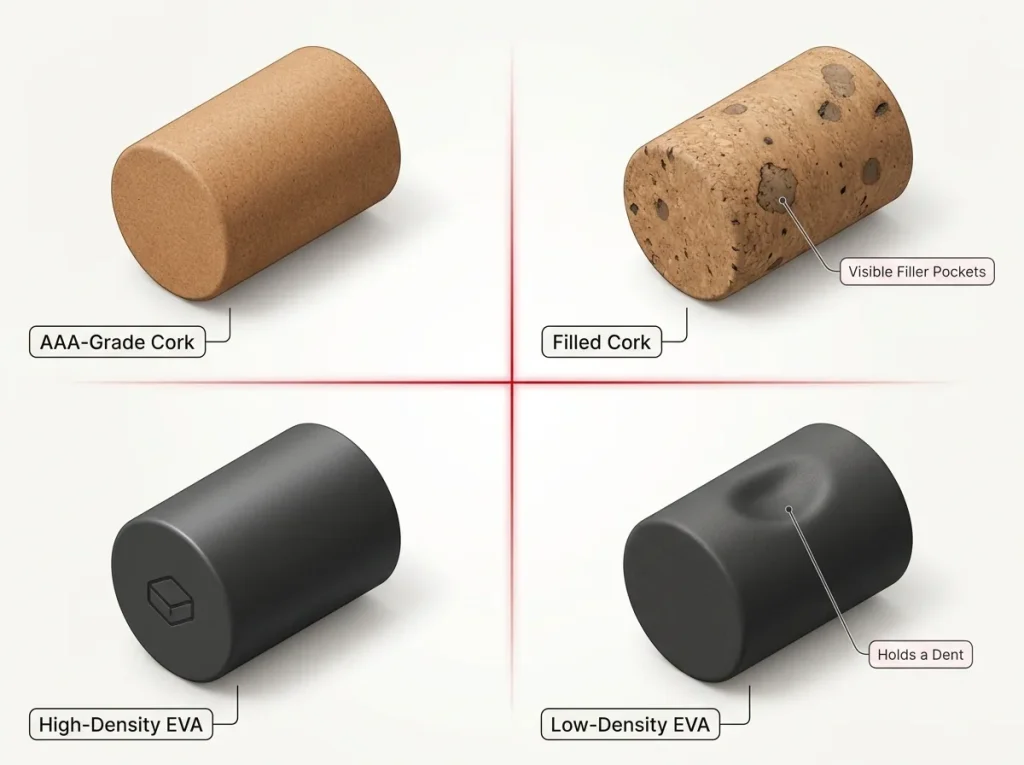
Modern EVA foam spans a wide durometer range. Cheap low-density EVA compresses and goes squishy, while high-density EVA stays firm through a long fight, and the density is never printed on the box. Cork has the exact same spread. AAA-grade natural rings sit at one end, and filled cork, the derogatory term for low-grade cork with visible holes packed with filler, sits at the other. Filled cork is the real source of most “cork is slippery and crumbly” complaints, not cork as a material.
You can judge grade in the shop with your hands. Press the grip with a thumbnail, and firm high-density EVA resists the dent while cheap foam holds it. Look for filler pockets in cork, and run your palm along the surface to feel for a consistent, unbroken grain. Compare grades, not just materials, because a good EVA grip beats mediocre filled cork every time, and the reverse is just as true.
The Bottom Line on Cork vs EVA
Cork feels more sensitive because it damps less, but the blank and the line do most of that work, so the grip fine-tunes feel rather than creating it. Match the grip to the rod’s job: cork for feel-first freshwater and finesse, EVA for the abuse-first saltwater, catfish, and rod-holder rods that take a beating. And remember that grade beats material every time, while a cracked cork grip is a twenty-minute fix rather than a reason to buy a new rod.
Before your next rod purchase, palm the grip wet and cold if you can, press it with a thumbnail, and check how the handle is built. You will choose better than any forum verdict, because you will be matching the material to how you actually fish.
Frequently Asked Questions
01Is cork or EVA better for a fishing rod handle?
Neither is universally better, it depends on the rod’s job. Cork wins for feel-first freshwater and finesse fishing, while EVA wins for saltwater, offshore, catfish, and rod-holder rods that take abuse.
02Does EVA foam reduce sensitivity on a fishing rod?
Slightly. EVA damps roughly three times more vibration than cork, so it transmits a bit less of the strike. But on a fast-action graphite blank most bite detection comes through the blank and line, so the difference is smaller than most anglers expect.
03Does EVA foam absorb water?
EVA resists water far better than cork and will not rot, but it still holds fish smell and bait residue when wet. It cleans up with aggressive scrubbing that cork cannot take.
04Why do high-end rods still use cork if EVA is tougher?
Because for feel-first fishing like fly, finesse, and light-bite freshwater, cork’s lighter weight, warmth, and vibration transmission still win. It stays the default on premium rods built for those techniques.
05Can you repair a cracked or stained cork handle?
Yes. Clean it, fill chips with wood filler or color-matched cork dust and glue, sand at 220 to 240 grit, and seal with a cork sealant. Surface pits and stains are an easy fix, and only structural cracks at the reel seat call for a re-handle.
Risk Disclaimer: Fishing, boating, and all related outdoor activities involve inherent risks that
can lead to injury. The information provided on Master Fishing Mag is for educational and informational purposes
only. While we strive for accuracy, the information, techniques, and advice on gear and safety are not a substitute
for your own best judgment, local knowledge, and adherence to official regulations. Fishing regulations, including
seasons, size limits, and species restrictions, change frequently and vary by location. Always consult the latest
official regulations from your local fish and wildlife agency before heading out. Proper handling of hooks, knives,
and other sharp equipment is essential for safety. Furthermore, be aware of local fish consumption advisories. By
using this website, you agree that you are solely responsible for your own safety and for complying with all
applicable laws. Any reliance you place on our content is strictly at your own risk. Master Fishing Mag and its
authors will not be held liable for any injury, damage, or loss sustained in connection with the use of the
information herein.
Affiliate Disclosure: We are a participant in the Amazon Services LLC Associates Program, an
affiliate advertising program designed to provide a means for us to earn advertising fees by advertising and linking
to Amazon.com. As an Amazon Associate, we earn from qualifying purchases. We also participate in other affiliate
programs and may receive a commission on products purchased through our links, at no extra cost to you. Additional
terms are found in the terms of service.