

In this article
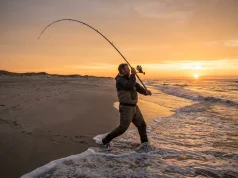
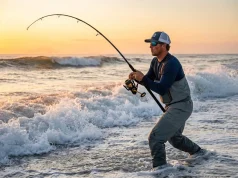
The surf zone is a violent boundary layer where thousands of miles of ocean energy finally slam into the earth. To the untrained eye, it is a chaotic wash of white foam and noise. But to the veteran involved in serious saltwater angling, this chaos is a structured map written in the language of hydrodynamics.
I have spent decades walking these coastlines, from the crowded sands of Virginia Beach to remote barrier islands, and I can tell you that success here isn’t about luck. It is about learning to read the subtle dialects of water—interpreting how a swell breaks, why the water color shifts from light green water to dark blue water, and where the sand gives way to the trough.
This guide will shift your perspective from seeing the ocean as a barrier to viewing it as a puzzle governed by beach morphology. We will move from the sand under your boots to the horizon line, turning theoretical knowledge into the ability to identify hidden fish-holding structures like inner troughs, cuts, and sloughs.
What Does the Sand Under Your Boots Reveal About the Water?
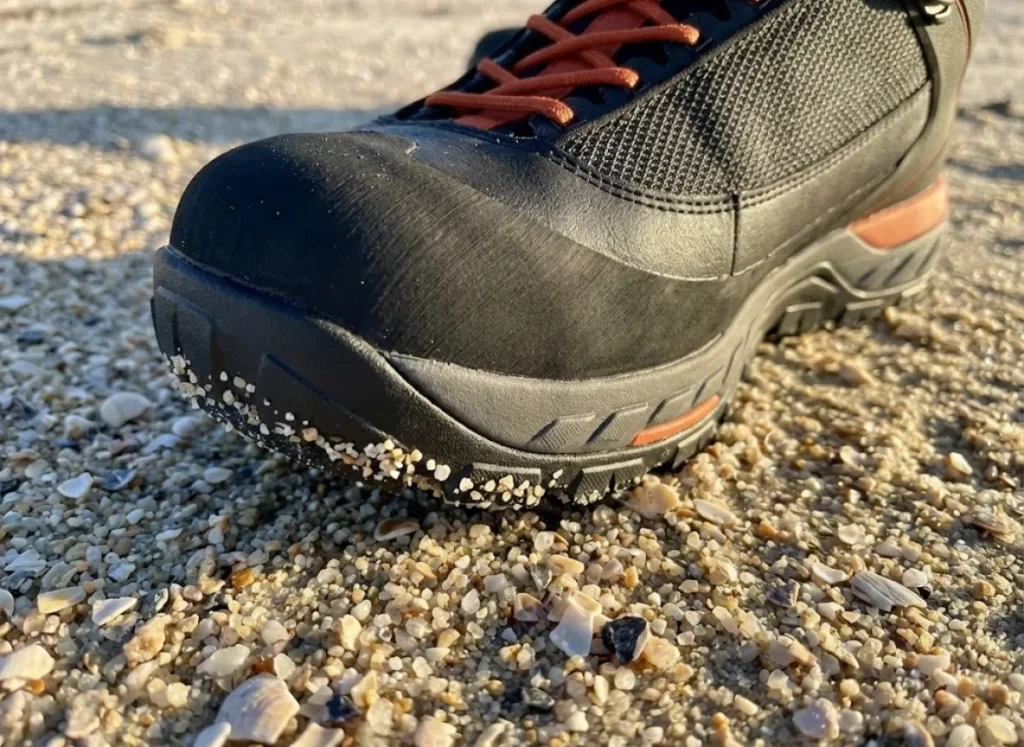
Before you even look at the horizon, the ground beneath your feet offers the first clue to the underwater topography. The physical properties of the beach face are a direct result of the ocean’s energy, serving as a predictive map for what lies beneath the breakers.
How does sediment grain size predict beach slope and depth?
Sand grain analysis acts as a geomorphological blueprint for the profile of the shore. If you step onto the sand and the sand texture feels fine and powdery, like sugar, you are likely standing on a “Dissipative” beach. This texture indicates a gentle beach slope with wide, shallow surf zones where waves break over long distances.
Conversely, if the ground is composed of coarse sand, pea gravel, or heavy shell hash, you are on a “Reflective” beach. These heavier particles create a steep beach face with deep water right at the shoreline edge. This happens because coarse sediment allows water to percolate instantly, reducing the backwash that would otherwise flatten the profile.
Pro-Tip: Test the “sink factor.” If you stand still in the wash and your feet immediately sink deep into soft sand, expect a flat, turbulent bottom. If your feet stay on top of hard-packed gravel, expect a steep drop-off just feet from the water’s edge.
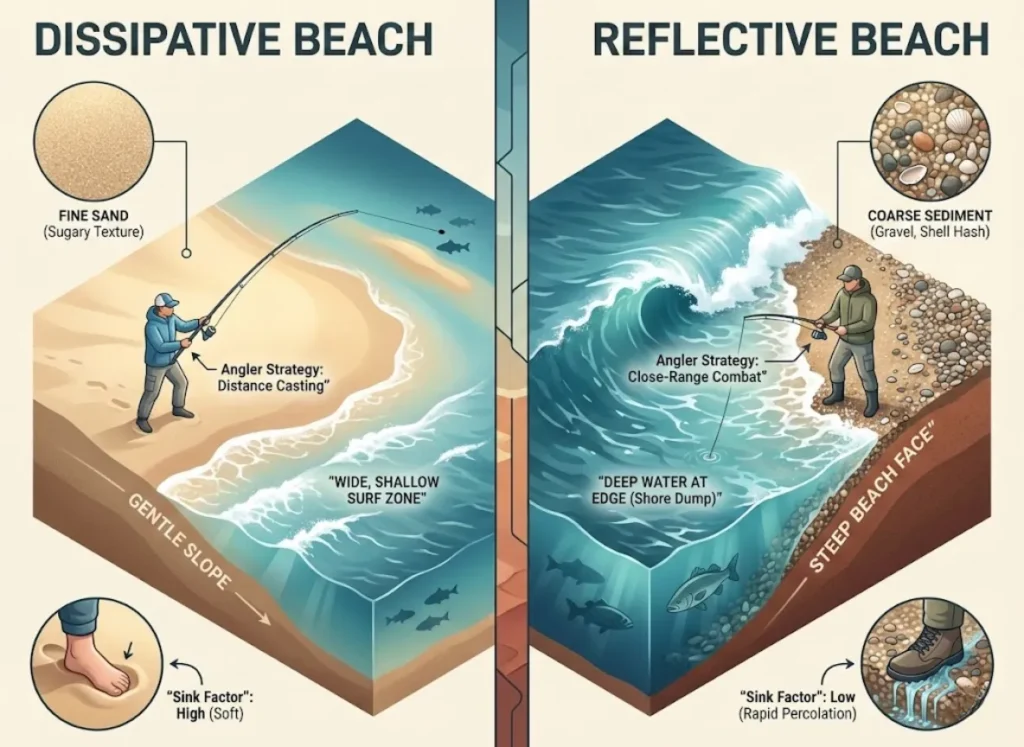
This geological reading dictates your tackle strategy before you rig your rod and reel. A Dissipative beach often requires selecting surf fishing rods engineered for distance to reach the outer sandbar. A Reflective beach, however, allows for close-range combat right in the shore break.
Intermediate beaches—often a mixture of sand types—hold the most complex structures. These areas frequently develop rhythmic bars and transverse rips that trap bait. Be aware that storm cycles can strip fine sand and leave coarse layers, temporarily altering the beach structure and forcing you to adapt your surf fishing tactics.
How Can You “See” Underwater Structure from the Beach?
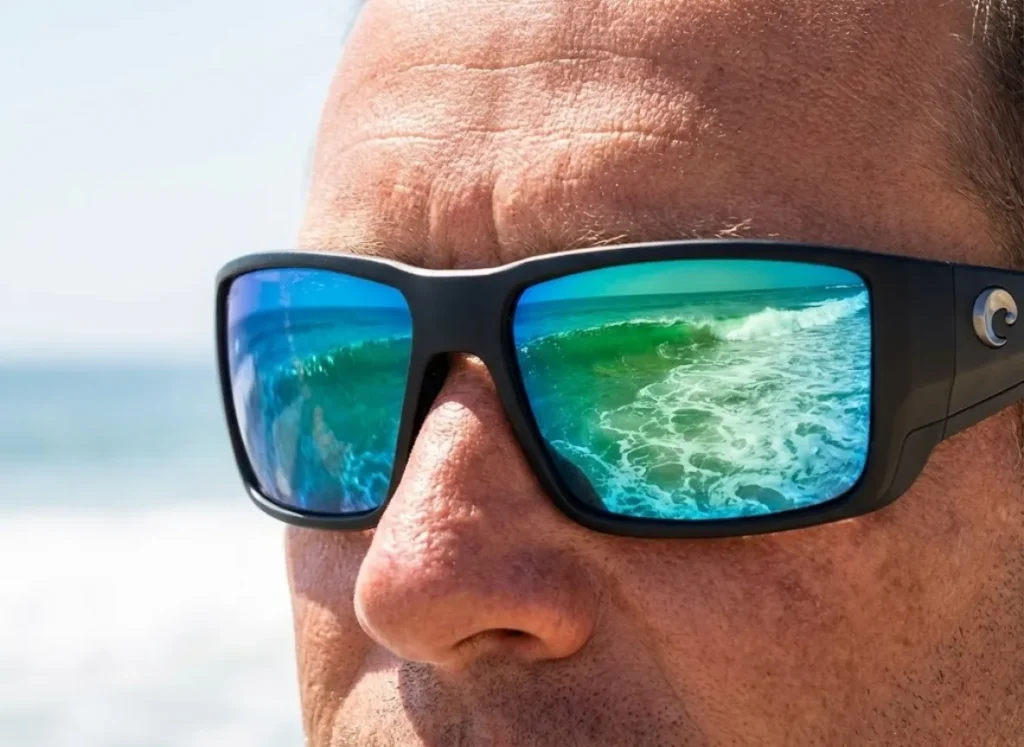
Once you have read the ground you are standing on, you must lift your eyes to the water itself to confirm what the sand has suggested. You don’t need drone footage to find fish; you simply need visual diagnostics to penetrate the surface glare and visualize the water depth hidden beneath the waves.
Why is the “60-Second Observation Rule” critical for accuracy?
The “60-Second Observation Rule” prevents the most common mistake in surf fishing: the “glance and cast.” Resist the urge to wade in immediately. Instead, stand at a high vantage point—a dune walkover or the berm of the beach—and scan the water for a full 60 seconds to three minutes.
This duration is mandatory because ocean swells arrive in “sets” separated by lulls. A sandbar that looks like deep, safe water during a lull will only reveal itself as a hazard or structure when a larger set wave breaks over it. You need to identify the rhythm of the ocean, noting the interval between the bigger waves which often expose the true location of the outer bars.
Apply this observation to safety as well as structure. A “calm” spot that never breaks, even during a big set, is likely a rip current channel or a deep hole. The “glance and cast” method leads to fishing in “dead water” or wandering into dangerous wading scenarios because you missed the transient signals that only appear during peak wave action.
What do wave breaking patterns and color gradients tell you about depth?
Waves are your depth sounder. When a wave breaks and turns into white water turbulence, it indicates shallow structure, such as a reef or shallow outer sandbar. The friction with the bottom forces the wave to spill. Conversely, rolling waves or unbroken swells indicate depth. These are the troughs or channels where the bottom drops away.
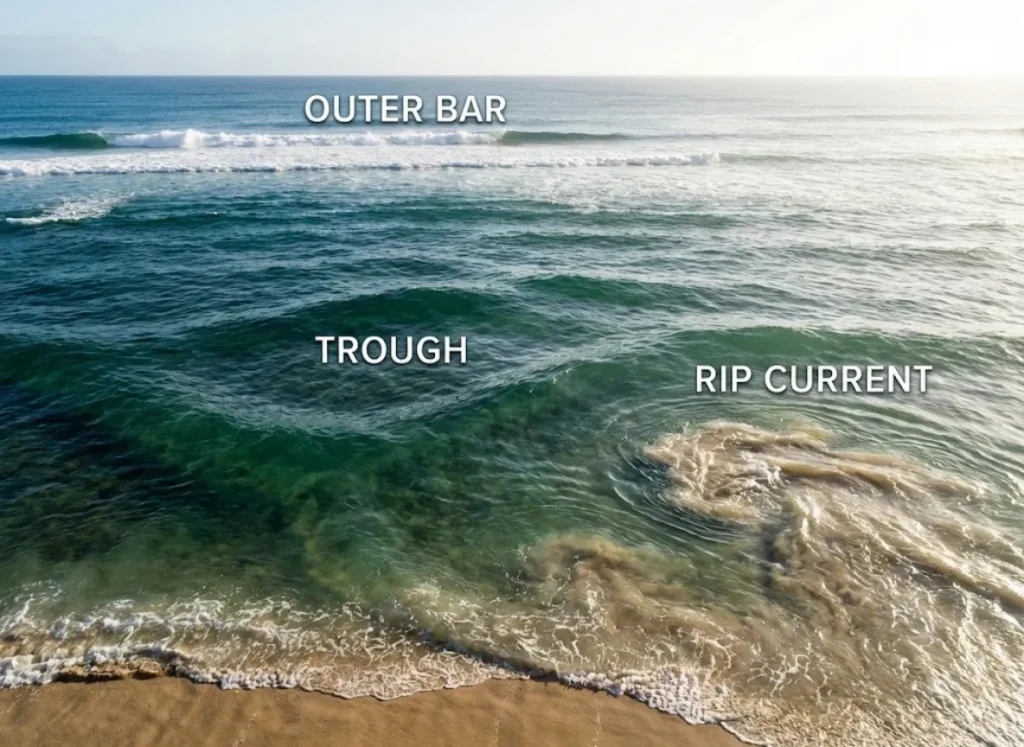
Watch for a specific sequence: a wave breaks on an offshore bar (white), flattens out into a rolling swell (green), and then breaks again at the shore. This “reform” zone confirms the presence of a deep, fish-holding trough between the bar and the beach. Dark blue water pinpoints holes or trenches within that trough, as light penetrates deeper and reflects less off the seafloor.
You must also distinguish “nervous water” or wind ripples that move against the current. These often betray the presence of large baitfish schools or submerged rocks disrupting the flow. To see these subtle transitions and read the beach effectively, you need the right pair of polarized fishing sunglasses to cut the surface glare. Without high-contrast optics, the edges of the gut blend into the surface reflection.
Where Are the Fish Hiding in the Trough System?
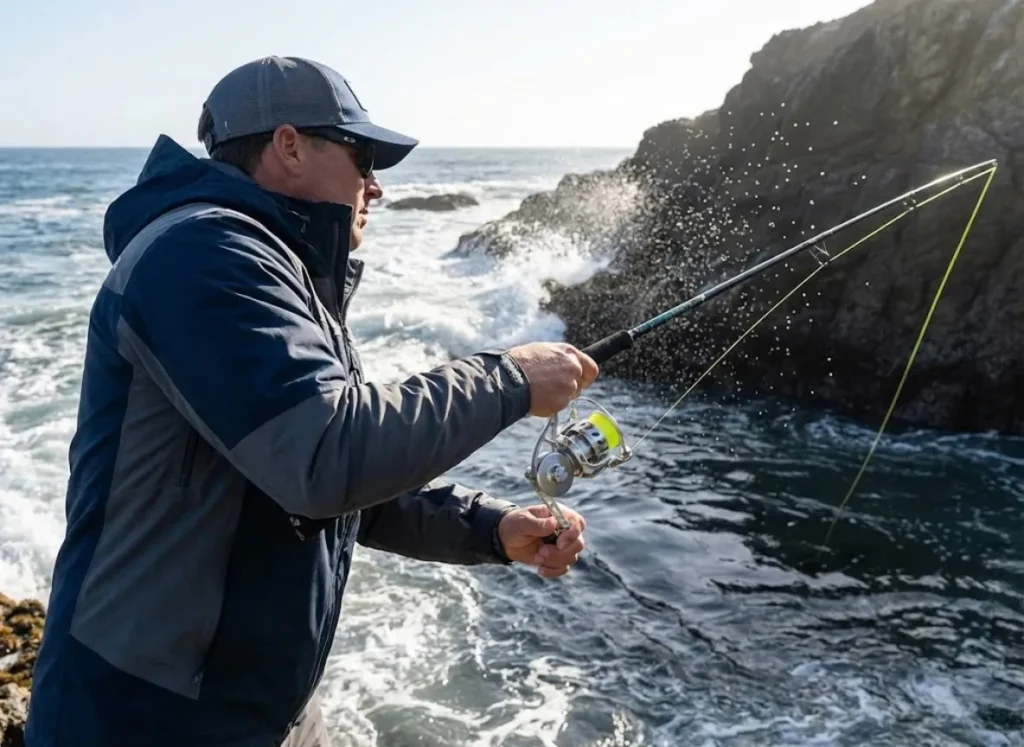
Knowing the location is half the battle; the other half is understanding the architecture of the trough itself. You must apply biological and hydrodynamics principles to pinpoint exactly where fish position themselves within the identified structure to feed.
What are the primary zones of a trough system and how are they used?
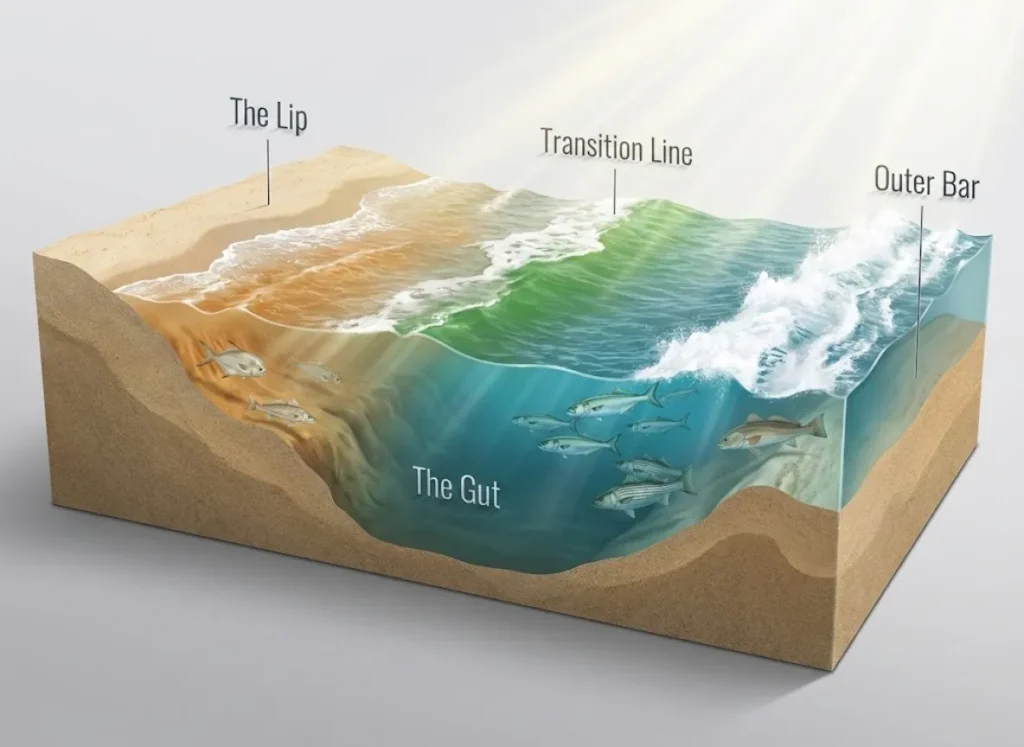
A trough is not a uniform ditch; it is a complex habitat with distinct zones. The “Lip” is the steep drop-off where the beach face meets the water. This turbulent zone dislodges sand fleas and crabs, making it a prime patrol route for Pompano, Whiting, and Fluke.
The “Gut”, “Slough”, or inner trough is the deepest central channel. This acts as a fish superhighway for cruising predators like Bluefish, Striper, and Spanish Mackerel, protecting them from the heavy surf while offering easy travel. Further out is the outer trough and outer sandbar, the primary energy dissipater. Predators like Red Drum often sit on the backside or edges of this bar to ambush prey washed over by the whitewater.
Pro-Tip: Don’t just cast to the middle. Cast to the edges. The transition line where white water fades to green water is where the ambush happens. Fish want the cover of the foam but the visibility of the clean water.
Water piles up in the trough and exits through “cuts” or rip currents, creating a “Conveyor Belt” mechanic. This creates a feeding funnel where gamefish wait for bait to be flushed out. Mastering how to fish in current is essential here, as the flow in these cuts can be surprisingly strong.
Target the “Wash” for scent-feeders. The turbid, sandy water—often ginger-beer colored—provides cover and abundant food for bottom feeders. Remember that fish behavior is driven by energy conservation and oxygenation levels; they will hold in the slower water of the trough or the eddy of a cut to conserve energy while watching the fast water for food.
When and How Should You Fish These Structures?
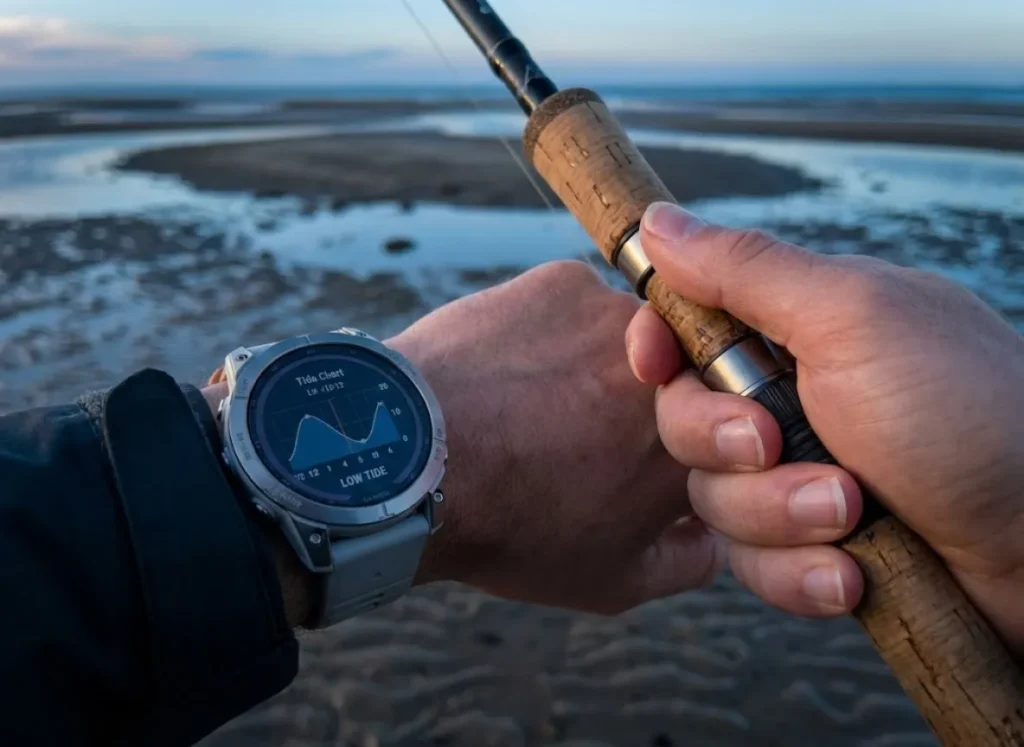
Finding the fish is critical, but timing is the multiplier. The ocean rewards the observant, but it punishes the careless. Reading the waves is ultimately a survival skill as much as a fishing tactic. Strategic application of knowledge, focusing on tidal cycles and safety protocols, maximizes efficiency and minimizes risk.
How does the tidal cycle alter structural visibility and productivity?
The most effective tactical maneuver in surf fishing is “Low Tide Scouting.” Walking the beach at low water reveals the “skeleton” of the coast. It exposes bars, cuts, and deep pockets that will be hidden under feet of water just a few hours later.
When you find a promising structure, mark it. Use physical landmarks like dunes or houses, or better yet, log the precise location using fishing apps for logging waypoints. This allows you to return when the tide stage fills the trough and cast with precision, knowing exactly where the drop-off lies.
Fish the Incoming Tide (or Flood Tide) to target the inner trough and lip. As the water rises, predators move from the safety of the outer bar into the shallows to pin bait against the shore. Conversely, utilize the Outgoing Tide to fish the runout. As the trough drains, baitfish are forced out through the rip channels, creating predictable choke points for ambush predators.
Be aware that High Tide can “mask” structure. It can turn distinct breaking bars into rolling swells, making it difficult to read the water if you haven’t scouted beforehand. Adjust your positioning dynamically; as the tide rises, step back to the dry sand. As it falls, you can wade out to the first bar to reach deeper water safely.
Conclusion
True competence in the surf begins when you stop casting at the horizon and start reading the beach.
- Sand Dictates Structure: The grain size at your feet predicts the steepness and depth of the beach profile.
- Wave Breaking = Depth Map: Spilling waves denote shallow bars, while fading or rolling waves indicate deep, productive troughs.
- Bioenergetics Rules the Trough: Fish maximize energy by holding in the calm “Gut” or the “Lip” to ambush prey disoriented by the turbulence.
- Scouting is Strategy: The most effective angler scouts at low tide to map the terrain and returns at high tide to harvest the money fishing zones.
Next time you hit the coast, leave the rods in the truck for the first ten minutes. Walk the water line, read the sand, and watch the sets roll in. Transform your view from a flat horizon into a topographic map, and you will find that the ocean is no longer a barrier, but a guide.
FAQ – Frequently Asked Questions
What is a trough in surf fishing?
A trough (or runnel) is a deep channel of water running parallel to the shore, usually located between the beach and an offshore bar. It acts as a travel corridor and feeding zone for predatory fish like Halibut or Drum.
Where do you cast in a trough?
Cast into the Gut (the deepest part) for traveling fish, or target the edges of the sandbar where whitewater spills into the deep water. The transition zones where depth changes are the most productive.
How do you tell if water is deep when surf fishing?
Look for darker water colors (deep green or blue) compared to the surrounding area and observe waves that do not break. If a wave builds and breaks on an outer bar, then flattens out before reaching the shore, it has passed over deep water.
What is the best tide for surf fishing?
Generally, the two hours before and after high tide are most productive as water fills the troughs and brings fish closer to shore. However, low tide is the best time for scouting to identify where those structures are located.
Risk Disclaimer: Fishing, boating, and all related outdoor activities involve inherent risks that
can lead to injury. The information provided on Master Fishing Mag is for educational and informational purposes
only. While we strive for accuracy, the information, techniques, and advice on gear and safety are not a substitute
for your own best judgment, local knowledge, and adherence to official regulations. Fishing regulations, including
seasons, size limits, and species restrictions, change frequently and vary by location. Always consult the latest
official regulations from your local fish and wildlife agency before heading out. Proper handling of hooks, knives,
and other sharp equipment is essential for safety. Furthermore, be aware of local fish consumption advisories. By
using this website, you agree that you are solely responsible for your own safety and for complying with all
applicable laws. Any reliance you place on our content is strictly at your own risk. Master Fishing Mag and its
authors will not be held liable for any injury, damage, or loss sustained in connection with the use of the
information herein.
Affiliate Disclosure: We are a participant in the Amazon Services LLC Associates Program, an
affiliate advertising program designed to provide a means for us to earn advertising fees by advertising and linking
to Amazon.com. As an Amazon Associate, we earn from qualifying purchases. We also participate in other affiliate
programs and may receive a commission on products purchased through our links, at no extra cost to you. Additional
terms are found in the terms of service.