
In this article
You’re standing on an open beach watching the guy 20 yards down drop his bait into the trough, that deeper channel where the fish actually hold, and he’s swinging a shorter rod than you are. Distance in the surf was never about owning the longest rod. It’s about the right rod matched to how you cast, and most anglers get that backwards at the tackle shop. Ask around any surf-fishing forum and the same handful of rods keep coming up for the same practical reasons. Below are the category picks, then the honest breakdown of what separates a rod that reaches fish from one that just looks the part, plus why most rods that “break” were never defective in the first place. If you want the wider view first, here’s how to pick a rod without overpaying.
Here’s how the top picks stack up by category before we get into the why.
| Category | Rod | Length / Power | Best For |
|---|---|---|---|
| Best Overall | St. Croix Legend Surf | 11 ft / Medium-Heavy | All-around distance and feel |
| Best Budget | Ugly Stik Bigwater | 10 ft / Heavy | A durable first setup |
| Best for Plugging | Shimano Tiralejo XX | 10 ft / Medium-Heavy | Working topwater lures |
| Best for Bait | PENN Prevail | 10–12 ft / MH–Heavy | Chunking and bottom rigs |
| Best Beginner | Penn Squadron III | 9 ft / Medium | Learning the cast |
| Best for Travel | Tica UEHA | 12 ft / Medium | Breakdown packability |
| Best Conventional | St. Croix Avid Surf | 10 ft / Medium | Stripers on a conventional reel |
What Makes a Surf Rod Reach the Fish
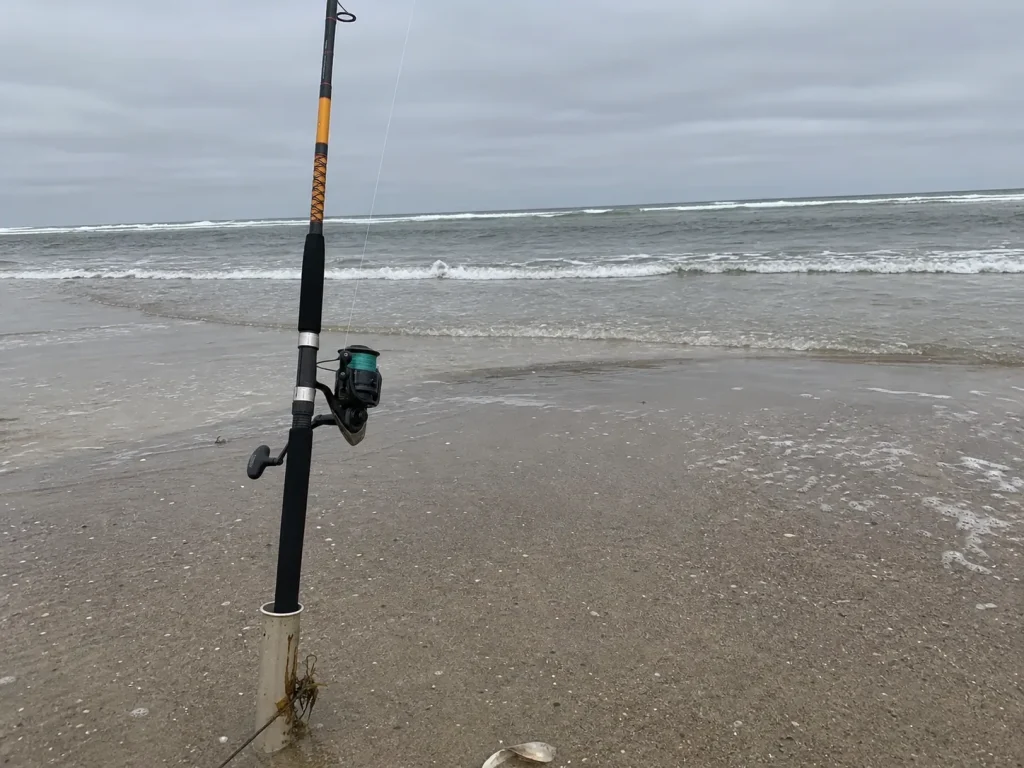
The trough is closer than most beginners think. It’s the deeper channel between the sand and the first bar, and it’s where baitfish and predators stage. On most beaches that means striped bass, bluefish, redfish, fluke (summer flounder), and surf perch, with snook and tarpon holding the trough farther south. The problem isn’t that anglers can’t reach it. It’s that they show up with a rod built for calm water and wonder why every cast lands short of the seam.
A true surf rod in the 9–12 ft range gives you two things at once: the leverage to launch a rig 80 to 150 yards, and the backbone to fight a fish back through the breakers to the sand. Length here is a lever, not a status symbol. The longer blank whips more line speed into the cast, and it lifts your line over the first band of white water so your bait actually settles where the fish are.
Rods in the 7–9 ft range are light surf duty. They’re fine for calm bays, jetties, and fishing behind the breakers, but on an open beach they fall short of the trough. This is the single most common mistake at the shop: buying a bay rod for beach fishing, then blaming the fish for not biting. When wading out to reach that channel, know that the same structure holding fish also shapes the currents, and NOAA’s rundown of common beach hazards is worth a read before you go in past your knees.
Bigger isn’t automatically better, either. A 15 ft heaver only out-casts a well-matched 10 to 12 footer in hands that already have the technique to load it. You feel a rod that’s too short as a cast that tops out, where the blank stops giving even though your arms keep swinging. Getting the length right for your beach matters more than chasing raw reach, and matching rod length to the water you fish is the foundation everything else sits on.
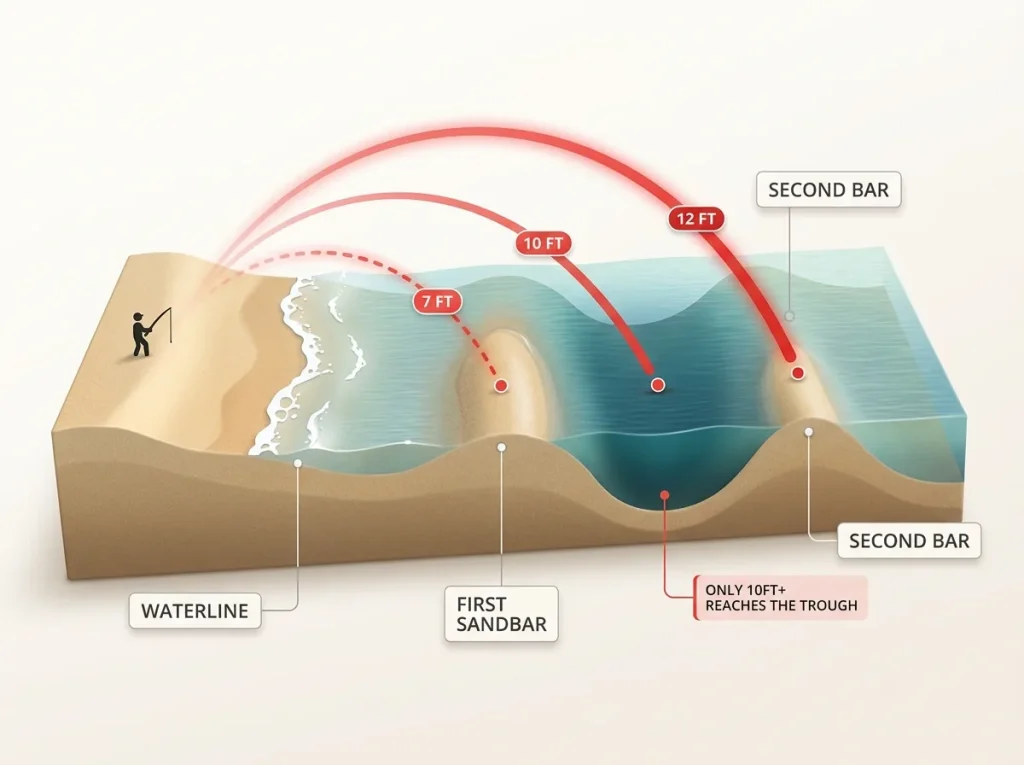
Walk the beach at dead low tide before you ever cast. The troughs and cuts that hold fish at high water sit exposed and obvious, and you’ll know exactly where to drop a bait once the water comes back over them.
Matching Power and Action to What You Throw
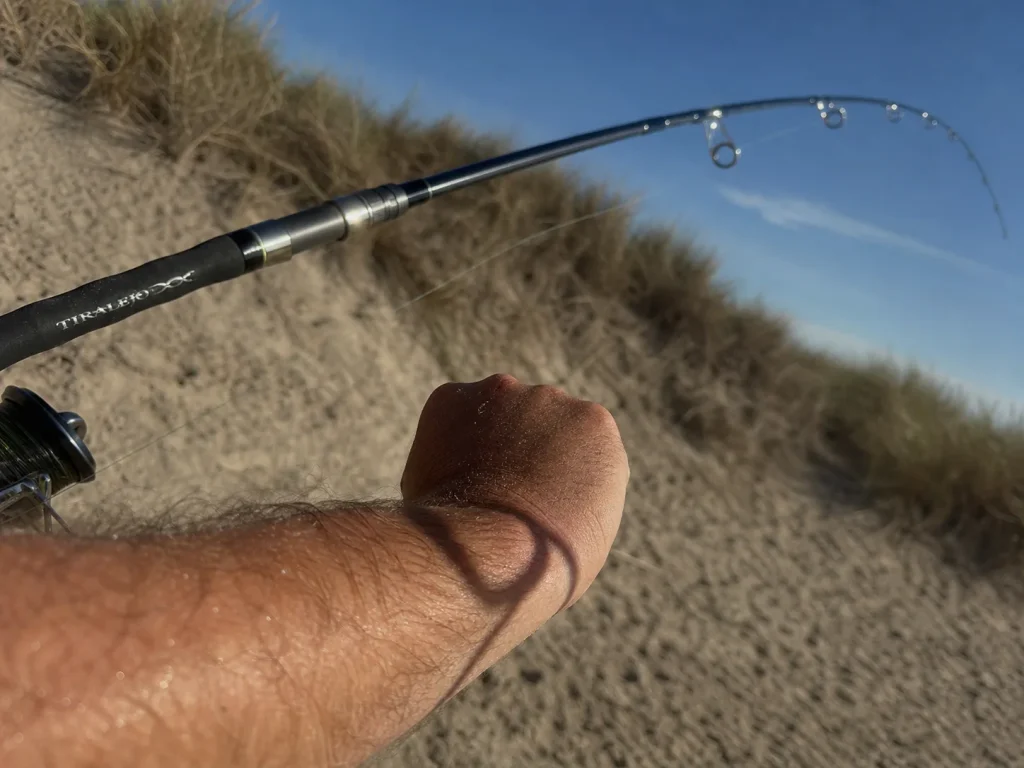
The rod that feels stiffer and more expensive in the shop is often the one that casts a shorter, harder-hitting bait, not the long-distance launch you pictured. Power and action are two different specs that beginners blur into one, and getting them straight saves you a snapped tip and a wasted trip.
Power: How Much Weight the Rod Throws
Power is the rod’s lifting and throwing strength: medium, medium-heavy, heavy. Match it to the heaviest lure weight or bait rig you’ll actually cast, not the biggest fish you dream about landing. A medium-heavy blank covers most open-beach work with sinkers in the 3 to 6 ounce range. Go heavy only if you’re routinely punching big baits into strong surf. Overpowering your setup just tires your arm and kills your feel for the bite.
Action: Where the Blank Bends
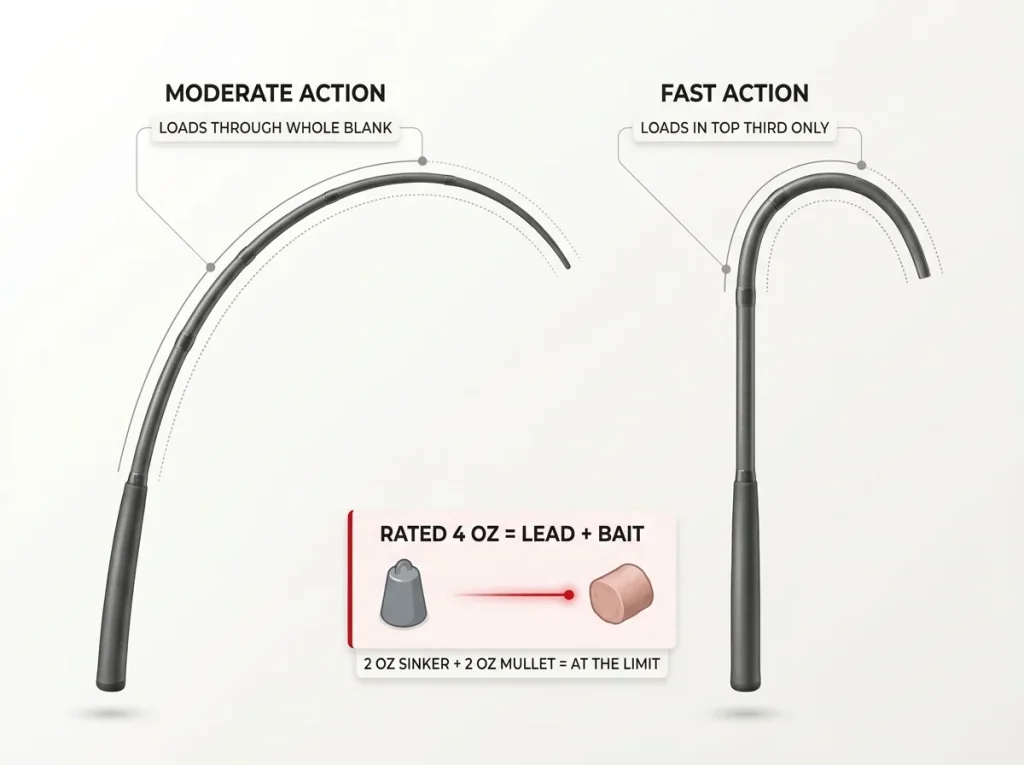
Action describes where and how fast the blank recovers. Moderate, or parabolic, action loads through the whole blank and casts farther, forgiving your timing along the way. Fast action loads only the top third, casts shorter, but hits harder and faster for quick hooksets and active lure control. Neither is better in the abstract. A bait fisherman wants the forgiving load; a plugger wants the fast tip. Understanding how rod power and action really differ is what lets you read a rod’s label instead of guessing.
The ounce-rating trap
Here’s the one that catches everyone. A “4 oz” rating on the blank includes the lead and the bait. A chunk of mullet alone can weigh 2 ounces, so a 2 ounce sinker plus that bait puts you right at the ceiling, and a fresh clam or a bigger bunker head pushes you over it. Anglers overload a rod’s rated range without realizing it, then call a snapped tip a manufacturing defect. It wasn’t. The tip that “just went on a normal cast” was carrying five ounces on a four-ounce blank.
Blank Material and Guides That Survive Salt
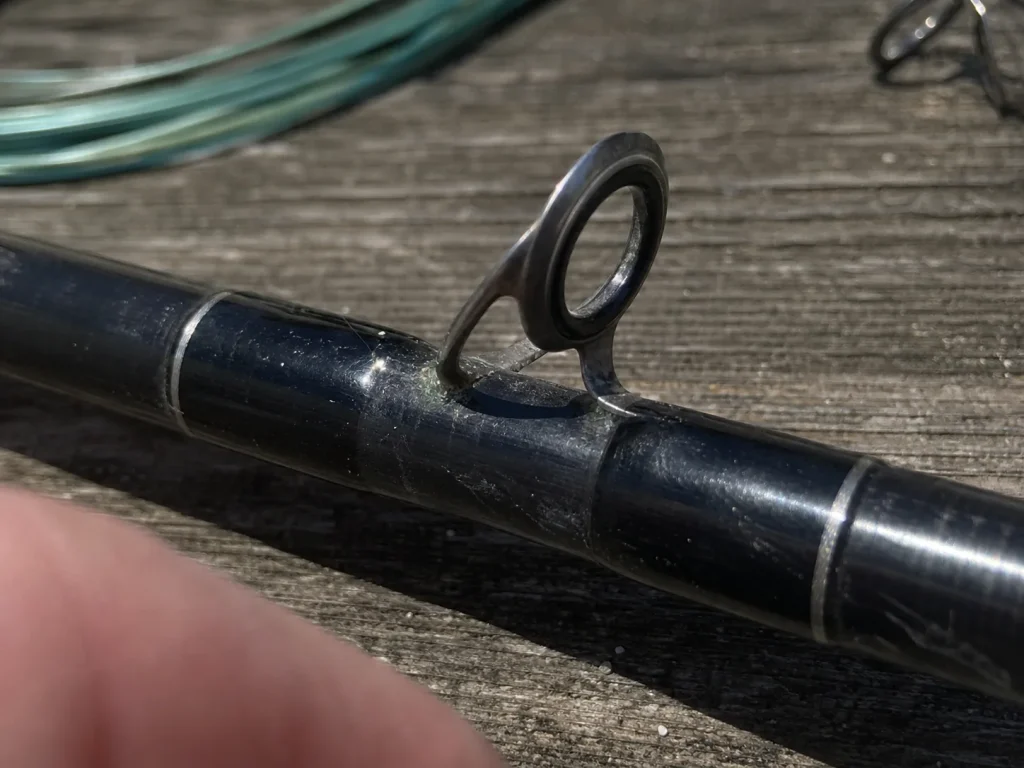
Two rods can share the same blank and still fail at completely different rates, because the guides are where saltwater actually wins. It’s the spec nobody checks until their braid starts fraying for no obvious reason.
Graphite vs fiberglass vs composite
Graphite blanks, also called carbon fiber blanks, are sensitive, lighter, and quicker, but more brittle. Fiberglass is heavier and less crisp, but far more durable and forgiving, which is why it survives being leaned against a truck tailgate for a decade. Composite blanks split the difference, blending the two for a rod that’s tough without feeling like a broomstick. Pick by how you fish, not by the biggest number on the label. A stiffer, higher-modulus graphite blank isn’t automatically the right call, since the extra sensitivity comes with less forgiveness when a fish surges.
Guides: The Real Saltwater Weak Point
The guides and their inserts are where salt does its damage. The rough hierarchy of guide inserts for saltwater durability runs from stainless steel (avoid it) up through aluminum oxide (good) to silicon carbide (SiC) and zirconia or zirconium inserts (best). Only titanium frames truly tolerate skipping a rinse. A cheap guide pits within a season, and here’s the part that stings: you can polish that guide until it looks clean and still be shredding braid every cast, because the microscopic pitting doesn’t buff out. How the guide materials stack up is worth knowing before you assume all guides are equal.
One thing not to overpay for is the handle. EVA foam, cork, and Winn grips all feel nice over a long session, but the material doesn’t affect your casting distance. Buy the grip you like, then spend your real money on the blank and guides.
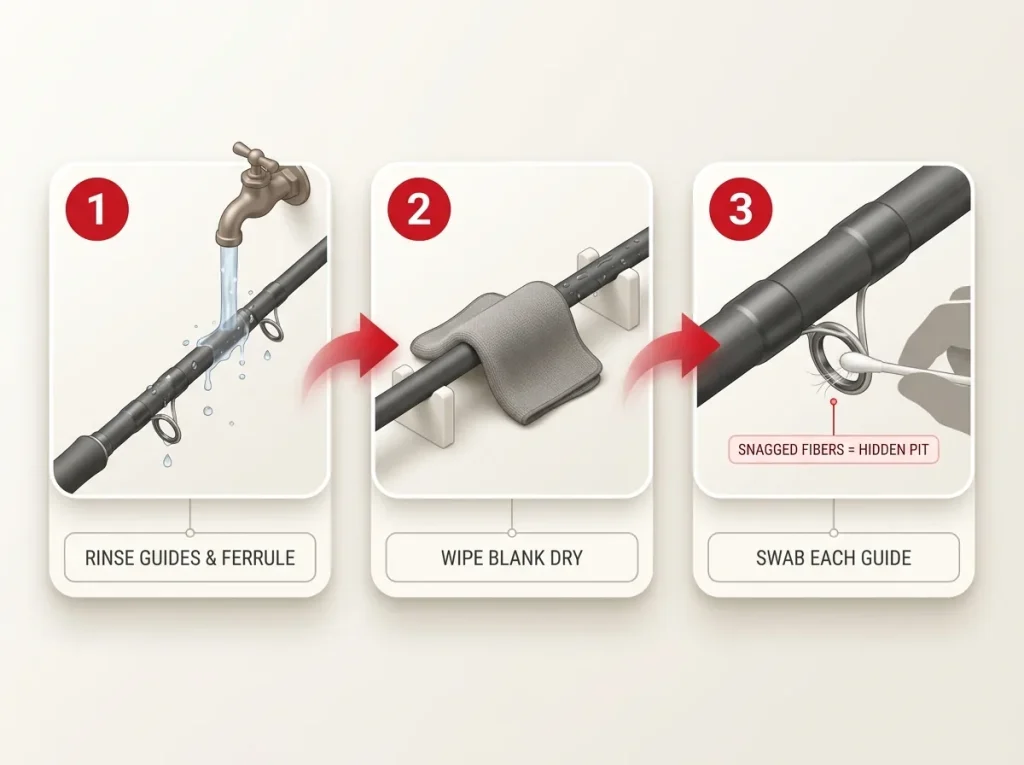
Run a cotton ball through each guide when you get home. If the fibers snag, you’ve got a pit that’s cutting your line, even if the guide looks spotless. That’s your cue to replace the insert before it costs you a fish.
Our Top Surf Rod Picks by Category
These are the rods that keep coming up for real reasons, sorted by how you actually fish instead of by which one wins a spec-sheet beauty contest.
Best Overall: St. Croix Legend Surf
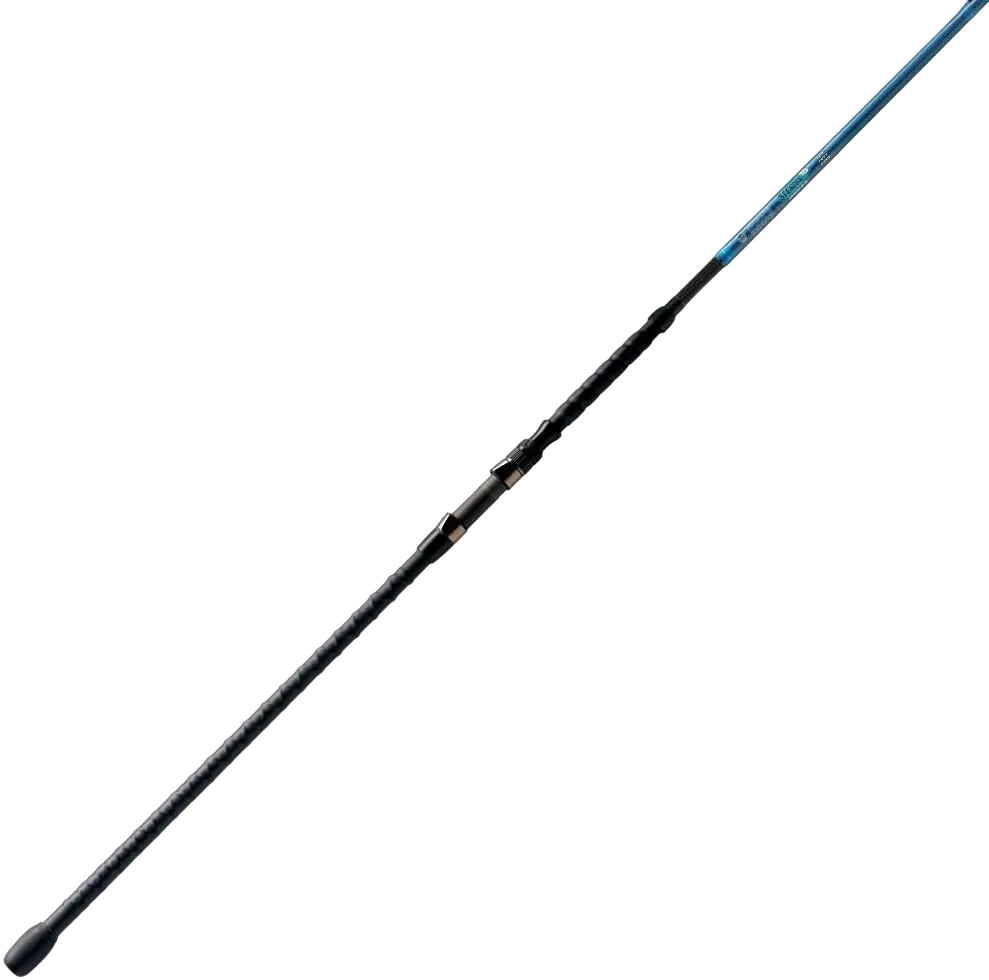
The Legend Surf earns the top slot because it doesn’t force a trade-off. The moderate-fast action loads deep enough for real distance yet recovers fast enough to keep tip control when a fish digs into the current. It’s a premium blank, and you feel where the money went the first time a striped bass turns sideways in the trough. If it’s more rod than your budget wants, the St. Croix Legend Surf has an honest step-down in the Okuma Rockaway, which gives up some finesse but casts nearly as far for a fraction of the outlay.
Best Budget: Ugly Stik Bigwater
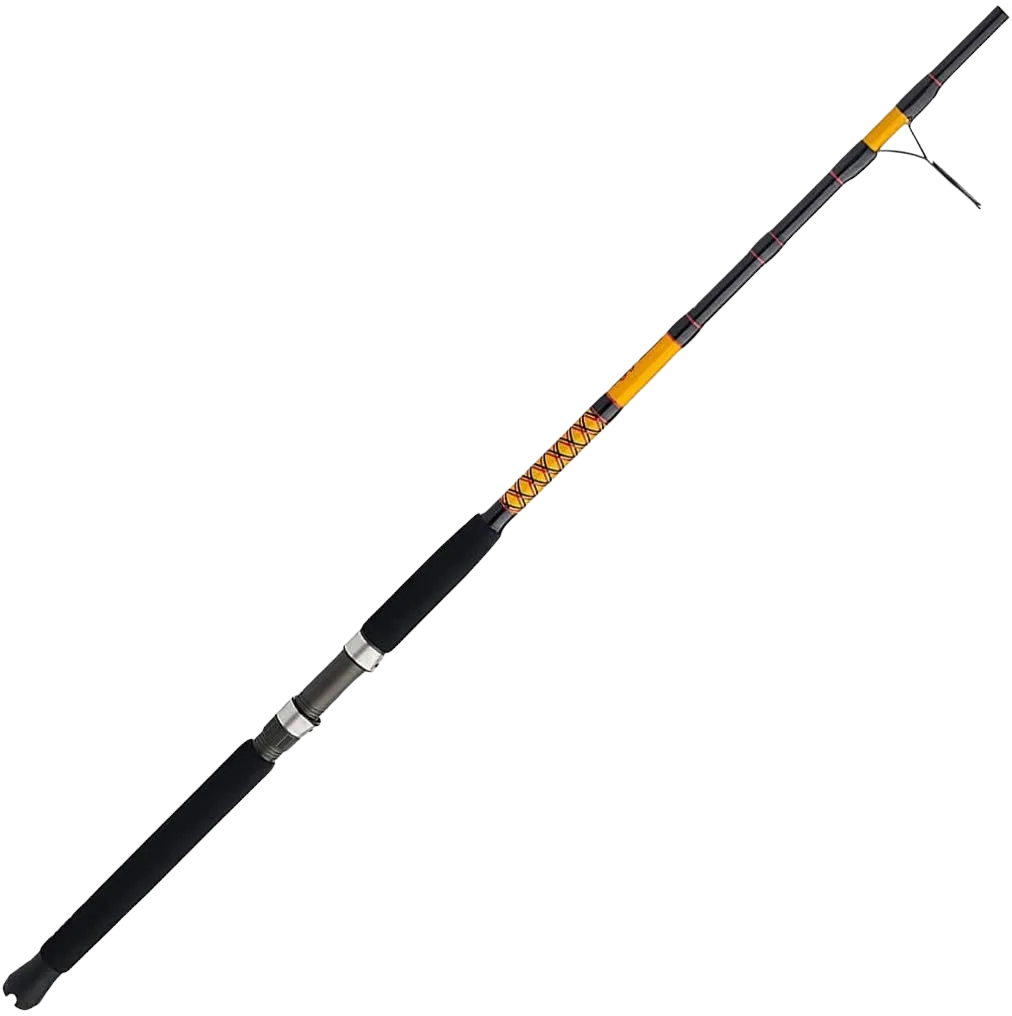
Honest talk: the Ugly Stik Bigwater is where you should start, not where you settle. The fiberglass-graphite composite gives up crispness compared to a premium graphite blank, so bites feel a little muted. In exchange you get a rod that shrugs off the knocks that wreck fancier blanks, and the clear tip is genuinely tough. For a new surf angler figuring out whether the sport sticks, spending big on a sensitive blank you might crack in month two makes no sense. Start with the Ugly Stik Bigwater and upgrade once you know what you actually want.
Best for Plugging: Shimano Tiralejo XX

Plugging is active fishing, and the Tiralejo XX is built for the motion. The fast action loads quick for the fast, repeated casts you make while covering water, and the tip has the snap to impart action to a pencil popper or a bucktail. This is not a rod you plant in a sand spike and watch. If you’re the angler chasing a blitz down the beach, the Shimano Tiralejo XX keeps up. A budget-minded plugger can look at the Okuma Longitude Surf, which gives you a similar fast feel with less refinement.
Best for Bait & Chunking: PENN Prevail

Where the Tiralejo is built for motion, the Prevail is built to sit and hold. The parabolic-leaning action bends through the blank, which does two useful things: it lets you launch a heavy chunk bait without shocking it off the hook, and it keeps a hooked fish pinned by absorbing headshakes instead of transmitting them straight to the knot. For the angler running a fish-finder rig with a chunk of bunker, the PENN Prevail has the backbone to hold bottom in current. The Okuma Tundra glass rod is the budget option if you just need something to soak bait cheaply.
Best Beginner Setup: Penn Squadron III
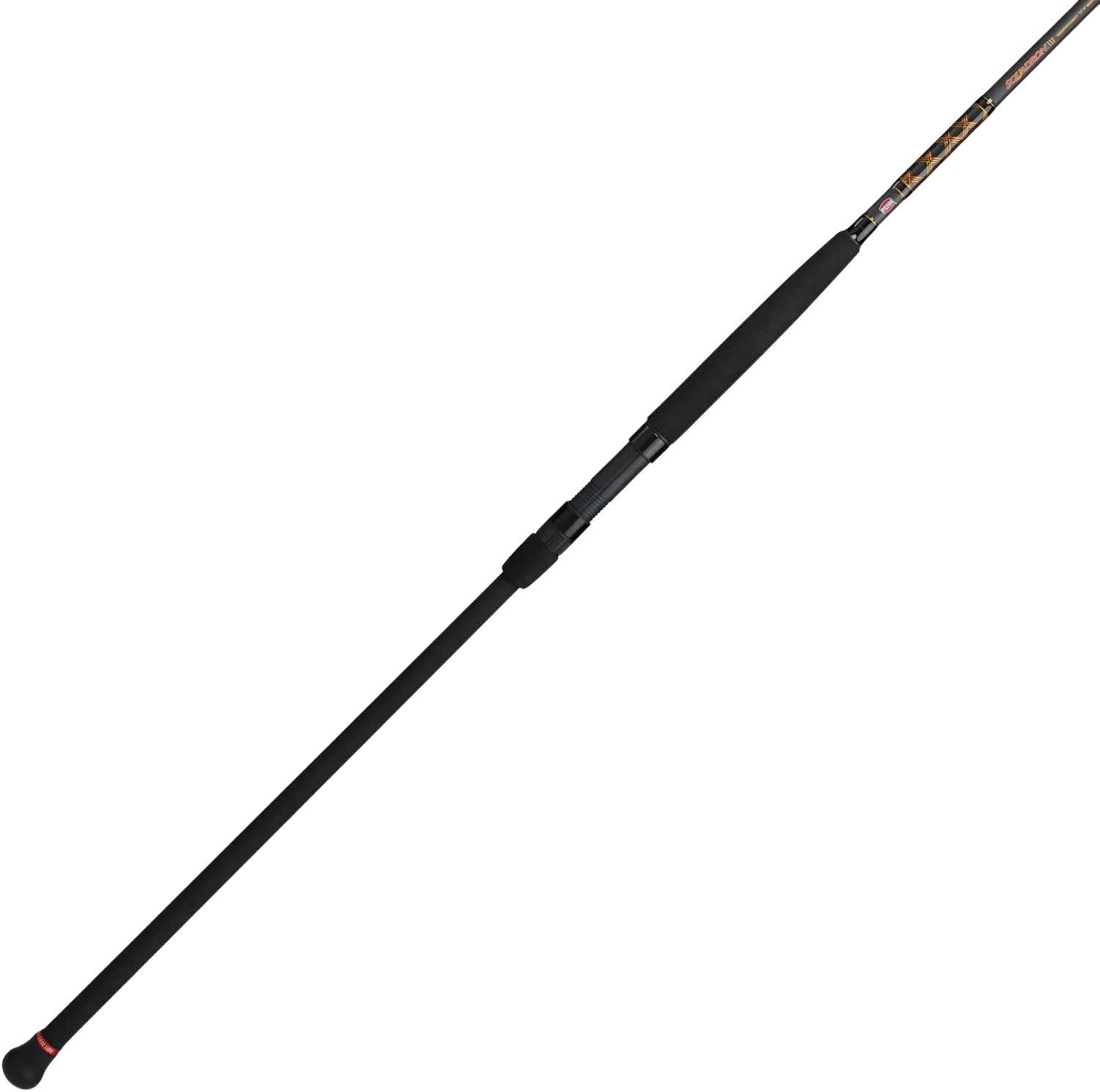
A beginner’s biggest enemy is a rod that fights back. At 9 ft with medium power, the Squadron III is short enough to control and forgiving enough to hide a mistimed cast, which lets you build the muscle memory before you graduate to a stiffer, longer blank. It won’t reach the deepest troughs of a big open beach, and that’s fine: you learn on the water you can handle. Pair the Penn Squadron III with a simple reel and you have a setup that teaches instead of frustrates.
Best for Travel & Packability: Tica UEHA

If you fly to your surf or fish out of a small vehicle, a one-piece 12-footer is a nightmare to transport. The Tica UEHA solves that with a real two-piece breakdown that, unlike a cheap telescoping rod, keeps its casting action honest across the ferrule. You give up almost nothing in feel, and you gain a rod that fits in a case instead of riding lashed to a roof rack. The Tica UEHA is the pick for the traveling angler, with one caveat we cover below: that ferrule needs care. St. Croix’s Avid Surf also breaks down two-piece at a higher price if you want a step up.
Best Conventional for Stripers: St. Croix Avid Surf Casting
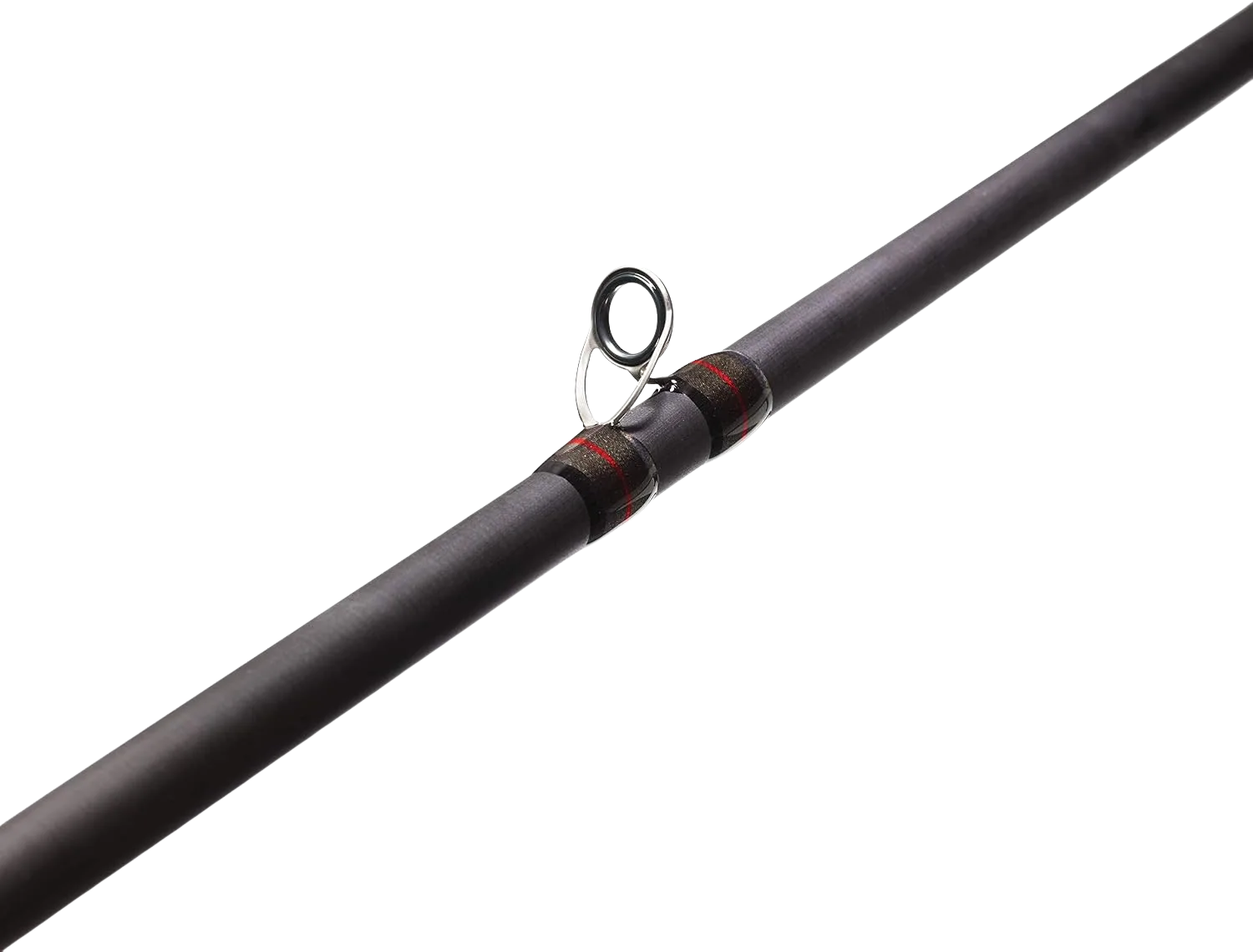
Conventional reels reward a different rod. The Avid Surf casting model is built for the thumb-controlled cast a conventional demands, and it shines for anglers targeting striped bass with heavier baits and longer soaks. It’s a specialist tool, not a do-everything rod, which is exactly why it earns its own slot instead of getting buried in a spinning roundup. If you’re serious about working stripers from the surf, the St. Croix Avid Surf is the blank matched to the job.
Why Surf Rods Really Fail in Saltwater
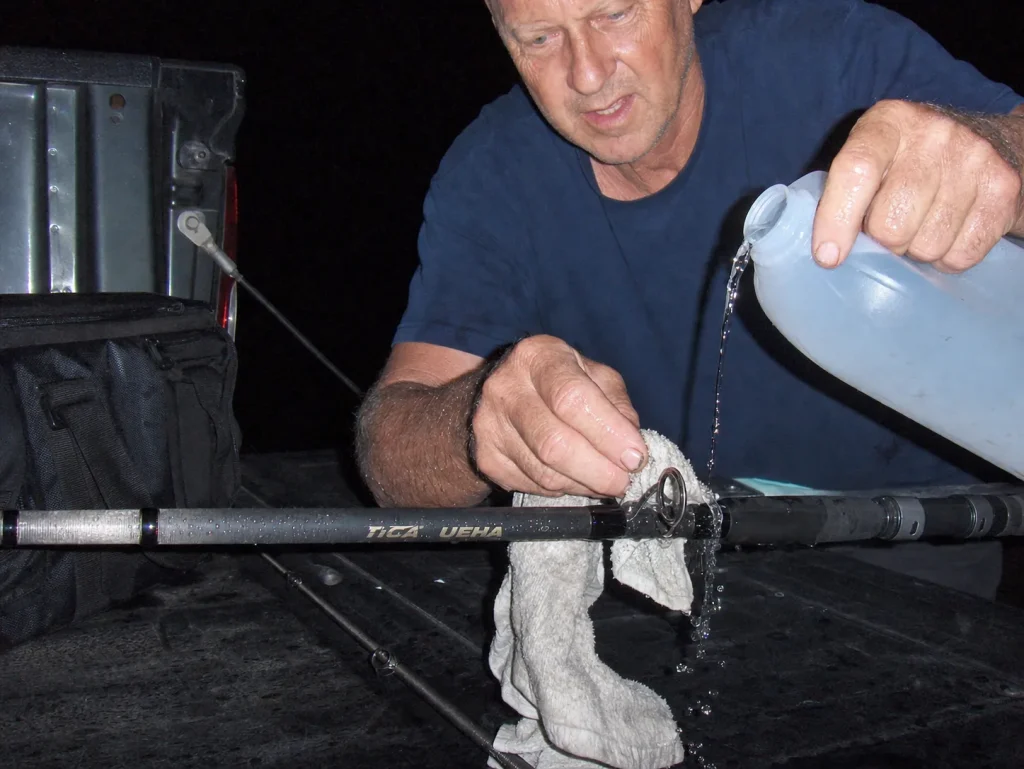
Most rods anglers blame on “a bad rod” failed from neglect, not from the factory. There are two independent failure paths in the surf, and both are preventable once you understand the mechanism. Competitors list specs and move on. Here’s what actually kills a rod.
Guide corrosion and the braid-cutting pitting
Saltwater attacks the guides first. Cheap stainless inserts and frames corrode, and the corrosion leaves microscopic pits behind. The cruel part is that those pits keep cutting braided line long after you’ve wiped away the visible rust. You can clean a guide until it gleams and still lose fish to a knot that failed at a pit you can’t see. Stainless needs a rinse routine to stay ahead of it, and only titanium truly forgives skipping the freshwater. If you suspect a rod is already going, learning to spot a cracked blank before it lets go is the companion skill to checking your guides.
Blank fatigue from over-casting
The second path is fatigue. Every time you snap-cast a weight past the rod’s rated range, you stress the blank a little more than it was built for. Do it enough and the blank loses its snap, develops a stress point, and eventually fails on a routine cast. This ties straight back to the ounce-rating trap: the angler who forgets the bait counts toward the rating is quietly fatiguing the blank on every heave. It’s also one of the fastest ways to void a rod warranty, since most makers exclude damage from casting beyond the rated range. A premium surf rod buys you guides that resist pitting for more than a season and a blank that recovers its bend faster. Sometimes that’s worth it. Sometimes a well-rinsed budget surf rod lasts just as long.
The five-minute post-session routine
You extend a surf rod’s life at the tailgate, not in the shop. Rinse the guides and the ferrule under fresh water, wipe the blank down, and let it dry before it goes in the case. That’s it. The same habit that saves your rod also protects your terminal tackle from rust, so build it once and it pays off across your whole kit. You’ll notice a rod dying not by looking at it but by feeling your braid tick through a rough guide on the retrieve, and that tick is your signal to inspect before your next trip.
Travel and Packability: The Ferrule Question
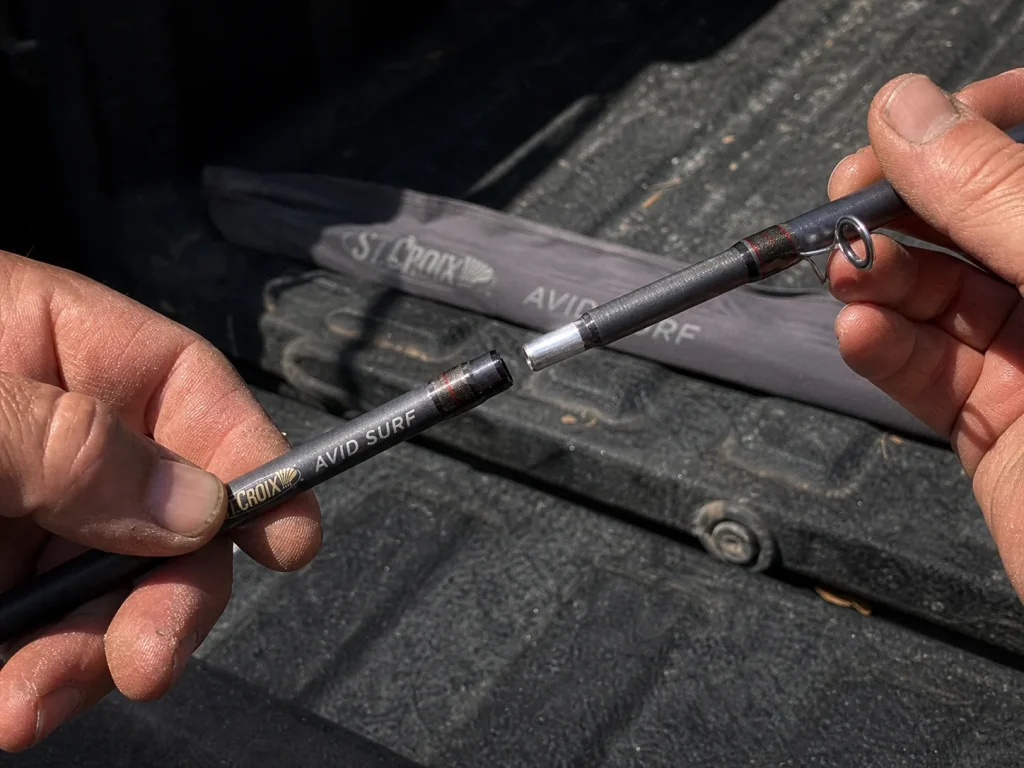
The travel rod that looks fine on the outside can be quietly corroding at the ferrule joint every unrinsed trip, right up until the day it separates mid-cast. This is the gap almost nobody covers, and it’s the difference between a two-piece that lasts and one that lets you down at the worst moment.
Why ferrules fail
Ferrules are typically brass or nickel-silver, and here’s the catch: when two different metals sit together in a wet saltwater environment, galvanic corrosion accelerates at the joint. That corrosion slowly weakens the ferrule’s grip until the fit goes loose or a stress crack forms. A two-piece rod doesn’t fail because the blank is weak. It fails at the ferrule, because two dissimilar metals are corroding against each other every trip you don’t rinse it. This is a mechanical failure mode completely separate from blank breakage, and it’s why the ferrule deserves its own spot in your rinse routine, not just the guides.
Genuine 2-piece vs telescoping
Not all breakdown rods are equal. A genuine two-piece with a well-built ferrule keeps its casting action nearly intact, which is exactly what makes the Tica UEHA a real travel rod instead of a compromise. A cheap telescoping rod, by contrast, trades that casting action away for packability, and you feel it in every short, mushy cast. If you’re weighing your options, what you really give up with a two-piece lays out the real trade against a one-piece. A good ferrule seats with a quiet, solid feel; a corroding one starts to click or seat loose long before it separates, so that changing feel is your early warning.
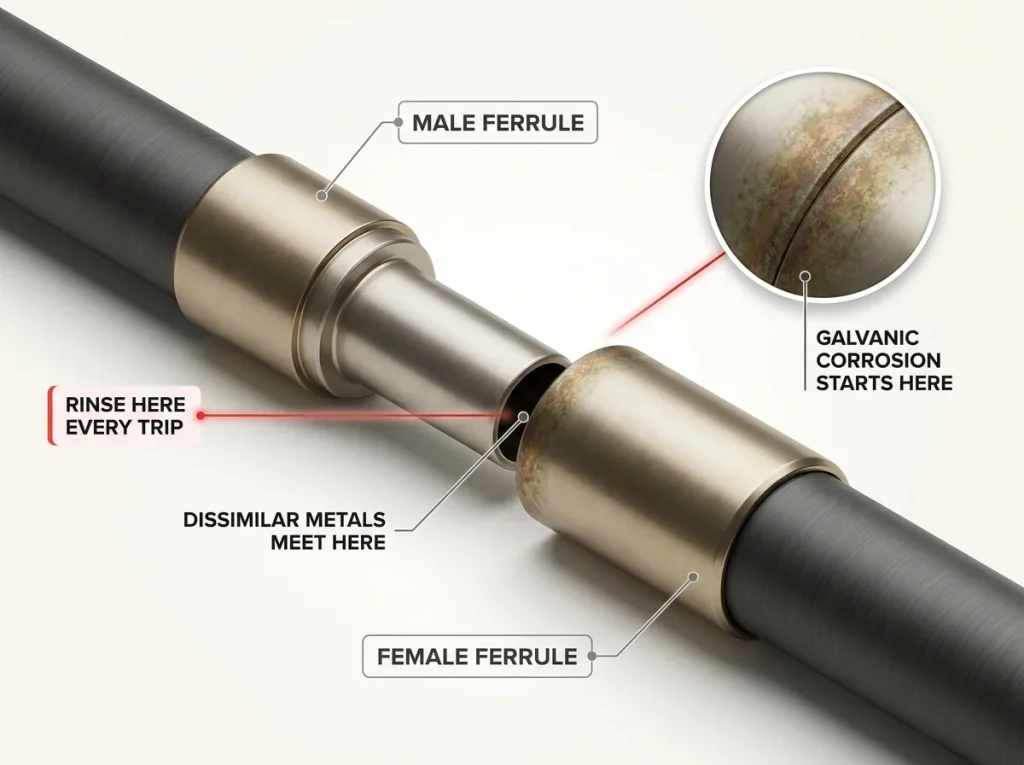
Rub a candle or a bar of paraffin on the male ferrule once a season. A thin wax film helps the joint seat cleanly and slows the galvanic corrosion that loosens two-piece rods, and it makes the sections easier to separate at the end of a long, sandy day.
How Your Rod’s Action Changes Your Cast
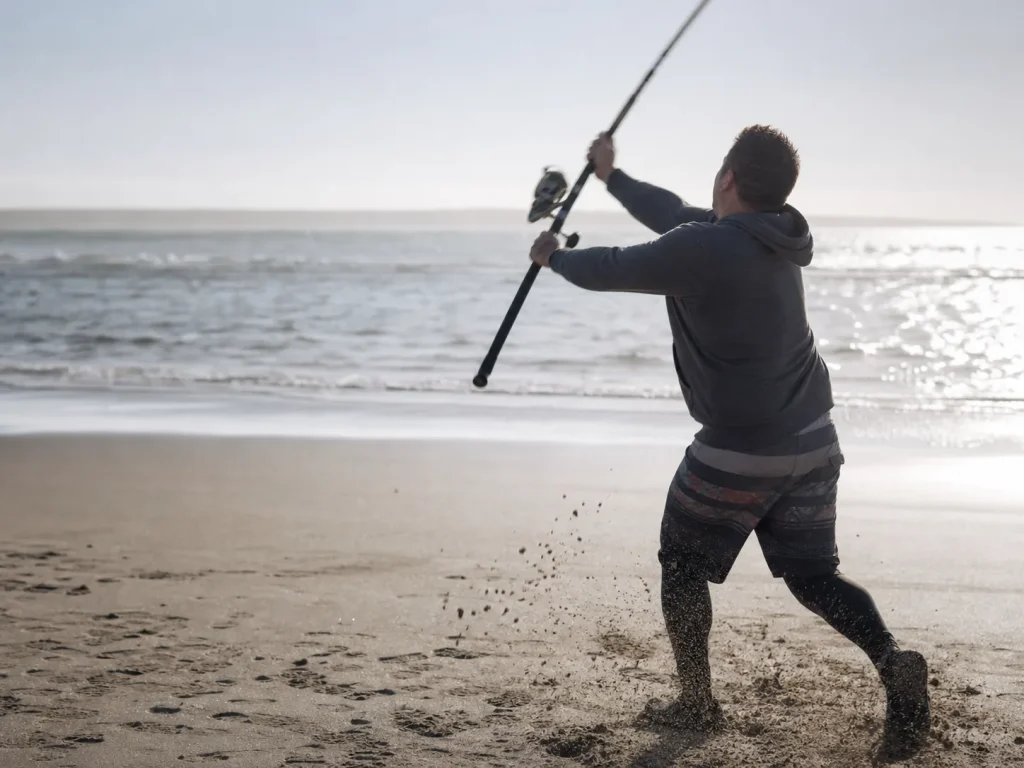
Most rod breaks anglers blame on the rod are actually a technique problem. Punching the power in before the blank is loaded snaps the tip, not a factory defect. And the spot you wade to for a better cast is exactly where the water turns against you, so this section covers both the cast and the ground you cast from.
Loading the Rod: Timing by Action
Loading the rod means letting the blank bend under the weight of your swing before you release. A moderate-action rod loads progressively through the whole blank, which gives you a wider timing window and rewards a smooth pull. A fast-action rod loads quick in the tip, so your timing has to be sharper. On a pendulum cast especially, punching the power in too early, or swinging the lead at a tight 20 to 30 degree angle, is the leading cause of a crack-off or a snapped tip three to four feet down. The rod tells you when to release if you let it load. If you want to build real distance, how to pendulum cast for real distance walks through the swing mechanics step by step. Veterans put it bluntly: timidity kills pendulum casting, so push the technique hard enough to occasionally crack off while you’re learning rather than casting timid forever. Build the ground cast first, then layer the pendulum arc on top.
Wading for position and staying safe
The trade-off nobody mentions is that wading out for casting position puts you exactly where rip currents and undertow form. Rip currents cause roughly 80 percent of beach rescues and an estimated 100 fatalities a year in the US, and the structure that holds fish, those troughs and sandbars, is the same structure that shapes those currents. The typical victim profile skews toward the exact demographic that fishes the surf in summer. Before you wade a bar for an extra 15 yards, read the water and know NOAA’s guidance on escaping a rip current. A fish is never worth getting pulled off your feet in cold water at dawn with no one watching.
Pairing the Right Reel and Line
A great rod feels like a broomstick with the wrong reel bolted on. Balance and line choice finish the setup, and the reel is where a lot of surf anglers quietly overspend or underbuy.
Spinning vs conventional, and reel size
Match your reel size to your rod’s power. A 4000 to 6000 class spinning reel pairs naturally with a 10 to 11 ft medium-heavy surf rod, giving you the line capacity for a long cast without the bulk of an offshore reel. The PENN Battle III 4000 is the reel that most often gets paired with rods in this class and price range, and its sealed drag and full metal body hold up to salt spray better than the price suggests. Steer conventional if you’re running the striper game with heavier baits, spinning for everything else. Balance matters more than either piece alone, and a setup that balances at the reel foot fights fatigue over a four-hour session. You feel a balanced rod as one that hangs level off two fingers at the reel foot; an unbalanced one dives tip-down and wears out your wrist by noon.
Line: Braid vs Mono and the Shock Leader
Braid casts farther and telegraphs bites through its zero stretch, which is why most surf anglers spool it. Monofilament line forgives more, stretching to absorb headshakes and shrug off abrasion in the sand. Whichever you run, add a shock leader, a heavier line test between your main line and rig that takes the shock of a hard cast so a heavy sinker doesn’t snap off and fly down the beach. It protects your cast and the anglers around you. For most beach setups, braid main line with a mono or fluorocarbon shock leader is the honest default.
The Bottom Line on Surf Rods
Match your rod’s length and power to your beach and your rig, not to the biggest number on the rack. Remember that the guides and the ferrule decide how long the rod lasts, so give them a freshwater rinse before you ever put the rod away. And know that the right cast beats the longest rod every time.
Before your next beach trip, load your rod in the yard with the rig you actually fish. You’ll feel exactly where it tops out, and you’ll spend the day fishing the trough instead of casting at it.
Frequently Asked Questions
01What length surf rod do I need?
For an open beach, a 9 to 12 ft rod is the practical sweet spot, long enough to reach the trough and short enough to fight fish and cast all day. Drop to a 7 to 9 ft rod only for calm bays and jetties.
02Does a longer rod always cast farther?
No. A longer rod only out-casts a shorter one in hands that can load it properly. A well-matched 10 to 12 footer beats a 15 ft heaver you can’t time, so technique moves more distance than raw length does.
03What is the difference between a beach rod and a surf rod?
They are mostly the same tool. Beach rod often just means a longer, heavier surf rod built to punch big baits past the breakers. Focus on length, power, and action rather than the label on the box.
04Should I use spinning or conventional for surf fishing?
Spinning is easier to learn and covers most surf situations. Conventional reels shine for distance-casting heavy bait rigs for stripers once you have the thumb control down. Beginners should start with a spinning setup.
05Can a travel or two-piece rod cast as far as a one-piece?
A genuine two-piece with a well-built ferrule loses almost nothing in distance. A cheap telescoping rod trades away casting action. Rinse the ferrule after every trip so galvanic corrosion doesn’t weaken the joint over time.
Risk Disclaimer: Fishing, boating, and all related outdoor activities involve inherent risks that
can lead to injury. The information provided on Master Fishing Mag is for educational and informational purposes
only. While we strive for accuracy, the information, techniques, and advice on gear and safety are not a substitute
for your own best judgment, local knowledge, and adherence to official regulations. Fishing regulations, including
seasons, size limits, and species restrictions, change frequently and vary by location. Always consult the latest
official regulations from your local fish and wildlife agency before heading out. Proper handling of hooks, knives,
and other sharp equipment is essential for safety. Furthermore, be aware of local fish consumption advisories. By
using this website, you agree that you are solely responsible for your own safety and for complying with all
applicable laws. Any reliance you place on our content is strictly at your own risk. Master Fishing Mag and its
authors will not be held liable for any injury, damage, or loss sustained in connection with the use of the
information herein.
Affiliate Disclosure: We are a participant in the Amazon Services LLC Associates Program, an
affiliate advertising program designed to provide a means for us to earn advertising fees by advertising and linking
to Amazon.com. As an Amazon Associate, we earn from qualifying purchases. We also participate in other affiliate
programs and may receive a commission on products purchased through our links, at no extra cost to you. Additional
terms are found in the terms of service.