
In this article
You are standing in front of a rack of rods, comparing two blanks, trying to decide which material is better. That question has no answer, and chasing it is why so many anglers end up with a rod that fights them. Ask anyone who has spent a season losing fish on crankbaits with a stiff stick, and they will tell you the same thing the guy behind the tackle counter says: the rod isn’t the decision, the lure is. Look in your tackle box, see what you throw most, and the material picks itself. Here is which lures belong on graphite, which belong on fiberglass, where composite is the honest answer, what actually breaks, and whether that old glass rod in the garage is still worth fishing.
Match the row to whatever you tie on most often and you have your answer.
| What You Throw | Best Blank | Why |
|---|---|---|
| Jigs, Texas rigs, dropshot | Graphite | You need to feel the bottom and drive one thick hook |
| Crankbaits, jerkbaits, topwater | Fiberglass | Slow bend keeps steady pressure on small treble hooks |
| Spinnerbaits, chatterbaits | Composite | Reaction baits sit between feel and forgiveness |
| Crappie and panfish | Fiberglass or composite | Thin mouths will not survive a hard, fast hookset |
| One rod for everything | Composite | Small loss in both directions beats a big loss in one |
How Each Material Actually Feels When a Fish Bites
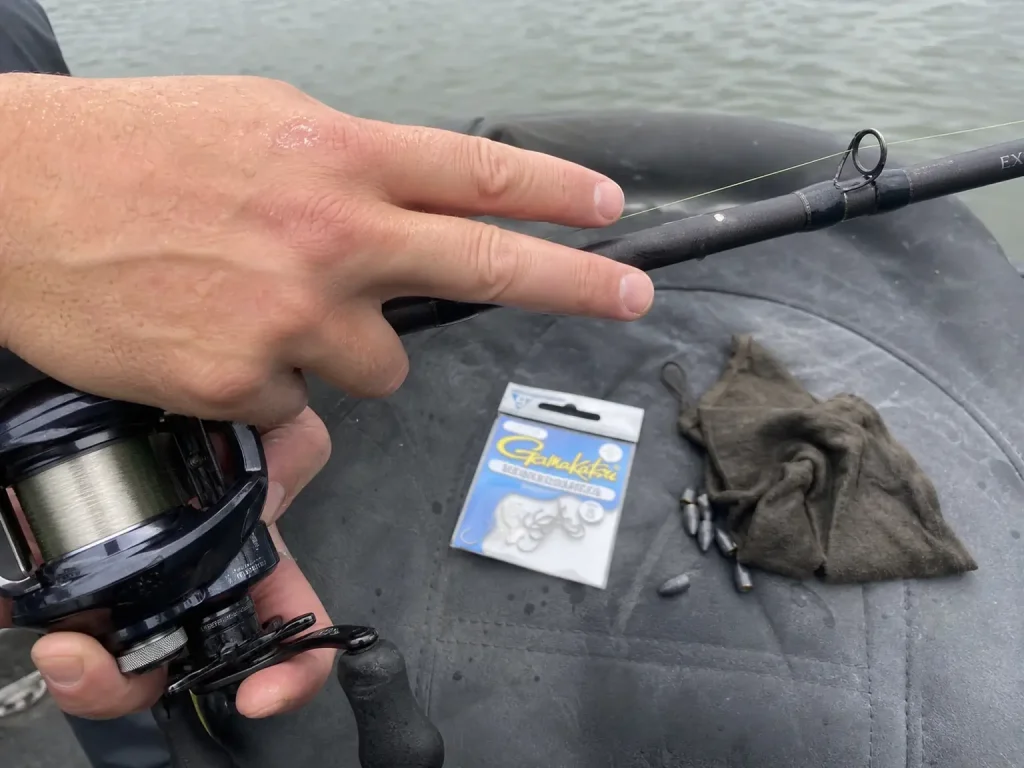
Forget the spec sheet for a minute. In your hands, a graphite rod talks to you and a glass rod holds onto things. One tells you what is happening down there in real time, the other tells you a half second late but refuses to let go once it knows.
The Graphite Tap
Graphite is stiffer, and stiffness moves vibration efficiently. That is the whole story behind bite detection: a fish mouths your jig forty feet away, the tick travels up the line, through the blank, into your palm, and you know about it before the fish decides whether to commit. On a slow day that half second is the difference between a hookup and a bare hook. If you want the physics behind why graphite transmits more, we cover the material science separately.
The Glass Load
Fiberglass mutes that tick badly. What it does instead is bend, deeply and slowly, through the entire rod blank rather than just the tip. Anglers call this the parabolic bend, and it means the rod is always absorbing, always cushioning, never delivering a sharp jolt in either direction. It also shrugs off impact that would leave a hairline crack in a stiff blank.
Why Rod Weight Only Matters After the First Hour
Graphite is lighter, and every review mentions it, but the honest version is that weight is irrelevant for the first hour and then becomes the only thing you think about. Twenty casts on an evening trip, you will never notice. Two hundred casts working a bank all morning, your forearm votes for graphite. If you are starting from scratch and want the full rundown on picking a rod, that is the place to begin before you narrow down to material.
One more piece of vocabulary worth knowing: broomstick is what forums call a graphite rod so stiff it has traded away all feel for backbone. Even graphite loyalists use it as an insult, which should tell you that more stiffness is not automatically better.
Jigs, Worms and Bottom Contact Belong on Graphite
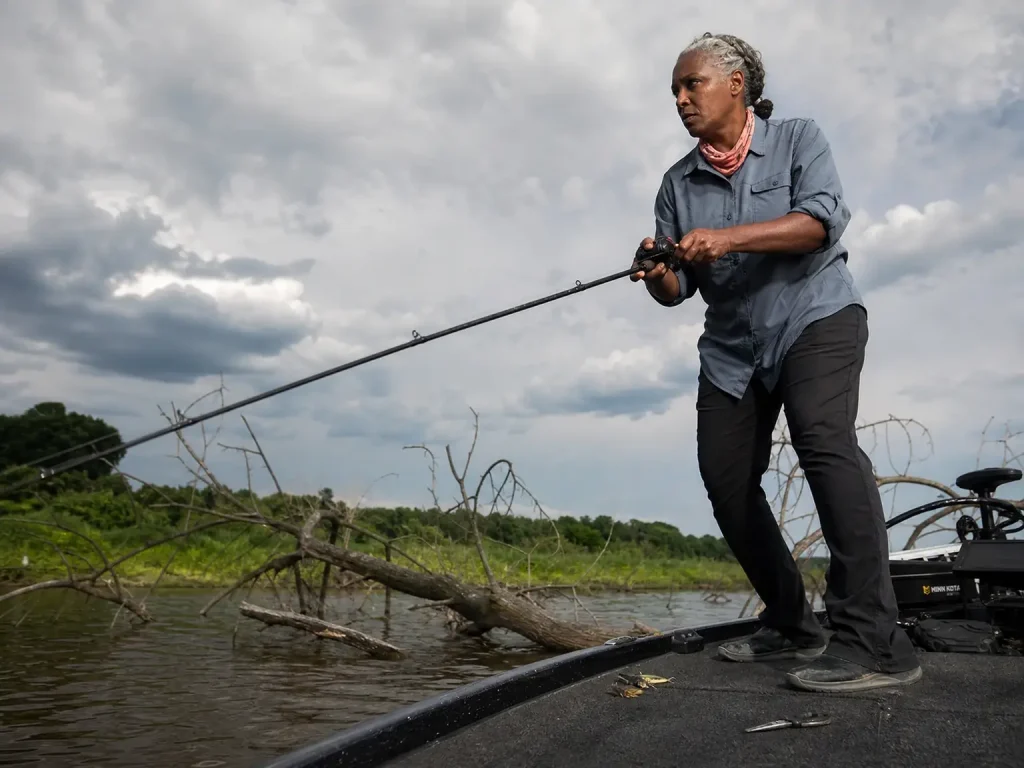
Bottom-contact fishing is a conversation you hold through the rod. Gravel feels different from mud, mud feels different from a stick, and a bite often just feels heavy. If you cannot tell those apart, you are setting the hook on scenery all day and wondering why nothing is home. As California Sea Grant’s beach-fishing guide puts it, the right rod comes down to matching the species and conditions in front of you rather than hunting for one universally correct setup.
Why a Single Hook Wants a Stiff Rod
A jig or a Texas rig carries one thick, stout hook. Burying that hook past the barb in a bass jaw takes real pressure, delivered fast, and a soft blank absorbs that energy instead of transmitting it. Fast action pairs naturally with graphite here, because the tip loads and releases quickly enough to pick up slack line and drive the point home in one motion. Which particular jig you are throwing changes the rod again, and the jig-specific rod breakdown goes deeper on that.
Reading the Bottom Through the Blank
Good bottom feel is learned, not bought, but a sensitive blank shortens the learning curve enormously. Braided line helps too, since it stretches far less than mono and hands the blank a cleaner signal, and a short fluorocarbon leader keeps that sensitivity while staying invisible down where the bait is. The combination of braid and a graphite blank is why so many bass anglers who switched never went back for bottom contact work, and it is the standard setup for finesse fishing presentations like the dropshot, where the whole game is feeling something almost nothing.
The rods that fish best are usually not built from one grade of material end to end. Builders who put the high-grade stuff in the tip and blend softer material down through the butt get sensitivity where your hands are listening and toughness where the rod actually takes abuse. An all-premium blank buys you a number on the box and a blank that likes to find its own weak spot.
A Graphite Rod That Fits This Job
If you want a working example of the category rather than a trophy, the Shimano Zodias CST-70-MH Casting Rod sits right in the middle of it. Seven feet, medium-heavy, fast action, graphite blank. That is the spec sheet almost every bottom-contact bass angler converges on eventually, and it is mid-range rather than a splurge.
Crankbaits and Treble Hooks Belong on Glass
Here is the case for fiberglass that nobody makes loudly enough. A treble hook is three small, thin-wire points doing the job of one thick one, and small thin-wire points pull free the moment pressure spikes or goes slack. Fiberglass is the rod that never lets pressure spike.
Why Trebles Pull Free
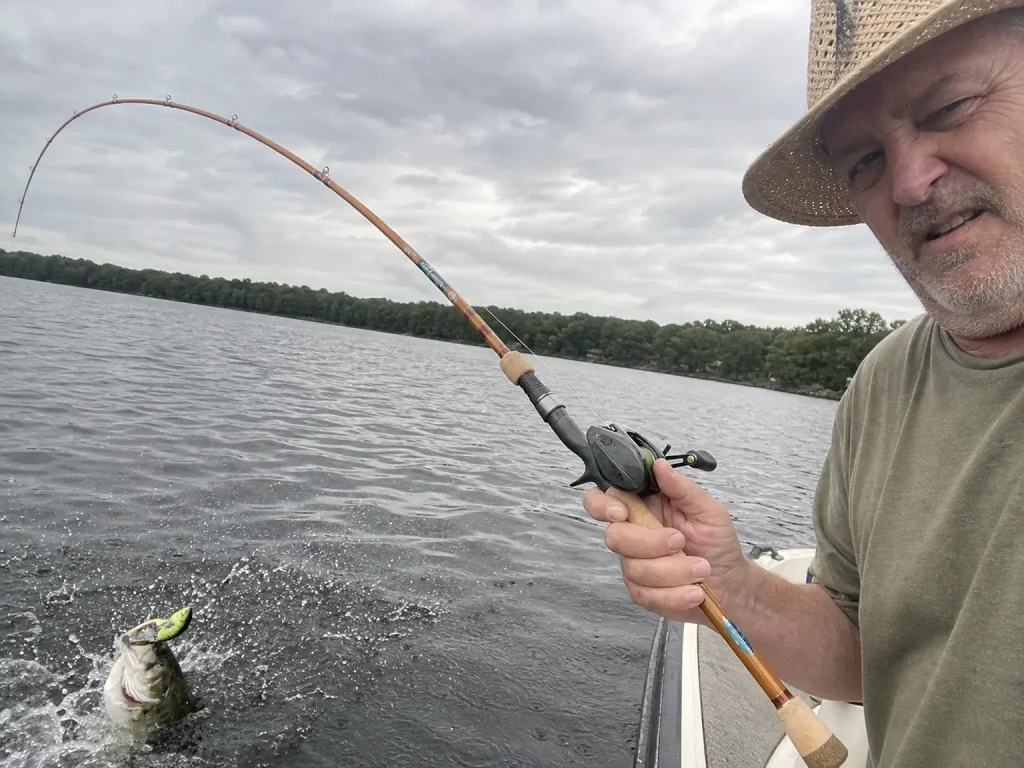
Picture a bass thrashing at the side of the boat with a crankbait hanging out of its jaw. Every head shake is a pressure swing. On a stiff blank, the rod stays put and the fish’s full weight lands on a couple of thin wire points, which either opens the hook or widens the hole it made. A glass rod bends and gives on that same head shake, then loads back up. The pressure never leaves the fish, and it never spikes either.
The Slow Bend Is the Feature
Everything about a glass blank that sounds like a weakness on paper works in your favor with moving baits. You do not need to feel a subtle tap, because a jerkbait or crankbait gets eaten on the retrieve and the fish hooks itself. The rod’s only job is to keep the fish attached until the net shows up. The slow bend also loads on the cast, which matters when you are throwing something wind-resistant all day. This is really an action question as much as a material one, so it is worth understanding moderate action versus fast action before you buy.
A Glass Rod Built for Moving Baits
The St. Croix Legend Glass Casting Rod in 7 ft 4 inch Honey Pearl, Medium-Heavy, Moderate Action is what a purpose-built fiberglass rod looks like when a company takes glass seriously instead of treating it as the cheap option. It is a premium buy, and it is aimed squarely at anglers who throw treble-hooked baits enough to justify a dedicated rod for it.
The mistake worth naming here is common and expensive: an angler upgrades to graphite because graphite is “the better rod,” starts losing fish boatside on crankbaits, and blames the hooks. The hooks were fine. The rod was wrong for the bait.
Composite Rods and the Middle Most Anglers Actually Need
Most people reading this own one or two rods and fish six different ways with them. For that angler the honest answer is neither material on its own. It is the blend, and it usually costs less than either specialist.
Where Composite Actually Wins
A composite rod mixes graphite and fiberglass in the same blank to land somewhere between feel and forgiveness. It is not a compromise product invented for the budget shelf. Several of the biggest tackle retailers treat it as a legitimate third choice, and plenty of experienced anglers fish composite by preference rather than by price.
Reaction Baits Live in the Middle
Spinnerbaits, chatterbaits and bladed jigs sit exactly on the line between the two camps. You want enough feel to know when the blade stops turning or the bait ticks a stump, and enough give to keep a fish pinned on a single upturned hook it grabbed at speed. Neither pure material handles that as well as a blend.
The One-Rod Angler’s Answer
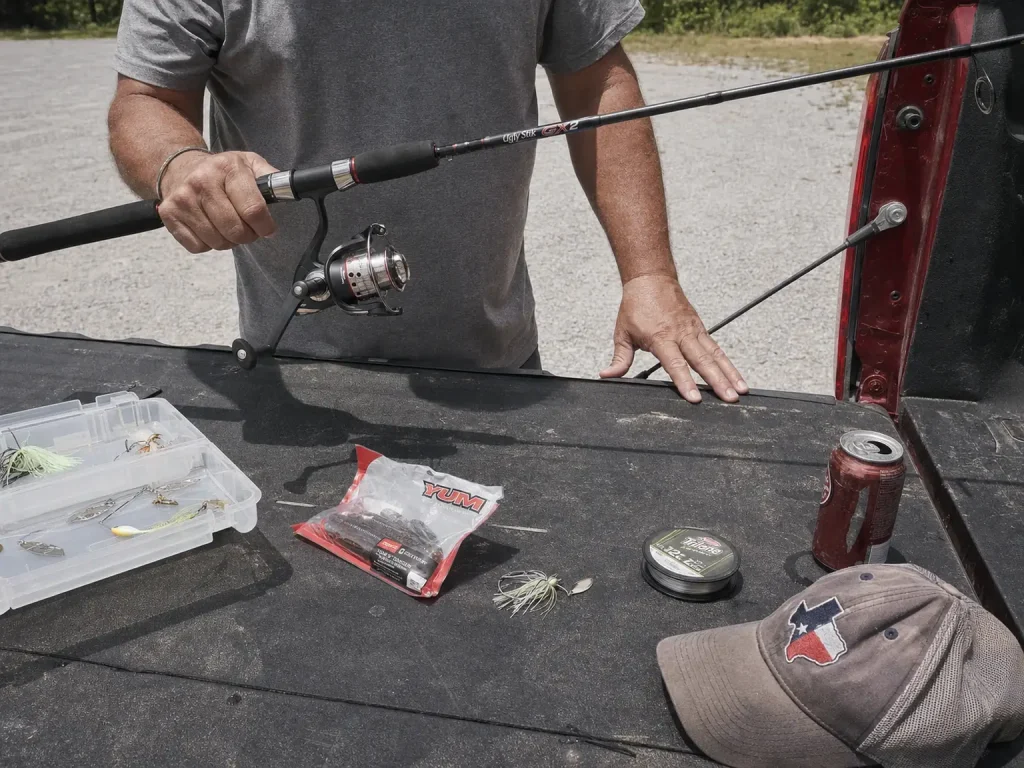
The Ugly Stik GX2 Spinning Combo in 7 ft 1-Piece is the plainest commercial example of the idea. Its Ugly Tech blank is a graphite and fiberglass mix, it comes as a combo so you are not sourcing a reel separately, it is budget-friendly, and it carries a ten-year warranty. That warranty is the interesting part, because a company only offers it when it expects you to abuse the product and lose.
There is a raw-material reason glass and composite sit cheaper on the rack before any brand markup. Glass fiber runs roughly $5 a pound, while carbon fiber runs somewhere around $8 to $14 a pound depending on grade. That gap follows the rod all the way to the shelf.
The anti-sell version: if you fish four techniques with one rod, a specialist blank in either material will fight you in three of them. Buy the blend and stop apologizing for it. Once you have the material sorted, the rest of the buying decision (length, power, action) is what actually separates two rods that look identical on the rack.
The Crappie Mistake That Costs You Fish All Morning
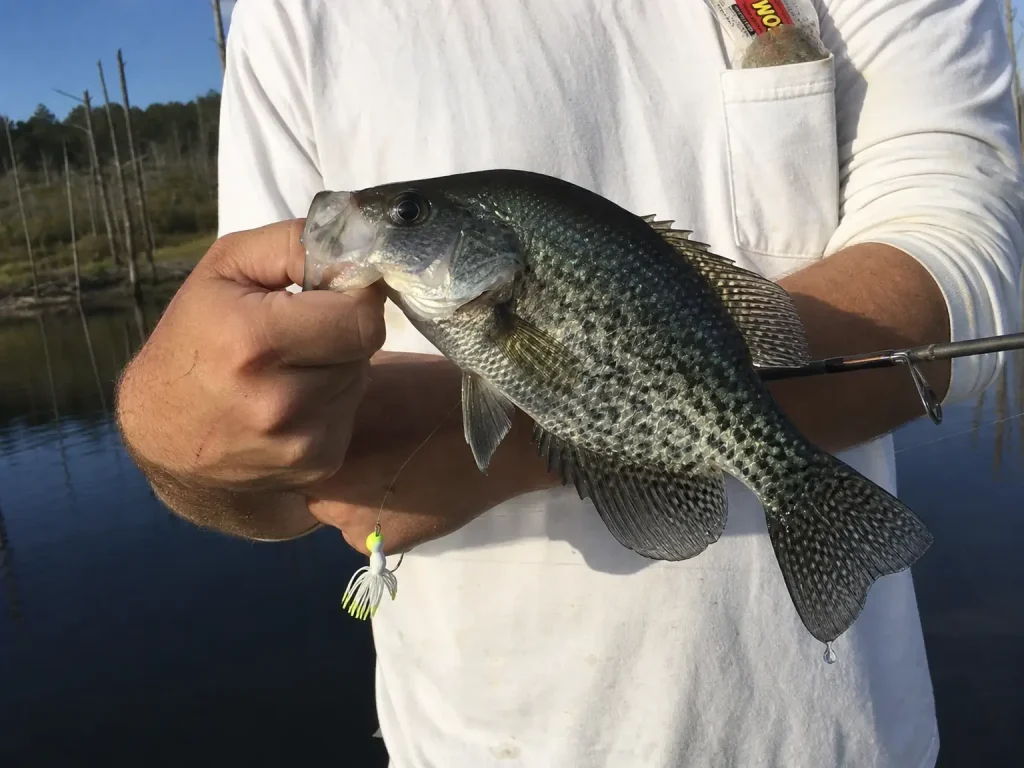
Bass anglers show up to crappie fishing with a bass hookset already loaded in their arms. It works exactly once per fish, in the wrong direction.
Why a Bass Hookset Loses Crappie
A crappie’s mouth is thin, papery membrane stretched over a small frame. There is barely anything there for a hook to hold. The single most repeated warning in crappie forums is that a hard, fast hookset on a stiff graphite rod pulls the hook straight back out through that membrane before the fish is ever really attached. The hook comes back clean, you assume you were too slow, and you swing harder on the next one, which makes it worse.
This is the specific reason panfish anglers stayed loyal to glass for decades after bass anglers moved on. It was never nostalgia. The soft, delayed bend of a glass blank turns a violent hookset into a firm pull, which is all a wire hook needs in a mouth that thin.
The diagnostic is easy to read once you know what you are looking at. If the hook keeps coming back clean and the fish keeps coming unbuttoned two feet from the boat, your timing is probably fine. The problem is that nothing in your setup is absorbing the initial shock, and a crappie jig rides such a fine wire hook that there is no margin for it.
The Sweep-Set Workaround
If you already own graphite and you are not buying a second rod this year, change the motion instead of the rod. Sweep the rod sideways and low rather than snapping it upward, keep the reel turning through the sweep, and let line tension do the work. A sweep-set applies the same total pressure over a longer window, which is functionally what a glass rod does for you automatically. It takes about three fish to retrain the reflex and it will keep working for the rest of your life.
Two adjustments make the workaround stick. Back the drag off until it slips under moderate hand pressure, because a locked drag on a stiff blank puts every bit of the head shake straight into that thin wire. And think hard about your line: monofilament stretches, and on a graphite panfish rod that stretch is doing the cushioning job the blank refuses to do. Braid on graphite is the harshest combination you can hand a crappie, which is exactly why the anglers who fish braid for them almost always pair it with a softer blank.
When to Just Buy the Glass Rod
If crappie or other panfish are more than an occasional detour for you, the workaround is not worth the mental overhead. A light glass or composite rod removes the problem entirely and costs less than the graphite rod you are trying to compensate for. This is one of the few places in fishing where the cheaper tool is genuinely the better tool.
What Breaks First and What It Costs to Fix
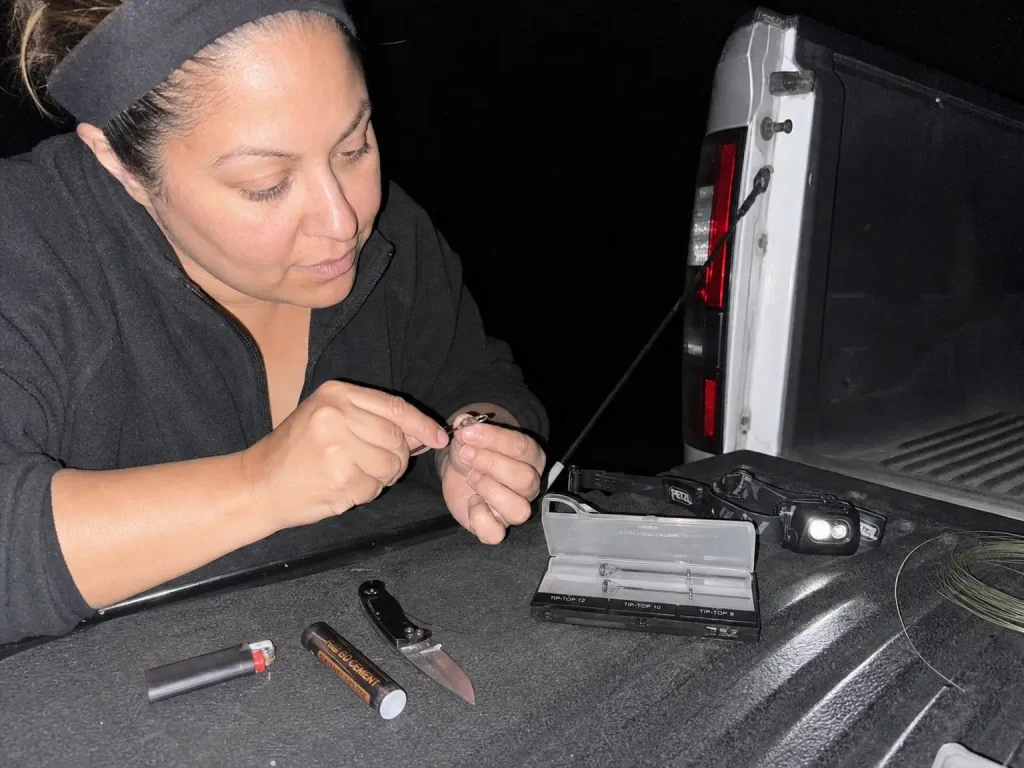
Nobody breaks a rod fighting a fish. They break it in a car door, a rod locker lid, a ceiling fan, a screen door, or by high-sticking a snag at a stupid angle. The material decides whether that moment ends your trip.
How Each Material Fails
Graphite is more prone to snapping under sudden impact or extreme bending. Fiberglass tolerates far more severe bending before it gives up, which is why you can bend a glass blank into most of a hoop and watch it spring back. Put that same load into a stiff blank and the energy goes looking for the weakest point in the structure.
The failure modes look different too. Graphite tends to go all at once and cleanly, a sharp crack and two pieces. Glass more often telegraphs trouble first, with a soft spot or a visible whitening in the blank before anything separates.
The Ten-Minute Tip Fix
Here is the part that saves people real money: a snapped tip is not a dead rod. A basic tip repair kit costs about ten dollars, contains an assortment of tip-top guides and a stick of hot-melt cement, and puts most rods back in service the same afternoon. Heat the cement, seat the new tip-top on the clean break, align it with the rest of the guides, let it set, and go fish. You lose an inch or two of length and gain a slightly faster action. Nobody has ever noticed on the water.
The mistake is treating a broken tip as a purchase decision. Plenty of perfectly good rods get retired to the garage over ten dollars and ten minutes of work.
The Nick You Didn’t Notice
Most catastrophic breaks are not really sudden. They start as a nick, a compression mark from a hook point, or a hairline crack from a knock the owner does not remember, and the blank fails there weeks later under an ordinary load. That is why a rod “randomly” snaps on a two-pound fish. Running your fingers along the blank before a trip and knowing how to spot a cracked blank before it lets go will catch almost all of them.
Buy the tip repair kit before you need it and leave it in the boat, not the garage. A snapped tip on the water is a trip-ender if the kit is forty minutes away and a ten-minute inconvenience if it is under the seat. The assortment packs cover several blank diameters, so one kit covers most of the rods you own.
Saltwater, Rod Lockers and the Abuse Test
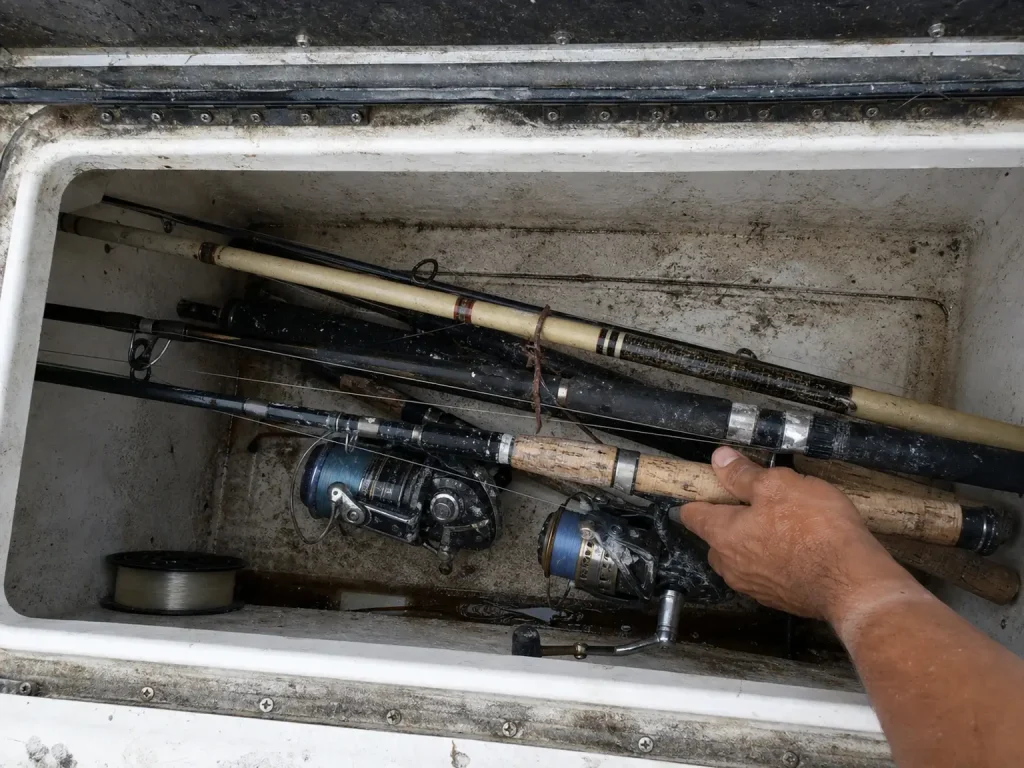
Every angler’s garage contains a boat rod locker rod, the one nobody babies, tossed in without a sock and expected to take whatever the day hands it. There is a reason it is almost never the expensive graphite stick.
The Boat-Locker Rod
The boat-locker rod is a real category with real requirements. It gets stacked under other rods, closed on, dragged out by the tip, and left wet. Traditionally that job goes to glass or composite, not because those materials are better rods but because you will fish them harder. A rod you are nervous about is a rod you fish carefully, and careful catches fewer fish.
What Salt Actually Attacks First
Neither blank material corrodes. Saltwater corrosion goes after the hardware first, every time, and by a wide margin: the guide frames, the inserts, the hook keeper, the reel seat threads and the reel itself. If you fish salt, the material debate matters far less than the component question, and the guide frames are what salt goes after is where that conversation actually lives.
Storing Either Material Without Losing It
A freshwater rinse and a dry storage spot will do more for either material than any purchase decision. The other habit worth building is not stacking a stiff blank loose in a truck bed. Most transport breaks happen to rods that were fine when they were loaded.
Rinse the guides and reel seat, not just the blank. Fresh water run over the outside of a rod does almost nothing for the places salt actually collects, which are the wraps under the guide feet and the threads on the reel seat. Ten extra seconds with the hose aimed at the hardware buys you years.
Is Grandpa’s Old Glass Rod Still Worth Fishing
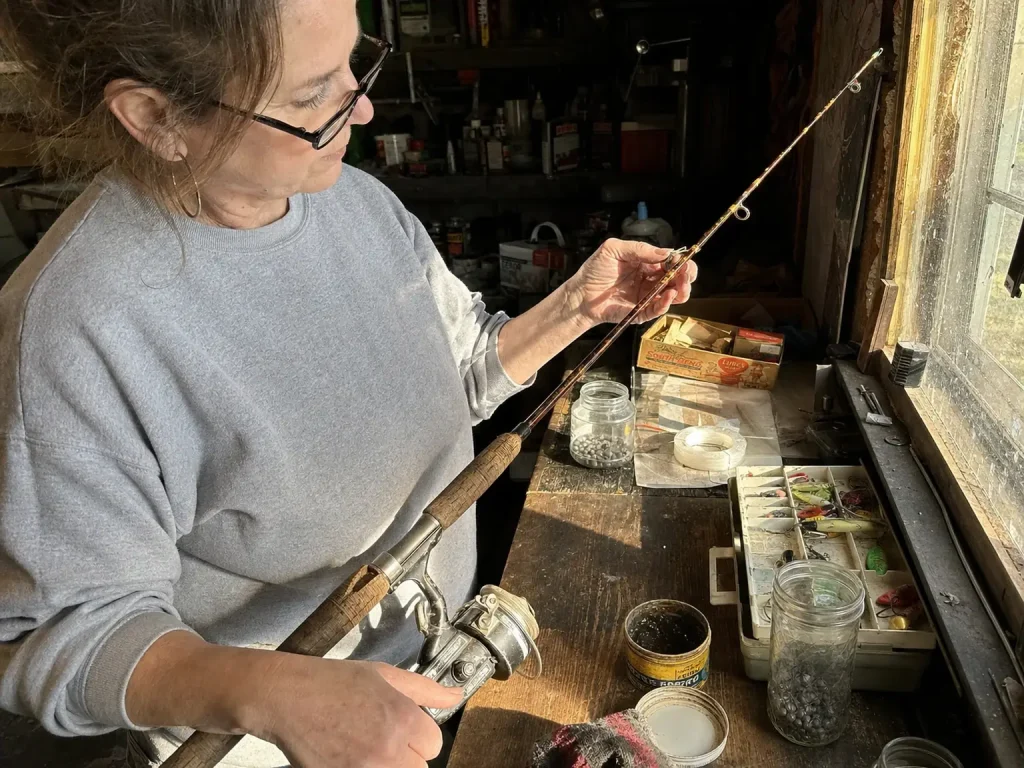
Almost everyone has one of these standing in a corner of the garage, inherited from a father or grandfather or bought for four dollars at an estate sale. Almost everyone assumes it is decoration. It usually is not.
What Actually Ages on an Old Rod
Forum testimony from long-running regional fishing boards is remarkably consistent on this point: solid glass rods built decades ago, some going back to the 1940s, are still structurally sound and still catching fish. Quality varied by era and by builder, so this is not a blanket guarantee, but the blank itself is rarely what fails.
What does age is everything attached to it. Monofilament that has been on a spool since the Clinton administration is brittle and unreliable. Cork dries and crumbles. Old reel grease turns to varnish. Guide inserts develop grooves that shred line. None of that is a reason to buy a new rod. All of it is a reason to spend an evening at the workbench.
The Four-Point Check Before You Fish It
Run a cotton swab or a nylon stocking through every guide. If it snags, the insert is grooved and needs replacing, which is a cheap fix. Flex the blank slowly through its range and look for whitening, soft spots or a crack near the ferrule. Check that the ferrule still seats tight, since a loose one will let a section fly off on a cast. Then strip the old line, clean and grease the reel, and put fresh line on. That is the whole checklist, and it costs a fraction of a new secondhand rod purchase, let alone a new one.
Where an Old Glass Rod Still Wins
An old glass rod is not a novelty once it is serviced. It is genuinely the right tool for crankbaits, for panfish, for handing to a kid learning to cast, and for anything with treble hooks. It is also the one rod you will never worry about scratching.
Worth keeping in perspective: America’s anglers pump $148 billion a year into the sportfishing economy, according to the American Sportfishing Association. A good chunk of that is gear people did not need. Asking “do I actually have to buy this” before the register instead of after is how you end up with money left for gas and bait. If the hand-me-down really is not a fit, the beginner rod breakdown is the place to start instead of guessing.
What High Modulus Marketing Doesn’t Tell You
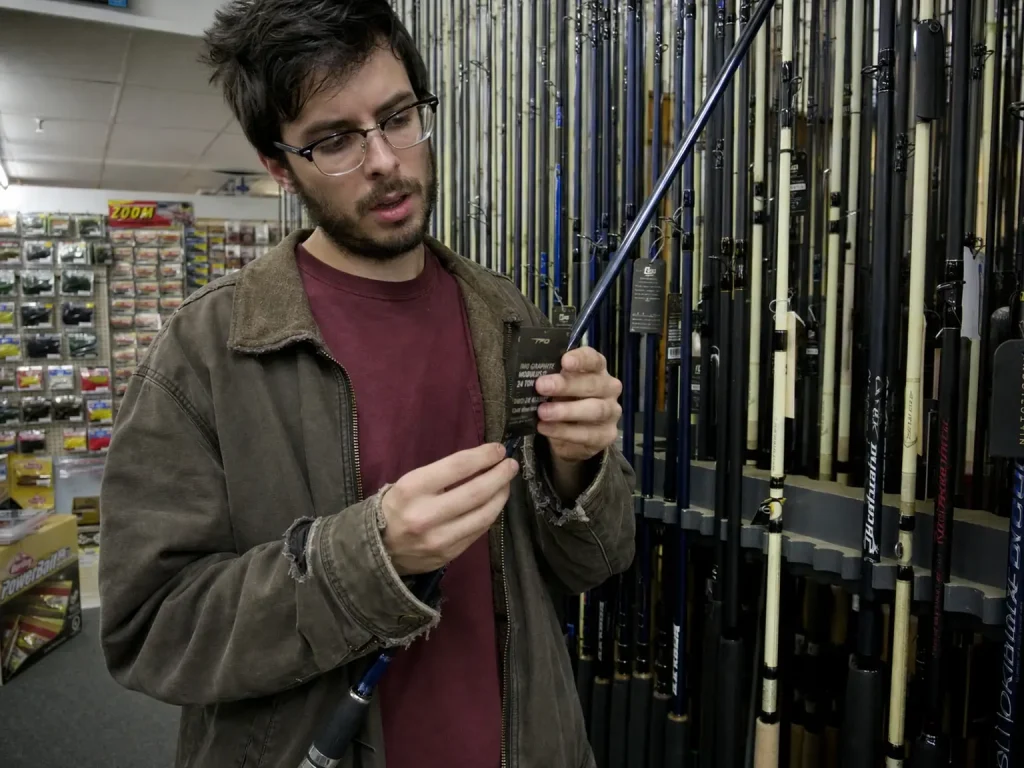
The number on the box is a sales tool first and a specification second. Nobody at the counter will say that out loud, but the forums have been saying it for years.
What the Number Actually Sells
Rod marketing leans hard on modulus ratings because a bigger number is easy to print and easy to compare. If you want what the IM6, IM7 and IM8 ratings actually mean, we break that down properly elsewhere. The part that belongs here is the pushback, and it comes from inside the industry as much as from forum veterans: modulus alone does not determine how good a rod is. Resin content, how the fibers are layered, and how well the whole thing is built matter more than the rating.
Think of the number as describing one ingredient rather than the finished dish. It tells you something about the stiffness of the fiber going into the blank. It tells you nothing about how much resin is holding that fiber together, how the layers are wrapped, how the blank tapers, or whether the guides were placed by someone who knew what they were doing. Two rods printed with the same rating can fish nothing alike.
Why a Cheaper Rod Often Out-Fishes the Spec Sheet
A high rating on an expensive blank is no guarantee it puts more fish in the boat than a well-built lower-rated rod at half the money, assuming the cheaper rod actually matches your technique. And buying stiffness you did not need is how you end up with the broomstick, all backbone and no feel, technically impressive and quietly frustrating.
The straight answer you occasionally get from an honest shop employee is that the inexpensive combo will catch the same fish doing the technique you actually plan to fish. It is a bad sales pitch and a good piece of advice.
The comparison that actually matters at the rack is not the number on two tags. It is whether the rod in your hand has the action and power the technique wants. A moderate-action glass rod with no rating printed anywhere will out-fish a top-rated graphite rod on crankbaits every single trip, and no spec sheet will ever tell you that.
Where the Money Is Better Spent
Match the material to your lure first. Then spend on the parts that fail: guides, inserts and the reel seat. A mid-priced blank with good hardware outlives a premium blank with cheap guides, and it will feel better in year three.
Warranty is the other line item worth reading, and it is the closest thing to an honest signal a manufacturer gives you. When a company puts a ten-year warranty behind a composite blank, it has done the math on how often that blank comes back. That is a more useful number than any rating printed on a hang tag, because the company is the one paying if it is wrong.
The Bottom Line
Your lure picks the blank. Single hooks and bottom contact want graphite. Treble hooks and moving baits want glass. One rod covering everything wants composite, and there is no shame in that column.
Buy for the abuse you will actually inflict, not the abuse you imagine. The expensive rod you protect catches fewer fish than the honest one you throw in the locker.
Check the garage before the register. An old glass rod with fresh line beats a new rod bought for the wrong technique, every single time.
Open your tackle box tonight and look at what is worn out, what is missing paint, what you tie on without thinking. That is your answer. Buy the rod that matches it, not the one with the most impressive sticker on the blank.
Frequently Asked Questions
01What is the best material for a fishing rod?
There is no single best material. Graphite wins for jigs, worms and single-hook bottom presentations; fiberglass wins for crankbaits, jerkbaits and treble hooks; composite splits the difference for anglers fishing one rod several ways.
02Do graphite rods break easier than fiberglass?
Under sudden impact or extreme bending, yes. Fiberglass bends and absorbs the same hit that snaps graphite. Almost none of those breaks happen fighting fish, and a clean snapped tip is usually a ten-minute repair rather than a dead rod.
03Which is better, carbon or fiberglass fishing rods?
Carbon fiber and graphite are the same thing in rod marketing, so this is the same question. Carbon gives you more transmitted feel and less weight. Fiberglass gives you a slower bend that holds treble hooks and survives more abuse.
04Are graphite rods a bad choice for beginners?
Not bad, just less forgiving, both in how it handles hooksets and in how it handles being dropped. Composite is the more common first-rod pick because it tolerates learning mistakes without giving up the feel a beginner needs.
05Can one rod cover both jigs and crankbaits?
A composite rod handles both better than either specialist, though it will not beat graphite on feel or glass on treble retention. If you fish both seriously and can only own one, take the small loss in each direction.
Risk Disclaimer: Fishing, boating, and all related outdoor activities involve inherent risks that
can lead to injury. The information provided on Master Fishing Mag is for educational and informational purposes
only. While we strive for accuracy, the information, techniques, and advice on gear and safety are not a substitute
for your own best judgment, local knowledge, and adherence to official regulations. Fishing regulations, including
seasons, size limits, and species restrictions, change frequently and vary by location. Always consult the latest
official regulations from your local fish and wildlife agency before heading out. Proper handling of hooks, knives,
and other sharp equipment is essential for safety. Furthermore, be aware of local fish consumption advisories. By
using this website, you agree that you are solely responsible for your own safety and for complying with all
applicable laws. Any reliance you place on our content is strictly at your own risk. Master Fishing Mag and its
authors will not be held liable for any injury, damage, or loss sustained in connection with the use of the
information herein.
Affiliate Disclosure: We are a participant in the Amazon Services LLC Associates Program, an
affiliate advertising program designed to provide a means for us to earn advertising fees by advertising and linking
to Amazon.com. As an Amazon Associate, we earn from qualifying purchases. We also participate in other affiliate
programs and may receive a commission on products purchased through our links, at no extra cost to you. Additional
terms are found in the terms of service.