In this article
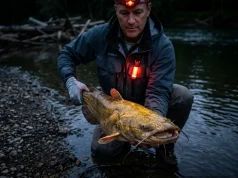
The slip-sinker hit the water at 2 AM, sank through six feet of murky pond water, and settled into something soft. Probably that layer of decomposing vegetation that had been burying my bait all summer. I waited. Nothing. My buddy, fishing ten yards away with the same rig and the same punch bait, had already landed three channel cats. Same bait, same spot, completely different results.
After two decades of chasing channel catfish across everything from private ponds to community lakes, I’ve learned the difference between the anglers who catch fish and the ones who just soak bait. It comes down to understanding three things: how catfish actually find your bait, why ponds create unique challenges, and which rigs solve those problems.
Here’s exactly what works—no theory, just the tactics I’ve seen put fish on the bank.
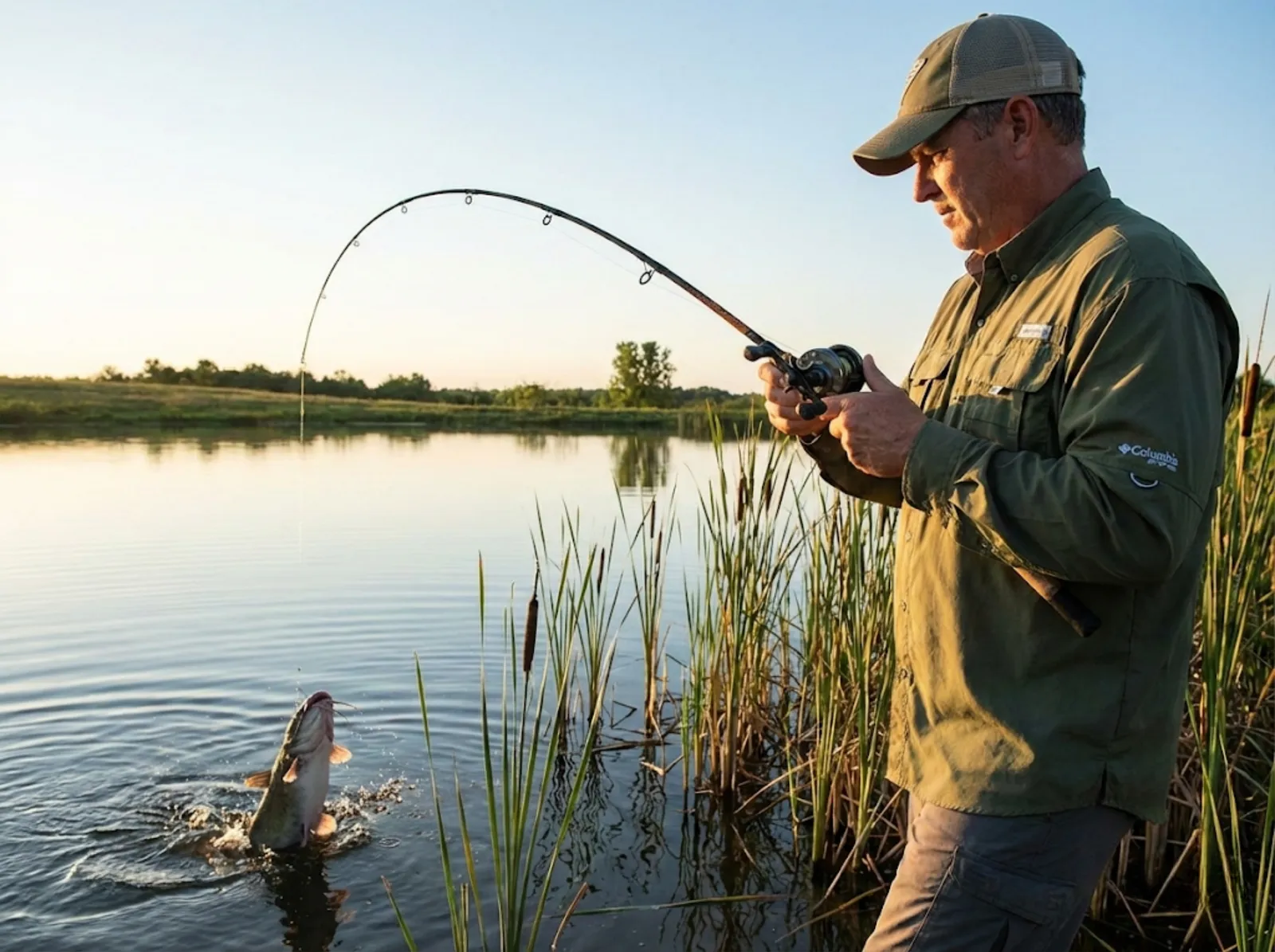
⚡ Quick Answer: Channel catfish in ponds and freshwater lakes are most effectively caught using a Santee Cooper rig with a peg float to lift bait above silty bottoms, fishing punch bait above 70°F or cut bait for trophy fish, and timing trips around falling barometric pressure. Focus on shoreline transitions and inflow areas, especially after rain.
Understanding How Channel Catfish Find Your Bait
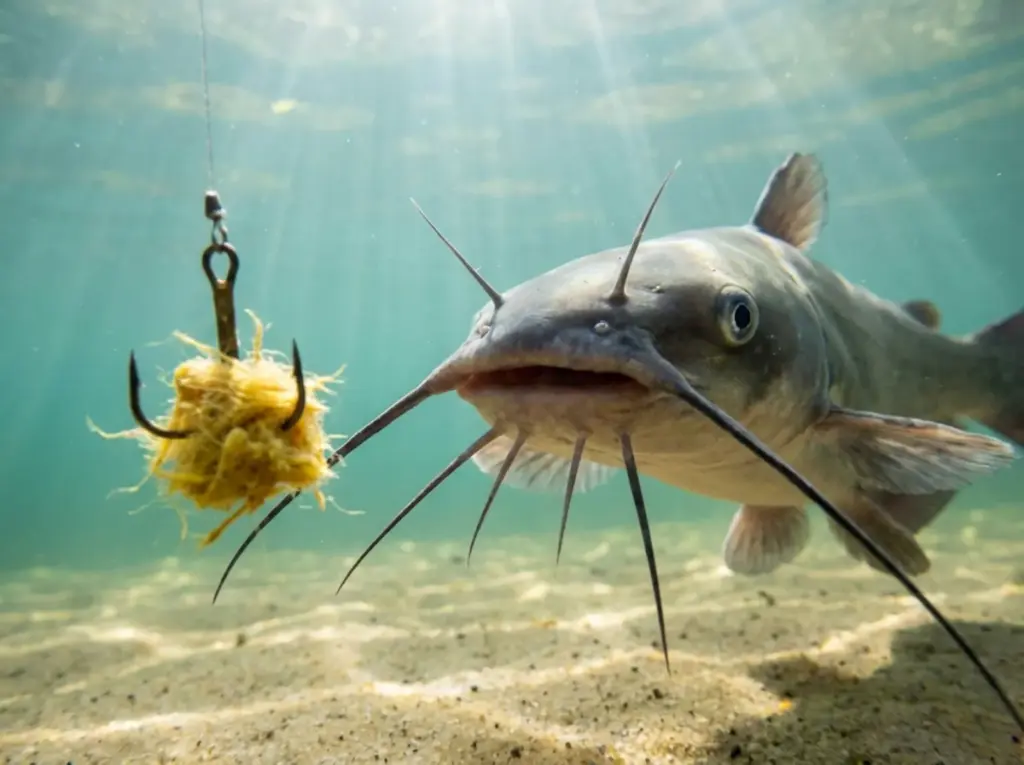
Forget everything you’ve heard about catfish being mindless bottom-dwellers. A channel catfish is essentially a swimming tongue, and understanding its sensory system changes how you approach every aspect of bait presentation.
The “Swimming Tongue” Phenomenon
Channel catfish possess between 100,000 and 180,000 taste buds distributed across their entire body—not just the barbels, but the fins, tail, and skin surface. When a catfish brushes past your bait with its flank, it’s literally tasting it. This is why you’ll sometimes feel a tap that doesn’t result in a hookup—the fish is sampling before committing.
The nares (nasal pits) contain over 140 olfactory folds and can detect scent at concentrations of one part per 100 million. That’s how they track a scent trail from hundreds of feet away in zero visibility. But here’s the key distinction: smell brings them close, taste confirms the meal.
According to University of Florida channel catfish research, specific L-alpha-amino acids trigger the most potent neural responses. This explains why stinkbaits and prepared baits work—they broadcast a complex amino acid profile that hits multiple receptor sites simultaneously, creating a louder chemical signal than single-ingredient offerings.
Pro tip: If you’re getting bumps but no commits, your bait might not be passing the taste test. Switch to a different amino acid profile—go from cheese-based dip bait to blood-based punch bait, or add a piece of nightcrawler to your hook.
How Barbels Work—And When They Don’t
The eight barbels serve as the final confirmation sensors, densely packed with taste receptors for close-range prey identification. In turbid water, they become even more critical as olfactory detection range decreases. But temperature matters: below 50°F, chemoreception response time slows dramatically, which is why winter catfishing requires longer soak times.
What most anglers don’t know is that channel catfish also hear better than most gamefish. The Weberian ossicles—bone structures connecting the swim bladder to the inner ear—give them hearing range up to 13,000 Hz. This is why lure fishing works for catfish, but we’ll get to that later.
When you understand how scent attractants trigger strikes from inactive fish, you start thinking about bait selection as chemistry, not tradition.
Why Ponds Are Different: The Still-Water Playbook
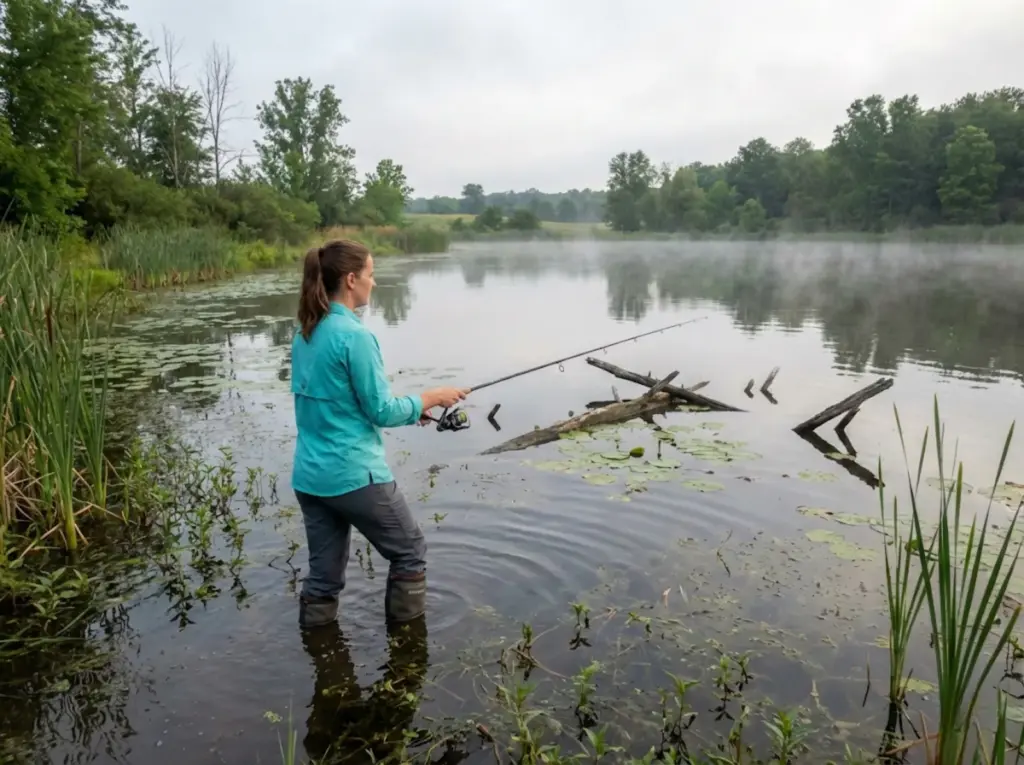
Pond catfishing presents challenges you won’t find in rivers or large lakes. Without current to disperse scent, everything works differently—and most anglers never adjust.
The Muck Problem That Buries Your Bait
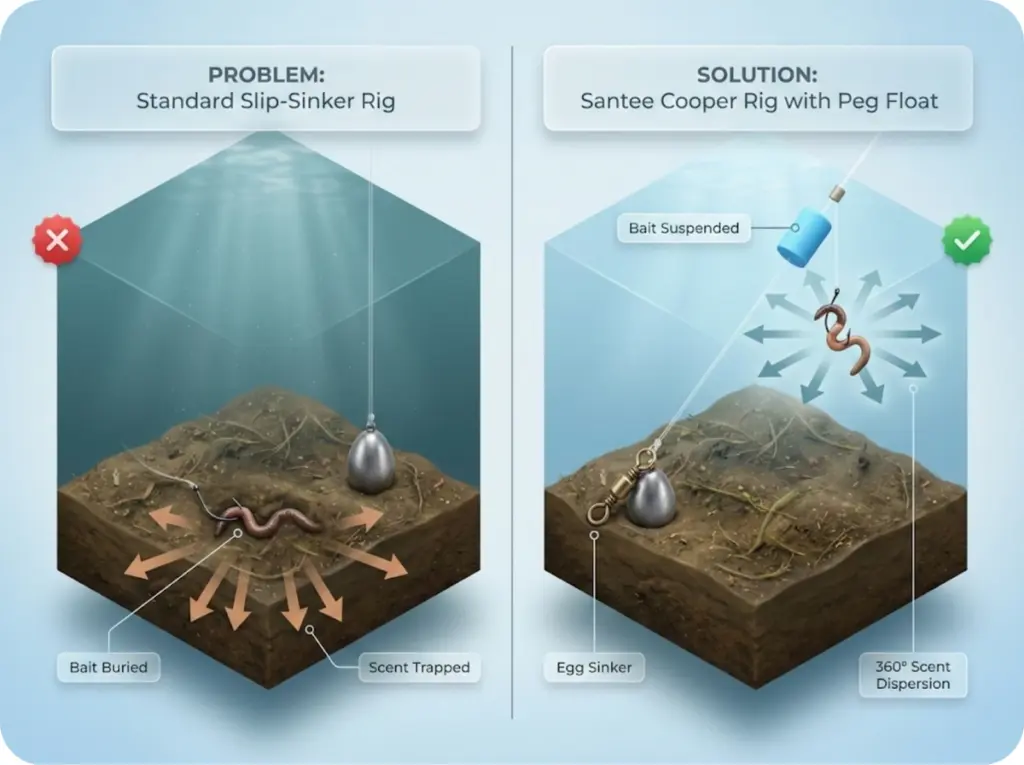
Managed ponds and farm ponds accumulate a layer of soft silt, decaying vegetation, and algae that can bury your bait within minutes of it hitting bottom. A buried bait is a dead bait—the scent gets trapped in one direction instead of broadcasting 360 degrees.
Older ponds with heavy algae blooms are the worst offenders. If your line goes completely slack after casting and never tightens up, your offering is already buried. You’re not fishing—you’re composting.
Thermal Stratification and the Dead Zone
During summer, ponds frequently stratify into distinct layers: the warm, oxygenated epilimnion on top, and the cooler, potentially anoxic hypolimnion below. Channel catfish require dissolved oxygen levels above 4.0 mg/L to stay active. Drop below the thermocline and you’re fishing dead water.
This explains why summer catfish often suspend mid-column or move to shoreline shallows at night. The deepest holes in your pond might be dead zones from June through September. If you understand how thermoclines affect fish location, you’ll stop wasting time fishing water where cats can’t survive.
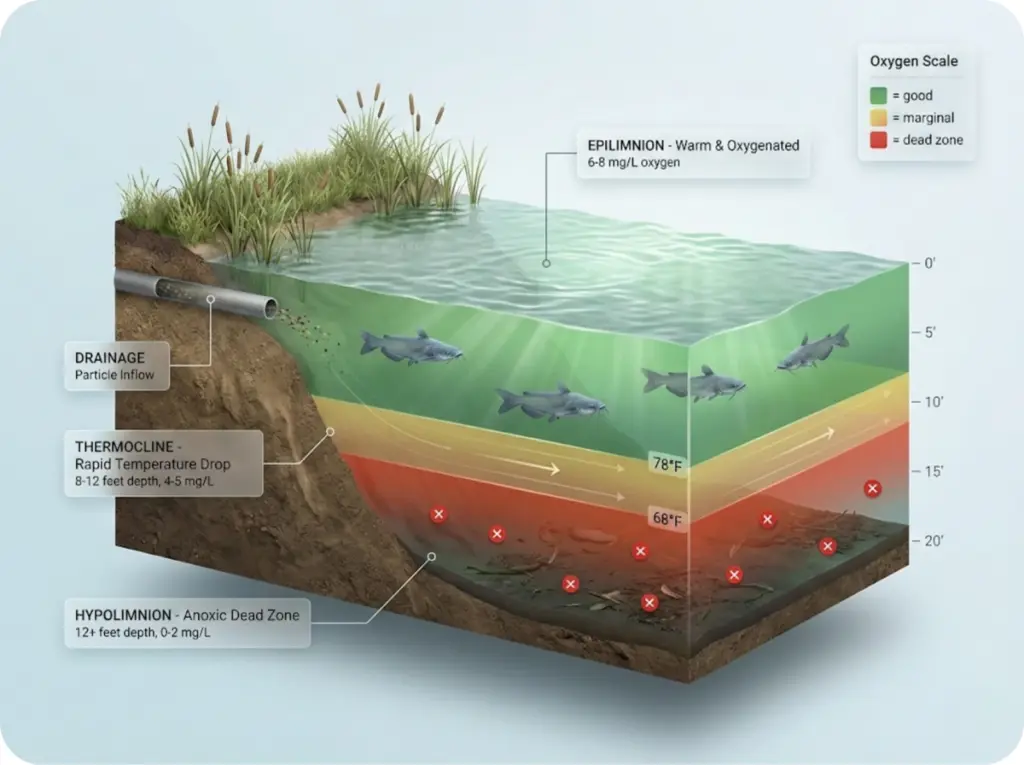
Summer thunderstorms serve as major feeding triggers. Heavy rain flushes insects, terrestrial worms, and organic nutrients through drainage pipes and feeder streams. Channel catfish stack up at these inflow points within hours—this post-rain activation pattern is one of the most reliable bites of the year.
Rigging for Visibility: Matching the Setup to the Environment
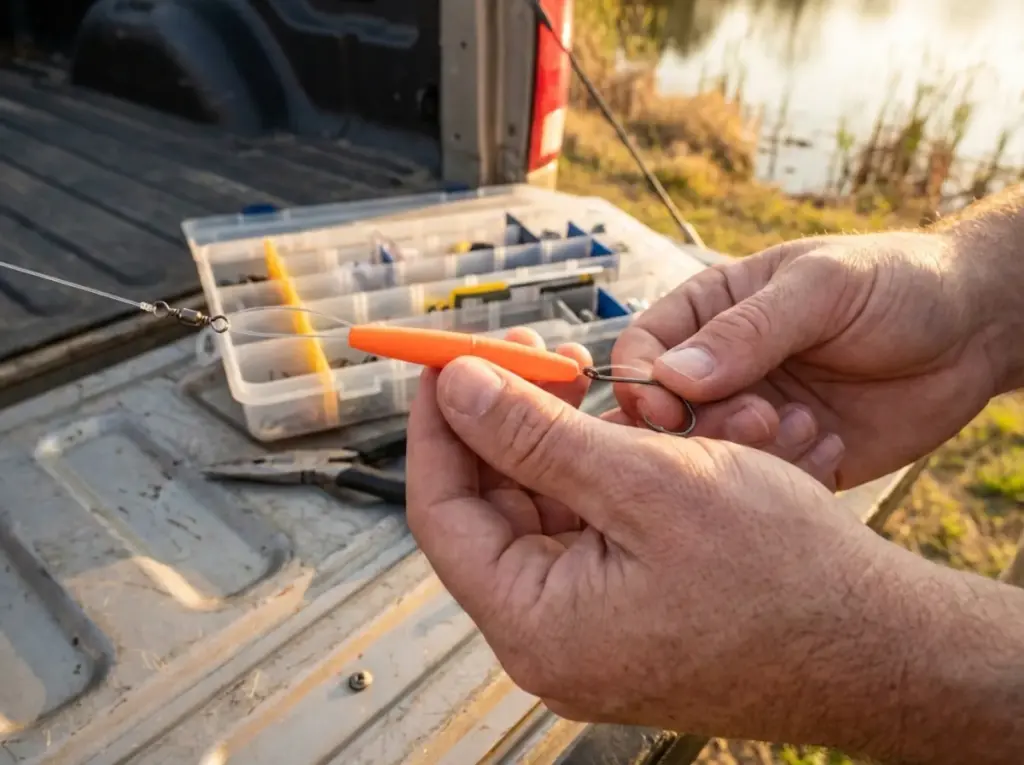
The difference between catching fish and just fishing often comes down to how your bait sits in the water column. Each rig solves a specific problem—choose based on bottom composition and conditions.
The Slip-Sinker (Carolina) Rig
The foundational catfish rig: mainline (10–15 lb mono or braid) through an egg sinker (1/4–1/2 oz), stopped by a barrel swivel, followed by 12–24 inches of fluorocarbon leader to your hook. The sliding weight reduces resistance during the take, so catfish don’t feel tension before they commit.
The slack-line technique matters here. After casting, feed 2–3 feet of slack from your rod tip. This lets the catfish inhale and turn with the bait before hitting resistance. Too many anglers fish tight lines and miss the softer takes.
For a deeper understanding of the physics behind why fish can’t resist the Carolina rig, the key is that free-swimming bait triggers commitment where dragging bait triggers caution.
The Santee Cooper Rig (The Muck-Beater)
This is the setup that changed my pond fishing success rate overnight. Add a small peg float to your leader, 4–10 inches above the hook. This lifts your bait above the bottom silt and creates 360-degree scent dispersal instead of one-directional broadcast.
In really silty ponds, I run a 10–12 inch leader with the largest peg float that won’t drag down my bait. That visibility makes all the difference between hungry catfish finding your offering and swimming right past it.
Pro tip: If you’re fishing a new pond, drag a bare hook across the bottom first. If it comes up covered in black muck or vegetation, you need the Santee Cooper—the standard slip sinker rig will fail.
The Slip-Float System for Precision Depth
The slip bobber rig allows suspending bait at exact depths—critical over weed lines or mid-column in stratified ponds. High-visibility slip floats are more sensitive than round bobbers, allowing fish to swim with the bait without feeling buoyancy resistance.
Wind becomes your ally with this rig. A light breeze drifts your float across the pond, covering more water than any static presentation. This is particularly effective for night fishing when channel catfish suspend above the thermocline.
Bait Selection: Chemistry Over Opinion
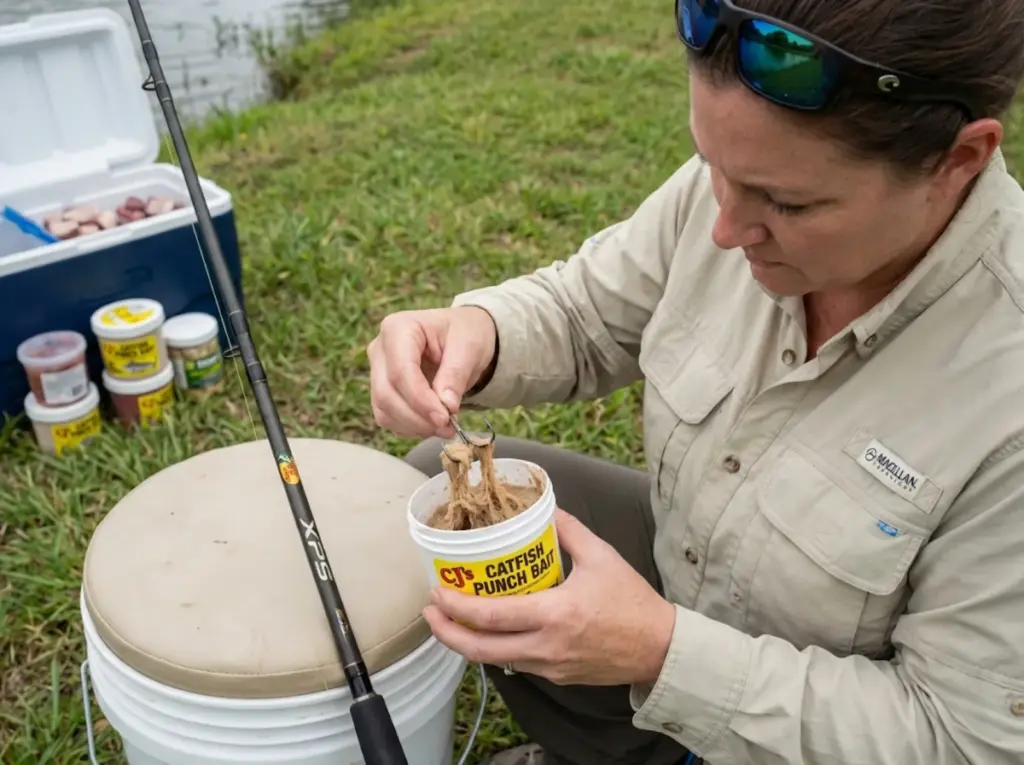
The endless bait debates miss the point. Effective catfish bait is about matching chemistry to conditions—water temperature, target size, and scent solubility in still water.
Prepared Baits: Dip vs. Punch
Dip baits are thin and fluid, typically cheese-based. They work best below 65°F and require textured tubes or sponges to stay on the hook. Punch baits are thick, pasty, and fibrous—punch a treble hook directly into the tub and go. They excel above 70°F because they stay on the hook in warm water and ooze attractants longer.
Temperature drives this choice. Even the best dip bait will slide off your hook on an 85-degree summer afternoon. That’s when CJ’s Catfish Punch Bait or Sudden Impact Fiber Bait become non-negotiable.
Natural Cut Bait for Trophy Fish
For channel catfish over 10 pounds, fresh natural baits consistently outperform synthetics. Bluegill heads (where legal) are premier—high blood content, durable on the hook, and loaded with the amino acids big fish key on. If you’re confused about why catfish reject degraded cut bait, it comes down to freshness. Fresh bait is live bait from a chemical perspective.
Chicken liver is a classic for good reason—high in iron and amino acids. But it’s notoriously hard to keep on a hook. The old-timer trick: wrap a small section in pantyhose or elastic thread. Keeps the liver secure for long-distance casts and multiple fish.
Pro tip: Keep cut baits on ice. Warm bait loses its chemical punch quickly. The difference between a cooler-fresh bluegill head and one that’s been sitting out for an hour is the difference between getting bit and getting skunked.
Grocery Store Hacks: The Science of DIY Attractants
Cheap grocery store baits work because they’re loaded with the right chemistry. Hot dogs are nitrate-rich; garlic powder extends aromatic range. The Kool-Aid method—soaking hot dogs or chicken in strawberry or cherry Kool-Aid—combines salt, sugar, and bright coloring to trigger multiple sensory pathways.
Some anglers add MSG (monosodium glutamate) to their baits. It mimics the amino acids released by stressed prey and can intensify feeding response. Not necessary, but it’s a real technique that works.
Timing the Bite: Weather Patterns and the Rule of 4

Time of day matters. Nocturnal feeding patterns make night fishing productive. But barometric pressure beats the clock every time—fish the right pressure window and you’ll catch more in two hours than most anglers catch all weekend.
Barometric Pressure and the Swim Bladder Response
Fish swim bladders are pressure-sensitive. As a storm approaches and the barometer falls, reduced pressure on the bladder triggers aggressive feeding. This pre-storm window—typically 24–48 hours before a front—creates some of the easiest fishing you’ll find.
According to Kestrel’s research on barometric pressure effects on fish behavior, the flip side hurts: rising pressure after a front (“bluebird skies”) shuts down the bite. Fish retreat to depth or dense cover to compensate for internal discomfort. If you understand using cloud formations to predict storms, you can read the sky for your next fishing window.
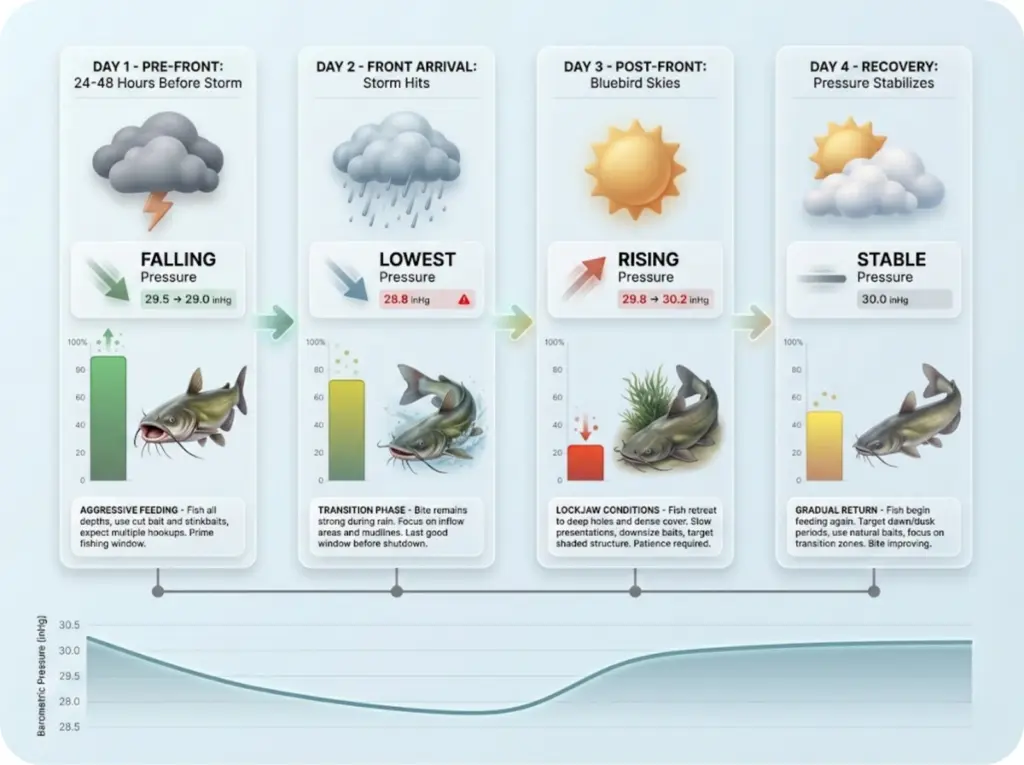
The Rule of 4: Post-Front Recovery Timeline
Professional catfish guide Brad Durick documented a systematic four-day adjustment period that fish undergo after major weather shifts. Here’s the pattern:
Day 1: Fish are dormant, tucked into deep holes or thick cover. Bites are nearly non-existent.
Day 2: Fish move to secondary edges. You’ll get light, pecking bites with few hookups.
Day 3: Activity increases at heads of holes and drop-offs. Feeding becomes more consistent.
Day 4: Normal bite returns. Fish actively hunt and commit to baits with force.
Plan your trips for Day 4 after a cold front whenever possible. If you have to fish Day 1 or 2, downsize baits 10–30% and expect to wait significantly longer between bites.
Lure Fishing for Channel Catfish: The Overlooked Angle
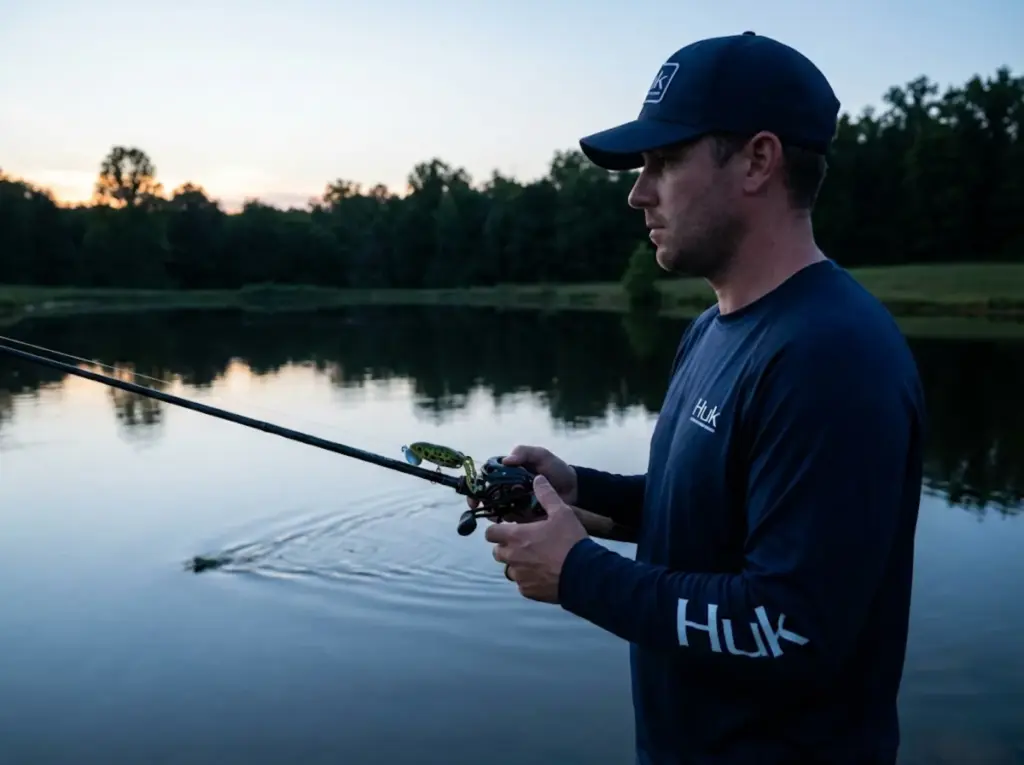
Here’s the section most catfish fishing content skips entirely. Channel catfish will hit lures—and in specific conditions, artificials outperform bait.
Why Vibration Works When Scent Fails
The lateral line detects vibrations in the 1–200 cycles per second range, allowing channel catfish to hunt in complete darkness or heavy silt where scent trails dissipate quickly. Lures that displace water or produce distinct thumping sounds trigger predatory instincts independent of smell.
This approach works best during low-light periods when cats actively hunt rather than scavenge, and in murky water where scent trails break up too fast for effective tracking. Understanding how fish use the lateral line to detect vibration opens up a whole new approach.
Hardware That Catches: Spinners and Topwaters
In-line spinners in size #3–5 (like a Mepps Spinner) produce blade vibrations that mimic struggling baitfish. Cast and retrieve just fast enough to keep the blade turning. It’s a proven channel cat technique that most anglers never try.
Surface lures work too. An Arbogast Jitterbug or River2Sea Whopper Plopper uses surface disruption to call fish from depth. At night, the steady gurgle of a Jitterbug provides a trackable signal that catfish home in on.
The best hybrid approach: tip a 1/8 oz hair jig with a small piece of nightcrawler or minnow head. Combines vibration with localized scent and significantly increases hookup rates.
Conclusion
Channel catfish in ponds aren’t mysterious—they’re predictable once you understand the system. Chemoreception means leveraging their 180,000 taste buds with high-solubility baits. Rigging physics means getting your offering visible above the muck with Santee Cooper or slip float setups. And barometric pressure timing means targeting falling pressure windows or waiting for Day 4 post-front.
The next time you’re standing on a pond bank at dusk watching your slip-sinker disappear into murky water, you’ll know exactly what’s happening beneath the surface—and why that channel catfish is about to commit.
Try the Santee Cooper rig on your next silty pond trip. The first time you feel a cat slam a bait that would have been buried using a standard slip sinker rig, you’ll understand why rigging physics matters as much as bait chemistry.
FAQ
What is the best bait for channel catfish in ponds?
Punch baits work best for numbers in water above 70°F. For trophy channel catfish over 10 pounds, fresh cut bait like bluegill or shad consistently outperforms prepared options. The key is high amino acid content that triggers the chemoreception system.
What is the best time of day to catch channel catfish?
Night fishing is most productive due to nocturnal feeding patterns. However, the 24–48 hours before a storm (falling barometric pressure) creates aggressive daytime feeding windows. Post-front bluebird skies shut down the bite regardless of time.
How deep do channel catfish feed in ponds?
In summer, channel catfish stay above the thermocline where dissolved oxygen exceeds 4.0 mg/L—often 6–12 feet in typical farm ponds. At night, they move shallower to feed along shoreline transitions. If bottom water is anoxic, fish suspend mid-column.
Why does my bait catch nothing while others are landing fish?
Your bait is likely buried in pond muck. Switch to a Santee Cooper rig with a peg float to lift the offering 4–10 inches off bottom. This creates 360-degree scent dispersal instead of one-directional signal from a buried bait.
Can you catch channel catfish on lures?
Yes. In-line spinners, topwater plugs like the Arbogast Jitterbug, and scent-tipped jigs all work. Channel catfish have a lateral line system that detects vibrations in total darkness. Lures are most effective at night or in heavy silt where scent trails dissipate quickly.
Risk Disclaimer: Fishing, boating, and all related outdoor activities involve inherent risks that
can lead to injury. The information provided on Master Fishing Mag is for educational and informational purposes
only. While we strive for accuracy, the information, techniques, and advice on gear and safety are not a substitute
for your own best judgment, local knowledge, and adherence to official regulations. Fishing regulations, including
seasons, size limits, and species restrictions, change frequently and vary by location. Always consult the latest
official regulations from your local fish and wildlife agency before heading out. Proper handling of hooks, knives,
and other sharp equipment is essential for safety. Furthermore, be aware of local fish consumption advisories. By
using this website, you agree that you are solely responsible for your own safety and for complying with all
applicable laws. Any reliance you place on our content is strictly at your own risk. Master Fishing Mag and its
authors will not be held liable for any injury, damage, or loss sustained in connection with the use of the
information herein.
Affiliate Disclosure: We are a participant in the Amazon Services LLC Associates Program, an
affiliate advertising program designed to provide a means for us to earn advertising fees by advertising and linking
to Amazon.com. As an Amazon Associate, we earn from qualifying purchases. We also participate in other affiliate
programs and may receive a commission on products purchased through our links, at no extra cost to you. Additional
terms are found in the terms of service.