
In this article
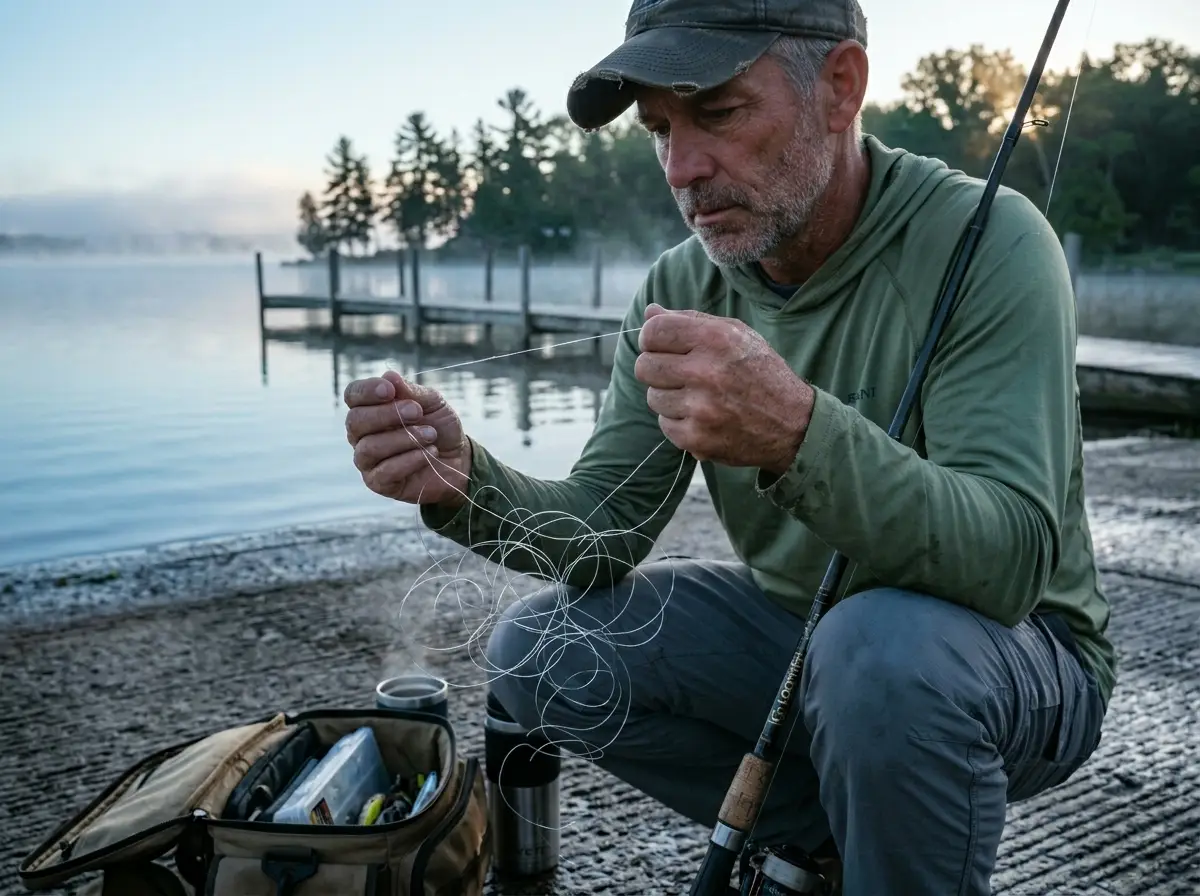
You pull line off the reel at the boat ramp and it springs into corkscrews, piling on the deck like a spring out of a busted clock. The first cast falls short, the second backlashes, and you spend the morning picking at tangles instead of fishing. That’s fishing line memory, and ask anyone who’s yanked a reel off the garage shelf in spring and they’ll tell you the line comes off in a slinky while the reel takes the blame it doesn’t deserve. Your line is plastic, and plastic holds whatever shape you leave it in. Here’s what actually causes the coiling, the five-minute fix for the morning of a trip, and how to stop fighting it for good.
What Fishing Line Memory Is and How to Spot It
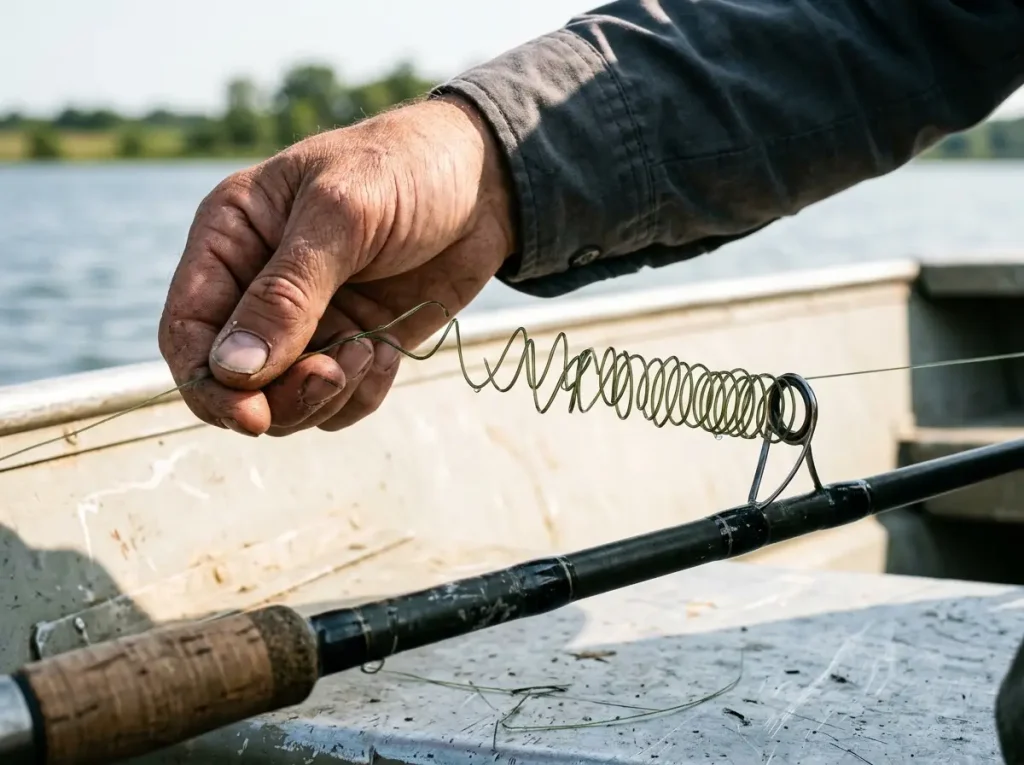
Line memory is your line keeping the coiled shape it took while wound on the spool. Anglers call it the slinky effect, and once you know the feel you’ll spot it before you see it. If you want the bigger picture on how the stuff on your reel actually behaves, our complete guide to fishing line covers the whole family; this article is about the one problem that drives people crazy. The short version: the line takes a set, and a set line fishes worse in every way that matters.
The slinky effect
Pull a few feet off a reel that’s been sitting and watch what it does. Limp, fresh line falls straight. Line with memory springs into tight, even coils and stubborn curls that hang in the air and won’t lie flat. The tighter the coil and the harder it holds, the worse the set. It shows up most on a spinning reel or spincasting reel, where line peels off the reel spool face in loops, and least on a baitcasting reel or levelwind reel, where the spool turns with the cast.
How memory wrecks your casts
Coiled line robs you three ways. It cuts casting distance, because every coil drags against the rod guides and bleeds off speed. It throws wind knots and snarls, since loose loops tangle the moment they leave the spool. And it wrecks accuracy and presentation, because line that’s fighting itself never tracks straight to the target. You feel it as a gritty tick through the guides on the first few casts, like the line is slapping its way out.
Memory vs line twist
Here’s where people go wrong: memory and line twist are two different problems, and the fix for one won’t touch the other. Memory is the coiled set from sitting on the spool. Twist is rotational, usually from reeling against the drag or a lure spinning on the retrieve, and it shows up as the line corkscrewing back on itself in a slack section. If your trouble is the corkscrewing pigtails that form mid-line as you fish, that’s the line twist that plagues spinning reels, not memory. Sort out which one you’ve got before you reach for a fix.
What Actually Causes Line Memory
Most guides tell you the line “takes a set” and stop there. That’s true, but it doesn’t help you prevent it. Understanding the why is what makes every prevention tip below click into place, so it’s worth two minutes.
Your line is plastic
Nylon monofilament and fluorocarbon are polymers, which is a fancy way of saying plastic. Hold any plastic in a bent shape, under tension, long enough, and it slowly learns the bend. The technical name is stress relaxation: the internal chains in the polymer creep and reorganize to relieve the strain, so the curved shape on the spool becomes the line’s new resting state. Same reason a garden hose coiled all winter won’t lie flat in spring. Three dials control how bad it gets: a tighter bend radius, more heat, and more time all push the set deeper and more permanent.
The small-spool and heavy-line trap
This is the one almost nobody warns you about. Memory gets dramatically worse with line diameter, so it’s a far bigger problem on line testing 10 pounds and up. Cram thick, heavier pound-test line onto an undersized spinning spool and you’ve built a memory factory, because the tight wraps near the arbor force the smallest, hardest bend radius there is. If you don’t truly need 12-pound mono, lighter line coils less and casts better. Match the line to the job instead of over-spooling out of habit.
Heat, sun, and time
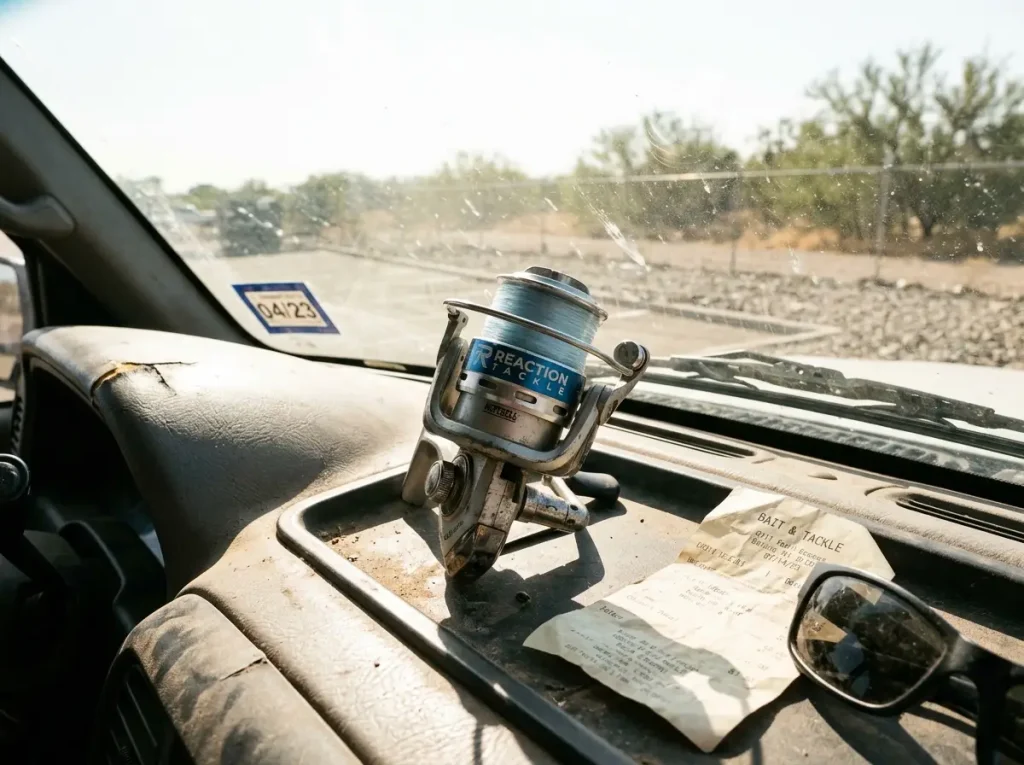
Where you store the reel matters as much as how you spool it. A hot truck cab or a sunny window bakes the set in and accelerates everything. Worse, UV light breaks down the polymer chains that give line its strength, and that damage doesn’t reverse. So a reel that lives on the dashboard isn’t just coiling harder, it’s getting weaker at the same time. Cool and dark is the rule, and we’ll come back to it in prevention.
Which Line Type Fights Memory Best
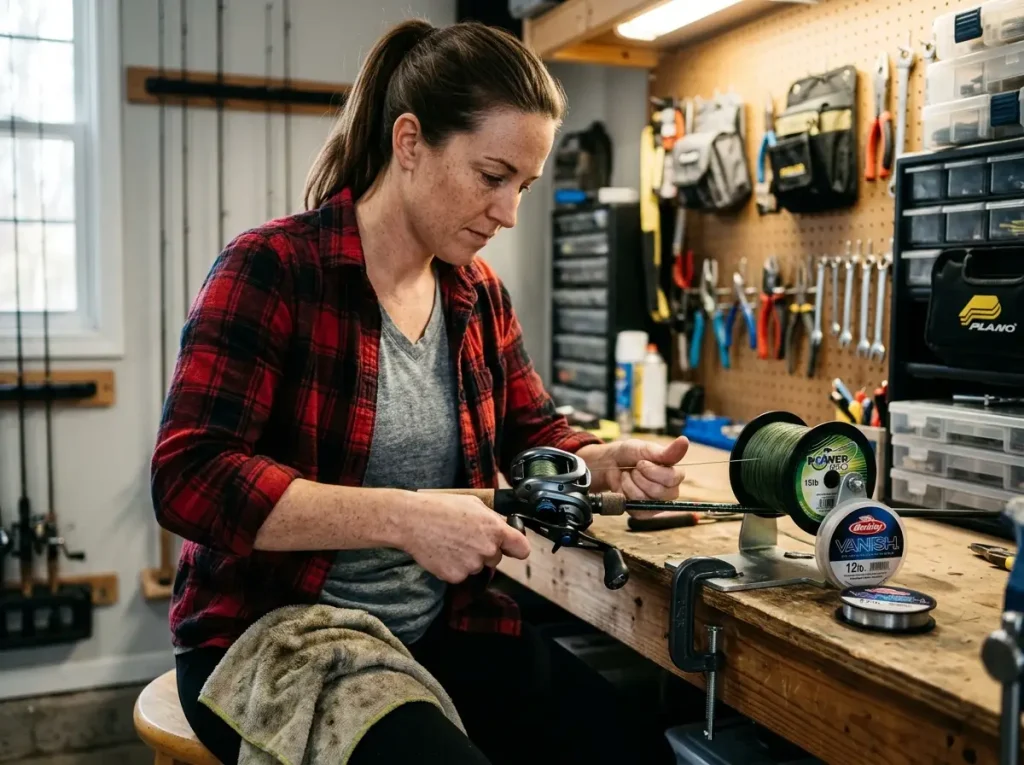
The single biggest lever you have is the line you choose. Most memory headaches disappear the day you stop fishing straight fluoro on a spinning reel, and understanding how braid, mono, and fluorocarbon really compare turns that into a real game plan instead of a guess.
Braid Has Effectively Zero Memory
Braided line, sometimes called superline, barely has any memory at all. It’s woven from fibers rather than extruded as a single plastic strand, so there are no slinky coils to fight, even after a long sit on the spool. Run a quality braided line like the PowerPro Spectra braid as your main line and the memory question mostly goes away. That’s the whole appeal for spinning anglers who are tired of picking loops on the first cast of every trip.
The guide move is braid main line plus a short mono or fluoro leader. The braid carries zero memory, and the leader is only a few feet long, so the memory-prone stuff never sits on the spool long enough to coil. You get the casting and the invisibility without the slinky.
Mono Is the Middle Ground
Monofilament sits in the middle. It coils, but it’s the most forgiving line to live with, because it’s cheap, it handles well, and it responds to the warm-water trick better than anything else. Reach for limp line specifically: bargain-bin bulk mono and stiff line coil the worst, while a supple low-memory mono casts soft and respools without a fight. Mono is also the line most worth salvaging when it sets, which is why the removal tricks below are aimed mostly at it.
Fluorocarbon Belongs on a Short Leader
Fluorocarbon takes the worst set of the three. Water can’t soften it from the inside the way it can with mono, and its higher density makes it spring off the spool in stiff, angular loops rather than soft coils. Straight fluoro on a spinning reel is borderline unfishable for exactly that reason. The honest answer is to stop using it as a main line on spinning gear and run it where it shines: as a short leader. A few feet of Berkley Vanish fluorocarbon leader tied to a braid main never sits long enough to take a meaningful set, so you get the abrasion resistance and low visibility without the coiling penalty.
How to Remove Line Memory Right Now
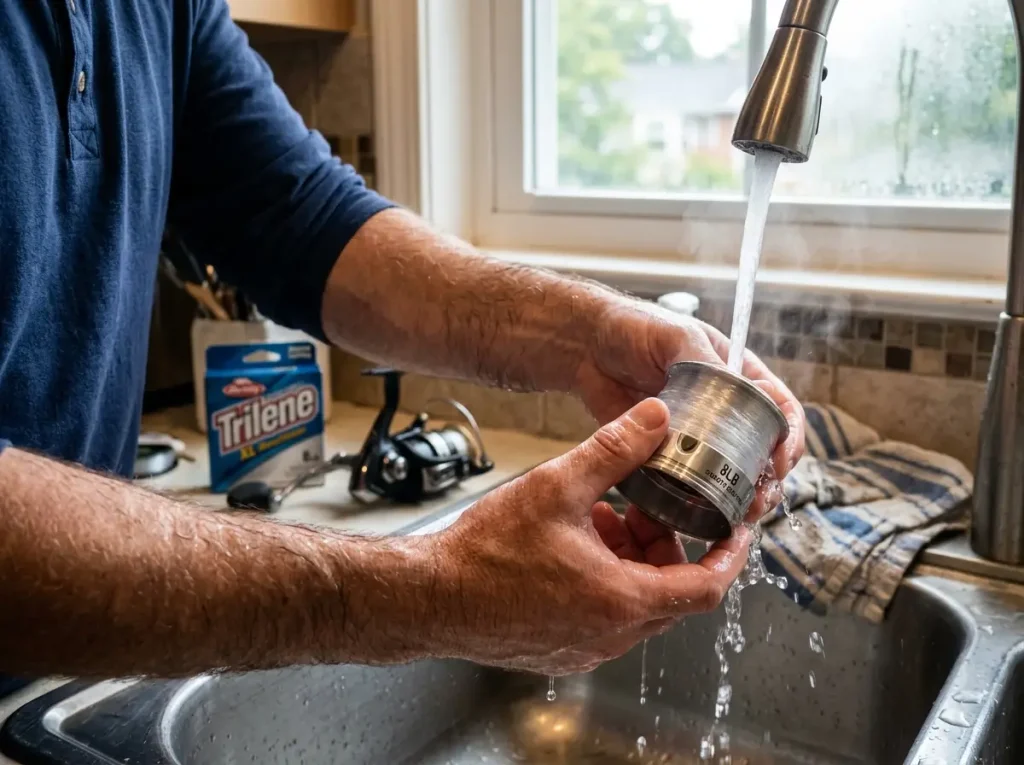
This is the morning-of-a-trip salvage. You’re at the ramp, the line is corkscrewing, and you need it fishable in five minutes. Two moves remove memory fast, and they’re both nearly free. Keep them separate in your head from the permanent fix in the next section, because competitors blur the two and that’s why people stay confused.
The warm-water soak, step by step
Heat is what relaxes a set, and water carries it into the line evenly. Run very warm tap water over the filled spool for a minute or two while you rotate it so every wrap gets wet, or pull the spool off the reel and soak the spool in a bowl of warm water for four to five minutes. The coils relax and the line lays noticeably flatter. The one rule: warm, not boiling. The nonprofit Recreational Boating and Fishing Foundation’s rundown on reducing line memory says the same thing every veteran will: hot water weakens the line and can warp the plastic spool, so warm tap water is the sweet spot, never the kettle.
The stretch fix
No warm water handy? Stretch the line. Pull 50 to 75 feet of line off the reel, tie one end to something stout like a dock cleat or a trailer hitch, wrap a gloved hand around the other end, and pull firmly while working your grip up and down the line. The glove saves your hand and the steady tension pulls the curl out. You’ll feel the line go from wiry to soft in your fingers within a few minutes, and that’s your signal to stop.
Match the fix to your line
Don’t waste your time soaking braided line — it has no memory to remove, so there’s nothing to relax. The warm water soak and the stretch are mono-and-short-fluoro tricks. And be realistic about a badly set mono main line: if it’s been coiled hard for a season, you’ll get more out of a fresh respool than out of wrestling it back to life for one more trip.
Anglers who fish hard split the fix by material: warm-water soak for mono, a firm stretch for short fluoro leaders. The stretch works best in short lengths, which is another reason a long, badly set main line is usually better replaced than fought.
How to Prevent Line Memory for Good
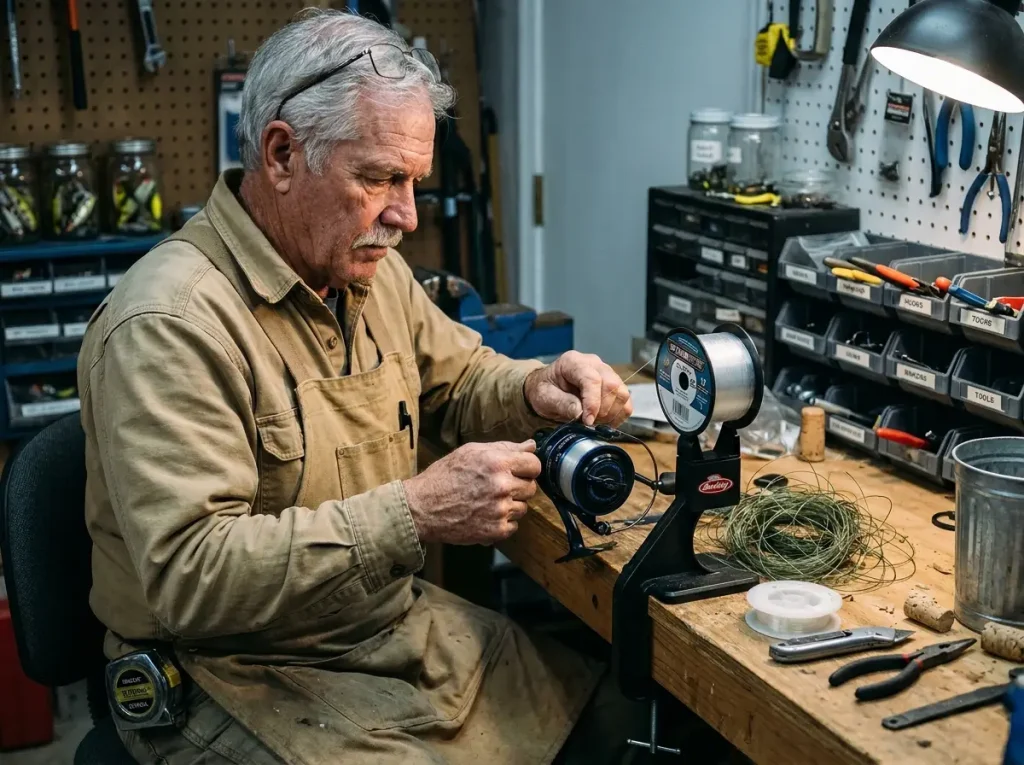
Fixing it every trip gets old. Set things up right once and the coils mostly stop forming in the first place. This comes down to four habits: the right line, the right spooling, the right storage, and a respooling schedule you actually keep.
Buy limp, quality line in the right diameter
Cheap bulk mono and heavier-than-you-need test are the two fastest paths to a coiled spool. Spend a little on a supple, low-memory line and match the line diameter to what you’re actually fishing. For a lot of freshwater spinning work, a limp mono like the Berkley Trilene XL in 8-pound is the easy answer: it’s forgiving, it casts soft, and it respools without a fight. Lighter line for the job means less set and better casting performance, full stop.
Spool It Right with a Large Arbor
How the line sits on the spool decides how hard it sets. A large-arbor spool, also called a large-diameter spool, stores line in wider, gentler loops, so the bend radius is bigger and the set is far weaker. Match your line diameter to the spool size, since a small spool sets line fastest, and fill the spool to a hair under the lip rather than packing it tight. Here’s the part beginners get backward: a slight underfill casts better than a jammed spool. Over-pack it and you get both faster memory and more backlashes.
When you respool, leave the spool a hair under full instead of packing it to the lip. The slight underfill most beginners are afraid of actually casts cleaner, sets slower, and backlashes less. A jammed spool fights you on all three.
Store it cool and dark, respool on a schedule
Store reels indoors, out of direct sunlight and away from temperature extremes. Both heat and a freeze bake or lock the set in and break the line down for good, so the dashboard and the sunny window shelf are the worst spots in the house. State fishing-gear maintenance guidance on inspecting and caring for your line from Texas Parks and Wildlife backs the basics: store gear cool and dry and check your line regularly.
Then respool before the set goes permanent, and fish regularly when you can, since line you fish regularly sets less than line that just sits. Mono wants fresh line every year or two, fluoro every two to three, and braid lasts three to four years or more. If you’re not sure where your line stands, how often to change your line by type breaks the cadence down by material.
Do Line Conditioners Actually Work?
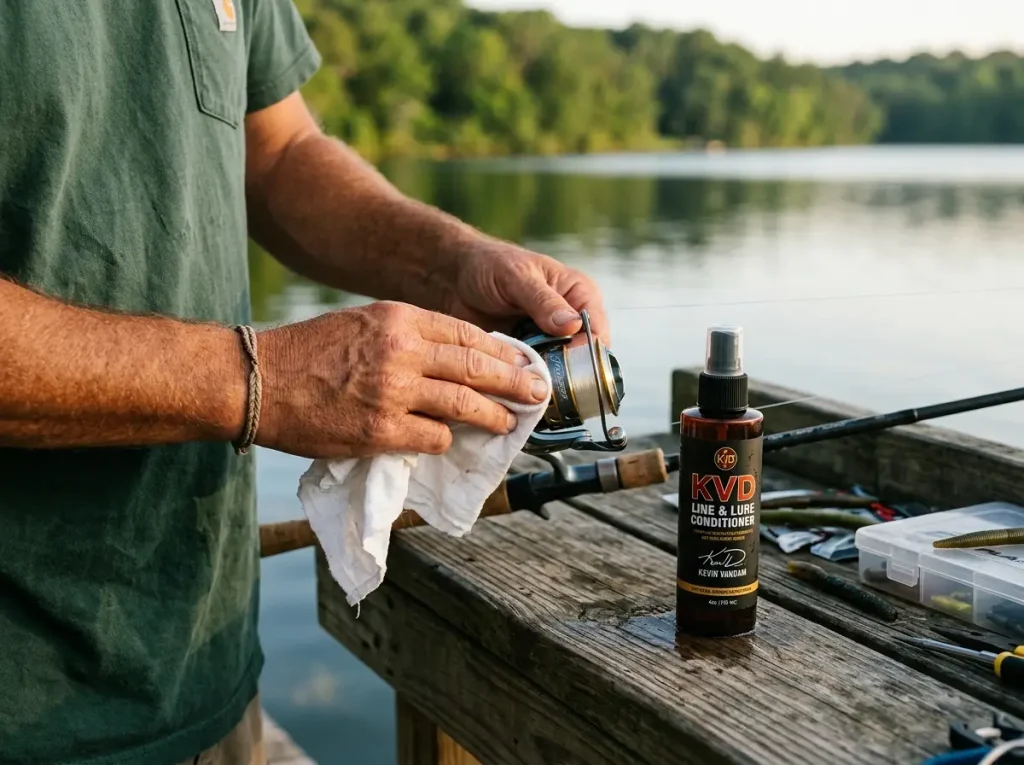
Walk the tackle aisle and you’ll find bottles promising to eliminate memory. Here’s the honest version a buddy would give you instead of the label copy.
What conditioners actually do (and don’t)
A line conditioner is usually silicone-based. It lubricates the line, repels water, and makes it more supple, which adds up to smoother casts, less friction through the guides, and slower buildup of new coiling. That’s real, and it’s useful.
What it does not do is undo an existing set. If your line already coiled hard over the winter, no conditioner is going to straighten it. That’s a job for warm water or a respool. A conditioner is maintenance, not a cure, and anyone selling it as a cure is selling.
The Honest Take on KVD and Reelsnot
Two products come up over and over. The KVD Line and Lure Conditioner, named for pro angler Kevin VanDam, is the one most anglers name first, and Reelsnot is the other regular. Both do the same job: a wipe-down that cuts friction and slows new memory.
Either is fine as part of a maintenance routine, with the same caveat attached to both. Use them to keep good line behaving, not to rescue line that’s already set. And lead with the free option first: warm water and a stretch will out-perform any conditioner on line that’s already coiled.
Skip the aerosols
If you do condition your line, reach for a liquid you wipe on by hand rather than an aerosol conditioner. Aerosol sprays draw the most line-failure complaints, and a hand-applied liquid gives you more control over how much goes where. It’s a small thing, but it’s the kind of detail that separates a habit that helps from one that quietly costs you a fish.
Cold Weather and Off-Season Line Memory
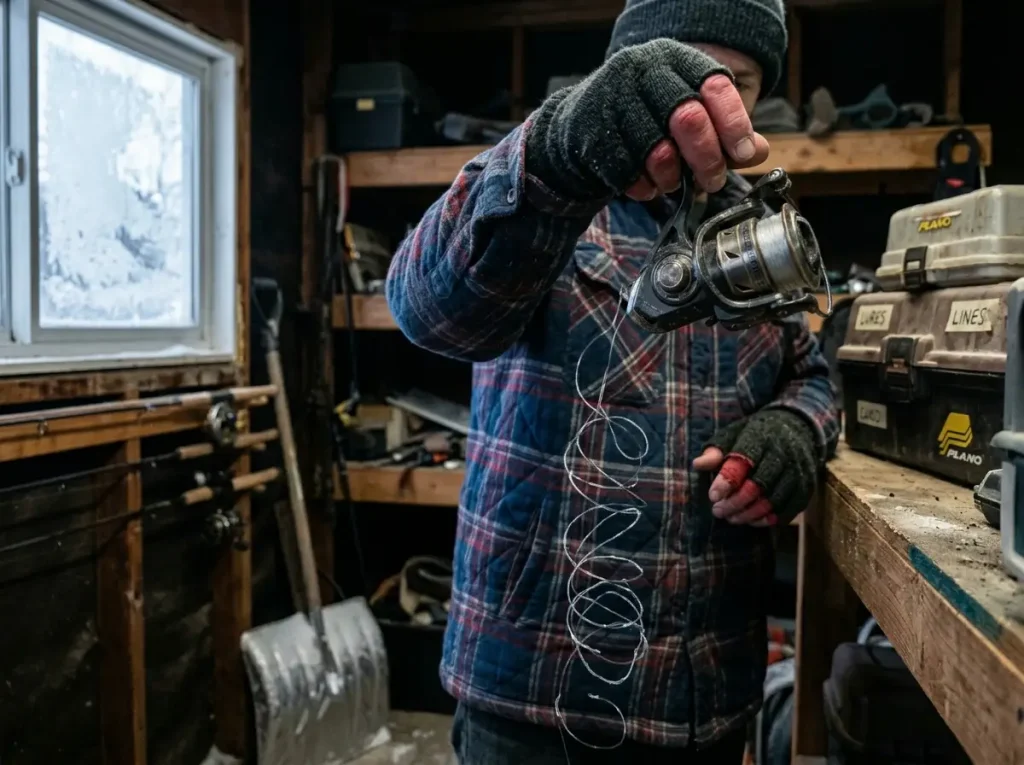
Memory gets worse in the cold, and the off-season is where the deepest sets are born. If you fish through winter or store gear for months, this is the part that bites people every spring.
Why cold makes memory worse
Line stiffens as the temperature drops, so coils that felt mild in summer come off rigid in near-freezing water. The plastic is simply less willing to flex back to straight when it’s cold, which is one more reason fluoro and heavy mono feel so unruly in the winter. For the deeper story on how line behaves in cold water, there’s a full breakdown, but the short take is that cold amplifies every memory problem you already have.
The spring-reel-from-the-garage nightmare
Here’s the classic. A reel sits spooled and coiled all winter on a shelf, and the first cast in April sends line corkscrewing everywhere. Months of tension, plus cold, plus zero use equals a deep, stubborn set. It’s the most common memory complaint there is, and it’s completely avoidable.
Winter storage that prevents it
Store reels indoors somewhere cool and dark, not in a freezing shed and not in a sun-baked window, since both extremes do damage. Then give the reel a quick reset before the first trip of the year with a warm-water soak or a fresh respool, and you skip the April fight entirely.
Before long storage, back off the drag and ease any line tension. A screwed-down reel holds the set tighter over months, so loosening things up is a thirty-second habit that saves you a corkscrewed spool come spring.
Conclusion
Line memory isn’t bad luck, it’s physics. Your line is plastic, and a tight bend radius plus heat plus time presses the coil in until it becomes the line’s resting shape. That’s the whole story, and it’s why none of the fixes are complicated.
Three things to remember. The morning-of-a-trip fix is free: warm water or a firm stretch and you’re fishing in five minutes. The permanent fix is just as simple: limp line in the right diameter on a large-arbor spool, stored cool, and respooled on a schedule. And the shortcut around the whole problem is the line you choose, since braid carries no memory and a short leader keeps the coil-prone stuff off the spool.
Before your next trip, pull a few feet off the reel and check it. If it springs into coils, you know exactly what’s happening and exactly what to do about it.
Frequently Asked Questions
01How do you get memory out of fishing line?
Run very warm tap water over the spool for a minute or two while rotating it, or soak the removed spool four to five minutes. The heat relaxes the set so the line lays flat. A firm stretch of 50 to 75 feet does the same in a pinch.
02Which fishing line has the least memory?
Braided line has effectively no memory because it’s woven from fibers, not extruded as a single plastic strand. Monofilament is the moderate middle ground, and fluorocarbon takes the worst set. Run braid as your main line to sidestep the problem entirely.
03Does warm water really remove line memory?
Yes, on monofilament and short fluoro leaders. Warm water lifts the line past its flex point so the coils relax and lay flat. Keep it warm, never boiling, because too much heat weakens the line and can warp a plastic spool.
04How often should you replace fishing line to stop memory?
Respool monofilament every year or two, fluorocarbon every two to three years, and braid every three to four years or more. Fish hard or store gear in heat and you’ll respool sooner. Fresh line is the surest way to beat a permanent set.
05Do line conditioners actually remove line memory?
No. Conditioners lubricate the line and slow new coiling, but they can’t undo a set that already formed. Treat them as maintenance, not a cure. For line that’s already coiled, warm water or a fresh respool is what actually works.
Risk Disclaimer: Fishing, boating, and all related outdoor activities involve inherent risks that
can lead to injury. The information provided on Master Fishing Mag is for educational and informational purposes
only. While we strive for accuracy, the information, techniques, and advice on gear and safety are not a substitute
for your own best judgment, local knowledge, and adherence to official regulations. Fishing regulations, including
seasons, size limits, and species restrictions, change frequently and vary by location. Always consult the latest
official regulations from your local fish and wildlife agency before heading out. Proper handling of hooks, knives,
and other sharp equipment is essential for safety. Furthermore, be aware of local fish consumption advisories. By
using this website, you agree that you are solely responsible for your own safety and for complying with all
applicable laws. Any reliance you place on our content is strictly at your own risk. Master Fishing Mag and its
authors will not be held liable for any injury, damage, or loss sustained in connection with the use of the
information herein.
Affiliate Disclosure: We are a participant in the Amazon Services LLC Associates Program, an
affiliate advertising program designed to provide a means for us to earn advertising fees by advertising and linking
to Amazon.com. As an Amazon Associate, we earn from qualifying purchases. We also participate in other affiliate
programs and may receive a commission on products purchased through our links, at no extra cost to you. Additional
terms are found in the terms of service.