
In this article
Most anglers never think twice about which side of the reel seat their hook keeper sits on. They clip the hook there, cast, and never look again. For one specific kind of fishing, that reflex parks the keeper in exactly the wrong spot. Ask around rod-building forums and the placement question turns into a real argument, with builders calling it one of the hardest things to pin down in a rod’s design and a genuine deal-breaker for some buyers. Here you get the straight version: what that little clip actually protects, the types that exist, which one matches how you fish, the above-versus-below call settled by technique, and an honest take on whether to buy one or make your own for nothing.
What a Hook Keeper Actually Protects
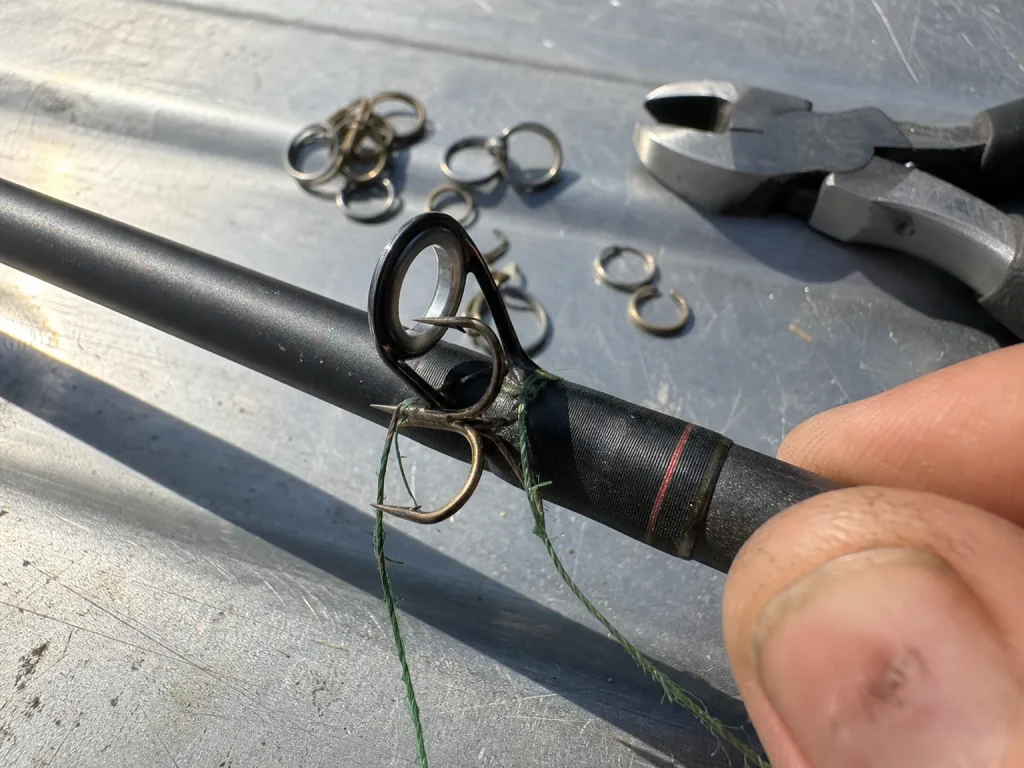
That little clip does more than tidy up your rig. Its whole job is to give the hook a home so it never rests against a rod guide, and once you understand what a stray hook does to a guide, you stop skipping it. A hook keeper is one small part of a well-set-up rod, and if you are still sorting out the basics, our complete guide to fishing rods covers where every piece fits.
Here is the part nobody spells out. When a hook chips the thin ceramic insert inside a guide, it leaves a sharp edge, and that edge quietly frays your line every single cast. You will not see it happen. You feel it the moment a good fish loads the rod on a hookset and the line parts at the worst possible time. The tip-top guide takes the most abrasion of any guide on the rod, especially with braided line, though monofilament frays just the same, so a hook stored against it does the most harm right where you can least afford it.
The other cost is your hands. The risk in fishing is rarely the cast. It is the loose hook you lost track of while a fish thrashed at the side of the boat. A national emergency-department study catalogued in a peer-reviewed review of fish-hook injuries published by the National Institutes of Health found the finger was the injury site in most fishing-related hand injuries, and a large share happened while unhooking a fish. A keeper is simply where the hook waits so it is not in your palm when you reach for the net.
The damage runs through the guides, which is why the material matters as much as the placement. If you want the deeper story on why a chipped insert bleeds performance, our breakdown of rod guide materials and how the ceramic insert holds up gets into the metallurgy without the jargon.
The Main Types of Hook Keepers
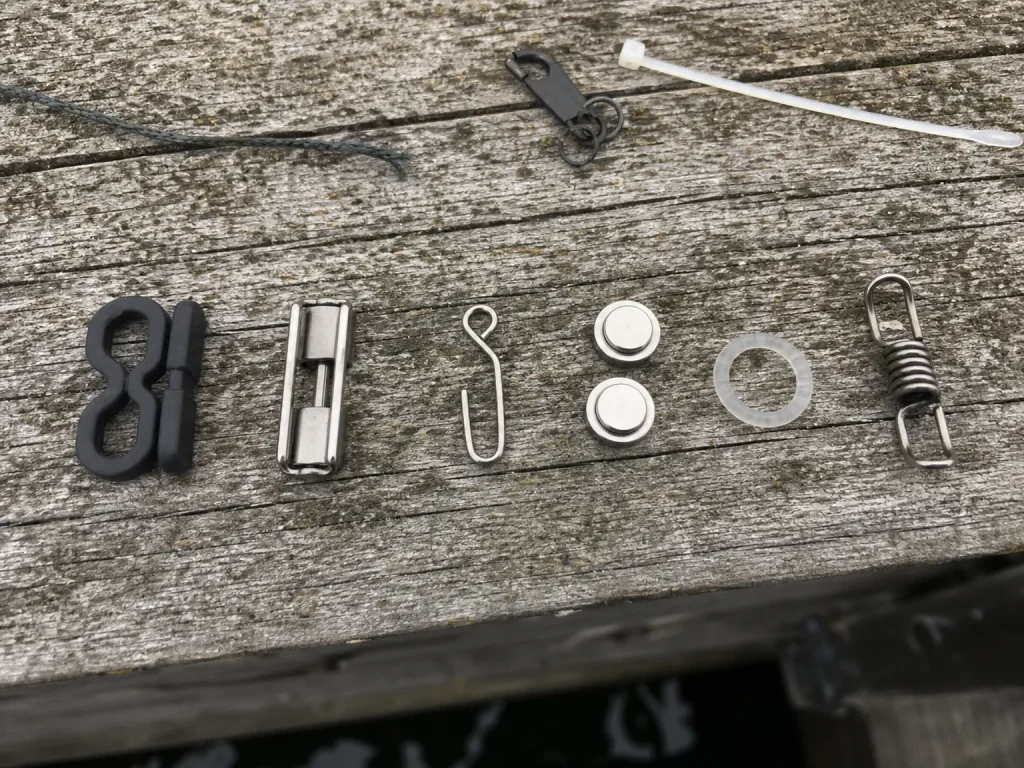
Walk the wall at any tackle shop and you will find half a dozen keeper designs, each built to solve a different problem. Knowing them makes it obvious what is already on your rod, and what you might want instead.
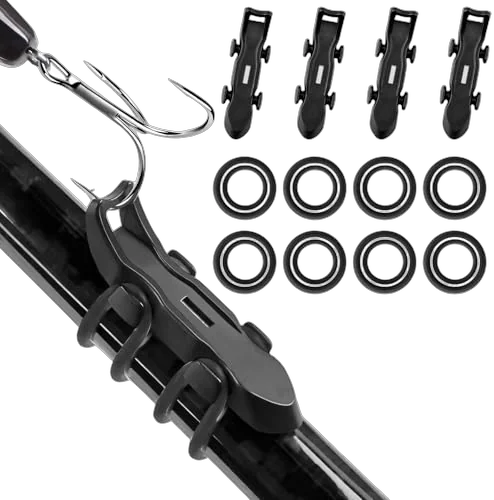
The standard double-footed clip is the default on most factory rods, spinning and baitcasting alike. It comes in two heights, roughly a fifth of an inch and a quarter inch off the blank, and the height should match your hook gap and lure size. The folding, Fuji-style keeper was originally built to protect delicate dry-fly hackles from being crushed, and it lies flush against the blank when idle. It is a genuinely great design for fly rods, though the real ones mostly move through rod-building specialty suppliers rather than everyday retail, so it is worth knowing about more than chasing down.
Then there is the open, drop-shot style, a distinct design built to cradle the weight rather than just the hook. The magnetic keeper holds with neodymium magnets, so there is no rubber O-ring to perish and nothing to stretch out. The O-ring or silicone keeper is the universal, no-tools retrofit type that fits any blank. And the spring-loaded or automatic keeper grips harder, at the cost of more moving metal parts that matter once salt gets involved. Keeper height is really about the hook and terminal tackle you are storing on it; too tall and it catches your line on the cast, too short and a wide-gap hook will not seat.
Which Type Actually Fits How You Fish
Every buying guide shows you the types and then leaves you to guess. This is the part that tells you which one is actually yours, and it comes down to technique, not price.
If you drop-shot, you want the open, drop-shot style, because it holds the weight and keeps your rig put instead of just pinching the hook. If you are constantly swapping lures or re-rigging, the magnetic keeper wins on speed, with a one-hand release and nothing to wear out. Fly anglers want the folding design that protects the fly and disappears when idle. Saltwater and heavy-cover anglers should lean toward reinforced or spring-loaded hardware, for reasons the corrosion section makes clear. And if you are a casual freshwater angler, the standard double-foot your rod probably already came with is genuinely fine. Do not overthink it.
The honest catch: for most anglers, the type debate matters far less than placement. But if you drop-shot, both flip at once, the type and the side of the reel it belongs on, which is exactly the argument the next section settles.
Above or Below the Reel Seat
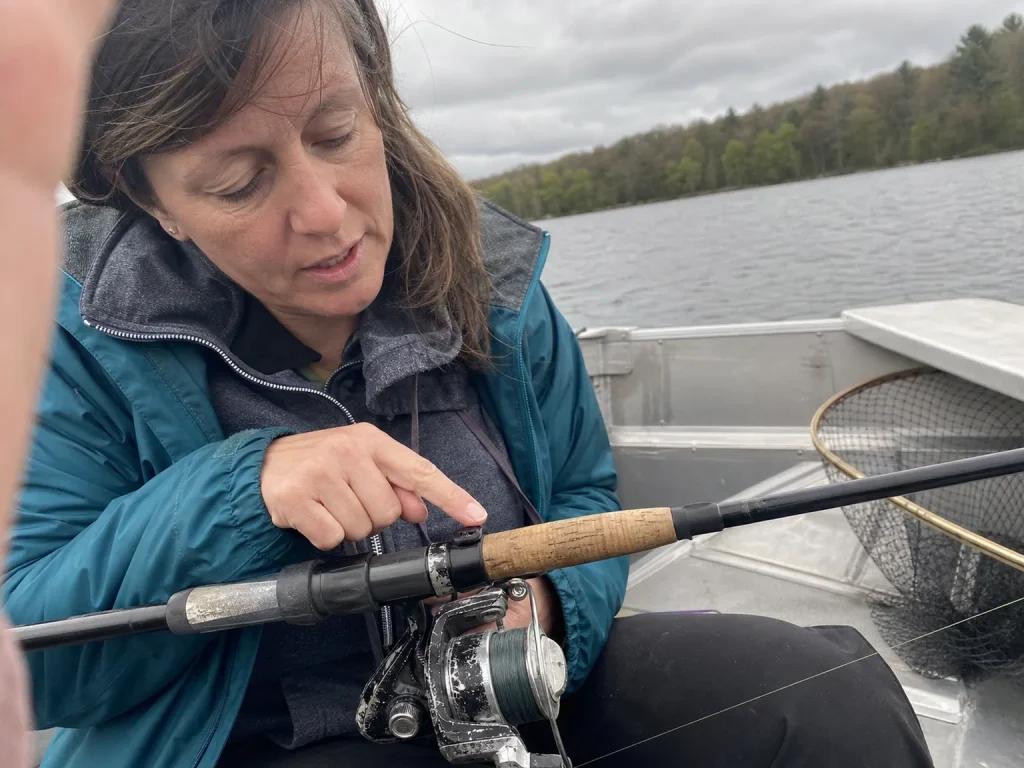
This is the fight the whole thing hangs on. The honest answer is not “always above.” It is “above, unless you are doing one specific thing.”
Forum consensus lands hard on above the reel seat as the traditional, practical placement for the vast majority of fishing. Below-the-reel placement is the real point of contention, and it is tied almost entirely to drop-shot weight storage, not to hooks. The reason to keep it above for everything else is your hands. Mount a keeper below the reel seat on a rod you fish with treble-hook baits, and you have parked a loose treble right where your stripping and landing hand naturally travels. Anglers who have felt it have a blunt name for the setup, and it involves a hook in the palm.
Simple rule that clears up the whole debate: keep the keeper above the reel seat unless you specifically drop-shot. Drop-shotters run the weight below the seat, which is a different job than storing a hook. If you do not drop-shot and your keeper is below the seat, it is on the wrong side for you.
Placement being a genuine, argued-over design decision is not unique to keepers. Where the guides and hardware sit on the blank shapes how a rod fishes, the same way rod spine and how the components line up quietly decides more than most anglers realize. A rod developer once called keeper placement one of the hardest things to pin down in a rod’s design and a deal-breaker for many buyers, which is a bigger internal argument among manufacturers than most people ever notice.
How to Make Your Own in Two Minutes
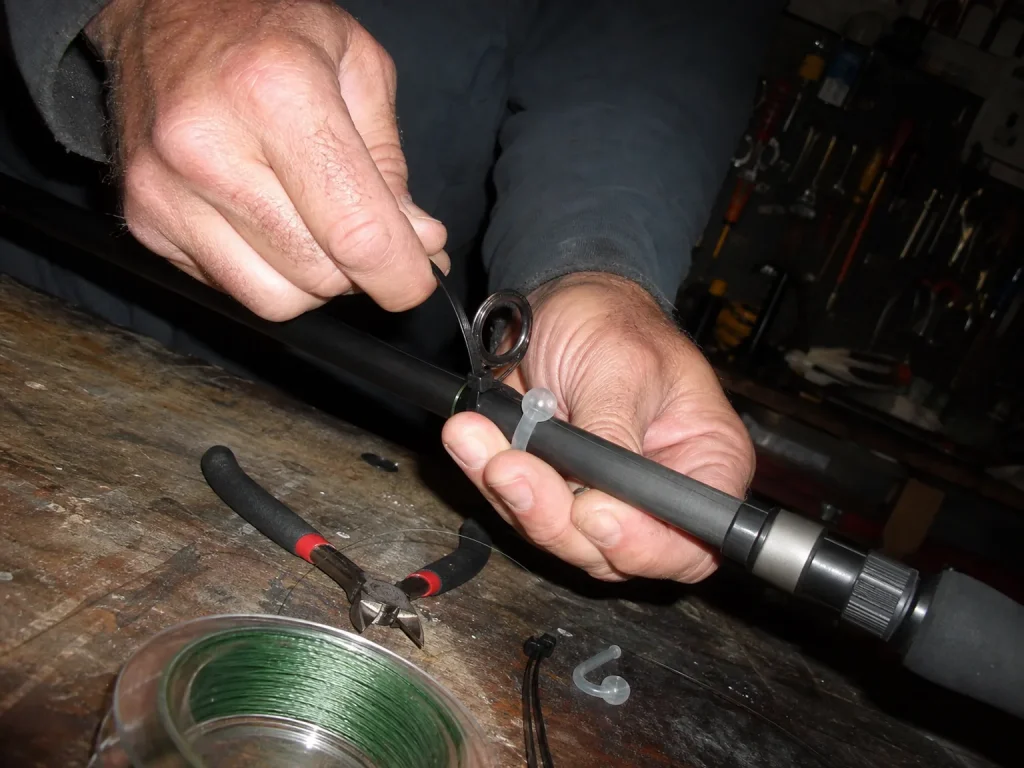
Every DIY post sells this like a revelation. It is simpler than that. A zip tie, a split ring, two minutes, done, and your rod that shipped without a keeper now has one.
Wrap a zip tie around the blank just ahead of the reel seat, slip a split ring under it before you cinch, and trim the tail. That split ring is your keeper. Owner Hyper-Wire split rings are the sturdy option if you want the build to outlast the rod itself. The one step people skip is the one that keeps the fix from turning on you.
After you trim the zip tie, touch the cut edge with a lighter flame for half a second to melt it smooth. That sharp plastic burr left behind slices a fingertip just as reliably as the hook the keeper is meant to hold. Ten seconds now saves a cut later.
Be honest with yourself about whether you need more than this. For most casual freshwater anglers, the free zip-tie fix is genuinely all the keeper you will ever need. If you would rather buy the cheapest real hardware, a silicone universal hook keeper is the no-drill retrofit that fits any blank diameter and sits right next to the free method in the cost comparison. The video below walks the whole build, melt step included.
When Store-Bought Is Actually Worth It
The free fix is fine most of the time, so here is the short list of times it is not, said plainly instead of buried under a ten-product roundup nobody asked for.
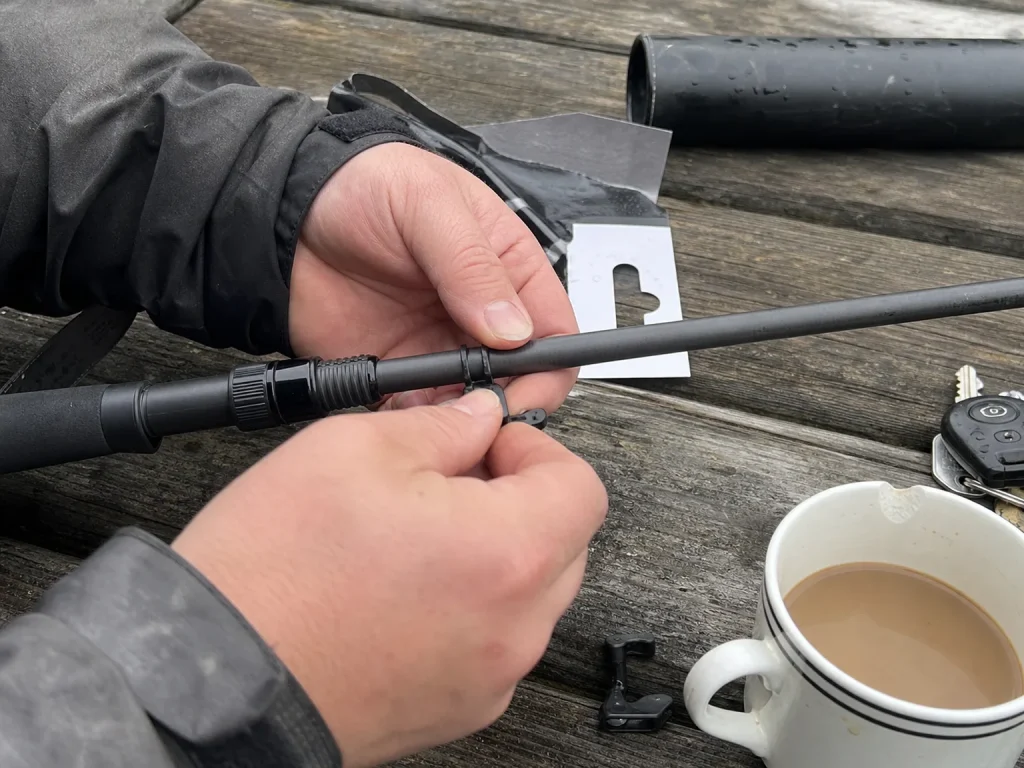
Buy real hardware when losing or failing a DIY keeper would actually cost you: saltwater exposure, heavy cover, or a rod you fish hard and often. A manufactured clip-on retrofits onto a bare rod in seconds, gives you corrosion-proof material and a cleaner feel, and leaves nothing to melt or re-tie. This is the spot where every DIY article oversells the hack and every buying guide oversells the product. The truth sits in between. It is a small call you make based on where and how hard you fish, not a must-buy.
One thing worth a quick check before you modify a blank: whether adding or swapping a keeper touches your warranty. Most clip-on and no-drill keepers leave coverage alone, but permanent modifications can be one of the quiet things that void a rod warranty, so it pays to read the terms before you glue or drill anything. The clip below shows a manufactured keeper going onto a rod with no factory mount.
What Saltwater Does to Keeper Hardware
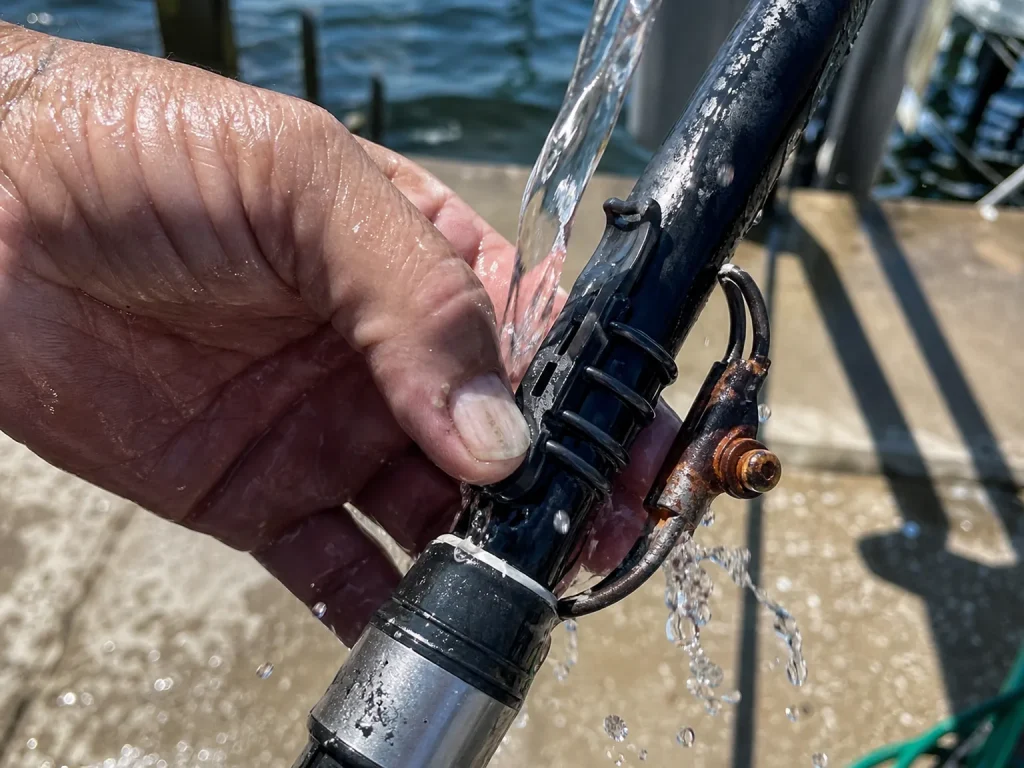
Here is the reality no keeper article covers: the hardware corrodes before the rod ever shows it. If you fish salt, the keeper is often the first thing on the rod to fail, and it fails while you are not looking.
The moving metal goes first. Springs, hinges, and screws pit and seize long before the blank or the plastic housing shows any wear. The spec that decides it is the grade of stainless steel. Grade 316, with 2 to 3% molybdenum, resists pitting and crevice corrosion far better than the cheaper 304 most bargain hardware uses, and the engineering behind why 304 stainless pits near saltwater and 316 holds up is worth a two-minute read if you buy anything spring-loaded. If a hinged or spring keeper does not name 316, assume it will corrode in salt faster than the rod does. It is the same corrosion that eats surf-rod guides and reduces casting distance, just on a smaller part you never inspect.
Crevice corrosion starts in the tight, stagnant gaps where saltwater sits without draining: under the keeper base, around the hinge pin, in the guide feet. When you rinse after a salt trip, rinse under the keeper base, not just the reel. That one spot is where the rust you cannot see gets started.
For genuine salt or heavy-cover use, a reinforced keeper earns the upgrade. A Trakker PVC-reinforced hook keeper outlasts plain silicone under salt spray and repeated flexing, which is the one place spending a little genuinely pays off. Catching a failing keeper early is easy once you know the tells: a spring that hesitates, a hinge that grits when it moves, or rust seeping from a screw head means replace it before it drops your rig. A full rinse-and-care routine after saltwater keeps the rest of the rod off that same list.
The Hook Keepers Worth Buying
No ten-deep roundup here. Two picks cover most anglers, and it is worth being clear about who each one is for.
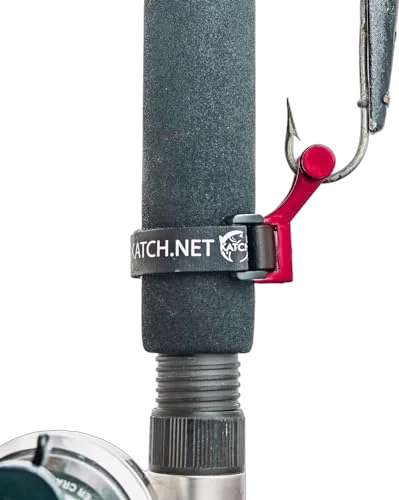
If you run several rods, the value play is a bulk pack. A Gejoy 21-piece hook holder set is color-coded so you can tell rods apart at a glance, and one buy covers years of replacements across the whole rack. Both of these are forgiving, no-tools installs, so there is nothing to over-tighten or break, which makes them easy first upgrades for a newer angler.
One last honest word: if your rod already has a solid factory keeper sitting in the right spot, you do not need either of these. Buy them for the rod that is missing one, not to replace one that already works.
Conclusion
A hook keeper protects your line and your hand, not just your guides, and that is reason enough to actually use the one on your rod. Placement is a technique call, above the reel seat for almost everyone, below only if you drop-shot. And the free zip-tie fix is genuinely enough until saltwater or heavy cover earns the upgrade.
Before your next trip, take two seconds to look at where your keeper sits and what you actually fish with it. That quick check tells you whether it is on the right side for you, or whether you have been fishing around a small mistake this whole time.
Frequently Asked Questions
01Do you really need a hook keeper on a fishing rod?
Not strictly, but it prevents two real problems: a hook chipping your guide inserts and a loose hook ending up in your hand. For most anglers a free DIY keeper covers it completely.
02Where should a hook keeper go, above or below the reel?
Above the reel seat for roughly 99% of fishing. Below is specifically for drop-shot weight storage, and it puts a loose hook near your landing hand, a common mistake with treble-hook baits.
03Can you use a hook keeper for treble hooks?
Yes, but keep it above the reel seat and pick a keeper with enough gap for the treble. A below-seat keeper with trebles is where the hook-in-the-hand stories come from.
04What can I use instead of a hook keeper?
A zip tie and a split ring around the blank, ahead of the reel seat, take about two minutes and cost nothing. Melt the cut zip-tie edge smooth so it does not slice your finger.
05Does adding a hook keeper void your rod warranty?
A clip-on or no-drill keeper usually does not affect coverage, but permanently modifying the blank can. Check your rod maker’s warranty terms before you drill or glue anything to the blank.
Risk Disclaimer: Fishing, boating, and all related outdoor activities involve inherent risks that
can lead to injury. The information provided on Master Fishing Mag is for educational and informational purposes
only. While we strive for accuracy, the information, techniques, and advice on gear and safety are not a substitute
for your own best judgment, local knowledge, and adherence to official regulations. Fishing regulations, including
seasons, size limits, and species restrictions, change frequently and vary by location. Always consult the latest
official regulations from your local fish and wildlife agency before heading out. Proper handling of hooks, knives,
and other sharp equipment is essential for safety. Furthermore, be aware of local fish consumption advisories. By
using this website, you agree that you are solely responsible for your own safety and for complying with all
applicable laws. Any reliance you place on our content is strictly at your own risk. Master Fishing Mag and its
authors will not be held liable for any injury, damage, or loss sustained in connection with the use of the
information herein.
Affiliate Disclosure: We are a participant in the Amazon Services LLC Associates Program, an
affiliate advertising program designed to provide a means for us to earn advertising fees by advertising and linking
to Amazon.com. As an Amazon Associate, we earn from qualifying purchases. We also participate in other affiliate
programs and may receive a commission on products purchased through our links, at no extra cost to you. Additional
terms are found in the terms of service.