
In this article
Most anglers treat the graphite vs glass decision like a budget-versus-premium call. It isn’t. It’s a physics decision, and the physics is the exact part every article on the subject skips. Ask the guys who fish both materials week in and week out, and they’ll tell you the difference lives in your hand and in your hookset timing, not on the price tag. This is the science behind why the two blanks feel and fight so differently, and how to match that to the way you actually fish.
What “Graphite” and “Glass” Actually Are
Everyone repeats “graphite is stiffer” like it settles the argument. It doesn’t explain anything. It’s like saying steel is harder than aluminum without saying why you’d build a truck frame from one and a bike from the other.
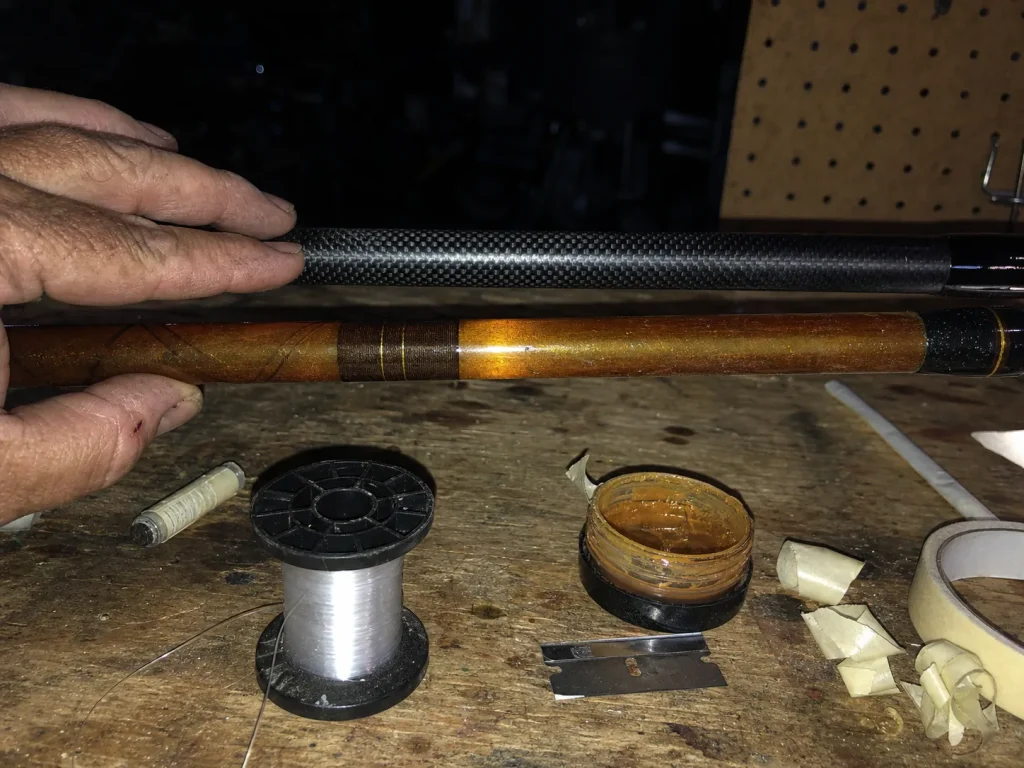
Start with what the two words actually mean. A graphite rod is carbon fiber. A glass rod is fiberglass, or glass fiber. Neither is literally the graphite in a pencil or the glass in a window. Both are thin fibers locked into resin and wrapped into a hollow tube, what builders call the rod blank. In forum talk, fiberglass usually just gets shortened to “glass,” so when someone says they threw a glass rod all morning, they mean fiberglass.
Carbon Fiber, Not Pencil Graphite
The fibers themselves are the story. Carbon fiber is a lattice of carbon atoms drawn into a filament thinner than a human hair, then bundled by the thousands. It’s light and rigid, which is why it shows up in everything from bike frames to aircraft panels.
Fiberglass and the “Glass” Nickname
Glass fiber is spun from molten glass into flexible strands. It’s heavier than carbon and far more willing to bend and spring back without complaint. That single trait, the willingness to flex, is what makes a glass rod behave the way it does on the water.
Modulus, the One Number That Matters
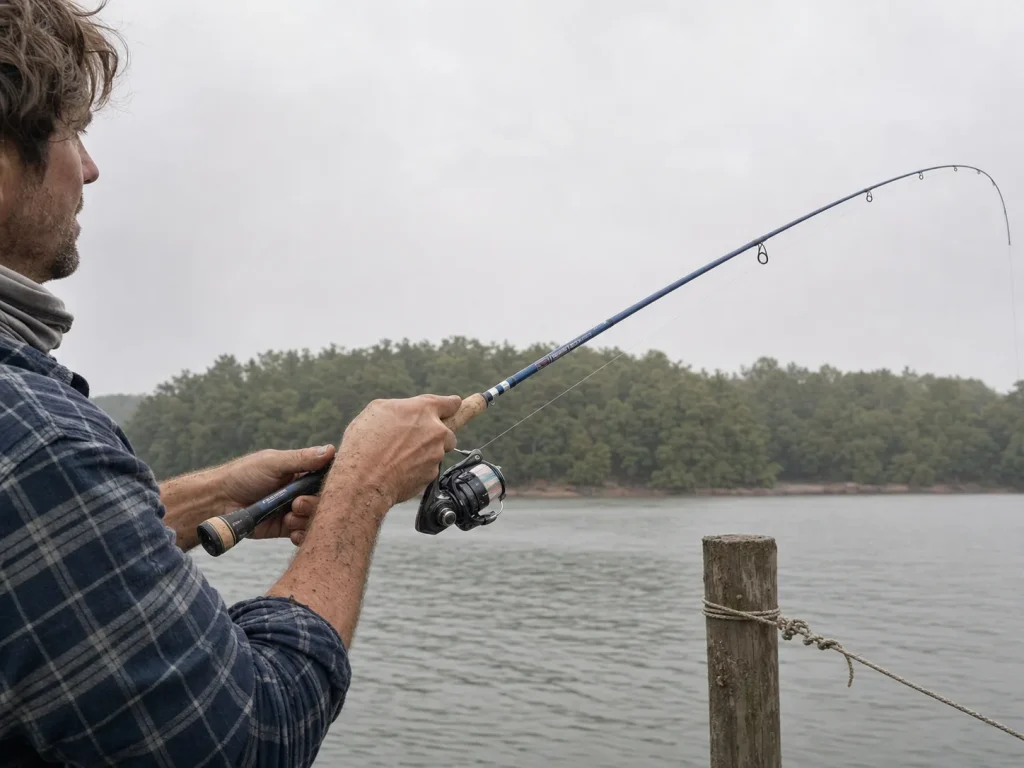
The word that separates them is modulus, the fiber’s stiffness for a given cross-section. Commercial carbon fiber runs around 250 GPa, while E-glass fiberglass sits at roughly 72 to 85 GPa. That’s the real number behind “graphite is stiffer”: for the same blank diameter, carbon fiber resists bending about four times as hard, and those are the modulus figures composite engineers actually design around.
If you want to see how those numbers show up on the rod’s label, that’s a separate rabbit hole worth its own read. For now, hold onto one idea: stiffer is not automatically better. It’s a trade.
The Modulus Science Nobody Explains
Here’s the part every competitor waves off. They state “higher modulus means more sensitive” as a fact and move on. Nobody explains the mechanism, and the mechanism is the whole point.
Modulus and strain energy move in opposite directions. As stiffness climbs, the material’s capacity to soak up energy before it fails drops, roughly in proportion. Fiberglass carries about four times the strain energy of standard-modulus graphite.
Strain energy is just the “give” in the blank, its reserve of flex. A glass rod can bend deep into a curve and snap back all day. A high-modulus graphite blank has almost no reserve left once it’s loaded near its limit.
That difference is why one material transmits the bite and the other cushions it. Follow the chain: fiber structure sets the modulus, modulus sets the stiffness, and stiffness sets how fast a vibration travels up the blank to your hand.
A stiff blank passes the tap straight through. A flexible one eats it on the way up. That speed of vibration is what anglers are really talking about when they say “sensitivity.”
Modulus is also tunable, which is where the label ratings come from. It depends on how ordered the carbon crystal structure is inside the fiber. Line the crystals up tighter and the modulus climbs, all the way past 800 GPa for exotic grades. That’s what IM6, IM7 and IM8 are describing, a real manufacturing choice, not marketing paint.
As modulus rises, so does brittleness, which is the catch we’ll get to. If the rating system itself is what trips you up, our breakdown of what IM6, IM7 and IM8 ratings really mean picks up exactly where this leaves off, and a peer-reviewed nanoindentation study of carbon and glass hybrid composites backs up the modulus-versus-strain-energy trade if you want the hard data.
One more wrinkle the spec sheet hides: carbon fiber is directional. Its modulus is very high along the fiber axis and low across it. So the fiber orientation, meaning how the manufacturer wound the fiber sheets around the mandrel, changes how stiff the finished blank feels, independent of the fiber grade and the resin content binding it together. Two rods stamped the same IM6 can feel different in your hands because the physics runs partly on geometry, not just on the material grade alone.
If you want to feel that high-modulus stiffness in the flesh, an extra-fast action graphite spinning rod like the G. Loomis IMX-Pro Blue 842S XF is the clearest example: load it up and only the top third bends while the rest stays rigid, the tip-only response that makes bottom bites jump to your hand.
Don’t shop on the modulus number alone. Two rods with the same IM rating can feel worlds apart because of the layup, so if you can, wiggle the actual rod in the shop before you commit. The spec sheet gets you close, your wrist gets you the rest of the way.
Sensitivity and Bite Detection Explained
“Sensitivity” gets thrown around like a magic word. Here’s what it actually buys you, and just as important, when you genuinely can’t feel the difference.
High modulus means vibration reaches your hand faster and cleaner, traveling up the blank and through the rod guides so a subtle bottom bite or a light tick on the line actually registers instead of getting lost in the blank. That’s graphite’s real edge, and it shines in finesse fishing, jigging, and any bottom presentation where the strike is a faint tap rather than a slam. Throw a jig into deep structure and a good graphite rod will telegraph gravel turning to mud turning to the soft mush of a fish inhaling it.
Now the honest half. When a bass blows up on a topwater, you don’t need a high-modulus blank to know it happened, you saw it. For reaction strikes and anything with a violent take, sensitivity barely moves the needle. Paying a premium to feel a bite you can already see is money spent on the wrong problem.
Weight folds into this too. A lighter blank means less mass deadening the signal and less angler fatigue in your wrist across a long day. If you’re firing 300-plus casts, the ounces add up, and a tired arm feels less than a fresh one. The rod weight payoff is real, it’s just easy to overstate.
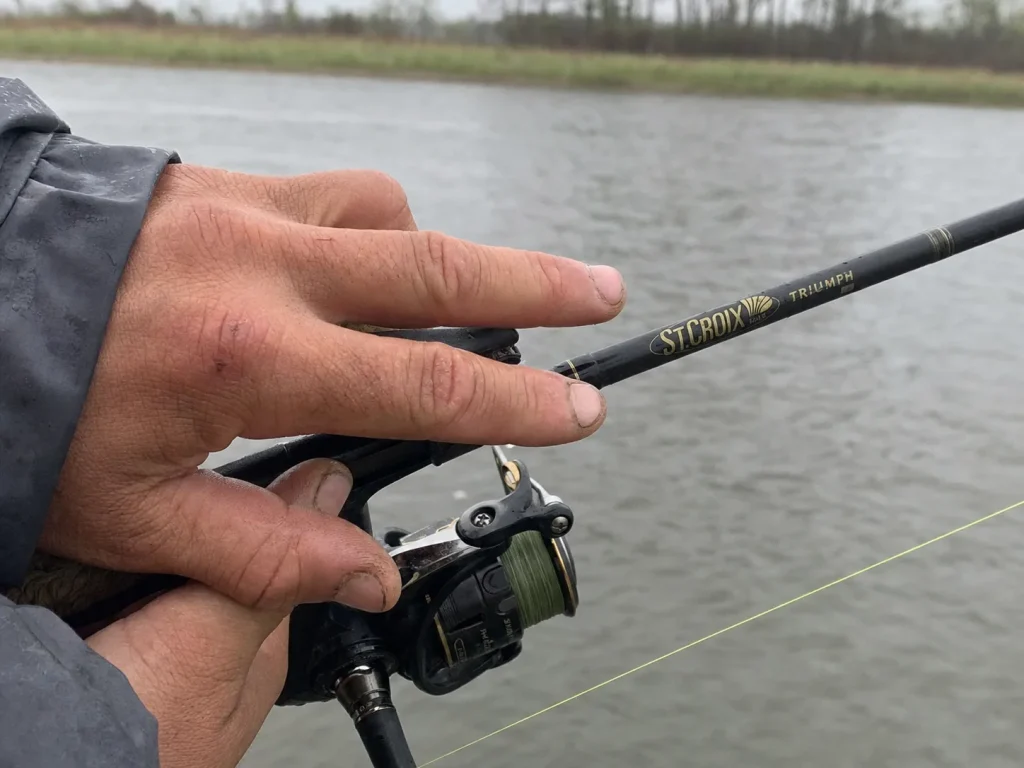
You don’t need the flagship to get there, either. A mainstream standard-modulus graphite rod like the St. Croix Triumph in a 6’6″ Light Fast will telegraph a bottom bite just fine. It won’t read the water quite like the exotic stuff, but the gap between “good graphite” and “great graphite” is far smaller than the gap between graphite and glass. Grip material shapes what you feel as well, which is why the grip material also changes what you feel is worth understanding alongside the blank.
Durability and Why Graphite Snaps
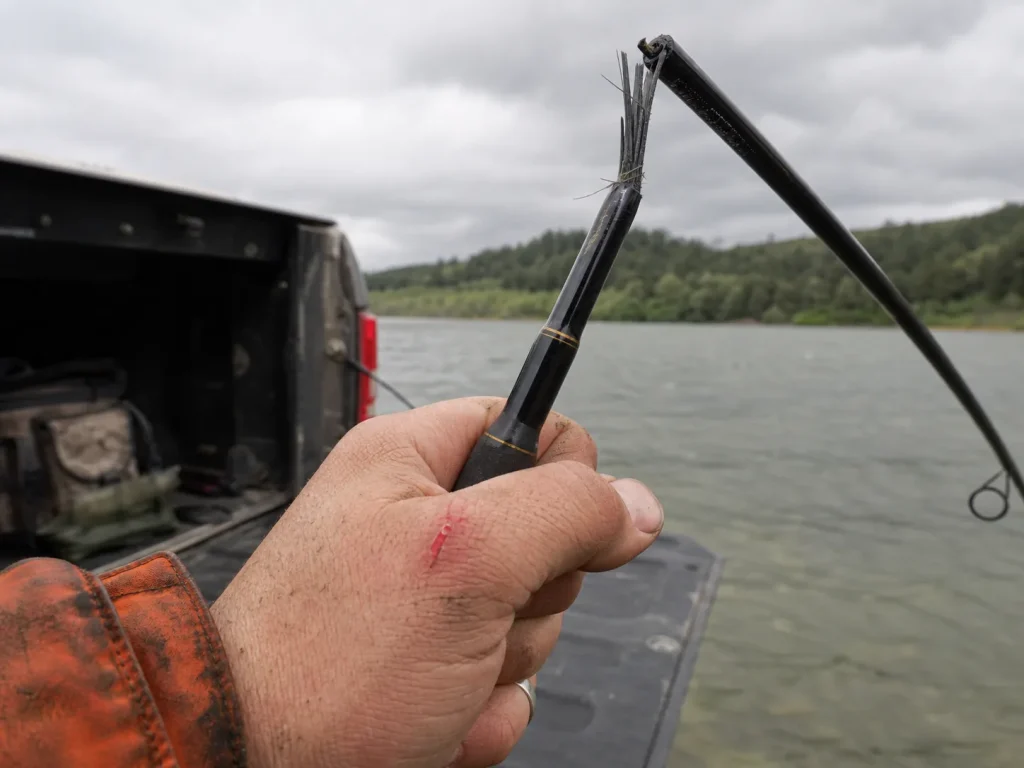
Nobody breaks a rod during the fight as often as they break it in the truck, the garage, or the rod locker. Here’s the physics of which material survives real life, and it’s the flip side of everything that makes graphite sensitive.
Carbon fiber holds up well under repeated loading. Its fatigue limit sits around 60 to 70 percent of its ultimate tensile strength, versus 30 to 40 percent for glass fiber. So a graphite rod can take a huge number of hard casts and hooksets near its rated limit before fatigue creeps in. That sounds like a durability win, and under normal fishing loads it is.
The trade is brittleness. Higher modulus means less flex reserve, and once a stiff graphite blank is bent near its limit, there’s nowhere left for it to go. So it snaps instead of bending further. Fiberglass, with all that strain energy in the bank, tends to flex through the same abuse, and that impact resistance is its quiet advantage. Slam a rod locker lid on a glass blank, step on it, or set the hook into a snagged branch, and it usually bends and shrugs where graphite shatters on the spot.
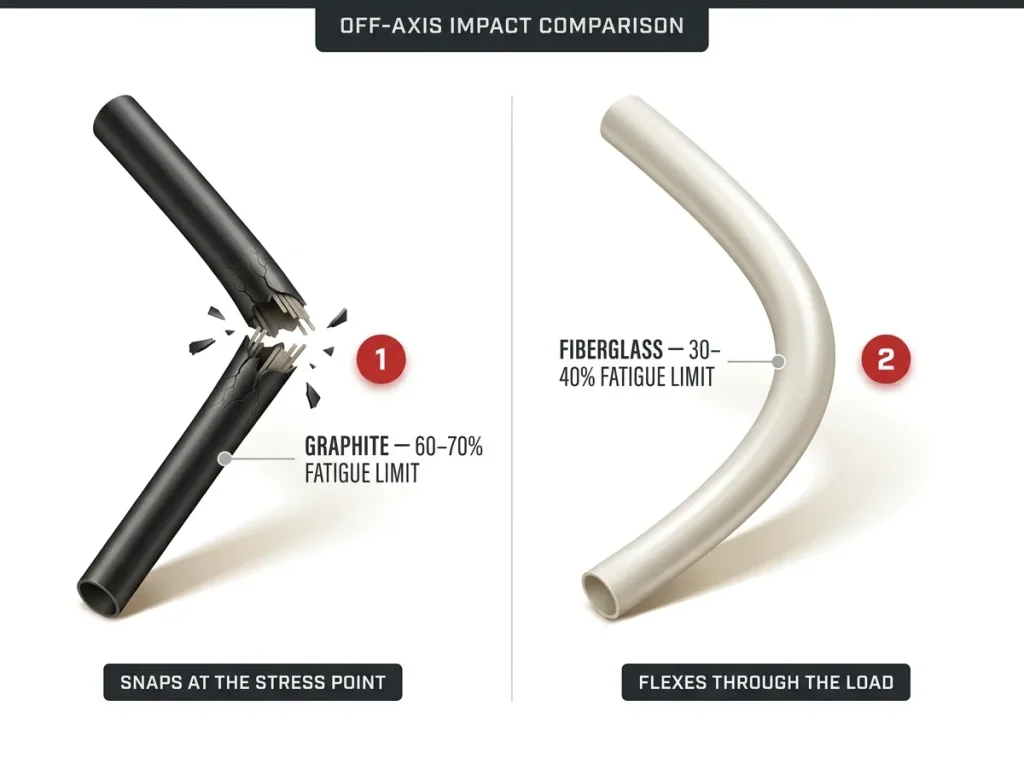
The practical upshot is that most graphite breakage is impact, not fishing. Learning how to spot a cracked blank before it lets go saves a lot of heartbreak, because a hairline fracture from last week’s tailgate slam often waits to finish the job on your next decent fish. Graphite simply asks for more careful rod care, storage, and transport, and a case that actually protects a graphite blank in transit is cheap insurance against the failure mode that ends most of these rods.
None of this makes fiberglass the “beginner” material, either. A premium pure S-glass rod like the St. Croix Legend Glass Casting Rod is a deliberate high-end choice for anglers who want the deep parabolic bend and the toughness that comes with it. Glass isn’t the cheap seat. It’s a different tool.
The Hookset Mistake That Costs You Fish
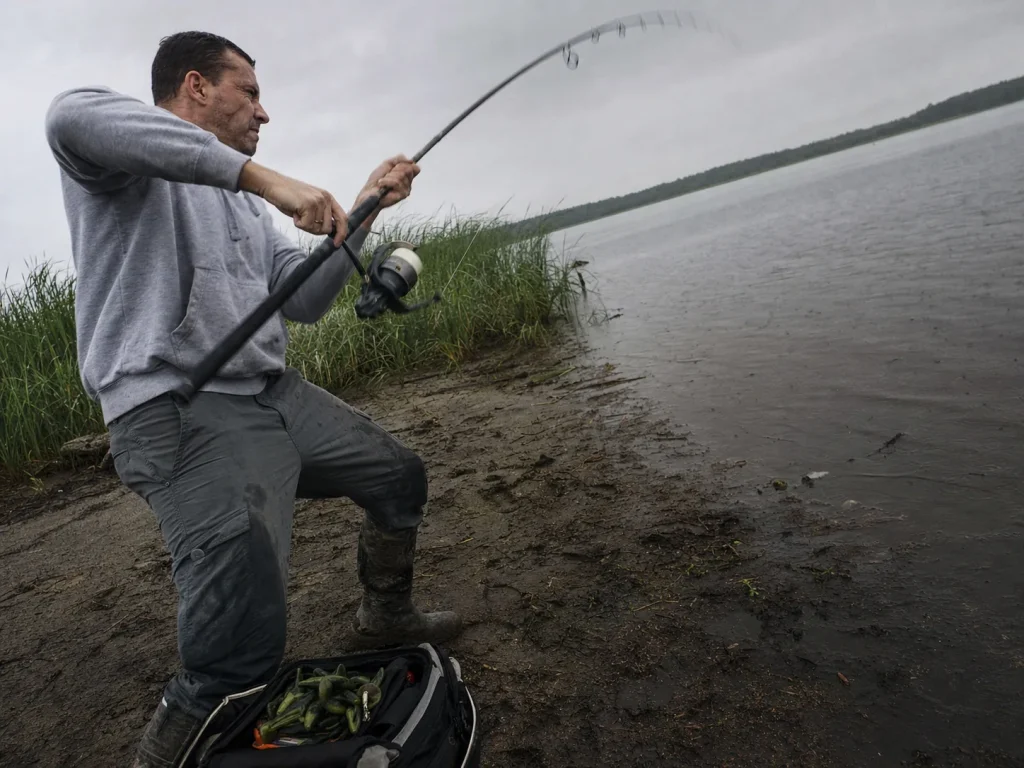
This is the one that makes veterans wince. A guy moves from a glass rod to graphite, sets the hook the way he always has, and rips it clean out of a crappie’s mouth. Not bad luck. Mechanics.
Graphite’s near-zero flex reserve delivers full force to the hook point almost instantly. That rewards a short, sharp snap hookset, a quick wrist-set that drives the point home the moment you feel the bite. Fiberglass loads through the whole blank before the force ever reaches the hook, so it wants a longer, sweeping hookset that lets the fish take the bait fully and comes tight as the rod finishes loading.
Use the wrong style and you lose fish in both directions. A soft, sweeping set on a stiff graphite rod under-drives the hook and you come up empty. A hard, snapping set with a graphite rod on a soft-mouthed fish like crappie, trout, or some panfish tears the hook straight out, because the rod already delivered full force before the fish finished eating. The species with the tender mouths punish the mismatch hardest.
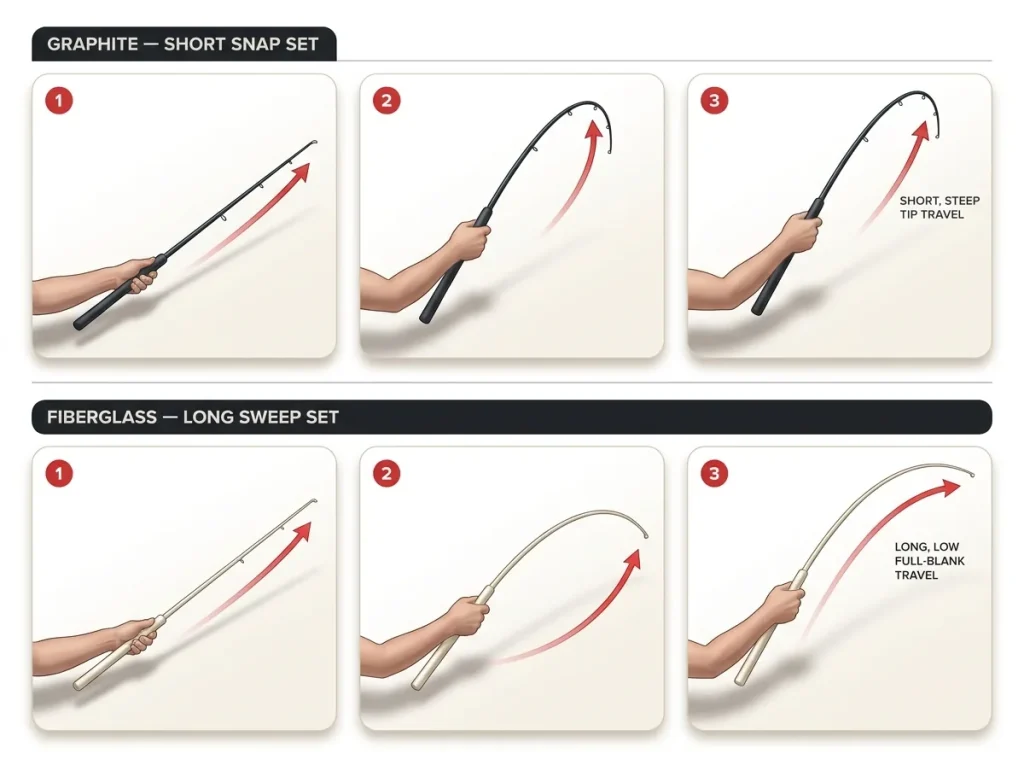
Slow the hookset down on glass, speed it up on graphite. Anglers who fish both call it a felt difference in timing, not something you can read off a spec sheet. A dozen casts on each material teaches your hands the switch faster than any article can.
Rod Action Graphite vs Glass
Action and material get tangled together because they’re related, but they aren’t the same thing. Here’s how the material pushes the action, and why that shows up on every cast and every fight.
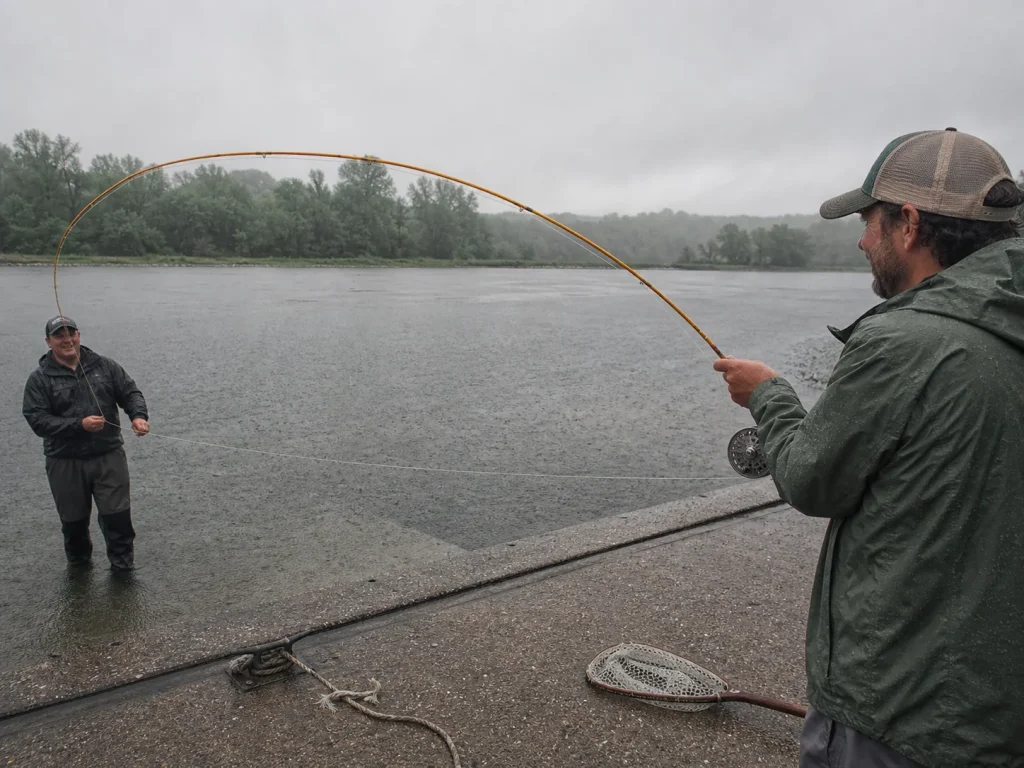
Graphite trends toward fast action, often extra-fast, a tip-only bend where the top third does the flexing and a rigid backbone sits below it. Glass trends toward a slow action with a parabolic bend, the whole blank curving in one smooth arc from tip to butt. Those tendencies come straight from the modulus and strain-energy story, just expressed as shape.
That shape does real work. A parabolic glass blank adds casting distance with moving baits and acts like a shock absorber during the fight, keeping treble hooks pinned in a thrashing fish’s mouth instead of letting them bounce loose. A stiff graphite tip gives you instant feedback and a firm backbone for driving a single hook home.
This is exactly why crankbait anglers reach for glass and jig anglers reach for graphite: it’s the bend doing the work, not the brand on the blank. Action is its own spec worth understanding, and why action and power aren’t the same thing is the piece that keeps people from buying the wrong rod entirely.
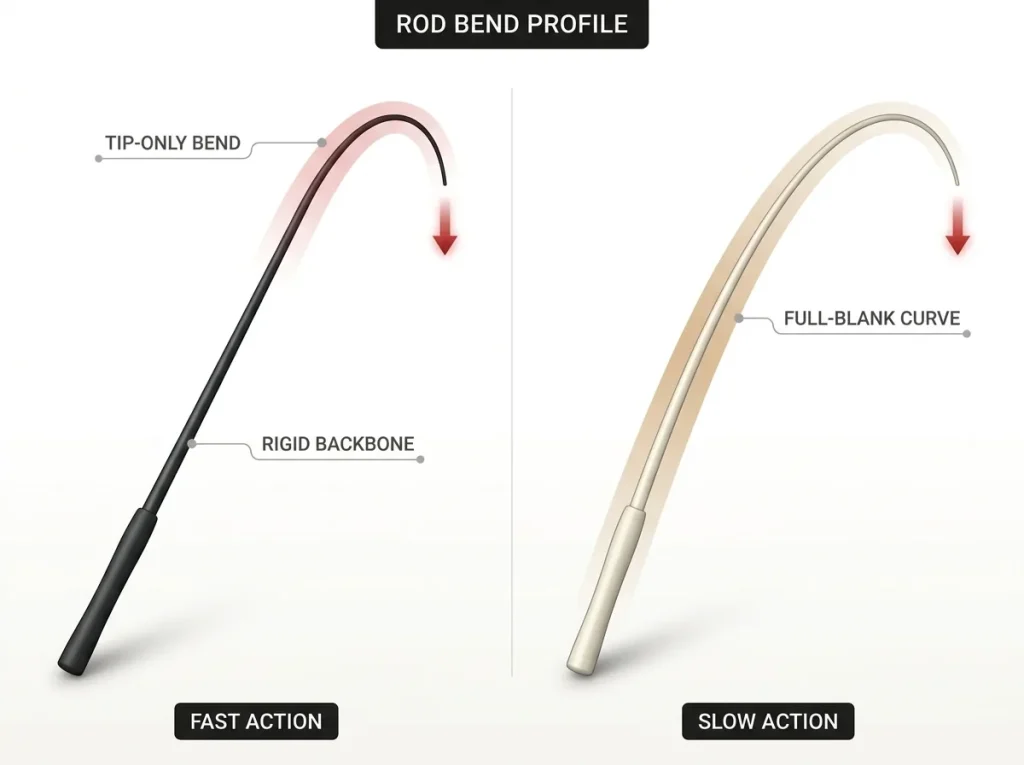
Keep one caveat in mind. Action is a spectrum, not a material label. You can buy a fast glass rod or a moderate action graphite one, because the layup and taper set the final action, the same way they set rod power. The material only biases where a blank naturally lands.
Composite Rods, the Best of Both

The obvious question after all this is “why choose at all?” That’s what composite blanks answer, and they answer it by putting each material where it does its best work.
A composite rod puts a lighter, stiffer carbon-fiber tip on a more durable, shock-absorbing fiberglass or glass-epoxy butt and mid-section. One blank, two material zones. You get bite detection from the tip and backbone plus shock absorption from the glass butt when a good fish leans on you. It’s the genuine “best of both” pitch, and it holds up in practice.
Who’s it for? The all-rounder who doesn’t want to own a dedicated glass rod and a dedicated graphite rod, and the beginner who wants forgiveness while building technique. There’s a reason experienced anglers keep steering newer ones toward glass or composite first: the material forgives casting and hookset mistakes while your hands learn, and “upgrade to graphite later” shows up again and again as real community consensus, not just budget advice.
The affordable poster child here is the Shakespeare Ugly Stik GX2 spinning combo in a 6’6″ medium light, with its Clear Tip graphite-feel section fused to a fiberglass-reinforced core. Plenty of mainstream makers build composites at this price, from Shakespeare to Daiwa, so you’re not locked into one brand. It’s cheap, nearly unkillable, and it teaches the concept in your hands better than any diagram.
Be honest about the compromise, though. A composite won’t out-sense a pure high-modulus graphite rod or out-cushion a pure glass one. It just covers more water than either does alone, which is exactly what most one-rod anglers want.
Which Material Fits How You Fish
Forget “which is better.” The real question is which one fits the fishing in front of you this weekend. Match the material to your dominant technique and most of the confusion disappears.
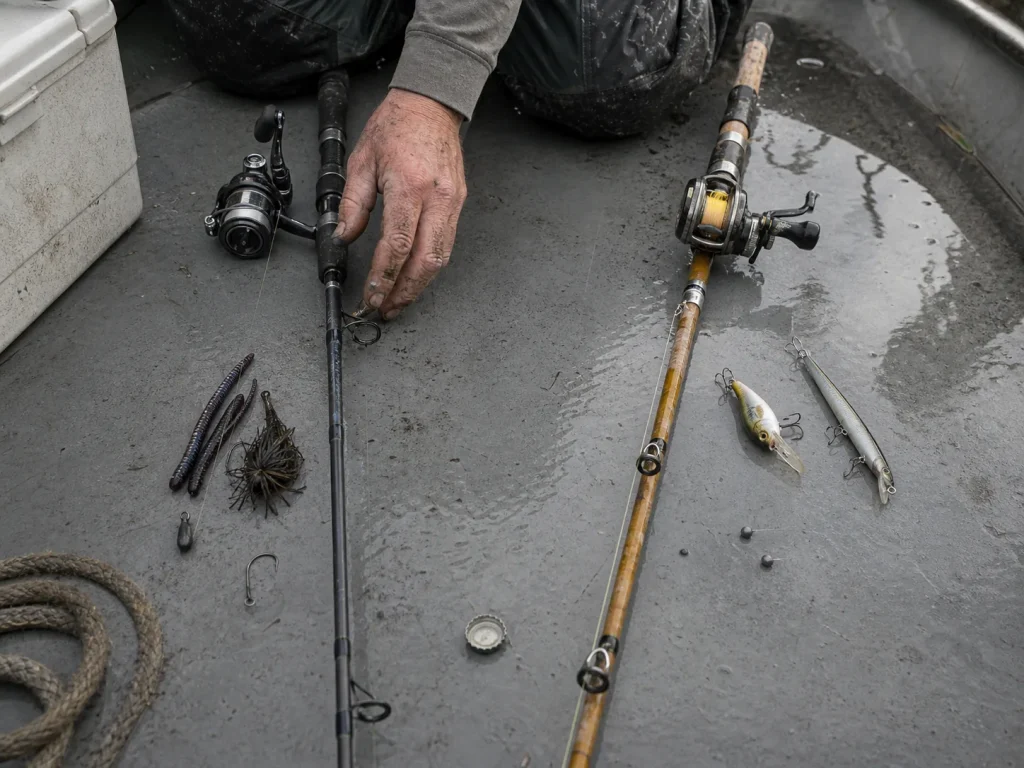
Graphite fits finesse, jigging, and bottom presentations, the single-hook techniques where bite detection is the limiting factor and hooksets need to be quick. Glass fits crankbaits, jerkbaits, topwater, and other treble-hook moving baits, plus trolling and big-fish or rough-water fights where the parabolic bend keeps hooks pinned. Tournament bass pros still run glass and composite for those techniques, and not as a budget compromise, but because the bend simply out-performs graphite at holding trebles. Composite fits the do-everything rod, the beginner, and anyone who owns one rod for mixed days.
The mistake to avoid is chasing the fanciest option instead of the fitting one. The angler throwing crankbaits all day loses fish on a fast graphite rod no matter how much it cost, because the stiff tip works against keeping the trebles seated. If jig sensitivity is your world, the rods that make jig sensitivity pay off are worth a close look. Here’s the whole thing side by side.
| Trait | Graphite | Fiberglass | Composite |
|---|---|---|---|
| Sensitivity | High | Low | Medium-high |
| Durability | Brittle on impact | Very tough | Tough |
| Weight | Lightest | Heaviest | Medium |
| Best techniques | Finesse, jigs, bottom | Crankbaits, trolling | Mixed, all-round |
| Hookset style | Fast snap | Slow sweep | Either |
| Beginner-friendly | Less | Most | Most |
Is the Graphite Upgrade Actually Worth It
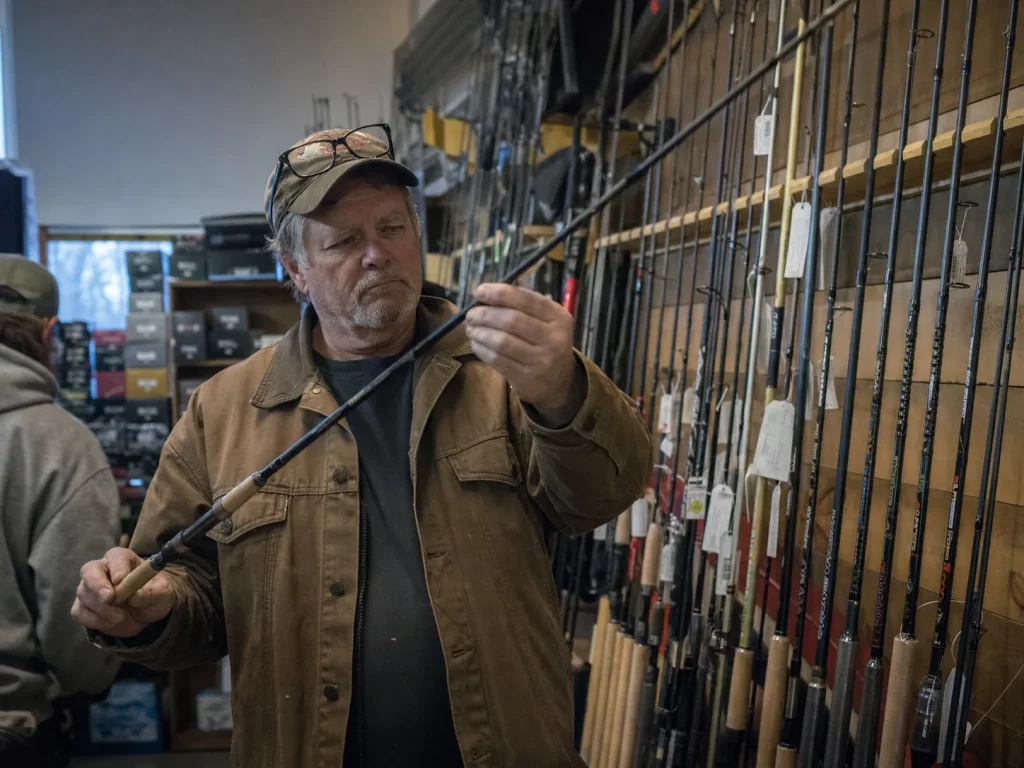
Here’s the boat-ramp answer to “should I drop the money on the graphite rod?” No sales pitch, just when it’s worth it and when it isn’t.
The upgrade earns its keep when your technique demands sensitivity. Finesse, jigs, and bottom bites are where feeling the tick is the difference between a hookup and a rod that never moved. If that’s your fishing, a premium rod with a high-modulus blank pays for itself in fish you’d otherwise miss.
It is not worth it as a blanket “better rod.” If you throw moving baits or fish rough water, a stiff, brittle high-modulus rod can actively cost you fish and break easier doing it. And for a beginner, the sensitivity you can’t yet use isn’t worth paying for, when a forgiving budget rod in glass or composite genuinely helps you learn faster and break fewer rods.
If the rod you already own matches your dominant technique, the upgrade money is better spent on fresh line, sharp hooks, or another day on the water. A sensitive rod you don’t need catches fewer fish than a cheap rod fished more.
The honest rule is to frame the decision around how you fish, not the price tag and not the modulus number. If you want the full walk-through before you spend, our full guide to picking a rod without overpaying lays out the rest of the decision, from power and action to length and budget.
Conclusion
Three things to carry away. First, this is a physics choice, not a price choice: modulus transmits the bite, strain energy absorbs it, and everything else follows from that trade. Second, match the material to your dominant technique and hookset, not to the biggest number on the blank. Third, if you only own one rod, composite covers the most water without asking you to compromise hard in either direction.
Next trip, pay attention to what your current rod is telling you on the hookset and on a light bite. Your hands will tell you which material you actually need long before any spec sheet does.
Frequently Asked Questions
01Is graphite or fiberglass better for a fishing rod?
Neither is universally better. Graphite wins sensitivity and light weight for finesse and bottom fishing, while fiberglass wins durability and hook-holding for crankbaits, trolling, and rough conditions. Match the material to your dominant technique.
02Do fiberglass rods break less than graphite rods?
Generally yes under impact. Fiberglass carries more strain energy and flexes through off-axis hits like rod-locker slams and drops, where high-modulus graphite is brittle and snaps. Most graphite breaks are impact damage, not fighting fish.
03Can you use a graphite rod for trolling or big fish?
You can, but a parabolic glass or composite rod usually serves better. Its full-blank bend cushions hard surges and keeps hooks pinned, while a stiff fast graphite rod is less forgiving on head-shaking fish.
04Are more expensive graphite rods worth it?
Only when your technique needs the sensitivity, like finesse, jigs, and bottom presentations. For moving baits or as a first rod, the premium buys sensitivity you cannot yet use and a blank that breaks easier.
05What is a composite fishing rod made of?
A composite or hybrid blank combines a stiffer carbon-fiber tip for bite detection with a tougher, shock-absorbing fiberglass butt and mid-section. Two material zones in one rod, built to balance sensitivity and forgiveness.
Risk Disclaimer: Fishing, boating, and all related outdoor activities involve inherent risks that
can lead to injury. The information provided on Master Fishing Mag is for educational and informational purposes
only. While we strive for accuracy, the information, techniques, and advice on gear and safety are not a substitute
for your own best judgment, local knowledge, and adherence to official regulations. Fishing regulations, including
seasons, size limits, and species restrictions, change frequently and vary by location. Always consult the latest
official regulations from your local fish and wildlife agency before heading out. Proper handling of hooks, knives,
and other sharp equipment is essential for safety. Furthermore, be aware of local fish consumption advisories. By
using this website, you agree that you are solely responsible for your own safety and for complying with all
applicable laws. Any reliance you place on our content is strictly at your own risk. Master Fishing Mag and its
authors will not be held liable for any injury, damage, or loss sustained in connection with the use of the
information herein.
Affiliate Disclosure: We are a participant in the Amazon Services LLC Associates Program, an
affiliate advertising program designed to provide a means for us to earn advertising fees by advertising and linking
to Amazon.com. As an Amazon Associate, we earn from qualifying purchases. We also participate in other affiliate
programs and may receive a commission on products purchased through our links, at no extra cost to you. Additional
terms are found in the terms of service.