

In this article
Pick up two rods with “Medium” printed on the blank and flex them side by side. They won’t feel the same. One loads like a real medium, the other fights back like something a full class stiffer. That printed word isn’t a measurement. It’s each brand’s private marketing scale, and once you know that, the whole label reads differently. Here we’ll decode every mark on the blank left to right, then show you the five spots where those marks quietly mislead you, and how to read a rod when the ink wore off years ago. It’s one piece of everything that goes into picking a fishing rod.
The Model Number and Length Code
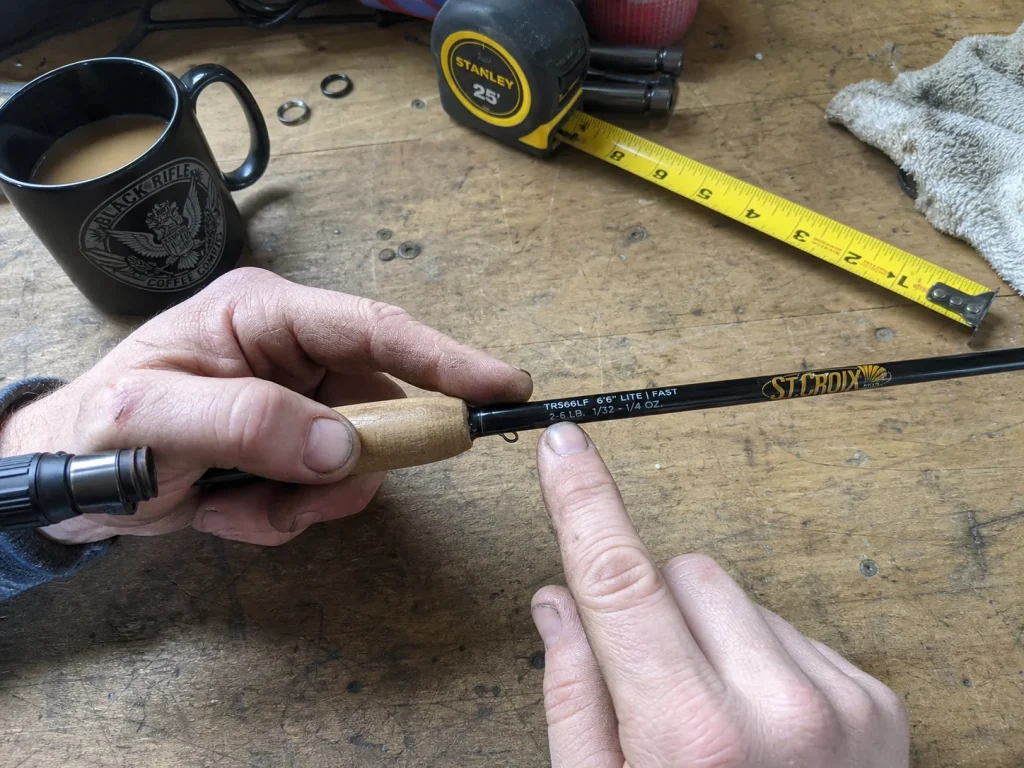
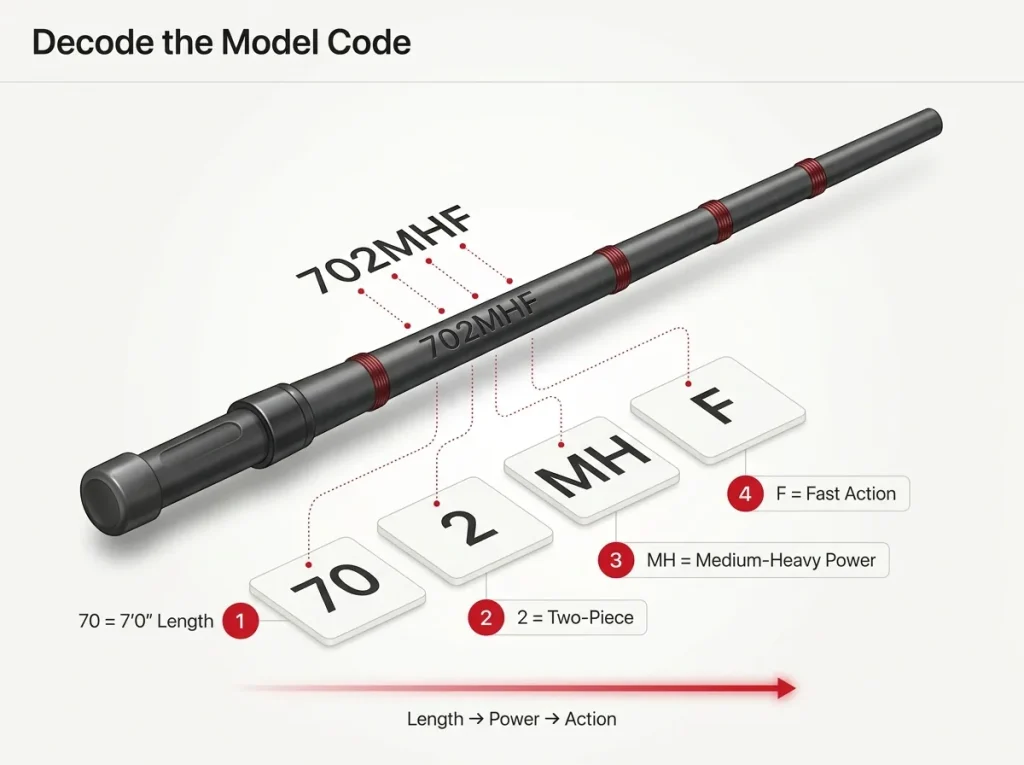
Flip an unfamiliar rod over and you’ll usually find a cryptic string stamped above the grip, something like 702MHF or TRS66LF. It looks like a serial number. It’s actually a compressed spec sheet. Crack the pattern once and you can size up any rod without casting it.
Start with the rod length. It’s either printed straight (“6’6″”) or baked into the front of the model number. In a code like 702MHF, the first two digits are feet and inches, so “70” means 7’0″, and the next digit is often the piece count (“2” for a two-piece). In a code like TRS66LF, “66” means 6’6″. After the length come the letters, and they always run the same direction: power first, then action. So MHF decodes to Medium-Heavy power, Fast action.
Brands run their own code formats, but that length-then-power-then-action order is close to universal. Take the St. Croix Triumph TRS66LF as a clean worked example. TRS tells you the series (Triumph Spinning), 66 gives you 6’6″, L is Light power, and F is Fast action. Once you see the pattern, the string stops being intimidating and starts being useful.
When a manufacturer prints a specific lure and line spec right on the blank, trust those numbers over the power letter. The word “Medium” is a rough bucket. The printed 1/8–3/8 oz lure window tells you exactly what the rod was built to throw.
Length isn’t just a number to log, either. It changes casting distance, hookset leverage, and how the rod handles in tight cover, which is worth understanding before you commit to a code you decoded. That’s the difference between reading the spec and knowing what that length actually does on the water.
What Rod Power Really Controls
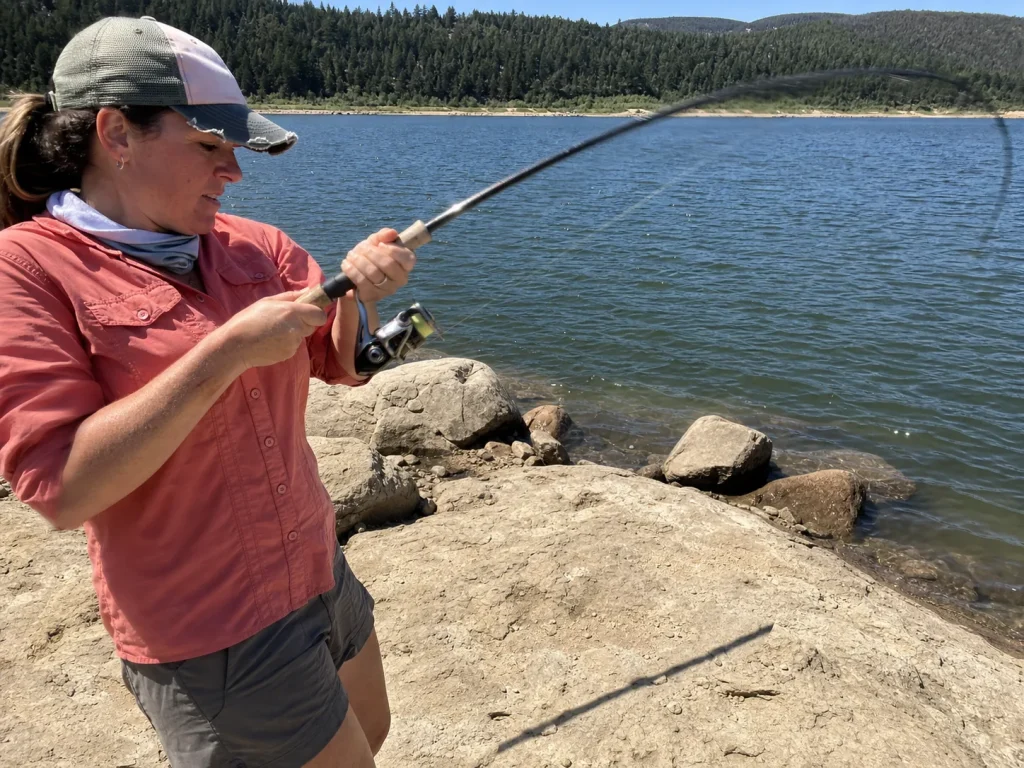
Beginners hear “power” and picture how strong the rod is, like it’s a measure of toughness. It isn’t. Rod power measures how much force it takes to bend the blank, which is really a way of matching the rod to lure weight and fish size. Keep power and action straight as two different things and the rest of the label falls into place.
The scale runs ultra-light, light, medium-light, medium, medium-heavy, heavy, and extra-heavy. Lower power means less force to load the blank, which suits finesse presentations and small species. Higher power gives you the backbone to move big fish out of heavy cover and drive a hook home.
Match it to what you actually chase. Ultra-light and light rods are built for panfish and trout, where a soft tip protects light line and tiny hooks. Medium-heavy and heavy rods handle bass buried in cover, pike, and musky, where you need muscle over finesse. Here’s the trap most people fall into: buying a second rod “in the same power” as one they already own, without checking the brand. That’s where the label starts lying, and we’ll get to exactly why.
Action and Where the Blank Bends
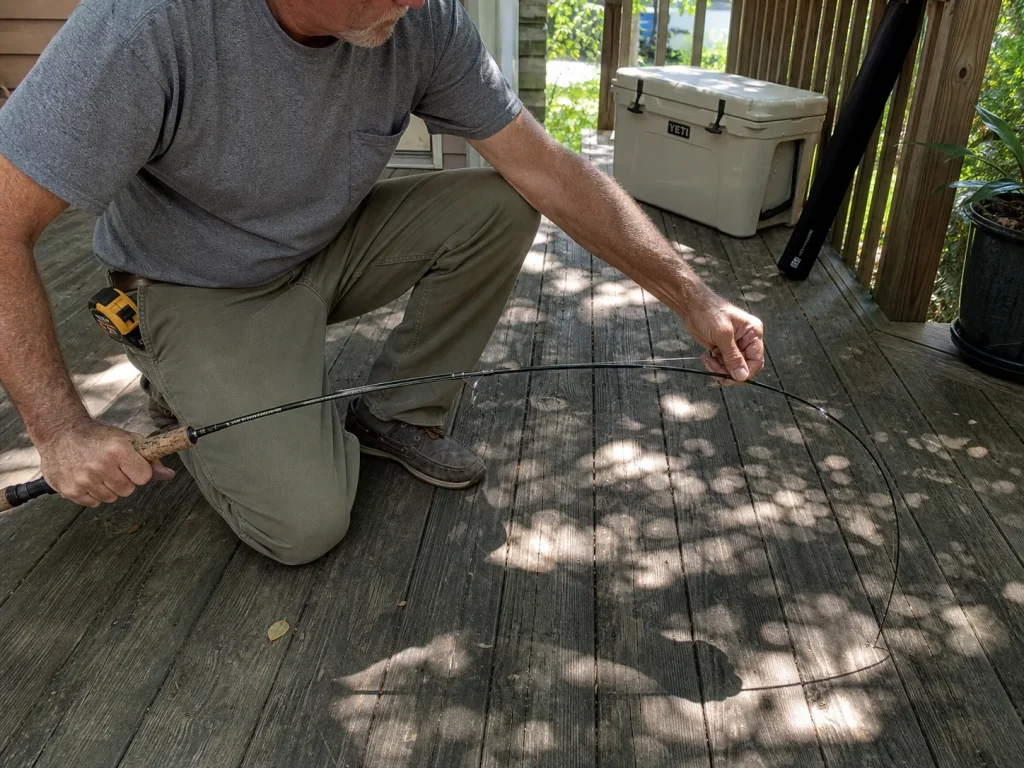
Action isn’t a strength rating. It’s a location. Rod action tells you where along the blank the rod bends under load, and you can literally see it by flexing the rod. That single visual is the fastest way to understand action, no chart required.
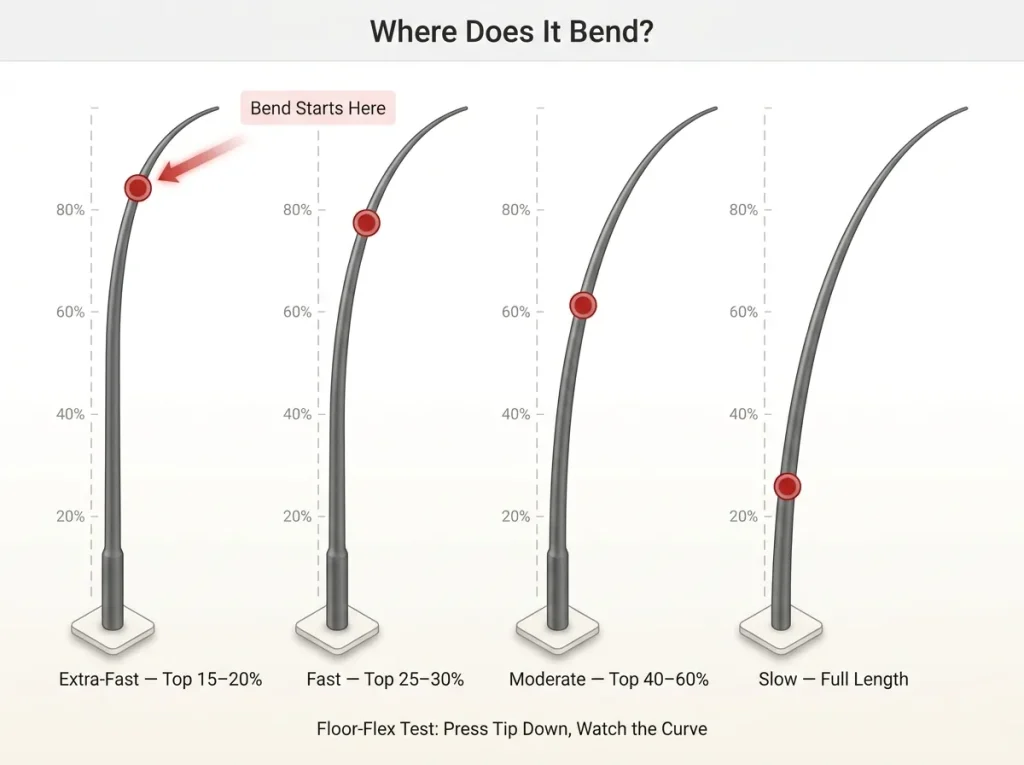
The scale runs from slow to extra-fast. The bend zones are consistent enough to memorize: extra-fast action bends in just the top 15 to 20 percent of the blank, fast action in the top 25 to 30 percent, moderate action across the top 40 to 60 percent, and slow action flexes all the way down into the handle. Faster action gives you more sensitivity and quicker hooksets because less blank has to move before the tip transmits the bite. Slower action is more forgiving, which is why it pairs so well with treble-hook baits and soft, mushy strikes.
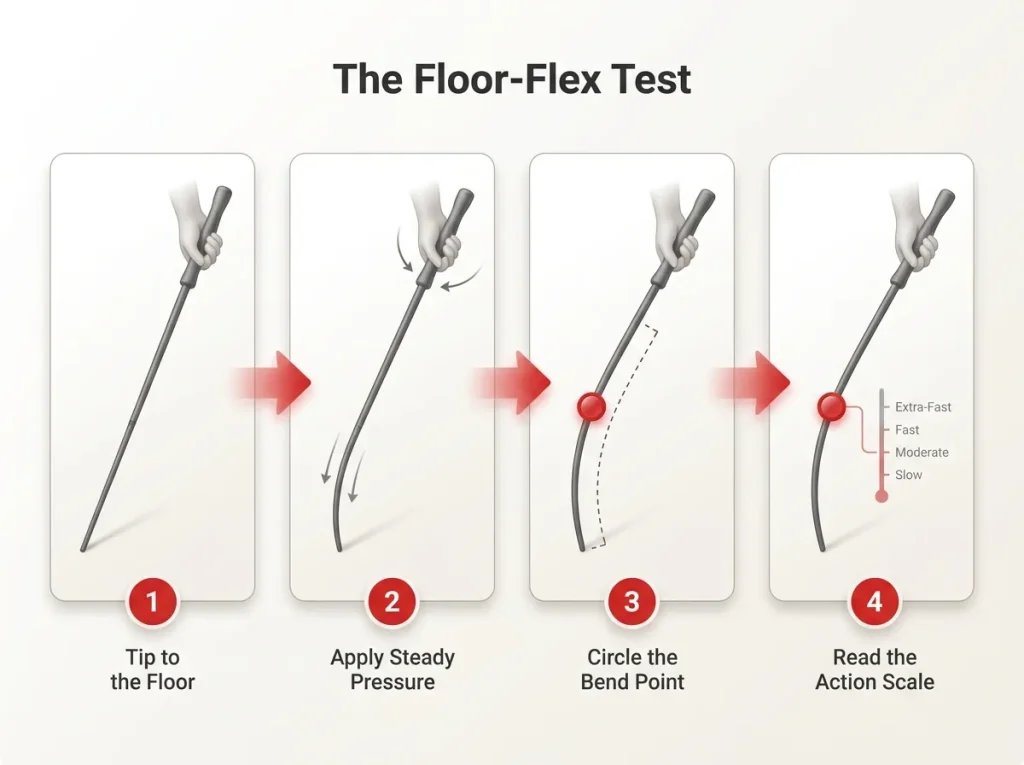
There’s a field trick veterans use when the sticker is unreadable: press the rod tip against the carpet or floor and watch where the bend starts. That’s the floor-flex test, and it reads action in about three seconds. One more wrinkle worth knowing. The word “Medium” gets printed for both power and action, which is genuinely confusing, so a lot of brands now print “Moderate” for the action half of the label just to keep the two straight.
Line Rating and Lure Rating
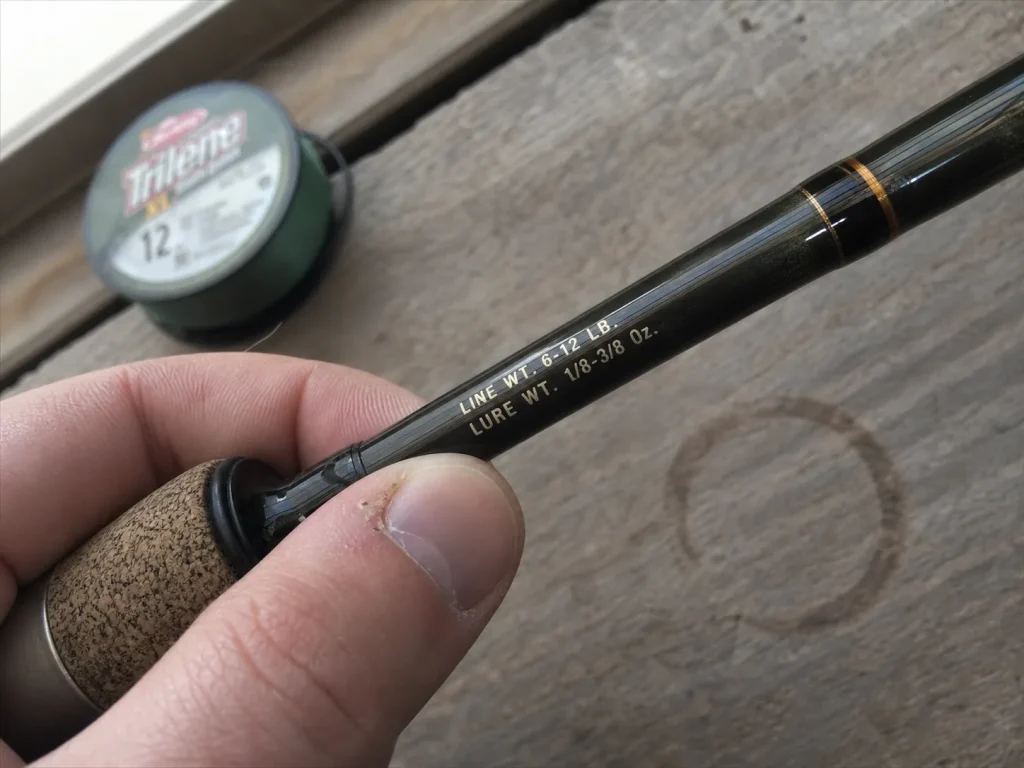
The two little number ranges printed near the specs are the most practical marks on the whole rod. They tell you exactly what to spool and exactly what to tie on. Miss them and you can mismatch a perfectly good rod into feeling broken.
The line rating is the pound-test window the blank was built for, something like 6 to 12 lb. The lure rating is the weight range it casts and loads best, say 1/8 to 3/8 oz. Fish inside those windows and the rod loads correctly and protects itself. Hang a lure far over the rating and you overload the tip. Go far under and the blank never flexes enough to cast well or cushion a hookset.
One detail the label won’t explain: printed pound test is a minimum breaking strength, not a guarantee, unless the line is IGFA or tournament rated. Real line often tests higher than the number on the spool, which is part of why the same “12 lb” feels different across brands. If you want the full picture on what pound test really means, it’s worth a read before you spool up.
When the power word is worn off or you don’t trust it, the lure rating is your single most reliable clue. It’s the number a manufacturer sweats over, because a rod that won’t cast its own rated lure weight gets returned. The power letter gets no such scrutiny.
Blank Material and the Modulus Callouts
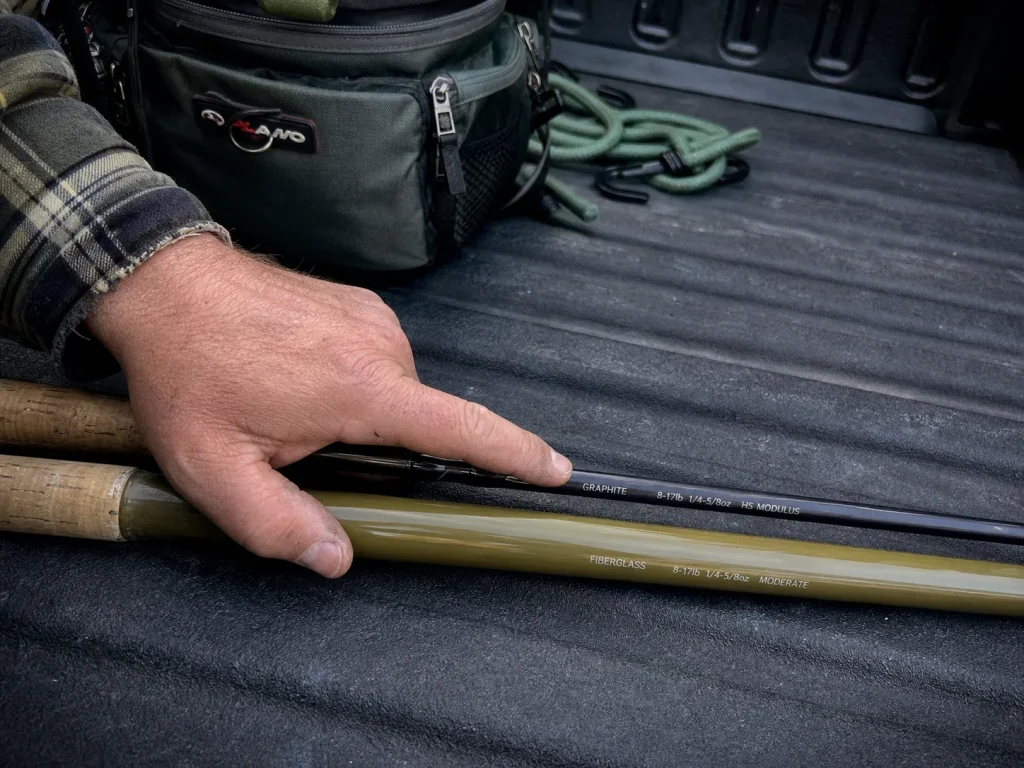
The material line is where the marketing jargon piles up. IM7, 24T, high-modulus, carbon fiber. Strip it all down and it comes to one trade: stiffness against toughness.
Start with the three families. Graphite is stiff, light, and sensitive, so it telegraphs the faintest bite. Fiberglass is heavier and slower but nearly unbreakable, which is why it still owns the crankbait rack. Composite blends the two and splits the difference. Then come the numbers. Modulus measures graphite stiffness, and the common grades line up cleanly: IM6 sits around 38 MSI, IM7 around 41 MSI, and IM8 around 44 MSI. Higher modulus means stiffer graphite by weight, so the builder needs less material for the same backbone, which is why a high-modulus blank feels lighter and more sensitive in hand. Callouts like 24T graphite are just the raw carbon tonnage, another way of telling the same stiffness story.
The takeaway the label conveniently skips is that a higher modulus number isn’t automatically better. It’s a real trade, and we’ll unpack the cost of it shortly. Match the material to how you fish: glass or composite for crankbaits and forgiveness, high-modulus graphite for feel and finesse. If you want the deep version on what rod modulus actually buys you, the whole graphite-versus-glass question, and the science behind how each material feels the bite, those two go a level below the label.
Rod Type, Handle, and Guide Markings
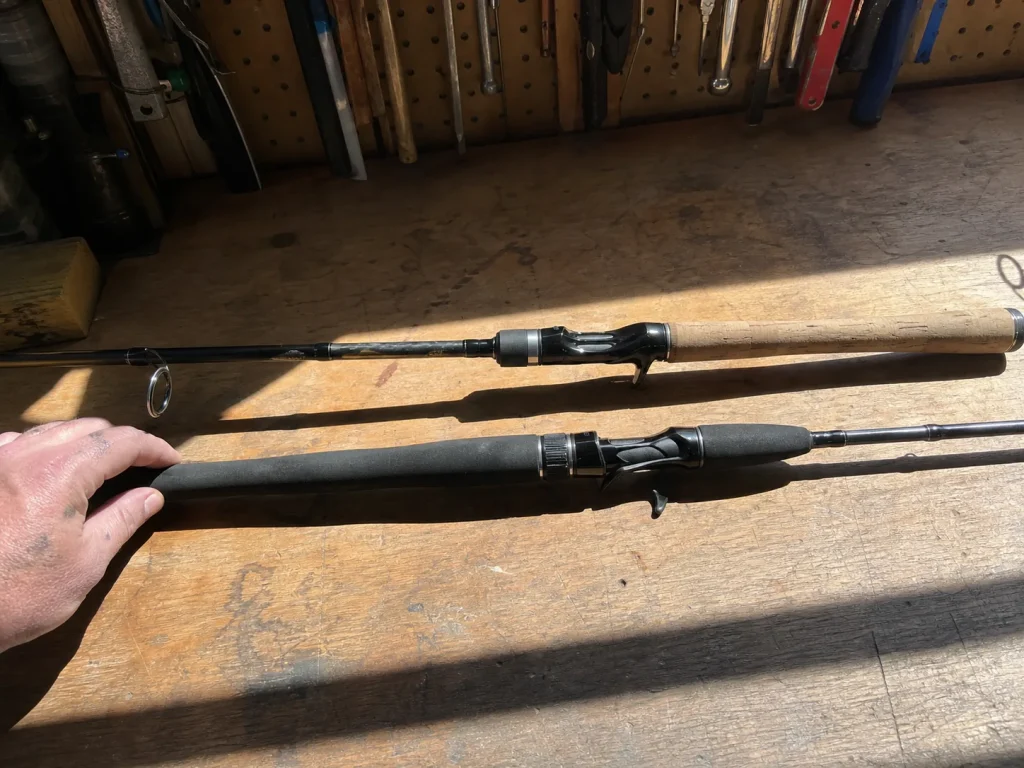
Before the specs even make sense, the label tells you what kind of rod you’re holding, and that changes everything downstream. A spinning rod and a casting rod with identical numbers still aren’t interchangeable, because the reel mounts on opposite sides and the guides are sized and placed differently.
Spinning rods label for an under-mount reel seat and use bigger stripper guides to tame line coming off a fixed spool. Casting rods, sometimes labeled baitcasting rods, mount the reel seat on top and run smaller guides from the stripper down to the tip-top. Fly rods ignore power and action entirely and label by line weight instead. Piece count is usually printed or obvious at the ferrule, and it’s a straight trade of sensitivity for portability. If you’re weighing that call, the case for one-piece and two-piece rods is worth knowing before you buy.
Handle callouts matter more than people expect. Cork is lighter, warmer in the hand, and transmits vibration well, while EVA foam is cheaper, tougher, and shrugs off weather. Neither is strictly better, and the cork versus EVA foam choice comes down to how and where you fish. Premium blanks also reference guide count and material, since more and better guides spread the load and protect your line. Fly labeling, worth noting, runs on the AFFTA line-weight standard, which is the one genuinely calibrated number in the tackle world, and even that gets fudged.
Why Medium Isn’t Medium Across Brands
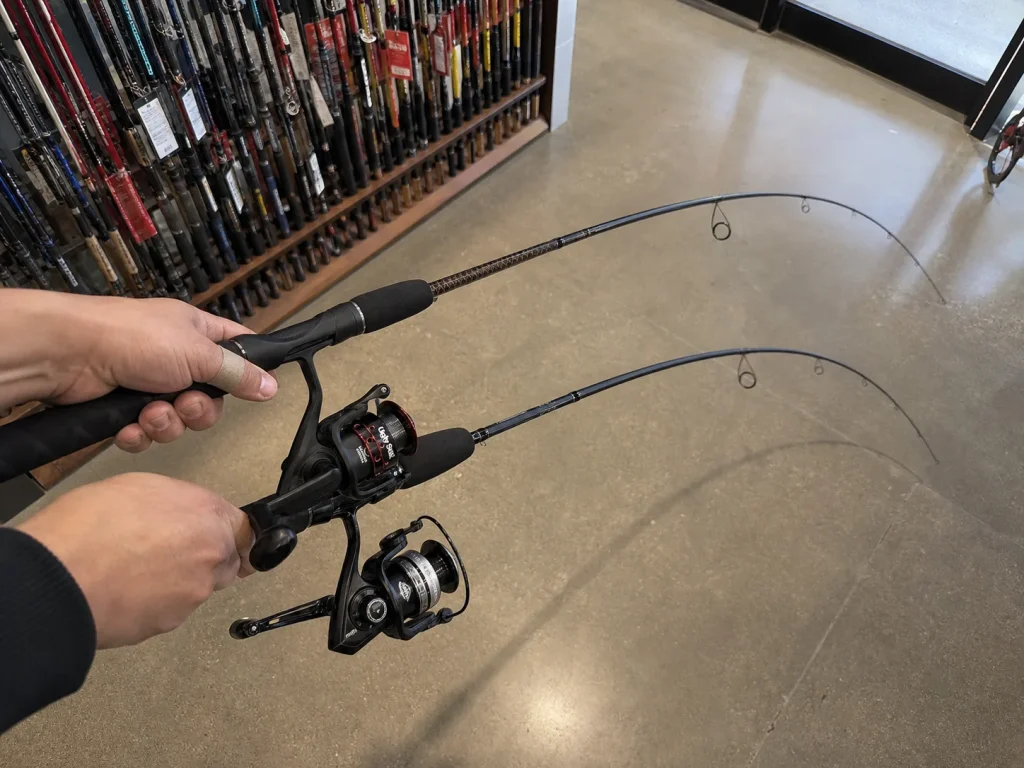
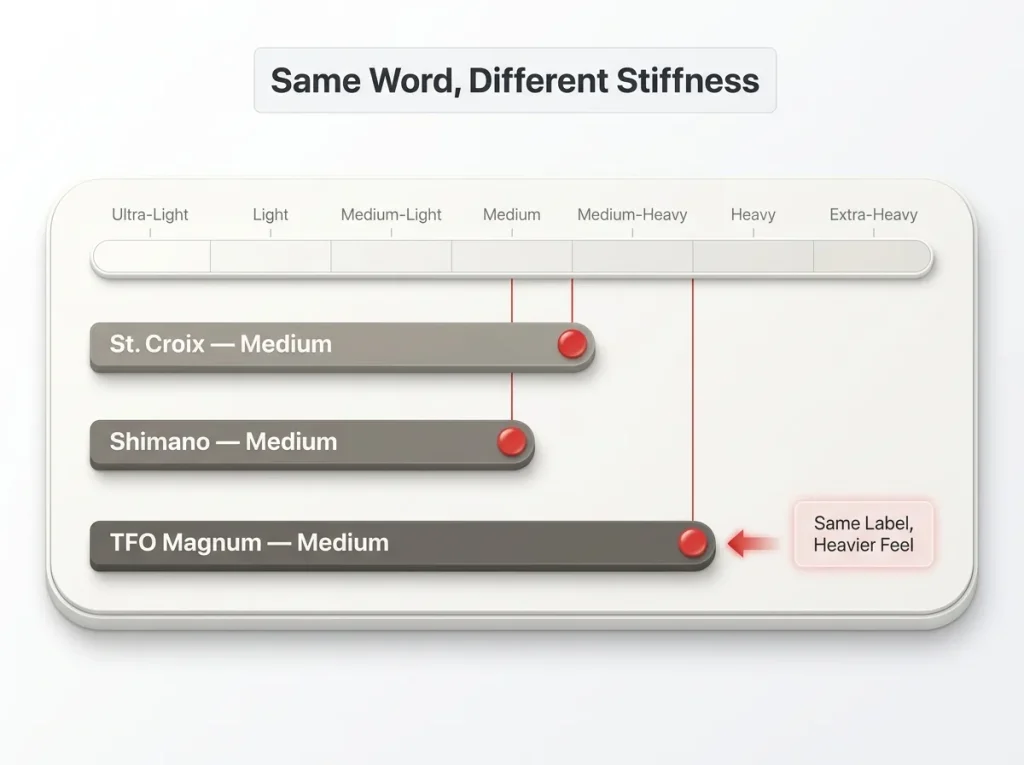
Here’s the one nobody prints and everyone should know. There is no industry-wide standard for rod power or rod action. Each manufacturer calibrates its own scale, which means two rods wearing the identical word can flex a full category apart. Treat “Medium” as a universal measurement and you’ll buy the wrong rod eventually.
The examples are easy to feel. St. Croix runs its scale conservative, or “underrated” in shop talk, so a St. Croix Medium often fishes closer to another brand’s Medium-Heavy. Temple Fork Outfitters goes the other way with its “Magnum” power, where a Magnum Medium loads about as stiff as a typical Heavy elsewhere. Put a St. Croix labeled Medium next to an Ugly Stik GX2 labeled Medium-Light and flex them together, and the gap between the printed word and the real bend is obvious in your hands. The only calibrated standard in the whole tackle world is the AFFTA fly line weight spec, and modern line makers routinely fudge even that.
This is exactly where anglers get burned: buying a matching-power second rod from a different brand and ending up with a completely different stick. The fix is simple once you stop trusting the sticker. Cross-check the printed power word against how the blank actually loads in your hand, and lean on the line and lure rating, which stay far more consistent brand to brand than the power word ever does. If you want the deeper mechanics, the power-versus-action distinction is spelled out plainly in Kentucky’s Department of Fish and Wildlife rod breakdown.
Why Your Line Rating Lies Once You Spool Braid
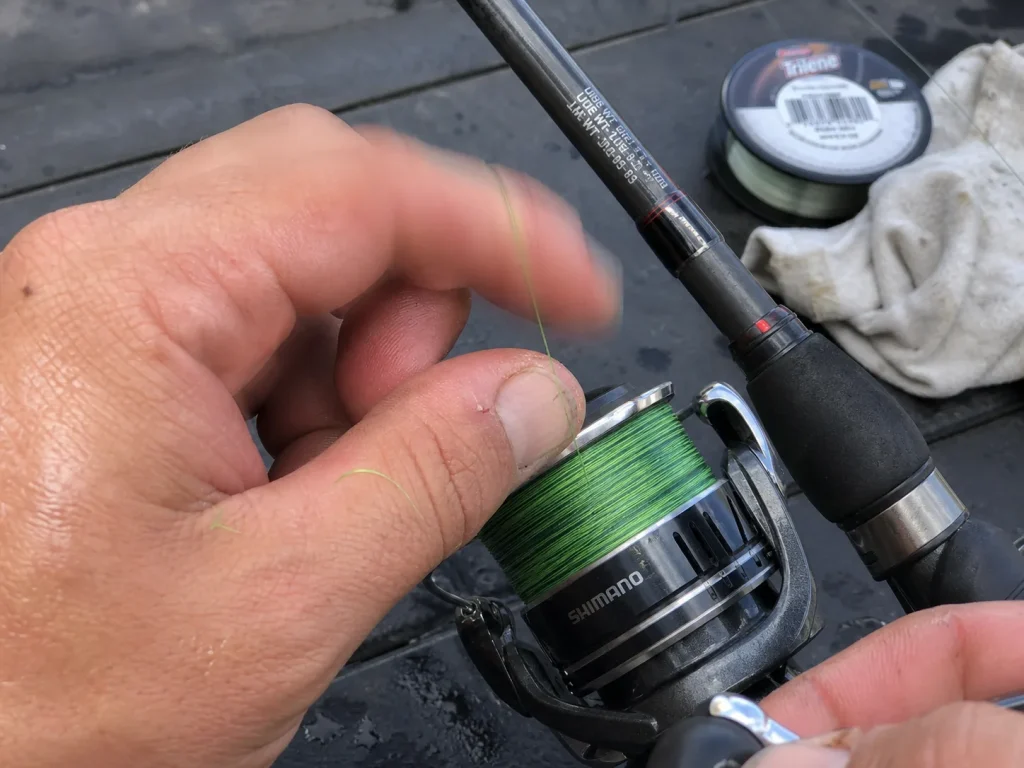
That neat “8 to 15 lb” line window on the blank was written with one silent assumption: monofilament. Spool braided line at the same pound test and the math quietly shifts under you, because braid is a fundamentally different animal at the same rating.
The numbers tell the story. Braid runs 35 to 45 percent thinner in line diameter than mono or fluorocarbon at the same pound test. A 10 lb mono measures around 0.011 inches, while 10 lb braid comes in near 0.008 inches. So a rod line rating calibrated in the mono era is now looking at a thinner, nearly stretchless line the label writer never pictured. That lack of stretch is the real consequence. Mono absorbs shock by stretching, and braid barely stretches at all, so the blank ends up soaking up more of the load that the line used to cushion. Anyone who has re-spooled an old rod with braid for the first time knows the feeling, the rod loads and telegraphs strikes differently than it ever did with mono.
The practical rule: when you run braid on a rod rated for mono, lean toward the lower end of the printed line window and let the rod and your drag pressure do the cushioning the line no longer does. You get all of braid’s sensitivity without asking the blank to eat shock loads it wasn’t rated for.
The Modulus Trade-Off Nobody Prints on the Label
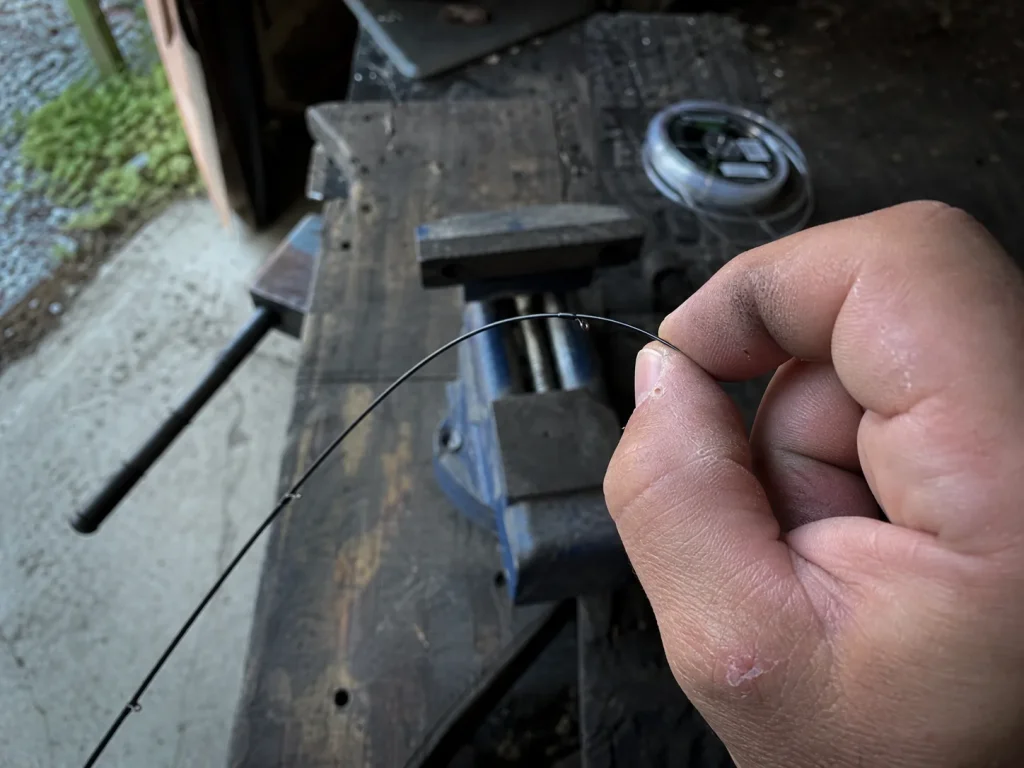
The bigger IM number sounds like a straight upgrade. IM8 must beat IM6, right? Not exactly. You’re buying sensitivity and lightness with brittleness, and the label never mentions the second half of that deal.
The physics is consistent. As modulus (stiffness) climbs, strain tolerance drops, so a higher-modulus blank measurably snaps more easily under a sudden shock load. And the failure moments are specific, not theoretical: a violent hookset, high-sticking a fish (lifting the rod tip past vertical under load), or cracking the tip against the gunwale on a bad boat day. That makes IM8 versus IM6 a genuine trade rather than better versus worse. You gain feel and lose impact tolerance.
So buy the modulus that matches your discipline, not the biggest number on the shelf. A crankbait rod has no business chasing IM8, because you want a little forgiveness there, not a hair trigger that shatters on a hard headshake. High-sticking, by the way, is the number one real-world cause of snapped high-modulus blanks, which is also why it’s the number one reason a rod warranty gets denied. If you fish high-modulus graphite, it pays to know how to spot a cracked blank before it lets go, because they rarely fail without warning signs.
If a rod’s whole pitch is its modulus number, that’s a tell. The best blanks get sold on their taper and balance, not on a stiffness rating you can’t feel until it snaps. A brand leading with “IM8” and little else is selling you a spec, not a rod.
Spec-Washing When a Cheap Rod Oversells Its Label
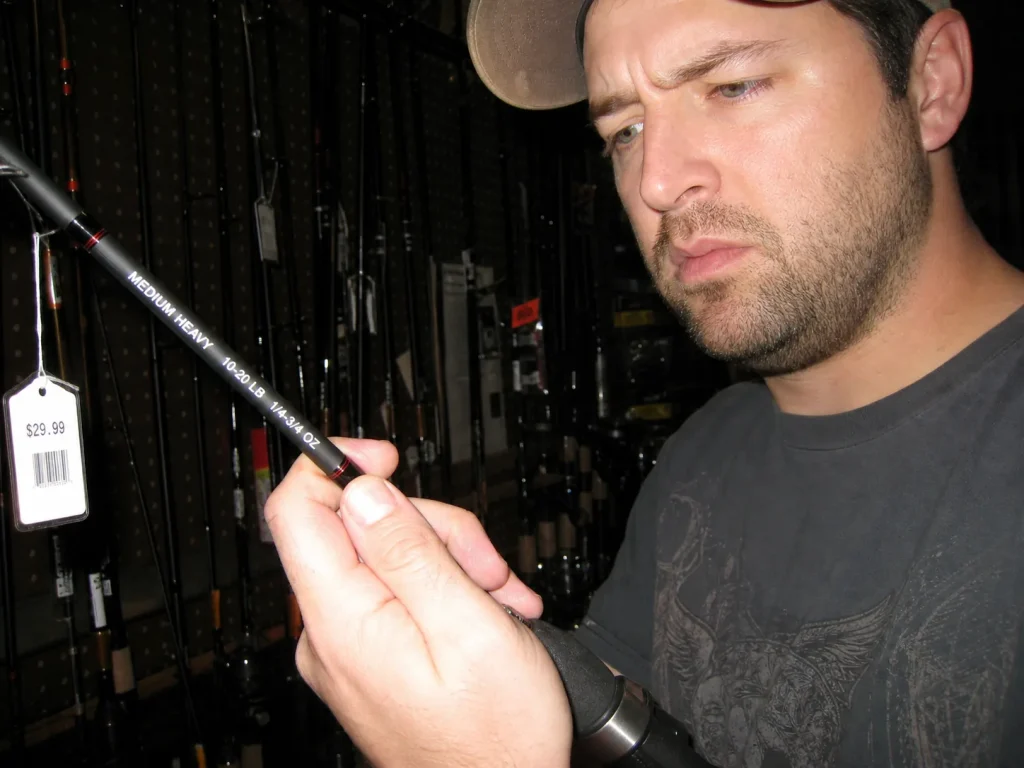
Since nobody calibrates power and line ratings, there’s no referee stopping a budget maker from printing an ambitious number. This is the honest-gear-talk angle no spec sheet will give you: some cheap blanks print an optimistic rating to look more capable on the rack than they actually fish.
The tell is a mismatch you can feel. A suspiciously generous label on a rod that feels light and hollow in the hand, or that flexes way softer or stiffer than its printed power suggests, is worth a second look. The blank doesn’t lie even when the label does, so sanity-check the sticker against the rod’s actual weight and flex before you trust it. Load the tip, feel where it bends, heft the balance. A rod claiming premium capability with a bargain feel is telling on itself.
Keep this honest, though. This is informed caution, not a hard rule, so treat a too-good-to-be-true budget label as a prompt to test the rod, not proof it’s junk. Plenty of legit budget rods, the Ugly Stik tier, print an honest and even conservative rating. The red flag is a no-name blank claiming to punch two categories above its weight with nothing in the hand to back it up.
How to Read a Rod When the Label’s Worn Off
Real anglers inherit rods, grab them at garage sales, or pull out a stick where the ink rubbed off the blank a decade ago. Every spec guide assumes a pristine sticker. The water doesn’t work that way, and there’s a real method for a bare rod, not just a shrug.
Start with what you can always recover. Measure the length tip to butt with a tape, and count the pieces at the ferrule. Then read the action with the floor-flex test: press the tip to the carpet, watch where the bend starts, and match it to the scale (top 15 to 20 percent is extra-fast, into the handle is slow). For power, fall back on the line rating window, which reverse-engineers cleanly because it’s more consistent across brands than the missing power word. Roughly 10 to 17 lb clusters around Medium, and 12 to 20 lb clusters around Medium-Heavy.
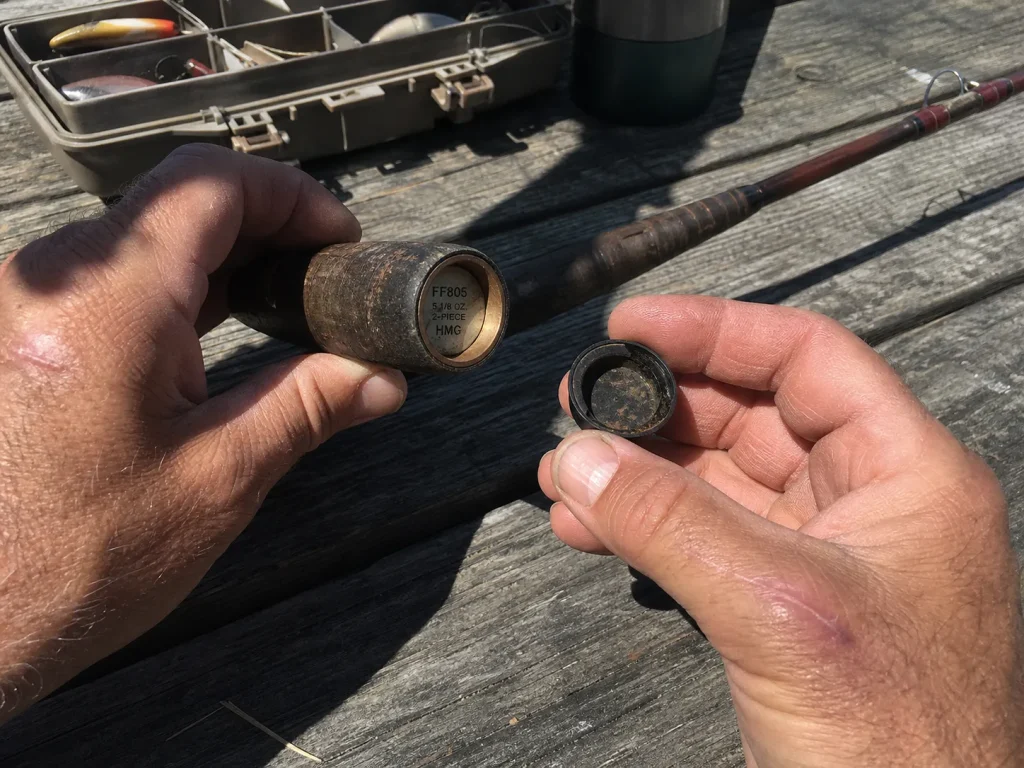
Before you write off a mystery rod, pop the butt cap off the handle. Some blank builders like Seeker and Calstar print a second model number inside the blank, hidden under that cap. A rod everyone else gave up identifying can spell out its own specs the moment you look in the right place.
If reverse-engineering a bare rod feels like more work than it’s worth, that’s a fair call too. Sometimes the move is just to grab a solid spinning rod with specs you can actually trust and skip the guesswork entirely.
Conclusion
The label decodes cleanly once you know the order: length, power, action, line and lure ratings, then material. Read it in that sequence and no rod is a mystery. But the power and action words are a marketing scale, not a measurement, so always cross-check them against how the blank flexes and what the line rating says. And a bare rod with no sticker isn’t a dead end. Floor-flex it, read the line window, and check under the butt cap.
Next time you’re holding an unfamiliar rod, decode it out loud before you cast it. Once you’ve caught a label overselling itself even once, you’ll never trust a printed word blindly again.
Frequently Asked Questions
01What do the numbers and letters on a fishing rod mean?
They encode length, power, and action. A code like 702MHF reads as a 7’0″, 2-piece, Medium-Heavy power, Fast action rod. The letters after the length always run power first, then action.
02What is the difference between rod power and rod action?
Power is how much force it takes to bend the blank, which tracks how much weight and how big a fish it handles. Action is where along the blank it bends. Power is the strength, action is the location.
03Is a medium rod the same across all brands?
No. There is no industry standard for power ratings. A St. Croix Medium can fish closer to another brand’s Medium-Heavy, and TFO’s Magnum scale runs stiffer still. Cross-check the word against the line rating and how it flexes.
04How do I read a fishing rod with no label or a worn-off sticker?
Use the floor-flex test for action by pressing the tip to the floor and watching the bend point. Read power off the line-rating window, and check inside the blank under the butt cap, where some builders hide a second model number.
05Does the line rating still apply if I use braid?
Not directly. The rating assumes mono, and braid is 35 to 45 percent thinner and nearly stretchless at the same pound test. Lean toward the lower end of the printed window and let the rod and drag cushion the shock.
Risk Disclaimer: Fishing, boating, and all related outdoor activities involve inherent risks that
can lead to injury. The information provided on Master Fishing Mag is for educational and informational purposes
only. While we strive for accuracy, the information, techniques, and advice on gear and safety are not a substitute
for your own best judgment, local knowledge, and adherence to official regulations. Fishing regulations, including
seasons, size limits, and species restrictions, change frequently and vary by location. Always consult the latest
official regulations from your local fish and wildlife agency before heading out. Proper handling of hooks, knives,
and other sharp equipment is essential for safety. Furthermore, be aware of local fish consumption advisories. By
using this website, you agree that you are solely responsible for your own safety and for complying with all
applicable laws. Any reliance you place on our content is strictly at your own risk. Master Fishing Mag and its
authors will not be held liable for any injury, damage, or loss sustained in connection with the use of the
information herein.
Affiliate Disclosure: We are a participant in the Amazon Services LLC Associates Program, an
affiliate advertising program designed to provide a means for us to earn advertising fees by advertising and linking
to Amazon.com. As an Amazon Associate, we earn from qualifying purchases. We also participate in other affiliate
programs and may receive a commission on products purchased through our links, at no extra cost to you. Additional
terms are found in the terms of service.