
In this article
You are standing in front of forty rods on a rack, every one of them printed with numbers and words that mean nothing to you yet, and all you actually want to do is catch a fish this weekend.
Here is the flat truth nobody at the counter will tell you: the rod that forgives a bad cast will catch you more fish in year one than the rod with the better spec sheet, and almost every real beginner needs the same basic setup. You are also not some rare case. Beginners are one of the biggest groups in fishing right now, which is exactly why the honest answer is a short list of picks instead of a spec lecture. Below are the rods worth buying, sorted by the way you actually fish, plus straight answers to the two questions every first-time buyer asks.
Spinning, Baitcasting, or Spincast: Which One to Actually Start With
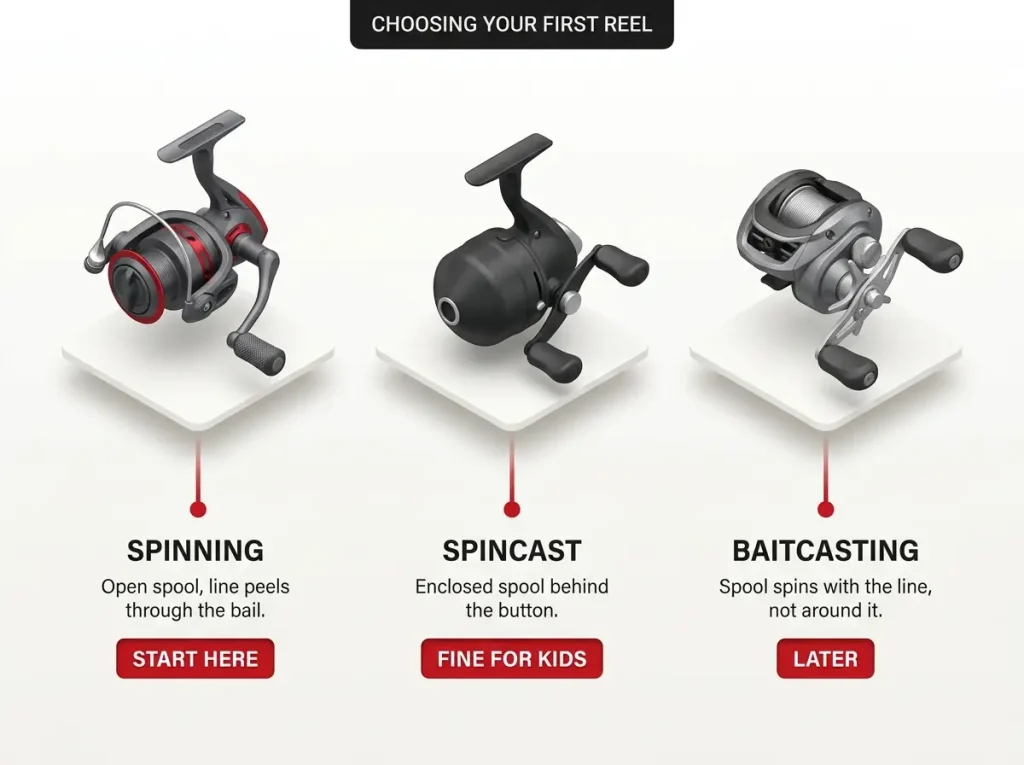
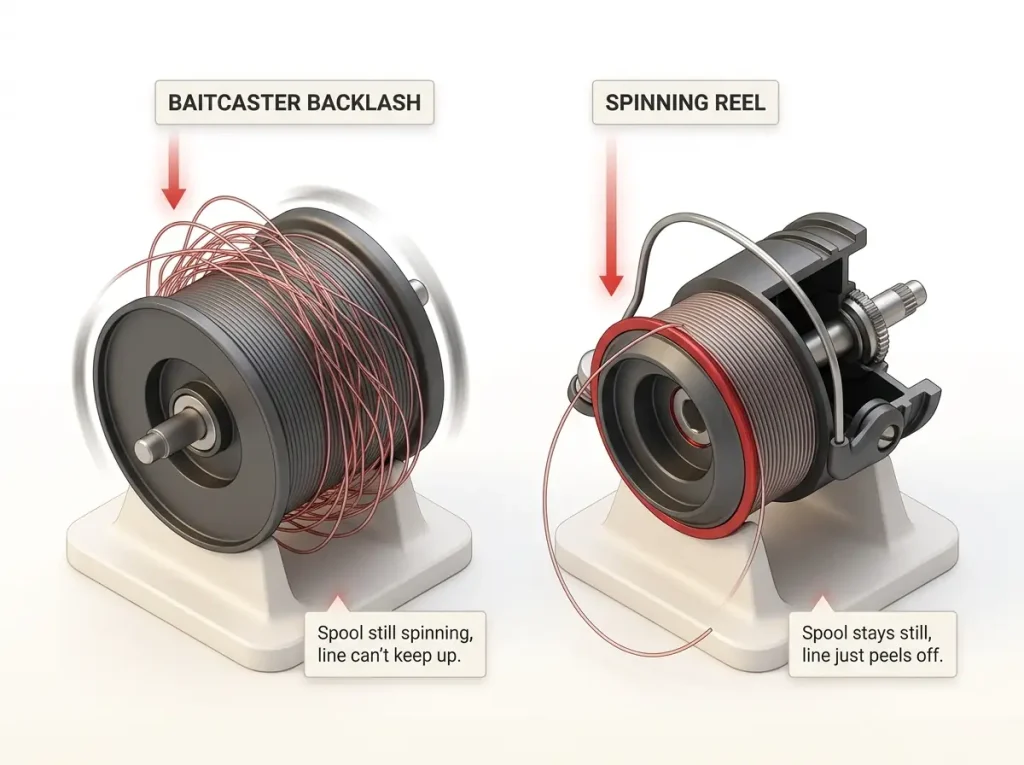
Three families of rod and reel exist, and only one of them is the right first move for almost everybody. A spinning rod carries the reel underneath the blank, the line peels off an open spool through a wire bail, and the spool itself never turns during the cast. That last detail is why it cannot tangle the way its cousin does. If you want the whole map of what each family is built for, the complete guide to fishing rod types covers the category from end to end.
A spincast rod is the push-button, closed-face setup you probably used as a kid. A spincast combo is genuinely fine for a first afternoon or for a young child, it is cheap, and it is limited in casting distance and line capacity in a way you will feel by the second season.
A fly rod is its own sport with its own casting stroke, its own line system, and its own learning curve, so it sits outside this article entirely. If fly fishing is the goal, buy for that specifically rather than treating a fly outfit as a general-purpose first rod.
A baitcasting rod sits the reel on top of the blank and looks like what the tournament guys use, which is exactly why it gets bought first and abandoned first. There is a full honest verdict on that further down, but the short version is: not now.
The mistake here is predictable. Someone walks in, picks the setup that looks the most serious, and quits inside a week when every cast turns into a knot.
That is worth avoiding, because the beginner pool in fishing is enormous right now. Roughly 52.4 million Americans went fishing in 2021, according to the American Sportfishing Association’s own participation numbers, with 4.4 million first-timers the year before. Gear that forgives a rough cast is what the mainstream of this sport actually needs, not some starter-tier consolation prize.
Rod Length and Why 6’6″ to 7′ Is the Safe Default
Rod length is the one number a beginner can actually feel. Everything else on the label is abstract until you have some hours in; length you notice on the first cast.
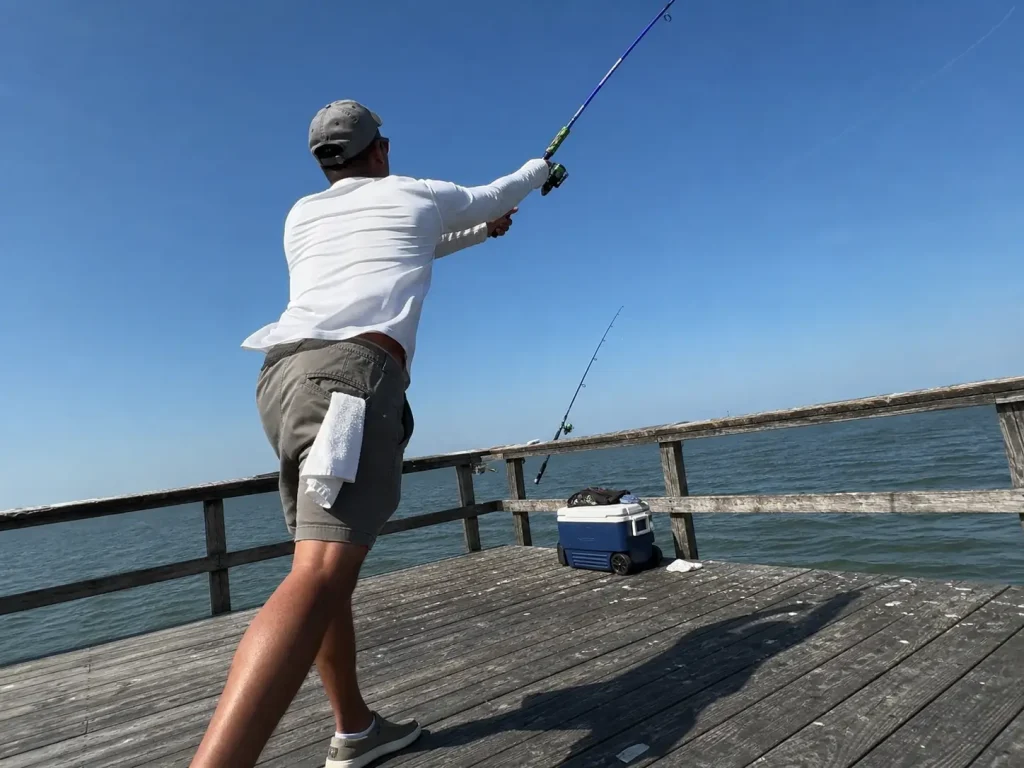
The industry settles on 6’6″ to 7′ as the versatile window for good reason. It is long enough to throw a lure a respectable distance from a bank, short enough that you are not clipping branches behind you on a small creek, and it works from a boat or a kayak without feeling like you are swinging a flagpole.
Longer buys you casting distance and leverage on a hookset. Shorter buys you accuracy and control in tight cover. That is the whole tradeoff, and matching rod length to where you actually fish is where the exceptions get interesting.
Go under 6’6″ for creeks, docks, and kids. Go over 7′ only when distance is the entire point, which mostly means surf casting. Everything in between is noise.
If you are only buying one rod this year, take the 7-foot end of that window. The extra length helps a short, jerky beginner casting stroke load the blank, which means your bad casts still go somewhere useful.
Power and Action Without the Jargon
Two words on the blank confuse more first-time buyers than anything else in the shop. Here is the translation a friend would give you at the counter.
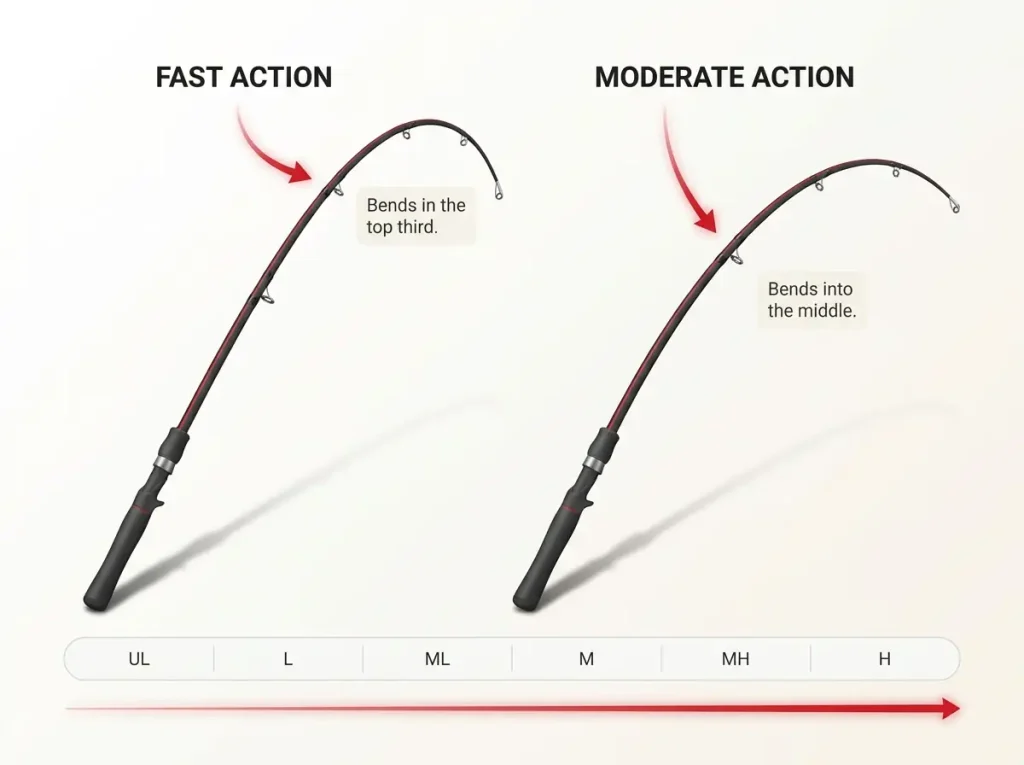
Rod power is how hard the rod blank is to bend, running from ultralight through light, medium, medium-heavy power, and up. Rod action is where along the blank that bend happens. Fast action flexes near the tip only. Moderate action bends deeper into the middle of the rod.
Extra-fast action flexes in only the top few inches, which is a specialist setup for driving a hook home in heavy cover and not something a beginner benefits from.
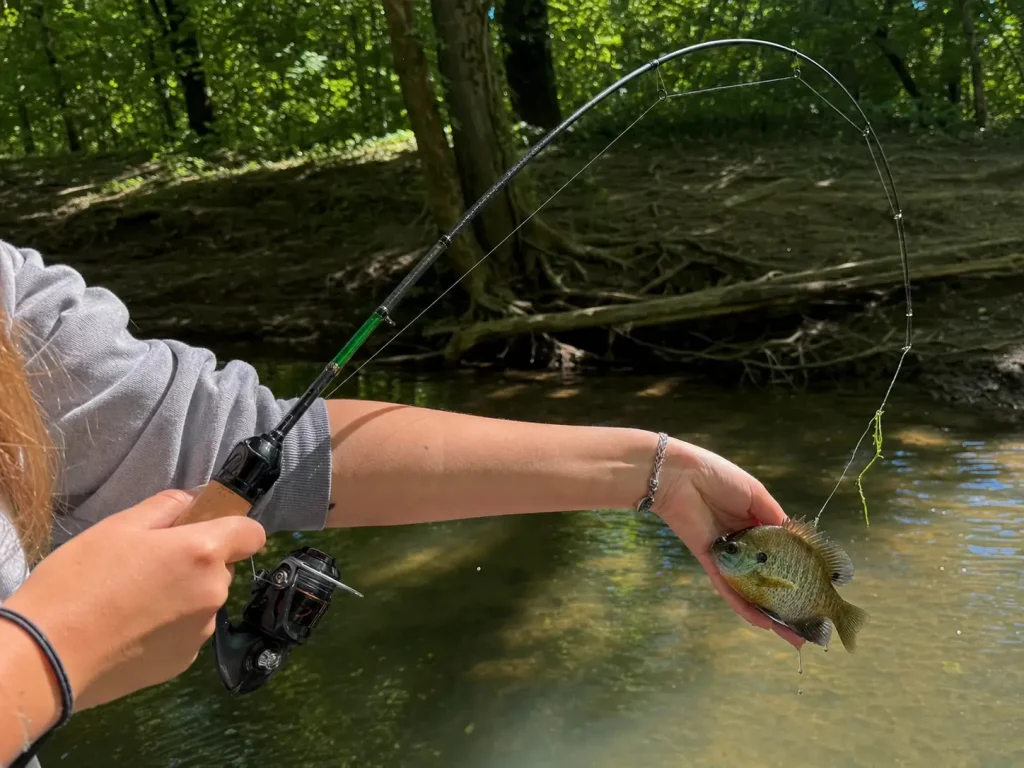
For a first rod, medium power with fast action is the default, and it is the default because it covers the widest range of real fishing. It handles panfish without feeling like a broomstick and still has enough backbone for a largemouth bass of respectable size. Ultralight is not beginner mode, by the way. It is a specialist tool for small fish, and a bluegill on an ultralight is genuinely more fun than a bluegill on a medium rod.
One caution before you trust the box: those power words are not standardized between brands. One company’s medium is another company’s medium-light. The printed line and lure weight ratings near the handle are the real spec, and the full breakdown of rod power versus action is worth reading once you have a rod in hand.
Graphite, Fiberglass, or the Composite Middle
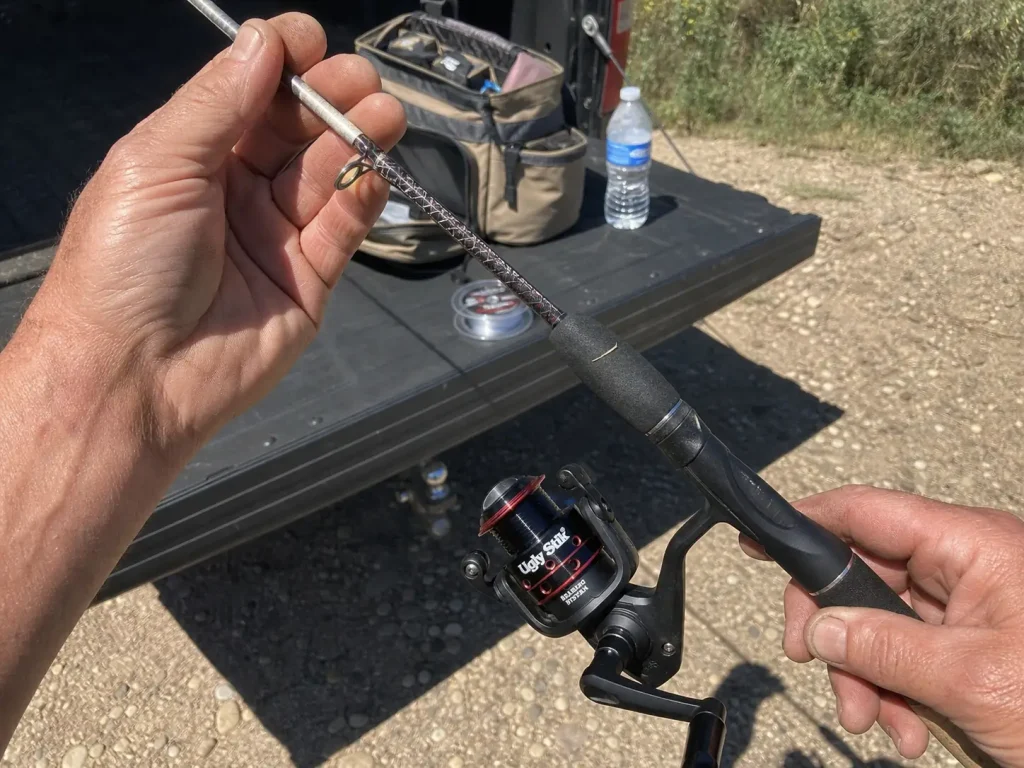
Blank material is where the marketing copy gets loudest and where it matters least for your first year.
Graphite is light and sensitive. It telegraphs every tick down the line, and it is more brittle when abused. Fiberglass is heavier and duller in the hand, but it takes a beating and loads slowly, which flatters a rough casting stroke. Graphite fiberglass composite splits the difference, and that is precisely why the Ugly Stik family has owned this category for decades. Most of the picks below are composite blanks, and that is deliberate.
If you want the actual engineering behind it, the material science of graphite and glass blanks explains what each fiber layup is doing.
Carbon fiber is the same family as graphite, and the labels on the rack get creative about it. IM7 graphite, 24-ton graphite, and high-modulus graphite are all describing how stiff the fiber is per unit of weight. Higher modulus means lighter and more sensitive for the same strength, and also more brittle. None of those labels is standardized across brands, so treat them as a rough tier indicator instead of a spec you can compare shelf to shelf.
Here is the part nobody says out loud. Beginners break far more rods in car doors and by high-sticking a fish at the boat than by hooking anything too strong for the blank. Durability beats sensitivity in year one. Sensitivity you cannot yet interpret is not an upgrade, it is a spec you paid for and cannot use.
What Spending More Actually Buys You
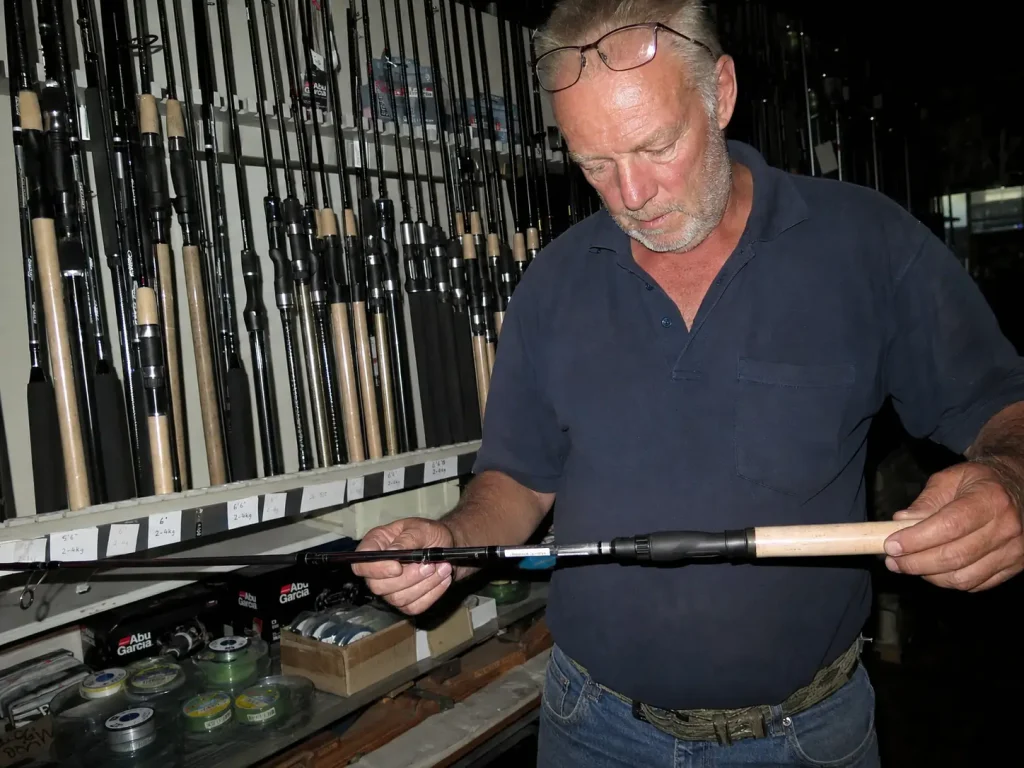
There is a point where more money stops improving your fishing, and it arrives earlier than the tackle shop would like you to believe.
The first step up in price buys real things. Rod guides that do not grind your line, a reel seat that holds the reel without wobbling, and a blank that is not dead in your hand. That step is worth taking.
The second step up buys weight savings and rod sensitivity, both of which a beginner cannot feel yet, let alone convert into fish. A genuinely good beginner combo lands in roughly the same spending tier as a decent pair of running shoes, not a tier that requires a conversation with your partner.
Three specifics are worth knowing so you can read a price tag. Guide inserts move from basic aluminum oxide guides up through branded Fuji guides, and the practical difference is how much heat and friction the ring puts into your line on a long cast. Handles split between cork grip and EVA grip, which is comfort and preference rather than performance, though cork tends to stay warmer in cold weather and EVA shrugs off fish slime better. And on the reel, gear ratio describes how much line comes in per handle turn, where something in the middle of a brand’s range is the right default before you know what you are fishing for.
The budget rod in this article is not a compromise pick either. It is the rod plenty of experienced anglers keep behind the truck seat as a loaner and a backup, which is about the highest praise cheap gear gets. Spend the difference on line, a handful of hooks and weights, and your license.

The Best Fishing Rods for Beginners, Pick by Pick
Four picks, each tied to a situation rather than a spec-sheet ranking. Every one of them is a forgiving blank first and a performance rod second, and that ordering is on purpose. If you have already decided you want a spinning setup and want more options in that lane, there is a deeper spinning-only breakdown with additional picks.
Best Overall — Ugly Stik Elite Spinning Combo
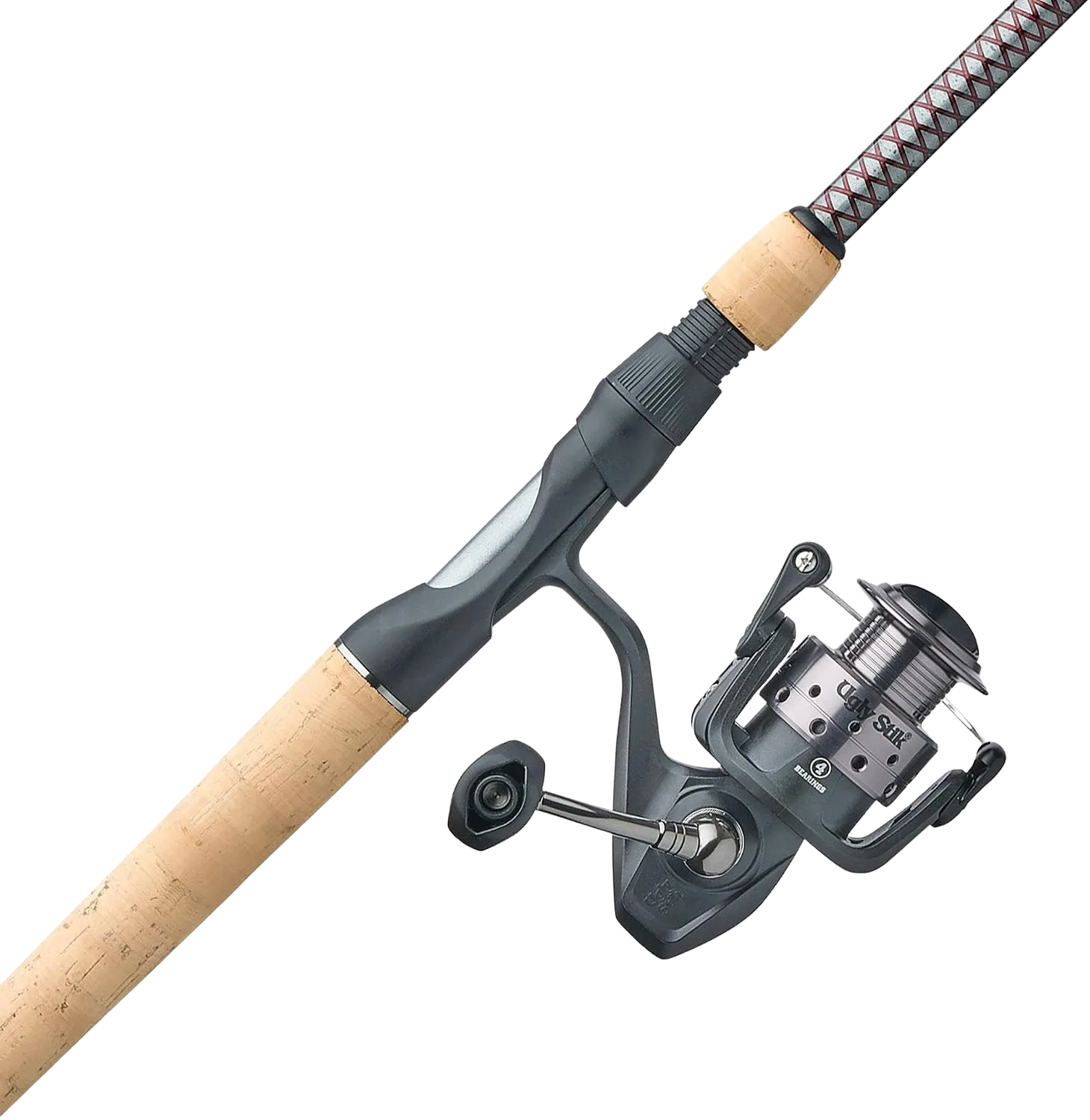
If you buy one rod off this page and never think about it again, buy this one. The Ugly Stik Elite Spinning Combo is medium power with fast action on a composite blank, which is the exact combination that stays useful from a farm pond to a decent bass lake.
The honest caveat: it is not the lightest or most sensitive rod on the rack. For a first season, that is a feature and not a flaw. You will bang it on a tailgate, lean it against a truck tire, and probably close a door on the tip section at least once, and it will keep fishing.
Best Budget — Ugly Stik GX2 Spinning Combo
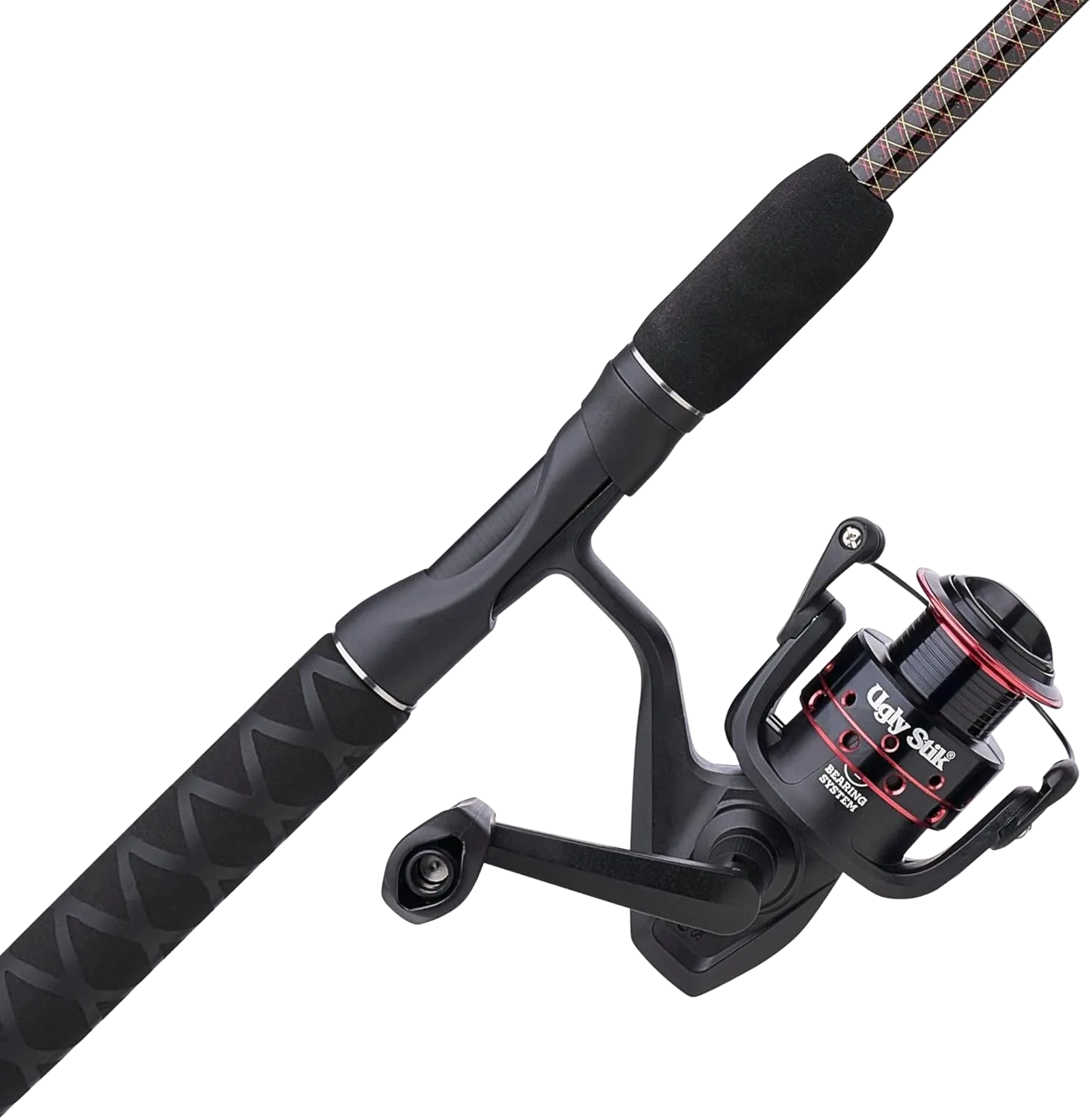
The Ugly Stik GX2 Spinning Combo is the rod people buy for a kid, a visiting cousin, or themselves when they are not sure fishing is going to stick. It almost always sticks, and the rod almost always survives.
Two honest caveats. Medium-light power means this setup is happier on panfish and modest bass than on anything that pulls hard, so if you are chasing catfish, look at the pick above. And stock on this listing runs slow, so check delivery timing before you count on it for a specific weekend.
Best for Panfish — HANDING M1 Ultralight Trout Rod
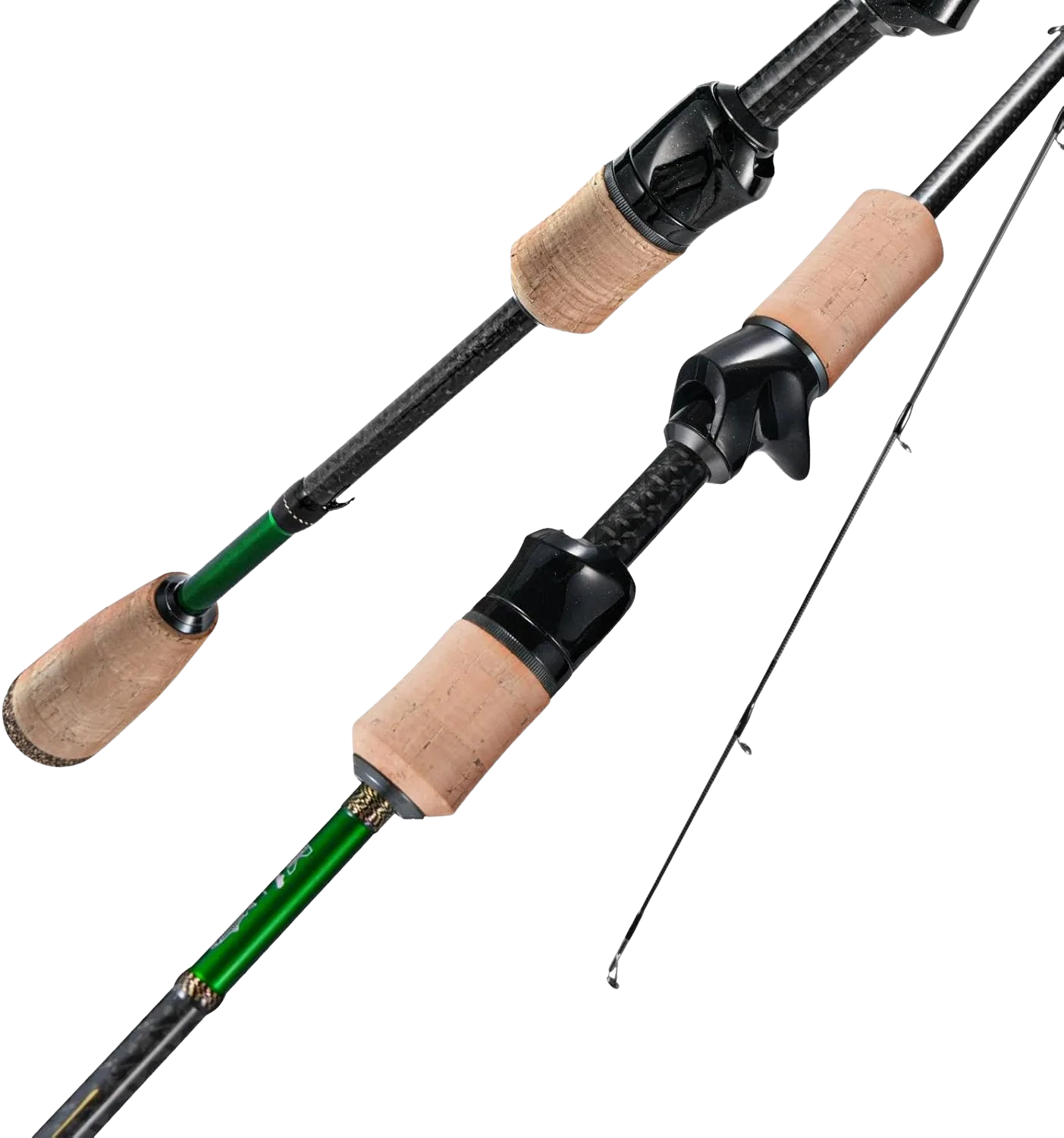
If your realistic fishing plan is a neighborhood pond, a stocked trout stream, and a bucket of bluegill with a kid, the HANDING M1 ultralight is a better afternoon than any medium rod. Small fish on light gear pull hard enough to be worth the trip.
The honest caveat: for most people this is rod number two, not rod number one. Buy it first only if panfish and stocked trout genuinely are the whole plan, because it is out of its depth on anything bigger.
Best for Inshore Saltwater — Sougayilang Inshore Spinning Rod
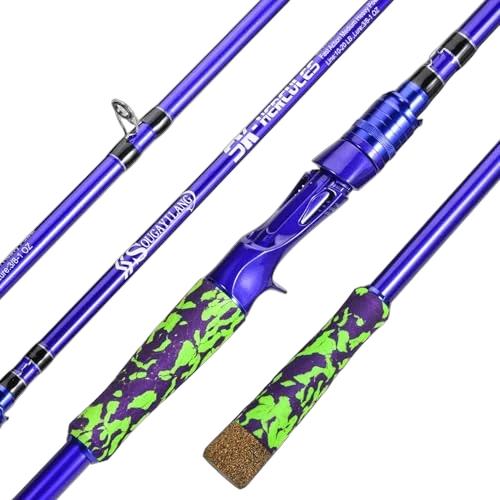
The Sougayilang inshore spinning rod is a rod, not a combo, so you are pairing it with a spinning reel in the 3000 to 4000 size range. The stainless steel guides with ceramic rings are the part that matters here, because salt eats cheap hardware.
The honest caveat is not about the rod at all. Inshore saltwater setups die at the reel, not the blank. Rinse the whole thing with fresh water and dry it after every single trip, and the price tier of your gear becomes almost irrelevant. Skip that habit for one season and it will not matter what you bought.
Rod and Reel Combo or Buy Them Separately
This is a question Google gets constantly and the big guides hedge on. Here is the actual framework.
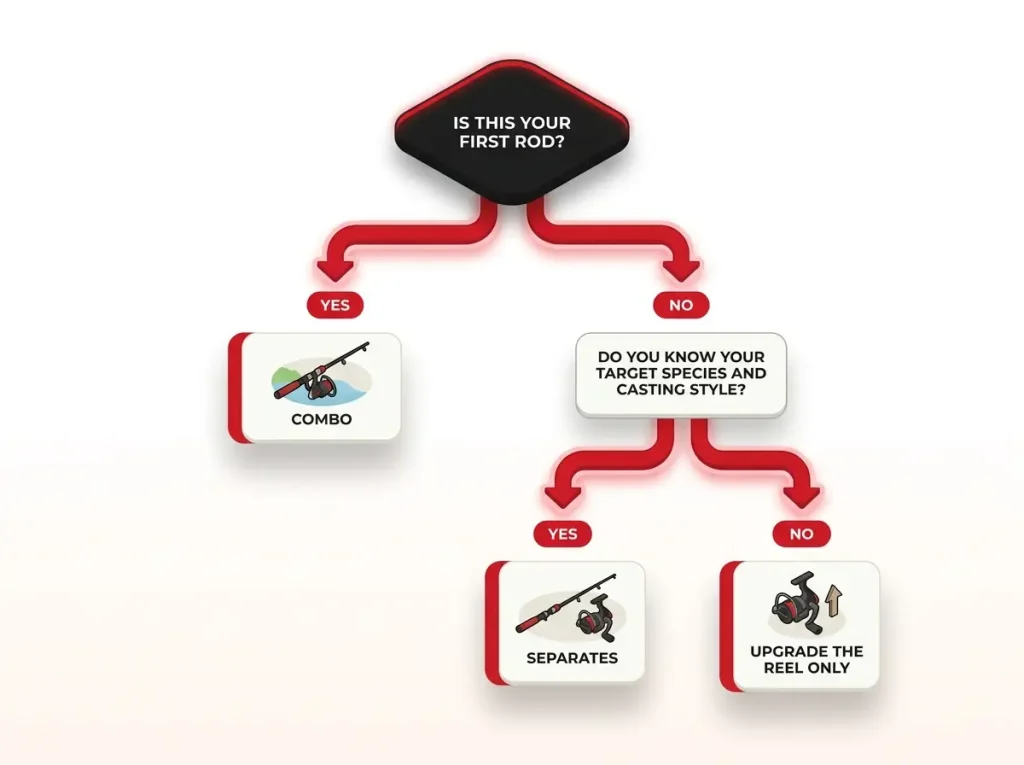
A factory-matched rod and reel combo almost always costs less than buying the same-quality rod and reel separately, and more importantly it removes the guesswork. The manufacturer already decided that this reel size belongs on this blank, with this line capacity, at this balance point. That is a decision you are not equipped to make yet, and getting it wrong is the single most common first-purchase failure.
What getting it wrong looks like: a reel two sizes too small for the rod, so the setup feels tip-heavy and your wrist aches after an hour. Or a heavy reel on a light blank, which kills the rod’s casting feel entirely. Neither problem announces itself in the store. Both show up on the water.
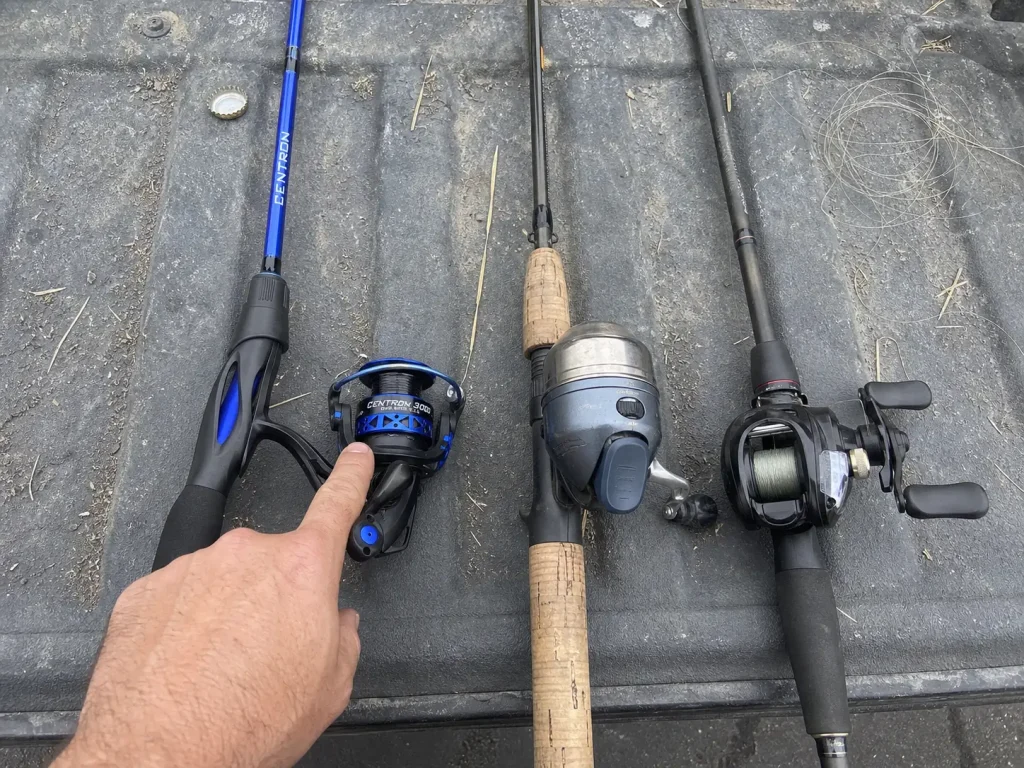
The rule, then: combo for rod number one, separates for rod number two. By the time you buy your second rod you will know your casting style, your species, and what specifically annoyed you about the first setup, which is exactly the knowledge that makes shopping separates worthwhile. Balance is also something you can check by hand in thirty seconds, and how to tell if a rod and reel are actually balanced walks through the finger test.
The only real counter-argument to a combo is a genuinely bad reel that cannot be swapped later. In practice, on any decent combo, the reel is the first thing you upgrade anyway and the rod stays in service for years. That is not a compromise, that is the normal upgrade path.
Balance the rod on one finger placed just in front of the reel seat. If the tip dives hard toward the floor, the reel is too light for the blank. If the butt drops, the reel is too heavy. A balanced setup sits close to level, and you will feel the difference after an hour of casting.
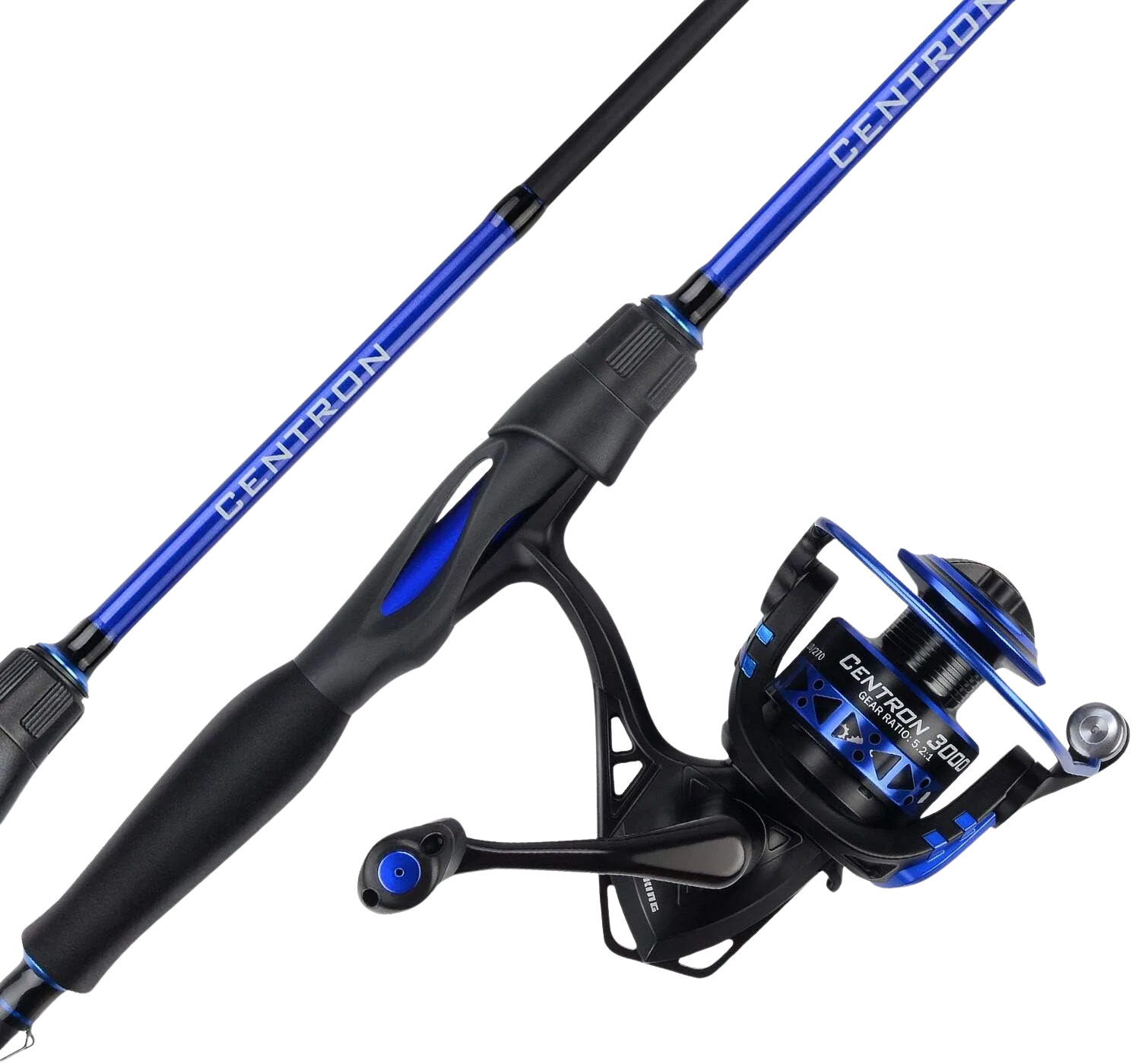
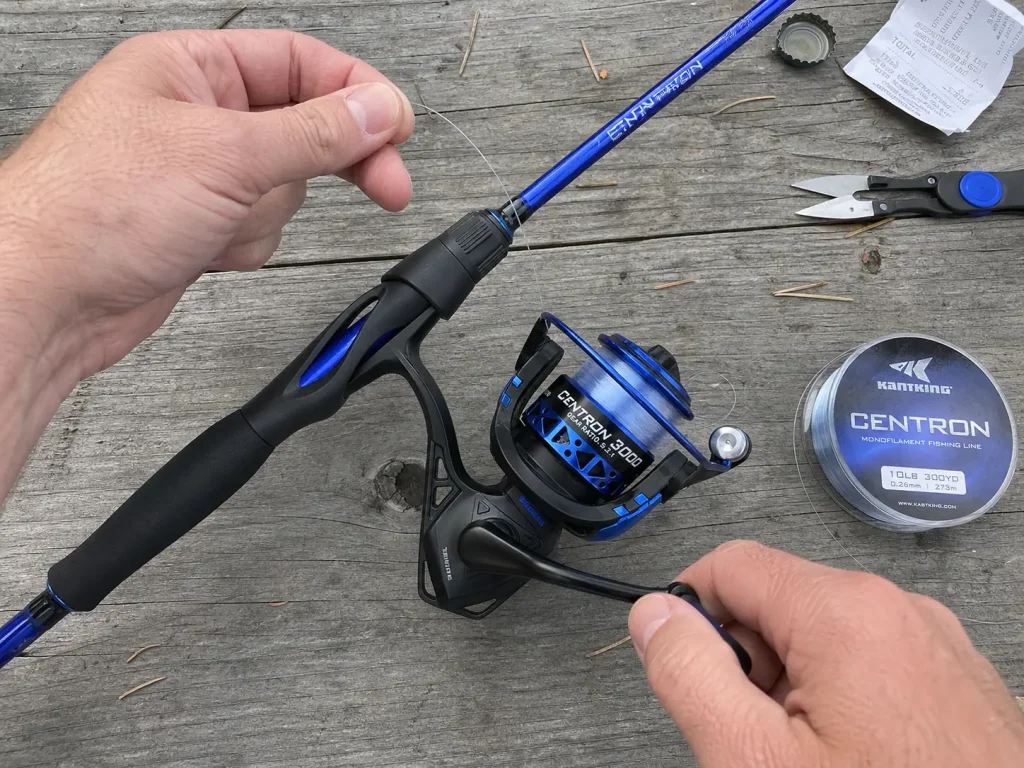
The KastKing Centron Spinning Combo is what the rule looks like in a box. Seven feet, medium power, fast action, and a 3000-size reel that belongs on it.
The honest caveat: the reel is the ceiling on this setup. That is fine, and it is also the point. The reel is the cheapest part to replace when you outgrow it, and the rod will still be in your rotation long after.
The Honest Answer on Starting With a Baitcaster
Nearly every beginner rod guide slots a baitcasting setup in as a coequal pick. This is the part where a friend would put a hand on your shoulder and tell you to wait, and the reason is mechanical, not motivational.
Backlash happens because a baitcasting reel’s spool spins during the cast. When your lure slows down in the air, the spool does not, so line keeps unwinding faster than anything is pulling it out. The overrun piles up on itself into what everyone calls a bird’s nest.
This is a property of how the reel is built, not a verdict on your skill. A spinning reel physically cannot do it, because its spool does not rotate at all while the line peels off the lip.
That distinction matters because of a scene every longtime angler has watched. Somebody unboxes a shiny new baitcaster at the ramp, backlashes on the second cast, spends twenty minutes picking at a knot with cold fingers, and never touches that rod again. It gets read as “I’m bad at this.” It was never that.
So the verdict, stated plainly: if this is your first season, skip baitcasting. Fish a spinning setup, learn what a loaded blank feels like, and come back to it. You are actually ready when three things are true.
You cast without consciously thinking about the mechanics. You are throwing lures heavy enough that a spinning setup feels overmatched. And you are willing to spend one whole session in a field with a practice plug and no hook, thumbing the spool until the timing clicks.
None of that makes baitcasters bad. On heavier line, heavier lures, and flipping short accurate pitches into cover, they are genuinely better tools, which is why the best bass rod in most serious anglers’ hands is a baitcasting setup. They are just not day-one tools.

When you hit those three signals, the Ugly Stik GX2 Low Profile Baitcast Combo is the sensible way in. Same durable composite blank as the spinning picks, paired with a low-profile reel that is easier to thumb than a round one.
Two caveats, both honest. This is not the day-one option, and if you bought it as your first rod you would probably be reading a different article in three weeks. Stock on this listing also runs thin, so check availability before planning around it.
Matching Your Line to the Rod’s Power Rating
People buy the right rod and still lose fish, and the reason is usually sitting on the spool. This is the one spec-matching job worth doing carefully on day one, and it takes about thirty seconds of reading a label.
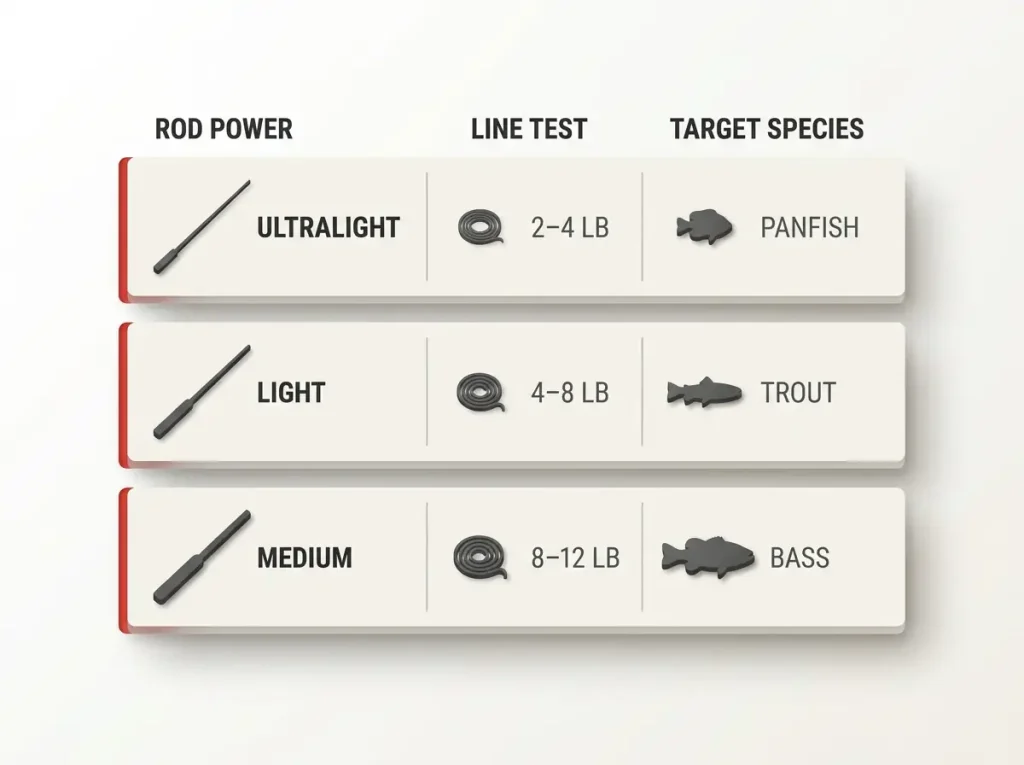
The rough pairing runs like this. Light power rods want roughly 2 to 6 pound test. Medium power rods want roughly 8 to 12 pound test.
Those are starting points, not gospel, because the real spec is printed on the blank just above the handle in small type, along with the lure weight range. That printed window is the manufacturer telling you what the blank was engineered around.
Stay near the middle of that window rather than at either edge. Line at the heavy end stiffens up the whole system and dulls the hookset. Line at the light end under-loads the blank, so the rod never flexes into the casting curve it was designed for. The middle is where both casting accuracy and hookset feel land.
The mistake worth naming: overspooling with heavier line for insurance. It feels responsible and it is a genuine downgrade. Heavier line has more diameter, which means more friction through the guides, shorter casts, and worse accuracy. On a light-power blank it also puts stress into the rod that the blank was never rated to absorb, which is how people snap tips on hooksets and blame the fish.
For day one on a medium combo, 8 to 10 pound monofilament line covers nearly everything in freshwater. It stretches, which forgives an over-enthusiastic hookset, it knots easily, and it is cheap to strip off and replace when it gets ugly.
The other two options can wait. Braided line has almost no stretch and far more strength for its diameter, which makes it sensitive and unforgiving in equal measure, and it needs knots that mono does not.
Fluorocarbon line is harder for fish to see underwater and sinks, which matters more once you are targeting pressured fish with finesse presentations. Both are real upgrades later. Neither solves a beginner problem now. That is also the standard starting recommendation as the Recreational Boating and Fishing Foundation’s angler-education site puts it, and there is more detail on which line type a beginner should actually start with once you want to compare mono against braid.
Take a photo of the printed rating on the blank before your first trip to the tackle shop. Every beginner forgets it, buys line by guessing, and ends up with a spool that fights the rod. Ten seconds with your phone saves a season of bad casts.
Two Rod Habits That Keep the Day From Going Sideways
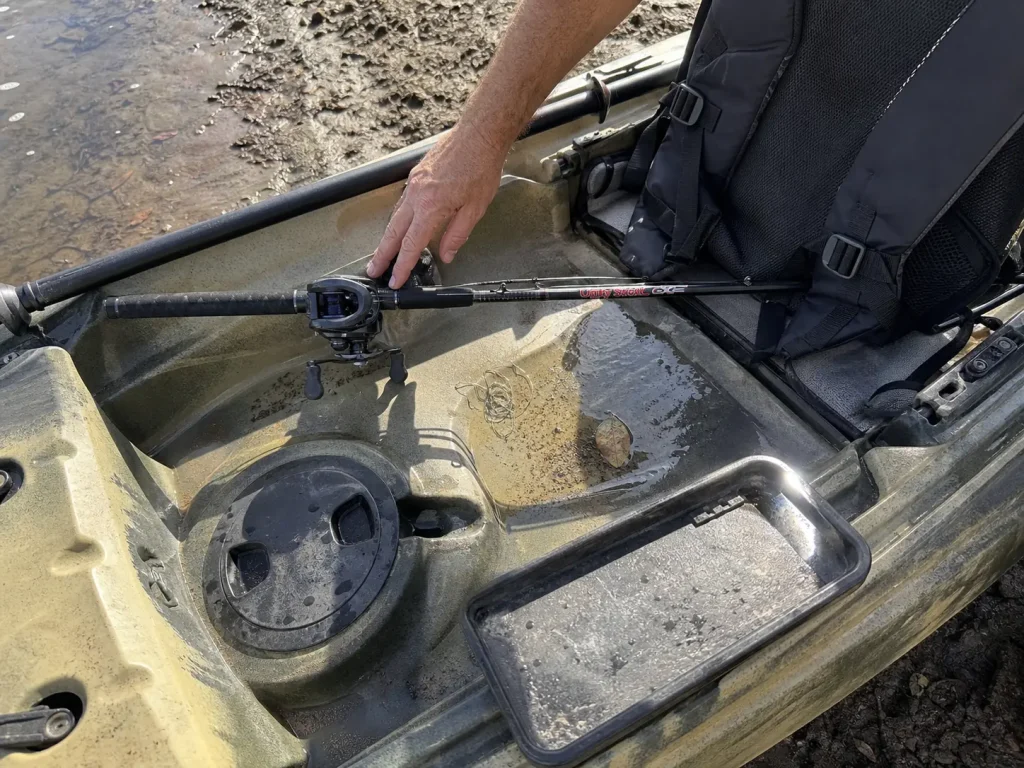
This is not a lecture, it is the two things a friend would mention once on the drive over. Both are about hooks moving fast near people, which is the only genuinely hazardous part of a beginner’s first trip.
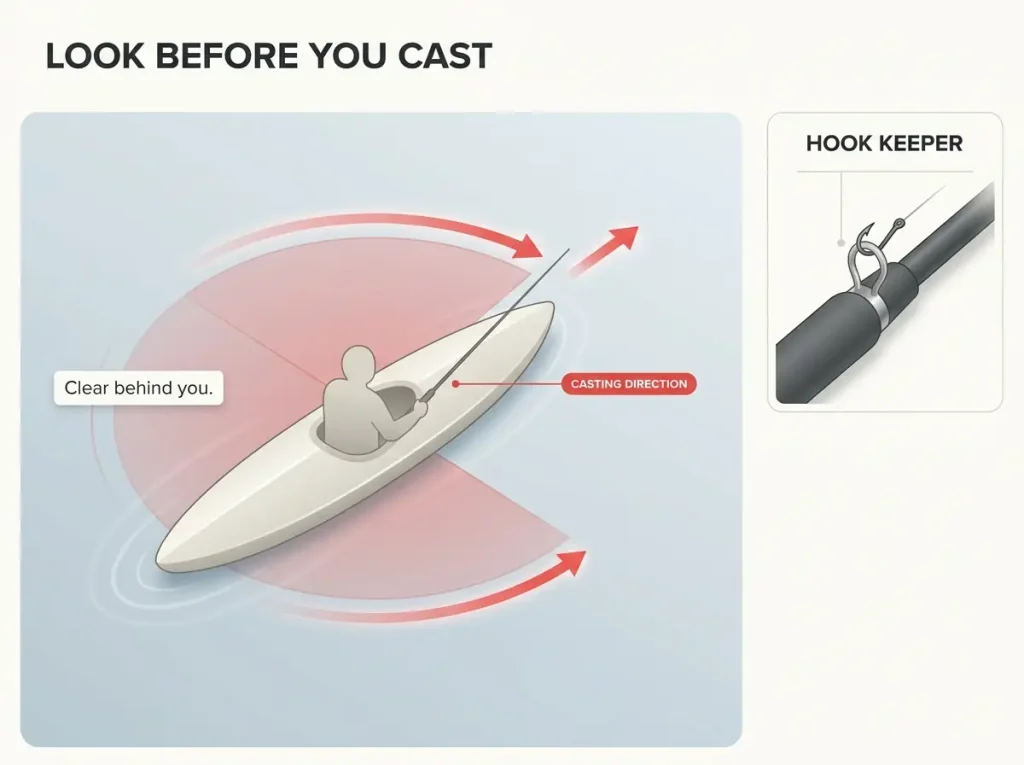
First, look behind and beside you before every cast, not just the first one of the day. On a crowded bank, on a boat deck, or in a kayak, the person who catches a hook is almost never the person who cast it. A quick glance costs nothing and becomes automatic within two trips. It matters most in tight quarters, which is why casting safely from a kayak deserves its own attention if that is where you fish.
Second, use the hook keeper. It is that small metal loop just above the foregrip, and it exists so a rigged rod can be carried, stowed, or laid across a deck without a treble hook hunting for skin. A loose rigged rod in a kayak footwell or on a boat deck finds a hand or a foot eventually, usually while you are looking somewhere else.
One more, in the same spirit: when you unhook a fish, handle the hook rather than the fish. A hook under tension in a thrashing fish is the second most common way beginners get stuck, and pinning the hook itself takes the tension out of the equation.
The mundane one, finally: car doors and tailgates end far more beginner rods than fish ever will. Rod durability in year one is mostly a transport problem, which is the argument for two-piece over a one-piece rod as your first purchase. A one-piece blank transmits a little more feel and is a little stronger through the middle, and it also has to ride full length in your vehicle, sticking past the seats and into the path of every closing door. Two-piece rods travel broken down in a case for a reason.
The Bottom Line
Three things to carry out of here. A 7-foot medium-power spinning combo ends the search for the overwhelming majority of first-time buyers, and the Ugly Stik Elite is that setup with the fewest tradeoffs. Buy the combo instead of separates for rod number one, because the balance decision is one you are not equipped to make yet. And skip the baitcaster for now, not because it is a bad tool, but because backlash is built into the reel and it will cost you a season of enthusiasm.
Then go pick up a spool of 8 to 10 pound mono, a few hooks and split shot, and your fishing license. The best beginner rod is whichever one gets you standing on a bank this weekend instead of still reading about rods.
Frequently Asked Questions
01What is the best fishing rod for a beginner?
For most beginners, a medium-power, fast-action spinning combo around 7 feet is the best fishing rod, and the Ugly Stik Elite Spinning Combo is the version with the fewest compromises. It handles panfish through bass and survives the mistakes a first season involves.
02Should I get a 6’6″ or 7′ rod?
Choose 7 feet unless you fish creeks, docks, or heavy cover, where 6’6″ gives better accuracy and clearance. The extra six inches buys casting distance and hookset leverage, which helps a beginner more than precision does.
03Is it better to buy a rod and reel combo or separate?
Buy a combo for your first rod and separates for your second. A factory combo usually costs less than equivalent separate pieces and removes the balance guesswork that produces tip-heavy, uncomfortable beginner setups.
04What is the best beginner fishing setup?
A 7-foot medium spinning combo, 8 to 10 pound monofilament, a small assortment of hooks and split shot, and a fishing license. That covers the vast majority of freshwater situations without any further decisions.
05How long before a beginner should upgrade to a second rod?
Upgrade when you can name the specific thing your current rod will not do, not on a calendar. That usually means a lure weight it cannot cast or a species it is underpowered for, and the answer points straight at the right second rod.
Risk Disclaimer: Fishing, boating, and all related outdoor activities involve inherent risks that
can lead to injury. The information provided on Master Fishing Mag is for educational and informational purposes
only. While we strive for accuracy, the information, techniques, and advice on gear and safety are not a substitute
for your own best judgment, local knowledge, and adherence to official regulations. Fishing regulations, including
seasons, size limits, and species restrictions, change frequently and vary by location. Always consult the latest
official regulations from your local fish and wildlife agency before heading out. Proper handling of hooks, knives,
and other sharp equipment is essential for safety. Furthermore, be aware of local fish consumption advisories. By
using this website, you agree that you are solely responsible for your own safety and for complying with all
applicable laws. Any reliance you place on our content is strictly at your own risk. Master Fishing Mag and its
authors will not be held liable for any injury, damage, or loss sustained in connection with the use of the
information herein.
Affiliate Disclosure: We are a participant in the Amazon Services LLC Associates Program, an
affiliate advertising program designed to provide a means for us to earn advertising fees by advertising and linking
to Amazon.com. As an Amazon Associate, we earn from qualifying purchases. We also participate in other affiliate
programs and may receive a commission on products purchased through our links, at no extra cost to you. Additional
terms are found in the terms of service.