
In this article
You’ve got a dozen browser tabs open, a friend who swears by fly fishing, and a sporting goods store full of rods you can’t tell apart. Both methods catch fish. Both have passionate followers. And most articles you’ll find were written by someone who picked a side before they started typing.
I’ve fished both for years — from stocked ponds to technical tailwaters — and here’s the straight version, including something most fishing sites skip: the specific conditions where spin fishing outperforms fly fishing on trout water, and the progression path that experienced anglers actually took.
Here’s how the two methods compare on the factors that matter when you’re just starting out:
| Fly Fishing vs. Spin Fishing Comparison | ||
|---|---|---|
| Factor | Fly Fishing | Spin Fishing |
| Learning curve | Casting takes 2–3 sessions to click | Basic cast in 15 minutes |
| Beginner setup cost | $165–$280 without waders | $60–$110 complete |
| Best conditions | Clear water, selective trout, hatches | High water, wind, depth, distance |
| First-day fish | Possible but not guaranteed | Realistic within 2 hours on stocked water |
| Long-term ceiling | Lifelong skill development | Effective and versatile at every level |
How Each Method Actually Works
The Mechanics Behind Fly Casting
Pick up a fly rod for the first time and try to cast like you would a spinning rod. The rod bends. The fly goes nowhere. That confusion right there is the entire lesson.
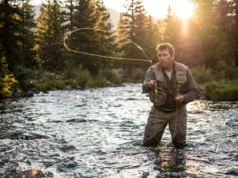
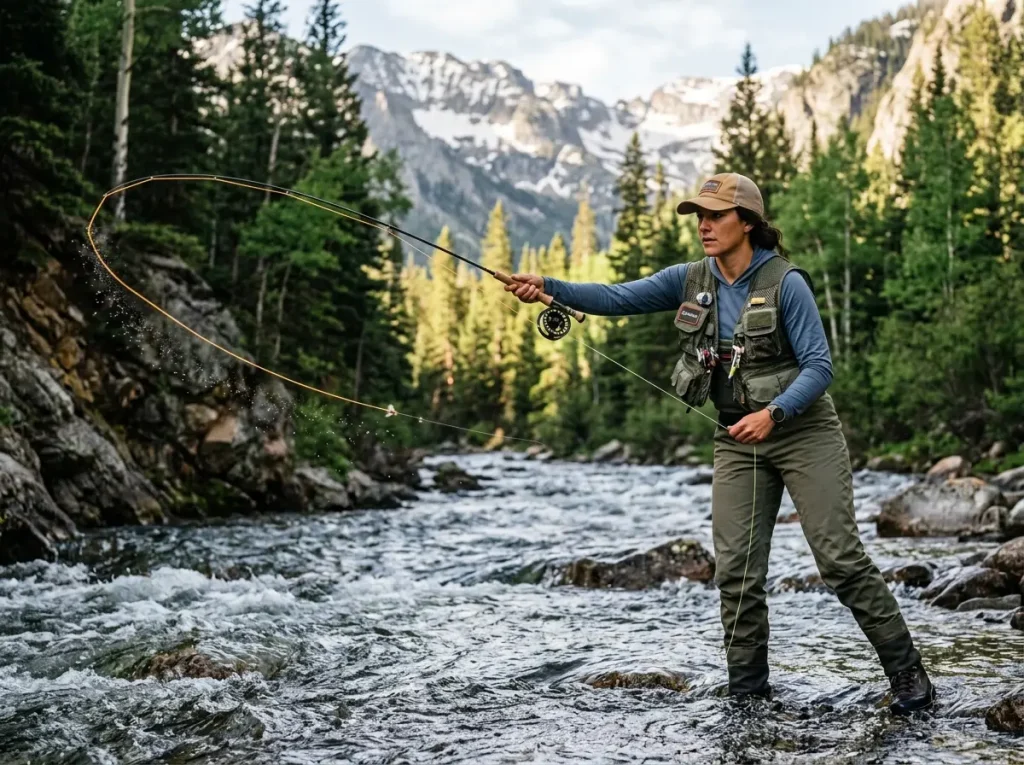
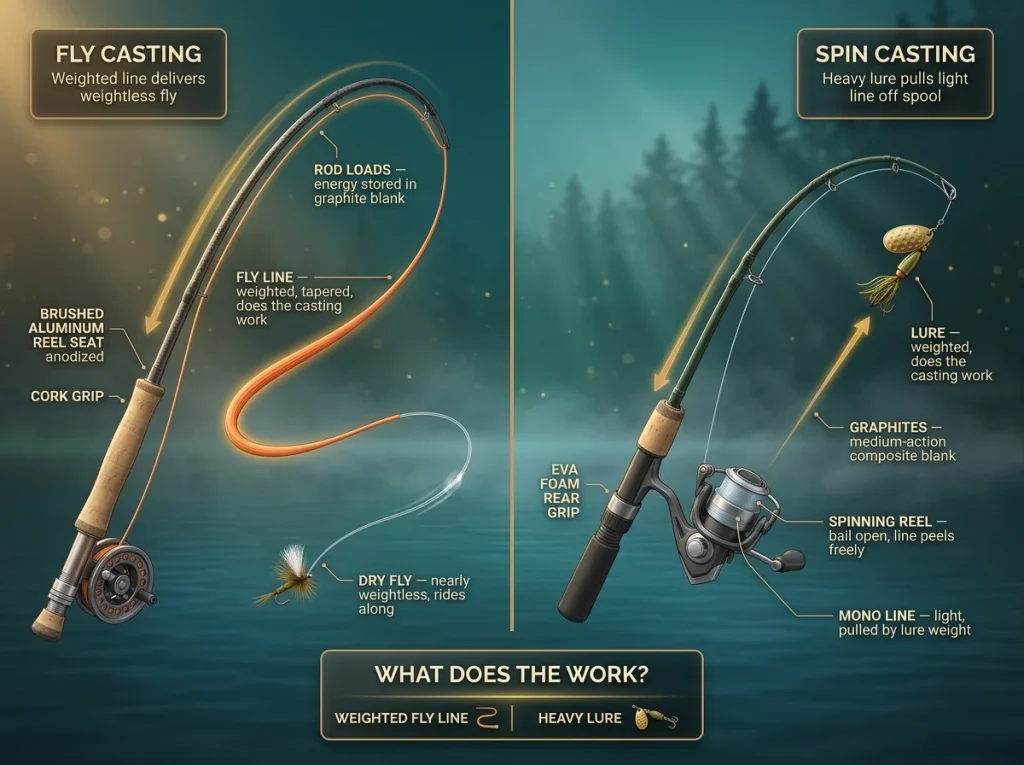
In fly fishing, the fly line itself is weighted and tapered. You’re casting the line — not the fly. The nearly weightless artificial fly at the end just rides along for the trip. Your backcast loads the rod, your forward cast unrolls the line, and the fly lands wherever the line delivers it.
This is why fly rods are long and flexible. They’re designed to load energy from the line’s weight, not from a heavy object at the end. According to Trout Unlimited, a 9-foot 5-weight is the most versatile first fly rod for trout because that weight-to-length ratio handles dry flies, nymphs, and small streamers without overloading the rod.
The Mechanics Behind Spin Casting
Spin fishing works the way most people expect casting to work. The lure is heavy — it loads the rod on the backswing and pulls the line off the spinning reel as it flies forward. Heavier lure, farther cast. Simple physics.
This is why a spin cast feels natural to almost everyone. Your muscles already understand throwing a weighted object. The reel does the rest.
Why the Difference Changes Everything for Beginners
That one physics difference — line weight vs. lure weight — drives every design choice in both methods. Fly reels are basic line storage. Spinning reels manage the cast, the retrieve, and the drag. Fly casting requires timing a backcast and forward stroke. Spin casting requires aiming and releasing a bail.
Neither is harder in any permanent sense. One uses muscle memory you already have. The other asks you to build new muscle memory from scratch. That distinction is the entire learning curve, and it’s smaller than most people think.
Pro tip: When you first pick up a fly rod, stop trying to throw the fly. Think of it as flicking paint off a brush — load the rod behind you, pause, then push forward. That image fixes 80% of casting frustration in the first hour.
If you want to understand how fly reel drag systems work once you’ve grasped the casting mechanics, that’s the natural next step — but it’s not something you need on day one.
The Real Learning Curve (Not What You Think)
What Your First Day Spin Fishing Actually Looks Like
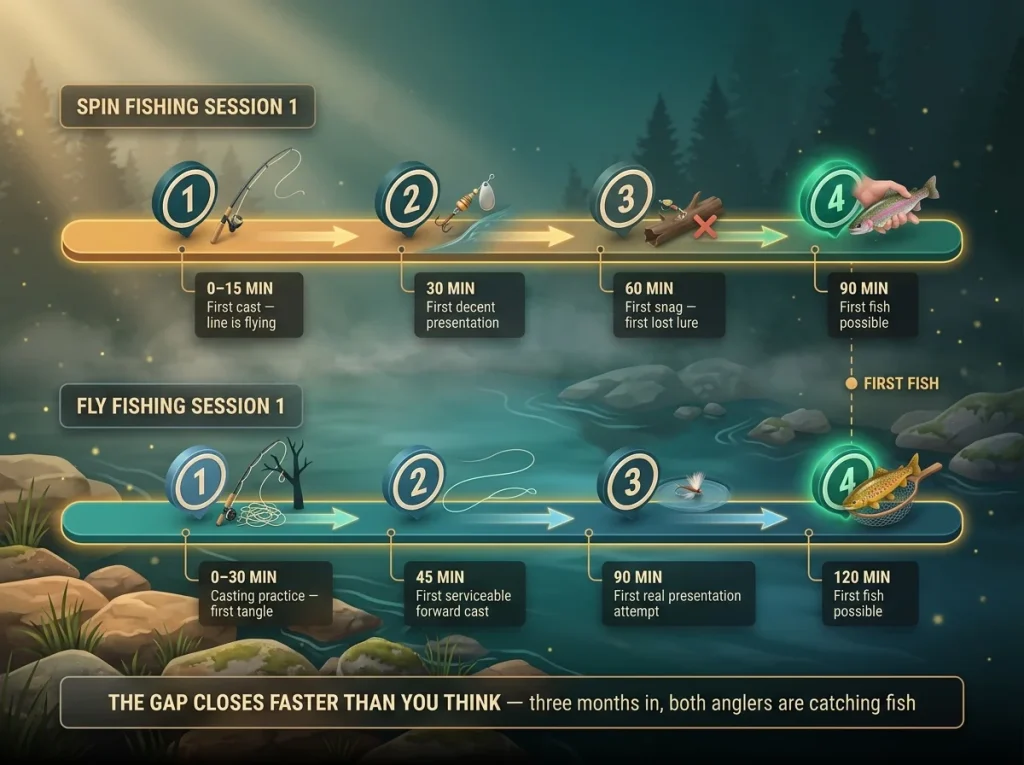
You open the bail, hold the line against the rod, swing forward, and release. Within 20 minutes you’re putting lures near where you want them. The frustrations are tangles — line twist on spinning reels is real — and snags on underwater structure. Not the cast itself.
On stocked water or a warm pond with panfish, catching a fish within the first two hours is a realistic expectation. Not guaranteed — fishing is still fishing — but the learning curve between “never held a rod” and “fighting a fish” is short.
What Your First Day Fly Fishing Actually Looks Like
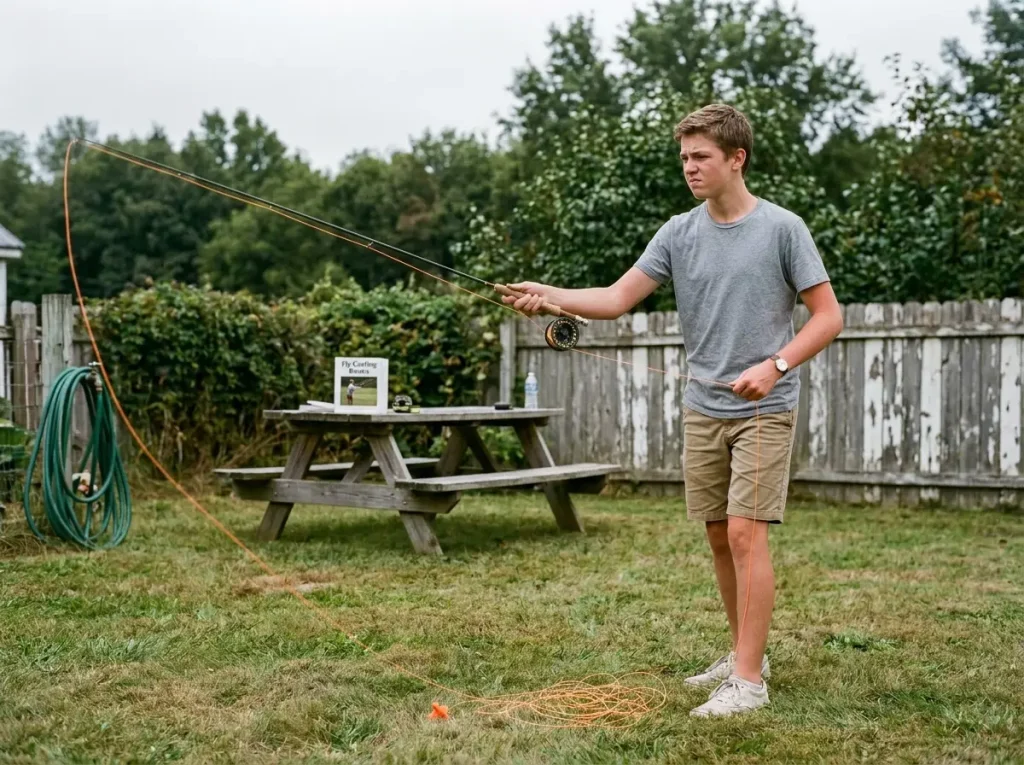
You’ll spend more time on the cast than on actual fishing. The line will pile up behind you. You will almost certainly hook a tree branch on a backcast at least once. The timing between backcast and forward stroke feels weird until it doesn’t.
But here’s what nobody tells you: within two hours, most people make a serviceable forward cast at 20–25 feet. That’s close enough to catch a stocked trout sitting in a pool. Your first day isn’t the disaster the internet makes it sound like.
Three Months In: Where You’ll Actually Be
Three months of regular outings with a spinning rod, and you’re confident on the water. You’ve figured out where fish hold, how to read current, and which lures work in which conditions.
Three months with a fly rod, and your cast is functional. You’re still working on mending and dead drift — concepts that take time to feel natural — but you’re catching fish. The gap between the two methods narrows faster than most people expect.
Pro tip: Experienced fly anglers rarely cast more than 30 feet on a stream. Beginners obsess over distance when they should obsess over drift. A drag-free presentation at 20 feet catches more trout than a sloppy 50-foot cast every single time.
Understanding basic fish behavior is the same skill regardless of which rod you’re holding. Water temperature, structure, current seams, feeding windows — it all transfers. That’s the part of fishing that matters most, and it doesn’t depend on your gear.
Trout Unlimited recommends starting on stocked or accessible water to build early confidence with fly gear before moving to pressured wild trout.
Gear Setup and What It Costs to Start
The Beginner Spin Fishing Setup (What You Actually Need)
A complete spin setup for trout and panfish costs less than dinner for two. Spinning rod ($25–$60) plus spinning reel ($20–$50) — or grab a combo and skip the matching headache. Add a spool of monofilament line ($5) and a small selection of inline spinners and jigs ($15–$30), and you’re out the door for $60–$110.
The Ugly Stik GX2 Spinning Combo ($45) is the single most recommended beginner rig for a reason — the fiberglass tip forgives every casting mistake a new angler will make, and the pre-mounted reel is serviceable enough to fish straight from the box. If you want to go even cheaper, a $30 Shakespeare combo from Walmart catches fish identically on a stocked pond.
Choosing your first reel type can feel overwhelming, but for beginners the answer is almost always a spinning reel in the 2000–2500 size range. Pair it with the right line for beginner spin fishers — 6-pound monofilament — and you’re set.
The Beginner Fly Fishing Setup (What You Actually Need)
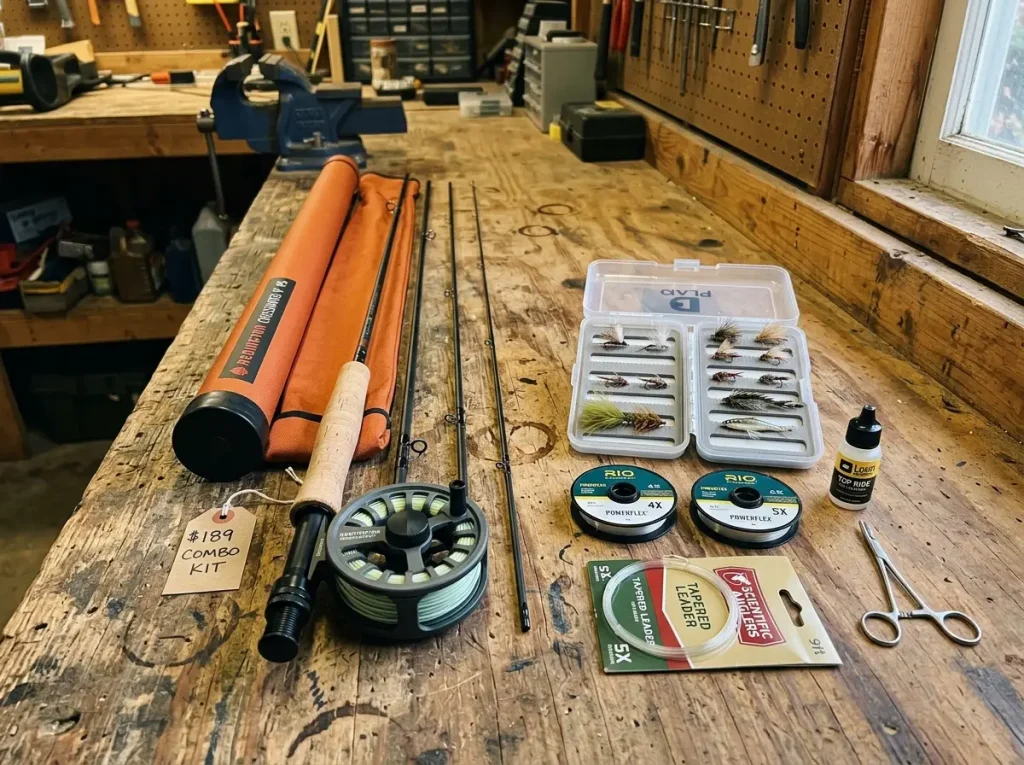
A complete fly outfit costs more, but the gap is smaller than the internet claims. Fly rod ($80–$150) plus fly reel ($40–$80) plus fly line, leader, and tippet ($30–$50) plus a small fly selection ($15–$30) comes to $165–$280 without waders.
The Redington Crosswater Fly Fishing Outfit ($155) eliminates the single biggest beginner headache: matching line weight to rod weight. Everything comes pre-spooled with the right RIO fly line, a tapered leader, and a travel case. The 9-foot 5-weight covers 90% of trout situations you’ll encounter in your first two seasons.
Where the Cost Gap Is Real and Where It Isn’t
Waders are optional in summer. Wet-wade in old sneakers or water shoes and save $150. That narrows the gap between spin and fly from $200+ to roughly $70–$100.
The ongoing cost most articles ignore: losing lures and flies. A spinner snagged in rocks costs $4–$8. A fly lost on a bad cast costs $2–$5. Over a season of regular fishing, the replacement costs are surprisingly similar.
Pro tip: On a fly setup, the one place to avoid cutting corners is the fly line. A $25 bargain line on a $90 rod fishes worse than a $60 quality line on the same rod. The line is what you cast — it’s the single component that most affects your day on the water.
Where Fly Fishing Has the Clear Edge
Clear Water and Selective Trout
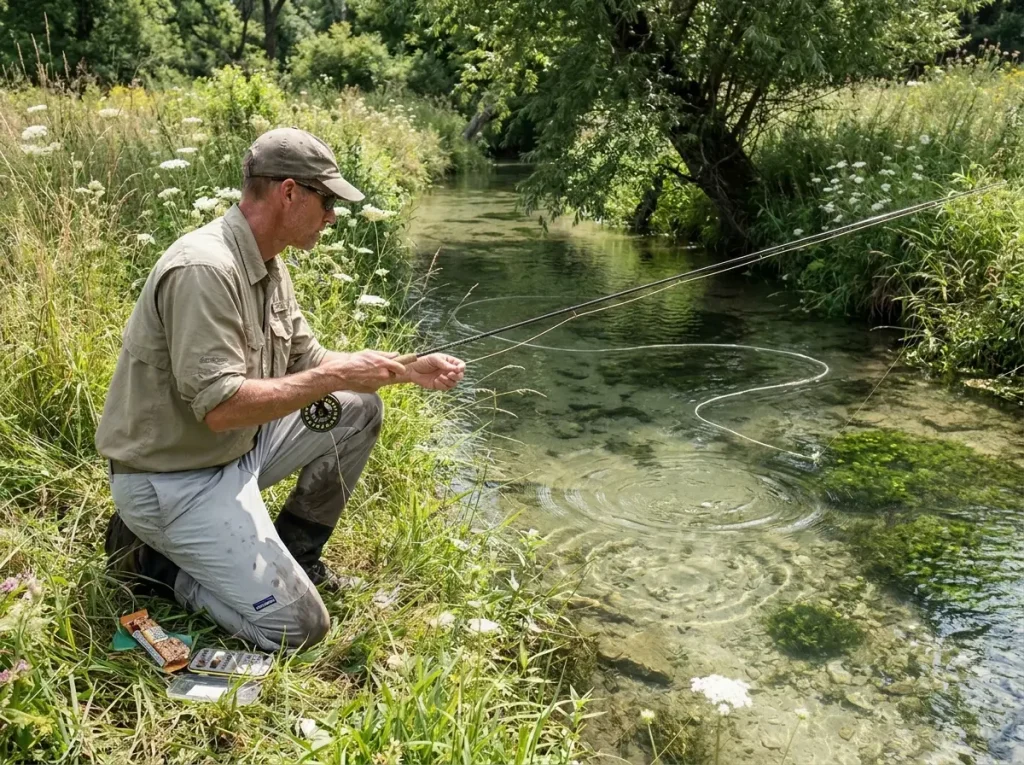
When rainbow trout or brown trout are rising to size-18 PMDs in a crystal-clear limestone creek, nothing but a precisely matching dry fly presented dead-drift will get a response. Selective feeding means trout are visually locked onto one specific insect size, shape, and behavior. A spinner ripping through that feeding lane spooks the whole pool.
This is the situation fly fishing was designed for. Match the hatch, present a natural drift, and that trout eats your fly. Try the same thing with a spinning rod and you’re watching from the bank while the fly angler has the evening of a lifetime.
Surface Presentations and Dry Fly Fishing
Watching a trout’s nose break the surface to take your fly is an experience spin fishing can’t replicate. Some spinning anglers use casting bubbles and small flies, but the presentation — the soft landing, the drag-free drift, the visual take — belongs to fly gear.
If you’ve ever wanted to sight-fish a specific rising trout and watch it eat something you chose, tied, or presented — that’s fly fishing territory. Nothing else gets you that moment.
Sight Fishing and Technical Water
Technical tailwaters with pressured trout — the Frying Pan in Colorado, the Delaware system in New York, Pennsylvania’s limestone creeks — are fly fishing’s home waters. Fish in these systems have seen every lure that exists. They respond to presentation nuance, not flash or vibration.
Modern tightline nymphing techniques have made fly fishing competitive even in deep runs where spin gear used to dominate. Euro-style rigs get flies to the bottom with zero drag — something a spinning setup needs weight to achieve, and weight reduces natural drift. If you’re curious about what makes this work, tightline nymphing physics breaks down the mechanics that most guides skip.
Where Spin Fishing Has the Clear Edge
High Water, Stained Conditions, and Spring Runoff
Here’s the part most fly-fishing-branded sites won’t say out loud.
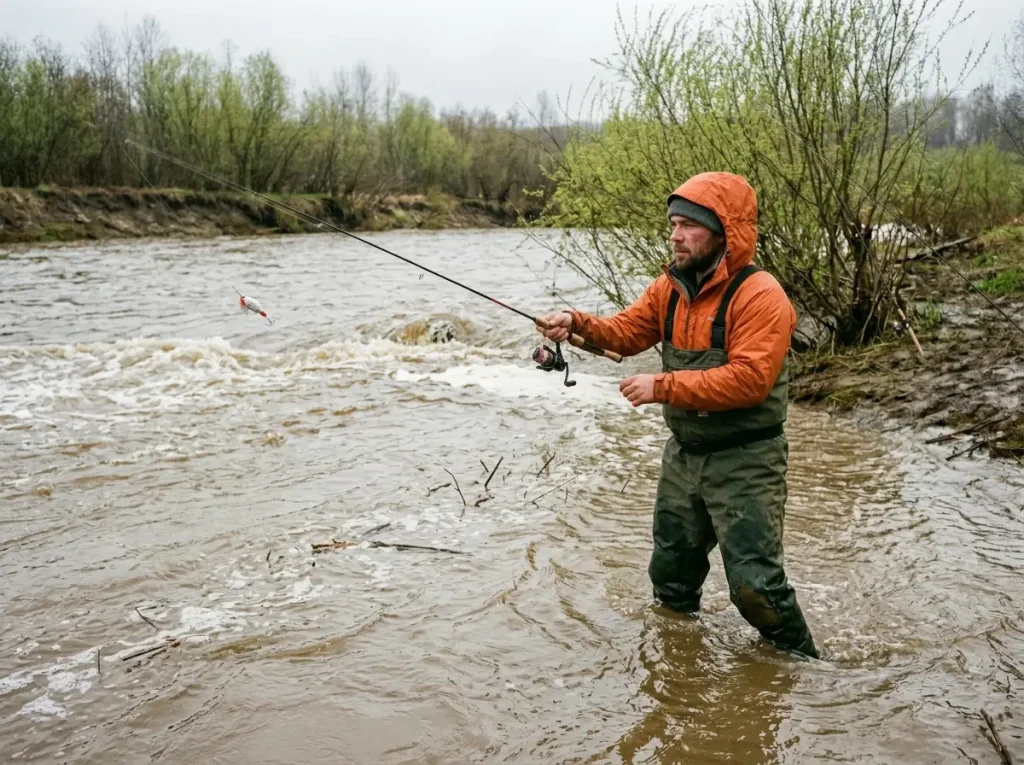
When spring runoff pushes visibility below three feet and the river looks like chocolate milk, trout stop feeding visually. They switch to their lateral line — the vibration-sensing organ that runs along their side. A dead drift dry fly in water where nothing can see it is an exercise in frustration.
A vibrating inline spinner pulled through that same water gets detected. Fish feel the blade rotation, the displaced water, the flash of metal turning. This isn’t spin fishing as a fallback — it’s spin fishing as the correct tool for the conditions.
April and May on most freestone rivers across the country? Spin water. The Blue Fox Classic Vibrax ($7) in a size 2 is the lure that lives on most veteran spin-trout anglers’ rods during runoff. The free-spinning blade pushes heavier vibration than cheaper spinners, and trout in stained water find it at two feet of visibility when they’d never see a fly.
Distance, Depth, and Wind
Fly casting into a 20-mph headwind is miserable. Your loops collapse, your line piles up, and your casting arm burns out after an hour. A spinning rod handles the same headwind without drama.
When you need to reach a holding spot 60 feet across a flat lake or a wide pool, maximizing spinning reel casting distance gets you there. A fly caster at 60 feet is working hard. A spin caster at 60 feet is fishing.
Winter trout hold deep — 8 to 15 feet in the slowest pools. Getting a small jig to the bottom at the right sink rate is mechanically simpler with a spinning rig than with even a heavy euro-nymphing setup.
The Trout Advantage Most Fly Fishing Sites Won’t Mention
Freshly stocked trout are aggressive, non-selective, and scattered across large stretches of water. They’ll hit nearly anything that moves. In that scenario, the ability to cover water fast — which is spin fishing’s structural strength — outproduces careful fly presentations every time.
Here’s the real talk: almost every guide who fishes both methods will admit they grab the spinning rod on blown-out days, early spring runoff, and anything with a stiff headwind. They know conditions determine the tool. So should you.
Pro tip: Gold-bladed spinners outperform silver in off-color water. Silver works better when visibility clears past three feet. Carry both colors in sizes 1 and 2, and you’ve covered every ultralight spinning scenario you’ll face on trout water through spring.
Species and Water Type: Which Method Wins Where
Trout in Streams, Rivers, and Tailwaters
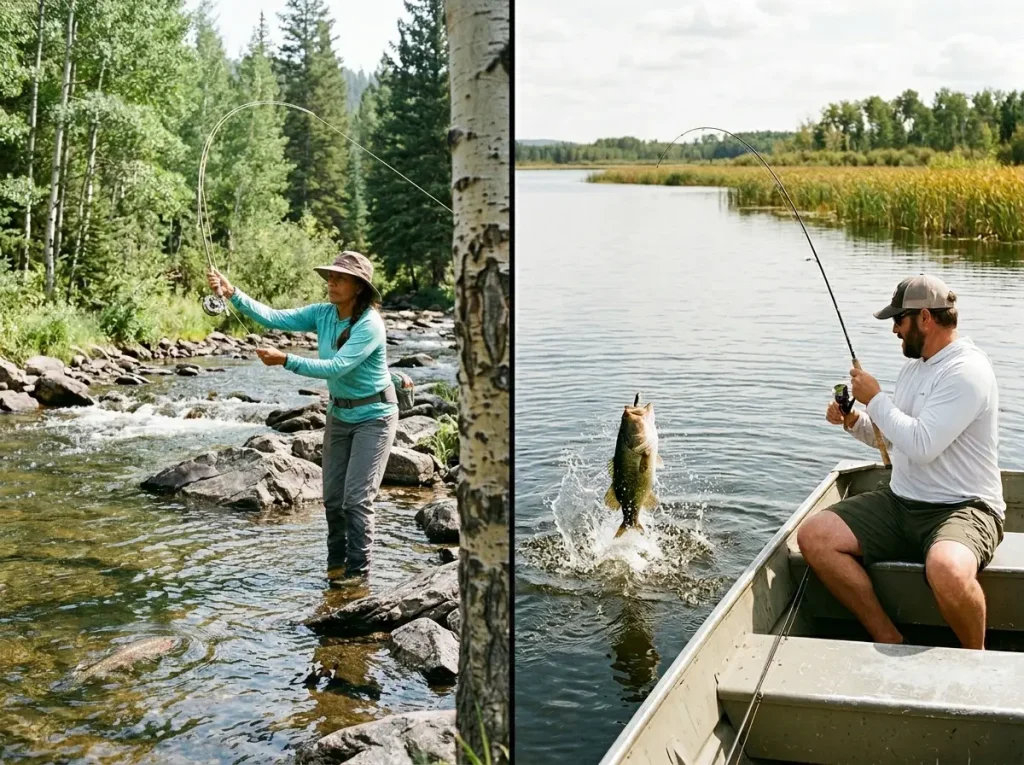
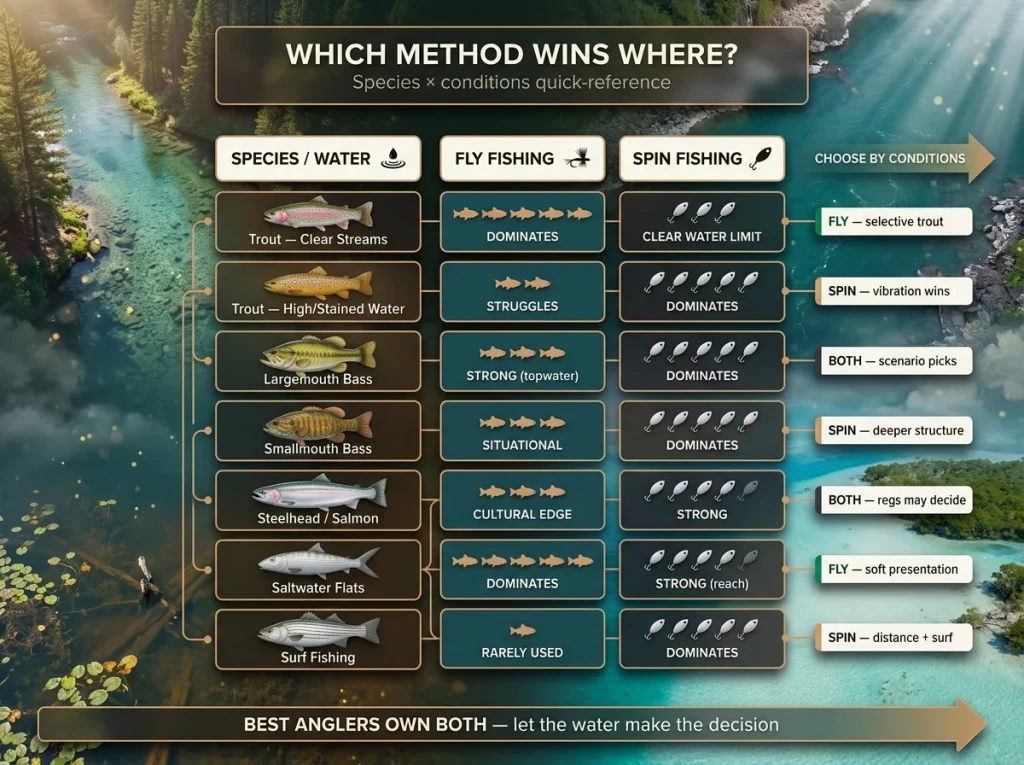
On clear freestone streams with insect hatches, fly fishing dominates for catching brown trout in technical rivers and small-stream brook trout. When the same rivers run high and off-color, spin gear takes over. The honest answer: the best trout anglers own both and switch based on conditions.
Steelhead and Atlantic salmon have long traditions in both methods. Fly fishing is deeply cultural for these species, but spin gear lands fish equally well. Regulations, not preference, sometimes decide which you can use.
Bass, Pike, and Warm-Water Species
Both methods work well for largemouth bass. Fly fishing excels at topwater — a deer-hair popper on a 7-weight during a summer evening is hard to beat. Spin fishing dominates in heavy cover, deep structure, and big plastic presentations that require heavy rods. Neither method wins on bass overall. It depends on how and where you’re fishing.
For pike and musky, spinning gear handles the heavier lures and wire leaders these fish demand. Fly fishing for pike exists and it’s a blast, but it’s a specialty pursuit.
Saltwater and Open-Water Applications
Saltwater flats fishing for bonefish, permit, and redfish in shallow clear water is fly fishing territory — soft presentations that don’t spook fish at 30 feet on a white sand flat. But spin gear covers more water, handles wind better, and reaches farther on open beaches.
Surf fishing is spinning territory. Offshore fishing is spinning territory. Fly fishing in saltwater is real and growing, but for beginners it’s not the right entry point.
The Path Most Anglers Actually Take
Skills That Transfer When You Switch Methods
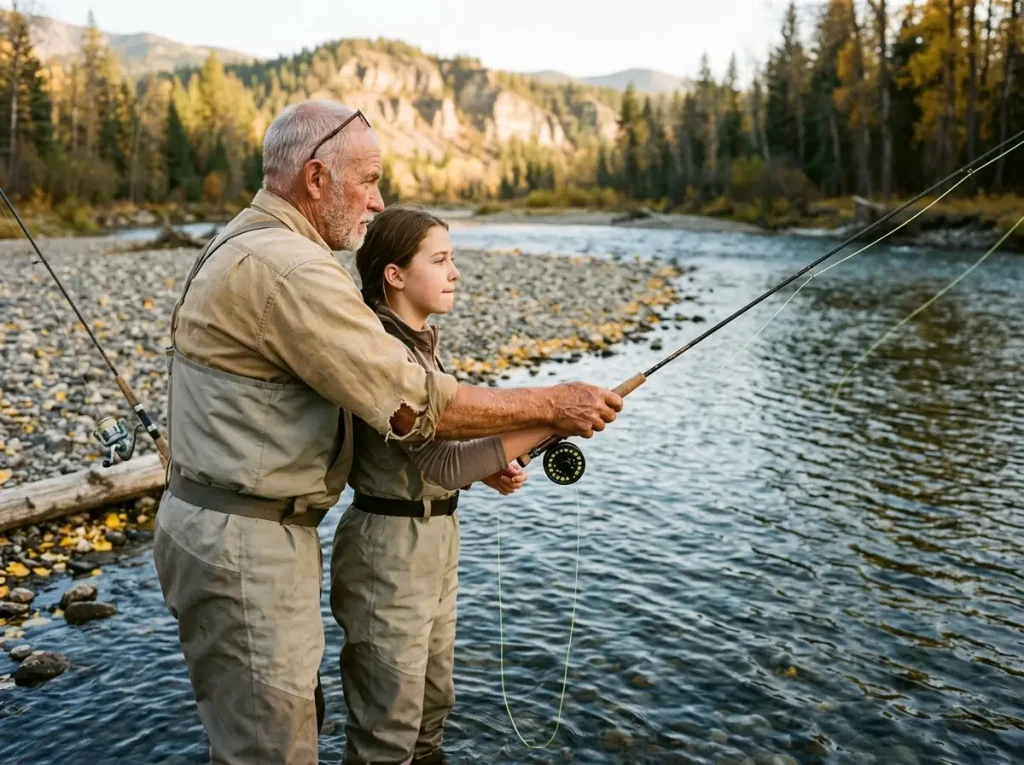
Almost every experienced fly angler started on a spinning rod. And almost everything they learned on that rod carried over.
Reading water transfers completely. Current seams, pocket water behind rocks, the depth where trout hold in a run, where bass set up on structure — all of this looks the same whether you’re holding a fly rod or a spinning rod. So does approach and stealth — learning to wade quietly, to stay low on the bank, to avoid casting your shadow across the pool.
Fish-fighting skills transfer. Catch and release handling transfers. Knot-tying fundamentals transfer. The instinct for when a fish is about to eat — that feeling you develop after enough hours on the water — transfers completely.
A Practical Progression Timeline
What doesn’t transfer: fly casting mechanics. There’s no carryover from spin casting to fly casting — it’s different muscle memory built from scratch. Line management (controlling slack line in your hand and on the water) has no spin equivalent. Mending — repositioning line on the water to control drift — is a concept that doesn’t exist in spin fishing.
Here’s a realistic progression that builds on strengths:
Season 1: Fish a spinning rod. Focus entirely on reading water, finding fish, and building instincts. Catch fish. Get comfortable.
Off-season: Twenty minutes twice a week of yard practice with a fly rod and a yarn fly. No water needed. Build the casting stroke until a 30-foot forward cast feels natural.
First fly trip: Take a guided half-day lesson on easy water — stocked pond or a forgiving tailwater. Let someone watch your cast and fix it in real time.
Year 2 and beyond: Fish both setups. Grab the spinning rod on windy, high-water days. Grab the fly rod when hatches are on and trout are rising. Let conditions pick the tool.
Which to Start With Right Now
If you want to catch fish on your first outing, start with spinning gear. If you have a specific goal — technical trout water, flats fishing, dry fly fishing — and three or more months before your first real trip, start practicing fly casting in parallel.
The honest recommendation for most complete beginners: spin first, fly second. Not because fly fishing is too hard. Because the fishing instincts you build with simpler gear make you a better fly angler faster than starting cold on a fly rod with a full casting learning curve on top of everything else.
Finding local fishing clubs and mentors accelerates every part of this timeline. A local Trout Unlimited chapter, a fly shop that runs clinics, or a friend who’ll stand next to you and adjust your backcast timing — Trout Unlimited’s resources for new fly anglers are a good starting point for finding that community.
Pro tip: The single fastest way to improve at fly casting without fish pressure is yard practice with a yarn fly. No hook, no fish, no frustration — just build the stroke. Twenty minutes twice a week for six weeks and you’ll show up at the river ahead of most beginners who learned exclusively on the water.
Conclusion
Spin fishing gets you catching fish faster, and that matters when you’re starting out. The shorter learning curve isn’t a gimmick — it’s a real advantage for building fishing instincts without fighting your gear at the same time.
Fly fishing gives you access to situations spin gear structurally can’t reach. Clear-water selective trout, surface presentations during a hatch, technical tailwaters where fish have seen everything — those experiences belong to the fly rod.
Conditions determine the right tool, not tradition or brand loyalty. The best anglers keep both options available and let the water make the decision.
Pick up a spinning rod this weekend, learn to read the water, and start building the instincts that make every type of fishing better.
Q1 Is fly fishing harder than spin fishing for beginners?
Fly casting uses different muscle memory, not objectively harder skills — most beginners make a workable cast within two hours. The bigger challenge is reading water and presenting naturally, which you’ll develop regardless of method. Three months in, the difficulty gap is much smaller than beginners expect.
Q2 Should I learn fly fishing or spin fishing first?
For most complete beginners, spin fishing first builds fishing instincts faster without the added casting learning curve. You learn to read water, find fish, and fight them with gear that doesn’t require new muscle memory. Those skills transfer directly when you pick up a fly rod later.
Q3 Which is better for trout — fly fishing or spin fishing?
Fly fishing has the clear edge in clear water when trout feed selectively on insects. Spin fishing wins in high, off-color water, deep cold pools, and windy conditions. Experienced trout anglers carry both setups and choose based on what the river looks like that day.
Q4 Can you use a spinning rod to fly fish?
Not effectively — fly casting requires a weighted fly line to deliver a nearly weightless fly, and a spinning rod can’t load that line. Hybrid rigs like casting bubbles let you fish fly patterns on spinning gear, but the presentation is fundamentally different. It’s a workaround, not a replacement for the real technique.
Q5 How much does it cost to start fly fishing compared to spin fishing?
A complete beginner spin setup runs $60–$110. A complete beginner fly setup without waders costs $165–$280. Wet-wading in summer eliminates the wader expense and narrows the gap to roughly $70–$100. Ongoing costs for replacing lost flies and lures are surprisingly similar between the two methods.
Risk Disclaimer: Fishing, boating, and all related outdoor activities involve inherent risks that
can lead to injury. The information provided on Master Fishing Mag is for educational and informational purposes
only. While we strive for accuracy, the information, techniques, and advice on gear and safety are not a substitute
for your own best judgment, local knowledge, and adherence to official regulations. Fishing regulations, including
seasons, size limits, and species restrictions, change frequently and vary by location. Always consult the latest
official regulations from your local fish and wildlife agency before heading out. Proper handling of hooks, knives,
and other sharp equipment is essential for safety. Furthermore, be aware of local fish consumption advisories. By
using this website, you agree that you are solely responsible for your own safety and for complying with all
applicable laws. Any reliance you place on our content is strictly at your own risk. Master Fishing Mag and its
authors will not be held liable for any injury, damage, or loss sustained in connection with the use of the
information herein.
Affiliate Disclosure: We are a participant in the Amazon Services LLC Associates Program, an
affiliate advertising program designed to provide a means for us to earn advertising fees by advertising and linking
to Amazon.com. As an Amazon Associate, we earn from qualifying purchases. We also participate in other affiliate
programs and may receive a commission on products purchased through our links, at no extra cost to you. Additional
terms are found in the terms of service.