

In this article
A 20-inch brown trout blew up on my elk hair caddis and turned downstream before I’d even lifted the rod. The reel screamed — and then went silent as the spool seized for a fraction of a second. That was enough. The 5X tippet snapped and the fish was gone. The drag wasn’t broken. It was set correctly on paper. But that brief hesitation at startup, that sticky first revolution, cost me a fish I’d been working for an hour.
I’ve fished both click-and-pawl and disc drag reels on everything from small brookies to steelhead, and the “which drag is better” question is actually the wrong question. The right question is which system fits the specific fish you’re chasing and how you like to fight them. This guide covers how each system actually works, where each one wins, and the skill most articles skip entirely.
⚡ Quick Answer: For small stream trout on light tippet, click-and-pawl drag does the job fine if you know how to palm a reel. For steelhead, salmon, saltwater species, or any fish that takes long line-ripping runs, a quality sealed disc drag reel is the right tool — but only if it has smooth startup. The drag system matters less than the drag’s startup smoothness, and that’s the number nobody talks about.
How Click-and-Pawl Drag Actually Works
The pawl, the gear, and what produces the sound
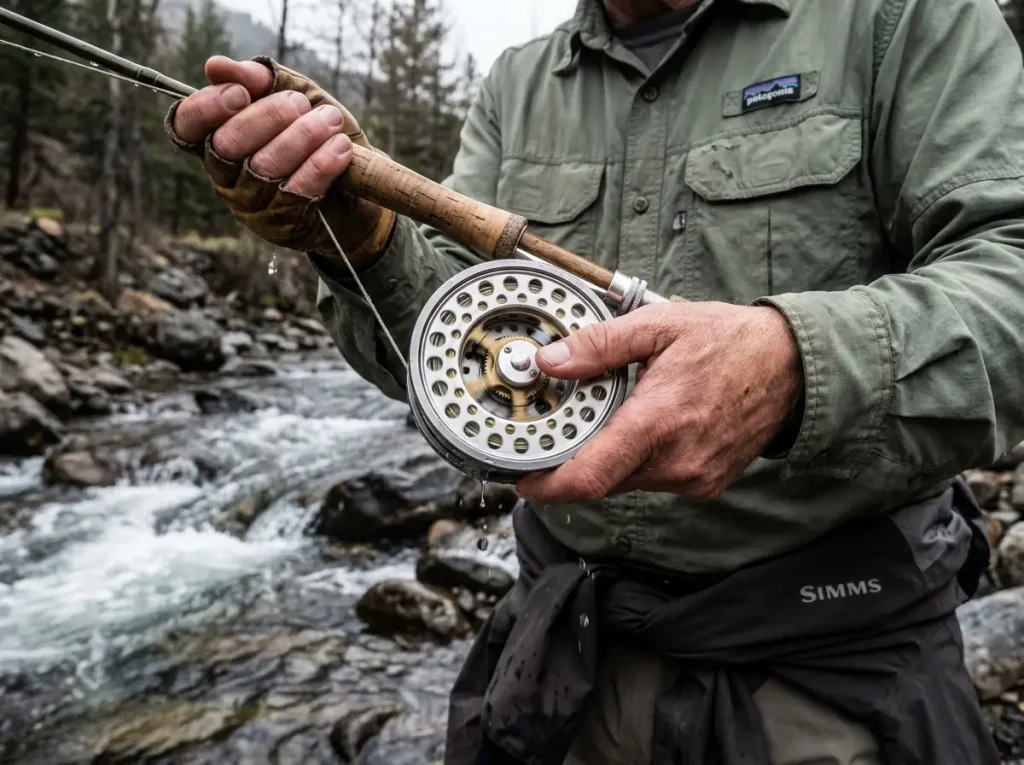
The click-and-pawl drag is one of the simplest mechanical systems in fishing. Inside the reel, a small spring-loaded triangular piece of metal — the pawl — sits against the teeth of a gear wheel attached to the spool. As the spool turns when line peels out, the pawl bounces from tooth to tooth, producing that distinctive clicking sound. The resistance created by this engagement is your drag.
That’s it. There’s no stack of friction washers, no compression plates, no adjustment knob that dials in pounds of resistance. The drag is what it is — light, consistent, and simple. On most click reels the only adjustable element is the pawl tension, which some models allow you to set via a screw. Most don’t.
What the click drag is and isn’t designed to do
The click drag was designed to do two things: prevent the spool from backlashing (freewheeling and creating a rat’s nest of line) and let the angler know when line is going out. That’s the actual design purpose. Everything beyond that — actually fighting a large fish — is on you.
This isn’t a criticism. It’s important context. The Hardy Marquis, one of the most celebrated click-and-pawl reels ever made, has been landing large salmon and sea trout for decades. But the angler at the other end of the rod was doing most of the drag work by palming the spool, adjusting rod angle, and managing the fight manually. The reel wasn’t fighting the fish — the angler was.
Palming the reel and the manual drag advantage
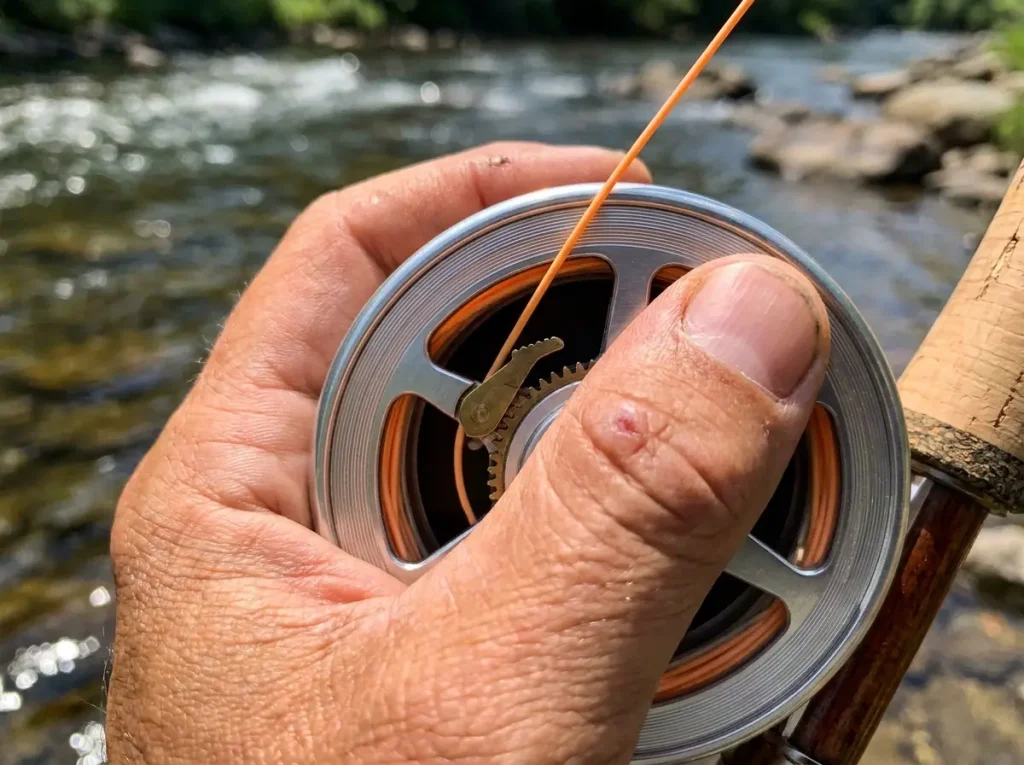
Palming a reel means pressing your palm, thumb, or fingers against the exposed spool rim to add friction as line peels off. With an open-frame click reel, this is easy and tactile — you can feel exactly how much pressure you’re applying and adjust in real time based on what the fish is doing. You don’t set a number before the fight; you respond to the fish throughout it.
This is a real advantage for experienced anglers. It gives you more fine-grained control than any knob ever could, because the fish changes speed and direction continuously and your palm responds faster than a drag setting changed with your fingers.
How Disc Drag Works
Friction washers, compression, and smooth engagement
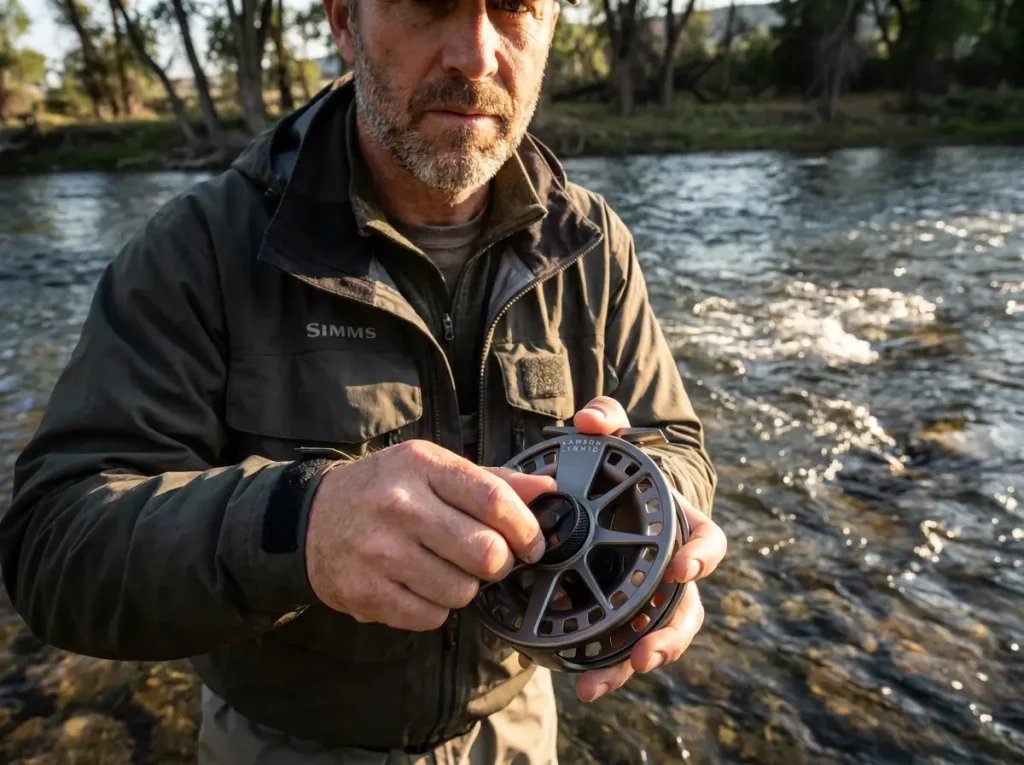
Disc drag reels work through stacked friction discs — typically carbon fiber, cork, Teflon, or composite material — compressed against the metal of the spool to create resistance. A knob on the outside of the reel increases or decreases compression on the disc stack, which proportionally increases or decreases drag pressure. More compression, more resistance.
The material matters. Carbon fiber drag washers dissipate heat well — critical on long runs from big fish when the friction generates real warmth. Cork is smooth-engaging and self-lubricating to a degree; it’s forgiving at the moment the drag engages. Teflon is precise and consistent but can be touchy if the system isn’t well-engineered.
Sealed vs unsealed disc systems
Sealed disc drags — where the drag stack is enclosed behind a waterproof gasket — keep grit, sand, and water out of the friction surfaces. This matters for saltwater use where even a fine film of salt crystals on a drag washer can cause inconsistent engagement. For river fishing, it matters when you take a swim or the reel rolls off a rock into a fast riffle.
Unsealed disc systems work fine in clean freshwater but need more attention after hard use. The drag washers can collect fine silt, which changes the feel. A sealed system is the right choice for any fishing where the reel may get fully submerged.
Pro tip: When shopping for a disc drag reel, the most important spec isn’t the maximum drag setting. Ask about the minimum drag setting and whether the drag engages smoothly at the lightest setting. A reel that’s smooth at 1 pound of resistance is more useful for trout fishing than one that’s smooth at 5.
Startup Inertia and Tippet Protection
The one spec that matters more than drag rating
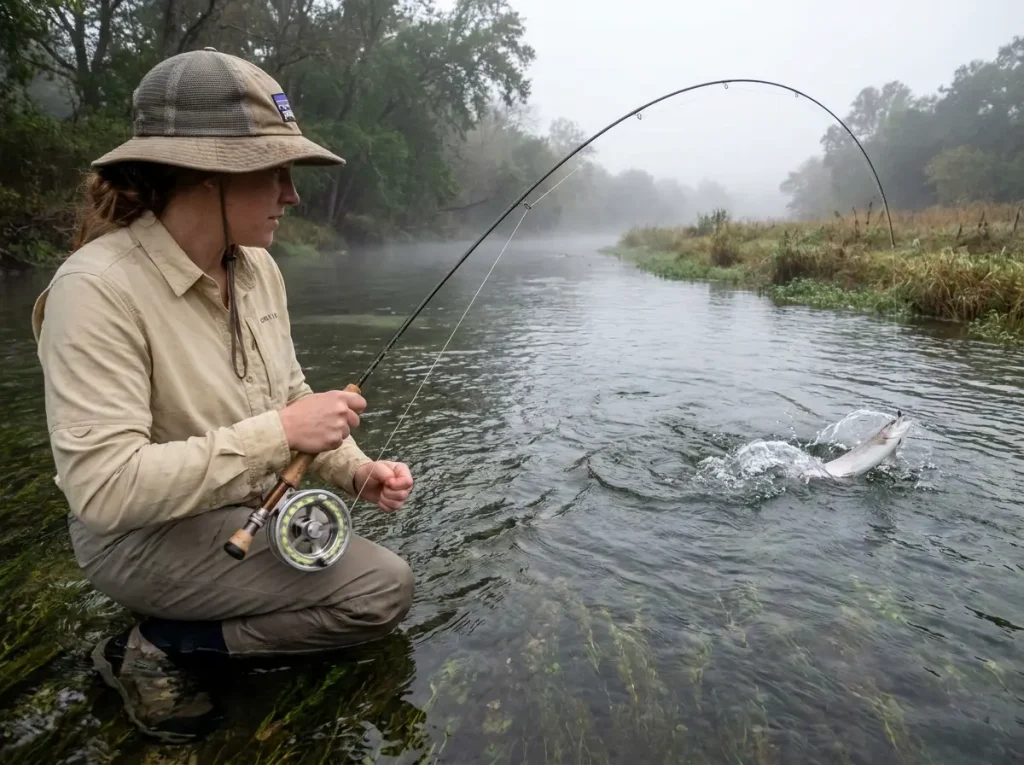
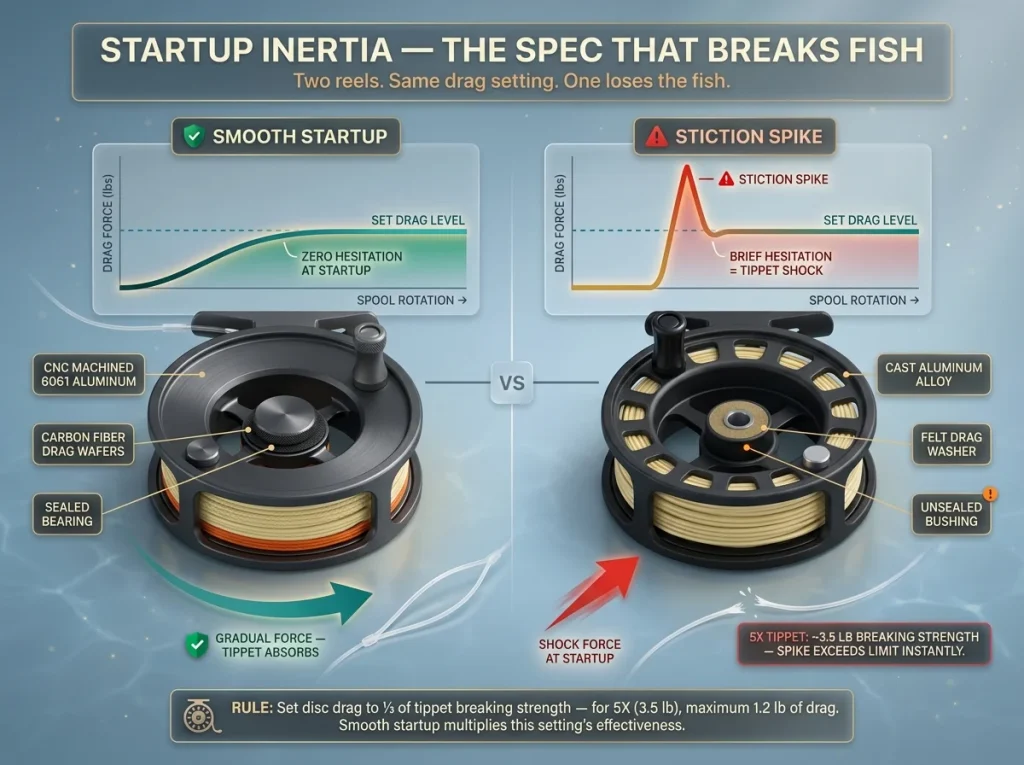
Startup inertia is the resistance a drag must overcome before the spool begins to rotate. Think of it as the difference between a door that swings freely and one that sticks at the beginning before it moves. When a large fish bolts suddenly, the spool needs to start turning immediately — any hesitation sends a shock through the system to the tippet, and that shock can snap fine leader material before you can react.
A trout that hits and runs on 6X tippet (roughly 3.5 pounds breaking strength) and encounters even a fraction of a second of drag hesitation is likely a lost fish. The tippet doesn’t get a chance to stretch and absorb — it just breaks. This is the physics behind why many competitive dry fly anglers still choose click-and-pawl reels even though disc drags offer more stopping power on paper.
Where click-and-pawl wins the startup argument
A good click-and-pawl reel has essentially zero startup inertia. The pawl offers minimal resistance at the instant the spool begins to turn. There’s no compression to overcome, no friction material to engage — the spool starts moving almost simultaneously with the fish’s first run. For 5X and 6X fishing where the entire system is calibrated for light pressure, that smoothness is the ballgame.
Why disc drags closed the gap
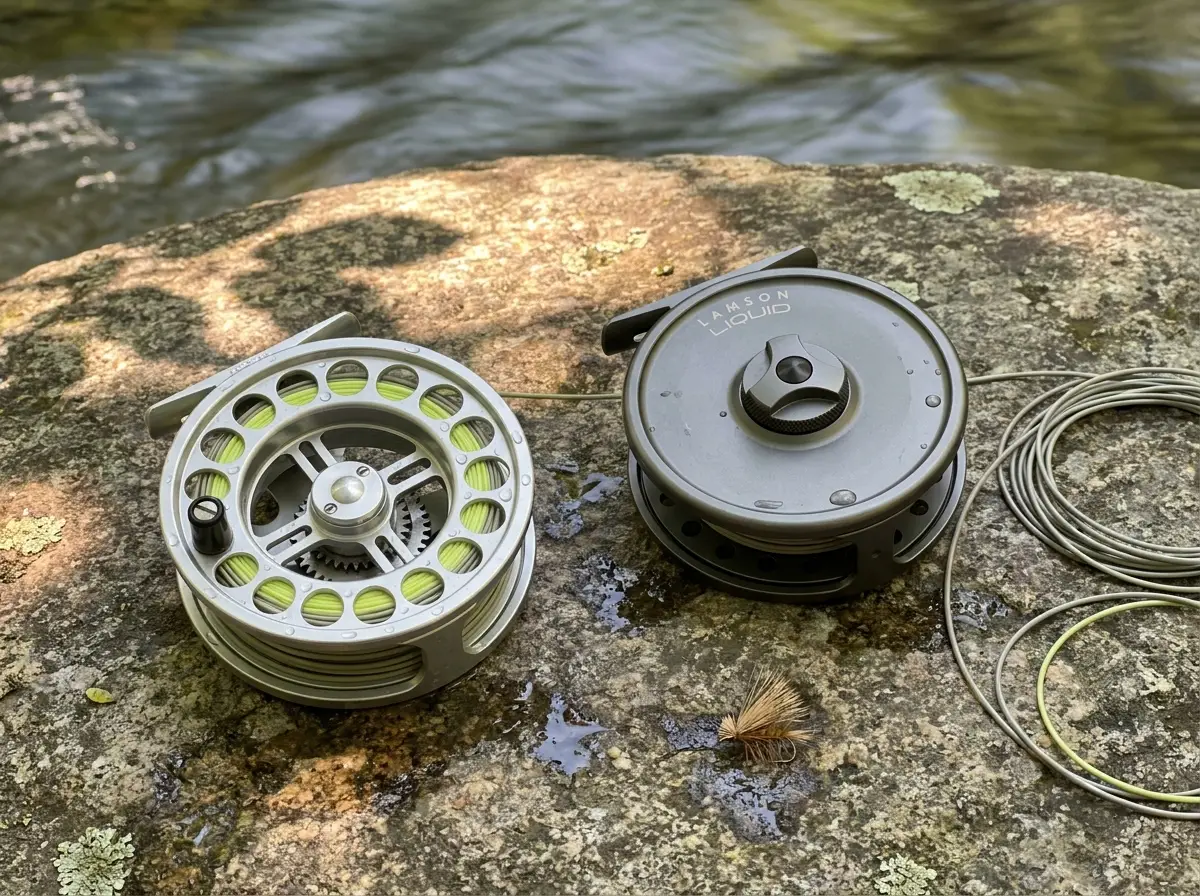
Modern disc drag reels from Lamson, Ross, Galvan, and a handful of other manufacturers have engineered the startup inertia out of their systems through better material science and tighter manufacturing tolerances. The Lamson Liquid, the Ross Colorado, the Galvan Torque — these reels start up smooth enough to fish 5X reliably in the hands of an angler who sets the drag correctly.
The key word is “correctly.” Setting a disc drag to 1/3 of your tippet’s breaking strength is the practical rule — on 6-pound 4X, that’s roughly 2 pounds of resistance. Most anglers set disc drags too heavy, which eliminates the startup advantage the engineering worked to provide.
Matching Drag System to Your Fish
Trout on small to medium streams
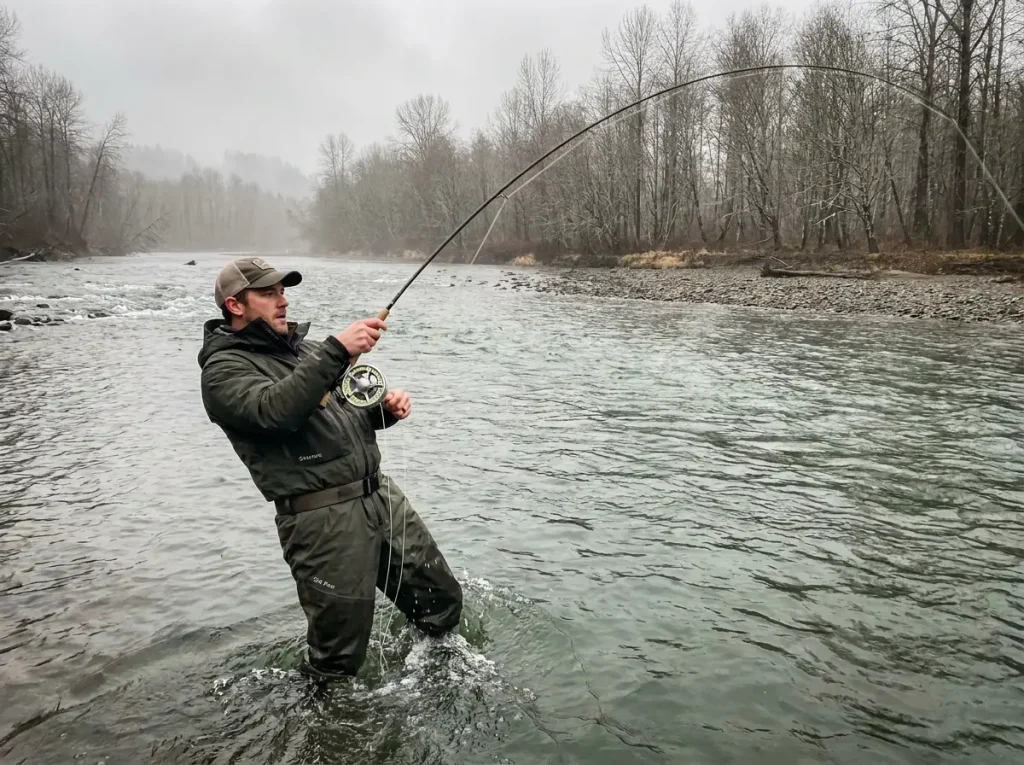
For most trout fishing on small to medium streams with 4X to 7X tippet, click-and-pawl drag is entirely adequate if you know how to palm the reel. The fish rarely run far enough to dump significant backing, the tippet is the limiting factor not the drag power, and the simplicity of the system means nothing goes wrong. The Orvis Battenkill has landed trout all over the world for decades on click drag.
If you’re new to fly fishing and haven’t developed the palming habit, a disc drag reel removes one variable from a system that already has many. You can set it and manage the fight with the rod. Either works; the question is where you are in your skill development.
Steelhead, salmon, and sea-run fish
This is where the choice becomes clear: sealed disc drag, full stop. Steelhead make powerful, abrupt surges rather than long sustained runs, which means the drag engages and disengages repeatedly throughout the fight. A click-and-pawl system requires constant manual adjustment as the fish charges and turns — manageable for an experienced angler but unforgiving when you’re learning. More importantly, the runs are powerful enough that palming a reel at full sprint is arm-tiring work.
For Atlantic salmon and Pacific salmon, the same logic applies with even higher stakes — these fish are larger and faster than steelhead. A quality disc drag at 40-60% of tippet breaking strength and a large arbor reel (faster line pickup per revolution) is the standard for a reason. Our coverage of steelhead drift fishing tactics goes into the full system if you’re setting up for Pacific Northwest rivers.
Saltwater fly fishing
Saltwater targets — bonefish, redfish, stripers, tarpon — demand sealed disc drag, no exceptions. Salt accelerates everything: corrosion, buildup on drag surfaces, deterioration of unsealed pawl springs. A click-and-pawl reel used in saltwater will need thorough rinsing after every trip or it will degrade quickly. The drag pressure needed to stop a running bonefish exceeds what most click reels can deliver without intense palming.
Large arbor design matters here too — standard arbor reels retrieve 6-8 inches of line per revolution, while large arbor designs manage 10-15 inches per turn. When a bonefish turns and swims toward you, that line recovery speed is the difference between keeping tension and watching a slack pile develop.
Palming the Reel — The Skill That Changes Everything
It’s not a workaround. It’s a technique.
Most articles frame palming as what you do when a click-and-pawl reel “isn’t enough.” That framing is backwards. Palming is a learned skill that gives you more real-time control over a fight than any drag knob. When you palm, you’re responding to the fish — not to a setting you made before the fight started.
The technique: when a fish runs, extend your fingers or palm against the exposed spool rim on the retrieve side. The amount of pressure you apply is the drag. Light pressure for a fish on fine tippet; firm pressure for a larger fish on heavier leader. You can change that pressure in a fraction of a second, which no manual drag adjustment can match.
How to develop the habit
The problem is that most anglers don’t develop the palming habit because disc drag reels don’t require it — the automation handles the fight for them. If you fish a click-and-pawl reel for a season of small stream trout, palming becomes automatic. You stop thinking about it and start using it instinctively, which is when it becomes a genuine advantage.
On a small limestone stream with 6X tippet, your palm becomes the most sensitive drag system available. No carbon fiber washer can feel a fish the way skin can. Watch an experienced Catskill dry fly angler fight a good brown on a vintage Hardy and you’ll see what decades of palming practice looks like — it’s unhurried, precise, and doesn’t look like a fight at all.
Pro tip: Practice palming on small fish before you need it on big ones. Put a click-and-pawl reel on your light rod for a season of stream fishing and let the trout teach you the pressure calibration. The habit transfers to every reel you fish afterward.
Maintenance, Durability, and Long-Term Ownership
Click-and-pawl: nearly indestructible, occasional attention
The mechanical simplicity of click-and-pawl is its maintenance story too. There are three moving parts in most designs: the spool, the gear wheel, and the pawl with its spring. The pawl spring fatigues over time and occasionally needs replacing — a 10-minute job that costs less than a spool of tippet. Beyond that, rinse with clean water after saltwater use, apply a drop of reel oil to the bearing once a season, and the reel will outlast you.
Hardy Marquis reels from the 1960s are still being fished today. That durability is partly design and partly the lack of components that can fail. A sealed disc drag reel from a top manufacturer will also last decades, but it has more parts to inspect.
Disc drag: sealed systems are low maintenance, unsealed less so
A sealed disc drag from a quality manufacturer — Lamson, Ross, Galvan — needs remarkably little attention in freshwater. Rinse after use, inspect the drag knob O-ring annually, apply a thin layer of approved grease to the drag washer stack every 2-3 seasons or if the drag feels inconsistent. That’s it.
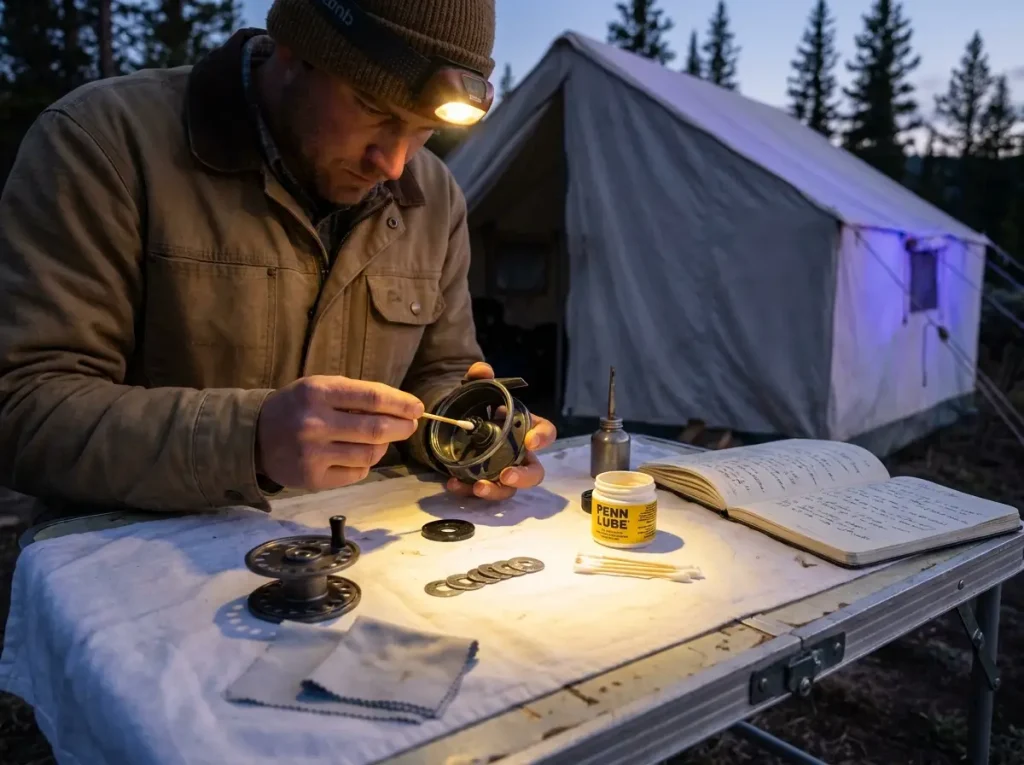
Unsealed disc systems need more attention. After gritty river conditions, the drag washers can develop a rough, inconsistent feel as fine sediment works into the friction surfaces. Disassembly and cleaning with isopropyl alcohol, followed by reassembly with fresh drag grease (Penn Lube or equivalent), restores the feel. It’s a 20-minute job but one you’ll need to do seasonally with heavy use.
Never use WD-40 or general-purpose oil on drag washers — these degrade the friction material and destroy the smooth engagement you paid for. Manufacturer-specific drag grease or high-quality reel oil applied sparingly is the rule.
Which lasts longer?
Both systems last decades with reasonable care. The click-and-pawl wins on repairability — the pawl spring and gear are available as spare parts for most established brands, and any competent machinist can fabricate replacements if needed. A high-end disc drag reel that needs new washers in 15 years may or may not have those parts available from the manufacturer. Buy from brands that have been around for decades and have a track record of supporting older models.
Pro tip: Before any long trip — backcountry, saltwater, overseas — test your drag under load by pulling line off the reel while holding it steady. You should feel smooth consistent resistance with no sticking or jumping. A drag that sticks at home will fail in a critical moment on the water.
Conclusion
The honest verdict: click-and-pawl is the right tool for experienced trout anglers who value simplicity, tradition, and the tactile engagement of palming, and who fish primarily with light tippet on calm water. Sealed disc drag is the right tool for steelhead, salmon, saltwater species, or any situation where you need reliable stopping power without manual intervention.
The spec that matters most in either system isn’t maximum drag — it’s startup smoothness. A disc drag reel that hesitates at the beginning of a run will lose fish that a smooth click-and-pawl never would. Test startup before you buy, set disc drags conservatively (1/3 of tippet breaking strength), and if you fish a click reel, invest the time to learn the palming habit. That skill is worth more than any drag upgrade.
FAQ
Is a disc drag better than click and pawl for fly fishing?
It depends entirely on the fish. For steelhead, salmon, or saltwater species that make long powerful runs, a quality sealed disc drag is the better tool. For trout on light tippet where startup smoothness and minimal resistance are the priorities, a good click-and-pawl reel with a practiced palming technique is fully adequate.
Do you need a disc drag for trout fishing?
No, but it helps if you haven’t developed the palming habit. Click-and-pawl reels land trout reliably — they’ve done it for over a century. If you’re new to fly fishing, a disc drag removes one skill from the equation. Once you’re comfortable, click reels are worth experiencing for the tactile connection they give you to the fish.
How do you palm a fly reel?
Press the palm of your hand, thumb, or fingers against the exposed spool rim as line peels off. The friction you apply is your drag — press lightly for fine tippet and a light fish, firmly for heavier leader and a strong run. The key is starting with light pressure and adding it gradually, not grabbing suddenly.
What is startup inertia in a fly reel?
Startup inertia is the resistance a reel’s drag must overcome before the spool begins rotating freely. High startup inertia means a brief hesitation when a fish first bolts — that hesitation can snap fine tippet before you react. Low startup inertia means the spool responds instantly. It’s the most important spec for light-tippet trout fishing and the thing most reel reviews don’t test.
Can you use a click and pawl reel for salmon?
Technically yes, but only with developed palming skills and ideally a reel with a large backing capacity. Salmon make powerful runs that exceed what click drag alone can handle — you’ll be palming constantly throughout the fight. Most guides fishing Atlantic or Pacific salmon use disc drag reels for this reason. A click reel for salmon on a smaller river in skilled hands is doable; for a beginner targeting big fish, choose disc drag.
Risk Disclaimer: Fishing, boating, and all related outdoor activities involve inherent risks that
can lead to injury. The information provided on Master Fishing Mag is for educational and informational purposes
only. While we strive for accuracy, the information, techniques, and advice on gear and safety are not a substitute
for your own best judgment, local knowledge, and adherence to official regulations. Fishing regulations, including
seasons, size limits, and species restrictions, change frequently and vary by location. Always consult the latest
official regulations from your local fish and wildlife agency before heading out. Proper handling of hooks, knives,
and other sharp equipment is essential for safety. Furthermore, be aware of local fish consumption advisories. By
using this website, you agree that you are solely responsible for your own safety and for complying with all
applicable laws. Any reliance you place on our content is strictly at your own risk. Master Fishing Mag and its
authors will not be held liable for any injury, damage, or loss sustained in connection with the use of the
information herein.
Affiliate Disclosure: We are a participant in the Amazon Services LLC Associates Program, an
affiliate advertising program designed to provide a means for us to earn advertising fees by advertising and linking
to Amazon.com. As an Amazon Associate, we earn from qualifying purchases. We also participate in other affiliate
programs and may receive a commission on products purchased through our links, at no extra cost to you. Additional
terms are found in the terms of service.