
In this article
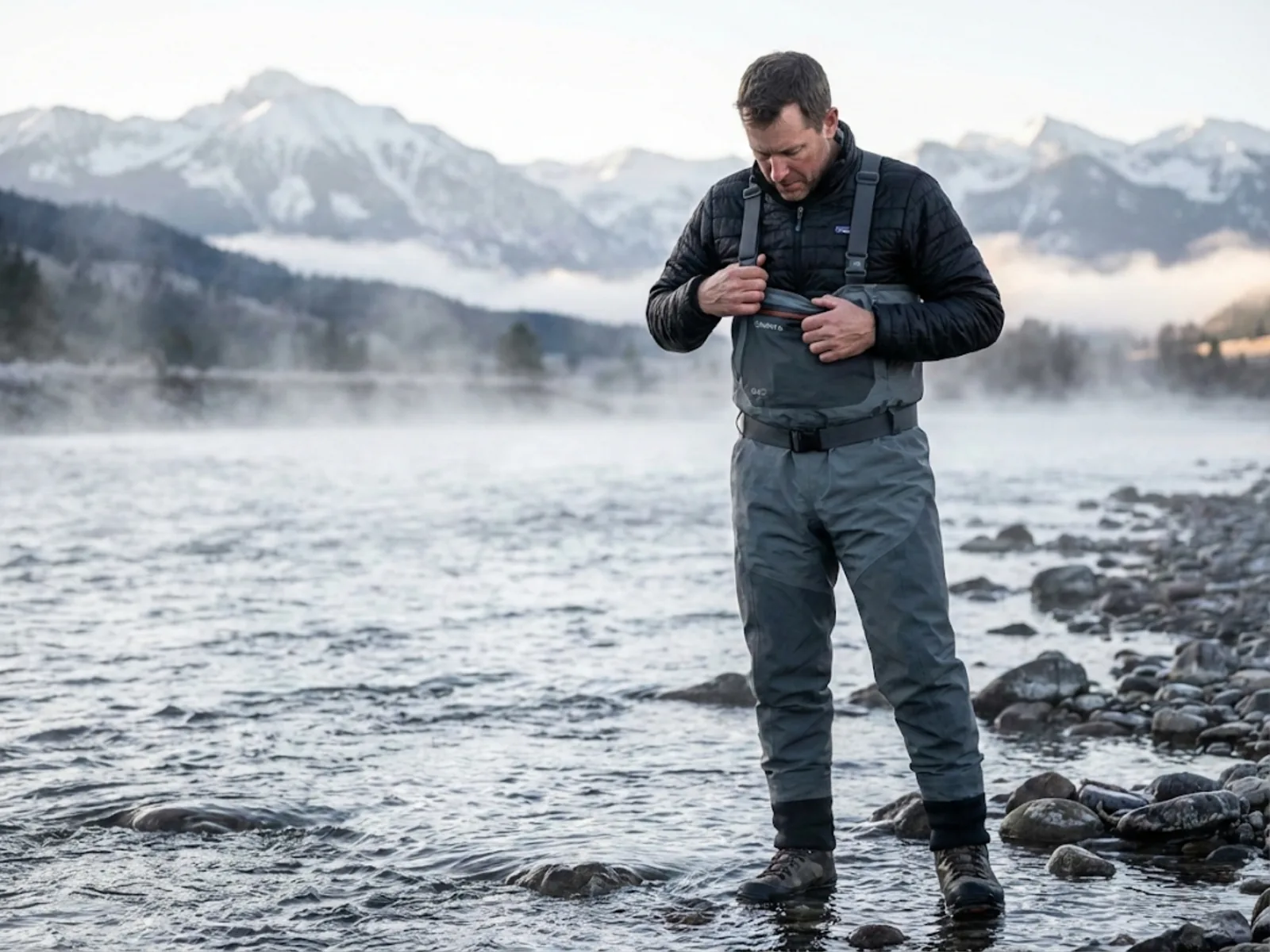
The thermometer read 42°F. Standing knee-deep in the Madison River at dawn, I watched condensation fog my breath while sweat pooled against the neoprene pressed to my skin. Within an hour, I was shivering—not from the cold water, but from the clammy moisture trapped inside my “warm” waders. That morning taught me a lesson no gear tag could: the right wader isn’t about insulation alone. It’s about understanding the physics of heat, sweat, and the water you’re standing in.
After two decades of guiding in conditions ranging from 35°F ice-out to 75°F summer flows, I’ve learned that water temperature is the single most important factor in choosing between neoprene waders and breathable waders. Get this decision wrong, and you’ll either overheat on the hike in or freeze while standing still. Here’s exactly how to match your waders to the water—no guesswork required.
⚡ Quick Answer: Choose neoprene waders for stationary fishing in water below 50°F where warmth is critical. Choose breathable waders for active fishing above 50°F where mobility and sweat management matter. The crossover zone (50-60°F) depends on your activity level—stationary hunters need neoprene; mobile anglers can layer breathables.
The Physics of Cold Water: Why Temperature Dictates Everything
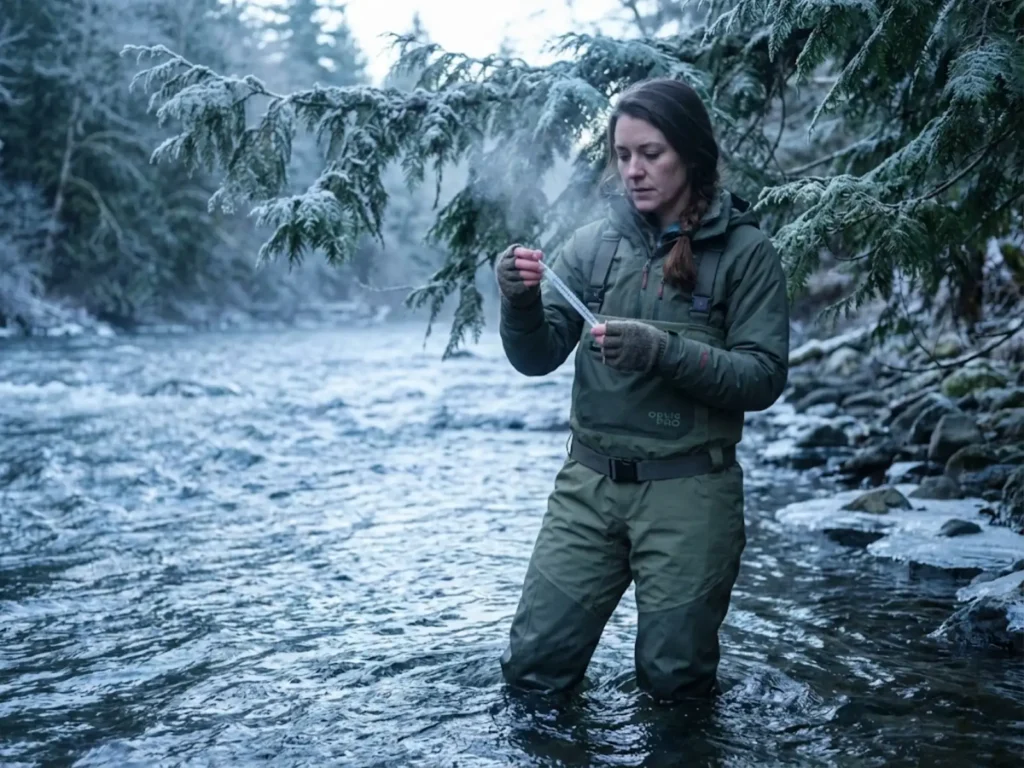
Water doesn’t just feel cold—it actively drains your body heat 25 times faster than air at the same temperature. This means standing in a 50°F river extracts warmth from your body at roughly the same rate as standing naked in sub-freezing air. Understanding this thermal drain is why why your wading belt is non-negotiable when things go wrong.
The “Rule of 60” Decision Framework
The outdoor industry uses a simple framework called the “Rule of 60” for gear decisions. Below 50°F water, you lose dexterity in your hands and feet within five minutes without proper protection. Between 50-60°F, your activity level becomes the deciding factor. Above 60°F, the risk shifts from hypothermia to heat stress—and breathable fabric becomes your best friend.
What makes this confusing is spring and fall fishing when air temperatures feel comfortable but water remains dangerously cold. A 70°F afternoon paired with 45°F water creates false confidence. The air feels fine; the water kills. According to NOAA’s Cold Water Danger criteria, this “warm air/cold water” scenario accounts for a significant portion of cold-water drowning incidents.
Pro tip: Don’t trust the air temperature. Check your state’s water temperature data or carry a stream thermometer. The number that matters is the one touching your legs.
Cold Water Immersion: The Survival Timeline
In water between 32-40°F, you have roughly 30-90 minutes of survival time and less than three minutes before you lose finger dexterity. Between 40-50°F, that window extends to 1-3 hours, but cold incapacitation begins within 30 minutes. These aren’t abstract numbers—they’re the timeline for self-rescue if you fall in wearing the wrong gear.
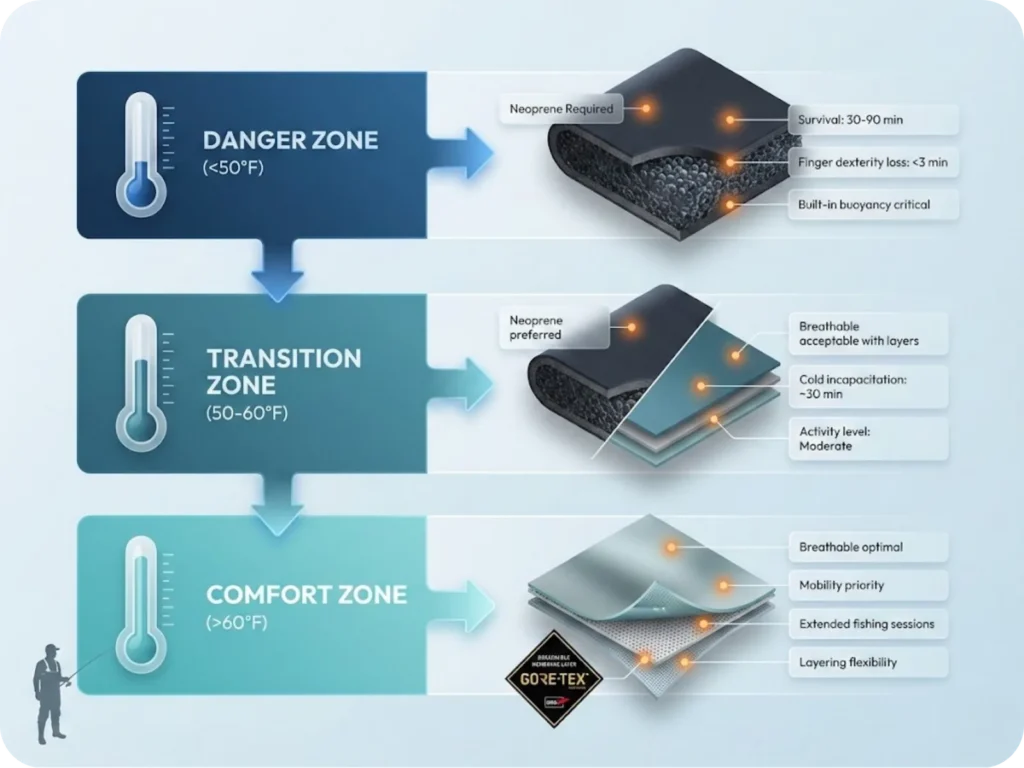
Neoprene’s trapped nitrogen bubbles provide inherent buoyancy that breathable models simply lack. If you’re fishing alone in 45°F water, that buoyancy isn’t a luxury—it’s a safety redundancy that could keep your head above water while you work toward the bank.
Material Science: What’s Actually Keeping You Warm (Or Cool)
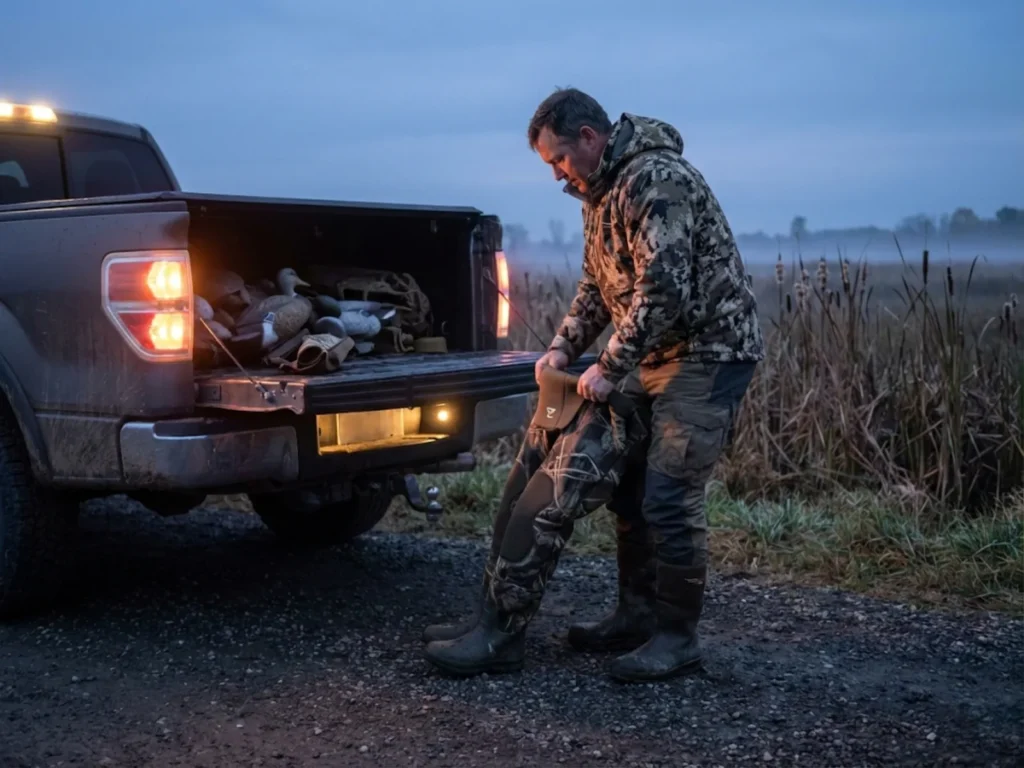
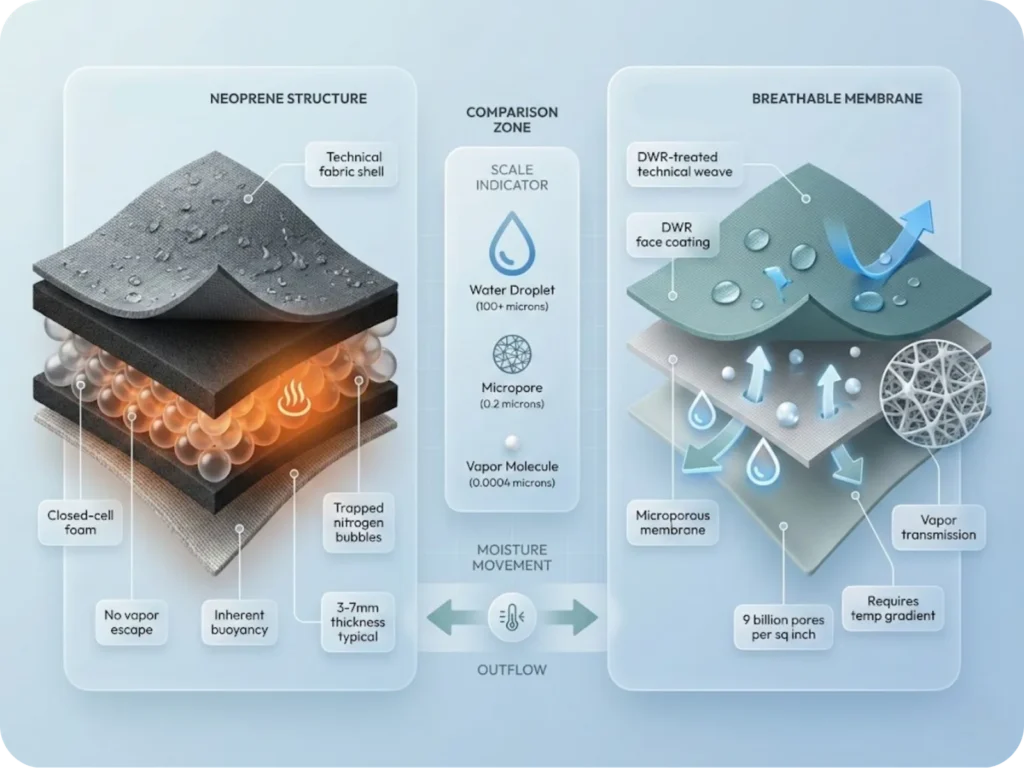
The performance difference between these two wader types comes down to molecular structure. One traps heat; the other manages moisture. Neither is universally better—they’re engineered for opposite problems.
Neoprene: Closed-Cell Polymer Physics
Neoprene rubber is essentially a closed-cell foam filled with nitrogen gas. That gas doesn’t conduct heat well, which creates the insulation barrier. A 5mm neoprene wader provides roughly equivalent warmth to a 3mm neoprene wetsuit because you’re standing in cold water rather than immersed. The thicker the material, the warmer (and stiffer) the wader becomes.
Thick neoprene in the 5-7mm range is the industry standard for late-season hunts and ice-out steelheading. The trade-off is weight—worn neoprene waders can hit 10-14 pounds, acting like ankle weights that tire you out on long walks.
One critical factor most anglers overlook: neoprene absorbs water over time. A good quality pair maintains about 98% water resistance. Budget options can become 20% waterlogged, cutting insulation efficiency by a factor of four. This is why how breathable membranes actually work becomes relevant even for neoprene owners—understanding material degradation helps you know when to replace.
Breathable Laminates: Microporous Membrane Technology
Breathable waders use membranes like Gore-Tex or Toray with microscopic pores smaller than a water droplet but larger than a vapor molecule. Sweat escapes; external water stays out. The catch is that these membranes require a temperature and humidity gradient to function—they work best when the inside is warm and humid while the outside is cooler.
The face fabric on breathables is treated with DWR (Durable Water Repellent). When this coating fails—called “wetting out”—the outer fabric saturates, blocks the membrane pores, and creates internal condensation that feels exactly like a leak. Before you send waders in for repair, wash them with a tech wash and reapply DWR treatment.
Pro tip: If your breathable Hodgmans or other breathables feel “leaky” only in the legs but dry elsewhere, it’s probably DWR failure, not a puncture. Wash and re-treat before assuming you need expensive repairs.
The Activity Variable: Mobility, Sweat, and the “Chill Factor”
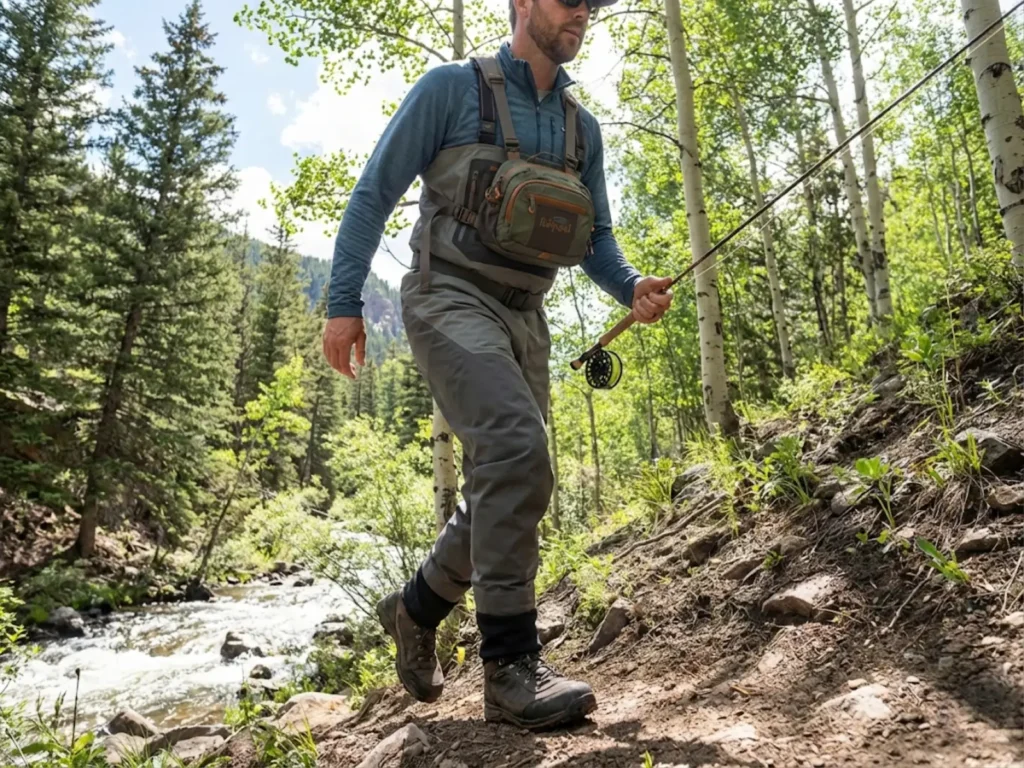
Here’s the paradox that confused me on that Madison River morning: I was cold because my “warm” waders trapped my sweat. Activity level changes everything about the neoprene vs breathable waders comparison.
The Sweat Problem in Neoprene
Any perspiration you generate while hiking to the water stays inside neoprene waders. The moment you stop moving, that trapped moisture cools against your skin and begins conducting heat away from your body—the exact opposite of what insulation should do. This “sweat-chill” cycle is why hunters sitting motionless in a blind love neoprene while active anglers hiking miles of river despise it.
The weight penalty compounds this problem. At 10-14 pounds, bootfoot waders in neoprene act like training weights on your ankles. Every step costs more metabolic effort, which generates more sweat, which creates more chill once you stop. For walk-in hunting or covering miles of river fishing water, neoprene becomes self-defeating.
The Vapor Solution in Breathables
Breathable waders solve the sweat problem by letting moisture vapor escape through the membrane. Combined with proper building a layering system for breathable waders, you can regulate your internal temperature across a wide range of conditions. The same wader works in March with fleece layers and in July with light wicking shorts underneath.
Premium breathable gear from Simms or Patagonia weighs around 3 pounds—less than one-third the weight of neoprene. Articulated knees and gusseted crotches allow unrestricted movement for climbing banks, high-stepping through current, or the aggressive hiking that serious surf fishing waders often require.
The Economics: Total Cost of Ownership Analysis
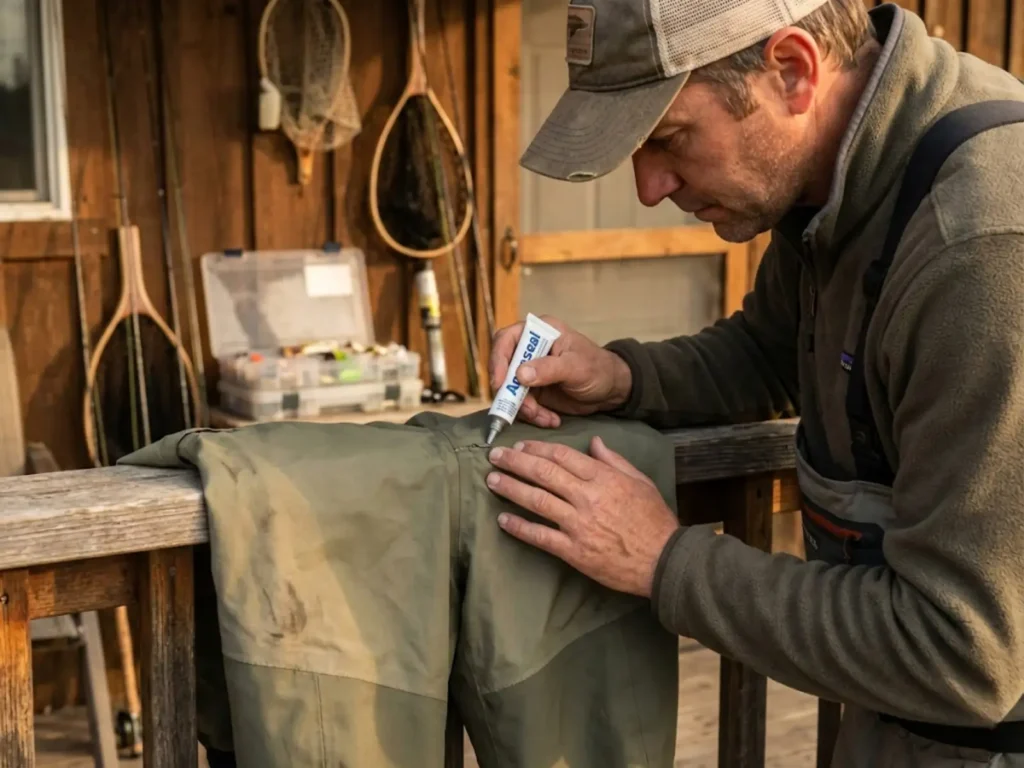
Sticker price tells only part of the story. The real question is cost per use over the life of the wader.
Initial Purchase Price Spectrum
Neoprene waders cluster in the $100-$250 range from brands like TideWe, Rogers, and Cabela’s Northern Flight. They’re marketed as consumable gear—buy cheap, replace often. Entry-level breathable waders start around $150 (Orvis Clearwater, Redington Crosswater), while mid-range options run $400-$600 (Patagonia Swiftcurrent, Simms Freestone). Pro-grade models like the Simms G3 Guide push $750-$1,000.
Lifespan and Replacement Cycles
Here’s where the math gets interesting. Neoprene typically lasts 2-3 years before seam failures or compression set (the foam losing its loft) ends its useful life. The rubber becomes brittle; glues stop bonding; repairs become temporary at best.
Premium breathables, by contrast, are designed for how to patch wader leaks yourself and professional repair services that extend their life to 5-7 years or more. Simms offers 60-day leak replacement and 365 days of free repairs, turning their high purchase price into a long-term value proposition.
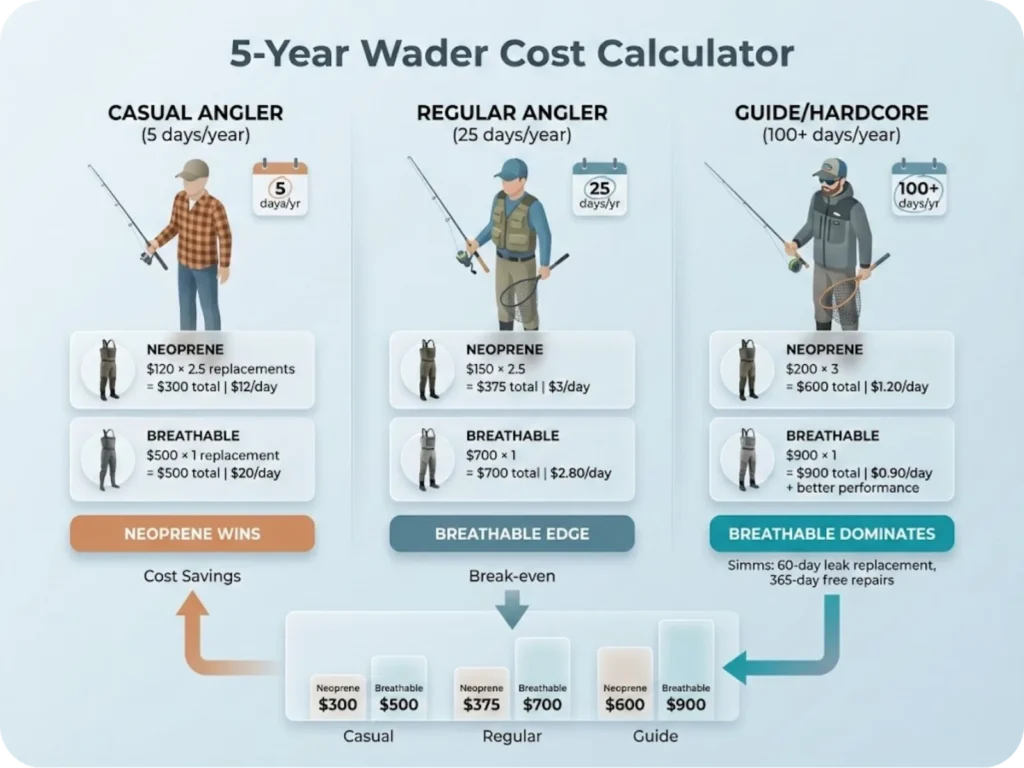
Run the numbers: A $900 wader lasting 10 years costs $90 per year. A $120 wader replaced every two years costs $60 per year—but only for casual users. For guides or anyone fishing 50+ days annually, the premium option delivers lower cost per day and significantly better performance throughout its life.
Fit and Demographics: Women, Youth, and Sizing Complexities
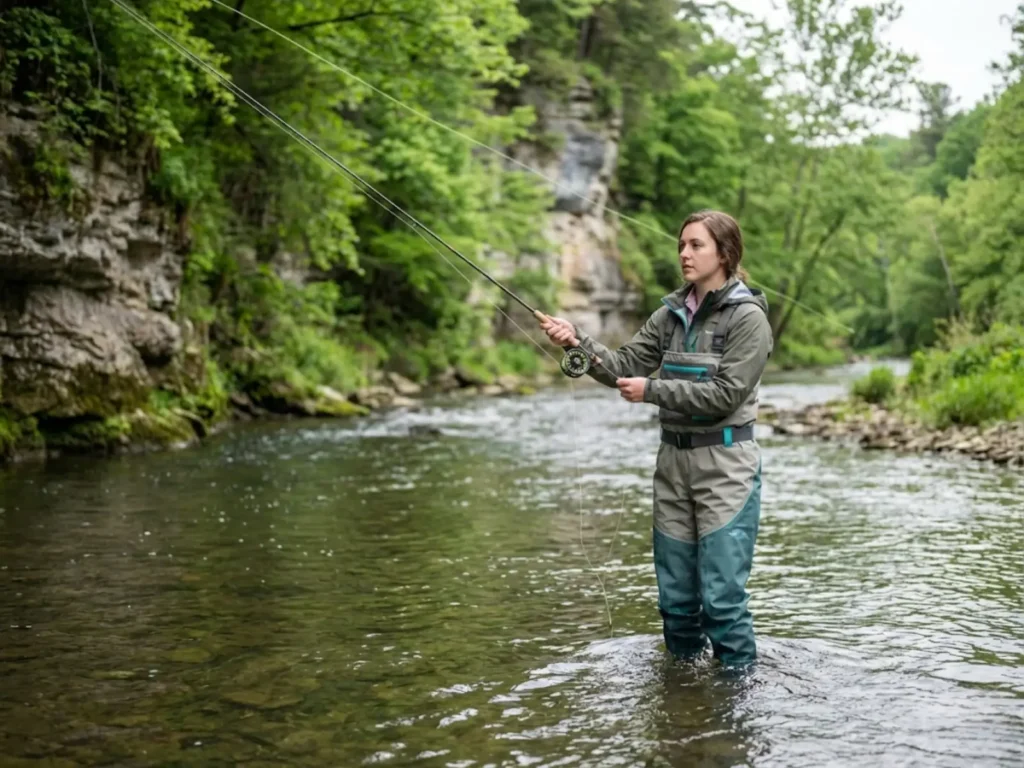
Standard wader sizing assumes a male body shape that doesn’t work for everyone. Poor fit creates excess drag, safety hazards, and uncomfortable days on the water.
Women’s Specific Fit Engineering
Brands like Miss Mayfly, Orvis, and Simms now engineer fishing waders for female anatomy with different hip-to-waist ratios and shorter inseams. The “drop-seat” feature in models like the Redington Sonic-Pro allows relief without removing suspenders and wading jacket—a critical detail for maintaining warmth and safety in cold conditions.
Ill-fitting waders designed for men create excess bulk that increases drag in current and complicates self-rescue. How to measure for wader fit matters more for women because the wrong size creates genuine safety issues beyond discomfort.
Youth Considerations
Children cool faster than adults because of their higher surface-area-to-mass ratio. Despite mobility penalties, neoprene often makes more sense for youth simply for the thermal safety margin it provides. Combined with rapid growth making expensive gear impractical, budget-friendly neoprene (often under $100) from brands like Oaki or TideWe becomes the economically rational choice.
Safety First: Wading Belts, Self-Rescue, and the “Sea Anchor” Myth
You’ve heard that waders fill with water and drag you to the bottom. That’s not how physics works—but the reality is still dangerous.
Debunking the “Sea Anchor” Myth
Water inside your waders weighs the same as the water outside. Your waders don’t become heavier than the river; they become neutrally buoyant. The real danger is drag and inertia. Water-filled waders add 40-50 pounds of mass that doesn’t pull you down but does prevent you from lifting your legs out of the water to climb a bank. You exhaust yourself before you can exit the river.
Wading Belt Physics
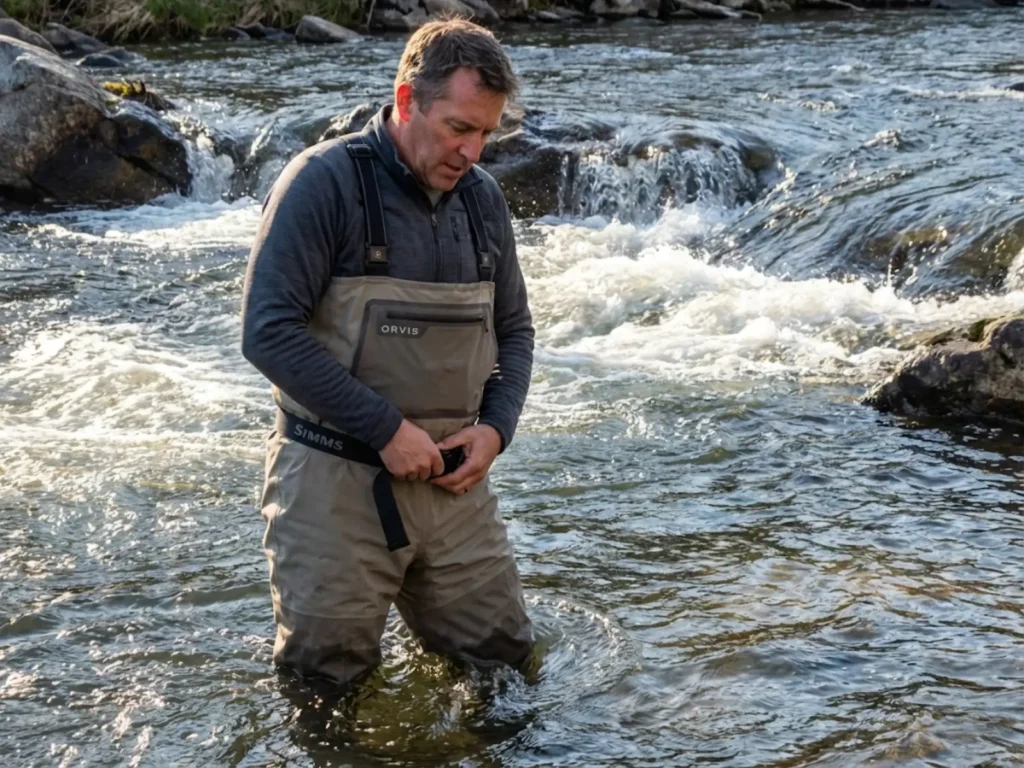
A properly cinched wading belt seals the wader at your waist, minimizing water ingress during a fall. The trapped air provides buoyancy and keeps your legs floating. According to wading safety protocol from Tri-Valley Fly Fishers, a two-belt system (waist plus sternum strap) creates a pseudo-drysuit seal that extends your survival window dramatically.
Neoprene’s nitrogen bubbles add to this buoyancy effect—another reason it remains the right choice for cold water wading situations where fall-in risk is high. Combined with the physics of wading belts, properly worn neoprene offers superior survivability if things go wrong.
Self-Rescue Protocol
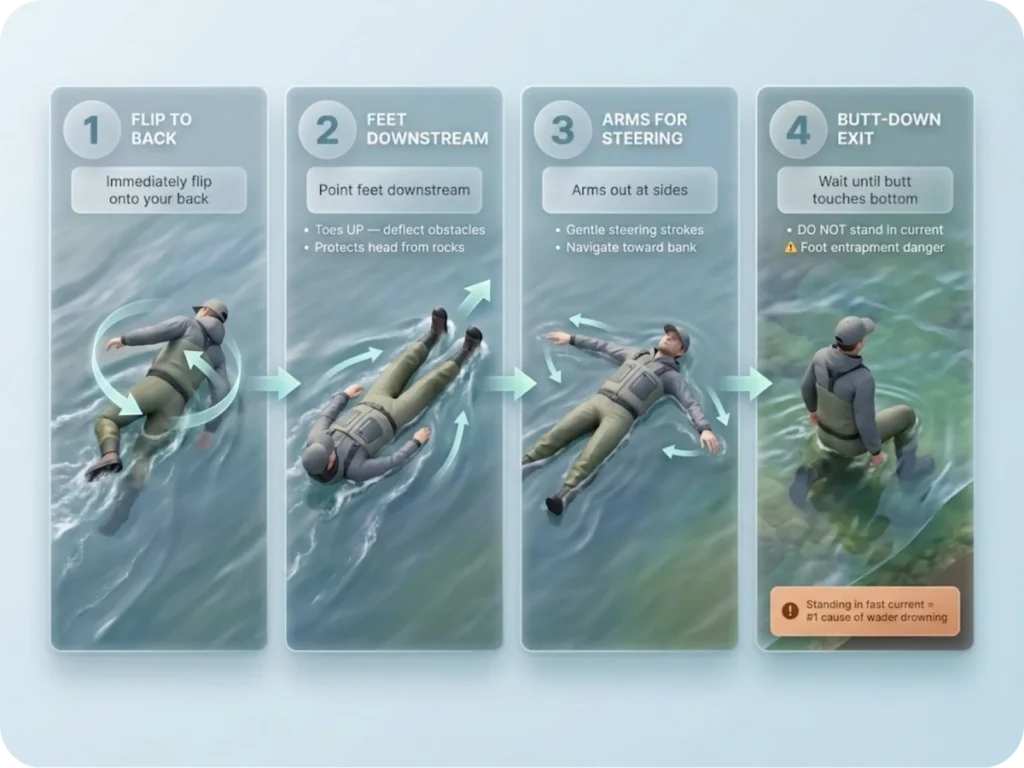
If current sweeps you off your feet: flip onto your back, point feet downstream, and keep toes up. This position protects your head from rocks and lets buoyant legs deflect obstacles. Don’t stand up until your butt touches bottom in shallow water—foot entrapment between rocks in fast current is a leading cause of wader-related drowning.
Pro tip: Practice self-rescue in controlled conditions before you need it for real. The first time you flip into defensive swimming position shouldn’t be during an actual emergency.
Conclusion
Water temperature is the primary filter for wader selection—but it’s not the only variable. Activity level determines whether neoprene insulation becomes a liability due to limited breathability. Usage frequency determines whether premium breathable waders offer better lifetime value than budget neoprene. And proper fit determines whether your waders help or hinder you in an emergency.
The bottom line: buy neoprene if you sit still in water below 45°F, are on a strict budget, or need inherent flotation for protection. Buy breathable if you walk more than you sit, fish in variable conditions, or need a single system that adapts across seasons with excellent breathability.
Next time you’re shopping for fishing waders, check the water temps where you actually fish—not the air temperature that makes the decision feel comfortable. That number touching your legs is the one that matters.
FAQ
Are breathable waders better than neoprene?
Neither is universally better—it depends on water temperature and activity level. Breathable waders excel above 50°F for active fishing where moisture management prevents the sweat-chill cycle. Neoprene waders excel below 50°F for stationary situations where their inherent insulation and buoyancy provide critical warmth and safety.
What temperature are neoprene waders good for?
Neoprene performs best in water below 50°F where its closed-cell neoprene insulation prevents the rapid heat drain that causes hypothermia. In warmer water above 60°F, neoprene traps sweat and can cause heat stress during exertion—making breathable fabric that wicks moisture a better choice.
Do breathable waders keep you warm in winter?
Breathable waders have no inherent insulation—they provide zero warmth on their own. Winter protection comes entirely from your layering system underneath. Heavy merino base layers plus fleece pants can approximate 5mm neoprene thermal protection while maintaining the breathability advantage.
How long do neoprene waders last?
Typical lifespan is 2-3 years before seam failure or compression set degrades performance. Once neoprene rubber becomes brittle, repairs are temporary. Premium breathable waders from brands like Simms or Patagonia can last 5-7+ years with proper care and manufacturer repair services—making them more economical for frequent users.
Can you wear breathable waders in summer?
Yes—breathables are the optimal choice for warm weather fishing. With just shorts or light wicking layers underneath, the excellent breathability keeps you cool and dry during a comfortable wading experience. This versatility is why many anglers choose breathable stockingfoot waders as their year-round solution.
Risk Disclaimer: Fishing, boating, and all related outdoor activities involve inherent risks that
can lead to injury. The information provided on Master Fishing Mag is for educational and informational purposes
only. While we strive for accuracy, the information, techniques, and advice on gear and safety are not a substitute
for your own best judgment, local knowledge, and adherence to official regulations. Fishing regulations, including
seasons, size limits, and species restrictions, change frequently and vary by location. Always consult the latest
official regulations from your local fish and wildlife agency before heading out. Proper handling of hooks, knives,
and other sharp equipment is essential for safety. Furthermore, be aware of local fish consumption advisories. By
using this website, you agree that you are solely responsible for your own safety and for complying with all
applicable laws. Any reliance you place on our content is strictly at your own risk. Master Fishing Mag and its
authors will not be held liable for any injury, damage, or loss sustained in connection with the use of the
information herein.
Affiliate Disclosure: We are a participant in the Amazon Services LLC Associates Program, an
affiliate advertising program designed to provide a means for us to earn advertising fees by advertising and linking
to Amazon.com. As an Amazon Associate, we earn from qualifying purchases. We also participate in other affiliate
programs and may receive a commission on products purchased through our links, at no extra cost to you. Additional
terms are found in the terms of service.