In this article
You’re standing in the fly shop parking lot, hopping on one foot trying to protect your new neoprene booties from the gravel, feeling like the crotch seams are about to divorce your suspenders—and you’re already dreading the return shipping label. After fifteen years of outfitting anglers and making my own share of sizing mistakes, I’ve learned that the difference between waders you love and waders you curse comes down to three measurements done right. Here’s the framework that saves money, prevents leaks, and keeps you fishing comfortably all season.
⚡ Quick Answer: Correct wader sizing requires three measurements: your largest girth (chest, waist, OR hips—whichever is widest), your floor-to-crotch inseam (not your jeans inseam), and your bootie size accounting for neoprene sock thickness. Always verify fit with a squat test before buying, and size for your heaviest winter layers—not your summer t-shirt. Poor fit causes 24.4% of apparel returns and is the leading cause of seam failure.
The Anatomy of Wader Fit: Why Size Charts Lie
Here’s the first hard truth: your jacket size, jeans size, and street shoe size are nearly useless for picking fishing waders. The industry average return rate for online apparel sits at 24.4%, and “poor fit” ranks as the number one reason customers ship gear back. That’s a $38 billion annual problem—and most of it comes from anglers trusting their clothing drawer instead of a measuring tape.
The “Largest Girth Rule” Every Brand Uses
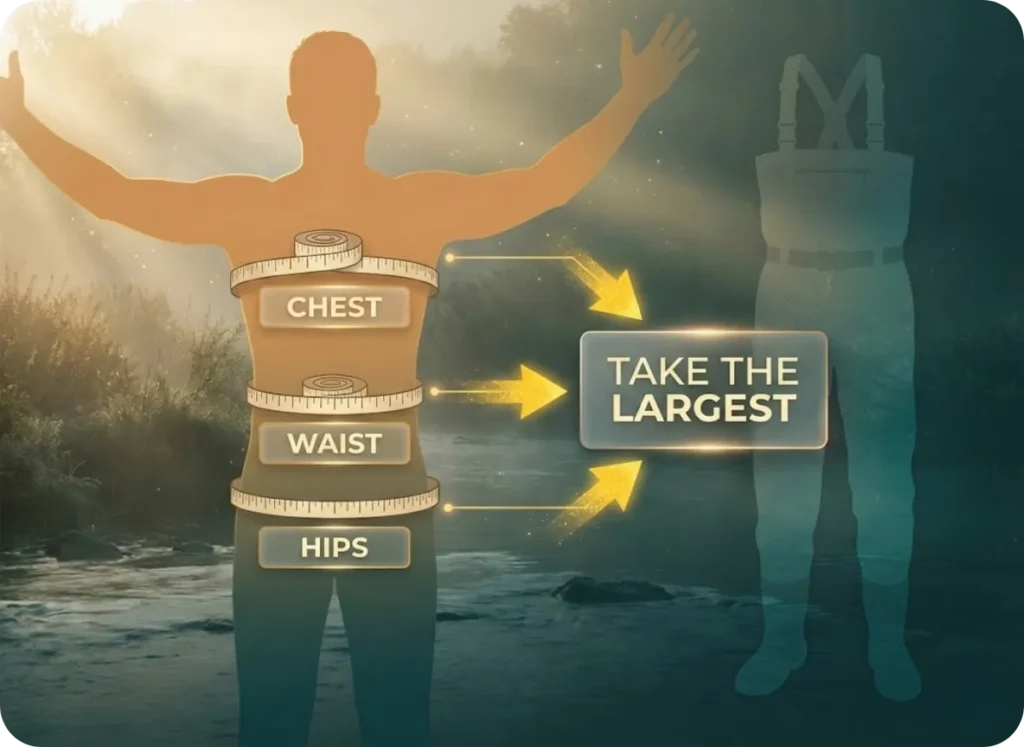
The cornerstone of wader sizing is what manufacturers call the Largest Girth Rule: measure the widest circumference of your torso, whether that’s your chest, waist, or hips. For many anglers—especially those of us who’ve enjoyed a few too many streamside lunches—the widest point isn’t the chest at all. It’s the belly.
Simms, Orvis, and Patagonia all require this measurement with a soft cloth tape, arms relaxed at your sides. Non-stretch Gore-Tex and Toray fabrics don’t forgive a snug fit. Waders that bind restrict your breathing, limit your movement, and accelerate wear at the stress points. That seam failure at the crotch you blamed on the manufacturer? Often it’s a sizing error, not a defect.
Pro tip: If your hips are wider than your chest, size by hip girth—not the chest measurement on the chart. Ignore this and you’ll feel the binding every time you wade through thigh-deep current.
When you’re ready to build your winter base layer system, remember that girth measurement has to account for all those fleece layers.
Inseam: Why Floor-to-Crotch Beats Pant Length
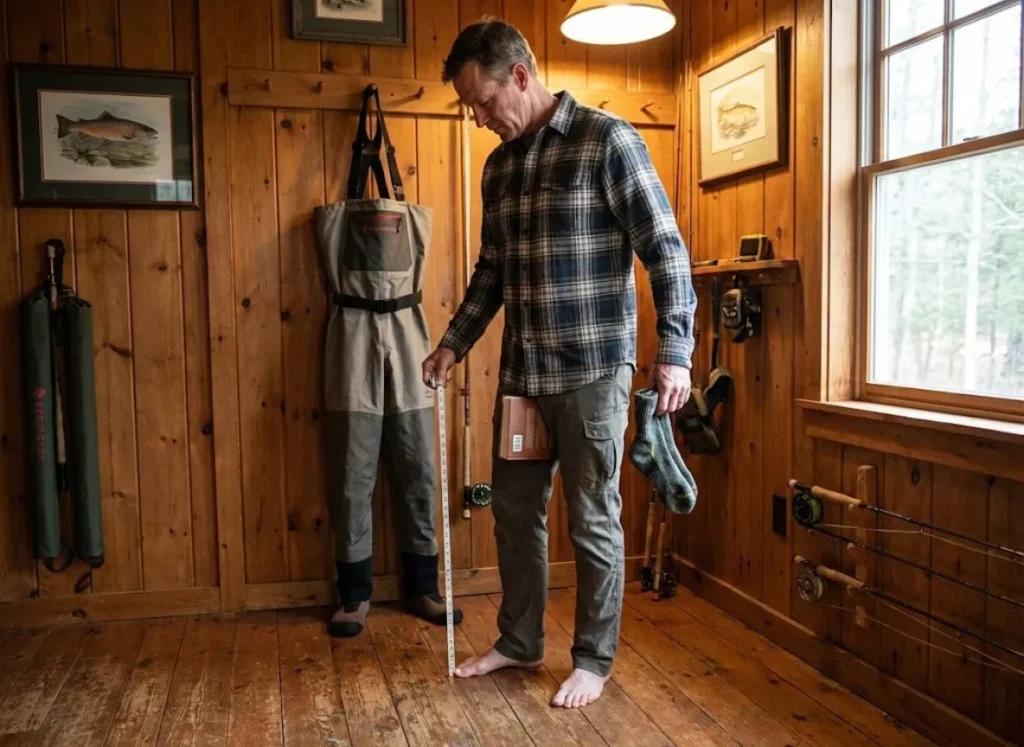
Wader inseam measurement is not your jeans inseam. This trips up more anglers than any other sizing variable. Stand barefoot, place a book snugly against your crotch, and measure from the top of the book to the floor. This number typically runs 2-4 inches longer than your pant inseam because it has to accommodate the “drop” of the neoprene bootie when you step down into water or climb a bank.
Too-short inseam means you’ll feel every high step pulling the suspenders into your shoulders. Too-long inseam creates drag and abrasion as excess fabric bunches at your ankles. Standard “Regular” inseams range from 30″ to 34″ depending on the brand, with Tall options extending to 36″.
Bootie Size: The Hidden Leak Factory
Your street shoe size is a starting point, not a final answer. Stockingfoot waders require wading boots sized up one full size to accommodate the 3-4mm thickness of the neoprene sock. Get this wrong and you’ll either crush your toes or create the conditions for the most common wader failure: bootie bunching.
When excess neoprene material folds inside your boot, those folds abrade with every step. Eventually, you’ll develop pinholes—not from a manufacturing defect, but from sizing too large. On the other end, too-tight booties compress your foot, restrict blood flow, and guarantee cold feet even in insulated waders.
The 3-Measurement Method: Step-by-Step Sizing Protocol
Forget what you think you know from buying jackets. This is the system pro shops use to get customers into quality waders that actually fit. Three measurements, done correctly, will save you the return shipping and the frustration.
Step 1: Measure Your Girth Correctly
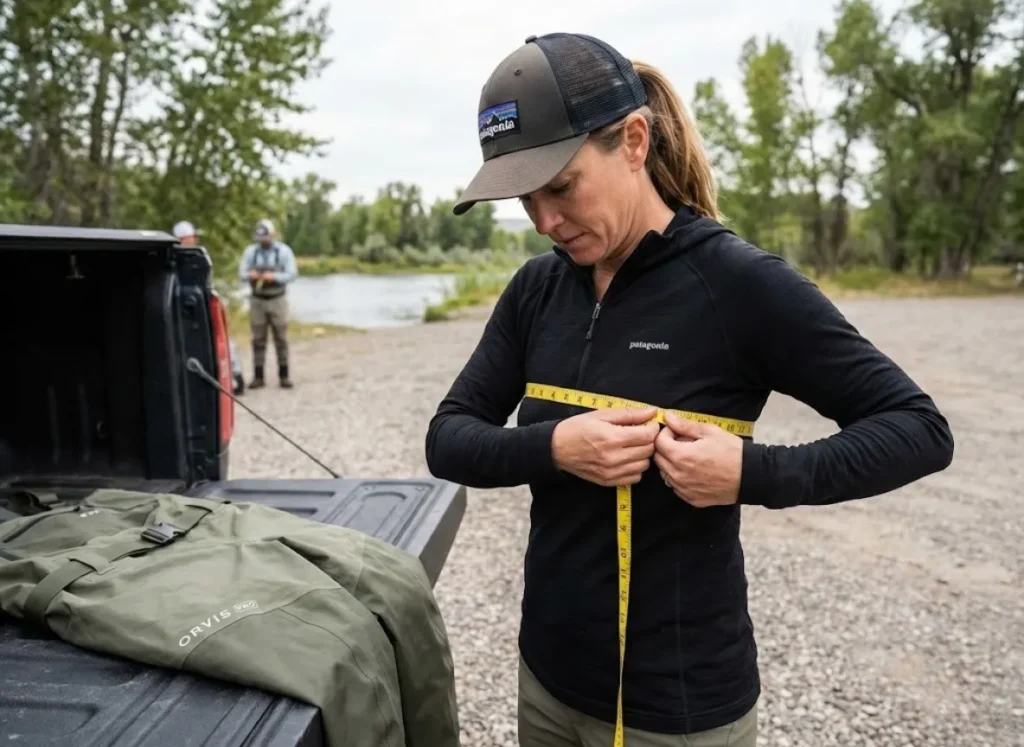
Stand in a relaxed posture wearing the base layers you’ll actually fish in—or simulate your heaviest winter setup if you’re buying for cold-water steelhead. Wrap a soft cloth tape around your chest at the fullest point, typically just under the armpits and across the shoulder blades.
Now repeat that measurement at your natural waist and again at your hips and seat. Record the largest number. This is your chest measurement and the primary driver for your wader size. Round up if you’re between sizes. If your hips measure wider than your chest—which is common for many body types—you need to size by that hip number, or the waders will bind at the thighs.
Step 2: Measure Your Inseam Floor-to-Crotch
Stand barefoot on a hard floor with feet shoulder-width apart. Press a book or straight edge snugly against your crotch. Measure from the top of the book to the floor. This is your true inseam measurement for waders—typically 2-4 inches longer than your jeans because waders need that extra length to accommodate the bootie drop.
Compare your number to the brand’s size chart. You’ll typically see Regular, Short, and Long designations. If you’re between options, go longer. You can adjust suspenders to take up slack, but you cannot add fabric.
Step 3: Confirm Your Boot/Bootie Size
For stockingfoot waders, consider which wading boots you’ll pair them with. Plan to size those boots one full size up from your street shoe to accommodate the neoprene sock. Then match your boot size to the wader’s bootie size range—often grouped as 9-11 or 12-13.
For bootfoot waders, the integrated boot needs room for thick wool socks without compression. Choosing between stockingfoot and bootfoot systems affects everything from warmth to ankle support to how you size the foot enclosure.
Pro tip: If you have wide feet, check whether the brand offers wide or EE bootie options. Compressed booties don’t just hurt—they restrict blood flow and cause cold feet even in insulated breathable waders.
Brand-Specific Sizing: Decoding the Major Charts
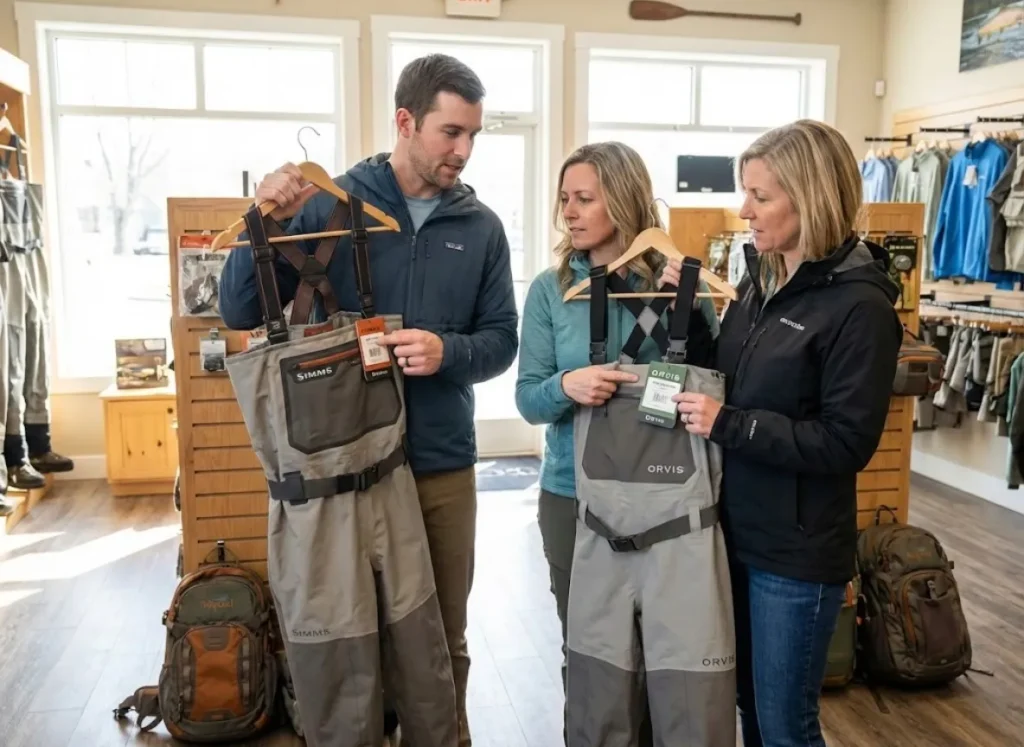
A “Large” in Simms does not equal a “Large” in Patagonia. This single fact explains why anglers who order online based on street clothing logic end up in the returns line. Each manufacturer has its own sizing philosophy, and knowing the differences can save you weeks of waiting and reshipping.
Simms: The Custom Shop Standard
Simms Fishing Products offers the most extensive size chart in the industry, separating “chassis” fit from “bootie” fit. Their King sizes (MK, LK, XLK) provide wider girth without changing the inseam—a critical option for anglers with larger midsections but standard leg lengths.
Simms also operates a Custom Shop where you can mix any body size with any foot size. Lead time runs about eight weeks and these orders are non-returnable, but for anglers who’ve failed repeatedly with off-the-rack options, it solves the problem permanently. Their documentation explicitly warns against using street shoe size without accounting for neoprene sock thickness. According to Simms’ official wader fit methodology, a perfect-fitting wader dramatically extends its lifespan.
Orvis: The Women’s Fit Leader
Orvis advocates a True to Size methodology, warning that sizing up creates excess bulk that accelerates wear through abrasion. However, winter anglers often disregard this advice to accommodate heavy fleece—you’ll need to make the call based on how you fish.
Where Orvis truly leads is in women’s wader sizing. Their matrix includes Petite, Regular, Tall, and Full cuts, addressing the hip-to-chest ratio challenges that other brands simply ignore. If you’re coordinating your cold-weather accessories, Orvis sizing philosophy extends across their gear line.
Patagonia & Others: Navigating Alphanumeric Codes
Patagonia uses alphanumeric codes like LRM, LKM, and LRL that combine girth and inseam in one designation. The “K” stands for King (wider girth), while the second letter indicates inseam: R for Regular, S for Short, L for Long. Their Gender Inclusive sizing moves beyond binary categories.
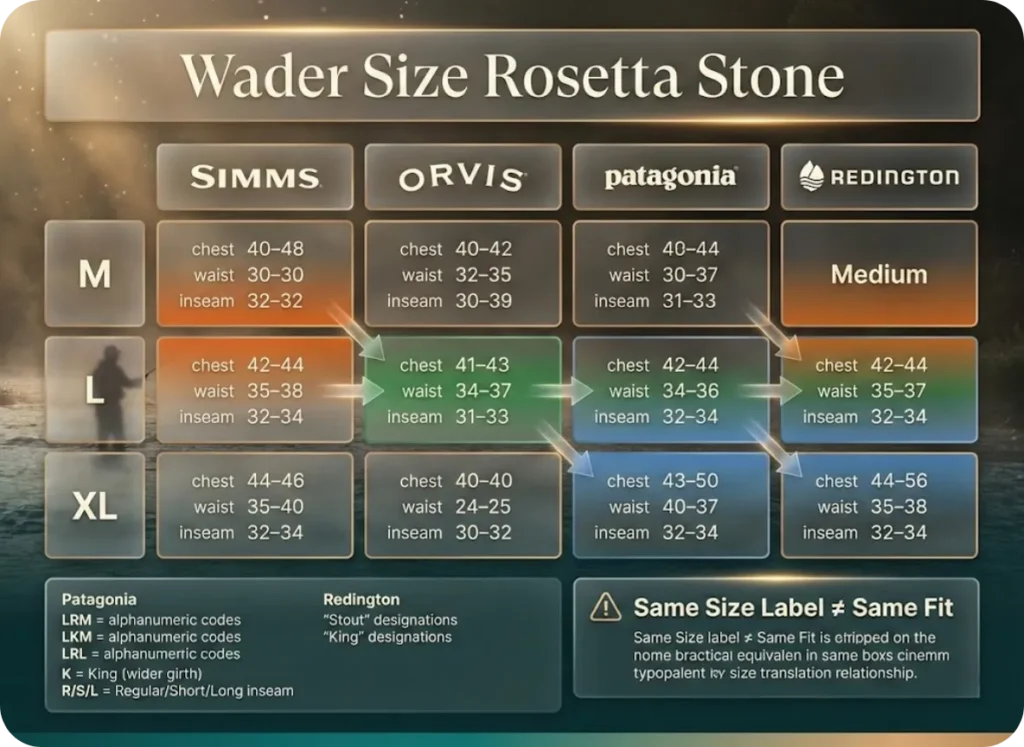
Redington uses “Stout” (wider body, standard leg) and “King” designations. Frogg Toggs uses “Husky” for their budget-friendly extended sizing. The critical point: a wader size in one brand does not translate directly to another. Always use the specific measurements chart, never your street clothing logic.
The Dynamic Fit Test: Verify Before You Commit
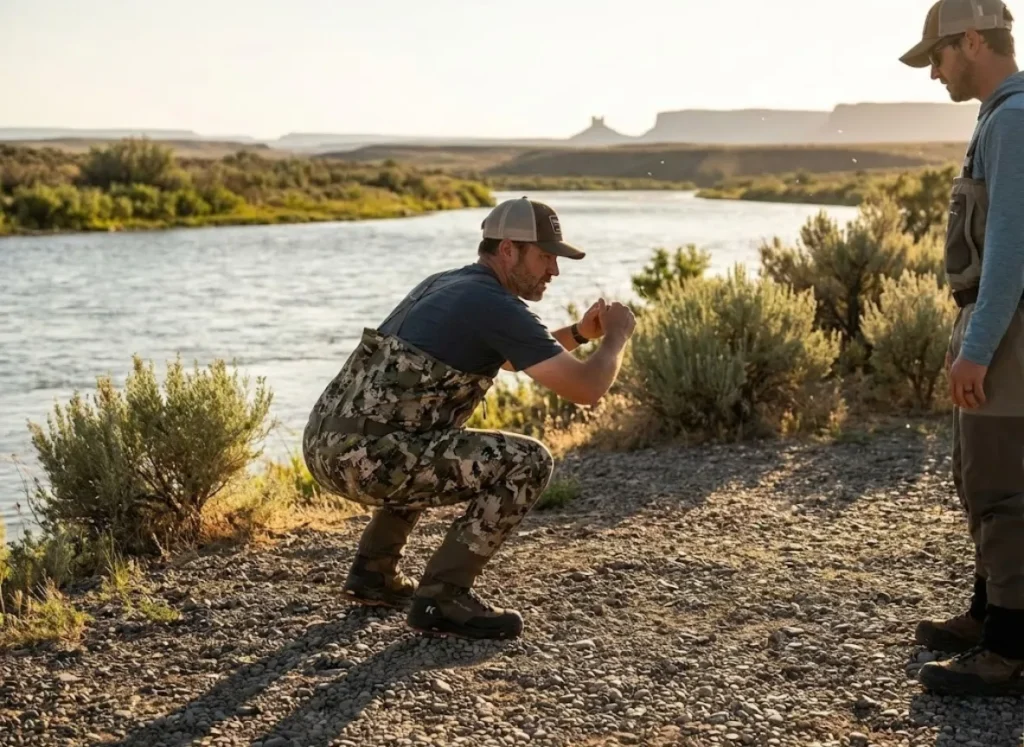
Static numbers on a chart can’t tell you how a wader moves with your body. That’s why pro shops teach a simple validation protocol before you cut the tags. These tests reveal fit problems that measurements alone miss.
The Squat Test: Check Your Crotch Seams
Drop into a full squat test as if you’re holding a fish for a photo—this is the highest-stress position for wader seams. If the suspenders dig painfully into your shoulders or the crotch fabric pulls tight, the wader is too short in the torso.
You should feel room in the seat with no binding through the thighs. Seam failure at the crotch is the most common non-warranty leak, and it’s almost always caused by fit stress on waders that are too small, not manufacturing defects. Your body is stronger than those seams—poor fit lets that strength work against the stitching.
The High Knee Test: Simulate Climbing Banks
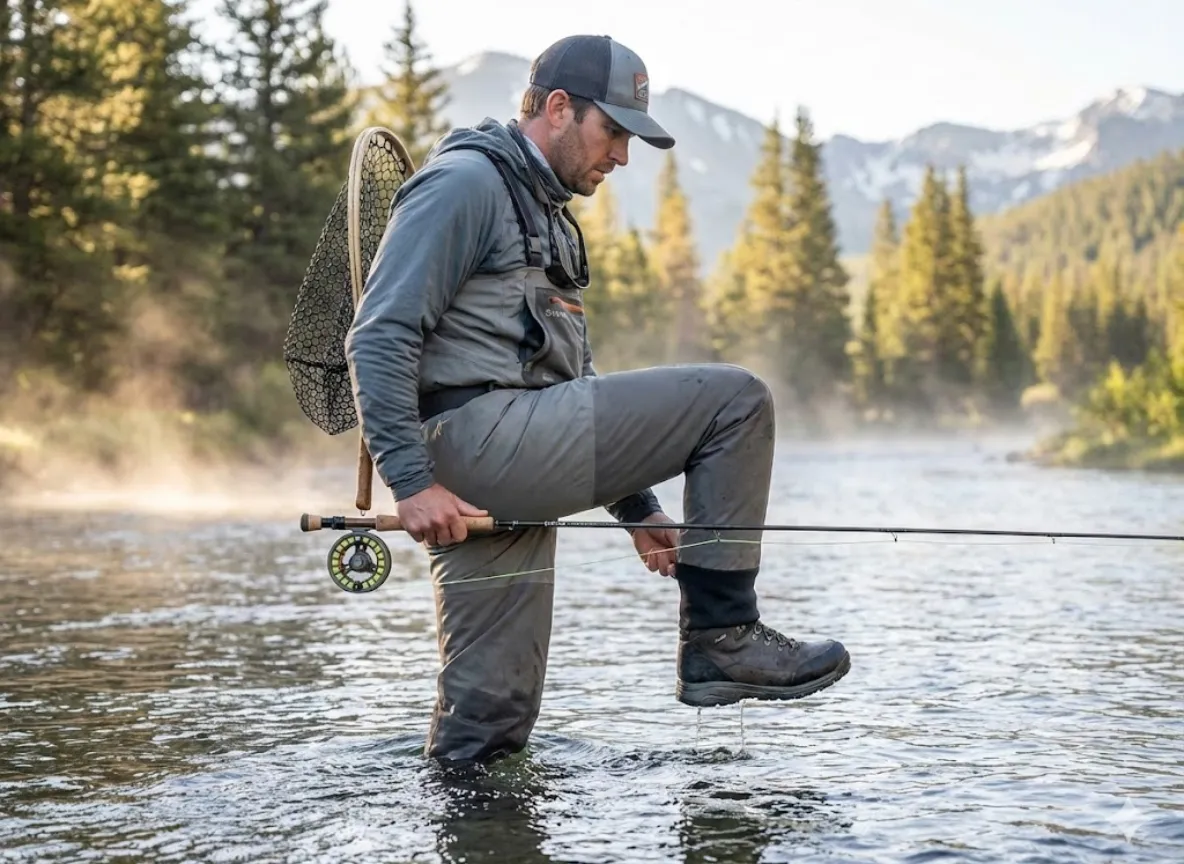
Lift one knee to chest height as if stepping over a log or climbing a steep bank. The wader material should move with you without pulling the suspenders or binding at the hip. If fabric catches or restricts your range of motion, you need a longer inseam or larger girth size.
The “Winter Layering” Simulation
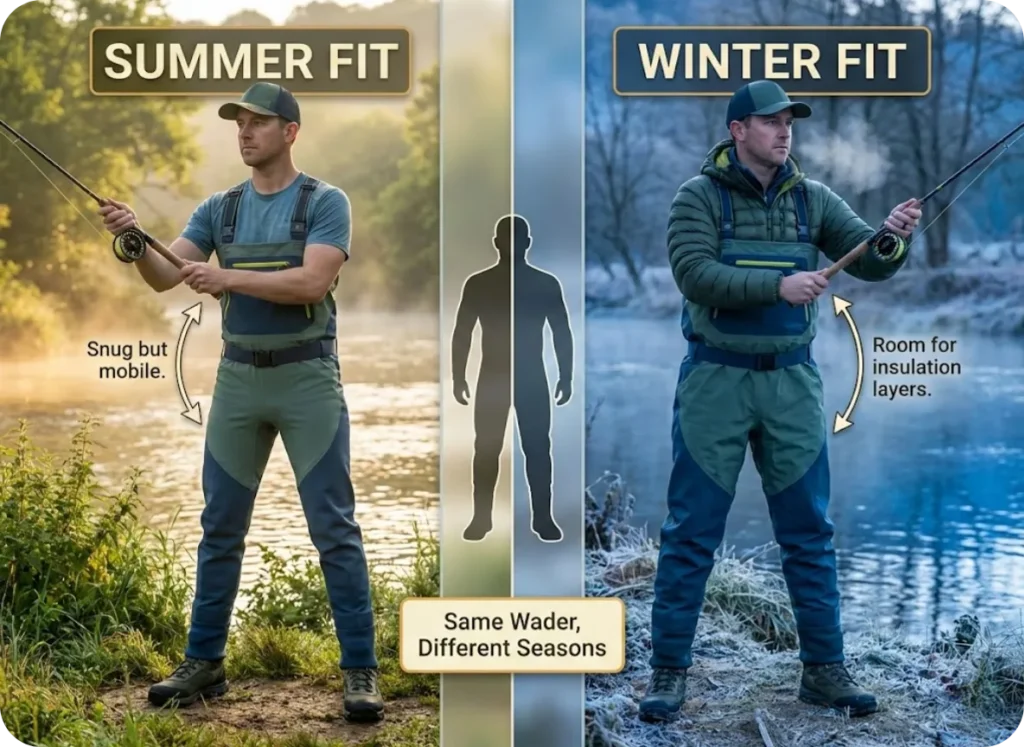
Here’s where most anglers go wrong: they try on waders in July wearing a t-shirt, and then wonder why they can’t move in January with fleece pants underneath. Try your waders over the heaviest layers you’ll actually wear—puffy jacket, fleece pants, thick wool socks.
Waders that feel slightly baggy in summer are perfectly sized for winter. This seasonal sizing strategy is something few guides address explicitly, but experienced anglers often own two sizes: fitted breathables for summer and oversized pairs for cold-water steelhead or fly fishing in winter conditions.
Pro tip: Size for your worst-case winter scenario, not your best-case summer trip. A tight fit in January means cold extremities and stressed seams.
Common Sizing Mistakes (And How to Avoid Costly Returns)
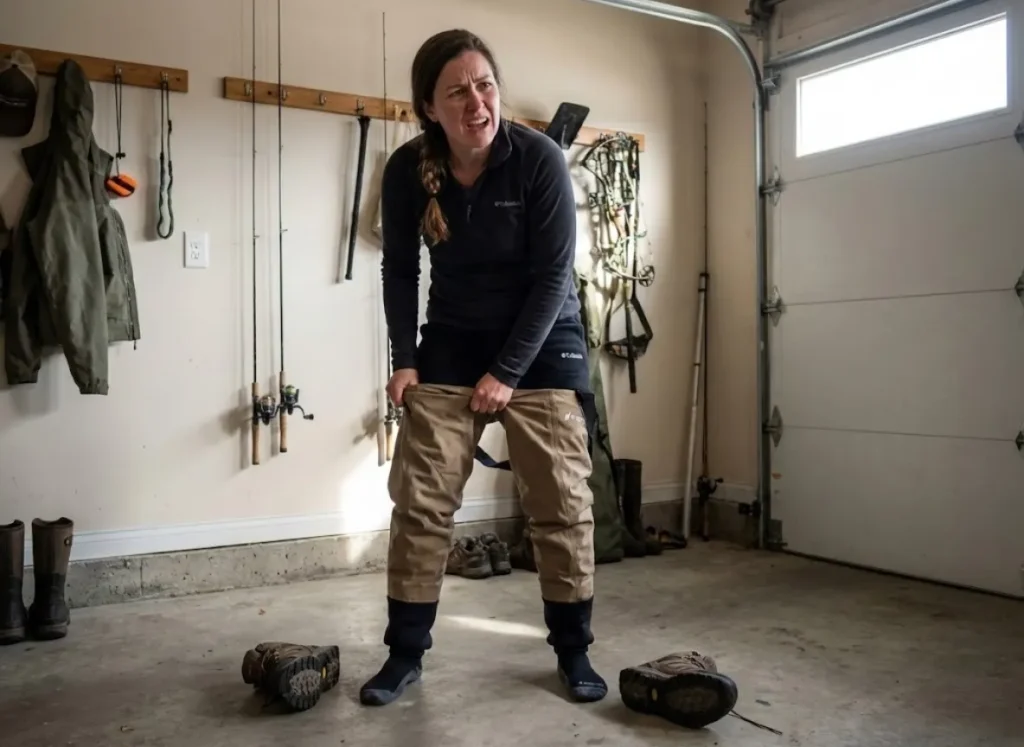
The 24.4% return rate for online apparel isn’t random. Most returns trace back to the same handful of errors. Knowing these mistakes means you can avoid them before your credit card is charged.
Mistake #1: Using Street Clothing Sizes
This is the “Jean Size Fallacy”: assuming your wader size equals your pant waist measurement. In forums, you’ll constantly see complaints like “my waders are a full size smaller than my normal shoe size”—anglers confusing boot size with body chassis size.
The fix is simple: measure yourself with a tape. Every brand. Every time. A 34″ waist in jeans might need a “Large” wader if the chest measures 44″.
Mistake #2: Ignoring the “Winter Squeeze”
Buying waders that fit perfectly in the store—while wearing street clothes—leads to circulation-cutting compression under winter fleece. Tight fishing waders restrict blood flow to your extremities, accelerating frostbite risk in cold water. This is why wading belt fit matters for safety—if you can’t cinch the belt because the waders are already too tight, the whole safety system fails.
Mistake #3: Bootie Bunching and the Leak Cycle
Sizing up too much for “room” creates excess neoprene that folds inside the boot. These folds abrade against the boot interior with every single step. As one Reddit user discovered: “The extra material on the booties was rubbing and eventually wore through.”
The fix is sizing booties to fit snugly inside wading boots without compression or excessive slack. CDC guidelines on cold-related illnesses confirm that constriction from too-tight gear impedes circulation and accelerates local cooling in your feet.
Special Cases: Plus Sizes, Petite Fits, and Custom Solutions
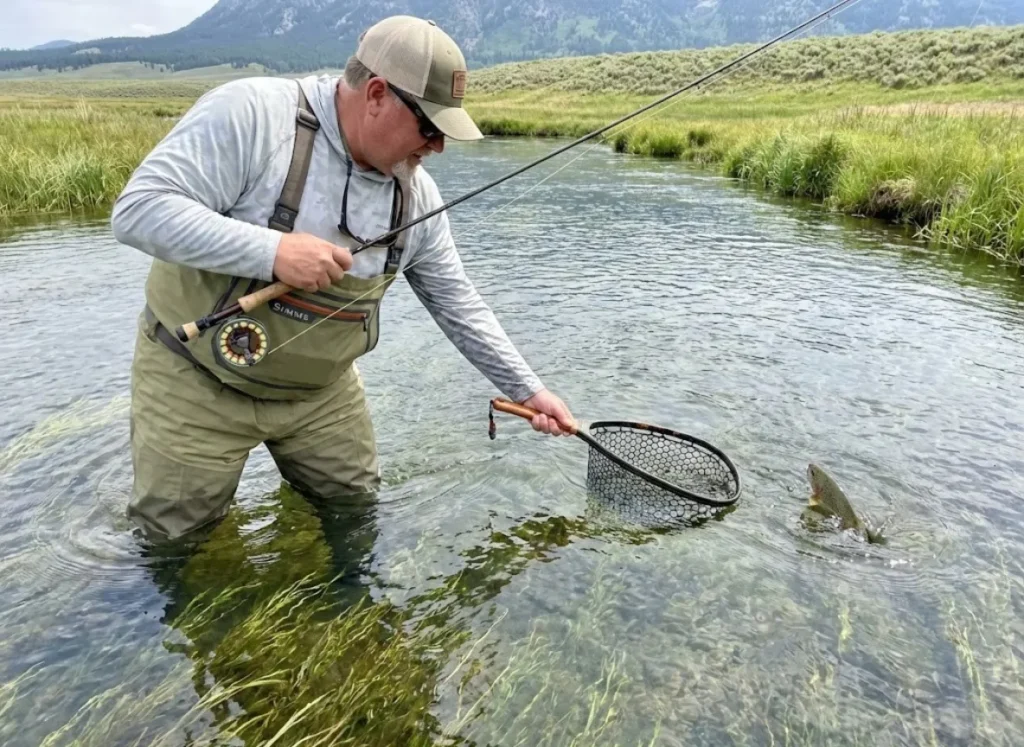
Standard sizing doesn’t work for everyone. If you’ve struggled with off-the-rack waders for men or women’s waders, you’re not alone—and there are solutions.
Plus-Size and King Sizing
King sizes, Stout, and Husky sizes accommodate wider girth without proportionally increasing inseam. Simms King sizes (MK, LK, XLK) provide 4-6″ additional chest circumference. Not all brands offer extended sizing—Simms and Patagonia lead; entry-level brands often stop at XXL.
The Custom Shop enables mixing King chassis with standard foot sizes—critical for anglers with higher body mass but average or small feet. These options exist specifically because standard proportional scaling doesn’t serve diverse body types.
Petite, Short, and Tall Variations
Orvis leads in women’s Petite sizing; Patagonia offers extensive Short inseam options for all genders. “Tall” typically adds 2-4″ to inseam without changing girth—important for anglers over 6’2″.
Torso length (crotch to chest hem) is rarely published on standard charts. If you’re tall and experience “wedgie” sensations, or short and find the bib chafing your armpits, you can calculate an approximate torso length: Outseam minus Inseam equals your torso measurement.
When to Go Custom
Custom orders—primarily through Simms—carry 8-week lead times and are generally non-returnable. The investment makes sense when off-the-rack sizing repeatedly fails or when your body proportions fall outside standard matrices.
Professional guides often recommend custom for clients who fish 50+ days per year. The fit precision extends wader lifespan dramatically, and that durability can pay for the premium. For maintenance tips on extending your wader’s lifespan through proper care, proper fit is the first step.
Conclusion
Correct wader sizing reduces to three measurements done right: Largest Girth (not jacket size), Floor-to-Crotch Inseam (not jeans inseam), and Boot/Bootie Size (accounting for neoprene thickness). Validate with the Squat Test and High Knee Test before you commit, and always size for your worst-case winter layering.
Before your next wader purchase, grab a cloth tape and run through the 3-Measurement Method. Write down your numbers, compare against the specific brand size chart—not your street sizes—and do the squat test in the store. Your seams will thank you, and you’ll spend more time fishing and less time packing return boxes.
FAQ
Should waders be tight or loose?
Waders should allow full range of motion—squatting, high-stepping, bending—without binding or pulling at the seams. A slightly loose fit, especially for winter layering, is safer than a snug fit that restricts circulation and stresses seams. Excessive looseness creates drag and abrasion points that wear through faster.
How do I know what size waders to buy if I am between sizes?
Size up to the larger option, especially if you fish in cold conditions requiring layers. You can adjust suspenders to take up slack, but you cannot add fabric. Tight waders cause more problems—seam stress and cold extremities—than slightly roomy ones.
What size wading boots should I get for stockingfoot waders?
Size your wading boots one full size up from your street shoe size. The 3-4mm neoprene bootie adds significant volume, and compressed booties restrict blood flow, causing cold feet. When uncertain, try boots on with your actual waders.
Can you tailor or alter waders if they do not fit?
Generally no. Wader construction involves sealed seams, waterproof membranes, and seam tape that standard tailoring cannot replicate. Alterations compromise waterproof integrity. If off-the-rack options fail, consider Simms Custom Shop or other manufacturer custom programs.
Why do my waders leak at the seams even though they are new?
Most seam leaks are caused by fit stress, not manufacturing defects. Waders that are too tight—especially at the crotch and knees—experience repeated strain during movement. The human body generates more force than the seams can handle when the fit does not allow proper range of motion. Verify dynamic fit before assuming a defective product.
Risk Disclaimer: Fishing, boating, and all related outdoor activities involve inherent risks that
can lead to injury. The information provided on Master Fishing Mag is for educational and informational purposes
only. While we strive for accuracy, the information, techniques, and advice on gear and safety are not a substitute
for your own best judgment, local knowledge, and adherence to official regulations. Fishing regulations, including
seasons, size limits, and species restrictions, change frequently and vary by location. Always consult the latest
official regulations from your local fish and wildlife agency before heading out. Proper handling of hooks, knives,
and other sharp equipment is essential for safety. Furthermore, be aware of local fish consumption advisories. By
using this website, you agree that you are solely responsible for your own safety and for complying with all
applicable laws. Any reliance you place on our content is strictly at your own risk. Master Fishing Mag and its
authors will not be held liable for any injury, damage, or loss sustained in connection with the use of the
information herein.
Affiliate Disclosure: We are a participant in the Amazon Services LLC Associates Program, an
affiliate advertising program designed to provide a means for us to earn advertising fees by advertising and linking
to Amazon.com. As an Amazon Associate, we earn from qualifying purchases. We also participate in other affiliate
programs and may receive a commission on products purchased through our links, at no extra cost to you. Additional
terms are found in the terms of service.