
In this article
You launch at 38 degrees with your hands shoved up your sleeves, and by eleven the gloves are balled up under the seat and the backs of your hands are cooking. That one trip is the whole reason this category exists, and it’s why the best fishing gloves for sun almost never double as the best ones for cold. Ask around any bass or steelhead forum and the complaint repeats itself: people buy one fishing glove, find it’s too hot in July and not warm enough in January, and end up owning three pairs anyway. Here’s what a UPF number is actually worth once the fabric is soaked, which gloves hold up through a high-sun day, which ones keep working when your hands are wet and cold, and the two-layer setup that covers both ends of the same morning, all of it sitting inside the wider sun-protection system you’re building around these gloves.
If you want the short version, here are the picks by the job they do.
| The Job | The Pick | Why It Wins |
|---|---|---|
| Long high-UV days | Coolibar Fingerless UV Sun Gloves UPF 50 plus | Built to the Skin Cancer Foundation Seal standard, so the tag means something |
| Everyday sun protection | HOT SHOT Fingerless Reinforced Fishing Gloves UPF 50 | Reinforced palm survives braid and lipping fish, not just sunlight |
| Cold mornings, warm noons | Palmyth Flexible Insulated Fishing Gloves 3 Cut Fingers | Three fingertips fold back to tie a knot, flip down to run the boat |
| Hands wet all day | Palmyth Neoprene Fishing Gloves 3 Cut Fingers | Neoprene isn’t absorbent, so it can’t wet out and quit |
| Ice and hard wind | BASSDASH WinteFlex Convertible Ice Fishing Mittens | Mitten shell over a fingerless glove means nothing has to come off |
Your Hands Take the Worst of Both Extremes
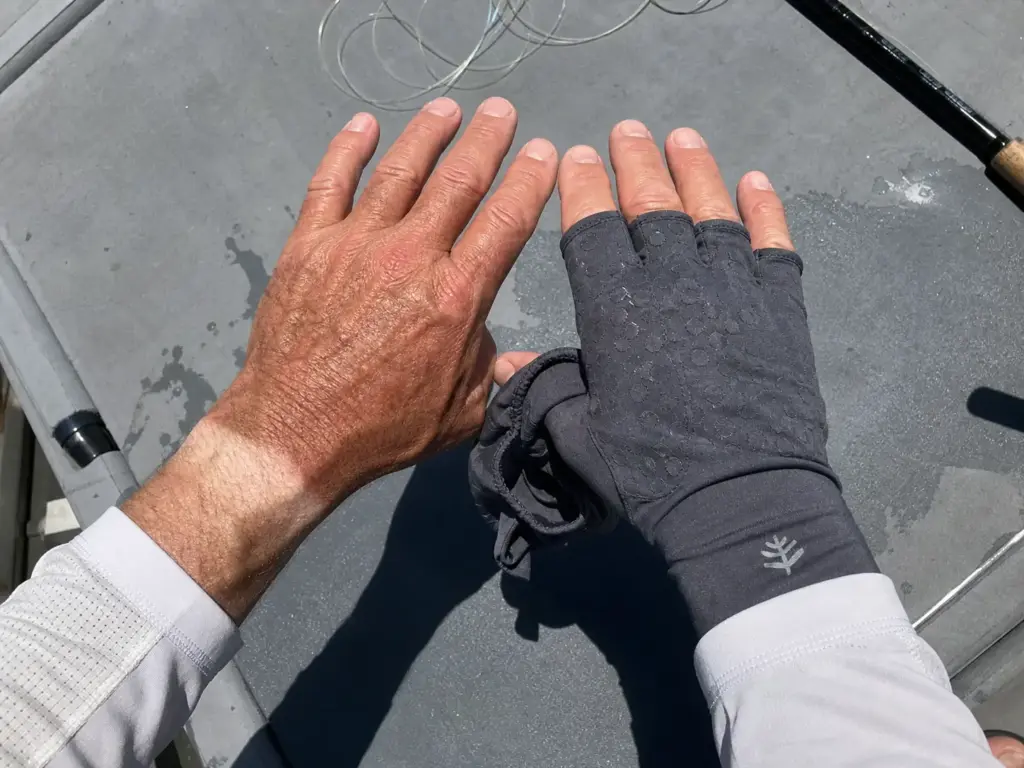
Every angler who fishes enough gets the same tan line: a hard band across the back of the hand that stops dead at the wrist. It reads like a badge. It’s actually a dose record.
The back of the hand is not incidental exposure. In studies of workers with heavy occupational UV exposure, the back of the hand shows up in the research as a high-risk site, not a footnote, with more than a two-fold increase in basal cell carcinoma risk at commonly exposed sites. Anglers stack a second dose on top of the first, because water throws UV back up at you.
Fresh water reflects roughly 5 to 10 percent, and open salt water pushes that to 10 to 25 percent. You get lit from above and from below at the same time, which is why fishing hands weather in a way hiking hands don’t.
The cosmetic side of that is worth naming, since it’s what most people actually notice first. Up to 90 percent of the visible skin changes we file under aging come from sun exposure. That leathery, spotted guide-hand look isn’t birthdays. It’s dose.
The cold end of the range is just as specific, and it moves faster than anyone expects. Manual dexterity falls off sharply once finger skin temperature drops below about 22.9°C (73°F), a threshold you can hit on a 45-degree morning without your hands ever feeling numb. That’s the real signature of cold hands on the water: not pain, not numbness. You just find yourself re-seating the same clinch knot three times while your fingers report in as completely fine.
What a UPF Rating Actually Buys You on the Water
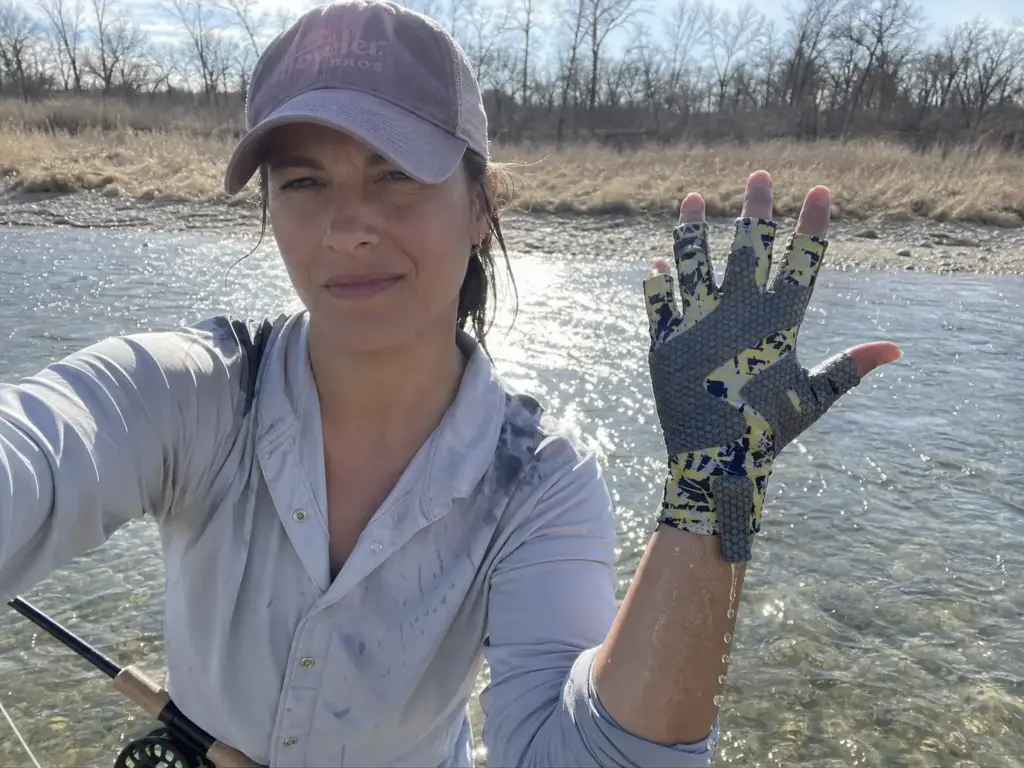
Everybody checks the tag in the store. Nobody checks it after two hours of lipping fish, which is the only moment that matters.
Start with what the number means dry. UPF 50+ blocks 98 percent of UV and lets one fiftieth through. UPF 30 to 49 blocks somewhere between 96 and 98 percent, so anything tagged UPF 30+ is doing real work. The line worth remembering is that UPF 50 is the minimum rating that earns the Skin Cancer Foundation’s Seal of Recommendation, so anything under UPF 30 on a hang tag is closer to decoration than protection.
Now soak it. A plain white cotton T-shirt rates UPF 7 dry and UPF 3 wet. That is the single most useful number in this entire article, because your hands are never dry. Stretched or wet fabric loses protective ability and turns more transparent, and the Skin Cancer Foundation spells out what a UPF number actually buys you, and what happens to that number when the fabric gets wet.
What survives the soak is protection knitted into the fiber rather than sprayed onto it. A topical UV finish washes out over a season of rinses; an inherent-fiber knit holds its rating because the protection is the yarn. If you want the mechanism rather than the shopping rule, how UPF actually works at the fiber level, and why water multiplies the dose covers the physics side of it.
Worth separating from the tag while you’re standing in the aisle: UPF and an SPF rating are not the same measure. SPF tells you how long sunscreen delays a UVB burn on bare skin. UPF is a ratio covering UVA/UVB together across the whole fabric, and it doesn’t wear off at hour three. That difference is the entire case for doing your skin cancer prevention with cloth instead of a bottle.
The material doing the work is almost always a tight-woven polyester blend or nylon with a spandex blend for stretch. Synthetics beat cotton on UV protection and on drying time, and a quick-dry fabric with 4-way stretch stays snug against the skin instead of sagging at the knuckles. Sagging is where wet vs dry performance actually splits, because a loose wet glove opens channels of bare skin that the number on the tag never accounted for.
The reason to care about any of this: roughly 90 percent of nonmelanoma skin cancers are tied to UV exposure. Sunscreen on hands is a losing proposition because you reapply it twice and then forget after the second fish. Coverage that stays put doesn’t need you to remember.
Best Sun Gloves for Long Days on the Water
Sun gloves are the piece of gear nobody buys until the first bad burn, and then they never fish without them again.
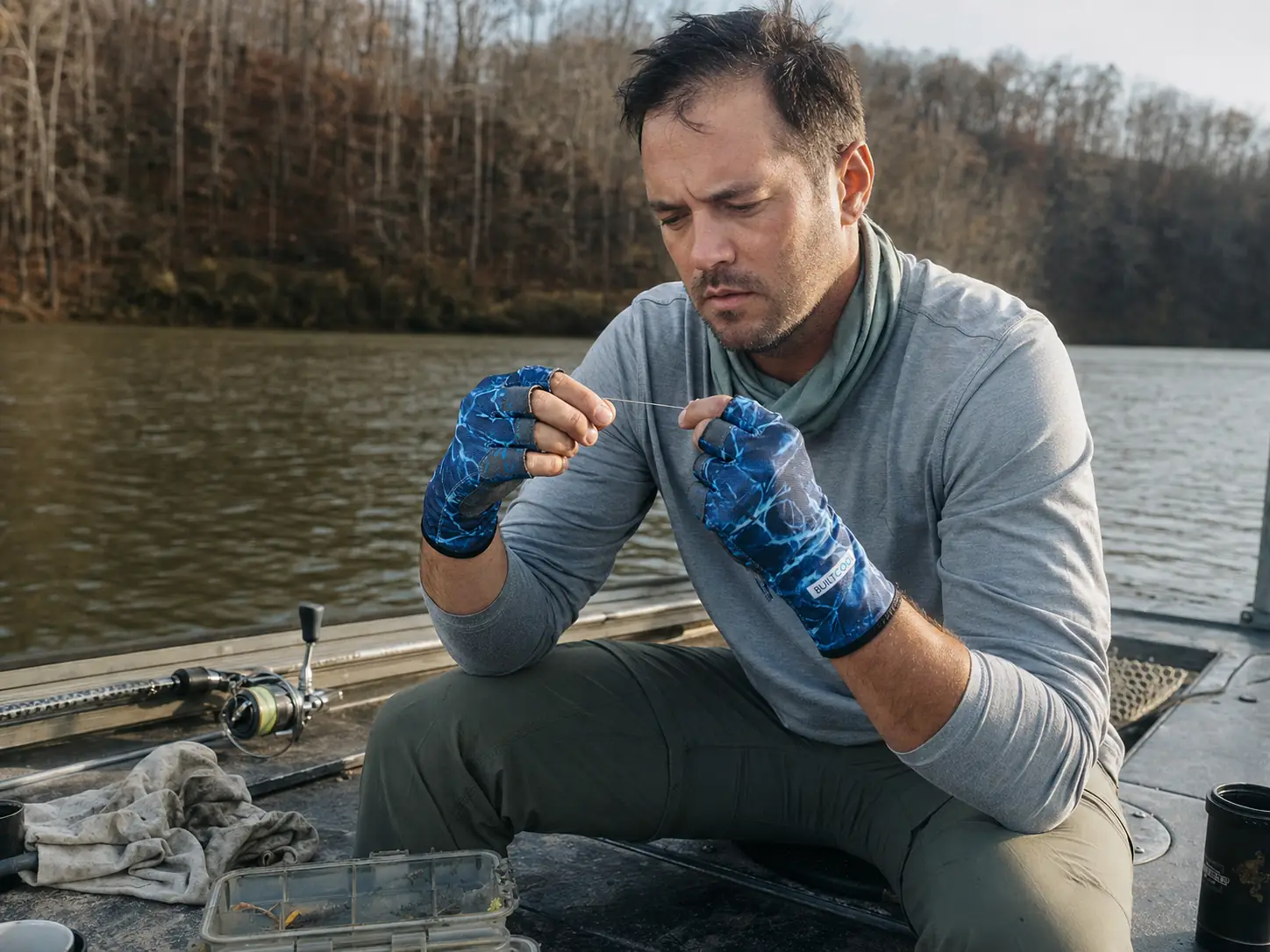
Fingerless is the default shape for a reason. In shop talk you’ll hear them called sun gloves, stubbies, or 3-cut, and the exposed pads exist because you still need feel for the line and clean bite detection through the rod. Full-finger gloves get pulled off at the first knot, and a glove in the boat bag protects nothing.
Coverage that actually matters runs past the wrist, since the cuff is exactly where the burn line forms. Palm material is the other half of the decision: a microfiber palm keeps feel and dries fast, while synthetic leather trades a little sensitivity for real abrasion life on braid, rigging and lipping fish. Reinforced palms earn their keep on the handling, not on the casting.
Match the shape to how you actually fish. Fly fishing gloves are their own thin, fingerless sub-category, and most fly anglers pair them with stripping guards on the line hand, because a stripping burn is a separate problem from a sunburn and one glove won’t solve both. Surf fishing and offshore saltwater fishing call for the longest cuff and the toughest palm, since you’re taking the reflected dose plus constant contact with sand and leader. Kayak gloves and paddle gloves overlap heavily with sun gloves and add padding at the base of the thumb, which is the first place a paddle shaft wears a hole in you.
Solid UPF fingerless sun gloves generally run about $15 to $35, with premium sun-protection knits reaching $40 to $60. Fit is the other half of the buy, and it changes once the fabric is wet, so it’s worth knowing how to size a glove so it doesn’t go sloppy the second it gets soaked before you order.
Check the fingertip hem before you check the brand. On cheap fingerless gloves the finger-end seams unravel first, usually within a season, and a pair with finished fingertip seams will outlast a pair with a better name on the back every time.
Best Overall Sun Pick
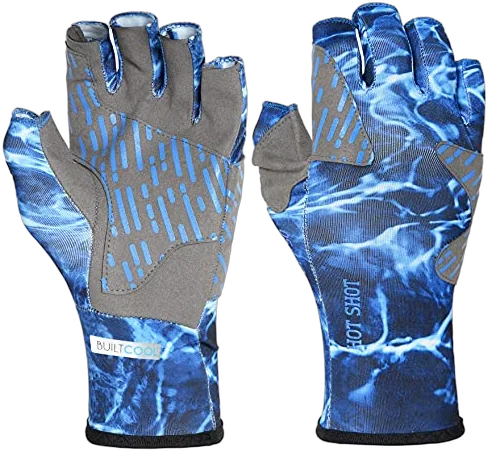
The case for the HOT SHOT Fingerless Reinforced Fishing Gloves UPF 50 is that it treats the palm as a working surface instead of an afterthought. Most sun gloves are knit garments with a UPF rating, and they abrade through at the base of the fingers where braid runs across them. This one puts real material where the wear happens.
That makes it the default for anyone who handles fish and line all day rather than just sitting exposed. It is also the pair most likely to still be in your bag in two seasons, which is worth more than a slightly better hand feel on day one.
Best for All-Day, High-UV Days
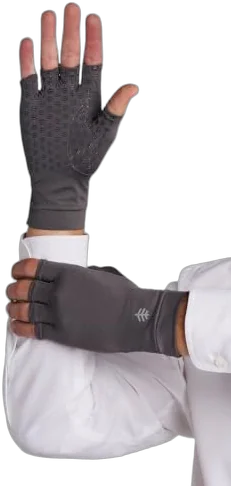
If the last section convinced you that a UPF tag has to mean something, the Coolibar Fingerless UV Sun Gloves UPF 50 plus is where you act on it. Coolibar’s entire catalog is built around the Seal standard, so the rating is engineered into the knit instead of applied as a finish that rinses out.
The trade is that it’s a lighter garment than a reinforced fishing glove. It’s not the pair you want for hauling anchor rope. It is the pair you want on a July flat when the sun is coming at you from the sky and off the water at the same time.
Best Budget Sun Glove
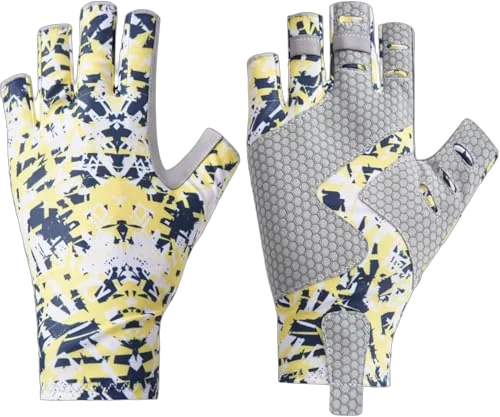
Most roundups name a budget pick and leave it there. Here’s what you’re giving up with the Dhjovate Sun Gloves UPF 50 plus Fingerless: a thinner palm that goes slick faster, a shorter cuff that leaves a gap at the wrist, and seams that give before the fabric does.
None of that changes the UV math. UPF 50+ is UPF 50+, and a cheap glove you actually wear beats a premium glove you left in the truck. Buy these knowing you’ll replace them sooner, and keep an eye on that wrist gap when you’re picking a shirt to go with them.
How Cold Steals Your Hands Before You Feel It
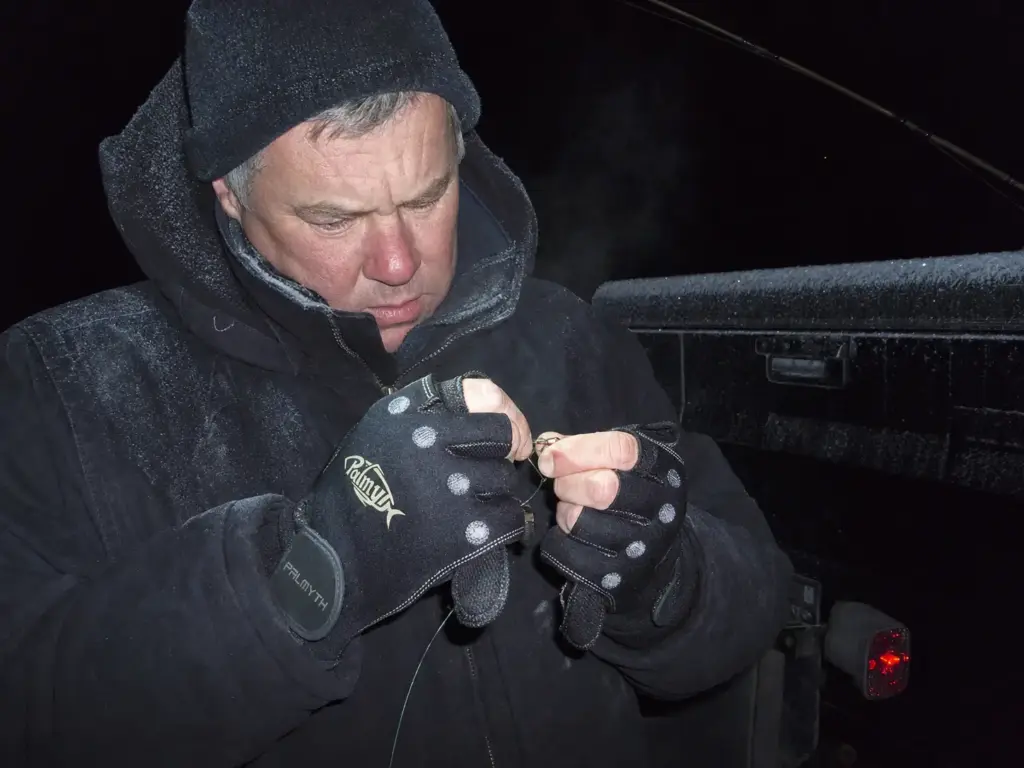
Nobody loses a fish because their hands hurt. They lose it because their hands got slow an hour before the pain showed up.
Fine motor control starts degrading once finger skin temperature drops below roughly 22.9°C (73°F), with hand skin temperature crossing its own line at about 24.9°C (77°F). The falloff isn’t linear either. It’s curvilinear, so once you’re over the edge it accelerates, and researchers actually pinned down the skin temperature where your fingers stop cooperating closely enough to put numbers on it.
Then there’s the detail that should change how you fish. After your hands have been cold and you rewarm them, the finger threshold rises to about 25.7°C (78°F). Your hands need to get warmer than they originally were to work as well as they originally did.
Shoving them in your pockets for five minutes doesn’t reset anything. You have to overshoot, which is an argument for never letting them get cold in the first place.
At the bad end of the older literature the numbers get ugly. At a finger temperature of 15°C, with measurable decrements showing up anywhere in the 12 to 20°C band, researchers recorded reductions from baseline of roughly 55 percent in men and 52 percent in women. Half your hand speed and half your precision, on a day that just felt chilly.
Real cold water runs on a much shorter clock. In 2°C water, tactile sensitivity and fine dexterity begin degrading around 90 seconds and cross the critical threshold near 120 seconds. Two minutes is about one unhooking. That’s also where the waterproofing conversation starts, because a glove can be technically waterproof and still leave your hand wet from the inside, which is why a glove that repels water can still soak you by the middle of the morning.
Stop peeling your gloves off to tie knots. The rewarming data says that trade costs you more than it saves, because the hand you re-glove needs to get warmer than it ever was to work as well as it did. Buy a glove you can tie in, or run a liner you can leave on.
Best Cold-Weather Fishing Gloves for Wet Hands and Hard Wind
The highest-ranking community thread on this exact search is titled, more or less verbatim, are there actually any warm AND waterproof fishing gloves. The frustration behind that question is real, and the honest answer is that the category mostly doesn’t deliver both at once. So sort your options by which compromise you’re willing to make.
Warm and warm-when-wet are different products. Fleece that feels great in the truck is finished after the first fish. Wind is the multiplier most people underestimate: OSHA’s own example puts 40°F air with a 35 mph wind at an effective 28°F, which means running the boat is the coldest part of your day, not fishing it. That’s why a windproof outer shell usually beats raw insulation thickness.
The consensus construction for genuinely wet cold work is neoprene where the water hits, fleece where it doesn’t, and fingertips out. The same thickness-versus-feel argument shows up anywhere you’re using your hands in the water, and the answer is always the same: buy the thinnest thing that keeps you functional, not the warmest thing on the rack.
Ice fishing gloves are their own case. Sitting still over a hole while jigging means your hands generate almost no heat of their own, so insulation and a windproof shell matter far more than they do for someone running and gunning a bank. Anglers on freshwater fishing trips who fish hardest in the cold usually land on convertible mitts rather than a thicker glove, because a foldover mitt lets you keep insulation on the hand between casts instead of between trips to the truck.
Budget-wise, insulated cold weather gloves run roughly $25 to $60, and true waterproof-membrane winter fishing gloves sit closer to $80 to $150. One name you’ll see everywhere on this search and won’t see below: the Glacier Glove Ice Bay, built on the brand’s Griptanite palm. It’s the most-cited glove in the category and worth knowing by name, though its availability comes and goes.
Best Overall Cold Pick
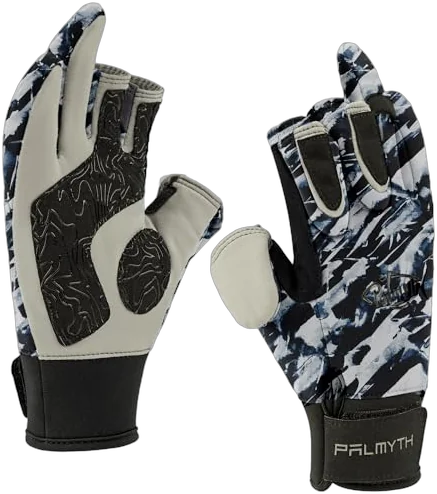
The Palmyth Flexible Insulated Fishing Gloves 3 Cut Fingers answers the dawn-to-noon problem better than anything else at this price. The foldback fingertips mean you never take the glove off, which matters more than the insulation rating once you understand the rewarming numbers from the last section.
The limit is honest: water-repellent is not waterproof. Fish these in cold air and occasional spray and they’re excellent. Stand in a river dunking your hands every three minutes and you want neoprene instead.
Best for Constantly Wet Hands
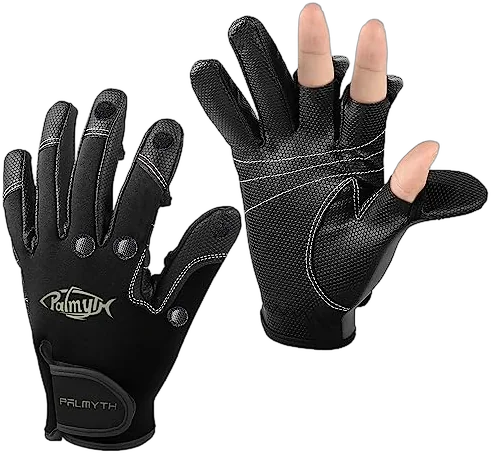
The reason surfers and divers wear neoprene isn’t that it keeps water out. It’s that it keeps working once water is in. The Palmyth Neoprene Fishing Gloves 3 Cut Fingers applies that logic to a glove that still lets you tie.
Where this pair struggles is dry cold. Neoprene doesn’t breathe, so on a long run in dry 25-degree air your hands sweat and then chill. Match the material to the water, not to the thermometer.
Best Budget Cold Glove
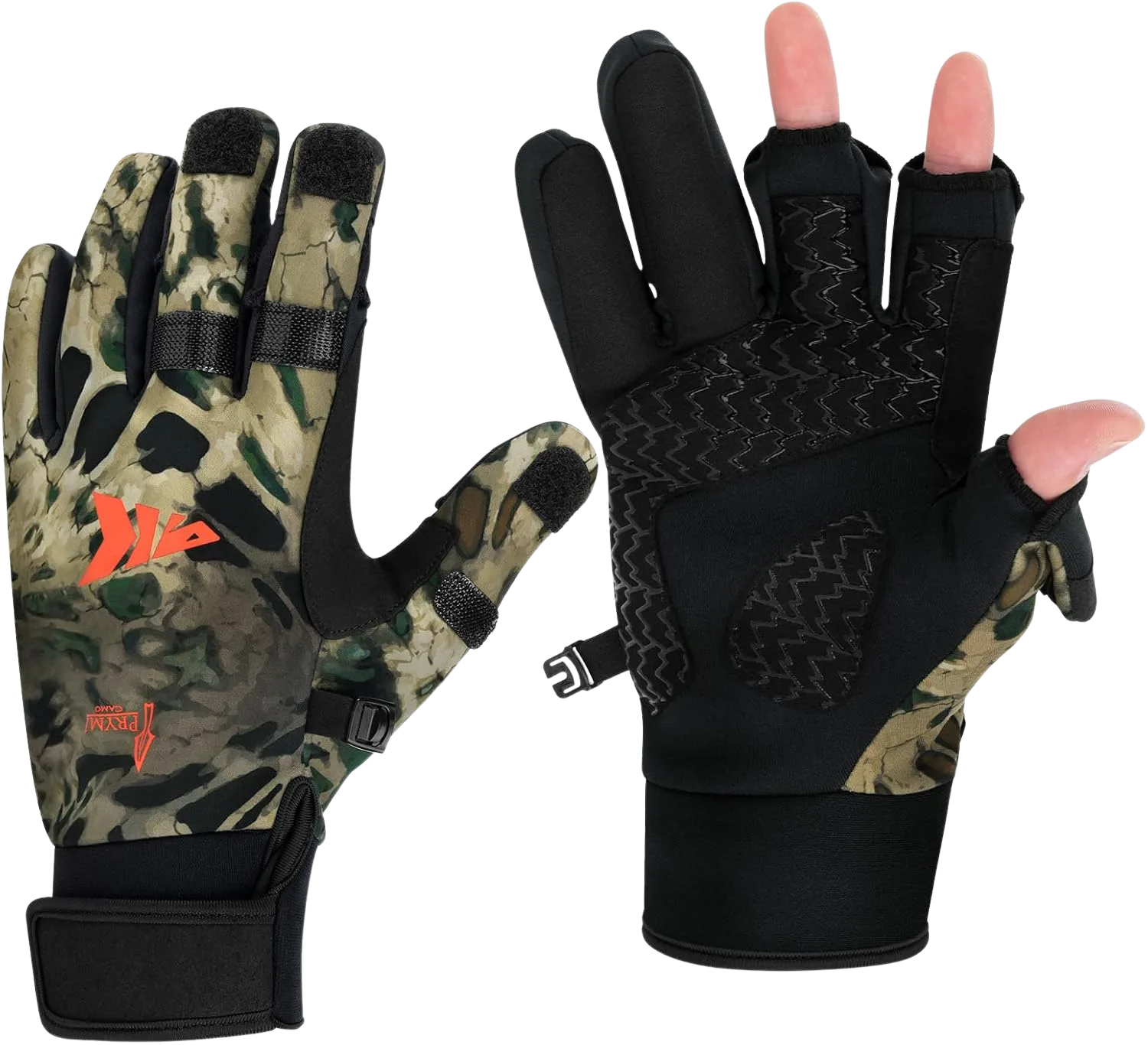
Most anglers shopping budget fishing gloves for winter actually need shoulder-season gloves. If you fish four or five genuinely cold mornings a year, the KastKing Mountain Mist Fishing Gloves covers those days without the premium spend, and the money you save is better put toward a liner you’ll use every one of those trips.
Best for Extreme Cold and Ice
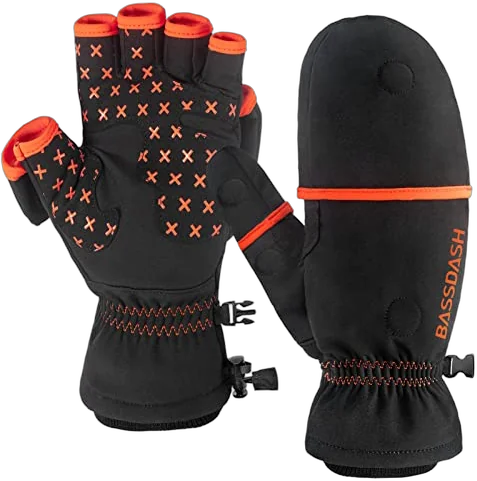
Mittens beat gloves on warmth because your fingers share heat instead of each radiating separately. The problem is that mittens are useless for tying, so people take them off, and then the rewarming penalty kicks in. The BASSDASH WinteFlex Convertible Ice Fishing Mittens sidesteps that entirely by putting the mitten on a hinge over a fingerless glove.
That makes it the right call for sitting on a bucket, for late-season bank fishing where you’re stationary, and for any run long enough that wind chill becomes the real problem.
Best Truly Waterproof
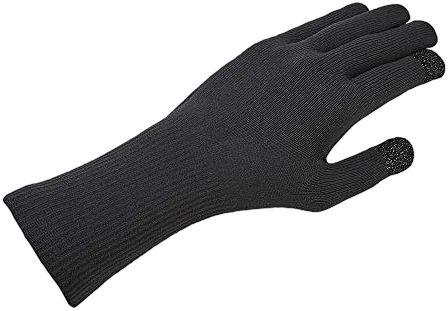
The Gill Thermal Waterproof Gloves comes from the sailing side of the market, and that’s exactly why it’s here. Offshore sailors solved wet-and-cold decades before fishing brands started marketing to it.
If it’s out of stock when you look, don’t substitute another glove claiming waterproof and hope. Run the insulated Palmyth with a nitrile liner underneath instead. That combination is genuinely watertight against your skin, costs a fraction of a membrane glove, and it happens to be the system the next section is built around.
The Liner and Shell System That Beats One Thick Glove
Everybody solves the temperature swing by owning three pairs of gloves and using none of them correctly. The actual fix is the same layering logic you already run on your torso, applied to the one place nobody applies it.
The argument in one line: two thin layers beat one thick glove because you can remove one of them. A single do-everything cold glove has exactly one setting, and the water doesn’t. The same layering system you already build for the rest of your kit works identically here, just at a smaller scale and with more consequences, because your hands are the part doing the fine work.
Here’s the piece almost nobody publishes. Wear nitrile gloves or surgical gloves as a waterproof liner underneath a fingerless wool glove. The forum consensus on mil thickness is specific: 5 mil is the all-around starting point, with 3 to 9 mil covering the range depending on conditions.
Thinner keeps more feel, thicker adds durability and a little warmth. Nitrile is genuinely waterproof, costs pennies a pair, and is thin enough that you can still tie a knot through it, which is more than most $60 gloves can claim.
The refinement on top of that trick is the one that changes cold days. Tuck a chemical hand warmer inside the nitrile glove, sitting against your palm. The nitrile keeps the warmer dry, and a wet hand warmer is a finished hand warmer. Anglers usually learn this after ruining two or three packets by dropping them into a soaked glove and wondering why they went cold in twenty minutes.
Merino is the reusable version of the same idea. Thin liner gloves in wool keep insulating when damp, they don’t hold odor, and a liner-weight pair packs into a shirt pocket. If you want the field-tested budget shell to run over it, the forums keep landing on Kinco #1890 nitrile-dipped work gloves, which are cheap, grippy, and not sold as fishing gear at all.
The Liner Layer
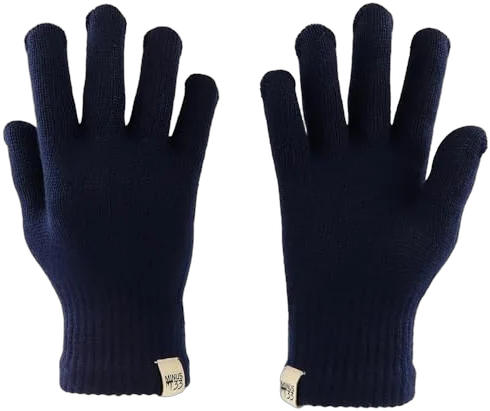
The Minus33 Merino Wool Glove Liner is 85 percent merino with nylon and elastic for shape retention, which is the ratio that matters. Higher merino content means better damp performance; enough nylon means it survives being pulled on and off a hundred times a season.
Wool’s advantage over synthetic liners is not warmth per gram. It’s that wool holds a meaningful fraction of its insulation when wet, while a wet synthetic liner mostly just makes your hand cold with extra steps.
Building the Stack for Your Water
Three configurations cover nearly every situation, and none of them require you to buy four gloves.
For wet cold, where your hands are in the water constantly, run nitrile under a fingerless wool glove. The nitrile is your waterproof layer and the wool is your insulation, and because the wool sits outside the water barrier it never soaks through to your skin.
For dry cold and long boat runs, run the merino liner under an insulated shell. Wind is your enemy here rather than water, so the shell’s job is blocking air, not repelling spray.
And for the transition, run the liner by itself. That’s the middle state most anglers skip, and it’s the one that makes the whole system work.
Run the dawn-to-noon protocol: liner plus shell for the dawn fishing window, strip the shell around mid-morning, swap to the sun glove by ten. One pocket, three states, no second wardrobe. The sun half of that swing opens earlier than most anglers expect, because water is already bouncing 5 to 25 percent of the UV back up at you before the air ever feels warm.
That last point is worth sitting with, because it’s where the two halves of this article meet. UV damage accumulates, and the EPA’s numbers on cumulative UV exposure make clear that the dose you take at nine in the morning counts the same as the one at noon. The mid-morning glove swap isn’t fussiness. It’s the difference between covering four hours of exposure and covering seven.
Where Cheap Gloves Break and What You Give Up
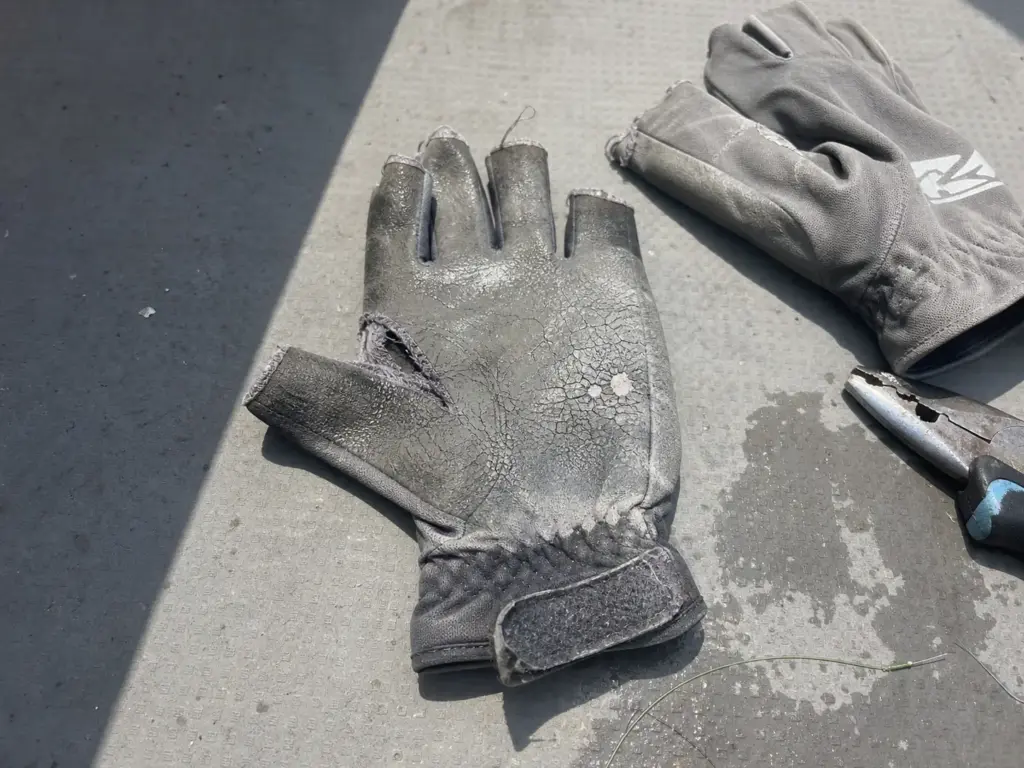
Cheap gloves don’t fail all at once. They fail in four specific places, in a predictable order, and once you know the order you can tell in the store which pair is going to make it.
The thumb crotch seam goes first. It takes every gripping load you apply, and it’s the seam most often stitched rather than bonded on budget gloves. Once it opens, the glove loses its shape everywhere else, because that seam is what holds the palm panel in tension across your hand.
The wrist closure goes second, and it’s the one that ruins days. Without a real cinch, every retrieve pumps a little water in past the cuff. That’s the second-cast soak: new gloves, first cold front, water in by the second retrieve, and you fish the rest of the morning colder than if you’d worn nothing at all.
Third is the palm coating. A silicone grip print or a latex coating glazes and cracks after a season of salt and UV, and the failure is invisible on the shelf.
Flex a used glove and listen. A healthy coating stretches silently; a finished one makes a dry crackle. That’s the sound of the grip that lets a fish slide out of your hands at the worst possible moment.
Fourth is the fingertip hem on fingerless gloves, which is the most reliable in-store quality tell in the whole category. Cheap ones unravel at the cut finger ends within a season. Finished, bound fingertip seams cost the manufacturer almost nothing and predict durability better than the brand does.
Construction language is worth decoding at this point, because it’s where the price jumps and where most of the marketing lives. A Gore-Tex or Windstopper membrane is a genuine waterproof or windproof barrier with a breathability spec attached, and it costs what it costs. A DWR coating is a surface treatment that beads water for a season and then needs reapplying, which is not the same product at all.
And blind-stitched seams, borrowed straight from wetsuit construction, are what prevent the seam blowout that ends a cheap neoprene glove halfway through its second winter. If a listing won’t tell you which of those three you’re buying, assume it’s the cheapest one.
Moisture is the multiplier sitting underneath all four of these. OSHA’s cold stress guidance, which is blunt about what moisture does to heat loss, puts wet at roughly 25 times the heat loss rate of dry. That reframes the whole conversation: a cold-weather glove that leaks isn’t a slightly worse glove. It’s actively worse than no glove, because it holds cold water against your skin instead of letting it evaporate.
The same failure mechanics separate a cheap rain set from one that actually lasts a season, which is not a coincidence. It’s the same seams and the same coatings.
One more thing worth knowing without alarm: AFTCO’s fishing glove collection carries a California Prop 65 warning for Diisononyl Phthalate, the kind of disclosure that attaches to coated and PVC-treated palm materials. It’s printed on the page rather than buried. Read it and decide for yourself, particularly if you handle food fish with the same gloves you fish in.
Handling Fish Without Wrecking the Slime Coat
The grip that makes a glove good at holding a fish is exactly the thing that hurts the fish. That’s the tension nobody on this search wants to sit with, so most articles skip it.
The slime coat is a fish’s protective mucus layer, and it does real work: it’s the barrier against bacterial and fungal infection. A dry, textured, abrasive palm strips it off in patches, and those patches are entry points. The fish swims away looking fine and the problem shows up days later, which is exactly why so many released fish don’t make it even when they swim off strong.
The fix takes one second. Wet the glove before you touch the fish. Everyone knows the rule for bare hands and almost nobody applies it to gloves, even though a dry glove is more abrasive than a dry hand by a wide margin. Dunk it, then grip.
The other half of the fix is a glove designed for the job. Puncture and abrasion armor means you can hold a fish securely with a relaxed grip instead of the crushing squeeze people default to when they’re worried about being spined or toothed. Counterintuitively, the more protective the glove, the gentler you can afford to be.
Two things are worth knowing before you shop fish handling gloves. ANSI cut resistance ratings, borrowed from the industrial work-glove world, are the only standardized way to compare cut protection across brands, and the cut-resistant models that sit alongside handling gloves in this category cluster around ANSI Level 6. Fillet gloves are the adjacent category people confuse with these, built for the knife rather than the fish, and they’re worth owning separately if you clean your catch at a table.
Grip texture matters more than grip strength. A silicone print or a sharkskin texture palm holds a wet fish with far less grip pressure than a smooth palm needs, and less grip pressure means less hand fatigue across a long day and less crushing force on the fish. That’s the whole argument for catch and release anglers buying a purpose-built glove instead of using whatever’s in the truck.
The fish that make people reach for a glove are the same ones that punish sloppy handling. Pike and musky have gill plates that cut on the way out and teeth that cut on the way in, and catfish carry pectoral and dorsal spines that go through a thin palm without slowing down. Walleye bring both. In every one of those cases the glove is protecting you, and the fish pays for it unless you wet that glove first.
The release sequence that actually works is short. Wet the glove, support the fish horizontally with your other hand, unhook it in the water whenever the hook placement allows, and keep air time down to a few seconds rather than however long the photo takes. Warm water compresses that window further, because a fish that is already oxygen-stressed has less margin for a rough handoff.
Judge any grip palm by what it does wet, never dry. Every glove in the store grips fine in your dry hand at the counter. Run water over the palm and squeeze something smooth: silicone print holds, cheap textured fabric turns into a slick sheet, and that difference is the whole reason a fish hits your deck.
The Dedicated Handling Glove
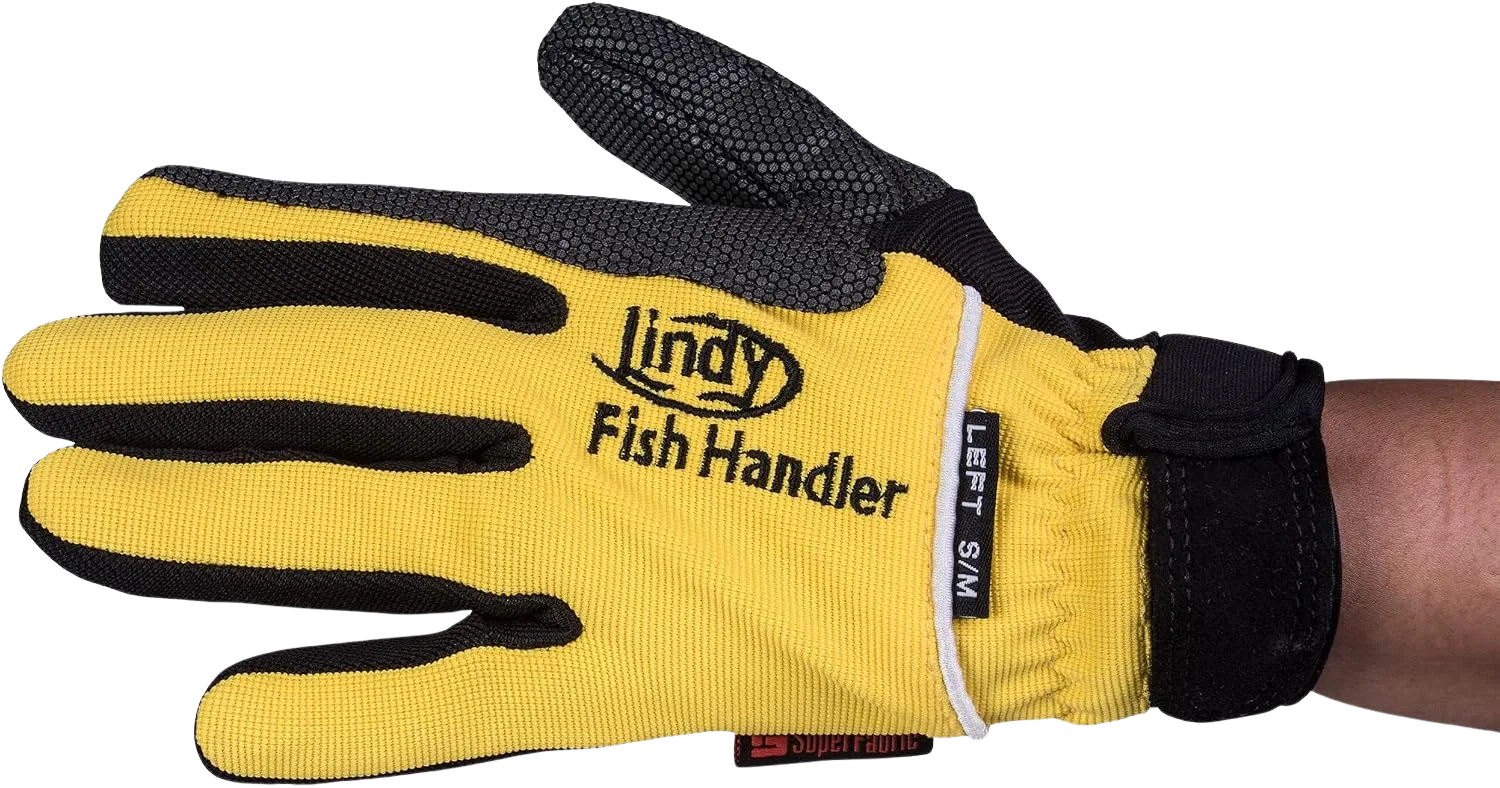
SuperFabric works by bonding tiny armor plates to a flexible base, so you get puncture resistance without the stiffness of industrial cut-resistant gloves. For pike, walleye, catfish and anything with a gill plate that bites back, the Lindy Fish Handling Glove is the piece that lets you control a fish quickly and put it back in the water sooner.
Order the hand you grip with, wet it before every fish, and rinse it at the end of the day. Dried slime turns the palm into sandpaper, which puts you right back where you started.
Conclusion
Buy for two jobs, not one. Every angler who tries to solve sun and cold with a single pair ends up owning three anyway, and using the wrong one half the time.
Treat a UPF tag as a dry number. Choose inherent-fiber knits over sprayed finishes, check the fingertip seams before you check the brand, and remember that wet cotton drops to UPF 3 while a real UPF 50 knit holds its rating.
Layer your hands the way you already layer everything else. Liner plus shell gives you three states out of one pocket, and it’s the only setup that covers a 38-degree launch and a 75-degree noon without a second wardrobe.
Next cold morning, put the liner on before you leave the truck instead of after your hands go slow. That one change will do more for your fishing than any glove on this list.
Frequently Asked Questions
01Are there actually any warm and waterproof fishing gloves?
Yes, but the genuinely waterproof ones are a small, expensive category, and most gloves sold as waterproof are only water resistant. Membrane gloves like the Gill Thermal deliver both. Neoprene skips the problem by working while wet, and a nitrile liner under any insulated glove gets you most of the way for a few dollars.
02Can you wear the same gloves for both sun and cold-weather fishing?
Not well with one pair, but a layered setup gets close. Run a merino liner under an insulated shell at dawn, strip the shell mid-morning, and swap to a UPF 50 fingerless sun glove by ten. Three states, one pocket, and each layer does the job it was actually built for.
03Do fishing gloves really protect against sun damage?
Yes, and better than sunscreen on hands, since a glove cannot be forgotten after the second fish. Look for UPF 50 or higher with protection knitted into the fiber. A sprayed-on finish washes out, and wet fabric loses rating fast: white cotton drops from UPF 7 dry to UPF 3 wet.
04What thickness of nitrile glove works as a cold-weather liner?
5 mil is the all-around starting point, with 3 to 9 mil covering the full range by conditions. Go thinner for feel and knot work, thicker for durability and a little warmth. Keep a chemical hand warmer inside the nitrile so it stays dry, because a soaked warmer quits within minutes.
05Should you handle fish with gloves on?
Only if you wet the glove first. A dry, textured palm strips more slime coat than bare wet hands, and that mucus layer is the fish’s barrier against infection. Dunk the glove, grip firmly rather than tightly, and use a dedicated handling glove with real armor so you can stay gentle.
Risk Disclaimer: Fishing, boating, and all related outdoor activities involve inherent risks that
can lead to injury. The information provided on Master Fishing Mag is for educational and informational purposes
only. While we strive for accuracy, the information, techniques, and advice on gear and safety are not a substitute
for your own best judgment, local knowledge, and adherence to official regulations. Fishing regulations, including
seasons, size limits, and species restrictions, change frequently and vary by location. Always consult the latest
official regulations from your local fish and wildlife agency before heading out. Proper handling of hooks, knives,
and other sharp equipment is essential for safety. Furthermore, be aware of local fish consumption advisories. By
using this website, you agree that you are solely responsible for your own safety and for complying with all
applicable laws. Any reliance you place on our content is strictly at your own risk. Master Fishing Mag and its
authors will not be held liable for any injury, damage, or loss sustained in connection with the use of the
information herein.
Affiliate Disclosure: We are a participant in the Amazon Services LLC Associates Program, an
affiliate advertising program designed to provide a means for us to earn advertising fees by advertising and linking
to Amazon.com. As an Amazon Associate, we earn from qualifying purchases. We also participate in other affiliate
programs and may receive a commission on products purchased through our links, at no extra cost to you. Additional
terms are found in the terms of service.