
In this article
You’ve got a fish coming to the net, one hand on the rod, and the other hand fumbling at the net handle because the glove fingertip has an empty pocket of material where your finger should be. Ask anyone who has spent a cold morning tying knots with numb hands: the glove that felt fine in the store is a different glove once it’s wet, cold, and standing between your fingers and a size 4 hook. Fishing glove sizing is not about picking S, M, or L off a rack, it’s about matching two hand measurements to a chart that changes meaning from brand to brand. Here’s how to get the two numbers, read the chart honestly, and test the fit the way you’ll actually use it.
Fishing Glove Sizing Starts With Two Numbers, Not a Size Label
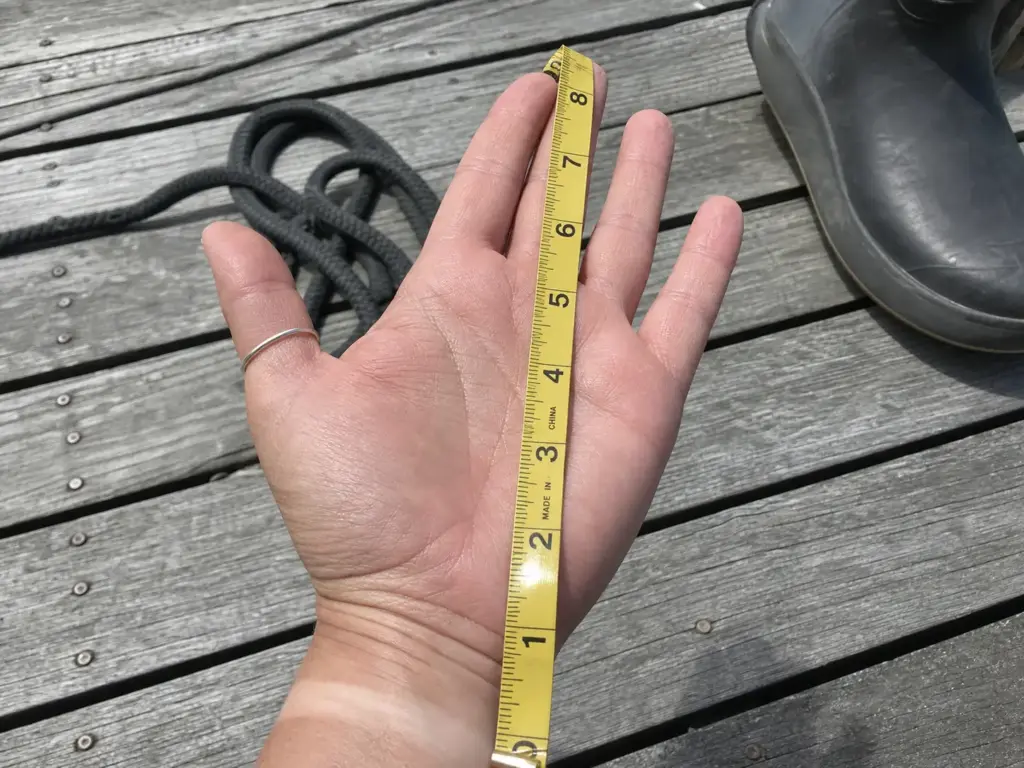
Every usable glove chart in existence runs on hand circumference and hand length, and almost nobody measures either one before ordering. That’s the whole problem. A letter on a tag is a translation of those two numbers, and different companies translate differently, so the letter is the least reliable piece of information in the transaction.
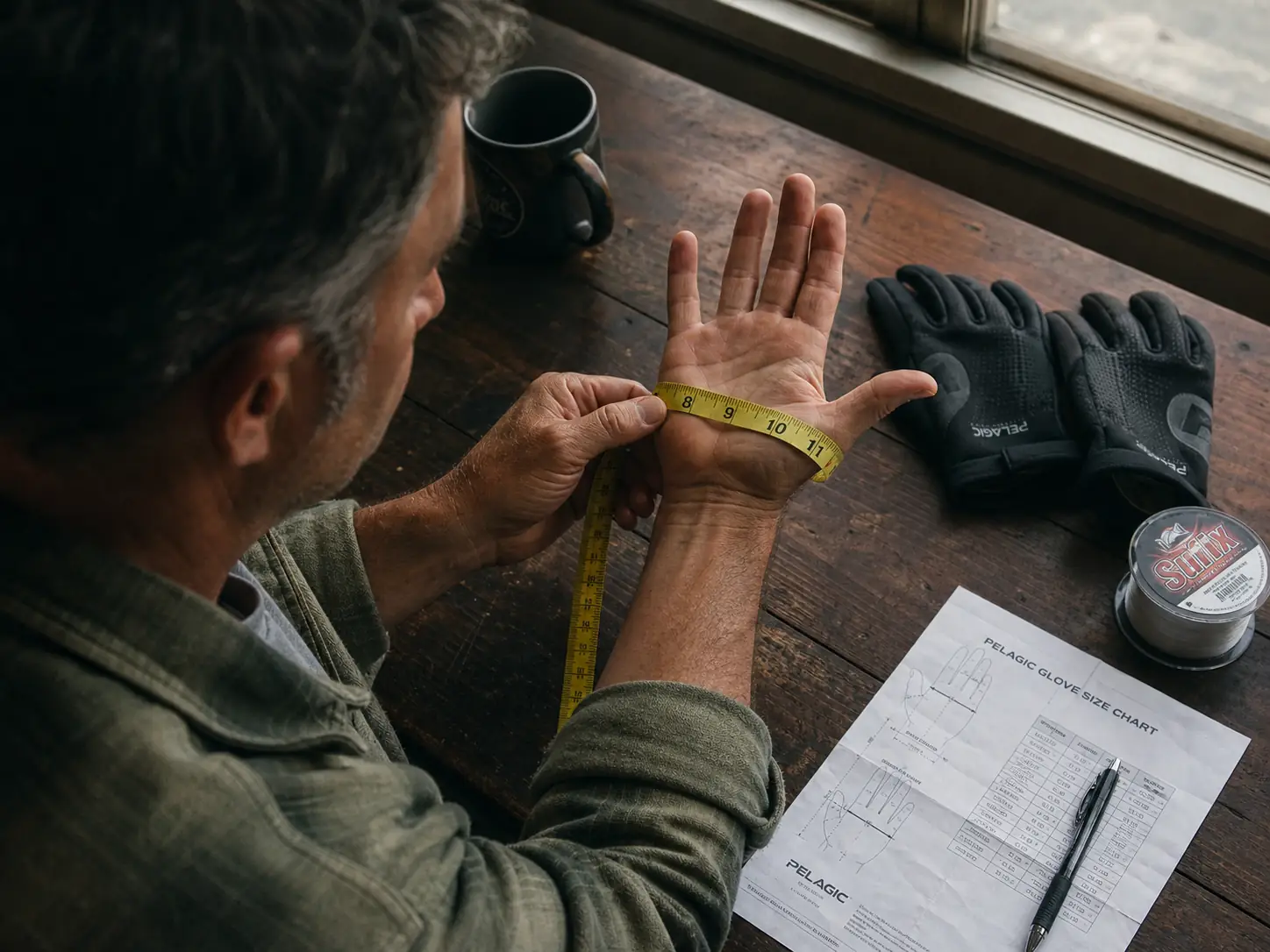
For circumference, wrap a soft sewing tape around your dominant hand at the widest point across the knuckles, keeping your thumb out of the wrap. That reading is effectively your palm width expressed as a loop, which is why it predicts fit better than anything else you could measure. Keep the tape flat and snug without pulling it into the skin. For hand length, run the tape from the crease at your wrist to the tip of your middle finger with your fingers together and relaxed.
Use your dominant hand for both. It’s genuinely bigger, and a glove that fits your casting hand will fit the other one fine, while the reverse leaves you with a tight glove on the hand doing all the work. Write both numbers down in inches, because that’s the unit almost every fishing brand publishes.
Then take the larger of the two numbers. If your circumference reads 8.5 inches and your length reads 8 inches, you size to 8.5. Circumference wins for most anglers with broad palms, and length wins for people with long, narrow hands.
Measure at the end of the day, not first thing in the morning. Hands swell a little with use and heat, and a glove sized to a cold, tight morning hand is the one that feels like a tourniquet by noon.
Sizing gloves is really the same exercise as fitting anything else you wear on the water: the goal is contact without compression. If you want the wider version of this thinking, it’s worth understanding how the rest of your on-water apparel is supposed to fit together before you start buying individual pieces. Hand protection also sits inside a broader safety framework. OSHA’s own guidance on hand protection in standard 1910.138 makes selection a task-based decision rather than a comfort preference, which is exactly the right instinct for fishing too.
How to Read a Size Chart That Isn’t Standardized
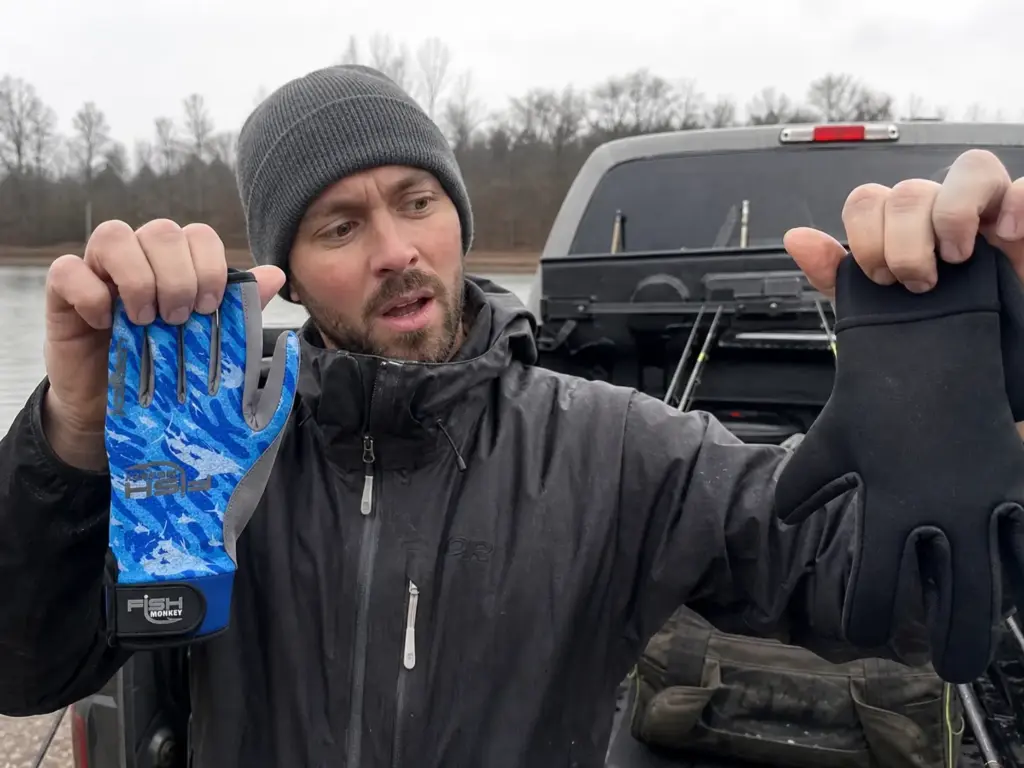
Here’s the part nobody tells you: there is no industry standard for fishing glove sizing. Brand sizing variance is real and it’s wide: two gloves both labeled Large can differ by a full half-inch of circumference, which is enough to move you from a second-skin fit to a glove that rotates on your hand. The small medium large extra-large scale is a marketing convenience, not a specification.
Simms publishes real numbers, and they’re a useful anchor point. Their men’s chart puts Small at 7.5 to 8 inches circumference with 6.75 to 7.25 inches of length, Medium at 8 to 8.5 with 7.25 to 7.75, Large at 8.75 to 9.25 with 7.75 to 8.25, and XL at 9.5 to 10 with 8.25 to 9 inches. You can see the full men’s size chart on the Simms site if you want the women’s and youth breakdowns as well.
Now hold that against a brand built on a different philosophy. Fish Monkey designs around a second-skin fit, meaning their patterns run deliberately closer to the hand than a general-purpose glove. The Fish Monkey Free Style Custom Performance Fishing Glove (check it here) is a good example of that approach, and if you buy it at the letter size you wear in a work glove, it will feel a size small because it was never trying to be roomy.
Cold-weather gloves run the other direction. Insulated models like the KastKing Mountain Mist Fishing Gloves (check it here) carry insulation inside the shell, so the same nominal size has less usable interior room than the number on the chart implies. The pattern is cut for the insulation, and the fit you get is the fit after that material takes its share.
Three practical rules follow from this. Always pull the chart from the brand you’re actually buying, never a generic one. Do your own size chart conversion by comparing the inch ranges rather than the letters when you’re deciding between two brands. And when a chart gives you no numbers at all, treat that as a warning about the product, not about your measurement.
Wader sizing has the same problem for the same reason, and if you’ve already fought through it there, the logic transfers directly. The approach in how to size fishing waders correctly is the same discipline applied to a bigger garment: measure, use the brand’s own chart, and stop trusting the letter.
Why a Glove That Fits Dry Goes Sloppy Wet
A glove is a dry-fit product being sold for a wet job. Neoprene and most synthetic shells absorb water, and absorbed water does two things at once: it adds weight and it relaxes the material. A snug dry fit becomes a slightly loose wet fit, and a loose dry fit becomes a bag.
The failure shows up at the fingertips first. Wet material stretches lengthwise, so a fingertip that started with a millimeter of slack ends up with three or four. That empty pocket is why you suddenly can’t feel a hook eye or pinch a tag end. Your finger moves, then the material moves later, and everything you do with your hands runs a fraction of a second behind.
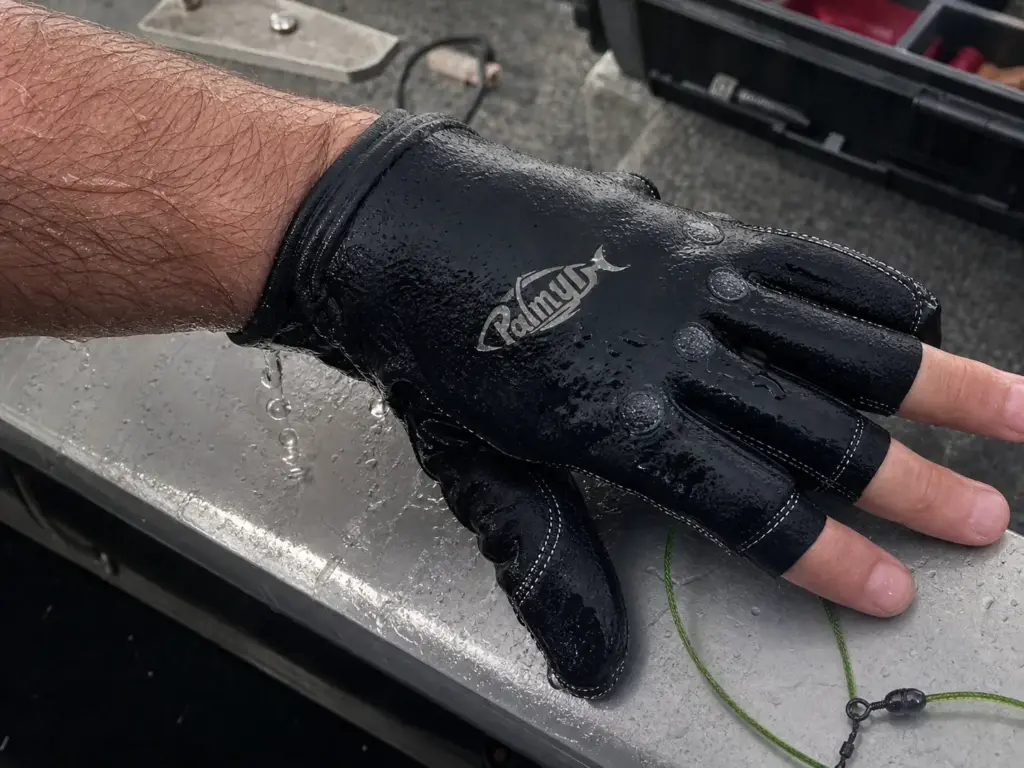
This is why the fingerless and 3-cut designs exist. The Palmyth Neoprene Fishing Gloves 3 Cut Fingers (check it here) leave the thumb, index, and middle fingertips exposed, which removes the wet-stretch problem from the three digits that do the precision work while keeping the rest of your hand covered.
Run the wet test at home before the return window closes. Soak the gloves in the sink, wring them out once, put them on, and tie three clinch knots. If the fingertips bunch, the size is wrong and you have not lost anything but ten minutes.
Material choice drives how much of this you deal with. A shell built from a water-resistant fabric holds its shape far better than plain neoprene once the spray starts, and the tradeoffs there are worth understanding before you commit, which is what the breakdown of waterproof breathable fabrics covers. The short version for sizing purposes: the more water your glove takes on, the tighter your dry fit needs to be.
Between Sizes? Here’s How to Decide Which Way to Round

Your measurement lands at 8.6 inches and the chart offers Medium up to 8.5 and Large from 8.75. The generic advice says size up. The generic advice is wrong about half the time. What you do depends on three things, so work through them in order.
Branch A, no liner: size down. A glove worn as your only layer needs to be in contact with your skin to transmit anything. Sizing up gives you interior volume that fills with water, and that space never gets smaller after the first cast.
Branch B, wearing a liner: size up on the shell only. A thin merino liner like the Minus33 Merino Wool Glove Liner (check it here) occupies real interior volume, and a shell sized to your bare hand becomes a compression sleeve once the liner goes on. Compression restricts circulation, and cold fingers lose dexterity faster than loose ones. The liner is one layer in a full cold-weather system, and the fishing base layer system explains how the rest of that stack works so your hands aren’t fighting the whole outfit alone.
Branch C, task-driven: size down. If the glove’s job involves grip and abrasion resistance rather than warmth, tight wins. A fish-handling glove such as the Lindy Fish Handling Glove (check it here) has to move with your palm to grip a thrashing fish, and any slack between the glove’s textured surface and your skin becomes slip.
The tiebreaker when two branches conflict: go with the smaller size. A glove that’s slightly tight dry becomes correct wet. A glove that’s slightly loose dry becomes useless wet, and there is no adjustment that fixes it on the water.
What Bad Fit Actually Does to Your Dexterity
Poor fit degrades your hands in two distinct ways, and knowing which one you’re dealing with tells you what to change.
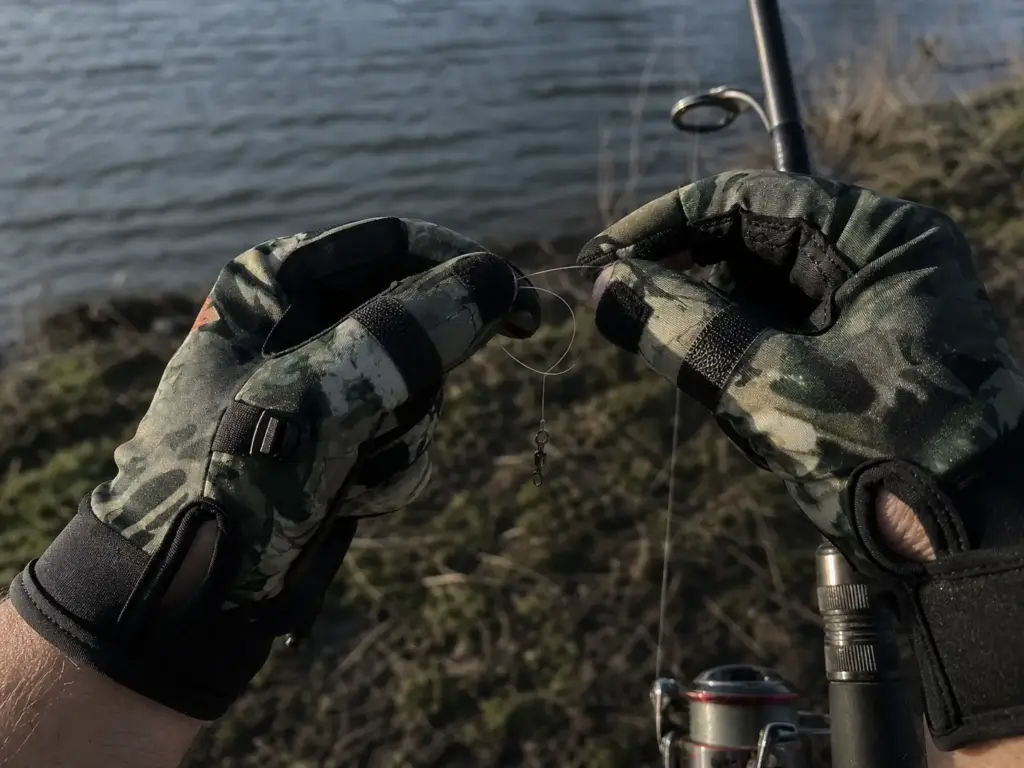
Too loose creates a delay. Material at the fingertip has to compress before your finger applies pressure to whatever you’re holding, so your tactile feedback arrives late and diluted. That lag is what wrecks fine motor control, because every correction you make is based on information that’s already stale. You lose the ability to feel a knot cinching, a hook point catching, or line slipping through your fingers. It’s also the fit that snags: loose material at the fingertip catches on guides, net mesh, and split rings.
Too tight creates fatigue and cold. A compressed hand has restricted blood flow, and restricted blood flow in cold air is how fingers stop working. Your grip strength drops measurably over a couple of hours because the muscles are working against the glove on every close, and you’ll notice it as a general clumsiness you’ll probably blame on the cold rather than on the glove.
Interestingly, warmth and dexterity aren’t as tightly coupled as most anglers assume. A study indexed in PubMed on manual dexterity under cold exposure found that dexterity could be maintained even with finger blood flow roughly eight times lower when heat was applied directly. The practical takeaway: keeping the hand functional is about targeted warmth and unrestricted movement, not about burying your fingers in bulk.
Glove thickness drives this more than most people expect. Thinner material means more transmitted feel, and every added millimeter costs you a measurable amount of fine control regardless of how well the glove fits. Fit and thickness are separate variables, and you need both right.
There’s a downstream cost to all of this that rarely gets connected back to gloves. Anything that depends on reading tiny signals through your hands degrades with the glove. The techniques in line watching and bite detection in clear water assume you can feel and see subtle changes, and a sloppy fingertip removes half of that input before you’ve made a cast.
Thickness, Feel, and the Tradeoff You Can’t Size Your Way Out Of
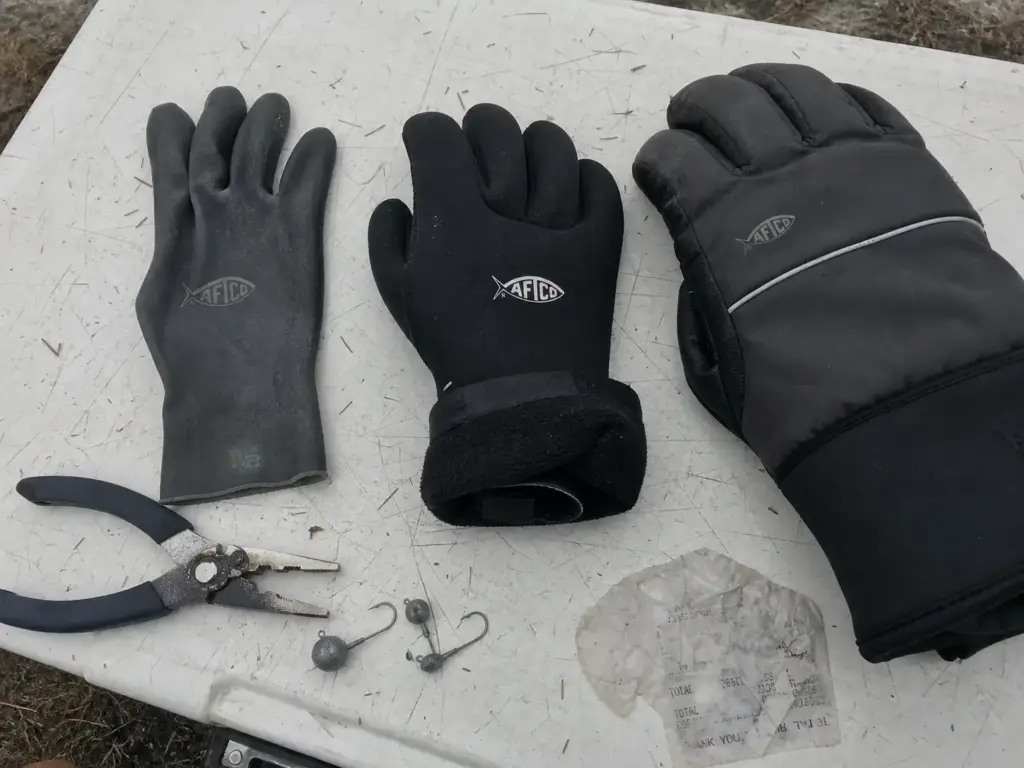
Perfect sizing does not buy you unlimited dexterity. The material’s thickness sets a hard ceiling, and no amount of fit correction moves it. This is the tradeoff every glove buyer eventually meets.
Thin gloves in the 1 to 2mm range preserve almost all of your feel. You can tie knots, thread line, and pick up a small lure without taking them off. Fish Monkey’s own language around 2mm designs emphasizes exactly that, because at that thickness the glove is still a second skin rather than a barrier. What you give up is warmth and abrasion resistance.
Thick insulated gloves in the 3 to 5mm range keep your hands warm in genuinely cold conditions, and they cost you real precision. You will be removing them to tie knots. Accept that in advance and it stops being a frustration.
Mittens sit at the far end. They keep fingers together so they share heat, which is the most effective warmth strategy available, and they cost you nearly all independent finger movement. Some anglers carry mittens for the ride and a thin glove for the fishing, and that’s a legitimate answer rather than a compromise.
The honest framing is that you’re choosing where on this spectrum your day sits, not looking for a glove that wins everywhere. If you want the buying side of that decision worked through with specific picks, the roundup of the best fishing gloves for sun and cold covers which models suit which conditions. This article’s job is making sure whichever one you choose actually fits.
When to Give Up Fingertip Coverage Instead
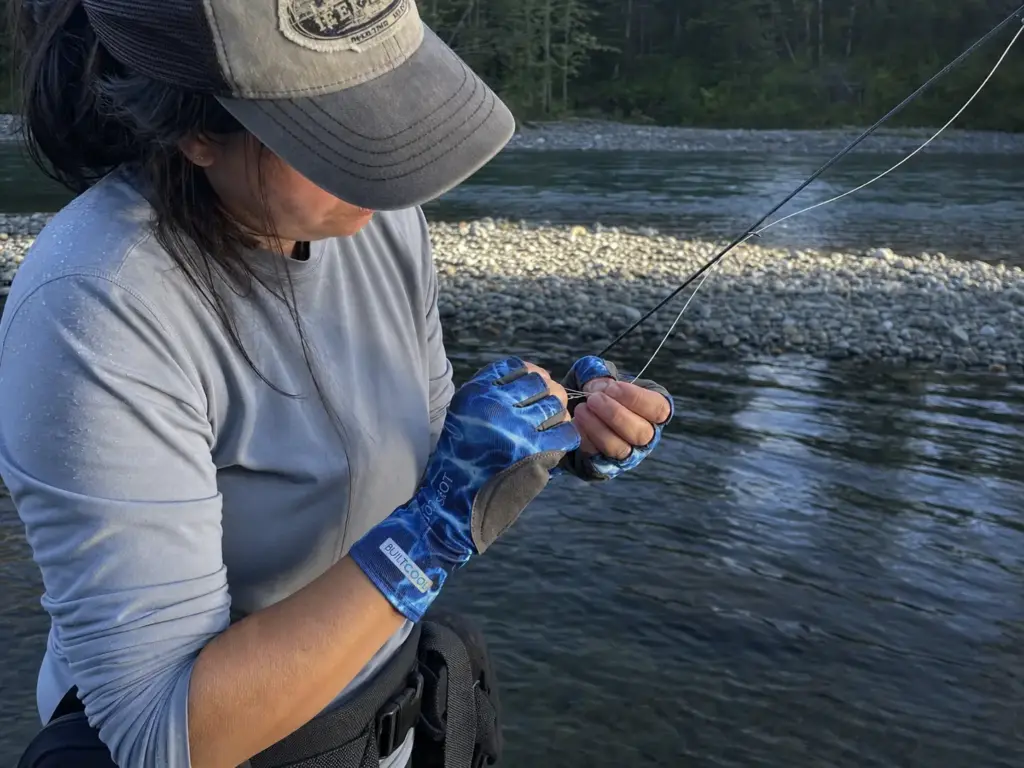
There’s a fourth option most anglers skip: stop trying to make a full-fingered glove work and remove the fingertips from the equation entirely.
Fingerless gloves solve the dexterity problem by not having the problem. Your fingertips are bare, so tactile feedback is perfect and nothing bunches. Models like the HOT SHOT Men’s Fingerless Reinforced Fishing Gloves with UPF 50 (check it here) protect the back of the hand from sun and the palm from line cuts and abrasion, which is most of what you need on a warm day. Sun protection is the primary job there, and the fingers are simply not part of it.
Cut-finger designs like the Palmyth 3 Cut pattern split the difference. Three digits exposed, the rest covered, which suits shoulder-season days when your hands are cold but not at risk.
The sizing question changes for both. A fingerless glove is sized almost entirely on circumference, since there’s no finger length to accommodate, so use your circumference number and disregard the length reading. What matters more instead is the wrist closure, because a fingerless glove with a loose cuff rotates on your hand under load, and seam placement across the palm, since an exposed-fingertip design puts its seams right where you grip. This also means fingerless gloves are more forgiving of a between-sizes measurement, which makes them an easy default when you’re buying online and can’t try anything on.
Where fingerless designs cost you is contact with the fish. Handling a fish barehanded at the fingertips means fins, gill plates, and teeth touching skin, and it means your grip on a slick fish is coming from your palm alone. The techniques in fish handling for safe release in warm water matter more when your fingertips are exposed, because you’re protecting both the fish and your hands with technique rather than material.
Test the Fit Like You Fish, Not Like You’re Trying on Gloves
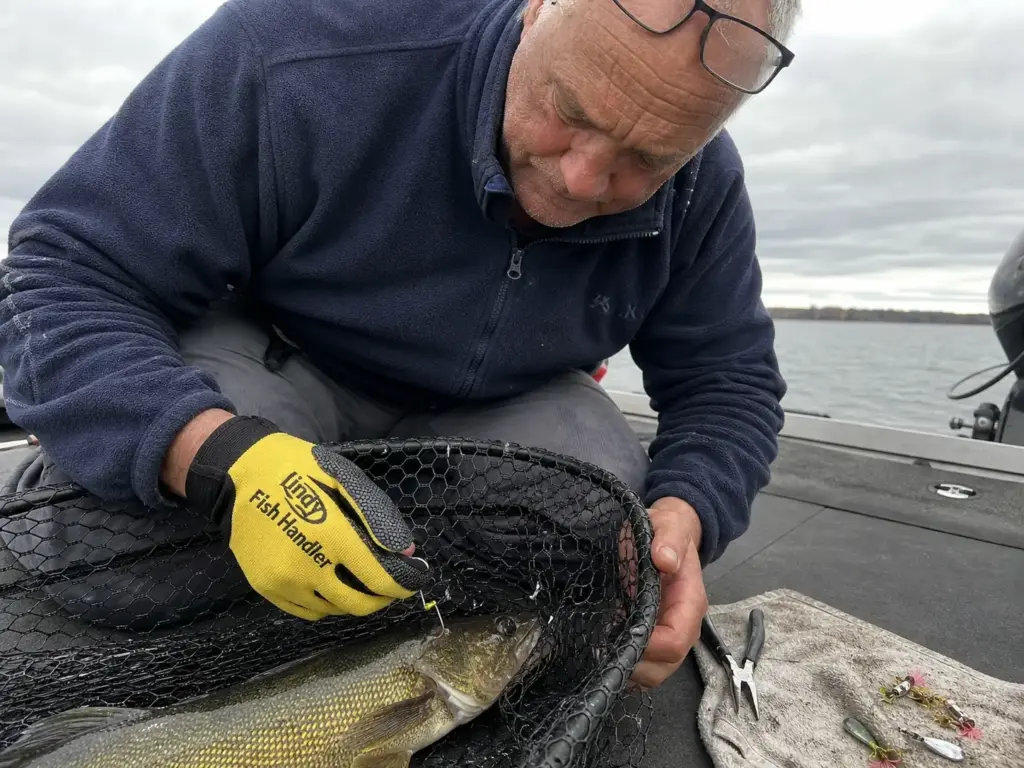
Standing in front of a mirror flexing your fingers tells you nothing. Sizing gloves correctly means running them through the tasks you’ll actually do, and the whole test takes about ten minutes at your kitchen table.
Put the gloves on and work through five tasks in order:
- Tie a clinch knot on 10lb mono. If you can’t cinch it without looking, the fingertip fit is off.
- Thread braid through a rod guide. This is the hardest dexterity task in fishing and the fastest failure signal.
- Work the bail on a spinning reel, open and closed, five times. Watch for material catching.
- Unhook a jig from mesh netting. Loose fingertips snag here immediately.
- Palm a small lure and rotate it in your hand. You should be able to feel which way the hook points.
Then do the whole sequence again with the gloves soaked, because that’s the fit that matters. Wet them, wring them once, and repeat all five tasks. Anything that got noticeably worse is telling you the size is wrong.
Last step: keep them on for twenty minutes. Fit problems that don’t appear in the first minute show up as pins and needles, a cold spot at the fingertip, or a seam pressing into a knuckle. That twenty-minute mark catches the too-tight failures that a quick try-on never will.
Do the whole test over a towel with the tags still attached and the packaging intact. Every glove that fails the test goes straight back in the box, and you learn which brands run true to their own chart for the cost of a return label.
The knots you tie most are the ones worth testing with, so use your actual connections rather than a generic knot. The options in fishing line to leader connection methods vary a lot in how much fingertip precision they demand, and a glove that handles your usual connection is a glove that works on your water.
The Two Numbers Are the Whole Game
Measure your dominant hand’s circumference and length, take the larger number, and never buy from a chart that isn’t the brand’s own. That single habit removes most fishing glove sizing failures before they happen.
When you land between sizes, let the liner decide. Wearing one means sizing the shell up, going bare means sizing down, and when the branches disagree, the smaller size is the safer bet because wet material only ever gets looser.
Test with knots and reels rather than a mirror, wet and dry, and give it twenty minutes. A glove that passes that has earned a place in your bag.
Go measure both hands tonight and write the two numbers in your phone. Every glove purchase from here on takes thirty seconds instead of a gamble.
Frequently Asked Questions
01Should fishing gloves be tight or loose?
Fishing gloves should be snug with no slack at the fingertips, but never tight enough to restrict blood flow. Wet material relaxes and stretches, so a glove that fits closely when dry ends up correct on the water.
02How do I measure my hand for fishing gloves?
Wrap a soft tape around your dominant hand at the knuckles with the thumb excluded, then measure from the wrist crease to the middle fingertip. Use the larger of the two numbers in inches against the brand’s own chart.
03Do fishing gloves stretch out over time?
Yes. Neoprene and most synthetic shells relax permanently with repeated soaking and drying, usually loosening most at the fingertips and cuff. Buy at the snug end of your range so a season of use lands you in the right fit instead of past it.
04Can you tie knots with fishing gloves on?
With thin gloves in the 1 to 2mm range or a cut-finger design, yes. Anything thicker than about 3mm makes fine knot work impractical, which is why cold-weather anglers usually remove a glove or choose an exposed-fingertip pattern.
05What size fishing glove should I get if I wear a liner?
Size the outer shell up one size and keep the liner at your measured size. A thin merino liner takes real interior volume, and a shell sized to your bare hand turns into a compression sleeve that costs you both warmth and grip strength.
Risk Disclaimer: Fishing, boating, and all related outdoor activities involve inherent risks that
can lead to injury. The information provided on Master Fishing Mag is for educational and informational purposes
only. While we strive for accuracy, the information, techniques, and advice on gear and safety are not a substitute
for your own best judgment, local knowledge, and adherence to official regulations. Fishing regulations, including
seasons, size limits, and species restrictions, change frequently and vary by location. Always consult the latest
official regulations from your local fish and wildlife agency before heading out. Proper handling of hooks, knives,
and other sharp equipment is essential for safety. Furthermore, be aware of local fish consumption advisories. By
using this website, you agree that you are solely responsible for your own safety and for complying with all
applicable laws. Any reliance you place on our content is strictly at your own risk. Master Fishing Mag and its
authors will not be held liable for any injury, damage, or loss sustained in connection with the use of the
information herein.
Affiliate Disclosure: We are a participant in the Amazon Services LLC Associates Program, an
affiliate advertising program designed to provide a means for us to earn advertising fees by advertising and linking
to Amazon.com. As an Amazon Associate, we earn from qualifying purchases. We also participate in other affiliate
programs and may receive a commission on products purchased through our links, at no extra cost to you. Additional
terms are found in the terms of service.