

In this article
The river doesn’t care about the price tag on your gear. That slow, numbing creep of cold water into your sock is a universal equalizer, transforming a focused pursuit into a battle against distraction and hypothermia. When leaky waders fail, most anglers see a ruined trip or a warranty claim; the self-reliant angler sees a problem to be solved with chemistry and patience.
I have spent decades wading through briar patches and climbing over barbed wire fences. I learned early on that relying solely on factory warranties results in missed hatches and empty bank accounts. DIY wader repair is the final step in mastering the environment you fish in. It is not just fishing gear maintenance; it is stewardship.
In this wader repair guide patching leaks, we will move beyond simple patches. We will cover the physics of detection using the alcohol test, the chemical engineering of selecting the right polymer, and the strategic execution of hydrostatic resurrection. This is how you ensure wader longevity and keep your gear in the river and out of the landfill.
What Are the Mechanics of Hydrostatic Failure?
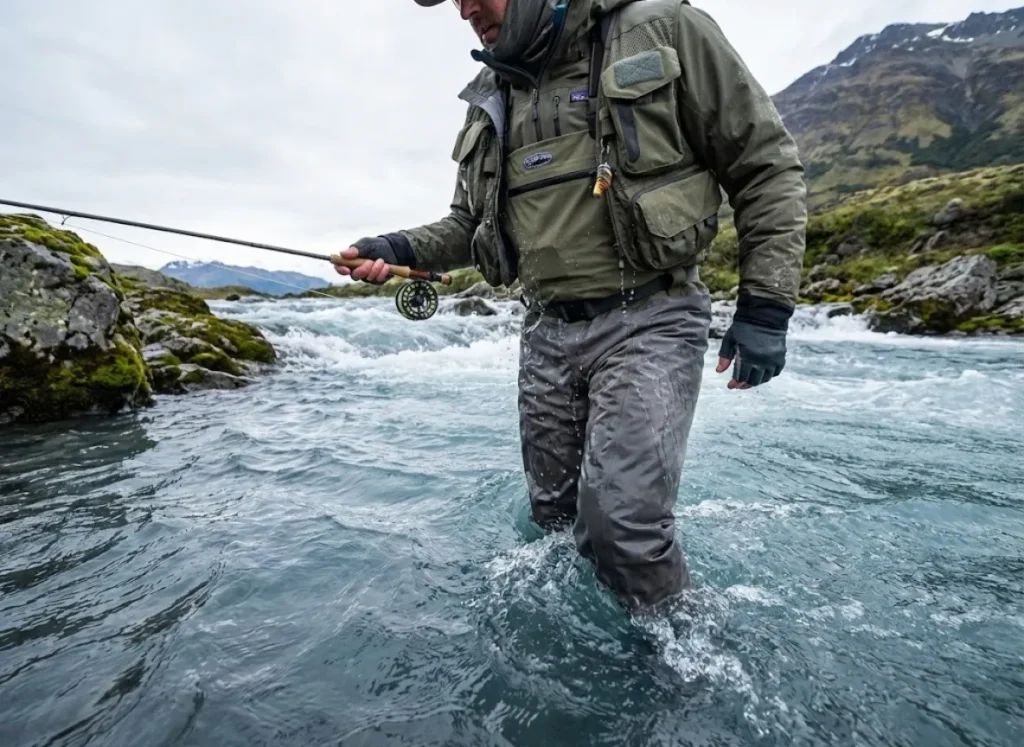
Hydrostatic failure occurs when water pressure forces liquid through microscopic weaknesses in the fabric caused by mechanical stress, punctures, or chemical breakdown. Understanding the repair process begins with recognizing that water is a relentless force seeking equilibrium.
Why do high-performance waders eventually leak?
Water pressure pushes against the membrane (usually Gore-Tex, Toray, or Neoprene), turning microscopic weaknesses into active breaches. Mechanical stress from walking, kneeling, and bushwhacking creates “micro-fractures” in the laminate or compression fatigue in the foam. External punctures from brambles or hooks also penetrate the face fabric, compromising the waterproof barrier beneath.
There are also the inherent trade-offs in durability found in best fly fishing waders. Whether you wear premium Simms G4, Patagonia, Orvis, and Sitka Gear, or budget-friendly options like 8Fans, manufacturers must use thinner laminates to keep them breathable. Additionally, body oils and dirt can clog breathable pores, mimicking leaks by trapping condensation. This is the “Life Cycle” reality: All waterproof gear has a finite number of flex cycles before the wader material modulus breaks down.
How does material substrate dictate the repair method?
The wader material dictates the chemical adhesive required. Breathable fabric laminates require adhesives that can bond to the nylon “backer” (the knit interior) without clogging the surrounding breathable pores. Neoprene (Closed-Cell Foam), common in Gator Waders and neoprene booties, demands high-elasticity adhesives that can stretch up to 300% without shearing off during movement. Using a rigid glue on a flexible neoprene bootie ensures failure within the first mile of hiking.
Understanding this distinction is a critical principle of sustainable fishing gear maintenance. You must also consider the interaction of “DWR” (Durable Water Repellent) coatings with patches. Repair tape often fails on the outside of treated fabrics because the DWR is designed to repel liquids, including adhesives. We must practice “Interface Engineering” by matching the modulus of elasticity of the glue to the fabric.
How Do You Diagnose the “Invisible” Leak?
To diagnose an invisible leak, you must distinguish between internal condensation and external ingress, then use fluids with low surface tension or air pressure to reveal the breach. This forensic leak test saves you from patching phantom holes.
Is your wader leaking or is it just condensation?
The “False Positive” phenomenon is common; sweat accumulation inside waders can feel identical to a leak, especially in cold water. To verify, use the “Plastic Bag Test.” Wear a plastic bag over your base layer on one leg to isolate external water ingress from internal perspiration. If your sock is wet inside the bag, it is sweat. If the bag is wet on the outside, you have a full leak.
Analyzing the wetness pattern helps as well. Generalized dampness usually indicates condensation, while localized wet spots suggest a pinhole. This is a common challenge during winter trout fishing, where the temperature differential creates significant moisture buildup. Proper layering with wicking synthetics minimizes this, but verifying the leak before applying glue prevents ruining expensive gear with unnecessary patches.
How does the “Alcohol Test” reveal pinholes in breathable fabrics?
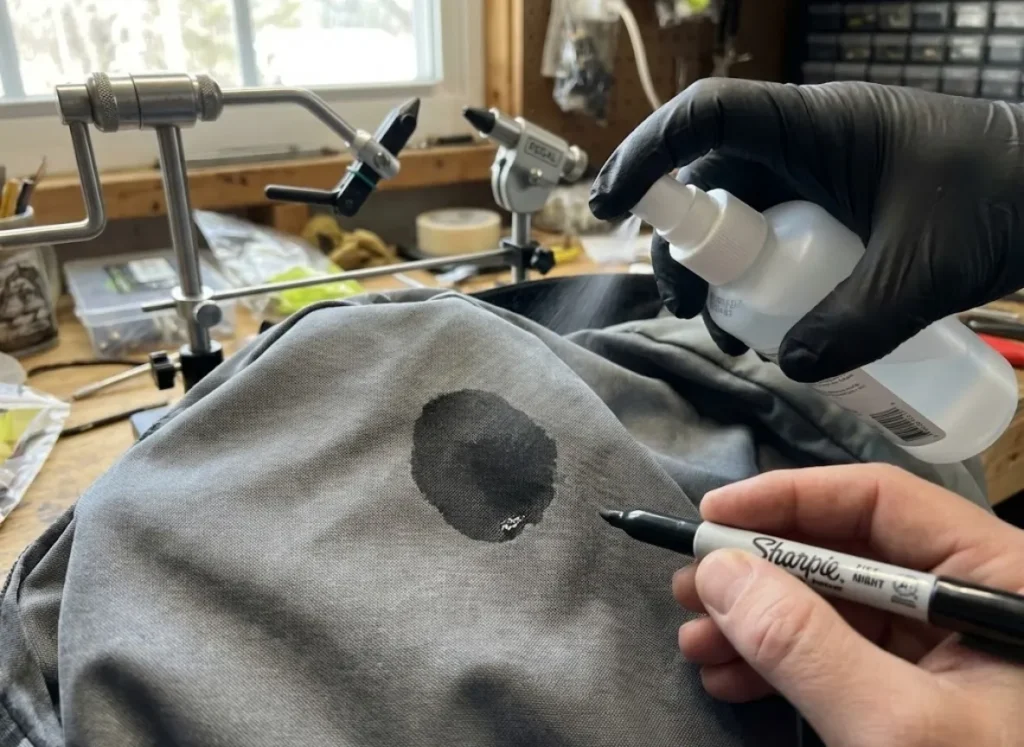
Turn your waders inside out and spray isopropyl alcohol 70-99% (or standard rubbing alcohol) on the suspicious area. Watch for dark gray or black spots to appear instantly on the face fabric (outside) as the alcohol penetrates. Mark the leak spot with a felt-tip marker or Sharpie on the inside before the alcohol evaporates.
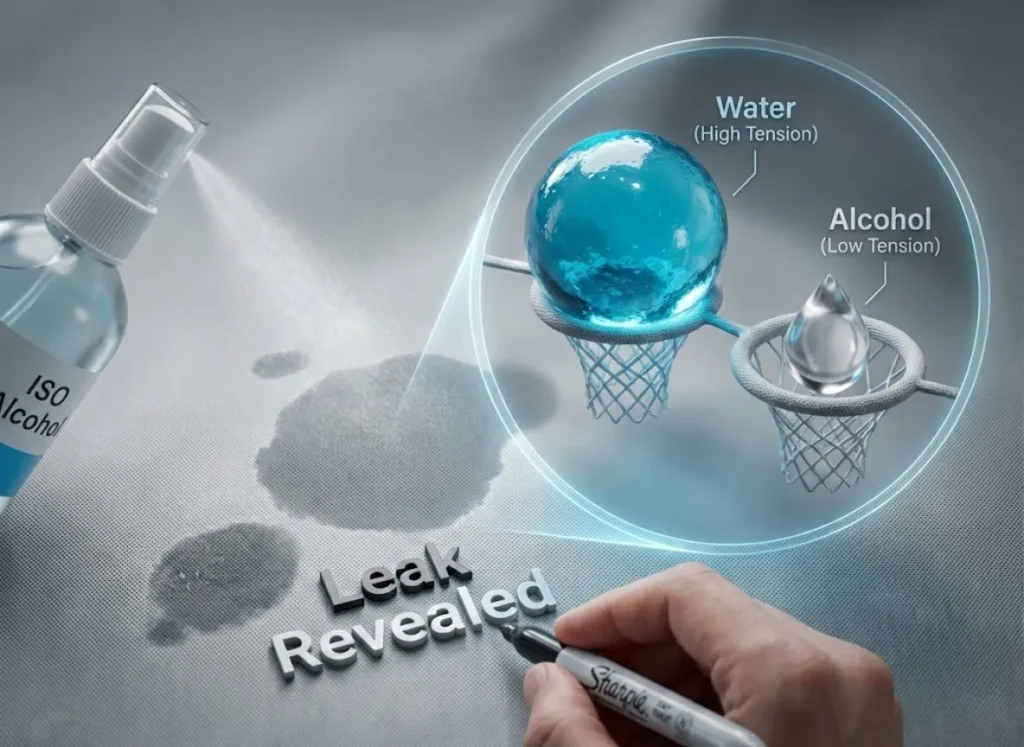
This alcohol spray method works due to the physics of surface tension. Results on isopropyl alcohol surface tension demonstrate that alcohol has a much lower surface tension (~21 mN/m) than water (~72 mN/m). This allows it to “wet out” the fabric and pass through microscopic pinhole leaks that water bridges over. Isopropyl Alcohol is safe for ePTFE membranes and evaporates without leaving residue that inhibits adhesion.
How do you locate leaks in neoprene booties?
For neoprene repairs, we use the “Shop-Vac Inflation” technique. Insert the exhaust of a vacuum into the wader leg and seal the top with your hands to inflate it. Spray a solution of water and dish soap onto the inflated bootie and look for bubbles.
This is a critical skill for first ice fishing trips, where neoprene is the standard insulation. If you see bubbles emerging from the edge of the seam tape, it indicates seam-tape delamination rather than a simple puncture. Mark the wet neoprene with a wax pencil or silver sharpie, as standard markers may bleed or vanish on wet black rubber.
Which Chemical Agent is Right for the Job?
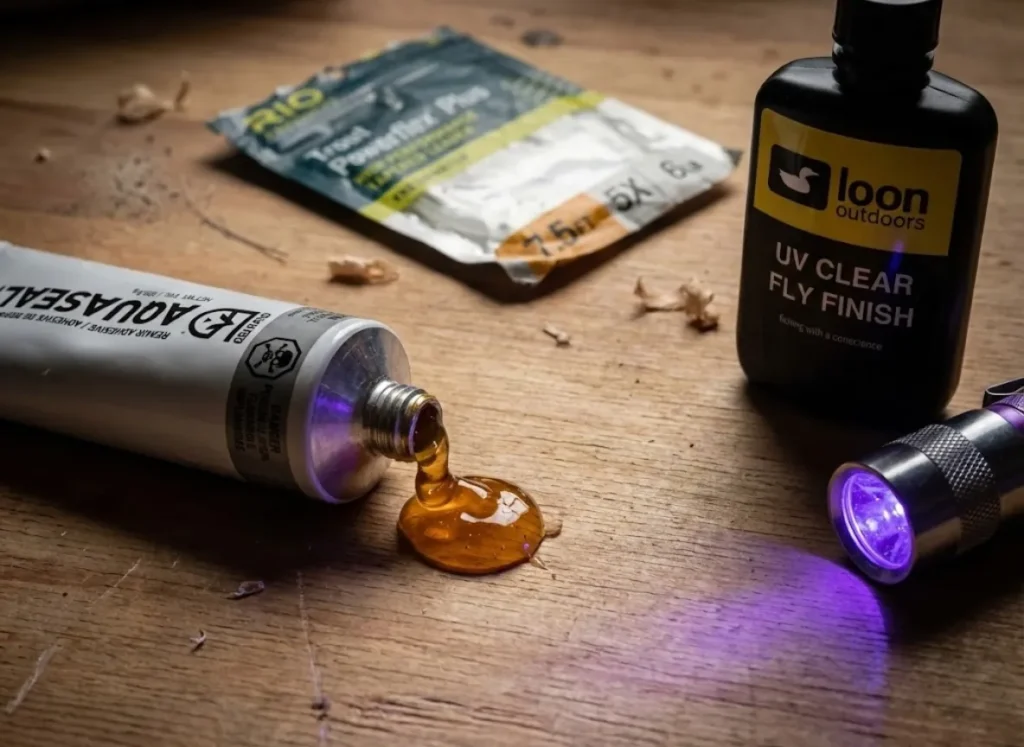
The right chemical agent depends on the urgency and location of the repair: use thermoset urethanes for permanent structural bonds and UV-cure acrylics for emergency field triage. Choosing the wrong wader glue results in stiff patches that crack under pressure.
When should you use Thermoset Urethanes (Aquaseal FD)?
Aquaseal+FD (by Gear Aid) is the industry standard moisture-curing urethane. It is often compared to Stormsure or Aquasure, but remains the favorite for forming a permanent waterproof seal. It is ideal for permanent at-home fixes where you have 12-24 hour cure time available. Its viscosity is like thick honey, making it self-leveling and perfect for filling fabric weaves.
It cures to a rubber-like state that flexes with the wader, preventing stress risers at the edge of the patch. This specialized wader glue is a staple in your kit of essential fishing tools because of its hydrolytic stability—it does not break down after prolonged submersion. For neoprene, some anglers prefer SG-20 or 3M Marine Adhesive 4000, but Aquaseal+FD remains the most versatile liquid adhesive.
Pro-Tip: Once opened, Aquaseal will harden in the tube over time. Store the unused tube in your freezer. The cold temperature halts the chemical reaction, keeping the glue fresh for months or even years.
When are UV-Cure Acrylics the right tool?
UV resins (like Loon UV Wader Repair or Gear Aid’s UV formula) act as the “Field Medic” in your field repair kit. They contain photo-initiators that harden instantly (15-30 seconds) when exposed to UV lights or sunlight. This makes them perfect for riverside triage of small pinholes to salvage a day of fishing.
However, they are brittle compared to urethanes. They lack high elongation, acting more like a hard scab than a flexible skin. This aligns with broader fishing safety tips regarding preparedness; a temporary patch keeps you dry and warm, but it should be considered provisional. You may need to peel it off and perform a full repair once you are back home.
Why must you avoid Cyanoacrylates (Super Glue)?
Gorilla Glue (cyanoacrylate versions) and Super Glue dry into a rigid, crystalline lattice that cannot stretch. As soon as the flexible wader fabric flexes when you walk or crouch, the glue cracks. This often tears the fabric further, creating a larger leak than you started with.
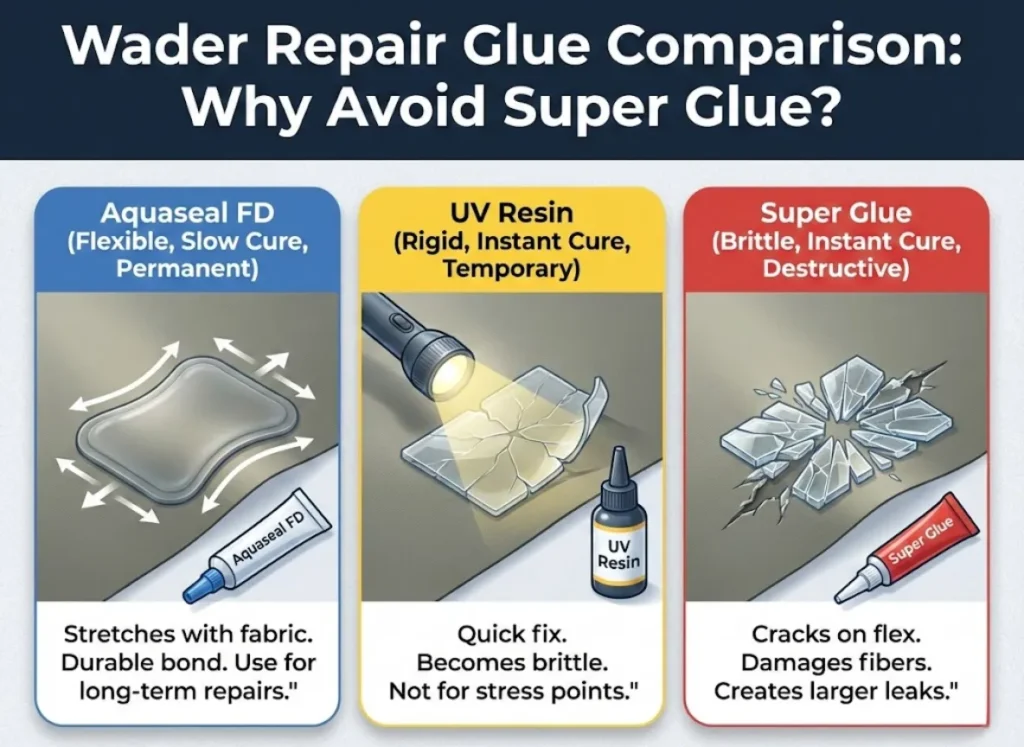
Avoiding shortcuts often seen in budget fishing gear hacks is essential. Super Glue impregnates the fibers, making it nearly impossible to clean off and apply a proper patch later. The only exception is the emergency repair of hard plastic wading boot soles, never the soft wader fabric itself.
How Do You Execute a Permanent Repair?
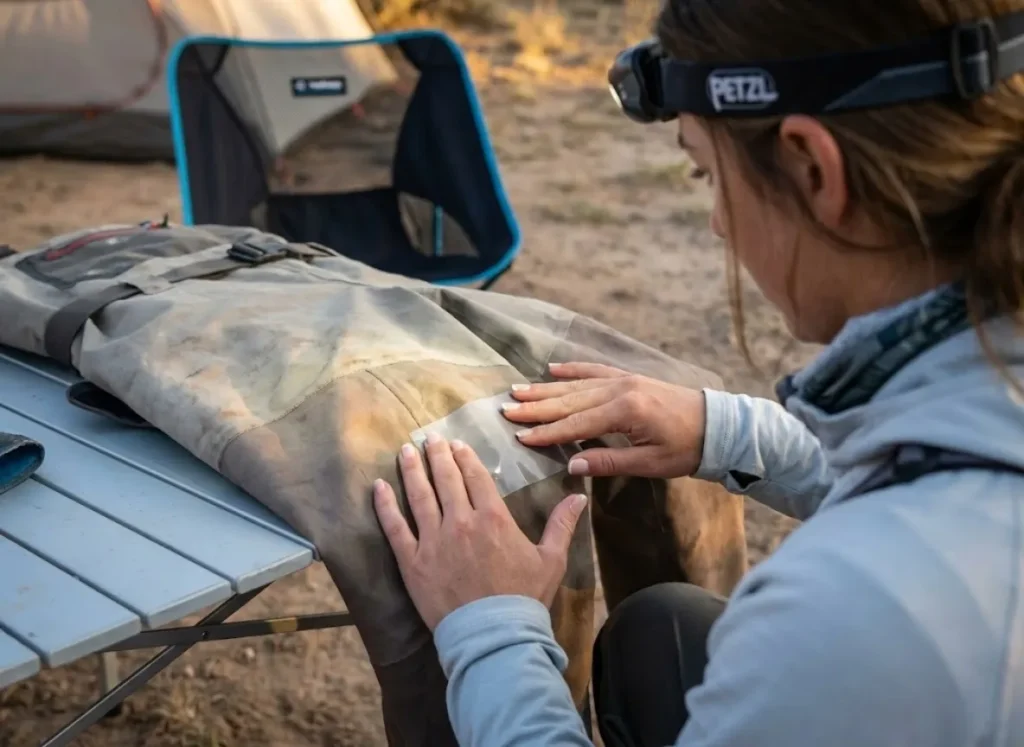
Permanent repair requires specific protocols: an internal dab for pinholes, a “sandwich” technique for tears, and an adhesive re-bond for delaminated seams.
What is the protocol for fixing pinholes in breathable fabric?
Ensure you clean the area around the leak with an alcohol wipe to remove body oils. Apply a small dot of Aquaseal+FD directly over the marked spot on the inside (backer) of the wader. Use a gloved finger to gently massage the glue into the knit fibers.
Patching from the inside protects the adhesive from external abrasion like rocks and brush. It also maintains the aesthetics of the gear. You can use precision tools like best fishing pliers to handle small applicator sticks if you want to keep your hands clean. Lay the waders flat and level for the full cure cycle.
How do you repair a large structural tear?
For large tears or a gash, use the “Sandwich Method.” Apply a piece of Tenacious Tape (or masking tape in a pinch) to the outside of the tear to pull the edges together. This creates a “dam” that prevents liquid adhesive from dripping through. Turn the waders inside out and apply Aquaseal+FD over the tear, extending 0.25 inches beyond the damage. You can use fly-tying scissors to cut a rounded fabric repair patch from spare material if the hole is significant.
This damage is common from fishing heavy cover environments with barbed wire or thorns. The external tape provides immediate structure while the internal urethane creates a chemical weld. Once cured, you can remove the external tape or leave it for extra abrasion protection.
How do you resurrect delaminated seam tape?
Seam failure usually occurs in the crotch or neoprene booties. Clean debris and old adhesive from under the lifted tape using a small brush and alcohol. Apply a thin film of wader adhesive under the tape and press it back down.
Use weights or a clamp to hold the tape flat while it cures. Treat this repair with the similar care used in catch and release techniques—handle the material gently and be precise. Run a tiny bead of adhesive along the edge of the tape (the “fillet” technique) to prevent future lifting.
Why Is Repair Essential for the Sustainable Angler?
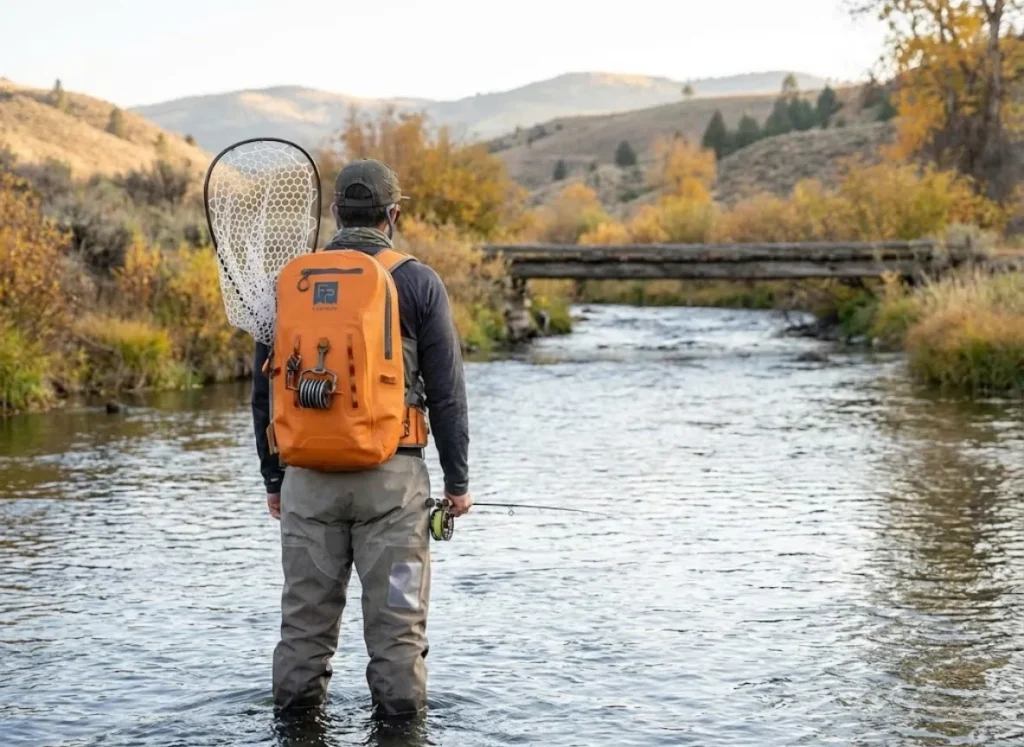
Repairing waders reduces environmental impact by diverting non-biodegradable synthetic waste from landfills and maximizing the lifespan of carbon-intensive gear.
How does wader repair reduce environmental impact?
Manufacturing a single pair of neoprene waders generates approximately 29 lbs of CO2 emissions. In 2018 alone, data on textile material waste management reveals that millions of tons of textiles ended up in landfills. Synthetic rubber and ePTFE are nearly impossible to recycle efficiently.
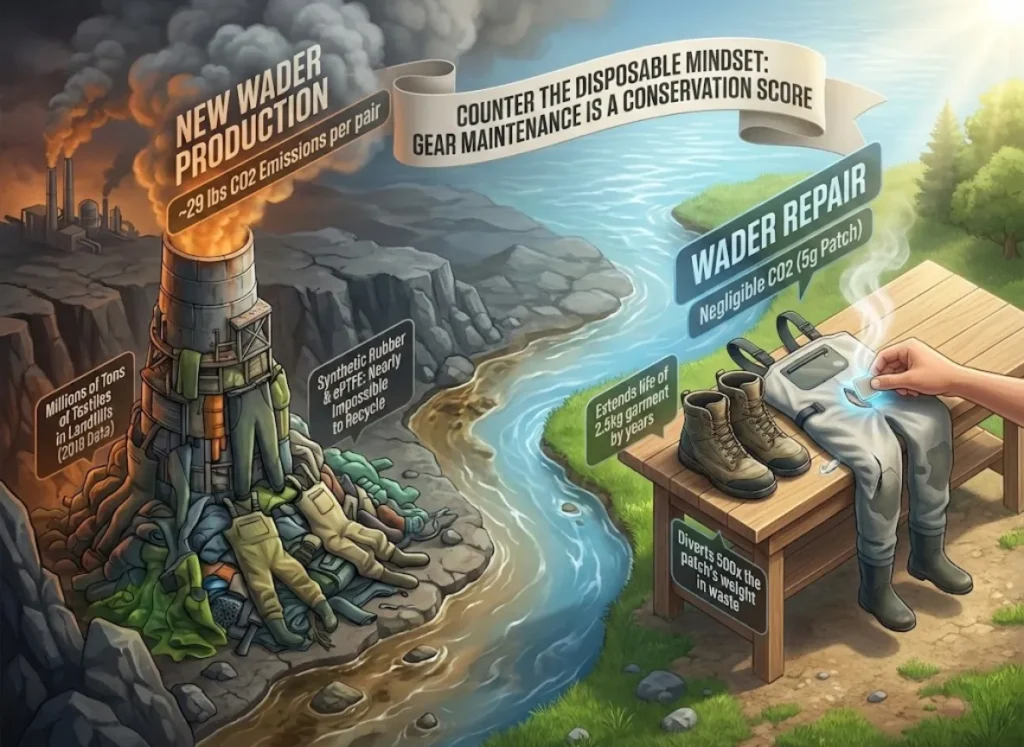
A simple 5-gram self-adhesive patch can extend the life of a 2.5kg garment by years. This effectively diverts 500 times the patch’s weight in non-biodegradable waste. We must counter the “disposable” mindset of fast fashion. Viewing your gear maintenance as a conservation score creates a positive ripple effect in the angling community.
Is it economically worth repairing old waders?
Compare the ~$15 cost of a wader repair kit against the ~$60-$80 cost of shipping for a professional warranty repair, or the $600+ cost of replacement. Manufacturers will also often reject warranties on gear that shows generalized breakdown, making DIY wader repair the only option.
Repairing a 5-year-old wader to get one more season significantly lowers the amortized cost of ownership. This financial prudence aligns with being a vital component of fish conservation for anglers—saving money on gear allows you to donate to watershed conservation or buy better licenses. Treat your high-end waders as an investment portfolio that requires active management.
Conclusion
We have established that detection is physics, relying on alcohol to lower surface tension. We know that chemistry matters; Thermoset Urethanes are the only choice for polyurethane flexibility. We have detailed that technique is king, utilizing inside patches and tape sandwiches. Your willingness to repair is conservation in action.
Don’t wait for a surprise leak to ruin your trip. Build your repair kit today using this protocol. A patch is more than a fix; it is a badge of honor showing you know how to survive the river.
FAQ – Frequently Asked Questions
Can I use Gorilla Glue or Super Glue to fix my waders?
No. These adhesives cure into a brittle, rigid structure. When the flexible wader fabric moves, the glue will crack, often tearing the fabric and causing more damage than the original leak. Always use a flexible urethane like Aquaseal+FD.
How do I find a leak if I can’t see any hole?
For breathable waders, turn them inside out and spray with isopropyl alcohol 70-99%. Dark spots will appear on the outside face fabric where pinholes exist. For neoprene, use the inflate and soap method to find bubbles.
How long does Aquaseal FD take to dry?
Standard Aquaseal+FD requires 8-12 hours to cure fully. You can reduce this time to approximately 2 hours by mixing it with a cure accelerator like Cotol-240.
Is it worth repairing waders that are leaking at the seams?
If it is a small section of peeling tape, yes, it can be re-glued. However, if the entire seam is delaminating or leaky seam issues are extensive along the stitch line, it is often a manufacturing defect or end-of-life failure that warrants replacement.
Risk Disclaimer: Fishing, boating, and all related outdoor activities involve inherent risks that
can lead to injury. The information provided on Master Fishing Mag is for educational and informational purposes
only. While we strive for accuracy, the information, techniques, and advice on gear and safety are not a substitute
for your own best judgment, local knowledge, and adherence to official regulations. Fishing regulations, including
seasons, size limits, and species restrictions, change frequently and vary by location. Always consult the latest
official regulations from your local fish and wildlife agency before heading out. Proper handling of hooks, knives,
and other sharp equipment is essential for safety. Furthermore, be aware of local fish consumption advisories. By
using this website, you agree that you are solely responsible for your own safety and for complying with all
applicable laws. Any reliance you place on our content is strictly at your own risk. Master Fishing Mag and its
authors will not be held liable for any injury, damage, or loss sustained in connection with the use of the
information herein.
Affiliate Disclosure: We are a participant in the Amazon Services LLC Associates Program, an
affiliate advertising program designed to provide a means for us to earn advertising fees by advertising and linking
to Amazon.com. As an Amazon Associate, we earn from qualifying purchases. We also participate in other affiliate
programs and may receive a commission on products purchased through our links, at no extra cost to you. Additional
terms are found in the terms of service.