
In this article
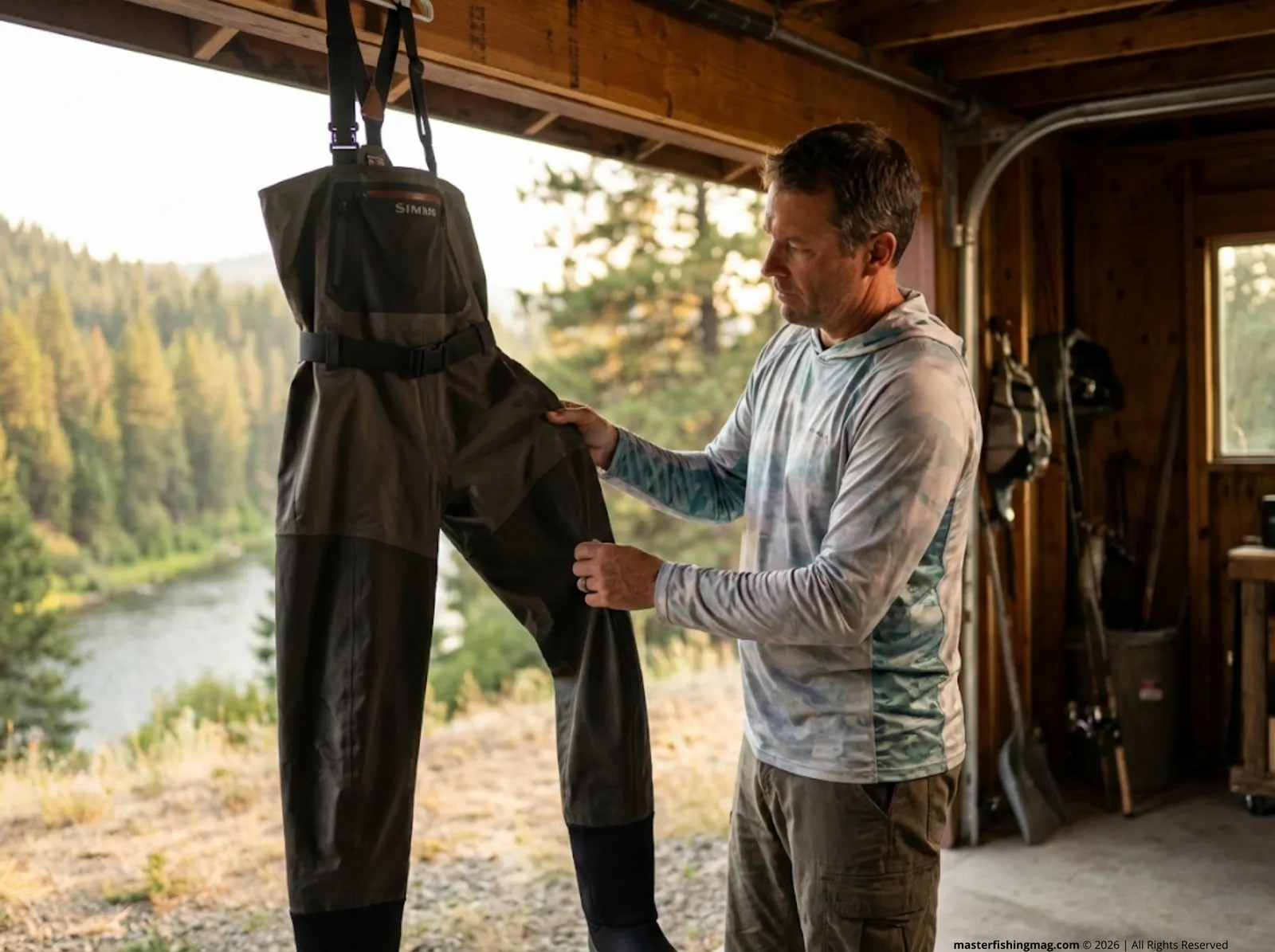
The smell hit before I even unzipped the bag. Three weeks of August guide trips on the Deschutes, and my $650 Simms stockingfoots had turned into a petri dish. Black mildew threading through the seam tape. The bootie lining peeling away from the membrane like sunburned skin. I’d hung them in the garage after every trip, right-side out, on a nail. Turns out that was the problem.
After twenty years of fly fishing and guiding, burning through more pairs of breathable waders than I care to admit, I’ve learned one hard truth. The way most anglers dry their waders is the single biggest reason those waders fail early. Not the river rocks. Not the barbed wire fences. The trapped moisture you leave inside.
This is the exact phased drying protocol that Orvis, Patagonia, Simms, and every other major wader manufacturer recommends. You’ll learn why skipping it destroys breathable membranes and DWR finish from the inside out, the tools that actually help, and apartment drying solutions that work even without a garage.
⚡ Quick Answer: Turn your waders inside out and hang them in a shaded, well-ventilated area for 12-24 hours until the interior is bone dry. Reverse them and dry the exterior for another 12 hours. Never use high heat or direct sunlight. They must be completely dry inside and out before storage, or mildew will break down the laminate adhesives and destroy them.
Why Incomplete Drying Destroys Your Waders
How Breathable Membranes Actually Work
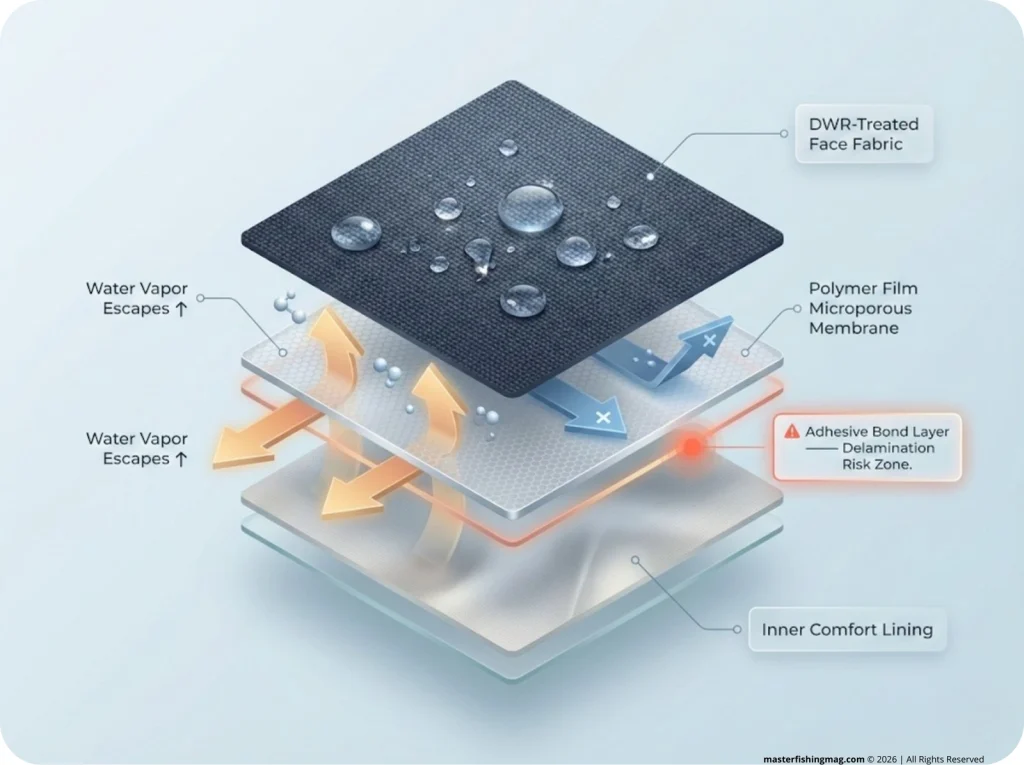
Your stockingfoot chest waders aren’t just waterproof fabric. They’re a sandwich of 2 to 4 bonded layers with a breathable membrane in the middle, usually made of microporous expanded PTFE or a hydrophilic polymer film. That membrane lets your sweat escape as vapor while keeping river water out. The layers are held together with adhesives, and those adhesives are the weak link.
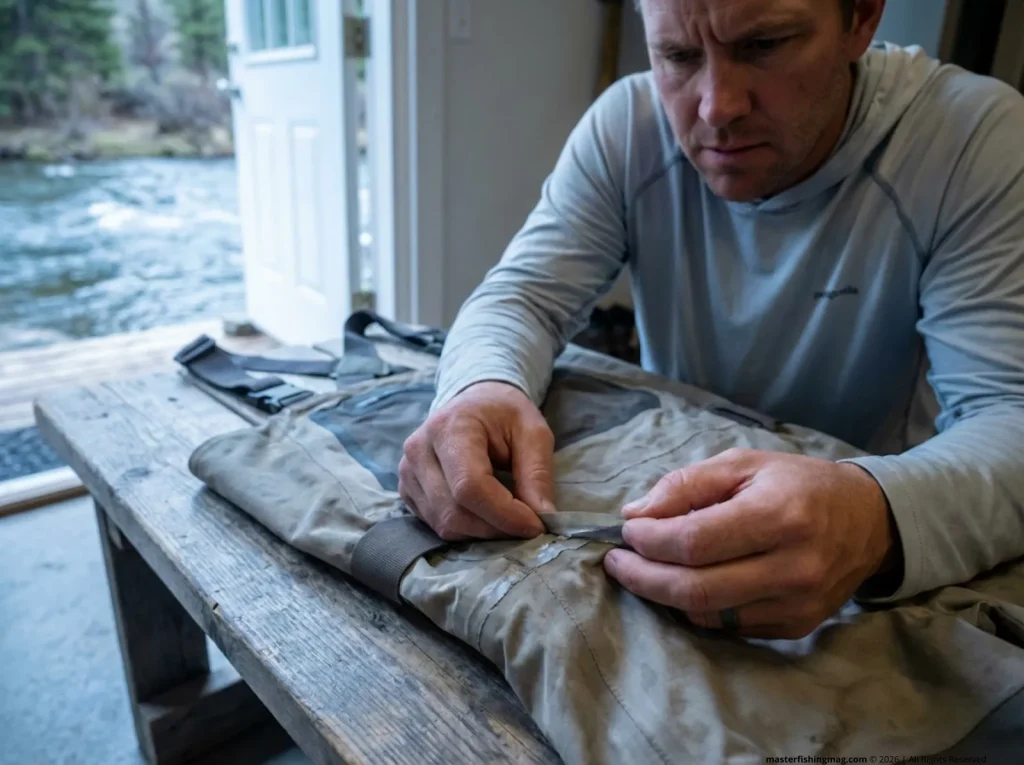
When residual moisture gets trapped between those layers after a day on the water, it goes to work on those adhesives. Slowly. Quietly. The bond between the membrane and the outer fabric weakens. The seam tape starts to lift. That’s seam delamination, and once it starts, your waders leak. You’ve seen this, even if you didn’t know the name for it. That mysterious drip at the inner knee. The wet spot where there’s no visible damage. That’s how waterproof breathable fabrics actually function breaking down from the inside.
The DWR finish on the outer shell is your first line of defense. It causes water to bead and roll off instead of soaking into the face fabric. When DWR fails, the face fabric saturates. That’s called membrane wet-out, and it kills breathability. Your waders feel clammy, heavy, and you think they’re leaking when really the fabric is just waterlogged. According to peer-reviewed science on waterproof breathable membranes, trapped moisture degrades the adhesive bonds in laminated textiles over repeated wet-dry cycles.
The Real Timeline of Mildew Damage
Here’s the part that catches people off guard. Mildew kills waders fast. Not in months. In days.
A Skwala representative put it bluntly in a Troutbitten brand compilation. “Mold or mildew have the potential to break down the laminates and membranes of the textile.” Orvis says the same thing more directly. “Storing waders without allowing them to dry will promote the growth of bacteria and mold and could cause them to fail prematurely.”
The U.S. EPA guidelines on controlling moisture in porous materials establish the rule. Dry wet porous materials within 24 to 48 hours using ventilation and fans, and keep relative humidity below 60 percent. Your wader material is exactly the kind of porous textile they’re talking about.
Pro tip: If you stored damp waders in your truck bed for a weekend and they smell funky, the damage is already underway. Pull them out, turn them inside out, point a fan at them, and start the clock over.
The Phased Drying Protocol That Actually Works
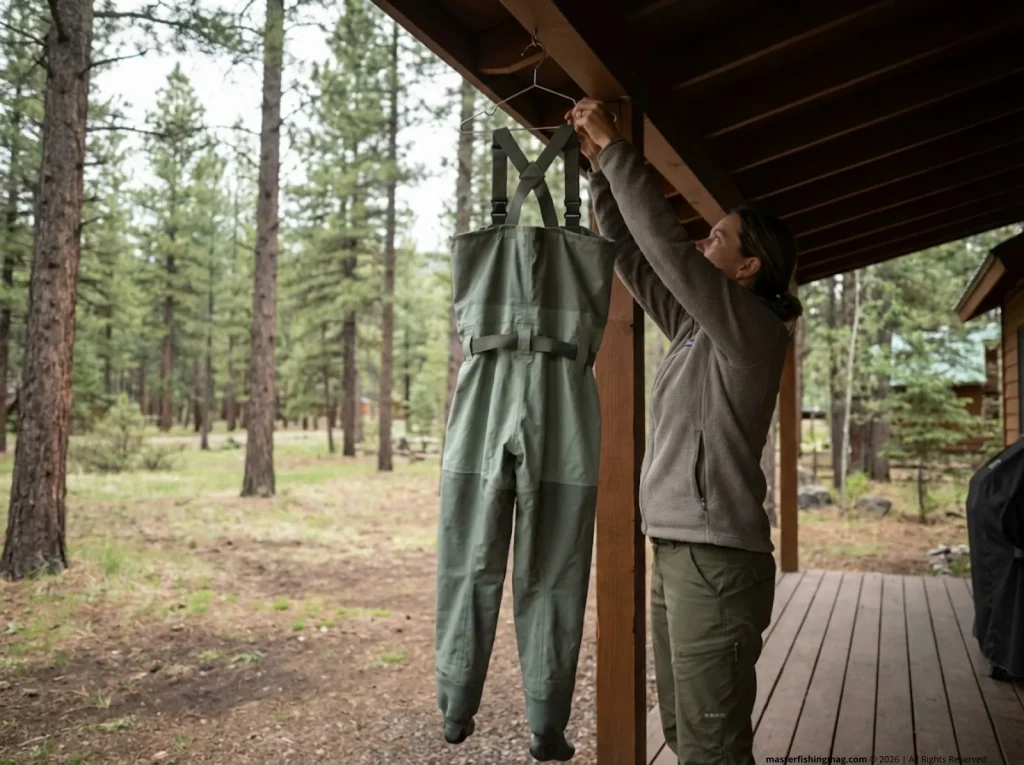
Phase 1 — Immediate Post-Fishing Rinse
The moment you peel off your waders, hit them with fresh water. Every time. No exceptions.
A quick rinse removes the mud, fish slime, sweat salts, and river grime that feed bacteria and accelerate fabric breakdown. All major brands agree on this. Patagonia, Orvis, Simms, Redington, Skwala. If you fish salt water, rinse immediately. Salt is corrosive and will eat through wader seams faster than anything else.
On multi-day trips where you don’t have a hose, dump cooler water over the booties and stockings at minimum. Even a partial rinse buys you time before the bacteria start their work.
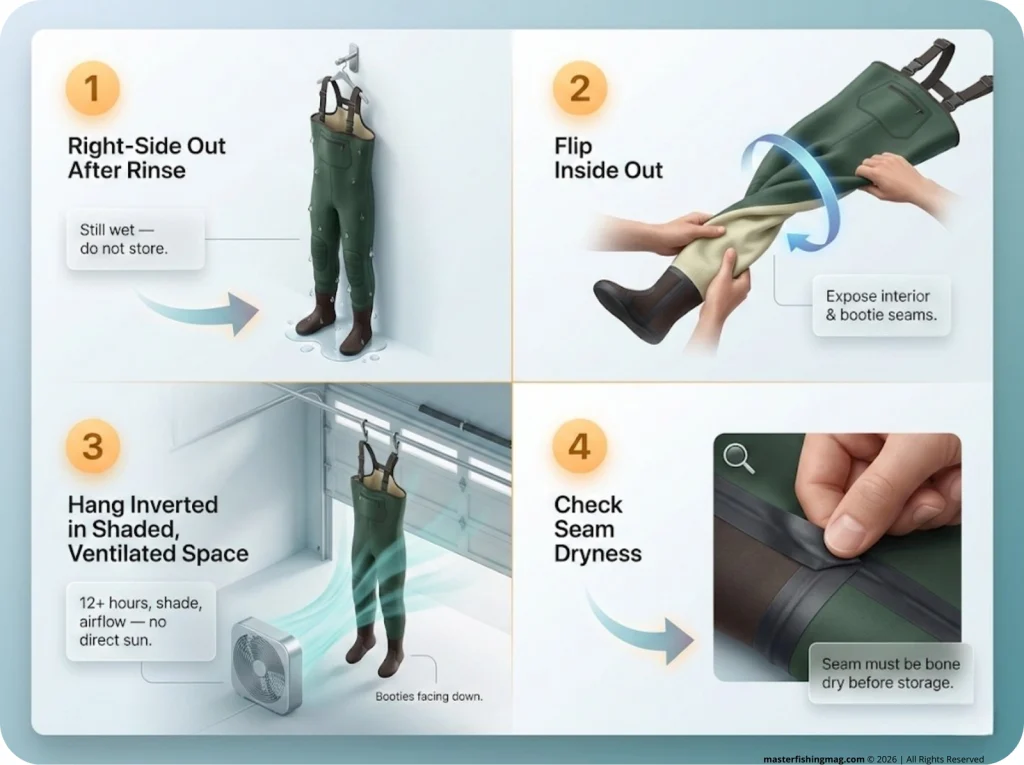
Phase 2 — Inside-Out Interior Drying (12-24 Hours)
This is where most anglers get it wrong. You need to turn waders inside out so the interior membrane, stockings, and booties face outward. That’s where the moisture hides.
Hang them inverted, hanging from boots using a wader hanger with clips so they stay fully extended. No bunching. No folding over a line. Full extension means gravity pulls water down and out of the booties, and air circulates through every layer. Place them in a shaded area with good airflow. Never in direct sunlight. Never next to a heater or in a hot car.
Interior drying takes 12 to 24 hours depending on humidity and bootie thickness. Neoprene booties hold moisture longer than thin fabric ones. Inspect waders carefully before calling them done. Touch every seam and the inside of both booties. If anything feels even slightly damp, it’s not ready.
Pro tip: Stuff newspaper into the booties overnight for quick capillary drying. The paper wicks moisture out of the neoprene faster than air alone. Remove the damp paper in the morning and let fans finish the job.
Phase 3 — Reverse and Dry the Exterior Shell
Once the interior is bone dry, flip your waders right-side out. Hang them again in the same well-ventilated, shaded conditions for another 12 hours.
The outer shell needs to air-dry completely for the DWR finish to function. A damp face fabric is a saturated fabric, and a saturated fabric means wet-out on your next trip. Only after both sides are 100 percent dry should you even think about storage.
When it’s finally time to put them away, hang them on a dedicated hanger in a cool, dry space. If you’re looking for a solid long-term gear storage protocol, the same rules that protect your rods and reels apply to waders. Cool, dry, ventilated, and never compressed.
What Every Major Brand Actually Says About Drying
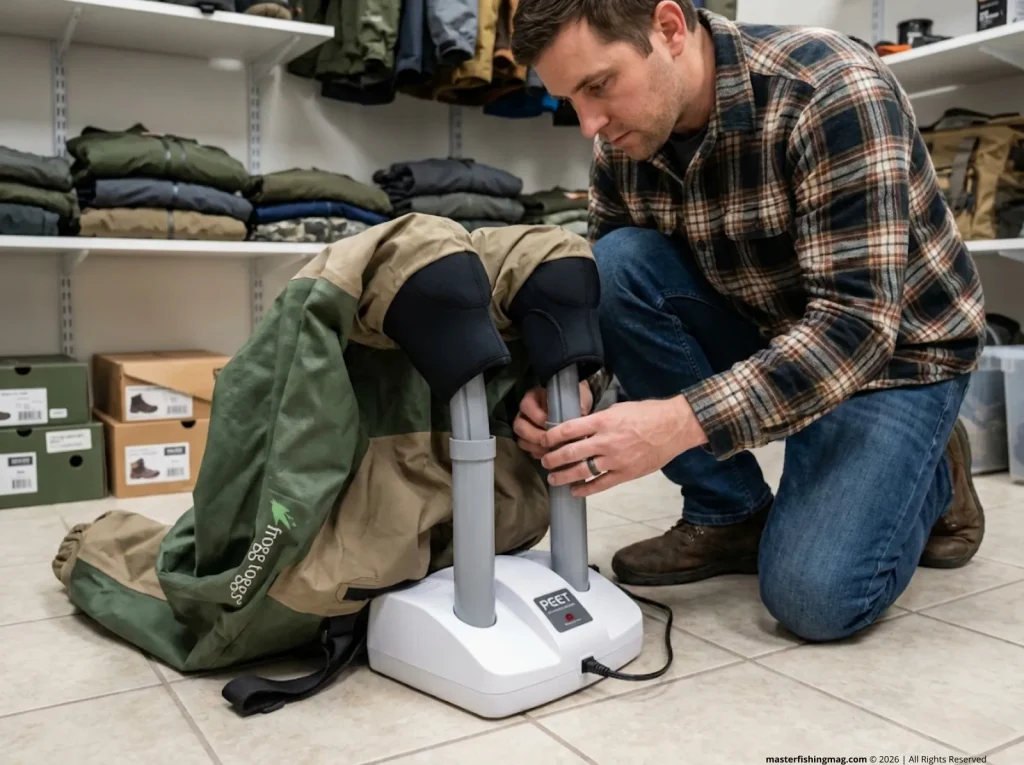
 PEET boot dryer with extensions inside stockingfoot wader booties for thorough drying” class=”wp-image-10945″/>
The Brand-by-Brand Drying Policy Table
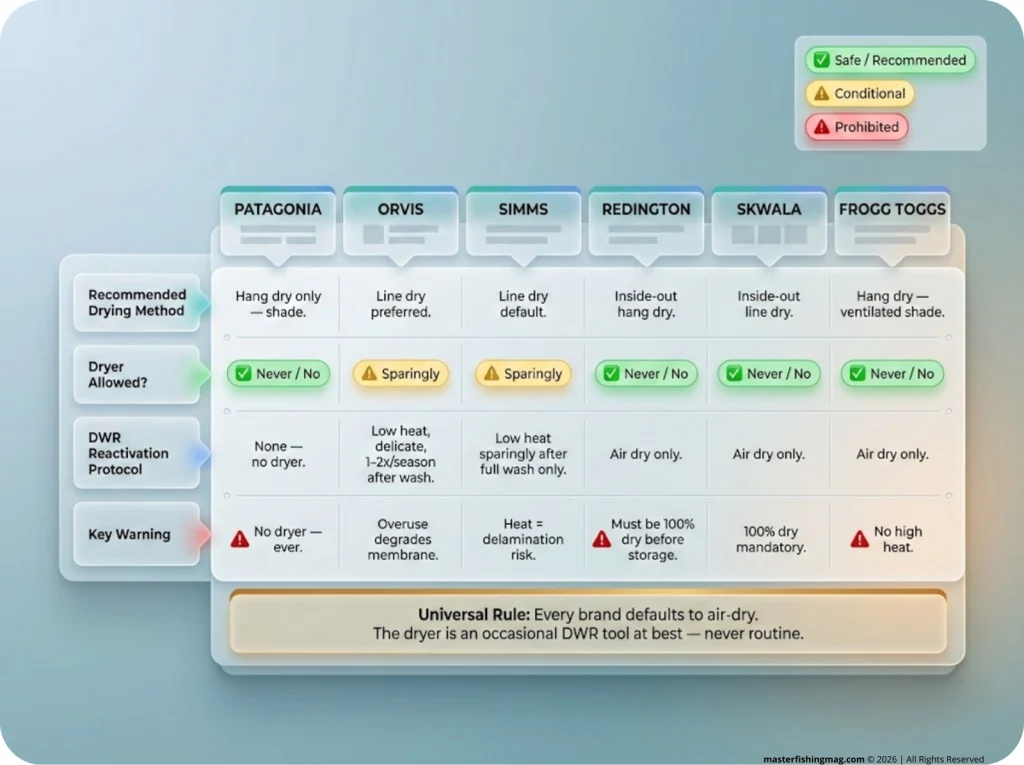
I spent hours digging through official care guides and direct brand rep quotes compiled by Troutbitten to build something nobody else has put together. A single table showing exactly what each major wader manufacturer recommends.
Patagonia is the most conservative. Hang dry only, out of direct sunlight, until completely dry. No dryer. Period. Orvis takes a slightly softer stance. Line dry is preferred, but a low-heat tumble dry on the delicate setting is acceptable one to two times per season specifically to reactivate DWR after a thorough wash. Simms agrees with the line dry default and allows sparingly low heat only after a full wash to restore water repellency. Redington and Skwala both recommend inside-out line drying with complete dryness mandatory, no dryer recommended. Frogg Toggs follows the same playbook. Hang dry in a well-ventilated shaded area, no high heat.
The pattern is clear. Every brand defaults to air-dry. The dryer is, at best, an occasional DWR maintenance tool for select brands.
The Dryer Debate Settled
Let me save you the Reddit argument. “Can you put waders in the dryer?”
Occasionally. On low heat only. After a full wash. And only if your brand explicitly says it’s okay. Orvis and Patagonia allow one to two low-heat cycles per season. That’s it. This is a DWR reactivation step, not a routine drying shortcut.
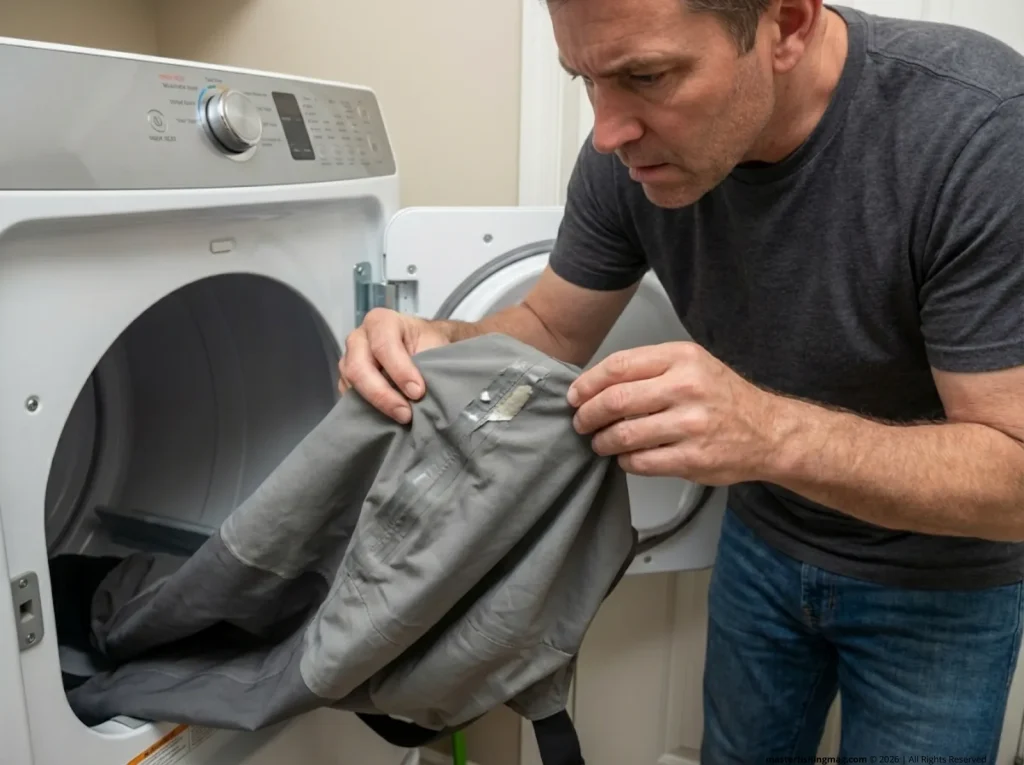
Regular machine dryers on normal or high heat melt seam tape, warp adhesives, and can void your warranty. I’ve heard the horror stories from readers. “Threw them in the dryer on regular heat. Seams came apart.” That’s a $500 mistake you only make once.
If you’re trying to understand the differences between neoprene and breathable waders and how heat affects each material differently, neoprene is more forgiving of warmth but still shouldn’t see a high-heat cycle. 3-layer breathable laminates are the most vulnerable to heat damage.
Tools and Hacks That Speed Up Drying
Wader Hangers and Boot Clips
A stainless wader hanger with boot clips is one of the cheapest investments you’ll make for proper wader care. Full suspension means full extension, no creases, and gravity-assisted bootie drainage. The alternative is folding waders over a clothesline or draping them on a nail, which creates moisture pockets in every crease and fold.
Clip-style hangers that grip the boot tops and hang waders inverted give the best interior airflow. The whole point is maximum surface area exposed to circulating air.
PEET-Style Boot Dryers
A PEET boot dryer with wader extensions pushes warm, not hot, convective air through the booties and up the legs. This is the real answer for anglers in humid climates where ambient air-dry alone won’t get booties fully dry.
The key is using tube extensions designed for waders, not just the standard boot inserts. Without them, the warm air stops at the ankle and the upper bootie stays damp. Use the PEET after your inside-out hang dry phase to finish bootie dryness, not as a replacement for the full protocol.
Apartment and Urban Solutions
City anglers, this one’s for you. No garage? No covered porch? No problem.
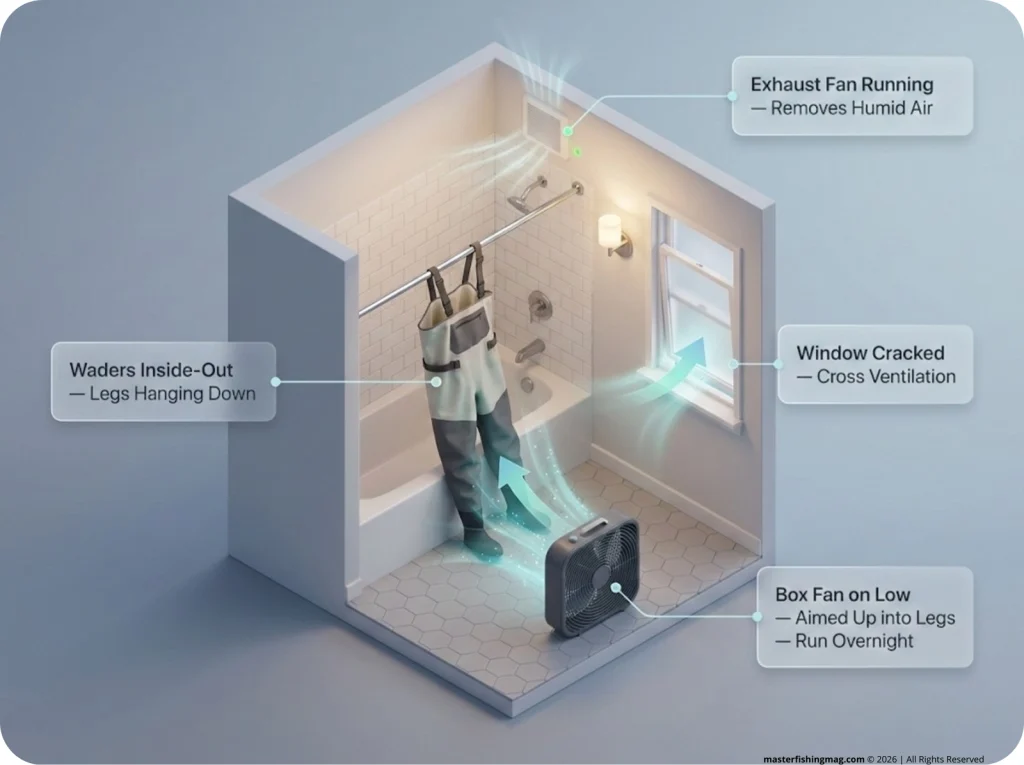
Hang your waders inside out over a shower rod and aim a box fan on low directly up the legs overnight. One reader told me this. “Box fan pointed up the legs in my apartment saves the day every time.” Bathroom ventilation combined with forced air is enough to prevent mildew even in a studio apartment.
Avoid closets. Avoid sealed rooms with zero airflow. Those are mildew factories. If your bathroom has an exhaust fan, run it. Crack a window if you can. The combination of fan-forced air and ventilation does the job.
Pro tip: If you’re choosing between stockingfoot versus bootfoot wader systems, keep in mind that stocking foot waders with separate wading boots are far easier to dry thoroughly than boot-foot waders where the boot is permanently attached and trapped moisture has nowhere to escape.
Five Drying Mistakes That Kill Waders Fast
Mistake 1 — Hanging Right-Side Out Only
Drying only the exterior leaves trapped moisture locked in booties, seams, and membrane layers. The outside looks fine. The inside is growing mold. Fix it by always starting inside out for the first 12 to 24 hours, then reversing.
Mistake 2 — Using a High-Heat Dryer
High heat melts seam tape, warps adhesive bonds, and destroys DWR chemistry. Avoid hair dryers and machine dryers on hot settings and you’ll save yourself hundreds. Fix it with low-heat delicate only after a full wash, one to two times per season max. Or skip the dryer entirely.
Mistake 3 — Storing Damp in a Truck or Bag
Even 48 hours of damp storage can trigger mildew growth that’s impossible to fully reverse. That wader funk everyone jokes about? It’s not just smell. It’s active dry-rot breaking down adhesives and wader fabric. Fix it by never bagging or storing until you’ve confirmed complete drying by touching all seams and booties.
Mistake 4 — Drying in Direct Sunlight
UV radiation degrades DWR coatings and weakens seam adhesives. Heat accelerates both processes. That sunny spot on the deck feels like a good idea. It’s not. Fix it with a shaded, ventilated area only. A covered porch or garage with the door cracked works better than full sun every time.
If your waders have already suffered damage from these mistakes, it’s worth learning how to patch wader leaks before they spread. Catching delamination early and repairing it with Aquaseal can extend the life of damaged waders by seasons.
When to Wash Before Drying (and How)
The 10-15 Trip Wash Cycle
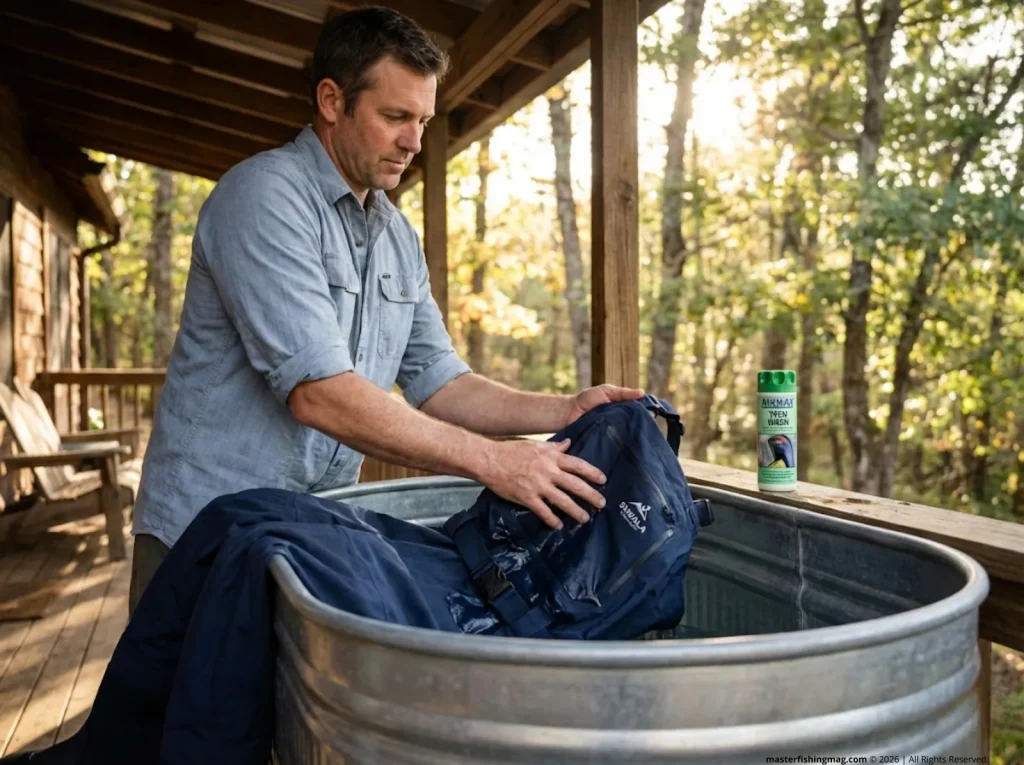
Rinsing after every trip handles the surface grime. But every 10 to 15 heavy-use trips, your waders need a real wash to restore DWR and strip out the accumulated body oils, sunscreen, and sweat that cause wet-out.
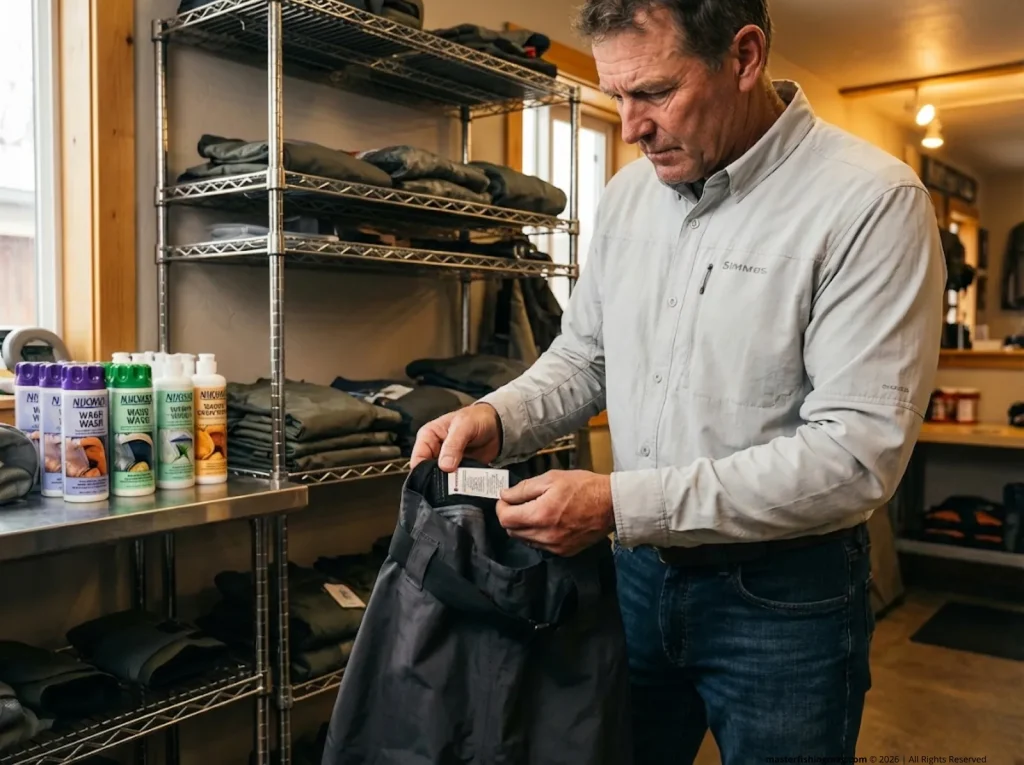
Use a specialized wader cleaner like Nikwax Tech Wash or ReviveX. These are DWR-safe. Regular laundry detergent with fabric softener will strip the durable water repellent finish and leave a residue that repels nothing. Hand wash in a tub or machine wash on delicate with cold water. Patagonia specifies a maximum of 80 degrees Fahrenheit. For the full post-trip gear washing protocol, the same principles apply to your rods, reels, and boots.
DWR Reactivation After Washing
DWR reactivation requires heat. After a full wash and complete drying, you can either tumble on low heat for 10 to 15 minutes or iron on the lowest setting through a clean towel. This re-bonds the water repellent coating to the fabric fibers.
If your DWR is beyond reactivation, meaning water no longer beads even after heat treatment, apply a spray-on water repellent like Nikwax TX.Direct or ReviveX and let it cure fully before your next trip. When water stops beading on the face fabric, that’s your signal. Time for a wash and reactivate DWR cycle.
Pro tip: The easiest way to test DWR health is to splash cold water on the chest panel. If it beads and rolls off, you’re good. If it darkens and absorbs, it’s time to wash and reactivate. Don’t wait until you’re standing in the river wondering why your clammy waders won’t breathe.
Conclusion
Every drying session starts inside out. The interior membrane, booties, and seam tape hold moisture longest. Dry them first, or watch the adhesives fail.
Air-dry only, in shade. Direct sunlight and dryer heat are DWR killers. A box fan in a ventilated room beats a hot garage every time.
Bone dry before storage, every single time. The 24-to-48-hour mildew clock starts the moment you bag damp waders. There are no shortcuts. With proper wader care, quality waders like those from Simms, Orvis, or Patagonia should last you 3 to 5 seasons of hard fishing. That’s the return on five minutes spent flipping your waders inside out after every trip.
Flip them tonight. Feel the booties. Run your fingers along every seam. If anything is even slightly damp, hang them up and point a fan at them. That habit is the difference between waders that last five seasons and waders that rot in one.
FAQ
Can you put waders in the dryer?
Occasionally, on low heat only, and only after a full wash. Orvis and Patagonia allow one to two low-heat tumble cycles per season to reactivate DWR. Regular or high-heat dryer use melts seam tape and destroys adhesives. Treat the dryer as a maintenance tool, not a drying method.
How do you wash fishing waders?
Hand wash or machine wash on delicate with cold water every 10 to 15 heavy-use trips using a DWR-safe cleaner like Nikwax Tech Wash. Never use fabric softener or bleach. Rinse thoroughly and air-dry completely inside out before storing.
How do you store fishing waders?
Only after they’re 100 percent dry inside and out. Hang on a wader hanger in a cool, dry, ventilated space. Never fold or compress for long-term storage. Never store in a sealed wader bag or vehicle trunk where moisture gets trapped.
How long do fishing waders last?
With proper wader care including rinse, complete drying, and periodic wash, quality waders from brands like Simms, Orvis, and Patagonia last 3 to 5 years even with heavy use. Without proper drying, mildew and seam delamination can destroy them in a single season.
What is the best way to dry waders in an apartment?
Hang them inside out over a shower rod and aim a box fan on low directly up the legs overnight. Bathroom ventilation combined with forced air provides enough airflow to prevent mildew even in small spaces. Run the exhaust fan and crack a window if possible.
Risk Disclaimer: Fishing, boating, and all related outdoor activities involve inherent risks that
can lead to injury. The information provided on Master Fishing Mag is for educational and informational purposes
only. While we strive for accuracy, the information, techniques, and advice on gear and safety are not a substitute
for your own best judgment, local knowledge, and adherence to official regulations. Fishing regulations, including
seasons, size limits, and species restrictions, change frequently and vary by location. Always consult the latest
official regulations from your local fish and wildlife agency before heading out. Proper handling of hooks, knives,
and other sharp equipment is essential for safety. Furthermore, be aware of local fish consumption advisories. By
using this website, you agree that you are solely responsible for your own safety and for complying with all
applicable laws. Any reliance you place on our content is strictly at your own risk. Master Fishing Mag and its
authors will not be held liable for any injury, damage, or loss sustained in connection with the use of the
information herein.
Affiliate Disclosure: We are a participant in the Amazon Services LLC Associates Program, an
affiliate advertising program designed to provide a means for us to earn advertising fees by advertising and linking
to Amazon.com. As an Amazon Associate, we earn from qualifying purchases. We also participate in other affiliate
programs and may receive a commission on products purchased through our links, at no extra cost to you. Additional
terms are found in the terms of service.