

In this article
Halfway through a November wade on the Deschutes, my suspender straps crept down to my armpits. Every high-step over a boulder pulled the crotch seam tight enough to hear the fabric groan. By December, those chest-high waders had a diagonal leak running through the inseam. Nine hundred dollars of Gore-Tex, dead in one season — because I never bothered to set straps high enough.
After fifteen years of guiding trout fishing trips on freestone rivers and patching more waders than I care to admit, I can tell you this: suspender height is the single most consequential adjustment on your gear. Get it wrong and you pay in back pain, blown seams, and a safety system that fails when you need it most.
This guide breaks down exactly why that strap position matters, how to adjust wader suspenders correctly for your body type, which suspender hardware actually lets you fine-tune on the water, and the wader maintenance mistakes that kill elastic life before its time.
⚡ Quick Answer: Set your shoulder straps to their highest position so the top of your waders rides as high as possible on your chest. This eliminates fabric sagging, takes the strain off your lower back, and prevents the excess bunching that causes seam wear. Always pair high straps with a wading belt cinched at your natural waist for both fit and safety.
Why Suspender Height Controls Everything
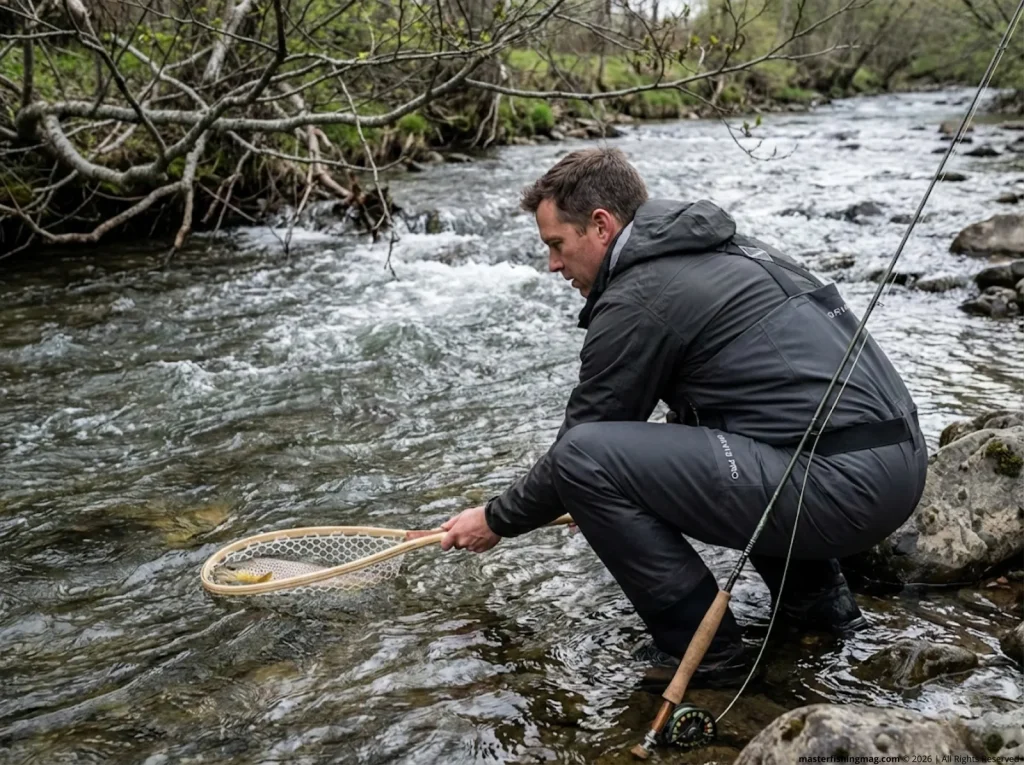
Most anglers think of their suspenders as nothing more than a strap that holds gear up. They are wrong. That strap system is the primary load-bearing interface between you and your waders, and where you set it determines whether your body absorbs the weight or your seams do.
What Happens to Your Back When Straps Ride Low
When straps ride low, all that wader fabric shifts forward and down. Your lower back absorbs the difference. According to musculoskeletal disorder prevalence among fishermen, 92.4% of regular fishermen report low back pain, making it the most common physical complaint in the sport. Shoulder pain comes in second at 64.8%.
Setting your straps high takes the strain off your lumbar region and transfers that fabric load to the stronger shoulder girdle. Your back stops compensating, your hips rotate freely, and you move through the river without fighting your own gear. The difference on a ten-hour fishing trip is significant — less fatigue, better balance, fewer stumbles.
Restricted movement from sagging fabric also forces you into awkward positions when scrambling over rocks. You burn more energy, you lose your footing more often, and your risk of a fall goes up with every boulder you climb.
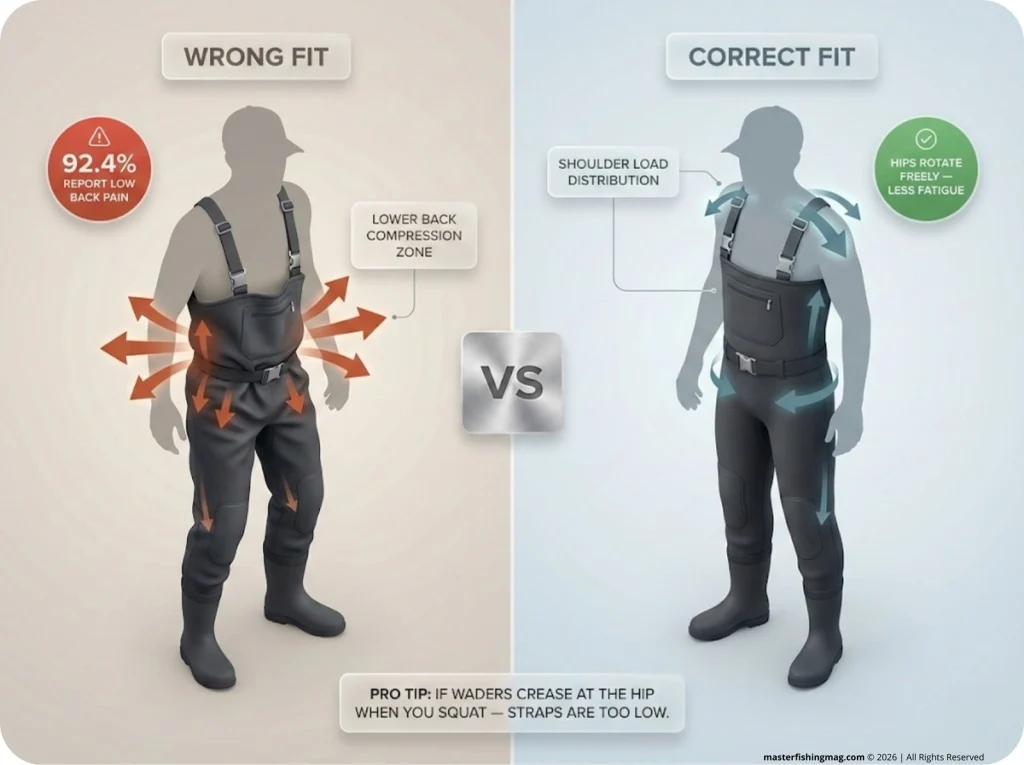
Pro tip: If your waders crease at the hip when you squat, the straps are too low. Hike them until the top panel sits flat against your sternum with no gap.
The “Rap Artist” Problem and Seam Failure
Industry expert Diver Dave coined what might be the most useful analogy in wader fitting: the “American Rap artist” wader analogy. If your waders sag by four inches, the crotch seam takes extreme diagonal tension every time you high-step over a rock. Picture trying to climb onto a chair with your trousers pulled halfway down your thighs — that is what your seam endures, stride after stride.
Most breathable wader seams are stitched, then sealed with thermo-set glue and tape. That adhesive is flexible when thin but becomes brittle under repetitive stress. The mechanical wiggling of sagging fabric creates micro-cracks in the adhesive. Once those cracks form, the original stitch holes become water conduits. Most anglers call this a manufacturing defect. It is a fit-induced failure that prevents excess fabric bunching and seam abrasion from the start — when you set your straps correctly.
There is another failure mode that almost nobody talks about. The Hinge Effect happens when stiff internal seam tape forces the thin face fabric to flex along a single line. That concentrated flexion wears through the laminate in a straight-line leak pattern that mirrors the tape edge exactly. If you have ever diagnosed and patched wader leaks before they spread, you have probably seen this pattern without knowing what caused it.
Setting your shoulder strap height correctly keeps the material taut and spreads flexion over a wider area, extending wader durability by seasons.
How to Set Your Suspender System Step by Step
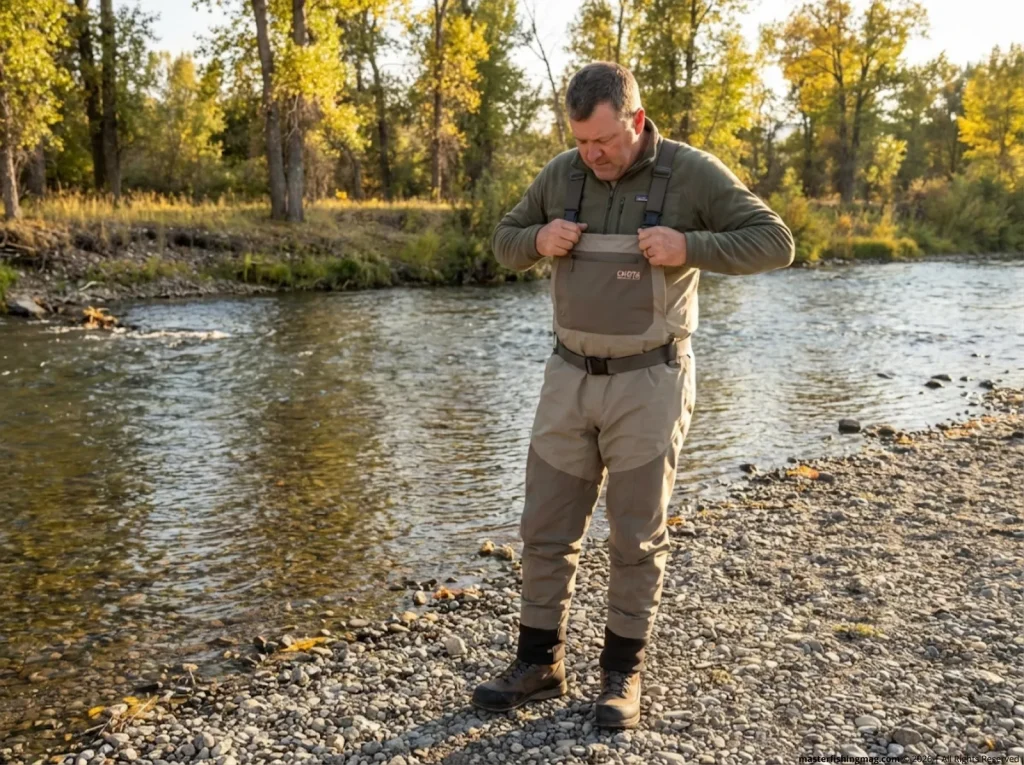
Getting the right wader setup is not complicated, but it requires doing things in the right order. Skip one step and the rest falls apart.
Measure Before You Touch the Straps
Take three measurements before anything else: your largest girth (chest measurement, waist, or hips — whichever is biggest), your floor-to-crotch inseam measurement, and your shoe size. These three numbers determine your starting size.
Try on your waders wearing your actual fly fishing layers. Jeans and a belt give a false sense of room that disappears the moment you layer up with a fishing base layer and insulating mid. Once the waders are on, perform the mobility test: squat, kneel, and walk five steps. The fabric should move with you. If it pulls, bunches, or restricts your range of motion, something is off.
If you are not sure about your measurements, start by getting your wader sizing right before you adjust anything.
Pull the Straps to Sternum Height
The top of the wader chest panel should ride as high as possible — flat against the sternum with no gap and no sag. Adjust both shoulder straps evenly. Uneven tension causes the wader to torque sideways, which creates lopsided seam wear.
The fabric below the armpits should feel snug but allow full arm rotation without pulling at the shoulder seam. For H-back suspenders, cross the rear straps to distribute load wider across the upper back. This improves weight distribution across your frame and prevents hot spots on long days.
Pro tip: Run your thumb between the strap and your shoulder. If you can fit a fist, the strap is too loose. One thumb of space is the sweet spot for all-day comfort without restricting blood flow.
Lock the Wading Belt at Your Natural Waist
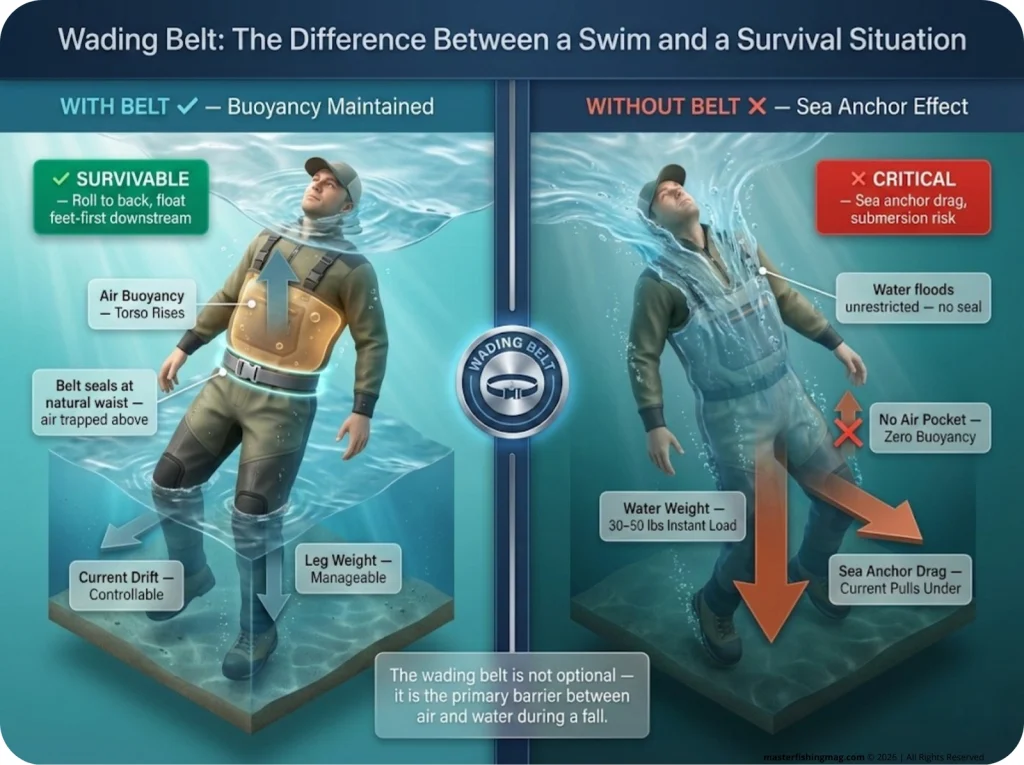
The wading belt must sit at the natural waist — the narrowest point of the torso, not at the hips. A cinched belt creates a wader seal that traps air in the lower waders. That trapped air provides buoyancy if you fall in.
Tom Rosenbauer puts it bluntly: “You need a belt on your waders. Make sure that belt is cinched tightly. If you fall in, you are gonna act like a sea anchor.” The belt and the suspenders work as a triad: high straps tension the fabric, the belt seals it, and together they keep water out. Sagging fabric creates gaps where the belt cannot conform. You can learn more about why that $10 wading belt strap is your primary life-saving tool from our dedicated wading belt safety guide.
Hardware That Lets You Fine-Tune on the Water
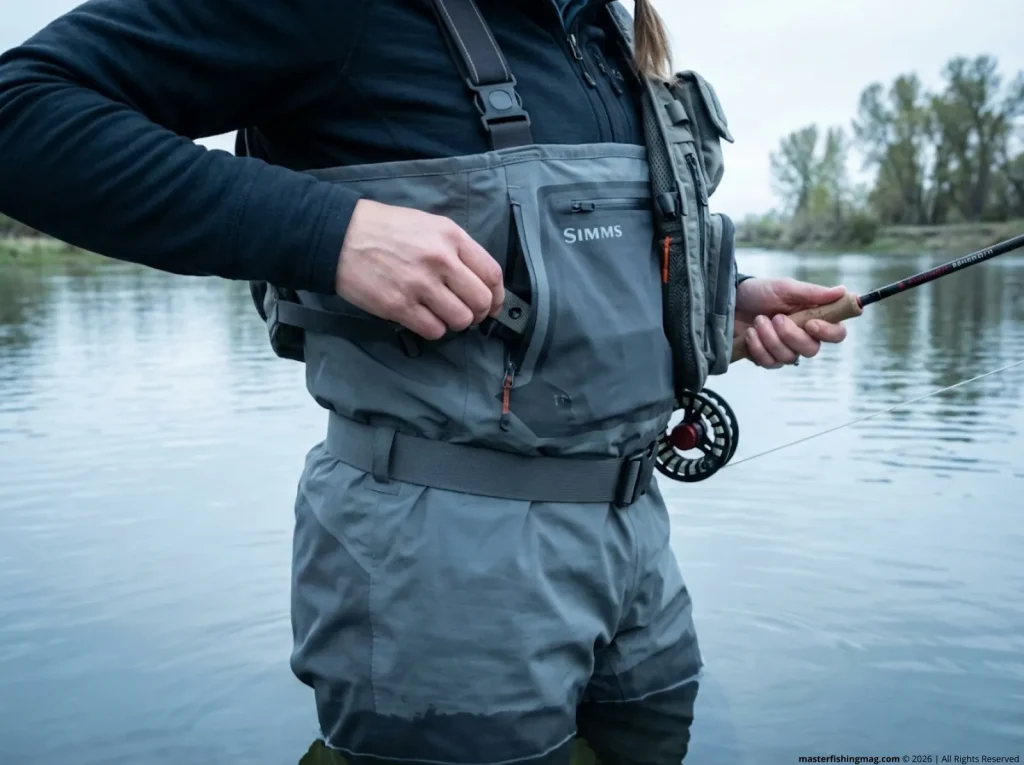
Not all suspender hardware is the same. The gap between a $150 pair of budget waders and a $1,000 flagship often comes down to the adjustment mechanism sitting on your shoulders.
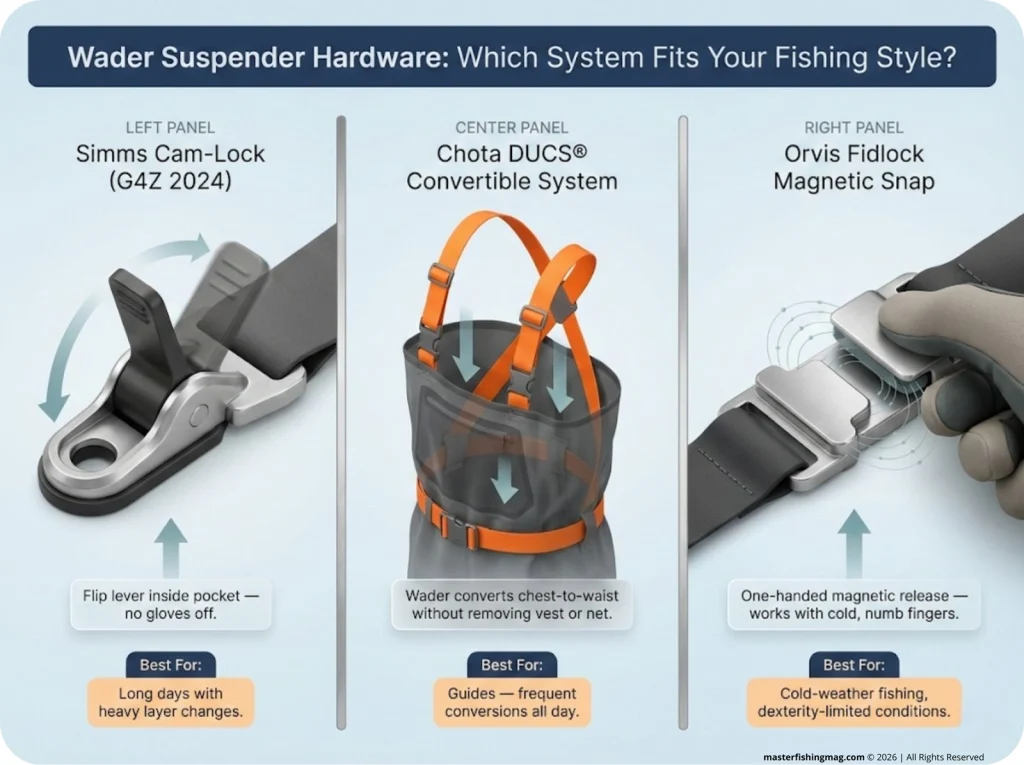
Simms Cam-Lock (G4Z 2024)
The Simms G4Z features cam-lock hardware operated by tags inside the handwarmer pockets. You grab the tag, flip the lever, and make an on-the-fly wader adjustment without removing gloves or your fishing vest. John Frazier from Simms describes it well: “The 4-layer is more flexible, moves better with the angler, less rigid.” The 2024 model also reduced upper wader bulk by bonding the zipper instead of sewing it, dropping fabric layers from 16 to 4.
This system suits anglers who fish long days with significant layer changes — cold morning base layers that come off by noon.
Chota DUCS® Convertible System
The DUCS® Suspender System from Chota Outdoor Gear uses a patented suspender harness worn underneath the waders. The waders buckle into the harness internally, allowing you to push down from chest-high to waist height without removing your vest, net, or jacket. Guides who need to convert back and forth — bathroom breaks, lunch stops, hiking between runs — swear by this system because the harness anchors independently of the outer shell.
Orvis Fidlock Magnetic Snaps
Orvis uses high-strength magnetic suspenders on models like the Ultralight Convertible. These Fidlock magnetic snaps allow one-handed wader conversion, which is a genuine advantage in cold-weather fishing when your fingers lack the dexterity for traditional plastic slide-adjusters.
When you are choosing between stockingfoot and bootfoot waders, the suspender hardware should factor into your decision — particularly if you fish in conditions that demand frequent suspender adjustment.
Body-Type Adjustments Most Guides Skip
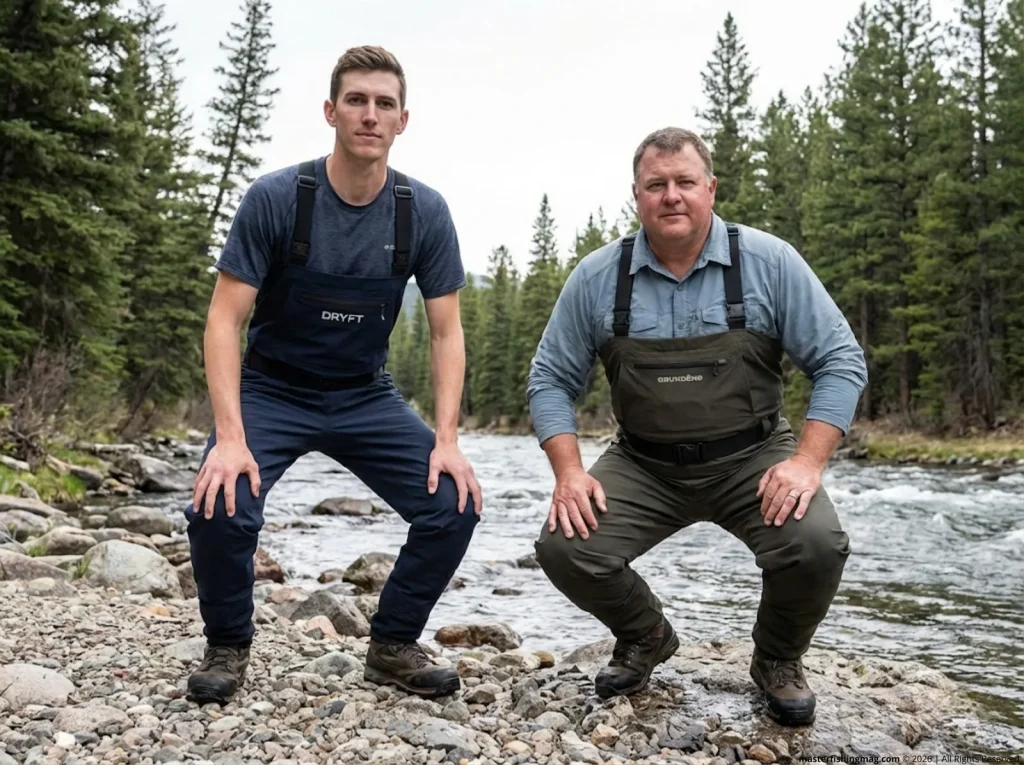
Standard sizing assumes an average build. If you are not average — and most of us are not — you need a different approach to fitting waders.
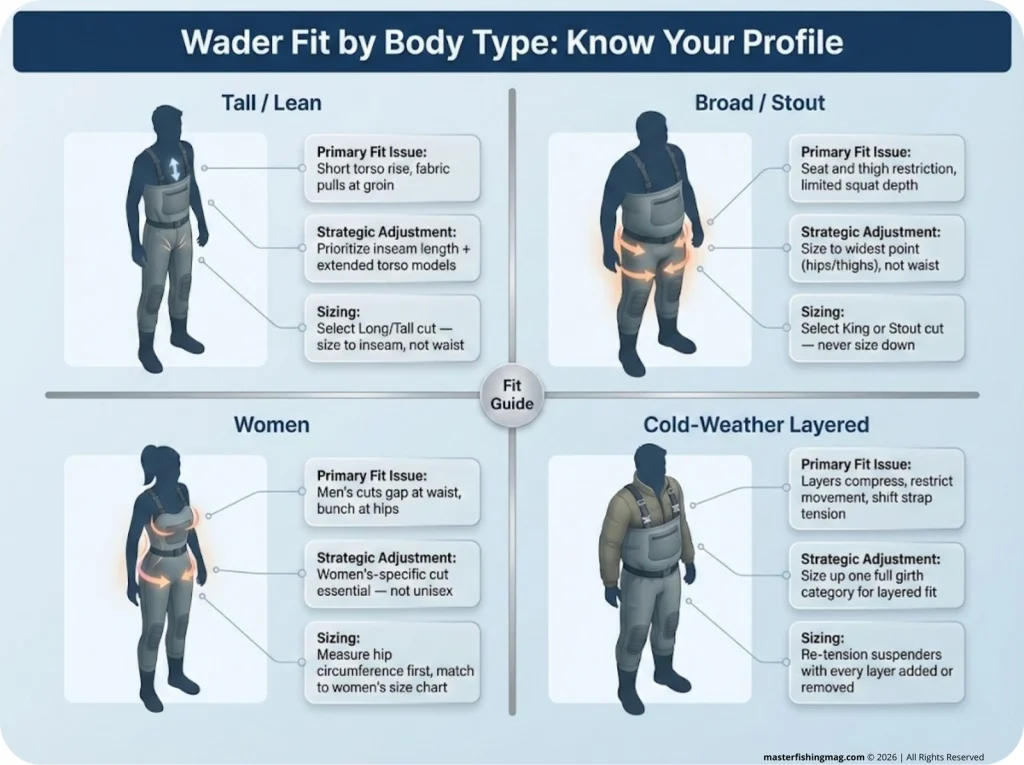
Tall and Lean Anglers
The “wedgie” in the groin hits tall anglers hardest. Pulling suspenders to maximum accommodates a long inseam but causes groin discomfort and shoulder pain. The fix: size “Long” to match your inseam, then set straps to mid-tension. The extra fabric in the chest accommodates layering compatibility without the squeeze. Brands with dedicated Long sizing include Simms (19 standard sizes), Orvis PRO, and Grundéns Boundary.
Broad and Stout Anglers
Sizing for girth leaves excessive fabric in the wader legs, leading right back to the Rap Artist sag and premature seam failure. Size “King” or “Stout” specifically to match your girth, then squat-test to verify leg fabric does not bunch. The community puts it with characteristic bluntness, calling this the “horizontal challenge” — when the midsection overlaps the wading belt.
Women and Non-Standard Fits
Traditional men’s sizing causes torso bagginess and hip constriction for women. Miss Mayfly and other brands now offer padded waist systems and women-specific wader design. The key adjustment: cinch the waist panel tighter and set shoulder straps slightly wider to accommodate different torso geometry.
Cold-Weather Layering Adjustments
Size up by one girth category when planning for heavy layering — base, mid, and insulating layers. Adjust suspender tension each time a layer is added or removed. Cam-locking suspenders and the DUCS® system are purpose-built for this. If you need guidance on building a layering system that works under waders, start with a moisture-wicking fishing base layer and build outward.
Pro tip: Use a wader changing mat or a simple plastic tote lid when gearing up. Standing on gravel in your neoprene stockingfeet is the fastest way to punch fifty micro-holes in your booties before you even reach the water.
Maintenance Mistakes That Kill Suspender Life
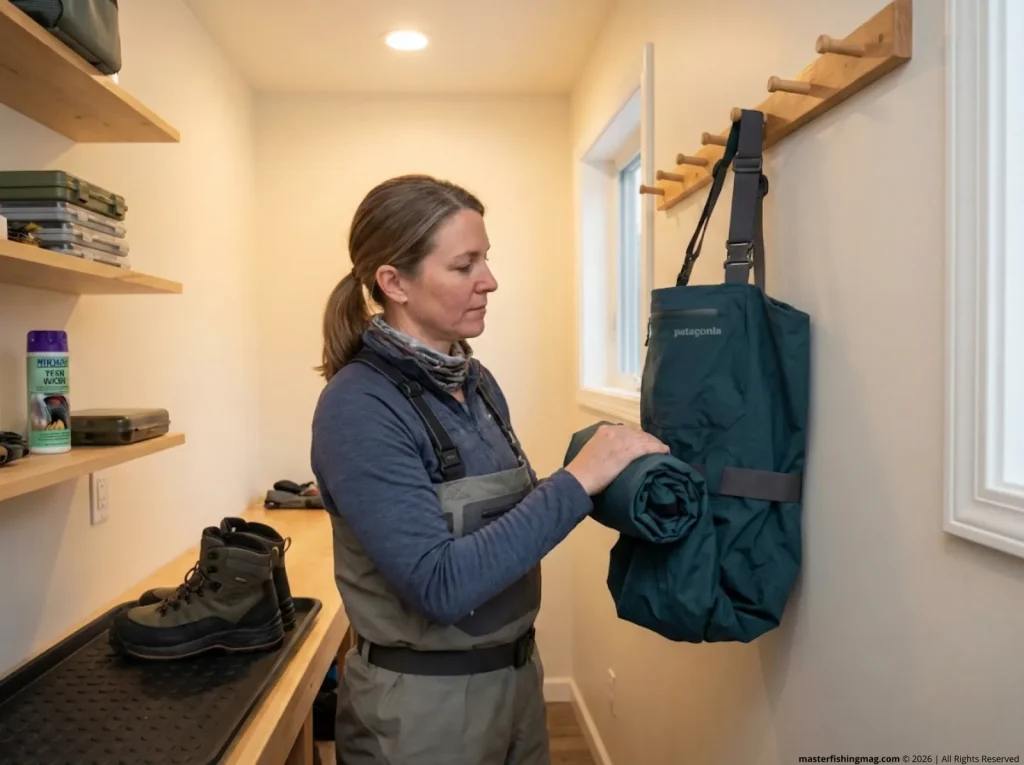
You can set straps high perfectly and still ruin them in storage. Here is where most anglers go wrong with wader maintenance.
Never Hang Waders by the Suspender Straps
Elastic components are highly susceptible to “creeping” — permanent elongation under constant tension. Hang your waders from the non-elastic hang loop on the back, not from the straps. Every major wader manufacturer — Simms, Orvis, Patagonia — builds that loop specifically for this purpose.
Pro tip: If you need to pee on the water, snap your front buckles together behind your neck. It keeps the straps accessible and keeps your expensive gear from falling into the river. This front-buckle snapping hack also prevents elastic stretch during storage.
Roll, Don’t Fold — and Watch the DWR
Sharp creases in the breathable membrane create fold-line leaks two or three seasons down the road. Roll your waders loosely, boot-end first, and store them in a breathable bag.
Skin oils, perspiration, and sunscreen act as surfactants that clog the micro-pores of your waterproof breathable fabrics. Wash with Nikwax Tech Wash — never use fabric softener, which permanently clogs breathable membranes. A brief low-heat cycle after washing can reactivate the DWR coating and stop “wetting out” before it starts. Natalie Cullum, Orvis Product Developer, puts it plainly: “Waders are one of our most expensive purchases. In order to make them last longer we need to take good care of them.”
If you want to understand how breathable wader membranes actually work, the science behind DWR reactivation makes a lot more sense.
The Warranty Trap with Self-Patching
Scott Baker from Simms warns that patching seams with Aqua Seal on waders less than 12 months old often voids the manufacturer warranty. Silicone-based patches make future factory repairs impossible. Send seam failures to the manufacturer first; save the DIY approach for out-of-warranty gear.
The isopropyl alcohol spray trick works well for catching problems early: mist the exterior and watch for dark spots to identify micro-pinhole leaks before they become a disaster.
Wader Safety and the Suspender-Belt Triad
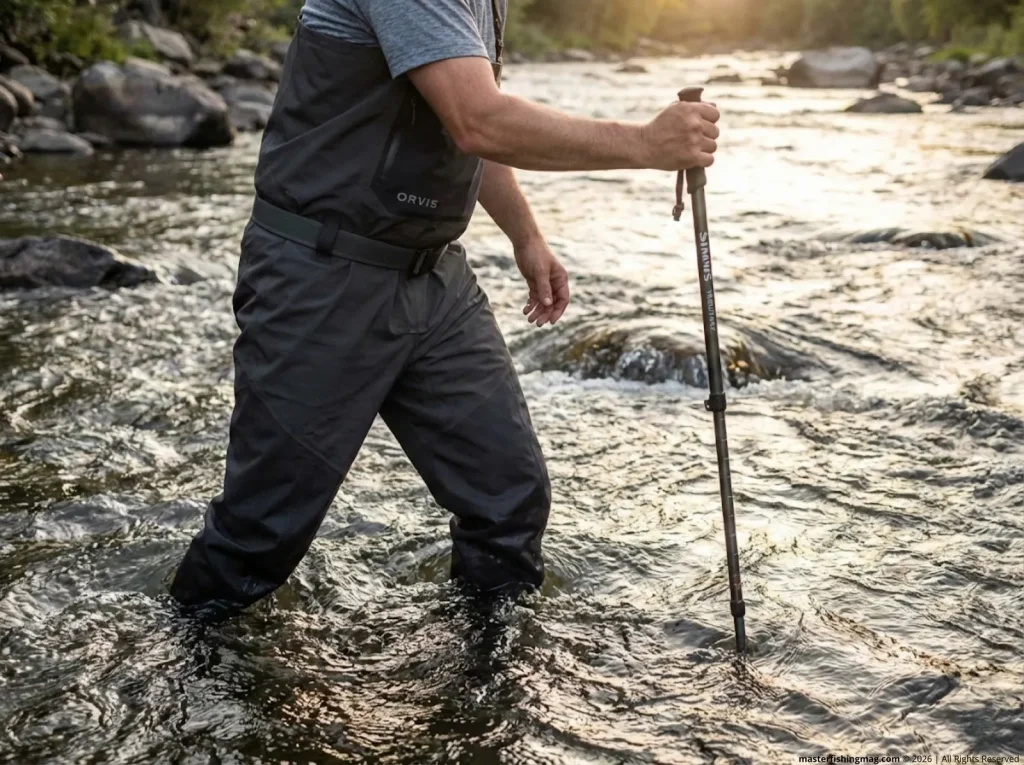
Proper suspender adjustment is not about comfort alone. It is about what happens when things go wrong in moving water.
What Actually Happens When You Fall In
The common myth is that water-filled waders pull you under or flip you upside down. That is not how it works. Air migrates to the highest point — your feet — which actually provides buoyancy. The real danger is the “sea anchor” effect of flooded waders. Without a belt, the volume of water in the legs creates immense drag against the current, making it impossible to swim or stand.
A properly cinched wading belt creates a seal at the natural waist, trapping air and slowing water intrusion. For the seal to work, your suspenders must be set high enough to pull fabric taut under the belt. Sagging fabric creates gaps where the belt cannot conform, and the safety seal becomes worthless.
The Equipment Triad for Fall Response
Every piece plays a role. Suspenders tension wader fabric — set high on chest. The wading belt creates a water-tight seal — cinched at natural waist. Your wading staff provides a third leg for stability — planted downstream. And a PFD adds primary surface buoyancy — worn over the harness. According to NIOSH ergonomic risk factors for fishermen, the physical forces involved in wading are significant enough that every piece of this triad matters.
When you are deciding how water temperature determines neoprene vs breathable, remember that wader material affects how quickly water fills the legs during a fall — another reason the belt-suspender triad is non-negotiable.
Conclusion
Three things to burn into your memory before your next wade.
First, set your suspender straps as high as they go — sternum level, not armpit level. Every inch of sag adds tension to the crotch seam and strain to your lower back.
Second, match your suspender hardware to your fishing style. Cam-lock systems handle all-day layer changes. The DUCS® system beats everything for frequent conversions. Magnetic snaps win in cold-weather fishing when your fingers are numb.
Third, the suspender-belt triad is not about comfort. It is about survival. A high strap plus a cinched belt keeps water out if you go down.
Before your next fishing trip, spend five minutes with your waders on the living room floor. Squat, kneel, walk. Run a thumb between strap and shoulder. If there is more than a thumb of space, you are setting yourself up for a leak, a backache, or a bad swim. Fix it now while the stakes are low.
FAQ
How tight should wader suspenders be?
Tight enough that the wader chest panel sits flat against your sternum with no sagging. You should fit one thumb — not a fist — between the strap and your shoulder. If the fabric creases at the hip when you squat, the straps need to go higher.
Do you need a belt with waders?
Yes, always. The wading belt creates a seal at the waist that traps air and prevents flooding in a fall. Without it, water fills the legs and produces the sea anchor effect that makes swimming impossible. This is a wading belt safety requirement, not optional.
How do you keep waders from sagging?
Set shoulder straps to their highest position so the top rides as high on your chest as possible. Then cinch the wading belt at your natural waist — the narrowest point, not the hips. High straps and a tight belt work together to eliminate sagging and distribute the fabric load to your shoulder girdle.
Why do my wader straps keep slipping?
Three likely causes. You are hanging waders by the elastic straps during storage, which causes permanent elongation. The plastic adjusters are worn smooth and no longer grip. Or condensation and sweat have lubricated the nylon webbing. Use the hang loop, snap buckles when stored, and consider upgrading to a cam-lock or magnetic system.
Can you adjust wader suspenders while wearing a fishing vest?
With standard H-back or slide-adjuster suspenders, you typically need to remove your fishing vest. The Simms cam-lock (operated from handwarmer pockets) and Chota DUCS® (harness worn underneath) are specifically designed for adjustment over external gear. Orvis Fidlock magnetic snaps also allow one-handed conversion without removing layers.
Risk Disclaimer: Fishing, boating, and all related outdoor activities involve inherent risks that
can lead to injury. The information provided on Master Fishing Mag is for educational and informational purposes
only. While we strive for accuracy, the information, techniques, and advice on gear and safety are not a substitute
for your own best judgment, local knowledge, and adherence to official regulations. Fishing regulations, including
seasons, size limits, and species restrictions, change frequently and vary by location. Always consult the latest
official regulations from your local fish and wildlife agency before heading out. Proper handling of hooks, knives,
and other sharp equipment is essential for safety. Furthermore, be aware of local fish consumption advisories. By
using this website, you agree that you are solely responsible for your own safety and for complying with all
applicable laws. Any reliance you place on our content is strictly at your own risk. Master Fishing Mag and its
authors will not be held liable for any injury, damage, or loss sustained in connection with the use of the
information herein.
Affiliate Disclosure: We are a participant in the Amazon Services LLC Associates Program, an
affiliate advertising program designed to provide a means for us to earn advertising fees by advertising and linking
to Amazon.com. As an Amazon Associate, we earn from qualifying purchases. We also participate in other affiliate
programs and may receive a commission on products purchased through our links, at no extra cost to you. Additional
terms are found in the terms of service.