
In this article
Most beginner guides tell you to buy a spinning reel and stop there. They’re right about nine times out of ten, and the tenth time that advice quietly costs you a frustrating first season. The truth is that the easiest reel for one angler is the wrong reel for the kid on the dock, or for the guy flipping heavy baits into thick cover. So instead of one flat answer, this walks through all four reel types, the two cases where spinning isn’t the call, and how to match the reel to what you actually fish, so you buy once instead of twice.
Spinning Reels: Your Default First Reel
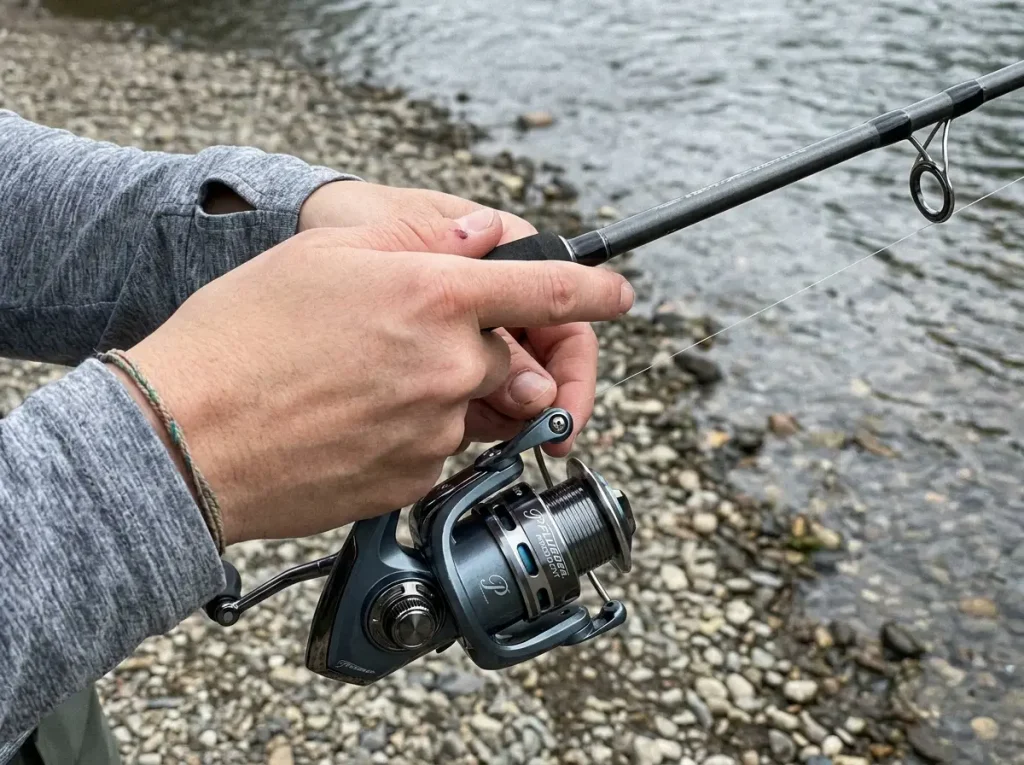
Walk into any tackle shop, stand in front of the wall of reels, and you’ll feel that small wave of panic. The experienced buddy standing next to you just says, “grab the spinning combo.” He’s not being lazy. For most people starting out, the spinning reel is the right answer, and it’s worth understanding why before you spend a dollar.
How a Spinning Reel Casts (and Why It Can’t Backlash)
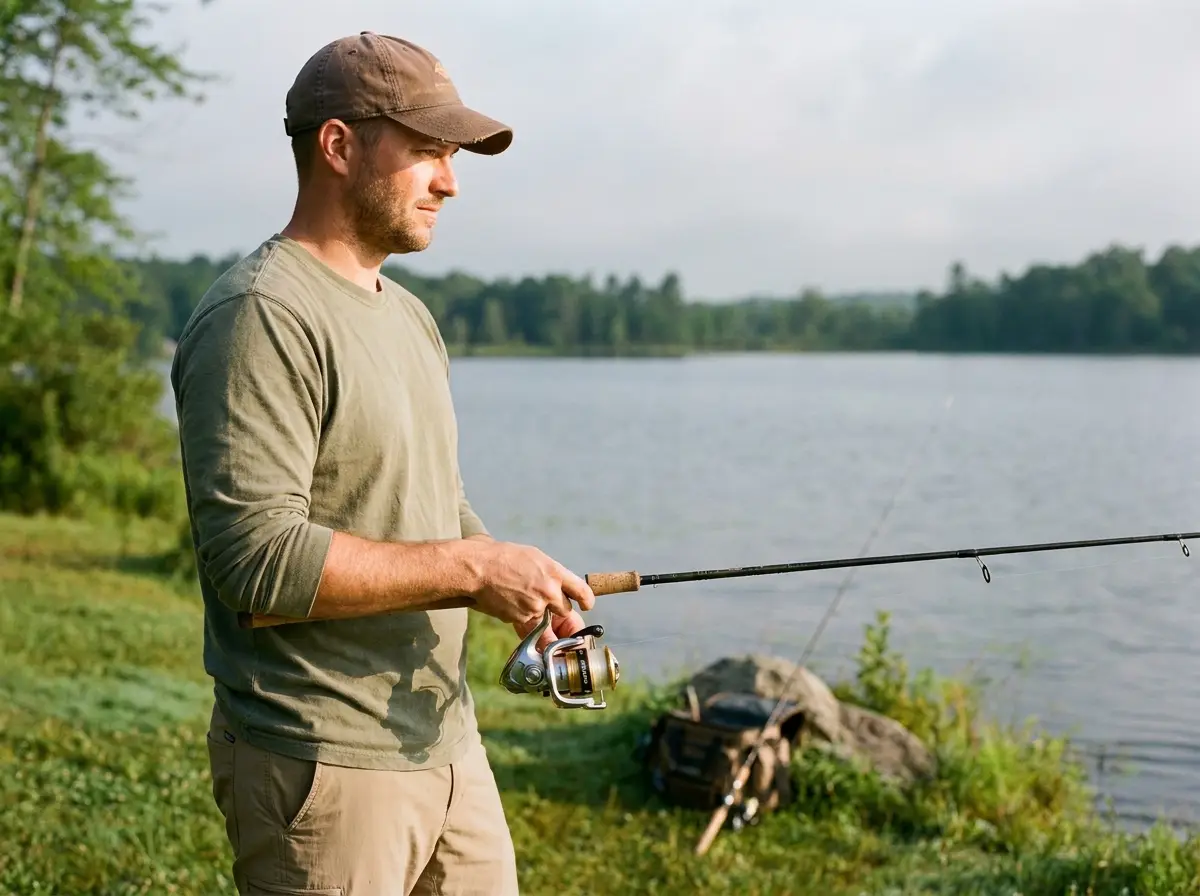
A spinning reel hangs underneath the rod on a fixed spool that doesn’t rotate. To cast, you flip the wire bail open, pin the line against the rod with your index finger, swing the rod forward, and let go. Line peels off the front of the stationary spool in loops. That’s the whole motion.
Because the spool never spins, it can’t overrun the line. No overrun means no backlash, which is the single biggest reason a spinning reel forgives a brand-new angler. You can throw a sloppy cast into a headwind and the worst that happens is a short toss, not a tangled mess. There’s almost nothing to time and almost nothing to ruin.
What It’s Best For: Light Line, Light Lures
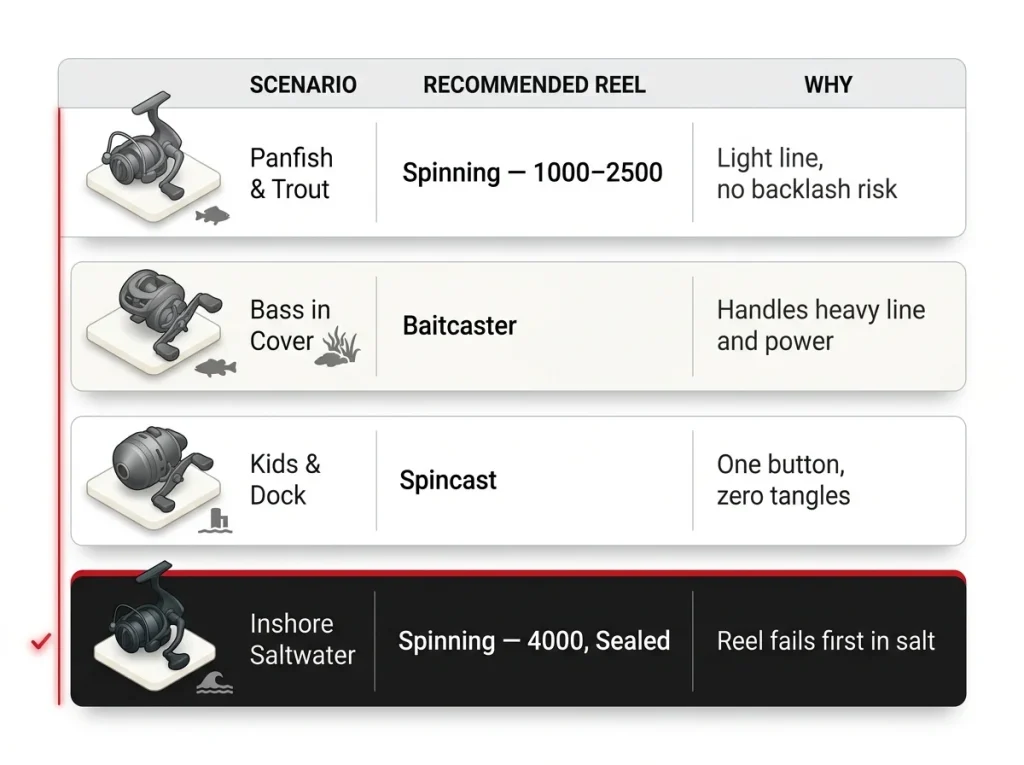
Spinning gear shines with light line (roughly 8 lb test or less) and lighter, finesse-style lures. That covers the fish most beginners actually target: panfish, crappie, trout, walleye, and bass on the average lake. The rule of thumb anglers repeat is simple. The reel follows what you’re throwing, not your ego, and light baits belong on a spinning reel.
Don’t overthink the size number. A 2500 spinning reel is the one-size-fits-most freshwater answer that veterans hand beginners without blinking. It balances on a medium rod, holds enough line, and fishes everything from bluegill to a solid largemouth.
The Spinning Reel Most Beginners Keep
If you buy the reel on its own rather than as part of a combo, a 2500-class reel like the Pflueger President is the one a lot of new anglers hang onto long after they’ve upgraded everything else. Its front drag is smooth, it’s light, and it’s sized right for general freshwater work. If the reel size numbers still feel like a foreign language, it’s worth a few minutes on what the size numbers on a spinning reel actually mean before you commit, because a 2500 and a 4000 fish very differently.
Spincast Reels: The Push-Button Starter
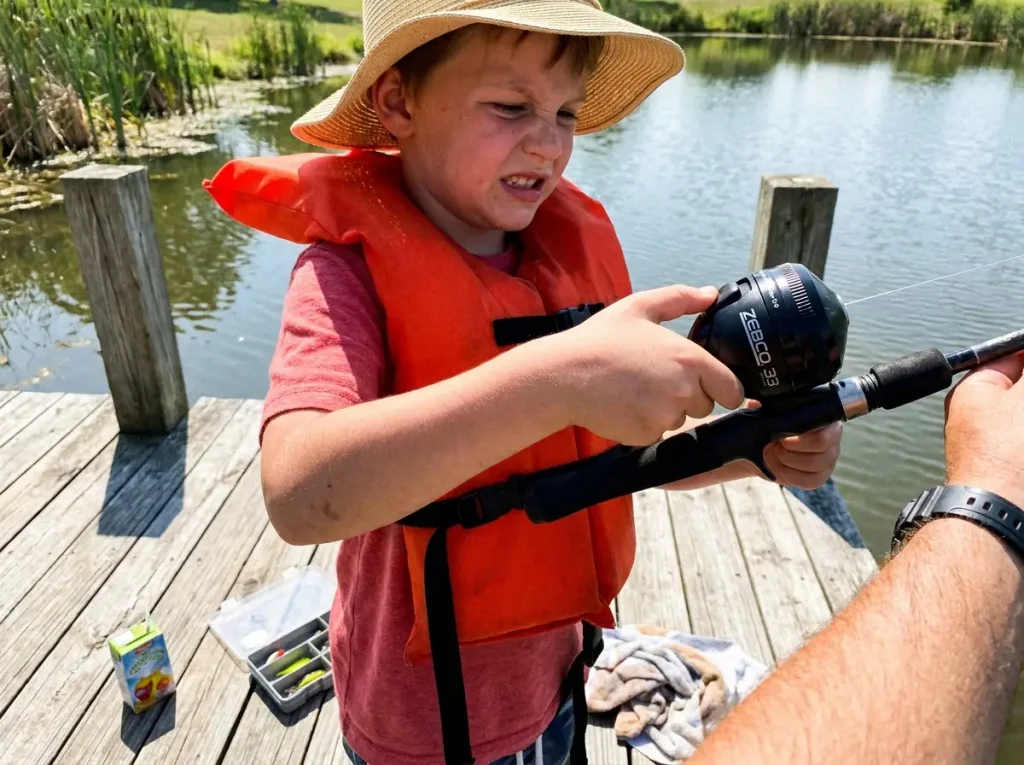
Here’s the first case where “just get spinning” isn’t the right call. The spincast reel is the one with the closed nose cone and the big button on the back, the reel you probably used as a kid. It’s the simplest reel ever made, and for the right person that simplicity is the whole point.
How the Push-Button Works
Everything that’s exposed and fiddly on a spinning reel is tucked inside a cover on a spincast. You press the push-button to hold the line, swing the rod, and release the button to let the line fly. Press it again to stop. There’s no bail to flip and no loose line to manage. A four-year-old can learn it in about a minute, which is exactly the point.
Who a Spincast Reel Is Actually For
The trade-off is that the internals are basic. A spincast won’t hold up to bigger fish or hard, frequent use, and you’ll feel its limits the moment you hook something with shoulders. So it’s not the reel for someone planning to fish seriously every weekend. It’s the reel for a seven-year-old, for the casual angler who fishes a few times a summer, or for bank and dock trips after pond panfish.
For that job, the Zebco 33 spincast combo is the reference point, the reel half the country learned on. If you’re buying for a child specifically, it’s worth looking at the tangle-free push-button combos built for kids, which are sized and tuned for small hands.
Baitcasting Reels: Power You Grow Into
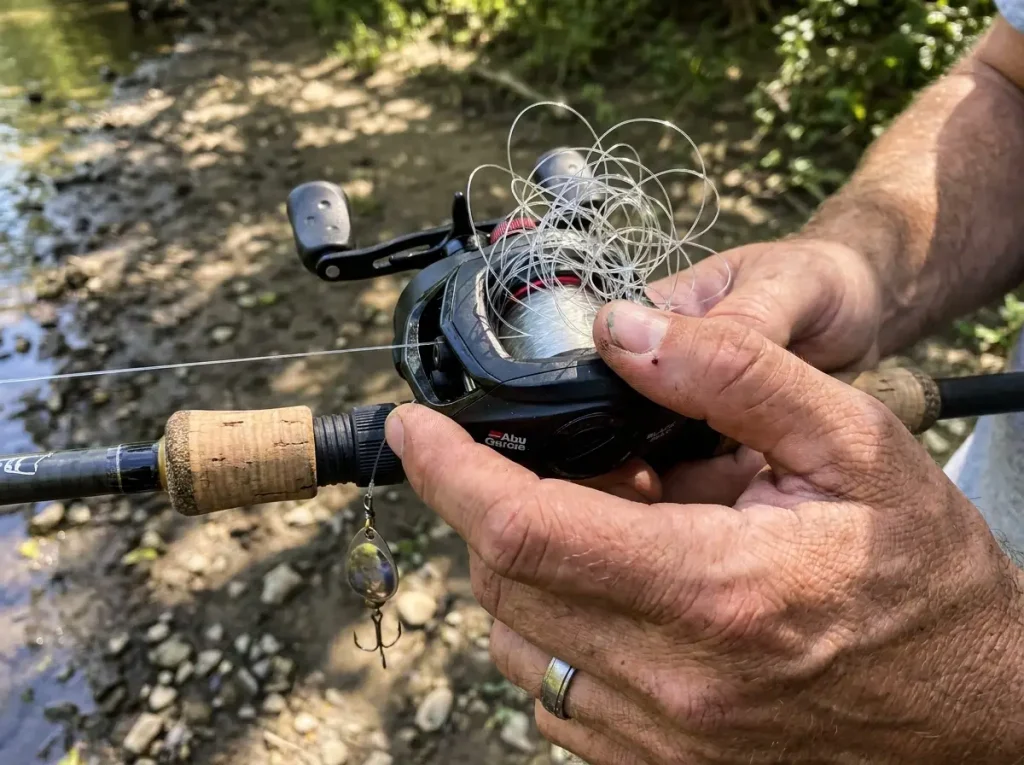
This is the second exception, and the one that trips up the most beginners. The baitcaster sits on top of the rod with a spool that spins as line leaves it. That spinning spool is what gives a baitcaster its edge in casting accuracy and casting distance, plus the muscle to throw heavier line and bigger baits. It’s also what creates the dreaded bird’s nest.
Why a Baitcaster Backlashes (the Bird’s Nest, Explained)
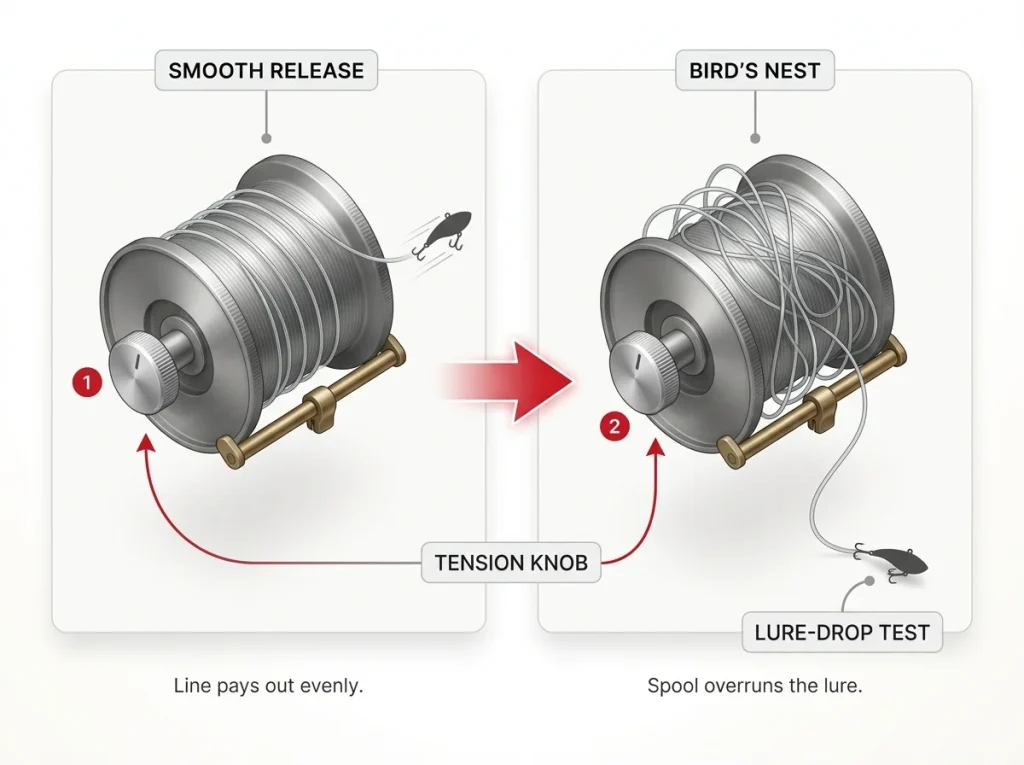
Most guides say “baitcasters backlash” like it’s bad luck and move on. It isn’t luck, and once you understand the mechanism it stops being scary. A backlash happens when the spool keeps spinning faster than line is actually leaving the reel. Usually that’s because the spool tension is set too loose, or because the angler keeps reeling after the lure has slowed in the air. The spool wants to keep dumping line that has nowhere to go, and it piles up into the tangle. It’s a spool-speed mismatch, not a character flaw in your casting.
[CREATOR NOTE] Infographic Suggestion: a two-panel diagram. Left, a properly metered spool paying out line smoothly behind the lure; right, the same spool overrunning into a bird’s nest when the lure slows, with the tension knob and the lure-drop test called out. Type: diagram. Why: the spool-speed mismatch is the hardest thing to picture from text alone.
The 30-Second Lure-Drop Test That Prevents It
The fix is one knob and about thirty seconds. Tie on your lure, hold the rod out, and press the thumb bar to free the spool. Watch what the lure does. With the tension knob set right, the lure falls slowly under its own weight and the spool stops the instant the lure hits the ground. If the lure drops like a stone and line keeps spilling after it lands, the tension is too loose. Snug the knob until the drop is slow and the spool stops clean. That single adjustment heads off most beginner backlashes before they ever happen, and maxing out the magnetic brakes, the second half of the reel’s braking system, helps in wind. When you do dig a tangle out, here’s how to pick a bird’s nest out fast and reset the spool tension.
Is a Baitcaster Ever the Right First Reel?
Sometimes, yes. If you already know you’ll be throwing heavier baits at bass in cover, and you’re willing to ride out the learning curve, starting on a baitcaster is reasonable. But the community is blunt about one thing: a cheap baitcaster will discourage you. Anglers say it over and over, that it doesn’t matter how well you cast, a bargain-bin reel just won’t throw without backlashing. A baitcaster’s gear ratio affects how fast it picks up line, but that’s a refinement for later, not a first-reel worry. So if you go this route, spend on the reel before the rod and start with something forgiving like the Abu Garcia Black Max EZ Cast combo, a factory-matched casting setup with an anti-backlash system built in. It’s the most beginner-friendly way into a baitcaster, and it’s still a steeper climb than spinning.
Fly Reels: The Fourth Type, and When It’s NOT Your First
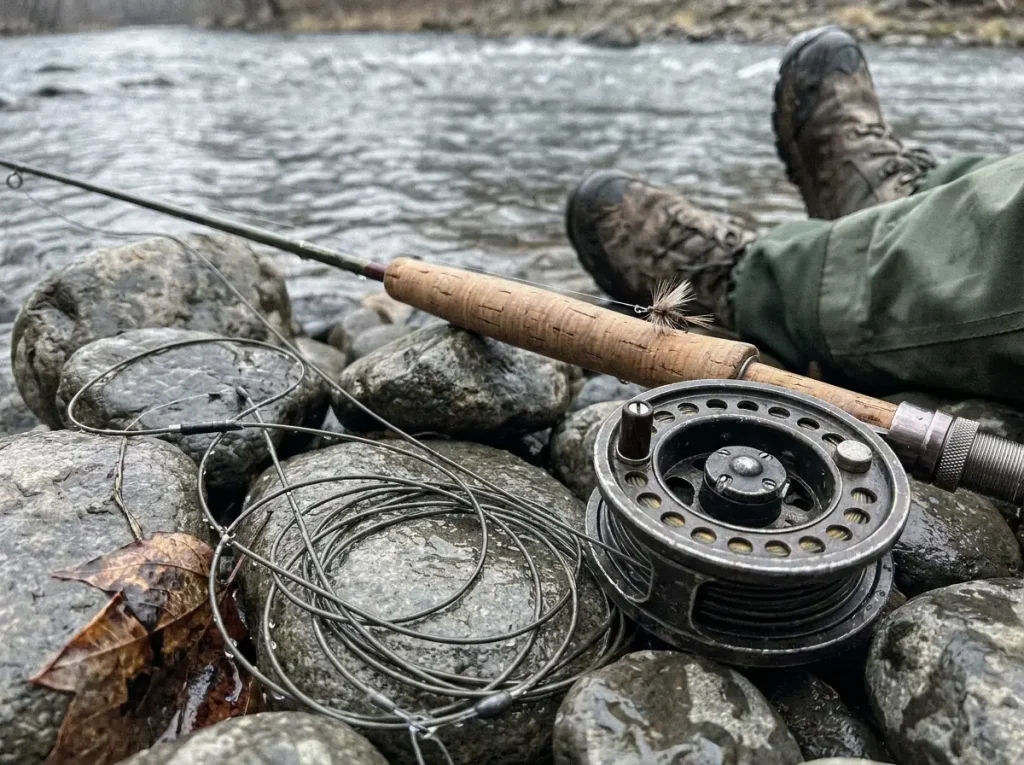
Nobody else covering this topic will mention the fourth reel type, so here it is. The fly reel is its own animal, and for most people it’s the wrong first reel. But a guide that promises to help you pick a reel type and then ignores fly entirely isn’t telling you the whole story.
What a Fly Reel Actually Does
On spin, spincast, and baitcast gear, the reel does the casting work. On a fly setup, it mostly just holds line and provides drag when a fish runs. The actual casting is done by the weighted fly line and the rod, using a completely different motion that has more in common with painting a long stroke in the air than launching a lure. The reel, the rod, and the line are a dedicated system, and none of it crosses over to the other three reel types.
When Fly Is (and Isn’t) Your First Reel
The plain verdict: if you’re not specifically setting out to fly fish, usually for trout or panfish on moving water, this is not your first reel. Start with spinning and come back to fly later if the bug bites. If you genuinely do want to start on a fly, then the reel becomes its own small decision, mostly the click-pawl versus disc-drag choice on a fly reel, and that’s a different road than the one most beginners are on.
How to Actually Decide: Species, Water, Lure Weight, Budget
Forget the “beginner versus advanced” framing for a second. The honest question isn’t your skill level. It’s what’s on the end of your line and where you’re standing when you cast it. Get those two right and the reel type almost picks itself.
Match the Reel to What You’re Throwing
Lure weight and line are the deciding rule. Light line and finesse lures want a spinning reel. Heavier line, 10 lb and up, and heavier lures want a baitcaster. If you’re tossing tiny jigs for crappie, a baitcaster is the wrong tool and a spinning reel is effortless. If you’re winching big bass out of grass on heavy line, the baitcaster earns its keep. Your gear should follow the bait, not the brand on the side.
Match It to Where You Fish
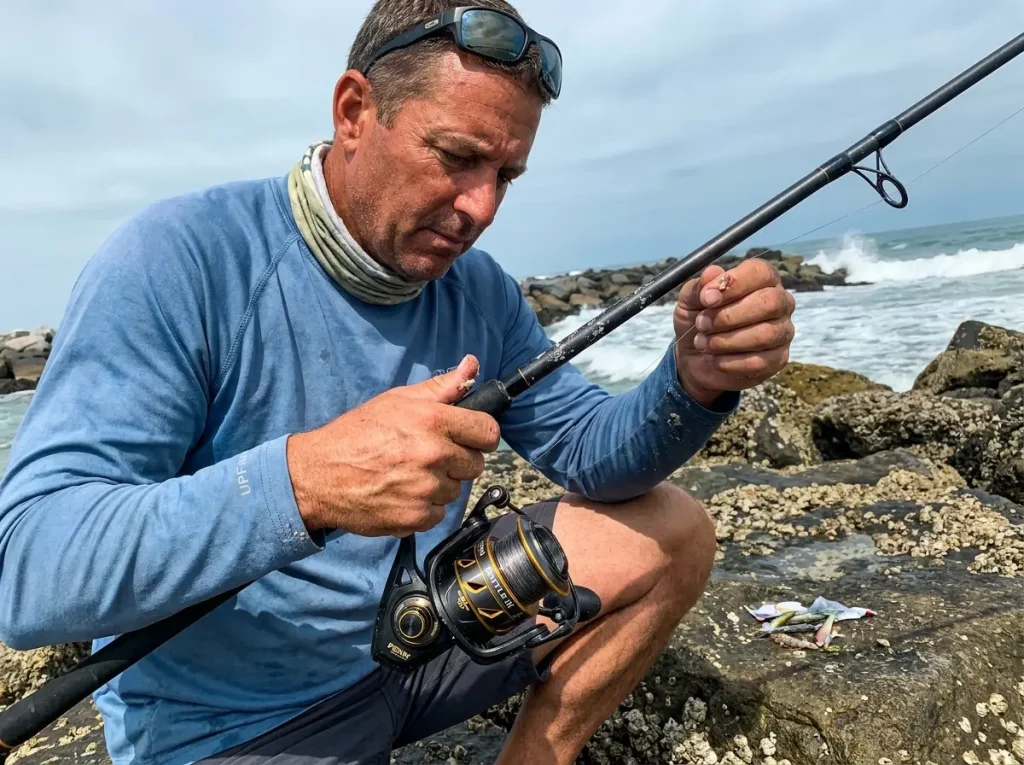
Where you fish narrows it further. Panfish, trout, and general lake fishing point to a spinning reel in the 2500 range. Bass in heavy cover leans baitcaster sooner. Kids and dock fishing point to a spincast. And saltwater changes the math entirely, because the reel fails first in salt, not the rod. Inshore, you want something sealed and a bit heavier, like a PENN Battle III 4000 sized for redfish and snook. It’s the exception to “any cheap spinning reel will do,” and it’s worth understanding why the reel fails first in saltwater, not the rod before you buy. You’ll also see heavier conventional reels, the round reels with a star drag built for offshore trolling and big saltwater fish, but those aren’t a beginner’s first reel either.
The Budget Reality Check
A first spinning setup is the cheapest path to actually catching fish on day one. A budget-friendly spinning reel performs honestly. A bargain baitcaster is a false economy that fights you the whole trip. The smart move is to spend where it counts, which for a beginner means the reel, and there’s a real line between where cheap tackle quietly costs you fish and where it’s perfectly fine to save. If you want to watch the three reel types side by side before you decide, this beginner breakdown is worth a few minutes.
When you’re torn between two reel types, picture your most common trip, not your dream trip. The pond down the road on a Saturday morning decides your first reel, not the bass tournament you imagine entering next year. Buy for the fishing you’ll actually do.
The Reel Is Half a System: Matching Rod, Reel, and Line
Here’s the mistake that quietly wrecks more first purchases than any backlash. People treat the reel as a standalone decision, buy one they like, and bolt it to whatever rod they already own. Then it won’t cast right and they assume they did something wrong. The reel is only half the system.
Spinning Rod vs Casting Rod (How to Tell)
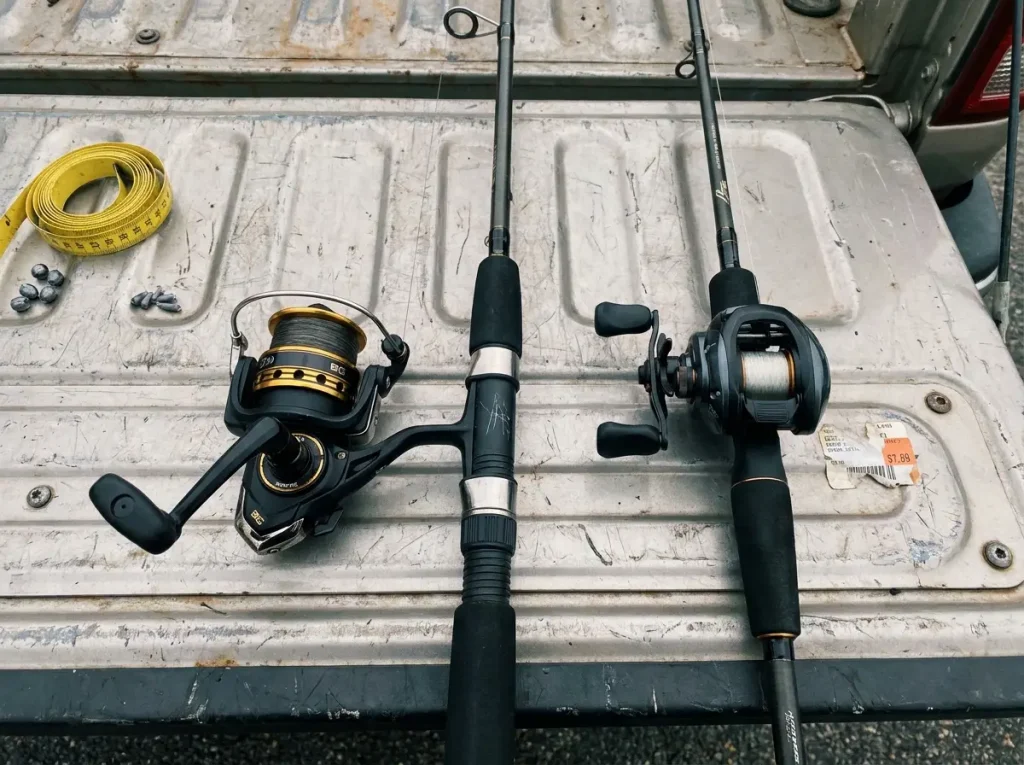
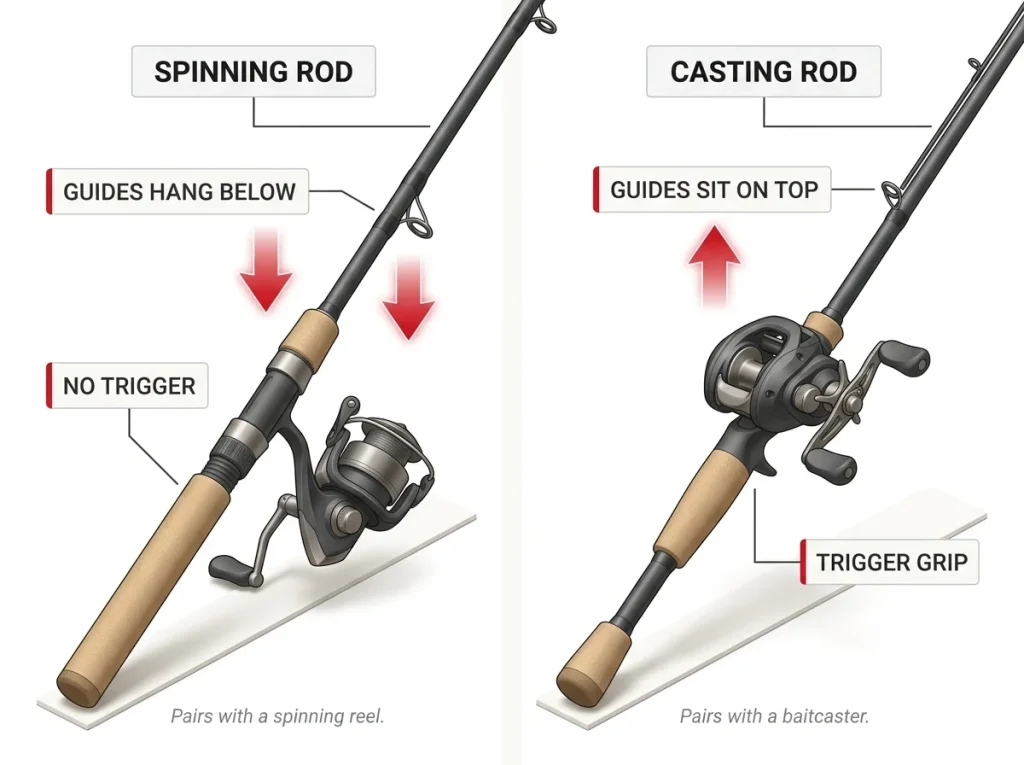
A spinning reel needs a spinning rod, where the guides hang underneath the blank and there’s no trigger on the grip. A baitcaster needs a casting rod, where the small guides sit on top and there’s a little trigger behind the reel seat for your finger. They are not interchangeable. If you can’t tell them apart yet, the trigger grip and guide layout that tell a casting rod from a spinning rod are the fastest tells. The national Take Me Fishing guide to choosing a reel lays out the same matching rule if you want it from the source.
Why a Mismatch Won’t Cast
Put a spinning reel on a casting rod and the guides are on the wrong side for the way line comes off the spool. Put a baitcaster on a spinning rod and the same problem runs in reverse. The setup won’t load and release line cleanly, distance falls apart, and you’ll blame your technique when the gear was wrong from the start. Line is the third leg too. Whether you spool monofilament, fluorocarbon, or braided line changes how the whole setup behaves, so it’s worth knowing which line type a beginner should actually spool once the rod and reel agree, and matching it to the reel’s stated line capacity so you don’t overfill the spool.
Spend on the Reel Before the Rod
If your budget forces a choice, put it in the reel. Experienced anglers say the same thing to every beginner: a good reel on a modest rod will out-fish a great rod hauling a cheap, balky reel. The reel is where the smoothness, the drag system, and the casting feel live.
The Honest Shortcut: Just Buy a Matched Combo
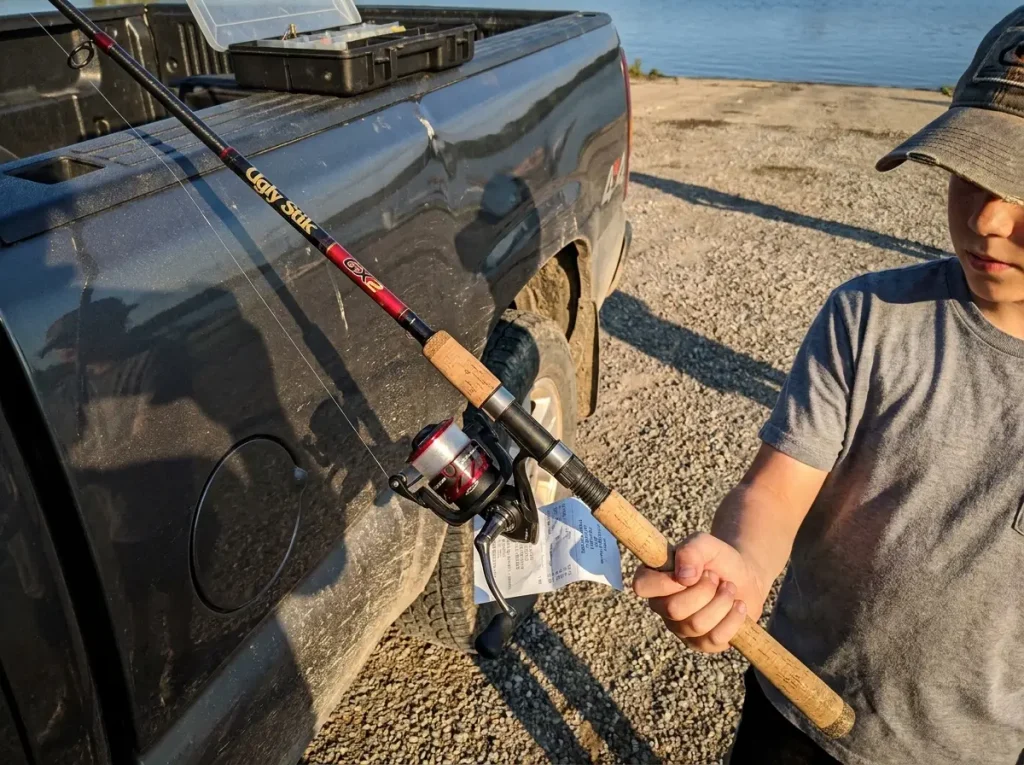
After all of that, here’s the answer nobody selling individual reels wants to give you. For your first setup, the smartest money is often a matched rod and reel combo, sold as one box, already balanced and already spooled with line.
Why a Combo Removes Two Problems at Once
A factory combo solves the matching problem and the line problem in a single purchase. The rod and reel are made to balance, the line is already on the spool, and you skip the two mistakes that snag most beginners. You still make the one decision that matters, which is the reel type, and for almost everyone that’s spinning. The Take Me Fishing guide to matching your rod and reel as a balanced system backs up why a pre-matched setup casts better than parts you bolted together yourself.
The Combo Worth Starting With
For a no-drama first outfit, the Ugly Stik GX2 spinning combo is the one anglers point newcomers to again and again. It’s forgiving, nearly indestructible, and it removes every excuse not to go fishing. Pick the type, grab the combo, and go. The reel is just one piece of how it fits into your whole first fishing setup, so once you’ve settled the type, the rest of the kit comes together fast.
If you buy a combo, the line on it is fine to learn on, but plan to respool after a season. Factory line sits on the shelf for months and develops memory, those stubborn coils that fight your cast. Fresh line on the same reel feels like a new outfit.
Conclusion
Pick the reel type first, then worry about the rest. Spinning is the right first reel about nine times out of ten, and it’s the place to plant your flag if you’re unsure. The exceptions are real and worth knowing: a push-button spincast for kids and casual trips, a baitcaster only if you’ll commit to heavier bass tackle, and a fly reel only if fly fishing is the specific thing you want to do. Whatever you choose, match the reel to the rod and the line, or sidestep the whole problem with a matched combo. Then stop researching and go catch a fish. The water teaches faster than any spec sheet.
Frequently Asked Questions
01What is the easiest fishing reel to use for beginners?
A spinning reel is the easiest reel for most beginners because its fixed spool can’t backlash. You flip the bail, hold the line with one finger, and cast. A push-button spincast is even simpler but better suited to kids and casual use.
02Should a beginner start with a spinning or baitcasting reel?
Start with spinning unless you specifically plan to throw heavy baits for bass in cover. A baitcaster offers more control with heavier line but has a real learning curve and can backlash. Most beginners are happier and catch more fish on a spinning reel first.
03What size spinning reel should I start with?
A 2500-size spinning reel is the best all-around starting point for freshwater. It handles panfish, trout, walleye, and bass without feeling heavy on a medium rod. Drop to a 1000 to 2000 for tiny finesse work, or step up to 3000 to 4000 for bigger fish.
04Are spincast reels good for adults or just for kids?
Spincast reels work fine for adults who fish casually or occasionally, especially for panfish off a dock. The catch is durability and power. They won’t hold up to serious or frequent use, so a regular angler will outgrow one and want a spinning reel.
05Why does a baitcaster backlash and how do you stop it?
A baitcaster backlashes when the spool spins faster than line leaves it, usually from loose spool tension. Stop it with the lure-drop test: set the tension so the lure falls slowly and the spool stops the moment it lands. Max the brakes in wind.
Risk Disclaimer: Fishing, boating, and all related outdoor activities involve inherent risks that
can lead to injury. The information provided on Master Fishing Mag is for educational and informational purposes
only. While we strive for accuracy, the information, techniques, and advice on gear and safety are not a substitute
for your own best judgment, local knowledge, and adherence to official regulations. Fishing regulations, including
seasons, size limits, and species restrictions, change frequently and vary by location. Always consult the latest
official regulations from your local fish and wildlife agency before heading out. Proper handling of hooks, knives,
and other sharp equipment is essential for safety. Furthermore, be aware of local fish consumption advisories. By
using this website, you agree that you are solely responsible for your own safety and for complying with all
applicable laws. Any reliance you place on our content is strictly at your own risk. Master Fishing Mag and its
authors will not be held liable for any injury, damage, or loss sustained in connection with the use of the
information herein.
Affiliate Disclosure: We are a participant in the Amazon Services LLC Associates Program, an
affiliate advertising program designed to provide a means for us to earn advertising fees by advertising and linking
to Amazon.com. As an Amazon Associate, we earn from qualifying purchases. We also participate in other affiliate
programs and may receive a commission on products purchased through our links, at no extra cost to you. Additional
terms are found in the terms of service.