
In this article
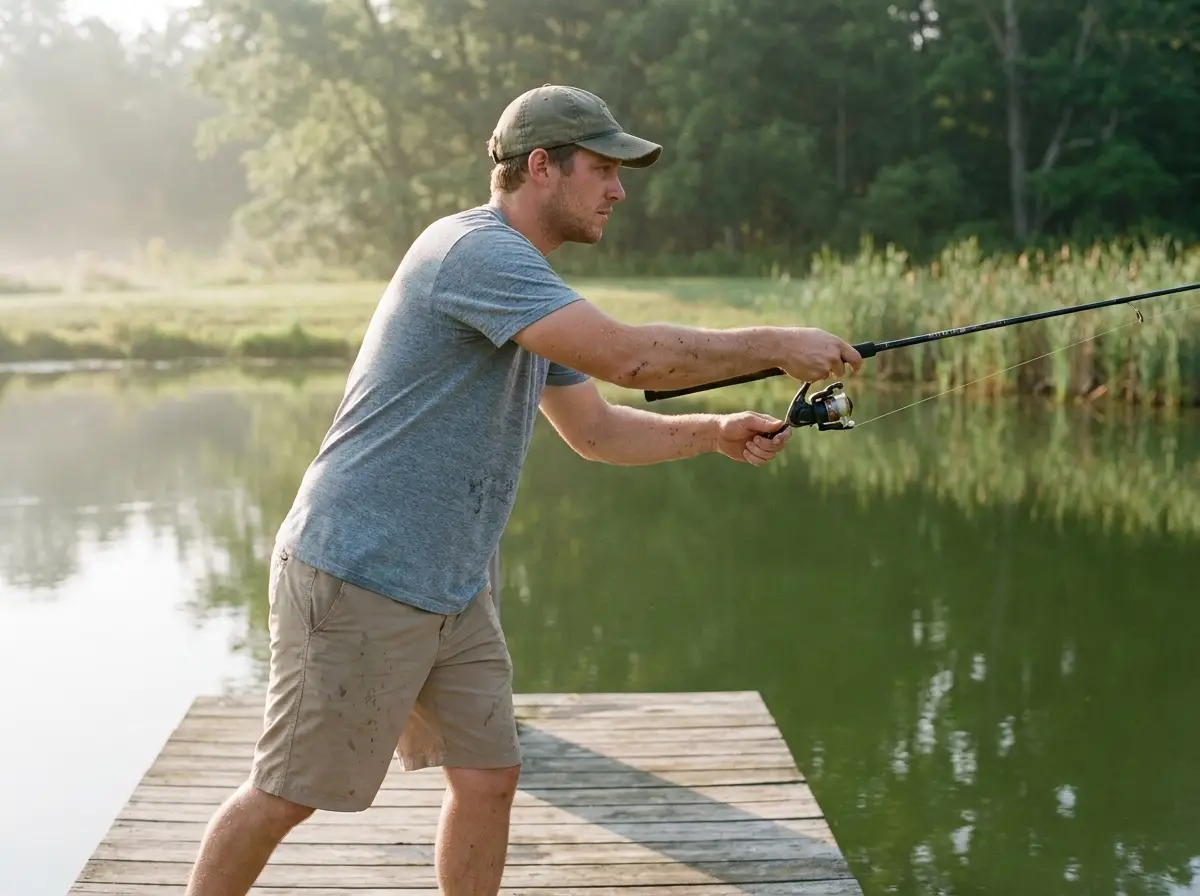
You walk into the shop to grab your first fishing setup, and the wall stops you cold. Forty reels, a rack of rods that all look the same, and a thousand little packets of hooks and weights you can’t tell apart. Here’s what nobody behind the counter is going to say out loud: you don’t build a first setup piece by piece. One balanced rod-and-reel combo, the right line, and a small handful of tackle covers everything you actually need to catch fish. That’s the move most seasoned anglers wish they’d made on day one instead of overbuying, and the rest of this guide walks you through it, from picking the combo to setting the drag to landing your first fish.
Your First Setup Starts With One Honest Combo
The reason that tackle wall feels overwhelming is that it’s selling you a lie by omission. It looks like you have to choose a rod, then a matching reel, then figure out whether they balance. You don’t. A spinning combo is a rod and reel sold together, already matched for you, and for a true beginner it out-fishes a pricier mismatched pair every time.
Why a Matched Combo Beats Buying Parts
When you buy à-la-carte, you’re the one matching rod power to reel size, and that’s exactly where new anglers get burned. The classic mistake is a heavy reel bolted to a whippy rod, or a pricey standalone reel on a rod that can’t load it, so the whole thing feels wrong in your hand and you’re out a chunk of money with nothing balanced to show for it. A combo skips that problem because the manufacturer already paired them. You make one decision instead of three, and the gear works together out of the box.
What’s Worth Paying For (and What’s Just Hype)
Spend your money where it actually changes your day on the water: the combo, a spool of decent line, your license, and a small box of terminal tackle. That’s it. The stuff that’s hype for a beginner is the premium individual reel, fluorocarbon main line, and a second or third rod you don’t have a use for yet. A solid budget combo plus the basics will catch the same panfish and bass as a setup costing three times as much, and you can see exactly what a complete starter kit looks like in our breakdown of budget fishing gear that fits a tight starter budget. If you’re setting up a kid instead, a tangle-free kids’ pole keeps it even simpler than a full combo.
The Two Combos I’d Hand a Beginner
There are two combos worth your attention: the one to start with, and the one upgrade that still makes sense if you’d rather buy once and keep it for years.
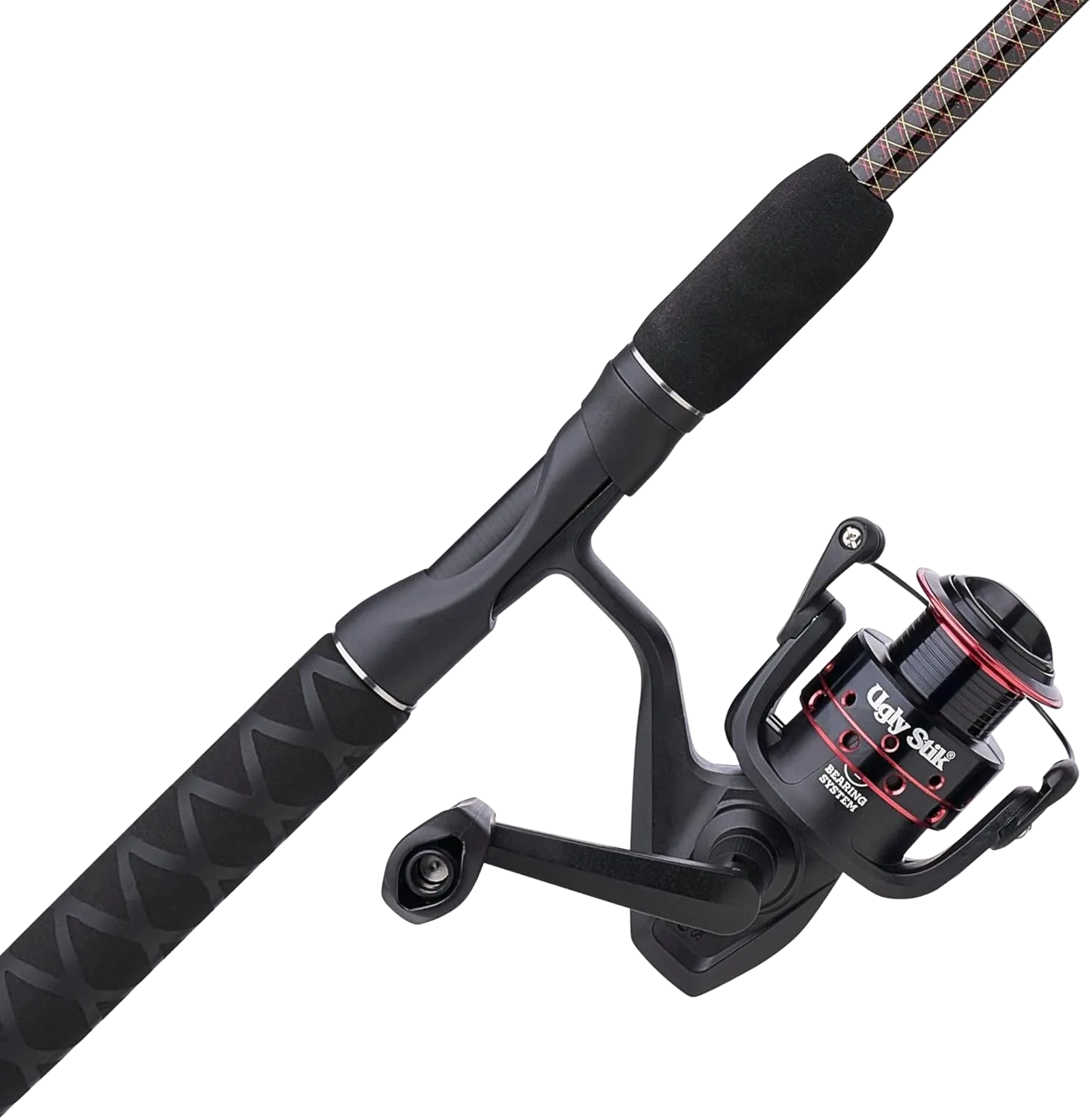
The Ugly Stik GX2 is the combo to learn on, full stop. It’s forgiving, it’s cheap, and it’s almost impossible to break, which matters when you’re still figuring out how everything works. Nobody ever regretted starting here.
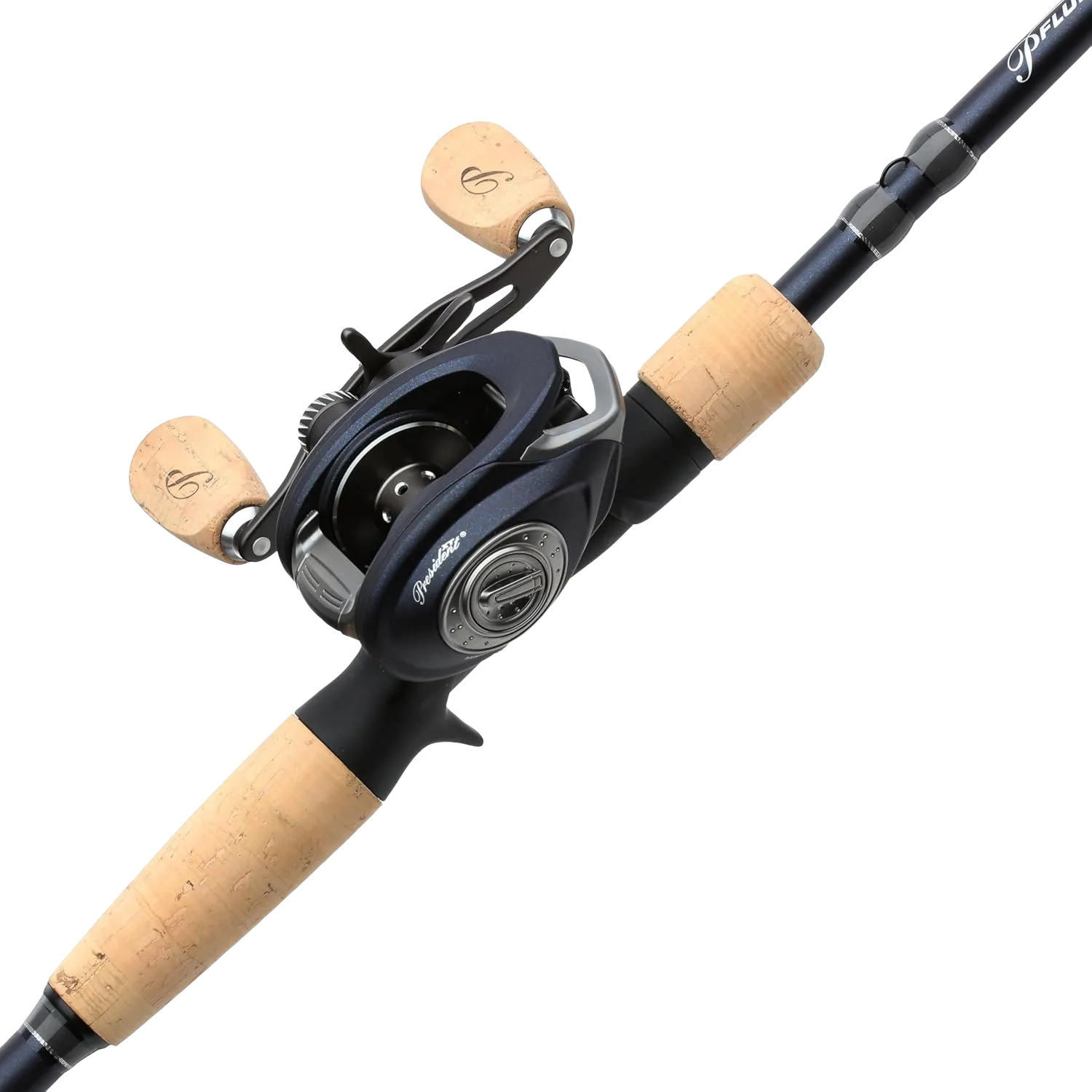
Pick one of these, and the hardest decision of your first setup is already behind you. Everything from here is line, tackle, and knowing how to put it together.
Picking Your First Rod Without Overthinking It
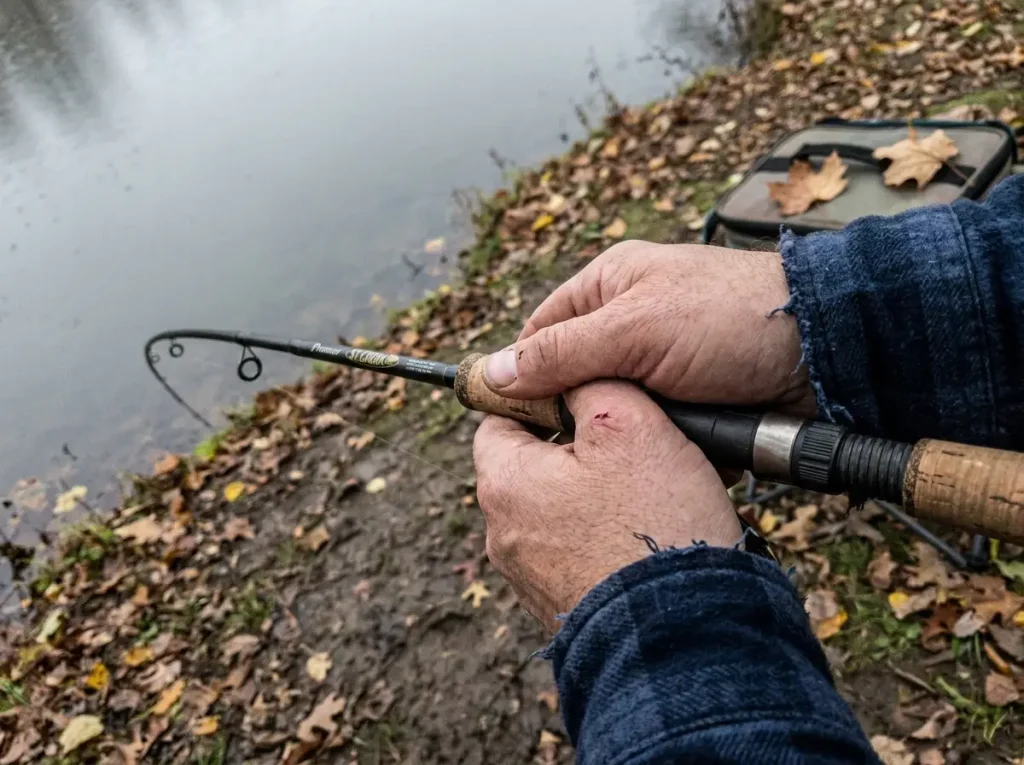
A rod has three things worth understanding, and the spec sheet does a terrible job explaining any of them. Once you know what length, power, and action actually do, the rack stops being intimidating.
Spinning vs Spincast vs Baitcast
A spinning rod with an open-bail reel is the easy-mode choice and what almost every starter combo uses. A spincast (the closed-face push-button kind) is even simpler to cast and great for kids, but you give up versatility as you improve. A baitcasting reel is the one to skip for now, because it punishes a new thumb with backlash until you’ve put in real practice. Start spinning, and you’ll cover ponds, banks, and docks without fighting your gear. There’s more nuance to the choice, and we get into when a beginner’s reel isn’t always a spinning reel if you want to go deeper.
Length, Power, and Action in Plain English
Length sets your casting distance and control: a 6’6″ to 7′ rod is the all-rounder that handles a small pond and an open bank equally well. Power is how much muscle the rod has, and a medium power or medium-light handles everything from bluegill to a decent bass. Rod action is where the rod bends, and a moderate-fast action forgives a slow hookset, which you will have, because everyone does at first. Those three numbers together are the whole story.
What the Rod Is Made Of (and Why It Survives You)
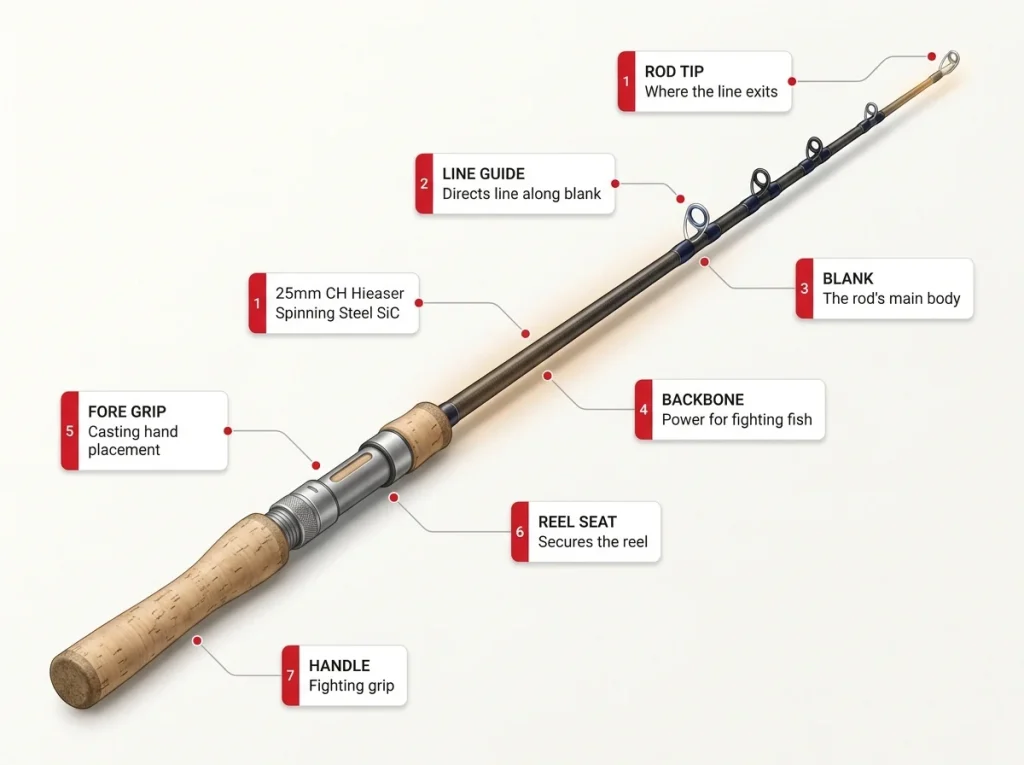
Graphite is lighter and more sensitive; fiberglass is heavier but takes abuse without complaint. Most good beginner blanks, from the Ugly Stik to a step-up St. Croix, blend the two so you get sensitivity without a rod that snaps the first time it meets a tailgate. The lower, stiffer section anglers call the backbone, and it’s what fights the fish while the tip stays soft enough to cast. If you want every part of the rod labeled and explained, our visual guide to the parts of a fishing rod walks through the whole thing.
Choosing a Reel — Why 2500 Is the Beginner Sweet Spot
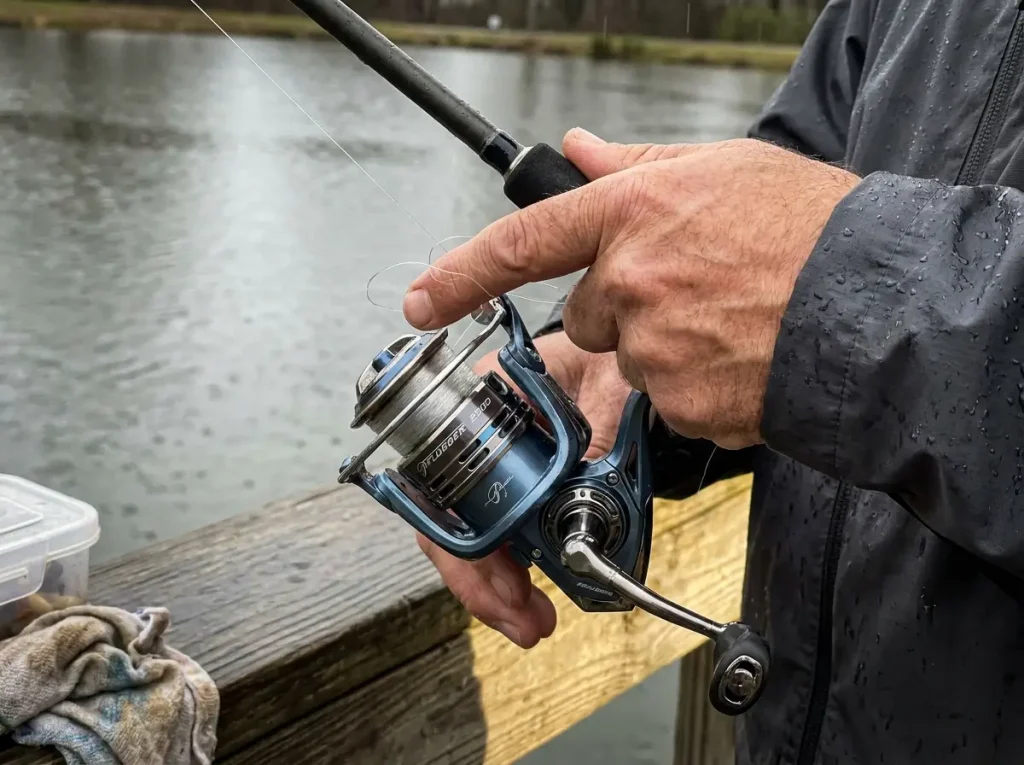
The numbers stamped on a reel look like a secret code, and most of them don’t matter to you yet. Two of them do, and once you can read those, you’ll know exactly what you’re holding.
What the Reel Size Number Actually Means
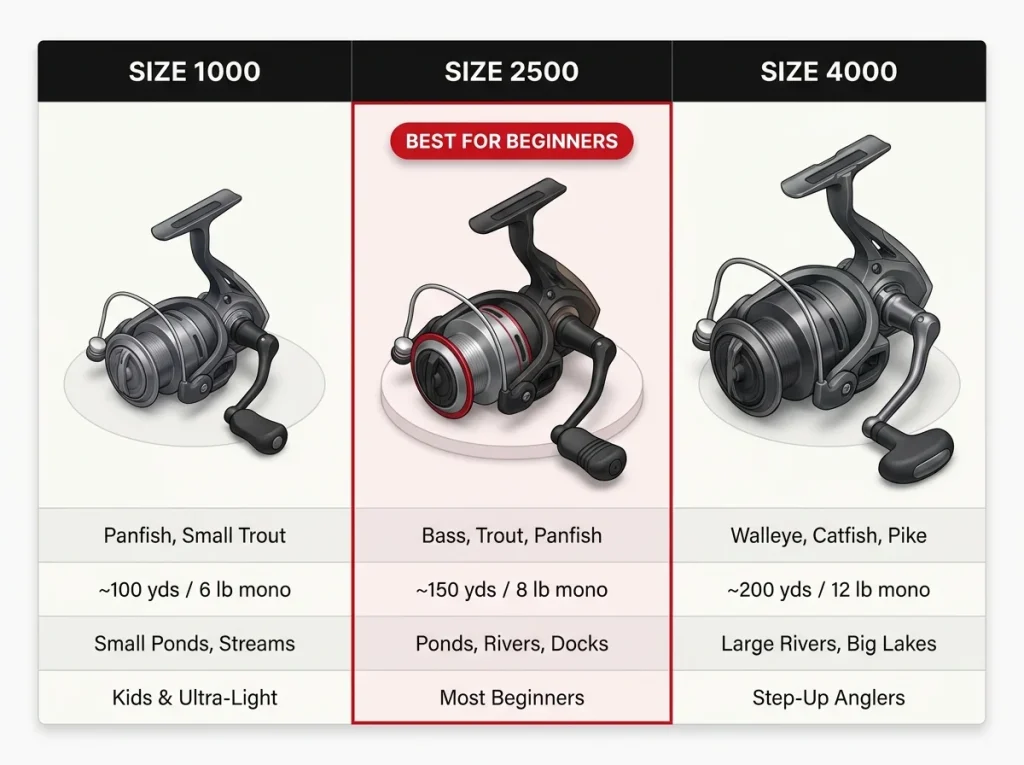
A reel size 2500 (sometimes written 2000 to 3000) is the all-rounder, and it’s the size you want on a first combo. A 2500 holds roughly 150 yards of 8-pound mono, which is plenty of line for bass, trout, and panfish without turning your reel into a winch. Go down to a 1000 only if you’re targeting nothing but small panfish, and step up toward a 4000 when you start fishing bigger water. For most people, the 2500 simply disappears as a decision.
Gear Ratio and Drag, the Two Specs That Matter
Gear ratio tells you how fast the reel picks up line, and anything in the 5.2:1 to 6.2:1 range is the not-too-fast, not-too-slow sweet spot for a beginner. The other spec is the drag, and here smoothness beats every other number on the box. A reel with a smooth drag lets line slip out under steady pressure when a fish runs, instead of grabbing and snapping, and that’s worth more than a high bearing count you’ll never notice.
Matching Reel Size to What You’ll Catch
Think of reel size as scaling to your target. A 2500 covers the realistic beginner range, from bluegill, crappie, and perch up through largemouth bass, and only when you start chasing walleye or catfish in bigger water do you size up. If the numbers still feel arbitrary, our full spinning reel size chart from 1000 to 6000 maps each size to the species and water it fits.
The Fishing Line That Forgives Every Mistake
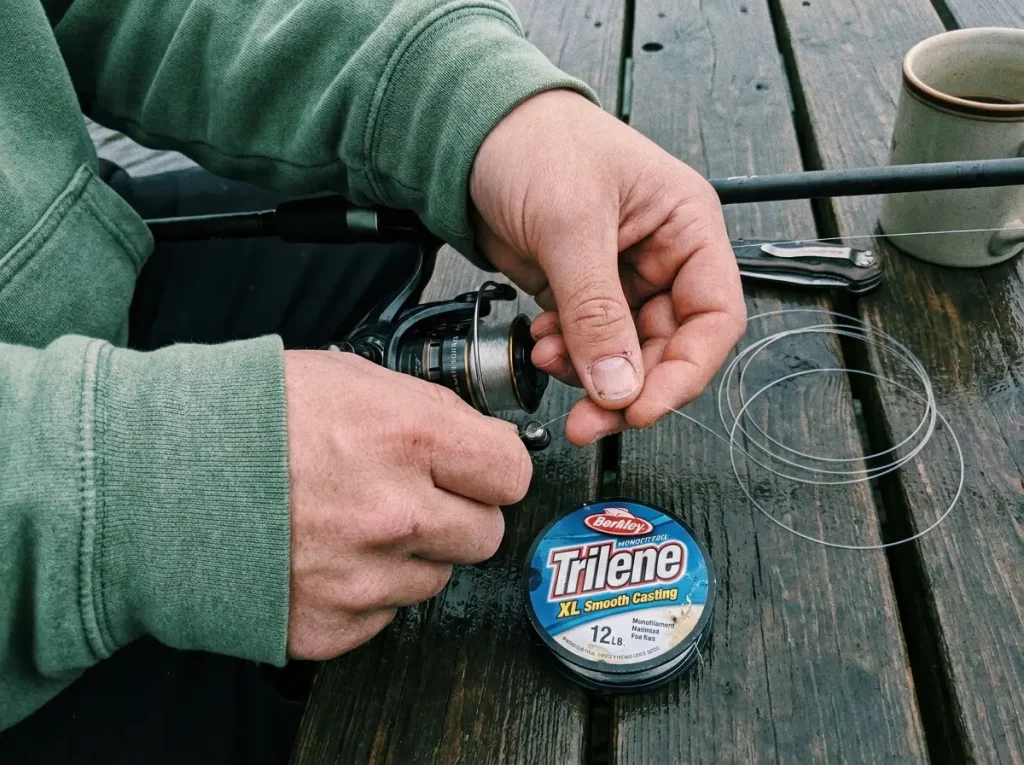
Of all the gear in your first setup, line is the one place where the cheapest option on the shelf is genuinely the right call. Not because you’re cutting corners, but because monofilament is built to forgive the exact mistakes you’re about to make.
Mono vs Fluoro vs Braid for Beginners
Mono stretches, and that stretch quietly hides a yanked hookset or a drag you set wrong. Braided line has almost no stretch and punishes every twitchy mistake; fluorocarbon is stiffer, pricier, and fussier to tie. Both have their place later, but for a first setup, mono is the line that lets you learn without breaking off constantly. Start there and graduate when you have a reason to, which our rundown on which line type a beginner should actually use lays out in detail.
What Pound Test to Start With
Six to twelve pound mono covers nearly everything a beginner targets, and 8-pound is the comfortable middle. One spool of Berkley Trilene XL in 8-pound has low memory and ties clean knots, and a single spool will cover a whole season of pond and bank fishing. You don’t need three kinds of line. You need one good spool.
Why Mono Forgives You
The thing veteran anglers call line memory is mono’s tendency to hold the coils from the spool, and it’s the one quirk to respect when you load it. Spool it right and that stretch becomes pure forgiveness: missed hooksets still stick, a too-tight drag gets a little grace, and clumsy knots still hold. For the full picture on matching line to the fish you chase, our complete guide to choosing fishing line covers where each type earns its keep.
Hooks, Weights, and the Rest of the Terminal Tackle
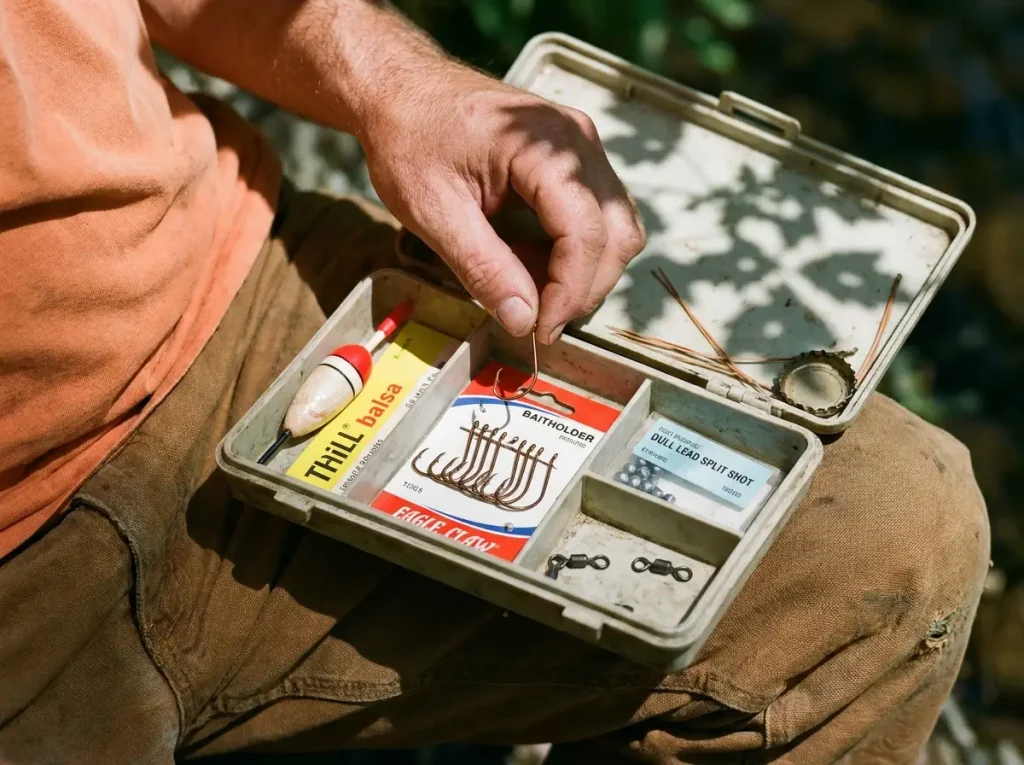
The wall of little packets is where most beginners either freeze or overspend. Here’s the secret: you need about five things, and you can ignore the other fifty for now.
Hook Sizes and Styles That Matter
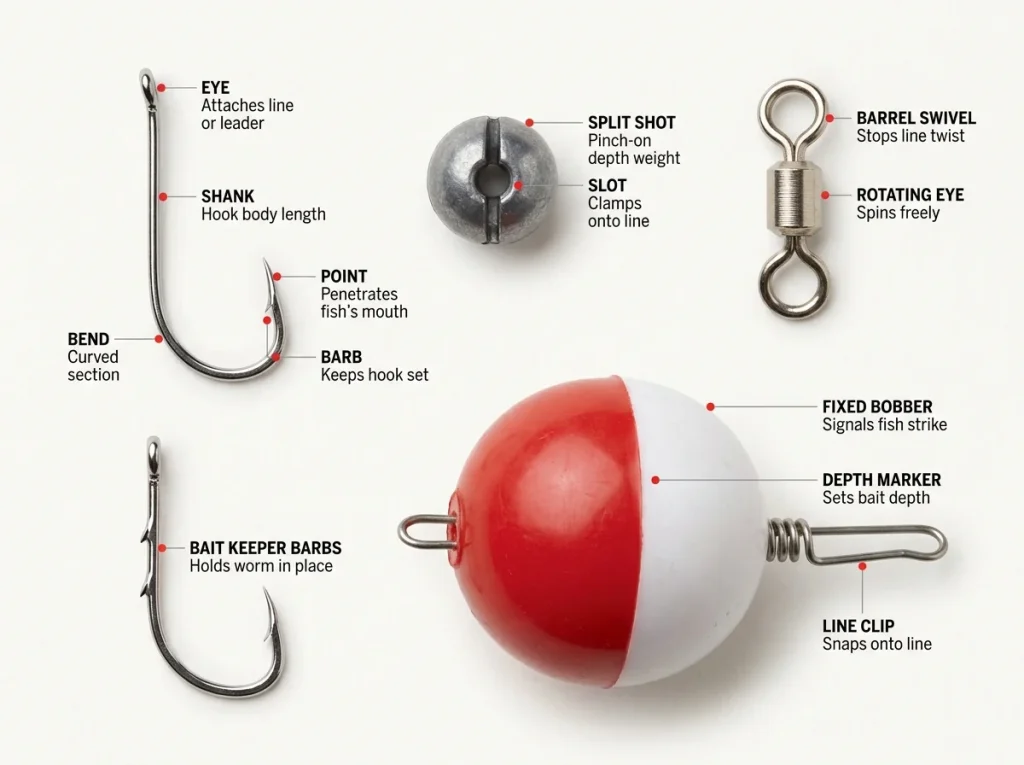
For most beginner fish, hook sizes in the #6 to #2 range cover you. A baitholder hook or an Aberdeen is perfect for bait, and a circle hook is the one to reach for when you plan to release fish, since it tends to set in the corner of the mouth instead of deep. A dozen hooks in a couple of sizes is a complete starting selection.
Weights, Swivels, and Beads
A split shot is your adjustable weight: pinch it onto the line and slide it to set how deep your bait rides. A barrel swivel stops line twist when you fish spinners, a snap swivel lets you swap lures without retying, and a few beads protect your knot from a sliding weight. None of this is expensive, and a single card of split shot and a pack of swivels lasts a long time.
The Minimal Terminal Tackle Starter List
Skip the tackle-shop haul. A dozen hooks, a card of split shot, two or three bobbers (a fixed bobber is simplest, a slip bobber lets you fish deeper water), and a pack of swivels is the entire terminal tackle kit you need to start catching fish. Add to it when a specific situation calls for something, not before.
Putting It All Together — Spool, Assemble, and Tie On
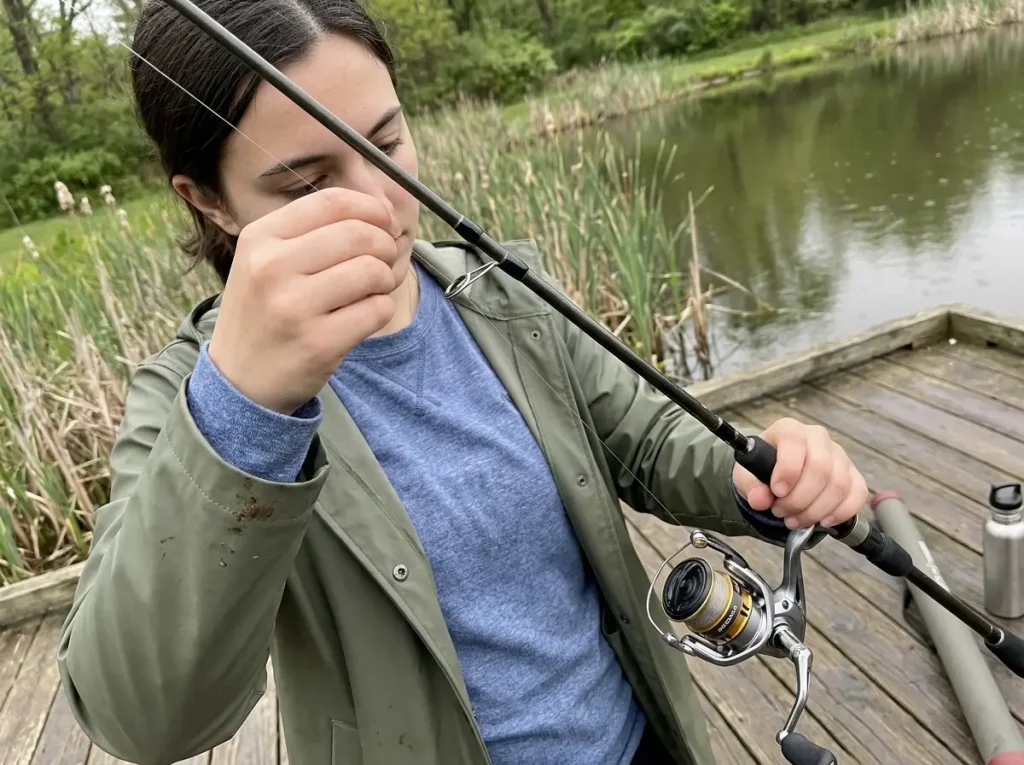
This is the part that separates a setup that casts clean from one that births a tangle on the third cast. None of it is hard, but the small moves matter, and getting them right the first time saves you a frustrating morning.
Spooling the Reel Without Twist
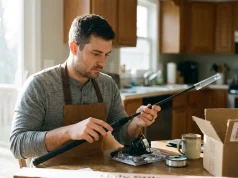
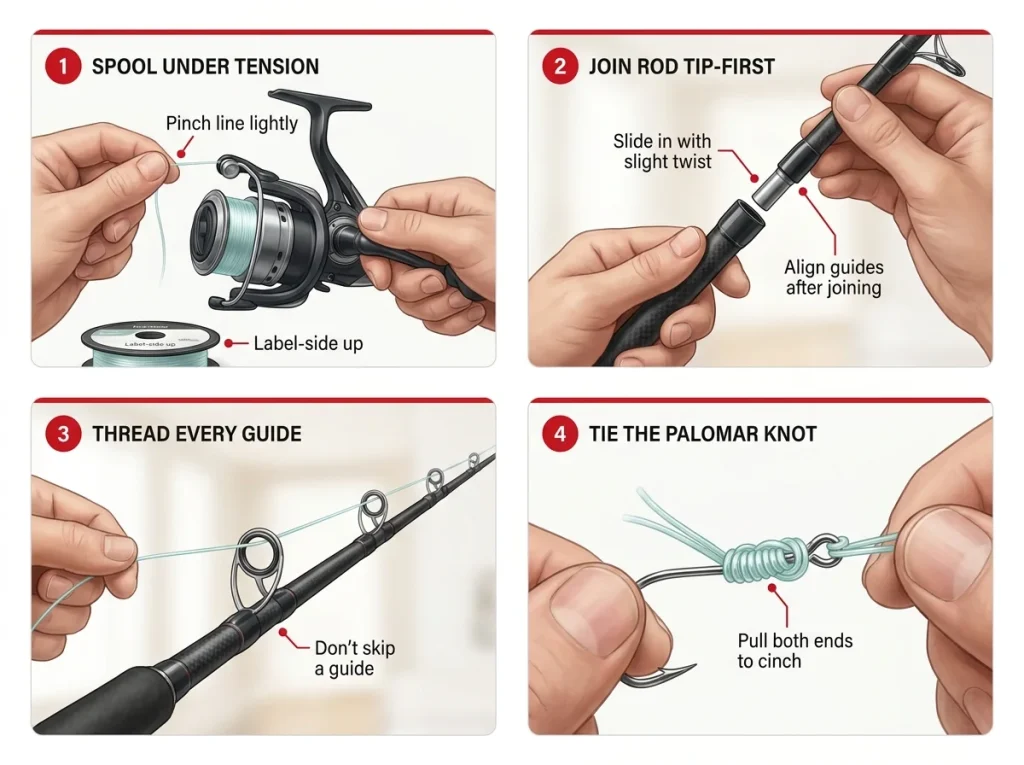
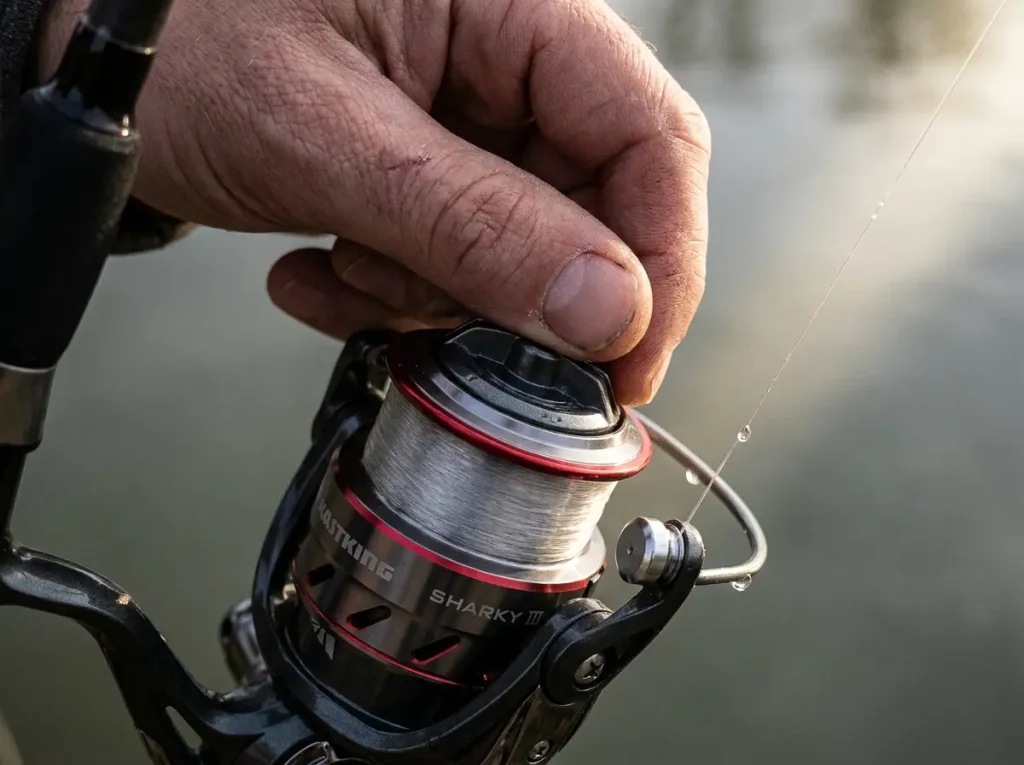
Before you spool the reel, tie the line to the bare spool with an arbor knot. Then lay the filler spool flat on the floor, label-side-up, so the line comes off the same way it goes onto your reel, which keeps twist out. Run the line under light tension from your fingers as you reel, and fill the spool to about an eighth of an inch below the rim. Overfill it and the loose loops jump off as soon as you cast. The full no-twist method lives in our guide to putting line on a reel the zero-twist way.
After you close the bail, flip it by hand, not by cranking the handle. Closing the bail with the handle is the single most common cause of line twist on a brand-new reel, and it’s the reason so many first casts end in a bird’s nest.
Assembling the Rod and Threading the Guides
Join a two-piece rod tip-section-first, sliding the sections together with a slight twist, and line the guides up dead straight before you snug them. Hold the blank when you do it, never the guides, so you don’t torque anything. Then thread the guides, running your line through every single one of the rod guides up to the tip. Missing one guide is the rite-of-passage mistake everyone makes once, and you’ll catch it the moment you try to cast.
The One Knot to Learn, the Palomar
Learn exactly one hook knot cold, and make it the Palomar knot. It’s one of the strongest knots you can tie and one of the hardest to tie wrong: double the line through the hook eye, tie a loose overhand, then pass the loop over the hook and pull tight. The improved clinch knot is a fine backup, and the uni knot is another, but if you only own one knot, the Palomar won’t let you down on the water with cold hands. Our field guide on how to tie the core fishing knots shows it step by step.
Why So Many First Setups Fail (and the Easy Fixes)
Here’s the part competitors skip, and it’s the one that actually saves your day. Almost every miserable first trip traces back to four small failures, and each one has a ten-second fix once you know the cause. Learn these now and you skip the frustration entirely.
Setting the Drag So Your First Fish Doesn’t Break You Off
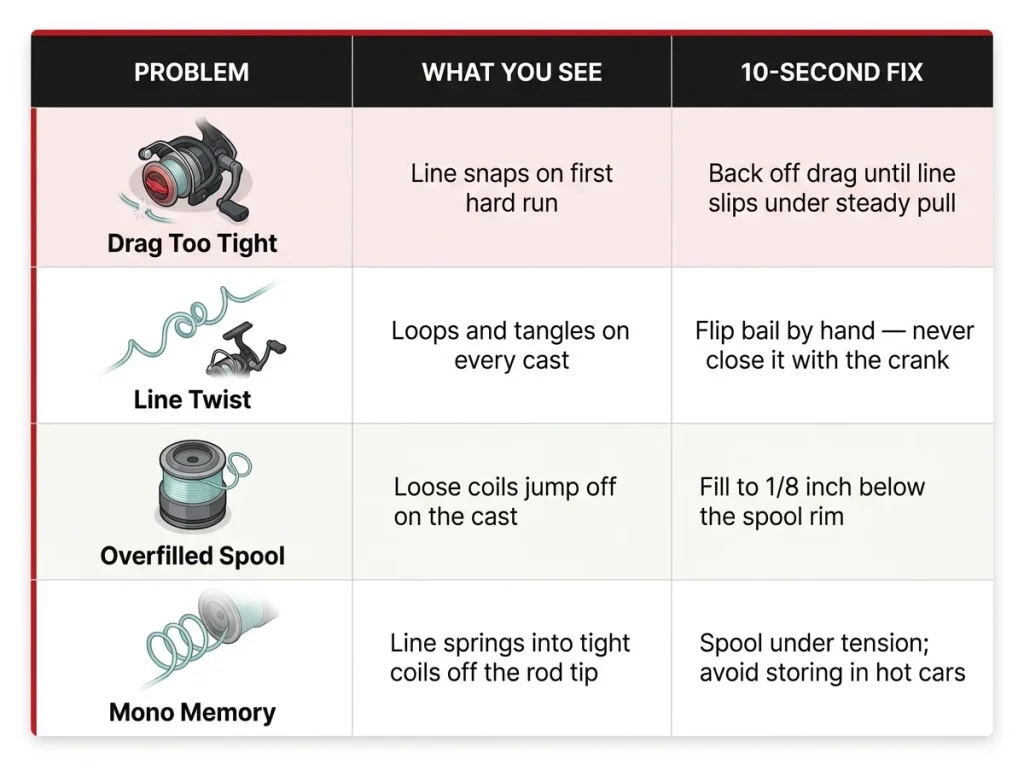
The most common beginner reflex is to crank the drag all the way down so the fish can’t take line. Then the first decent fish turns, the line doesn’t give, and it snaps or pulls the hook in the first second. Set the drag to about 20 to 30 percent of your line’s rated strength instead, which on 10-pound line is only about two and a half to three pounds of pull. That one drag adjustment is the highest-value habit of your first season.
That number looks too low until you remember a running fish adds water resistance, your line may have a nick, and your knot is only about 80 percent as strong as the line itself. The low setting is your safety margin, and it covers all three. If pound test still confuses you, we explain why pound test isn’t the break point you think it is.
You don’t need a scale to set drag right. Tie your line to something solid, then pull straight off the rod tip with the rod bent like you’re fighting a fish. When the line slips out under steady, moderate resistance instead of locking up, you’re in the 20 to 30 percent ballpark.
The Bird’s Nest, Line Twist and Overfilled Spools
The tangle that erupts off your spool has two usual causes. The first is line twist from closing the bail with the handle, fixed by flipping the bail by hand. The second is an overfilled spool throwing loose loops, fixed by filling to an eighth-inch below the rim. Both show up as a sudden nest of loops on the cast, and both are about how you loaded and closed the reel, not how you cast. Clean casting actually starts before you ever swing the rod, which is why a properly filled spool casts farther with fewer tangles.
Taming Mono Memory
Fresh mono wants to hold the coils it learned on the spool, and that memory comes off in springs that birth tangles. Spool it under light finger tension so it lies flat, and store the rod out of a hot car, since heat sets the coils harder. A little stretch on the first few casts relaxes the rest. Respect memory when you load the reel and it stops being a problem for the rest of the season.
Your First Rig and First Lures
You’ve got a combo, line, and tackle. Now you need one simple rig to tie and a tiny handful of lures that catch fish without any technique at all. This is where the whole setup finally goes in the water.
The Simple Bobber Rig (Start Here)
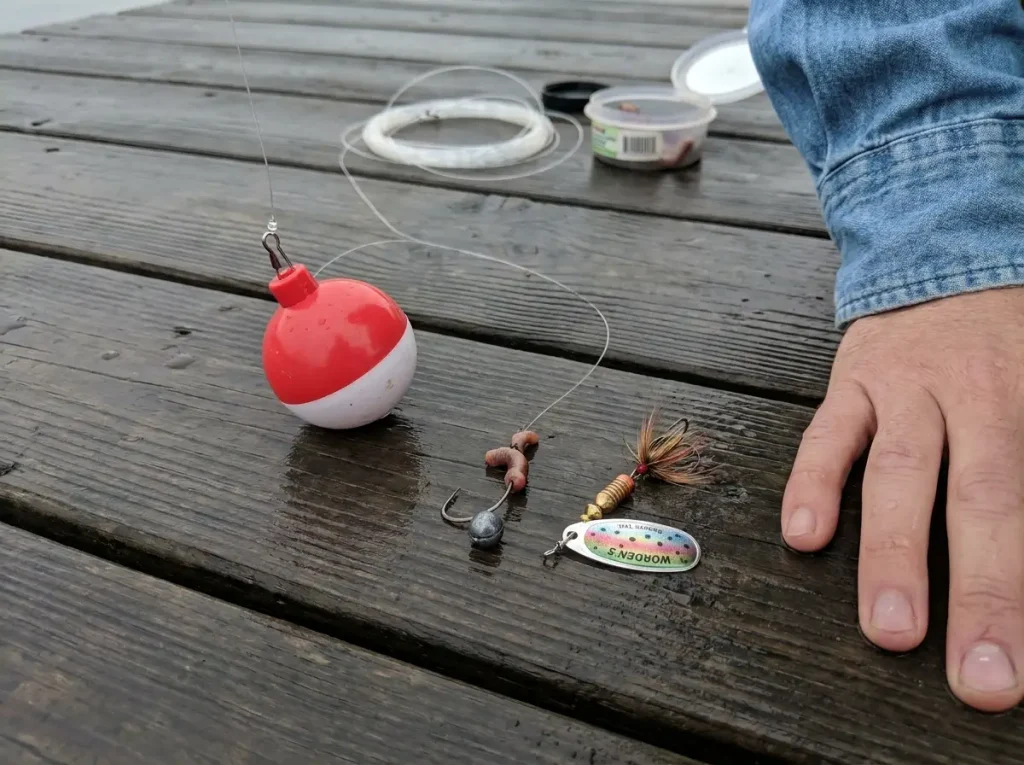
The bobber rig is the perfect first rig, and it’s exactly what it sounds like: a float on the line, a hook a foot or two below it, and a split shot for weight. The bobber tells you instantly when a fish bites and holds your bait at a set depth so it’s right in the strike zone. Our walkthrough on fishing a simple bobber rig for the right depth gets you dialed in. When you want a bottom option, a running sinker rig (also called a Carolina rig) with the weight sliding above a swivel is the easy next step.
Tie two or three bobber rigs at home the night before, hooks and split shot and all, and wind each one around a pool noodle or a scrap of pipe insulation. When you break off on the water, you clip on a fresh rig in seconds instead of fumbling a knot with cold hands while the fish are still biting.
Three Lures That Catch Anything
Three lures cover an absurd amount of water for a beginner. The Worden’s Rooster Tail inline spinner in a 1/16 ounce is the cast-and-reel lure that catches panfish, trout, and bass with zero technique. The Rapala Original Floater is a floating minnow that swims itself on a slow retrieve and proves you can catch fish on a hardbait your first day out. If largemouth bass are your target, both of these belong in the box.
Live Bait vs PowerBait for a First Fish
For a guaranteed first fish, especially on stocked trout, it’s hard to beat dough bait. Mold a pinch of Berkley PowerBait Trout Dough onto a hook under your bobber and let it sit, and the scent does the work. Live worms like nightcrawlers do the same job if you’d rather fish bait. Either one gets you a bite, and if trout are your thing, our field-tested guide to catching trout covers where and how to start.
The Complete First-Trip Checklist (Beyond Rod, Reel, Line)
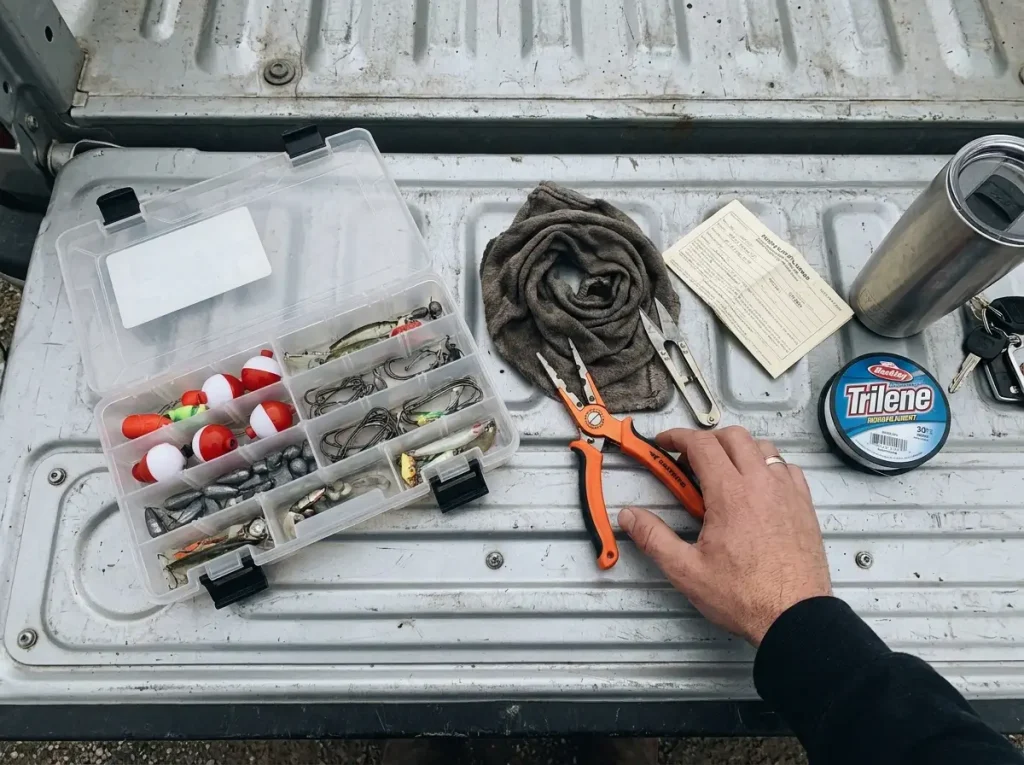
A finished setup still leaves you stuck on the bank if you forget the small stuff. This is the run-through that catches everything before you leave the driveway, and it’s the list competitors scatter across ten paragraphs instead of handing you straight.
The License, Don’t Skip It
Before you make a single cast, you need a fishing license, and it’s legally required in every U.S. state. Five minutes online the night before covers it, and you can buy a fishing license that’s required in every state before your first cast directly through the federal portal or your state agency. The money funds the fishery you’re about to fish, so it’s the rare fee that comes back to you. Many states exempt kids and seniors, but assume you need one until you check, along with the local bag limit and size limit for whatever you plan to keep.
The Tools That Earn Their Spot
A pair of pliers earns its place on the first trip. The KastKing Cutthroat fishing pliers cut line, back a hook out of a fish, and crimp split shot onto your line, which is three jobs in one tool. Pair that with a set of line clippers and you’ve covered nearly every on-the-water fix a beginner runs into.
The Packable Grab-List
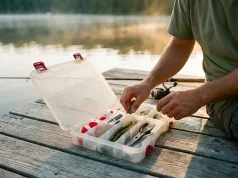
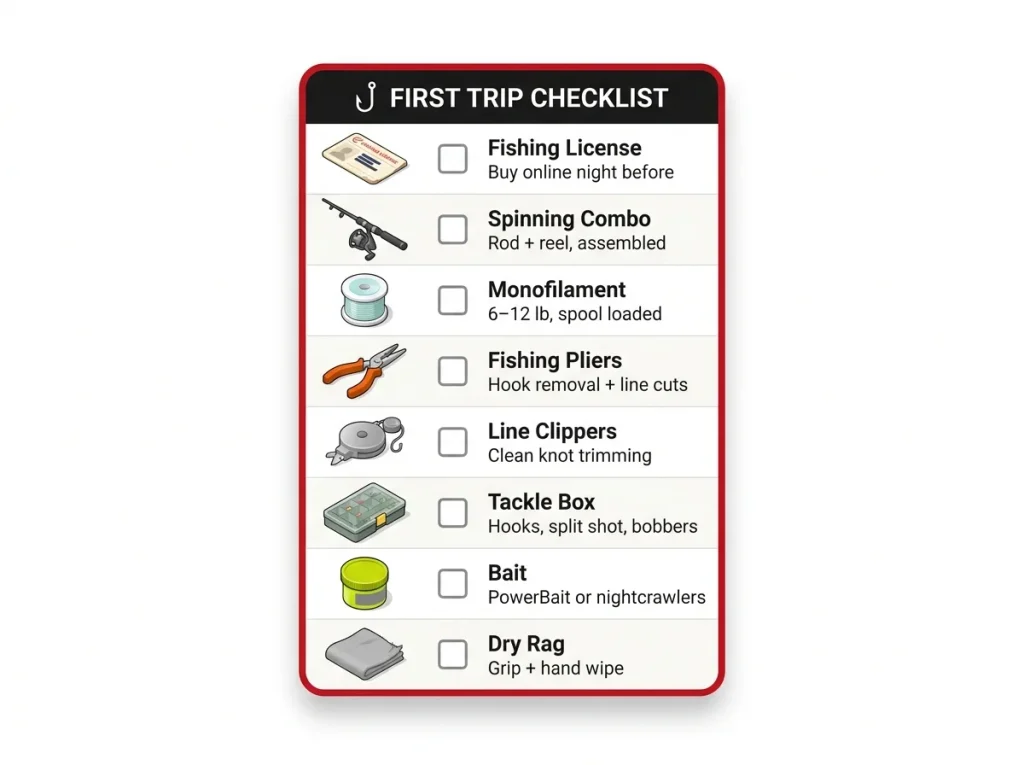
One small box holds the rest. The Plano 3600 StowAway fits your whole terminal tackle kit in adjustable compartments, and the full grab-list is short: license, combo, mono, pliers, clippers, the tackle box of hooks and split shot and bobbers, bait, and a rag to wipe your hands. That’s a complete first trip in one bag. If you want it cross-checked, our 7-item beginner kit that won’t collect dust and our essential gear checklist to start fishing both line up with this.
Freshwater vs Saltwater — What Changes for Your First Setup
Almost everything in this guide assumes you’re starting in freshwater, and you should. It’s cheaper, lower-maintenance, more forgiving, and the fastest path to a first fish. But if you’re near the coast and tempted to start in the salt, three things change.
Why Beginners Should Start Freshwater
Freshwater gear costs less, needs less upkeep, and the fish forgive a learning curve. A pond or a slow river is a far gentler classroom than the surf, and the whole budget-combo approach to freshwater fishing in this guide is built around it. Get your reps in freshwater first, then branch out.
The Three Things Saltwater Changes
Salt is corrosive, so the first change is materials: you want corrosion-resistant components and a sealed reel, or salt will seize it within a season. The second is line and weight, since saltwater fishing runs heavier line and heavier sinkers than a light freshwater panfish rig can handle. The combo logic doesn’t change, but the line test and the weights step up. For the full comparison, our breakdown of saltwater versus freshwater gear covers it, and you can check NOAA’s recreational fishing resources for saltwater regulations before you go.
Rinsing, the Habit That Saves Your Reel
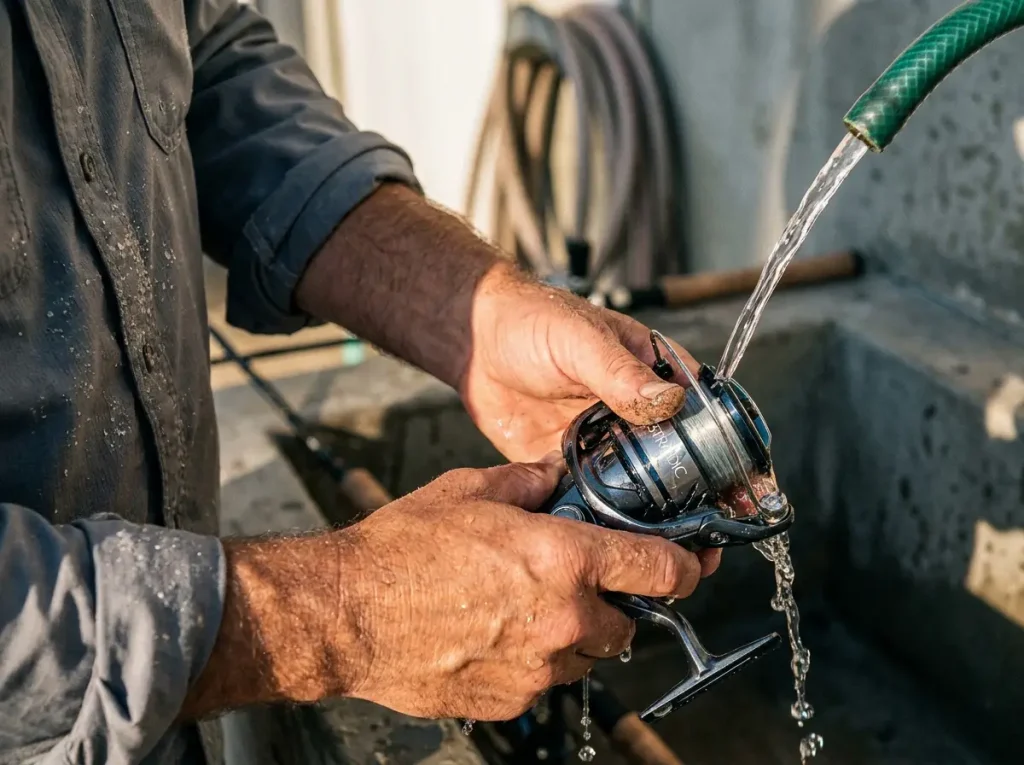
The third change is a habit, not a purchase: rinse your reel and guides with fresh water after every saltwater trip. Skip it and salt crystals work into the reel and seize it. Thirty seconds with a hose is the difference between a reel that lasts years and one that’s done by fall.
Landing and Releasing Your First Fish the Right Way
There’s a quiet part of a first catch nobody teaches, and it’s the part that decides whether that fish swims away healthy. Landing it is only half the job. Handling it right is the rest, and it’s woven into being a good angler.
Landing the Fish Without Losing It
When a fish bites, set the hook with a smooth, firm lift, not a violent yank. Let the rod and the drag do the work, keep the line tight, and don’t horse the fish in. A cheap landing net makes those last few feet easier and is gentler on the fish than swinging it up by the line. Most first fish are lost in the last few feet because of slack line or a panicked reel-and-rip, so stay steady and let the gear earn its keep.
Handling It Without Hurting It
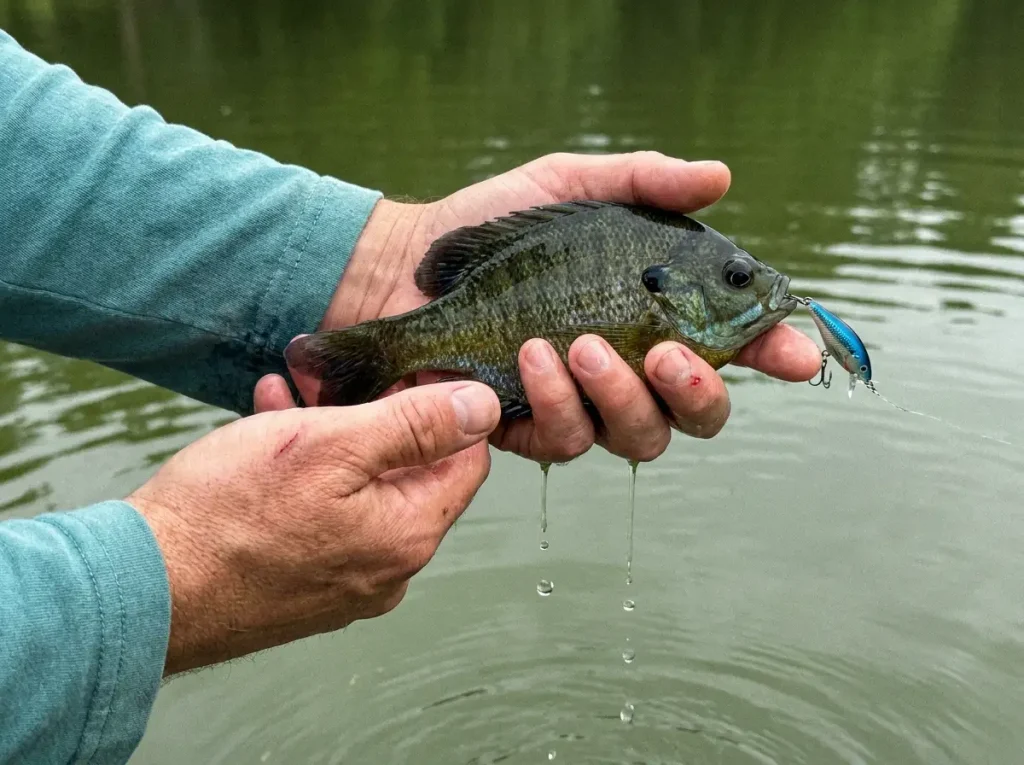
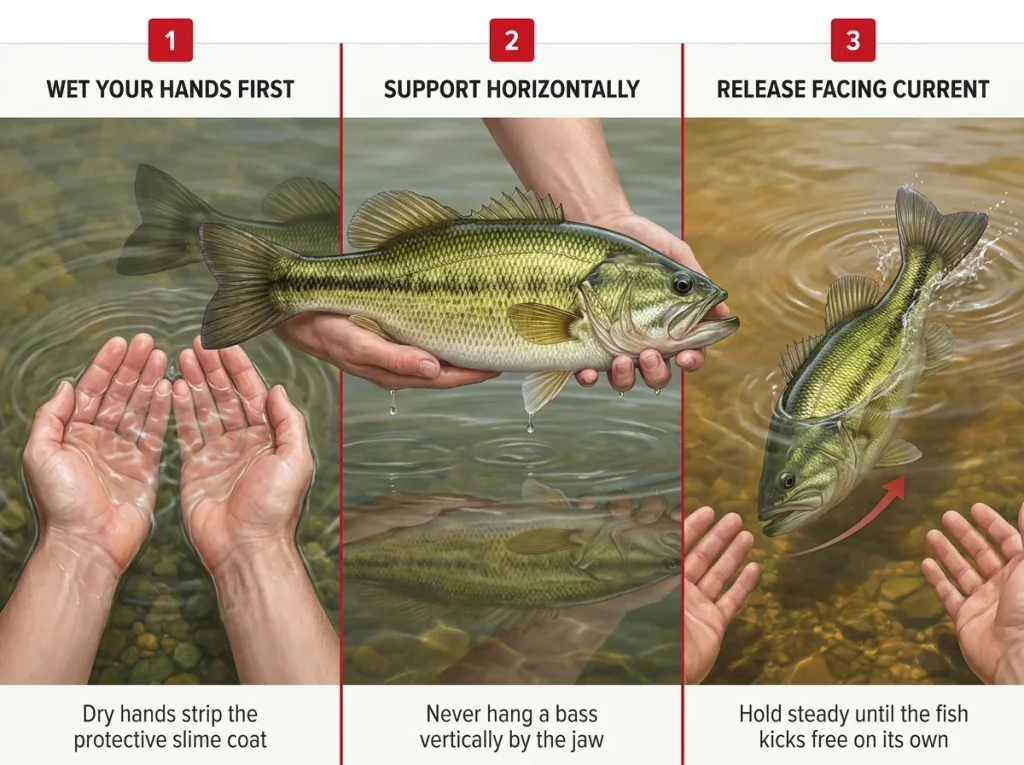
Wet your hands before you touch the fish. Dry hands strip the slime coat that protects it from infection, and that’s the most common fish handling mistake new anglers make. Cradle it horizontally with both hands and never hang a fish vertically by the jaw, which can stress its organs. Pinching the barb on your hook, or going barbless, makes this whole step faster and easier on the fish.
A Clean, Quick Release
If you’re practicing catch-and-release, do it fast. Hold the fish in the water facing into any current until it kicks free on its own, and don’t drop it from height. The quicker it’s back in the water, the better its odds. Your state agency is a genuinely good resource here, and many publish free beginner basics through their fish and wildlife agency covering handling and local regulations.
Bringing It All Together
Your first setup was never supposed to be complicated. One balanced combo beats a pile of mismatched parts, a spool of forgiving mono covers your mistakes, and a small box of tackle does the rest. Set your drag loose and flip the bail by hand, and you sidestep the two failures that wreck most first trips. Buy the license, throw a pair of pliers and a small tackle box in the bag, and you’re genuinely ready.
So go do it. Grab a combo, spool it up tonight, and put it in the water this weekend. Your first fish will teach you more than any guide can, and now you’ve got the setup to go catch it.
Frequently Asked Questions
01What’s the best fishing line for beginners, mono, fluoro, or braid?
Monofilament in 6 to 12 pound test. Its stretch forgives yanked hooksets and a drag set wrong, and it ties clean, easy knots. One spool of 8-pound mono lasts a whole season, so save braid and fluorocarbon for when you have a specific reason to switch.
02Is a spinning reel or a spincast reel easier for beginners?
A spincast reel is the simplest to cast, which makes it great for young kids. A spinning reel is barely harder to learn and far more versatile as you improve, so most beginners are better off starting with a spinning combo.
03How much should a beginner spend on a starter fishing setup?
A balanced spinning combo plus line, basic tackle, and a license is all you need to start. The most common money mistake is overspending on premium individual parts instead of one matched combo, which a beginner won’t out-fish anyway.
04Do I need a fishing license to start fishing?
Yes. A fishing license is legally required in every U.S. state before your first cast. Buy it online the night before or at most sporting-goods and bait shops. Many states exempt kids and seniors, but check your state agency to be sure.
05Why does my line keep tangling on a brand-new reel?
Almost always line twist from closing the bail with the handle, or loose loops from an overfilled spool. Flip the bail by hand before reeling, and fill the spool to about an eighth-inch below the rim. Those two habits fix nearly every new-reel tangle.
Risk Disclaimer: Fishing, boating, and all related outdoor activities involve inherent risks that
can lead to injury. The information provided on Master Fishing Mag is for educational and informational purposes
only. While we strive for accuracy, the information, techniques, and advice on gear and safety are not a substitute
for your own best judgment, local knowledge, and adherence to official regulations. Fishing regulations, including
seasons, size limits, and species restrictions, change frequently and vary by location. Always consult the latest
official regulations from your local fish and wildlife agency before heading out. Proper handling of hooks, knives,
and other sharp equipment is essential for safety. Furthermore, be aware of local fish consumption advisories. By
using this website, you agree that you are solely responsible for your own safety and for complying with all
applicable laws. Any reliance you place on our content is strictly at your own risk. Master Fishing Mag and its
authors will not be held liable for any injury, damage, or loss sustained in connection with the use of the
information herein.
Affiliate Disclosure: We are a participant in the Amazon Services LLC Associates Program, an
affiliate advertising program designed to provide a means for us to earn advertising fees by advertising and linking
to Amazon.com. As an Amazon Associate, we earn from qualifying purchases. We also participate in other affiliate
programs and may receive a commission on products purchased through our links, at no extra cost to you. Additional
terms are found in the terms of service.