
In this article
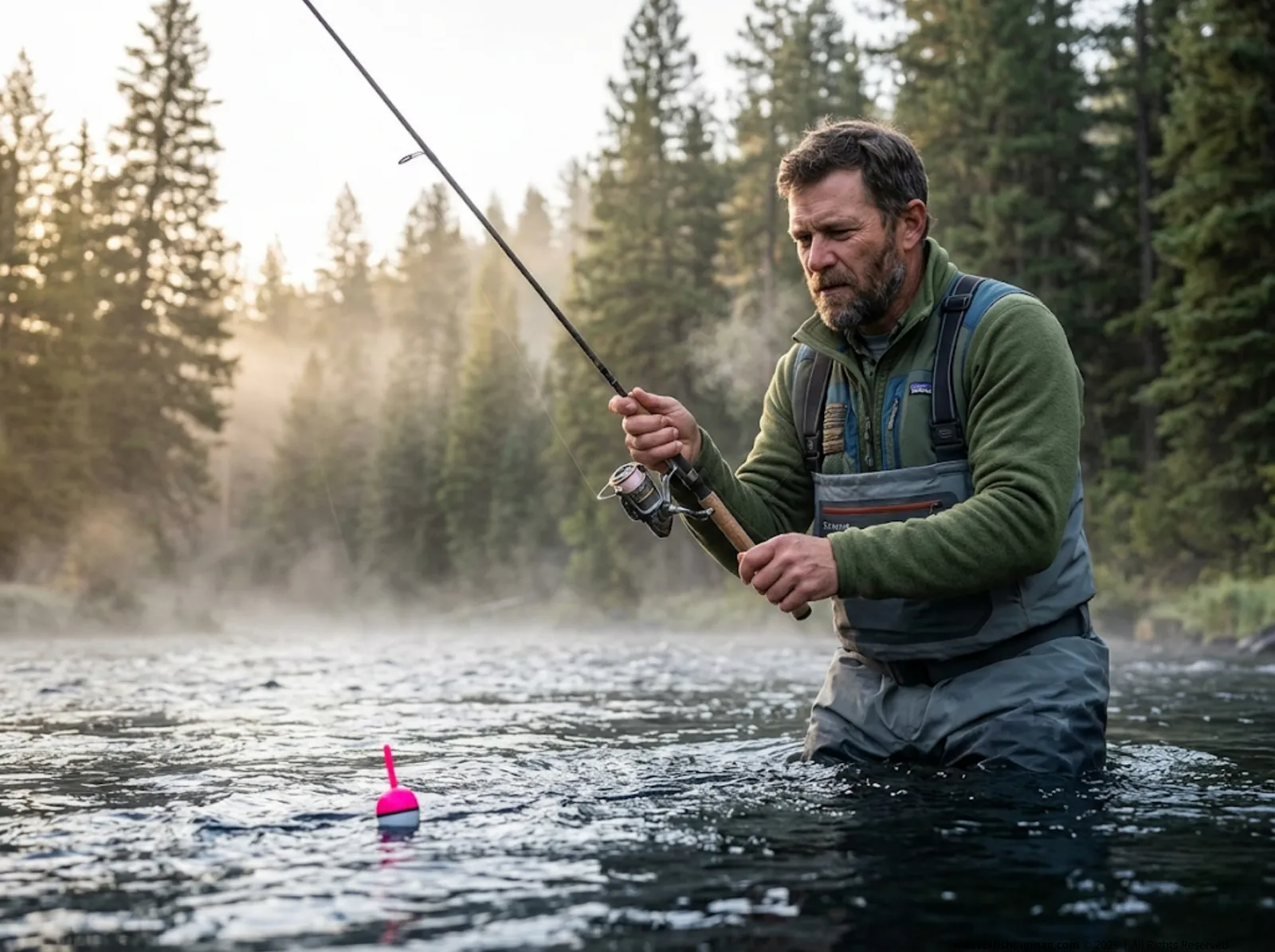
The float hits the water with a jarring sploosh. Excess fishing line tumbles over itself in a tangled heap, and any fish within a twenty-foot radius immediately spooks for the deep water. Most fishermen chalk this up to bad luck, but the reality is a failure of physics and fluid dynamics. After twenty years guiding on freestone rivers and big glacial lakes, I’ve watched hundreds of clients struggle with the same basic errors.
We are deconstructing the mechanics of a basic bobber rig—transforming it from a beginner’s crutch into a precision depth-control instrument that leverages buoyancy, hydrodynamics, and biological science to put bait exactly where suspended fish feed. Here is exactly how to handle it, no panic or tangled messes necessary.
⚡ Quick Answer: To fish a simple bobber rig for perfect depth control, assemble a slip bobber system using a stop knot, buffer bead, float, split-shot pattern, and hook. Plumb the depth using a heavy weight to find the bottom, then adjust your stop knot to suspend your bait in the low-velocity boundary layer just above the substrate. Prioritize slender, aerodynamic floats to reduce drag and switch to high-density tungsten weights to increase sensitivity and protect wildlife.
The Science of Float Performance and Fish Biology
Upward Push and Neutral Equilibrium
I see guys walk down to the bank and clip a massive round bobber onto their line like they are hanging Christmas ornaments. They toss it out and wonder why an educated trout or bass spits the nightcrawler before they can even set the hook. The answer comes down to basic buoyancy logic.
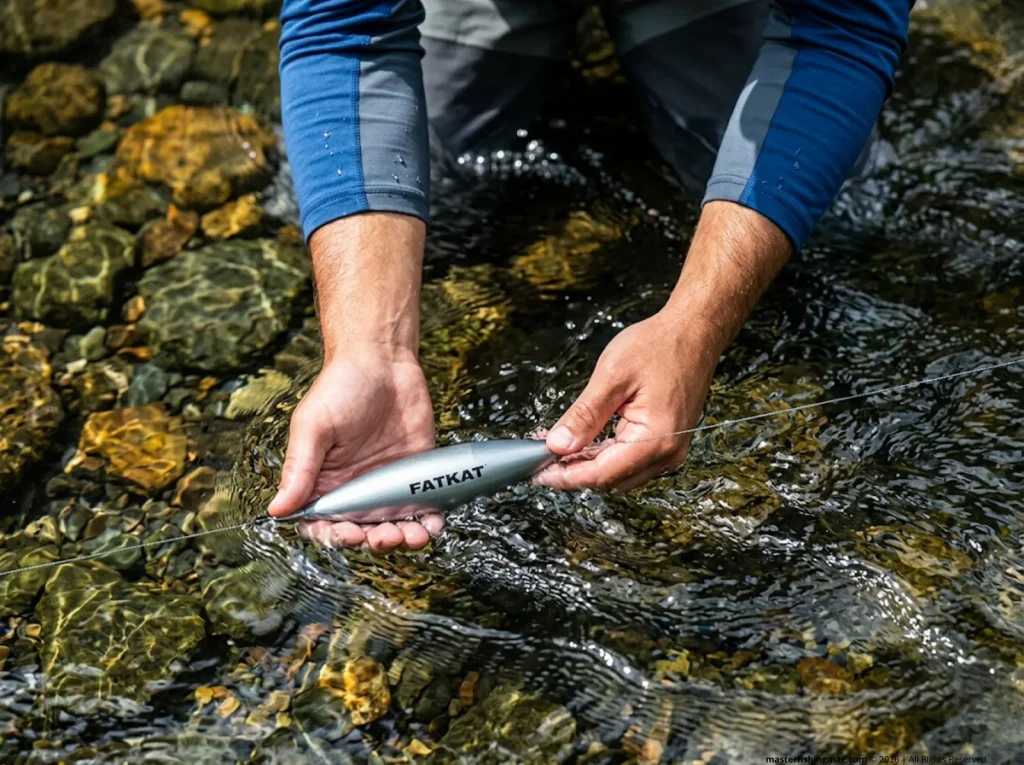
The upward push of your float matches the exact weight of the water it pushes out of the way. You want to achieve “neutral equilibrium.” This simply means you add just enough weight so the float barely breaks the surface. When you perfectly balance a sinker with a bobber, the fish feels almost zero resistance when they pull it under.
Water Resistance: Round Bobbers vs. Torpedo Profiles
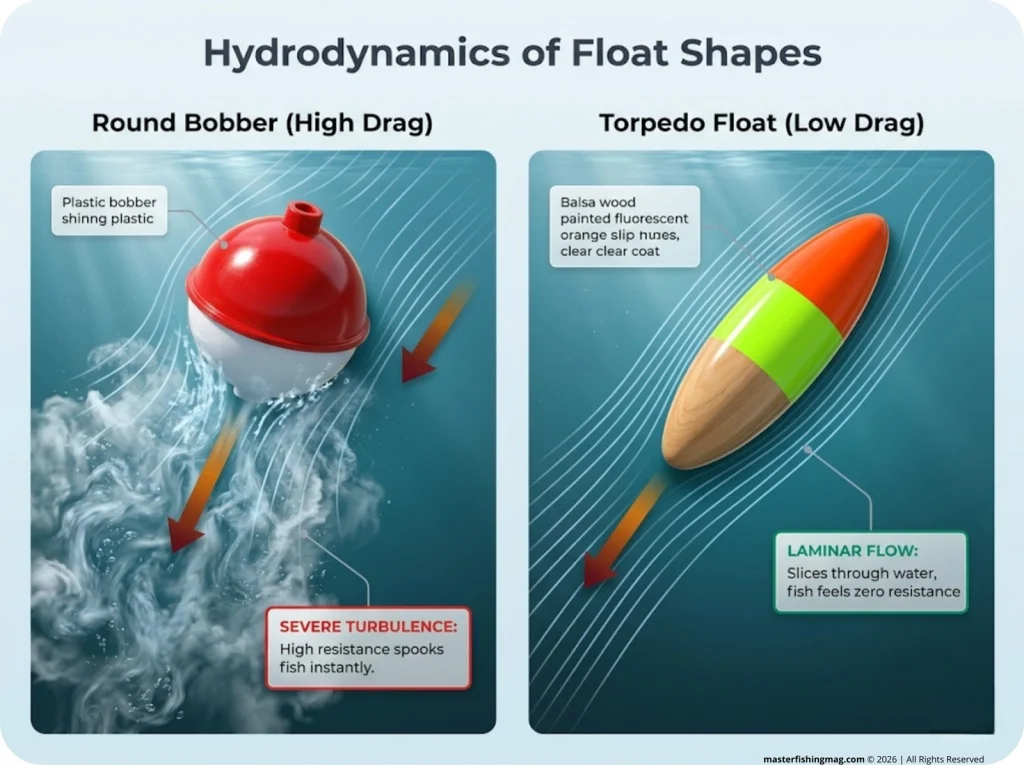
If you look at the classic plastic spheres people buy by the dozen, they are aerodynamically terrible underwater. When a fish yanks that sphere downward, it forces the object to plow through the water. You are essentially forcing the fish to pull a parachute through liquid.
Swap that sphere for a slender, torpedo-shaped float. Brands like Northland Tackle design these tapered shapes to slice straight through the water. This slims down your setup in the water, so it pulls cleanly with practically no water resistance. By understanding how current seams affect hydrodynamics, you realize that fighting less drag means the fish won’t reject your bait.
The Energy Drain of Bad Setups
Fish operate on a tight biological budget. In warm water or low-oxygen conditions, fish simply don’t have the extra energy to spare. They refuse to waste effort fighting a high-drag rig. If you see your bobber lolling sideways without going under, the fish has felt the resistance and dropped the bait.
A heavily unbalanced rig also creates a massive splash when it lands. That disruptive entry startles cautious predators hanging in shallow water. A refined rig enters quietly, maintains neutral buoyancy, and respects the natural energy limits of your target species.
Rig Assembly: Building Your Terminal Tackle

The Mainline-to-Float Connection: Slip vs. Fixed
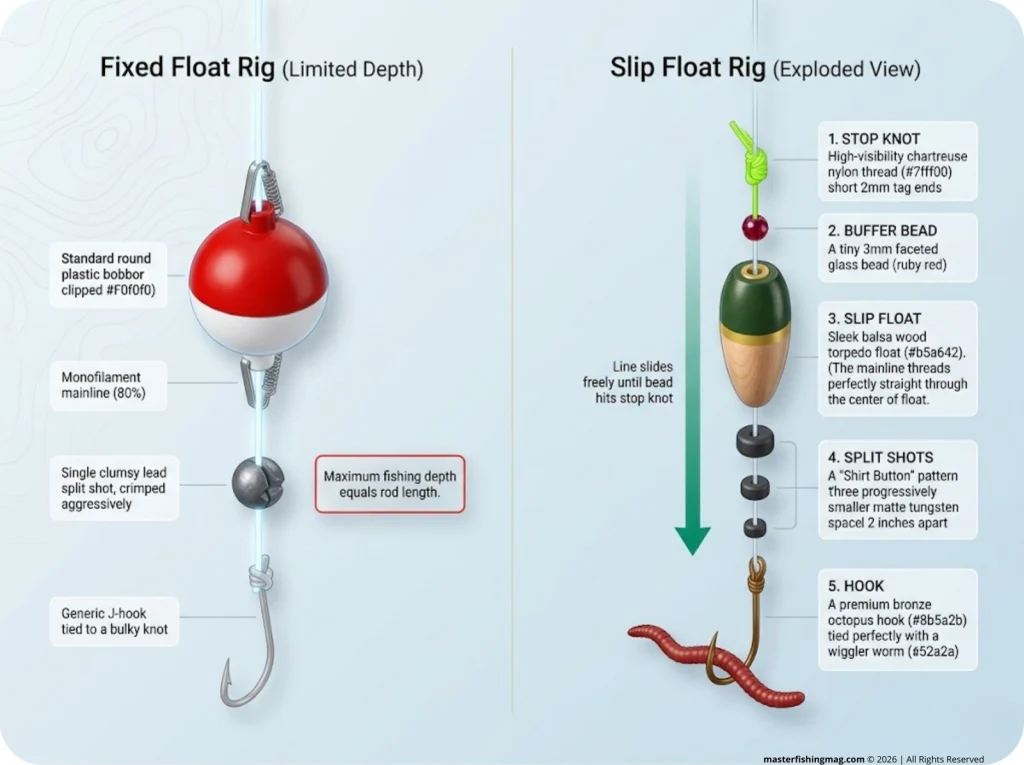
Most anglers start with a fixed clip-on float or a spring bobber. It relies on either a push the button or button attachment mechanism. You release the spring or actuate the spring attachment mechanism to bite down on the line. But fixed floats cap your fishing depth to about half the length of your rod. If you need to go ten feet down, you physically can’t cast a fixed rig.
A slip float solves this entirely. The line runs straight through the core of the float. You control the depth using tiny nylon bobber stops tied directly onto the mainline. This setup requires you to use the exact rig component order: stop knot, buffer bead, the float itself, the weights, and finally the hook.
The “Shirt Button” Sinker Pattern
Don’t pinch a single giant chunk of lead right above your hook. That creates a heavy pendulum effect that acts totally unnatural. Instead, utilize a tapered presentation setup.
Space several small split-shot sinkers out by a few inches, like the buttons on a dress shirt. Proper split shot placement forms a smooth parabolic curve in the leader as the current pushes against it. This allows your bait—whether a minnow or when you slide the worm on a small hook—to drift naturally and lead the rest of the rig through the strike zone.
Pro-Tip: Never pinch split shots tightly with your teeth or hard steel pliers directly over weak spots in the line. Crimp them gently to prevent cutting the line core.
Knot Selection and Brass Grommets
When tying your hooks or swivels, a standard clinch knot works perfectly fine. Just remember to leave a very short tag end so it does not grab debris in the water. High-quality slip floats feature internal brass grommets that prevent the line from slicing into the balsa wood or plastic body.
Knots and stops must pass cleanly through your rod guides and those float grommets. If you are managing monofilament line stretch, use thin nylon stops rather than cheap twine. Nylon won’t absorb water, won’t rot, and won’t burn the line when you slide it up and down.
The Mechanics of Perfect Depth Control
Plumbing the Depth for the Bottom Transition
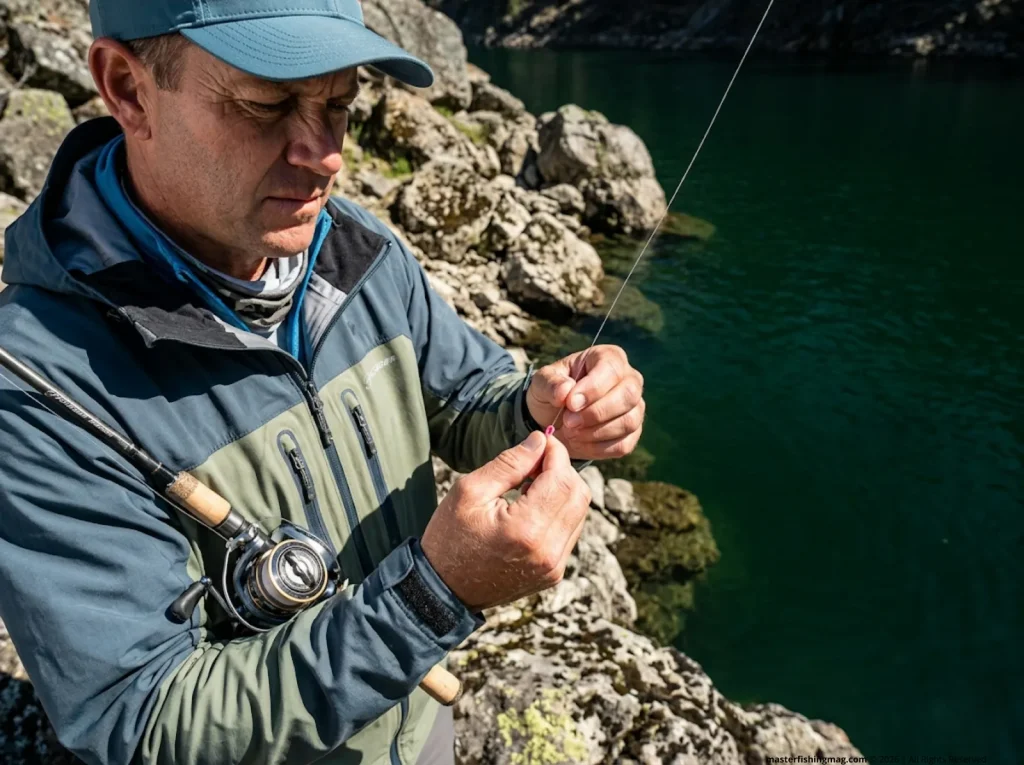
To consistently catch fish, you have to know exactly where the bottom is located. Plumbing the depth accurately means clipping a heavy plummet weight to your hook and dropping it straight down into the water.
If your float lays flat on the surface, your line is set too deep. If the float sinks completely out of sight, you are too shallow. Adjust until the tip of the float sits exactly at the surface. That is your baseline. From there, subtract six inches from your stop knot to fish just off the bottom structure.
Riverbed Friction and Flow Velocity
Water does not flow at the same exact speed from top to bottom. The riverbed generates heavy friction. This means water drags and slows down right next to a rocky bottom, while the middle runs fast. A silt bottom flows differently than jagged gravel.
Fish are smart enough to stay out of heavy currents. They do not fight fast surface water all day. They drop down to the area tightly hugging the bottom where the current drastically slows down. You need to find the marginal shelf where the flow breaks naturally. The main goal is matching subsurface current speed by keeping your bait suspended right in that slow water.
The “Tripping Bottom” Technique
When you achieve perfect depth control, your bait will occasionally graze the gravel or sand. We call this “tripping bottom.” If you are setting bobber depth correctly, your float will tick and lean slightly as the bait bounces over small rocks.
This keeps your bait right in the lower boundary layer target zone. Whether you are floating a single egg or suspending jig heads under floats, tripping bottom guarantees you are in the prime feeding lane.
Pro-Tip: If the wind is howling, use a slender waggler float and sink your rod tip underwater after the cast. This sinks the mainline and gives you excellent wind drift control, preventing the breeze from pulling your bait out of the zone.
Casting Strategies: Eliminating the Helicopter Effect
The Physics of Tangles in the Air
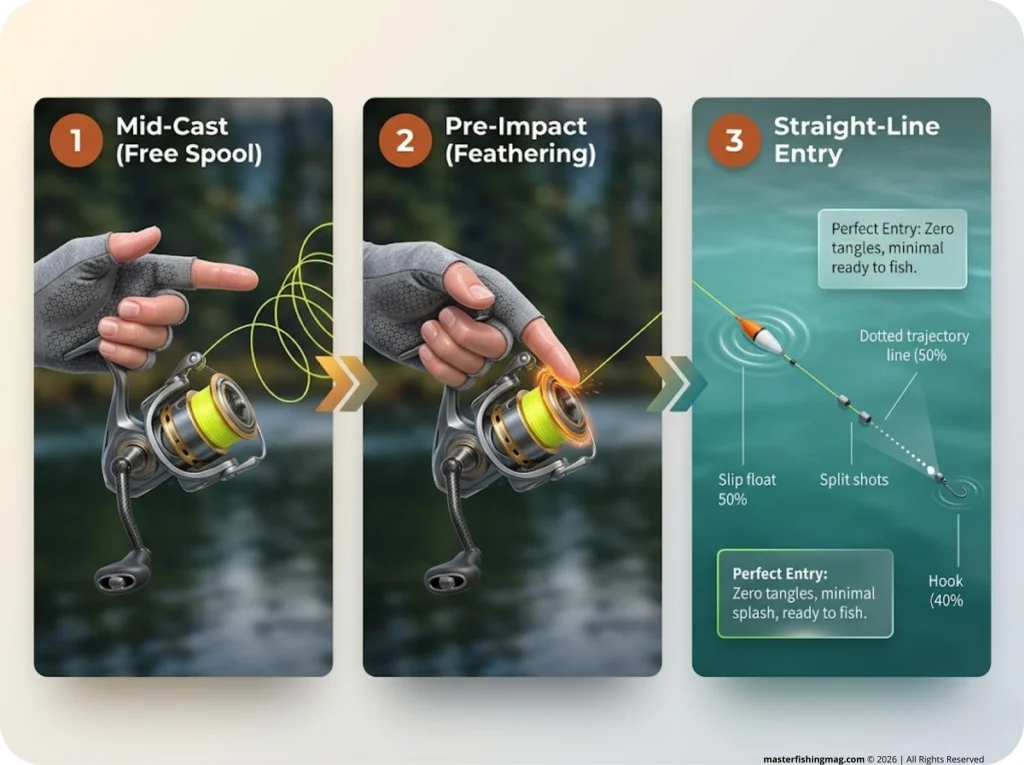
We have all thrown a rig that tumbles end-over-end in the air exactly like a helicopter rotor. That spinning effect destroys casting distance and almost guarantees casting tangles. The hook wraps around the mainline, hits the water, and forms an ugly ball of tackle. You sit there completely oblivious, fishing with a useless ball of line.
Fixed floats with long leaders are notorious for this because the weight is distributed awkwardly. Slip floats concentrate the mass—the float and sinker—at the very end of the line during the entire cast.
Feathering the Line for Straight-Line Entry
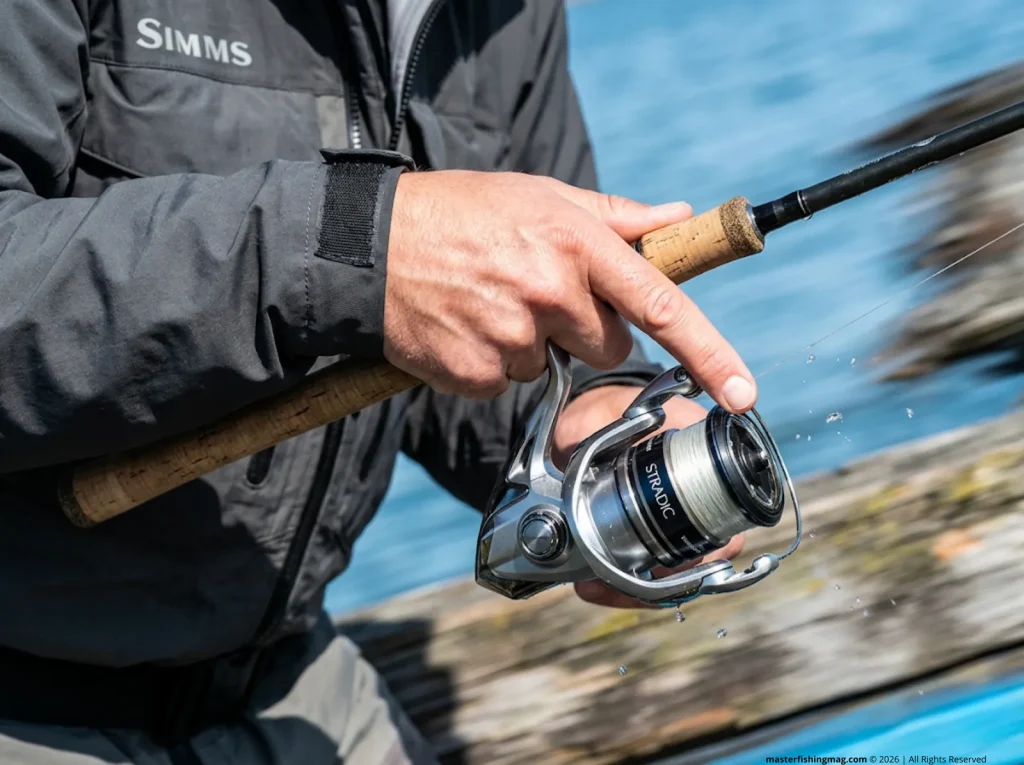
You must master the physical technique of feathering. Right before the rig hits the surface, lightly press your index finger against the edge of the spinning reel spool. This applies sudden, gentle friction to the line flying out.
The forward momentum of the sinker kicks the hook out ahead of the float. The entire rig straightens out completely in mid-air. It lands in a perfect line, eliminating tangles entirely and minimizing the splash. If you want to improve your casting accuracy, start by feathering every single cast you make.
Using Rod Length to Measure Drift Distances
Stop guessing your depths blindly. Use your rod as a giant yardstick. If you fish a seven-foot rod, you know exactly what fourteen feet of line looks like.
When you strip line off the reel to adjust your stop knot, pull it back tight against the rod blank. This gives you exact, repeatable measurements every time. This kind of precision helps you minimize the time you waste re-rigging when you snag the bottom because you guessed wrong initially.
Strike Detection and Proper Fish Handling
Reading Float Behavior Like Sonar
A properly balanced float is not simply a bobber; it acts as your visual sonar. It translates exactly what is happening right under the surface.
A sharp, violent plunge usually means an aggressive predator just inhaled the bait. Read the subtle signs too. If the float bounces lightly, a fish is inspecting it. If it moves sideways without sinking against the current, a fish has taken the bait and is swimming up-river. Use these visual clues as your sonar to dictate exactly when you strike hard.
The Energy Cost of Catching Fish
Fish fight hard naturally, but that struggle burns huge amounts of chemical energy. The stress of capture causes their systems to dump adrenaline rapidly. In a desperate bid for energy, they start frantically burning emergency fuel reserves.
If you fight them too long, you are flooding their muscles with lactic acid. Fish exhausted by long, drawn-out fights can take up to ten hours just to catch their breath and rest. Some simply don’t survive the exhaustion after you release them back into the water.
The 60-Second Quick Release Rule
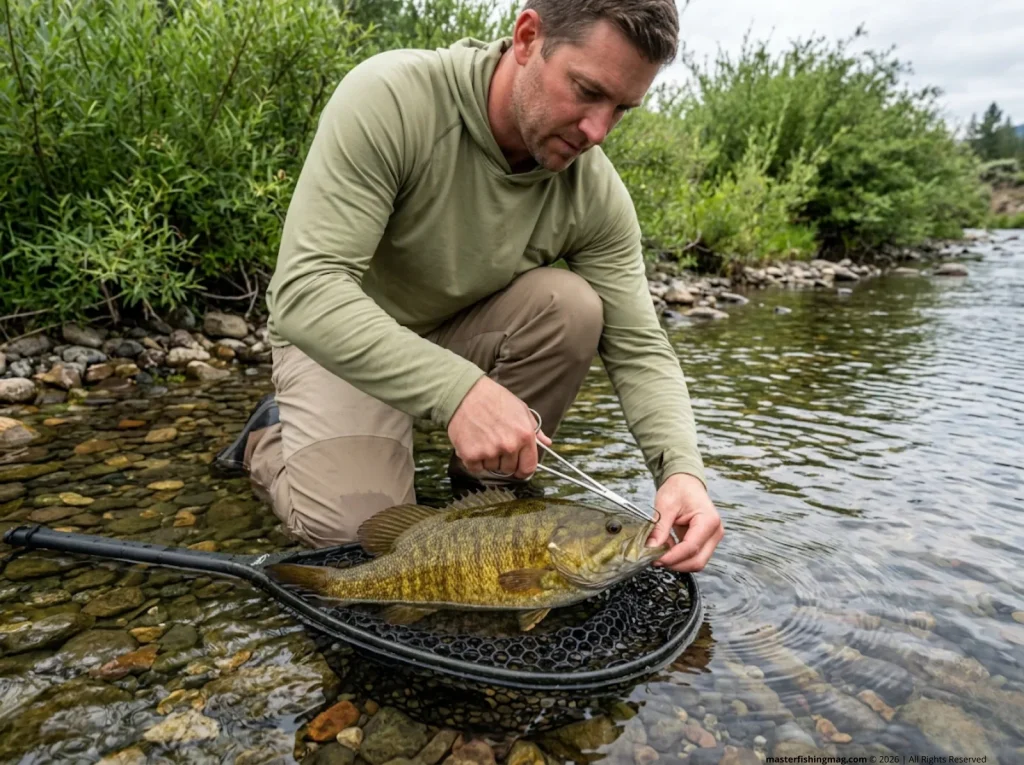
When that bobber drops, set the hook hard and bring the fish to the net fast. I strictly follow the 60-second rule. From the moment the fish hits the net, it never stays out of the water for more than sixty continuous seconds.
Keep them wet, use long pliers to back the hook out smoothly, and never wipe off their protective slime coat with a dry rag. Adhering to strict first fish handling protocols ensures the local fishery stays healthy for the next generation.
Pro-Tip: Swap your standard hooks for circle hooks or crush the barbs down flat on your regular J-hooks. Circle hooks naturally catch the corner of the mouth to stop deep gut-hooking issues.
Sustainable Terminal Tackle Choices
The Threat to Common Loons and Local Birds
Using a massive lead chunk has a hidden cost that goes far beyond snagging a rock. Data from the Loon Preservation Committee shows that in regions like New England, lead fishing tackle points to nearly half of documented adult common loon mortalities. A single ingested lead split shot under one ounce can fatally poison a full-grown loon in a matter of weeks.
Toxic lead leaches heavily into the ecosystem and moves right up the food chain. Wildlife biologists from the U.S. Fish and Wildlife Service report lead fragments impacting dozens of avian species directly. Shifting over to sustainable terminal tackle is no longer optional for serious anglers.
Tungsten Upgrades Deliver Real Performance
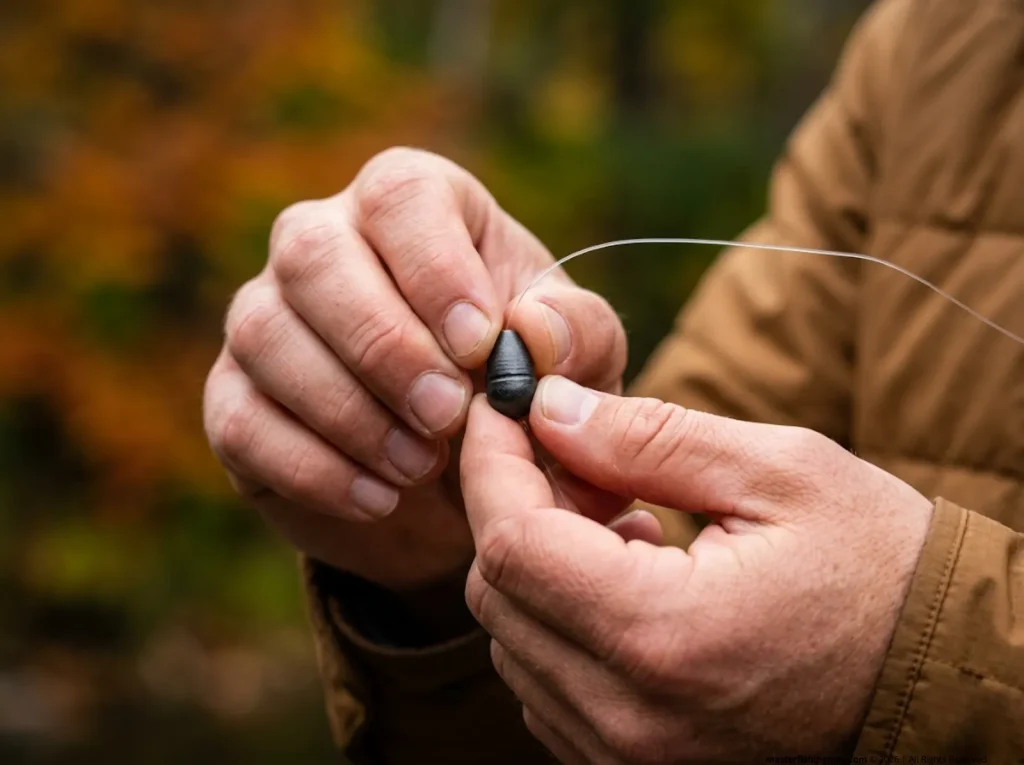
Moving over to lead-free terminal tackle is actually a massive gear upgrade on the water. Tungsten packs roughly 70 percent more weight into the exact same physical size as lead. You get a much heavier sink rate in a footprint that is notably smaller.
Because tungsten is intensely hard, it creates a tactile hard click when it strikes rocks. You feel the bottom composition much better through the rod tip. It slices through the fast water, sinks straight down, and resists snagging between rocks. You draw fish in through sound alongside the visual profile of the bait simply because the hard tungsten pings loudly against the gravel.
Field Regulations and Magnetic Steel
As states push heavier zero-lead standards for 2026, many smart anglers are switching to high-density magnetic steel. This allows local conservation officers to quickly check compliance with a magnet on the water, effectively preventing lead poisoning in waterfowl and wildlife without forcing them to cut your line. Steel and tungsten cost slightly more upfront, but they perform far better than soft, toxic lead.
Final Thoughts
The basic bobber rig turns into an incredibly precise tool once you respect the mechanics behind it. By selecting streamlined floats, feathering your casts to lay the line straight, and setting your depth to skim the bottom boundary level, you place your bait exactly where the big fish hunt. Swap your tackle over to dense tungsten, and you will out-fish the guys throwing giant plastic spheres all day long. Next time you hit the bank, rig up a slip float and prove it for yourself.
FAQ
How far should the distance between hook and bobber be?
The distance between hook and bobber should equal the exact depth of the water column minus six to twelve inches so your bait stays just off the bottom substrate. Use a heavy plummet weight to find the absolute bottom. Then measure the line and slide your stop knot down slightly so the bait drifts freely over snags.
What goes first on the line, the sinker or the bobber?
The bobber always sits higher on the mainline, with the little sinker placed straight beneath it. If you build a slip rig, thread the tiny stop knot first, then the beads, the slip float, the split shot weights, and finish by tying the jig head or hook at the very end.
Do you need a sinker with a bobber?
Yes, you absolutely need sinkers to act as ballast to establish neutral buoyancy. Without proper weight, the float lays flat on its side, the wind blows it rapidly across the surface, and your bait takes far too long to sink down into the strike zone.
What hook size for bobber fishing is best?
Your hook size for bobber fishing must match the species and bait size exactly, normally ranging from a tiny #10 for panfish up to a heavier #2/0 for big bass. Always ensure your hook wire is not so heavy that it causes a small, sensitive float to sink entirely under its own weight.
Risk Disclaimer: Fishing, boating, and all related outdoor activities involve inherent risks that
can lead to injury. The information provided on Master Fishing Mag is for educational and informational purposes
only. While we strive for accuracy, the information, techniques, and advice on gear and safety are not a substitute
for your own best judgment, local knowledge, and adherence to official regulations. Fishing regulations, including
seasons, size limits, and species restrictions, change frequently and vary by location. Always consult the latest
official regulations from your local fish and wildlife agency before heading out. Proper handling of hooks, knives,
and other sharp equipment is essential for safety. Furthermore, be aware of local fish consumption advisories. By
using this website, you agree that you are solely responsible for your own safety and for complying with all
applicable laws. Any reliance you place on our content is strictly at your own risk. Master Fishing Mag and its
authors will not be held liable for any injury, damage, or loss sustained in connection with the use of the
information herein.
Affiliate Disclosure: We are a participant in the Amazon Services LLC Associates Program, an
affiliate advertising program designed to provide a means for us to earn advertising fees by advertising and linking
to Amazon.com. As an Amazon Associate, we earn from qualifying purchases. We also participate in other affiliate
programs and may receive a commission on products purchased through our links, at no extra cost to you. Additional
terms are found in the terms of service.