In this article
I spent years clipping a round red-and-white bobber onto my line and wondering why I couldn’t reach fish holding at 8 feet without a tangled mess on every cast. The fix was embarrassingly simple — a slip bobber rig that lets you fish any depth while casting like you’re only working 2 feet of line. Once I switched, my panfish catch rates doubled in a single season. Here’s the complete setup, from rigging to reading the bite.
Quick Answer: To fish a slip bobber for panfish, follow these steps:
- Thread a bobber stop onto your mainline at your target depth
- Slide a small bead below the stop, then thread on the slip float
- Pinch a split shot 12–18 inches above a size 6–8 hook or 1/32-oz jig
- Bait with a cricket, wax worm, or small minnow
- Cast, let the rig settle, and watch for the float to pull under or drift sideways
- Adjust the bobber stop up or down until you find the active depth zone
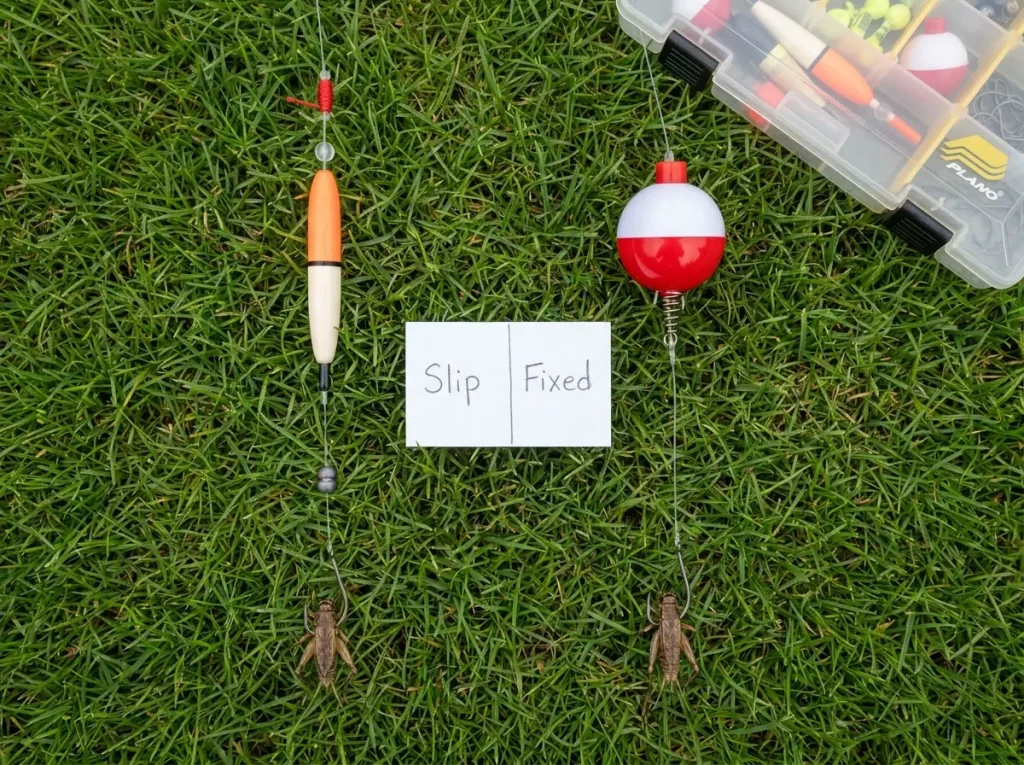
Slip Bobber vs Fixed Bobber
Why the Slip Bobber Wins for Panfish
A fixed bobber clips onto your line at a set point. That works fine when fish are holding at 3 feet or less. The problem starts when crappie suspend at 8 feet over a brush pile or bluegills stack on a deep weed edge at 12 feet. With a fixed bobber set for 8 feet, you’ve got 8 feet of line dangling below your rod tip before the cast — good luck getting that anywhere near your target without a bird’s nest.
A slip bobber solves this by letting the line run freely through the float. When you cast, the float slides down to the weight, keeping everything compact and castable. After the rig hits the water, gravity pulls the bait down while the line slides through the bobber until it reaches the bobber stop — a small thread knot set at your chosen depth. The float pops upright, your bait suspends at exactly the right level, and you’ve just placed a presentation at 12 feet with a cast that felt like fishing 2 feet of line.
For anyone just getting comfortable with how a basic bobber rig works, the slip version is the natural next step.
When Fixed Bobbers Still Make Sense
Fixed bobbers aren’t obsolete — they’re still faster to rig for shallow work. When bluegills are spawning in 2 feet of water along the bank, a clip-on bobber is quicker to set up and easier for kids to manage. Switch to the slip rig when you need depth flexibility or casting distance.
How to Rig a Slip Bobber for Panfish
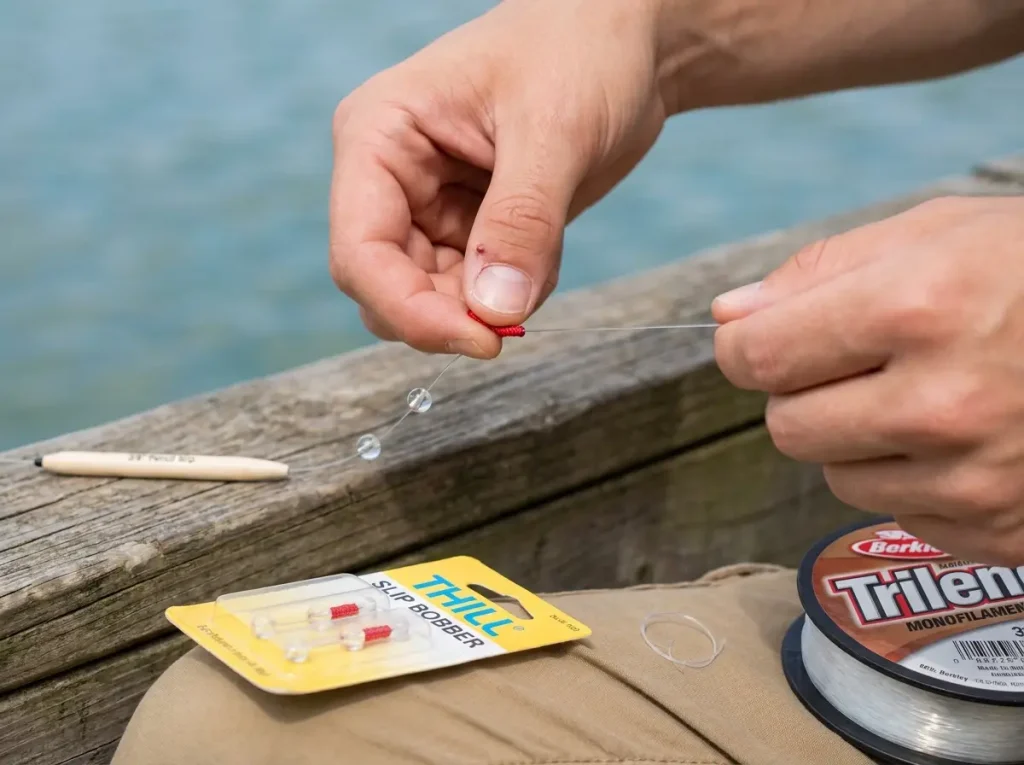
Components in Order
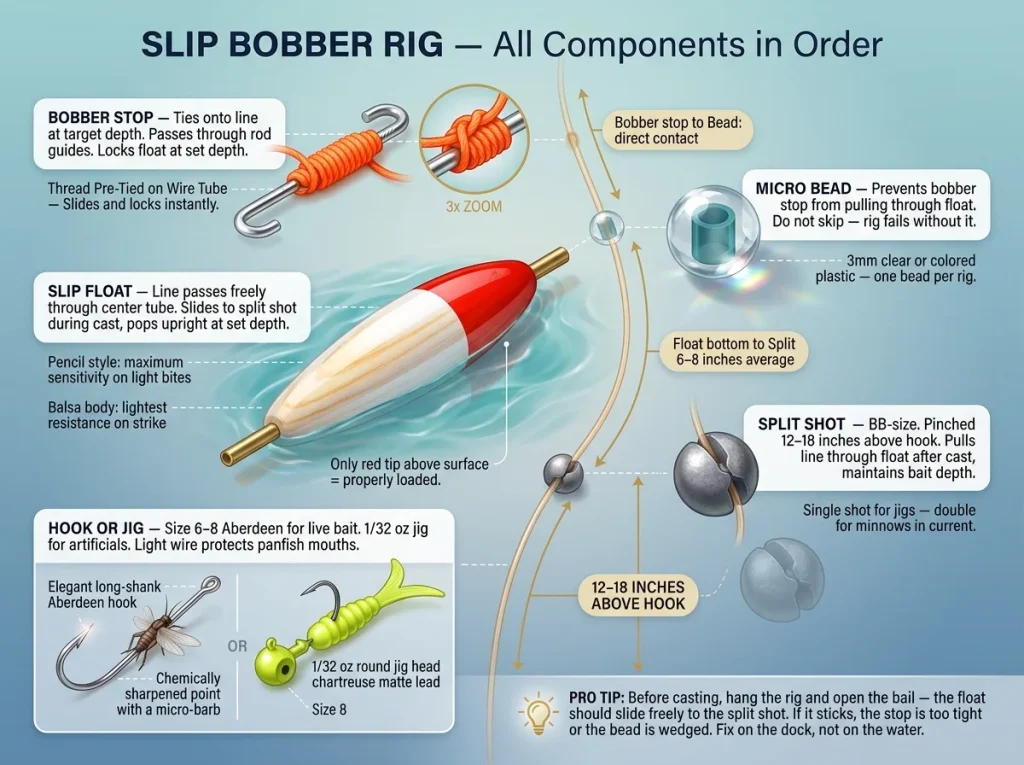
The rig goes together in a specific sequence on your mainline. Miss a step and you’ll be re-rigging on the water.
- Bobber stop — a small thread knot (like the Thill Premium Bobber Stop) that slides onto the line and grips it at your target depth. These are pre-tied on a small wire tube — just slide the line through, pull the knot off, and cinch it snug. The stop passes through your rod guides when casting but catches at the bobber’s hole when the rig is in the water.
- Bead — a tiny clear or colored plastic bead that sits between the stop and the float. It prevents the bobber stop from slipping through the bobber’s center hole. Skip it and your stop pulls right through — learned that the hard way.
- Slip float — thread your line through the center tube from top to bottom. The float rides freely on the line until it meets the bead and stop.
- Split shot — pinch one or two small shot onto the line 12 to 18 inches above the hook. This weight pulls the line through the float after the cast and keeps your bait at depth. For most panfish rigs, a single BB-size shot is enough.
- Hook or jig — tie on a size 6 to 8 Aberdeen hook for live bait, or a 1/32-ounce jig if you want to add action. The lighter the better — panfish have small mouths and detect resistance fast.
Line Choice
Run 4-pound monofilament as your mainline. Mono floats slightly, which helps the line feed through the slip bobber smoothly. Braid works but requires a mono or fluorocarbon leader because braid’s limpness can tangle in the bobber mechanism, and its zero stretch transmits too much rod movement to the float.
Pro tip: Before your first cast, open the bail and let the rig hang. The bobber should slide down to the split shot freely. If it sticks, your stop is too tight or the bead is wedged — fix it on the dock, not after you’ve cast into the best spot on the lake.
Choosing the Right Float Size and Shape
Pencil vs Oval Floats
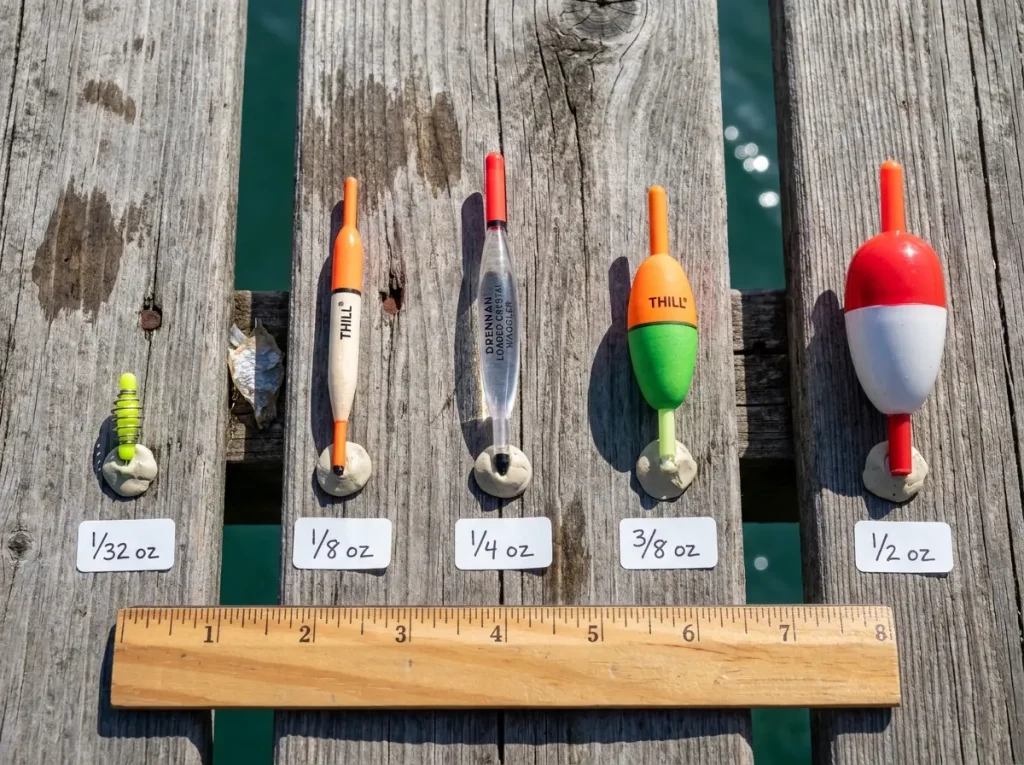
Pencil floats (slim, elongated) are the sensitivity champions. Their narrow profile slides below the surface with almost no resistance, so a panfish pulling the bait barely feels the float. On calm water, a pencil float will register bites that oval floats miss entirely. Testing shows balsa pencil floats detected 85% of light-pressure bites compared to 60% for standard plastic floats.
Oval floats trade some sensitivity for stability. They ride chop better, resist wind drift more, and handle the extra weight of a minnow or heavier jig without tipping over. When there’s a breeze on the lake or you’re working a jig with twitches, the oval stays upright where a pencil would bob and weave from your own rod movement.
Sizing by Weight
Match the float to the total weight below it — jig, split shot, and bait combined. The float should sit with just the colored tip above the surface when properly loaded. Too much float and you’re killing sensitivity. Too little and it sinks or lies flat.
For most panfish applications: a 1/8-ounce pencil float handles a 1/32-ounce jig plus a cricket. Step up to a 1/4-ounce oval when you’re adding split shot or fishing minnows. Only go bigger if wind or current demands it.
Depth Control and Finding the Panfish Zone
Setting and Adjusting Depth
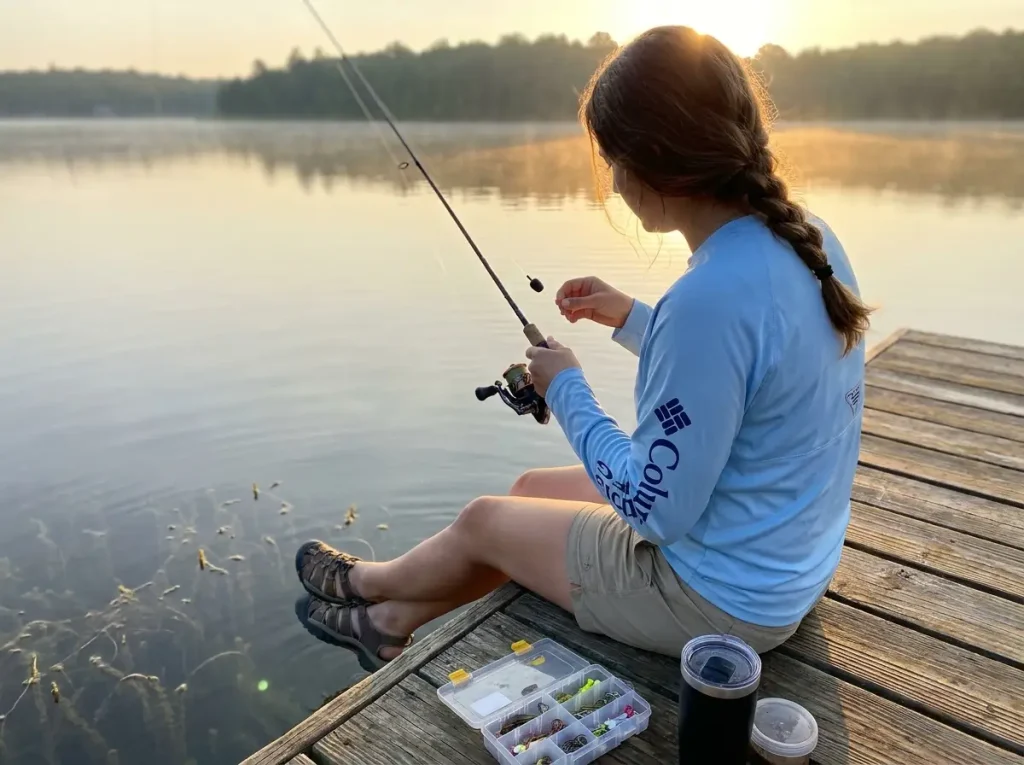
Slide the bobber stop up to fish deeper, down to fish shallower. That’s the entire depth adjustment — no re-rigging, no cutting line, no starting over. You can change depth in five seconds while the rig is still in the water by reeling in, sliding the stop, and casting again.
Start by finding the bottom. Set the stop deeper than you think the water is and cast. If the float lies flat on the surface instead of standing upright, your bait is resting on the bottom and there’s slack line between the weight and the stop. Slide the stop down in 6-inch increments until the float stands up — that’s your bottom mark. Now adjust up from there to suspend your bait at the depth where fish are holding.
Where Panfish Hold by Depth
Bluegills during spawn hold in 2 to 3 feet on sandy flats and near docks — you barely need a slip bobber for this. Post-spawn, they push to 6 to 12 feet on weed edges and mid-lake structure. Summer bluegills on deep gravel humps can sit at 15 to 25 feet, and that’s where the slip bobber earns its keep because no fixed rig can reach them.
Crappie are notorious suspenders. Spring spawning fish work 2 to 6 feet around brush and timber. By summer, they often suspend at 10 to 15 feet over deeper structure. Fall crappie migrate between depth zones that follow the baitfish — they might be at 8 feet in the morning and 18 feet by afternoon.
Pro tip: When you catch a fish, note the exact depth. Panfish school by size. If you’re catching 6-inch fish at 8 feet but want bigger ones, try 2 feet deeper — the larger fish often sit just below the smaller ones in the same school.
Knowing the pre-spawn panfish window gives you a head start on timing the shallow-to-deep transition each spring.
Bait and Jig Selection for Panfish
Live Bait Options
Three live baits account for most slip bobber panfish.
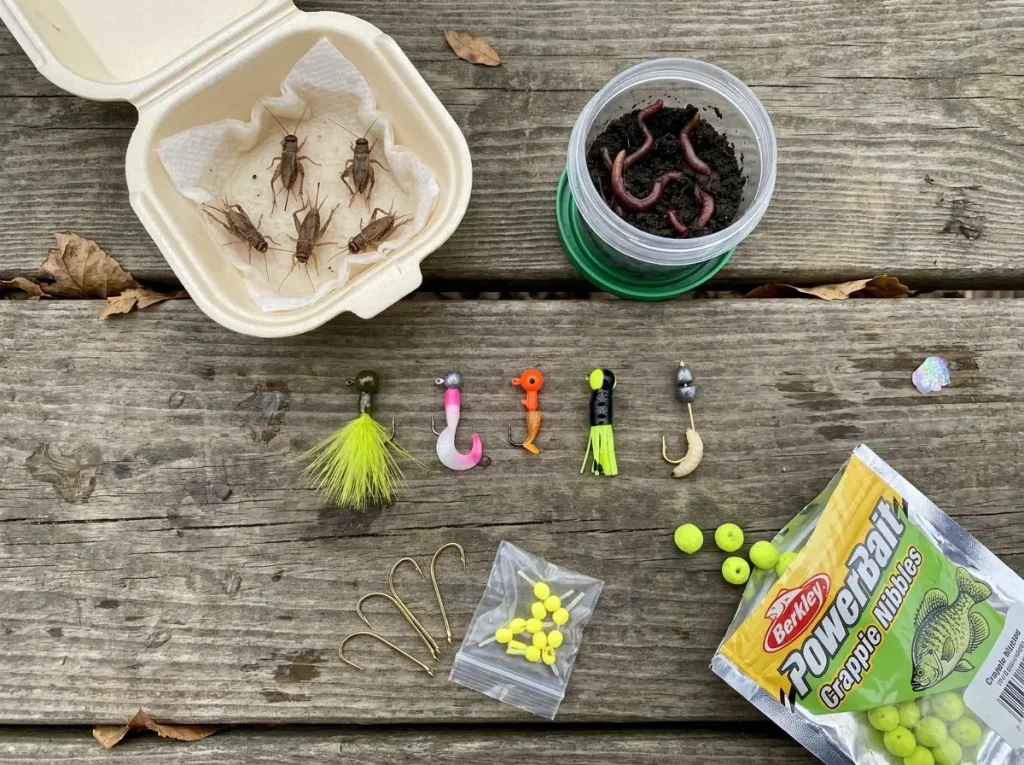
Crickets are the top bluegill bait — they kick and twitch on the hook, and bluegills can’t resist the movement. Hook them through the thorax (the hard plate behind the head) on a size 8 long-shank Aberdeen. The long shank makes unhooking small fish faster when you’re on a school. Keep them in a cricket cage or foam cup with a few pieces of egg carton for grip.
Wax worms (bee moth larvae) are the finesse option. Small, pale, and naturally scented, they work when fish are finicky. Thread one onto a small jig head and the combo produces its own scent trail while the jig adds color and weight. Wax worms are especially effective in cold water when fish metabolism is low.
Minnows are the crappie standard. A 1 to 2-inch fathead minnow hooked through the back (just below the dorsal, above the spine) stays lively and attracts crappie from farther away than insects. For proper minnow care that keeps them alive all day, read about rigging live minnows the way guides do.
Artificial Jigs
When live bait isn’t practical, small jigs under a slip bobber produce well. A 1/32-ounce marabou jig in chartreuse or white is the go-to — the marabou feathers pulse and breathe even when the jig is stationary. Tube jigs in 1-inch sizes mimic small crayfish and insect larvae. Soft plastic grubs like the Bobby Garland Slab Slay-R in 1.5-inch sizes give you color options without the hassle of live bait.
The key with artificial baits under a slip bobber is adding scent. A dab of Berkley PowerBait Crappie Nibbles pinched onto the hook tip adds the amino acid signal that triggers committed bites instead of just investigative bumps.
Presentation Techniques That Catch More Fish
The Twitch-Pause-Drop Cadence
Most articles on slip bobber fishing tell you to cast and wait. That works — but active presentations catch more fish, especially in summer when panfish are competitive and aggressive.
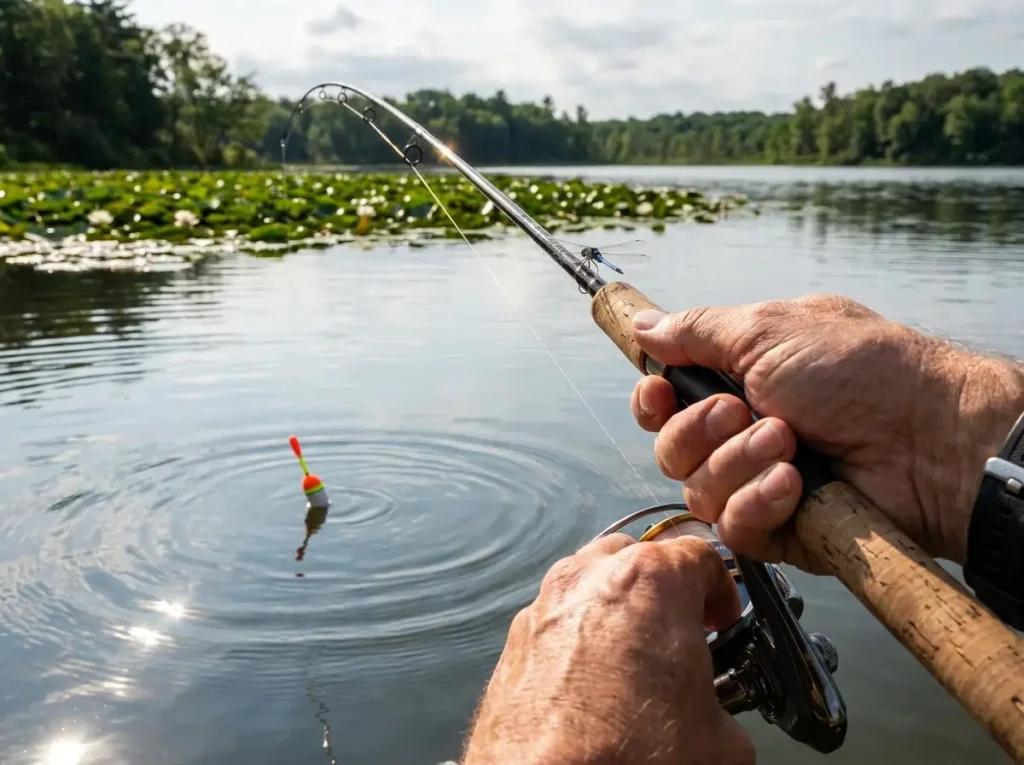
The basic cadence: give the rod tip three small twitches — just enough to rock the bobber and lift the jig an inch or two. Then pause for 5 to 10 seconds. The twitches attract attention. The pause triggers the strike. Most bites come during the pause or on the slow drop that follows.
Vary the intensity until the fish tell you what they want. Some days they want violent twitches that make the bobber dance. Other days, the lightest possible movement — barely a tremble on the surface — is what converts followers to biters.
The Wind Drift Method
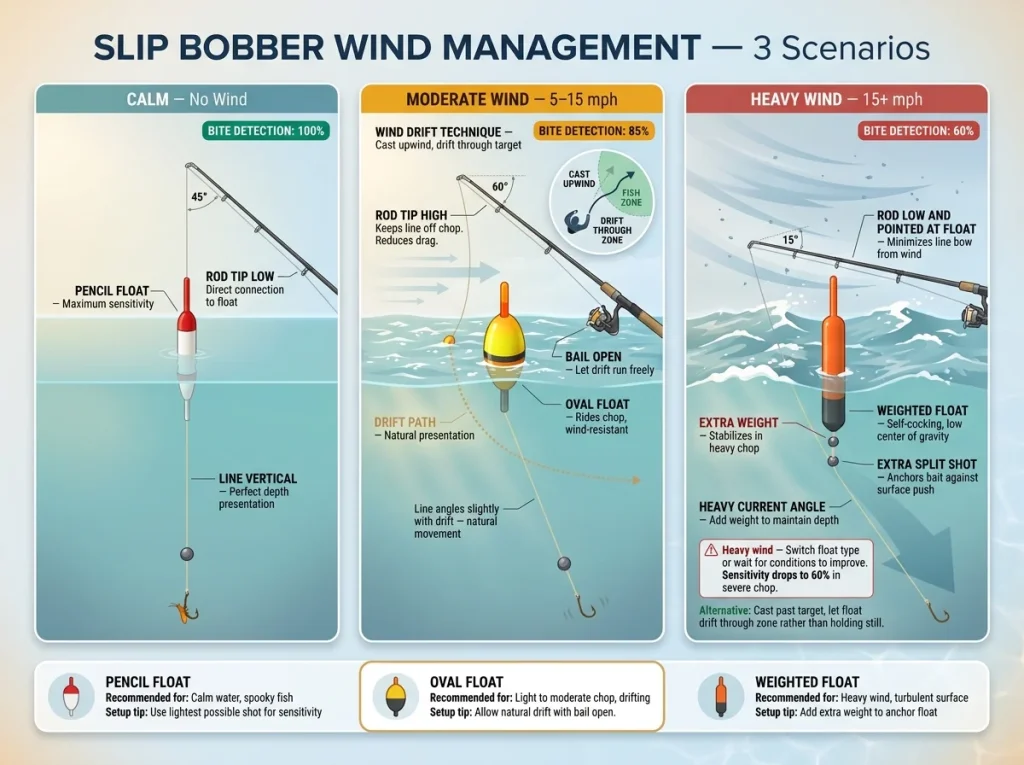
Wind isn’t a problem — it’s a presentation tool. Cast upwind of the area you want to fish and let the breeze push your slip bobber across the zone. The natural drift moves your bait horizontally through the water column at a speed no retrieve can match for subtlety.
Keep the bail open or the drag loose enough that the line feeds freely. Just manage slack so you can set the hook when the float goes under. This technique covers water efficiently and is devastating along weed edges where panfish patrol looking for food pushed by the current.
The Tandem Rig
When tiny jigs don’t have enough weight to pull line through the slip float, tie a tandem rig — two jigs spaced 12 to 18 inches apart on the same line. The combined weight loads the float properly, and you’re presenting two offerings at two different depths simultaneously. If one jig consistently gets bit and the other doesn’t, you’ve found the active depth.
Pro tip: When crappie are suspended and you can’t figure out the exact depth, set your tandem rig with one jig at 8 feet and one at 10 feet. Whichever jig gets hit first tells you where to focus. Adjust the bobber stop to put both jigs at the productive depth once you know.
Reading the Bobber
What Different Movements Mean
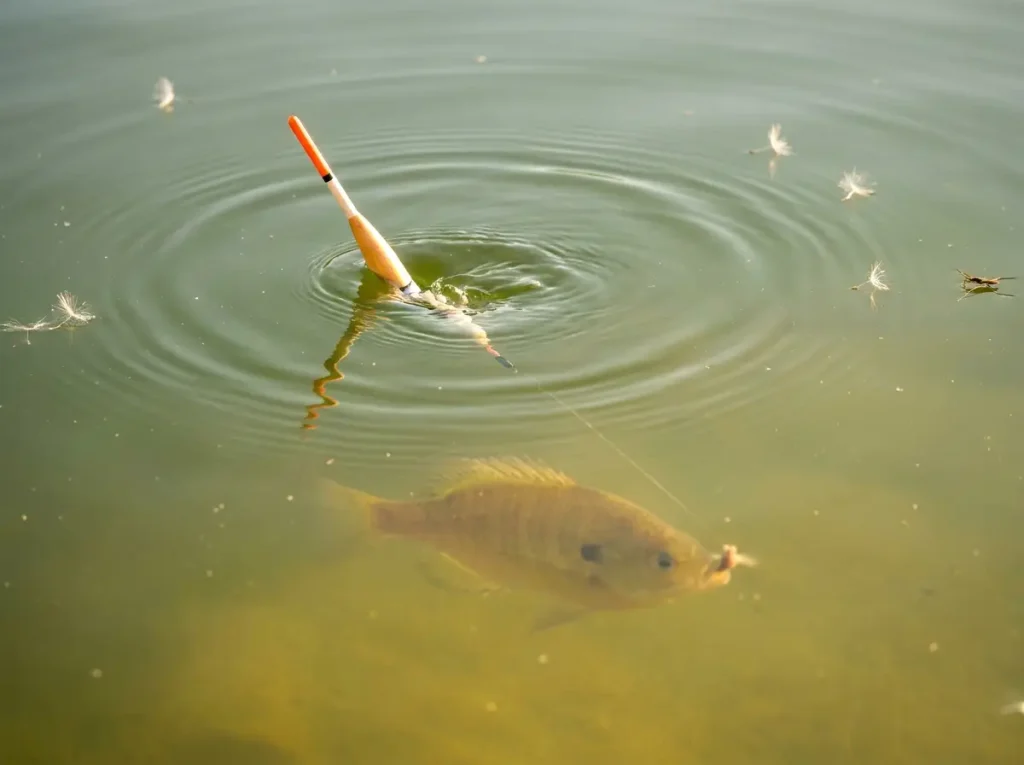
The bobber is your strike indicator — but not every movement means the same thing. Learning to read it separates anglers who catch from anglers who watch.
Slow steady pull-down — the float sinks gradually and disappears. This is a confident take, usually from a larger fish that grabbed the bait and swam away. Set the hook.
Quick dip and pop-back — the float darts under for a second and pops right back up. A small fish just pecked at the bait, or a bigger fish bumped it without committing. Wait. If it happens again in the same spot, the fish is interested but cautious — downsize your bait or hook.
Sideways drift — the float slides horizontally across the surface without going under. A fish picked up the bait and is swimming toward you or parallel to the bank. This is the most commonly missed bite. If your bobber starts moving sideways when there’s no wind, set the hook.
Nervous twitching — the float trembles and vibrates in place without going anywhere. Baitfish or tiny panfish are pecking at your bait. Either wait for a bigger fish to move them off, or downsize everything if you’re happy catching whatever is down there.
Float lying flat — the bobber tips over and lies on the surface. A fish picked up the bait and swam upward, creating slack below the float. This is a common crappie bite. Set the hook immediately — the fish already has the bait.
The Hook Set
Panfish have soft mouths. A bass-style hookset rips the hook right out. Instead, use a firm sweep — raise the rod smoothly but quickly to the side. You want enough pressure to drive the hook point through the lip without enough violence to tear it free. With circle hooks or light wire Aberdeen hooks, the sweep is all you need.
For panfish in ponds and small lakes where fish are especially wary, the sweep set is even more important — aggressive hooksets spook every fish in the area.
Seasonal Strategies for Slip Bobber Panfish
Spring: Shallow Spawning Flats
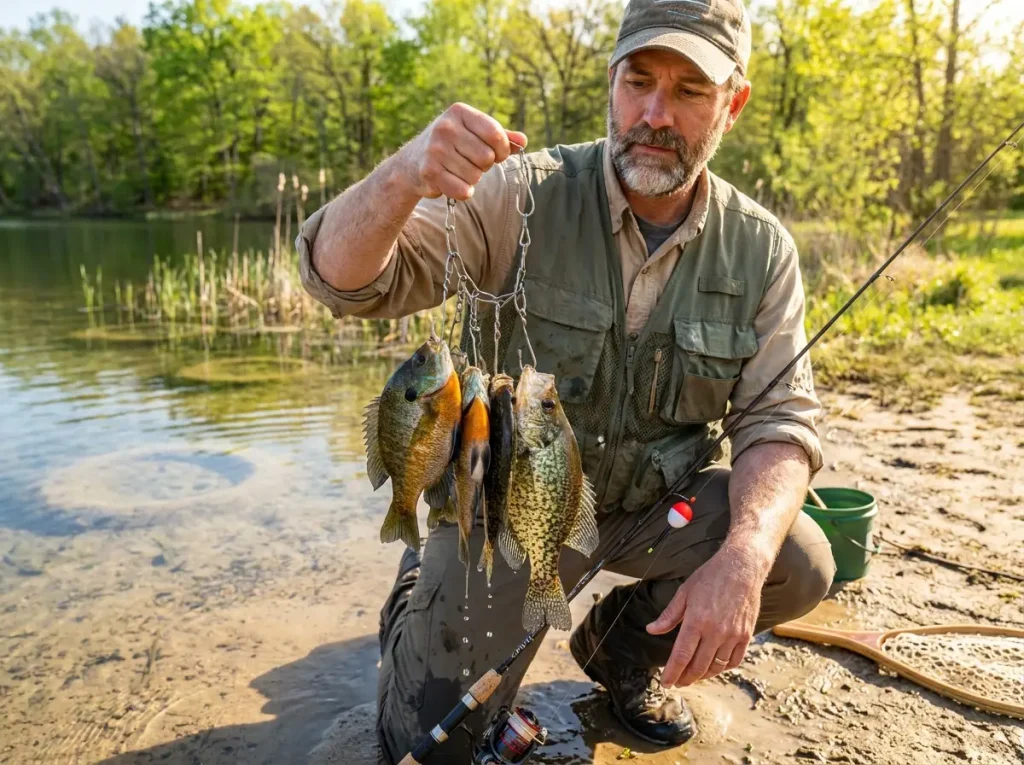
When water temperature hits 60 to 70°F, panfish push into the shallowest water they’ll occupy all year. Bluegills fan out sandy depressions in 1 to 3 feet on protected banks. Crappie gather around brush, docks, and timber in 2 to 6 feet.
Set your slip bobber shallow — 2 to 4 feet — and work the edges of visible beds or woody structure. Crickets and small jigs in bright colors (chartreuse, pink, orange) produce fast action. Fish are aggressive and competitive during spawn, so you don’t need finesse. What you need is the right timing to catch the pre-spawn window when bigger fish feed hard before committing to beds.
Summer: Deeper Weed Edges and Structure
Post-spawn panfish scatter to deeper water — 8 to 15 feet for bluegills on weed edges and gravel humps, 10 to 20 feet for crappie suspending over brush piles and standing timber. This is where the slip bobber becomes indispensable.
Morning and evening produce the best action. During midday heat, fish often go deeper or tighter to cover. Downsize your presentation — wax worms on 1/64-ounce jigs under a pencil float for finicky summer panfish. The reduced profile and natural scent convert fish that ignore bigger offerings.
Fall: Following the Baitfish Migration
As water cools, panfish push back toward 4 to 10 feet, following baitfish along transitional structure. Crappie especially congregate in fall — find one and you’ll find fifty. Brush piles, channel edges, and deep dock pilings are prime. Minnows under a slip bobber are the top fall producer for crappie.
Winter: Short Windows in Deep Water
Open-water winter fishing puts panfish at 15 to 25 feet in many lakes. The slip bobber is the only practical float option at these depths. Fish slowly — oxygen levels and metabolism drop and panfish feed in short windows, often mid-morning and mid-afternoon. Tiny jigs tipped with wax worms, worked with the slowest possible cadence, are the winter standard.
Wind, Current, and Tough Conditions
Managing Wind Drift
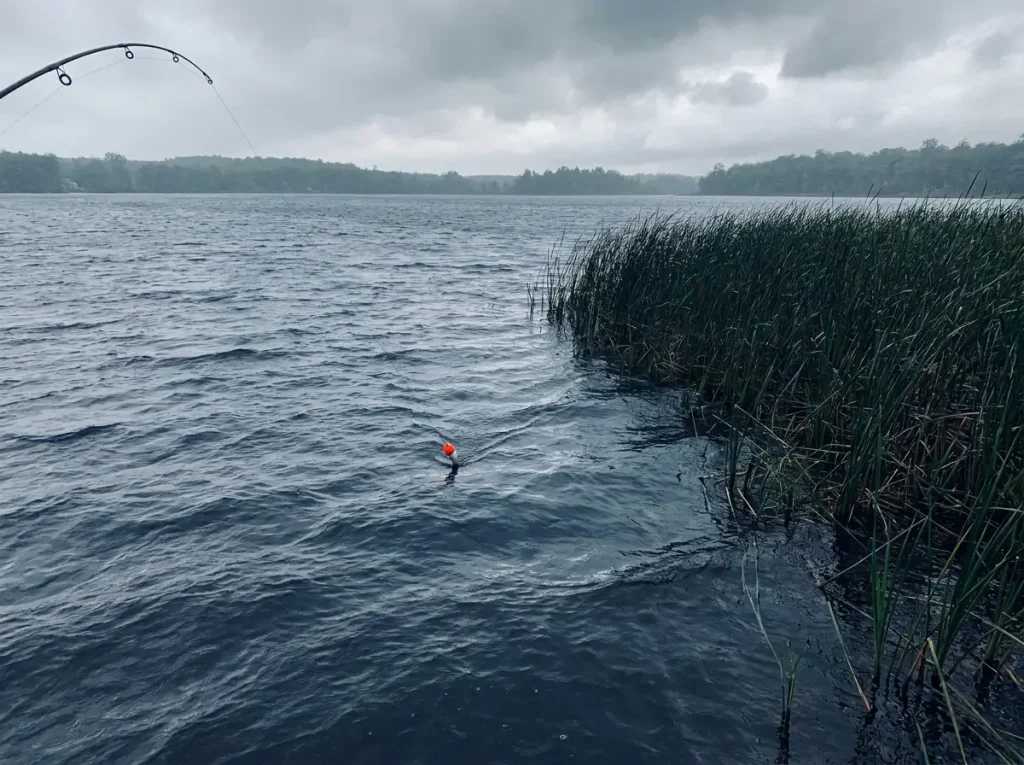
Moderate wind actually helps by drifting your bait naturally. Heavy wind creates problems — it pushes the float too fast, creates line bow, and makes bite detection harder. Switch from a pencil float to an oval or weighted float that rides the chop instead of getting tossed around.
If wind is pushing your rig away from the target zone, cast past it and let the drift carry you through. When the float passes your zone, reel in and cast again. Think of it as trolling at nature’s speed.
Current Adjustments
In rivers and current-fed areas, add slightly more weight to keep the bait at depth. Current pushes the rig downstream, so cast upstream of your target and let it drift through. A heavier float prevents the current from pulling the bobber under and giving false bite signals.
The Bail-Open Rule
Here’s a mistake that frustrates new slip bobber anglers: the bail on your reel must stay open until the float stands upright. If you close the bail immediately after the cast, the line can’t feed through the bobber, and your bait never reaches the set depth. Wait for the float to settle, watch it pop upright, then close the bail and reel in the slack.
Pro tip: When fishing in wind, point your rod tip at the water surface after the cast to keep line off the surface where the breeze can catch it. This gives you a direct connection to the float and faster hook sets.
An ultralight spinning combo with smooth drag makes all of these techniques easier — the light rod telegraphs subtle movements and the smooth drag protects light line during the fight.
Conclusion
The slip bobber rig does three things no other panfish presentation matches: it lets you fish any depth with a castable rig, shows you exactly when and how a fish is biting, and adjusts in seconds as fish move through the water column. Getting the rig right — proper float size, correct weighting, smooth line feed — is the difference between catching panfish on purpose and catching them by accident.
Learn to read the float. A sideways drift is a bite. A float lying flat is a fish swimming upward with your bait. These signals are free information that most anglers ignore because nobody taught them what to look for.
Start with a simple pencil float, 4-pound mono, and a cricket on a long-shank hook. Fish a dock, a weed edge, or a brush pile. Adjust the stop until you find the zone. Everything else builds from there.
Q1 How deep should you set a slip bobber for panfish?
Start by finding the bottom, then adjust up. Spawning bluegills hold at 2 to 3 feet, post-spawn fish move to 6 to 12 feet, and summer crappie often suspend at 10 to 15 feet over structure. Set the bobber stop 6 inches above bottom and adjust upward until you find active fish.
Q2 What is the best bait for panfish with a slip bobber?
Crickets are the top producer for bluegills, while small fathead minnows outperform everything else for crappie. Wax worms work well in cold water for both species. For artificial options, a 1/32-ounce chartreuse marabou jig tipped with a scent product catches panfish consistently.
Q3 Do you use a sinker with a slip bobber?
Yes. A small split shot pinched 12 to 18 inches above the hook pulls the line through the float and keeps your bait at depth. Use the lightest weight that allows the rig to settle properly. Too much weight kills the natural presentation panfish respond to.
Q4 What size slip bobber for panfish?
Match the float to your total rig weight. A 1/8-ounce pencil float handles a 1/32-ounce jig plus bait in calm conditions. Step up to a 1/4-ounce oval float when adding split shot, fishing minnows, or dealing with wind. The float tip should barely show above the surface when properly loaded.
Q5 When should you use a slip bobber instead of a fixed bobber?
Switch to a slip bobber any time you are fishing deeper than 4 feet. Fixed bobbers become nearly impossible to cast accurately at depths beyond that because of the long line hang below the rod tip. Slip bobbers also outperform fixed rigs when fish change depth frequently, since you can adjust the stop in seconds.
Risk Disclaimer: Fishing, boating, and all related outdoor activities involve inherent risks that
can lead to injury. The information provided on Master Fishing Mag is for educational and informational purposes
only. While we strive for accuracy, the information, techniques, and advice on gear and safety are not a substitute
for your own best judgment, local knowledge, and adherence to official regulations. Fishing regulations, including
seasons, size limits, and species restrictions, change frequently and vary by location. Always consult the latest
official regulations from your local fish and wildlife agency before heading out. Proper handling of hooks, knives,
and other sharp equipment is essential for safety. Furthermore, be aware of local fish consumption advisories. By
using this website, you agree that you are solely responsible for your own safety and for complying with all
applicable laws. Any reliance you place on our content is strictly at your own risk. Master Fishing Mag and its
authors will not be held liable for any injury, damage, or loss sustained in connection with the use of the
information herein.
Affiliate Disclosure: We are a participant in the Amazon Services LLC Associates Program, an
affiliate advertising program designed to provide a means for us to earn advertising fees by advertising and linking
to Amazon.com. As an Amazon Associate, we earn from qualifying purchases. We also participate in other affiliate
programs and may receive a commission on products purchased through our links, at no extra cost to you. Additional
terms are found in the terms of service.