
In this article
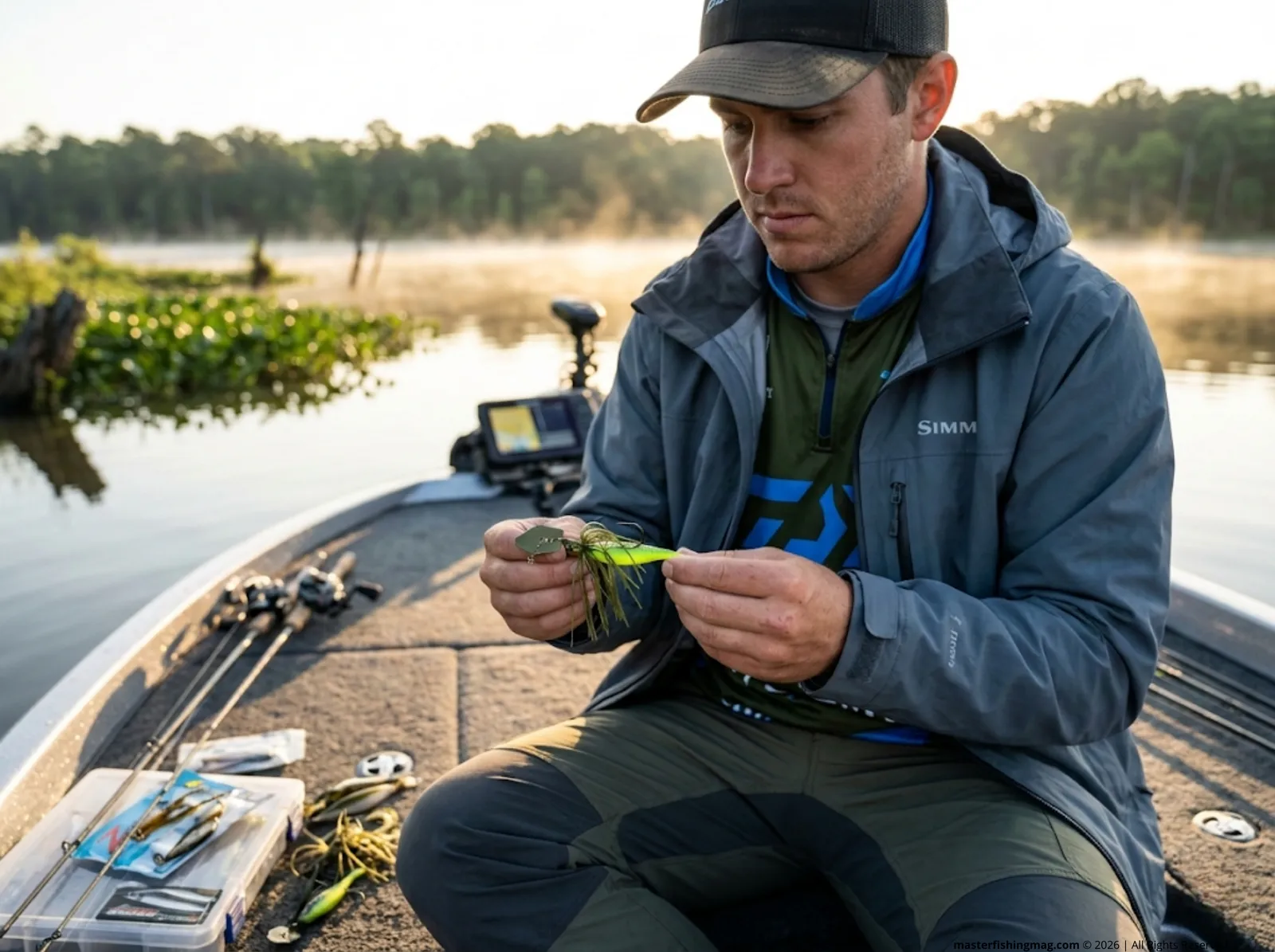
The water was stained the color of weak coffee, sitting at a sluggish 52 degrees. I had been throwing a standard bladed jig paired with a heavy-kicking swimbait trailer for two hours without a bite. The lure tracked straight and true—which was exactly the problem. It wasn’t until I grabbed a pair of forceps, snipped the boot tail off the swimbait to create a low-drag pintail, and induced an erratic, unpredictable “hunting action” that a four-pound chunk inhaled the jig on the pause.
Over two decades of fishing, I’ve watched countless anglers tie on a ChatterBait, thread on whatever trailer matches the skirt, and just start reeling. They completely ignore how that chunk of plastic alters the physics of the lure.
Here is exactly how to stop guessing and start manipulating your trailer geometry to force reactive strikes, no matter the water temperature or cover type.
⚡ Quick Answer: To choose the correct soft-plastic trailer for a bladed jig, match the trailer’s hydrodynamic drag to your target depth and water clarity. Use streamlined pintails for erratic hunting action in clear water, large paddletail swimbaits for stabilizing vibration in muddy water, and wide craw-style trailers to generate lift when slow-rolling over shallow grass. Always store ElaZtech (TPE) trailers separately from standard plastisol baits to prevent a catastrophic melting reaction.
The Bio-Acoustics of Blade and Trailer Interplay

Before you pick a shape or color, you need to understand exactly how a largemouth bass finds a vibrating jig. It has nothing to do with sight initially. It is entirely about biology and water movement.
The Lateral Line as a Near-Field Radar
A bass hunting in stained water relies on its lateral line, a sensory organ running down its flanks that acts like a near-field radar. This system is acutely tuned to pick up low-frequency water displacements created by fleeing prey.
A fast-moving crawfish or a heavily injured baitfish throws off a specific thumping signature. A well-tuned bladed jig pulses at these exact frequencies. When you bring a bait through their strike zone, they are relying on their sensory perception to lock onto the source long before it enters their cone of vision.
The blade is the engine producing the main vibration, but the trailer is the dampener. Put too much plastic on the back, and you mute the mechanical click of the blade striking the heavy jig head. Go too small, and the hook acts as a pivot point, causing the lure to wash out and spin.
Analyzing Startup Speed and Joint Mechanics
Not all bladed jigs are built the same, and your trailer needs to match the joint connection. The direct blade-to-eyelet connection found on premium models like the JackHammer offers immediate startup speed. The second you turn the reel handle, the blade catches water and starts hunting.
Split-ring designs require more water resistance to overcome the mechanical play in the hardware. If you pair a split-ring jig with a very slick, low-profile trailer in cold water, you will likely drag the bait five feet before the blade engages.
Pro-Tip: If you cast a bladed jig into a stiff headwind and the blade doesn’t immediately chatter on the first handle turn, bump your trailer profile up slightly. Added drag forces the blade to bite into the water faster, helping you capitalize on the crucial six-inch strike window.
Managing Mechanical Vibration Interference
You want the blade to do the heavy lifting. A dense tungsten head transmits vibration up your line much better than soft lead. This tactile feedback is vital for fishing through thick hydrilla or coontail; the second the vibration stops, you know a single strand of grass has fouled the blade, letting you snap the rod tip to clear it.
Your trailer should complement this vibration, not fight it. A massive boot tail aggressively kicking back and forth can create counter-currents that actually destabilize the rhythmic pulse of the blade.
Hydrodynamics: How Geometry Dictates Depth and Action
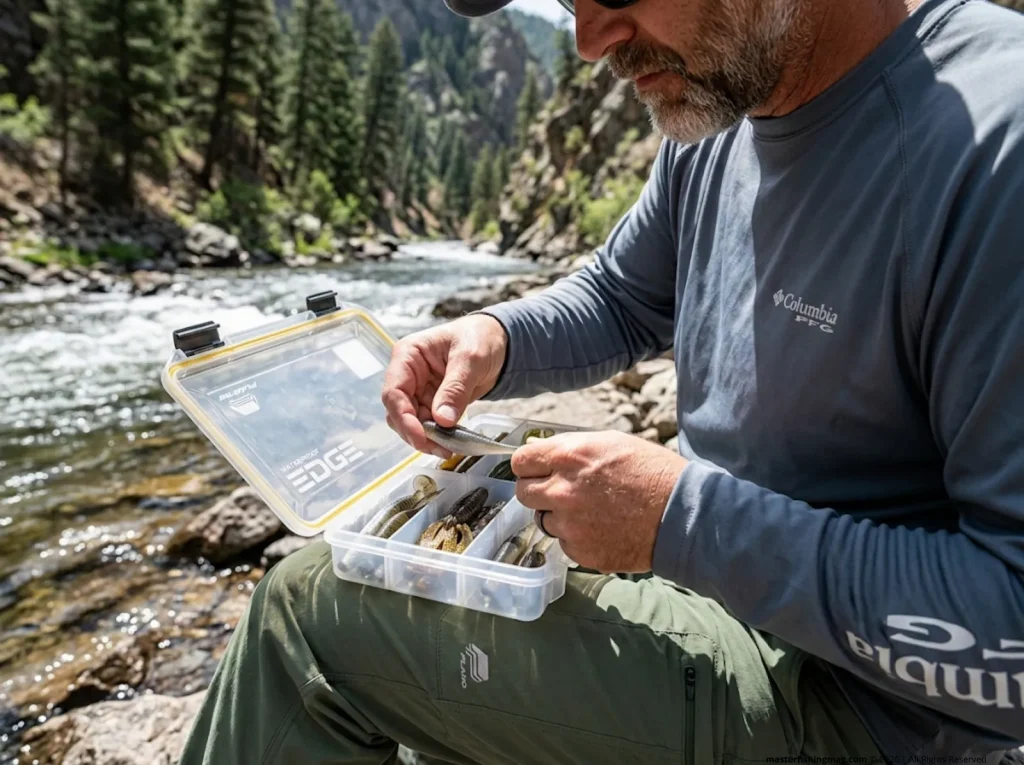 Yamamoto Zako trailer from a Plano Edge tackle box.” class=”wp-image-11572″/>
Look at your tackle box as an engineering toolkit. Every plastic shape you thread onto a hook changes the hydrodynamic resistance of the total package. Trailer selection is all about balancing lift and drag.
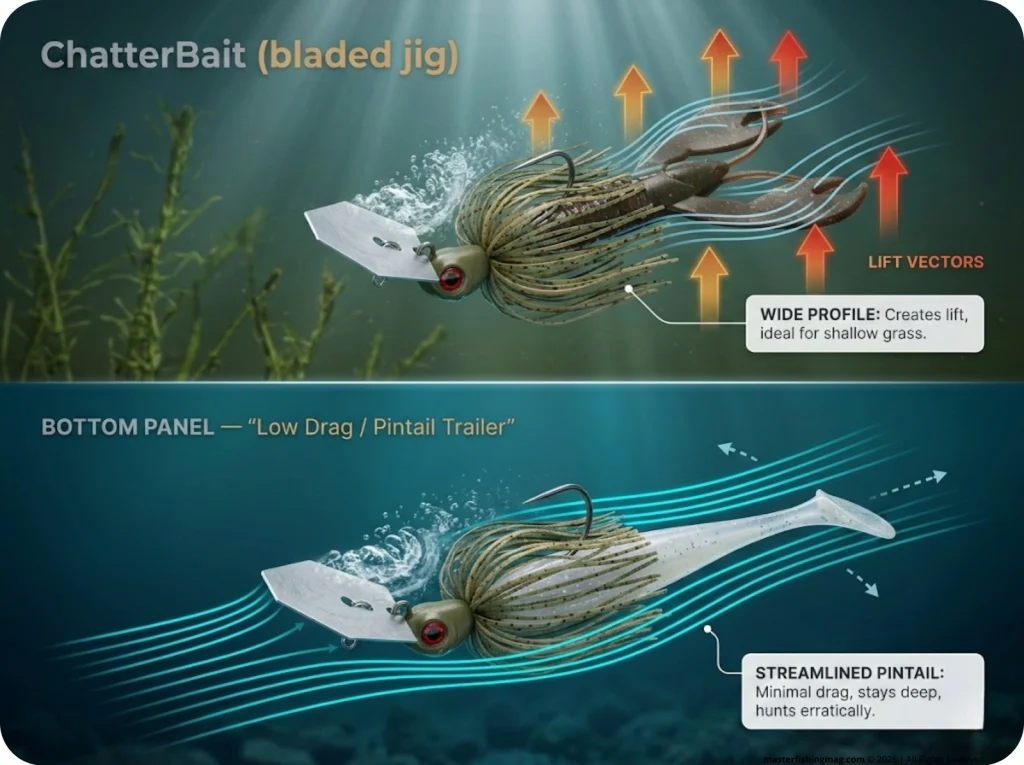
The Parachute Effect and Depth Control
Water drag is the primary force dictating your running depth. When you thread on a wide, thick-flanged craw trailer, it acts exactly like an underwater parachute. It resists forward motion.
As you retrieve the lure, this resistance forces the jig upward, creating lift. This is perfect when you need the bait to ride high in the water column, skimming cleanly over submerged grass mats. However, when you need the lure to stay glued to the bottom in twelve feet of water, that same trailer will plane out and ruin your presentation.
Wave Pocket Interference from the Hex-Blade
The signature vibrating hex-blade creates a massive pressure wave in front of the lure, but it also creates a turbulent “wake pocket” directly behind the jig head. This dead zone of water flow can severely mute the action of appendages.
A trailer with long, thin ribbon tails placed heavily into that wake pocket might just drag uselessly. You need appendages that extend far enough out to catch clean water, or a solid shape that uses the turbulence to shift erratically. By understanding hydrodynamics, you can better predict how different plastic volumes will suspend or drag within this chaotic slipstream.
Destabilizing the Equilibrium for “Hunting” Action
The most lethal trigger for a following bass is when the bait stops tracking perfectly straight and suddenly darts off to one side, seemingly out of control. We call this the hunting action.
Vertical rigging of a split-tail design minimizes horizontal drag. It allows the jig head to slice deeper and vibrate with a tighter, higher-frequency hum. Because there are no wide stabilizers fighting the blade, the lure occasionally blows out of balance, darting left or right before recovering. That erratic slip is exactly when the rod gets ripped out of your hands.
The Three Primary Trailer Profiles and Their Tactical Uses
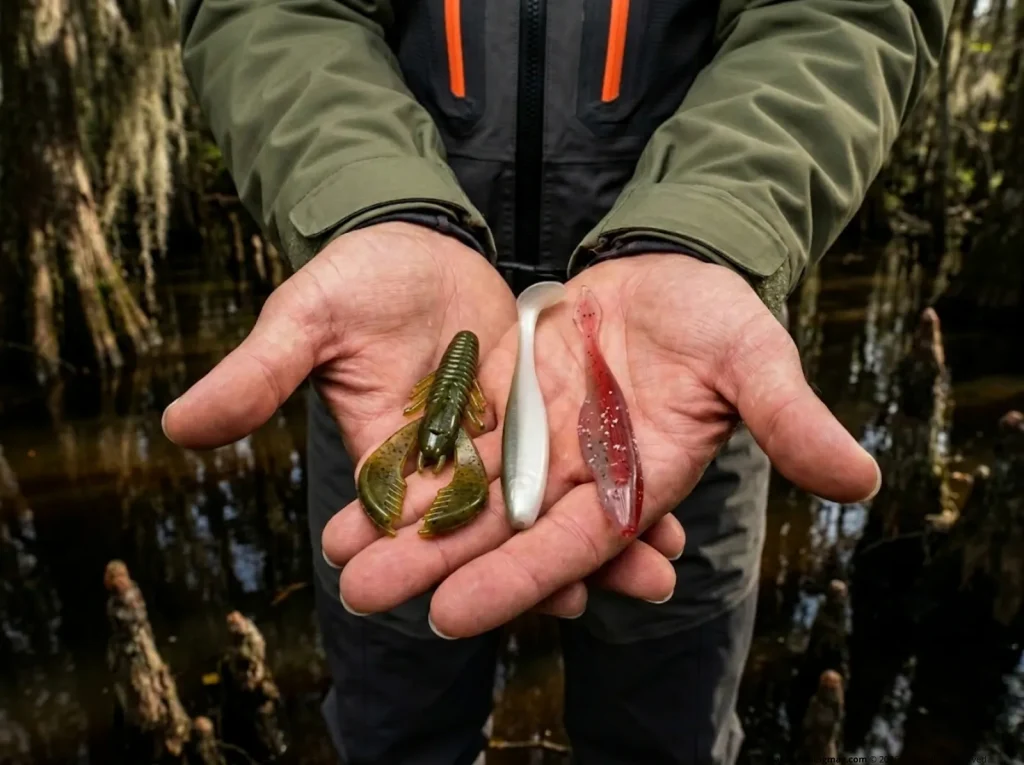
Instead of just matching brand names, sort your plastics into three distinct functional categories. Each profile solves a specific environmental problem on the water.
Pintails and Soft Jerkbaits (Minimalist Resistance)
Pintails, like the Yamamoto Zako or a standard soft jerkbait, offer a minimalist silhouette. They slice through the water cleanly, generating very little drag.
This is your premier choice for deep water, fast retrieves, and clear water situations where you need aggressive hunting action. The straight-tail design acts as a flexible spine, allowing the bladed jig to dart wildly when you twitch the rod tip. If you are burned out on standard presentations and the fish are heavily pressured, ripping a pintail rigged ChatterBait through isolated wood cover triggers brutal reaction strikes.
Paddle Tails and Swimbaits (Stabilizing Cadence)
A classic paddletail swimbait offers a large visual profile and a heavy, thumping secondary vibration. Brands like Keitech excel here, adding significant drag to the rear of the lure.
This stabilizes the bait, forcing it to track straighter and slower. When you need to keep the lure in the strike zone longer during cold water periods, a paddletail is superior. Because how water clarity impacts visibility plays a massive role, a wide-kicking boot tail is mandatory in stained or muddy water where bass track entirely via vibration. During the fall shad-spawn migration, a fast-kicking white trailer matches the chaotic speed of fleeing baitfish perfectly.
Craw-Style and Creature Baits (High-Lift Dynamics)
Craw-style trailers generate extreme lift and move a lot of water. When rigged horizontally, they act as wings.
These are your shallow water tools. When you are slow-rolling a jig over submerged hydrilla or targeting pre-spawn fish holding tight to shallow cover, a wide craw keeps the bait out of the muck. They are also highly effective when mimicking a defensive crawfish, particularly when paired with a green pumpkin ChatterBait. Be aware that smaller grub profiles offer an underrated, high-frequency shimmer that works exceptionally well on pressured fish conditioned to standard, wide-kicking appendages.
Pro-Tip: When fishing water deeper than ten feet, ditch the craws entirely. A streamlined pintail is the only way to effectively keep the lure down in the strike zone without packing on an excessively heavy jig head.
Material Science Breakdown: TPE vs. PVC Polyvinyl
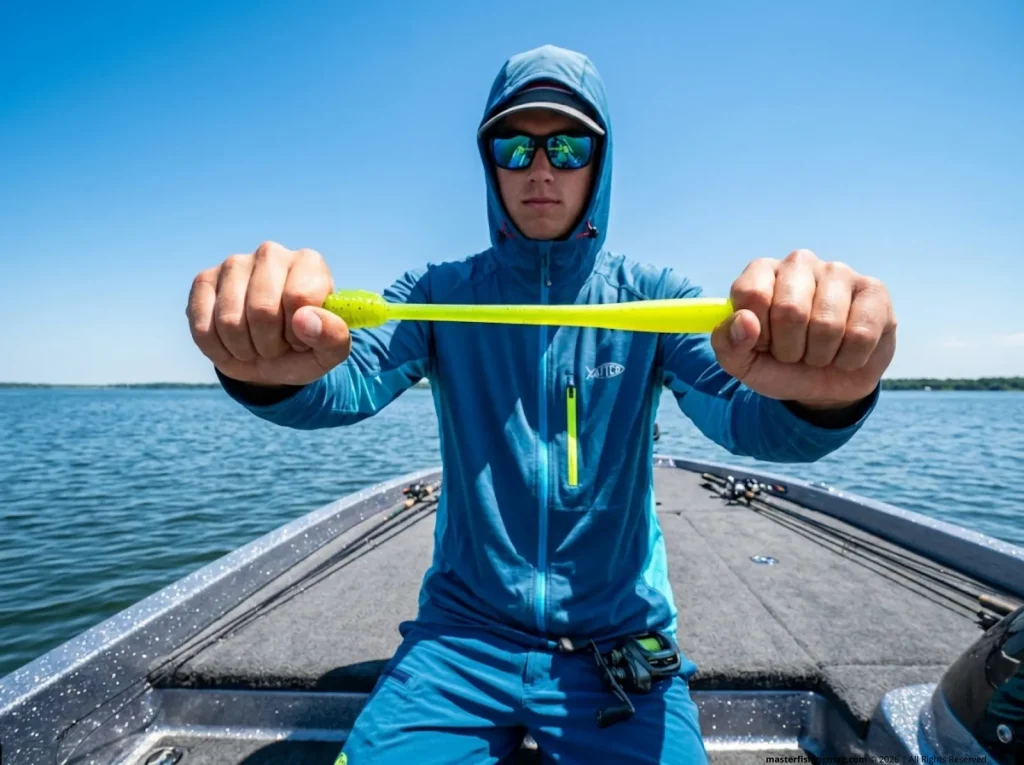 Z-Man ElaZtech TPE trailer to show its elasticity.” class=”wp-image-11575″/>
We need to address the chemistry in your tackle box. Not all soft plastics are compatible, and making a mistake here will destroy your gear. Modern trailers are primarily split between traditional plastisols and thermoplastic elastomers.
Chemical Composition and Structural Durability
Standard PVC plastisol is the old reliable material used for decades. It shapes beautifully and takes scent well, but it is fragile. You will often rip the nose out of a standard plastic trailer after a single aggressive cast or short-strike.
TPE (thermoplastic elastomer), broadly marketed by Z-Man as ElaZtech, uses a highly advanced copolymer. It provides incredible durability compared to standard PVC. You can catch fifty bass on a single TPE trailer, stretching it aggressively over the hook-keeper retention barb without the head tearing out.
The Incompatible Storage Melt Hazard
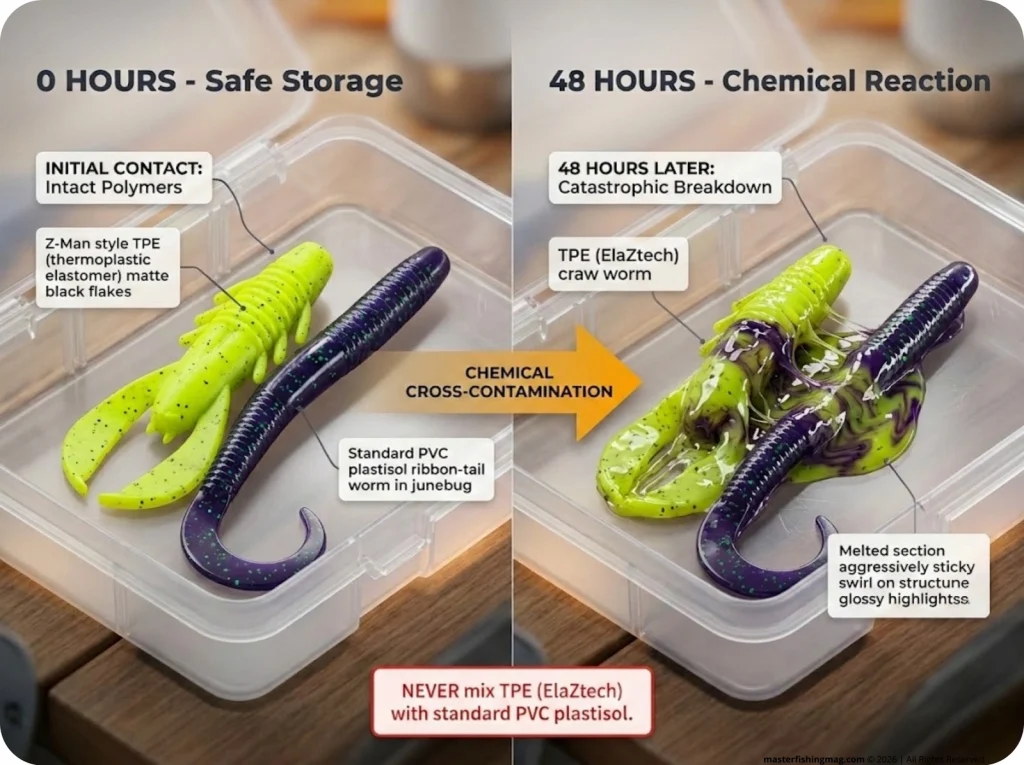
Here is the expensive lesson: TPE materials and standard PVC plastics despise each other on a molecular level. Mixing an ElaZtech trailer with a standard plastic worm in the same tackle tray results in a catastrophic chemical reaction.
The oils cross-contaminate, and within hours in a hot truck, both lures will deform into a sticky, melted, gooey mess. Always store TPE baits in their original factory bags or entirely isolated in a dedicated PVC-free utility box. Taking steps toward optimizing your tackle box storage will save you serious money and frustration on the water.
Inherent Buoyancy and Stand-Up Posture
The major tactical advantage of TPE beyond durability is its natural buoyancy. Standard, salt-heavy plastisol sinks horizontally. When you pause your retrieve, a PVC bait collapses flat into the mud, completely losing its visual profile.
TPE floats. When you dead-stick a bladed jig tipped with a highly buoyant elastomer trailer, the jig head rests on the bottom while the trailer stands straight up, waving defensively in the current exactly like a cornered crawfish. This standalone posture triggers massive bites from sluggish fish that follow the bait down to the bottom.
Advanced Rigging Hacks from the Tournament Trail
Once you have selected the right geometric profile and material, you need to execute on the rigging. Small adjustments at the hook shank dictate your success rate on the water.
The Upside-Down Paddletail Hack
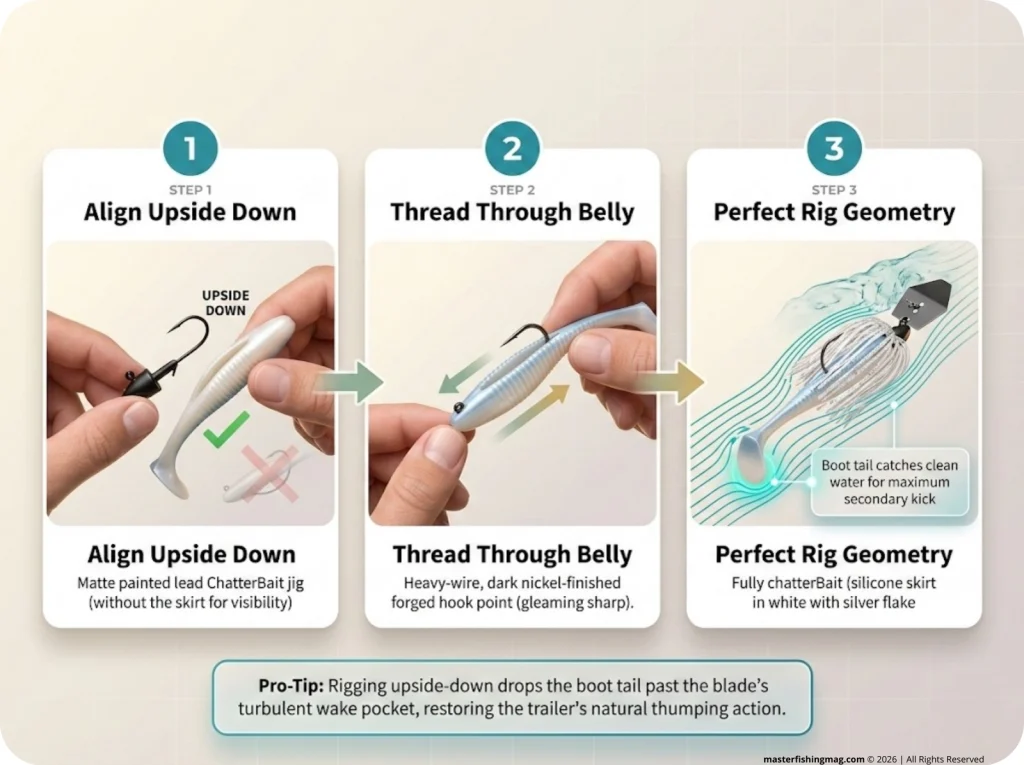
This sounds entirely wrong until you try it. Implementing upside-down rigging on a paddletail swimbait is a highly guarded tournament trick to stop vibration canceling.
When rigged normally (wide belly down), the bulky lower section of the bait and the boot tail often sit directly in the turbulent wake pocket of the hex-blade, stopping the tail kick. By threading the bait upside down, you force the boot tail downward into clean, undisturbed water. This instantly restores the trailer’s secondary vibration without muting the violent pulse of the main jig blade.
Cyanoacrylate (Superglue) Integration for Rigidity
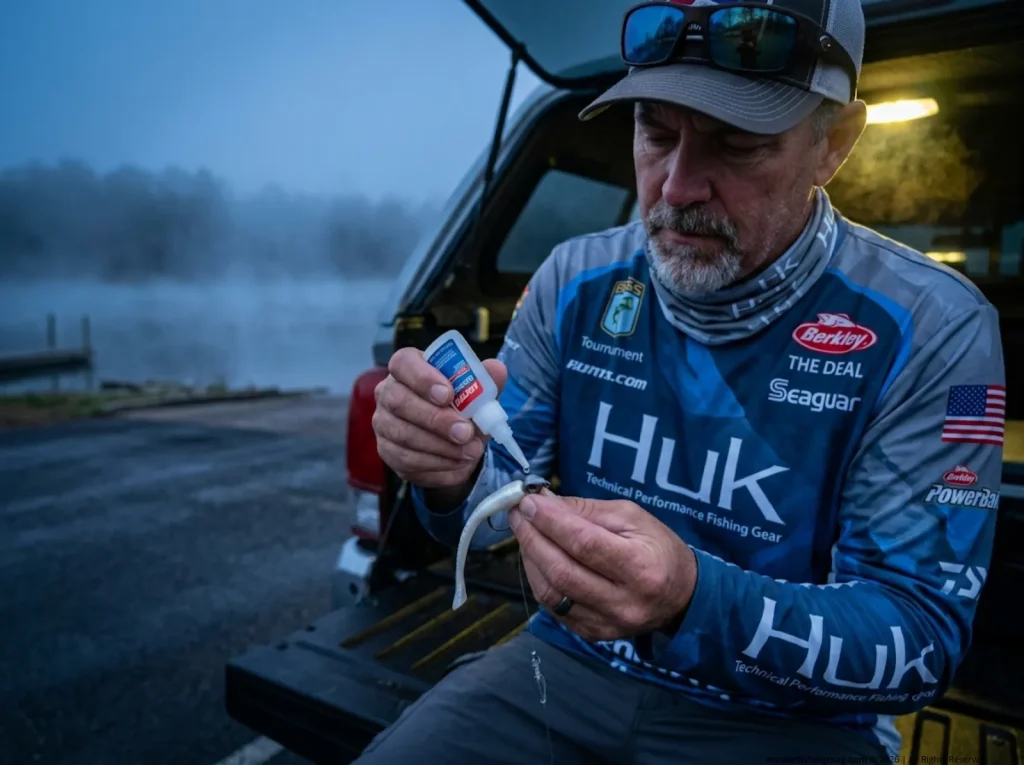
If you are using plastisol trailers, they will inevitably slide down the hook shank after skipping a dock or tearing through thick grass. To stop this, grab a bottle of cyanoacrylate adhesive (superglue).
Apply a single tiny drop directly to the lead hook-keeper before sliding the nose of the trailer up tight. This locks the plastic in place, greatly extending the life of fragile baits. However, keep the superglue strictly away from the silicone skirt banding. If the liquid glue wicks into the individual silicone strands, they will fuse together into a stiff, lifeless clump and ruin the jig.
The Vertical “Floating” Technique for Suspensions
While bladed jigs are typically horizontal search baits, they excel vertically on deep structure.
Find a steep bluff wall where fish are suspended at twenty feet. Drop a heavy 3/4 ounce jig paired with a slick pintail straight down past them. Once it hits the bottom, use sharp, aggressive rod pumps to rip the bait upward three to four feet, then let it fall on a slack line. The pintail offers zero resistance on the drop, while the heavy head ensures the blade chatters violently on the upward rip.
To ensure you don’t snap off on these violent hooksets, rely on heavy braid. Using a 30 to 50 pound zero-stretch braided main line tied to a shorter monofilament leader provides optimal shock absorption. Trusting reliable line-to-leader connection methods like the FG knot guarantees you maintain supreme sensitivity for detecting grass fouls without sacrificing breaking strength.
Pro-Tip: When fishing deep bluff walls, watch your line as the bait falls. Most strikes on the vertical float technique occur as the jig drops back down after the rip. If your line suddenly goes slack before it hits the bottom, set the hook hard.
Conservation: The Heavy Reality of Soft Plastics
As a dedicated angler, it is our responsibility to look at our tackle boxes from a biological perspective. Soft plastics catch fish, but they leave a lasting footprint on the fisheries we rely on.
Phthalate Leaching in Aquatic Ecosystems
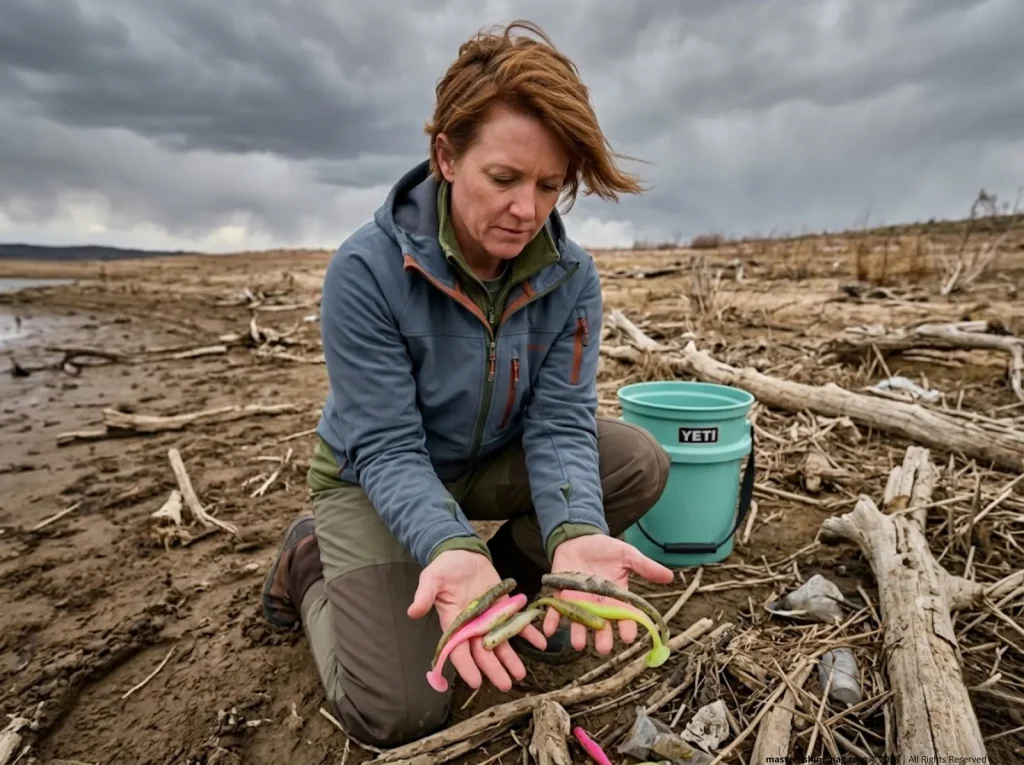
Unlike the natural prey they mimic, standard PVC soft plastic lures do not decompose. We know that many common plastisol lures leach harmful phthalates directly into the water column as they slowly break down.
These chemicals act as endocrine disruptors for a wide variety of aquatic life. Every ripped worm torn off a hook and cast onto the bank eventually washes into the watershed.
The Volumetric “Bezoar” Swell
The physical impact on the fish themselves is severe. When a bass ingests a torn plastic trailer that breaks free off your hook, it doesn’t pass it easily.
Standard soft plastics swell up when left inside a fish’s stomach. They create a total blockage that stops the fish from processing real food, causing them to starve. This essentially acts like an indigestible mass that destroys their ability to feed.
Ethical Material Selection and Mitigation
Your gear choices impact fish conservation. Moving to highly resilient materials like TPE significantly reduces the sheer volume of plastic lost in the water.
Because TPE baits can sustain dozens of violent strikes without tearing, you are leaving drastically fewer hooks embedded with torn chunks of plastic in the lake. Plus, advanced elastomers are non-toxic and ecologically neutral compared to heavy PVC plastisols. Moving exclusively to durable trailers not only saves you massive amounts of money over a tough season of skipping docks, but it actively protects the localized ecosystem of your home waters.
Conclusion
A bladed jig is not just a simplistic chuck-and-wind reaction bait. It is a highly tunable mechanical system. By recognizing how trailer modification manipulates lift, how material buoyancy affects underwater posture, and how precise rigging techniques fix turbulent wake interference, you dictate exactly how your lure hunts.
Take a critical look at your trailer selection before you make your first cast in the morning. Match your plastic’s drag to your target running depth, test the upside-down rigging trick on your paddletails, and feel the raw difference in the rod blank. When you stop fighting the physics of your lure and start leveraging it, you drastically increase your odds of triggering that violent lateral line response.
FAQ
Do you really need a trailer on a ChatterBait?
Yes. Without a trailer, a ChatterBait lacks the necessary hydrodynamic drag and profile balance to run completely true in the water. The trailer acts as a keel, stabilizing the hook, providing crucial lift, and completing the visual silhouette of the baitfish you are attempting to mimic.
Should a ChatterBait trailer be rigged upside down?
Rigging paddletail swimbaits upside down is a highly effective tournament trick to keep the boot tail actively kicking. It forces the tail section downward and underneath the turbulent wake pocket created by the spinning blade, allowing it to vibrate freely without muting the main jig.
What color trailer goes with a green pumpkin ChatterBait?
Matching a green pumpkin trailer offers a seamless, natural profile ideal for clear or slightly stained water where fish are visually acute. For added contrast during the aggressive pre-spawn periods, tipping the claws of a green pumpkin craw trailer with chartreuse dye can trigger intense territorial strikes from bedding fish.
Why do my Z-Man ChatterBait trailers melt in my tackle box?
Z-Man trailers are manufactured from an advanced TPE material, which chemically reacts and melts when it touches standard PVC plastisol baits. To prevent this destructive dissolving process, you must store all TPE baits in their original factory bags or completely isolated in a dedicated, PVC-free utility box away from traditional plastics.
Risk Disclaimer: Fishing, boating, and all related outdoor activities involve inherent risks that
can lead to injury. The information provided on Master Fishing Mag is for educational and informational purposes
only. While we strive for accuracy, the information, techniques, and advice on gear and safety are not a substitute
for your own best judgment, local knowledge, and adherence to official regulations. Fishing regulations, including
seasons, size limits, and species restrictions, change frequently and vary by location. Always consult the latest
official regulations from your local fish and wildlife agency before heading out. Proper handling of hooks, knives,
and other sharp equipment is essential for safety. Furthermore, be aware of local fish consumption advisories. By
using this website, you agree that you are solely responsible for your own safety and for complying with all
applicable laws. Any reliance you place on our content is strictly at your own risk. Master Fishing Mag and its
authors will not be held liable for any injury, damage, or loss sustained in connection with the use of the
information herein.
Affiliate Disclosure: We are a participant in the Amazon Services LLC Associates Program, an
affiliate advertising program designed to provide a means for us to earn advertising fees by advertising and linking
to Amazon.com. As an Amazon Associate, we earn from qualifying purchases. We also participate in other affiliate
programs and may receive a commission on products purchased through our links, at no extra cost to you. Additional
terms are found in the terms of service.