In this article
You come off the flats after a full day, look in the truck mirror, and the burn is on the underside of your chin and along your jawline. You wore a wide-brim hat the entire time. Here is the part nobody tells you: the brim did its job. The water did the rest, throwing UV back up at you from below all afternoon while you watched the tide. That same complaint runs through every sun-protection thread on Hull Truth and BD Outdoors, and the fix is almost never the hat people assume it is. This guide covers what the UPF number on the tag actually buys you, what each inch of brim genuinely covers, and the fishing hat sun protection features that mean nothing at all once you know what to look for.
What UPF 50+ Actually Means on a Fishing Hat
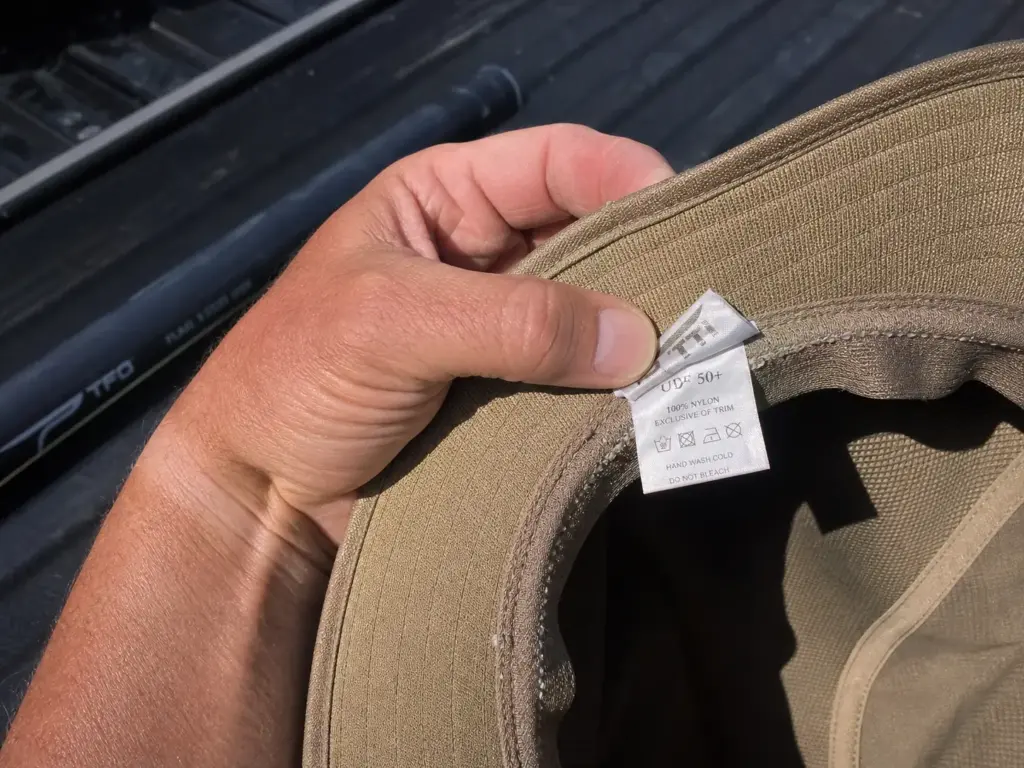
Everybody nods at UPF 50+ without knowing whether it is twice as good as UPF 30 or barely different at all. The honest answer is neither, and the reason the math misleads you is worth two minutes.
Start with what the letters mean. SPF is the sun protection factor you know from sunscreen and it measures one thing, how long skin resists burning UVB. UPF rates a finished fabric against both UVA and UVB, so it is the only rating that tells you anything about a hat.
A UPF 50+ uv-blocking fabric stops roughly 98% of UV radiation, meaning about one fiftieth of what hits it gets through to your skin. That is close to the practical ceiling, and it is why there is no meaningful UPF 100 upgrade to chase, according to the Skin Cancer Foundation’s guidelines on sun protective clothing. UPF 30 blocks about 96.7%, letting roughly 3.3% through. On a tag those two numbers look nearly identical.
In terms of actual UV reaching skin, though, UPF 50 lets through about 40% less than UPF 30. Over one afternoon that difference is academic. Over a season of dawn-to-dusk trips on open water, it compounds into something real.
The stronger signal is not the number at all. It is the Skin Cancer Foundation Seal of Recommendation, which requires UPF 30+ for daily-use products and UPF 50+ for active or extended-use products, all third-party tested. A tag can print whatever the brand wants. The Seal means somebody outside the company checked.
Which brings up the mistake that costs anglers the most: buying a hat labeled sun protective or UV blocking with no number attached anywhere. That phrasing is unregulated marketing copy, not a tested rating, and a hat wearing it can sit anywhere from UPF 15 to UPF 30 while the buyer assumes they are covered. If there is no numeric UPF on the tag or the listing, assume the hat is doing very little and price it accordingly. A hat is one part of a system anyway, and it pairs with everything else in a full fishing apparel and sun protection setup rather than carrying the whole load alone.
Brim Width and What Each Inch Actually Covers
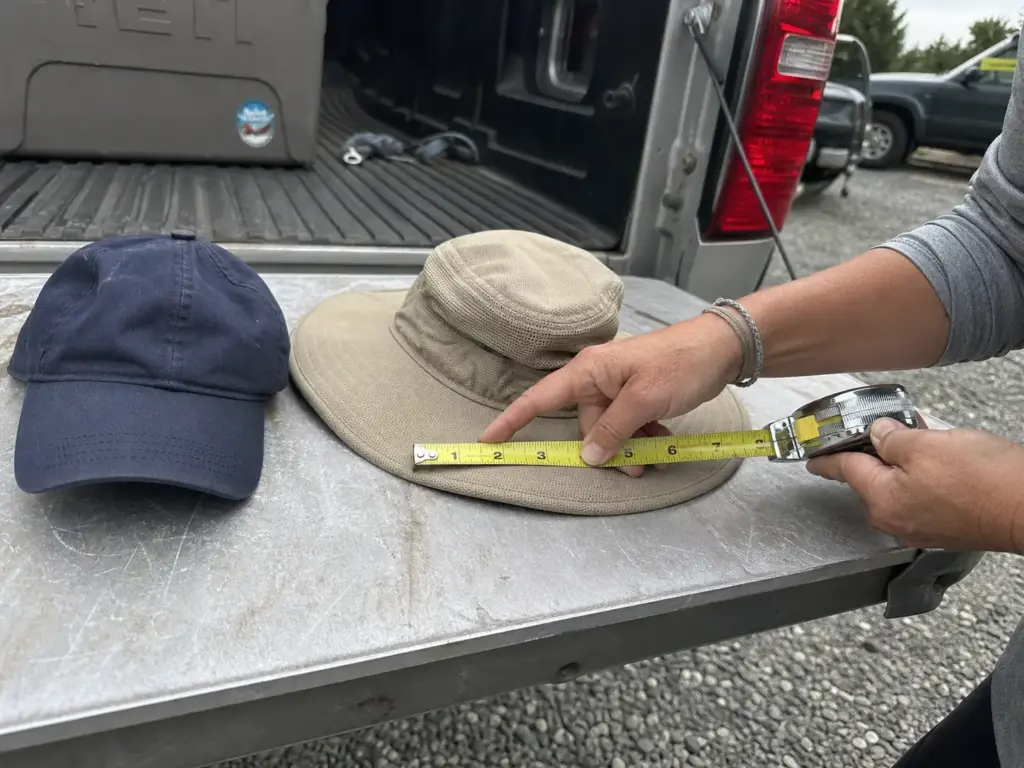
Every product page on earth says wide brim. Almost none of them say how wide. The moment you put a tape measure on the hat currently sitting in your truck, the whole category re-sorts itself.
Cancer Council Australia’s guideline puts the floor at roughly 3 inches, about 7.5 centimeters, for meaningful shading of the face, ears and neck. Below that, a brim width is cosmetic. It looks like sun protection without functioning as any.
Most performance ball caps run well under 3 inches at the front and offer exactly zero at the sides and back. That is precisely where your ears and the back of your neck live, and it is why a cap alone leaves the two spots anglers burn most often completely open.
For flats and offshore work, buying guides and experienced anglers converge on 4 inches or more as the practical floor rather than the general-use 3 to 3.5. The next section explains why the water changes that math, and it is not a small adjustment.
One measurement note that trips people up: measure from the crown seam out to the brim edge, not the total diameter of the hat. Listings quote both numbers and only one of them tells you anything about coverage. While you have the tape out, remember the brim only handles what sits above your collar. Everything below it belongs to a long-sleeve UPF sun shirt doing the same job for your arms and torso.
Measure the hat you already own before you shop. Most anglers who do this discover their trusted wide brim is 2.5 inches, and that single number decides whether they need to buy anything at all.
Closing the Neck Gap with Flaps, Capes and Legionnaire Drops
The neck burn is the one that genuinely surprises people, because they wore a hat all day and did everything they were told. The brim shades downward. Your neck faces outward. Those are different problems.
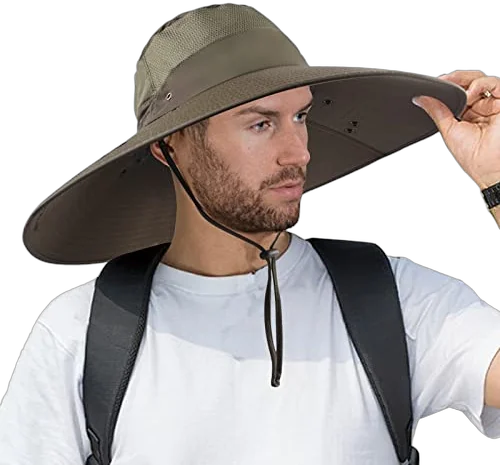
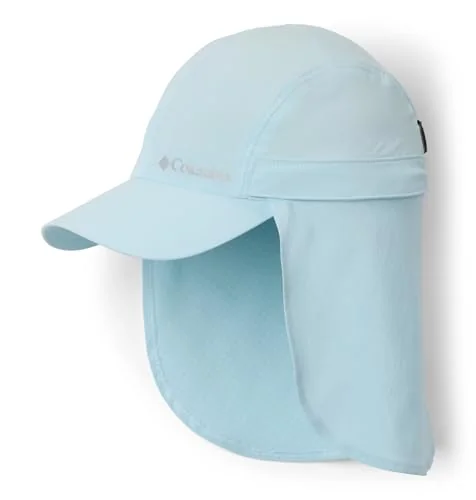
The legionnaire hat solves it most completely: a cap or hat with an attached fabric drape covering the neck and both sides, named after the kepis French Foreign Legion troops wore in North Africa. Full coverage, and the most polarizing silhouette in fishing. A removable neck flap splits the difference, letting you run the same hat two ways, flap on for flats and open bays, flap off for a shaded river bend or an evening bite under trees.
Packable capes are the third approach, with a drape stowed inside the crown that deploys when you want it. Coverage on demand without committing to a dedicated flap hat all season.
Worth knowing where the honest version of this recommendation comes from. Multiple anglers on BD Outdoors with real sun-damage history name the switch from a ball cap to a large-brim hat as the change they wish they had made a decade sooner. That is regret, not marketing, and it lands differently than a product page telling you the same thing.
There is a cheaper and more flexible route, though, and it deserves its own treatment later in this guide: a performance cap with a buff worn under the hat instead, pulled up over the ears and neck when the sun gets serious. Same coverage, different system, and it costs a fraction of a dedicated flap hat.
Reflected UV — Why the Water Doubles Your Exposure
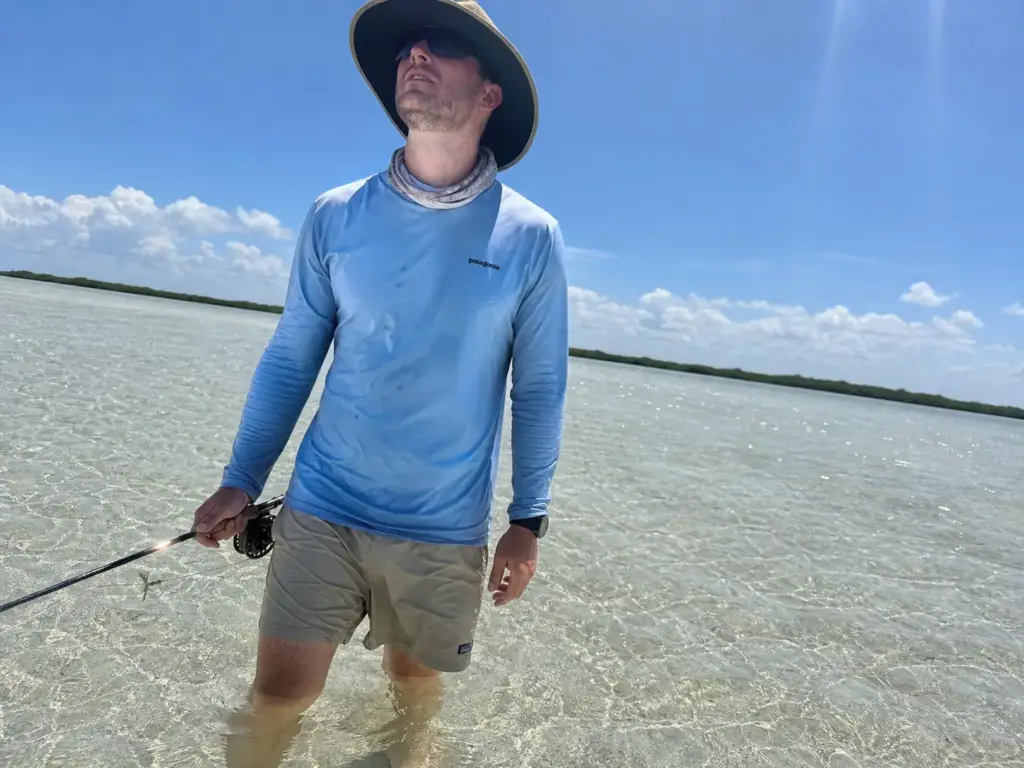
Back to the burn from the opening. Under the chin, along the jaw, on the underside of the nose. Those are places direct sunlight physically cannot reach when you are wearing a brim. That burn came from below, and almost nobody explains the mechanism.
Water reflection sends between 10% and 25% of UV back upward under typical conditions, and that is sun exposure your hat brim never accounted for. What moves that number hard is the bottom you are floating over. White sand reflects up to 40%. Turtle grass flats run 15% to 20%. Dark mud bottoms sit around 8% to 12%. Fish a white-sand flat in the Keys and you are absorbing direct sun from above and close to half of it again bouncing up off the bottom, all afternoon, from an angle your hat brim was never designed to intercept.
Now the part that genuinely reverses conventional advice. At low sun angles, roughly 20 to 40 degrees above the horizon, water UV reflectance climbs to 25% or higher. At high noon it drops to somewhere around 5% to 10%. Early morning, late afternoon, and most of winter are exactly when reflected UV is worst, and they are exactly the hours everyone treats as the safe window. The dawn patrol and the evening bite are the trips that burn you from underneath.
This is the whole reason 4 inches is the flats and offshore recommendation instead of the 3-inch general-use minimum. A longer brim projects shade further out from your face, which is what intercepts light arriving from a low angle rather than straight down. General land-based sun-hat advice assumes light comes from one direction. On the water it does not. Worth checking the EPA’s UV Index before a long day on the water for the same reason, since sun angle drives both halves of the exposure.
Put sunscreen under your chin, under your nose, and along your jawline before a flats day. Those are the three spots a brim structurally cannot cover, and they are the ones reflected light hits hardest.
Three practical changes follow from all of this. Go longer on the brim if you do much flats fishing or run offshore regularly. Look for a dark underbrim, which handles glare reduction by absorbing upward light instead of bouncing it back into your eyes and onto your face. And accept that a hat cannot finish the job by itself. If the physics side interests you, the same albedo and scattering behavior shows up in how UV actually behaves around fabric across your whole kit, not just your head.
Ventilation and Retention Against Heat, Sweat and Wind
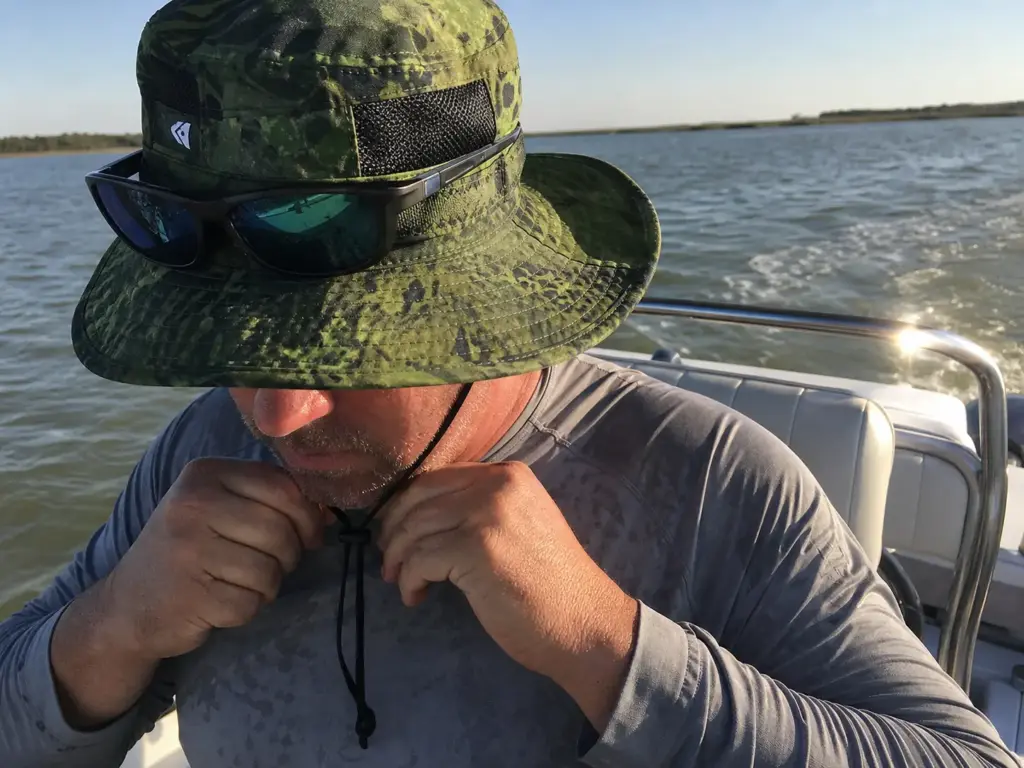
The best hat is the one that stays on your head. Full coverage traps heat, and a hat that cooks you comes off around ten in the morning, at which point its UPF rating is a number on a tag in a boat locker.
Crown ventilation attacks the problem where it starts. Mesh panels at the sides and eyelets in the crown move heat off the top of your head, where it builds under a solid full-coverage crown with nowhere to go. The difference between a vented and an unvented boonie hat on a windless August afternoon is not subtle, and it is the single feature most likely to determine whether the hat gets worn in July.
Fabric choice does the rest. Almost every rated fishing hat is polyester or nylon, often with a little spandex for stretch in the band, because those synthetics hold a tightly woven fabric structure that blocks UV while staying quick-drying after a squall or a splash from the bilge. Cotton canvas feels better in the store and stays wet for hours on the water, which is why a breathable fabric rating and a fast-dry claim usually travel together on the same tag.
Moisture-wicking sweatbands work the other end of the problem, at the band, which is where the discomfort actually registers. Contact-cooling treatments like Iso-Chill and Omni-Freeze Zero go further, this sweat-activated cooling approach activating on moisture rather than just moving it, and they are a real answer to the heat-buildup complaint instead of another mesh panel. It is the same wicking logic that governs a well-built base layer system, applied to four inches of fabric on your forehead.
Retention is the other half. Forum consensus on Hull Truth and BD Outdoors lands repeatedly on the same silhouette: a 360-degree brim paired with a chin strap. The strap is what makes a wide brim survivable when the boat is on plane or a front pushes through, and a wide-brim hat without one is a hat you will eventually watch float away.
Look at how the hat closes, too. A drawstring or toggle cord inside the crown lets you snug the fit down as your head sweats and the band loosens, which a fixed-size hat and a snapback closure both fail at over a long day. An adjustable strap at the back does the same job on a cap.
The KastKing Sol Armis UPF 50 Boonie Hat covers both requirements without much fuss, with vented mesh sides, a chin strap and a removable neck shield in one budget-friendly package. If you want the cooling-fabric approach in a lower-profile silhouette, the Under Armour Iso-Chill ArmourVent Bucket Hat runs its ArmourVent fabric with an Iso-Chill sweatband, which is a legitimate answer to overheating rather than a marketing line, though it gives up brim length to get there.
A hat clip or lanyard that tethers the crown to your shirt collar costs a few dollars and shows up in every forum thread about hats going overboard. It is the cheapest gear purchase in this entire article and the one most likely to pay for itself on the first windy run.
One fit adjustment note matters more than crown size: a hat that only stays put when cinched to the last notch will torque in a crosswind. You want range left over, not a hat you have maxed out on day one.
Hat Styles Compared, from Wide Brim to Boonie, Cap and Straw
Almost everyone already owns the wrong one. The real question is not which hat is best, it is which compromise you are actually willing to live with every trip.
The wide-brim sun hat or safari style gives you maximum coverage and the stiffest brim, which also makes it the most likely to catch wind and the most likely to sit in the closet unworn. It is usually the highest-UPF option in anyone’s collection and reliably the least-worn one.
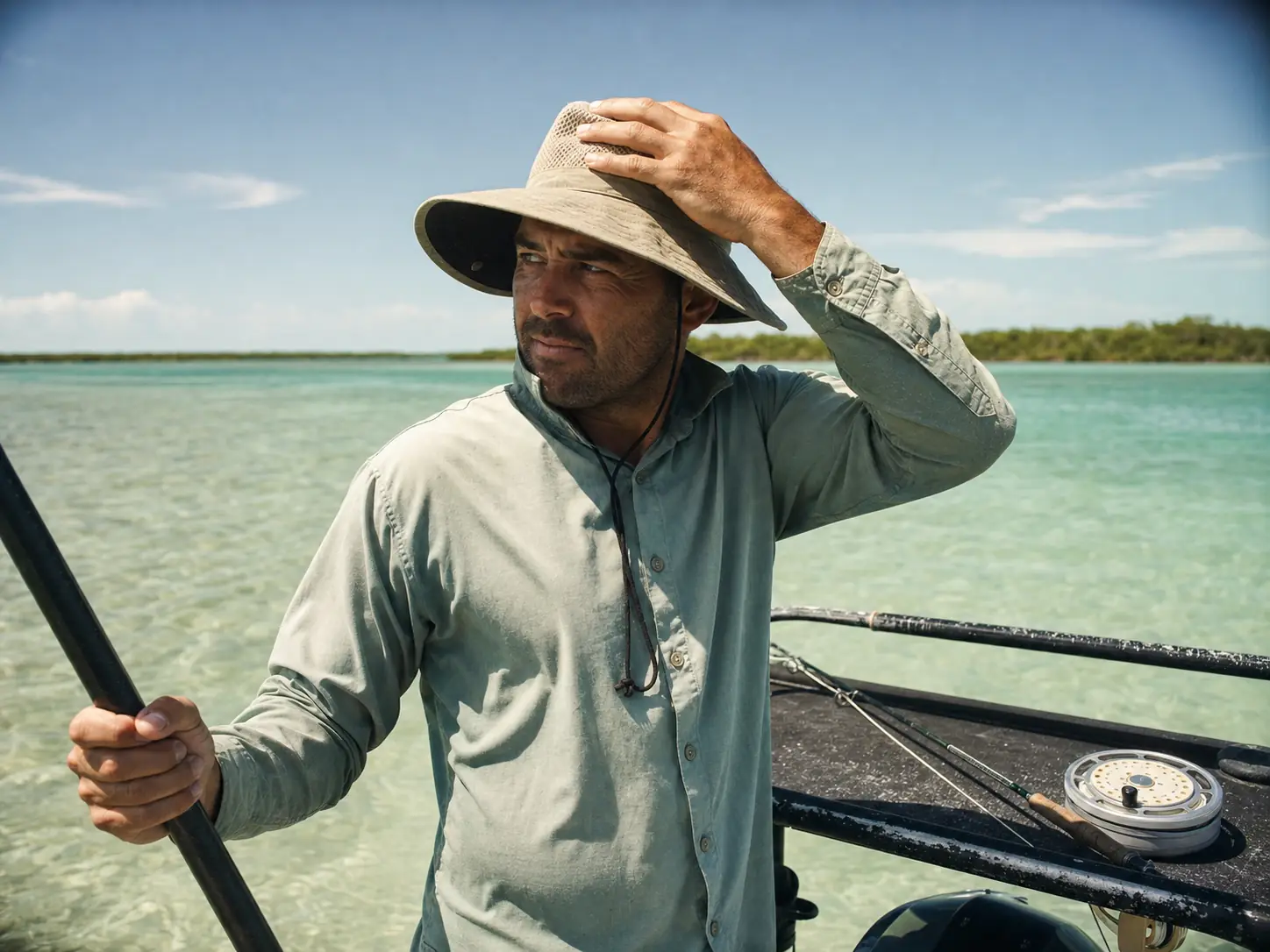
The boonie hat or bucket style is the forum favorite for good reason. Soft 360-degree brim, chin strap standard, vented crowns common, and a genuinely packable hat you can stuff in a dry bag. Coverage close to a full sun hat in a silhouette people actually put on their head voluntarily.
The performance ball cap is the one everybody already wears and the weakest performer here by a wide margin. No ear coverage, no neck coverage, brim usually under 3 inches. It works only as part of a system with a gaiter, never alone on open water.
Straw and canvas hats breathe better than anything else and pack down small, but they are also the classic uncertified trap. A loose weave straw hat can test around UPF 15 while looking like the most sun-hat thing in the store, which is exactly the same trap as buying rain gear on the mm number alone. Buy the rated ones, like the Soul of Adventure Summer Straw Hat, which carries a real UPF rating and pairs a crushable crown with the ventilation that makes straw worth wearing in the first place.
There is a gear-closet scene that plays out in a lot of garages. Three sun hats hanging on a peg, none of them worn since the year they were bought, next to one ball cap that goes out on every single trip and protects a fraction as much. Coverage you do not wear is zero coverage. That tension is worth its own section.
The Dorkiness Problem and the Cap-Plus-Buff Workaround
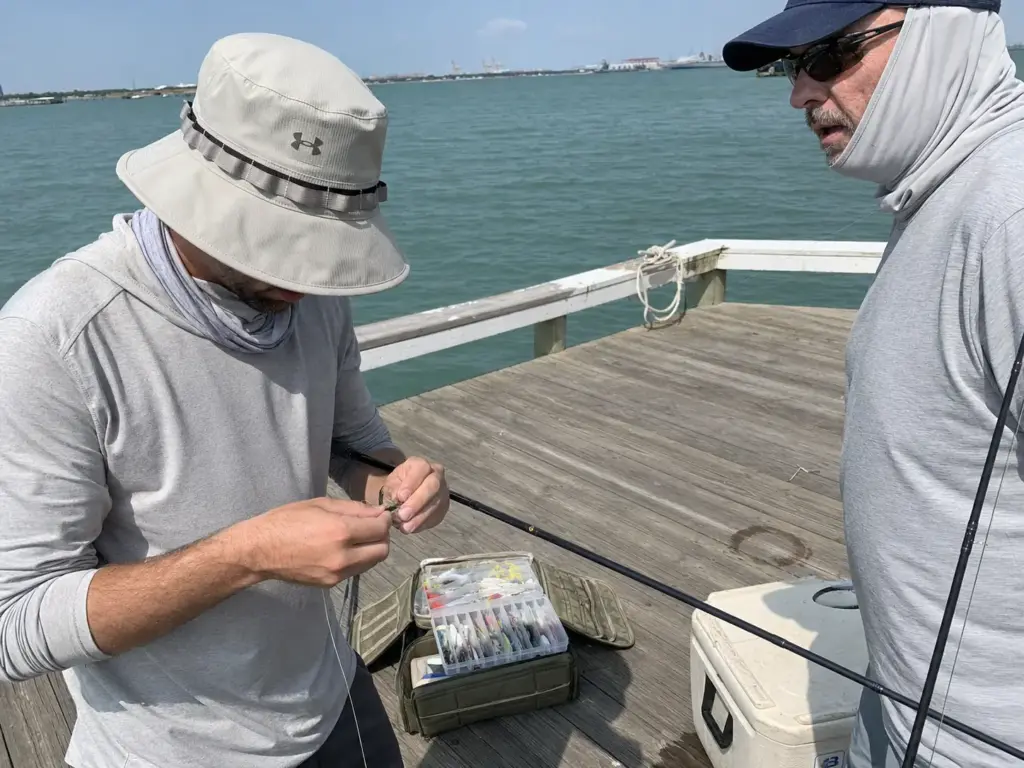
This is the conversation that happens in every sun-protection thread on every fishing forum and appears in approximately zero buying guides, because it does not sell a seventy dollar hat.
Dorkiness is the anglers’ own word for it, not mine. There is a BD Outdoors thread titled specifically around finding a sun hat with zero dorkiness, which tells you style vs protection is a real decision axis people weigh out loud, not a hypothetical that content writers invented. Guys who will happily wade waist-deep in a swamp at four in the morning are genuinely reluctant to put on a hat with a flap. Pretending otherwise produces advice nobody follows.
So where does forum consensus actually land? Two silhouettes, repeatedly. A vented 360-degree brim with a chin strap, or a drape-cape hat with a front brim. Watch what any working fishing guide wears on a charter deck and you will see one of those two nearly every time. Both read as fishing gear rather than costume, and both beat a ball cap by an enormous margin on actual coverage. The stiff safari hat with the full circumference flap is where most people draw the line, and knowing that in advance saves you from buying one that lives on a peg.
The modular route is the better answer for a lot of anglers, and it is the honest budget fishing hat strategy. A performance cap plus a buff pulled up over the ears and the back of the neck gives you close to full coverage, costs less than one dedicated wide-brim hat, swaps out by conditions, and looks like exactly what half the boat is already wearing. Nobody on the water reads it as a costume. You can drop the gaiter when a front cools things off and pull it back up when the sun climbs, which no fixed-flap hat lets you do.
If you already own a cap you like, buy the buff first and the hat second. It is the cheaper half of the upgrade, it fixes the ears and neck, and it tells you within two trips whether you actually needed a new hat at all.
Here is the honest counterpoint, because a recommendation without one is an advertisement. A meaningful subset of anglers in humid climates try the gaiter and abandon it specifically because it runs hot, not because of how it looks. Wet heat plus a layer of fabric across your neck and jaw is genuinely uncomfortable for some people, and if that is you, no amount of enthusiasm about modularity changes it. The wide-brim hat with a vented crown is the better call in that case.
My take, for what it is worth: a hat you will actually wear at 3 inches beats a hat you will not wear at 4, every single time. Once the head is sorted, polarized lenses handle the glare the brim cannot, and between the two you have covered everything above the collar.
When to Replace a Hat That Still Says UPF 50+
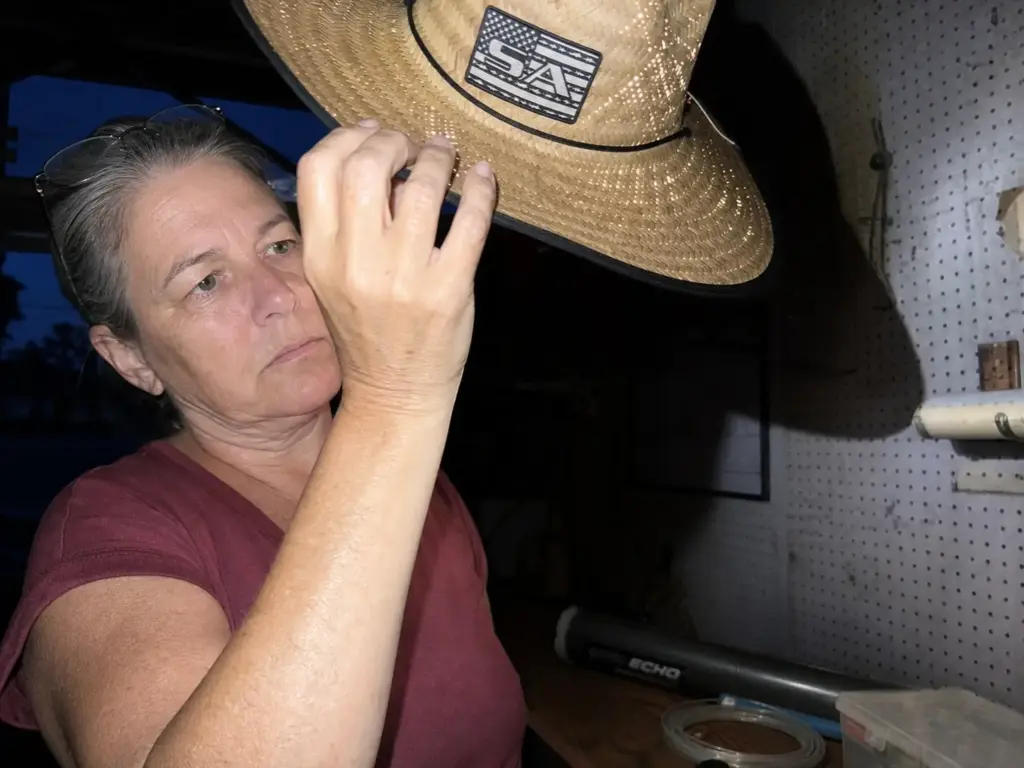
The hat sitting in your truck right now is the one this section is about.
That number on the tag came from a fabric test, not a lifetime warranty. UPF degrades with wash cycles, with salt exposure, and with cumulative UV exposure slowly breaking down the fibers themselves. The hat does not tell you when it has fallen out of spec, and it will keep saying UPF 50+ on the tag long after the fabric stopped delivering it.
WindRider’s guide flags roughly 30 to 40 wash cycles as the point where real-world UPF can fall meaningfully below the printed rating. Translated to fishing, that is a hat replacement cycle of every two to three seasons for a hat that goes out most weekends. Treat it as a consumable with a service life, the same way you think about line, not a buy-once item you own forever.
The standards angle nobody connects makes this concrete. ASTM certification in the US runs on a three-part chain, and the testing protocol behind a legitimate UPF rating spells it out: AATCC testing method 183 does the actual measuring, ASTM D6603 governs how the result gets labeled, and ASTM D6544 requires simulating the fabric’s full life cycle, including washing, wear and fade, before the UPF test even runs. Read that last one again. The rating itself assumes a finite usable life. It was never designed to be a forever number, and the protocol says so explicitly. Nobody prints that on the hang tag.
There is a moment most anglers eventually have with a favorite boonie: three summers of hard use, a hundred washes, visibly faded across the crown, still confidently labeled UPF 50+. Nothing about the hat announces that it stopped being a UPF 50 hat somewhere in year two. The tag does not re-issue itself.
Two things drop a hat below its rating faster than wash count alone, and neither shows up in the care instructions. Stretch is the first. UPF depends partly on how tightly the yarns sit against each other, so a fabric pulled taut lets the fibers separate and more UV straight through the same weave that tested at 50 on the rack. Moisture is the second, and the Skin Cancer Foundation puts a number on it: wetting a fabric can cut its effectiveness by as much as 50 percent. That is exactly the state a fishing hat spends its afternoons in. A sweat-soaked crown at two in the afternoon is not delivering the number on the tag, and that is the hour you most need it to.
Write the purchase month on the inside band with a laundry marker the day you buy the hat. Three seasons later you will not be guessing whether it is a two-year hat or a five-year hat, which is the only reason most anglers keep wearing a hat that stopped protecting them.
The field check takes five seconds. Hold the crown up against a bright light and look through it. Visible pinholes of light coming through the weave, fading fabric measured against the original color, or material that has gone limp and stretched out all point the same direction, and the protection went with it.
Basic hat care slows the decay meaningfully. Rinse the salt out after every saltwater trip, applying the same salt rinse that keeps waders alive. Then air drying in shade beats baking it on a hot dashboard, and drying it fully before it goes in a hatch is your mildew prevention step. Storage shape retention matters on a stiff brim too: hang it or set it crown-down rather than crushing it under a tackle bag all winter. Salt crystals and repeated UV cooking break down the fibers fastest, and both are entirely avoidable.
The Short Version
Check for a number, not an adjective. If the tag says sun protective with no numeric UPF anywhere on it, assume the hat is doing very little for you.
Measure the brim. Three inches is the floor for meaningful coverage, and four is the floor if you fish open water, because the water is throwing UV back up at you from an angle the brim was not built to stop.
Replace it on a schedule. Two to three seasons of hard use and the rating printed on the tag quietly stopped being true a while ago.
Go put a tape measure on the hat you already own before you buy anything. Most anglers find out their trusted wide brim is 2.5 inches, and that single measurement decides whether this article costs you anything at all.
Frequently Asked Questions
01How do fishing hats protect you from the sun?
A fishing hat protects you two ways at once: the fabric’s UPF rating stops UV passing through it, and the brim physically shades skin the fabric never touches. Neither one addresses UV reflecting up off the water, which is why coverage below the jaw still matters.
02What fishing hats offer UV protection?
Any hat carrying a certified numeric UPF rating, usually UPF 50+, offers verified UV protection. Wide-brim sun hats, vented boonies and rated straw hats all come in certified versions, and the Skin Cancer Foundation Seal of Recommendation is the strongest third-party signal you can look for.
03How to tell if a hat has UV protection?
Look for a printed UPF number on the tag or listing, UPF 30 minimum and UPF 50+ for full days on the water. The phrases sun protective and UV blocking are unregulated marketing terms with no testing behind them. Holding loose-weave fabric up to bright light tells you most of the rest.
04What do fishermen wear to protect from sun?
The standard setup is a UPF-rated wide-brim hat or vented boonie, a long-sleeve sun shirt, a neck gaiter, polarized sunglasses, and sunscreen on the jaw and under the nose. The pieces work as a system: the hat handles above the collar, the shirt and gaiter handle below it.
05What is the best fishing hat brim width for sun protection?
Three inches is the minimum for meaningful face, ear and neck shading, and four inches or more is the practical floor for flats and offshore fishing. Most ball caps run under three inches at the front. Measure from the crown seam to the brim edge, not total hat diameter.
Risk Disclaimer: Fishing, boating, and all related outdoor activities involve inherent risks that
can lead to injury. The information provided on Master Fishing Mag is for educational and informational purposes
only. While we strive for accuracy, the information, techniques, and advice on gear and safety are not a substitute
for your own best judgment, local knowledge, and adherence to official regulations. Fishing regulations, including
seasons, size limits, and species restrictions, change frequently and vary by location. Always consult the latest
official regulations from your local fish and wildlife agency before heading out. Proper handling of hooks, knives,
and other sharp equipment is essential for safety. Furthermore, be aware of local fish consumption advisories. By
using this website, you agree that you are solely responsible for your own safety and for complying with all
applicable laws. Any reliance you place on our content is strictly at your own risk. Master Fishing Mag and its
authors will not be held liable for any injury, damage, or loss sustained in connection with the use of the
information herein.
Affiliate Disclosure: We are a participant in the Amazon Services LLC Associates Program, an
affiliate advertising program designed to provide a means for us to earn advertising fees by advertising and linking
to Amazon.com. As an Amazon Associate, we earn from qualifying purchases. We also participate in other affiliate
programs and may receive a commission on products purchased through our links, at no extra cost to you. Additional
terms are found in the terms of service.