

In this article
The first hard frost on the gunwale changes everything. The lazy, rhythmic retrieves that fooled fish in August no longer trigger the instinct of Esox lucius. As the days shorten and the water cools, the Northern Pike transforms from a lethargic summer ambusher into a calorie-loading machine.
This shift isn’t a time for guesswork or holding onto summer patterns out of stubbornness. It is a season defined by physics and physiology. To connect with the true giants of the system before the ice locks them away, you must stop fishing the calendar and start fishing the thermometer.
Success in autumn pike fishing requires submitting to the biological reality of the fish. We are moving from a passive game of casting at shorelines to a data-driven hunt for trophy pike. This guide maps that metabolic journey, helping you navigate the chaos of lake turnover and the precision of the cold-water period.
Why Does Water Temperature Dictate Pike Behavior in Autumn?
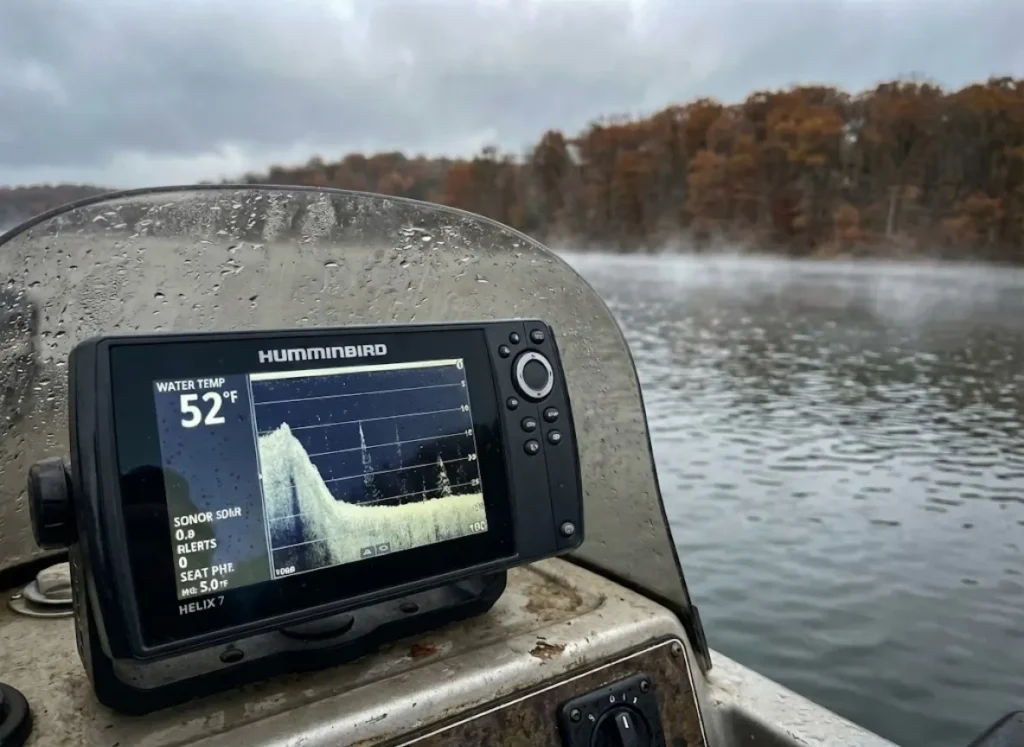
Understanding the why is useless if you cannot find the where. Once you grasp the metabolic need for oxygen and calories, the lake’s geography begins to look different. The pike’s movements are not random; they are a direct response to their body’s changing requirements.
How does cooling water influence pike metabolism and feeding frequency?
The Northern Pike is a cool-water mesotherm, meaning its body temperature and metabolic rate are enslaved to the surrounding water. As water temperatures drop from summer highs near 70°F toward autumn lows, these rates change drastically. This relationship is defined by the Q10 temperature coefficient, a biological principle dictating that metabolic rates drop precipitously as the environment cools.
This drop initiates the “Metabolic Trigger,” often called the “Fall Feed Bag.” The initial decline in temperature signals the pike to begin bulking up, accumulating lipids (fat reserves) essential for winter survival and spring gonadal development. You can read more about how metabolic processes and digestion rates in fish function to understand the science behind this urgency.
However, as the water continues to cool, the “Efficiency Equation” takes over. In cold water, digestion takes days rather than hours. This forces pike to maximize their caloric intake per strike. They prefer one large meal—a sucker, tullibee, or whitefish—over many small snacks.
Consequently, feeding windows become shorter and less frequent, but the aggression toward large prey items spikes during those brief windows. A deeper strategic analysis of Northern Pike facts reveals that these large females are physically released from summer heat stress. This allows them to leave deep summer haunts and re-invade the shallow water to hunt.
What is “Lake Turnover” and why does it scramble the map?
Before the cold water settles in, anglers must navigate the chaos of turnover. In summer, lakes stratify into three layers: the warm surface (Epilimnion), the transition (Thermocline), and the cold bottom (Hypolimnion).
This stability ends due to the density anomaly of water. Water is densest at 39.2°F (4°C). As surface water cools in the fall, it becomes heavier and sinks, eventually forcing the bottom water to rise. This mixing event destroys the thermocline and homogenizes the temperature and oxygen levels throughout the water column. The IISD Experimental Lakes Area provides excellent data to explain the science behind the phenomena of stratification and mixing.
Symptoms of Turnover:
- “Pea Soup” Turbidity: The water suddenly becomes cloudy.
- Debris: Decaying organic matter floats to the surface.
- Smell: A sulfurous odor often rises from the deep as decaying matter releases gases.
This period creates the “Turnover Funk.” The sudden change in water chemistry and oxygen distribution scatters the fish because they are no longer depth-restricted by oxygen. They can be anywhere, and feeding often suppresses temporarily. During this time, the impact of fishing barometric pressure combined with fall storms can make fishing difficult.
Pro-Tip: If you arrive at a lake that is turning over (smelly, dirty water), leave. Trailering your boat to a nearby river or a shallow bay that doesn’t stratify can save your fishing trip.
Where Should You Target Pike as the Season Progresses?
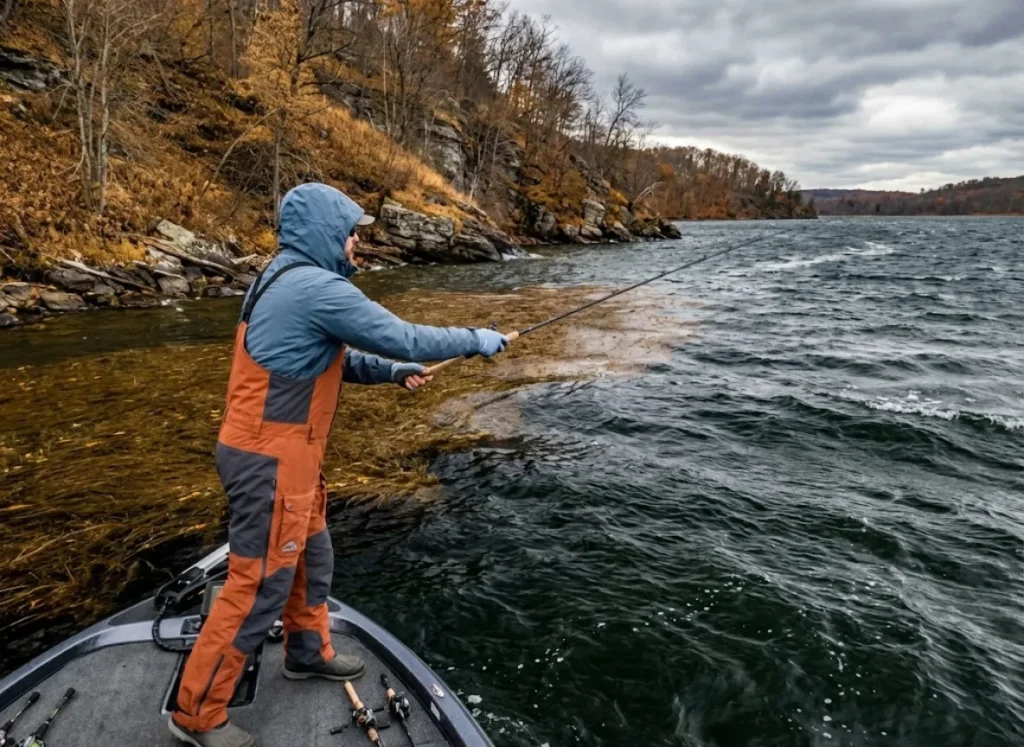
As the biology shifts, so does the geography. You must translate biological theory into specific, locatable waypoints on a lake map, focusing on the critical distinction between living and dead habitat.
How do you identify productive “Green Weeds” versus dead zones?
Early in the fall, the location game is defined by the “Oxygen Imperative.” As daylight decreases, weeds begin to die. Bacteria decompose this dying vegetation, a process that consumes oxygen and releases carbon dioxide and ammonia. This creates repelling “dead zones.” You must avoid these dying brown weeds to adhere to the Canadian water quality guidelines for dissolved oxygen required to support aquatic life.
The Gold Standard:
You are looking for Broad-leaf Cabbage (Potamogeton amplifolius) and Coontail (Ceratophyllum demersum). These species stay green and photosynthetic later into the season than “early diers” like Milfoil or Curly-leaf Pondweed, which collapse into brown, hypoxic mats. Finding these green cabbage beds in weedy bays is essential.

To find these oases, you need to know how to read a fish finder effectively. On Down Imaging or Side Imaging, green weeds stand tall and return hard signals. Dead weeds look like “fuzzy” compressed carpets. If you aren’t sure, snag a weed with a lure. If it comes up green and crisp, stay. If it is brown and slimy, move immediately.
Why do rocky structures and breaklines become the primary focus in late fall?
As the water continues to cool and the weeds finally lay down for the winter, pike abandon the flats. They seek the geological reliability of rock and depth. This shift is driven by the movement of fall-spawning baitfish. Ciscoes, Tullibees, Herring, and Whitefish move to rocky substrates to spawn when water hits the mid-40s.
The Ambush Funnel:
Steep breaklines, rocky points, and mid-lake reefs become prime real estate. These structures allow pike to hold deep in 20 to 35 feet of water to conserve energy, yet strike quickly at shallow-moving prey without traveling long horizontal distances.
Focus on “inside turns” and “fingers” on topographic maps. These irregularities concentrate baitfish. Additionally, current becomes a major factor. River mouths or neck-downs that funnel migrating baitfish are high-percentage spots. For a deeper understanding of how water movement positions fish, review the definitive guide for fishing in current.
Which Tactics Work Best for Each Temperature Phase?
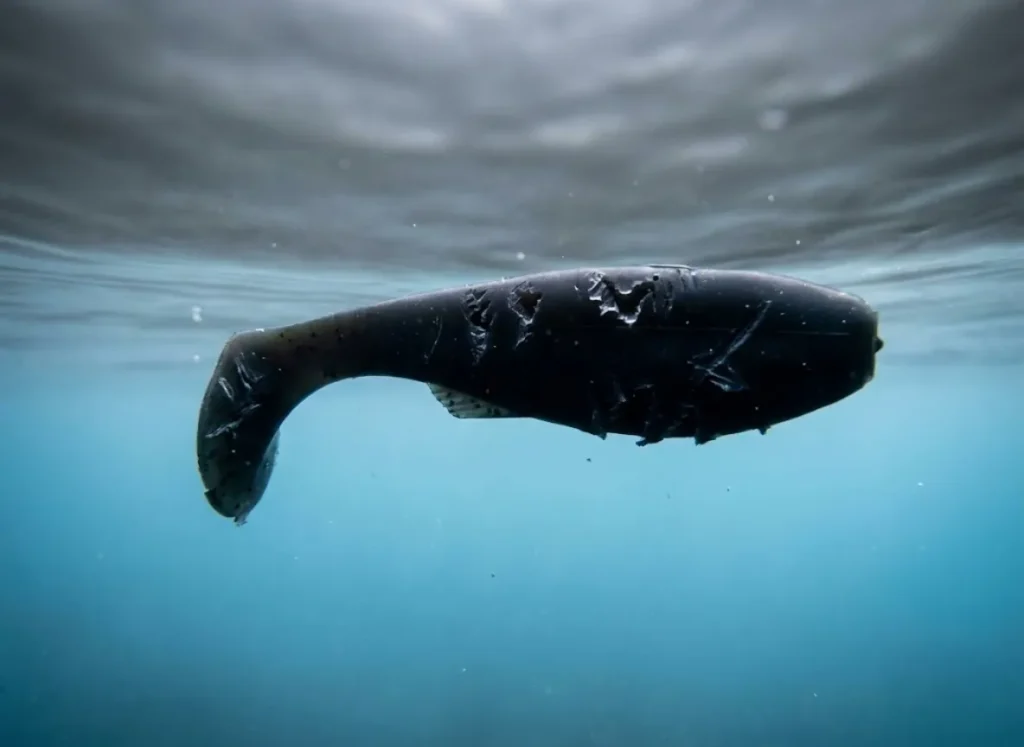
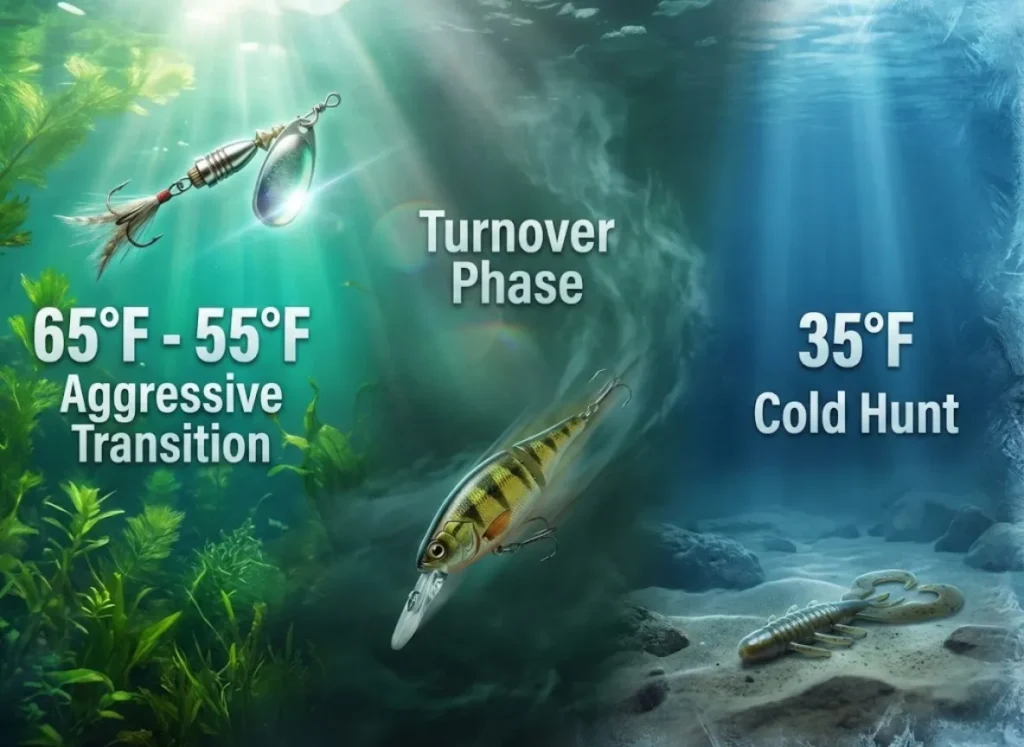
Knowing where the fish are is half the battle; knowing how to trigger a strike when their metabolism is slowing down is the other. This playbook prescribes specific lures and retrieves tailored to the three distinct phases of autumn.
What works best during the “Aggressive Transition” (65°F – 55°F)?
This phase is the “Re-Invasion.” Large pike move shallow to feed heavily before the crash. The strategy here is “Power Fishing.” You want to cover water fast with horizontal presentations to find active fish.
Tactics:
- High-Speed Inline Spinners: Burn large blades like Mepps Musky Killers or Blue Fox Vibrax over cabbage tops.
- Twitch Baits: Erratic lures like the Rapala X-Rap trigger reaction strikes.
- Wake Baits: Bulging the surface over shallow coves can still draw explosive hits.
The goal is to force a “Reaction Strike,” compelling the fish to decide instantly rather than inspect the bait. Flash and vibration are key to calling fish out of dense green cover. Since you will be targeting remaining vegetation, knowing the correct strategies for fishing heavy cover is essential to extracting fish without fouling your lure constantly.
How do you adjust tactics for the “Turnover Lull” (55°F – 45°F)?
Eventually, the water hits 55 degrees, the turnover mixes the column, and the aggressive bite vanishes. Now, you must grind. The tactical goal shifts to searching for scattered fish in turbid water.
The Solution: Trolling
Trolling is the only efficient way to cover the massive “dead water” zones created by scattered fish. Because visibility is often reduced by the turnover, use high-contrast lures. Use classic pike spoons like the Eppinger Daredevle, Len Thompson Five of Diamonds, or a Williams Whitefish.
When selecting colors, apply color logic: use white and silver lures in clear water (if you find it) and brown and yellow lures or fluorescent patterns in stained water. Troll crankbaits like the Rapala Super Shad Rap along 15-20ft contour lines. Speed is critical; you should slow down slightly from summer speeds (2.5 – 3.0 mph) to match the cooling water. For the technical details on depth control and boat management, consult our guide to trolling for freshwater fish.
What is the strategy for “Cold Water Hunting” (<45°F)?
As the turbidity settles and the water clears, the final and most trophy-rich phase begins. This is the realm of the giant. The biological state is defined by low metabolism and slow digestion.
The Pause and The Drop:
You need vertical presentations and suspending baits that hang in the strike zone. “Magnum” plastics (Bull Dawgs, Bondy Baits), 6-inch paddletail shads, and wooden jerkbaits (Suicks) are the tools of choice.
The Technique:
- Dead-Sticking: Pause a jerkbait for 5-10 seconds. Let the pike stare it down.
- The Death Rise: A weighted Suick that slowly backs up toward the surface on the pause mimics a dying whitefish—a trigger lethargic pike cannot resist.
- Live Bait: Large suckers on Quick-Strike rigs act as the ultimate insurance policy. You must know how to keep bait alive in cold water, as a lively bait is crucial for attracting attention.
What Gear is Required for Heavy Fall Applications?
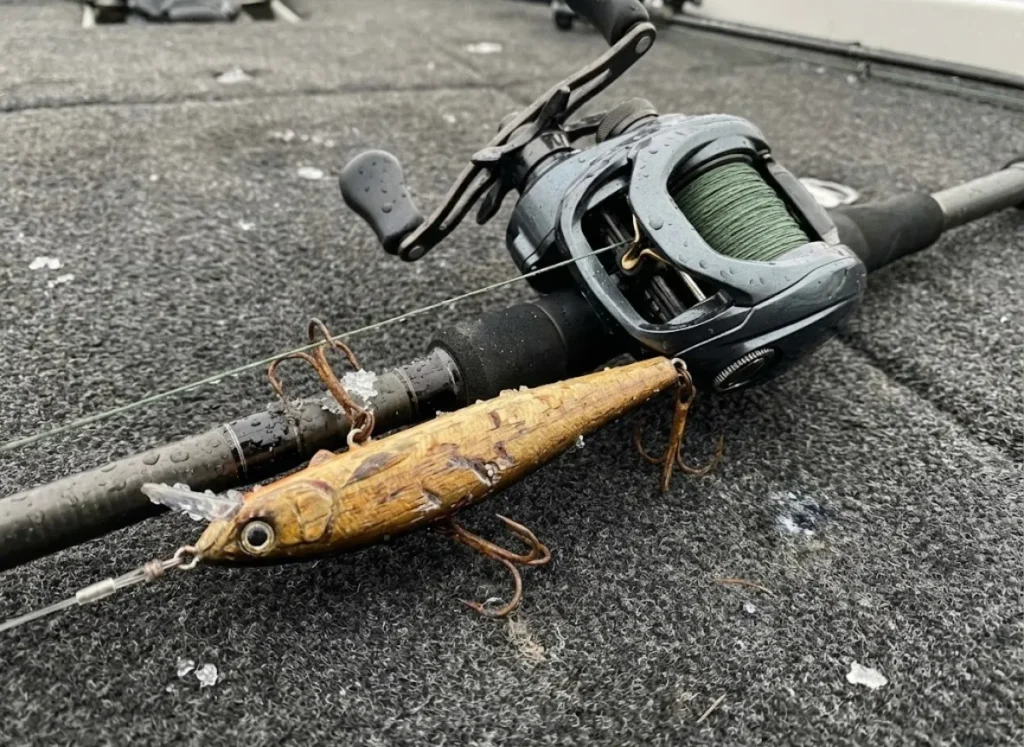
Throwing a 10-inch lure or setting a hook on a 20-pound fish requires more than luck; it requires gear engineered for violence. Standard bass gear or medium-heavy rods will fail under the stress of heavy fall applications.
Why are specific rod and line setups necessary for fall giants?
You need Heavy Power rods (8ft – 9ft) to handle the physics of launching 4-12oz lures without snapping the rod blank. Pair this with a low gear ratio (5.1:1) baitcasting reel, such as a Tranx 400 or Abu Garcia Revo Toro, which offers “winching power” rather than speed.
Line Choice:
Use 80lb-100lb Braided Line. This provides zero stretch and allows you to manage heavy lures. For the leader, the debate rages between wire leaders and fluorocarbon leaders. In the clear water of late fall, Heavy Fluorocarbon (80-130lb) is superior. Its refractive index makes it nearly invisible, triggering more strikes than visible wire.
Check your knots constantly. The immense stress of casting heavy baits degrades knots faster than fighting fish. Review the technical breakdown of rod action vs power analysis to understand why your medium-heavy spinning rod is a liability in this season. Additionally, data on associated influential factors and angling gear restrictions highlights how proper gear reduces fighting time and mortality.
Why is the “Quick-Strike Rig” mandatory for live bait?
The final piece of the puzzle isn’t about catching the fish, but ensuring it survives to be caught again. Traditional single hooks require “feeding time,” allowing the fish to swallow the bait. This results in deep gut-hooking and high mortality.
The Solution:
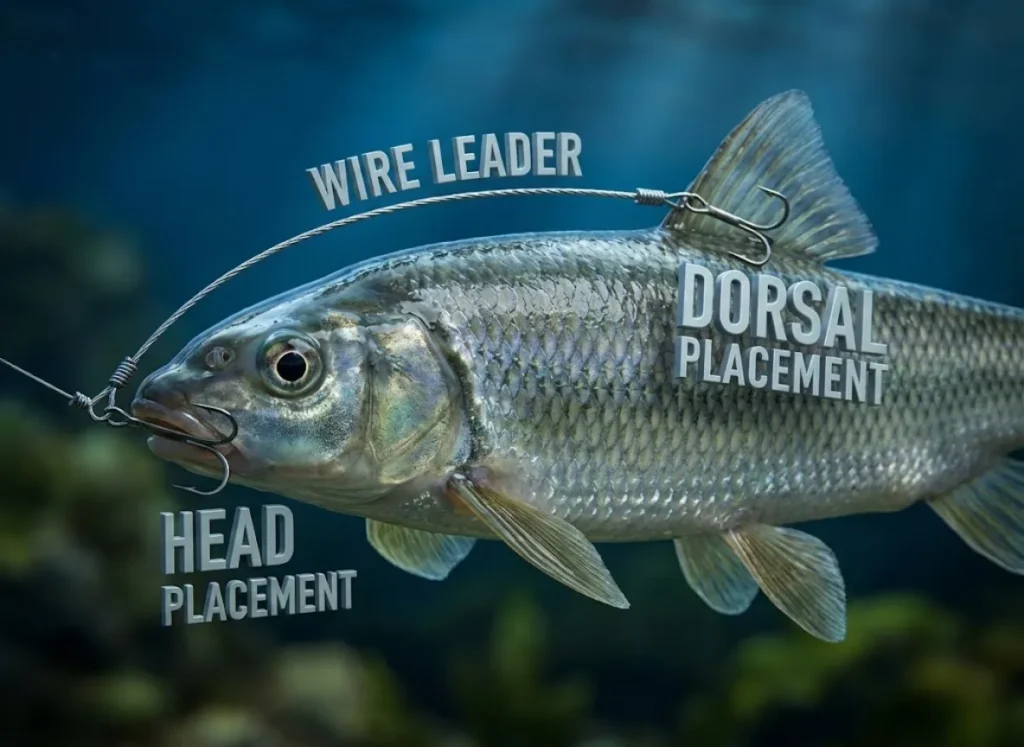
A Quick-Strike rig consists of a wire leader with two small trebles spaced to cover the head and dorsal area of the bait. This allows for an immediate hookset the moment the pike strikes.
Deep hooking is not an option when targeting egg-laden females that represent the future of the fishery. Always carry long-nose pliers, jaw spreaders, and bolt cutters. If a hook is difficult to remove, cut the hook, not the fish. Also, in sub-zero air temps, keep the fish in the water or net as much as possible to prevent gill filaments from freezing. For more on safe handling, read our guide on how to hold a fish.
The Final Cast
Fall pike fishing is not a game of chance. It is a pursuit defined by the thermometer. The fish are slaves to temperature, shifting predictably from the shallows to the depths as the water cools from 60°F down to 40°F.
Your success relies on identifying “Green Weeds” early, grinding through the “Turnover Funk” with high-contrast trolling, and finally, hunting the “Hard Structure” with slow, deliberate presentations. But remember, with the potential for giant fish comes the responsibility of conservation. Use heavy-duty equipment and Quick-Strike rigs to protect the breeding stock.
Before you head out into the chill, review our comprehensive guide on how to tie fishing knots to ensure your heavy fluorocarbon leaders hold up against the strike of a lifetime.
FAQ – Frequently Asked Questions about Fall Pike Fishing
What is the best time of day to fish for pike in the fall?
Unlike summer mornings, the best bite often occurs mid-day to late afternoon (10:00 AM – 3:00 PM). The sun has had time to warm the shallow water slightly, activating the baitfish and, subsequently, the pike.
How deep should I fish for pike after the lake turns over?
Focus your efforts on the 15 to 25-foot zone along steep breaklines and points. This depth offers thermal stability and is often the migration route for whitefish and ciscoes heading to spawn.
Can I use topwater lures for pike in the fall?
Yes, but primarily during the Aggressive Transition (Early Fall) when water temps are above 55°F. Once the turnover begins and surface temps drop, sub-surface jerkbaits and deep plastics become significantly more effective.
What are the signs that a lake is currently turning over?
Look for a sudden decrease in water clarity (turbidity) and clumps of decaying organic matter floating on the surface. A distinct rotten egg or sulfur smell is often present due to gases releasing from the rising bottom water.
Risk Disclaimer: Fishing, boating, and all related outdoor activities involve inherent risks that
can lead to injury. The information provided on Master Fishing Mag is for educational and informational purposes
only. While we strive for accuracy, the information, techniques, and advice on gear and safety are not a substitute
for your own best judgment, local knowledge, and adherence to official regulations. Fishing regulations, including
seasons, size limits, and species restrictions, change frequently and vary by location. Always consult the latest
official regulations from your local fish and wildlife agency before heading out. Proper handling of hooks, knives,
and other sharp equipment is essential for safety. Furthermore, be aware of local fish consumption advisories. By
using this website, you agree that you are solely responsible for your own safety and for complying with all
applicable laws. Any reliance you place on our content is strictly at your own risk. Master Fishing Mag and its
authors will not be held liable for any injury, damage, or loss sustained in connection with the use of the
information herein.
Affiliate Disclosure: We are a participant in the Amazon Services LLC Associates Program, an
affiliate advertising program designed to provide a means for us to earn advertising fees by advertising and linking
to Amazon.com. As an Amazon Associate, we earn from qualifying purchases. We also participate in other affiliate
programs and may receive a commission on products purchased through our links, at no extra cost to you. Additional
terms are found in the terms of service.