
In this article
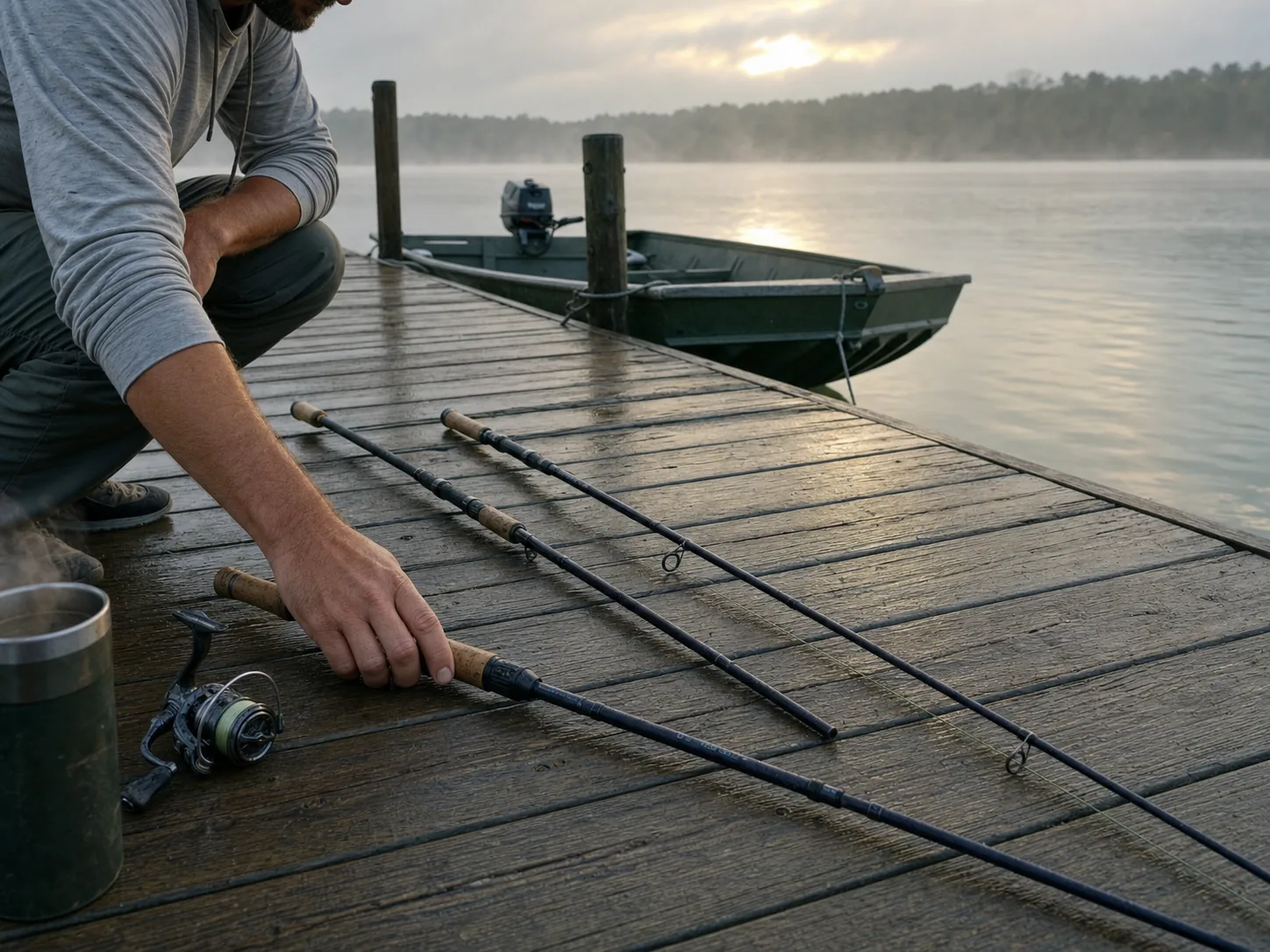
You’re standing in the rod aisle holding two rods that feel almost identical, and the guy next to you swears a two-piece flat-out dulls your sensitivity. Here’s what nobody in that aisle tells you straight: for the way most people actually fish, you’d never feel the difference blindfolded. Long-running forum threads keep landing on the same number, that 90% of anglers or more couldn’t pick the one-piece from the two-piece fishing blind, and the tackle engineers who design these rods will tell you the joint isn’t where rods break anyway. This is the real breakdown of what you gain and give up with each, then a straight answer for how you actually fish.
Here’s the short version before we get into the details.
| Factor | One-Piece | Two-Piece |
|---|---|---|
| Sensitivity | Slight edge on light-line finesse bites | Nearly identical on modern rods; undetectable on moving baits |
| Portability | Full length; needs a locker or roof rack | Breaks down to half length; fits any trunk or closet |
| Durability | No joint to seat or maintain | Engineered just as strong; most breaks come from high-sticking, not the ferrule |
| Cost | Fewer options, often pricier | Cheaper and dominates tackle-shop shelves |
What a Ferrule Actually Is (and What Changes at the Joint)
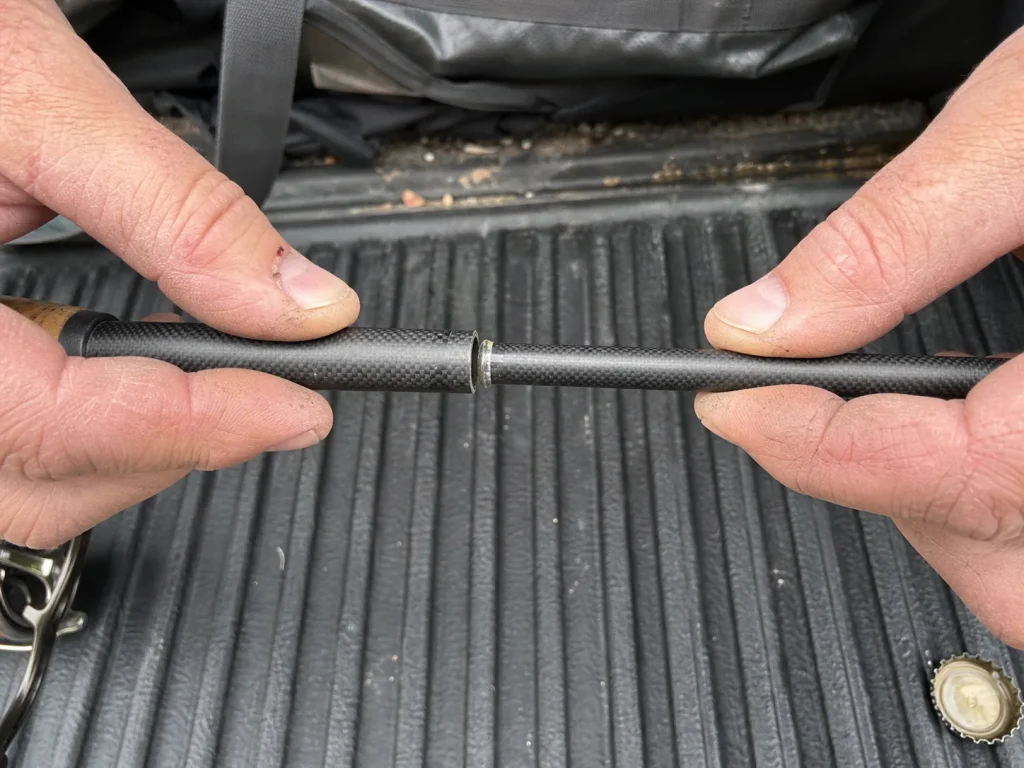
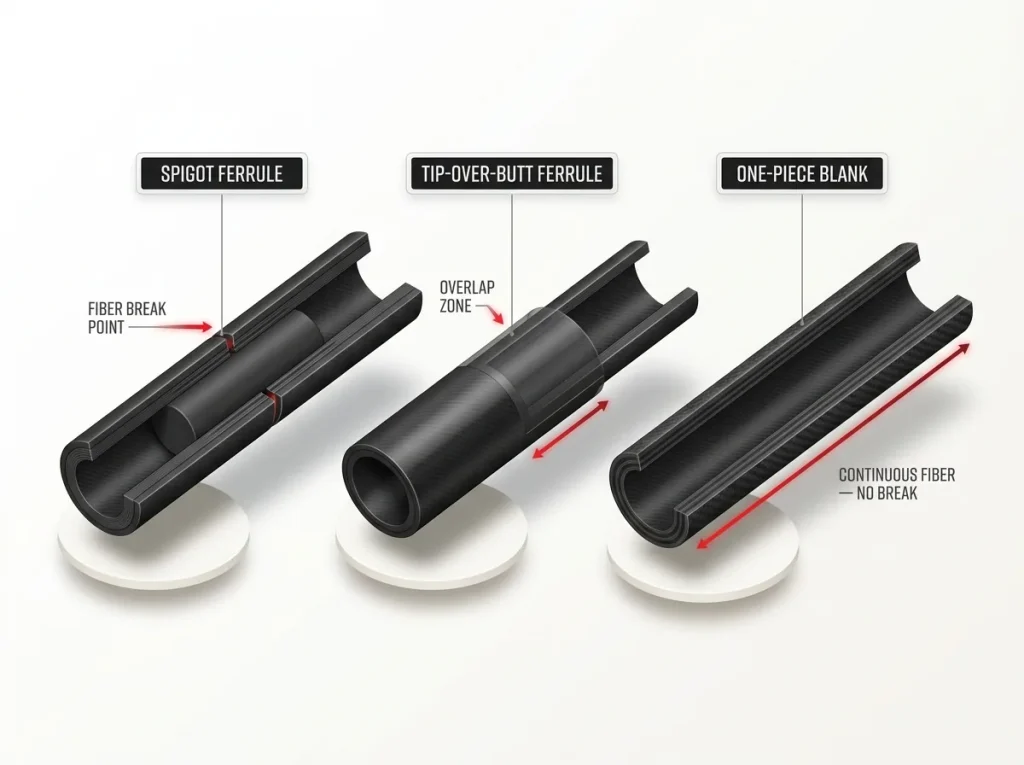
Before you can judge whether the joint matters, you need to know what the joint even is. Most anglers picture a weak seam. It’s actually a precisely engineered sleeve. A ferrule is the connection where two blank sections join, and there are two common designs: a spigot ferrule, where an internal plug bridges the two sections, and a tip-over-butt ferrule, where the upper section slides over the lower like a sleeve.
The whole sensitivity argument comes down to one thing. In a one-piece rod, the carbon fiber runs continuous from butt to tip, so nothing interrupts the vibration transfer from blank to your hand. A two-piece rod has a physical break in that continuous fiber right at the joint. That break is real, but the size of its effect has shrunk. Modern multi-axis carbon weaves and tight manufacturing tolerances have narrowed the gap sharply against older two-piece designs, which is exactly what the material science behind how graphite and fiberglass blanks transmit a bite comes down to, and you can read more about that in our breakdown of how graphite and fiberglass blanks actually transmit a bite.
Get comfortable with one bit of shop language too. The blank is the bare rod tube before the guides and reel seat go on. When someone argues about the ferrule dulling a rod, they’re really arguing about what happens to that blank’s fibers at a single point. The myth we’re about to test is that a joint automatically means a deader, weaker rod.
Sensitivity The Bite You Feel (or Don’t)
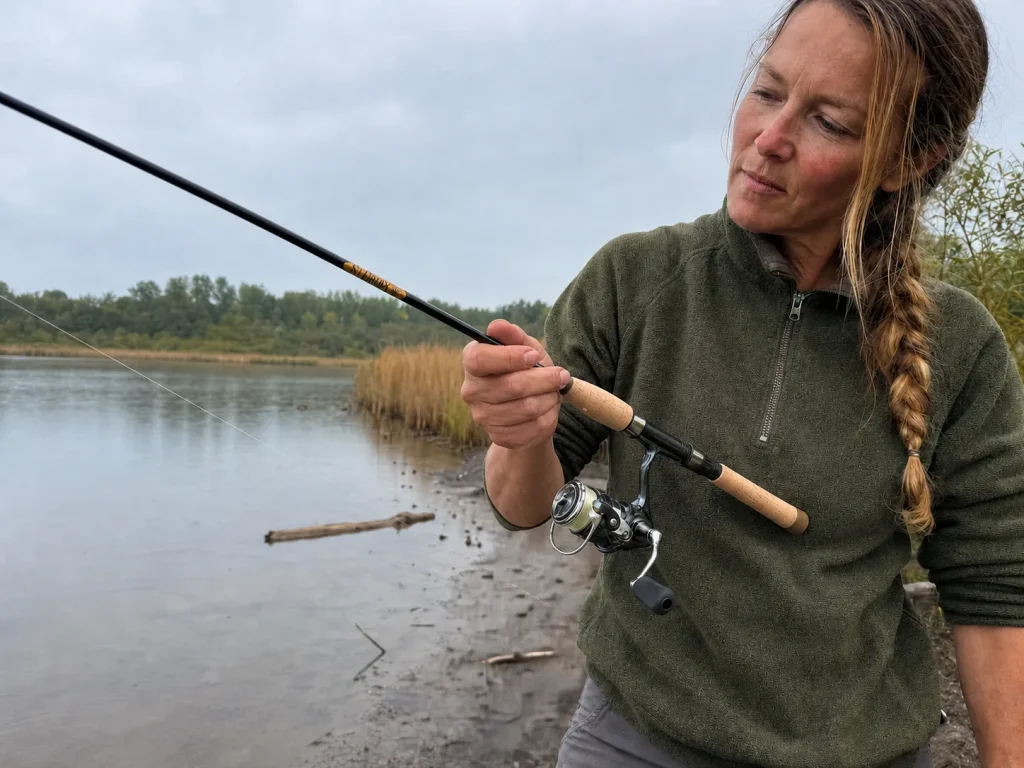
This is where the whole argument lives, and it’s wildly oversold. Sensitivity matters, but the difference between one and two pieces is far smaller than the aisle chatter suggests. On reaction baits like a chatterbait, a crankbait, or a buzzbait, the thump comes through either rod and the gap is virtually undetectable. Your rod is loaded and moving; a hard strike registers no matter how the blank is built.
The one place a real, detectable edge shows up is on light-line finesse presentations, a Ned rig or a drop-shot worked slowly, where an experienced angler is reading for the faintest tick. Even then, the edge is a sliver, not a canyon. Forum consensus keeps circling the same honest number: 90% or more of anglers couldn’t tell an equivalent one-piece from a two-piece fishing blindfolded. And if you still think multi-piece means budget, consider that top fly rods today, deep into premium territory, are routinely four-piece designs. Real anglers use one-piece is outdated thinking.
If you want proof that a two-piece holds its own, a mid-tier build like the St. Croix Triumph shows it. It’s a light, fast-action, American-made two-piece that reads a finesse bite about as well as anything in its class, and nobody handed a Triumph blind would call it a two-piece by feel. Sensitivity has more to do with the blank’s modulus than its piece count, which is worth understanding when you’re comparing rods, and our guide to what rod modulus (IM6/IM7/IM8) actually buys you breaks that down. As the Recreational Boating & Fishing Foundation’s rod-buying guide explains, graphite is lighter, stiffer, and more sensitive than fiberglass, so the material you pick moves the needle more than the number of sections.
If sensitivity is genuinely your deciding factor, upgrade your line before you upgrade your rod. Braid to a fluorocarbon leader transmits a bite more clearly than swapping a two-piece for a one-piece ever will, and it costs a fraction of a new rod.
Durability Where Rods Actually Break
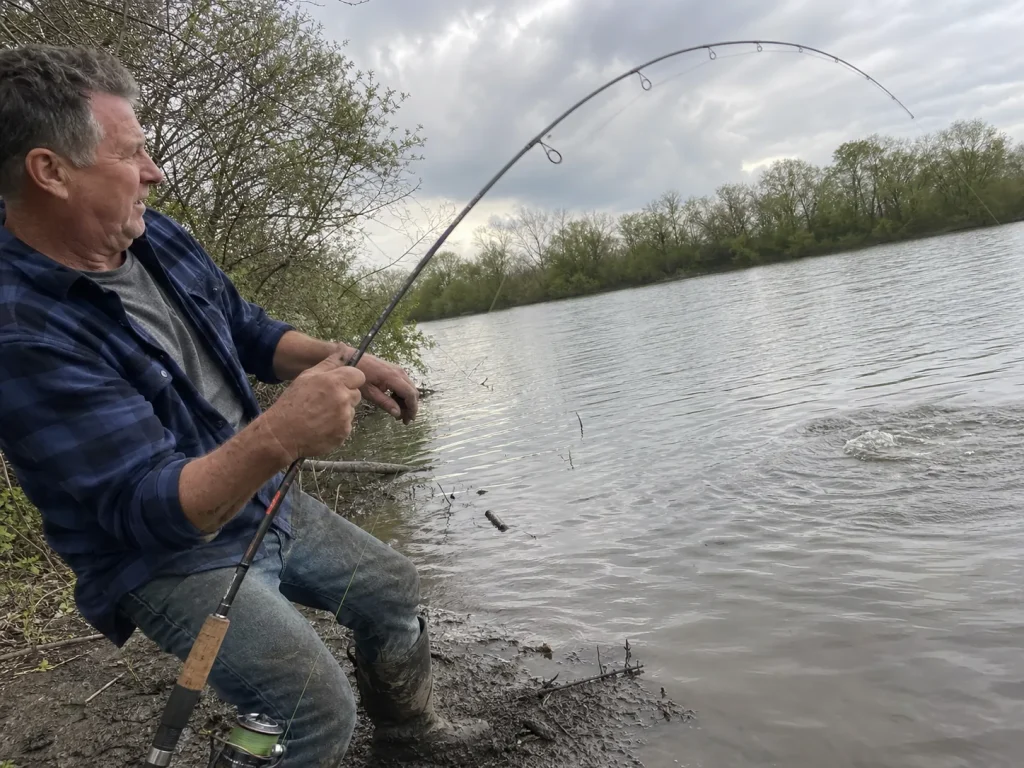
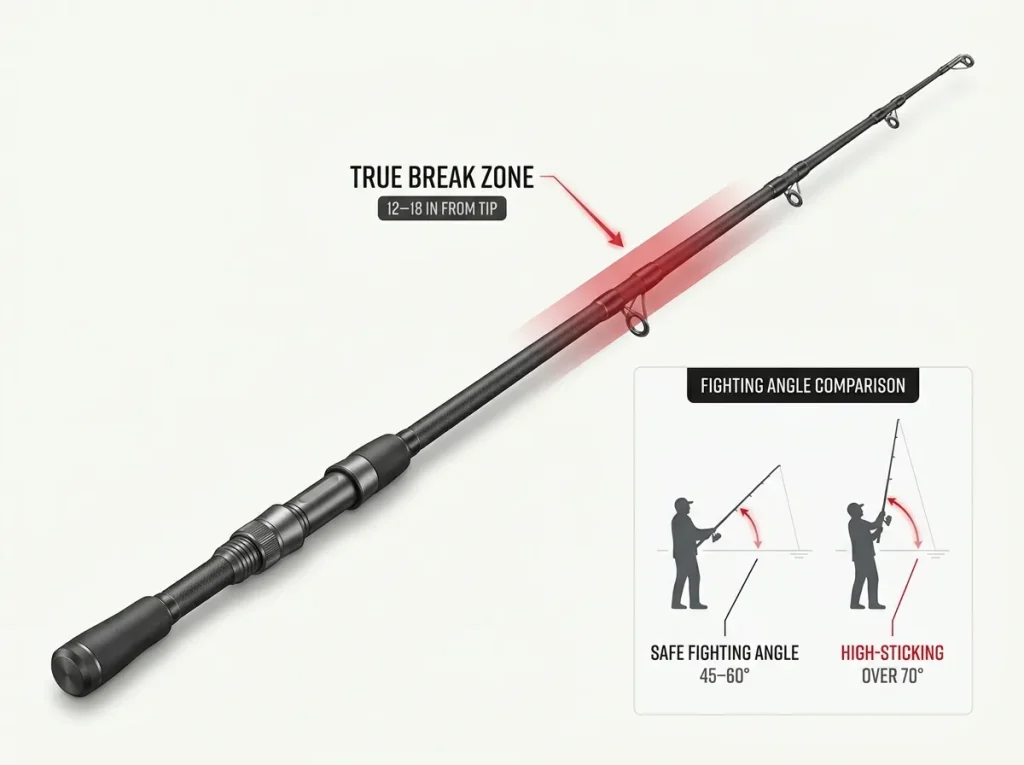
Everyone blames the joint. The engineers who design these rods blame something you’re doing with your hands. Rods most often break 12 to 18 inches from the tip, not at the ferrule, and that break pattern is the signature of high-sticking, lifting the rod too vertical while fighting a fish. Trey Epich, a former Shimano product-planning manager, points to exactly that angle as the real culprit behind most snapped rods.
The stronger point is that the joint isn’t a weak spot by design. Pure Fishing’s engineering team says a properly built multi-piece rod is made to be just as strong as a one-piece, so a quality two-piece isn’t trading away fish-fighting power. The real failure risk is rod knock, the rattle you feel when a ferrule isn’t fully seated. That loose joint wears under load and concentrates stress until something gives. It’s not the joint existing that breaks rods; it’s a joint left loose.
So the fix is in your hands, literally. Keep the rod at a working 45 to 60 degrees when you’re fighting a fish. Past about 70 degrees you’re high-sticking, loading the tip instead of driving a clean hookset through the blank, and that’s where rods let go. This is the same user error manufacturers look for before they’ll replace a broken rod, which we cover in what manufacturers check before honoring a warranty. There’s a classic moment on the water where a rod snaps at the thick butt section mid-fight and the angler stands there baffled, wondering how the strongest part of the rod broke. It wasn’t a joint defect. It was leverage.
Portability and Storage The Everyday Reality
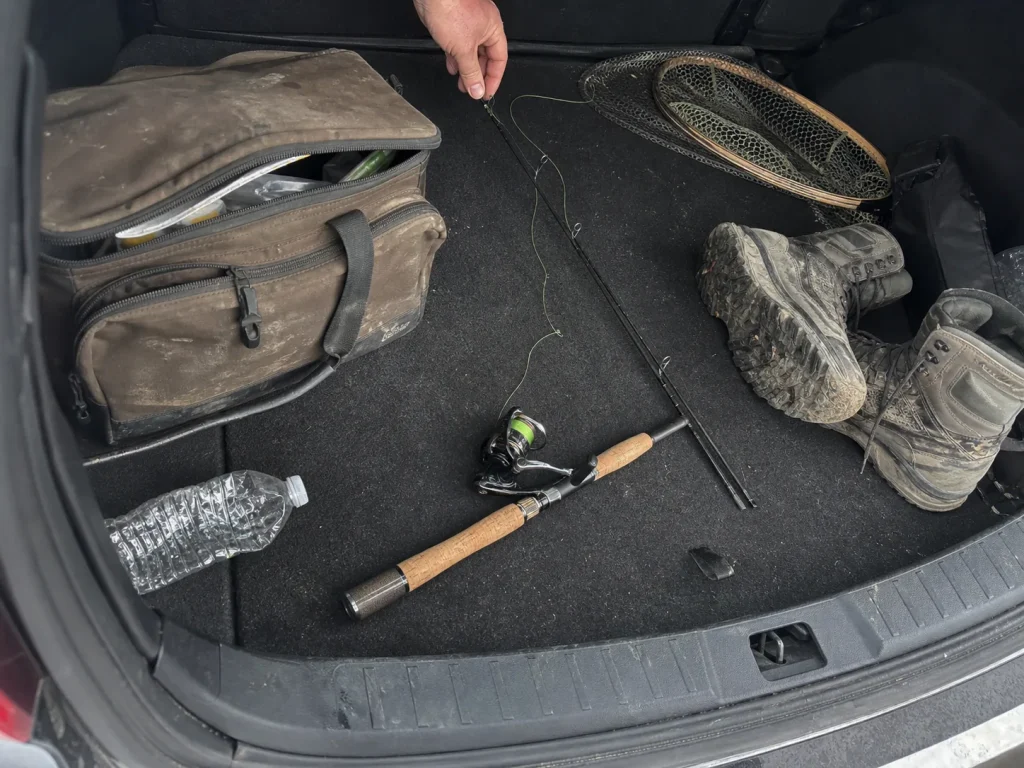
This is the difference you actually live with every single trip, long before you ever feel a bite. A two-piece breaks down to roughly half length, so it fits across a back seat, in a trunk, in an apartment closet, or in a rod locker without threading it diagonally across the cab. That’s not a small thing when you fish more than you theorize about fishing.
A one-piece asks more of your space. You need a full-length locker, a roof transport setup, or careful diagonal placement in the vehicle, and that last option is exactly where the car-door disaster starts. For the angler in an apartment with a compact car, storage is the honest deciding factor, not sensitivity. You’ll make peace with a fraction of a percent of feel long before you make peace with a rod you can’t fit in your life.
Both types store fine at home on a rack, and keeping them vertical protects the blank from a slow set that warps it over time. If you’re tight on wall space, our guide to storing rods vertically without stressing the blank walks through setups that work in a garage or a hallway. The two-piece just asks less of every space it touches.
Cost and What’s Actually on the Shelf
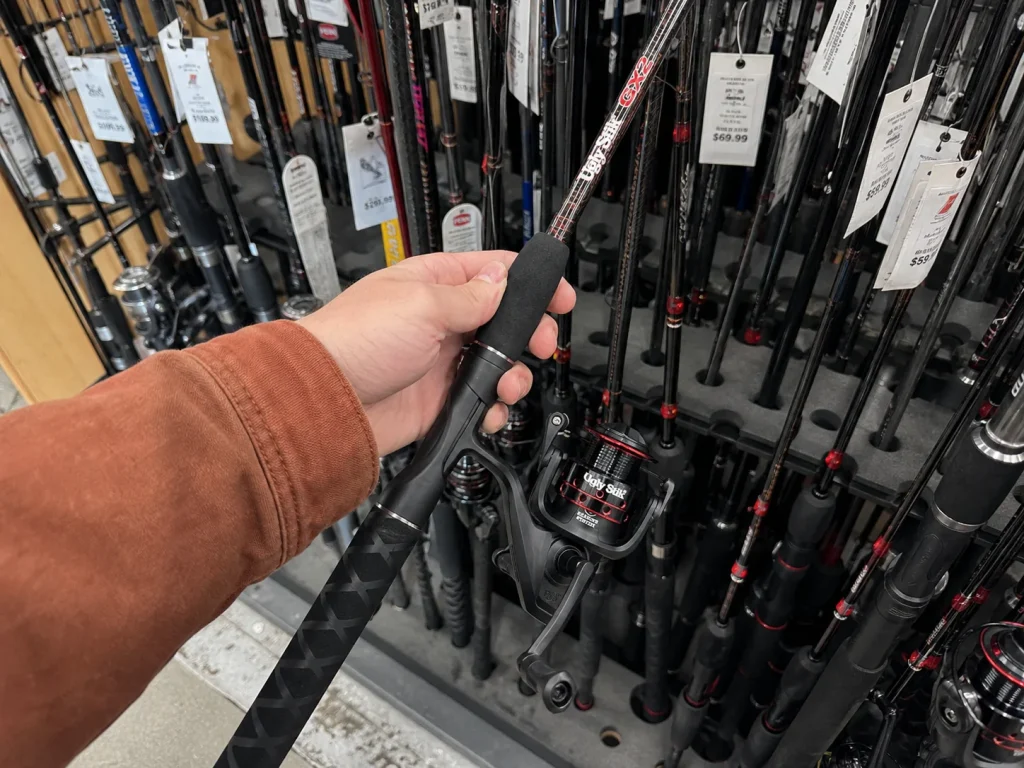
Walk into any tackle shop and the shelf has already made this decision for you. Two-piece rods are cheaper to ship and stock, so they dominate shop inventory, and that availability matters when you want a rod today instead of a shipping window. For a beginner, a forgiving two-piece is the honest default: it’s easy to find, easy to afford, and built with a blank that survives the learning curve.
Here’s the anti-sell gut-check. For someone fishing moving baits from the bank on weekends, the premium one-piece upcharge buys almost nothing they’ll ever feel. The Ugly Stik GX2 combo makes the point better than any spec sheet: it’s a hard-to-break two-piece with a graphite and fiberglass blend that shrugs off beginner abuse, and it comes as a matched rod and reel you can fish the day you buy it. Spend the money you save on line and terminal tackle, where it actually changes your day. If you want a few more starter options, our roundup of beginner-friendly spinning rods worth starting on has picks in the same honest vein.
Buy the rod, not the badge. A mid-priced two-piece paired with fresh line and a decent reel will out-fish a premium one-piece rigged with tired mono every time. The angler matters more than the seam.
Ferrule Care Nobody Explains (Until Yours Sticks)
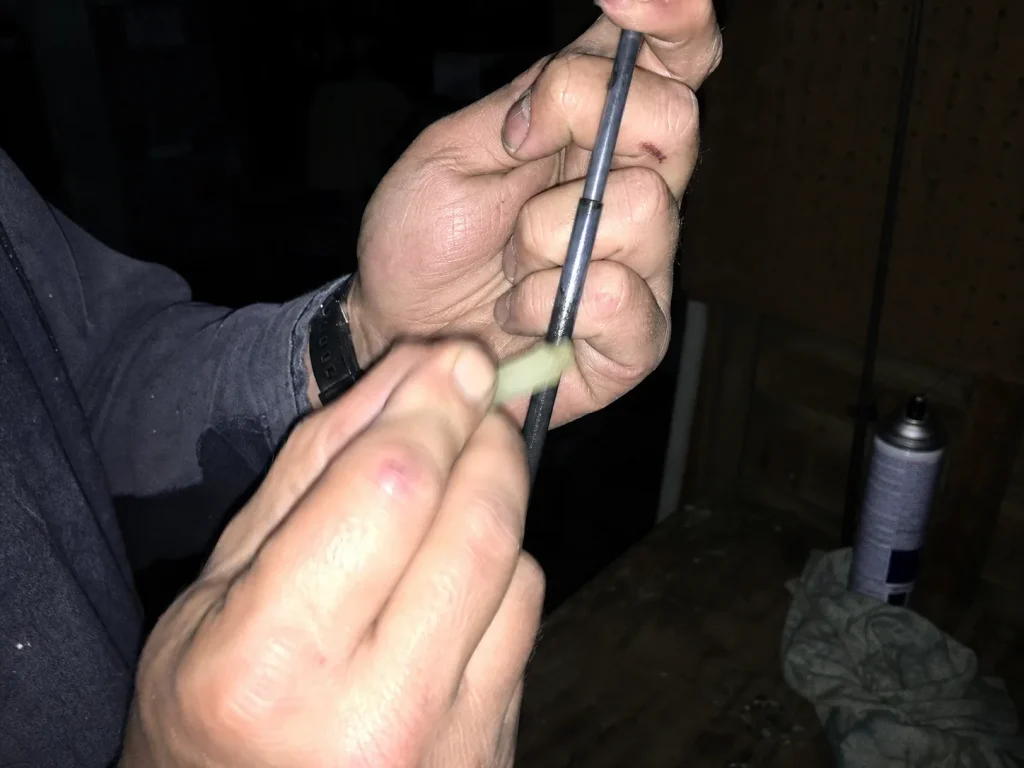
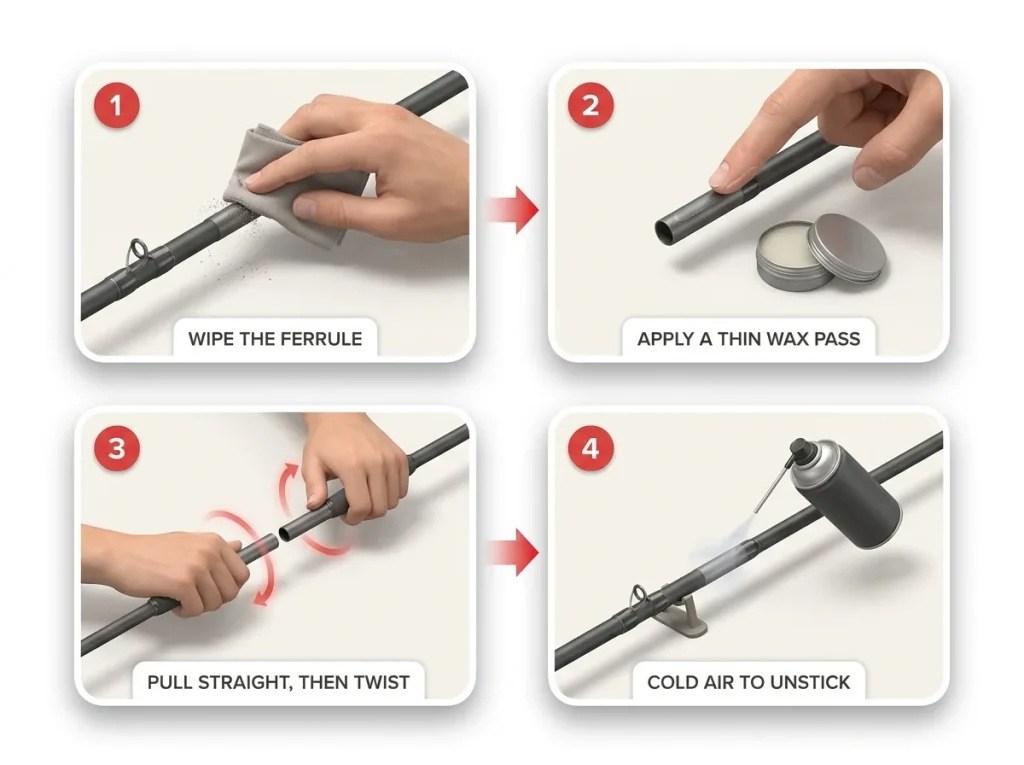
The joint doesn’t fail because it exists. It fails because nobody told you these five minutes of care. This is the part every comparison skips, and it’s the difference between a two-piece that lasts a decade and one that seizes at the ramp. Start with wax. A little paraffin or dedicated ferrule wax on the male ferrule is right; a lot is not. Over-waxing creates a vacuum seal that makes the joint harder to separate, and that vacuum, not too little wax, is the actual cause of most stuck-rod panics.
Cleanliness does more than wax ever will. Grit, sand, or dirt trapped in the joint grinds the connection every time you cast, and it’s a leading cause of avoidable ferrule failure. Wipe both ferrule ends after every beach or bank trip, a ten-second habit that prevents most joint problems. Before every outing, seat the two sections fully and give the rod a gentle wiggle. If you feel rod knock, that rattle at the joint, reseat it before you fish.
And when a ferrule genuinely locks up, skip the brute force. The trick that works fast is a can of compressed electronics air sprayed inverted right on the joint. The cold makes the male ferrule contract just enough to break the seal, and it beats the old freezer trick because you can do it in the parking lot. One more habit worth building: when you take a two-piece apart, grab the blank close to the joint, not the guides, and pull straight with a slight twist. Yanking on the guides bends them and stresses the blank in the exact spot you’re trying to protect.
Traveling With a Rod Without Snapping It
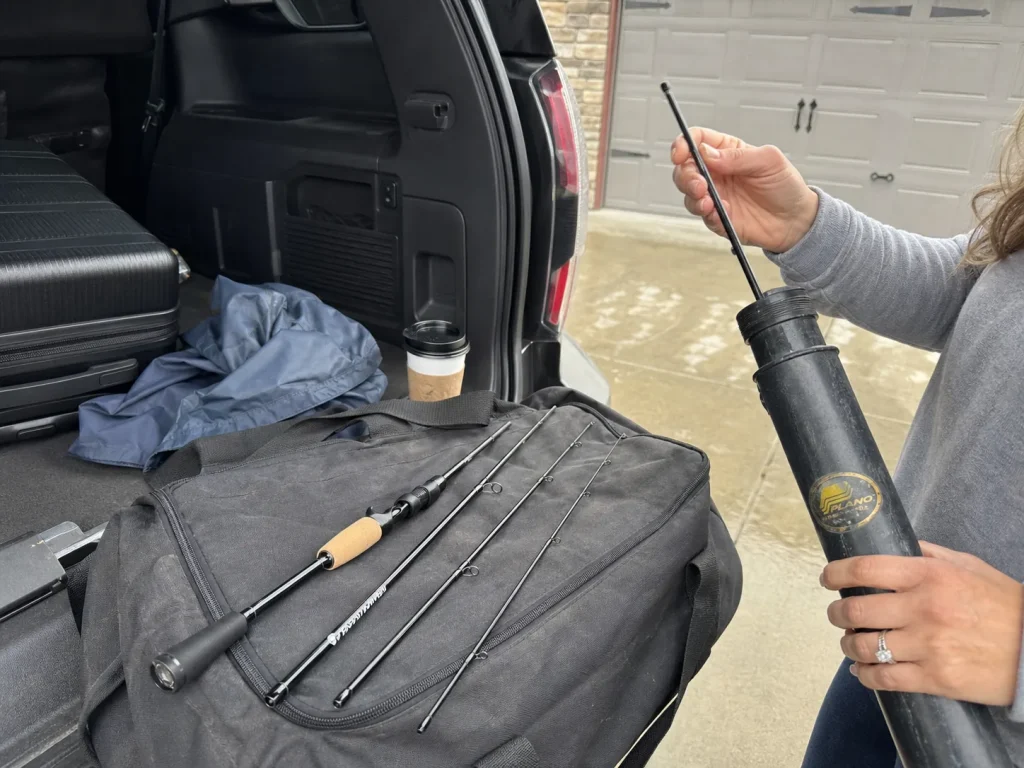
The most common way a rod dies has nothing to do with a fish. It’s a car door. Nobody in the SERP covers this in real detail, so here’s the honest version. If you travel to fish, a multi-piece travel rod breaks the whole portability argument wide open. A four-piece like the KastKing Spartacus Passage packs into a suitcase or behind a truck seat and comes with its own case, and it fishes well enough that the breakdown is pure upside for a traveling angler. It’s the two-piece logic taken to its natural end.
For the rod you drive with every weekend, a hard rod tube prevents the single most common transport break: a tip caught in a car door or tailgate. The Plano Guide Series adjustable rod tube is a crush-resistant shell that adjusts to length, and it’s cheap insurance against a mistake that snaps rods far more often than any fish does. On a budget, a set of Nite Ize rubber twist ties bundles a broken-down rod for a short trip when a full tube is overkill, and an old capped PVC pipe does the same job for pennies if you’re the DIY type.
The car-door snap is worth picturing so you never do it. You lean the rod against the truck, the door swings, and the tip is gone. The two-second habit that prevents it is laying the rod tip toward the windshield and away from any door swing, every time. Flying adds its own rules on top of packing, and rather than repeat them here, our guide to what TSA will and won’t let you fly with owns those specifics so you can pack right the first time.
Break your rod down for the drive, not just the flight. Most tip breaks happen in the driveway, not on the water. Thirty seconds at the ferrule saves you the long, quiet ride home holding two pieces that used to be one rod.
Which Rod for How You Actually Fish
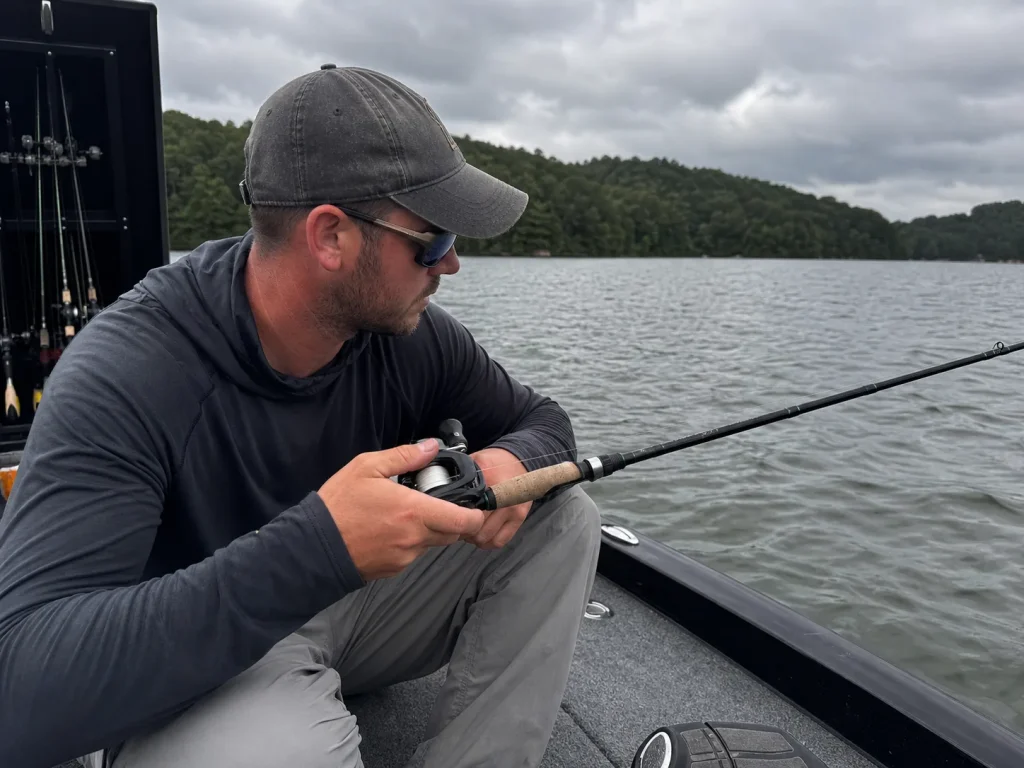
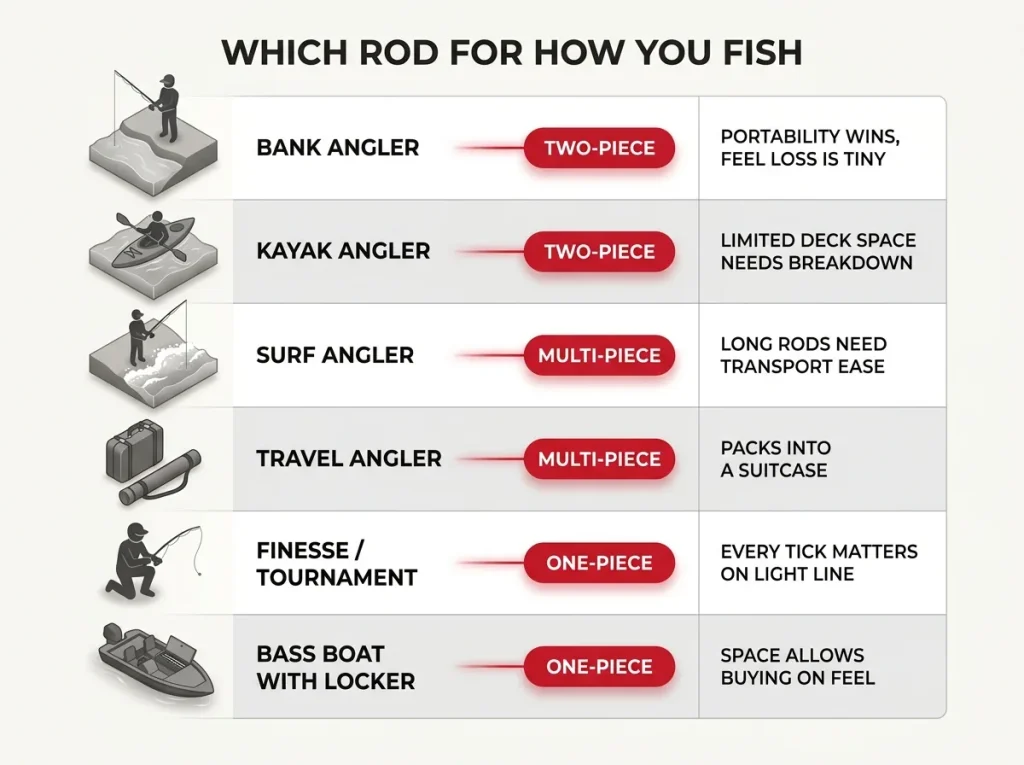
Forget the aisle argument. Here’s the straight answer for your boat, bank, kayak, or plane, and it sits inside the bigger picture our complete guide to choosing a fishing rod lays out end to end. Every competitor lands on the same tired binary of tournament pros versus everyone else. The truth is more useful when you break it down by where you actually stand.
Bank, kayak, surf, and travel anglers should default to a two-piece or multi-piece, full stop. Portability and storage decide it, and the sensitivity you give up is a rounding error next to the convenience you gain. Kayak anglers especially are juggling limited deck space, and a rod that breaks down is far easier to manage on the water than one you can’t stow.
The one group that genuinely benefits from a one-piece is the competitive or finesse angler probing deep structure on light line. That’s where a hair more sensitivity is worth the storage tradeoff, and a high-modulus one-piece baitcasting rod like the Dobyns Fury is the rod they reach for when every tick matters, especially on the light-line finesse presentations where feel matters most. If you fish from a big bass boat with a full-length locker, the choice gets easy for a different reason: you have the space, so buy on feel and skip the compromise. And if you’re weighing a long surf or trolling rod, that decision is really about length as much as piece count, since length drives casting distance against fighting leverage, which our guide to matching rod length to the situation covers. Length is even formally regulated at the top end, under IGFA’s international angling rules, which set limits on rod dimensions for record-eligible catches.
When a Rod Fails Handling a Broken Blank Safely
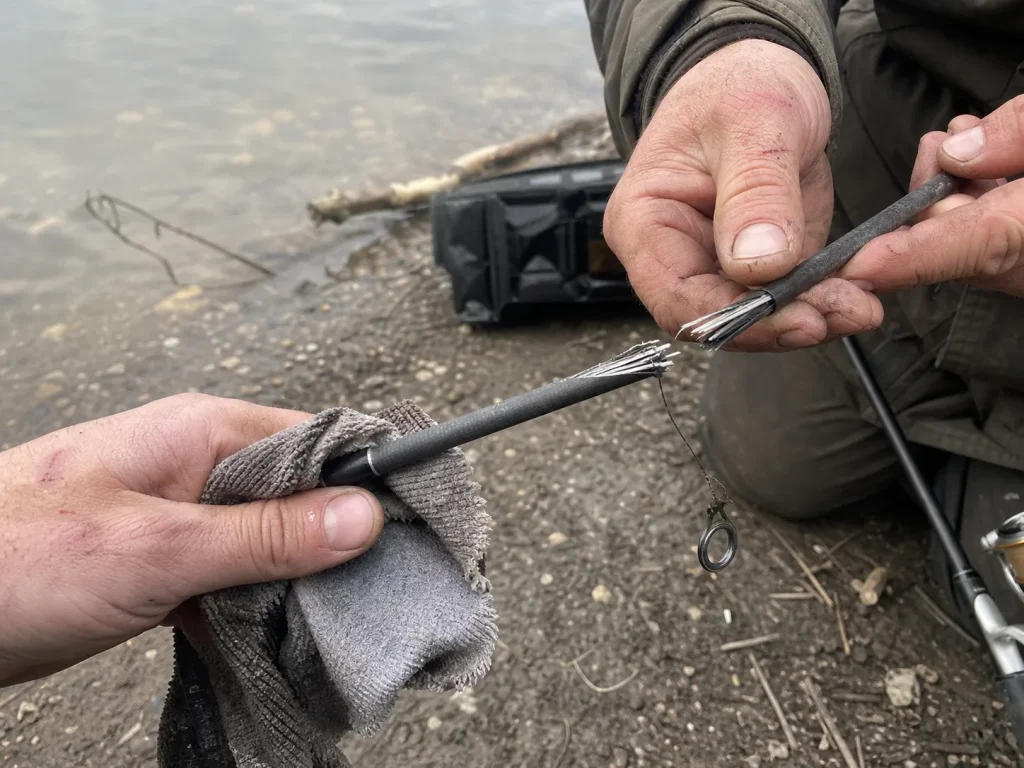
Nobody talks about this until you’re holding two sharp halves of a rod three hours from anywhere. Even a premium carbon blank can splinter when it’s forced or abused, and a cracked ferrule or split graphite section leaves sharp shards that will cut you. That’s the part every other comparison leaves out, and it fits how a careful angler actually handles a failure.
The first rule is simple: never force a stuck ferrule near your face or chest. If a section lets go while you’re straining on it, those shards move fast and land wherever your hands were pointing. Use the wax and cold-air fixes from earlier instead of muscle. Temperature deserves a mention too, because a rod that bakes assembled in a hot truck bed and then gets fished cold that evening can seize at the joint or stress the epoxy bonds holding guides and the reel seat. Check the joint before you fish it after a long hot day.
When a rod does break, treat the snapped section as sharp debris. Fold it into a rag, pack it out, and don’t leave splintered carbon on the bank or the boat deck where it becomes a hazard for the next person or a hook for wildlife. A cracked blank usually warns you first, showing as a hairline or a dull tick under load before it fails outright, and catching that early is the whole game, which is why spotting a cracked blank before it fails on you is worth knowing. If it’s only the tip that goes, that’s often a quick repair rather than a lost rod, and you can be back on the water fast.
Conclusion
For how most people fish, a two-piece gives up almost nothing you can actually feel, and it wins on storage, price, and travel on every single trip. A one-piece earns its keep only for the finesse or tournament angler who has the space to store it and the light-line touch to notice the difference. And rods break from high-sticking and neglect, not from having a joint, so the ferrule and your fighting angle deserve more attention than the seam ever did.
Before your next trip, break your two-piece down, wipe the ferrule, give it one thin wax pass, and reseat it until the knock is gone. Then go fish without a second thought about the joint.
Frequently Asked Questions
01Is a one-piece or two-piece fishing rod better?
Neither is universally better; it depends on how you fish. A two-piece wins on storage, travel, and cost with almost no sensitivity penalty for most anglers, while a one-piece gives a slight feel edge that only matters for light-line finesse work.
02Do two-piece fishing rods really lose sensitivity?
Barely, on modern rods. The gap is undetectable on reaction baits and only shows up on light-line finesse presentations fished by experienced anglers. Most people could not tell the two apart blindfolded.
03Where do fishing rods actually break?
Usually 12 to 18 inches from the tip, not at the ferrule. That break pattern is the signature of high-sticking, lifting the rod too vertical while fighting a fish, which is user error rather than a piece-count flaw.
04How do you free a stuck ferrule on a two-piece rod?
Spray inverted canned electronics air right on the joint; the cold makes it contract and breaks the seal. Avoid brute force near your face, and next time wax the ferrule sparingly, since over-waxing is what usually causes sticking.
05Can you fly with a fishing rod?
Yes. A multi-piece travel rod in a hard tube is the simplest way, and most rods can be checked or sometimes carried on. Check current airline and TSA rules before you pack, since they set the specifics.
Risk Disclaimer: Fishing, boating, and all related outdoor activities involve inherent risks that
can lead to injury. The information provided on Master Fishing Mag is for educational and informational purposes
only. While we strive for accuracy, the information, techniques, and advice on gear and safety are not a substitute
for your own best judgment, local knowledge, and adherence to official regulations. Fishing regulations, including
seasons, size limits, and species restrictions, change frequently and vary by location. Always consult the latest
official regulations from your local fish and wildlife agency before heading out. Proper handling of hooks, knives,
and other sharp equipment is essential for safety. Furthermore, be aware of local fish consumption advisories. By
using this website, you agree that you are solely responsible for your own safety and for complying with all
applicable laws. Any reliance you place on our content is strictly at your own risk. Master Fishing Mag and its
authors will not be held liable for any injury, damage, or loss sustained in connection with the use of the
information herein.
Affiliate Disclosure: We are a participant in the Amazon Services LLC Associates Program, an
affiliate advertising program designed to provide a means for us to earn advertising fees by advertising and linking
to Amazon.com. As an Amazon Associate, we earn from qualifying purchases. We also participate in other affiliate
programs and may receive a commission on products purchased through our links, at no extra cost to you. Additional
terms are found in the terms of service.