
In this article
You’re standing at the truck with a decent fish on, the rod bent up hard, and then a crack at one of the joints and it’s over. The easy conclusion is that the cheap collapsible rod failed you. It almost never did. Ask the guys who actually keep a telescoping fishing rod behind the seat and they’ll tell you the same thing: these rods mostly break for reasons that have nothing to do with the blank. Here’s the honest rundown on telescoping rods for travel, what they genuinely do well, what you give up, where they actually fail, how to fly with one, and which ones earn the money.
What a Telescoping Fishing Rod Actually Is
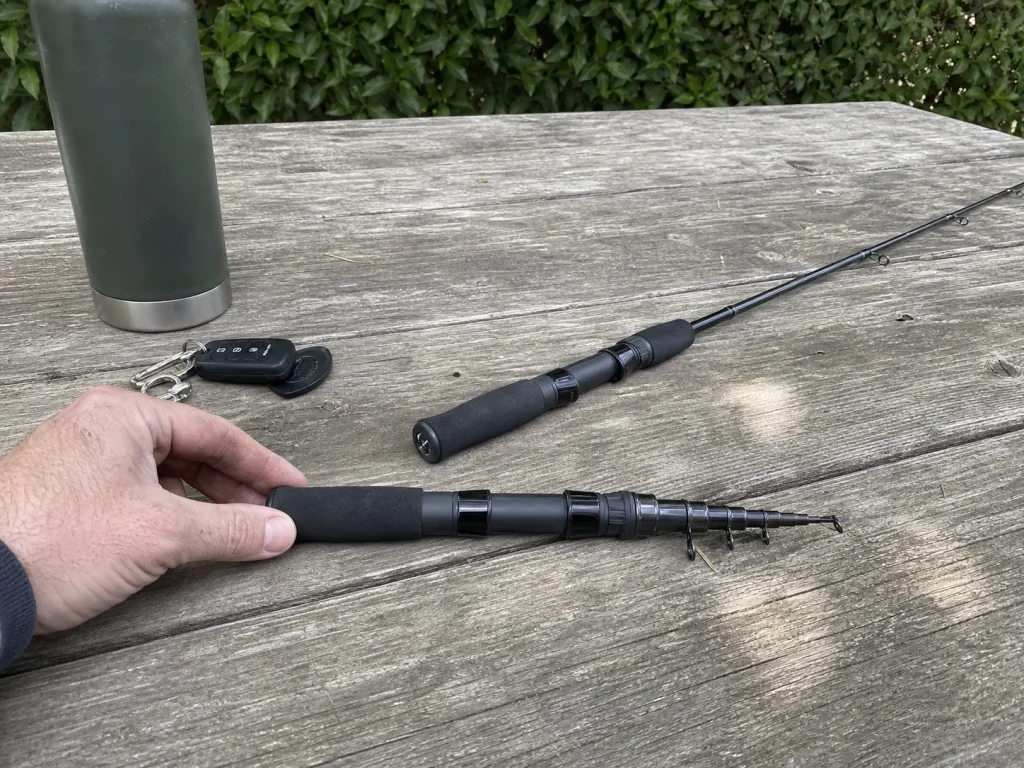
A telescoping rod is one blank cut into sections that nest inside each other and lock by friction where they overlap. Those overlap points are the ferrules, and if you remember one word from this whole article, make it that one, because almost everything that goes right or wrong with these rods happens there.
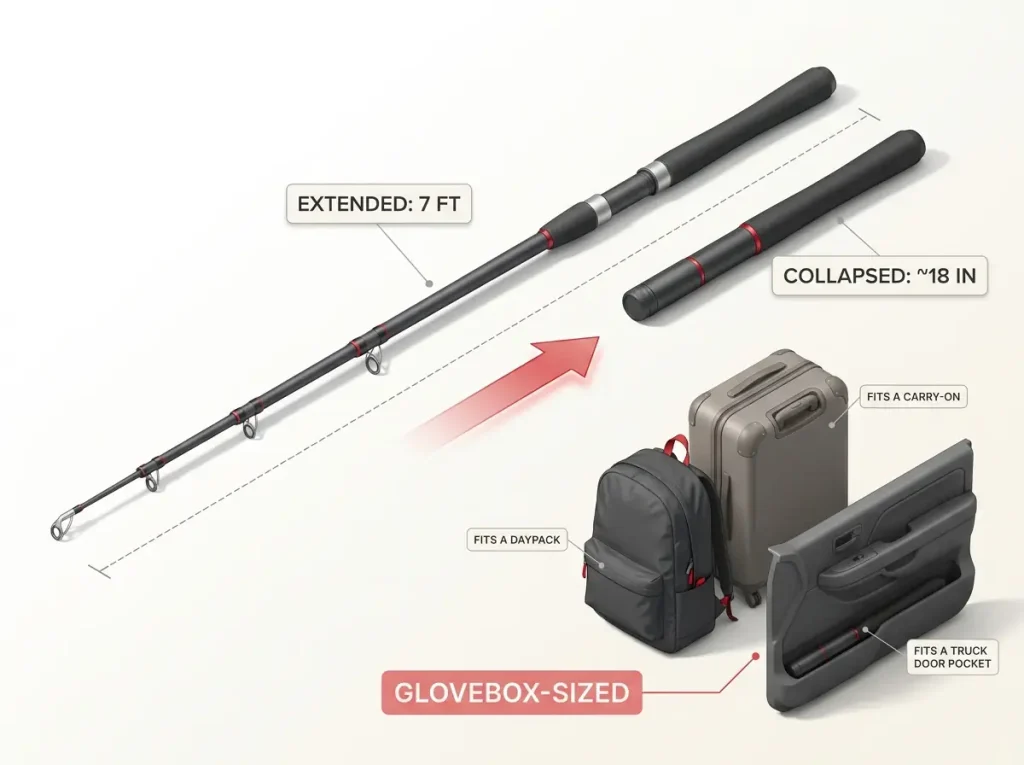
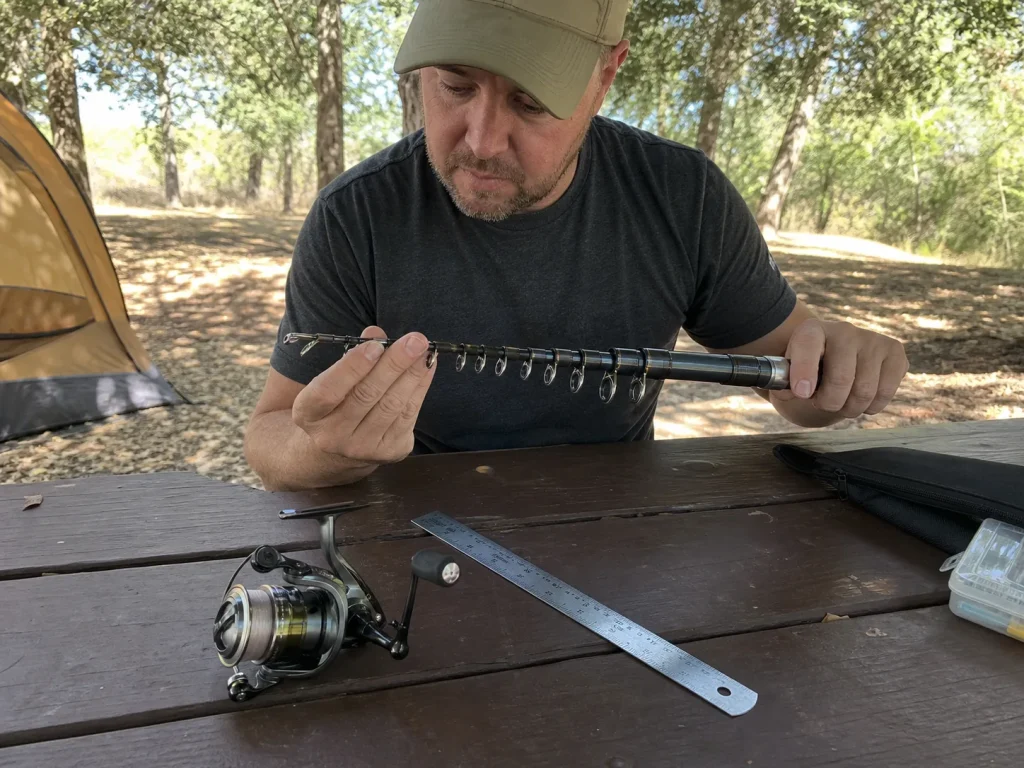
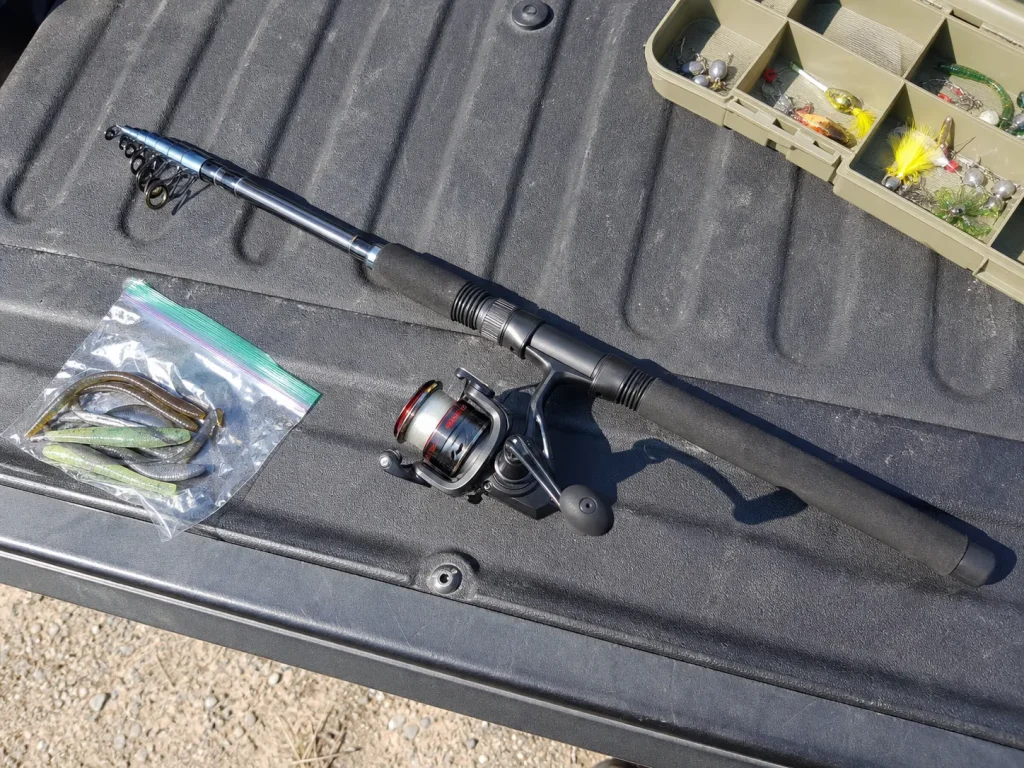
Pull it out and a modern travel model runs a full 6 to 7 feet. Collapse it and the same rod drops to somewhere around 17 to 21 inches. That’s short enough to ride in a backpack, a briefcase, a kayak hatch, or the door pocket of a truck. Guys who keep one rigged and stashed in the vehicle have a name for it: the glovebox rod, or the truck rod.
It’s worth knowing this isn’t the only way to pack a rod down. A multi-piece travel rod breaks into three to five separate pieces you assemble at the water, same travel goal, different mechanism. If you’re weighing the two, our breakdown of how a multi-piece travel rod compares covers where each one wins. The telescoping design trades a little performance for the fastest deploy of anything you can carry, and that trade is the whole story.
The Real Payoff Is Portability
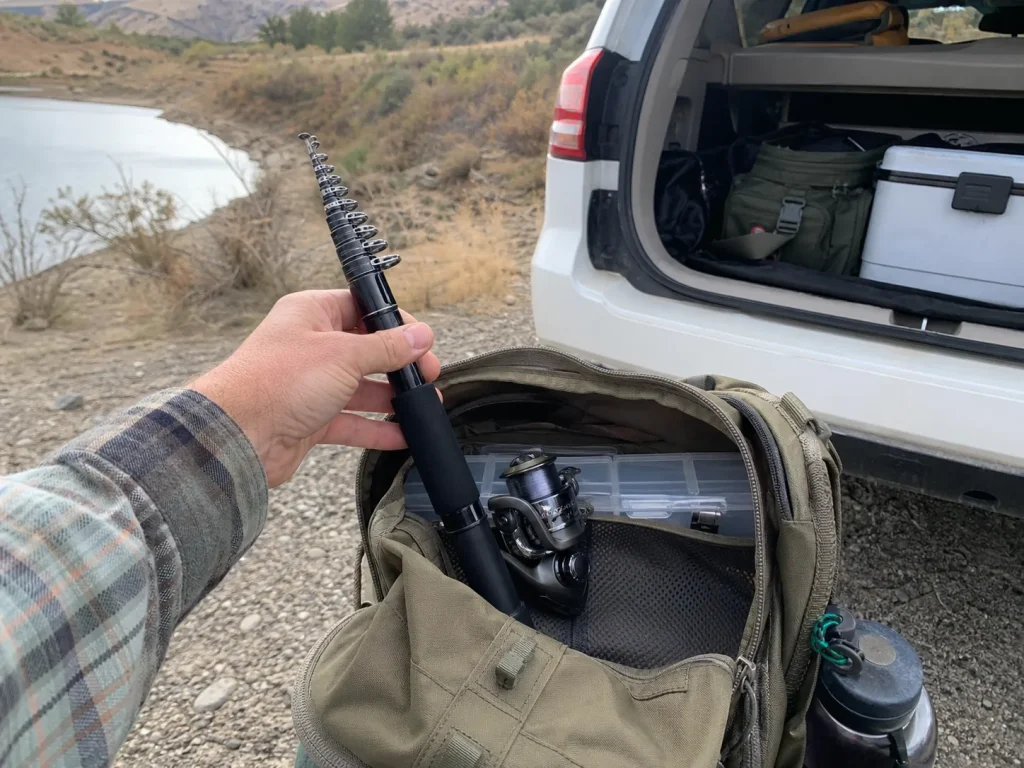
The rod that’s already with you beats the perfect rod sitting at home. That’s the entire case for a telescoping rod, and it’s a stronger case than most anglers admit until they’ve lived it.
Collapsed size is the point. It fits a daypack, a carry-on, a kayak hatch, a truck door. Because it’s that small, it comes along on trips where you’d otherwise leave the rod behind, and that’s where the magic is: the random stop at a stocked pond on a road trip that turns into twenty minutes of panfish because the gear was right there. No telescoping rod ever caught a fish sitting in a closet.
Leave a dedicated truck rod pre-rigged with the reel on and line already through the guides. If you have to re-rig every time, you’ll talk yourself out of that twenty-minute stop, which defeats the entire reason you bought the thing.
Ready in Seconds, the Convenience Case
Why Speed Matters More Than Anglers Admit
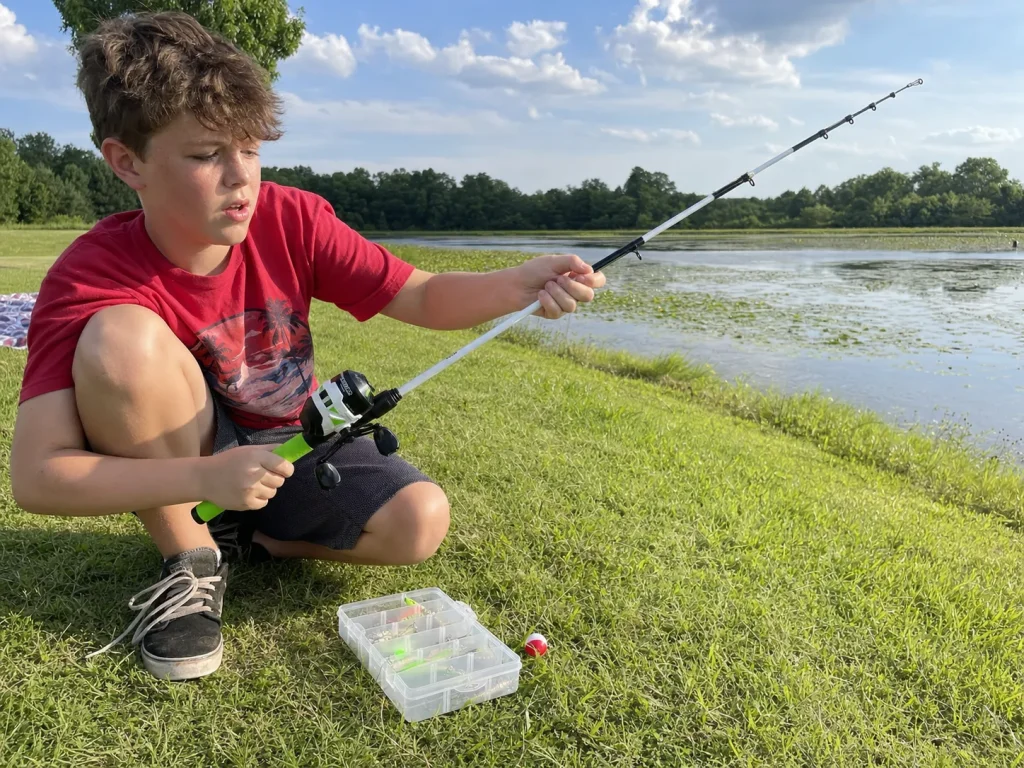
Impromptu fishing windows are short. You’ve got twenty minutes, the light’s fading, and a multi-piece rod still needs assembling before the reel goes on. A telescoping rod extends and seats in one motion, reel already mounted, line already run. You’re fishing while your buddy is still lining up ferrule dots.
That speed is the difference between fishing and meaning to fish. Nobody skips a quick session because the rod took two minutes instead of thirty seconds, but plenty of people skip it because the rod was buried in three bags in the trunk.
The Easy First Telescoping Rod
For a beginner or a family trip, a pre-spooled combo takes the setup friction to zero. The Zebco Roam Spincast Reel and Telescopic Fishing Rod Combo extends from about 18.5 inches out to 6 feet, comes pre-spooled with 10-pound line, and runs a spincast reel that a kid can actually operate without a backlash lesson. It’s a solid first telescoping rod and a genuine adult-and-kid crossover, and a tangle-free setup the kids can actually use is worth more on a family trip than any spec.
Here’s the honest part, though. If you already own a packable rod you trust, convenience alone isn’t a reason to buy another one. The best telescoping rod for you might be the one you already have.
Where Telescoping Rods Actually Break, and Why It’s Not the Blank
The Ferrule Is the Failure Point, but Only Under One Mistake
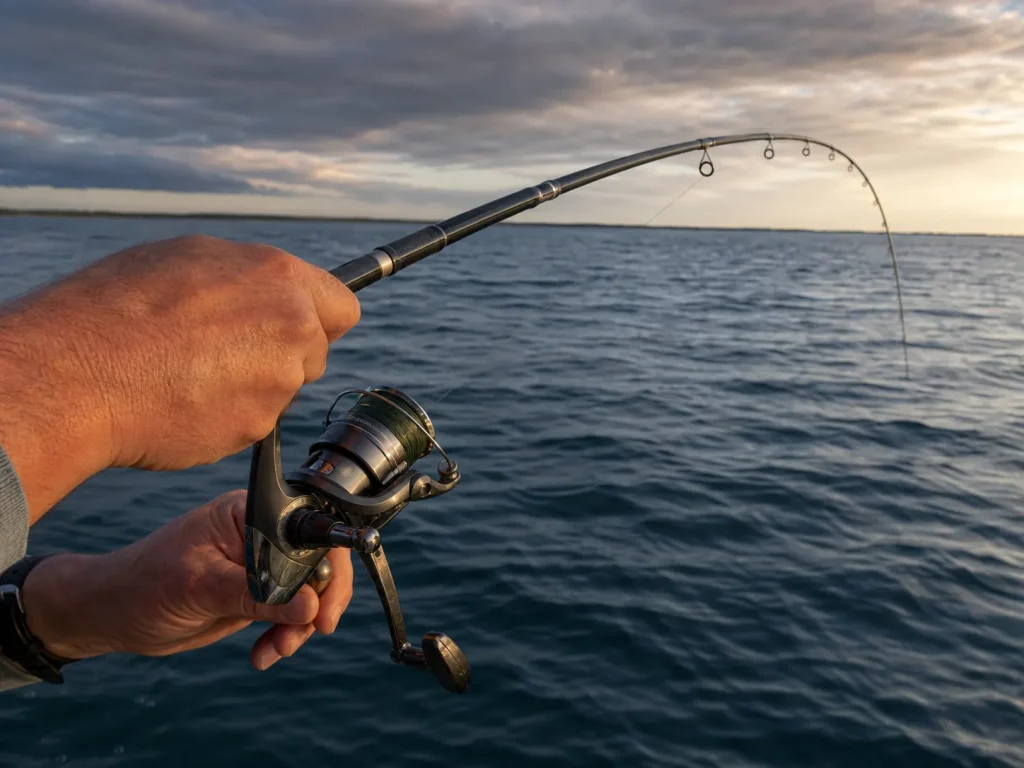
This is the section every competitor waves past with a vague line about durability, so pay attention, because it’s the difference between a rod that lasts years and one that snaps in month two. The ferrule is the documented failure point on a telescoping rod. Not the blank material, not the carbon, not the glass. The joint.
But it fails under one specific, nameable condition, and once you know it you can avoid it for the life of the rod. A fish within the rod’s rated power, played correctly with the rod bent and the drag doing the work, almost never breaks a decent telescoping rod at the joint. The rod is stronger than the internet gives it credit for.
High-Sticking, Explained
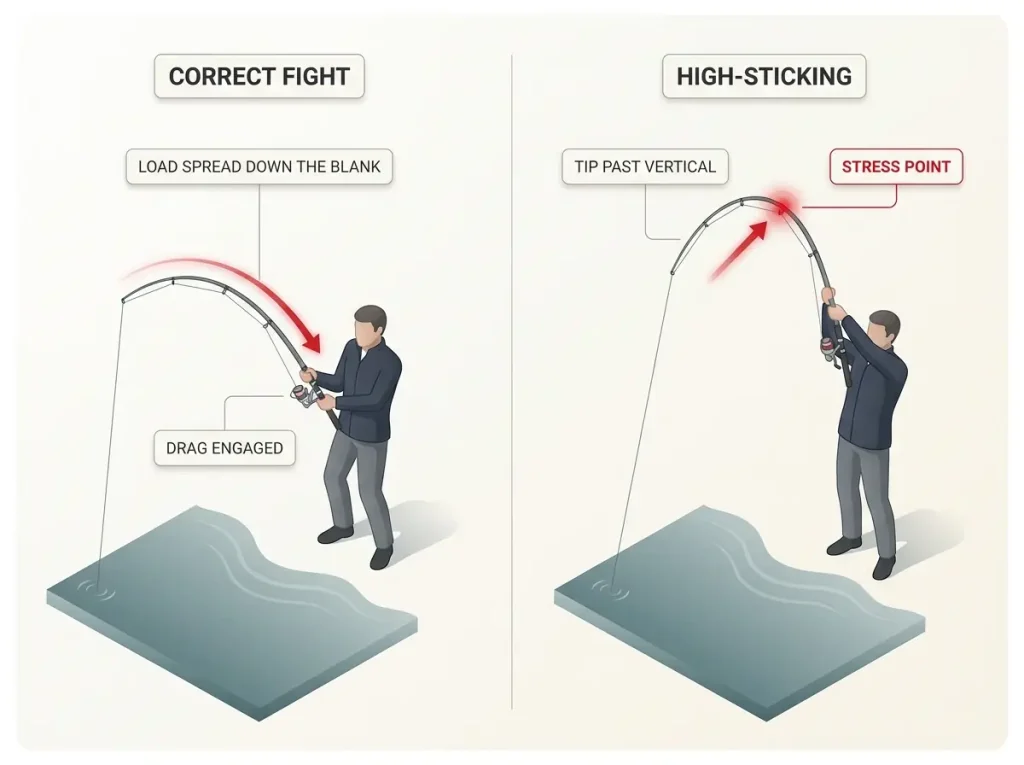
High-sticking is lifting the rod tip up past vertical to muscle a fish straight up toward you, instead of keeping the rod at an angle and letting the blank’s curve absorb the load. When you high-stick, all that force stops spreading down the length of the blank and stacks up at the tip and the upper ferrule. That’s the exact spot a telescoping rod gives out.
The cruel part is that high-sticking feels like fighting hard. It’s the instinct almost everyone has when a fish surprises them, and it’s the single most-cited cause of a mid-fight snap. The same move that feels like winning is the one breaking your rod.
The Honest Big-Fish Scenario
Here’s the moment that actually breaks rods. Something bigger than the rod’s rated power grabs on, and you have to decide in real time whether to horse it in fast on a blank that can’t take a long fight, or play it patient and risk the hooks pulling. Panic says lift and crank. Physics says keep the rod low, thumb the spool lightly, and walk the fish.
If you’re learning to read the early warning signs of a stressed blank, our guide on how to spot a cracked blank before it lets go is worth a read. High-sticking is also near the top of the list of what voids most rod warranties, and the manufacturers know exactly how these rods die. So now the title makes sense: it’s not the blank. The collapsible design isn’t the weakness people assume. Technique is.
When a big one grabs on, drop the rod tip toward the water, not up toward the sky. Low rod plus a smooth drag spreads the load down the whole blank. High rod stacks it all on the upper ferrule, and that’s the crack you hear.
What You Give Up, Sensitivity and Casting Distance
Why the Joints Cost You a Little Sensitivity
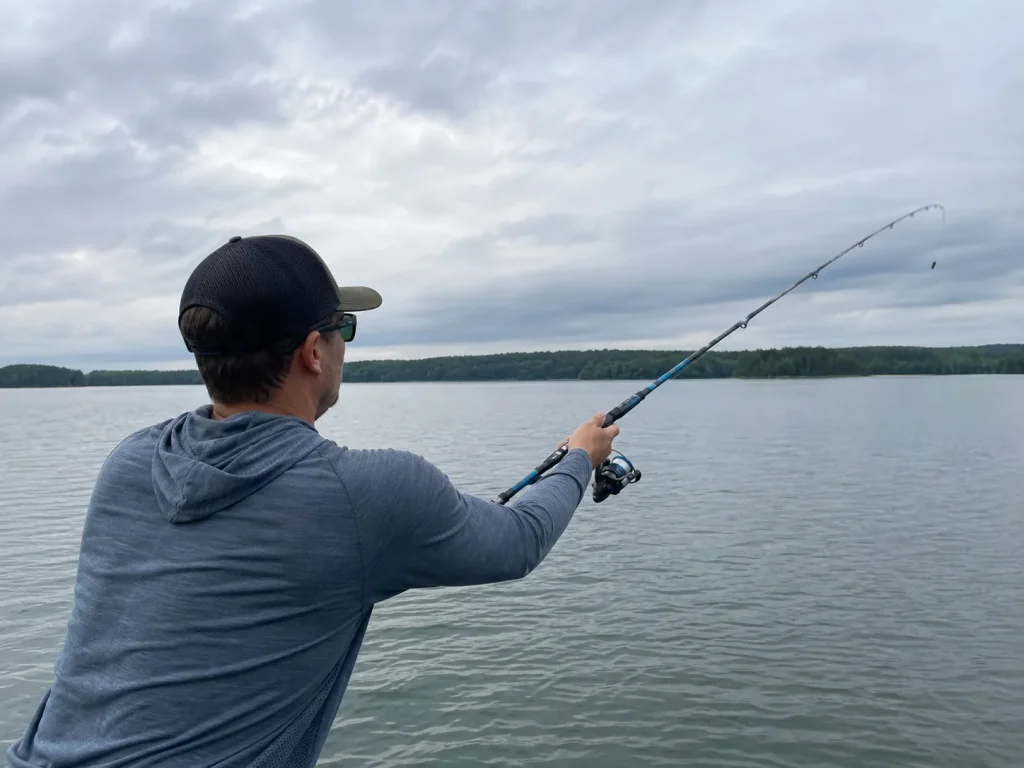
Every ferrule is a break in the blank, and every break costs you a little of the signal that travels up the rod. A telescoping rod transmits slightly less of that subtle tick, the difference between a light bite and a leaf, than a comparable one-piece or traditional rod. It’s real, and there’s no point pretending otherwise.
Casting Distance and the Taper Compromise
Those same joints force a taper that isn’t as clean as a one-piece blank, and that costs you a bit of casting distance on long open-water throws. Up close it’s irrelevant. Bombing a lure across a flat, you’ll notice.
When the Gap Actually Matters, and When It Doesn’t
For finesse presentations and deep water, where feeling a soft take is the whole game, the sensitivity gap matters. For panfish, trout, and largemouth bass at close-to-mid range, and most travel fishing, it’s small enough that convenience wins going away.
If you want the rod that narrows the gap the most, the KastKing Compass Telescopic Fishing Rod in the 7-foot medium-heavy runs a graphite composite blank with better guide and ferrule tolerances, and it casts closer to a real one-piece than a budget model has any right to. It’s sold as a rod only, so pair it with a spinning reel you already trust. Understanding how action and power shape what a rod feels like helps here more than any brand name. One honest note from experience: you notice the sensitivity gap most on the first trip back to a good one-piece, and then you forget about it again by the second cast.
Materials, Carbon, Fiberglass, and Composite
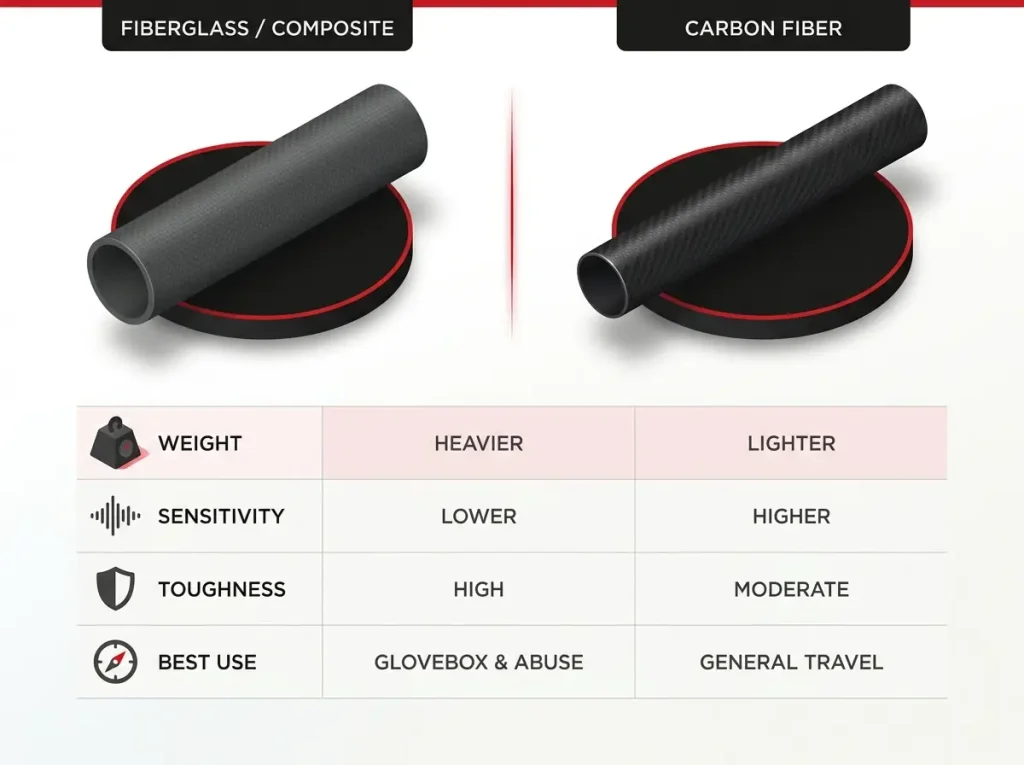
Fiberglass and Composite, Forgiving and Tough
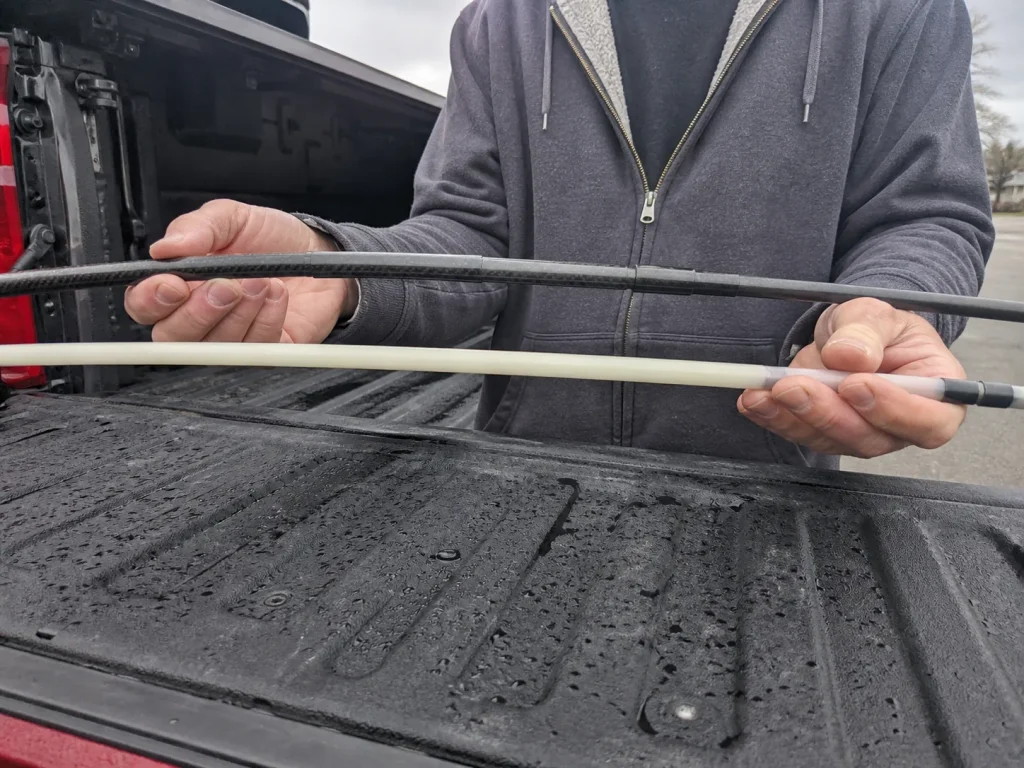
The rod that’s going to get thrown in a duffel and cooked in a hot truck needs a different blank than the one you baby. A fiberglass or composite blank shrugs off rough handling and heavy load better than high-modulus carbon. It’s heavier and less sensitive, but it bends a long way before it complains, which is exactly what you want in a rod that lives rough.
Carbon Fiber, Lighter and More Sensitive
Carbon fiber trades that toughness for light weight and a crisper feel. You get more sensitivity and a faster blank, and in exchange it’s less forgiving of a careless whack against a tailgate. For a general-purpose travel rod, the PLUSINNO Fishing Rod and Reel Combo gets you a carbon blank and a matched reel without a premium price, a sensible middle ground for the trip where you don’t know what you’ll catch.
What That Means for a Rod That Lives in Your Vehicle
So which is better depends entirely on how you’ll treat it, not on a spec-sheet ranking. The real science of graphite versus glass is worth understanding here, and it explains why two carbon rods can feel completely different. For a glovebox rod that gets abused, glass or composite is often the smarter call than the fancier carbon.
What to Look For When Choosing One
If you want the full framework for picking any rod, our complete guide to choosing a fishing rod covers power, action, and length from the ground up. For a telescoping rod specifically, a few specs predict whether it’ll annoy you or disappear into the trip.
Collapsed Length vs Extended Length
Collapsed length is the spec that decides whether it actually fits your pack or your carry-on, so check it instead of assuming. A rod that packs down to about a foot and one that’s closer to two feet collapsed are a different travel animal, even if both extend to 6 feet. Read the collapsed spec, not just the extended length, before you assume it fits your bag.
Number of Sections and Joint Quality
Fewer sections with better-machined ferrules generally means fewer jams and a truer taper. More sections pack smaller but give you more joints to keep clean and more places for the taper to break down. It’s a genuine trade, not a free lunch.
Guides, Reel Seat, and Handle
Guides and the reel seat are where budget rods cut corners. A rough guide insert shreds braided line over time, and a loose reel seat wobbles under load and drives you nuts. The grip matters too, and whether you prefer cork or EVA foam comes down to feel more than performance. Match the rod to the fish and water you’ll actually see, not the trophy you’re dreaming about.
The Honest Price Tiers, Glovebox to Confidence
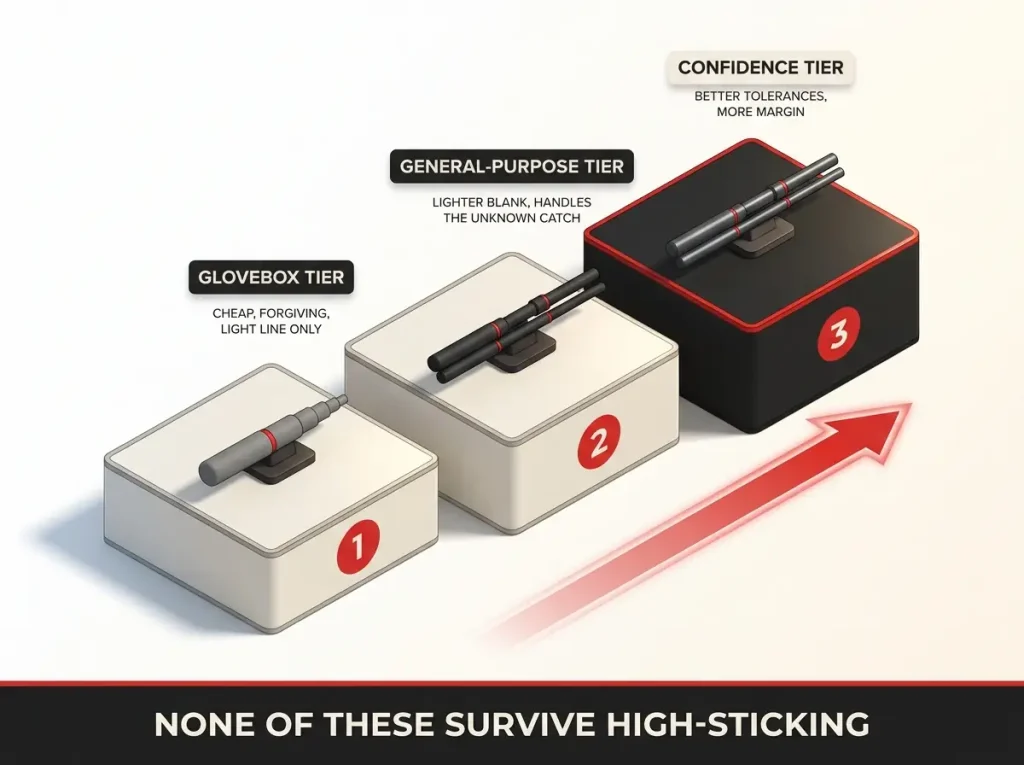
There’s no dollar figure in this section on purpose, because prices drift and the tiers don’t. What matters is the value each jump in price actually buys, and what it never buys, which is immunity from the failure we already covered.
Glovebox Tier, Cheap, Forgiving, Light-Line Only
The honest low end is a pre-spooled glass combo like the Eagle Claw Pack-IT Black Spin Combo in the 5-foot-6 length. It’s ready in seconds, the glass blank forgives abuse, and it’s cheap enough that you won’t cry if it lives in a hot truck. The catch is that it’s rated for light line and small lures. It’s a panfish and small-bass tool, not a rod to bet a genuinely good fish on, and that’s a fair trade at this tier.
General-Purpose Tier, the Unknown-Catch Rod
Step up to a carbon combo like the PLUSINNO from the materials section and you get a lighter, more sensitive blank and a better reel. This is the tier for the trip where you genuinely don’t know what’s going to bite, and it handles that uncertainty without real compromise.
Confidence Tier, Casting Feel and Margin
At the top of the sane range, a rod like the KastKing Compass buys you better guide and ferrule tolerances, casting feel closer to a one-piece, and more margin when a bigger fish shows up. Here’s the plain truth that ties the whole article together, though: money buys ferrule tolerance and blank quality, not immunity from high-sticking. Even the premium tier snaps if you lift the tip to the sky. The cheapest tier is genuinely enough for a lot of anglers, so don’t upsell yourself past your actual use.
Flying With a Telescoping Rod, the TSA Reality
What TSA Actually Allows
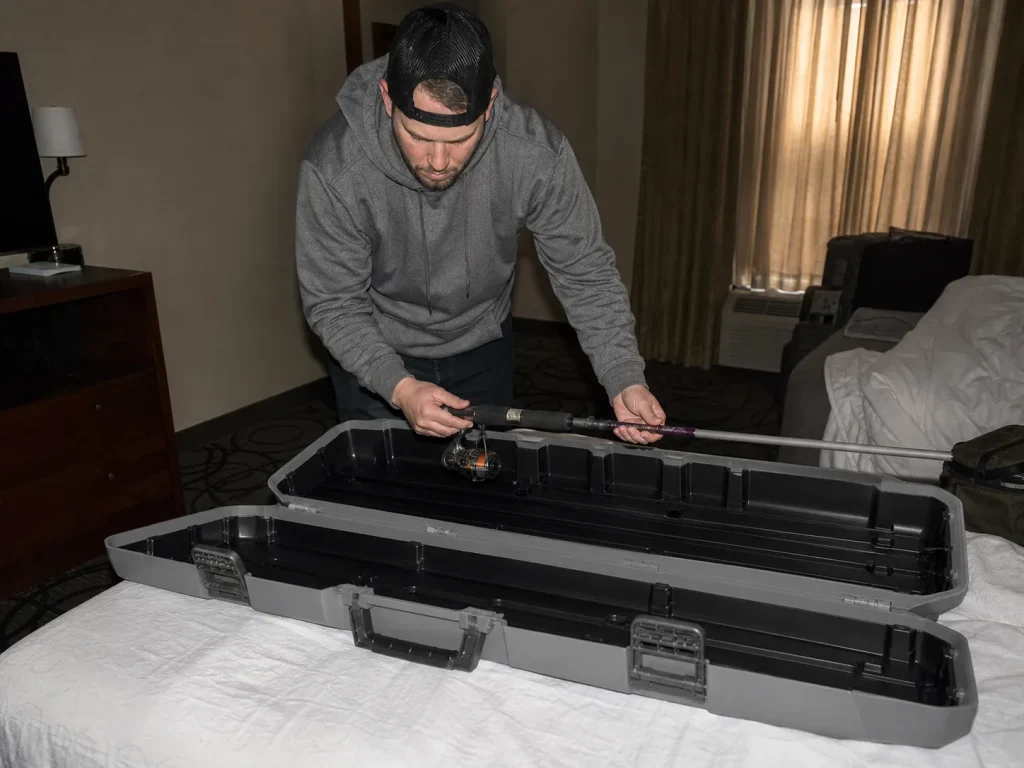
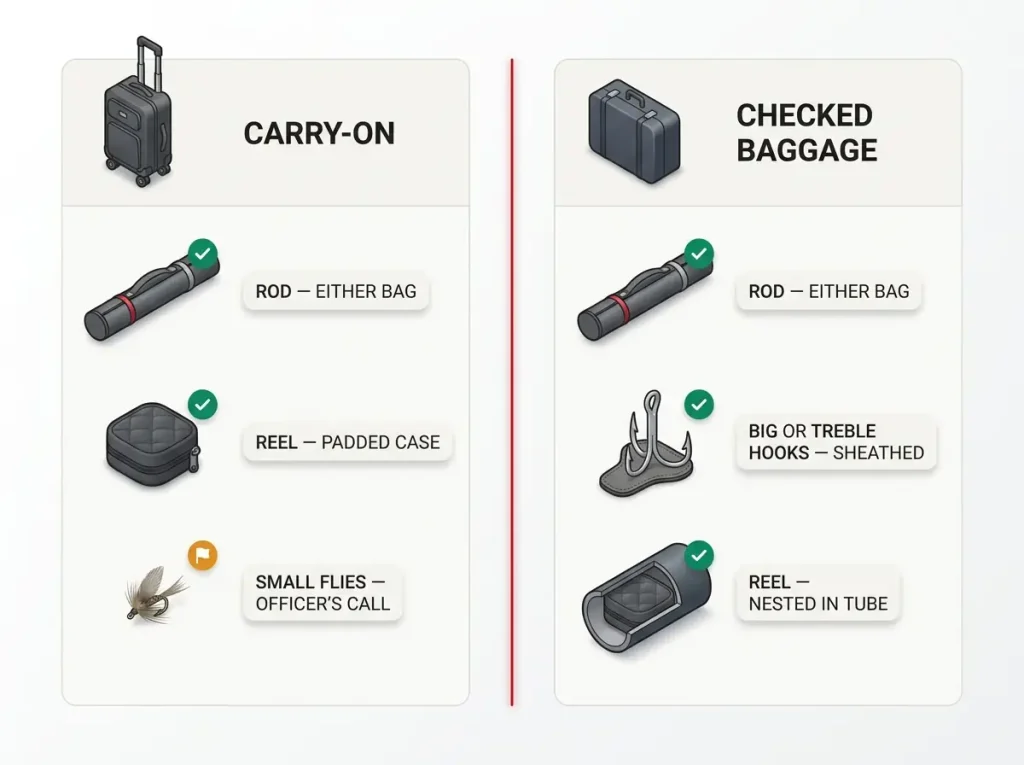
The pre-flight worry usually isn’t the rule, it’s whether the rod survives baggage handling, but let’s settle the rule first. Fishing rods, telescoping or one-piece, are allowed in both carry-on and checked bags according to TSA’s own fishing pole guidance. The real constraint is your airline’s carry-on size limit, not a TSA ban.
Hooks are the wrinkle. Large, treble, or deep-sea hooks have to be sheathed or wrapped and packed in checked bags, while small flies are generally fine in carry-on but come down to the officer’s call, so don’t count on it for a tight connection. TSA’s rules on packing hooks and small lures spell it out. Reels aren’t restricted at all, but a good reel rides better carried on in a padded case, or wrapped and nested inside the rod tube if you’re checking it, rather than loose in a duffel where it comes home with a grinding drag.
The Real Risk Is Baggage Handling, Not the Rule
Once TSA is settled, the actual question is protection, and a hard-sided case answers it. Something like the Plano Airliner Telescoping Rod Case is rated for checked baggage and telescopes down to the rod’s packed length, which is the practical fix for the “will this survive the belt” fear. If you want the full rundown, our guides on flying with fishing gear and how to protect a rod in checked baggage go deeper than the TSA page does.
Extending and Collapsing It the Right Way
This ninety seconds at the tailgate is what decides whether the rod works on trip three, and it’s the step nobody in the search results bothers to spell out.
The Right Way to Extend and Collapse
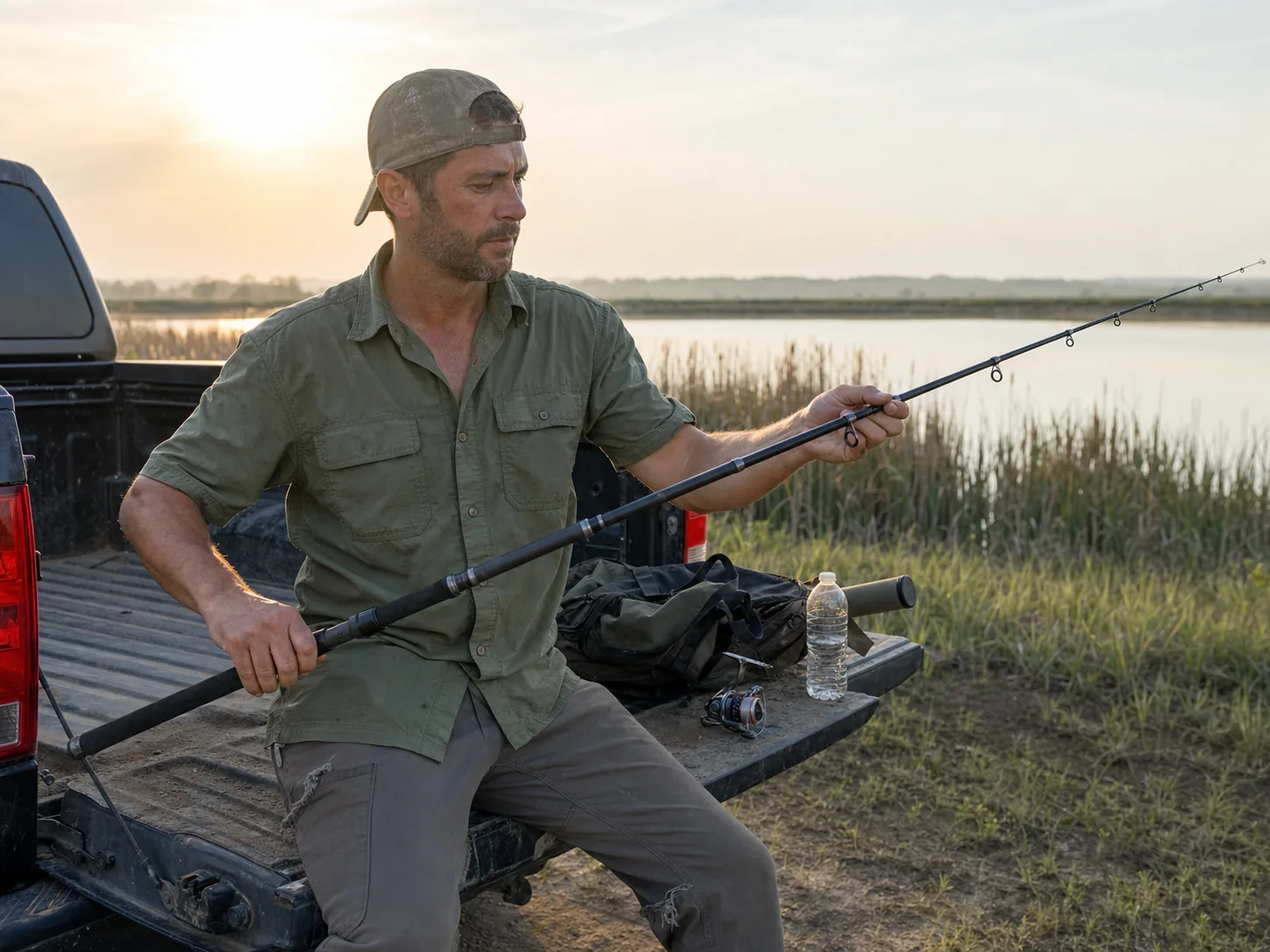
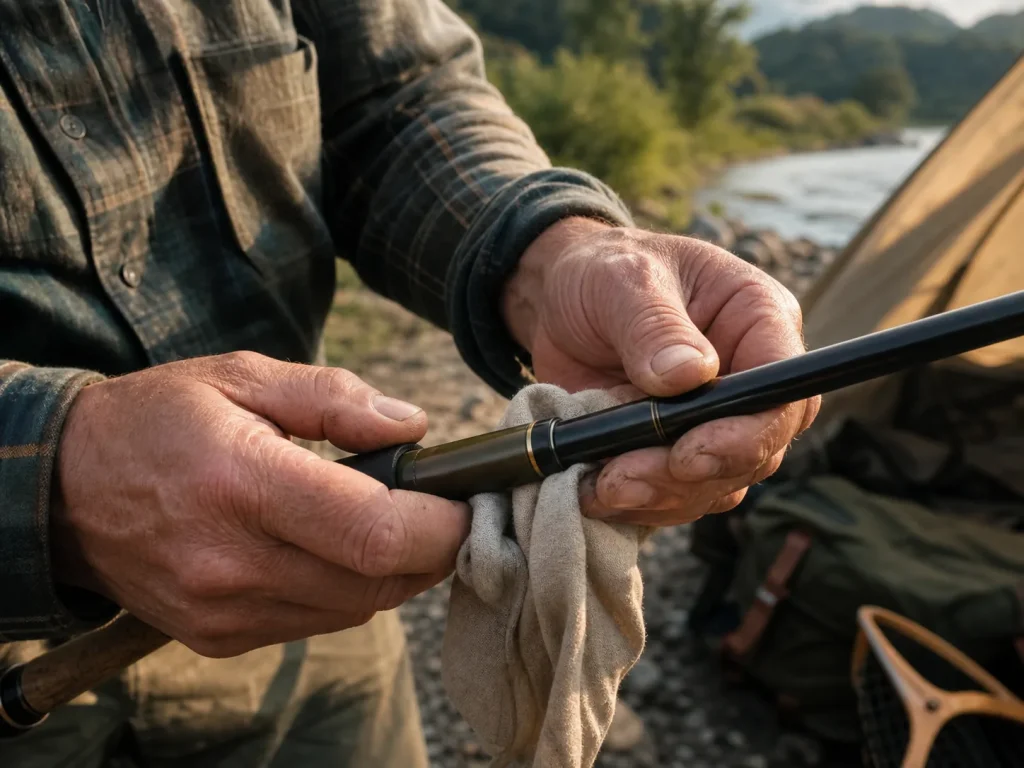
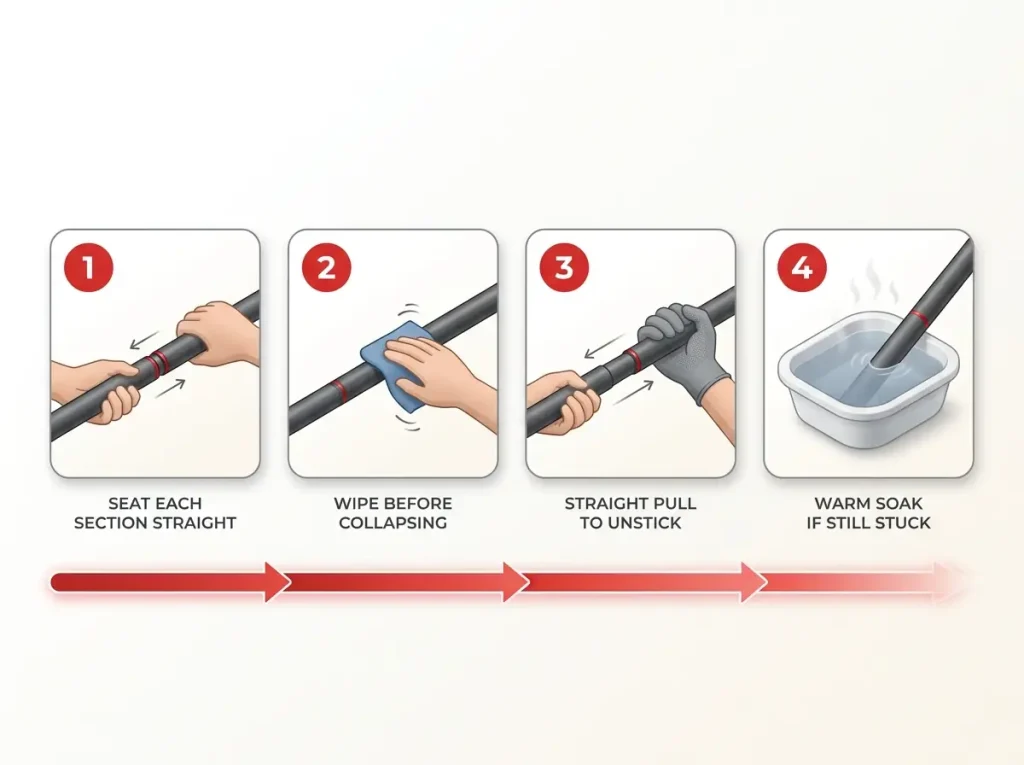
Extend section by section, seating each ferrule with a firm straight push before you put any casting load on it. Don’t extend the rod under tension and don’t start casting until every joint is seated. To collapse, wipe the grit off each section with a cloth or your shirt hem before it nests into the next one. Sealing sand inside a joint is what causes the next-trip jam, and thirty seconds of wiping prevents it.
Freeing a Stuck Section Without Cracking It
If a section is already stuck, the fix is a straight pull in line with the blank, using a grippy cloth or a rubber glove for purchase. Never twist. Twisting is the exact motion that cracks a ferrule, and it’s the first thing everyone instinctively tries. If a straight pull won’t free it, soak the joint in warm soapy water for a few hours and try again before you force anything.
A section that won’t budge on trip three almost always means the rod went away dirty or wet on trip two. The rod isn’t defective. It’s telling you it got put away in a hurry.
Keeping the Joints Clean, Maintenance That Prevents Jams
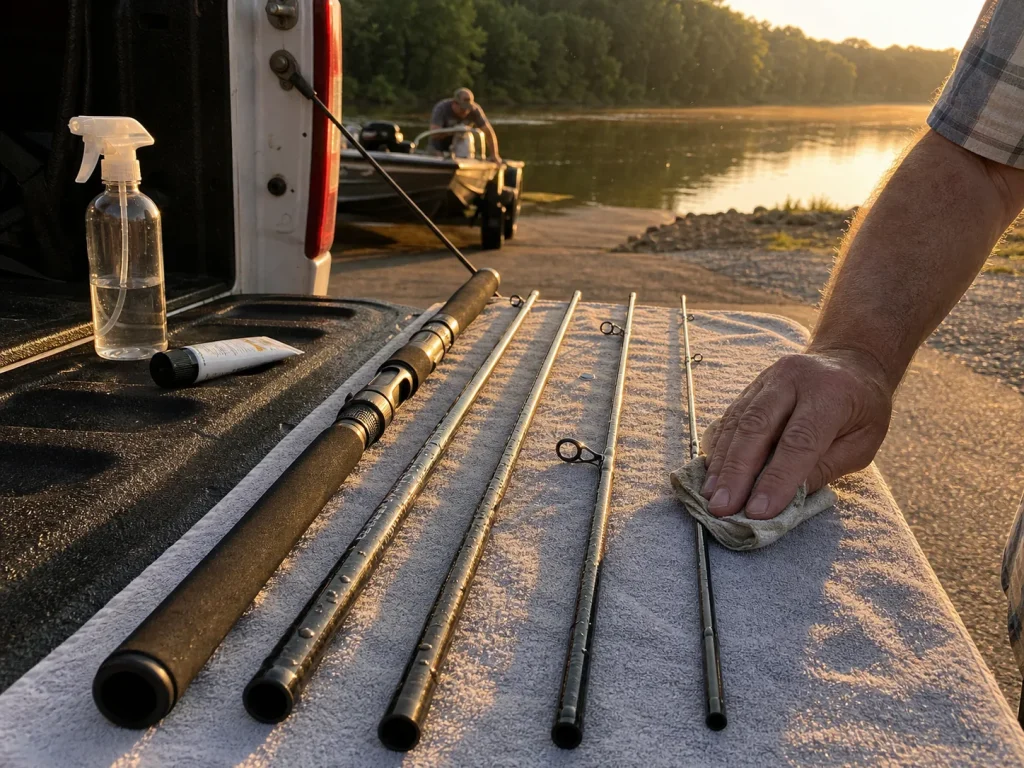
Grit, sand, and fine silt trapped inside a ferrule act like tiny wedges, and that’s the single most common real-world reason a telescoping rod jams. The rod doesn’t die of old age. It dies of getting put away gritty.
Rinse the rod and fully break it down after every trip, then lay each section out to dry on its own instead of collapsing a damp rod for storage. Keep a small tube of silicone grease in the tackle bag for the ferrules, and use that rather than reaching for a spray lubricant as a long-term fix. After a saltwater trip, a freshwater rinse before anything dries isn’t optional, it’s the whole ballgame for corrosion. None of this takes longer than tying your boots, and it’s the difference between a rod that lasts a season and one that lasts a decade.
Who Should Actually Buy a Telescoping Rod

Buy one if you travel or fly with gear, if you want a glovebox rod for impromptu fishing, or if you need a compact combo the whole family can share. In those cases the portability genuinely earns its spot, and nothing else deploys this fast from this small a package.
Skip it if you mostly fish one home water from the truck and already own rods you trust, or if you’re chasing trophy fish where the sensitivity and power gap actually costs you the day. The anti-sell truth is simple: if the best answer is the packable rod you already own, that’s the answer, and you don’t need to spend a dime. If you do buy, match the tier to the use. Glovebox tier for the just-in-case rod, confidence tier if it’s going to be your primary travel stick.
Conclusion
Telescoping rods win on portability and deploy-anywhere convenience, and for travel fishing that’s a bigger deal than the spec-sheet crowd lets on. They cost you a little sensitivity and casting distance, which you’ll rarely miss on the water. And they break at the ferrule from high-sticking, not from being collapsible, which means the fix is your technique and a clean joint, not a pricier rod.
Next trip, keep one rigged behind the seat and wipe the joints down before you put it away. That’s the whole game.
Frequently Asked Questions
01Are telescoping fishing rods any good?
Yes, for what they’re built for, portability and travel or impromptu fishing. You trade a little sensitivity and casting distance for a rod that fits a carry-on or glovebox. For panfish to mid-size fish they’re genuinely good.
02Can you catch big fish on a telescoping rod?
Within the rod’s rated power, yes, if you play the fish through the rod’s bend and let the drag work. Most snapped-rod stories are high-sticking, not fish size. Bet a real trophy on a confidence-tier rod and correct technique.
03What is the biggest disadvantage of a telescoping rod?
Slightly reduced sensitivity and casting distance from the extra joints, plus ferrules that jam if stored dirty or wet. None of it is a dealbreaker for travel fishing, but it’s the honest trade for the packability.
04Should you leave the reel attached to a travel rod?
For a truck or glovebox rod, yes, leaving it pre-rigged is the whole point of grab-and-go. For flying, carry the reel on in a padded case or nest it inside the rod tube if checked, rather than leaving it loose to get banged around.
05Can you take a telescoping fishing rod on a plane?
Yes, TSA allows fishing rods in both carry-on and checked bags. The real limit is your airline’s carry-on size rule, and big or treble hooks have to be sheathed and checked. A hard-sided rod case is the smart move for checked baggage.
Risk Disclaimer: Fishing, boating, and all related outdoor activities involve inherent risks that
can lead to injury. The information provided on Master Fishing Mag is for educational and informational purposes
only. While we strive for accuracy, the information, techniques, and advice on gear and safety are not a substitute
for your own best judgment, local knowledge, and adherence to official regulations. Fishing regulations, including
seasons, size limits, and species restrictions, change frequently and vary by location. Always consult the latest
official regulations from your local fish and wildlife agency before heading out. Proper handling of hooks, knives,
and other sharp equipment is essential for safety. Furthermore, be aware of local fish consumption advisories. By
using this website, you agree that you are solely responsible for your own safety and for complying with all
applicable laws. Any reliance you place on our content is strictly at your own risk. Master Fishing Mag and its
authors will not be held liable for any injury, damage, or loss sustained in connection with the use of the
information herein.
Affiliate Disclosure: We are a participant in the Amazon Services LLC Associates Program, an
affiliate advertising program designed to provide a means for us to earn advertising fees by advertising and linking
to Amazon.com. As an Amazon Associate, we earn from qualifying purchases. We also participate in other affiliate
programs and may receive a commission on products purchased through our links, at no extra cost to you. Additional
terms are found in the terms of service.