
In this article
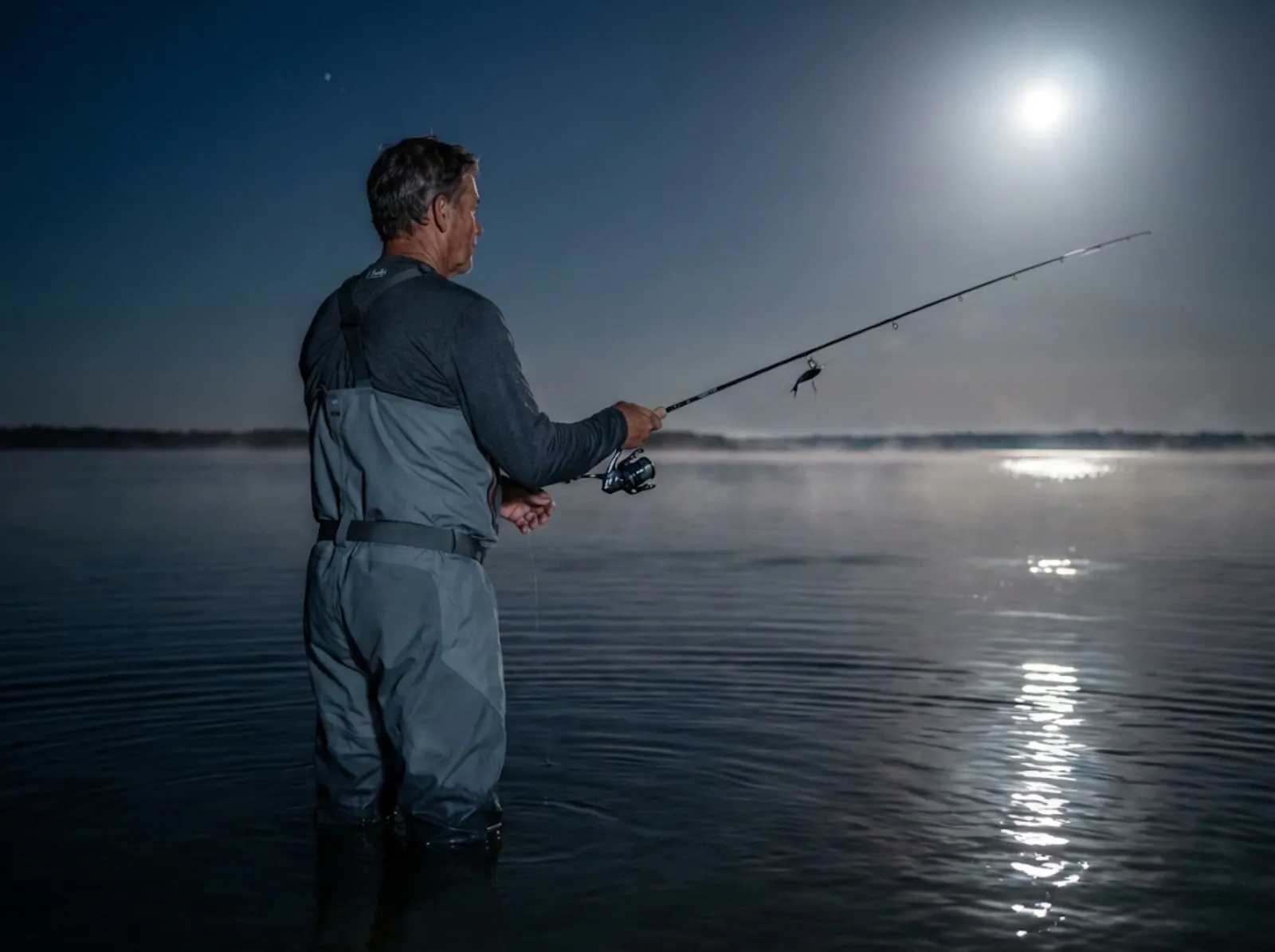
The rod tip loaded, the line peeled off the reel, and then—nothing. For the third time that morning, I watched a striper swirl behind my bucktail, track it for ten feet, and turn away like I’d offered it week-old bait. The fish were there. My sonar confirmed dozens of marks stacked on the channel edge. But they refused everything I threw.
That refusal has a name. Tournament pros call it lockjaw, and it shows up like clockwork during the days surrounding a bright full moon.
Quick Answer: Is fishing better during a full moon or new moon? New moon generally produces better daytime fishing because fish feed aggressively after dark, lightless nights. Full moons trigger nocturnal feeding binges that leave fish sated and sluggish during daylight—a phenomenon anglers call “lockjaw.” However, full moon nights offer exceptional fishing if you adjust your timing and tactics.
Here’s what I’ve learned after tracking my catches against lunar phases for over a decade: lockjaw isn’t superstition. It’s a predictable biological response to celestial mechanics. Understanding why it happens is the first step toward beating it.
Why Full Moon Fishing Goes Silent During the Day
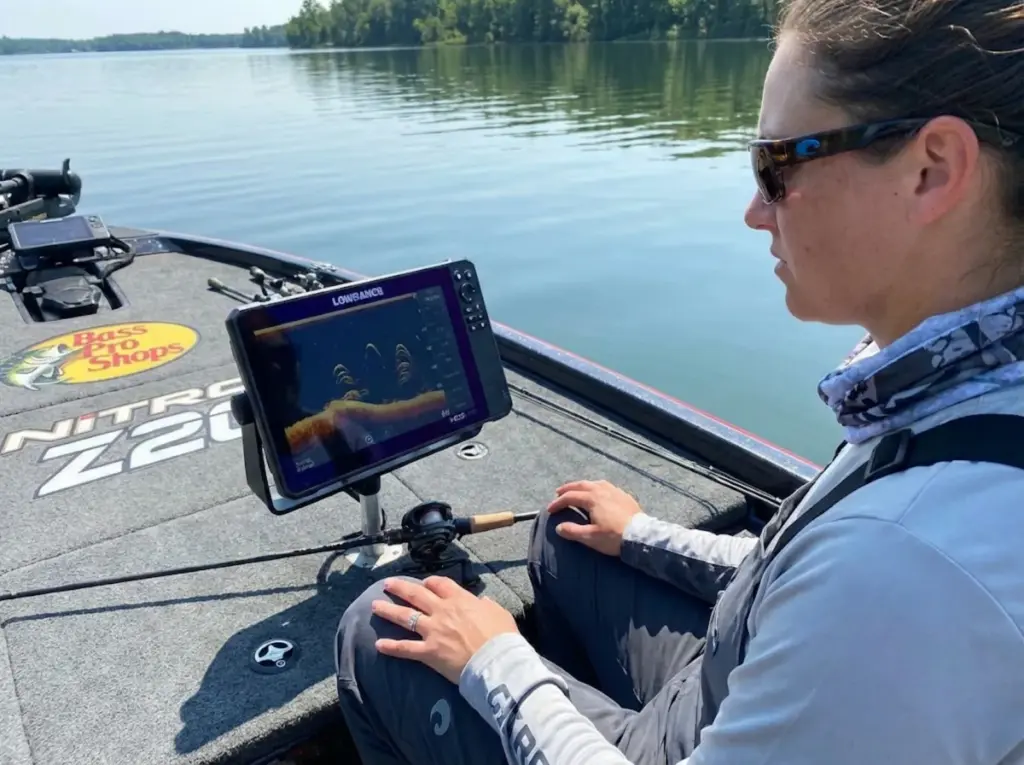
The frustration of lockjaw doesn’t come from absent fish—it comes from fish that simply aren’t hungry. Understanding the biological mechanism behind this phenomenon shifts your tactical approach entirely.
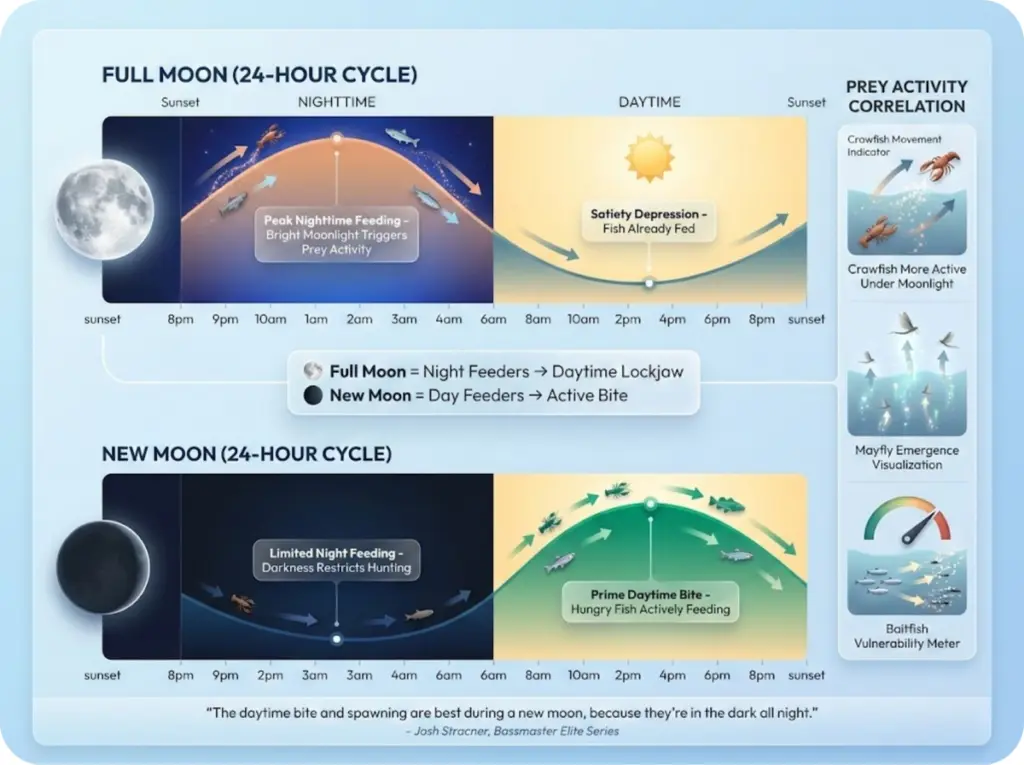
The Nocturnal Feeding Binge
Most predatory gamefish—bass, walleye, striped bass, trout—possess eyes dominated by rod cells rather than cone cells. This physiological quirk makes them exceptionally well-adapted for low-light hunting. Under normal conditions, these predators concentrate their feeding activity during dawn and dusk when light levels match their visual strengths.
But a full moon changes everything.
The illumination from a full moon, while a million times weaker than sunlight, provides enough visibility for these rod-cell specialists to hunt effectively throughout the night. According to research on lunar influence on tidal systems from NC State University, prey species alter their behavior under bright lunar illumination, and predators capitalize on this extended hunting window. What should be an eight-hour rest period becomes an eight-hour feeding binge.
By the time dawn breaks, fish that have gorged all night arrive in a state of physiological satiety. They’re present on your sonar. They’re holding in their normal positions. But they’ve already eaten.
The Satiety Problem
Lockjaw isn’t about fish disappearing—it’s about the absence of hunger drive. Professional anglers like Josh Stracner from the Bassmaster Elite Series have observed this pattern repeatedly: “The daytime bite and the spawning are best during a new moon, because they’re in the dark all night, so they don’t do as much during the night.”
The full moon compounds the satiety problem in another way. Bright nights trigger massive emergences of prey species—crawfish move more actively, mayfly hatches intensify, and baitfish schools become more vulnerable to sight-feeding predators. Fish don’t just feed longer; they feed on abundant, easy targets.
The result? A predator that has spent the night gorging on an all-you-can-eat buffet isn’t interested in chasing your presentation the following morning.
If you want to understand how striped bass feeding behavior changes with environmental conditions, the moon phase influence on their activity patterns provides a critical piece of that puzzle.
The New Moon Advantage—And When to Use It
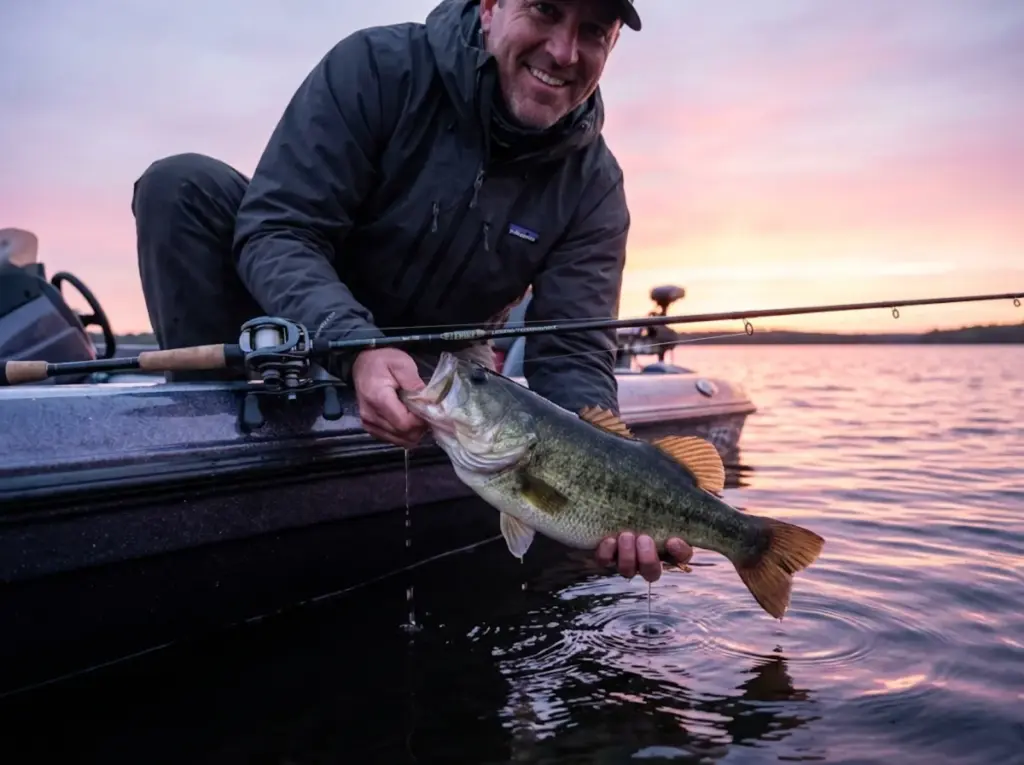
Where the full moon creates daytime lethargy, the new moon produces the opposite effect. Dark nights limit nocturnal hunting effectiveness, forcing predators to concentrate their feeding activity into daylight hours.
Why Daytime Fishing Peaks on New Moons
Fish that can’t effectively hunt at night arrive at dawn with empty stomachs and aggressive attitudes. The new moon creates a natural pressure: feed now, or go hungry. This translates to more committed strikes, less inspection, and better odds of converting follows into hookups.
Tournament schedulers understand this pattern. Major bass tournaments often target new moon weeks when possible because the daytime bite tends to be more consistent and predictable. Anglers entering derby waters during a three-day competition prefer fish that actively hunt over fish that require persuasion.
The optimal fishing times during crepuscular windows compound during new moon phases. With fish already primed to feed, the low-light transitions at dawn and dusk become exceptionally productive.
Moon Phase Comparison Matrix
Understanding the tactical implications of each phase helps you plan trips around the highest-probability windows:
| Moon Phase Fishing Factors | ||
|---|---|---|
| Factor | Full Moon | New Moon |
| Night Illumination | High—enables all-night hunting | Low—restricts hunting to twilight |
| Daytime Bite | Sluggish (lockjaw) | Aggressive |
| Tidal Intensity | Maximum (spring tides) | Maximum (spring tides) |
| Best Strategy | Night fishing or reaction baits | Standard daytime presentations |
The 3-4 Day Window Rule
Lunar effects don’t switch on and off like a light. The feeding pattern shifts extend roughly three to four days before and after each major phase. The waxing gibbous period—when the moon is nearly full but not quite—often produces the most severe lockjaw conditions. Fish are already feeding heavily at night, but the brightest nights are still ahead.
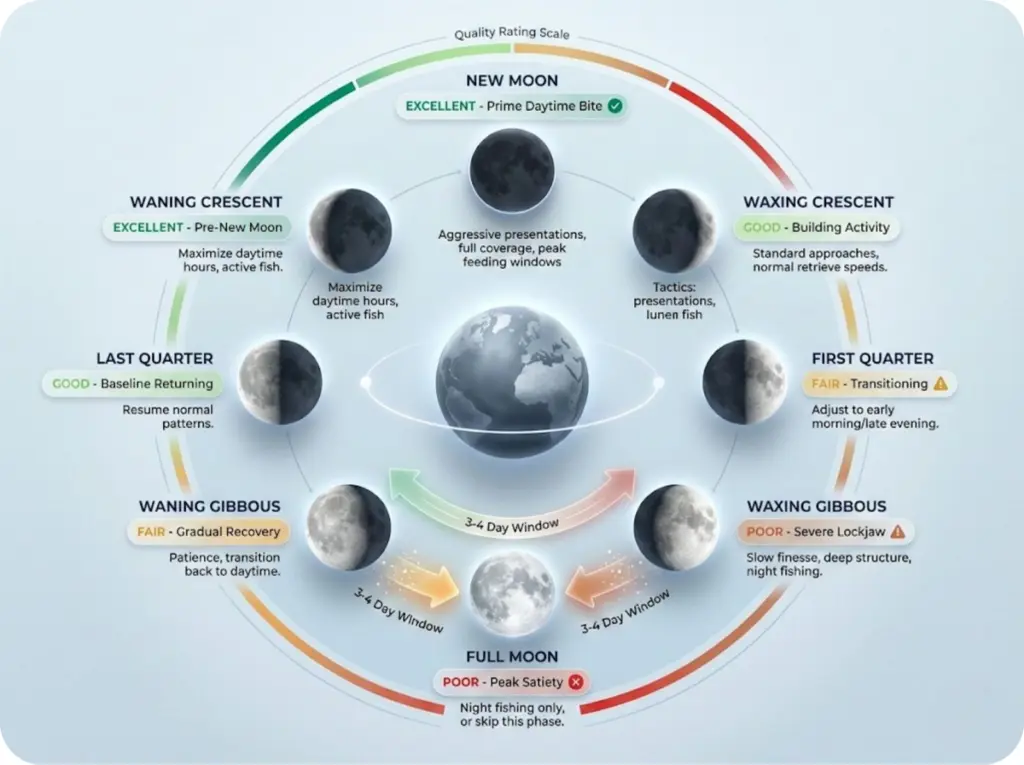
Conversely, the waning moon sees a gradual return to normal feeding patterns. By the last quarter, daytime activity typically recovers to baseline levels.
Solunar Windows—Your Only Shot at Daytime Bites
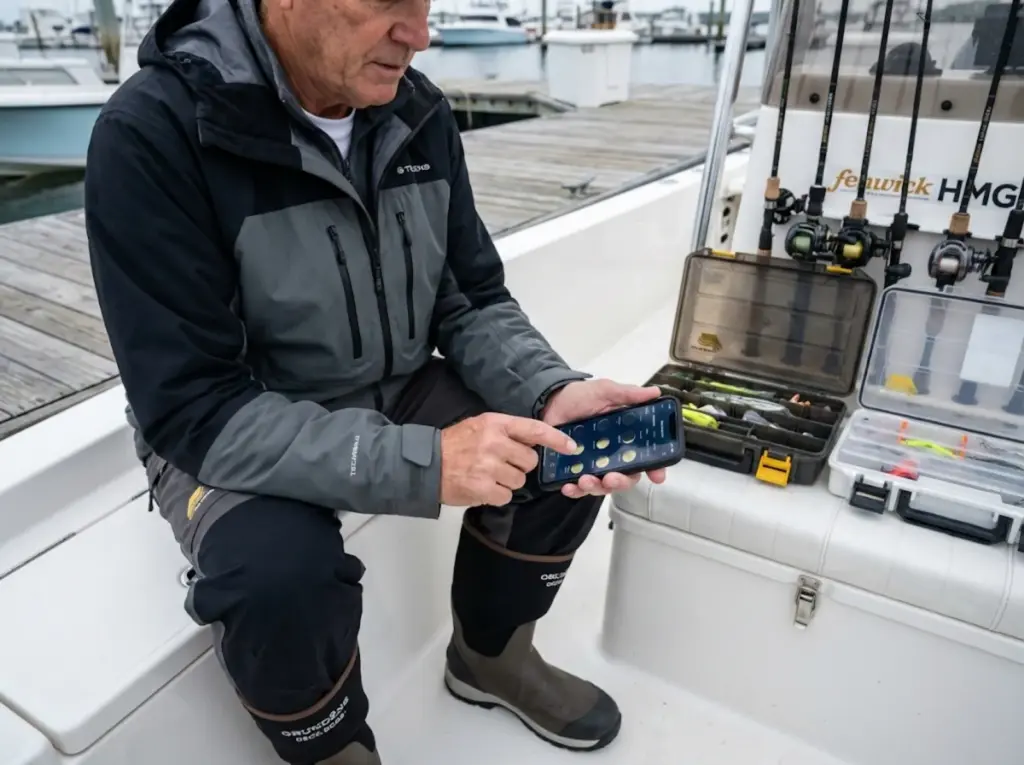
When lockjaw sets in, randomly fishing through the day burns effort with minimal return. The solution is targeting the specific windows when even sated fish show elevated activity: the solunar periods.
Major vs Minor Periods Explained
The solunar theory, formalized by John Alden Knight in 1926, identifies four daily windows when fish activity peaks regardless of hunger levels. Knight’s research, initially dismissed as pseudoscience, has since been supported by decades of catch data analysis—though scientists note that environmental factors can override lunar predictions in many freshwater systems.
Major periods occur when the moon is directly overhead (lunar transit) or directly on the opposite side of the Earth (opposing transit). These windows typically last about two hours and represent the highest-probability feeding times.
Minor periods occur when the moon is rising or setting—positioned at 90 degrees to the observer. These windows usually last approximately one hour and represent secondary activity peaks.
The lunar day runs approximately 24 hours and 50 minutes, which explains why the optimal fishing times shift by about 50 minutes later each day.
How to Use Solunar Calendars
Free resources like TimeAndDate.com and USHarbors.com provide solunar data. Mobile apps designed specifically for anglers overlay this information with tide charts and weather forecasts for comprehensive trip planning.
The tactical application during lockjaw conditions is straightforward: concentrate 100% of your effort on the major periods. Rest during the dead hours. Arrive fresh and fish the windows with maximum intensity rather than grinding through unproductive stretches.
Understanding tidal coefficient and predator positioning adds another layer to this planning. When solunar major periods coincide with strong tidal movement, even lockjaw-afflicted fish often commit to strikes.
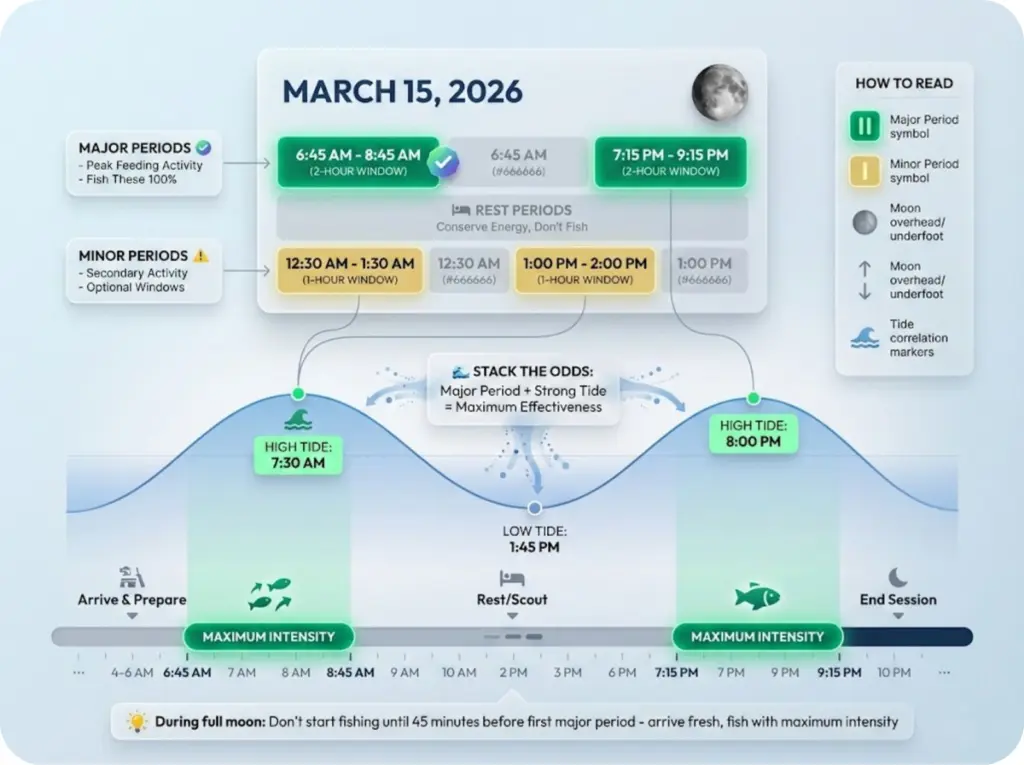
Pro Tip: During a full moon, I don’t even start fishing until 45 minutes before the first major period. There’s no point burning energy when the fish won’t commit. I’d rather arrive fresh and fish the window with maximum intensity.
Reaction Baits—Forcing the Bite When Hunger Fails
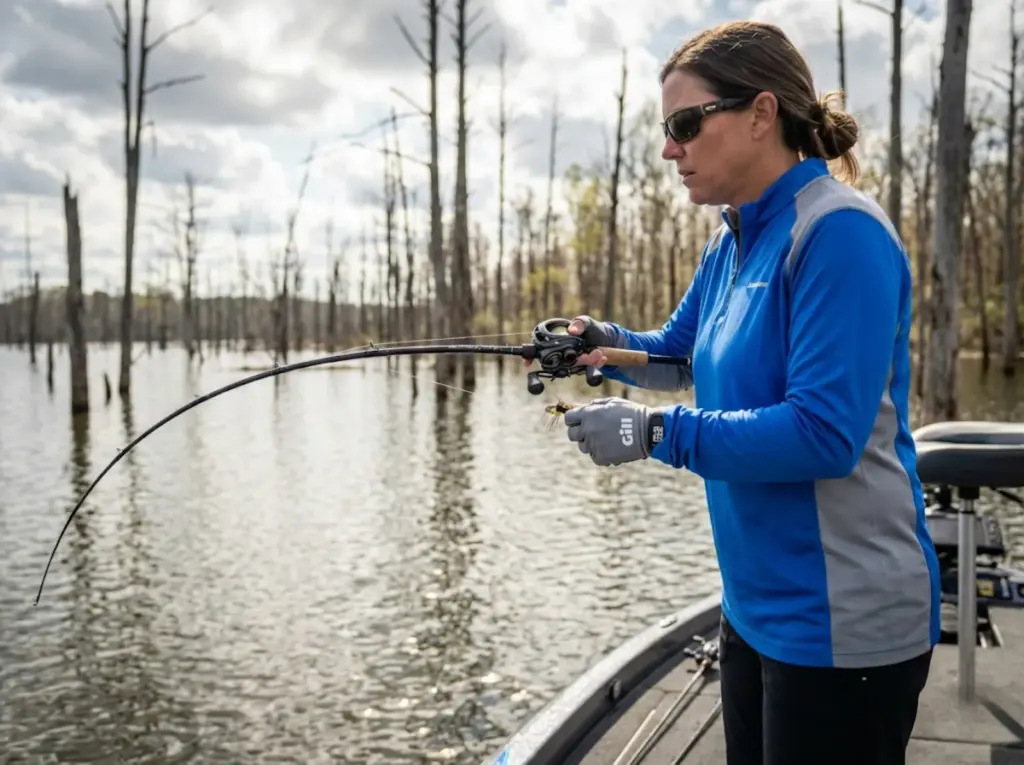
When fish refuse to eat out of hunger, successful anglers appeal to different instincts: irritation, territory defense, and reflex. Reaction baits trigger these responses in ways that slow, natural presentations cannot.
The Irritation Strike Principle
A sated fish might ignore a perfectly presented soft plastic that drifts through its strike zone. But that same fish often can’t resist snapping at a lure that suddenly appears, vibrates aggressively, or invades its immediate space.
This is the reaction bite—forcing a fish to commit before it has time to evaluate. The key is speed, vibration, and violation of the fish’s comfort zone. You’re not offering food; you’re demanding a response.
Three Lures That Force Full Moon Strikes
Bladed jigs (chatterbaits) top the list for lockjaw conditions. The intense vibration produced by the blade-head connection shocks lethargic fish into reflex strikes. The Strike King Thunder Cricket and Z-Man Evergreen ChatterBait Jack Hammer are tournament favorites for this application.
Deep jerkbaits work through a different mechanism. The erratic, slashing action mimics a wounded baitfish in a way that triggers predatory instinct even when hunger is absent. Long pauses between slash sequences allow the bait to suspend tantalizingly in the strike zone.
High-speed squarebill cranks exploit territorial aggression. Burning a flat-sided crankbait through a bass’s holding area forces a split-second decision: strike now or let the invader escape. Fish often choose violence over passivity.
Color Selection for Bright Nights
Here’s where full moon tactics get counterintuitive. Dark lure colors consistently outperform bright options during moonlit conditions.
Fish looking upward toward the surface see lures silhouetted against the moonlit sky. A black or junebug-colored bait creates a stark, visible profile. Bright chartreuse or white, despite being high-visibility in other contexts, actually blends into the silvery moonlight and becomes harder for fish to track.
Night fishing specialists have understood this “silhouette effect” for decades. Apply the same logic during full moon daytime fishing when residual low-light instincts still influence fish behavior.
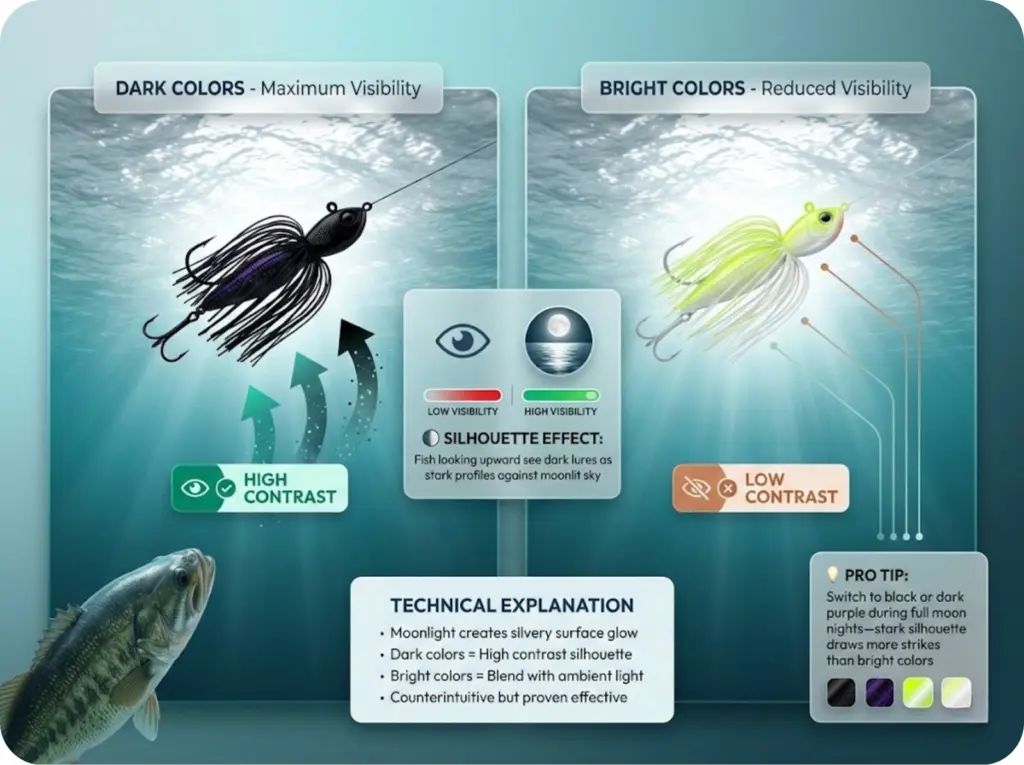
Pro Tip: On full moon nights, I switch every lure to black or dark purple. Fish looking toward the surface see my bait as a stark silhouette against the moonlit sky. It’s counterintuitive, but dark colors draw more strikes than chartreuse when the moon is bright.
Consider adding scent attractants to trigger inactive fish as a complementary approach. When fish are reluctant to commit, adding the right amino acid profile to your reaction baits can push hesitant followers into committed strikes.
The Night Shift—When Full Moons Become an Advantage
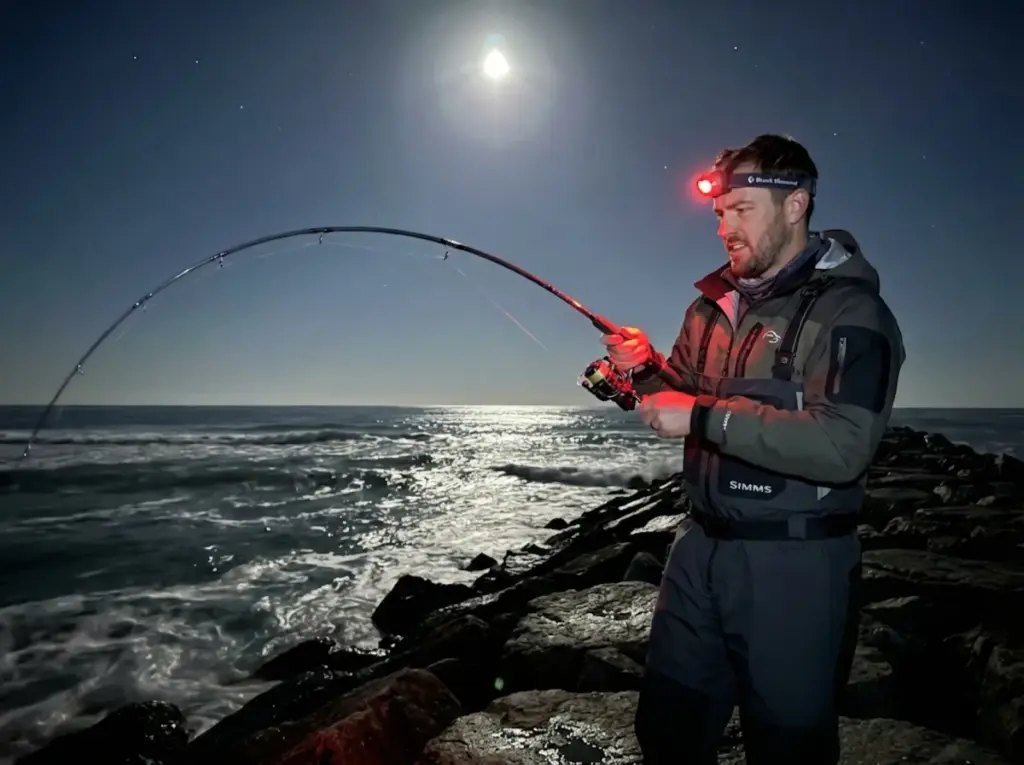
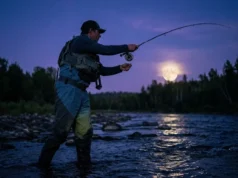
The same conditions that create daytime lockjaw make full moon nights exceptional for fishing. If the day shift fails, switch your schedule.
Why Full Moon Nights Produce Trophy Fish
Extended hunting windows under lunar illumination create consistent trophy opportunities. Fish that spend more time actively feeding have more chances to encounter your presentation. The bright conditions also allow sight-feeding species to target larger prey than they could capture in complete darkness.
Baitfish behavior compounds the effect. Under full moon illumination, bait schools consolidate into predictable ambush zones—they’re more visible to predators and respond by tightening their formations. Anglers who know where these choke points form can intercept aggressive fish.
Some of the largest tournament strings ever recorded have come from full moon night sessions. Fish that refused everything during daylight become cooperative after sunset.
Safety and Gear Considerations
Full moon fishing brings specific hazards. The same gravitational alignment that causes lockjaw produces spring tides—the highest highs and lowest lows of the month. Wade fishing anglers can find themselves trapped by rapidly rising water. Check your local NOAA tide predictions before planning any full moon session, and maintain exit routes.
Following night fishing safety protocols and essential gear guidelines isn’t optional for after-dark sessions. Dark adaptation takes 20-30 minutes; preserve it by using red-filtered headlamps when checking tackle, and save white light only for landing fish.
Battery runtime becomes critical during extended night sessions. Plan for the possibility of fishing until dawn and carry backup power for navigation lights.
The 10 PM Rule
If daytime lockjaw proves severe, commit fully to the night shift rather than splitting your time ineffectively. In my experience, the most productive full moon fishing typically occurs after 10 PM. The transition hours around sunset can still show lockjaw patterns; true prime time is midnight.
Consider sleeping through the afternoon and treating the night session as your primary fishing day. Dawn and dusk remain secondary windows during full moon phases—the middle of the night is when fish actually feed.
When Weather Overrides the Moon
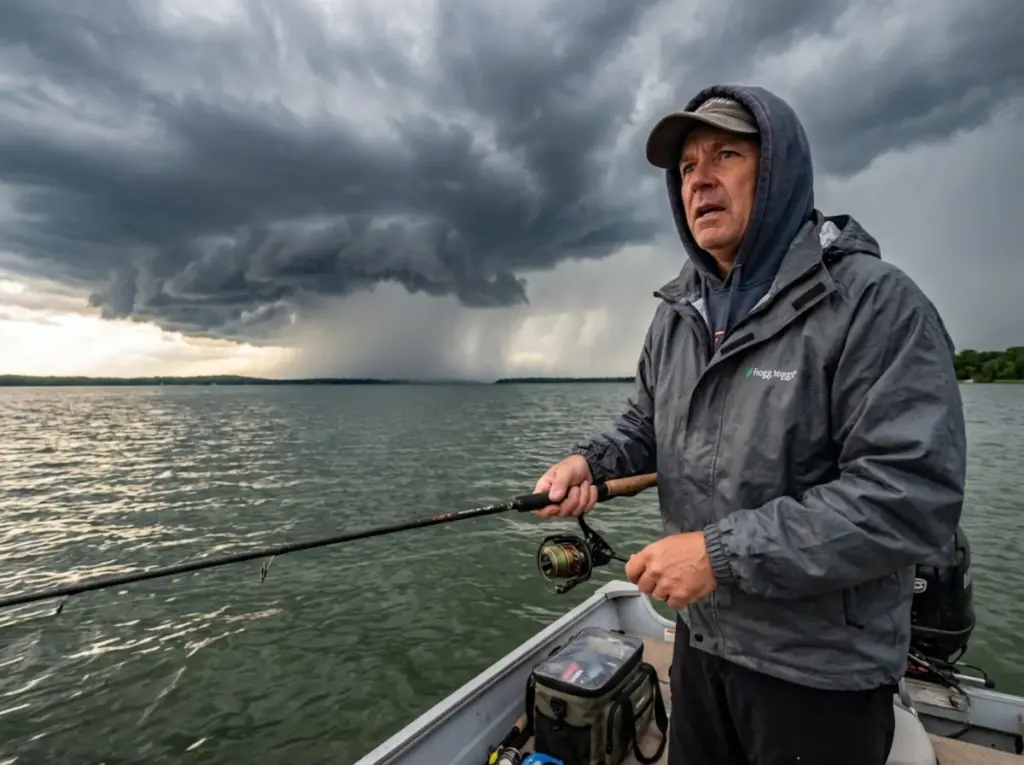
Moon phase matters, but it’s not the only variable. Weather conditions—specifically barometric pressure—can completely override lunar predictions.
The Barometric Override
Fish sense atmospheric pressure changes through their swim bladders and lateral lines. Rapid pressure drops (greater than 0.15 inHg over three hours) typically trigger feeding binges regardless of moon phase. The biological urgency of an approaching storm overrides satiety.
Conversely, rising barometric pressure after a cold front passes creates the infamous “bluebird skies” conditions that suppress feeding even during optimal solunar windows. The combination of full moon lockjaw plus post-frontal high pressure represents the worst possible scenario—stay home and tie leaders.
Florida Elite angler Scott Martin puts weather ahead of lunar factors: “They don’t react to the moon here as much as they do to the conditions lining up, meaning water clarity, water temp and not a lot of wind. That is the reliable formula.”
Reading the Conditions Stack
Smart trip planning evaluates multiple variables in sequence:
- Check moon phase first (baseline prediction)
- Check barometric trend (potential override factor)
- Check water temperature and clarity
- Make tactical decisions based on the complete stack
A falling barometer during a full moon? Fish aggressively. A stable high-pressure system during a new moon? Execute your standard approach. A post-frontal bluebird day during a waxing gibbous? Reschedule.
Why Post-Frontal “Bluebird Skies” Kill the Bite
Rising atmospheric pressure physically affects fish with swim bladders. The compression creates discomfort and drives fish deeper into cover. Combined with the extreme clarity that high pressure brings, post-frontal conditions make already-lethargic fish nearly impossible to catch.
Full moon lockjaw plus post-frontal conditions compounds the difficulty. When both factors stack against you, the honest tactical advice is to cut your losses. No amount of technique compensates for physiologically inactive fish.
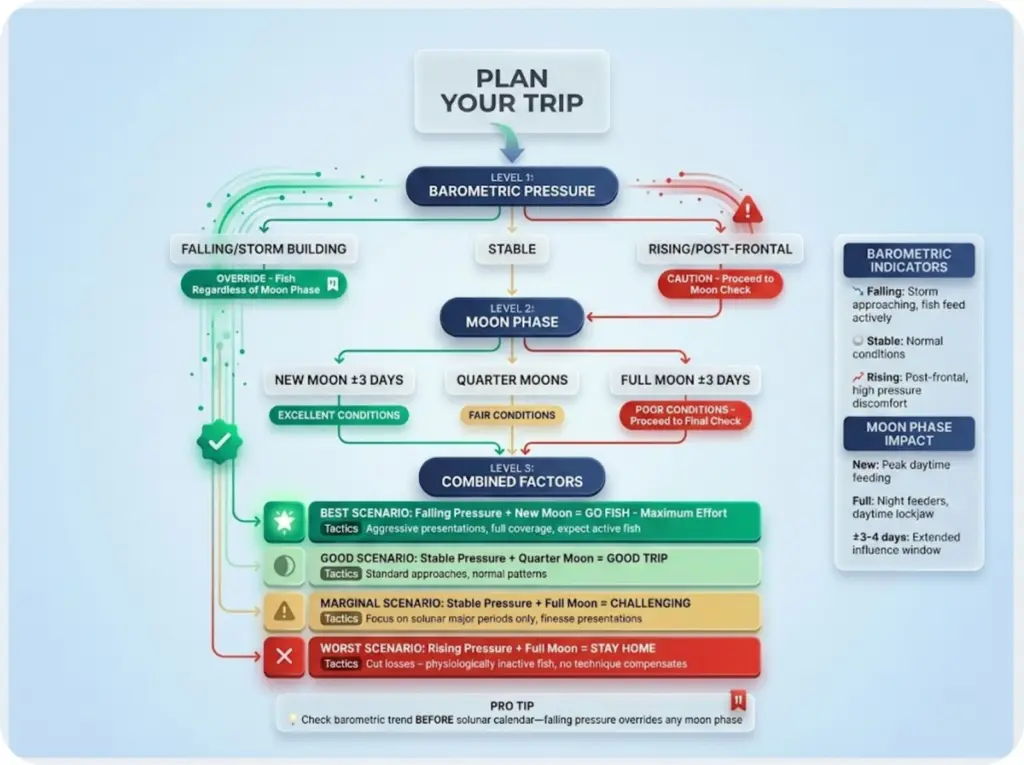
Pro Tip: I check the barometric trend before I even look at the solunar calendar. A falling barometer with a building storm will override any moon phase. But a stable, high-pressure system after a cold front? I don’t care if it’s the perfect new moon—I’m staying home.
Species-Specific Moon Phase Strategies
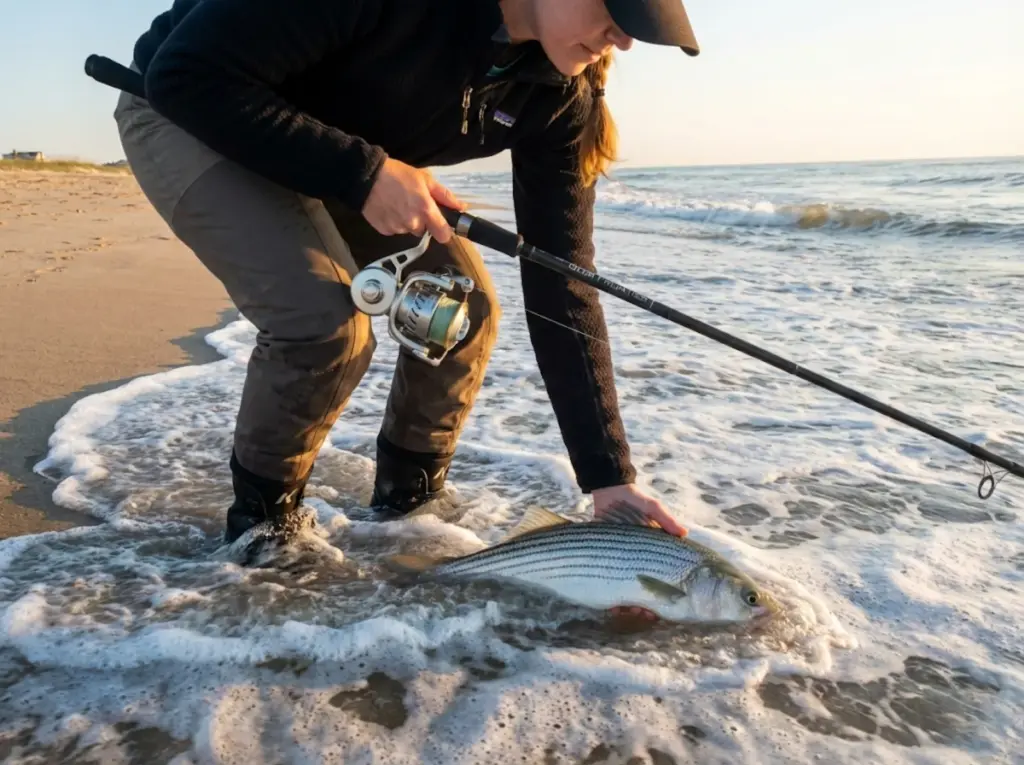
Not all species respond identically to lunar influence. Understanding the specific patterns for your target fish improves your tactical decisions.
Bass (Largemouth and Smallmouth)
Bass show pronounced moon phase sensitivity, particularly around spawning periods. Full moons trigger significant nighttime bed-building activity when water temperatures exceed 64°F. Those actively nesting fish are protective but not hungry—target reaction strikes rather than feeding presentations.
New moon phases typically produce the most aggressive daytime bites for prespawn bass. Hungry fish that couldn’t hunt effectively at night are actively searching from first light.
The Professor Mike Allen study found catch rates of 21% on new moons versus 28% on full moons in controlled pond environments—a smaller difference than expected, suggesting that bass in smaller freshwater systems show less lunar sensitivity than their saltwater counterparts.
Striped Bass
Striper behavior shows stronger lunar correlation than freshwater bass. Field & Stream research indicates that trophy stripers move more aggressively on new moons, making this the preferred phase for daytime trophy hunting.
However, full moon nights remain exceptional for striper fishing, particularly for surf casters. The bright conditions and extreme spring tides push bait through predictable channels and create ambush feeding opportunities.
One notable exception: eel bait often produces better during full moons. Eels are naturally more active during moonlit nights, and predators are already keyed in on them as a primary food source.
For serious headlamps optimized for night fishing, look for models with red-light modes that preserve your night vision while providing enough working illumination for rigging and landing fish.
Walleye
Walleye possess some of the most highly developed rod-cell vision of any freshwater gamefish, making them extremely sensitive to light levels and lunar patterns. Full moon fishing should focus on deep structure where light penetration is minimal.
Interestingly, quarter moon phases often produce surprisingly well for walleye—periods that other species rate as poor. The moderate light levels seem to suit their visual physiology.
Ice fishing data specifically supports solunar timing for walleye: 64% of fish caught during winter occurred during major or minor feeding periods, despite these windows representing only 33% of total time spent on the ice.
Conclusion
Full moon lockjaw is a real biological phenomenon, not fishing superstition. The mechanism is straightforward: fish that hunt all night under bright lunar illumination arrive at dawn with full stomachs. They’re present, but they’re not hungry.
Beating lockjaw requires tactical adaptation:
- Timing: Concentrate daytime effort exclusively on solunar major periods
- Presentation: Switch to reaction baits that trigger irritation, not hunger
- Schedule: Consider the night shift when daytime lockjaw proves severe
- Weather: Always check barometric trends—they can override any moon phase
The angler who understands the mechanism has the confidence to fish through the “dead” hours and strike hard when the window opens. Lockjaw isn’t the end of the trip—it’s the call to adapt.
Frequently Asked Questions
Is it better to fish during a full moon or new moon?
New moon is generally better for daytime fishing because fish feed voraciously after dark, lightless nights. Full moons produce excellent night fishing but often create lockjaw during daylight hours. Plan accordingly: new moon for daytime trips, full moon for night sessions.
What is full moon lockjaw?
Lockjaw describes the frustrating phenomenon where fish are present but refuse to bite during daytime hours following a bright full moon. The biological cause is satiety—fish that have fed extensively throughout the illuminated night have no hunger drive the following morning.
What lures work best during full moon lockjaw?
Reaction baits that trigger irritation rather than hunger work best during lockjaw conditions. Bladed jigs like chatterbaits, deep jerkbaits with erratic action, and high-speed crankbaits force reflex strikes from fish that would otherwise ignore slow presentations.
Do solunar calendars actually work?
Research supports solunar theory, particularly for species with highly developed rod-cell vision. Ice fishing studies show 64% of walleye were caught during major or minor solunar periods despite these windows representing only 33% of total fishing time—a statistically significant correlation.
Does moon phase affect all fish species equally?
No. Saltwater and tidal species typically show stronger lunar correlation than landlocked freshwater fish due to the relationship between gravitational pull and tidal movement. Species with rod-cell-dominant eyes (walleye, striped bass) are particularly sensitive to light levels and show correspondingly stronger moon phase effects.
Risk Disclaimer: Fishing, boating, and all related outdoor activities involve inherent risks that
can lead to injury. The information provided on Master Fishing Mag is for educational and informational purposes
only. While we strive for accuracy, the information, techniques, and advice on gear and safety are not a substitute
for your own best judgment, local knowledge, and adherence to official regulations. Fishing regulations, including
seasons, size limits, and species restrictions, change frequently and vary by location. Always consult the latest
official regulations from your local fish and wildlife agency before heading out. Proper handling of hooks, knives,
and other sharp equipment is essential for safety. Furthermore, be aware of local fish consumption advisories. By
using this website, you agree that you are solely responsible for your own safety and for complying with all
applicable laws. Any reliance you place on our content is strictly at your own risk. Master Fishing Mag and its
authors will not be held liable for any injury, damage, or loss sustained in connection with the use of the
information herein.
Affiliate Disclosure: We are a participant in the Amazon Services LLC Associates Program, an
affiliate advertising program designed to provide a means for us to earn advertising fees by advertising and linking
to Amazon.com. As an Amazon Associate, we earn from qualifying purchases. We also participate in other affiliate
programs and may receive a commission on products purchased through our links, at no extra cost to you. Additional
terms are found in the terms of service.