
In this article
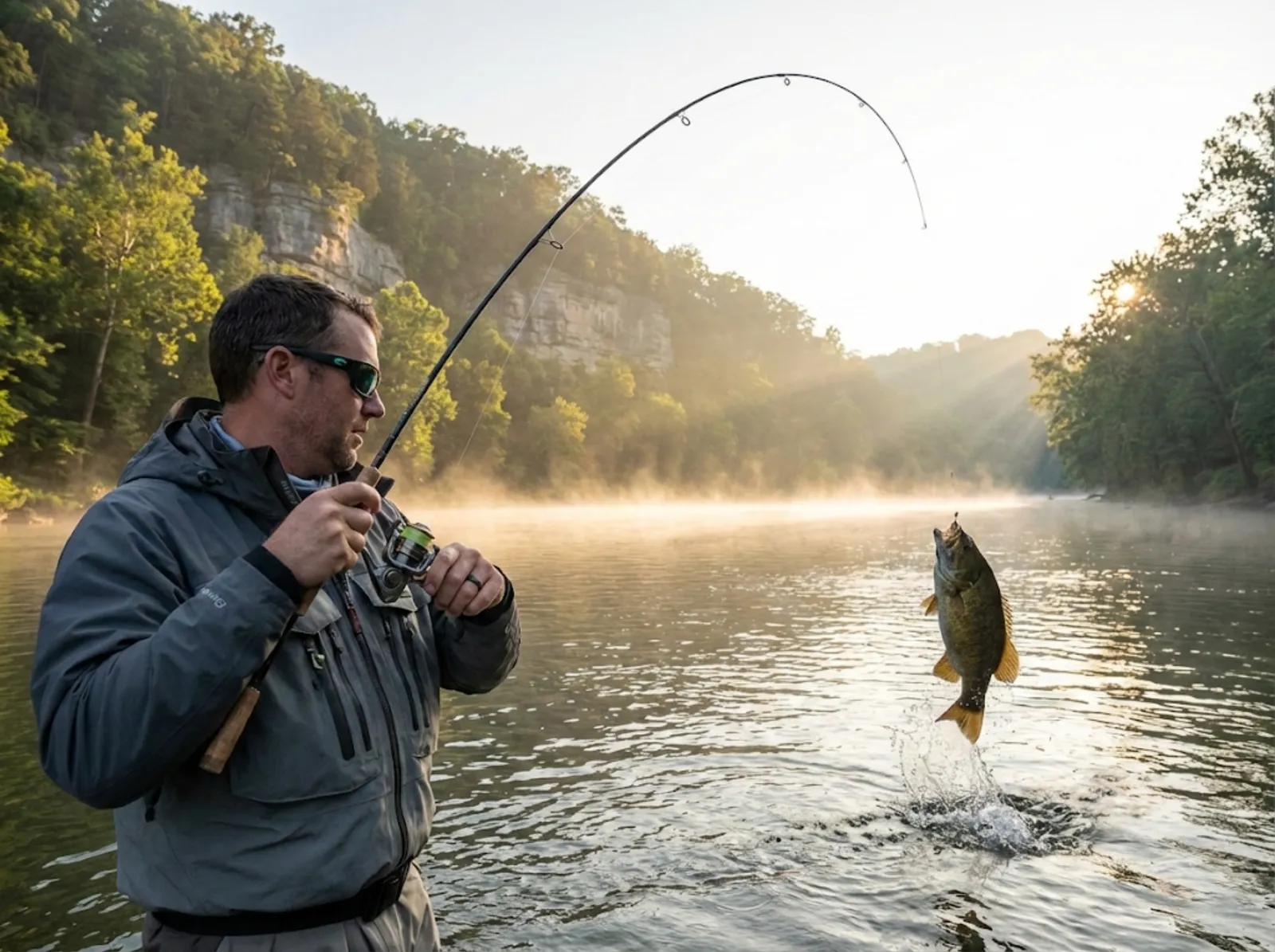
The explosion came from nowhere—a bronze blur rocketed through the surface film, shaking that topwater popper like it owed money. Water sprayed backlit against the morning mist as my rod doubled over. This wasn’t Dale Hollow. This wasn’t Pickwick. This was a stretch of the Duck River that doesn’t show up on YouTube, guided by a local who made me swear not to drop GPS pins.
After two decades chasing smallmouth bass across the Southeast, I’ve learned something that changes everything: Tennessee’s most impressive bronzebacks don’t live where most anglers look. While everyone else fights for boat ramp space at the famous reservoirs, the rivers flow on—quieter, fishier, and far less pressured.
This guide pulls back the curtain on seven river systems that TWRA biologists, local outfitters, and a handful of hardcore anglers have kept relatively quiet. Some of these waters have been reshaped by Hurricane Helene’s September 2024 floods. Others remain as pristine as they were before the first settlers arrived. All of them hold fish that will remind you why you started chasing smallmouth in the first place.
⚡ Quick Answer: Tennessee’s best smallmouth bass rivers include the Duck River (North America’s most biodiverse stream), the Pigeon River (trophy fish with 20-inch minimums), and the Nolichucky River (recently transformed by Hurricane Helene). These freestone and unimpounded systems offer trophy potential with a fraction of the pressure found on famous reservoirs, provided you understand TVA generation schedules and seasonal patterns.
Why Tennessee’s Rivers Outperform Its Famous Lakes
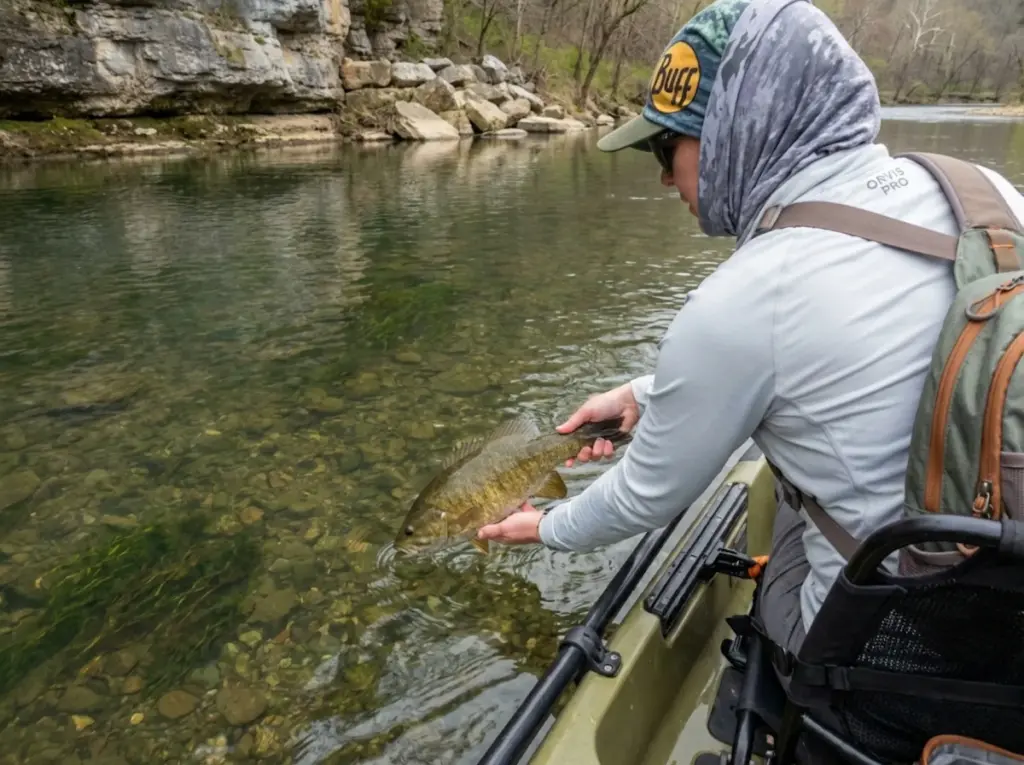
The geology tells the story before you ever wet a line. Tennessee sits at the intersection of two distinct provinces—the Ridge and Valley region in the east with its mountain-born freestone streams, and the Highland Rim in the middle where karst topography carves springs, cliff walls, and stable gravel substrates from ancient limestone.
This isn’t just pretty scenery. It’s the foundation for natural smallmouth reproduction that doesn’t depend on stocking trucks. The Duck River alone supports 151 fish species and 60 freshwater mussel species—biodiversity that rivals tropical systems and provides the prey base for exceptional bass growth. When you’ve got hellgrammites, crawfish, and an endless buffet of forage fish, smallmouth don’t just survive. They thrive.
The TVA dam system adds another layer that most anglers overlook. Rivers like the Holston and Clinch operate on generation schedules that create artificial seasons within a single day. One hour you’re wading knee-deep; two hours later, that same stretch is unfishable. This complexity keeps pressure low for those who learn the rhythm.
Understanding tailwater trout fishing patterns helps here—the same hydroelectric releases that create world-class trout fisheries downstream also maintain the thermal stability that river smallmouth need through summer’s heat.
Pro tip: Download the TVA Lake Levels app before your trip. Set alerts for your target river. The generation schedule is free intel that separates successful trips from wasted gas.
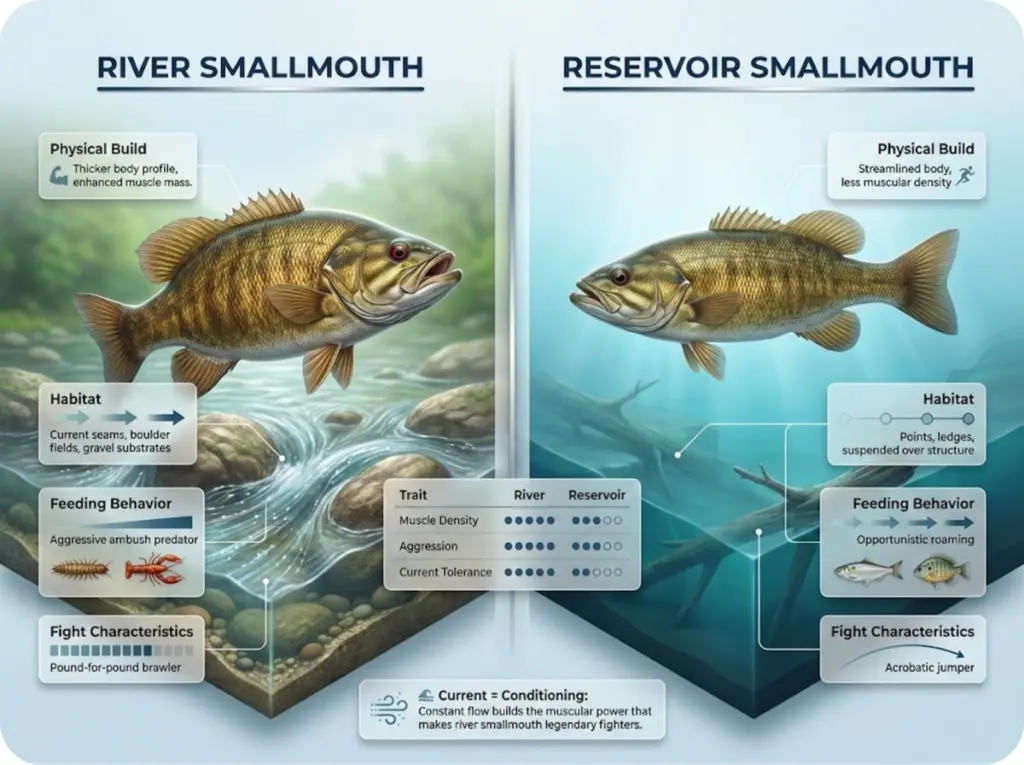
The behavioral differences are stark. River smallmouth fight harder, pound for pound, than their reservoir cousins. Constant current builds muscular density—these fish have earned their “bronze-backed brawler” reputation. They’re also more aggressive. Ambush feeding in current seams requires quick decision-making, and that instinct carries over to the way they attack lures.
Eastern Tennessee’s Remote Watersheds
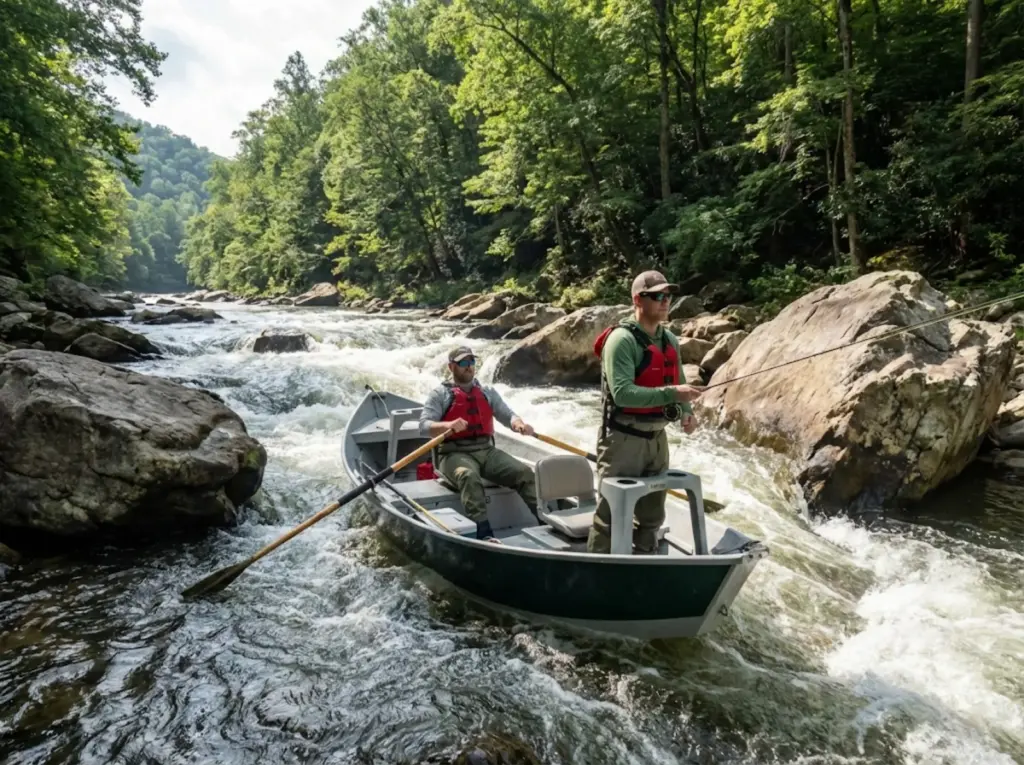
The mountains of East Tennessee hold three river systems that trophy hunters have quietly fished for decades. Each presents unique challenges and rewards.
The Holston Proper
Below Fort Patrick Henry Dam, the Holston Proper delivers what many consider classic Tennessee smallmouth water. Fast runs pour into deep pools where trophy-class fish hold tight against limestone ledges. Fish in the 18 to 22-inch range show up regularly for anglers who time their approach correctly.
The catch—and it’s significant—is that generation schedule. When Fort Patrick Henry releases water, the current transforms from wadeable to dangerous within minutes. Those same ledges that concentrate fish become underwater cliffs in high flow. Check releases before you launch, and have a backup plan.
April through June targets the pre-spawn migration when fish push shallow. September and October bring aggressive fall feeding before the thermal slowdown. Tube jigs in crawfish colors and deep-diving crankbaits produce when the water’s high; topwater gets crushed during stable low-flow windows at dawn.
The Pigeon River
The Pigeon River’s story is one of resurrection. Decades ago, industrial pollution from upstream paper mills had destroyed the fishery. The Clean Water Act changed everything. Today, the Pigeon operates under Tennessee’s most restrictive smallmouth regulations: 20-inch minimum size limit, one-fish daily creel.
Those regulations work. The Pigeon produces a disproportionate number of trophy smallmouth registered through the Tennessee Angler Recognition Program (TARP). The hellgrammite population exploded after water quality improved, and that high-protein diet pushes fish past 20 inches faster than in most systems.
The river’s character varies wildly—whitewater stretches near the North Carolina border give way to more manageable flows as you approach the French Broad confluence. Fish here are notably aggressive, perhaps because the constant swift current keeps their metabolism running hot.
The Nolichucky River
Hurricane Helene rewrote the Nolichucky’s playbook in September 2024. Flows exceeding 100,000 CFS moved house-sized boulders, scoured banks to bedrock, and deposited massive amounts of sediment throughout the system. Some longtime honey holes simply don’t exist anymore.
But that’s only half the story. The same floods that destroyed familiar structure created new pools, fresh gravel bars, and reconfigured current seams that smallmouth are already colonizing. Biologists from the Erwin National Fish Hatchery report that while water clarity remains impacted—”chocolate milk” in some stretches—the fish population appears resilient.
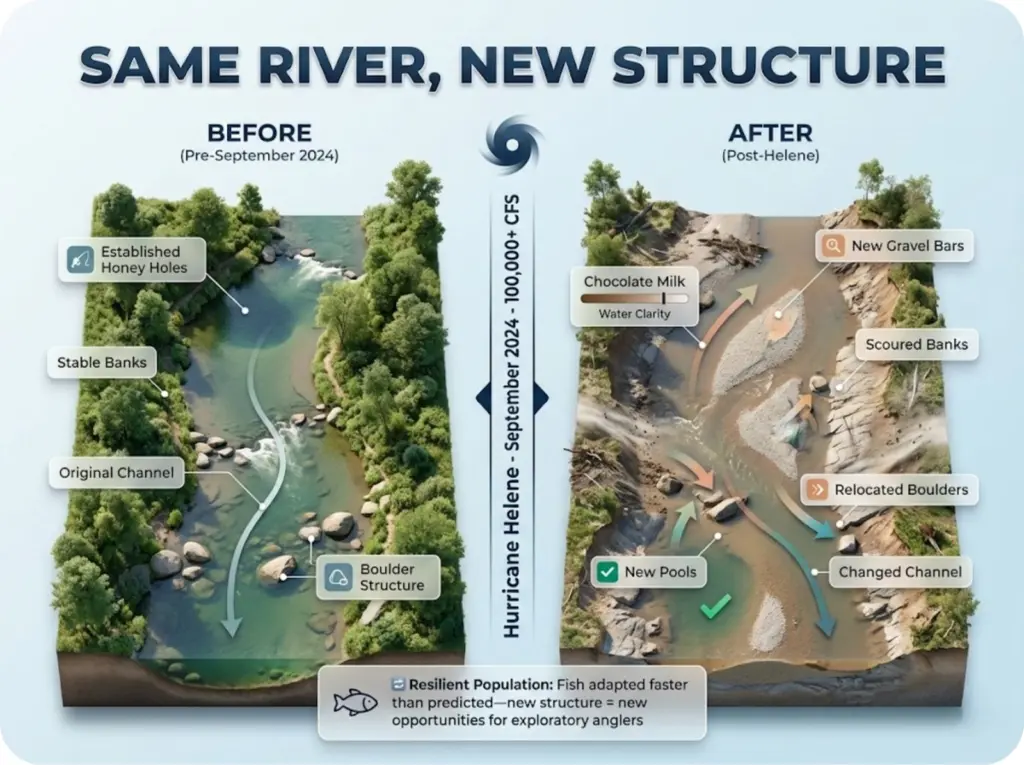
This is new water in the most literal sense. Anglers willing to explore rather than rely on old intel are finding opportunities that didn’t exist 18 months ago. Bring patience, expect some blank water, and trust that the fish adapted faster than anyone predicted.
Middle Tennessee’s Unimpounded Corridors
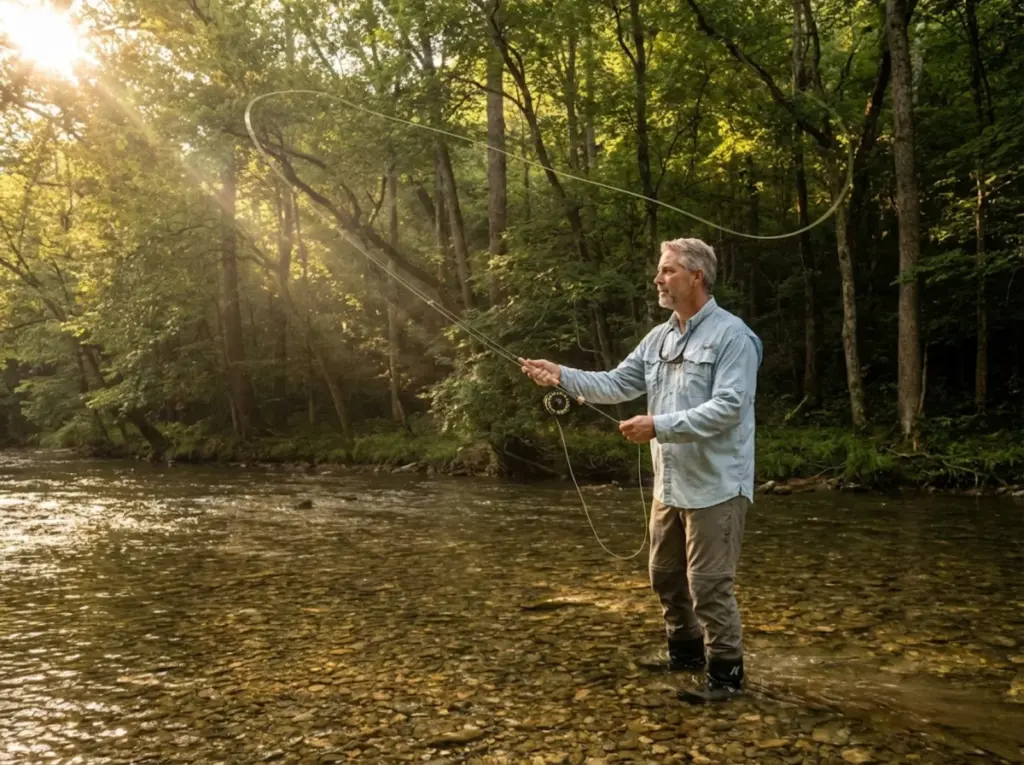
Where East Tennessee offers mountain drama, Middle Tennessee delivers something equally valuable: rivers that flow without dams, allowing natural hydrology and the uninterrupted migration patterns that concentrate fish predictably.
The Duck River
The Duck River is the longest river located entirely within Tennessee—284 miles of some of the most biodiverse water on Earth. That’s not marketing hyperbole. Scientists have documented 151 fish species and 60 mussel species, biodiversity that genuinely rivals the Amazon per river-mile.
For smallmouth anglers, the middle sections near Columbia and the Yanahli Wildlife Preserve deliver consistently. Boulder fields, diamond-chip riffles, and moss-covered cliff walls create the kind of habitat architecture where 5-pound fish hide. More importantly, the ecosystem health that supports those endangered mussels also supports the prey base that grows trophy bass.
The Duck nearly disappeared. The Columbia Dam project would have flooded this stretch in the 1970s, but an endangered mussel species stopped construction. Decades of litigation and an $80 million loss to taxpayers later, the dam was dismantled. That preservation fight saved what you can fish today.
Shuttle services run between $35 and $60 depending on float distance. River Rats and Higher Pursuits both operate out of Maury County and know the put-ins cold.
The Buffalo River
The Buffalo is Tennessee’s longest unimpounded tributary, 115 miles with upper stretches protected under the Tennessee Wild and Scenic River Act. The result is water as pristine as anything in the state—blue holes, clean gravel bottoms, and hardwood canopy shade that keeps summer temperatures fishable.
The trade-off is flow dependency. No dam means no controlled release. When it rains, the Buffalo rises. When it doesn’t rain, sections become disconnected pools navigable only by light kayak or canoe. USGS gauges become essential planning tools.
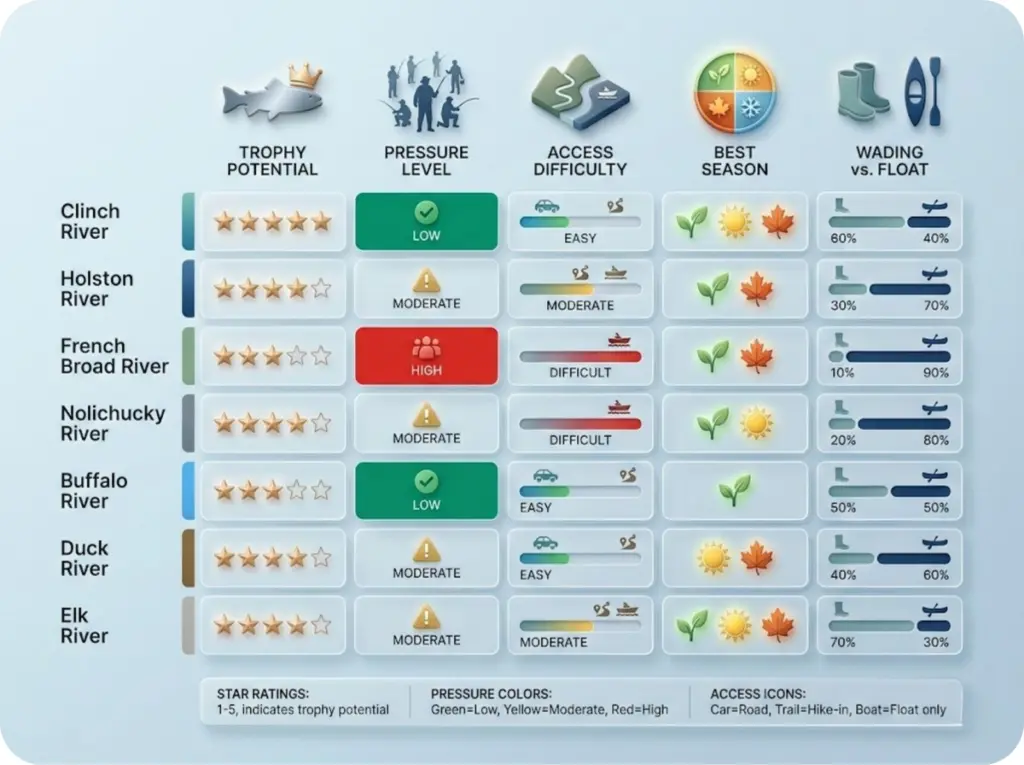
Late spring and early fall hit the sweet spot—enough flow for float access, water clarity high, fish concentrated and cooperative. Bones Canoe and Campground runs shuttle service for 5 to 11-mile floats, and their pricing ranges from $38 to $68 depending on distance.
Seasonal Tactics for River Smallmouth
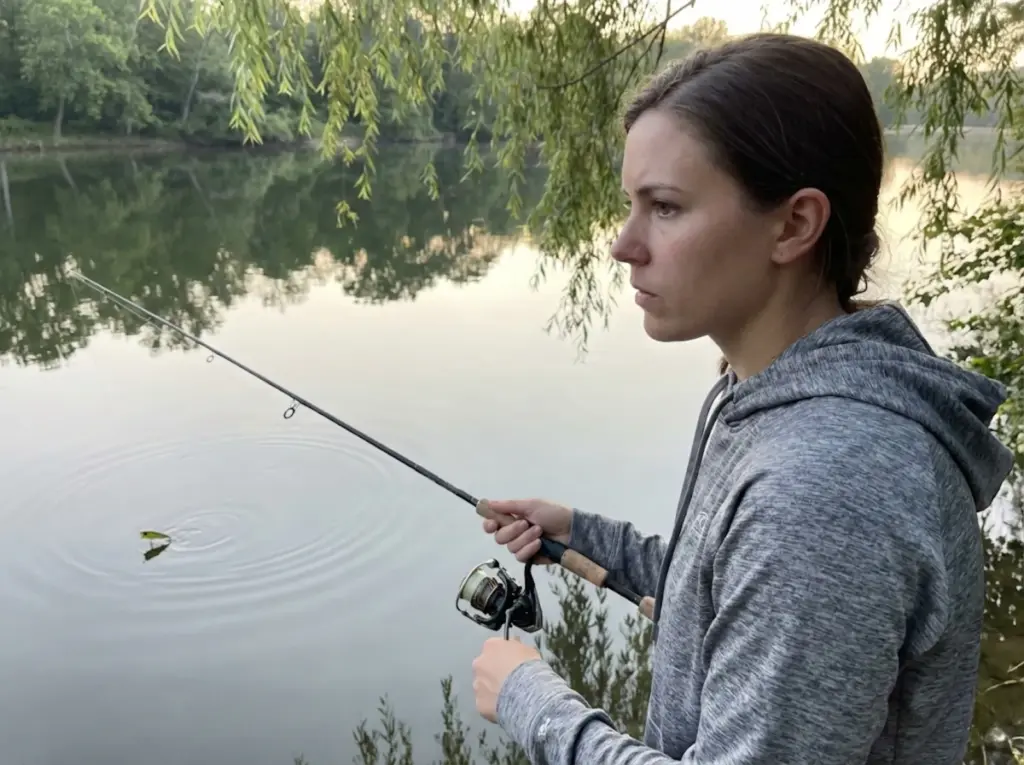
Water temperature drives everything. Understanding the degree-by-degree transitions separates consistent anglers from those who wonder why some trips produce and others don’t.
Spring movement begins around 50°F when fish migrate from deep wintering holes toward spawning grounds. The actual spawn window runs from 55°F to 70°F, with males building nests on gravel substrates behind current breaks. Cold fronts during this window are devastating—males abandon nests, sometimes skipping reproduction entirely for the season.
The post-spawn feed-up from late May through July is prime time. Once temperatures stabilize between 68°F and 80°F, aggression peaks. Topwater fishing reaches its annual best. Dawn and dusk produce explosive surface strikes, while midday sends fish to thermal refuges in deeper runs.
Understanding current seam hydrodynamics matters here. Smallmouth position themselves on the edges of fast water where they can ambush prey without fighting constant current. Reading those seams—the foam lines, the subtle speed differentials—puts you on fish that casual anglers float right past.
Pro tip: Fish the “soft” side of current seams where the flow slows by 20-30%. That’s where smallmouth hold—close enough to ambush, sheltered enough to rest.
Fall brings another feeding window as fish bulk up before winter. September through November produces aggressive strikes on reaction baits. When water drops below 50°F, switch to the Float-n-Fly technique—an 8 to 10-foot noodle rod, 1/32-ounce hair jig, and small float that keeps the presentation in the strike zone for suspended fish. This technique originated on Tennessee’s highland reservoirs but adapts beautifully to deep tailwater sections of rivers like the Clinch.
The Alabama Bass Hybridization Crisis
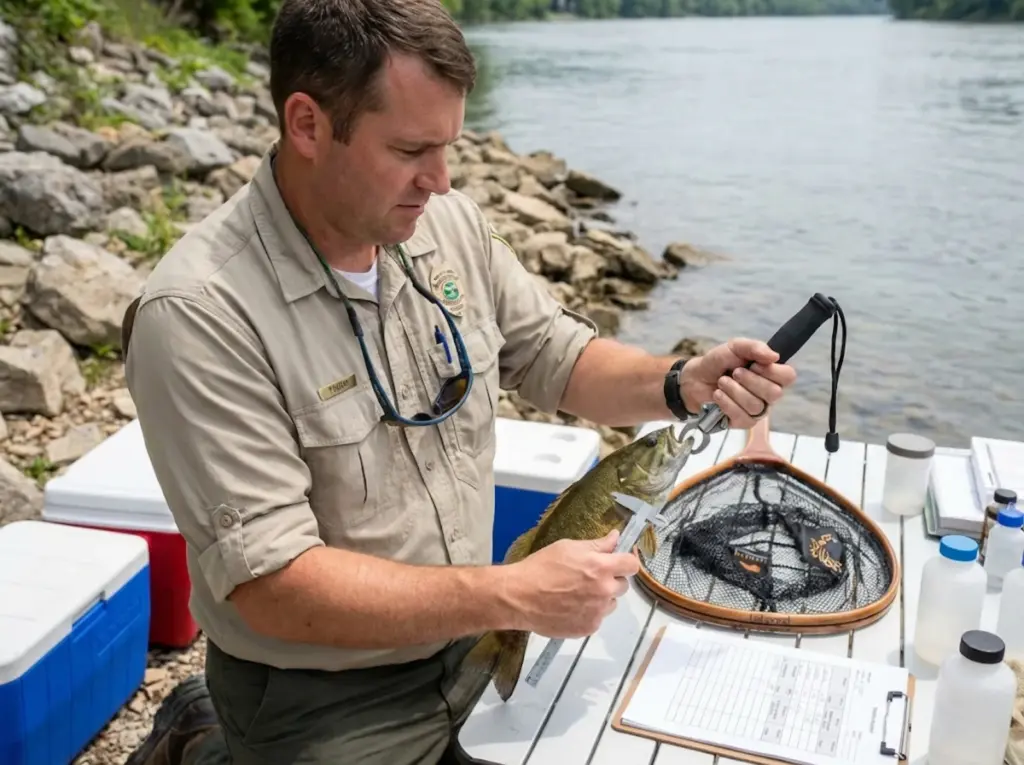
The biggest threat to Tennessee’s smallmouth fisheries isn’t pressure or pollution. It’s genetics.
Alabama bass were introduced—illegally, by bucket biologists—into systems where they never belonged. These fish hybridize with native smallmouth, producing “meanmouths” that outcompete pure-strain bass and contaminate genetic integrity across entire watersheds.
TWRA DNA studies revealed a disturbing reality: 50% of fish visually identified as pure smallmouth were actually hybrids. Trained biologists couldn’t tell the difference by looking. If the experts can’t field-identify species, management becomes nearly impossible.
The Tennessee Fish and Wildlife Commission responded in February 2025 with radical regulatory changes. On affected waters like Chickamauga and Nickajack lakes, old trophy regulations (1 fish per day, 18-inch minimum) gave way to harvest-oriented rules (5 fish per day, no minimum size, only 1 over 16 inches).
The logic is counterintuitive but sound: if you can’t protect pure-strain smallmouth by regulation because you can’t tell what you’re looking at, you reduce overall bass density to limit hybridization pressure. Harvest becomes the management tool.
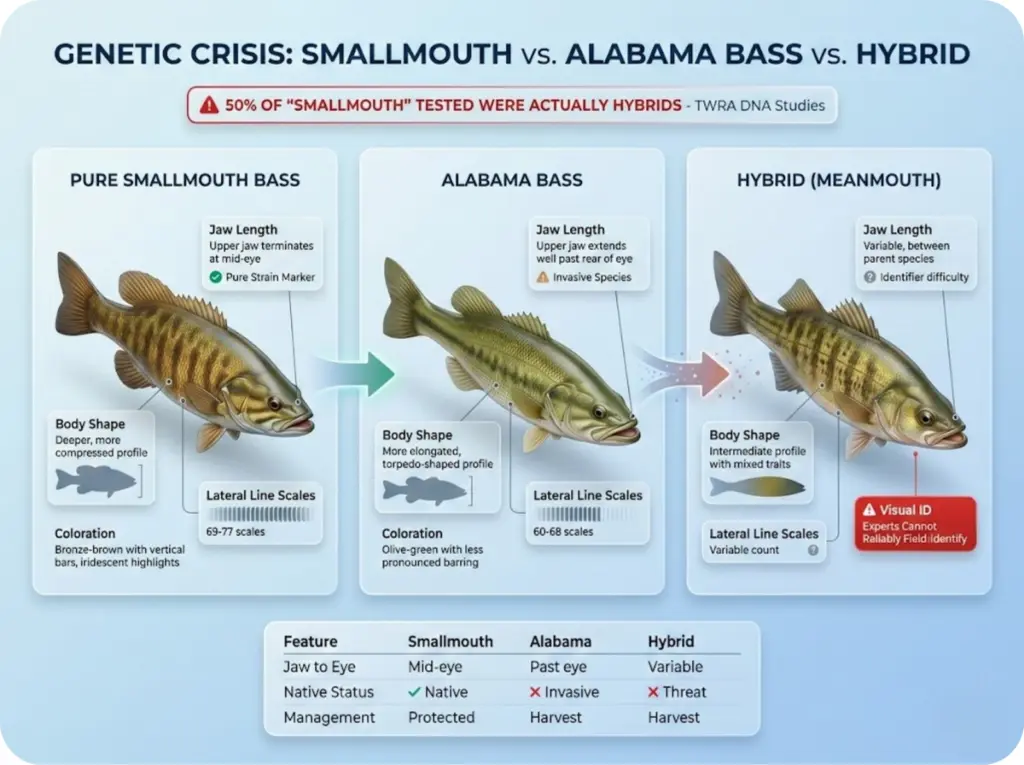
The good news for river anglers is that freestone systems with limited reservoir connectivity—the Duck, Buffalo, and upper Pigeon—show lower hybridization rates. Geographic isolation protects what careful management couldn’t.
Gear, Guides, and Access Logistics
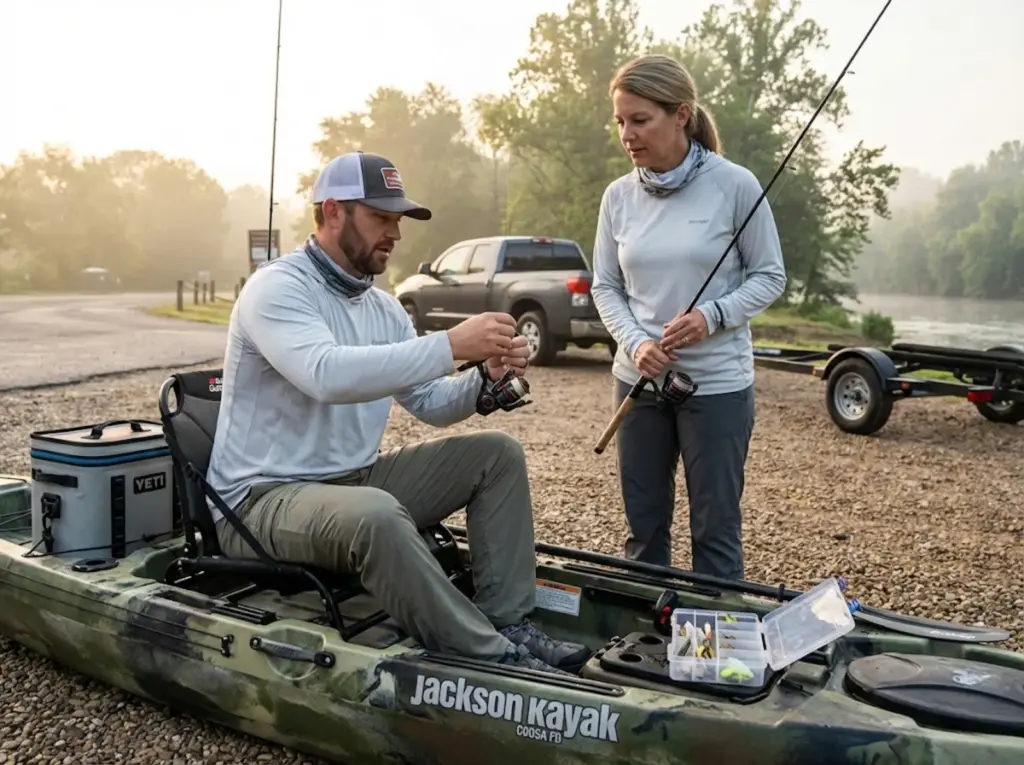
River fishing demands different equipment than reservoir work. The situations vary too much for one setup to rule them all.
For tailwaters like the Holston and Lower Clinch, medium-light spinning gear shines. Six to eight-pound fluorocarbon, tube jigs in natural crawfish colors, and enough backbone to control fish in current without overpowering finesse presentations. Freestone rivers like the Pigeon and Nolichucky call for slightly heavier tackle—10-pound braid with 8-pound fluorocarbon leader gives sensitivity and abrasion resistance when you’re bouncing off boulders.
Fly anglers have options too. Byron’s Knucklehead—a foam topwater pattern created by Byron Begley of Little River Outfitters—produces consistent surface strikes. The pattern uses 2mm fly foam and Gamakatsu B10S hooks in size 6. The Tequeely streamer with its gold bead and yellow rubber legs triggers strikes from fish that ignore more conventional patterns.
Guide services provide the fastest path to productive water, especially for out-of-state anglers learning new systems. Expect to pay between $300 and $500 for a full-day float with equipment and local knowledge included. For DIY trips, shuttle services are essential—River Rats on the Duck and Bones Canoe on the Buffalo both run reliable operations.
When fishing in current, positioning matters as much as presentation. Study the water before you cast, identify the soft edges, and work systematically rather than bombing casts at random.
Conservation and the Future of Tennessee Rivers
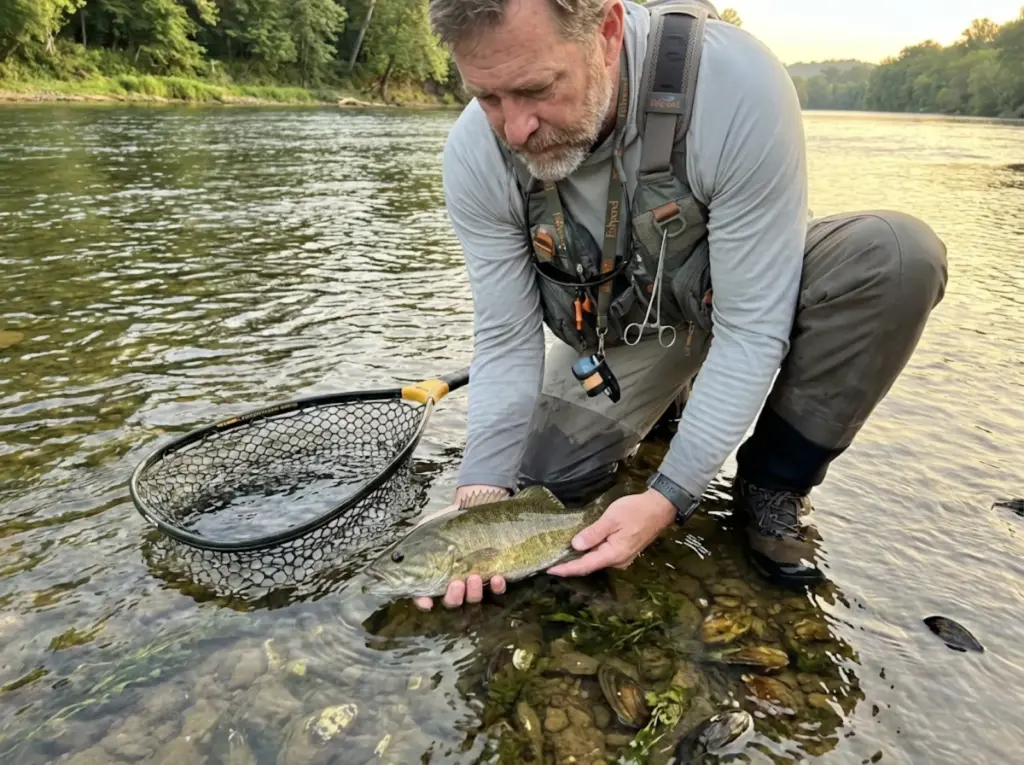
Trophy river smallmouth take 5 to 8 years to reach 20 inches—significantly longer than reservoir fish with more abundant forage. Every trophy kept is one that won’t reproduce for another decade.
Barotrauma in fish becomes relevant when you’re pulling smallmouth from deep tailwater pools. Fish brought up from significant depth need time to reacclimate. Descending devices or simple lip-gripping and gradual release help survival rates when you’re practicing catch-and-release from deep structure.
Pro tip: When releasing river smallmouth, hold them upright in current facing upstream until they swim off under their own power. Don’t just toss them back—that recovery time matters.
The connection between healthy smallmouth fisheries and broader ecosystem health is direct. Rivers that support the endangered Eastern Hellbender and rare mussel species maintain the water quality and complex habitat that trophy bass require. Protecting one protects the other.
Post-Helene restoration efforts center on the Erwin National Fish Hatchery, where biologists are propagating endangered mussels to rebuild populations devastated by flooding. Dam removal on other systems—like the Ward Mill and Shulls Mill dams on the Watauga—has shown that free-flowing rivers recover faster from catastrophic flood events.
Anglers who want to help can support organizations like the Harpeth Conservancy, report suspected hybrid catches to TWRA for genetic tracking, and practice selective harvest: keep the hybrids, release the native fish.
Conclusion
Tennessee’s magazine-cover lakes will always attract crowds. But the rivers—those hidden corridors of biodiversity, trophy potential, and relative solitude—reward anglers willing to put in the work.
Eastern rivers like the Holston, Pigeon, and post-Helene Nolichucky offer trophy hunting for those who learn generation schedules and adapt to changing conditions. Middle Tennessee’s Duck and Buffalo rivers deliver wilderness character and consistent fish in some of the most pristine waters on the continent. And the hybridization crisis, while serious, has so far spared the isolated freestone systems that matter most.
The fish are out there. They’re fighting harder than their reservoir cousins, feeding in rhythm with current and temperature, and waiting in water that most anglers drive past on their way to somewhere famous.
Next spring, skip the boat ramp crowds. Float a river instead.
FAQ
What is the best smallmouth bass river in Tennessee?
The Pigeon River produces the most trophy-class smallmouth (20 inches and larger) based on Tennessee Angler Recognition Program data, thanks to restrictive regulations and recovered water quality. However, the Duck River offers the best combination of biodiversity, access, and consistent 3 to 4-pound fish for anglers wanting numbers over pure trophy potential.
When is the best time to catch smallmouth bass in Tennessee rivers?
April through June targets pre-spawn and spawn periods when fish move shallow and become aggressive. September and October offer a second peak as fish feed heavily before winter. Water temperatures between 55°F and 70°F are optimal for consistent action across all river systems.
Do I need a boat to fish Tennessee smallmouth rivers?
Many stretches are wadeable, especially on the Buffalo and Duck rivers during normal flows. However, the Holston and Nolichucky benefit from kayak or drift boat access to cover productive water efficiently. Always check TVA generation schedules before planning wade trips on tailwater sections—rising water can make wading dangerous within minutes.
What lures work best for river smallmouth in Tennessee?
Tube jigs in crawfish colors produce across most systems, especially during spring and fall transitions. Topwater poppers and walking baits dominate during stable summer conditions. Fly anglers should carry Byron’s Knucklehead and Tequeely streamers. When water drops below 50°F in winter, the Float-n-Fly technique with 1/32-ounce hair jigs outperforms everything else.
How did Hurricane Helene affect Tennessee smallmouth fishing?
The September 2024 floods scoured the Nolichucky and Pigeon rivers to bedrock in places, destroying established structure but creating new pools and gravel bars. Water clarity remains impacted in some stretches as of 2025, but smallmouth populations appear resilient. New honey holes are emerging as the rivers stabilize—anglers willing to explore rather than rely on old information are finding opportunity in the chaos.
Risk Disclaimer: Fishing, boating, and all related outdoor activities involve inherent risks that
can lead to injury. The information provided on Master Fishing Mag is for educational and informational purposes
only. While we strive for accuracy, the information, techniques, and advice on gear and safety are not a substitute
for your own best judgment, local knowledge, and adherence to official regulations. Fishing regulations, including
seasons, size limits, and species restrictions, change frequently and vary by location. Always consult the latest
official regulations from your local fish and wildlife agency before heading out. Proper handling of hooks, knives,
and other sharp equipment is essential for safety. Furthermore, be aware of local fish consumption advisories. By
using this website, you agree that you are solely responsible for your own safety and for complying with all
applicable laws. Any reliance you place on our content is strictly at your own risk. Master Fishing Mag and its
authors will not be held liable for any injury, damage, or loss sustained in connection with the use of the
information herein.
Affiliate Disclosure: We are a participant in the Amazon Services LLC Associates Program, an
affiliate advertising program designed to provide a means for us to earn advertising fees by advertising and linking
to Amazon.com. As an Amazon Associate, we earn from qualifying purchases. We also participate in other affiliate
programs and may receive a commission on products purchased through our links, at no extra cost to you. Additional
terms are found in the terms of service.