In this article
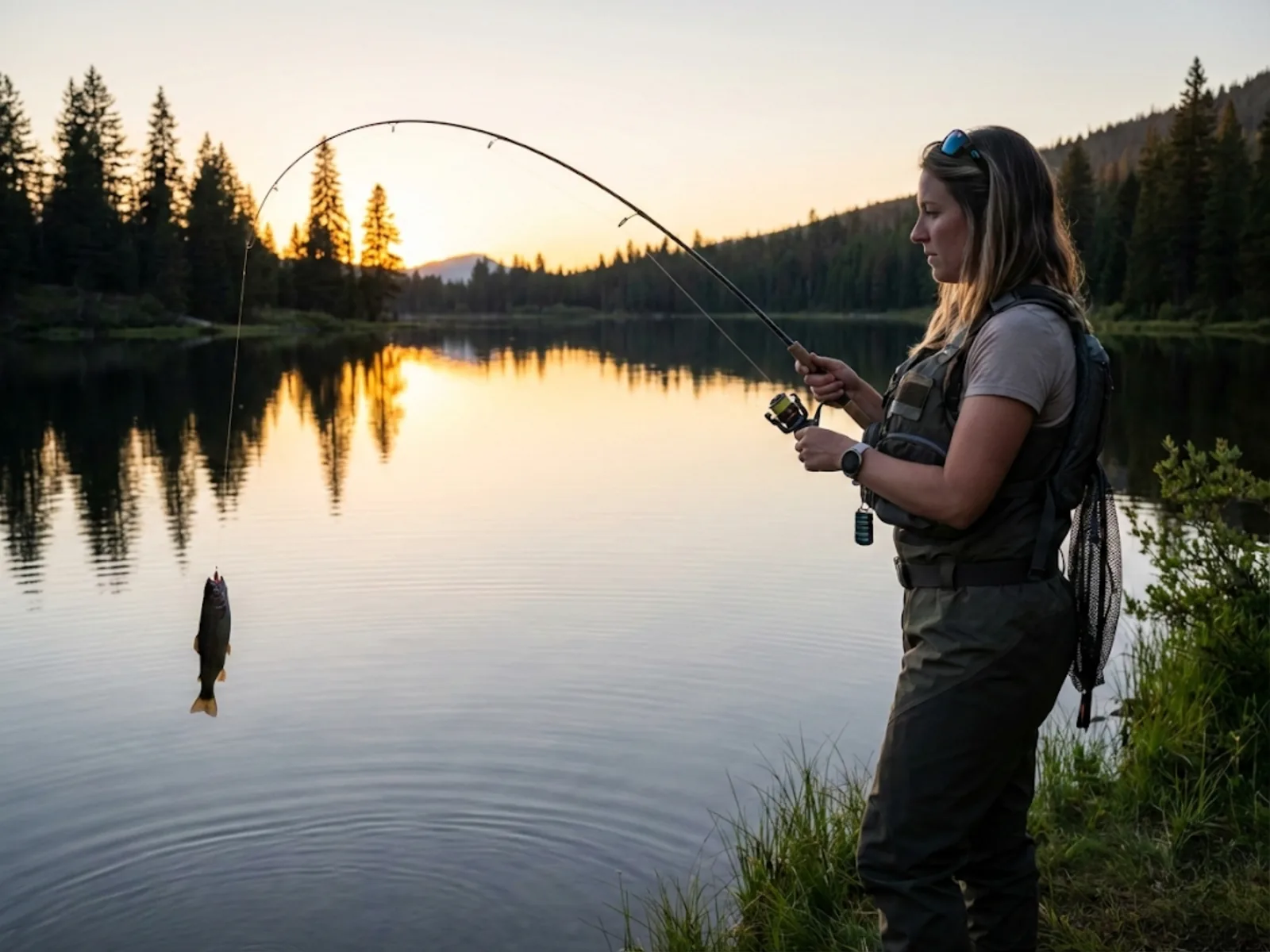
The alarm screamed at 4:15 AM. I stumbled down to the pond in the dark, fingers numb, coffee growing cold in my thermos—and for two hours, not a single bite. Then around 5 PM that same day, a kid showed up with a worm on a bobber and yanked out a three-pound bucketmouth while I was packing up my gear. That moment changed everything I thought I knew about fishing times.
After two decades watching anglers make this same mistake, I can tell you the “early bird gets the worm” advice isn’t the whole story. The truth? It depends on the season, your target species, and factors most beginners never consider—like whether the fish can even breathe properly at dawn.
Here’s exactly how to pick the right window for your next trip—so you stop fishing blind and start showing up when the odds are stacked in your favor.
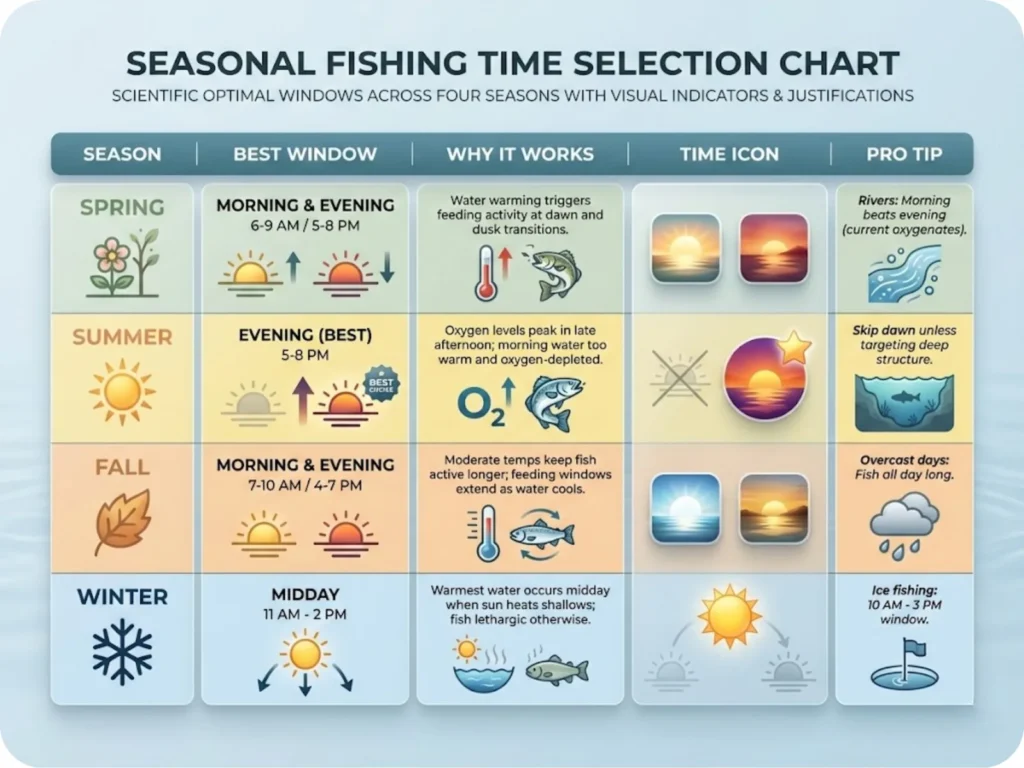
⚡ Quick Answer: For most beginners, evening fishing (5-8 PM) is the smarter choice—especially in summer. Fish are more active, oxygen levels peak in late afternoon, and you don’t have to sacrifice sleep. Morning works best in moving water like rivers or during hot summers when you want the coolest temperatures. In winter, skip both and fish midday (11 AM – 2 PM) when the water is warmest.
The Biology Behind Feeding Windows
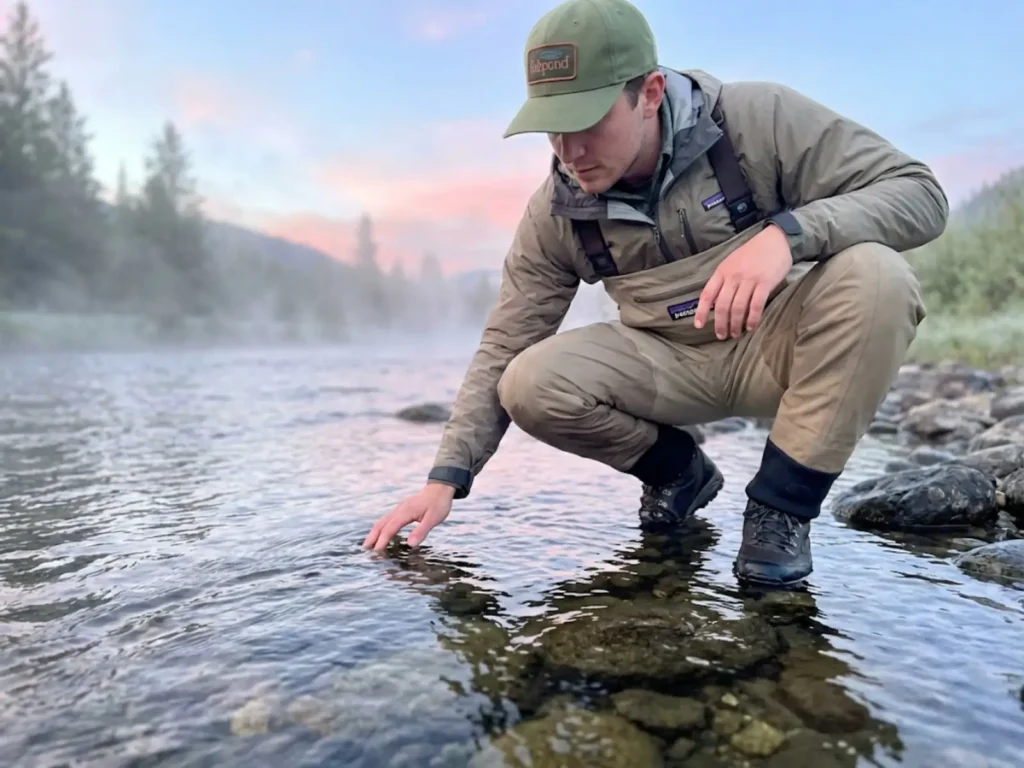
Why Fish Are Hardwired to Feed at Dawn and Dusk
Here’s something most fishing content won’t tell you: fish don’t choose when to feed. Their brains are literally wired for it.
Most freshwater game fish—largemouth bass, walleye, pike—are what biologists call crepuscular. That’s the science word for “twilight hunters.” Their peak activity happens during the low-light transitions at dawn and dusk, and it’s not about preference. It’s survival programming.
Low-angle light gives predators a visual edge over baitfish while keeping them hidden from ospreys and herons circling overhead. It’s the sweet spot where they can hunt without becoming prey themselves.
Walleye take this even further. They have a layer of reflective tissue behind their eyes called a tapetum lucidum—basically built-in night-vision goggles. That’s why experienced anglers fishing twilight call the first and last hour of daylight the magic hour. Those fish see perfectly when you can barely tie a knot.
Pro tip: Get to your spot 20 minutes before official sunrise. That’s when baitfish start stirring, and predators know it. The best action often happens before the sun clears the horizon.
The Metabolism-Temperature Connection
Fish are cold-blooded. Their body temperature matches the water around them.
This matters because water temperature directly controls their metabolism—how fast they digest food and how aggressively they need to eat. A 10-degree temperature swing can double or triple a fish’s appetite.
In spring and fall, when water is cold in the morning, fish are sluggish at dawn. Their digestion is slow. They’re not hungry yet. But by late afternoon, the shallows have warmed several degrees. Metabolism cranks up. Feeding aggression peaks. That’s when you’ll see the explosive strikes.
Summer flips the script. Early morning is the coolest, most comfortable part of the day. By sunset, the water is often uncomfortably warm—especially in shallow areas where bass like to hunt.
Here’s the practical takeaway: if you’re fishing a 50°F lake in early spring at 6 AM, you’re casting to fish that are basically still digesting last night’s meal. Wait until 4 PM when the shallows hit 58°F, and you’ll find bass actively pushing bait against the bank.
Understanding how water temperature controls fish feeding aggression is the single biggest edge you can give yourself as a beginner.
The Oxygen Factor: Why “Morning” Isn’t Always Best
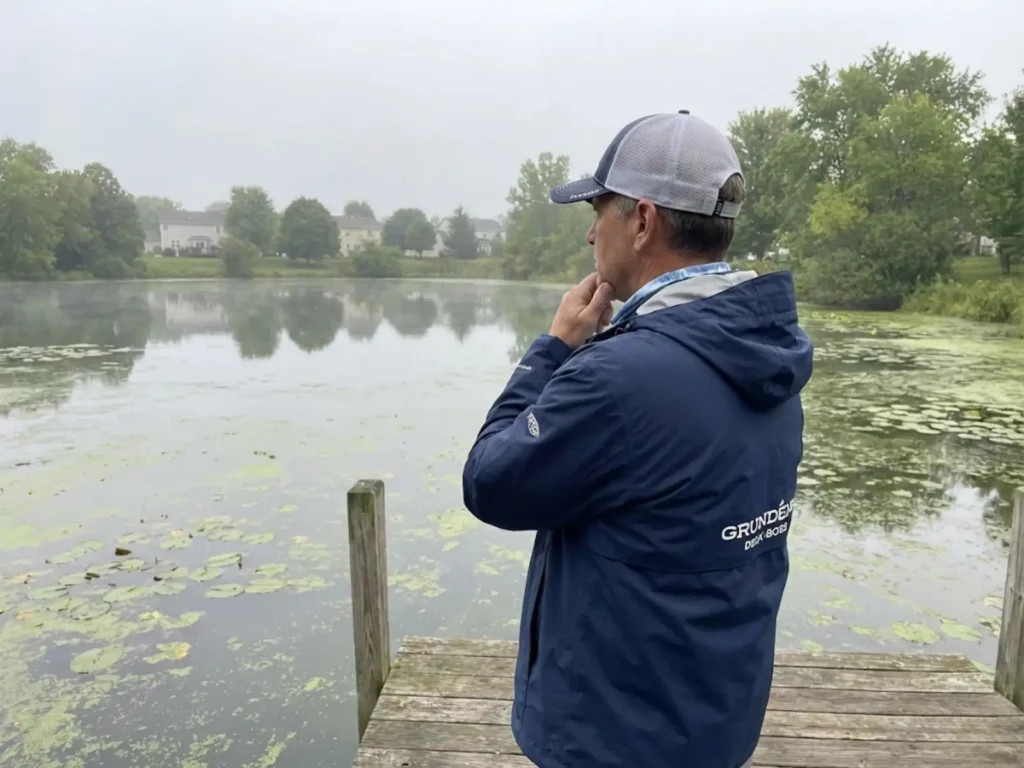
The Dawn Hypoxia Problem
Here’s the part that surprised me when I first learned it—and it’s the reason I stopped blindly setting my alarm for 4 AM.
Dissolved oxygen levels in the water are at their absolute lowest just before sunrise.
Wait, what? Morning should be fresh, right?
Not underwater. Here’s what happens: during the day, aquatic plants and algae produce oxygen through photosynthesis. By late afternoon, the water is basically supersaturated—fish are energetic and breathing easy. But at night, photosynthesis stops. Plants and algae switch to consuming oxygen instead of producing it. And they keep consuming it all night long.
By dawn, oxygen levels have dropped to their daily minimum. In small, weedy ponds during summer, this can get severe. When dissolved oxygen falls below 2-3 mg/L, fish stop feeding entirely. They’re not hunting—they’re surviving. Some even gulp at the surface, desperately trying to breathe.
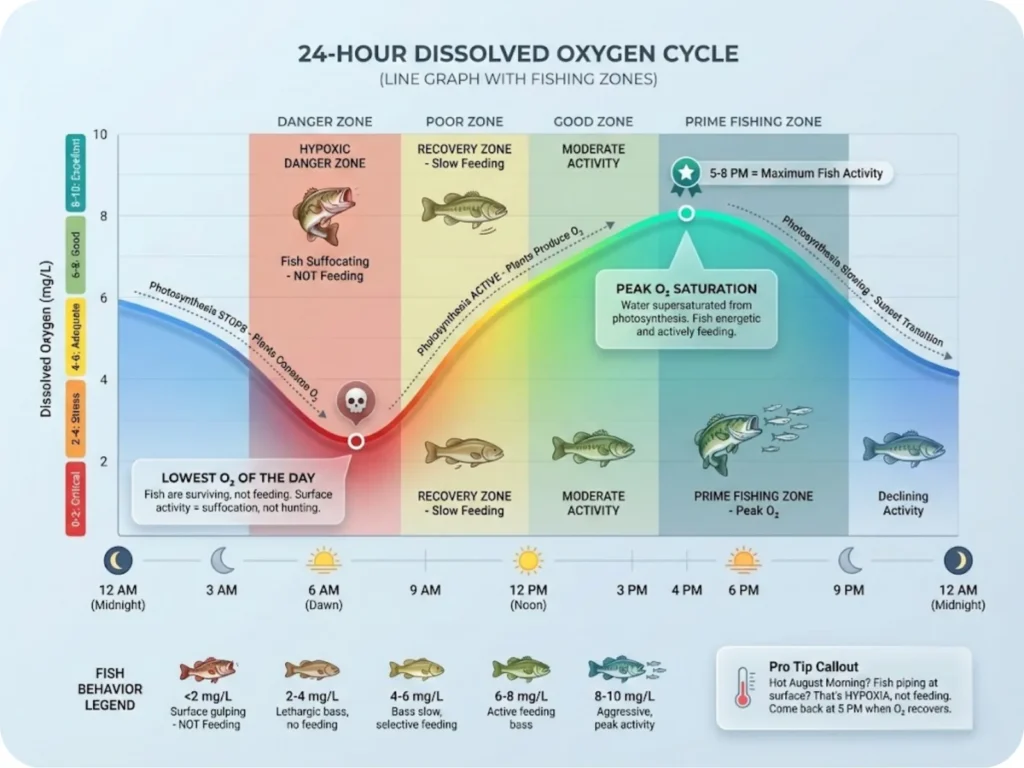
I’ve watched anglers cast topwater lures at bass “feeding” on the surface at dawn—when those fish were actually suffocating. It’s useless. And frankly, it’s stressing fish that are already in trouble.
Pro tip: If you see fish piping at the surface of a small pond on a hot August morning, pack up and come back at 5 PM. That pond is hypoxic. The fish literally can’t eat right now.
The EPA research on dissolved oxygen dynamics confirms this cycle. It’s real science, not fishing-forum speculation.
When Morning Is the Right Call
So does this mean morning fishing is dead? Not at all.
Moving water is a different ballgame. Rivers, streams, and tailraces don’t have the same oxygen problem. Tumbling flows constantly mix oxygen into the water, so dawn fishing in current is often excellent—cool water, hungry fish, empty banks.
Large, deep lakes with wind exposure mix better overnight too. They rarely hit hypoxic conditions.
Here’s my rule of thumb: Pond + Summer + Calm = Skip the morning. River or Lake + Any Season = Morning is on the table.
The ability to read metabolic strike zones in low-oxygen water separates the frustrated morning angler from the one who knows when to show up.
Morning Fishing: When It Works and What to Expect
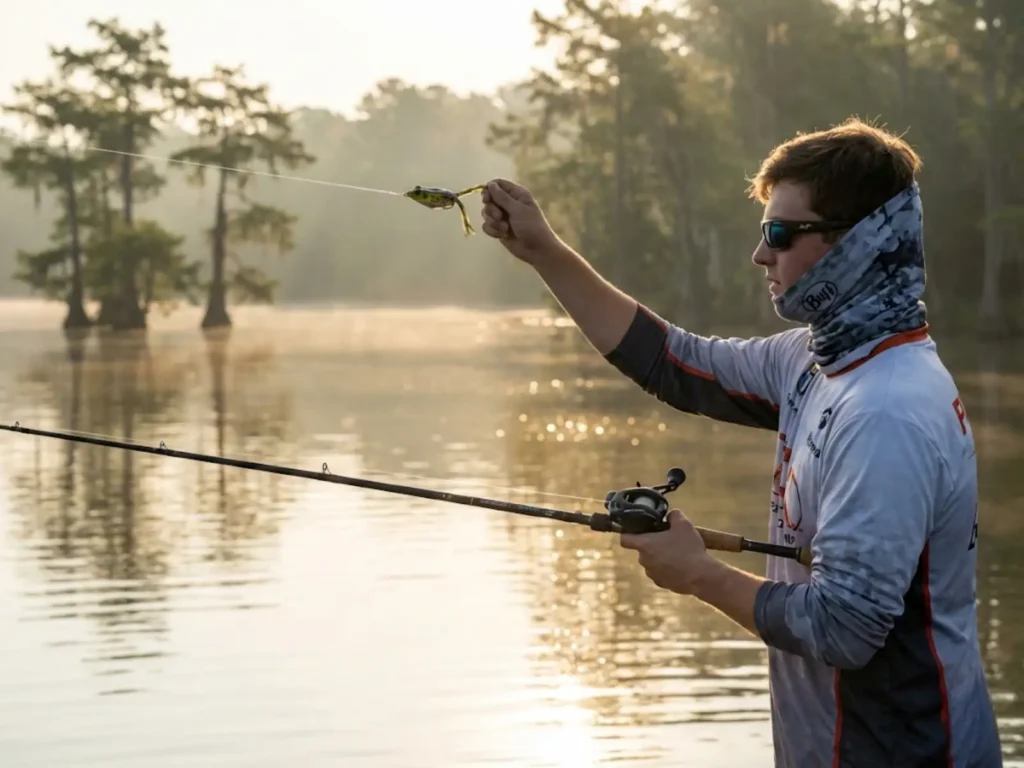
The “Golden Hour” Before 9 AM
When conditions favor morning fishing, the first two hours after sunrise are what matter.
Light angles are low. Glare is minimal. The water is calm before afternoon winds kick up. This is prime time for topwater fishing—poppers, buzzbaits, and walk-the-dog lures that create surface commotion.
Bass move shallow during this window to ambush baitfish under the cover of diffuse light. They’re aggressive, they’re visible, and they’ll crush a lure you can actually see get hit. There’s nothing quite like watching a bucketmouth explode on a frog in glassy water at 6:30 AM.
Here’s something less discussed: the barometric pressure pattern. Research shows a consistent minor atmospheric peak around 10:00 AM—separate from weather fronts. This can trigger what anglers call a “mid-morning bite” that defies the typical dawn-or-bust timeline. If you can’t drag yourself out at 4 AM, aim for an 8:30 arrival and fish through 10.
One safety note: fog is common at dawn. I’ve been disoriented on familiar water more than once. Carry a compass or GPS if you’re in a kayak, and know your exit route before you launch.
Target Species for Morning
Not all fish play by the same rules.
Visual predators thrive in morning light. Largemouth bass, smallmouth bass, pike, and trout all rely primarily on eyesight to hunt. Low-glare conditions give them confidence to roam shallower than they would at midday.
Panfish like bluegill and crappie follow a similar pattern—active from dawn until mid-morning, then dropping to deeper cover as UV levels climb.
Catfish are the exception. Channel catfish feed consistently but lean toward evening. Flatheads are strictly nocturnal cover-huggers. If you’re targeting whiskers, morning is your weakest option.
For those interested in extending your session into the dark, there are techniques that bridge the transition—but that’s beyond beginner scope.
Evening Fishing: The Underrated Window
Why Evening Outperforms Morning in Summer
If I could give one piece of advice to every beginner, it’s this: fish the evening.
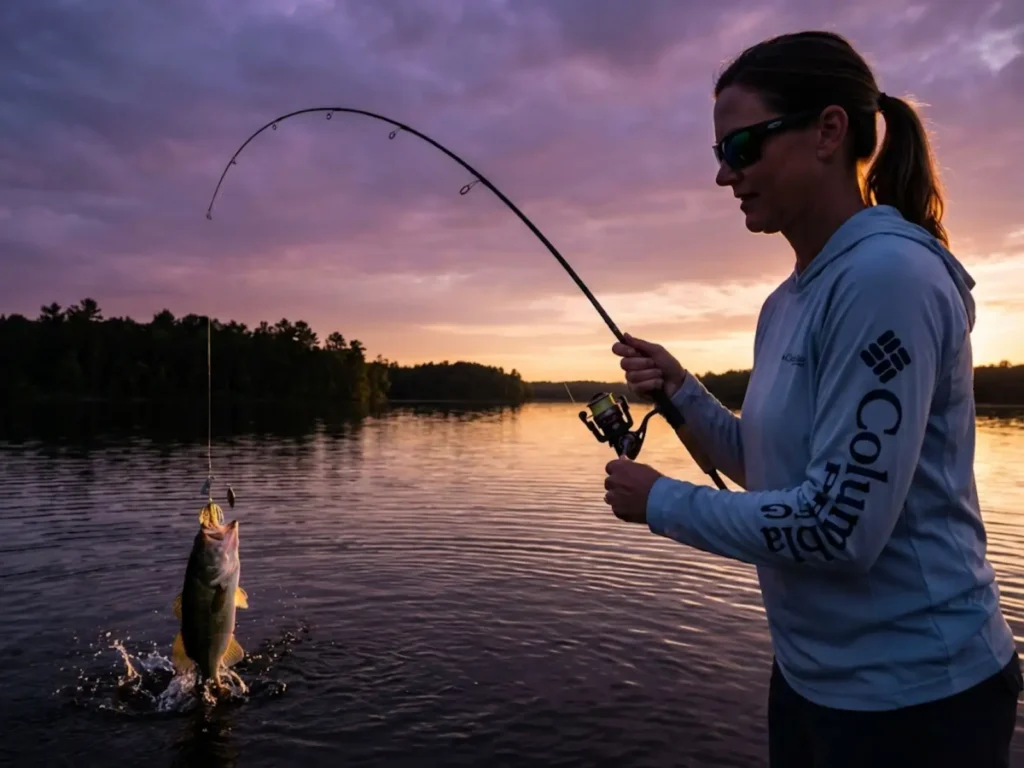
By late afternoon, photosynthesis has been running for hours. Oxygen levels are at their daily peak—often supersaturated. Fish are breathing easy and revving high. Combine that with accumulated warmth in the shallows (perfect for spring and fall), and you’ve got conditions that trigger what old-timers call “the dinner bell.”
That’s not poetry—it’s behavior. Fish display aggressive pre-rest feeding patterns at dusk. They’re loading up before settling in for the night. The bites are harder, the takes are more committed, and the hookups are more reliable.
Pro tip: Don’t pack up at sunset. The magic hour happens 30-60 minutes after the sun drops. That’s when walleye especially go on a tear that lasts maybe 45 minutes—and then shuts off like someone flipped a switch.
The Insect Hatch Trigger
There’s another evening advantage that works like clockwork.
As light fades, insects emerge. Mayflies, caddis, mosquitoes—they all time their activity to dusk. When the bugs come out, bluegill rise to the surface. And when bluegill rise, bass follow.
This is the match the hatch pattern borrowed from fly fishing. Watch the shoreline at 7 PM in summer. You’ll see rising rings spread across calm water. That’s the food chain activating right in front of you.
Here’s a tactical note: as light dims, colors disappear from the fish’s visual spectrum. Reds go first. Blues last. By the time the sun is below the treeline, your natural-colored lures are basically invisible.
Switch to dark silhouettes. Black buzzbaits, blue jigs, purple worms—these create maximum contrast against the lighter surface when viewed from below. Understanding how fish see color at low light will change the way you stock your evening tackle box.
And bring bug spray. The fish aren’t the only ones that know what time it is.
The Seasonal Modifier: How to Adjust Your Timing
Spring and Fall: Evening Dominates
When water temperature is the limiting factor, evening wins almost every time.
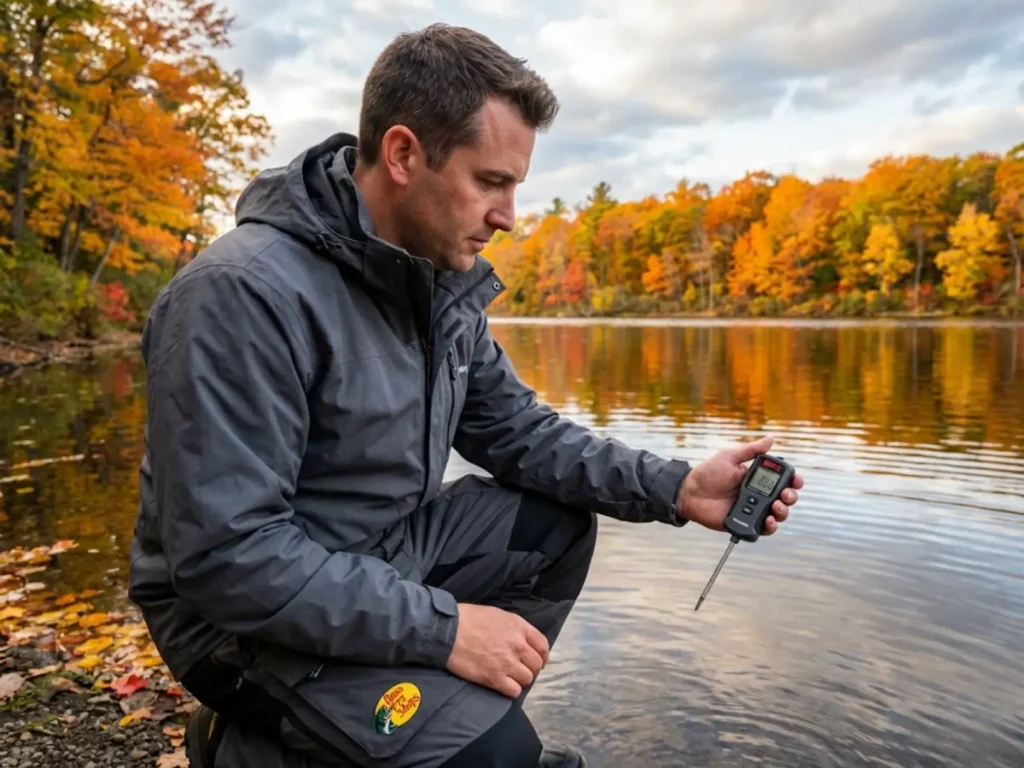
In spring, nights are still cold. Morning water temps are at their lowest. Bass are sluggish, still digesting, hugging deeper cover. But by late afternoon, the sun has had all day to warm the shallows. Metabolism kicks up. Fish push into the banks. The last two hours before dark can be explosive.
Fall works the same way. Fish sense the upcoming winter and shift into caloric-loading mode. They’re trying to build fat reserves, which means aggressive feeding on any warm afternoon. Evening trips in October can produce some of your best fish of the year.
One exception: the fall turnover. When surface water cools to around 39°F, it becomes denser than the water below and sinks. This triggers a lake-wide mixing event that stirs up sediment, homogenizes oxygen levels, and scatters fish completely. For 1-2 weeks, fishing gets tough no matter what time you show up.
Understanding how to predict the fall turnover window can save you a lot of frustration.
Summer: The Two-Window Strategy
Summer is the one season where both windows work—if you pick your water type correctly.
Early morning (6-9 AM): The cool window. Fish are comfortable, metabolism is running, and the pre-work crowd hasn’t hit the water yet. But watch out for oxygen sags in ponds. This is the best choice for rivers, large lakes, and any freshwater with good circulation.
Evening hours (6-9 PM): The peak-oxygen window. Water is warm but fish are pushing hard before dark. Best for ponds, lakes, and anywhere you’re targeting bass or catfish.
The smart move? Fish the first two hours of light, take a long midday break (the fish aren’t biting anyway), and come back for the last two hours before dark. You’ll cover both windows without burning out.
Winter: Forget Both—Fish Midday
Winter breaks all the rules.
Cold-blooded fish in cold water are operating at minimum capacity. Their fish metabolism is barely ticking. Morning water is frigid. Evening water is already cooling again after a weak sun.
The only window that makes sense is midday—roughly 11 AM to 2 PM—when direct sunlight has had a chance to warm the shallow zones. Even a degree or two can trigger a brief feeding window.
As legendary angler Gord Pyzer puts it: “I’ll give my ice-fishing friends the entire day ahead of me and beat them every time if they give me the last two hours of daylight.”
The EPA dissolved oxygen parameter factsheet explains why winter stratification makes timing even more critical.
Gear Adjustments for Morning vs. Evening
Morning Gear Loadout
Your tackle changes with the light.
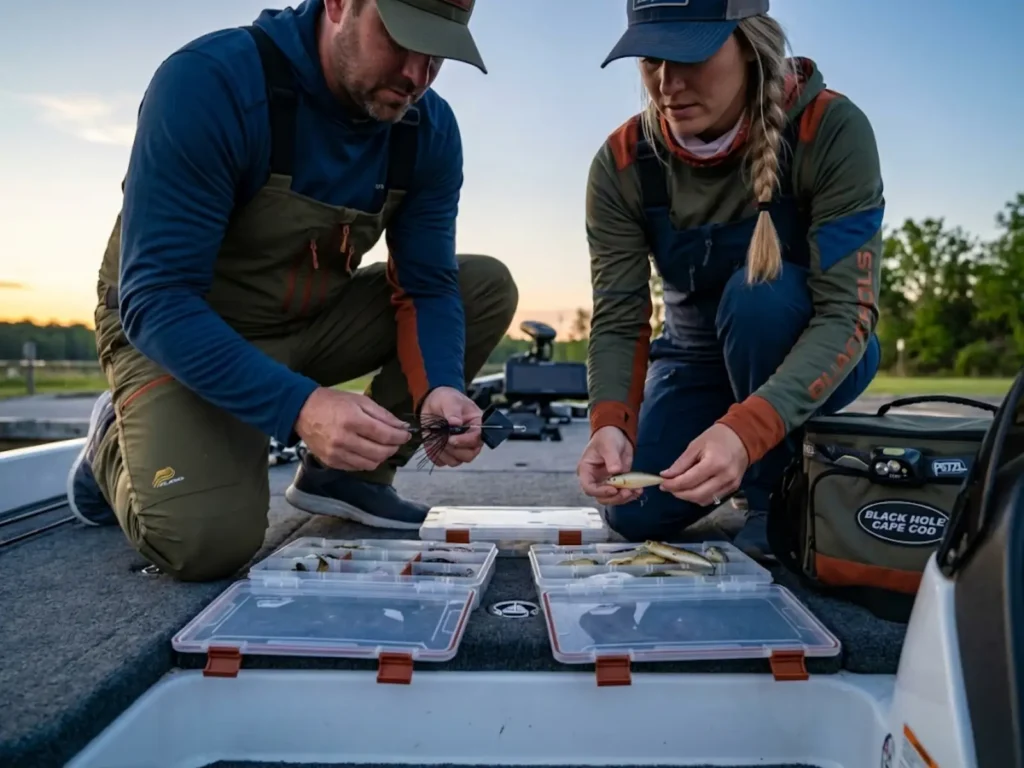
Polarized sunglasses are non-negotiable, but pick the right lens tint. Amber and copper lenses cut through the low-angle glare of sunrise and help you spot fish on beds or cruising the shallows. Gray lenses work fine at midday but wash out the subtle contrasts you need at dawn.
Topwater lures shine in morning conditions. Calm water means poppers, frogs, and walking baits create maximum surface disturbance. This is the window where you can actually see the hit—and that visual is addictive.
Stick with natural colors early in the day. Ghost minnow patterns, green pumpkin, and translucent finishes capitalize on the increasing light. Fish can see details now. Make your bait look like the real thing.
Evening Gear Loadout
Twilight demands a different approach.
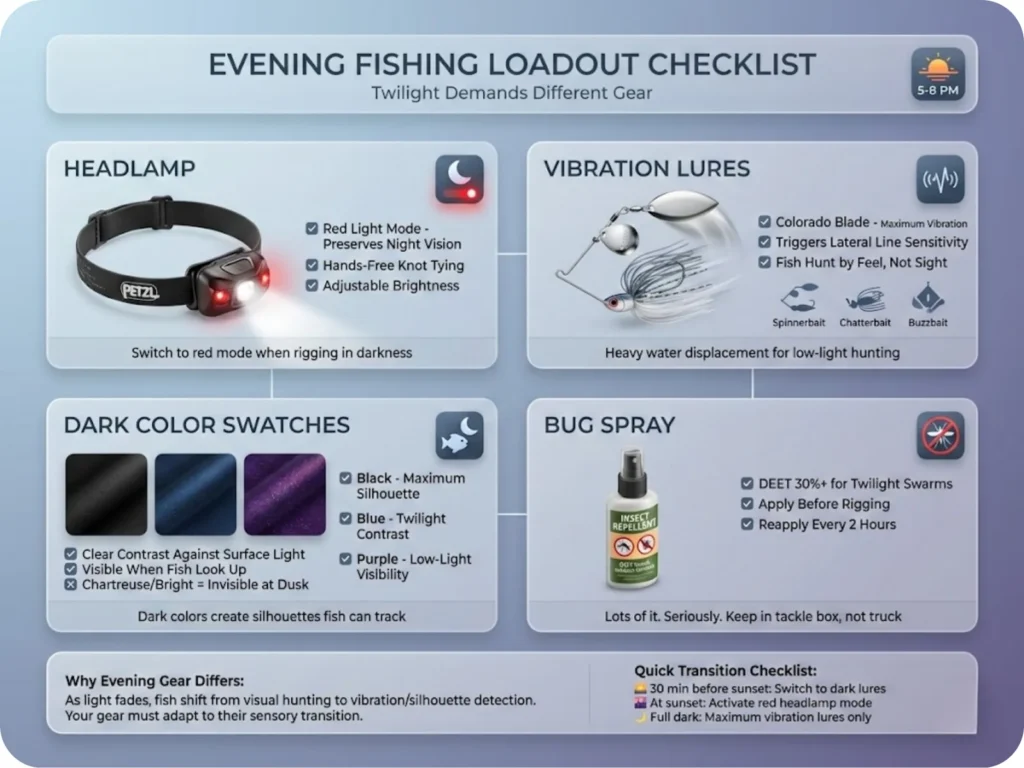
A high-quality headlamp is non-negotiable—ideally one with a red-light mode that preserves your night vision while still letting you tie knots. You’ll be rigging in the dark at least once. Accept it now.
Swap to vibration-heavy lures as light fades. Spinnerbaits, chatterbaits, and anything with a Colorado blade pushes water and triggers the lateral line sensitivity that fish rely on when their eyes fail. They’re hunting by feel now.
Lure color selection matters at dusk. Black, blue, and purple lures create the clearest contrast when fish look up toward the lighter surface. Your chartreuse crankbait that crushed them at noon? It’s invisible now.
And yes—bug spray. Lots of it.
Understanding how to match lure color to water clarity will help you make these transitions on autopilot.
Conclusion
Morning isn’t always king. The dissolved oxygen sag in summer ponds can make dawn fishing dead time—literally. When oxygen drops, fish stop feeding.
Evening is the beginner’s secret weapon. Peak oxygen, aggressive feeding behavior, and a schedule that doesn’t require a 4 AM alarm make sunset the smarter bet for most situations, especially in warm months.
Season trumps clock. Spring and fall favor the warmth of evening. Summer offers split windows if you choose your water wisely. Winter demands you fish midday when the sun has done its work.
Next time you’re planning a fishing trip, check the water type, the season, and your target species before setting that alarm. Show up when the biology is on your side—not just when tradition tells you to.
FAQ
Is fishing better at dawn or dusk?
Both produce fish, but dusk often edges out dawn in summer because oxygen levels peak in the afternoon and fish feed aggressively before dark. Dawn is better in moving water or on large lakes with good overnight mixing.
What is the best time of day to fish for beginners?
The 5 PM to sunset window is ideal for most beginners. Light is good enough for tying knots, fish are actively feeding, and you don’t need to sacrifice a full night’s sleep to get on the water.
Why is morning good for fishing?
Low-angle light gives predator fish visual cover. Water is cooler in summer, which helps fish stay active. And fewer boats mean less pressure. But in small ponds, watch for the oxygen sag that can kill the bite.
What time should I stop fishing in the evening?
Don’t quit at sunset. The best action often happens 30-60 minutes after the sun drops, during what anglers fishing call the magic hour. That’s when trophy walleye especially become aggressive.
Is fishing better before or after rain?
Fishing is typically strongest before rain, when falling barometric pressure triggers feeding activity. After heavy rain, rivers get muddy and fish rely on their lateral line instead of vision—switch to high-vibration lures.
Risk Disclaimer: Fishing, boating, and all related outdoor activities involve inherent risks that
can lead to injury. The information provided on Master Fishing Mag is for educational and informational purposes
only. While we strive for accuracy, the information, techniques, and advice on gear and safety are not a substitute
for your own best judgment, local knowledge, and adherence to official regulations. Fishing regulations, including
seasons, size limits, and species restrictions, change frequently and vary by location. Always consult the latest
official regulations from your local fish and wildlife agency before heading out. Proper handling of hooks, knives,
and other sharp equipment is essential for safety. Furthermore, be aware of local fish consumption advisories. By
using this website, you agree that you are solely responsible for your own safety and for complying with all
applicable laws. Any reliance you place on our content is strictly at your own risk. Master Fishing Mag and its
authors will not be held liable for any injury, damage, or loss sustained in connection with the use of the
information herein.
Affiliate Disclosure: We are a participant in the Amazon Services LLC Associates Program, an
affiliate advertising program designed to provide a means for us to earn advertising fees by advertising and linking
to Amazon.com. As an Amazon Associate, we earn from qualifying purchases. We also participate in other affiliate
programs and may receive a commission on products purchased through our links, at no extra cost to you. Additional
terms are found in the terms of service.