In this article
The surface temperature reads 85 degrees, and the air is stagnant enough to choke a two-stroke engine. Under the boat, a school of four-pound largemouth bass ignores a perfectly placed jig, suspended in a trance. They aren’t being picky. They are adhering to a physiological necessity. Most anglers blame the fishing pressure or the heat, but the real culprit is invisible: the water simply lacks the breath of life required to fuel a predator’s attack.
This guide dismantles the “luck” of finding active fish by exposing the rigid biological laws of Dissolved Oxygen (DO). We will turn a vague environmental variable into your primary tactical advantage, ensuring you aren’t fishing dead water.
Why is Dissolved Oxygen the Master Variable for Predatory Behavior?
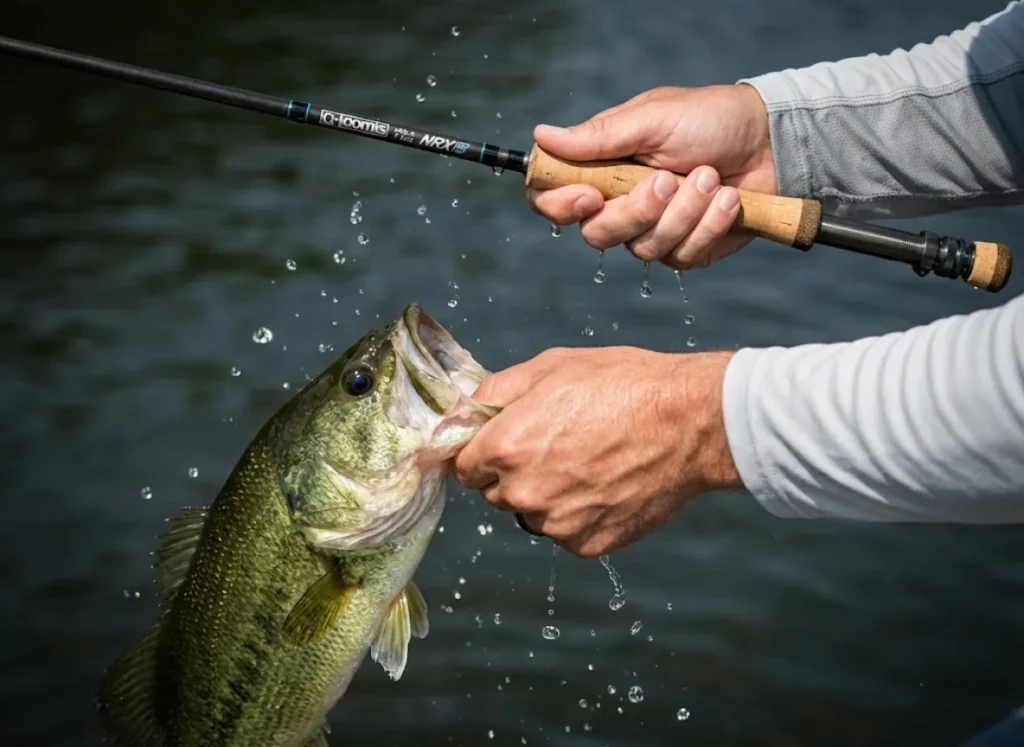
Oxygen levels function as a hard constraint on fish activity rather than just a preference. Before a fish can care about your lure color or retrieval speed, it must satisfy its biological demand for oxygen. This is fundamental to fish metabolism and gill function.
How does metabolic scope determine a fish’s decision to strike?
A fish’s refusal to bite is often a calculated economic decision based on its energy budget. Fish are metabolic conformers, meaning their energy potential is strictly capped by the oxygen available in their immediate environment. This oxygen fuels both red (aerobic) and white (anaerobic) muscle fibers. The “Metabolic Scope” is the calculator here—it represents the surplus energy available after basic survival functions are met. When dissolved oxygen (DO) drops, this scope narrows drastically. The fish must prioritize respiration over digestion or aggression.
The “Metabolic Strike” theory posits that the oxygen debt incurred by a burst-speed strike in hypoxic water takes too long to repay. Consequently, predators in low oxygen literally react slower. Hypoxia creates a degradation of the sensorimotor loop. Research validates that environmental stress induces a “pessimistic” cognitive state, transforming aggressive hunters into risk-averse survivalists. They may follow a lure, but they physically cannot commit to the attack. This connects deeply to understanding the ectothermic rules that govern fish metabolism, where temperature and oxygen availability are inextricably linked. For freshwater fish, this balance is critical.
At what specific oxygen levels do gamefish shut down?
Most gamefish require dissolved oxygen levels above 5.0 mg/l to hunt effectively, though survival is possible at lower concentrations.
Oxygen tolerance is highly species-specific. What supports a thriving channel catfish population (tolerant to ~2.0 mg/L) is a kill zone for rainbow trout and brown trout (salmonids), which generally require >5.0 mg/L just to survive. While the “Lethal Limit” is the point of mortality, anglers should focus on the “Metabolic Strike Zone.” For largemouth bass and walleye, this is typically above 5.0-6.0 mg/L. Between the lethal limit and the optimal zone lies the “Stress Threshold,” where fish exist but cease feeding and reproduction.
| Fish Species Oxygen Levels | |||
|---|---|---|---|
| Species | 🔴 Lethal Limit (mg/L) | 🟡 Stress Zone (mg/L) | 🟢 Optimal Strike Zone (mg/L) |
| Bass (Largemouth) | 1.5 – 2.0 | 2.0 – 5.0 | > 5.5 |
| Walleye | 2.0 | 3.0 – 5.0 | > 5.5 – 6.5 |
| Trout (Rainbow) | 3.0 | 4.0 – 6.0 | > 7.0 |
| Pike / Muskellunge | 2.5 | 3.0 – 4.5 | > 6.0 |
Walleye are particularly sensitive cool-water obligates. They will often migrate miles to avoid water below 3.0-4.0 mg/L, unlike largemouth bass which may simply hunker down and become inactive. Large predators like muskellunge and muskie have massive muscle mass requiring higher oxygen saturation for recovery. This makes them susceptible to “Summerkill” in productive shallow lakes. By checking the EPA’s foundational criteria for ambient water quality, we can see the scientific benchmarks for these limits. Knowing these tiers allows you to stop fishing “dead water” and aligns with definitive walleye facts regarding habitat preferences. Observing fish behavior in relation to these oxygen concentrations is key to advanced recreational angling strategy.
How Do Lake Dynamics Create Invisible Barriers to Fish Movement?
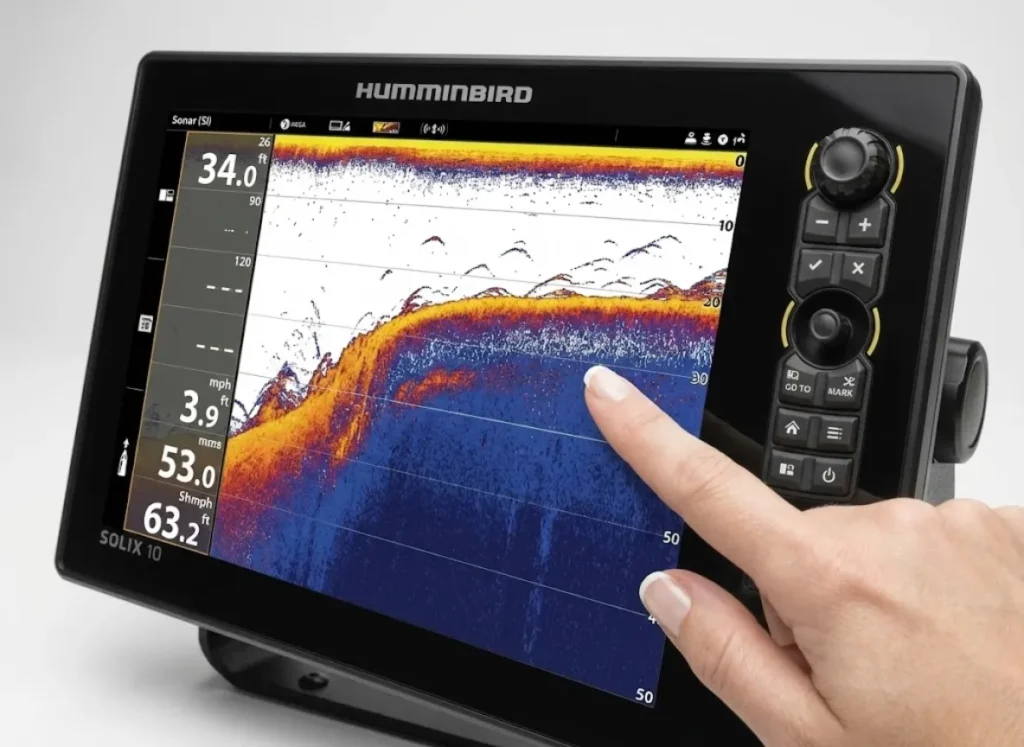
Water is not a uniform block of habitat. Limnological physics distribute oxygen unevenly, creating specific bands where life can exist. Understanding the water column is essential.
Why does summer stratification force fish into the “Oxythermal Squeeze”?
The “Oxythermal Squeeze” traps fish between surface waters that are too hot and deep waters that are chemically suffocating.
As summer heat sets in, lakes stratify into three distinct layers. The top layer (Epilimnion) is hot and oxygen-rich but often exceeds a gamefish’s thermal tolerance. The bottom layer (Hypolimnion) is cold but frequently anoxic (no oxygen) due to bacterial decomposition of organic matter. The middle layer, or Metalimnion, contains the thermocline.
As summer progresses, the habitable zone for species like Trout and Walleye compresses into a narrow band within this middle layer where temperature and oxygen barely overlap. This is where optimal DO levels are found.
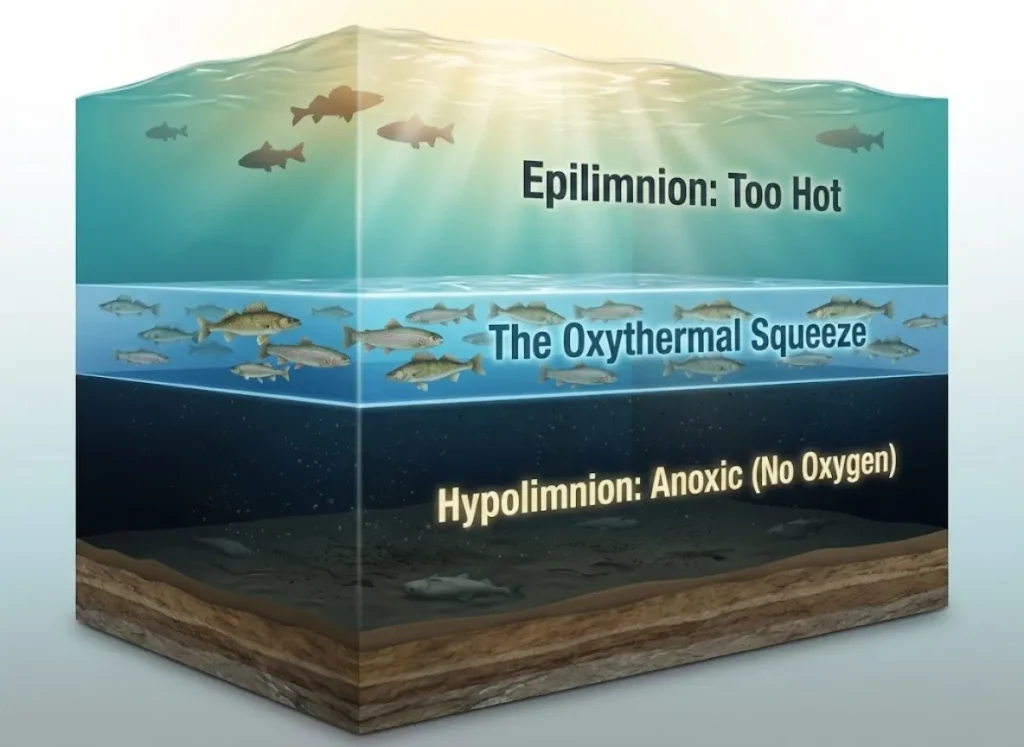
In nutrient-rich (eutrophic) lakes, the bottom layer loses oxygen rapidly. Organic matter settles and decays, consuming available O2 without atmospheric replenishment. The “browning” of lakes due to dissolved organic carbon exacerbates this by trapping heat at the surface. Research on the ‘coastal squeeze’ of fish habitat details how warming and browning eliminate cold-water refuges. Identifying this squeeze is the key to summer fishing; 90% of the water becomes biologically uninhabitable, concentrating 100% of the gamefish in the remaining 10%. This phenomenon is central to thermoclines explained fishing depth guide. The temperature-oxygen correlation charts in advanced guides can help visualize this.
How do daily and seasonal cycles manipulate oxygen levels?
Photosynthesis creates a predictable rhythm where oxygen peaks in the late afternoon and crashes to a minimum just before dawn.
Aquatic plants and phytoplankton are oxygen factories during the day, often supersaturating the water. However, at night, plants switch to respiration, consuming oxygen alongside the fish. This creates a “Respiration Trough” just before sunrise. The “Morning Bite” myth often fails in heavy vegetation lakes because pre-dawn hypoxia renders predators lethargic. They only reactivate once the sun hits the water, boosting the photosynthesis rate.
Seasonal “Turnover” in Spring and Fall remixes the water column. This disrupts fishing patterns by temporarily eliminating the predictable layers fish use for structure, a process detailed in lake turnover physics explained. Winter presents a unique threat called “Winterkill,” where snow-covered ice blocks sunlight, killing aquatic plants and triggering a bacterial feast that sucks oxygen from the water. The Minnesota DNR’s explanation of Winterkill dynamics outlines this lethal sequence. Successful anglers time their outings to coincide with the photosynthetic peak in summer evenings or target stable, deep basins in winter to avoid these hypoxic zones. This is also where seasonal lake diagrams become useful.
Pro-Tip: If you are fishing heavy grass mats in the summer, wait until 10:00 AM or later. The sun needs time to reignite photosynthesis and raise the DO levels in the thick cover before the big bass will feed actively.
How Can Anglers Accurately Measure the Invisible?
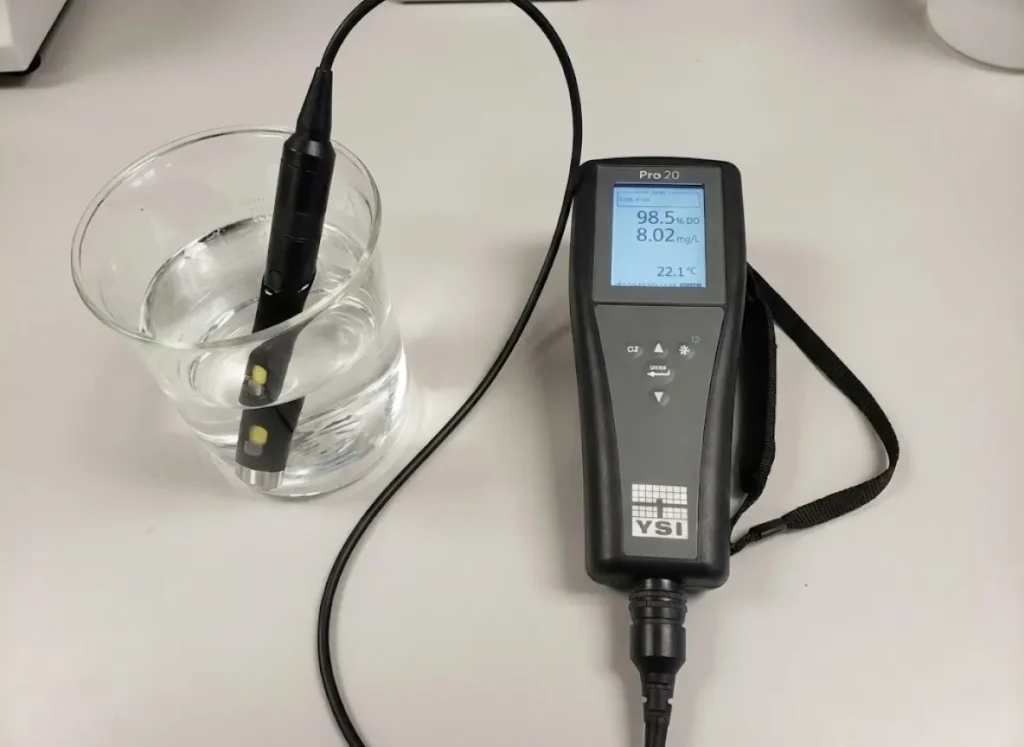
To navigate this invisible landscape, you need the right tools to differentiate between productive water and the dead zone. Specialized environmental measurement systems are crucial.
Why are optical sensors superior to electrochemical probes for fishing?
Optical sensors (Luminescent DO) provide instant, stable readings in still water, whereas traditional sensors fail without constant flow.
Traditional electrochemical sensors (Galvanic/Polarographic) consume oxygen during the reading process. They require constant water movement across the membrane to function. This “flow dependence” makes them nearly useless for anglers trying to vertically probe deep brush piles or stagnant basins. If the probe sits still, the reading drifts to zero. Optical sensors use light quenching technology that is non-consumptive. They require zero water flow.
| Comparison of Dissolved Oxygen Sensor Technologies | ||
|---|---|---|
| Feature | Electrochemical Sensors (Galvanic/Polarographic) | Optical Sensors (Luminescent DO – LDO/RDO) |
| Flow Requirement | High / Mandatory. Sensors consume oxygen during measurement. Requires constant water flow (approx. 1 ft/sec) across the tip to prevent readings from drifting to zero. | None. Sensors are non-consumptive and do not use up oxygen. Accurate readings can be taken in completely still water. |
| Maintenance | High. Membranes dry out and must be replaced, electrolytes need refilling, and anodes require polishing. | Low / Virtually Maintenance-Free. Requires only a sensor cap replacement every 1–2 years. |
| Calibration | Less Stable. Prone to drift; membranes and electrolytes require regular attention to maintain accuracy. | Highly Stable. Resists drift significantly better than electrochemical units and holds calibration for months. |
| Suitability for Vertical Fishing | Poor. Requires “jigging” the probe deep in cover to simulate flow, which is impractical and creates a high risk of snagging in brush piles. | Excellent (The “Holy Grail”). Probe can be lowered into deep, static basins or dense weed mats and provide an instant reading without moving the cable. |
For the boat-based angler, durability and cable length are critical. Standard lab meters with short cables cannot reach the 25ft thermocline. While professional units like the YSI Pro20 are excellent, modern “prosumer” do meter devices offer accuracy without the maintenance of membranes and electrolyte solutions. The USGS comparison of DO sensor technologies validates the stability of optical sensors. Investing in an optical meter allows for “Spot-Lock” precision, confirming if a specific deep hump holds life-sustaining oxygen. This is the chemical equivalent of mastering your fish finder reading arches. Understanding the dissolved oxygen (do), mg/l, and % saturation is the goal.
What biological signs reveal oxygen levels without electronics?
Macroinvertebrates act as living bio-monitors; the mud on your anchor or lure tells a story.
Pulling up a lure covered in black muck and bloodworms (red midge larvae) indicates low oxygen, pollution-tolerant conditions. These organisms possess hemoglobin to survive in hypoxia. Conversely, the presence of Stonefly, Mayfly, or Caddisfly larvae is a definitive marker of high dissolved oxygen (>7 mg/L) and excellent water quality. The American Fisheries Society categorizes macroinvertebrates by their pollution tolerance, serving as a biological index for anglers.
Visual surface signs are also critical. Fish “piping” or gasping at the surface at dawn warns of a crash in DO levels. Olfactory clues matter too. The “Rotten Egg” smell is the signature of Hydrogen Sulfide, a byproduct of anaerobic decay. If you smell this, the bottom layer is anoxic and toxic. These observation skills allow an alert angler to rule out vast stretches of water, a skill enhanced by studying a definitive guide to aquatic insects for fishing. The biological oxygen demand caused by decomposition is a primary driver of these conditions.
How Do You Execute the Metabolic Strike Strategy on the Water?
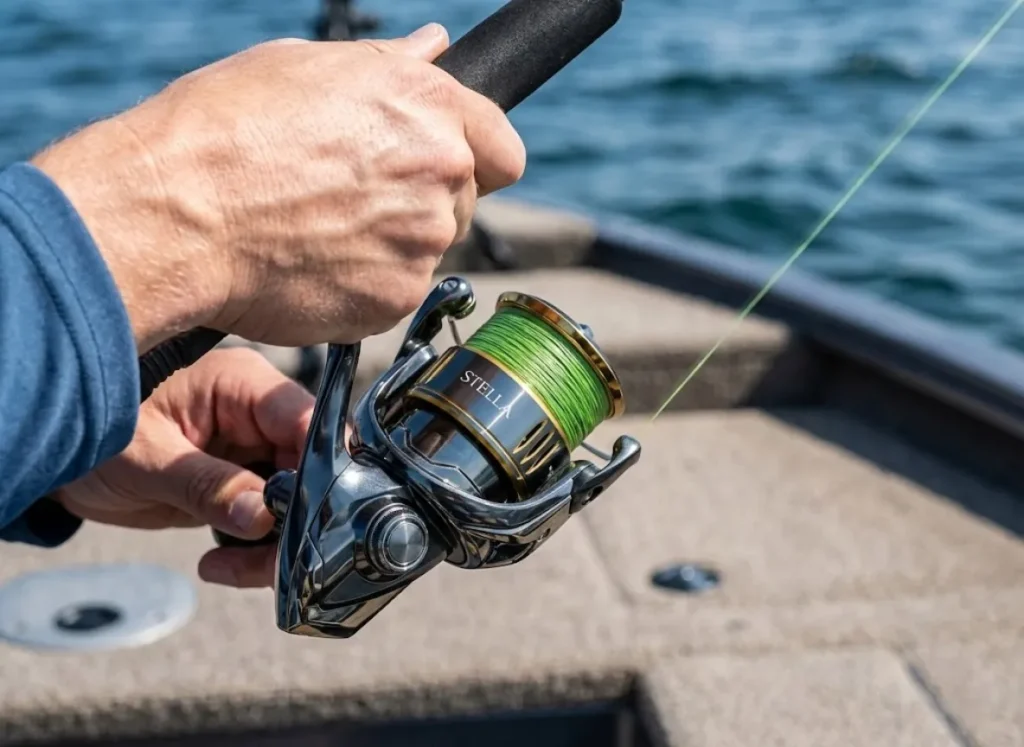
Science provides the map, but you must adjust your lure selection and fish care to match the metabolic reality. This forms the core of a metabolic strike guide.
How should you adjust your presentation for hypoxic conditions?
In the “Stress Threshold” (2.0–5.0 mg/L), fish will not chase; presentations must be slow, vertical, and placed directly on the nose of the target.
Downsizing lures becomes effective here. Smaller prey represents a lower metabolic cost-to-benefit ratio for a lethargic predator. When fishing the “Metabolic Strike Zone” (>6.0 mg/L), specifically near the thermocline, aggressive reaction baits like deep cranks can trigger competitive feeding instincts. Research on swimming performance and hypoxia connects the physiological cost of swimming to the suppression of chases. Slow-rolled jigs and high-scent baits can be effective when fish are in low oxygen stress.
Avoid “metabolic mismatches.” Burning a spinnerbait through a low-oxygen weed mat is futile. The fish may see it, but they physically cannot recruit the fast-twitch fibers to intercept it. Utilize scent and vibration in low-visibility, low-oxygen water to help the fish locate the lure with minimal energy expenditure. In the “Squeeze,” fish density is high but aggression is variable. Accurate depth control to stay exactly in the oxygenated band is vital. This is a core component of a complete summer fishing system. The daily oxygen concentrations can fluctuate, so constant monitoring is key.
How can tournament anglers prevent delayed mortality in livewells?
A livewell is a closed system where fish metabolism spikes while oxygen solubility drops, creating a lethal loop.
Standard recirculation pumps often fail to keep up with the biological oxygen demand of a heavy catch limit. Pure oxygen injection systems are the pro-level solution. However, cooling the livewell water by 10-15°F with ice blocks significantly increases oxygen solubility. It also slows the fish’s metabolic rate, inducing a calmer state. Texas Parks and Wildlife guidelines on livewell management provide data-backed protocols for this.
The goal is “supersaturation” (>100% DO) to compensate for the lactic acid buildup incurred during the fight. Using a fine-pore ceramic diffuser ensures efficient gas transfer, preventing the rapid gassing-off that occurs with large bubbles. Proper livewell management prevents “delayed mortality,” ensuring that the trophy released today survives to spawn next season. For a deeper dive, consult our pro livewell use guide. Maintaining oxygenated water is crucial for ethical sustainable fishing.
Pro-Tip: Freeze water in empty plastic bottles (remove labels) to use as livewell ice. This cools the water without melting chlorine or contaminants from tap water directly into the tank.
Conclusion
Fish are biological machines constrained by their Metabolic Scope; they cannot feed if they cannot breathe. The Oxythermal Squeeze defines summer locations, trapping fish in the narrow intersection of tolerable temperature and sufficient oxygen. While Optical DO Meters offer the precision to map these zones, simple observation of bio-indicators can also guide you. Remember that tactics must mirror physiology: slow down in the Stress Threshold, and trigger aggression in the Sweet Spot.
Next time you’re on the water, stop guessing at the invisible. Share your experiences with finding the thermocline in the comments below, or explore our detailed gear guides to equip yourself for precision angling.
FAQ – Frequently Asked Questions about Dissolved Oxygen Fishing
What is the minimum dissolved oxygen level for bass fishing?
While largemouth bass and smallmouth bass can survive briefly at 2.0 mg/L, they require levels above 5.0 mg/L to actively feed and thrive. Fishing in water below 3-4 mg/L is typically unproductive as fish enter a survival-only maintenance mode.
How do I find the thermocline without an oxygen meter?
Turn up the sensitivity on your 2D sonar to roughly 90%. You should spot a horizontal band of haze or clutter, which represents the density layer of plankton sitting on the thermocline. Alternatively, use a thermometer or temperature probe to find the depth where water temperature drops rapidly.
Do wind and rain increase dissolved oxygen in lakes?
Yes. Wind creates wave action that physically mixes atmospheric oxygen into the surface water, and cooler rain can increase solubility. However, severe storms can sometimes lower oxygen temporarily by churning up organic muck from the bottom. Rapid oxygen depletions can occur.
Why do fish die in summer when the water is warm?
Warm water physically holds less oxygen than cold water. Simultaneously, the heat increases the fish’s metabolic rate and oxygen demand. This supply and demand mismatch, often combined with night-time oxygen depletion from algae and cyanobacteria, causes Summerkill and fish kills. The biological oxygen demand from decaying organic matter, especially after algae blooms, exacerbates this.
Risk Disclaimer: Fishing, boating, and all related outdoor activities involve inherent risks that
can lead to injury. The information provided on Master Fishing Mag is for educational and informational purposes
only. While we strive for accuracy, the information, techniques, and advice on gear and safety are not a substitute
for your own best judgment, local knowledge, and adherence to official regulations. Fishing regulations, including
seasons, size limits, and species restrictions, change frequently and vary by location. Always consult the latest
official regulations from your local fish and wildlife agency before heading out. Proper handling of hooks, knives,
and other sharp equipment is essential for safety. Furthermore, be aware of local fish consumption advisories. By
using this website, you agree that you are solely responsible for your own safety and for complying with all
applicable laws. Any reliance you place on our content is strictly at your own risk. Master Fishing Mag and its
authors will not be held liable for any injury, damage, or loss sustained in connection with the use of the
information herein.
Affiliate Disclosure: We are a participant in the Amazon Services LLC Associates Program, an
affiliate advertising program designed to provide a means for us to earn advertising fees by advertising and linking
to Amazon.com. As an Amazon Associate, we earn from qualifying purchases. We also participate in other affiliate
programs and may receive a commission on products purchased through our links, at no extra cost to you. Additional
terms are found in the terms of service.