

In this article
The asphalt of the boat ramp disappears into the water thirty feet sooner than it did last week. The clear green currents of the main river have turned into a rolling conveyor belt of chocolate milk.
Most fishermen look at this chaos and see a ruined weekend. They go back to their old memories of where fish “should” be. But the fish haven’t vanished. They have simply changed their plan to survive.
To catch them, you have to stop fishing your memories. You need to start fishing the actual conditions of the water. Success in rising or falling water isn’t about luck. It’s about understanding how fish save energy and how they switch their senses.
I have spent decades watching patterns dissolve under floodwaters on systems like the Mississippi River and Kentucky Lake. The lesson is always the same: fish are reactive. If you understand the hydrological direction, you can predict where the fish are before you even launch the boat.
This dynamic water level masterclass will help you stop reacting and start forecasting. We will use simple science and modern tools to find fish when the water goes crazy.
What Physical Forces Drive Fish Behavior When Water Levels Fluctuate?
To guess where fish move, we first need to know what is pushing them. We need to look past simple “high” or “low” water labels. We need to look at the specific physical forces that dictate where a fish can swim.
Why is “Discharge” better than “Gauge Height”?
Most anglers look at “Gauge Height” to make decisions. This is just how deep the water is at a specific spot. But this number can lie to you. Sandbars move, and riverbeds change shape due to siltation, which changes the depth reading without changing the actual flow.
The better number to watch is Discharge. This is measured in Cubic Feet per Second (CFS). It tells you the actual volume and power of the water moving through the river.
Think of it this way: One CFS is roughly the same as a basketball-sized ball of water passing you every second. This helps you visualize the physical pressure hitting the fish. When you see the CFS number spike, you know the fish have to work much harder to stay in place.
| Discharge vs. Gauge Height Comparison | |||
|---|---|---|---|
| Metric | What it Measures | Fishing Implication | Best Use Case |
| Discharge (Flow) | The volume of water flowing past a specific point, measured in Cubic Feet per Second (CFS). It quantifies the actual amount of water moving (e.g., 100 CFS is roughly 100 basketballs passing per second). | This is the primary driver of fish behavior and bioenergetics. It determines the metabolic cost of swimming; as discharge increases, fish are forced into specific “Refuge” areas to avoid metabolic burnout. | Predicting Fish Location: It is the superior metric for finding fish because it accounts for the force of the water. It is used to identify specific patterns (e.g., Prime Lies at 300-800 CFS vs. Bank Hugging at >800 CFS). |
| Gauge Height (Stage) | The static vertical depth of the river surface at a specific location, relative to a fixed datum point. | It can be misleading for fishing predictions because riverbed geometry changes over time (via scouring or sedimentation). A specific depth one year may not represent the same flow volume the next. | Safety Decisions: It is best used for determining physical access and safety, such as knowing if the water level is low enough to wade safely (e.g., “Safe to wade below 3.5 ft”). |
This data helps us sort river conditions into three buckets: Survival Mode, Feeding Mode, and Flood Mode. When the discharge gets too high, fish have to move to slower water to rest, even if there isn’t much food there. By understanding the USGS Water Science School definitions of streamflow methodology, you can see why volume matters more than depth.
You can start applying this discharge data to river fishing after rain right away. It helps you decide if the river is safe to fish or completely blown out. Watching how fast the discharge changes gives you a warning hours before you arrive at the ramp.
How does the “Seiche” mimic tides?
A Seiche is basically water sloshing back and forth in a lake. It happens when strong winds or pressure changes push water to one side of a big lake or reservoir. This can make the water level rise or fall by several feet in just a few hours.
It looks like a tide, but without the moon schedule. Anglers often mistake this for the dam opening or natural river flow. This leads them to fish the wrong spots. The National Park Service analysis of coastal geohazards shows that these events are common and powerful.
The real danger for fishing isn’t just the water level. It’s the temperature.
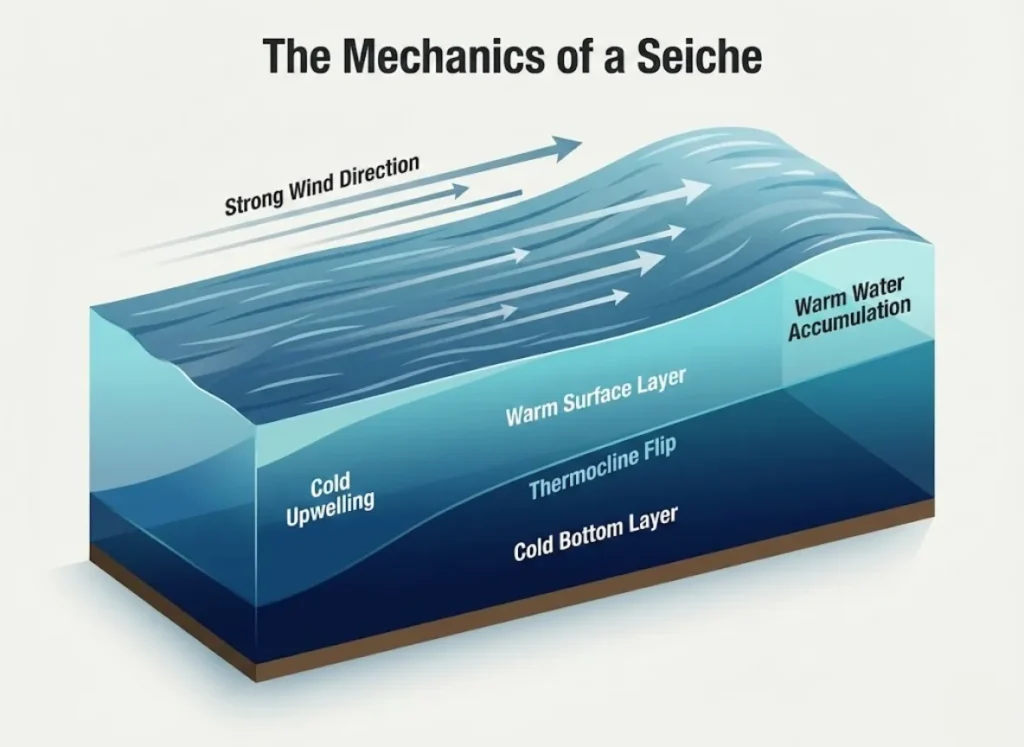
When the wind-driven water pushes the warm surface water away, cold water from the bottom rises up to replace it. This is called thermal upwelling. This can drop the water temperature by 10 or 15 degrees very quickly. That cold shock shuts down warm-water fish like Largemouth Bass and Bluegill instantly. To predict this, look at the wind direction for the last two days. This helps you avoid dead water and aids in understanding lake turnover physics.
How does muddy water change how fish hunt?
When water rises fast, it usually gets dirty. We measure this “dirtiness” (turbidity) in units called NTU. When the water clarity drops, fish like Bass and Walleye can’t use their eyes to hunt anymore.
They have to switch senses. They stop looking and start feeling. They use their Lateral Line, a line of sensors down their side that feels vibration and movement in the water column. The USGS data on turbidity and water quality confirms that suspended mud changes the whole underwater world.
This means you have to change your lures. You need to stop worrying about color and start worrying about “thump.” You want high-vibration lures that shake the water. Fish also use “Mudlines”—the line where muddy water meets clear water—as hiding spots. They sit in the dark water and look out into the clear water. The science of fish vision tells us that when you can’t see your hand in the water, you aren’t fishing for eyes. You are fishing for ears.
Pro-Tip: If you cannot see your lure’s blade spinning six inches below the surface, visual colors do not matter. Switch to solid black or pure white. This creates the strongest shadow against the light from the surface.
Where Do Fish Go During Rapid Rises and Floods? (Scenario A)
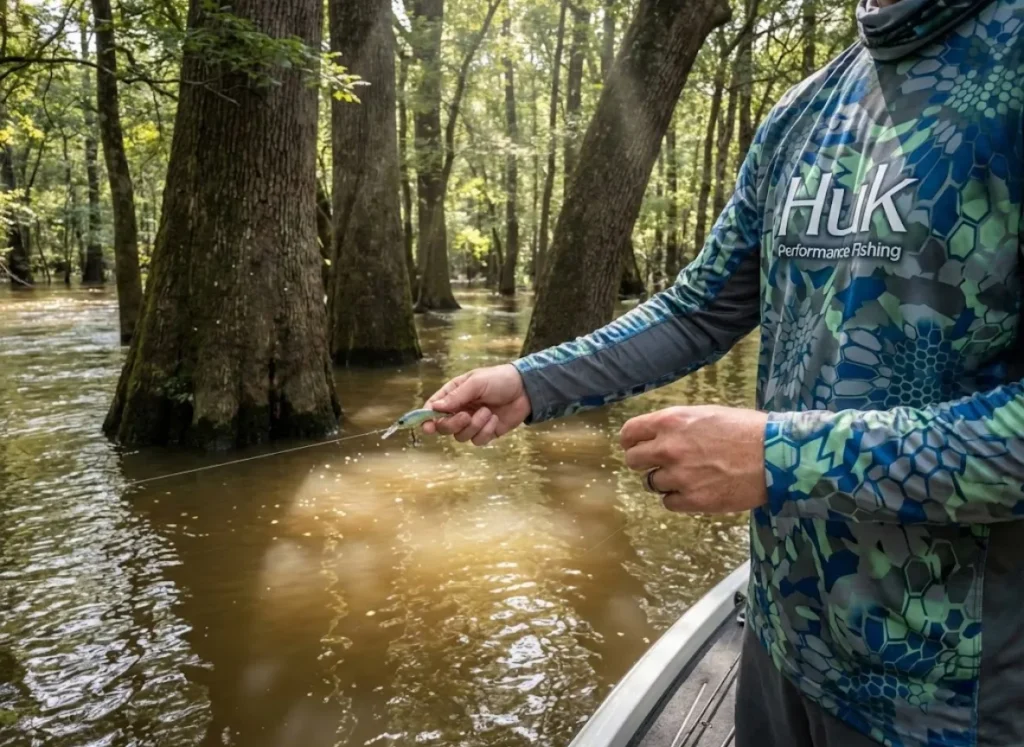
When water floods in, the river gets bigger. But fish don’t spread out evenly. They move based on how fast the water is rising.
How does the “Rate of Rise” dictate where they go?
The speed of the rising water is the most important clue. A gradual change or slow rise (less than 6 inches a day) is good. A rapid rise (more than 12 inches a day) scares them.
During a slow rise, fish move shallow. They hunt for bugs and worms on the newly flooded ground. They roam around the new bank line, looking for freshly deposited silt. But a fast rise makes them freeze. Utah State University bioenergetics research suggests that fish measure the cost of swimming against the safety of hiding.
In a fast flood, fish usually hug vertical cover like trees or pilings. They stay near the old bank line depth. They don’t go into the new shallow-water areas because they are afraid of getting stranded if the water drops. They “hunker down” to save energy. If you are fishing heavy cover during these flood stages, focus on the old shoreline, not the new weeds.
Why do Catfish and Bass act differently in currents?
A Current Seam is the line where fast water meets slow water. You can see it swirling on the surface. Bass are sight hunters. They sit in the slack water, facing upstream, waiting for food to wash by.
Catfish are different. They have better noses. They often swim right on the messy edge of the seam. They use the muddy water as cover to sniff out food. Michigan Sea Grant educational resources on surges help visualize how this water moves.
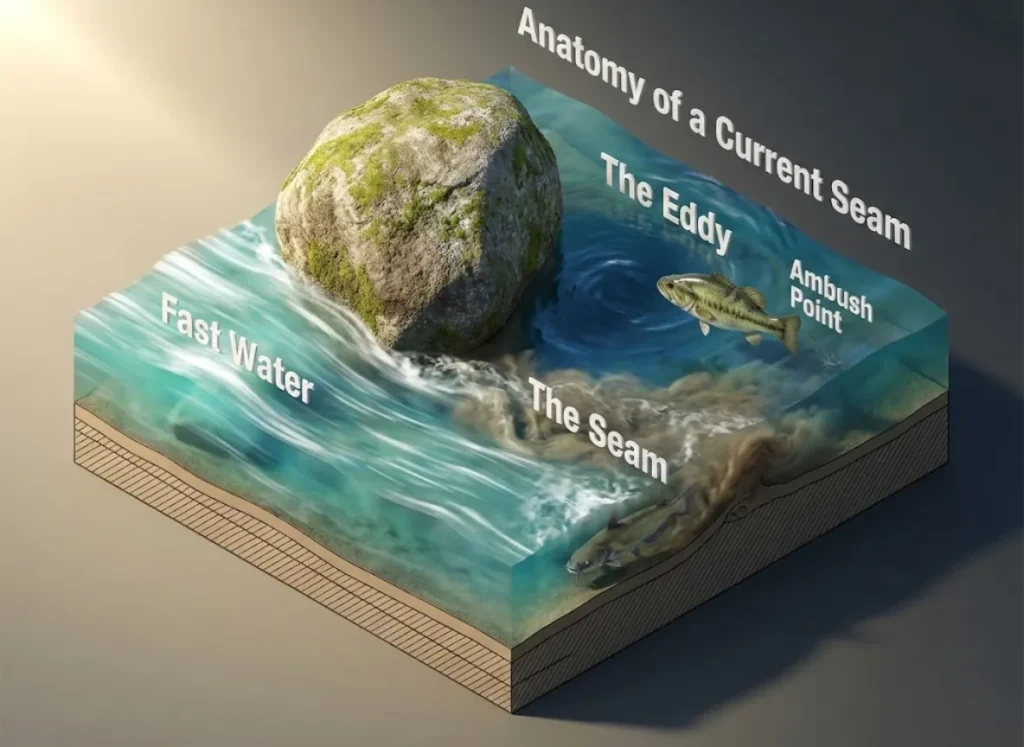
During really high water, Catfish push way back into flooded fields and woods. Bass usually stay back. Also, big rocks create a “suction zone” or a quiet spot right behind them. This is a perfect resting spot. To fish these, you need to understand the physics of current seams hydrodynamics so you can drift your bait naturally from the fast water into the slow pocket.
Where Do Fish Migrate During Winter Drawdowns? (Scenario B)
Floods push fish to the banks. But falling water pulls them toward the deep. This happens a lot in winter when reservoirs lower their water levels.
Why is the “First Break” so important?
As the water drops, the shallow shorelines turn into dry land. Fish have to leave their favorite shallow spots. They usually move to the First Break. This is the first big drop-off into deeper water next to the flat areas.
Fish will park on this drop-off. They often group up in schools and just suspend there. They are waiting for the water level to stop moving before they go deeper. According to New York DEC seasonal walleye migration patterns, these movements happen at very specific depths.
If the water keeps dropping, the fish keep moving until they hit the main river channel or the deepest basins. This bunches the fish up tight. Big parts of the lake will be empty, while one deep rock pile might hold hundreds of fish. You have to rely on data-backed methods to score the perfect fishing spot rather than just casting blindly.
How Can Anglers Use Technology to Predict Locations? (The Toolset)
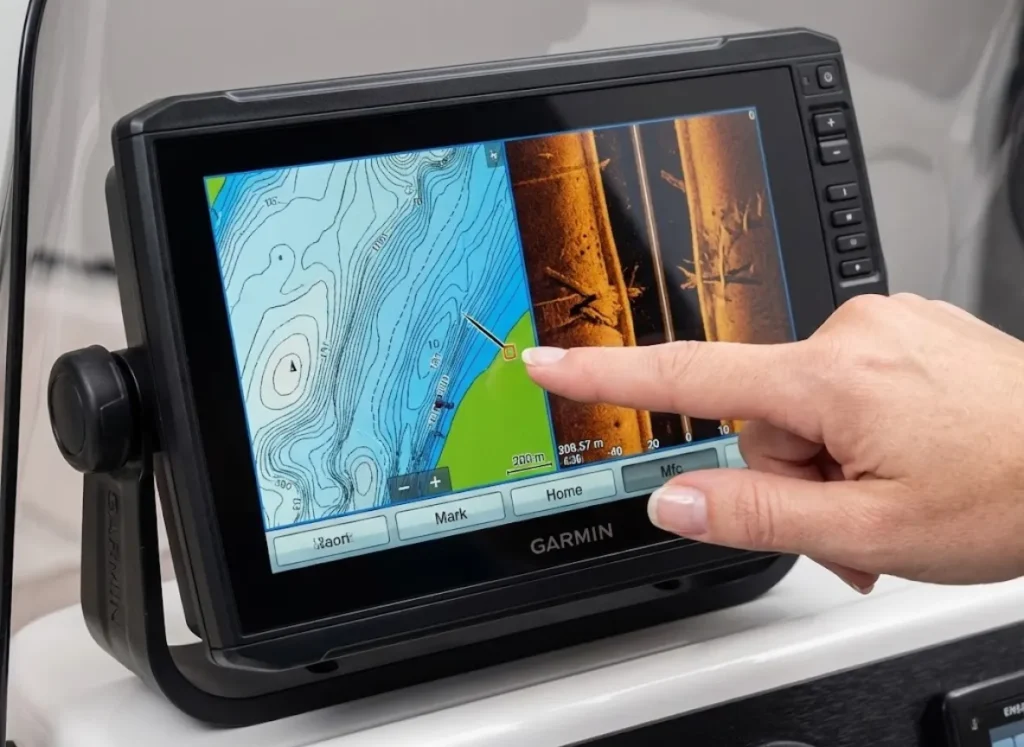
Old paper maps are great, but real-time data is better. Here is a simple way to use your computer to find fish.
How does “Reverse Scouting” with Google Earth work?
“Reverse Scouting” is a simple trick. Open Google Earth Pro on your desktop. Use the Historical Imagery time-slider to go back in time to a drought year.
This lets you see the lake when the water was low. You can spot rock piles, old roadbeds, and creek channels that are underwater today.
Find these hidden spots. Mark them with waypoints. Then, put those coordinates into your boat’s fish finder. This takes the guesswork out of finding invisible structure. It effectively lets you “drain the lake” on your screen.
A hill on a map during low water becomes a perfect shallow feeding shelf during high water. Combine this with using the best fishing apps for GPS and mapping like Navionics or Smart Fishing Spots App to land exactly on the spot.
How do you get automatic alerts from the USGS?
The USGS WaterAlert system is like an alarm clock for the river. You can tell it to send you a text or email when the water does something specific. For example, “Text me if the flow goes over 1000 CFS” or “Email me if the height drops below 3.5 feet.”
You can set these up at the USGS WaterAlert service notifications portal. This stops you from having to check the website every day.
Pro-Tip: Set an alert for a gauge 50 miles upstream of where you fish. This gives you a 12 to 24-hour head start. You will know the flood is coming before it ruins your local spot.
You can also watch the USGS National Water Dashboard data visualization to see how fast the water is rising. This helps you find the perfect window to go fishing. Make sure to compare this with your own notes by auditing your fishing logbook maintenance data.
What Lures Work Best in Fluctuating Conditions? (Tactical Application)
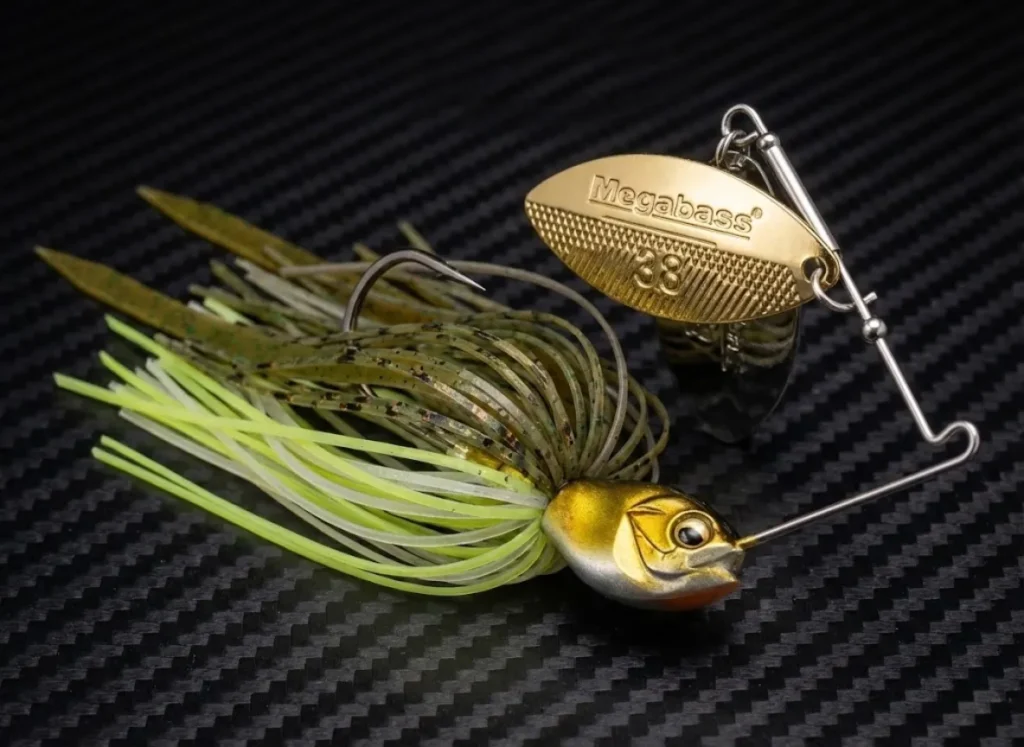
Knowing where the fish are is step one. Catching them is step two. We need to pick the right tool for the muddy water.
How does Vibration (Hz) change your lure choice?
In muddy flood water, fish can’t see well. You have to use lures that push water. We call this “displacement.”
Low-Frequency lures make a heavy “thump.” Think of a spinnerbait with a big round blade (Colorado blade) or a ChatterBait. These are easy for fish to feel in the chaos.
High-frequency rattles, like Lipless Crankbaits, make a fast buzz. This helps fish hear the bait from far away, but the heavy thump helps them find exactly where it is to bite it. The EPA criteria for sediment and water quality explains how thick the water can get with mud, which is why subtle lures just disappear.
Another thing to look for is how well a lure bounces off stuff. Squarebill crankbaits are great because they deflect off the flooded wood without getting snagged. Understanding the physics of crankbait hydrodynamics helps you pick a lure that pushes water but doesn’t get stuck. When the water clears up during a drawdown, you do the opposite. You switch to natural, quiet lures like jigs or tube baits.
Summary
Success in changing water isn’t an accident. It comes from looking at the physics of the river instead of just relying on old memories.
- Watch the Flow: Use CFS (Discharge), not just height. Volume tells the real story.
- Watch the Speed: A slow rise means go to the bank. A fast rise means back off and look for vertical cover.
- Save Energy: Fish won’t fight current if it costs too much energy. Look for the resting spots and the seams.
- Use Tech: Set up USGS alerts so you don’t miss the window. Use Google Earth to see what’s under the water.
Stop guessing and start tracking. Set up your first USGS WaterAlert today for your home water.
FAQ – Frequently Asked Questions
Is fishing better when the water is rising or falling?
Usually, a slow, stable rise is the best. It pushes fish shallow to feed on new food. Falling water is harder because it forces fish deep, but it can bunch them up in predictable spots.
Where do bass go when the water level rises fast?
During a rapid, muddy rise, bass usually hang on vertical cover like trees or bridge pilings near the original bank line. They avoid the new shallow water so they don’t get stranded.
What is the best lure for muddy flood water?
You want lures that thump. A Colorado-blade spinnerbait or a Bladed Jig (ChatterBait) works best. These lures vibrate hard, so fish can feel them even if they can’t see them.
How does a seiche affect fishing on lakes?
A seiche sloshes water back and forth like a tide. The biggest issue is that it can pull cold water up from the bottom. This sudden temperature drop can stop fish from eating. Watch the wind history to find the stable, warm side of the lake.
Risk Disclaimer: Fishing, boating, and all related outdoor activities involve inherent risks that
can lead to injury. The information provided on Master Fishing Mag is for educational and informational purposes
only. While we strive for accuracy, the information, techniques, and advice on gear and safety are not a substitute
for your own best judgment, local knowledge, and adherence to official regulations. Fishing regulations, including
seasons, size limits, and species restrictions, change frequently and vary by location. Always consult the latest
official regulations from your local fish and wildlife agency before heading out. Proper handling of hooks, knives,
and other sharp equipment is essential for safety. Furthermore, be aware of local fish consumption advisories. By
using this website, you agree that you are solely responsible for your own safety and for complying with all
applicable laws. Any reliance you place on our content is strictly at your own risk. Master Fishing Mag and its
authors will not be held liable for any injury, damage, or loss sustained in connection with the use of the
information herein.
Affiliate Disclosure: We are a participant in the Amazon Services LLC Associates Program, an
affiliate advertising program designed to provide a means for us to earn advertising fees by advertising and linking
to Amazon.com. As an Amazon Associate, we earn from qualifying purchases. We also participate in other affiliate
programs and may receive a commission on products purchased through our links, at no extra cost to you. Additional
terms are found in the terms of service.